
James Gleick's Blog
September 8, 2026
The Telephone
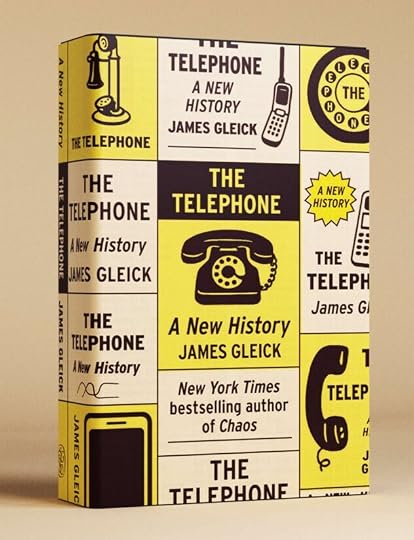
Elizabeth KolbertThe Telephone is at once a history of an invention and much more than that. It’s a book about innovators and monopolists, tinkerers and geniuses, and, ultimately, the remaking—and re-remaking—of America. Science and technology never seem more exciting than when James Gleick is writing about them.”
The telephone burst onto the world stage 150 years ago and began to transform every part of life: from business to warfare, from news gathering to sex work. James Gleick shows how this commonplace object irreversibly changed not only the world but who we are as human beings.
An enthralling deep dive into the telephone and the many social revolutions it has enabled. With characteristic wit and a boundless appetite for anecdote, Gleick transforms a quotidian device into a prism through which to see the world anew.”Publishers WeeklyBuy from Bookshop.org


January 25, 2026
January 24, 2026
Time Travel
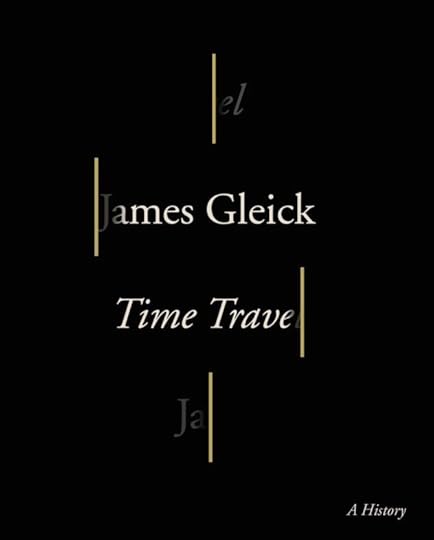
Joyce Carol OatesTime Travel is another of James Gleick’s superb, unclassifiable books—rich in obscure and illuminating information, laced with lyricism, wit, and startling and convincing insights. It is an exploration not only of the (theoretical) phenomenon of time travel but of our understanding of ‘time’ itself.”
A mind-bending exploration of time travel—from its origins in literature and science to its influence on our understanding of time itself. The book vividly explores physics, technology, philosophy, and art as each relates to time travel and tells the story of the concept’s cultural evolutions—from H.G. Wells to Doctor Who, from Proust to Woody Allen. It takes a close look at the porous boundary between science fiction and modern physics, and, finally, delves into what it all means in our own moment in time—the world of the instantaneous, with its all-consuming present and vanishing future.
Time Travel, like all of Gleick’s work, is a fascinating mash-up of philosophy, literary criticism, physics and cultural observation. It’s witty (‘Regret is the time traveler’s energy bar’), pithy (‘What is time? Things change, and time is how we keep track’) and regularly manages to twist its reader’s mind into those Gordian knots I so loved as a boy.”Anthony Doerr, New York TimesBuy from Bookshop.org
The Information
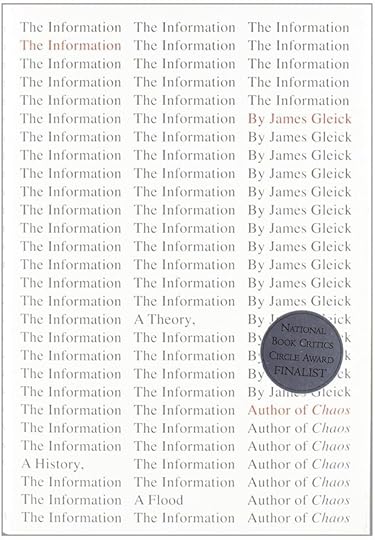
Winner of the 2012 Royal Society Winton Prize for Science Books,
PEN/E. O. Wilson Literary Science Writing Award, and PEN Hessell-Tiltman Prize.
Janet Maslin, The New York Times
The Information is so ambitious, illuminating and sexily theoretical that it will amount to aspirational reading for many of those who have the mettle to tackle it. Don’t make the mistake of reading it quickly. Imagine luxuriating on a Wi-Fi-equipped desert island with Mr. Gleick’s book, a search engine and no distractions. The Information is to the nature, history and significance of data what the beach is to sand.”
“To grasp what information truly means—to explain why it is shaping up as a unifying principle of science—Gleick has to embrace linguistics, logic, telecommunications, codes, computing, mathematics, philosophy, cosmology, quantum theory and genetics. He must call as witnesses not only Charles Babbage, Alan Turing and Kurt Gödel, but also Borges, Poe and Lewis Carroll. There are few writers who could accomplish this with such panache and authority. Gleick, whose 1987 work Chaos helped to kickstart the era of modern popular science, is one.”Cory Doctorow—Philip Ball
Gleick is one of the great science writers of all time … The Information isn’t just a natural history of a powerful idea; it embodies and transmits that idea, it is a vector for its memes, and it is a toolkit for disassembling the world. It is a book that vibrates with excitement, and it transmits that excited vibration with very little signal loss. It is a wonder.”
January 23, 2026
Chaos
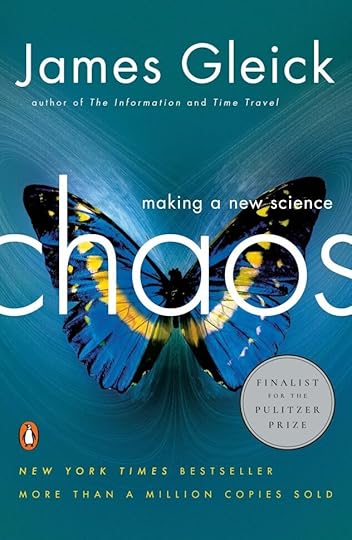
“An awe-inspiring book. Reading it gave me that sensation that someone had just found the light switch.”
Douglas Adams
The 20th-anniversary edition of James Gleick’s groundbreaking bestseller Chaos, finalist for both the Pulitzer Prize and the National Book Award, introduces a whole new readership to chaos theory, one of the most significant waves of scientific knowledge in our time. From Edward Lorenz’s discovery of the Butterfly Effect, to Mitchell Feigenbaum’s calculation of a universal constant, to Benoit Mandelbrot’s concept offractals, which created a new geometry of nature, Gleick’s engaging narrative focuses on the key figures whose genius converged to chart an innovative direction for science. In Chaos, Gleick opens our eyes to a surprising new view of the universe.
Buy from Bookshop.org
Fascinating . . . almost every paragraph contains a jolt.”The New York Times
Taut and exciting . . . a fascinating illustration of how the pattern of science changes.”The New York Times Book Review
Chaos is a feast.”The Washington Post Book World
About
He was born in New York City in 1954. He graduated from Harvard College in 1976 and helped found Metropolis, an alternative weekly newspaper in Minneapolis. Then he worked for ten years as an editor and reporter for The New York Times.
His first book, Chaos, was a National Book Award and Pulitzer Prize finalist and a national bestseller. He collaborated with the photographer Eliot Porter on Nature’s Chaos and with developers at Autodesk on Chaos: The Software. In 2012 he published the best-selling The Information: A History, a Theory, a Flood, winner of the Royal Society Winton Prize. His other books include the best-selling biographies, Genius: The Life and Science of Richard Feynman and Isaac Newton, both shortlisted for the Pulitzer Prize, as well as Faster and What Just Happened. They have been translated into thirty languages.
He was an internet pioneer, founding the Pipeline, an early New York service provider, known for its graphical user interface in 1993. Beginning in 1995 he wrote the Fast Forward column in the New York Times Magazine.

He was the McGraw Distinguished Lecturer at Princeton University in 1989–90 and the first editor of the Best American Science Writing series. He served as president of the Authors Guild from 2017 to 2019. He contributes regularly to The New York Review.
He lives in New York and London.
January 18, 2026
Isaac Newton
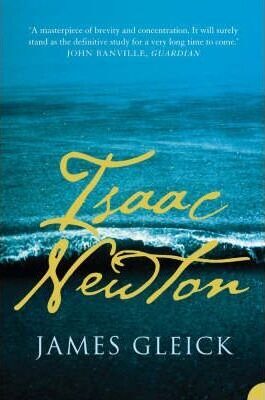
“The biography of choice. . . . Newton the man emerges from the shadows.”The New York Times Book Review
“A masterpiece of brevity and concentration. Isaac Newton sees its angular subject in the round, presenting him as scientist and magician, believer and heretic, monster and man. . . . It will surely stand as the definitive study for a very long time to come. Fortunate Newton!”John Banville, The Guardian
The New York Times
“Gleick [is] a clever tour guide to the minds of great geniuses. . . . Isaac Newton sheds new light on the difficult personality of a deeply enigmatic figure.”
Seattle Post-Intellignceer“Elegant, jewel-like…he does not waste a word… Gleick has given us the man and his mind in their full crazyness.”
Seattle Post-Intelligencer“A compelling page-turner. . . . Gleick [is] a clever tour guide to the minds of great geniuses. Isaac Newton sheds new light on the difficult personality of a deeply enigmatic figure.”
Freeman Dyson, The New York Review of Books“For the casual reader with a serious interest in Newton’s life and work, I recommend Gleick’s biography as an excellent place to start. It has three important virtues. It is accurate, it is readable, and it is short…. Gleick has gone back to the original notebooks and brought [Newton] to life.”
Toronto Globe and Mail
“The best short life of science’s most perplexing figure.”
New Scientist“[Gleick is] one of the best science writers of our time. . . . He has exhumed from mountains of historical documents and letters a compelling portrait of a man who held the cards of his genius and near madness close to his chest. Gleick’s book [is] hard to put down.”
The Times (London)“Marvellously rich, elegant and poetic. . . . [Gleick’s] great talent is the ability to unravel complex ideas without talking down. Books on Newton abound, but Gleick’s fresh, intimate and beautifully composed account succeeds where many fail, in eloquently dramatizing the strange power of his subject’s vision.”
The Observer“James Gleick makes the most of his extraordinary material, providing us with a deftly crafted vision of the great mathematician as a creator, and victim, of his age. . . . Isaac Newton is a perfect antidote to the many vast, bloated scientific biographies that currently flood the market–and also acts a superb starting point for anyone interested in the life of one of the world’s few, undisputed geniuses.”
Faster
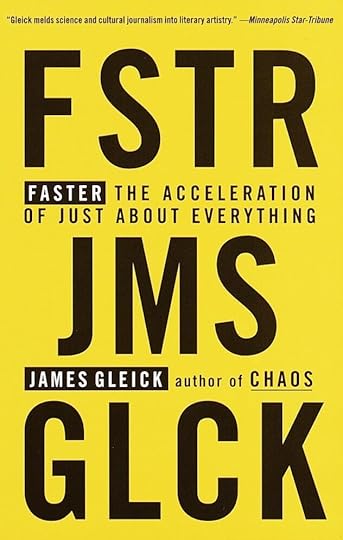
—Maria PopovaA book that has not only stood the test of time but has grown all the more perceptive and prescient in the years since. Gleick’s Faster is immeasurably insightful in its entirety and often strikingly prophetic.”
Buy from Bookshop.org
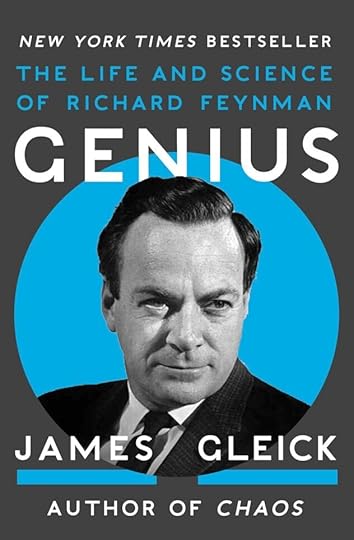
Genius
 Buy from Bookshop.org
“A rare, jewel-like biography… terrifically readable. It achieves an almost perfect balance between the physicist’s work and his life… Gleick is a consummate craftsman.”Washington Post Book World
This life story of the legendary physicist is “a thorough and masterful portrait of one of the great minds of the century” (New York Review of Books). Raised in Depression-era Rockaway Beach, Richard Feynman was irreverent, eccentric, and childishly enthusiastic—a new kind of scientist in a field that was in its infancy. His quick mastery of quantum mechanics earned him a place at Los Alamos working on the Manhattan Project under J. Robert Oppenheimer, where the young man held his own among the nation’s greatest minds. There, Feynman turned theory into practice, culminating in the Trinity test, on July 16, 1945, when the Atomic Age was born. He was only twenty-seven. And he was just getting started. In this sweeping biography, James Gleick captures the forceful personality of a great man, integrating Feynman’s work and life in a way that is accessible to lay people and fascinating for the scientists who follow in his footsteps.
“Mesmerizing. A stimulating adventure in the annals of science.”The New York Times
What Just Happened
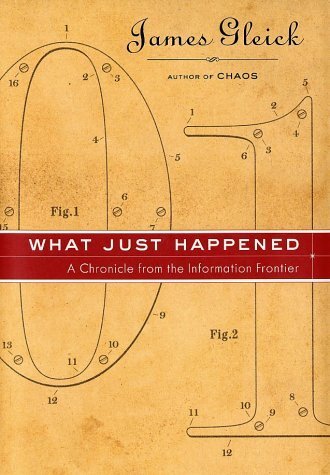
The IndependentA marvellous journey around our technology-drenched world … The work of a master.”
Here’s some of what just happened: Millions of ordinary, sensible people came into possession of computers. These machines had wondrous powers, yet made unexpected demands on their owners. Telephones broke free of the chains that had shackled them to bedside tables and office desks. No one was out of touch, or wanted to be out of touch. Instant communication became a birthright. A new world, located no one knew exactly where, came into being, called “virtual” or “online,” named “cyberspace” or “the internet” or just “the network.” Manners and markets took on new shapes and guises.
A collection of James Gleick’s articles from the era when the internet was born, ranging from condemnations of maddeningly pervasive bugs in Microsoft software to the invisible shackles we wear in an inescapably connected” world. Combining insight and reason with wit and passion, What Just Happened is an essential tour of our technology-driven times.
Gleick is one of America’s leading exegete of the technological revolution that, like it or not, is taking over all our lives. He spends his at the cutting edge of computer and allied sciences, returning from the front with visions of the future.”The ObserverBuy from Bookshop.org

