Derek Nudd's Blog - Posts Tagged "japan"
Australian Hospital Ship Centaur
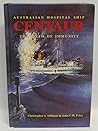 Australian hospital ship Centaur: The myth of immunity by Christopher Milligan
My rating: 4 of 5 stars
Who sank a correctly marked and brightly lit hospital ship on a clear, calm night in May 1943? Why? How did it founder in just three minutes? How come, when the disaster was so close to shore, it took so long for anyone to notice?
The authors take a forensic approach to the multiple questions surrounding the death of the Centaur, examining the history of the ship, her crew, cargo and passengers, and the Japanese submarine flotilla operating in the area. They look at - and dismiss - alternative speculations about her sudden loss and examine the three possible culprits, settling convincingly on one.
As to why, after years of post-war obfuscation we may never know for sure. Mistake, under the circumstances, is implausible. Was there a revenge motive? Did the submarine captain think she was carrying combat troops and/or munitions? Did he simply not care? The authors have interviewed everyone they can trace and who will speak to them.
Other Allied, Axis and Imperial German incidents involving hospital ships are acknowledged. In some cases a little more information (with references) would have been useful but the inclusion provides valuable context.
The book is well written and contains several useful plate sections.
View all my reviews


Japanese Prisoners of War in India 1942-46
This is the only book I know to tackle an inadequately researched subject. Japanese captives, in any theatre, were few enough until the last stages of WW2. Japanese soldiers who experienced the collapse of the Arakan, Imphal and Kohima offensives had plenty of orders from high command to motivate them. What they didn't have was food, ammunition or relief. Those who were too sick, wounded, exhausted or hungry to fight or retreat were left to die or, in some cases, killed by their own medics. Their lot seldom improved when overtaken by advancing allied troops, as there were enough booby-trapped corpses and indoctrinated casualties determined to take a foreigner with them to make British and Indian soldiers cautious about taking them alive.
For the survivors, who had been warned to expect torture and death if captured, relatively civilised treatment during interrogation and internment created a sense of obligation totally at odds with their Field Service Code which demanded victory or death. The book traces the authorities' efforts to educate them in the Geneva Convention and the option of living for their country rather than dying for it.
It is comprehensively researched if a tad repetitive in places. There are a few topics I would have liked to see addressed in more depth. The author briefly mentions the transfer of naval prisoners from (then) Ceylon but the CSDIC / SEATIC establishment at Colombo and Kandy could easily have merited a chapter of its own. Equally he mentions the different outcomes for PoWs held in India from those housed in Australia and New Zealand - and interesting comment which could be followed up. Then there is the question of how and when Japanese attitudes to prisoners of war changed from the relatively benign behaviour seen in WW1 to the uncompromising brutality of WW2. Sareen adresses this but not, to my mind, entirely convincingly. Is 'bushido' even an appropriate word? I don't know. Finally, while not Japanese, he mentions the soldiers of the Indian National Army who allied with them and were taken prisoner. They were treated as traitors not PoWs. So what happened to them?
Despite these minor whinges it is an interesting, well researched and written book. One I will keep coming back to.
For the survivors, who had been warned to expect torture and death if captured, relatively civilised treatment during interrogation and internment created a sense of obligation totally at odds with their Field Service Code which demanded victory or death. The book traces the authorities' efforts to educate them in the Geneva Convention and the option of living for their country rather than dying for it.
It is comprehensively researched if a tad repetitive in places. There are a few topics I would have liked to see addressed in more depth. The author briefly mentions the transfer of naval prisoners from (then) Ceylon but the CSDIC / SEATIC establishment at Colombo and Kandy could easily have merited a chapter of its own. Equally he mentions the different outcomes for PoWs held in India from those housed in Australia and New Zealand - and interesting comment which could be followed up. Then there is the question of how and when Japanese attitudes to prisoners of war changed from the relatively benign behaviour seen in WW1 to the uncompromising brutality of WW2. Sareen adresses this but not, to my mind, entirely convincingly. Is 'bushido' even an appropriate word? I don't know. Finally, while not Japanese, he mentions the soldiers of the Indian National Army who allied with them and were taken prisoner. They were treated as traitors not PoWs. So what happened to them?
Despite these minor whinges it is an interesting, well researched and written book. One I will keep coming back to.
Forgotten Fleet
In fact this book covers two forgotten fleets: the British Pacific Fleet and the East Indies Fleet. After the eye-watering Japanese advances of late 1941 and early 1942 there was little Britain could do except hang on grimly to its few footholds remaining. Pre-war plans for rapid reinforcement were overtaken by events in the Atlantic, Arctic and Mediterranean, and the most of bases for that reinforcement were gone.
Winton tells the story of the Royal Navy's gritty recovery from such an unpromising start, including the improvisation from scratch of a fleet train to support the Pacific Fleet in mid-ocean and learning to integrate its operations with the US Navy's vastly greater resources. The Brits had one great advantage in overcoming Washington obstructionism at local level - the USN was 'dry' while the RN wasn't. A bottle (or for really big favours a crate) of whisky could do wonders.
British carriers' armoured flight decks proved their worth under constant attack by suicide pilots. As Indefatigable's USN liaison officer put it after a strike, 'When a kamikaze hits a US carrier, it's six months repair at Pearl. In a Limey carrier it's a case of "Sweepers, man your brooms".'
On the subject of suiciders, it is interesting that some of the officers who graduated from the SOAS crash course in Japanese went to sea and listened in to the control aircraft instructing the kamikazes (who in the nature of things were inexperienced) which ships to go for and what tactics to adopt. This gave the targets a little bit of valuable time to react.
Personally I would have liked a bit more attention given to the East Indies Fleet, and especially its submarine component. Once the big American boats had made the oceans an extremely hostile environment for the Japanese it fell to the 8th Flotilla's S and T class boats operating at the limit of their (and their crew's) endurance to tackle the coastal trade.
The first two appendices list the ships which made up the two fleets at VJ Day. The lists are impressive, doubly so when we consider that these forces - enormous by our standards - were dwarfed by the US component.
Bearing in mind that this work dates from 1969 and much material has been declassified since then, it remains a worthwhile read.
Winton tells the story of the Royal Navy's gritty recovery from such an unpromising start, including the improvisation from scratch of a fleet train to support the Pacific Fleet in mid-ocean and learning to integrate its operations with the US Navy's vastly greater resources. The Brits had one great advantage in overcoming Washington obstructionism at local level - the USN was 'dry' while the RN wasn't. A bottle (or for really big favours a crate) of whisky could do wonders.
British carriers' armoured flight decks proved their worth under constant attack by suicide pilots. As Indefatigable's USN liaison officer put it after a strike, 'When a kamikaze hits a US carrier, it's six months repair at Pearl. In a Limey carrier it's a case of "Sweepers, man your brooms".'
On the subject of suiciders, it is interesting that some of the officers who graduated from the SOAS crash course in Japanese went to sea and listened in to the control aircraft instructing the kamikazes (who in the nature of things were inexperienced) which ships to go for and what tactics to adopt. This gave the targets a little bit of valuable time to react.
Personally I would have liked a bit more attention given to the East Indies Fleet, and especially its submarine component. Once the big American boats had made the oceans an extremely hostile environment for the Japanese it fell to the 8th Flotilla's S and T class boats operating at the limit of their (and their crew's) endurance to tackle the coastal trade.
The first two appendices list the ships which made up the two fleets at VJ Day. The lists are impressive, doubly so when we consider that these forces - enormous by our standards - were dwarfed by the US component.
Bearing in mind that this work dates from 1969 and much material has been declassified since then, it remains a worthwhile read.