T. Carlos Anderson's Blog
April 12, 2026
My Golf Story – Part I
After all these years, golf has become my fountain of youth. Such an admission, as was Ponce de León’s search centuries ago, may be fleeting and self-delusionary. But as the sixty-fifth anniversary of my birth lurks, such a pursuit has its lures.
One of the Best Decisions of My Life
I first hit golf balls in the summer of 1974 in a field in northwest Iowa. I was twelve years old. My uncle, Dennis Weeks, a good player himself, taught high school math and coached the school’s golf and wrestling teams. He took my brother, our cousins (his two oldest sons), and me to a remote field with a shag bag of golf balls and a set of junior clubs. After showing us a basic grip, he instructed us to tee the balls up and swing away. All four of us were naturally athletic, and we had a blast cranking away in that field. I’ll never forget the sheer exuberance of solidly connecting the clubhead to those balls and watching them orbit skyward. “Solidly” enough—I do remember almost all the shots were big ol’ banana slices. Even so, I was deeply hooked—yes, drawn in—right then and there.
A few years later in the Chicago suburbs of my youth, a few buddies and I played golf at our local muni, Mt. Prospect Golf Club, on $60 youth summer passes. Basketball was my first love, but golf was emerging as another sport, alongside football and baseball, that would compete for second place on my love list. The dad of one of my buddies was a good stick. Fred Fassnacht had golf trophies and medals displayed throughout the family home, giving us impressionable teenaged boys the idea that golf was a “manly” enough sport to pursue.
Bear with me—this was the mid-‘70s, eons before a guy named Tiger Woods made golf approachable and desirable to the masses. Most of the adult golfers we saw at “MP” were males clad in loud plaid pants, who after rounds played poker in the smoke-filled upstairs bar at MP above the pro shop. With their cocktails, cigarettes and cigars, they didn’t give off a vibe of what we younger males considered to be “athletic.”
In 1976, my freshman year at Prospect High School, we labored on the freshman football team—the season starting with double-session practices in the late summer replete with dreaded calisthenics. As the season progressed, we realized we weren’t that good. Maybe two games, as far as I can remember, is all we won. On top of that, the varsity football team wasn’t any better—they stunk.
That same fall, the boys golf team won the Illinois State High School Championship. By the end of our unsuccessful football season, a few of us had made a decision. We don’t care what the guys on the football team—or the girls—say, we’re going out for golf next year. Getting out of class early, playing golf, not having to do dreaded calisthenics, being on a winning team—what’s not to like?!
It turned out to be one of the best decisions of my life.
I played on the sophomore team with my set of beginner clubs. The following summer, as I got more serious about golf and prepped for playing on the varsity team, I fancied a set of Wilson Staff blades, 3-iron through pitching wedge, that I saw advertised in the Chicago Sun-Times. The advertised price was unbeatable and I found out why: It was the owner’s last set and he wanted to keep that advertisement in the paper to bring in customers. He tried to steer me toward a set of Browning 440s, a low-profile club that had two-thirds of a clubface compared to conventional sticks. He asked me what I shot, and I told him I could break 40 for nine holes. He said I wasn’t good enough to play Wilson Staff blades. He was right, but I adamantly told him I was going to get better—by using better clubs. I walked out of that shop with a set of brand new, previous season, Wilson Staffs for $150. Bingo, baby! (A few years ago, a Golf Digest article included the Browning 440s in its list of “The 16 Most Epic Golf Equipment Fails of All Time.” Not buying them was another great decision!)
My senior year, we played the Champaign Invite at the University of Illinois Orange Course, home course of U of I’s golf team. At that time, the Orange Course had old-school front-to-back sloped greens and it was long. And the wind was always blowing off the surrounding cornfields. In anticipation of mid-October’s state tourney at this same track, the Champaign Invite was a mid-September preview tourney for some of the best high school teams in the state. The central Illinois weather that September weekend was nasty—cold, wettish and windy. Six of us played, and our best four scores counted. Our number one player, Paul Keane, was the only one on our team to break 80. I shot an 82, which featured more birdies (3) than pars (2). That September Saturday, the cliché held true: bogey is your friend. I made thirteen of them, but nothing worse. We tied for 1st place, giving us the idea that, perhaps, we had a chance to do well at “state.”
A few weeks later, we won our conference championship. That, however, was as good as it got as we couldn’t emerge out of the following week’s regional tournament.
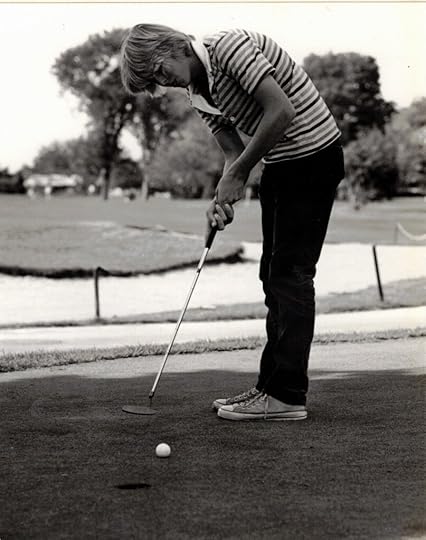 Maybe . . .
 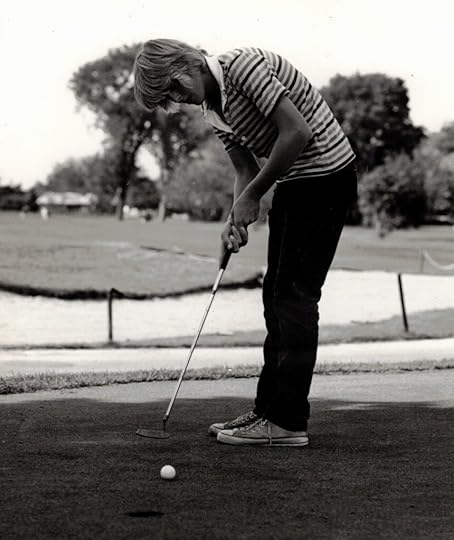 Looking good . . .
 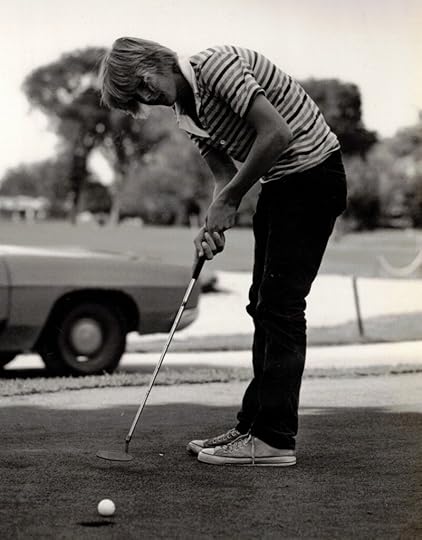 Yes!
Yes!“We Have a Golf Team?”
I would have loved to play basketball in college, but slowish 6-foot-tall shooting guards were not valued at a premium at that level. I started for my high school team most of my junior and senior years, but this was before the 3-point line was reestablished in high school and college basketball. The college I attended, Augustana-Rock Island, was a D-3 basketball power.
There was a Black guy from Chicago on the team named Odell Peden. He was about 6’2” and could absolutely jump out of the gym. One year he broke his arm and was sidelined for the season. Even so, during halftime of one of the games, while the head coach and the rest of the team—and the refs— were in the locker room, Odell took a ball off the rack and dribbled it onto the floor. He had some friends who were egging him on, saying “Throw it down!” In street clothes and with one arm in a cast, Odell approached the rim, cradled the ball in his one good arm, jumped up and did just that—he threw it down emphatically. Damn. A number of us in the crowd sat stunned with mouths agape. Slam damn!
The next year I was playing a pick-up basketball game at the gym in the late afternoon. These were half-court games, and, occasionally, guys on Augustana’s team would play as well. It just so happened that Odell was playing that day. Even though I was slowish, I could jump pretty good. I loved rebounding. I remember coming in for a defensive rebound from the free-throw line, as I could tell exactly where the attempted shot would miss after bouncing off the rim and backboard. My timing was perfect and I snagged the rebound above two or three others, momentarily turned into flat-footed observers. Immediately, I heard Odell shout out: “Ouwee—look at that white boy jump!”
It was one of the best basketball compliments I ever received. Ahem.
I didn’t go out for baseball in high school, and by simple process of elimination, golf inhabited the number two spot on my sports love list. I was naturally good at it and it was still a blast to connect the clubhead solidly to the ball. And now I was able to chip it close and sink putts—the stuff of keeping your score close to par.
When I applied to Augustana, I talked to the golf coach on the phone. He wanted me to try out for the team, which fit my plans. Golf was a spring sport in college, and Augie’s team had a pretty good track record with a number of conference titles and D-3 national tournament showings in the previous decade or so.
I got on a hot streak during my sophomore season. I wasn’t in the top five players of our team, but I was threatening to break through. For a practice round at our home course, Highland Springs G.C., I shot even par 72 by parring all 18 holes. I had never done that before and haven’t done it since. We then had a meet against two or three other local schools early that season, and I shot a 73. A great score, but since I was playing on our “second” team that day, it didn’t count. That score beat all the scores on our first team, except for our captain’s score, which was one or two under par. Keith Rezin, our senior captain, looked at our coach and said that we needed that 73 on our first team. I didn’t say anything but couldn’t have agreed more.
The next week it snowed, and there was no golf team practice. It was mid-April in northern Illinois in the days before climate change. Of course it snowed. A couple of weeks earlier, I had met Denise Zarbuck, a bona fide knock-out. She asked me to a “square dance” party put on by her sorority. We had an enjoyable time and I told her I’d be calling her for a next date.
I called her up a little after lunchtime on the snow day. I wanted to know if she’d like to go to a movie that afternoon, because we didn’t have golf team practice. I purposefully emphasized “no golf team practice” in order to score some impression points with the message that I was on the golf team.
She responded with surprised whateverism: “Really? We have a golf team? No, sorry—I can’t go to a movie this afternoon because I have class.”
Boom. Zero impression points with the golf team mention. And no date. Well, at least she did say that I should call her again sometime for a date when she didn’t have class.
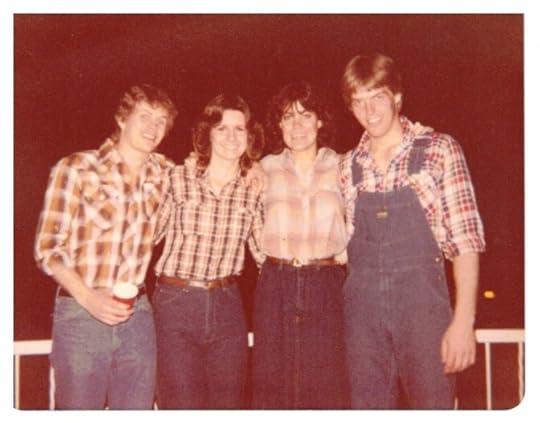 Our first date – April 3, 1982, with friends Bob and Claudia
My hot streak—in golf—continued the next week as the snow disappeared. We had another meet prior to our conference tournament. Again, I played on the second team. Again, I shot a score that would have counted on the first team. The first team’s fifth man, a senior, was playing like dirt, not doing any better than mid- to low-80s. This time I spoke up.
Coach, I said, I’m playing better than our fifth man and I think I should have that spot for the conference tournament. He listened and then said let him talk to Keith—our captain. Early the next week. Coach said I’d have a shot at the conference tournament line-up for the fifth and final spot. Our current fifth man and another sophomore who, like me, was also playing pretty well, and I would have an 18-hole play-in.
The three of us teed it up the next day. I had no doubt that I was going to beat my two teammates for the fifth spot. I can’t remember what I shot, but it was mid-70s and neither of my competitors threatened that number. I was going to the conference tourney with a spot on the team.
The tournament would be played at Wolf Creek Golf Club in Cayuga, Illinois, a little more than an hour southwest of Chicago. Our team had won the College Conference of Illinois and Wisconsin four straight years. Our coach liked to remind us that we needed to keep that streak rolling. If we won the conference tournament, we would then have a chance to be invited to the NCAA D-3 national tournament two weeks hence.
The conference meet was a 36-hole event, the Thursday and Friday of the first full week of May. Wolf Creek was a nice track with great greens. In flat central Illinois on that Thursday, there was nothing to stop an incredibly strong northwest wind that blew hard all day long.
From the Pontiac Pantagraph, May 7, 1982 as reported by Cliff Schrock:
“One by one they came blowing in—hair standing on end, eyes red from blowing dust, clothes rumpled—having fought the brave war against 40-45 mph winds that never let up and made a sandstorm out of the bunkers at the Wolf Creek Golf Course here Thursday.
“Chances are the 40 golfers in the 36th College Conference of Illinois and Wisconsin Tournament wouldn’t have played golf in the miserable conditions if it hadn’t been an important meet.
“Yet, once finished with the first 18 holes of the 36-hole meet, they could feel victory no matter what they shot. When tee shots are blown two fairways over and 3-irons from 150 yards out come up short of the green, the fun is eliminated and torture sets in like a plague.
“Tournament favorites Augustana and Millikin survived the conditions the best. The Vikings, chasing their ninth title in 11 years, lead with 334 strokes . . .
“Tim Anderson’s five-over-par 77, the day’s low score on the 6,574-yard layout, led Augustana, which had four of the top 10 individual scores . . .
“Anderson had five bogeys and two double bogeys, yet recorded two birdies plus an eagle on the 500-yard par-5 fifth hole. The sophomore reached the green in two and made a thirty-five-foot putt.”
I was the only player in the field to break 80 that first day. The weather on the second day was perfect. While playing, I didn’t want to think about being tournament medalist, so I dug into the “one shot at a time” vibe. It worked. Even though I doubled bogeyed the last hole resulting in another 77, I won the title by three shots. Our team also won the conference title, our fifth in a row.
I called Denise when we returned to school late on Friday night. She knew that I had been playing in the tournament. I told her I won it. “Won it? Wow.” This time she was genuinely impressed.
We had a good team. And not only that, our coach was on the committee that would pick the twelve teams that would make it to nationals. We were stunned when Coach told us that we hadn’t been invited to go to nationals. He never gave us an explanation, but I suspect that he didn’t think our team was as good as some of his previous teams that won conference and went to nationals.
My teammates voted me team captain my senior year. I never caught the same magic I had when I was a sophomore, but I did fire a 75 to finish out my college career in style at the same course where I medaled two years prior.
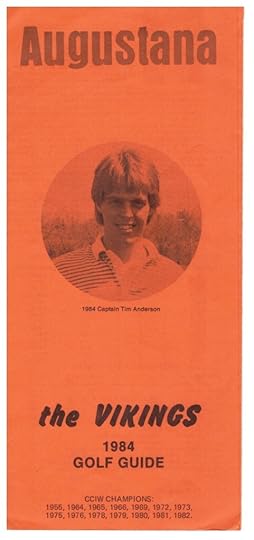
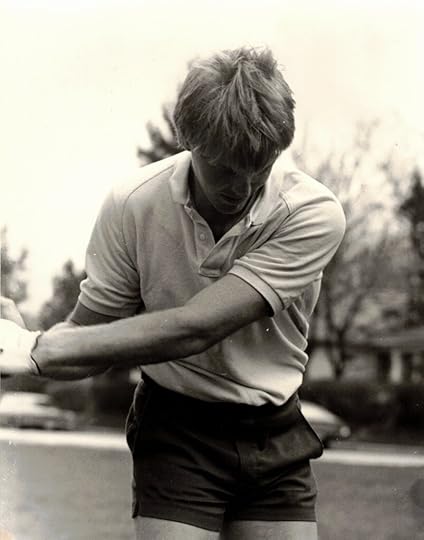
Click here for “My Golf Story – Part II”
T. Carlos “Tim” Anderson – I’m a Protestant minister and Director of Austin City Lutherans (ACL), an organization of partners in Austin, Texas working together to serve low-income individuals and families.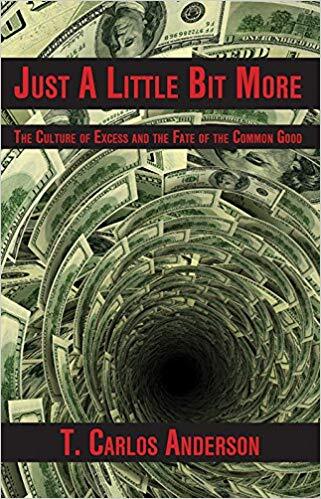

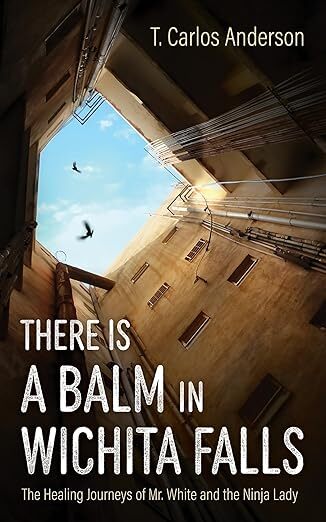 Check out any of my books – Just a Little Bit More (2014), There is a Balm in Huntsville (2019), and There is a Balm in Wichita Falls (2024).


My Golf Story – Part III
Austin Men’s City Championship, Part 2
Back in my parish pastor days, I’d have four vacation Sundays per year. I used one of those to play in Men’s City each year. But as you’ve read to this point, I’d never made the final cut for the last round, played on Sunday. And when you ask a fellow pastor to sub for you, you don’t call them at the last minute—for example, after missing the cut on Saturday—and tell them that their services aren’t needed. They’ve prepared a sermon to deliver, and the guy who missed the cut hasn’t prepared one.
After missing the cut in 2005, I was flummoxed. Golf, as we know, can do that to you. So, I decided to play again on Sunday, which was the original plan! I wasn’t in the tournament anymore, but I could play the same course—Roy Kizer—that the guys who made the final cut were playing. The same course with the same pins, same weather conditions, etc. I talked to the guys in the pro shop, and they let me go off as a single about an hour after the tournament leaders had teed off.
I teed off on Roy Kizer’s first hole on Sunday, August 5, 2005 just after 12 p.m. There wasn’t much wind and the temp would max out at 95* a few hours later. It was an enjoyable day to play and, per usual, I walked the course that measured 6749 yards from the tips. There was a 5-hole buffer between me and the leaders. The greens were in good shape, rolling medium-quick on Austin’s “inland links” course, rated at 71.6 and sloped at 125 at that time.
I bogeyed the relatively easy first hole after dumping my initial drive into the center-right trap. I came back, however, with birds on the next two holes. I wedged it close on #2, and then sank a 30-footer on #3. I hit a 5-iron to 18 feet on #8, a par-3 playing 190 yards to a back pin, and drained the putt to get to two under. I was striking the ball well. About an hour later, I two-putted for par on the short 3-par, #15, my seventh par in a row after the bird on #8. I was still two under, and at that point I had hit every green in regulation after having missed the first green.
Kizer’s #16 is a drivable par-4 when the supporting south wind is blowing. It’s a classic risk/reward hole, with an elevated green that falls off precipitously in the back to a forested hazard area. You simply can’t go over the green. But there’s trouble short of the guarded green as well.
From the back tees, measuring 333 yards that day, I gave my Cleveland Launcher driver a rip. I hit it decently, and it ended up about 50 yards short, lying in the rough on a hill—the first of two defenses guarding the green. The green’s second defense is a large gaping trap, like a moat guarding a castle, between the hill and the green. The pin was back-left, and with my lob wedge in hand, I planned for a high, gentle pitch. It had to be just right to hold the green.
The immediate feedback on the pitch felt good, but, alas, I played it too safe and my ball nestled short in the trap. The trap is a good 8–10 feet below the elevated green, so your bunker shot has to elevate quickly. Mine didn’t elevate quickly enough and it went just slightly over the green, resting on the first of three terraces that drop down to the hazarded forest. It wasn’t an easy chip to the back-left pin, and it came up 9 feet short. You know what was going through my golf mind—9 feet to save bogey to stay under par or miss it and all the good work I’ve done to be under par for most of the day is suddenly gone.
Bingo—I canned the putt and escaped #16 with a very friendly bogey. I parred #17 and came to #18, a lengthy 4-par at 456 yards with water right and forested hazard left, holding steady at one under. I remember being a bit nervous—Kizer is a par 71 track, and I had a chance to shoot a great number. A bit of favorable south wind had picked up, and I blasted the drive right down the pipe. I later calculated it at 328 yards, as I had 128 yards remaining to the right-side pin, just above the right trap. I feathered a three-quarter pitching wedge 9 feet. The putt was going to fall a bit to the right, and I pulled it just a touch. It had the perfect speed, however, to sneak in the left side of the cup. Bingo, again—69 on Men’s City Sunday. The round’s stats were impressive: 16 greens in regulation, 31 putts with no 3-whacks, and 4 birds.
Even though I wasn’t in the tourney, the results of this round told me what I thought I knew: That I could play. It was in there somewhere. I had to believe it, every time I teed it up.
Confidence—you need it for just about everything and anything you hope to accomplish in this life. Sometimes confidence dwells within and it instinctively guides you forward. You know what to do and how to do it. And, as a result, you do what you do well—much more often than not.
Other times, confidence comes from others—family, friends, and/or community. It’s one of the main reasons the home team, supported by the home crowd, wins about 55 percent of the time—whether the NBA, MLB, or NFL. When someone’s got your back, it can make a huge difference.
After the 69 at Kizer on my personal Men’s City Sunday, my golf-game confidence surged. It was two months later, as previously mentioned, that I hit scratch status for the first time.
The next year, there was a favorable change in the set-up for my main tournament of the year. Men’s City would go to four days, with a single cut after the second day. Additionally, the post-cut field would increase from the lowest 54 scores and ties, to lowest 72 scores and ties. It would be just like a pro tour event, and I had never competed in a four-day tourney before.
When the first weekend of August rolled around, I felt like I was ready once again. MoWilly and Muny for my first two rounds, and then Clay and Kizer on the weekend. But after carding consecutive 79s, I had another free weekend. The cut that year was 155.
Finally, in 2007, I broke through. I opened with a 72 at Muny and followed that up with a 79 on MoWilly. Good enough as the cut settled at 152. I played the weekend rounds in similar fashion as my first two rounds—73 on Clay and a disappointing 80 on Kizer for a T64.
The next spring, I was playing Muny with one of my main guys, Jeff Hodges. Jeff and I had coached our sons together on a YMCA basketball team a few years earlier and discovered that we both liked to tee it up. We were paired that day with a Muny regular who played with a hockey grip. A 15-handicap player at best, his reliable fade travelled no more than 150 yards, On and around Muny’s greens, however, he was pretty stellar. I wasn’t having a great round. In those days, I liked to refer to Muny as Austin’s “hit it in the woods, chip out and 3-putt” golf course. The main reason I’d play Muny was because I had to play it for Men’s City. The Muny regular must have heard me griping about this and grumbling about that as concerns his favorite course. He had a “Save Muny” bumper sticker adhered to his golf bag. (The University of Texas owns the land upon which Muny lies, and there’s always been talk that Muny will be replaced with housing or another type of redevelopment. The Save Muny push has been active since the 1970s.)
As we were getting toward the end of the round, our playing partner sank yet another long putt for par or bogey. I complimented him on his putt, and asked him what his secret was for doing so well on Muny’s greens. Without skipping a beat, he wagged a finger in my face and full-throated me with his response: “You gotta give Muny the love!”
Woe is me. He was dead serious. No smile, no playfulness—he was preachin’ straight-up golf thunder!
He was right. He spoke the truth. I was instantly converted. I mean it.
The Apostle Paul said, “Speak the truth in love.” As a pastor, I am of the opinion that truth wrapped up in shiny love-packaging is the best agent to bring about actual change. Sometimes love’s loud second cousin—exhortation!—is needed to get the job done. That’s what my Muny hockey-grip guy—and I’ve never seen him since—did for me that day. Perhaps he was a golf angel in human disguise.
What good did it do me to gripe about the course conditions? Or, gripe about my horrible luck on a particular golf course? In a tournament setting, everyone’s playing the same track and the same set-up. And when you consider a track like Muny . . . it was one where you could go low. My best score at Muny to that date—May 7, 2008—was even par 71.
The next week, Jeff and I went out to Muny again. My newly converted self was committed to giving Muny the love it deserved. I played great. Three birds on the front—at #2, #5, and #8—to turn at two under. I brought the second side home at par—with another bird on #14—and carded a 69. My first round under par at Muny. Lezgo.
Men’s City rolled around again. I was scheduled to play Muny on Thursday, and then MoWilly on Friday’s cut day. Muny’s first hole is one of its toughest, with it’s 90-degree dogleg right and its green surrounded by trouble right, back, and left. I sank a six-footer for par, center-cut as CBS’s Bobby Clampett would say, and followed with birds on #2 and #3. The previous year in Men’s City, I had been under par during two of the rounds, eventually finishing each of those rounds at plus one. So why not go low? I was comfortable with the idea.
I bagged another birdie on #6, after a bogey on #5. I turned at two under. I boomed a drive on #14 and was 200 yards out, with a bit of helping south wind. My 7-iron ended up a touch short and right. I had a downhill right-to-left running chip to a front pin. I accelerated through, and the ball gently kissed the pin and dropped in—the eagle got me to four under.
Muny’s closer is a straight-away drivable par 4. Standing on the tee at -4, my first inclination was to play it safe with 3-iron and then lob wedge. But that’s not how I normally play #18. I almost always hit driver. The previous group cleared the green and I ripped driver, per usual. I tugged it a bit, but it took a nice bounce right, toward the green. I was left with a little chip that I judged perfectly. It almost went in. Wow. I tapped it in for 66.
After signing my scorecard, I scanned the scoreboard just outside Muny’s back porch off of the pro shop. I was tied for first place. Holy shizzles.
From my golf journal entry: “Best round of my life.”
A sportswriter at the Austin American-Statesman, Kevin Robbins, was one of my playing partners that day. He had complementary words for me and my round in his golf blog later that evening. The next morning, the Statesman’s sports page had a brief article on Men’s City with my name in its title: “Paterson, Anderson shoot 66s for lead after first round”.
I was pretty nervous during the second round at MoWilly. I doubled #1, and by the turn, my five-over score mitigated all that red number, under par scoring I had garnered on day one. I settled down a bit on the back nine, but pitched a shutout in the birdie category. I had followed up my 66 with a big ol’ 80. I was 3-over for the tourney and made the cut by a generous margin.
Rounds three and four would be played at Clay and Kizer, respectively. As I was warming up for Saturday’s round, club pro Steve Hammond, with a sly smile on his face, confronted me on the range. “Rev, you don’t follow up a 66 with an 80!”
“Pro,” I retorted, “I had never shot 66 before, so I didn’t know what to do!” We both laughed, and he told me to play well. Jimmy Clay played tough that day. There was plenty of wind and it was 100*. I shot 78, with one birdie, to slide back to a tie for 35th place. Day four was better for me on Kizer, as the hot blow-dryer weather continued. My buddy Jeff Hodges caddied for me. I was steady on the front with nine pars; I ran a 3-iron up between the traps on #14 and smoothed in a seven-foot eagle putt to get to one-under. I kept things rolling with birds on #15 and #17 to get to three-under. I hit the fairway on #18, and had 175 yards left from a bare-ish downhill lie. My 8-iron wasn’t flush. It found the pond. I was a bit stunned. I carded a triple to shoot even-par 71.
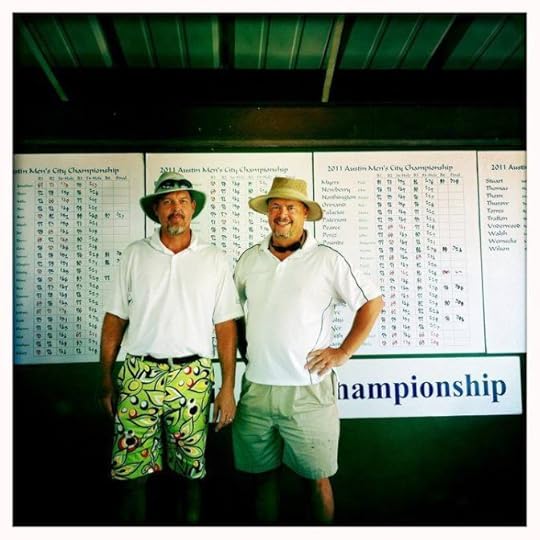 With Jeff Hodges
As you who are golfers well know—to this day—I’d like to have that approach shot over again. But so it goes with golf: Kinda like life, you get to learn from your same mistakes over and over again. Downhill lie got you worried? Move the ball back a bit in the stance, slow your tempo down a bit, fire your feet and legs, and catch it clean.
I ended up tied for 24th that year. I had a number of other adventures in Men’s City—both good and bad—but 2008 was my best placing.
Something else—really good—came out of the 2008 Men’s City tourney. Kevin Robbins and I made a connection during our first two rounds, and we’ve been teeing it up together ever since. He took his writing skills to the University of Texas where he teaches sports journalism. If you’ve not heard of him, check out his two excellent golf books, both winners of the prestigious USGA Herbert Warren Wind Award for literature in golf: 2016’s The Life and Wisdom of Harvey Penick and 2019’s The Last Stand of Payne Stewart.
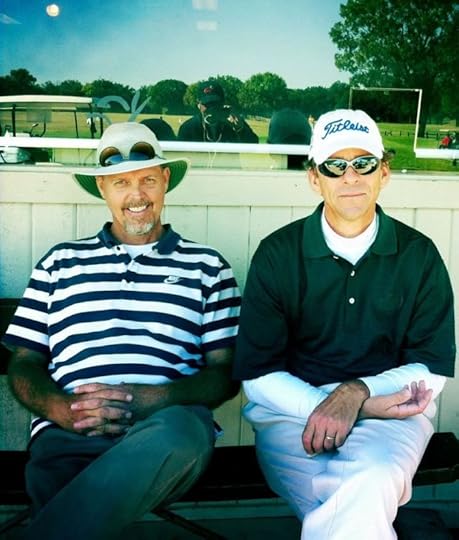
Here we are hanging, with our game faces on, outside the CK pro shop. Photo credits to artiste and smooth swinger Eddy Davis, (reflection in glass).
“My Golf Story, Part IV” – Forthcoming
T. Carlos “Tim” Anderson – I’m a Protestant minister and Director of Austin City Lutherans (ACL), an organization of partners in Austin, Texas working together to serve low-income individuals and families.
Check out any of my books – Just a Little Bit More (2014), There is a Balm in Huntsville (2019), and There is a Balm in Wichita Falls (2024).
My Golf Story – Part II
Denise and I married, and I began a six-year grad school journey at a St. Paul, Minnesota seminary that included a two-year internship in Perú, South America. I didn’t play much golf while in seminary, and during the two years we lived south of the equator I never touched a club.
“How Ya’ Doin’, Rev!”
In January 1991, we moved to Texas where I began to work as a pastor at a church on Houston’s west side. Shortly thereafter, our son Mitch was born, joining his older sisters Lauren and Alex. A new city, a new job, and three young kids—at best I played once a month. My game wasn’t that good. I rarely broke 80. I typically played with older guys at my church, and at their prodding, I moved up to play the white tees with them. I swear it made my game worse. Memories of good rounds while in college, rather than inspiring me, haunted me. I knew I could play better, but I never did.
Friends and relatives up north would ask me how my game was. I’d tell them that, for me, living in Texas meant that I could play mediocre golf all twelve months of the year. Then two things happened to make my lucky golf stars realign: We moved to Austin and our son Mitch aged into kindergarten.
Parish pastors typically take one day off during the week. My day off was Thursday, and with Mitch in all-day kindergarten, I suddenly had a free day to myself. I made another great decision. I dedicated Thursdays to teeing it up. And Austin had four decent public golf courses by which to do so. My old Wilson Staff blades, now about twenty years old, started firing good shots again. Eventually, I started breaking 80 again.
A couple of years in, I bought monthly passes to the Austin city courses. (A few years after that, Austin Parks and Recreation would offer a yearly pass, which I jumped on.) The monthly pass was a bit more than the $60 summer pass of my youth, but it was a good deal nonetheless. Austin, a great golf town, generously supports its city courses through its parks and rec budget. I was playing the back tees again. I started keeping my handicap again, which fluctuated between 3 and 5, the same as it was in my college days. I got to know some of the good amateurs around town.
I started playing tournaments again, with a special focus on the Austin Men’s City Championship, competed the first weekend in August. An amateur tournament, past champs include three players who would later win as pros on the PGA tour: two-time Masters champ Ben Crenshaw, J. L. Lewis, and Wes Short Jr. I first competed in Men’s City in 1999, two years after we had moved to Austin. My first tournament in fifteen years began with a qualifier at Lions Municipal. Shoot 81 or better, and you’re in. Then it was a three-day event with a cut after each of the first two rounds. After clearing the qualifier hurdle, I had a rough first day and shot 87 at Morris Williams, almost securing last place, and definitely deserving an unceremonious MC—missed cut. No worries. I had a golf challenge to take on and I was more than happy to do so. More on Men’s City later.
I became a regular at the city’s southeast dual golf course complex, Jimmy Clay and Roy Kizer, hereby referred to as the “CK.” I got to know one of the ever-present pros behind the check-in counter, Jack Marr. Jack had a commanding gravel voice, knew every good player in town (and vice versa), and could hold his own in conversations that delved into philosophy and theology.
Jack was the younger brother of 1965 PGA Champ and longtime ABC golf analyst Dave Marr. Consequently, Jack knew Arnie, Nicklaus and Trevino, and a bunch of others. And Jack had stories.
When Jack found out my vocation, he immediately dubbed me “The Rev.” I loved walking into the pro shop and hearing Jack belt out, “How ya’ doin’, Rev!” When Jack Marr gave you a nickname, it stuck. And now more than twenty-five years later, that’s still the case.
—it’s well worth the read. It’s a treat, just like knowing Jack was.
No matter one’s job, profession, or vocation, having another community to call one’s own can be a monumental blessing. That has been and is certainly the case for me. I cherish the community that I share with my colleague pastors—consisting of fellow Lutheran clergy and a few others across denominational lines—and wouldn’t have made it this far without them. But having another go-to community and a long-time cabal of guys that I’ve played with regularly—that’s unbeatable.
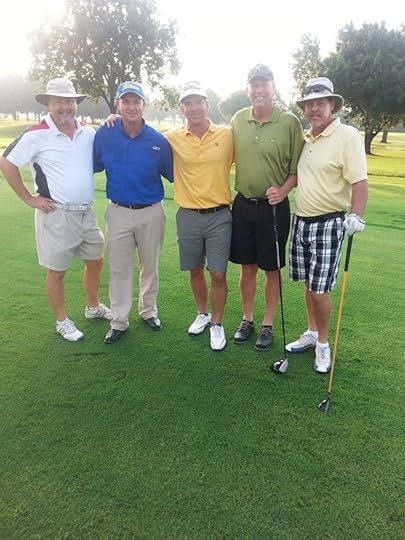
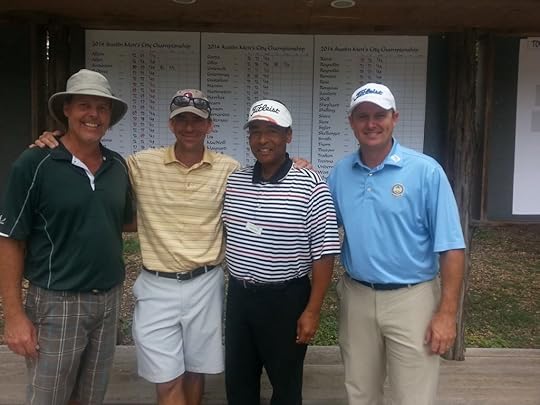
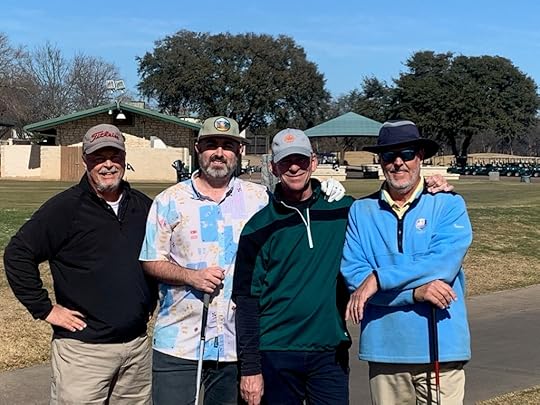
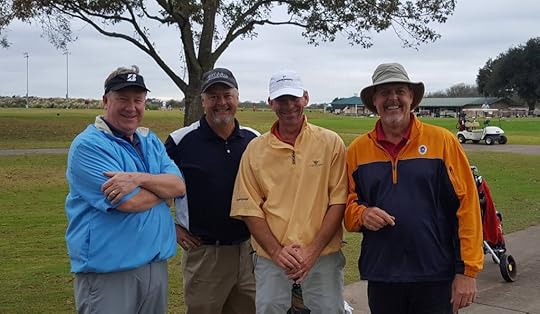
It’s like the line out of the “Theme for Cheers”: “Sometimes you wanna go / Where everyone knows your name / And they’re always glad you came.” Being part of the golf community in and around the CK has been life-giving: instructive for golf, and didactic for life.
Especially at a public golf course, you can meet all sorts of different folks. I once played 18 holes at Kizer with a guy who, as I found out toward the end of our round, was in an entirely different line of work than mine. The guys in the pro shop who set us up to play together knew what was going on, but they didn’t let either of us in on their secret. As the two of us strolled up the 18th fairway together, he asked me what kind of work I did. I told him, and then I asked him what he did. He told me: He was the general manager of a North Austin strip club.
Here’s the deal: We were honest with each other because we had made a connection over the four hours it typically takes to play a round of golf. He easily could have told me something else—“I manage a restaurant”—after hearing that I was a minister. And there’s plenty of people in my profession who have abused others—in horrendous fashion—so I can’t make the judgment that he was ipso facto a bad dude because of his profession.
A public golf course is one of the few places in this day and age where you can make honest connections with complete strangers. You and a playing partner might discover you share some commonalities. These types of connections, even if only in play for a few hours, build community. In our hyperpartisan-divided society, community building is a bit of a lost art. (Honest connections can happen at private golf courses as well, but those connections are on a restricted basis as private courses, by definition, are closed communities.)
The game of golf has a culture shaped by rules and etiquette, and part of that culture includes being socially agreeable with and to your playing partners. There are specific do’s and don’t’s. Announcing your religion or politics to your playing partners who you just met on the first tee? That’s not acceptable on the golf course. Those conversations, if desired, can happen after the round at the fabled 19th hole.
The next time I came into the clubhouse to check in for a round, the guy who set up the minister and the strip club manager to play together, asked me, “How’d that round go the other day, Rev?”
By his smile, I knew that he knew. I smiled back and told him it went just fine. A golf course, we both agreed, was one of the few settings where a meeting like that could occur.
“Why Don’t You Come and See Me for a Lesson?”
So, there lie my ball on the hardpan on the left portion of the mini-pecan grove on the right side of Jimmy Clay’s #18, the difficult, long closing par-4. I had a window, however, through the trees to the green. I was about 200 yards out, and the play was a low, controlled cut 3-iron, that would roll up on the green. I gripped my Wilson Staff blade, took it back slowly and came through hard with the face slightly open. Upon contact, I immediately sensed something awry. The ball squirted weakly to the right and I saw, to my horror, that the clubhead had twisted. I was stunned to see a gaping metal wound on the hosel of my beloved 3-iron with which I had hit a number of great shots over the years.
Wow. That was a quick and unexpected demise. But my Staffs were more than twenty years old. It was time to replace them.
I eventually settled on Cleveland TA3s, 3-iron through PW. Beautiful sticks, and I got them off the used rack in great shape at the Golfsmith mothership shop in Austin. To boot, I liked their moniker “TA.” By this point, at close to 40 years of age, I had accepted the fact that cavity-back clubs—aka, game improvement clubs—could help my game.
Within four years, however, there I was at Golfsmith again looking at new clubs. My game was stalled at 3-handicap. A lot of guys would kill to have an index of 3, but I knew I could get better. It was a cold and rainy January day, so I asked one of the Golfsmith guys to tape up some new Hogan irons for me. Golfsmith had indoor nets and a hitting screen that gave shot feedback, so I started swinging away. I told the employee that I had Cleveland TA3s, but I was looking for something different to help improve my game. I told him I had played golf in high school and college, but all these years later, I was stuck. I took some 15–20 swings and told the Golfsmith guy that I wasn’t sure about the Hogan irons. He looked at me as he reached in his pocket, producing a business card. As he gave me the card, he said, “Instead of spending $800 on new irons, why don’t you come and see me for a lesson?”
How’s that for a proposition?
Mike Marak was his name and I called him the next week for my first golf lesson ever from a teaching pro. I never had a dedicated lesson before, and truth be told, I was thinking it was time to do so. Mike’s timing was exquisite.
I met him at the same Golfsmith facility, and by late January, the weather had improved to the point where we had the lesson outside at the driving range. Mike told me that my Cleveland irons were great clubs—I needed to, he said, make some changes in my set-up and swing. He had me do three things: 1) strengthen my left-grip hand, 2) stand up straighter at address and closer to the ball, and, 3) start my downswing, not with my hands, but with my feet and legs.
Pretty simple stuff, right? After 45 minutes or so, Mike left me with a large bucket of balls and the “three things” homework. I stayed at the range and continued to work on the three things. I completely lost track of time. I was supposed to pick up Mitch from basketball practice at middle school, but by the time I checked the time on my phone, I realized I wasn’t going to make it from North Austin to South Austin in time. I called Denise and asked if she could cover for me. I owed her one.
I saw Mike two other times that spring. To help me stand up straighter at address, I regripped my TA3s and inserted a half-inch extender. I started hitting a draw with the stronger grip, and as Mike promised at my first lesson, I gained an extra club of distance with the same irons. That October of the same year, 2005, I made it officially to my goal—0.0 GHIN handicap, aka “scratch.” The clinching round was a 73 at Jimmy Clay on the last Thursday of September. My average score that fall was 74 and a bit of change.
I shot Mike a text to let him know I had reached my goal. I included a big huge “THANKS!”
I’m not the first golfer Mike Marak has helped out significantly, and I won’t be the last. He left Golfsmith, shortly after I started seeing him, to solely give lessons. I’ve seen Mike probably twenty times since that first lesson. It’s always good to get a check-up to make sure you’re still making the right moves. Mike’s book, Relax: It’s Only Golf, is on my shelf and chock-full of good golf-swing wisdom and great drills.
Austin Men’s City Championship, Part 1
Some good golfers don’t like to compete in tournaments. I can understand—there’s an added layer of pressure because every single stroke counts, including the flawed ones. The tournament setting in my estimation, however, is the true test of your game. Playing tournaments in high school and college set that stage for me. Over the years in Austin, I’ve played in the Firecracker, the Bluebonnet Cup, the Spring Mid-Amateur, Men’s City, Men’s City Senior, and a few others.
After the 87 and missed cut at Men’s City in 1999, I verified that result the next year by shooting a low-80s number and missed the first cut again. By 2001, I managed to make the first cut and play into the second day of Men’s City—progress. I had garnered a boost of confidence the month prior when I busted 70 for the first time ever. We had gathered in the Chicago area to celebrate my parents’ 40th wedding anniversary, and we had a golf outing to an easy track. The par 70, Brae Loch G. C. in Grayslake measures all of 5875 yards, and has a 69.6/115 rating and slope. I birdied three of the last four holes to shoot 68. It was a huge confidence boost to break on through to the other side for the first time.
But to no avail . . . I missed the second cut in Men’s City in 2001. And again in 2002, 2003 and 2004.
I just couldn’t make it to the final and third round of Austin’s city championship. One of those years, I remember 3-putting from tap-in distance on the first hole of the second day on Jimmy Clay. Of course, I was nervous—it was Men’s City. A playing partner audibly groaned when I missed my second tap-in. No golfer wants to see that, because it could be contagious. At that point in time, I didn’t have the game—or the confidence—to overcome an opening triple bogey and keep it in mid-70s, which is what I needed to make the second cut that day.
It was one of the reasons I took Mike Marak up on his proposal to come and see him for a lesson in 2005. After the three lessons with Mike, my game was trending in the right direction. My handicap at the outset of Men’s City that August was 0.9, my lowest ever. I was ready to go, and why not go low?
I opened with a disappointing 78 at Morris Williams—at least it was inside the first cut line of 80. I wasn’t overly worried, because I’d be playing my second round at Lions Municipal, aka Muny. I figured I could go low at Muny, a short track with intriguing greens where almost every putt breaks south toward the Colorado River.
Well, after lipping-out my second putt on #18 for an eventual three-whack bogey, I managed to tour Muny that second day in 80 big strokes. I garnered yet another MC by a whopping six strokes.
Damn.
Click here for “My Golf Story, Part III”
T. Carlos “Tim” Anderson – I’m a Protestant minister and Director of Austin City Lutherans (ACL), an organization of partners in Austin, Texas working together to serve low-income individuals and families.
Check out any of my books – Just a Little Bit More (2014), There is a Balm in Huntsville (2019), and There is a Balm in Wichita Falls (2024).
March 29, 2026
Another Lesson from Bluebonnets: Endurance
With all that’s going on in our world, could your soul use a boost of endurance? I invite you to consider Texas bluebonnet seeds for a lesson in endurance.
My side gig as “South Austin Bluebonnet Seed Robin Hood” continues apace. With seeds harvested from public spots of bluebonnet abundance and seeds purchased, I spread the little pebbles out every late September, near my home, to places in need of spring color.
But this spring there’s not much to show for my stealth. Perhaps, like me, you’ve been looking in vain for more bluebonnets. They’re sparse this year. Central Texas did not receive sufficient rains from mid-October to January, and the result is a dearth of blue blooms.
Bluebonnets are annuals, meaning that their little sprouts – in the fall, after rains – come forth from seeds on a cyclical basis. If you’ve ever held a bluebonnet seed in your hands, perhaps you’ve wondered how in the world such a beautiful plant can come forth from a seed masquerading as a pebble. Bluebonnet seeds are literally little rocks. Which means that they can endure – live on – through more than one or two seasons of drought. The thousands of seeds I distributed last year that didn’t sprout because of the lack of rain? They’ll have another chance at sprouting next year or the year after because they’ve been engineered for endurance.

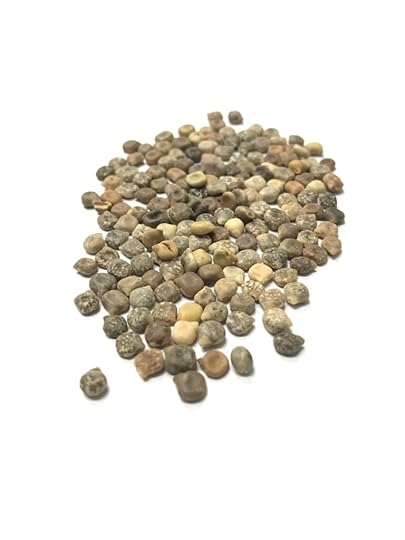
In contrast, poppy and tomato seeds are small and delicate, built for only one season. Other seeds, when properly stored in a controlled environment, can last a few seasons. Even so, their germination rates fall as they age. Bluebonnet seeds, on the other hand, endure and spring to action when the time becomes right—even if a few years down the road.
Many of us can use an extra shot of endurance right now. Hard-fought civil rights, including voting rights, are at risk in our society; elsewhere wars and violence rage as if they are age-old human infirmities that can’t be eradicated.
Endurance is more than “hanging in there.” Endurance is maintaining one’s place, like a solid rock, in the face of troubling adversity. And endurance is strengthened by community and communal actions. Many of us are on the same path—fighting for common good and decency during this time of societal drought brought on by cruelty, greed, and an unabashed lust for power and control.
Occasionally, you’ll see a solitary blooming bluebonnet, but more often you’ll see bunches and clusters of them. There is power in numbers, and strength in togetherness.

We trust that it will rain again this winter, and we know that the values of love, compassion and peace-making are not going away anytime soon. They will endure as long as those of us who cherish them continue to practice them. Endure, my friends, for your rock-solid hope in humanity’s better angels is the power that allows them to flourish, especially during times like these.
T. Carlos “Tim” Anderson – I’m a Protestant minister and Director of Austin City Lutherans (ACL), an organization of partners in Austin, Texas working together to serve low-income individuals and families.
Check out any of my books – Just a Little Bit More (2014), There is a Balm in Huntsville (2019), and There is a Balm in Wichita Falls (2024).
January 5, 2026
Blessed Dryuary – Again
Ten years ago during Christmas, our daughter Alex shared her upcoming new-year endeavor : “Dryuary.” I had never heard the word before but understood it instantly – dry January. Alex, a vegetarian and daily exerciser, proceeded to converse with me and her mother, Denise, about the wisdom of bodily and mental detox after December’s season of excesses. It made an impression. A year later, Denise and I jumped on the Dryuary bandwagon and we thanked Alex for role-modeling the idea. Alex yet practices Dryuary as do other family members. This year will mark Denise’s and my ninth time to do Dryuary together.

As 2025 wound down, I looked forward to Dryuary’s hiatus on alcohol. Denise and I have wine with most dinners . . . but purposely incorporating change into one’s habits gives an opportunity for perspective enhancement. Dryuary not only gives a mild cleanse to one’s psychological and physical states, but also a chance to reset them.
I’m in resetting mode and, to boot, there are good historical reasons that make the case for Dryuary and its invitation to reclaim the wisdom of moderation.
The winter solstice, December 21 – the shortest day in the Northern Hemisphere – has a deep cultural history related to the rhythms of year-end harvest. For millennia, the period preceding and following the solstice (what we moderns call October, November, December, and January) has been the time of gathering in harvests, slaughtering for fresh meat, and enjoying the products of fermentation, beer and wine. December was and is the time for excess – eating, drinking, celebrating, leisure – a time to enjoy labor’s rewards at year’s end.
Our modern-day December holiday season with gifts and the exaltation of consumerism, rich food and libations, and celebrations simply follows suit. Santa Claus, with his round belly and deep laugh, is the iconic representative of our modern season of excesses. (For those wondering about how December’s religious aspect – namely, the baby Jesus – fits into this topic, I cover that here.)
Have you ever put on a few pounds during the winter holidays? Have you ever signed up for a gym membership in January? If so, you’ve experienced the natural rhythms of this time of the year. There’s nothing wrong with occasional excesses. The hundreds of seeds produced by my garden’s basil and cilantro plants when they flower – in anticipation of next season’s reproduction – is a prime example of the goodness of excess.
When excess, however, becomes a way of life – addiction being excess’s most devious manifestation – problems multiply for individuals so afflicted and for the society in which they live. Eating, drinking, consumerism – all necessary parts of the human enterprise – are best done in moderation. This is the basic theme and message of my first book, Just a Little Bit More.
As we age, we slow down and our habits – both the good and bad ones – become more ingrained. Youth’s ability to shrug off mistakes and pivot to new possibilities has diminished. Hopefully, for those of us in the aging mode, the wisdom of the years has accumulated and produced effective strategies for dealing with the vagaries of life. As we’ve heard it said: “For everything there is a season, and a time for every matter under heaven.”
I have, God willing, good plans for 2026: multiple house projects, weekly golf, writing, and continuing the meaningful social ministry work I’m able to do with fantastic partners. Dryuary helps me get a head start on these good ambitions where needed.
Even though Twitter is awash with Dryuary bashing – “I made it 8 hours into this year’s #Dryuary before a bottle of reserve Rioja was calling my name . . . ” – I’m not persuaded otherwise. The pendulum has swung away from December into blessed Dryuary. I raise my glass of iced hibiscus tea with fresh mint to the new year!
T. Carlos “Tim” Anderson – I’m a Protestant minister and Director of Austin City Lutherans (ACL), an organization of partners in Austin, Texas working together to serve low-income individuals and families. Check out any of my books – Just a Little Bit More (2014), There is a Balm in Huntsville (2019), and There is a Balm in Wichita Falls (2024).
December 18, 2025
Merry Christmas, Charlie Brown
I was almost four years old when the CBS network debuted A Charlie Brown Christmas on December 9, 1965. From the living room of a house that my parents rented on Grand Avenue in St. Paul, Minnesota, I most likely watched its premiere. My dad was a second-year seminary student at the time, and, like many of his classmates, a big fan of Charles Schulz and his Peanuts comic strip. As my dad completed his education and began his career as a pastor and chaplain – prompting a family move to Portland, Oregon, a return to Minneapolis-St. Paul, and then a permanent relocation to the Chicago area – Christmas seasons for our family consistently centered upon snow, lights, a tree, presents, church, and plenty of anticipation. Watching A Charlie Brown Christmas, a show that incorporated all of these themes, was a high point of each Christmas celebration in my childhood home as our family grew to include my younger brothers and sister.
A generation later, my wife, Denise, and I lived in Houston with our three young children where I worked as a pastor. A cherished copy of A Charlie Brown Christmas was prominent in our VCR tape collection alongside copies of Disney classics that the kids watched over and again. As Christmas 1992 approached, it occurred to me that I needed more than the VCR copy of the Peanuts’ gang Christmas. I had to get a copy of the soundtrack. Those wondrous bits of jazz piano, bass and drums that undergirded the animated TV special beckoned me. I had heard its notes sway and its chords swing from my earliest days. There had to be a recording of these songs where the musicians stretched out.
These were pre-Amazon days. The CD era was cresting, but even so, it wasn’t until I went to a fourth or fifth “record store” (that’s what we called them back then) that I found a cooperative store manager who promised to order me (from an inventory catalog pulled down from a shelf) a CD of the Vince Guaraldi Trio’s A Charlie Brown Christmas.
Bingo – Guaraldi and his bandmates stretched out magnificently, matching my expectations.

The next few Christmas seasons, I purchased additional copies of the CD and gifted them to family and friends. Then, in 1995, it was my turn to preach the Christmas Eve sermon at the church, Holy Cross Lutheran, I served in Houston. There was no question as to what I’d do for the message that year: a recapitulation of A Charlie Brown Christmas. It was a bit of a risk – telling a child’s tale for one of the largest worshipping crowds of the year. But I had the blessing of my pastoral colleague Gene Fogt and – even though the animation has no adult characters – I knew Charlie Brown’s story wasn’t just for kids.
The opening scene of the special features Charlie Brown confiding to his buddy Linus van Pelt: “I just don’t understand Christmas, I guess. I like getting presents . . . but I’m still not happy. I always end up feeling depressed.”
Writer Charles Schulz wonderfully develops a twenty-two minute animated homily from this starting confession to convey his own sense of Christmas’s true meaning: not the glitz and glitter of over-commercialization – which ultimately doesn’t deliver on its promise – but human and divine solidarity through the birth of a child. “For unto you is born this day in the city of David a Savior, which is Christ the Lord. And this shall be a sign unto you; ye shall find the babe wrapped in swaddling clothes, lying in a manger,” Linus tells Charlie Brown, quoting Luke 2.
A recently retired USAF colonel, Rolf Smith, was visiting the congregation that Christmas Eve with his family. He loved the sermon (as he told me later) and returned to Sunday worship services in the new year. As we got to know each other, I learned that Rolf had spearheaded the launch of “innovation” as a corporate strategy for the air force. To him, recasting A Charlie Brown Christmas for a sermon was “highly innovative.” That spring, he and his spouse, Julie, joined the church.
Another congregant, however, expressed her disdain to me about the sermon. She deemed a rendering of “a cartoon” as inappropriate for Christmas Eve worship. It wasn’t until a few years later that I discovered that a family member of hers struggled mightily with depression. The message was too close to home. For Christmas Eve worship, I surmised, she had not wanted any mention of depression and its effects.
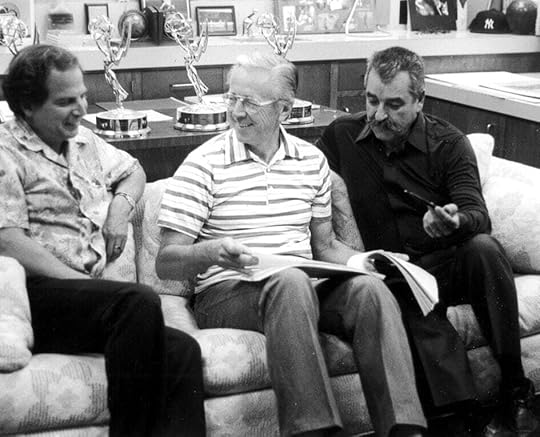 Producer Lee Mendelson, Peanuts’ creator Charles Schulz, and animator José Cuahtomec “Bill” Melendez
Charles Schulz, from his Sebastopol, California studio, collaborated with producer Lee Mendelson and animator Bill Melendez after Coca-Cola agreed to underwrite the special in the summer of 1965. Adhering to a fast-tracked schedule, Schulz and Melendez drew out 13,000 stills for the animation. Mendelson, having met and worked with the Grammy award-winning Guaraldi the previous year, commissioned the jazz pianist to record the soundtrack. A children’s choir from an Episcopal church sang for two of the tracks. Mendelson himself wrote the lyrics to Guaraldi’s tune Christmas Time is Here, now covered by hundreds of musicians the world over.
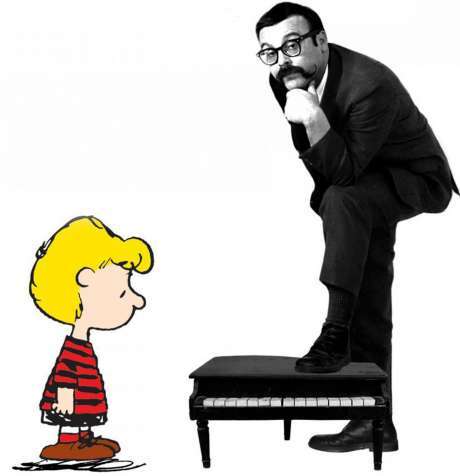 Peanuts’ piano players: Schroeder and Vince Guaraldi
A Charlie Brown Christmas is now playing its 61th Christmas season, and still going strong even for new generations.
When my son, Mitch, who was born in 1991, comes home to see us at Christmas, one of his first requests after hugging his mother is to hear some Christmas music – “the Snoopy and Charlie Brown disc.” I always oblige – he’s heard it every Christmas since he can remember. Lucky guy.
T. Carlos “Tim” Anderson – I’m a Protestant minister and Director of Austin City Lutherans (ACL), an organization of partners in Austin, Texas working together to serve low-income individuals and families.Check out any of my books – Just a Little Bit More (2014), There is a Balm in Wichita Falls (2024), and There is a Balm in Huntsville (2019).
October 2, 2025
“You Should Write a Memoir”
“You Should Write a Memoir”
Jim Harrington stared back at me over lunch with a scowl. He had just told me to fudge off, in so many words. His mouth, however, betrayed a slight smile. He knew I was right as I met his uneven scowl with a wide, confident grin. I had just told him that he needed to write a memoir.
It was October 2022. La Fruta Feliz, an unpretentious Mexican restaurant on Austin’s eastside, has been Jim’s go-to lunch spot for years. We had met there a number of times for almuerzo since 2017, shortly after we were introduced to one another by mutual friend and pastoral colleague, Jay Alanis. Jim, after a decades-long career as a civil rights lawyer, became an Episcopal priest and served a Spanish-speaking immigrant congregation, Proyecto Santiago, at St. James Episcopal Church. When we met—included as an addendum story below—Jim invited me to preach as part of his troop of once-a-month Spanish preachers for Project Santiago. All of us, including Jay, did so pro-bono style, following Jim’s lead as an unsalaried priest.
I knew of Jim and of some of his work before I met him. As I got to know him better, he shared with me his “call story”—how he originally intended to become a Catholic priest, back in the late sixties, but switched gears and eventually went to law school instead. All of this happened in his home state of Michigan, where he had worked alongside seasonal farmworkers—all of them Mexican or of Mexican descent—for seven consecutive summers. The work involved setting up health clinics, enforcing minimum wage laws, distributing supplemental food and vouchers, and conducting evening adult education and worker rights classes. As it turned out, there would be time for seminary and ordination later. Decades later. Fresh out of law school in the early seventies, Jim came to South Texas to continue to work alongside farmworkers. And just like in Michigan, working alongside farmworkers in Texas branded him as an “outside agitator” in the eyes of owner-planters. It was exactly where Jim felt called to be, doing exactly what he felt called to do: confronting injustices in the spirit of God-inspired anger and compassion—and pissing off entrenched power brokers in the process.
What a story in and of itself, and what a story for a memoir.
After Jim quit scowling at me over the chips and salsa on our table at La Fruta Feliz, I told him I had a contact at UT Press, which I figured to be a most appropriate publisher for such a book. Jim taught as an adjunct professor in UT’s law school for twenty-six years while heading up the Texas Civil Rights Project in Austin. Jim busted his tail in the writing process, and UT Press took him up on his proposal. The Texas Civil Rights Project: How We Built a Social Justice Movement was released on September 16. Jim has been invited to speak at the Texas Book Festival, November 8–9, to be held in downtown Austin, in and around the Capitol.


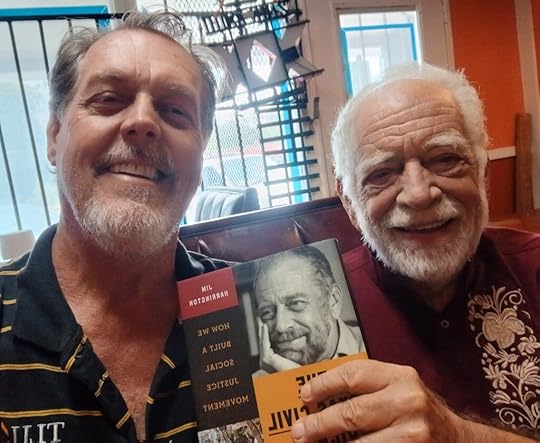 At La Fruta Feliz once again with Jim, August 2025
For all of my needling and mischief, Jim inscribed a pre-release copy of his book for me. Having read a number of early manuscript chapters at Jim’s request, I relished the opportunity to read the hardcover book, the final product of Jim’s faithful rewriting and tweaking with the help of an experienced editor. I am profoundly biased, obviously, but this book is a powerhouse and a whirlwind simultaneously. Jim’s focus never wavers from the folks—Texas Valley farmworkers and others—whom he and the TCRP represented over the years. There’s also a pointed focus, humorous at times, upon the politicians, owner-planters, bad-actor law enforcement officers and establishment sycophants they encountered along the way.
A heads up: Don’t think that this history/memoir doesn’t have anything to say about what’s happening in our country and society today. I purposely use a double-negative to make my point! As many of us see the current administration’s policies eroding basic civil rights, including voting rights, this book shows how the (metaphoric) battles were won for worker and civil rights and can been won today. It’s an encouragement to read how truth can be spoken to power effectively, and how the strength of a united people group can withstand and even defeat the negative effects of long-standing racism and worker abuses.
Jim shares his call story, concluding with his law school graduation ceremony when he pinned a United Farm Workers “Boycott Grapes” button to his commencement cap, in the first chapter—and an incredible ride ensues from there as he comes to the Texas Valley in 1973. Subsequent topics include organizing (protesting, marching, striking and negotiating) alongside and on behalf of farmworkers, confronting police brutality, fighting for grand jury reform, and taking on the Texas Supreme Court to institute legal pro-bono support for low-income Texans. Jim’s writing puts the reader in the midst of the action described in the book: in the fields alongside farmworkers, in TCRP offices as legal strategies are formed, in the courtrooms where judges and juries contemplate giving TCRP clients their constitutional rights and privileges.
You already know I’m biased when it comes to this book. It fits the bill for many of us—citizens concerned that the United States is losing its place as the lead guardian of democracy, lawyers and law students, and those wanting to forge ahead in the important work of standing up for what’s right in the face of ongoing injustice.
For the record, I’m not the only one who suggested to Jim that he write his memoir. My words, as if the last straw, were simply delivered at the right time. And harking back to that lunch in October 2022, if you know Jim, you know exactly what he did say to me when I told him that he needed to write a memoir. He didn’t say “fudge.” Ha.
There are plans for the book to be translated into Spanish. Jim should have los detalles of the Spanish version’s availability around the beginning of 2026.
Addendum Story: My wife, Denise, has worked as a stalwart paralegal at Bickerstaff, Heath, Delgado and Acosta since 2008. The firm employed Texas civil rights legend Myra McDaniel, a UT law school grad and the first African American to serve as Texas Secretary of State, (1984–87). Upon completion of her term, she became a managing partner at Bickerstaff. Denise and all other employees at the firm were honored to work alongside Ms. McDaniel, who was universally loved and admired.
Myra was a member of St. James Episcopal Church on Austin’s eastside. She passed away at 78 years of age in 2010. Her funeral at St. James, which has a large rounded sanctuary, was standing room only with more than 400 mourners. I attended the funeral service with Denise.
Years later, in 2017, after I had resigned my pastor position at St. John’s/San Juan Lutheran, Denise suggested that we go to worship “at Myra’s church.” I knew the priest at St. James, Madeline Shelton Hawley, and we greeted her before worship started. I mentioned to Madeline that we came to worship at St. James that morning because Denise had worked with Myra McDaniel. Madeline smiled, and simply said that everyone at the congregation loved Myra and missed her greatly.
Toward the end of worship, Pastor Madeline asked all the visitors to stand to be recognized. Of ten or so visitors that Sunday, Denise and I were the last to be recognized as the pastor went around the sanctuary. Because Pastor Madeline knew me, I was pretty sure that I was about to receive the standard positive call-out from one clergy to another—“What an honor to have Pastor Tim Anderson with us here today.” Blah, blah, blah.
To my surprise, that didn’t happen. Pastor Madeline gave the honor of visitor name recognition to “Denise Anderson, who used to work with Myra McDaniel!” At the mention of Myra’s name, the entire congregation—some 150 souls—turned around with wonder and surprise on their faces and began to clap. Denise beamed. And then Madeline simply closed the introduction and said, “and Denise is here today with her husband.”
It was great! It was the first time ever Denise got props in a church setting over and above her pastor husband! It was more than overdue; it was just, right, and salutary!
When the service had concluded and Denise and I were visiting with folks in the narthex, I happened to see my friend and former congregant from St. John’s/San Juan Lutheran, Jay Alanis, a seminary professor at Lutheran Seminary Program of the Southwest. He was surprised to see me and said, “Pastor, there’s someone I want to introduce you to!” Jay was preparing to preach at Proyecto Santiago—he was one of Jim’s troop of Spanish preachers—and brought me over to Jim. Jay introduced us and told Jim that I would be a good candidate for Spanish preaching at Proyecto Santiago.
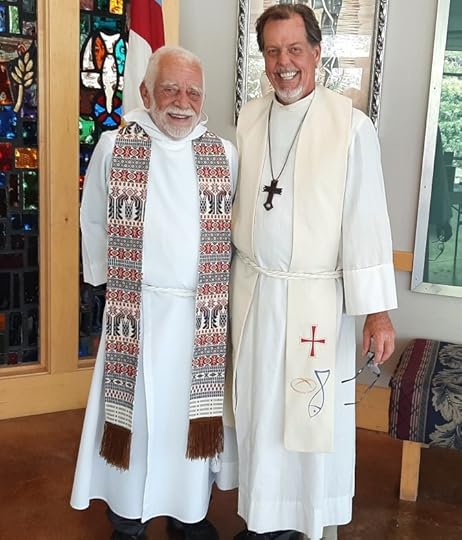 With Padre Jim at Proyecto Santiago in 2024
The rest is history, as they say—at least, for me!
T. Carlos “Tim” Anderson – I’m a Protestant minister and Director of Austin City Lutherans (ACL), an organization of partners in Austin, Texas working together to serve low-income individuals and families.
Check out any of my books – Just a Little Bit More (2014), There is a Balm in Huntsville (2019), and There is a Balm in Wichita Falls (2024).
September 26, 2025
“America, América” and Fascism – Book Review
In America, América, Pulitzer Prize-winning historian Greg Grandin continually reminds readers that WW II was a battle against European fascism—Hitler in Germany and Mussolini in Italy. Even though Spain maintained a veiled neutrality during the war, Franco was a fascist leader. The Empire of Japan, part of the Axis alignment, isn’t typically defined as fascist, but it had fascist characteristics.
As three generations have passed since the end of the war in 1945, most of us have no working definition of fascism. We’re familiar with democracies, communism and dictatorships. What is fascism? Grandin’s book, as it details in its middle sections the post-WW II political landscape in the Americas, describes fascism as “a virulent, mobilized nationalism” exhibiting the following characteristics:
* government led by charismatic leader
* extreme nationalism exhibited by leader and supporters
* a defined enemy (or enemies)
* the use of military force upon a country’s own citizens
* the curtailing of free speech, specifically restricting the freedom of the press
* the political obliteration of checks and balances, specifically shaping the judicial court system to represent the will of the leader and ruling party
* the co-opting of religion for state purposes
In our post-Cold War era, fascism has reemerged in the Americas. Grandin writes, “In any given election, agitated conservatives might tap into misogyny, gender panic, Christian supremacy, or racism to win, sometimes spectacularly so, such as when Jair Bolsonaro took power in Brazil in 2018, or in 2023, when Hayekian Javier Milei won in Argentina. El Salvador’s president, Nayib Bukele, has, in the name of fighting gang violence, done away with due process to line up thousands of young men, stripping them naked and displaying them to the world with shaved heads. Octavio Paz died before he could witness such a Dantesque display of fascist dehumanization, or otherwise he might have revised his assertation that Latin America’s Catholic culture produced no pariahs” (pgs. 624–25).
This book went into press as Donald Trump assumed his second presidency. Not quite a year into this presidency, it’s become obvious that Trump is following a fascist playbook.
Out of a total 625 million inhabitants, Grandin writes, 480 million Latin Americans currently live under some type of social-democratic government. The best hope to confront and overcome the neofascist movement, he says, is for these governments to continue to pursue policies that champion a humanist and social welfare bent. Chile’s example, Grandin writes, is the starkest: Allende’s social democracy (1970–73) followed by Pinochet’s authoritarianism (1973–1990). Chile has steadfastly, in the subsequent decades, rejected the latter’s Hayekian-influenced economic shock therapy of deregulation, privatization and austerity measures. All this—along with political repression—just so Chile can have a burgeoning multi-millionaire class? A majority of Chileans, for decades, have said “no.”
In Brazil, Jair Bolsonaro was recently sentenced to 27 years in prison for attempting to undermine the democratic presidential election of 2022, which he lost. In many ways, his and his supporters’ actions mirrored those of Donald Trump and his supporters during the January 6, 2021 insurrection at the US Capitol. Bolsonaro has appealed his sentence. The largest Latin American county with a population of 213 million, Brazil’s current democracy was established in 1988 after more than twenty years of military dictatorship. In June 2023, Brazil’s Superior Electoral Court banned Bolsonaro from running for president (or any political office) until 2030 for his part in undermining the 2022 election.
It begs the question: Will the majority of the US’s 341 million citizens reject Trump’s continuing foray into fascism?
T. Carlos “Tim” Anderson – I’m a Protestant minister and Director of Austin City Lutherans (ACL), an organization of partners in Austin, Texas working together to serve low-income individuals and families.Check out any of my books – Just a Little Bit More (2014), There is a Balm in Huntsville (2019), and There is a Balm in Wichita Falls (2024).
September 4, 2025
“America, América” – Book Review
In October of 1982, I climbed dirt roads on the outskirts of Cusco, Perú with a college classmate. Cusco, in a bowled valley 11,152 feet above sea level in the beating heart of the Andes Mountain range, shrank behind us as we ascended. In front of us, unending stacks of mountain tops beckoned. The whole experience—the expanse and sheer beauty of the Andes, the history of the ancient Incan capital, the freedom to hike where few of our contemporaries even imagined—was exhilarating. The two of us vowed to return some day to Perú.
Augustana College (Rock Island, Illinois) had what was called a “foreign quarter study” program. With some forty other classmates and four professors, we spent ten weeks in Mexico, Colombia and Perú. Our history teacher on the trip, Dr. Tom Brown, mesmerized us with lectures on the Black and White Legends of the Spanish Conquest. Toward the end of the trip, a handful of us talked about spinning Neil Young’s “Cortez the Killer” as the first thing we’d do upon returning home. He came dancing across the water, with his galleons and guns . . .
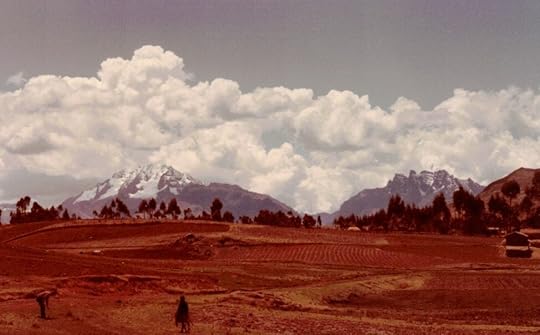 Cusco environs
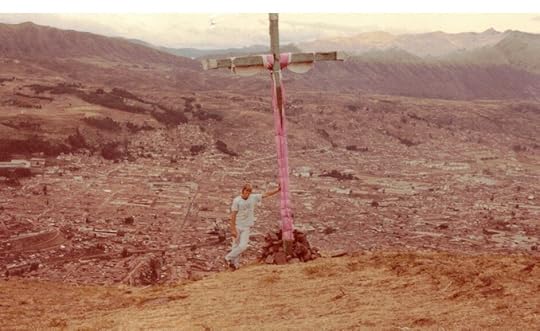 1982
1982Participating in the program changed my life. I did go back to Perú, as a seminary student, and learned Spanish de verdad. Subsequently, I’ve spent three plus decades working as a pastor in Texas, using English, of course, y el bendito Español. Often times I’ve described myself as “a missionary to white people.” That description isn’t necessarily pejorative. Another way to describe the work I’ve done and continue to do: I’m a “bridger.”
Yale history professor Greg Grandin’s new book, America, América, tells a broader story of American history—of English-speaking, Spanish-speaking and Portuguese-speaking America. In Grandin’s telling of the American story, there is no dichotomy of US and Latin American histories as North, Central and South American histories bridge together.
I sense that Grandin would consider himself a “bridger” as well. His ability to merge Latin American events within the larger framework of “American history” works. His occasional use of Spanish in the text is well-placed and adds appropriate spice and effect.

The shared evil of slavery is the initial touchpoint of his telling.
Whereas the United States needed the brutal Civil War to resolve its adherence to slavery, the majority of Latin American nations—Cuba and Brazil are the outliers, not abolishing slavery, respectively, until 1886 and 1888—wrote abolitionism into their founding constitutions in the early nineteenth century. Independence from Spain logically translated into freedom for all inhabitants—whether brown, black or white; male or female; native- or foreign-born.
The Spanish priest Bartolomé de Las Casas (1484–1566) exposed the wickedness and inhumanity of Spanish colonial slavery. Early on in the Conquest, Las Casas himself was an encomienda owner with slaves. His eventual, steady conversion to abolitionism, primarily documented in his A Short Account of the Destruction of the Indies (written in 1542 and published in 1552), established a tradition that abolitionists built upon for close to 300 years, cresting with the leadership of the “Great Liberator,” Simón Bolívar.
Liberty for all was an American concept established—on constitutional paper, at least—by a dozen newly established Latin American countries by 1825, while at the same time the number of slaves in the United States grew to more than 2 million. It would be another 40 years until slavery was officially abolished in the US.
On December 1, 1936, President Franklin Roosevelt arrived in Buenos Aires, Argentina to give the keynote address at the Inter-American Conference for the Maintenance of Peace. Grandin recounts how FDR championed his “good neighbor policy” as a guard against the possibility of European fascism—ascendant in Germany and Italy, and rising in Spain—establishing itself in the Americas. Additionally, the “good neighbor policy” was Roosevelt’s promise of no armed US intervention into the twenty-one Latin American countries represented at the conference. Roosevelt’s formula—social welfare, freedom of thought, free commerce, and mutual defense—echoing some of his New Deal constructs, offered, he said, “hope for peace and a more abundant life” for Latin Americans and the whole world.
In this pre-WW II era, German and Italian nationals lived in established communities in Argentina, Paraguay, Uruguay, Chile and Perú. The threat of fascist advance in South America was real.
Two Roosevelt administrators, Henry Wallace and Sumner Welles, worked the “good neighbor policy” in Latin America. Wallace, the Secretary of Agriculture (and Roosevelt’s vice-president from 1941–44), was convinced that raising the world’s standard of living was the surest way to promote democracy in the midst of fascist advances. He promoted labor clauses favoring worker rights—fair wages, health care, and a ban on prisoner labor—in government procurement contracts. Welles, a bilingual State Department envoy who specialized in Latin American affairs, was of the opinion that a peaceful and secure world was only possible if the gap between “the haves” and “the have nots” was narrowed.
Their naysayers were legion and vociferous. By the time Roosevelt died (in office) in 1945, Wallace’s and Welles’s influence had waned. Even so, their viewpoints stand out as high-water marks of New Deal thinking. Poverty and inequality breed discontent and unrest, much more so in the modern world than in times previous.
As the Cold War and the thwarting of communism took on absolute precedence in US foreign policy, the good neighbor policy toward Latin America disappeared like a mouse scurrying into hole. The era of US support of proxy wars in Central and South American countries commenced—first in Guatemala, later in Nicaragua and El Salvador. The US would later carry out covert operations in Honduras, Panama and Haiti.
Grandin details how the International Court of Justice—the legal arm of the United Nations—ruled in 1986 that the US was guilty of waging an illegal war in Nicaragua and imposed a $17 billion reparations judgment on the US. The court ruled that Washington’s patronage of the Contras was illegal as was the mining Nicaragua’s harbors and distributing “how-to” torture manuals to anti-Sandinistas. In response, the Reagan administration simply announced it was withdrawing from the court’s jurisdiction. Grandin calls it a watershed moment of unilateralism and the blunting of international law.
Shortly thereafter, with the fall of the Soviet Union and the absence of anything akin to FDR’s good neighbor policy, US and Latin American relations took on, according to Grandin, the status of “informal dependency.” The economic policies of neoliberalism, or globalization—as it has done in the US—has redistributed wealth upward in Latin American countries as its populaces have suffered through economic austerity measures, lower wages, hollowed-out social services and weakened labor protections. Inequality is on the rise in Latin America. As wealth siphons upward, so does political power.
The authoritarian right—Trump in the US, Bolsonaro in Brazil, Milei in Argentina, Bukele in El Salvador—and the accompanying reemergence of fascism will be the topic of my next blog on Grandin’s America, América.
This is the first of two blog posts on the new book, America, América (Penguin Press, 2025) by Yale historian Greg Gandin.T. Carlos “Tim” Anderson – I’m a Protestant minister and Director of Austin City Lutherans (ACL), an organization of partners in Austin, Texas working together to serve low-income individuals and families.Check out any of my books – Just a Little Bit More (2014), There is a Balm in Huntsville (2019), and There is a Balm in Wichita Falls (2024).
July 30, 2025
Remembering Linda White
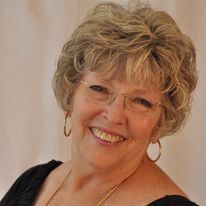
When doing research that resulted in the 2019 publication of There is a Balm in Huntsville, I was told by three people—Andrew Papke, David Doerfler, and Ellen Halbert—that I needed to meet and talk to a woman named Linda White. Each of them told me that Linda was an incredible person, a crime-victim survivor whose story was unparalleled. I consequently travelled to Magnolia, Texas in April of 2017 and spent the better part of a day interviewing Linda. My three encouragers were exactly right. Linda’s story was harrowing—the horrific murder of her daughter Cathy at the hands of strangers—and astounding—her life-long response to this tragedy positively influenced countless others.
Linda passed away on July 3, 2025. She was 84 years old. When I met her in 2017, she carted around an oxygen tank and told me that because of COPD, she only had a few more years to live. A lung transplant might have worked for Linda, but she told me that its possibility held no sway for her. The many accomplishments of her life—recorded on my phone that day—had already crafted a beautiful and lasting legacy. By that point in time, Linda had spoken to and with hundreds of people about her story of recovery and restoration. The list included TV personalities Oprah and Montel Williams and their wide audiences; it also included hundreds of prisoners who heard her story through a prison ministry program (Bridges To Life) designed to help them recover and turn their lives around. Yes, that’s the kind of person she was. Incredible. An outlier. One of the best of human beings.
Early on in her grieving and recovery process, Linda figured out that the healing she deeply craved wasn’t going to come via vengeance. The two young murderers of her daughter were sentenced to be in prison for a long time—more than 50 years—but she needed something beyond the state’s lawful retribution to reclaim, if even possible, her life.
In her search, she discovered something called “restorative justice.” Its emphasis on “repairing the damage done by crime” gave her life renewed purpose. Her reparation process was a lengthy one, but it was thorough. There is a Balm in Wichita Falls (published in 2024) fully details Linda’s recovery. As she told me, her recovery process and subsequent advocacy work for restorative justice practices were the best ways for her to honor her daughter’s life.
The dedication of the first of the two Balm books reads as follows: “This book is dedicated to Dr. Linda White—crime victim, restorative justice advocate, college professor to prisoners, and Victim-Offender Dialog mediator.” Parts of her story were included in the original manuscript for that book, but were eventually edited out. Little did I know at the time, however, that the outtakes of that book would turn out to be the basis for the second book.
For the second book, Linda’s recovery story intertwines with that of her good friend Ellen Halbert. Linda and Ellen didn’t know each other at the time of their simultaneous victimizations, but their journeys later merge. They form a deep friendship and work together for understanding, healing, and justice—There is a Balm in Wichita Falls tells their amazing stories in narrative, page-turning fashion.
In the last number of years, in society and politics, we’ve heard increased usage of “us versus them” verbiage and witnessed a renewed emphasis on retribution. Public safety, of course, is a crucial societal pillar produced by just laws and a fair and effective judicial system. Demonizing others and using fear as a political lever, however, contribute to the erosion of public safety. Linda’s and Ellen’s voices offer a better way forward, in the spirit of Jesus who said to “love your enemies and pray for those who persecute you.”
Similarly, the New Testament book of James states that “human anger does not produce the righteousness of God.” Thanks to Linda White, who looked beyond the limited scope of retribution to discover healing and experience restoration. This is her lasting legacy—the promotion of a different road forward for healing.
T. Carlos “Tim” Anderson – I’m a Protestant minister and Director of Austin City Lutherans (ACL), an organization of partners in Austin, Texas working together to serve low-income individuals and families.Check out any of my books – Just a Little Bit More (2014), There is a Balm in Huntsville (2019), and There is a Balm in Wichita Falls (2024).