
Nava Atlas's Blog
April 20, 2026
“Marriage and Love” by Emma Goldman, a 1911 essay
Emma Goldman (1869 – 1940) was a noted as a promoter of the anarchist philosophy. Best known for her role in the development of its theories in the early twentieth century, she was also actively involved in other social reforms. “Marriage and Love,” one of her best-known and widely read essays.
This thoughtful, often cynical, and surprising examination of marriage in the early twentieth century still speaks to the contemporary institution in many ways.
In 1906, Goldman founded the Mother Earth Journal, serving as both an editor and frequent contributor. The essay that follows was originally published by Mother Earth Publishing Association in 1911. It is in the public domain.
. . . . . . . . . .
Marriage and Love by Emma GoldmanThe popular notion about marriage and love is that they are synonymous, that they spring from the same motives, and cover the same human needs. Like most popular notions this also rests not on actual facts, but on superstition.
Marriage and love have nothing in common; they are as far apart as the poles; are, in fact, antagonistic to each other. No doubt some marriages have been the result of love. Not, however, because love could assert itself only in marriage; much rather is it because few people can completely outgrow a convention.
There are today large numbers of men and women to whom marriage is naught but a farce, but who submit to it for the sake of public opinion. At any rate, while it is true that some marriages are based on love, and while it is equally true that in some cases love continues in married life, I maintain that it does so regardless of marriage, and not because of it.
On the other hand, it is utterly false that love results from marriage. On rare occasions one does hear of a miraculous case of a married couple falling in love after marriage, but on close examination it will be found that it is a mere adjustment to the inevitable. Certainly the growing-used to each other is far away from the spontaneity, the intensity, and beauty of love, without which the intimacy of marriage must prove degrading to both the woman and the man.
Marriage is primarily an economic arrangement, an insurance pact. It differs from the ordinary life insurance agreement only in that it is more binding, more exacting. Its returns are insignificantly small compared with the investments. In taking out an insurance policy one pays for it in dollars and cents, always at liberty to discontinue payments.
If, however, woman’s premium is a husband, she pays for it with her name, her privacy, her self-respect, her very life, “until death doth part.” Moreover, the marriage insurance condemns her to life-long dependency, to parasitism, to complete uselessness, individual as well as social. Man, too, pays his toll, but as his sphere is wider, marriage does not limit him as much as woman. He feels his chains more in an economic sense.
Thus Dante’s motto over Inferno applies with equal force to marriage. “Ye who enter here leave all hope behind.”
That marriage is a failure none but the very stupid will deny. One has but to glance over the statistics of divorce to realize how bitter a failure marriage really is. Nor will the stereotyped Philistine argument that the laxity of divorce laws and the growing looseness of woman account for the fact that: first, every twelfth marriage ends in divorce; second, that since 1870 divorces have increased from 28 to 73 for every hundred thousand population; third, that adultery, since 1867, as ground for divorce, has increased 270.8 per cent.; fourth, that desertion increased 369.8 per cent.
Added to these startling figures is a vast amount of material, dramatic and literary, further elucidating this subject. Robert Herrick, in Together; Pinero, in Mid-Channel; Eugene Walter, in Paid in Full, and scores of other writers are discussing the barrenness, the monotony, the sordidness, the inadequacy of marriage as a factor for harmony and understanding.
The thoughtful social student will not content himself with the popular superficial excuse for this phenomenon. He will have to dig down deeper into the very life of the sexes to know why marriage proves so disastrous.
Edward Carpenter says that behind every marriage stands the life-long environment of the two sexes; an environment so different from each other that man and woman must remain strangers. Separated by an insurmountable wall of superstition, custom, and habit, marriage has not the potentiality of developing knowledge of, and respect for, each other, without which every union is doomed to failure.
Henrik Ibsen, the hater of all social shams, was probably the first to realize this great truth. Nora leaves her husband, not—as the stupid critic would have it—because she is tired of her responsibilities or feels the need of woman’s rights, but because she has come to know that for eight years she had lived with a stranger and borne him children. Can there be anything more humiliating, more degrading than a life-long proximity between two strangers?
No need for the woman to know anything of the man, save his income. As to the knowledge of the woman—what is there to know except that she has a pleasing appearance? We have not yet outgrown the theologic myth that woman has no soul, that she is a mere appendix to man, made out of his rib just for the convenience of the gentleman who was so strong that he was afraid of his own shadow.
Perchance the poor quality of the material whence woman comes is responsible for her inferiority. At any rate, woman has no soul—what is there to know about her? Besides, the less soul a woman has the greater her asset as a wife, the more readily will she absorb herself in her husband.
It is this slavish acquiescence to man’s superiority that has kept the marriage institution seemingly intact for so long a period. Now that woman is coming into her own, now that she is actually growing aware of herself as a being outside of the master’s grace, the sacred institution of marriage is gradually being undermined, and no amount of sentimental lamentation can stay it.
From infancy, almost, the average girl is told that marriage is her ultimate goal; therefore her training and education must be directed towards that end. Like the mute beast fattened for slaughter, she is prepared for that. Yet, strange to say, she is allowed to know much less about her function as wife and mother than the ordinary artisan of his trade.
. . . . . . . . . .
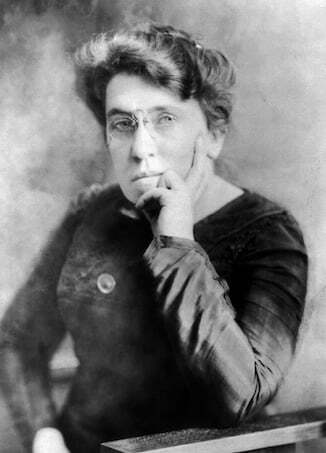
Emma Goldman in 1911
. . . . . . . . . .
It is indecent and filthy for a respectable girl to know anything of the marital relation. Oh, for the inconsistency of respectability, that needs the marriage vow to turn something which is filthy into the purest and most sacred arrangement that none dare question or criticize. Yet that is exactly the attitude of the average upholder of marriage. The prospective wife and mother is kept in complete ignorance of her only asset in the competitive field—sex.
Thus she enters into life-long relations with a man only to find herself shocked, repelled, outraged beyond measure by the most natural and healthy instinct, sex. It is safe to say that a large percentage of the unhappiness, misery, distress, and physical suffering of matrimony is due to the criminal ignorance in sex matters that is being extolled as a great virtue. Nor is it at all an exaggeration when I say that more than one home has been broken up because of this deplorable fact.
If, however, woman is free and big enough to learn the mystery of sex without the sanction of State or Church, she will stand condemned as utterly unfit to become the wife of a “good” man, his goodness consisting of an empty brain and plenty of money.
Can there be anything more outrageous than the idea that a healthy, grown woman, full of life and passion, must deny nature’s demand, must subdue her most intense craving, undermine her health and break her spirit, must stunt her vision, abstain from the depth and glory of sex experience until a “good” man comes along to take her unto himself as a wife? That is precisely what marriage means. How can such an arrangement end except in failure? This is one, though not the least important, factor of marriage, which differentiates it from love.
Ours is a practical age. The time when Romeo and Juliet risked the wrath of their fathers for love, when Gretchen exposed herself to the gossip of her neighbors for love, is no more. If, on rare occasions, young people allow themselves the luxury of romance, they are taken in care by the elders, drilled and pounded until they become “sensible.”
The moral lesson instilled in the girl is not whether the man has aroused her love, but rather is it, “How much?” The important and only God of practical American life: Can the man make a living? can he support a wife? That is the only thing that justifies marriage. Gradually this saturates every thought of the girl; her dreams are not of moonlight and kisses, of laughter and tears; she dreams of shopping tours and bargain counters.
This soul poverty and sordidness are the elements inherent in the marriage institution. The State and the Church approve of no other ideal, simply because it is the one that necessitates the State and Church control of men and women.
Doubtless there are people who continue to consider love above dollars and cents. Particularly is this true of that class whom economic necessity has forced to become self-supporting. The tremendous change in woman’s position, wrought by that mighty factor, is indeed phenomenal when we reflect that it is but a short time since she has entered the industrial arena. Six million women wage workers; six million women, who have the equal right with men to be exploited, to be robbed, to go on strike; aye, to starve even.
Anything more, my lord? Yes, six million wage workers in every walk of life, from the highest brain work to the mines and railroad tracks; yes, even detectives and policemen. Surely the emancipation is complete.
Yet with all that, but a very small number of the vast army of women wage workers look upon work as a permanent issue, in the same light as does man. No matter how decrepit the latter, he has been taught to be independent, self-supporting. Oh, I know that no one is really independent in our economic treadmill; still, the poorest specimen of a man hates to be a parasite; to be known as such, at any rate.
The woman considers her position as worker transitory, to be thrown aside for the first bidder. That is why it is infinitely harder to organize women than men. “Why should I join a union? I am going to get married, to have a home.”
Has she not been taught from infancy to look upon that as her ultimate calling? She learns soon enough that the home, though not so large a prison as the factory, has more solid doors and bars. It has a keeper so faithful that naught can escape him. The most tragic part, however, is that the home no longer frees her from wage slavery; it only increases her task.
According to the latest statistics submitted before a Committee “on labor and wages, and congestion of population,” ten per cent. of the wage workers in New York City alone are married, yet they must continue to work at the most poorly paid labor in the world. Add to this horrible aspect the drudgery of housework, and what remains of the protection and glory of the home?
As a matter of fact, even the middle-class girl in marriage can not speak of her home, since it is the man who creates her sphere. It is not important whether the husband is a brute or a darling. What I wish to prove is that marriage guarantees woman a home only by the grace of her husband. There she moves about in his home, year after year, until her aspect of life and human affairs becomes as flat, narrow, and drab as her surroundings. Small wonder if she becomes a nag, petty, quarrelsome, gossipy, unbearable, thus driving the man from the house.
She could not go, if she wanted to; there is no place to go. Besides, a short period of married life, of complete surrender of all faculties, absolutely incapacitates the average woman for the outside world. She becomes reckless in appearance, clumsy in her movements, dependent in her decisions, cowardly in her judgment, a weight and a bore, which most men grow to hate and despise. Wonderfully inspiring atmosphere for the bearing of life, is it not?
But the child, how is it to be protected, if not for marriage? After all, is not that the most important consideration? The sham, the hypocrisy of it! Marriage protecting the child, yet thousands of children destitute and homeless. Marriage protecting the child, yet orphan asylums and reformatories overcrowded, the Society for the Prevention of Cruelty to Children keeping busy in rescuing the little victims from “loving” parents, to place them under more loving care, the Gerry Society. Oh, the mockery of it!
Marriage may have the power to bring the horse to water, but has it ever made him drink? The law will place the father under arrest, and put him in convict’s clothes; but has that ever stilled the hunger of the child? If the parent has no work, or if he hides his identity, what does marriage do then? It invokes the law to bring the man to “justice,” to put him safely behind closed doors; his labor, however, goes not to the child, but to the State. The child receives but a blighted memory of its father’s stripes.
As to the protection of the woman,—therein lies the curse of marriage. Not that it really protects her, but the very idea is so revolting, such an outrage and insult on life, so degrading to human dignity, as to forever condemn this parasitic institution.
It is like that other paternal arrangement—capitalism. It robs man of his birthright, stunts his growth, poisons his body, keeps him in ignorance, in poverty, and dependence, and then institutes charities that thrive on the last vestige of man’s self-respect.
The institution of marriage makes a parasite of woman, an absolute dependent. It incapacitates her for life’s struggle, annihilates her social consciousness, paralyzes her imagination, and then imposes its gracious protection, which is in reality a snare, a travesty on human character.
If motherhood is the highest fulfillment of woman’s nature, what other protection does it need, save love and freedom? Marriage but defiles, outrages, and corrupts her fulfillment. Does it not say to woman, Only when you follow me shall you bring forth life? Does it not condemn her to the block, does it not degrade and shame her if she refuses to buy her right to motherhood by selling herself?
Does not marriage only sanction motherhood, even though conceived in hatred, in compulsion? Yet, if motherhood be of free choice, of love, of ecstasy, of defiant passion, does it not place a crown of thorns upon an innocent head and carve in letters of blood the hideous epithet, Bastard? Were marriage to contain all the virtues claimed for it, its crimes against motherhood would exclude it forever from the realm of love.
Love, the strongest and deepest element in all life, the harbinger of hope, of joy, of ecstasy; love, the defier of all laws, of all conventions; love, the freest, the most powerful moulder of human destiny; how can such an all-compelling force be synonymous with that poor little State and Church-begotten weed, marriage?
Free love? As if love is anything but free! Man has bought brains, but all the millions in the world have failed to buy love. Man has subdued bodies, but all the power on earth has been unable to subdue love. Man has conquered whole nations, but all his armies could not conquer love. Man has chained and fettered the spirit, but he has been utterly helpless before love. High on a throne, with all the splendor and pomp his gold can command, man is yet poor and desolate, if love passes him by. And if it stays, the poorest hovel is radiant with warmth, with life and color.
Thus love has the magic power to make of a beggar a king. Yes, love is free; it can dwell in no other atmosphere. In freedom it gives itself unreservedly, abundantly, completely. All the laws on the statutes, all the courts in the universe, cannot tear it from the soil, once love has taken root. If, however, the soil is sterile, how can marriage make it bear fruit? It is like the last desperate struggle of fleeting life against death.
. . . . . . . . . .
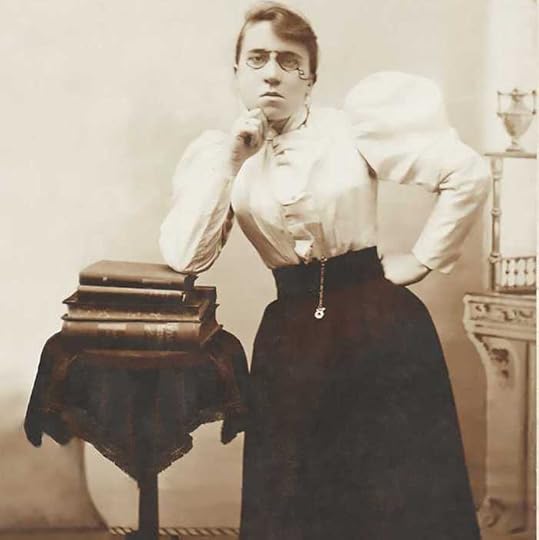
You may also enjoy
Anarchism: What it Really Stands For, also published in 1911.
. . . . . . . . . .
Love needs no protection; it is its own protection. So long as love begets life no child is deserted, or hungry, or famished for the want of affection. I know this to be true. I know women who became mothers in freedom by the men they loved. Few children in wedlock enjoy the care, the protection, the devotion free motherhood is capable of bestowing.
The defenders of authority dread the advent of a free motherhood, lest it will rob them of their prey. Who would fight wars? Who would create wealth? Who would make the policeman, the jailer, if woman were to refuse the indiscriminate breeding of children? The race, the race! shouts the king, the president, the capitalist, the priest. The race must be preserved, though woman be degraded to a mere machine,—and the marriage institution is our only safety valve against the pernicious sex awakening of woman.
But in vain these frantic efforts to maintain a state of bondage. In vain, too, the edicts of the Church, the mad attacks of rulers, in vain even the arm of the law. Woman no longer wants to be a party to the production of a race of sickly, feeble, decrepit, wretched human beings, who have neither the strength nor moral courage to throw off the yoke of poverty and slavery. Instead she desires fewer and better children, begotten and reared in love and through free choice; not by compulsion, as marriage imposes.
Our pseudo-moralists have yet to learn the deep sense of responsibility toward the child, that love in freedom has awakened in the breast of woman. Rather would she forego forever the glory of motherhood than bring forth life in an atmosphere that breathes only destruction and death. And if she does become a mother, it is to give to the child the deepest and best her being can yield. To grow with the child is her motto; she knows that in that manner alone can she help build true manhood and womanhood.
Ibsen must have had a vision of a free mother, when, with a master stroke, he portrayed Mrs. Alving [in the play Ghosts]. She was the ideal mother because she had outgrown marriage and all its horrors, because she had broken her chains, and set her spirit free to soar until it returned a personality, regenerated and strong. Alas, it was too late to rescue her life’s joy, her Oswald; but not too late to realize that love in freedom is the only condition of a beautiful life.
Those who, like Mrs. Alving, have paid with blood and tears for their spiritual awakening, repudiate marriage as an imposition, a shallow, empty mockery. They know, whether love last but one brief span of time or for eternity, it is the only creative, inspiring, elevating basis for a new race, a new world.
In our present pygmy state love is indeed a stranger to most people. Misunderstood and shunned, it rarely takes root; or if it does, it soon withers and dies. Its delicate fiber can not endure the stress and strain of the daily grind. Its soul is too complex to adjust itself to the slimy woof of our social fabric. It weeps and moans and suffers with those who have need of it, yet lack the capacity to rise to love’s summit.
Some day, some day men and women will rise, they will reach the mountain peak, they will meet big and strong and free, ready to receive, to partake, and to bask in the golden rays of love. What fancy, what imagination, what poetic genius can foresee even approximately the potentialities of such a force in the life of men and women. If the world is ever to give birth to true companionship and oneness, not marriage, but love will be the parent.
The post “Marriage and Love” by Emma Goldman, a 1911 essay appeared first on Literary Ladies Guide.


April 11, 2026
Literary Centenaries: Classic Fiction by Women Writers from 1926
I find literary centenaries fascinating. What books were being read and discussed one hundred years ago? What books and stories have become classics?
Because of the hoopla surrounding the centenary of The Great Gatsby in 2025, I did a similar roundup of books and stories by women writers from 1925,
All of these books and stories following are in the public domain, so you might find free versions of them online on sites like Project Gutenberg. Many are still circulating in print form in public or university libraries; and audio versions of most are available as well.
. . . . . . . . . . .
The Blue Castle by L.M. Montgomery
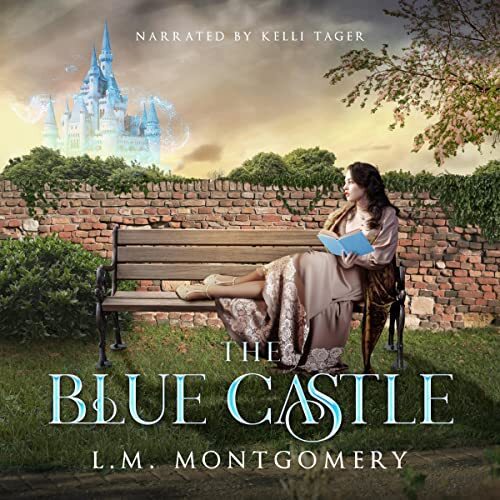
Canadian author L.M. Montgomery (1874 – 1942) is best known for her Anne of Green Gables and Emily of New Moon series. The Blue Castle (1926) was two novels she intended for adults (though all her books can be enjoyed by readers of all ages; the other is A Tangled Web, 1931). While this book may not be as famous as Montgomery’s Anne and Emily series, it’s beloved by those who have discovered it, and is one of her few standalone novels.
The story’s heroine, Valancy Stirling, is considered a hopeless old maid at age twenty-nine. Infantilized and controlled by her prim and eccentric family, she takes refuge in daydreams of her “Blue Castle” and reading nature books by an author known as John Foster.
When Valancy is diagnosed with a heart ailment that she’s told will kill her within a year, she suddenly feels liberated from her family, their judgements, and low expectations. She sets out to do just as she pleases, and so, the real story of Valancy’s life begins.
It’s best to read the book without knowing too much about the story in advance so that it can delight and surprise as it unfolds without spoilers. More about The Blue Castle.
. . . . . . . . . . .
Enough Rope:A Book of Light Verse by Dorothy Parker
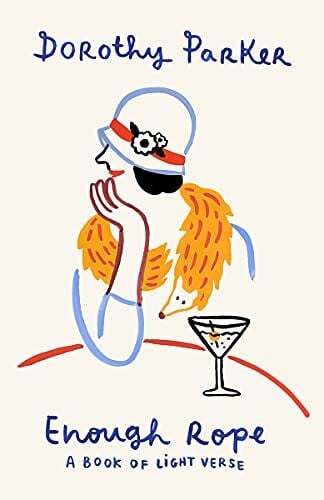
It’s almost a cliché to say that Dorothy Parker (1893–1967) was known for her acid wit, but that’s an accurate way to describe her acerbic style. Enough Rope: Poems by Dorothy Parker (1926) was her first published collection of verse. This collection includes the much-anthologized verses “Résumé” and “One Perfect Rose.”
In addition to verse, Parker wrote short stories, essays, and reviews. She was one of the founding members of the Algonquin Roundtable, an exclusive group of eminent New York City writers in the early twentieth century.
Parker was self-aware enough to know that she wasn’t a great poet. Her verses — in turn witty, funny, reflective, and wise — were often tinged with sadness and disappointment. In the introduction to The Portable Dorothy Parker, an omnibus of both short stories and poems, W. Somerset Maugham observed:
“Admirable as are Dorothy Parker’s stories, I think it is in her poems that she displays the quintessence of her talent … she has made little songs out of her great sorrows … And how fresh and various they are! Though beautifully polished, they have an air of spontaneity and none can know better than a writer what patient industry is needed to acquire that quality …”
Read Enough Rape in full here.
. . . . . . . . . . .
Show Boat by Edna Ferber
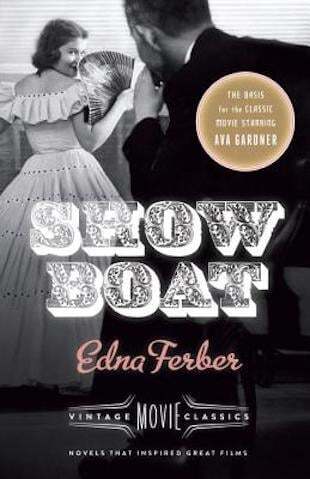
Show Boat by Edna Ferber, another 1926 classic, tells the story of three generations of performers on a floating theater, the Cotton Blossom. As the titled show boat travels down the Mississippi River from the 1880s to the 1920s, readers get a glimpse of a forgotten form of American entertainment.
In that era, floating theaters stopped in river towns that normally didn’t have access to high quality performances because of their distance and isolation from major urban centers. Edna Ferber captured the spirit of this way of life with her skillful storytelling and captivating characters.
Through the character of Julie, she also sensitively touched on racial topics that were quite controversial at the time — mixed marriage (then called “miscegenation, and in most states, illegal) and the concept of “passing.”
When the novel came out, it was praised more for its storytelling than as a masterpiece of literature, which was typical of how Ferber’s sprawling tales were receive.d And like many of Ferber’s works, it has a cinematic and theatrical quality. Read more about Show Boat about how Show Boat went from page to stage to screen (it was actually filmed twice).
. . . . . . . . . . .
Precious Bane by Mary Webb

Precious Bane, the 1926 novel by English author Mary Webb, is a coming–of–age novel set in the English countryside. Our heroine, Prue Sarn, is a sharply observant young woman of Shropshire during the Napoleonic Era who has been born with a disfigured lip.
Her harelip leads the others in her superstitious village to treat her as an outsider due to the association it shares with witchcraft. Despite the hardships of rural life, her disfiguration and its resulting perceptions Prue endearingly finds beauty and compassion for all around her.
The colorful cast of Precious Bane includes Prue’s brother Gideon, whose temperament is the of polar opposite of hers. Gideon, the inheritor of the family farm, cannot see anything in his environment outside of its potential to be exploited for personal monetary gain.
In contrast Prue’s romantic interest Kester Woodseaves, a skilled weaver, shares a profound empathy for his world and sees this same beauty in. English traditions and folklore fill out the world around Prue as her disfigurement encourages the suspicion of her community and ultimately the false accusation of murder and witchcraft to which Prue must defend.
Ultimately Mary Webb gifts her audience with a satisfying conclusion fitting for its kindhearted and empathetic protagonist. Read more about Precious Bane.
. . . . . . . . . . .
Lolly Willowesby Sylvia Townsend Warner
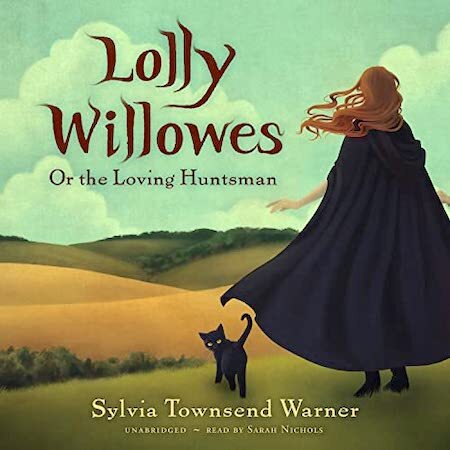
Lolly Willowes was the first novel by modernist author Sylvia Townsend Warner. It’s now considered an early feminist classic. A comedy of manners, this novel is steeped in social satire.
In his piece on this novel, Literary Ladies Guide contributor Frances Booth presents two reviews from 1926, when the book was originally published. The Scotsman’s review began:
“There is a piquant charm in this quiet chronicle of the life of an old spinster who makes a compact with the Devil, throws her relations to the winds, and asserts her right to stay out all night in the hills.
If it be objected that the patient Aunt Lolly whose submissive girlhood, submissive sisterhood, and submissive aunthood are so delicately and with fine persistence pictured by the writer could never develop into such a “monstrosity” as a witch, then the objector is referred to the exquisite old lady herself, who, it is certain, will charm doubt into conviction.”
A more recent look back at Lolly Willowes in the Guardian lauds it as “an elegantly enchanting tale that transcends its era.” Read more about Lolly Willowes.
. . . . . . . . . . .
“Sweat” – a short storyby Zora Neale Hurston
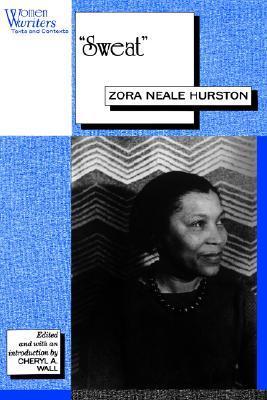
Zora Neale Hurston’s short story, “Sweat,” is nuanced and eloquently compact. Hurston maximizes each word, object, character, and plot point to create an impassioned and enlightening narrative.
Hurston addresses a number of themes, such as the trials of femininity, which she explores with compelling and efficient symbolism. In her introduction to the 1997 anthology entirely devoted to the story (“Sweat” by Zora Neale Hurston), editor Cheryl A. Wall wrote:
“The many levels on which ‘Sweat’ can be read make it one of Zora Neale Hurston’s most enduring works. It was published in 1926, early in Hurston’s career, indeed, long before she had dedicated herself to the profession of writing.”
“Sweat” was originally published in Fire!! Devoted to the Younger Negro Artists (1926), and is now in the public domain, so you can read it in full here.
The post Literary Centenaries: Classic Fiction by Women Writers from 1926 appeared first on Literary Ladies Guide.
April 10, 2026
Christine de Pizan and The Book of the City of Ladies
Christine de Pizan (alternatively Pisan) 1364–1430), an Italian-French court writer, is best remembered for The Book of the City of Ladies and its follow-up, The Treasure of the City of Ladies, two manuscripts dated 1405.
A prolific writer of poetry, novels, biography and commentary in vernacular French, she earned a living with her writing and is considered the first professional woman writer in Europe.
Christine de Pizan’s husband died of the plague in 1389, a year after her father’s death, leaving her to support her children and her mother as a court writer. This was considered a male occupation.
She skillfully used patronage in turbulent political times, with royalty commissioning her work, and became a prolific writer, with forty known works which include poetry, novels and biography, as well as literary, historical, philosophical, political and religious commentary.
Christine was personally involved in the production of her books, supervising the production of beautifully illustrated manuscripts that were acquired by fellow intellectuals for their own libraries.
. . . . . . . . . . . .
 . . . . . . . . . . . .
Why did Christine de Pizan write The Book of the City of Ladies (Le Livre de la Cité des Dames)?
It began with a literary controversy known as “The Debate of the Rose” (“La Querelle de la Rose”) involving several intellectuals. As the only woman involved, she questioned some parts of Jean de Meun’s long poem “Le Roman de la Rose” (1275), a continuation of an earlier medieval poem (1240) with the same title written by the French poet Guillaume de Lorris.
Jean de Meun is often considered the greatest of French medieval poets, and “Le Roman de la Rose” was possibly the most read work in Europe in medieval times and beyond, hence its influence on society. It also criticized women, courtly love, and marriage, depicting at length the supposed vices of women and the means by which men could outwit them.
In The Book of the City of Ladies, Christine takes aim at the misogynistic views expressed by Jean de Meun in “Romance of the Rose” by defending female virtues through many examples of famous biblical, historical and mythological women.
Christine first criticized Jean de Meun’s misogynistic views in her three essays “Epistle to the God of Love” (“Épître au Dieu d’Amour,” 1399), “The Tale of the Rose” (“Le Dit de la Rose,” 1402) and “Letters on the Debate of the Rose” (“Querelle du Roman de la Rose,” 1403).
. . . . . . . . . . . .
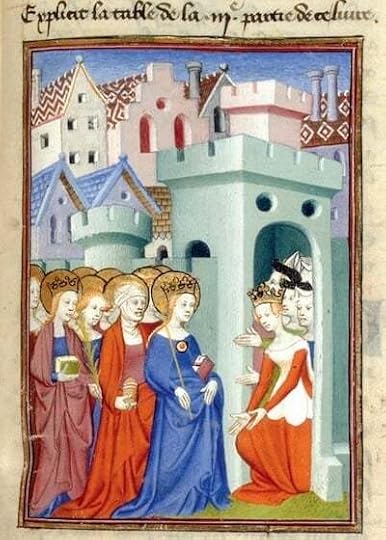 . . . . . . . . . . . .
Then she wrote The Book of the City of Ladies (Le Livre de la Cité des Dames, 1405) to give a passionate and well-organized defense of women by showing their many contributions to society.
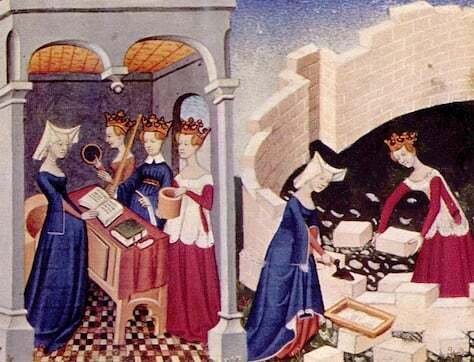
In this work, she builds up a symbolic city named the City of Ladies (hence the title) by dialoguing with the three allegorical figures Reason, Justice and Rectitude sent to help her in this task. Step by step, Christine chooses 165 famous biblical, historical and mythological women as the building blocks for the outside walls, the inside walls and the buildings of the City of Ladies.
Her main source of inspiration was De Mulieribus Claris (Concerning Famous Women, 1361–62), an earlier collection of women’s biographies written in Latin prose by the Italian poet Giovanni Boccaccio. It was the first compilation devoted exclusively to women in medieval western literature, with the biographies of 106 historical and mythological women.
After the invention of the printing press by Gutenberg in 1450, The Book of the City of Ladies was printed several times in the 15th and 16th centuries. It became a major source of inspiration for several French women writers, including Gabrielle de Bourbon, Anne of France, Marguerite de Navarre and Georgette de Montenay.
Christine’s book, written in vernacular French, was translated into English by Brian Anslay, an English administrator to King Henry VII and King Henry VIII, and published in 1521 as the Boke of the Cyte of Ladies. Some early printed editions didn’t reference Christine de Pizan as the author, which was unfortunately quite common for women’s writings at the time and beyond.
. . . . . . . . . . . .
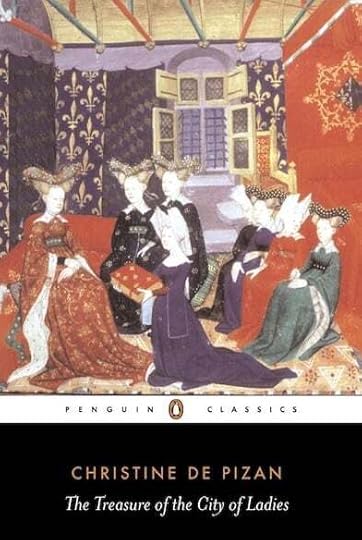
. . . . . . . . . . . .
Christine wrote a follow-up titled The Treasure of the City of Ladies (Le Trésor de la Cité des Dames), a manuscript dated 1405, also known as The Book of the Three Virtues (Le Livre des Trois Vertus). It is meant as a manual of education for women, with advice about how to cultivate useful qualities, including a good education.
These two works are now considered some of the earliest feminist writings. They have drawn the fascination of modern feminists such as French philosopher Simone de Beauvoir.
. . . . . . . . . . . .
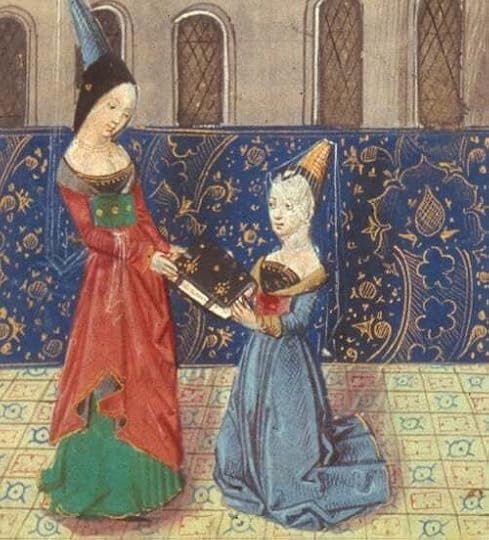
Christine de Pizan presents her Book to Margaret of Burgundy
from The Treasure of the City of Ladies
. . . . . . . . . . . .
Contributed by Marie Lebert. Edited by Nava Atlas, Literary Ladies Guide. See more entries by Marie Lebert, most profiling women translators.
The post Christine de Pizan and The Book of the City of Ladies appeared first on Literary Ladies Guide.
March 18, 2026
5 Classic Novels by Women Writers that Became Oscar-Winning Films
Here’s a look at five Academy Award-winning films based on now-classic novels by women writers: Cimarron, Gone with the Wind, Rebecca, Gentleman’s Agreement, and To Kill a Mockingbird.
Novels have long provided rich narrative material for film, though it seems that this practice is less common that it was in the past. At least in the first part of the 20th century, well-regarded bestsellers were regularly adapted to film. This could be relative, though; so many more books are being published and vying for attention in the present.
Following these, you’ll find a list of a dozen more Oscar-nominated and winning films that helped cement their original novels in the public imagination, even if some of their authors are not well remembered today.
. . . . . . . . . .
Cimarron (1931)
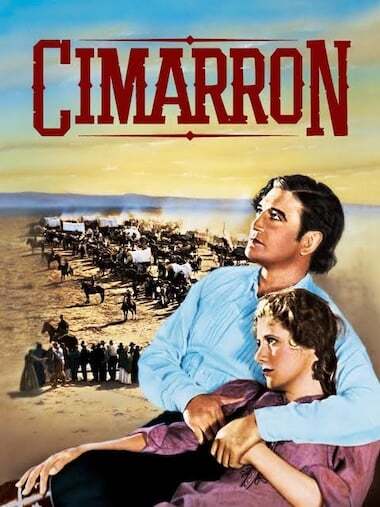
Cimarron was a 1930 novel by the prolific Edna Ferber. It was quickly adapted to film, earning accolades and winning the Academy Award for Best Picture (then called Best Production) in 1931 It was the first (and remained one of only a handful of) western to win this major award.
Though it wasn’t the first of Ferber’s novels to be adapted to film, it was a far more expansive (and expensive) production. It paved the way for more Hollywood blockbusters based on other Ferber novels, including Showboat, Giant, and others.
Cimarron takes on the subject of the Oklahoma territory Land Run of 1889. The film was nominated for Best Actor, Best Actress, and Best Director, though it won only in the categories of Adaptation and Art Direction, other then the top award of Best Production.
Cimarron was remade in 1960, but failed to receive the same level of accolades as the original. Learn more about Cimarron — the book and film.
. . . . . . . . . .
Gone with the Wind (1939)
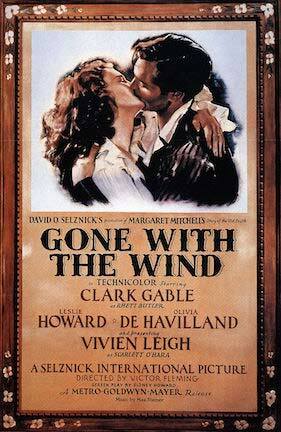
Gone With the Wind — the 1936 novel by Margaret Mitchell — was a publishing phenomenon from the moment it rolled off the presses. MacMillan published GWTW at a time when the book industry was still suffering from the results of the Great Depression.
At least one person was concerned about the enterprise: Mitchell herself. “I do hope they sell five thousand copies,” she remarked, “so they don’t lose money.” She needn’t have worried: its first day, GWTW sold 50,000 copies. No wonder Hollywood snapped it up.
Over time, Gone With the Wind’s revisionist view of the antebellum South and enslaved people has been, to put it mildly, reconsidered. At the time, the faithful adaptation was a box-office blockbuster. It was nominated for 15 Academy Awards, and won for Best Picture, Best Actress, Best Supporting Actress, Best Director, Best Screenplay, Best Cinematography, Best Art Direction, and Best Editing.
There’s much to critique about the book and film, and even how the awards played out — Hattie McDaniel, the first Black actress to win Best Supporting Actress — was made to sit at a separate table from her colleagues at the award ceremony.
There’s no excuse for romanticizing slavery, but Margaret Mitchell (who died at age 48 after being struck by a car in Atlanta) burnished her legacy in one surprising way. With her earnings, she secretly funded the medical school education of some twenty Black students at Morehouse College. They had no idea who their benefactor was until decades later.
. . . . . . . . . .
Rebecca (1940)
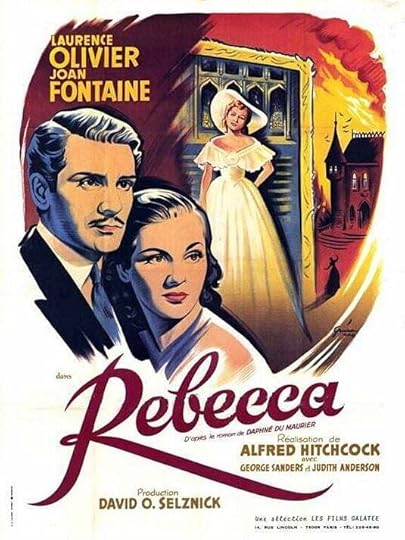
The 1940 film version of Rebecca, based on Daphne du Maurier’s 1938 novel of the same name, is a psychological thriller with a nod to the literary gothic tradition. The black-and-white film, which captured the moody, mysterious feel of the book, was the first American film by director .
Joan Fontaine starred in the role of the naïve young woman who marries the brooding widower Maxim de Winter, portrayed by Laurence Olivier. Rebecca, the deceased first wife of Maxim de Winter, is never seen in the film. Yet she casts a powerful shadow over the inhabitants of Manderlay castle. The suspense builds until we learn just why she continues to have such a grip on the living.
This film classic is a faithful adaptation of du Maurier’s masterpiece. Because of the Hayes Code, one important detail was changed; it would be a spoiler to reveal it here, so as always, it’s recommended to read the book before seeing the film.
Rebecca was nominated for eleven Academy Awards and won two — Best Picture and Cinematography (black and white). Notably, it was nominated for Best Director (Hitchcock), Best Actress (Joan Fontaine), Best Actor (Laurence Olivier), and Best Adapted Screenplay. It appears on numerous best film lists, including the American Film Institute’s (AFI) 100 Years, 100 Thrills.
. . . . . . . . . .
Gentleman’s Agreement (1947)
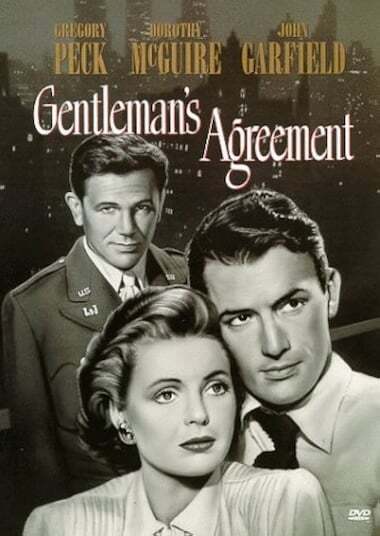
Gentleman’s Agreement, the classic 1947 film, was based on the novel of the same name by Laura Z. Hobson, which was published the same year. Hobson doubted any publisher would want to take it on, let alone that it would become an award-winning film.
It’s the story of Philip Schuyler Green, a journalist who poses as a Jew in order to investigate antisemitism in post-World War II New York City and environs. Though it showed only a narrow slice of what was sometimes considered “genteel” antisemitism centered in New York City’s upper class, the film sensitively explores the topic and is quite true to the book.
Gentleman’s Agreement won Best Picture of 1947, with Elia Kazan, getting the award for Best Director. Gregory Peck won for Best Actor, Dorothy Maguire for Best Actress. Though the film seems tame by today’s standards, it smashed Hollywood taboos by dealing with the topic of antisemitism.
. . . . . . . . . .
To Kill a Mockingbird (1960)
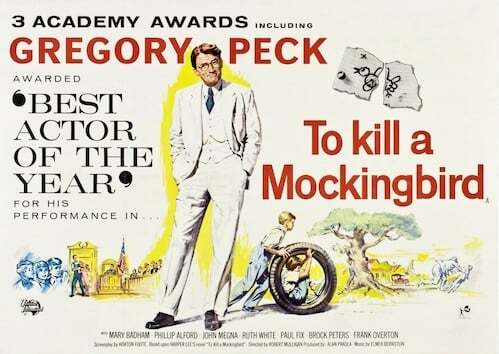
The 1962 film version of To Kill a Mockingbird cemented Harper Lee’s 1960 classic reputation as a Great American Novel. With Gregory Peck as Atticus and two children from Alabama — Mary Badham and Phillip Alford — as Scout and Jem, the film was completely true to the spirit of the novel.
Harper Lee originally wanted the role of Atticus Finch to go to Spencer Tracy, even writing him a letter to ask that he star in the film. He was unavailable, but as it turned out, there couldn’t have been a more fitting actor to portray Atticus than Gregory Peck. Lee came to came to adore him, and the two remained friends until Peck’s death in 2003.
In recent years, TCAM has been viewed with a different lens, especially after the publication of Go Set a Watchman (2015), which was originally promoted as a sequel. Now it has come to be viewed as a first draft of TCAM. Watchman follows the twenty-something Scout as she return home to Alabama to visit her father, Atticus. Watchman upset readers who were displeased to find that Atticus, TCAM’s heroic and beloved lawyer and widowed father, was actually a bigot.
It’s interesting to ponder whether the new framing has affected the stature of the film, as it has the book. The film was nominated for 8 Academy Awards and won 3: Best Actor, Adapted Screenplay, and Art Direction.
More Oscar-nominated films based on novels by women writers
Here are a dozen more entries, is by no means an exhaustive list!
1931 – Bad Girl (based on the 1928 novel by Viña Delmar) – nominated for 3 awards, including Best Picture; won for Best Director and Best Adapted Screenplay.
1942 – Now, Voyager (based on the 1941 novel by Olive Prouty) – nominated for 3 awards, won for Best Score.
1944 – Laura (based on the 1943 novel by Vera Caspery) – nominated for 5 awards, won for Best Cinematography, B&W.
1945 – A Tree Goes in Brooklyn (based on the 1943 novel by Betty Smith) – nominated for 3 Academy Awards, won 2: Best Supporting Actor James Dunn, Special Juvenile Award, Peggy Ann Garner.
1956 – Giant (based on the 1952 novel by by Edna Ferber) – nominated for 9 awards, won for Best Director, George Stevens.
1956 – The King and I (based on the 1944 novel Anna and the King of Siam by Margaret Langdon – nominated for 9 Academy Awards, won 5, including Best Actor for Yul Brynner, and several technical awards.
1957 – Peyton Place (based on the 1956 novel by Grace Metalious) – nominated for 9 awards, won none.
1959 – Gigi (based on the 1944 novella by Colette) – nominated for 9 awards, won all of them, including Best Picture, Direction, and adapted screenplay.
1994 – Little Women (based on the 1868 novel by Louisa May Alcott) – nominated for 3 Academy wards, including Winona Ryder for Best Actress; won none.
1975 – Murder on the Orient Express (based on the 1934 novel by Agatha Christie) – nominated for 6 academy awards, won one, Best Supporting Actress Ingrid Bergman.
2019 – Little Women (again! based on the 1868 novel by Louisa May Alcott) – nominated for 6 academy awards, including Best Picture, Actress, Adapted Screenplay; won for Best Costume Design.
2022 – Women Talking, based on the 2018 novel by Miriam Toews – nominated for Best Picture and Best Adapted Screenplay; won for the latter.
The post 5 Classic Novels by Women Writers that Became Oscar-Winning Films appeared first on Literary Ladies Guide.
March 11, 2026
Not-so-Famous Last Lines from Classic Novels by Women Writers
There have been plenty of roundups of famous first sentences from beloved novels. I even did one here. But famous last lines? Or more accurately, not-so-famous last lines — it’s time to take a look at how eleven women writers chose to tie up their iconic works. Don’t be afraid to look, there are no spoilers here.
The best first lines surely are evocative, and set the stage for what’s to come, like this one from Rebecca by Daphne du Maurier. “Last night, I dreamt I went to Manderley again.”
And what devoted reader isn’t familiar with the first line of Jane Austen’s Pride and Prejudice — “It is a truth universally acknowledged, that a single man in possession of a good fortune, must be in want of a wife.”
Compared with this memorable opening, P and P ends with a thud: “With the Gardiners they were always on the most intimate terms. Darcy, as well as Elizabeth, really loved them; and they were both ever sensible of the warmest gratitude towards the persons who, by bringing her into Derbyshire, had been the means of uniting them.”
Say what? It reads as if the usually brilliant Jane Austen ran out of steam when it came to the last sentence of her most iconic work. It’s quite a run-on, too!
. . . . . . . . . .
. . . . . . . . . .
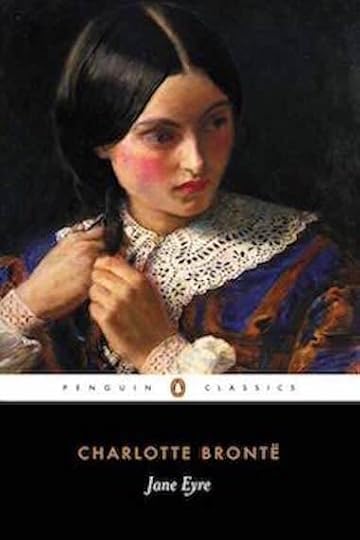
We can say the same for the end of Jane Eyre by Charlotte Brontë. In my memory (and I reread the novel just a few years ago), the end revolved around the memorable line “Reader, I married him.”
While that iconic line is indeed in the last section, it continues to meander for a bit before ending with: “My Master,” he says, “has forewarned me. Daily He announces more distinctly,—‘Surely I come quickly!’ and hourly I more eagerly respond,—‘Amen; even so come, Lord Jesus!’”
I honestly didn’t remember this last line at all. I’ll have to take Charlotte to task when I see her in heaven.
Here I am, critiquing two of the most iconic writers in the English language. It follows from noodling over how a novelist (or memoirist for that matter) decides how to end a story — it must be a torturous decision! The best last lines, to my mind, pull the narrative together and cement the reading experience, whether we later consciously remember them or not.
I’ve read all but one of the novels whose last lines I’ve collected here (that would be Middlemarch by George Eliot — I’ve yet to get through this tome!), but reading these last lines presented following makes me want to turn back to the beginning of these books and start anew.
. . . . . . . . . .
Frankenstein by Mary Shelley (1818)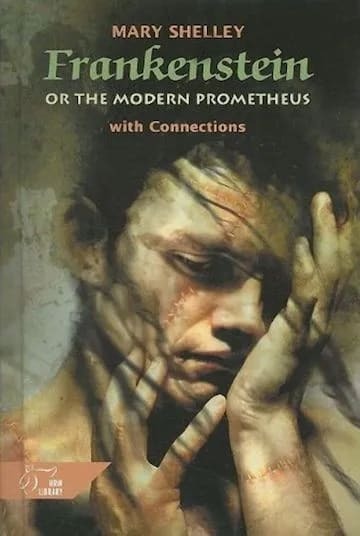
“… my ashes will be swept into the sea by the winds. My spirit will sleep in peace, or if it thinks, it will not surely think thus. Farewell.”
He sprang from the cabin-window as he said this, upon the ice raft which lay close to the vessel. He was soon borne away by the waves and lost in darkness and distance.
. . . . . . . . . .
Wuthering Heights by Emily Brontë (1847)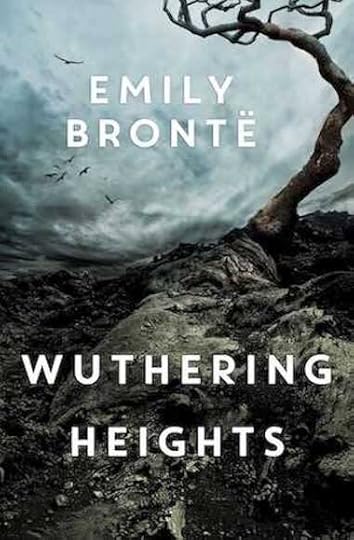
I lingered round them, under that benign sky; watched the moths fluttering among the heath, and hare-bells; listened to the soft wind breathing through the grass; and wondered how any one could ever imagine unquiet slumbers for the sleepers in that quiet earth.
. . . . . . . . . .
Little Women by Louisa May Alcott (1868)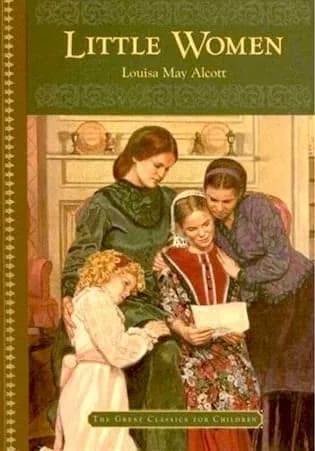
Touched to the heart, Mrs. March could only stretch out her arms, as if to gather children and grandchildren to herself, and say, with face and voice full of motherly love, gratitude, and humility…
“Oh, my girls, however long you may live, I never can wish you a greater happiness than this!”
. . . . . . . . . .
Middlemarch by George Eliot (1871)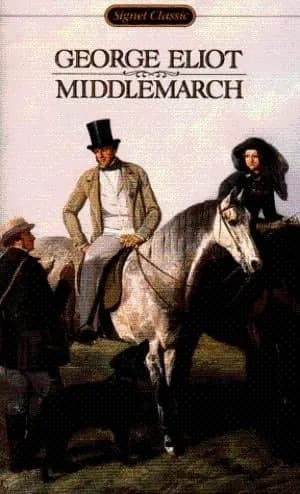
But the effect of her being on those around her was incalculably diffusive: for the growing good of the world is partly dependent on unhistoric acts; and that things are not so ill with you and me as they might have been, is half owing to the number who lived faithfully a hidden life, and rest in unvisited tombs.
. . . . . . . . . . The Awakening by Kate Chopin (1899)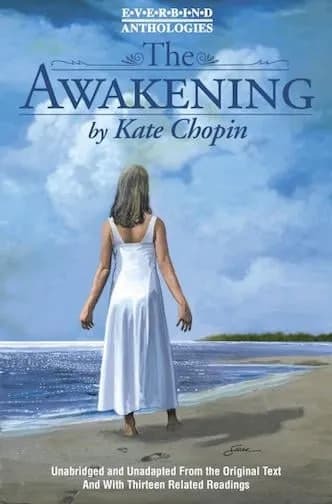
Edna heard her father’s voice and her sister Margaret’s. She heard the barking of an old dog that was chained to the sycamore tree. The spurs of the cavalry officer clanged as he walked across the porch. There was the hum of bees, and the musky odor of pinks filled the air.
. . . . . . . . . .
The Secret Gardenby Frances Hodgson Burnett (1911)
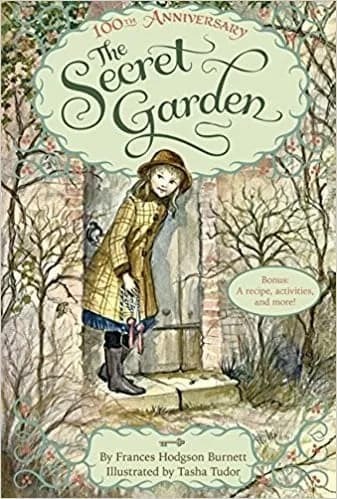
Across the lawn came the Master of Misselthwaite and he looked as many of them had never seen him. And by his side with his head up in the air and his eyes full of laughter walked as strongly and steadily as any boy in Yorkshire—Master Colin!
. . . . . . . . . .
The Age of Innocence by Edith Wharton (1920)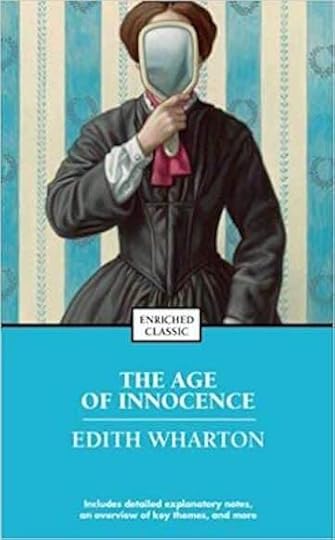
He sat for a long time on the bench in the thickening dusk, his eyes never turning from the balcony. At length a light shone through the windows, and a moment later a man-servant came out on the balcony, drew up the awnings, and closed the shutters.
At that, as if it had been the signal he waited for, Newland Archer got up slowly and walked back alone to his hotel.
. . . . . . . . . .
Mrs. Dalloway by Virginia Woolf (1925)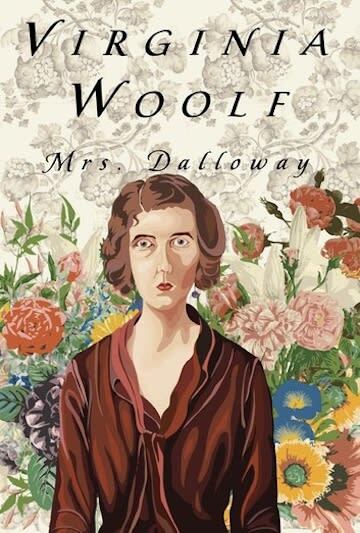
“I will come,” said Peter, but he sat on for a moment. What is this terror? what is this ecstasy? he thought to himself. What is it that fills me with extraordinary excitement?
It is Clarissa, he said.
For there she was.
. . . . . . . . . .
Their Eyes Were Watching Godby Zora Neale Hurston (1937)
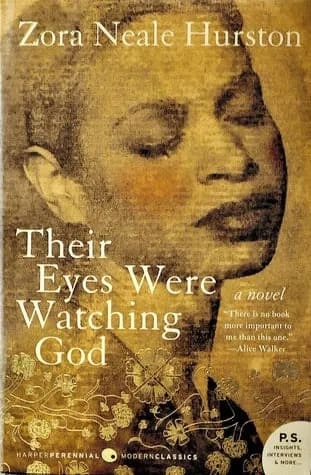
The kiss of his memory made pictures of love and light against the wall. Here was peace. She pulled in her horizon like a great fish-net. Pulled it from around the waist of the world and draped it over her shoulder. So much of life in its meshes! She called in her soul to come and see.
. . . . . . . . . .
Rebecca by Daphne du Maurier (1938)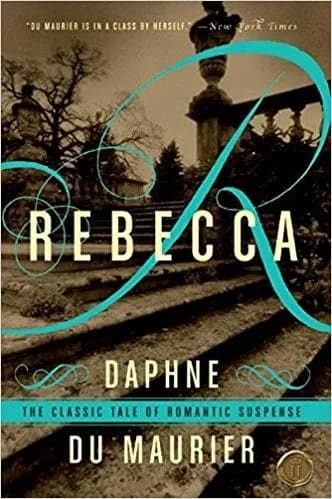
The road to Manderley lay ahead. There was no moon. The sky above our heads was inky black. But the sky on the horizon was not dark at all. It was shot with crimson, like a splash of blood. And the ashes blew towards us with the salt wind from the sea.
. . . . . . . . . .
A Wrinkle in Time by Madeleine L’Engle (1962)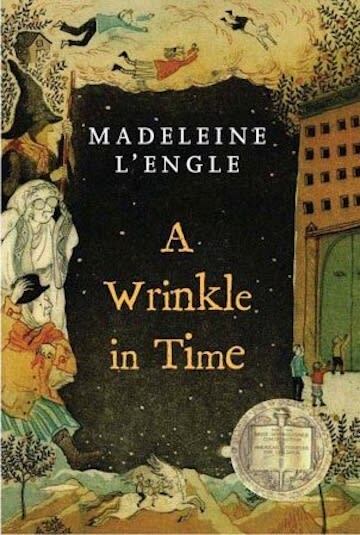
Mrs Whatsit said breathlessly, “Oh, my darlings, I’m sorry we don’t have time to say good-bye to you properly. You see, we have to—” But they never learned what it was that Mrs Whatsit, Mrs Who, and Mrs Which had to do, for there was a gust of wind, and they were gone.
The post Not-so-Famous Last Lines from Classic Novels by Women Writers appeared first on Literary Ladies Guide.
February 13, 2026
Tarbell, Herrick & McCormick: Women Who Fought to Report Front Page News
Ida Tarbell, Genevieve Forbes Herrick, and Anne O’Hare McCormick, three trailblazing journalists from the early twentieth century, fought to report hard news — the kinds of stories that have a place on the front page.
At right: Genevieve Forbes Herrick, who is very rarely depected in a photo.
The American newsroom of the first decades of the twentieth century, where front-page news was produced, was all but closed to women. Ishbell Ross, a respected journalist of the 1920s, believed that all city editors secretly thought: “Girls, we like you well enough, but we don’t altogether trust you.”
At the dawn of the 1900s, American journalism was changing at a dizzying pace. In newsrooms of major city papers, the clacking of typewriters had replaced the scribbling of pens. The linotype machine revolutionized the printing process. Now, each letter of type didn’t have to be set by hand.
Just as important, the kind of splashy undercover stories that made stunt girl reporters like Nellie Bly and Winifred Bonfils famous was falling out of favor. Investigative journalism, newly respectable, relied on careful research and fact-checking instead of wild set-ups and dramatic storytelling of earlier times.
Something else that was changing — finally — was the number of female journalists. In the 1880s there were just a few hundred in the entire country. By 1900 that number grew to nearly 2,200, and by the end of the 1930s, there were about 16,000 women in American journalism.
Sure, it was a great improvement. But the majority of “girl reporters,” as they were called, were assigned to women’s pages or features that weren’t front page news — society, home, fashion, and family.
Of course, there was nothing wrong (and there still isn’t) with covering those topics — if that’s what a woman reporter chose to do. But for the most part, female journalists weren’t given that choice and continued to be unwelcome in city newsrooms. That doesn’t mean that women had failed.
Women’s pages, as they were called, helped sell papers. By the 1930s, women were serving as editors, producing longer features and Sunday magazines, and working in business, art, mechanical, and promotional departments. Here, we’ll look at the careers of three women journalists whose hard news reporting made it to the front page despite the odds.
. . . . . . . . . .
Ida Tarbell

Ida M. Tarbell in 1904
Ida M. Tarbell (1857 – 1944) was known as “muckraker” — a word coined by president Theodore Roosevelt describing journalists who exposed big business’s shady dealings. He didn’t mean it as a compliment. Ida Tarbell’s reputation as a muckraker made her a pioneer in the new brand of detailed investigative journalism. She’s still considered one of the best ever.
Her most famous investigation was of Standard Oil’s unfair business practices, called The History of Standard Oil. This title might sound like a snoozefest, but Tarbell wrote the nineteen-part series in a way that captured readers’ imaginations and made them eager for the next installments.
Through her careful research, Tarbell proved that corporate monopolies hurt the public. Her series led to the 1911 Supreme Court decision that ruled against Standard Oil and broke it apart. Though this was the highlight of her career, Ida never stopped writing.
Tarbell was mainly interested in politics and presidents and was a Lincoln scholar. Strangely, she was against women’s right to vote, making her unpopular with other female journalists and reformers of her time. Still, whenever you see a list of most influential journalists of all time — male or female — Ida Tarbell’s name is always near the top.
. . . . . . . . . .
Genevieve Forbes Herrick
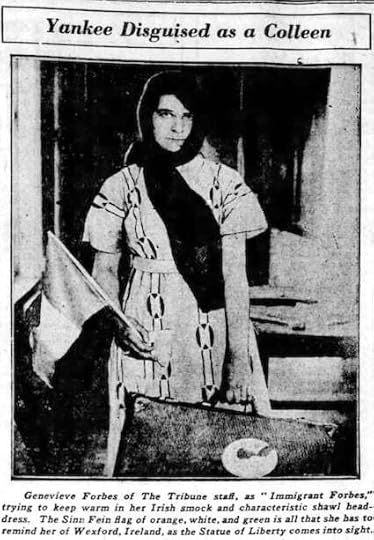
Herrick went undercover to investigate immigration in 1921
Genevieve Forbes Herrick (1894 – 1962) bridged the gap between stunt reporting and the newer breed of investigative journalist. Brilliant and ambitious, she joined the Chicago Tribune in 1921 with a master’s degree to her credit.
The Tribune wanted to steer her toward the women’s pages, but she refused. Instead, Herrick talked her editors into letting her pose as a poor Irish girl to experience what it was like to immigrate to America. Her reporting recounted the terror of the ocean voyage from Ireland and the terrible treatment immigrants faced after arriving through Ellis Island.
Herrick told the hidden truth of how women were forced to strip for unneeded medical exams; how passengers were kicked and shoved into lines by authorities; and how newly arrived parents and children were forcibly separated. Genevieve was asked to testify before the House of Representatives, which resulted in improved conditions at Ellis Island.
Because this exposé was so successful, the Tribune let Herrick report on whatever topics she chose. Through the 1920s and 1930s, she covered politics and promoted women running for office. One of them was Ruth Hanna McCormick, who ran for the House of Representatives in 1928 — and won.
Herrick’s reporting was fearless, whether she was going after Chicago’s corrupt politicians or the city’s mob bosses.
. . . . . . . . . .
Anne O’Hare McCormick
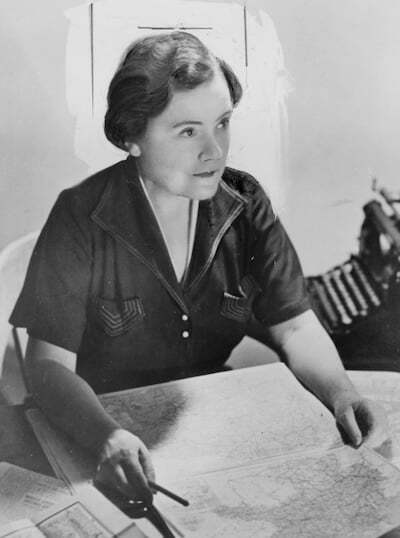
Anne O’Hare McCormick, 1941
(photo from the collection of the Library of Congress)
Anne O’Hare McCormick (1880–1954) started out freelancing for newspapers and magazines. Her career chugged along steadily, though writing about this and that wasn’t very exciting.
That changed in 1921 when her husband was sent to Europe for his work. She asked the New York Times’ managing editor if she could send him reports from overseas. For a woman to be a foreign correspondent was practically unheard of, but the editor agreed.
McCormick plunged right into some of the most challenging topics, including the first in-depth look at the Italian dictator Benito Mussolini’s rise to power. She documented and reported on the gathering storm of fascism in Europe.
In 1936, McCormick became the first woman to be appointed to the New York Times’ editorial board. The paper’s publisher instructed her: “You are to be the ‘freedom’ editor. It will be your job to stand up … and shout whenever freedom is interfered with in any part of the world.” The following year Anne won the Pulitzer Prize for foreign correspondence — another female first.
She continued to be an active journalist through the World War II years, and was called “the expert the experts looked up to.” Anne O’Hare McCormick often sounded the first alarm about dangerous dictators. She was trusted by American presidents and respected by everyday readers who learned about the world from her popular column, “Abroad.”
. . . . . . . . . . . .
More about trailblazing journalists on Literary Ladies Guide Radio Days: Trailblazing Women Journalists on the Airwaves Colonial America’s Intrepid Women Newspaper Publishers See the entire category featuring historic women journalistsThe post Tarbell, Herrick & McCormick: Women Who Fought to Report Front Page News appeared first on Literary Ladies Guide.
February 11, 2026
Rereading Favorite Books from Childhood — Literary Comfort Between Covers
Rereading favorite books from childhood as an adult is the literary equivalent of a warm bowl of comfort food or a soft blanket. Their nostalgic pull is undeniable, likely because the stories we want to return to usually invoke a feeling of safety and predictability — the opposite of what life often feels like to us as adults.
Here are seven such revisits, some focusing on single books, others on entire series. Let’s dive in with several by Literary Ladies Guide contributor Marcie McCauley, who is our resident expert on revisiting beloved children’s literature with an adult perspective. These are followed by two others, one by Nancy Snyder and another by Jill Fuller.
Here’s what’s ahead:
The Ramona series by Beverly ClearyThe Betsy-Tacy Books by Maud Hart LovelaceTuck Everlasting by Natalie BabbittHarriet the Spy by Louise FitzhughFrom the Mixed-Up Files of Mrs. Basil E. Frankweilerby E.L. KonigsburgDaddy-Long-Legs by Jean WebsterA Wrinkle in Time by Madeleine L’EngleLittle Women by Louisa May Alcott
How long has it been since you reread your favorite childhood book? Perhaps these musings will inspire you to pick one or two of them up again.
. . . . . . . . . . . .
Revisiting the Ramona seriesby Beverly Cleary (1955 – 1999)
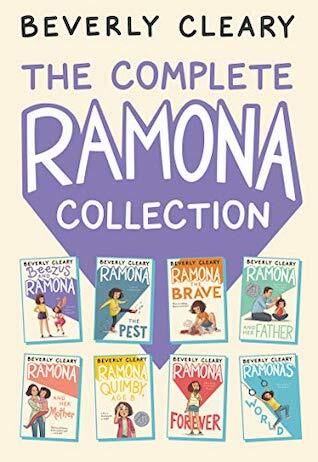
Marcie McCauley: “The sight of that smooth, faintly patterned cloth fills me with longing,” writes Beverly Cleary, recalling an early childhood memory of Thanksgiving. At first, a moment of calm for the young girl: anticipating relatives seated around the dining room table. Then, activity: she finds a bottle of blue ink, pours some out, presses her hands into it, then “all around the table I go, inking handprints on that smooth white cloth.”
You might guess that the lingering memory would be the moment of discovery. Instead: “All I recall is my satisfaction in marking with ink on that white surface.”
I also think of my fictional friend Ramona when I envision Beverly Bunn (the author’s pre-marriage name) sliding down the banister, trying to find the pot of gold at the end of the rainbow, pressing her nose against the barbershop window, yearning to look under the swinging doors of a saloon, feeling frustrated when the church ladies mistook her for a picture (a pitcher!) with big ears, and standing on the tilting seat of the fair’s Ferris Wheel.
The Ramona Quimby series kicked off in 1955 with Beezus and Ramona; the final entry in the series was Ramona’s World (1999.) Read the reset of Reading and Revisiting Beverly Cleary’s Ramona Quimby Stories.
. . . . . . . . . . . .
The Betsy-Tacy Books byMaud Hart Lovelace (1940 – 1955)
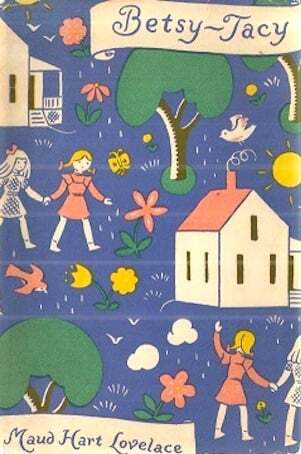
Marcie McCauley: Revisiting the Deep Valley novels by Maud Hart Lovelace (1892 – 1980) during the winter holiday season is a particular delight, though this American author’s stories can be enjoyed year-round.
Perhaps better known as the Betsy-Tacy books, the themes celebrated in these nostalgic novels for young readers are universal: friendship, devotion, love of home, ambition, and comfort. Though the novels were published in the 1940s, they take place in the early years of the twentieth century, when the author herself was growing up. (The first volume, Betsy-Tacy, begins in 1897, and the tenth, Betsy’s Wedding, takes place in 1917.)
The Betsy-Tacy books were based on her experiences growing up in Mankato, Minnesota. The Betsy-Tacy Companion by Sharla Scannell Whalen even contains a helpful chart that displays the names of the novels’ main characters alongside their real-life corollaries. But the enduring appeal of this series rests as much with their invented elements as their real-life, autobiographical links.
Read the rest of The Betsy-Tacy Books by Maud Hart Lovelace: An Appreciation.
. . . . . . . . . . .
On Rereading Tuck Everlastingby Natalie Babbitt (1975)
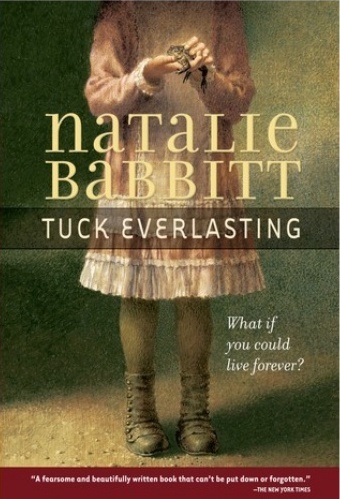
Marcie McCauley: When I first reread Tuck Everlasting, I was in my thirties. It was never one of my school texts: when I was a girl, it hadn’t yet achieved its iconic status. But the timing for me to rediscover this story, about how “dying’s part of the wheel, right there next to being born” was perfect.
Originally intended for middle grade children, this gracefully written story by Natalie Babbitt has resonated with readers of all ages. It explores the idea of eternal life, and its flip side, mortality. When 10-year-old Winnie Foster inadvertently comes upon the Tuck family, she learns that they became immortal when they drank from a spring on her family’s property.
They tell Winnie how they’ve watched life go by for decades, while they themselves never grow older. Winnie must decide if she’ll keep the Tucks’ secret, and whether she wants to join them on their immortal path. I had no idea that, when Tuck Everlasting was new, Michele Landsberg had heralded Babbitt’s exploration of death as “one of the most vivid and deeply felt passages in American children’s literature.”
Read the rest of Drinking from the Spring: On Rereading Tuck Everlasting by Natalie Babbitt.
. . . . . . . . . . .
Revisiting Louise Fitzhugh’sHarriet the Spy (1964)
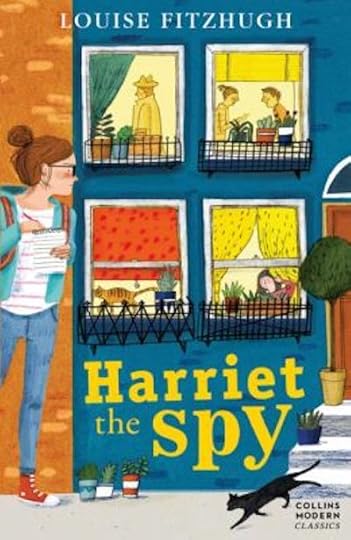
Marcie McCauley: Revisiting Louise Fitzhugh’s Harriet the Spy as an adult, I’m no longer convinced that Harriet and I would have been friends off the page. We would never have summered together in Water Mill, Long Island. We would never have had a sleepover on a Saturday night while her parents attended a white-tie-and-tails party.
On the page, however, we could be best friends. Like me, Harriet is “just so about a lot of things” and the only kind of sandwich in her world is a tomato sandwich. When she “didn’t have a notebook it was hard for her to think” and she gets a “funny hole somewhere above her stomach” when she loses the person in her life who knows her best.
And perhaps most importantly, when she plays Town, she plays so hard that even her friends are like characters in her life – impediments to and inspirations for – doing the work of telling stories. In that sense, Harriet and I have lived in the same Town from the moment we met, and, even still, that Town is a place I visit every day.
Read the rest of Playing Town: Revisiting Louise Fitzhugh’s Harriet the Spy.
. . . . . . . . . . .
Revisiting E.L. Konigsburg’sMixed-Up Files of Mrs. Basil E. Frankweiler (1968)
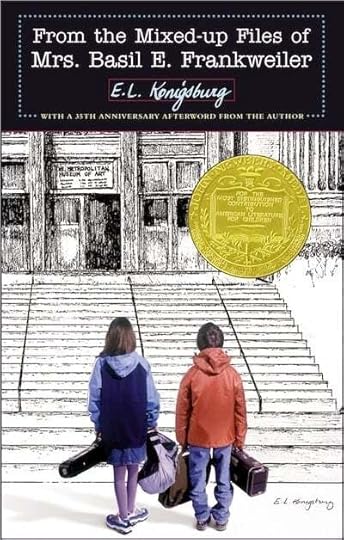 Marcie McCauley: E.L. Konigsburg summed up her stories as being about the “everyday, corn-flakes, worn-out-sneakers way of life” when she won the Newbery Award for her children’s novel From the Mixed-Up Files of Mrs. Basil E. Frankweiler in 1968.
This prize-winning novel was a favorite of mine from the first reading—the first sentence, even — because it begins with Claudia’s failure.
She knows she’s never going to be able to run away in “the old-fashioned way”— in the “heat of anger with a knapsack on her back.” She reflects on her situation and makes a plan: she learns to rise to meet challenges in her own way.
… In her 2013 obituary in the New York Times, Paul Vitello writes that Konigsburg’s “upbringing in small-town Pennsylvania, where she did not have great expectations, helped her as a writer.” As a small-town girl who saw just enough of her childhood outside the city in Claudia, I was old enough to realize how Konigsburg had helped me as a writer too — by suggesting that real-world events from your everyday life could fill up a storybook. That they could be “enough.”
Read the rest of Overnight in the Museum: Revisiting E.L. Konigsburg’s Mixed-Up Files.
. . . . . . . . . . .
On Rereading Daddy-Long-Legsby Jean Webster (1912)

Marcie McCauley: The summer I was twelve, I pulled a well-read and worn book from the shelves of the public library and discovered a story that seemed to be told directly to me. Behind the deceptively dull cover of Daddy-Long-Legs by Jean Webster (1912) were letters and drawings that pulled me hard and fast into Judy Abbott’s life—an orphan at boarding school.
So many of my favorite things were combined in this book: orphans and lonely childhoods, girls succeeding against the odds with their studious natures, boarding school and class events, and perhaps most of all, the burgeoning writer’s sensibility that I also enjoyed in Louise Fitzhugh’s Harriet the Spy .
I borrowed and devoured Jean Webster’s Daddy-Long-Legs that very afternoon; I’ve revisited it many times. Judy’s orphan status reminded me of other favorite characters, from classics like Emily of New Moon (1923) by L.M. Montgomery, Ballet Shoes (1936) by Noel Streatfeild, and A Little Princess (1905) by Frances Hodgson Burnett.
Read the rest of Orphans and Boarding Schools: On Rereading Daddy-Long-Legs.
And here are another pair of grown-up revisits of childhood classics …
. . . . . . . . . . .
On Rereading A Wrinkle in Timeby Madeleine L”Engle (1962)
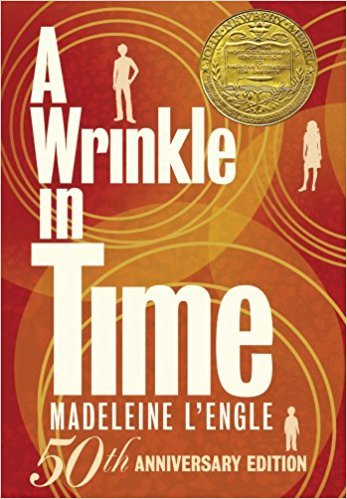
Nancy Snyder: I gave myself the best holiday present ever: rereading A Wrinkle in Time by our new Christmas tree. Rereading Madeleine L’Engle’s masterpiece was like visiting my oldest and dearest friend. A Wrinkle in Time is the book that ignited my reading obsession more than fifty years ago, and for that, I’m forever grateful.
… From my first reading decades ago to my most recent rereading, I have seen myself as Meg. I have stayed angry at the social and economic injustices that permeate our world, perceiving my anger as a necessary element to challenge and overcome such injustice.
Meg Murry is an incredible character. However, I also admire the skills of Calvin O’Keefe as a great communicator and an incredibly calm person. I also aspire to the great intelligence of Charles Wallace, but remember the warnings of Mrs. Whatsit. Charles’ magnificent mind may be accompanied by arrogance and pride, something we need to check ourselves of when we’re convinced our intelligence is infallible.
Read the rest of On Rereading A Wrinkle in Time: A Fifty-Year View.
. . . . . . . . . . .
Returning to Little Women by Louisa May Alcottfor Comfort and Guidance (1868)
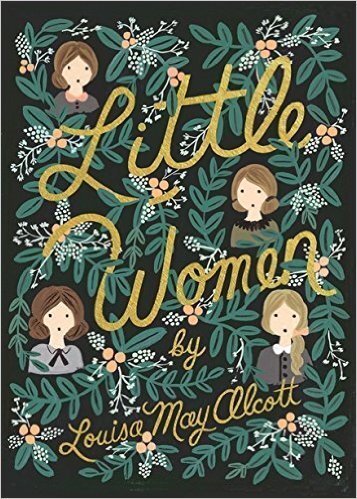
Jill Fuller: I have always loved Little Women by Louisa May Alcott. There is no need for me to explain what it is about the writing and the characters that are so powerful and endearing, for I know that many, many readers have experienced it too. We laugh at Jo’s antics, feel Teddy’s heartbreak, and weep when Beth takes her last breath.
But with my most recent re-read of this classic, published in 1868 and beloved for generations, the book tugged at me a little bit more, pulled me in a little bit deeper, and spoke to me in a way it never had before … Perhaps it is because my husband and I read it out loud together. It’s amazing how much difference it makes to read with your voice, for it turns words from flat, two-dimensional blotches of ink into a conversation, a dream, a dramatic sigh.
The book took on a new life when I read it out loud, more real than before, more concrete, more alive. And sharing the reading experience together turned every evening into a literary date night. Now I will always have the memories of sharing Little Women (and all of the discussions and laughs and tears that accompanied it) with my husband.
Read the rest of Little Women: A Book I Come Back to for Comfort and Guidance.
The post Rereading Favorite Books from Childhood — Literary Comfort Between Covers appeared first on Literary Ladies Guide.
February 7, 2026
Where to Start with the Books of South African Writer Olive Schreiner
Olive Schreiner (1855 – 1920) was a South African writer and activist best known for her debut novel, The Story of an African Farm, first published in 1883 under the pseudonym Ralph Iron. It was republished in 1891 under her real name.
Today, Schreiner’s work is still widely studied, and she’s considered a pioneering anti-colonial feminist voice. She also wrote many articles, essays, and letters.
The following is a guide to Olive Schreiner’s books is for readers who would like a broader scope of her writing.
. . . . . . . . . .
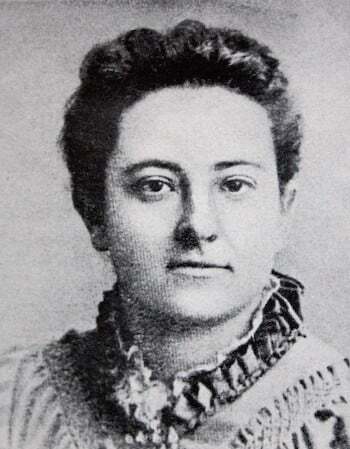
Learn more about Olive Schreiner
. . . . . . . . . .
Olive Schreiner was born in Wittebergen, Eastern Cape, South Africa. She was one of twelve children born to missionary parents Gottlob and Rebecca Schreiner.
Schreiner lived with one of her brothers, a headmaster in Cradock, from 1867. After becoming dissatisfied with Cradock, she worked as a governess for several Cape households. This period became the inspiration for The Story of an African Farm, a story considered partially autobiographical.
For most of her life, Olive was disillusioned with the restrictions and rules of traditional Victorian culture. Her critical, anti-establishment views led her to clash with many employers. She struggled to settle into a single job or home in her early years.
In 1881, Schreiner traveled to Southampton, England, to pursue medical studies. She was unable to continue, partially due to worsening respiratory health. The sudden change led her to pursue a career as a writer.
Her first short publication was a short story: “The Adventures of Master Towser,” which was published in the New College Magazine in 1881. She followed this up with an 1882 essay in the same publication titled “My First Day at the Cape.”
The Story of an African Farm was published in 1883 and has remained Schreiner’s best-known work. She continued publishing essays and shorter works: “A Dream of Wild Bees” in The Woman’s World (1889) and “Stray Thoughts on South Africa: The Wandering of the Boers” (1896).
Many of her writings would comment on socio-political issues of the time: particularly Colonial life, Victorian customs, observations on Southern Africa, and women’s rights.
She wrote “Letter on the Taal” in South African News (1905), referring to the rise of Cape Afrikaans against Colonial-dominant English. A more exhaustive collection of her letters and shorter essays is available at Olive Schreiner Letters.
. . . . . . . . . .
. . . . . . . . . .
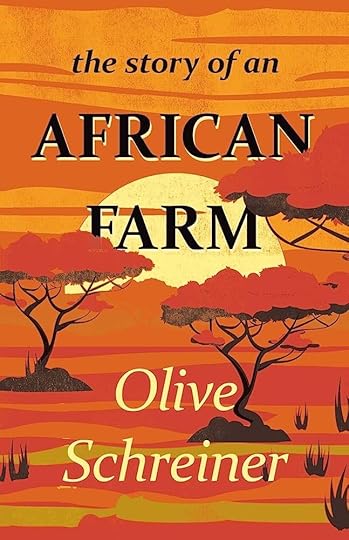
Books by Olive SchreinerAfter the publication of The Story of an African Farm, Olive co-authored The Political Situation with her husband, whom she later divorced, citing a repeatedly unhappy marriage in her letters. Here are her major works:
The Story of an African Farm (1883)Olive Schreiner’s first novel has remained her best-known and most adapted work. The description following is from the 2008 reprint from Oxford University Press:
“Lyndall, Schreiner’s articulate young feminist, marks the entry of the controversial New Woman into nineteenth-century fiction. Raised as an orphan amid a makeshift family, she witnesses an intolerable world of colonial exploitation.
Desiring a formal education, she leaves the isolated farm for boarding school in her early teens, only to return four years later from an unhappy relationship. Unable to meet the demands of her mysterious lover, Lyndall retires to a house in Bloemfontein, where, delirious with exhaustion, she is unknowingly tended by an English farmer disguised as her female nurse. This is the devoted Gregory Rose, Schreiner’s daring embodiment of the sensitive New Man.
A cause célèbre when it appeared in London, The Story of an African Farm transformed the shape and course of the late-Victorian novel. From the haunting plains of South Africa’s high Karoo, Schreiner boldly addresses her society’s greatest fears — the loss of faith, the dissolution of marriage, and women’s social and political independence.”
The Political Situation (1896)The Political Situation was co-authored with her husband Samuel Cronwright-Schreiner, and centers around the Cape Colony’s political situation. At the time, the Cape was still under Colonial rule, though an increasing number of people began to opposite it.
Samuel was a farmer, though also a Freethinker who opposed Cecil John Rhodes. After her death, Samuel attracted controversy for his biography, The Life of Olive Schreiner (1924), and the posthumous publication of her works, which she explicitly forbade in her will.
Trooper Peter Halket of Mashonaland (1897)As it is described, “the story of one of Cecil John Rhodes’ young troopers lost in Mashonaland.” Mashonaland refers to a region in Zimbabwe – and might point to Olive’s overall knowledge of Africa and its political climate. The story’s protagonist is age twenty, and comes to encounter a savior-like figure who brings to light the turmoil of war.
Closer Union (1908)Closer Union, published in 1908, collected from a series of letters. This volume explores Schreiner’s thoughts on government. It explores what she considered the dangerous idea of unifying the four main colonies into one central government. This was one of her many politically focused works directly critical of colonialism and Cecil John Rhodes.
Woman and Labour (1911)Woman and Labour explored women’s rights and her thoughts on student and labor activism. While some consider the book to be wordy, it’s nonetheless a valuable collection. Her thoughts were quite revolutionary for the time. It begins, “The female labour movement of our day is, in its ultimate essence, an endeavour on the part of a section of the race to save itself from inactivity.”
Stories, Dreams and Allegories (1922)The essay collection Stories, Dreams and Allegories was published in 1922, or two years after Schreiner’s passing. This collection contains stories like ‘The Buddhist Priest’s Wife,’ wherein an unnamed woman’s life is recounted – and shines through her accomplishments, unusual for mainstream Victorian life.
Thoughts on South Africa (1923)If Schreiner’s other books explored family relationships and people, then Thoughts on South Africa was a book about its surroundings and scenery. Thoughts on South Africa focused on colonial life and her observations. In this book, she referred to what she saw as the Boer culture’s “antique faults and heroic virtues.”
From Man to Man (1926)Schreiner’s last novel may have possibly been one that she started writing in her teens. It remained unfinished at the time of her death. This was among the books published posthumously. Reviews have noted that it’s quite dissimilar to The Story of an African Farm; rather than exploring Victorian life, it seems directed at her critics and takes a hard turn toward escape from circumstances.
From Man to Man is the story of two sisters: one remains in the Cape Colony under British rule, while the other leaves the setting to explore her surroundings and self.
Other books and collectionsThe Political Situation (1896)Trooper Peter Halket of Mashonaland (1897)Closer Union (1908)Woman and Labour (1911)Stories, Dreams and Allegories (1922)Thoughts on South Africa (1923)From Man to Man (1926). . . . . . . . . .
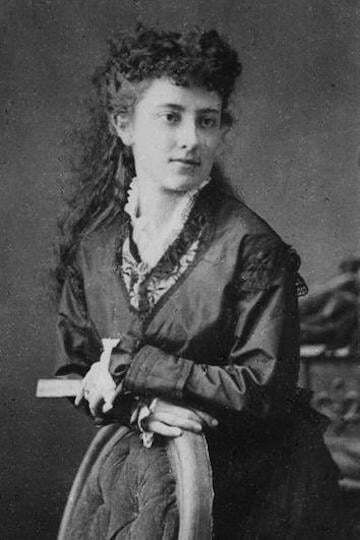
Olive Schreiner in young adulthood
. . . . . . . . . .
With her health declining, Schreiner returned to England for treatment in 1913. World War I (which began in 1914) prevented her immediate return to South Africa. She finally returned in 1920 and died of chronic respiratory disease in Wynberg the same year. Her last work, The Dawn of Civilisation, was published after her death.
Schreiner was originally buried in Kimberley, South Africa. Her gravesite was later moved to Cradock in 1921, when Cronwright-Schreiner returned to Southern Africa. Her posthumous legacy includes a residence at Rhodes University named in her honor. The Oliver Schreiner Prize was established in 1961, and is awarded to exceptional works of poetry, prose, or drama.
The Story of an African Farm was adapted into a film in 2004. It was generally unfavorably reviewed. An earlier television series made in 1980 received more favorable reviews. A short documentary called In Search of Olive Schreiner (directed by Lisha Vosloo), exploring her life and legacy, was released in 2025 .
Inspired By Olive SchreinerSome of the authors inspired by Olive Schreiner’s writing include J.M. Coetzee, Doris Lessing, Nadine Gordimer, and Virginia Woolf. Her work continues to inspire more authors to find their voice; here is what some of these writers have had to say:
Virginia Woolf: Quoted in this study, Virginia Woolf both praised and criticized Schreiner: “The writer’s interests are local, her passions personal, and we cannot help suspecting that she has neither the width nor the strength to enter with sympathy into the experiences of minds differing from her own, or to debate questions calmly and reasonably.”
Nadine Gordimer wrote groundbreaking works like Burger’s Daughter and July’s People; she credited Schreiner’s work as one of her influences, and would call her “the broken-winged albatross of white liberal thinking.”
J.M. Coetzee: The author of Waiting for the Barbarians, admired Olive’s writing, though he criticized her work for skimming over other issues that existed at the time – such as racial segregation.
Doris Lessing wrote the 1968 afterword to The Story of an African Farm and remarked it to be, “one of those few rare books, on a frontier of the human mind.” Lessing herself won the 2007 Nobel Prize for Literature.
. . . . . . . . . . .
Contributed by Alex J. Coyne, a journalist, author, and proofreader. He has written for a variety of publications and websites, with a radar calibrated for gothic, gonzo, and the weird. His features, posts, articles, and interviews have been published in People magazine, ATKV Taalgenoot, LitNet, The Citizen, Funds for Writers, and The South African, among other publications.
More by Alex Coyne on Literary Ladies Guide
Nadine Gordimer, South African Author and Activist 8 Essential Novels by South African Author Nadine Gordimer Jeanne Goosen, Author of We’re Not All Like That 6 Notable South African Women Poets The Banning of Nadine Gordimer’s Anti-Apartheid Novels Olive Schreiner, Author of The Story of a South African Farm 10 Unforgettable Books by South African Women Writers Ingrid Jonker, South African Poet and Anti-Apartheid ActivistThe post Where to Start with the Books of South African Writer Olive Schreiner appeared first on Literary Ladies Guide.
February 4, 2026
Overnight in the Museum: Revisiting E.L. Konigsburg’s Mixed-Up Files
E.L. Konigsburg summed up her stories as being about the “everyday, corn-flakes, worn-out-sneakers way of life” when she won the Newbery Award for her children’s novel From the Mixed-Up Files of Mrs. Basil E. Frankweiler in 1968.
This prize-winning novel was a favorite of mine from the first reading—the first sentence, even — because it begins with Claudia’s failure.
She knows she’s never going to be able to run away in “the old-fashioned way”— in the “heat of anger with a knapsack on her back.” She reflects on her situation and makes a plan: she learns to rise to meet challenges in her own way.
Claudia’s organization skills are top-notch: from accumulating weeks of allowance, gathering essential supplies, brainstorming an exit strategy, to maintaining secrecy. And, above all, selecting the perfect destination: someplace comfortable, indoors, and beautiful. “Planning long and well was one of her special talents.” She selects The Metropolitan Museum of Art in New York City.
Because she is one month away from turning twelve, she will still qualify for children’s fare and thus cut her transportation cost in half. Same for her brother Jamie, who is only nine years old. Although he’s not running away to protest “a lot of injustice” or a lack of “Claudia appreciation” at home, he’s up for what Claudia terms “the greatest adventure of our mutual lives.”
. . . . . . . . . .

Learn more about E.L. Konigsburg
. . . . . . . . . .
This kind of detail — the negotiation process, the dollars and cents of it all—captivated me, convinced me it was not only possible but real. And I knew about museums, because I’d been to the Royal Ontario Museum (commonly called the ROM) in Toronto.
For a small-town girl like me, Toronto equaled New York City; Claudia’s father worked in what everyone called the city, but the other adults (that she knew, that I knew) considered it “exhausting” and it “made them nervous.” But, like Claudia, I thought the city was elegant, important, and busy; like her, I thought a museum would be an excellent refuge.
Also like Claudia, I had a “concern for delicate details” and an abundance of caution: Claudia is “cautious (about everything but money)” and Jamie is “adventurous (about everything but money).”
I understood her outrage over having domestic chores to complete daily, while her brothers escaped all that; it rang true for me in an inexpressible way that had nothing to do with chores — I didn’t want to be a nurse, a secretary, or a teacher, but … something else, something exciting. If Claudia could figure out how to live inside a museum, I could figure out … other things, important things. Like … the city.
Relating to thrills and fears
Unlike Claudia, however, I had no siblings, no allowance, no supplies, and no inter-city train system. And there was one part of the museum (as I knew it) that both thrilled and frightened me; in a pie-chart of my childhood thoughts, the bat cave in the ROM occupied as vibrant and sizable a space as Saturday morning cartoons.
And it was an unavoidable horror for me, because it was situated at the end of the dinosaur gallery — my favorite place in the whole museum. I was like a kid in an advertisement, grabbing whichever adult’s hand I could reach, tugging in the direction of those skeletal figures; but the bat cave loomed at the end of it all.
The fear in Mixed-Up Files isn’t rooted in jump-scares: it’s the ordinary kind of fear when one is required to do a thing they’ve not successfully done before. Indeed, the first fearful moment for Claudia and James is a familiar part of their ordinary routine, when they are sitting in their usual seats on the school bus. Except that morning, they do not leave: they stay.
After the children have reached their destination and the others have exited, Claudia and Jamie hunch down in their seats, awaiting the bus’s next stop: its return to the city depot. They await the driver’s inspection — a daily routine they don’t normally observe, which might capture any belongings left behind, or two children who dare to depart from their familiar routine. In synch with them, I held my breath.
. . . . . . . . . .
. . . . . . . . . .
Recognizing universal childhood experiencesWhen Konigsburg taught at a private girls’ school before she was married, she recognized some universal childhood experiences that affected children from lower, middle, and upper-class families; she witnessed many children struggle to adjust to new situations.
She also noticed that children’s books did not reflect a variety of upbringings; she couldn’t see herself even in some of her favorites, like Mary Poppins and The Secret Garden, couldn’t see the kind of modest upbringing that she had, her ordinary (though strictly religious) girlhood in a Pennsylvania mill town. “So I need words for this reason,” she says: “to make a record of a place, suburban America, and a time, early autumn of the twentieth century.”
Konigsburg also witnessed her own three children’s experiences and noted their absence in children’s stories of their day. For instance, her first book — Jennifer, Hecate, Macbeth, William McKinley and Me, Elizabeth, also published in 1967 — was inspired by her daughter Laurie’s experience of being the new kid at school in Port Chester, New York. Konigsburg wanted to “tell how it is normal to be very comfortable on the outside but very uncomfortable on the inside. Tell how funny it all is.” This juxtaposition was something else I wouldn’t have been able to articulate, but which I yearned to have validated.
From the Mixed-Up Files of Mrs. Basil E. Frankweiler was inspired by her children’s discomfort with being uncomfortable at a picnic, and her son Paul and daughter Laurie modeled for the illustrations (other books were inspired by the experiences of her youngest son and, later, her grandchildren).
You can see both Claudia and James appearing very comfortable on the outside, while feeling very uncomfortable on the inside, even on their first night in the museum. “Five-thirty in winter is dark, but nowhere seems as dark as the Metropolitan Museum of Art,” Konigsburg writes.
There’s part of me that’s still afraid of the dark, inside and outside the museums of our everyday lives. It was dark in the ROM’s bat cave, but the dinosaurs were well lit. My favorite was the stegosaurus, and I lingered with it as long as I could: partly because I was so impressed by the sunrise swell of its massive plates, partly because there were only three more dinosaurs between the stegosaurus and the overarching terror at the other end of the wing.
Where the cave was curtained and only dimly lit in amber-colored recesses, with highly strung netting that resembled cobwebs above the suspended bats, and an unpredictable, screechy soundtrack emerging from seemingly every inch of the dusky display. (And, I swear, it was windy: but, how?)
. . . . . . . . . .
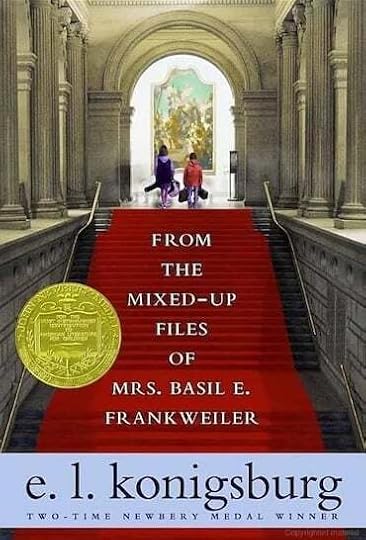
. . . . . . . . . .
Following their first night in the darkened museum, Claudia and Jamie awaken with their stomachs feeling “like tubes of toothpaste that had been all squeezed out.” They are “unaccustomed to getting up so early, to feeling so unwashed, or feeling so hungry.”
Their discomfort has been limited, however. They were able to spend the night in the hall of the English Renaissance, where they were secreted from the night watchman’s view by the heavy curtains surrounding the bed. Thereafter, I routinely sought out and noted the best place to sleep in any museum I toured.
The displays of historical furnishings in the ROM, however, were all behind glass. And I didn’t care much about them anyway, except for one room from a later era, in which children had begun to inhabit their own separate spaces in the family home, with books and toys and a most sublime rocking horse.
There was no way to enter that walled-in space; I imagined people constructing it the way that I had constructed my project for the science fair — though it was small enough to fit atop my slanted wooden desk—backing themselves out as their work was completed, sealing the last pane of glass as they removed the leg last inside their diorama. What I couldn’t see — the hallways behind those exhibits, for instance—was neither a source of comfort nor fear. And the bat cave was nobody’s science project: it was real.
My father was puzzled by my simultaneous resistance of and obsession with the bat cave; he strained to convey that the cave was home to the bats (realizing, of course, that the world contained things far more frightening than bats).
My mother endured my unceasing chatter about the bat cave when I was nowhere near it, between museum visits, as I persisted in the idea that, on the next visit, I would remain wholly unmoved. In the future, I could look back on the preceding visit as a failure, but from a comfortable place in the present, I could make a plan.
. . . . . . . . . .
The 35th anniversary edition
. . . . . . . . . .
Looking back on Mixed-Up Files, introducing the 35th-anniversary edition published in 2002, Konigsburg itemizes what has changed since it won the Newbery. She considers the economic details particularly, and how many readers have complained that the sum of money on which Claudia and Jamie depended could not actually sustain them very long.
Demonstrating the suspended-in-time-ness of a good children’s book, even decades later; Mixed-Up Files wasn’t an object affixed with a publisher’s imprint and a copyright of 1967, but an enduring story about the importance—and comfort—of a well-executed plan that made the impossible possible.
She also explains that the bed in which Claudia and Jamie slept, enclosed in drapery, had been dismantled and removed. Much of the original setting and many circumstances had changed in the intervening years; regular adjustments — by visitors and runaways alike — would be required.
Konigsburg also highlights the 1965 New York Times’ article which contributed another part of the plot in Mixed-Up Files. One of ELK’s responsibilities in an early job obtained after she completed her science degree at what’s now Carnegie Mellon University, was to maintain files of articles clipped from newspapers and other publications: a habit she retained, a real-world habit that informed her fiction throughout her lifetime.
Konigsburg underscores, however, that the core of the story is not about any particular object housed in the museum; it’s clear that the “greatest discovery is not in finding out who made a statue but in finding out what makes you.” Anytime I needed to be reminded of that, I could reread Mixed-Up Files. Which I often did after my parents divorced.
After that, all my routines changed, and I no longer went regularly to the museum. I could count each visit on the fingertips of one hand, as I grew older and stopped holding other people’s hands, but still went, reliably, to the dinosaur gallery first. I grew older yet again, and I held my husband’s hand, and then the hands of my stepchildren, who never even flinched when it came to the bat cave.
Reflections following E.L. Konigsburg’s death
I was disproportionately sad when Konigsburg died, given that I’d never even seen her in person; she had passed through the whole gallery and, finally, reached the final exhibit. And, so, I reread Mixed-Up Files, prepared to feel that sort of distanced disappointment when the younger-you who once loved a book so completely has been subsumed by older-you who rates things differently.
I started rereading it on a Toronto streetcar and continued on the subway, not far from the ROM— moving towards the home I made in the city where the bat cave made its home. Feeling as though I had, at last, left behind that scared little girl, but not so far behind that I couldn’t still enjoy Mixed-Up Files just as much.
In her 2013 obituary in the New York Times, Paul Vitello writes that Konigsburg’s “upbringing in small-town Pennsylvania, where she did not have great expectations, helped her as a writer.” As a small-town girl who saw just enough of her childhood outside the city in Claudia, I was old enough to realize how Konigsburg had helped me as a writer too — by suggesting that real-world events from your everyday life could fill up a storybook. That they could be “enough.”
Yes, there are, literally, corn-flakes in Mixed-Up Files: Claudia collects the box tops and returns them by mail for a rebate. And there’s a corner in the museum, where you can kick off your sneakers and pull the drapes and not be surrounded by darkness and fear, but sleep soundly through the night.
. . . . . . . . . . .
Contributed by Marcie McCauley, a graduate of the University of Western Ontario and the Humber College Creative Writing Program. She writes and reads (mostly women writers!) in Toronto, Canada. And she chats about it on Buried In Print and @buriedinprint.
More by Marcie McCauley on Literary Ladies Guide Lois Duncan, Author of I Know What You Did Last Summer Reading and Revisiting Beverly Cleary’s Ramona Quimby Stories Fact and Fiction in All This, and Heaven Too Sometimes You Have to Lie: The Life and Times of Louise Fitzhugh Revisiting Anna and the King of Siam Margaret Landon, Author of Anna and the King of Siam On Rereading Daddy-Long-Legs Jean Webster, Author of Daddy-Long-Legs The Betsy-Tacy Books by Maud Hart Lovelace Winifred Holtby, Author of South Riding Elizabeth Taylor, English Novelist Elizabeth Taylor’s Novels: Where to Begin Quotes from Elizabeth Taylor’s Fiction Quotes by English Novelist Elizabeth Taylor on Love & Loneliness Selma Lagerlöf, First Woman Nobelist in Literature Natalie Babbitt, Author of Tuck Everlasting On Rereading Tuck Everlasting by Natalie Babbitt Barbara Pym, English Author of Comedies of Manner Making Room to Grow in The Long Secret by Louise Fitzhugh Revisiting Louise Fitzhugh’s Harriet the SpyThe post Overnight in the Museum: Revisiting E.L. Konigsburg’s Mixed-Up Files appeared first on Literary Ladies Guide.
January 30, 2026
An Appreciation of The Pink House by Nelia Gardner White
The Pink House by Nelia Gardner White is a 1950 novel that has the feel of a timeless classic. Yet like the rest of Gardner’s large body of work, it fell out of print and remained obscure and hard to find.
That is, until recently, when Independent press Quite Literally Books reissued it in a handsome new edition in 2025.
It’s surprising that a writer of her caliber would be so thoroughly forgotten. Her books were well reviewed and sold well. She was even a pioneer in the realm of what we now call biofiction: Daughter of Time (1942) is a novelization of the tragically brief and brilliant life of short story master Katherine Mansfield. It was warmly reviewed in the New York Times.
You have to do some persistent digging to find good copies Nelia Gardner White titles. Other novels include Woman at the Window, The Merry Month of May, The Thorn Tree, David Strange, Hathaway House, and others, including No Trumpet Before Him, which will be briefly discussed ahead.
The new edition of The Pink House is available from Quite Literally Books. See a roundup of QLB’s current titles here on Literary Ladies Guide.
The following appreciation of The Pink House is by Tyler Scott, a Literary Ladies Guide contributor:
The Pink House: An Appreciation
“Out of the fullness of my heart I write down this story of my life. The snow is falling, silently, gently, beyond the panes. Every branch is limned with snow.”
Thus opens the novel The Pink House (1950) by Nelia Gardner White. When I was about twelve years old, my mother handed me this novel and explained that it had been her favorite when she was my age. This was in the Adirondacks, where we had a summer place, and every year after that, I read the book during vacation. It became my favorite.
Nelia Gardner White (1894 – 1957) was an extremely popular and prolific writer. She was born in Andrews Settlement, Pennsylvania, one of five children. Though they weren’t wealthy (her father was a Methodist minister), hers was a happy childhood. As she grew up, she worked odd jobs so she could attend Syracuse University (1911 to 1913). She then attended Emma Willard Kindergarten School from 1913 to 1915 to become a teacher. She married a lawyer and had two children.
In her early career, White wrote children’s stories, articles on child-rearing, and young adult novels, mostly set in small towns. Over time, she began writing for adults. She wrote some twenty-five novels, all (save for the 2025 reissue of The Pink House) out of print, as well as countless stories and articles for the top magazines, reaching millions of readers. The magazines in which her work was published included Ladies Home Journal, Good Housekeeping, and McCall’s. A shorter version of The Pink House was serialized in The Woman’s Home Companion.
One of her career highlights was during World War II, when she was hired to write articles for the British Ministry of Information while living in England.
Now even more obscure than The Pink House, White’s 1948 novel, No Trumpet Before Him,, is the story of a Black man falsely accused of a crime and sentenced to death. It explores the power of a community coming together in the face of of racial injustice. No Trumpet Before Him was awarded the prestigious Westminster Fiction Prize, which came with a generous cash prize of $8,000 (equivalent to more than $100,000 today).
The Pink House is the story of Norah Holme. When the novel opens, seven-year-old Norah’s mother dies. Her father, who works overseas, doesn’t know what to do other than leave her with his sister and her family in their grand New England house, The Grange. Quiet and shy, Norah has scoliosis and uses a cane. Three of her cousins take an immediate dislike to her; only the oldest, Paul, shows her kindness. The spoiled cousins tease her, call her Toad, and won’t play with her.
Norah’s Aunt Rose is elegant, icy, and distant: the type of woman who has breakfast in bed and overspends. Her husband, Norah’s Uncle John, mostly keeps to himself and worries about money. Aunt Poll (John’s sister who lives with the family) takes Norah under her wing. Poll is stern and plain-speaking, but she ably educates Norah and teaches her to be tough, set goals, and live well despite her disability.
Norah’s growing strength and self-acceptance are qualities that may have appealed to post-war readers. It’s easy to see why the book made an impression on so many young women. The story is timeless and speaks to anyone who struggles with loneliness and lack of confidence while growing up.
White had a knack for building character and description. Her early works were sometimes criticized as sentimental women’s novels, but The Pink House defies this description. It’s a tableau of family life, with dynamics both good and bad. Secrets to be revealed keep the story moving forward, and, as the flyleaf of my original 1950 edition reads, “undercurrents of hate and frustration and mystery.”
I don’t want to divulge spoilers by give away the ending; however, in the end, good people prevail. With The Pink House, White wrote a novel in which even today, readers may find much to identify with, just as they did when it was originally published.
Excellent authors often leave us with wonderful quotes; this was one of my favorites from Nelia Gardner White on writing:
“One must have discipline, and discipline comes from failure, through writing thousands of words and using a few hundred of them, through filling the mind with great literature, through stretching the imagination to the utmost, through forgetting markets and concentrating on the immediate work. A surface cleverness is not enough.”
. . . . . . . . . .
Contributed by Tyler Scott, who has been writing essays and articles since the early 1980s for various magazines and newspapers. In 2014 she published her novel The Excellent Advice of a Few Famous Painters. She lives in Blackstone, Virginia where she and her husband renovated a Queen Anne Revival house and enjoy small town life. Visit her at Pour the Coffee, Time to Write.
A sampling of original 1950 reviews of The Pink House
The Pink House was reviewed in dozens of newspapers, large and small, attesting to the author’s reputation. While occasional reviews were somewhat mixed, most were quite positive. It’s a testament to a fairly lengthy book that’s more character-driven than plot-driven, that many reviewers noted that it was hard to put down.
The Hartford (CT) Courant, Feb. 19, 1950:
“This is a drama of selfishness and greed and of warring personalities … The characters don’t quite ring true — they’re either too good or too bad. As a psychological study of Norah Holme alone, the book is fairly successful. And it has other points, too. Some of the descriptions of the New England countryside (the Pink House is in central Connecticut) are excellent. And it’s the kind of book you won’t want to put down until you’ve finished.”
The Pittsburgh (PA) Press, March 19, 1950:
“Hobbling around on crutches, our heroine learns many things in the gabled mansion — things that everybody has to learn sooner or later. She discovers things that are hateful in the midst of things that are full of love. Life, she learns, can be a cruel illusion as well as a beautiful reality. She loses none of her own charm, however, in the process. And the happy ending comes along, as the reader knew it inevitably would.”
The Lewiston (ME) Daily Sun, Feb. 27, 1950:
“It is well that not too many books like The Pink House are published often. People can’t sit up every night forgetting all about bedtime to finish a book. And The Pink House is that kind of a story. Once started, it is hard to put down this New England family story … Not that the family is charming. Far from it. or are they all blackguards. They are simply human beings, bad ones and good ones. And that is why the book casts such a spell.”
The post An Appreciation of The Pink House by Nelia Gardner White appeared first on Literary Ladies Guide.


