
Andrew Keyt's Blog
May 7, 2018
Notes from an FBSI Grad: Ben Juday
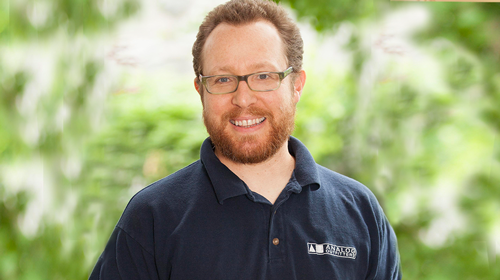
Why did you enroll in FBSI?
I enrolled in FBSI to increase my level of understanding of the complex world of family business governance. My family was going thru a leadership transition at the time and I needed to increase my understanding of best practices so I could be a high level contributor.
What module was most useful to you and why?
It is hard to pick one module, but my guess is that the relationships module was the most useful to me because it sparked very interesting and useful discussions. In my opinion, most family business problems boil down to relationship issues and anything we can do to increase our skills in that department is useful.
Were you able to walk away with a better sense of how to engage in your family business?
Absolutely. I think that because of FBSI I came away as a true believer in the practice of adopting robust family governance for our family business. Not just paying lip service, but actually doing it.
Typically, there’s quite a range of experience represented in FBSI – how did this impact your interaction with the course work? How did it impact your relationships with your family members?
I liked having a variety of skill levels from fresh college grad to CEO. In particular, it helped to humanize our own family CEO and gave me a better understanding of their challenges.


April 9, 2018
Notes from an NGLI Graduate: Nick Perrino
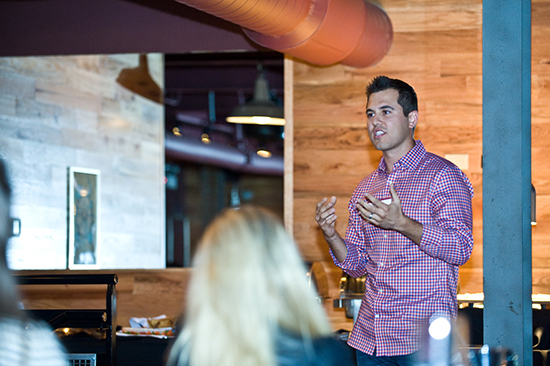
09.24.15. Chicago IL. Loyola U FBC Next gen social @ Goose Island pub. Photo by Glenn Kaupert, © 2015.
We chatted with Nick Perrino (Home Run Inn) recently about his experience in the Next Generation Leadership Institute. Check out what he had to say and learn more about how you can enroll here. Our kick-off is happening May 4-5 at Loyola’s Retreat and Ecology Campus.
Why did you enroll in NGLI?
I decided to enroll in NGLI for three reasons: to learn new strategies/tactics to help our family business grow, to develop on a personal & professional level and to learn from other family businesses/peers who were going through similar experiences.
What did you expect going in and how did those expectations change by the time you graduated?
I expected to meet new people in a similar situation as me and learn different strategies & tactics to help our business grow. These expectations were all met; however, I never expected to build the friendships that I did over a two year time frame. I now have a core group of individuals that I can lean on and who will challenge me to get better. I discuss extremely personal topics with them all while knowing that everything will remain confidential.
How has NGLI impacted you (personally and as a leader)?
When it comes to leading, you need to know yourself first before you can effectively lead any organization. NGLI helped point out different strengths & weaknesses that I was unaware of. It gave me ways in how I can effectively manage all those traits and use them in a positive way.
What part of the course was most useful?
I really enjoyed the personal/self section of the course. I am always seeking ways to get better personally and I love learning what weaknesses I have so I can turn those into strengths.
Have any other family members participated?
Yes, my sister went through the program as well as my brother-in-law and cousin.
What did you think about the time commitment and length of the program?
I thought the time commitment/length of the program was perfect. I never felt overwhelmed trying to get my job done and keeping up with the course curriculum.
December 5, 2017
Governance Institute: A Participant’s Perspective
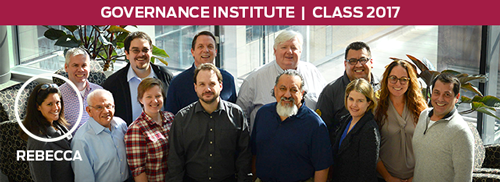
We recently spoke to FBC Member and Governance Institute participant, Rebecca Peterson (Sasser Family Holdings) and asked her to share with us what it’s like to be enrolled in the Governance Institute. Rebecca and her family business classmates (pictured above) are about halfway through their program and will graduate in June 2018. Check out her take on what happens in the classroom and the valuable tools she’s taking back to her family business.
How has this program impacted your thinking about your role as a director?
This program has encouraged me to look at the role of the board more dynamically and from a higher level. Hearing about how much the structure of a board (types of directors / structure of the board meetings, etc.) can shape the work of the board also helped me better align our needs as both a business and a family with the types of meetings and directors that will work best for us, both now and in the future.
What are you doing differently in relation to your board based on what you’ve learned in the governance institute?
One of the things we’ve changed is our compensation structure for our directors; this change was made based on discussion and outside advice we received in the Governance Institute from two guest speakers. I’m also more comfortable in my role and am finding my voice in meetings more as well as remembering the bigger picture.
How has learning in a cohort over time been helpful?
Learning in a cohort is unique because we can watch as other businesses and families try out ideas and develop. We are engaged in each other’s experience and story which makes the real-time learning all the more impactful.
Why should someone take this program?
I would love for both family directors and non-family directors to participate in this program in order to best roundout the conversations each cohort has. Discussions on how to manage conversations from each perspective are invaluable. Having a basic understanding on what a board is expected to do and how each individual member can best bring their talents to the table is very helpful.
How is this program different from other family business education programs that you have taken part in?
The length of time this program runs is one of the distinguishing factors. Allowing for 18 months so the evolution of directors / boards can begin creates an opportunity for even more learning. I also like the two-day meeting schedule with limited work in-between sessions. This allows me to continue to manage the rest of my responsibilities but be entirely engaged during the sessions themselves.
What has been most valuable about this program to you?
The conversations and research presented on bias has been the most directly impactful to me so far. Remembering to look at board packets and decisions, while cautious about which lens I might be using, can help avoid overly risky avenues in the future or prevent a missed opportunity.
Interested in enrolling in the Governance Institute?
Our next class kick-off on February 8-9, 2018 at Loyola’s Quinlan School of Business. You can fill out an online application or learn more by contacting Anne Smart at asmart@luc.edu or 312-915-7738.
September 25, 2017
Illinois Family Business of the Year Awards: Winners and Finalists Announced!
Our Honorees’ Breakfast was held this past Friday to celebrate the Winners and Finalists (both past and present) of the Illinois Family Business of the Year Awards. Attendees had a chance to network with one another and meet representatives from our partner organizations to talk about a number of important topics relevant to both their family and business. At the end of the breakfast, Center Director Anne Smart announced this year’s line-up of Winners and Finalists. Check out the list below and don’t forget to take a look at photos from last Friday’s breakfast!
Mark Your Calendar!
We’ll be honoring these outstanding family businesses on November 16 at our annual Awards Gala. Join us in congratulating them!
Small Family Business of the Year Award
Drapery Connection – Winner
A. Perry Homes – Finalist
Tranel Financial Group – Finalist
Medium Family Business of the Year Award
Golub & Co. – Winner
Digital Check Corp. – Finalist
Devon Bank – Finalist
Large Family Business of the Year Award
Antunes – Winner
Rabine Group – Finalist
Baird & Warner – Finalist
Community Service Award
Businesses showing exemplary community service efforts
Handi-Foil – Winner
Abt Electronics – Finalist
A. Perry Homes – Finalist
Rabine Group – Finalist
Dean’s Award
Recognizing a business that excels in social enterprise, supply chain management or emerging markets.
Carl Budding & Co.
Century Award
Highlighting the success and longevity of a family business
Superior Graphite
Congratulations to all of our Winners and Finalists!
If you’re interested in attending the Awards Gala on November 16, you can purchase tickets here.
September 22, 2017
The “3rd Chapter”: Writing Your Legacy with Edward Monte
As you enter the “3rd Chapter” of life, you will begin to polish the legacy you’ll leave within your family business. At our Legacy Conference on September 29, Edward Monte, Ph.D, will discuss how embrace this phase and make each moment count. Get a preview of his insights here:
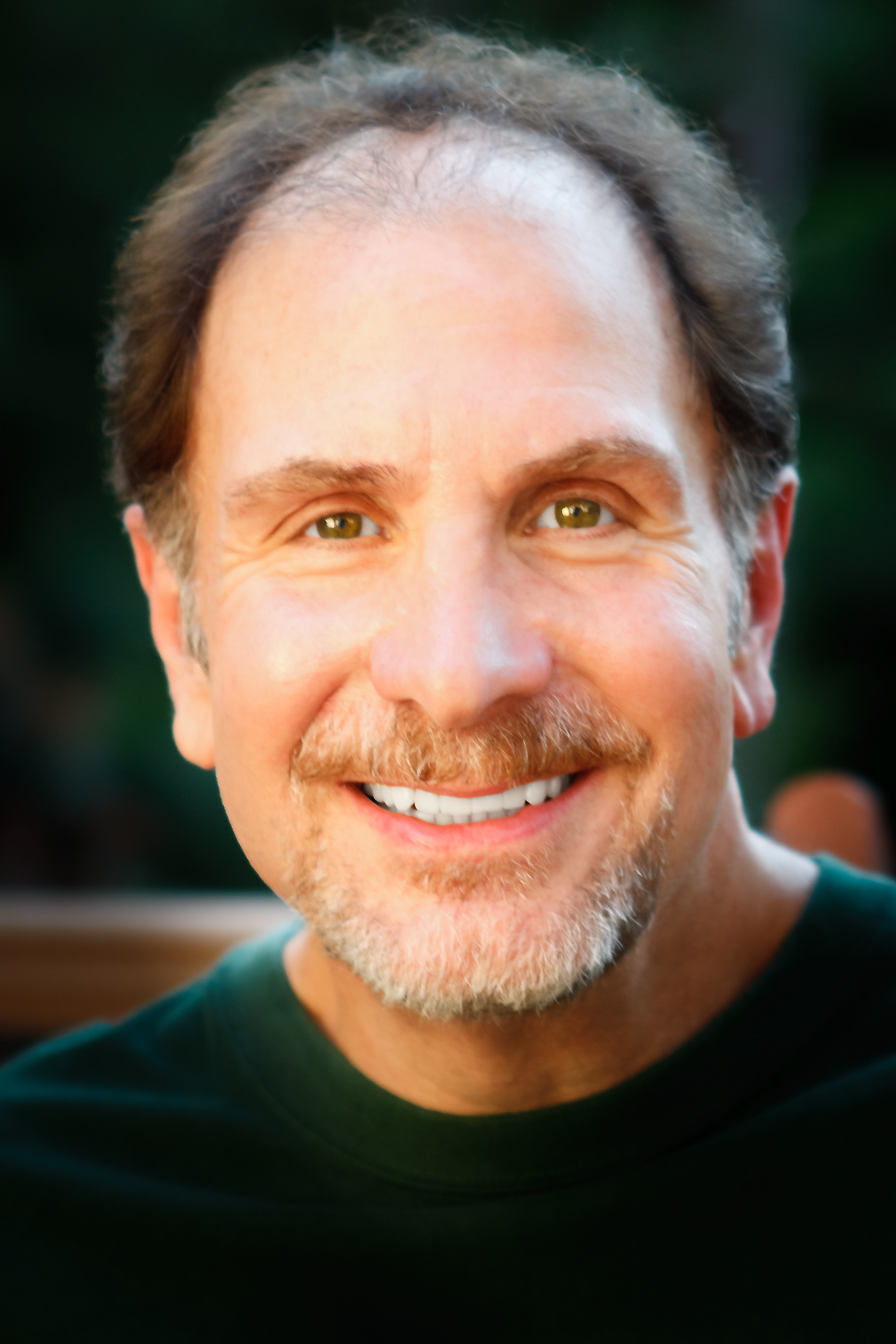
What challenges do family businesses face when exploring the “3rd Chapter?”
Family businesses succeed and thrive based on how well the family functions. Therefore, successfully facing any challenges in family business will revolve around the emotional health of its leaders – the upper generation.
On the surface, succession and the movement to a meaningful next chapter, for both upper and lower generation, would appear to be a dynamic and interesting transition. One would assume that this chapter holds great rewards and opportunities for both generations. Then why is exploring this “3rd Chapter” often the most intense, classic trauma of any family business? Quite frankly, it’s because what lurks slightly beneath the surface is the overwhelming reality of death. There is no “4th Chapter” for the upper generation.
The heroic challenge of the upper generation is to lead the family with courage, self-reflection, self-knowledge, the ability to communicate vulnerabilities, negotiation, ability to give up control, the ability to parent in the midst of reinventing oneself and, most importantly, to build a legacy of a life worth emulating.
How does the concept of legacy show up in sustaining a family business?
Legacy, as a concept, is too often treated like a good eulogy….. No matter how the deceased has actually lived, we can find some turn of phrase to make him sound nobler than he ever was. Stretch the truth a little, change the history, everyone feels good and we all go home.
But, legacy isn’t a turn of phrase or an idealized mission statement. It is the embodiment of one’s values, beliefs and, most importantly, how one actually lived one’s life. The hope is that the legacy one leaves raises the nobility and integrity of the family and family business and will be the sustaining force over decades Problem is, a legacy imbued with such things as disconnection, greed, narcissism, exclusivity, emotional cut off and other less noble characteristics can equally be sustained in the family and the family business.
One goal in the “3rd Chapter” is to honestly look at the legacy one has constructed over a lifetime. What have you modeled for your family and your family business? What messages are you most proud of having given and which need to be altered? The good news is that legacies can be built up to the end of one’s life. It’s never too late. This is the legacy of Ebenezer Scrooge.
What would you like to share with our Member Community? What do you think family business members need to hear?
My biggest hope is that families in family business talk about real things. When you’re talking about “real things,” it feels powerful, difficult, scary, exciting, and completely the opposite of clear rationality and anecdote. It feels important. Legacy contains all the above characteristics. It is a reflection of what a family, and a family business, contributes to the human experience. In a hundred years, no one is going to remember that you sold widgets. What they are going to know is how you, as a family, constructed a world that enhanced the quality of life of those you touched.
Meet Edward and other Legacy Speakers at our conference on Sept. 29th. Register today!
Edward Monte, Ph.D., Family Solutions Group
Edward P. Monte, Ph.D. has been a couple and family therapist for over 40 years. He is the founding principal of Family Solutions Group – a family business / family office consulting firm recently relocated from Philadelphia to Santa Fe, New Mexico. Edward’s concentration is on parent – adult child relationship issues that impact family businesses: particularly the complex dynamics between fathers and sons. He was on faculty at the University of Pennsylvania for the past 20 years and has taught in the Loyola Family Business Center’s Next Generation Leadership Program for 17 years. Edward is presently the Clinical Fellow of the Loyola Family Business Center.
He has presented extensively nationally and internationally and pulls from his most valuable credential as a third generation son in a family business.
Thank you, Edward, for taking the time to share your insights! To hear more from Edward, register for our Legacy Conference. To keep up with our blog posts, like our Facebook Page!
September 18, 2017
Encore Careers: Strengths, Challenges, and Passions with Bruce Boyd
You’ve built a legacy within your business. Now what? For Bruce Boyd, the next step was pursing an “encore career” that explored new sectors and new passions. Read below for his insights on these transitions and a sneak peek of his session at our Legacy Conference on September 29!
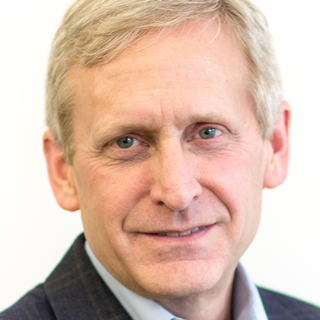
How did you find courage to leave the day-to-day operations of your primary business, change directions, and innovate and take risks associated with your next venture?
Changing direction is often about leveraging your strengths in new ways. After I sold the pump works, I became a senior manager at The Nature Conservancy, a large nonprofit, where I was able to deploy the skills I developed in running a business in building and developing a nonprofit enterprise. Our “product” at the Conservancy was preservation of important and beautiful places, a bit more compelling than sump pumps, and I found the work enormously rewarding. Because of my business experience, I was able to make a big impact at the Conservancy. Many of our clients at Arabella have made a similar switch. In their case, most often deploying their business, finance, legal or other skills as volunteer leaders with organizations whose mission they find compelling.
What challenges did you face when you pursued your next professional path?
One of the greatest challenges is letting go. Distancing yourself from an enterprise in which you are deeply invested, emotionally and otherwise, is not easy. In some cases, clients have sold businesses which makes moving to an encore career easier. In other cases, leaders have transferred responsibility for management to someone else leaving them the flexibility to pursue other endeavors. In some cases, leaders remain in a leadership role while carving out time for causes about which they are passionate. There is no right approach but being intentional about pursuit of an encore career is critical.
How important are curiosity and vulnerability when learning about and exploring a new passion?
When I joined the Conservancy, I brought a passion about the Conservancy’s work and knowledge about how to turn around a struggling business, but no real knowledge of conservation or the nonprofit sector. Feeling “incompetent” in those areas was uncomfortable but I looked at it as an opportunity to learn. I was going back to school, in a sense, and I loved that. It didn’t take me long to know quite a lot about conservation and the nonprofit world.
How does the concept of your legacy show up in the businesses you no longer operate but continue to own?
A founder’s values have an enduring impact on the company he owns. Those values can be deepened and enhanced by a founder who engages in activities that support the well-being of people and the planet. My experience is that employees admire a leader who dedicates time and energy to improving the lives of others.
Meet Bruce and other Legacy Speakers at our conference on Sept. 29th. Register today!
Bruce Boyd, Arabella Advisors
Bruce Boyd is a Principal and Managing Director at Arabella Advisors, a social impact consulting firm whose clients include many of the country’s leading philanthropists and impact investors. Bruce works with individuals, families, foundations and companies to design, implement and evaluate programs that address critical social and environmental problems.
Bruce started his career as a lawyer, but left the law to purchase a manufacturing company out of bankruptcy which he later sold. Bruce then joined The Nature Conservancy where he was a senior leader for 13 years. Bruce launched Arabella’s Chicago office in 2007, one of four Arabella offices across the country. Bruce received his law degree from the University of Chicago and studied business at Northwestern’s Kellogg School of Management.
Thank you, Bruce, for taking the time to share your insights! To hear more from Bruce, register for our Legacy Conference. To keep up with our blog posts, like our Facebook Page!
September 13, 2017
Shifting Gears: Leadership Transition and Legacy with FK Day
What happens to your legacy when you transition from your family business to a new venture? We asked FK Day, one of the speakers for our Legacy Conference on September 29, how he shifted from his leadership position at SRAM to founder of World Bicycle Relief. Check out our interview below to see how core values and passion within his family business led him down this new path:
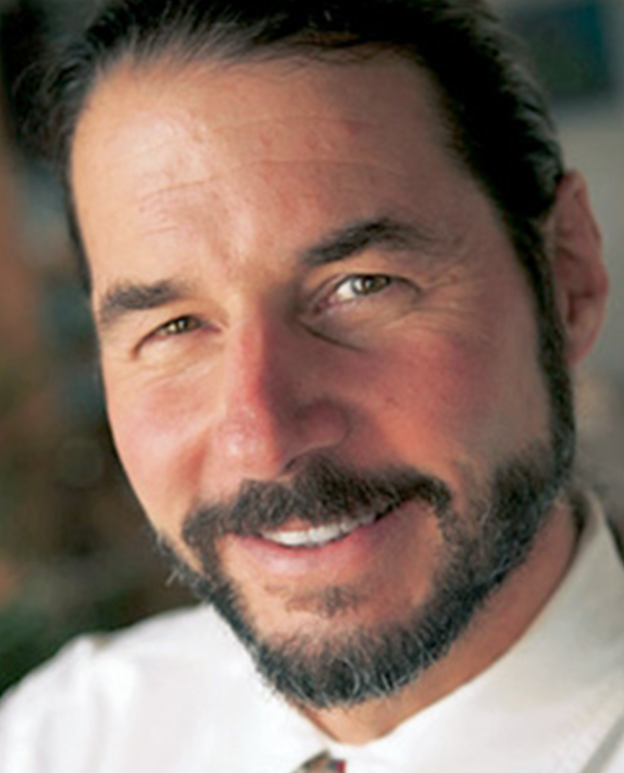
How did you find courage to leave the day-to-day operations of your primary business, change directions, and innovate and take risks associated with your next venture?
When we started SRAM, it never felt like work because we loved what we were doing and were always way out on the edge of innovation. We loved working together and were confident in our direction and that we were making the world a better place through bicycles. When we founded World Bicycle Relief, I was driven by that same belief. The only difference was applying all my efforts to serving the under-served at the bottom of the economic pyramid, instead of the top of the economic pyramid. I was able to replace myself from the best members of our team. They gave me the ability to hand off leadership to strong fresh eyes, which allowed me to focus on a critical area that no one else was interested in diving into. To me, there was no question and no courage required.
How did you adapt your professional identity, which is often closely aligned and tied to your family business?
Within our family and our company, one’s identity is defined by one’s passion and integrity. I left the day-to-day leadership of something I loved and was passionate about, to take on the founding and leadership of something else that I was passionate about. Instead of trying to win the Tour de France, we were trying to deliver bicycles to tsunami devastated Sri Lanka, where people were prevented from rebuilding their lives. Bicycles bridged the distance and opened possibilities to access the good, services, jobs, and schools they needed. I love the world of high performance bicycle components, and I love being able to apply all that I have learned at the top of the market to helping others, whose lives at the bottom could be revolutionized by a simple, reliable bicycle.
How does the concept of your legacy show up in the businesses you no longer operate but continue to own?
The legacy I’ve left behind is that of our family’s core values, which have now become our employee’s core values. Yes, it is good to leave a financially healthy company, and I would have never transitioned in a crisis, but it is more important to ensure that the core values of the family are deeply rooted, so that they can weather the good and bad times all companies must go through. With the core values intact, the organization can evolve, grow and heal itself.
I feel like I had been training all my life for what I am doing now, and I am glad I have found something that is meaningful and impactful that I can fully throw myself in. Consciously or unconsciously, what I am doing is fully aligned with our family values so I am in harmony with our family and those who have gone before us. I think it would have been unnatural to follow any other path.
FK Day, SRAM
FK Day is President of World Bicycle Relief and Executive Vice President of SRAM Corporation, the largest bicycle component manufacturer in the USA and second largest in the world. F.K. has 20 years of experience developing new products and ensuring quality control of components manufactured in six countries in Asia and Europe. Read more →
Thank you, FK, for taking the time to share your insights! To hear more about FK’s story, register for our Legacy Conference. To keep up with our blog posts, like our Facebook Page!
August 28, 2017
StoryPower: Your Hidden Heritage with Judith Kolva
Our Legacy Conference is one month away, and we have a great group of speakers ready to share their insights on legacy in the family and business. We asked Judith Kolva to give us a sneak peek into her session, StoryPower: Your Hidden Heritage. Read her post below on the value of storytelling and what you can expect to learn on September 29!
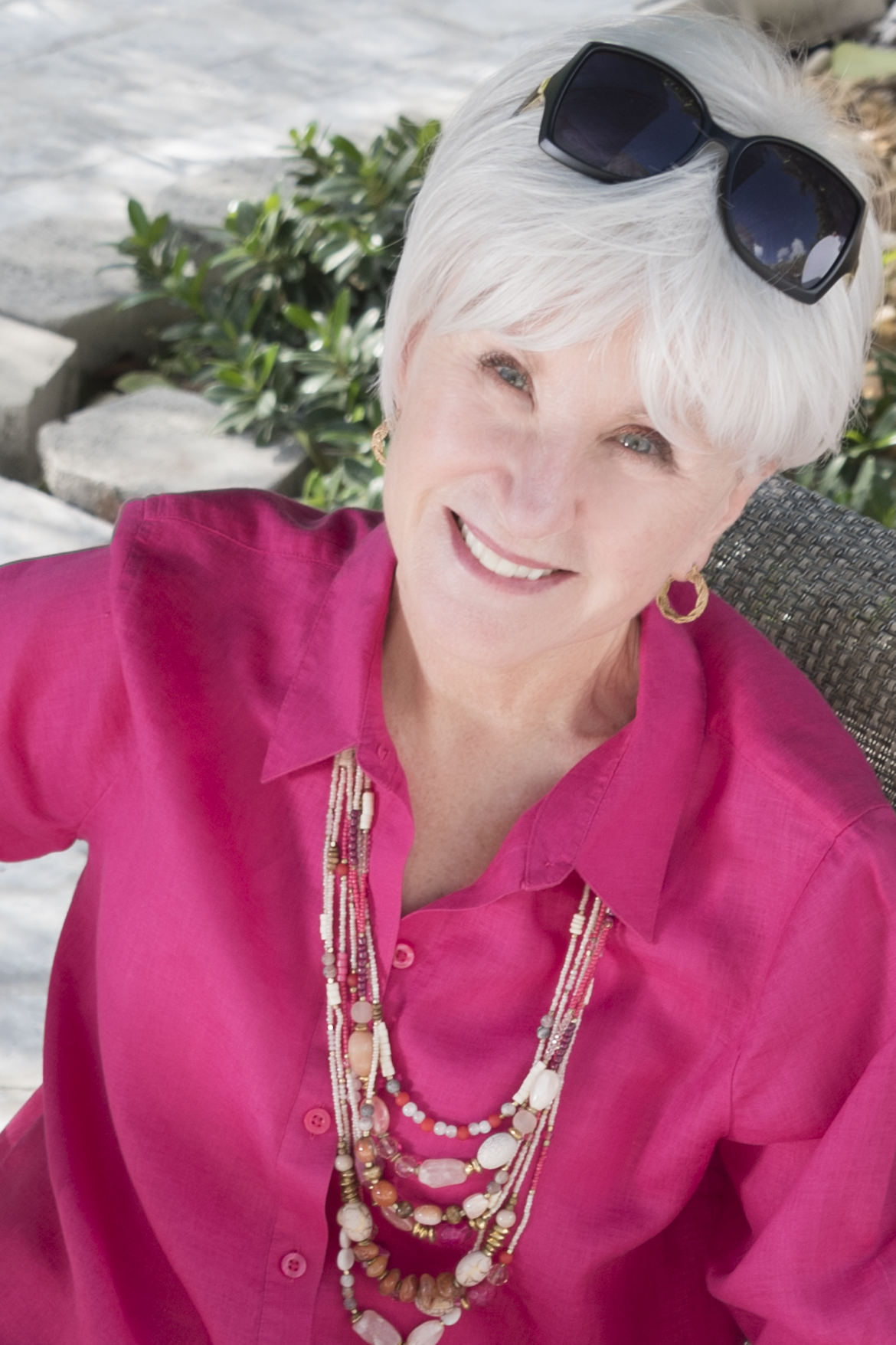
Judith Kolva, Ph.D.
Personal Historian, Legacies In Ink, LLC
Judith Kolva, Ph.D., is a professional personal historian. She is a trusted interviewer, expert researcher, gifted writer, and engaging speaker who navigates Fortune 500 boardrooms, family living rooms, and speaking podiums with ease and grace.
Dr. Kolva works worldwide with multigenerational families and family businesses to safeguard stories in heirloom books. Her proprietary model, StoryPower: Your Hidden Heritage, engages her clients and combats the “shirtsleeves-to-shirtsleeves” syndrome.
Stories Trump Things
Toss out the term “legal will” and you never need explain yourself. Research conducted by estate planners indicates Baby Boomers will pass down roughly $30 trillion during the next few decades. How? Legal wills.
Certainly, material possessions are important. But do you know two separate Alliance American Legacies studies affirm traditions, values, wishes, and, yes, stories trump things? In summary: “Boomers and elders agreed: Inheritance is not ‘owed’ to children. But family stories should be passed down.”
Jay Hughes, author of Family Wealth, writes, “Stories inoculate families against the shirtsleeves- to-shirtsleeves in three generations syndrome. Every family I know that successfully preserves its wealth sets aside time at family gatherings for sharing its unique history.”
Mrs. Lavern Norris Gaynor, heiress to the Texaco fortune, says, “It’s my obligation to tell my story—a story that includes my family’s business story. After all, it’s stories, not sterling, that link generations.”
One of Chicago’s hometown boys (Can you say, “Barak Obama”?) says, “When so much of our politics is trying to manage this clash of cultures brought about by globalization and migration, the role of stories to unify is more important than ever. Storytelling brings people together to have the courage to take action on behalf of their lives.”
I call human beings homo narratus—storytelling animals. Our brains are evolutionarily hardwired to think in, tell, and remember stories. Stories are the heartbeat of the human experience. They teach us who we were, who we are, and who we can be.
Someday List
If stories are so important, why do we put off, or even avoid, passing on stories that preserve wisdom, hard-learned lessons, traditions, beliefs, and hopes—the intangibles that comprise our true legacy?
Answers are universal:
I don’t have the time.
I don’t have the skills.
I don’t have the resources.
I don’t know where to start.
So, we jot tell my story on the Someday List. All too often, before the Someday calendar page turns, it’s too late.
Best Practices
Join me September 29, 2017 and discover how a mason jar, a couple of crayons, and a handful of words can coax stories out of hiding and reveal your hidden heritage.
It’s easy. We’ll have fun and shorten your Someday List.
Guaranteed.
Thank you, Judith, for taking the time to share your insights! To keep up with our blog posts, like our Facebook Page!
August 24, 2017
FBC Home Videos | Jude Rake
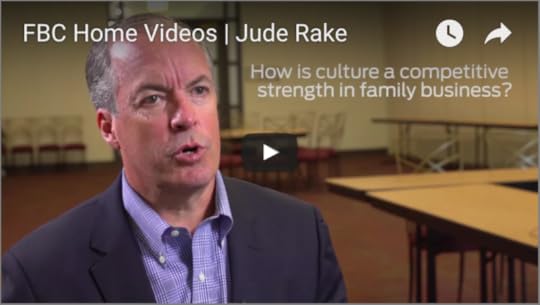
Did you miss our most recent conference on culture in family business? Check out a quick clip of Jude Rake, one of our speakers from the event, as he talks about some insight into why culture in family business is important.
July 6, 2017
Enjoy The Summer Before It’s G-O-N-E

Still not sure if you’ll join us on Thursday, July 20 for our Summer Member Social on the Loews Hotel’s Rooftop Terrace? Here are ten reasons you should register and enjoy an evening with us:
You deserve a night out
When you work hard for the family business, you gotta play hard, too.
Three words: Chicago. Rooftop. Terrace.
Loews Hotel Terrace was ranked one of the best Chicago Rooftop Bars in Chicago. Need I say more?
Meet new friends
FBC Members both new and old will be at the event — get to know some new peeps!
The summer weather
Get out an enjoy the summer — Chicago’s frigid temps will be back before you know it.
Nothing’s on TV
The Cub’s aren’t playing and neither are the Sox.
Early dismissal
That’s right — we’re giving you an excuse to leave work a smidge early!
Dress code: casual
Leave the business clothes at home.
Make it a date night
Call the babysitter, grab your honey, and hit the town!
Unplug and unwind
Forget about your inbox and put away the phone — relax and enjoy some good food, good company and a gorgeous view of the city.
Nothing’s more valuable than time spent
Make it a family affair. Bring mom and dad, grandma and grandpa, your aunt and uncle, your favorite cousin… we’ve done all the work, all you have to do is show up!


Event Info
Thursday, July 20
Loews Hotel | 455 N. Park Dr., Chicago
5:30-8:30pm
Tickets: $150 pp
Questions?
fbc@luc.edu or 312-915-6409

