Christian H. Smith's Blog
September 29, 2016
Stigmatasexual Suicide
On the edge of a desolate rocky shore, the monster makes its stand. I finally have the ugly goddamn thing cornered. It is wounded and unarmed, but still dangerous. The misbegotten creature, regurgitated from the imagination of an obviously deranged programmer, swipes a spiky tentacle at me. It snarls to display a dentist’s nightmare of shark-like triangular teeth.
“Got you, you ugly sonofabitch!” I scream in battle-rage. The voice in my throat is deeper and stronger than my real voice. It makes me feel powerful.
I heft my spear. At some point back in the time-warped lucid stream, I had carried a gun of surreal caliber, with which I blasted dozens of this thing’s brethren back to whatever hell their theology might provide. I lost the weapon in the heat of battle, though, and was forced to improvise. The heavy stick, sharpened to a deadly point upon the jagged rocks, pierces the monster’s skulls easily. Churning their reptilian brains to pulp is much more satisfying than shooting them.
Behind the alien’s back, the boiling maelstrom of the lunatic sea explodes against the rocks. Spray coats my face. I taste salt. For a second this unexpected detail distracts me. I didn’t know I could taste things here. The creature takes advantage of my diversion and rolls to the side in a desperate, crab-like lurch.
I drive my spear through one of the monster’s many appendages, nailing it to the ground. With a wrenching tug and a squealing cry that is painful to hear, the thing pulls free. Leaving its twitching detached limb behind, the crippled beast makes a pathetic attempt at escape. It struggles up the sea-slicked wall of rocks.
I plant my foot on the still-convulsing amputation. The hard outer skin crunches beneath my boot. A spurt of yellow-green blood splatters the rocks with viscous dripping slime. I pull my spear free and heft it over my shoulder. Above me, the sky is as mad as the sea. The canopy of the heavens is filled with a spider-web of lightning, like a dome of black glass shattering to reveal the blinding light of infinity beyond. Deafening thunder drowns my cry as I hurl my spear. I know my aim is true as soon as my hand releases the weapon. It slices the salt air in a perfect trajectory, skewering the beast through its twisted spine.
I laugh in triumph as the thing dies. It was a good kill, very satisfying. Well earned, too. I am wounded. The barbed tentacles have taken a chunk out of my side, but the injury does not concern me. The sensation is not quite pain. It’s like a strange throbbing heat emanating in waves from the damaged area. Pleasant, in a way. Not like the pain of reality.
Now, I think, to the victor the spoils. I crawl over the rocks to see what treasure lies in the cave the monster was defending. My time here is growing short. I hope I can enjoy my prize before the session ends. Vaulting over a ridge, I find myself at the mouth of the cave. A woman crouches inside, huddled beneath a spray-drenched cloak.
She is slight, her figure thin as far as I can determine beneath the coat. Her short dark hair is plastered to her skull with water. Her eyes are wide with fear. She looks nothing like the voluptuous, doe-eyed blondes which are the usual reward for winning a battle. I am a little disappointed, but stretch my hand out for the woman anyway. Instead of taking my hand in hers with gratitude, the usual behavior of the prize-girls, this one scrambles backwards into the shelter of the cavern. She seems afraid of me.
“Don’t worry,” I speak in the deep, flat voice of this world’s throat. “I won’t hurt you. I’m here to rescue you.”
Her dark eyes narrow with mistrust. This strikes me as strange. The eyes of the game-characters are usually as expressive as glass marbles, just one of the minor limitations of the software which keeps the experience from being fully real. Still, determined, I advance on the girl.
“We have time for a little fun,” I jest, adding a chuckle.
The girl replies with a word I have never heard from the lips of a prize-girl.
“No,” she says.
“No?” I’m baffled.
“Please.” Tears. I have never seen tears in this world. “I don’t know where I am or how I got here. Just please help me.”
I stagger on my feet for a second, trying to understand what is happening. Before I can grasp it, the sky rings out with a sound like a million bells. From the other world, an alarm sounds.
“What’s happening to you?” the girl cries out.
I look down and watch my body dissolve into nothingness.
*
The buzzer rang the end of the session. Michael blinked twice and came awake, surprised as always to find himself sitting in a stifling hot room with three other men. For a moment he could not remember how he had arrived there.
In the chairs beside him, Old Max and Heller came awake. Across the room, their host Morgan opened his strange, sand-colored eyes. He never joined them in their experience, but sometimes dozed off waiting for them to finish.
The device rested on the table before Morgan. It resembled a small, fleshy sac, like a defective organ cut from a dying man. Despite the fact he had smuggled most of the machine’s components from his job, Michael had no idea how the thing worked. Morgan had put it together. All Michael knew was that when it was turned on, the thing pulsed like a beating heart. It broadcast a signal, which was received by the metal ring implanted under the skin on the back of his neck. Under the influence of the machine’s steady throb, and of the sedative Morgan doled, Michael slept lightly. In his shallow dreams he had more power than he had ever known awake.
“How was it, boys?” Morgan asked, massaging the sac, manipulating the controls inside to shut down the machine and terminate the experience.
“Fuckin’ galumptious,” Heller laughed. He looked around the room for someone to second his assessment, flashing a child-like grin.
Old Max merely smiled and nodded. “It was very nice,” he said.
“How about you, Michael?” Morgan’s pale brown eyes glinted.
“It was different this time.”
Morgan nodded. “The filters you smuggled out worked quite well.” His words drawled out like tendrils of smoke wafting from his thin lips. He talked like a man savoring a mouthful of raw oysters. “They add a human dimension.”
Coming from Morgan, “human” sounded like a strange alien species.
“Whatever, dro,” Heller said. “That was the best fight and the best fuck I ever had. My gyno had great pillowy mams and her yoni tasted like strawberry jam.”
Michael had often wondered why Heller joined the club. He wasn’t like the rest of them. Handsome and athletic, with an easy boyish charm, he could have scored himself just about any woman he desired. Though, and this may have been key, not strawberry-flavored ones.
“I killed my gyno this time,” Old Max said, licking his lips with pervy relish. “Just to try something different.”
“Oh?” Morgan smiled. “And did you enjoy that experience?”
“Yes, quite a bit,” Old Max nodded. It was easy to understand why he was in the club. Old Max had probably been disgusting even when he was young.
“And how do you boys feel now?” Morgan said. “If you don’t mind me asking.”
“I feel great,” Heller said. “Fucking frabjous.”
“Yes,” Old Max agreed. “I feel relaxed. Refreshed. A calm sense of well-being.”
“Any lingering feelings of guilt about the murder?”
The old deviant merely frowned, as if that word were not in his lexicon.
“This program was designed, by Michael’s employer, as a method of controlling prisoners,” Morgan said. “Fully immersing convicts in a virtual reality where they are allowed to indulge in violent and sexual fantasy leaves the prisoners sated. With an outlet for their aggression, the prisoners become docile as . . . kittens.” That last word delivered with the relish a very hungry man might give to the phrase “steak dinner.”
“All right, boys,” Morgan said. “I don’t like to breach such a distasteful topic, but it’s time to ask for your dues. Operating expenses, you know.”
Heller and Old Max dug their credit wands from their pockets and swiped them over Morgan’s Paymaster with the air of men paying a tithe. Michael did not have to pay. His dues were given in trade.
The other two bustled out the door only after extracting promises from Morgan that we would meet again at the same time next week. Every time a session adjourned, there was always the same anxiety that this would be their last.
Michael lingered after they had gone.
“So it was different.” Morgan said. “In what way?”
“The prize-girl said no.”
“Unusual behavior for a game character,” Morgan chuckled. “Could be a hacker, another real-life player jacking in. Though I doubt it.”
“What else could it be?”
“Maybe some joker in the programming department decided to invest the game characters with free will.” Morgan rolled his eyes, as if this would be the grandest joke ever told. “A fascinating proposition, to be sure.”
“Listen,” Michael said. “I wanted to tell you. They’re really tightening up security. It’s going to be a lot harder to sneak things out.”
“Quite all right,” Morgan said. “My translator unit is complete. If any further upgrades are needed, they will involve you smuggling items in. Do you think you can access the mainframe room?”
“I don’t know,” Michael shook his head, feeling the clenching anxiety he always felt whenever Morgan wanted him to jeopardize his job. Still, he couldn’t say no to the man who held the keys to such a glorious kingdom. “Same time next week, then?”
Michael backed out the door. Being alone with Morgan made him nervous.
“Why don’t you drop by Saturday?” Morgan said. “Just you, without the others. I’m very interested in this character you’ve met. Perhaps we can do some exploration.” He put an odd twist on the word, forcing it to rhyme with “exploitation.”
“I’ll try to get away,” Michael said. “My wife wants to fly down to Anchorage for a gallery opening.”
Morgan smiled indulgently at Michael’s pretense of family obligation. “I’m sure you’ll manage.”
Michael nodded again and stepped outside. The cool, dark Fairbanks winter afternoon was like a tall drink of water after the stifling heat of Morgan’s apartment.
*
Michael took his time driving home. He cruised the Farmer’s Loop, sky aflame with Borealis red, sat-radio tuned to a Russian classic syntho station. Michael grooved to the old pop songs as huge neon curtains swayed in the solar wind. He thought of the girl in the cave, and remembered the human look of fear in her eyes. She didn’t possess the plastic perfection of other game girls, and this imperfection was strangely beguiling.
Coming back into town on the Steese, he passed through North Star Square, not caring that it was choked with traffic. He read the headlines as they spun around the jumboticker on the Wickersham building. “Hurricane Omar pounds Vermont coast.” “Court ruling on organ clone rights angers activists.” “Bid for California independence rejected by Beijing.” The news loop repeated three times before the jam loosened and Michael, who could have waited much longer, was forced to drive home.
No one noticed when he slipped in the door. No one asked where he had been. Nell was in her studio, hand-applying distress scratches to holographic film. The film, run through a projector on a loop, would cast a three-dimensional ball of multi-colored lightning. Nell insisted on calling them “chaos orbs.” Michael, just to irritate his wife, referred to her light sculptures as “etch-a-doodles.” She affected an intense concentration on her work when Michael stepped into her room, though he suspected she was more absorbed by what she heard through the implants flashing blue at each ear.
“Did I miss dinner?” he asked, unsure if he had meant the question to be facetious, ironic or merely sarcastic.
Nell looked up at him, communicating eighteen years of accumulated disdain in a single glance.
“No, it’s just Michael coming home,” she said, talking to whomever was on the other end of her telemancy. She claimed to be communing with professional contacts; agents, dealers, art journalists and the like, but Michael was certain she had a lover. There had been a point when this had angered him. In fact, he had once considered tracking the man down (Michael had a few suspects) and shooting him in the testicles. Eventually he had come to not only to accept Nell’s infidelity, but even felt a kind of empathetic kinship to the mystery guy. Any man who put up with the arc of Nell’s mood swings (from icy indifference to hot judgmental wrath) with only the meager compensation of her near-to-frigid sexuality had Michael’s full sympathy.
He left her to her art and her adultery and slipped down the hall.
Jo-Jo was in the living room, performing what to an outside observer must have looked like some kind of martial-arts inspired dance routine. The VR goggles and the bulky motion-capture gloves were all that gave away what he was really doing. Despite working for the world’s top manufacturer of dream-games, all Michael could afford for his family was one of the clunky old goggles-and-gloves units.
Michael knew better than to interrupt his son even to say hello. “Dad,” the boy would groan. “I’m playing a game!” Rather than face that sort of disdain, Michael simply left his son to his own experience.
He drifted into the kitchen, in search of some kind of leftover. Christy was holding her sat-phone at arm’s length and smiling down at the screen, which held the image of a pimply long-haired boy with braces. “Okay,” Michael heard his daughter say, “but you have to show me yours.” He left just as she was she was aiming the boy’s leering face up her skirt.
Michael knew that, as a parent, he had some obligation to prevent his daughter from bouncing the image of her yoni off a satellite, where it will almost certainly be forwarded onto the boy’s soc-net for the edification of thousands of sexually precocious pre-teens the world over. He could not bring himself to confront her, though. He didn’t even care that much. Not anymore.
Still hungry, Michael went into his bedroom to lie down. He stared up at the ceiling, thinking of the girl in the game. Despite the passive hostility of his wife and children, he felt a calm sense of well-being. He was fully aware that, were it not for his income, he would be completely irrelevant in the eyes of his own family. Still, Michael felt pleasantly sated. Docile as a kitten. Just like those other prisoners.
He fantasized lazily about when he might see her again.
*
The monsters are gone. The sun beats down on the rocky shore just as mercilessly as the waves did before. I gaze out onto the horizon as my consciousness acclimates to the strange lucidity. The ocean is apparently infinite but I wonder, if I built a boat and sailed to sea, how far could I go before reaching the end of this creation?
“Hello?” I call. My voice is fierce and commanding, perfect for barking threats at enemies, but not so great for offering reassurance. I wish I could modulate its tone, to make myself sound kinder. “Please? I want to talk to you.”
I walk up the shore and find her cave. She is not inside, and there is no evidence of her presence.
I climb a tall rock and survey the shore. A black shape far to the north moves slowly towards me. Waving my arms, I run down to the edge of the water.
“Hey!” I call. “Wait!”
The figure stops. As I run closer, I see it’s her. Despite the heat, she is still wrapped in the black hooded cloak. Her shadowed face curiously watches my approach.
“It’s you,” she says when I am close enough to hear.
“Yes. I came back to see you.”
“Why?”
“I wanted to talk.”
“Talk?” Her eyes roll. Up close in the light, they are not as dark as I had thought. Her irises are green as the sea, flecked with bits of gold and brown. Eyes both haunted and haunting, burning with ferocity. “Last time you were here, you tried to rape me.”
“I didn’t know you were… really a person.”
She laughs at that, bitterly. Her eyes pierce me. “Does that matter?”
“I think so, yeah,” I laugh, trying to make light of the situation. My laugh comes out as a triumphant chuckle, wildly inappropriate under the circumstances.
“My name is Michael,” I say.
She does not take my extended hand. Hers remains hidden in the long sleeves of the cloak.
“I’m Patti.”
“Patti,” I say. “I’m glad to meet you.”
She looks away. Awkward silence lies heavy in the air between us for several minutes. “How did you get here?” she finally asks.
“I’m playing a game.”
“A game?”
“A dream-game. I work for a company that makes them. Oneirotech?”
She looks back at me with a strange, blank horror.
“You’re not playing the game?” I ask.
She shakes her head.
“How did you get here then?”
She backs away from me. Again, there are tears in her eyes.
“It’s okay,” I say. “You can trust me.”
Her look implies the very concept of trust is beyond her realm of comprehension. I reach my hand out, to try to comfort her with my touch. She bolts backwards and trips over the rocks, sitting down hard. I’ve never seen anyone look so miserable and frightened. I want to help her but I don’t know how.
“I died,” she finally whispers, looking up at me with eyes as deep as the ocean.
“What?”
“I died and I woke up here. I thought at first I must be in hell because of those… things on the beach. Besides, hell’s where…” She swallows a sob.
“What?”
“Hell’s where suicides go.”
I sit beside her on the rock, not yet daring to touch her.
“You killed yourself?”
She nods. “I was sick. Cancer. I couldn’t afford to take the Cure and the pain was just going to get worse. There was nobody I could to turn to. Nobody who would really care if I died. I figured it was the best way. So I got good and drunk, took my last few pain pills, ran a hot bath and…” I let her cry for a few minutes, understanding she needs to tell this in her own time. “I slashed my wrists. It didn’t even hurt. It was just like going to sleep on a warm pink cloud. But then… I was here, with those things. And then you…”
“I’m so sorry,” I say. “I didn’t know.”
“I’m scared, Michael.”
Despite everything, I’m pleased to hear her speak my name.
“I want to help you,” I say.
“How can you help me?”
“I don’t know. We’ll figure something out, though. There’s a guy, out there.” I gesture towards the sky. “His name’s Morgan. He’s really smart. If anyone can help you, it’ll be him.”
Patti nods. For the first time, she seems to take some comfort in what I have to say. Risking everything, I slip my arm around her shoulders. She tenses for a moment, and then relaxes against me. I hold her in my arms without speaking for a long time.
“This isn’t what you really look like, is it?” she says after a while.
“No. This is my avatar body.”
“Good. You look like something out of an old Viking movie.”
“My other body is worse,” I say. “I’m kind of… fat.”
“That’s all right,” Patti says, looking me in the eye. “I’d still like to see how you really look. Can this Morgan guy make that happen?”
“I don’t know. I’ll ask him.”
She curls closer into my arms. Her body is warm.
“There’s something I need to show you,” she says.
“What is it?”
She pulls away from my embrace. “On my wrists… where I cut myself. When I woke up here, the wounds had changed.”
“What do you mean?”
Patti looks furtively about, as if there was someone else on this barren world who might witness her shame. She pulls her sleeve back and exposes one wrist to me. The edges of the wound are fleshy and puffy, like swollen lips on either side of the cleft. Patti flexes her wrist and the lips pucker, revealing ridges and the hooded bump of flesh inside. In the very center is an opening. The entire thing glistens with moisture.
“Oh my God,” I say, spellbound by the sight. “That looks like a…”
“It is,” Patti says. To demonstrate, she inserts a finger from the opposite hand into the hole, burying to the second knuckle. She closes her eyes and shudders, with what must be a most unnatural pleasure.
“When I woke up here, they were just on my wrists, where I’d cut myself.” She holds up both wrists for me, displaying the stigmatic gashes. “But they’ve spread. I find more every day. They’re all over my body now.”
She unclasps her cloak and lets it fall to the rocks. Patti stands before me naked. The horror is almost more than I can bear.
She takes a step towards me and I scream to the heavens. “Free my fuckin’ mind!” The exit phrase, given to me by Morgan, which will allow me to awake.
“Please don’t go,” Patti cries. “Please don’t leave me alone here.”
Like a coward I retreat into reality.
*
“Morning, Carl,” Michael said. “Hey, Jenna.”
He pushed his squeaking courier’s wheels through the halls of Oneirotech International, making his daily rounds. The worm Morgan had given him twitched in his pocket, but Michael had his work-mask on. His face betrayed nothing beyond a half-bored complacency. It was the face of a man with nothing more challenging on his mind than contemplations of what flavor Danish he was going to eat on his next break. There had been a nervous moment when he’d been scanned on the way in the door that morning, but Michael had simply had faith in Morgan’s magic and had walked through without so much as wincing.
Morgan had been amused when Michael had told him about Patti.
“Her body,” Morgan grinned, licked his lips, “was covered,” and giggled a little, like a little kid telling his first dirty joke, “with vaginas?” He had a way of pronouncing certain words which made them sound strange and foreign. “Vaginas” almost, but not quite, rhymed with “heinous.”
“She says she committed suicide and then somehow awoke in the dream-game milieu? That’s very strange!”
Michael, reeling with surrealistic afterglow and the horror of what he’d witnessed, could only nod.
“How could this be?” Morgan rubbed his hands together slowly in a contemplative gesture. “Unless perhaps… no. That’s just not possible.”
“What?”
“Perhaps your esteemed employer has done more than simply construct a virtual dream environment. Perhaps they’ve tapped into something much deeper.” He nodded, smiling. “It’s long been theorized that what has been supposed to be the after-life is in fact simply an extended dream-state. It’s been called the ‘collective unconscious’ and the ‘astral plane.’ Maybe these Oneirotech sons of bitches have inadvertently wired their phony little world into the great fucking beyond.”
Michael thought about that as he delivered packages and documents too sensitive for e-mail to the executive offices. He dropped his deliveries into the boxes of some of the highest-paid men on the planet, and picked up their outgoing mail. He saw the executives in the hall sometimes, and was properly fawning, not that any of them knew his name.
Michael felt ashamed of how he had reacted when Patti had revealed her body to him. He wished he could return to the dream-game, to apologize. But Morgan had advised him to wait, until his worm was installed.
“Will it allow me to show her my real face?”
“Yes,” he promised. “But more than that, it will enrich the environment, for both of you. A richer sensory experience, a deeper emotional involvement, a more realistic physicality. Perhaps it could even help her.”
“Help her how?”
“Death was her way in.” Morgan’s eyes gleamed. “Perhaps there is a way out, too. Think of the implications.”
Michael didn’t know if he believed such a thing was possible, but he had been amazed by Morgan’s genius before. And he would do anything that might help Patti.
He crossed the factory floor, where the robot drones and the just as drone-like human workers assembled the units. On the other end of the assembly line were the offices of the engineers, the designers and the programmers, and the R&D people. The brains of Oneirotech. The geeks were housed in a separate building from the execs and the office workers, so neither world could taint the other. Michael, as courier, was one of the few employees permitted to move back and forth between the two.
The scientists paid him no mind. No one questioned him as he pushed his cart the wrong way down the hall, to the mainframe room. He stood before the door for a few seconds, gathering courage. The worm in his pocket swelled and quivered with anticipation. He pushed a button on his phone. Morgan had installed a special application onto Michael’s sat-phone. The electronic lock on the mainframe door clicked open. The camera buds planted all over the hall were now, if the program worked, blind to Michael’s presence. Michael prayed Morgan’s promise of virtual invisibility was true. If not, he was fucked beyond reason. Slipping on his gloves, he opened the door and stepped inside.
The room was dimly lit and as warm as the womb. The walls were soft and moist, like flesh, with an overwhelming fungal reek. Michael blinked, not having time for his eyes to adjust to the murk. He pulled the worm from his pocket and looked about for a place to insert it. Morgan had said it would be obvious. Not so fucking obvious to Michael. The worm held out before him like a blind man, he poked at the wall, recoiling from the warm slime.
Finally, he could see the red and black lights, and the ports and terminals. The air was thick and Michael gasped for breath. It was so fucking hot. Sweat stung his eyes. He scanned the rows of sockets. One nasty-looking orifice in the middle of the center console resembled nothing so much as a puckered anus. Michael pressed his worm into the tight little hole. There was resistance for a second, and then it slid easily inside. His worm was completely swallowed.
The room contracted. There was a low, nearly sub-audible sound, like a gasping moan. The dim lights blinked out completely for less than a second, and then for all appearances the mainframe resumed its normal operation.
Michael backed out of the room, sweat cold on his body, adrenaline rattling his blood. He pressed the button on his phone again and the locks once again engaged.
He backed his cart out of the narrow hall and continued his usual rounds.
*
Today there are twelve. Last time there had only been ten, so Patti was right. They are spreading. There is a new vagina in the sole of her right foot, and a tiny one just beginning to form on the side of her abdomen.
Patti lies naked upon a sun-warmed rock, allowing me to explore the miracle of her body. She has already seen my real face and kissed my real lips. She has already said she loves me. She has called me the light in her dark world.
“Do you think this is a sin?” she asks.
“Sin?” I stroke her slitted left wrist. So soft. So wet and hot.
“I’ve read about stigmata.” She hides her wrist behind her head. “It’s a scourge or a gift, given only to saints. It seems wrong for us to just… oh, God. Don’t stop.”
I am rubbing the fragrant and swampy-wet twitching cleft in her left armpit. Patti writhes and arches her back, purring like a kitten on speed. Without stopping what I’m doing with my hand, I dip my tongue into the salt marsh which has replaced her navel. After this, she talks no more about sin. She does not talk at all.
They’re all different. Each one is unique to the touch and to the tongue. Her heart chakra vagina, located between her small breasts, is fat and swollen, surrounded by kinky hair. It tastes of an exotic spice from a far-away land, like curry or cloves. By contrast, the virginally tight yoni in the back of her right knee tastes like a dry, heady red wine. Patti’s clavicle orifice is as sweet and sticky as honey, and vibrates with her voice when she moans.
I love them. I love every single one. I am in heaven.
“Sit up,” I say.
I help Patti into a kneeling position upon the soft black sand and stand behind her. She is the exact right height. I grasp her head between my hands. My erection easily penetrates the slick vagina at the base of her skull.
“Oh, Jesus,” she gasps. “That’s weird.”
“Does it hurt?”
“No,” she says. “But I think you’re touching something inside my brain. It makes me see things.”
“What things?” I slide in and out, deeper with each stroke.
“A mushroom growing from a snow bank,” she moans. Each of my thrusts triggers a strange, random image. “A doll floating in the water. It’s hollow, filled with eels.” I bury myself to the hilt. “A solar eclipse.”
I am squeezed between her brain stem and cerebellum. I tickle her temporal lobe. She declares of the imagery of her orgasm. “Oh, God. My mother’s face. A child lost in the woods. Oh, Jesus, I see a garden filled with dead birds!”
I plant my seed deep in her skull and wonder what strange child we might conceive inside her brain.
*
Michael drove through North Star Square on his way to the clubhouse. He had seen Patti every day for the past week. Morgan seemed to understand his need, seemed in fact to encourage it. Michael’s antenna piercing buzzed in anticipation of Patti’s caress, and he thought of nothing but her.
He saw the headline crawl across the jumboticker in front of the Wickersham building, but it took several seconds for the meaning of the words to penetrate his daydream. Michael slammed on the brakes. Behind him, horns blared as a pile-up was narrowly averted. He barely heard them.
“Oneirotech suffers major system crash, victim of sabotage virus,” the headline read. “Costliest corporate terrorism attack since ’55 Microsoftalypse.”
Patti, Michael thought. Along with a mega-jolt of grade-A adrenaline panic, that was the first thing to flush through his brain. Please Jesus let Patti be all right. Not until he hurtled back into traffic did he consider the deeper implications of the news.
What exactly did Morgan have him install into the mainframe? And, a logical extension of that: Are they after me now?
He tossed his sat-phone out the window and, with a furious yank, tore the GPS out of the dash. It wasn’t enough. The overhead drone of the omnipresent ornicopters suddenly took on a very personal malevolence. Michael pulled off the road and ditched the car, hoofing it cross-town to the clubhouse. He cursed his sedentary fat-ass lifestyle and his monumental stupidity.
He arrived ten minutes later, gasping for breath, heart throbbing like a drum machine in his ears. He banged on the wooden door. “Morgan!”
No answer. Michael kicked hard. Pain jolted up his leg, but the door did not give. “Morgan!” He rammed with his shoulder, filling half his body with bruising hurt, and the door splintered open.
Morgan was in the meeting room, packing equipment into bags. An acrid stench rose from the fireplace. Michael saw to his horror that Morgan was burning the translator device, the door to his beloved Patti.
“Morgan.” He grabbed the man by the collar. “What did you do?”
Morgan’s pale eyes registered no fear, just the same look of amused superiority he always wore. “That’s the wrong question, Michael. You should be asking: what have you done?”
Michael released Morgan, tossing him back against his work bench.
“When they analyze the security video, it’ll take them a while to strip off the masks I implanted, but not too long. They’ll see you walking into that little room and plugging in the worm. By then, I’ll be long gone.”
“Why?” Michael begged.
“Do you know what your employers had planned? Do you know what they were going to do?”
Michael sat down hard on the chair where he had always sat for his Patti sessions. He was white with shock.
“They were going to call it the Oneironet. A network of dreams. Bring down the price of the consumer units until nearly everyone could afford them, and then the bastards were going to plug everyone in. Dreams, Michael. The last place humanity can hide from the bombardment of information and technology. The last refuge of the soul.”
Michael shook his head, still thinking Patti, Patti.
“They’ve already started selling ad space. Think of it, Michael- product placement in our dreams. Invading our most secret inner space and filling it with fucking commercials. They had to be stopped.”
“Patti,” Michael moaned. “What about Patti?”
“Patti?” Morgan shook his head. “That’s all you can think about? Are you listening to what I’m telling you? We’ve done a great thing here. You will be remembered as a martyr. We’ve set them back three, maybe four years…”
“You son of a bitch, what about Patti?”
“There is no Patti, you idiot. There never was.”
“What?”
“It was me. She was my dream-game avatar. All those things you said to her, you said to me.”
“No.”
“You’re the light in my dark world, Michael.” Patti’s voice from Morgan’s lips was so real for a second Michael was fooled again. His heart lurched and his eyes welled with tears.
He blinked them away quickly. “You?”
“You had to be motivated. You were so easily led. Though, I must say, it wasn’t completely unpleasant.”
Morgan licked his lips. Rage exploded in Michael’s gut.
“You…” No word could express Michael’s hatred. He stood from his chair and grabbed Morgan again. “Give her back to me.”
“She’s gone, Michael. So fuckin’ gone she was never there.”
“You little son of a whore give my Patti back to me!”
Michael slammed Morgan down on the work bench and for the first time saw fear in those strange tan eyes. He liked seeing it.
“Michael, wait…”
“Give her back to me!”
He tossed him across the room, to the fireplace where the translator emitted black stinking smoke. Morgan landed face-down upon the stone hearth. He struggled to stand.
“Stop, Michael. Please.” Spoken with Patti’s voice, but this time Michael was not tricked. He clenched his fist around a handful of Morgan’s hair and slammed the hated little man’s head down onto the hearth. The wooden-sounding thonk of his forehead colliding with the stone was very satisfying. Michael was reminded of the monsters on the beach, and how good it had felt to kill them. He hadn’t killed anything in weeks.
Michael slammed Morgan’s head against the hearth again, this time leaving a splatter of red.
“My…” Morgan’s lips, mashed to froth between tooth and stone, formed a dazed, choking syllable. He might have been trying to say Michael’s name, or the sound might have been an attempt at a possessive declaration. It was the last sound his mouth would ever form.
Michael smashed Morgan’s head down again, harder, with all his fury. Then again. And again. He heard a boney crack and Morgan’s head went soft as a crushed melon under his grasp, but still again and again he slammed the little fucker into the floor. Screaming. Tears pouring down his face. An erection like a knife’s blade.
What Michael did next was not driven by logic or premeditation. He reached into the fire and grabbed the translator unit, heedless of how it sizzled against his palm. He squeezed the device as he had seen Morgan do many times and felt or imagined a weak fluttering movement inside. This action raised blisters on Michael’s hand which he would not live to feel.
He jammed the receiving antenna end of the translator into a fissure of Morgan’s shattered skull, hoping it wasn’t too late, hoping that Patti still lived in some hidden fold of the ruins of Morgan’s brain.
His antenna piercing vibrated with the call of the dream-game. He had to sleep now, to receive the transmission. Morgan kept powerful sedatives in the house, but Michael didn’t have time to search for them. He needed a more permanent sleep, anyway.
On the worktable he found a small screwdriver with a very sharp point. Quickly, he drove the tool into his left wrist and pulled down, leaving a jagged gaping wound. The floodgate opened and his red life gushed free. It was impossible now to grasp the screwdriver in his left hand to slit his right wrist. Michael clamped the handle in his teeth and drove the point home so deep it nearly punctured his wrist all the way through.
Michael bled. In his dying moments, he forgot Patti was a lie. He remembered what she had told him about her own suicide, and how there was no pain. She’d said it was like going to sleep on a warm, pink cloud.
Michael did not find this to be true. The pain was excruciating, and it took him much longer to die than he thought possible.
Reasoning in his intuitive death-logic that the transmitter’s range might be shorter now, Michael crawled over beside Morgan. He embraced the other man, to get as close as possible. Their blood mingled on the hearth.
Much later, when they were found, their deaths appeared to be the result of a lover’s suicide pact. Whether or not this was true was impossible to determine.
*
The environment is urban this time, and seems somehow incomplete. Generic skyscrapers, hastily sketched by lazy programmers, jut into the impossibly pinkish-orange sky. Dawn or dusk is impossible to determine. There is no east or west in this world, only a sun just sunk or about to rise over an artificial horizon. Above and beside us, traffic flows like beads of colored oil through clear plastic water tubes, bent into complex cloverleaf and spiraling double helix exchanges which, with the distorted perspective, seem to tower taller than the distant buildings. The earth is made of concrete, and I wonder if I were to jackhammer my way beneath the concrete, would I find real earth beneath, or only concrete to the very core of this chimerical world?
The air has no scent. The olfactory program is unfinished. I recognize the traffic sounds as coming from a scratch track of test recordings made on a California freeway. Later, I’m sure each false vehicle will be programmed with its own unique sound emission, to be rendered in Tru-Surround.
Patti reposes on a triangular knoll formed by the juncture of two merging lanes. She is nude. Her many vaginas glisten provocatively in the smog-tinted light, including a new one freshly formed on her forehead. The fleshy vulva extends down between her eyes. Patti’s bed is a soft green patch of texture meant to resemble grass but missing some vital component. Beneath her body it looks like plastic Astro-turf, but with the evocative early-summer scent of a freshly mown lawn.
I smile down at her. I am naked too. “Where are we?” I ask.
“Must be a new program,” Patti says. Her voice has changed. It resembles Morgan’s now, but not too much. “They’re already rebuilding the net.”
“We’re the first ones to be born in this new world,” I say. For a moment I am distracted by the fleshy growths rapidly forming on my wrists. “Like Adam and Eve.”
Patti looks around and rolls her lovely eyes. “Not much of a garden.”
I laugh. “It’ll do for our purposes.” The tissue growths are forming all over my body now. They swell in my armpits, at the base of my spine, from the center of my chest. Everywhere, I realize, where Patti is marked I have an equivalent organ. “I just have to keep you away from snakes and apples.”
“I’d like to see you try,” she teases. She unfurls her body, making a dozen wordless invitations.
The penis jutting eagerly from my forehead gives me a unicorn aspect. Laughing, I fall upon Patti and the two of us roll and frolic head to head under the infant sky. Our interface explores infinite configurations as the new world is born around us.
The post Stigmatasexual Suicide appeared first on Christian Smith.


June 16, 2016
The Best of Both Shinings
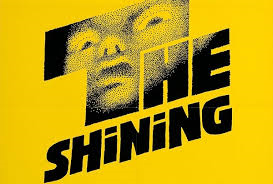
In any comprehensive comparison between novels and their film adaptations, the deck is so stacked in favor of “the book was better,” that the exceptions (Jaws, The Godfather, Fight Club, Children of Men, arguably a dozen or so more out of the thousands of adaptations ever made) only end up proving the rule. The list of terrible films made from good books is far too long to list.
Even rarer, though, are the “split decisions,” where both the source and the adaptation have passionate defenders. I can’t think of another case where the two camps are so divided, and equally vocal, as in the case of The Shining.
The Shining was Stephen King’s third novel (following Carrie and ‘Salem’s Lot,) first published in 1977. It was the first King novel I ever read, at a ridiculously inappropriate and impressionable age. In my opinion, it remains his best work; a near-perfect balance of supernatural horror and heartbreaking human tragedy.
The movie version was directed by Stanley Kubrick, one of the most groundbreaking and influential directors in the history of cinema. His version of The Shining is hypnotically beautiful, pulsing with menace, visionary and terrifying- widely regarded as one of the greatest horror films ever made.
Though they tell essentially the same story, the book and the movie are radically different- at points they are diametrically opposed. Remember the Robert Frost poem that started with the line “Some say the world will end in fire/ Some say in ice”? That almost perfectly describes the contrast between the dueling S.K.’s.
King is fire. A warm, humanistic storyteller with a workman’s style, who realized early in his career that the secret to making the most fantastic and horrific situations believable is to ground them with realistic, sympathetic characters.
Kubrick, by contrast, was ice. A cold aesthetician and a fastidious stylist, who achieved his horrific effects via his masterful grasp of how the human mind processes motion picture images and sound. Some of the images he conjured in The Shining- an elevator shaft overflowing with blood in hypnotic slow motion- the young boy hurtling down endless hallways in his Big Wheel and coming face-to-face with twin ghosts- are indelible and iconic. He utilized meticulous frame composition and editing tricks to induce an unsettling spatial disorientation. Characters were of secondary importance to him, though. (As also evidenced in his masterpiece 2001: A Space Odyssey, in which the human astronauts were interchangeable blanks, and the most compelling character was a murderous, red-eyed computer.)
The comparison is made literal, too, in the endings. King ends his Shining with fire, and Kubrick ends his with ice.
So, which is better? There is more than a little controversy surrounding that question, and my answer might strike some as a hedging cop-out:
I choose BOTH.
I love the novel and I love the film. My dream is to mash the two together into an ultimate, definitive edition that culls the best from each. Merging King’s empathy with Kubrick’s merciless mind-fuckery; combining both men’s divergent visions without dulling the edge of either. Creating the Best of Both Shinings (or BoBS) version can be accomplished, I think, in seven easy steps:
1) Invent a time machine.
2) Travel back to 1970 or so.
3) Use my knowledge of seventies cinematic trends to become the most powerful film producer in Hollywood. (I’ll take risky chances on young upstarts like Coppola, Lucas and Spielberg.)
4) Buy the rights to up-and-coming author Stephen King’s third novel before it’s even published.
5) Adapt the screenplay myself.
6) Hire Stanley Kubrick to direct.
7) Force Kubrick to stick to my script and give me final cut of the film. (NOTE: I understand that the invention of time travel will be easy-peasy compared to wresting artistic control from Stanley Kubrick.)
I should acknowledge that there was a previous attempt to “fix” The Shining, in a 1997 TV mini-series written and produced by King himself- who famously hated what Kubrick did to his novel. The less said about this the better. Marred by bad acting (lead Steven Weber is as bland as white bread toast,) chintzy special effects (behold the terror of CGI hedge animals,) and a flat, over-lit, shot-to-tape production that trades the film’s visual genius for the look of your average daytime soap. To say that director Mick Garris is no Stanley Kubrick commits the unpardonable crime of including both their names in the same sentence. Worst of all, King’s script is dull and pedestrian, with far too much expository dialogue. Let’s never speak of it again.
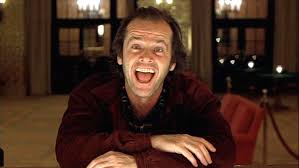
JACK TORRANCE
Stephen King’s biggest complaint with Kubrick’s film is in the handling of the lead character. In the novel, King gave doomed father Jack Torrance a tragic character arc. Jack Torrance struggles with both his alcoholism (mirroring King’s own addictions) and his uncontrolled anger. He is brought to the haunted Overlook Hotel by financial desperation. Having lost a teaching job at a prep school after beating up a student, he utilizes the connections of a reformed drinking buddy to get the caretaking job. Chastened and humiliated by his new position, he nevertheless views the job as a clean start. A chance to reconnect with his wife and son, and to reinvigorate his writing. He is haunted by his past- in particular a harrowing incident in which he accidentally broke his son’s arm while drunk- but at the start of the novel is genuinely striving for redemption. This makes it ultimately heartrending when the Overlook plies him with ghost booze and pushes him over the edge into murderous violence.
The film, though, has no empathy for poor Jack Torrance. There’s no arc. He’s crazy from the get-go. Jack Nicholson plays the early scenes as either blank or grouchy, and Stephen King asserts to this day that this was an egregious case of miscasting. Yeah, maybe, except. . .
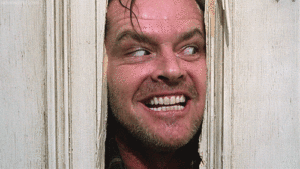
In the last half of the film, Jack Nicholson delivers the most terrifying depiction of axe-crazy batshittery ever committed to film. He contorts his face and body into a mask of unrefined insanity in a performance so over-the-top that Kubrick himself likened it to Kabuki. (Kubruki?) Even before his rampage, Nicholson is brilliant in a scene where delivers a monologue at the bar that descends into a dialogue when the ghostly bartender appears. Jack is crazed enough at this point to just roll with it, as long as the guy’s pouring. Also, his delivery of: “Wendy? Darling? Light of my life. I’m not gonna hurt ya . . . I’m just going to bash your brains in! Gonna bash ’em right the fuck in!” has to be heard to be believed.
BoBS VERSION: Why can’t we have it both ways? Jack Nicholson is capable of delivering nuanced performances. Look at Five Easy Pieces, As Good as It Gets, or About Schmidt. The zero-to-“Here’s Johnny!” business was a directorial decision on Kubrick’s part. Re-write the script to give the character more (or any) interaction with his wife and son at the start of the movie, establishing that he genuinely loves his family. Delve into his back story a little. Tell Jack to reign it in at the beginning. That way, when you let him off the leash and let him go full-tilt Kubruki at the end, it will have both an emotional and a visceral impact.

WENDY TORRANCE
King was also supremely dissatisfied with the film’s treatment of this character, saying: “Shelley Duvall as Wendy is really one of the most misogynistic characters ever put on film,” and that she’s “presented as a screaming dishrag.” He has a valid point. The character is an annoying nag at the beginning and a hysterical victim at the end. Also, I know it’s not right to criticize an actress for her physical appearance, but Duvall looks terrible in this film. The blame for this is squarely on Kubrick, though. The unflattering hair, make-up and costume choices were deliberate directorial decisions. Even worse, he elicited Duvall’s harrowed performance by berating her so severely that it verged on psychological abuse. (Watch the behind-the-scenes doc directed by Kubrick’s daughter Vivian, included on many DVD editions. It’s painful. Kubrick taunts his actress with an utter lack of sympathy, until she breaks down in tears and actually pulls out clumps of her hair.)
I suspect that Kubrick’s strategy in making Wendy so annoying was to put the audience into the headspace of the murderous Jack. He wants us to see her as Jack does, and wants us to want to see her punished.
That’s messed up.
Wendy in the book is much better, though there is still room for improvement. King obviously treats the character with more empathy than Kubrick did, but as a male author in the seventies, he tends to only position her in relation to her husband and her son. She’s a concerned wife and a fiercely protective mother, but is not granted the kind of vivid internal life that the two male characters have.
BoBS VERSION: First and foremost, recast. Diane Keaton was at the peak of her career in 1980, and Meryl Streep was hot off of winning an Oscar for Kramer vs. Kramer. Either of them would have made a great Wendy, both actresses capable of going toe-to-toe with Nicholson. (And, hopefully, with Kubrick.) And both of them could have given the character shades of nuance lacking in either existing version. Both Shinings present an essential “Jack vs the Overlook vs Danny” conflict, so the Wendy part would need to be beefed up in any ideal version.
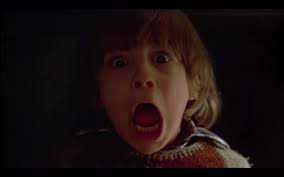
DANNY TORRANCE
I lean a bit more towards the movie Danny. Almost half the novel is from Danny’s POV, and he comes across as a bit more precocious than even an exceptionally bright (and psychic) five-year-old would be in real life. By not having to present his internal voice, the film relies on the remarkable child actor performance Kubrick coaxed from Danny Lloyd. Reportedly unaware that he was even making a horror film at the time, young Danny is never less than convincing. Curiously exploring the Overlook on his Big Wheel, waggling his finger while talking to “the little boy who lives in my mouth,” croaking “Redrum! Redrum!” and running from his father in the snowy hedge maze. The kid sells it.
According to imdb, Danny Lloyd only has one other film credit (playing a young G. Gordon Liddy in a TV movie!) and is now a Biology professor at a Kentucky community college. He was one child actor who knew when to quit.
BoBS VERSION: Leave well enough alone. Keep the Danny Lloyd performance pretty much as is.
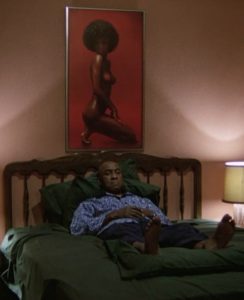
DICK HALLORAN
As in the case of the Wendy character, the Overlook’s resident psychic chef is not perfect in either version. Stephen King’s fondness for the “magical negro” trope has been well documented (see also The Stand, The Green Mile and The Talisman, among others) but at least he lets Halloran live in the book. (And heroically save Danny and Wendy’s lives in the end.) In the movie, the only on-screen homicide is the one black character traveling thousands of miles to save the white family, only to get an axe to the chest.
That being said, Scatman Crothers is perfect in the part. Watch the scene in the kitchen when he explains “shining” to Danny. That’s a tricky scene to pull off opposite a child actor, and Crothers nails it. Plus, he has amazing taste in art.
BoBS VERSION: Keep the Scatman, but let him live at the end.
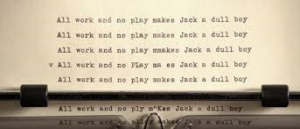
JACK’S BIG WRITING PROJECT
I’d be willing to bet that the one moment in the movie that made King wish he’d thought of it first is when Wendy, curious as to what her husband’s been working on all this time, looks over his work-in-progress only to find the phrase “All work and no play makes Jack a dull boy” typed thousands of times, on reams of paper. It’s the most famous (and oft-parodied) scene in the movie. (“No beer and no TV makes Homer a homicidal maniac.”)
BoBS VERSION: Keep that bit, obviously. But if King had included it in the book, he probably would have built it up more. One recurring element in his novels are obsessive phrases that creep into a character’s consciousness to portray the unravelling of their sanity. Maybe the phrase is uttered as a line of dialogue in the play Jack is writing, but sticks in his head for some reason. We should establish at the beginning that Jack actually is a writer, but as madness consumes him, he becomes incapable of expressing anything except that single mantra.
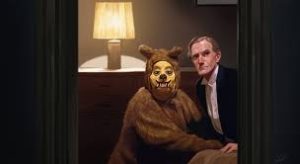
WHATEVER THE HELL THIS IS
This is actually well-explained in a dream/ flashback section of the novel. One of the Overlook’s owners, the gangster Horace Derwent, was a notoriously perverse bisexual. (My favorite kind.) A former male lover of his is disappointed that Derwent hardly ever “goes back for seconds” when it comes to men, but is told that if he comes to a costume ball dressed as a “cute doggy,” Derwent might reconsider. Stephen King presciently foresaw the “furry” movement decades ago. He may have even invented it.
I think it works better in the film, though, where the startling image pops up without any context or explanation. It’s a real “What the fuck is THAT?!?” moment. The symbolic importance of Kubrick changing the costume from a dog to a bear is just one of many aspects of the film exhaustively analyzed on the internet, if you care to search for it.
BoBS VERSION: Don’t change a thing, or else risk depriving the future internet of many entertaining memes.
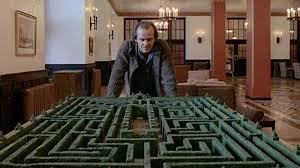
TOPIARY ANIMALS VS. HEDGE MAZE
The Overlook’s landscaping played a major role in both book and film, though in different ways. In the novel, Danny is playing alone in the Overlook’s snow-covered playground when he’s menaced by ornamental shrubs trimmed into the shapes of various animals. They never move when you look at them, but as soon as you turn away . . .
That scene was very effective in the novel, relying upon the reader’s imagination to conjure the images. When presented in a visual medium, though, it just looks silly. The TV movie proved, perhaps definitively, that shrubbery just isn’t that frightening.
BoBS VERSION: Close your eyes and picture Jack Nicholson pursuing his son through the dark, snowy labyrinth. See that clearly? That’s because it’s a potent, surreal image. Definitely keep the hedge maze.

THE ENDING
With most sincere apologies to Stephen King, I’m solidly in the Kubrick camp for the ending.
In the book, the Overlook is destroyed when the boiler explodes. Jack, head full of ghost booze and intent on murdering his family, forgot that one of his key duties as winter caretaker was to dump the pressure on the boiler, which lacked a safety valve. This device is problematic for several reasons. From a narrative standpoint, the “creeping” boiler is a gaping Chekov’s gun that becomes a Deus ex Machina in the end. It’s also wildly implausible. Wouldn’t the Overlook’s insurance inspectors (who were scrupulous enough to insist upon removing all the alcohol) demand that the hotel get rid of the self-destruct mechanism in its basement? Especially given the place’s history with winter caretakers who tend to shirk their duties and go axe-crazy?
The ending of the movie is brilliant, though. Jack gets lost in the maze. Exhausted, he sits down and freezes to death. Then there’s that amazing, enigmatic closing shot of the photograph from the twenties, Jack Nicholson grinning in the center of a group of party-goers. The Overlook has absorbed Jack into its coils. He’s always been the caretaker.
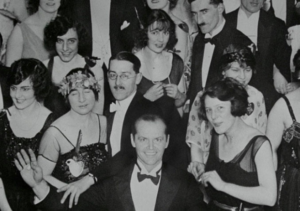
BoBS VERSION: Keep the chilled perfection of the movie ending, but import one bit from the novel. Towards the end of the book, Jack actually catches up with Danny (chasing him through the hotel hallways rather than the hedge-maze.) He’s about to murder his son, but then Danny takes his hand and manages to speak to the last remaining vestige of his beloved Daddy. For just a moment, Jack is Jack again. Then the part of Jack that’s consumed by the Overlook obliterates what’s left of the man by smashing his face off with the mallet he’s carrying. Occupied by this, Jack allows Danny to go free. This final act of redemption is heartbreaking, and could be easily imported into the film. I think it would strengthen the ending. Plus, how much more jarring would that image of the Jack-sicle be if half his face was chopped off with the axe?
So, in simplest terms: take the first half of the book, and the last half of the movie. Swap out Shelley Duvall for Meryl Streep and let Scatman live. There you have it. The Best of Both Shinings. Now if you’ll excuse me, I’m going to get started on the Kickstarter campaign to get that time machine built.
FURTHER READING/ VIEWING:
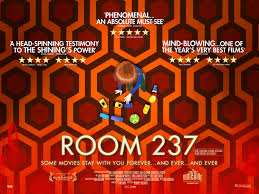
If you think I’m overthinking The Shining, you should really check out ROOM 237, a fascinating documentary (currently available on Netflix) in which obsessive viewers lay out their cases that The Shining is really about Native American genocide, or is Kubrick’s coded confession that he helped NASA fake the moon landing- among other theories with varying degrees of plausibility. Kubrick’s densely layered vision is complex enough to allow for many interpretations. The film also contains excerpts of THE SHINING FORWARDS AND BACKWARDS, which superimposes a forward and a reverse screening of the film, turning it into a mind-fuck palindrome. Kubrick’s obsessions with symmetry really pay off here, as the overlaid images allow for some startling juxtapositions. It’s a far wilder cinematic head-trip than synching The Wizard of Oz with Dark Side of the Moon.
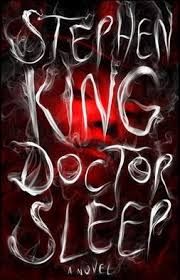 There’s also DOCTOR SLEEP, King’s belated sequel to his original novel. Personally, I was deeply disappointed by this. It had a promising set-up, with the adult Danny Torrance coping with his father’s inherited legacy of alcoholism and rage- and using his “shining” abilities to assist hospice patients in “crossing over.” But then it descends into a somewhat silly story about a cult of vampire RV-ers (or something) with some of the clumsiest plotting the King has ever put to paper.
The post The Best of Both Shinings appeared first on Christian Smith.
March 13, 2016
Let the Past Be- Perils of Googling a Schoolboy Crush
This is actually a slightly edited re-post of the last few entries in my previous attempt at a blog- from way back in 2007. I’m reprinting it because the story recounted here served as part of the inspiration for the novel I’m working on now. Be warned- this was originally in three parts, so it is a bit long.
First, a confession.
During the turbulent years of my adolescence, I fell squarely into the sociological caste classification of “Nerd.” (Those of you who know me, I’m sure, find this shocking.) But what does “nerd” mean, exactly? In contrast to the pop culture mythology of the era in question (mid-to-late 1980’s,) I:
· Did not wear glasses.
· Was not obsessed with “Star Trek” OR Dungeons & Dragons.
· Was not academically gifted.
· Was not on the Chess Club (though I did dabble in Band, Speech and Drama.)
· Knew very little about computers.
· Never built a robot.
· Did not engage in wacky competitions with my mortal enemies, the “Jocks.”
· Did not look like Anthony Michael Hall.
· Did not secretly pine for my girl-buddy Molly Ringwald, who was really in love with Andrew McCarthy.
· Was not a closet party animal who got the girl in the end.
The truth was a bit bleaker.
I was a socially retarded introvert cursed with a paradoxical combination of abysmal self-esteem and the notion that I was somehow superior to everyone else. I had the usual hormonal overload of a teen-age boy, but due to a total lack of social skills and absolutely no sense of fashion or personal grooming, girls would not talk to me. Good thing, too. I wouldn’t have known what to say to them if they had.
Girls. That was the crux of the problem (and the reason I’m writing this today.) Actually, it wasn’t girls so much as A Girl. Singular. There was really only one, at least at first. 7th Grade. Glenwood Junior High School, Chatham, Illinois. 13 years old. Enter Nikki Phillips.
In the beginning, it was a typical first-crush type of situation. Nikki was a pretty girl who played clarinet in the band. (I played saxophone, badly.) I’m not sure what about her made me single her out, but I grew very quickly fixated.
At this point, my entire concept of teen-age social interaction came from TV and movies. With this distorted view of how things really work, I arrived at the conclusion that writing her anonymous “secret admirer” love letters was the key to her heart. It might have worked on TV, or at least led to a series of comically engaging misunderstandings. Real life, of course, works a little differently.
I’m very grateful that time has obliterated the exact content of those letters from my mind. I’m sure they were mawkishly sincere, heart-on-the-sleeve declarations. I seem to recall, God help me, that I even wrote her a poem at one point.
This all culminated with the revelation of my identity and a request to meet at the bleachers during lunch to discuss the future of our “relationship.” She did meet with me for a short chat, which time has NOT obliterated. In fact, I remember it verbatim. I said nothing. She said: “I know some high school guys who will kick your ass if you don’t leave me alone.”
Good for her.
I remember at the time feeling a great relief that the whole thing was over with. My stomach had been in knots of anxiety for the entire couple weeks since I’d hatched the scheme. I could not even conceive of what I would done if she had said: “Your obsession flatters me. Will you be my boyfriend?” I knew I was doomed to failure from the start. When this failure came to pass, I was just happy I could digest food again.
End of the story? No. That was just Chapter One.
Flash forward a couple years to my sophomore year at Glenwood High School. Fifteen years old now. While many of my peers had moved on from the awkward first flush of puberty, I was still mired in geeky self-loathing. I’d crushed on several other girls in the intervening time, having seriously impure thoughts about every attractive girl at my school (and many of the unattractive ones as well.) None of them were as intense as my Nikki fixation, though. No more love letters or poetry, just near-constant sexual fantasy.
On the first day of my second year of high school, the fates governing the class schedules whacked me in the face but good. In an eight-period day, I shared five classes with Nikki Phillips. Five. It was uncanny. Nobody else was in more than two of my classes. I would have to spend more than half of every day in close proximity to my former crush. Like most teen-age atheists, I was terribly superstitious. I did not take this as a sign that Nikki and I were meant to be together, though. Just as proof that there was an intelligent force at work in the machinations of the universe, and that this force was intent on fucking with my head.
After a few weeks of this new schedule, something equally as shocking happened. Nikki talked to me. And, wilder still, she turned out to be a really nice person. She wasn’t leading me on or toying with me because she found my fawning to be gratifying. (Trust me, I know what THAT feels like.) She was just friendly. I think she might have even found me funny. (I did come on like a younger, less witty, more neurotic Woody Allen sometimes.) Best yet, she politely pretended not to have any memory of the whole mortifying “secret admirer” episode.
Emboldened by this, I did something which even today I’m proud of. I asked her out. Sort of. In those days, I would occasionally get together with friends (just as socially maladjusted as I) and make Ed Wood-ish horror videos. The immortal “Werewolf Bob” series. I offered Nikki the plum role of a Gypsy fortune teller in our next episode. Amazingly, she said yes.
A few days later, not so amazingly, she cancelled.
Rejection is amplified immeasurably by deferment. The loss of hope is made all the more crushing by having been dangled in the first place.
Still, I couldn’t blame her. In the frame of mind I was in back in those days, her turning me down was actually a point in her favor. She was President-for-Life of the proverbial Club Which Would Not Have Me as a Member.
I was at perhaps the lowest ebb of my entire life right then. Depressed beyond words. Never diagnosed as such, never even in therapy, but if there was ever a poster boy for Prozac, it was me. Problems at home, problems at school. My whole life was a problem. If life was a problem, then the solution seemed obvious.
I was fascinated by suicide. To this day I couldn’t tell you if it was attention-seeking, cry-for-help behavior or a genuine death wish. If I had to guess, I would say it was the first one, gradually moving towards the second.
Nikki Phillips became to me an alternative to killing myself. I saw in her the answer to everything that was wrong in my life. Of course, it’s very unfair to put that much responsibility on someone you don’t even really know.
The “Nikki Phillips” I had set up in my head as my personal savior had very little to do with who Nikki actually was as a human being. The fantasy I had constructed was just a projection of my needs. I knew this. I wasn’t so foolish as to believe she could really save me. Or that I had anything to offer her other than a need to be saved. I wasn’t ready for a girlfriend. I was way too wrapped up in my own pain to let anybody else in.
For the entire school year my daily mood was almost wholly dependent on her. If she said two kind words to me or smiled in my general direction, life was bearable. If she ignored me, or gave any sign that I was annoying her, I would lapse into despair. Being forced to see her for five hours every day, I was never given a chance to recover. My heart was like an open wound, the scab yanked off daily so it never had a chance to heal. Given the perspective of time and adulthood, this seems melodramatic. But adolescence has no perspective.
This got to be wearying. At the end of the school year, I decided to go live with my father in a different town. Nikki played a big part in this decision. It was just too painful to be near her on a daily basis. I knew that if I stayed, things would only get worse. Plus, she would no doubt eventually get a real boyfriend. Jealousy could possibly have been the fatal final ingredient in the already volatile stew of my emotions.
(Of course the “fresh start” with my Dad presented a whole set of new problems, but that is, as they say, another story.)
There is a post-script to the high school section of this story. In my Senior year, I wrote her a letter. I confessed my feelings for her, claimed to have moved past them (I had a “real” girlfriend at the time,) and told her that I just wanted to know that she had made a positive impact on my life. She wrote me a very cordial reply, allowed that she’d had at least an inkling of how I felt (it WAS pretty obvious,) and said she could empathize because she’d had a similar crush on another guy in our class. (That stung a little.) The whole letter had a “how nice of you to write, please don’t do it again” tone. I never saw or heard from her again.
End of story, right? Not exactly. If writing that letter had been a stab at seeking closure, it didn’t work. If it had worked, why is it that twenty years later, happily married, I still have dreams about her?
2-
For the past twenty years, I have kept sporadic dream journals. This is a great aid in boosting dream recall, and by focusing on my dreams, I was even able to play with lucid dreaming for a while. (That’s way fun.) Throughout this time, I would occasionally have dreams about Nikki Phillips. Don’t worry, this isn’t going to get “ikky.” The dreams were never sexual in nature.
It tends to work in one of two ways. Sometimes I dream I’m back in High School and that Nikki and I are close friends. Then sometimes I dream that we meet again as adults, and “catch up” on old times (which didn’t really happen.) It’s never romantic or erotic. In fact, my wife Lea is often in the dream, too, and jealousy is never an issue. My relations with Nikki are always warm, friendly and casual. There is a sense of acceptance. At long last, acceptance.
To the extent that I analyze my dreams, I look at it in a couple different ways. Either the dream Nikki represents my “anima,” the feminine aspects of my being, or more simply she just represents my past. In either case, I think the dreams express a desire to find peace with some part of myself. Of course, I don’t claim to be an expert at dream interpretation (and generally distrust people who say they are experts,) but that’s what I came up with. I do know enough about dreaming to realize that it’s not “really” Nikki Phillips, just a dream character with her name and face. (And even her face is fading with time.)
About a week ago, I had one of these dreams. In it, Nikki came over to my family’s house for some function (reunion, birthday party, something.) We hung out and caught up, and afterwards I drove her home. That was it. Nothing much happened in the dream, but it left me with a sense of peace and happiness that lingered after I woke up. As I have several times over the years, I wondered where the real Nikki Phillips was now.
I’ve made half-hearted stabs at locating her before, but now I vowed to do everything I could, given an internet connection and a lot of time on my hands. Now I know this sounds all creepy-stalkerish, but believe me, I had no intention of contacting her or re-connecting. My wife is a wonderful, tolerant woman, but I think even she would draw the line at me sending e-mails to a woman I obsessively crushed on in high school. I wouldn’t know what to say to Nikki anyway. I was just curious where life had taken her.
I started with the obvious. Just Googling her name. Of course, there are several “Nikki Phillipses” out there, but none of the ones I found was the one I was looking for.
Then I went on those high school reunion sites. Classmates.com and Reunion.com. Plus, Glenwood High School has an alumni page. These sites only have information on people who have registered on them, and Nikki has not. (I count this as further points in her favor. I felt kinda pathetic registering myself.)
Then I started searching those “People Search” pages. They’re pay sites, but they will give up some information for free. (As a tease, I suppose, for you to shell out the $40 for a background check.) Through one of these, I found a listing for Nicole Christene Phillips, age 35, with addresses in Chatham, Illinois (my hometown,) as well as the towns of Elizabeth, Jeffersonville and Memphis, Indiana, and Louisville, Kentucky.
Back in school, in a moment of stalker-boy detective inspiration, I stole a look at her Permit in Driver’s Ed class. That’s how I found out her middle name was “Christene.” I even remember the unusual spelling.
So the name was exactly the same. The age was right. It had a listing for the same dinky (pop 5000) Illinois town. Plus, I knew from talking to her that she was from Indiana, and had always thought that perhaps she’d moved back after graduation. So this was her, right? Had to be.
With this information, I searched her name along with the towns where she’d lived as key words. Maybe she’d made the local paper for some reason. Maybe she belonged to an organization with a web-site. Maybe she had an on-line profile through her job. Wedding or birth announcement. Maybe she blogged.
Well, I didn’t find any of those things. What I did find was an obituary.
3-
From a Bedford, Indiana newspaper: Phillips – Nicole Christene Phillips of Louisville, KY, formerly of Jeffersonville, IN, died Wednesday, October 9, 2002, at University Hospital in Louisville from injuries sustained in an auto accident. Born on April 12, 1971, she was the daughter of Thomas and Jill D. (Wagner) Phillips. Surviving are her parents, Thomas and Jill Phillips of Jeffersonville, IN; paternal grandmother, Burnettia Denny of Bedford, IN; maternal grandmother, Vera Wagner of Bedford, IN; several aunts, uncles, and cousins. She was preceded in death by her grandfathers.
She was a public defender in Clark County, IN, and a graduate of Indiana University and University of Louisville Brandeis School of Law. She was a member of the American Bar Association and was active in animal rights organizations. Services for Nicole Phillips will be at 10:30 a.m. Saturday, October 12th, at North Chapel of Scott Funeral Home in Jeffersonville, IN. Burial will follow in Walnut Ridge Cemetery in Jeffersonville. Friends may call from 2-8 p.m. Friday at North Chapel of Scott Funeral Home in Jeffersonville. The family asks that friends consider memorial contributions be made to the Humane Society.
The original blog post ended with a few pages of denial and a senseless appeal- that the Nicole Phillips in the obituary was not the same person I knew in high school. I’ll spare you that. Spoiler alert- she was the same person. (I received definitive confirmation from her father, actually.)
The experience of reaching out to touch the past and finding out the very worst struck me deeply, and in the near-decade since I’ve often considered writing about it somehow. I was never sure how to approach the material, but as of now, I’m two chapters into a novel entitled “Spin the Bottle,” partly inspired by my reckless Googling. Auto-biographical elements in my books tend to get twisted almost beyond recognition, and entwined with supernatural horror narratives. I’m also fond of flipping genders. The narrator of “Spin the Bottle” is actually a middle-aged woman who searches for a boy she had a crush on in high school. She does find his obituary, and this leads her to an examination of her past- a turbulent adolescent experience that involves a poltergeist manifestation.
The poltergeist bit, too- believe it or not- is based on auto-biographical experience.
The book is off to a good- if frustratingly slow- start. I hope to have it finished sometime this year.
The post Let the Past Be- Perils of Googling a Schoolboy Crush appeared first on Christian Smith.
March 8, 2016
Clockwatchers – Zombies in the workplace
I’ve always been more comfortable with writing novels rather than short stories. I’m more of a marathon guy rather than a sprinter, and have always envied those writers who can accomplish characterization, plot and world building in under 10K words rather than 100K+, but I have made a few cracks at the form, which I’ll occasionally post here. This story, “Clockwatchers,” was originally written for a contest with the theme “zombies in the workplace.” I missed the deadline for entry, though, and never tried to submit the story anywhere else. One note- this story is so old that the use of Bob Marley’s “Three Little Birds” as ironic counterpoint actually predates the Will Smith I am Legend. They stole it from me, okay?
“Clockwatchers”
Christian Smith
The man with whom she had fallen in love, or something like love, walked down the aisle toward Polly Covett. She froze when she saw him, as she always did, but Jason shuffled by her desk without even glancing in her direction. There was something plodding about his gait, as if he was sleepwalking. Polly wondered if that was a deliberate tease on his behalf. He liked to tease her. She spent half her time trying to decipher the deeper meaning of his most casual words and gestures.
She thought of the last time they’d made love. Or fucked, to be perfectly blunt. Lovemaking was far too elegant a term for what they’d shared on their lunch-hour last Wednesday. In a cheap-ass motel off the interstate, Polly’s face buried in a musty pillow as Jason plowed her from behind. She screamed when she came, and when she opened her mouth she actually tasted the rank pillowcase. No way that’s hygienic, she’d thought. Not that this did a thing to diminish her lust. With Jason the sleaziness was part of the appeal. He made her feel dirty, but good God could he get her off.
Jason stepped into the elevator. By the lighted numbers above the door, Polly could tell he was headed upstairs. He didn’t even turn to favor her with a smile or a wave as the doors slid shut behind him. What the hell was that about?
“Are you still there?” said the voice in her earpiece.
“Yes, sorry,” Polly said. “As I was saying, uh . . .” Her train of thought was a twisted pile of smoking metal.
“The copiers,” Mr. Outcault prodded. He was the chief purchasing agent for a major soft-drink distributor with offices and warehouses throughout the Midwest. A potentially huge commission.
“Yes, with the IOS-9000 series, the copier also functions as a completely wireless network scanner, color printer and fax. Plus, with the new thumbprint ident-i-key security function, you will be able to monitor for inappropriate employee usage.”
Like when I scanned my left tit and e-mailed it to Jason, she mentally added.
“Yes, yes, I read your brochure,” Outcault replied testily. “My concern is with the price. I have bids in from Xerox and Canon. They don’t have a lot of the tech features you have, but considering the cost difference, I wonder if I really need all that.”
Polly pinched her wrist hard and tried to force all thoughts of Jason out of her head. It was time to strap it on and close the fucking deal. Still, throughout the ten-minute phone call that followed, her mind kept wandering upstairs. There was only one floor above this one. It was storage space for whatever paper records had yet to be scanned into the digital archives, and obsolete malfunctioning office equipment too old to be worth repairing. What the hell was Jason doing up there?
Finally, despite her offer of a thousand free touch-screen 3-D monitors, Outcault hung up with only a vague promise to “think it over.” Polly had probably blown the sale.
She sat there for several minutes, her elbows on the desk and her head in her hands. Half her mind was consumed with Jason, the other half with self-condemnations for allowing him to distract her from her job. This schizophrenic reverie was interrupted by Tom, the salesman from the adjoining cubicle. He sat down on Polly’s desk, munching from a bag of Goldfish crackers. They were the garish rainbow-colored variety that most people over the age of twelve would be embarrassed to be seen eating.
“Polly wanna cracker?” he said, and then laughed as if he had not cracked the same silly joke at least ten thousand times.
“No thank you,” she said, pretending to be absorbed in checking her e-mail.
“Oh my God,” Tom said. “You will not believe what I just saw in the break room. Lindsey walked into the room with one titty totally hanging out of her blouse. Didn’t even notice. It was like she was sleep-walking or something. Then she tried to pour herself a cup of coffee, and poured it all over her hand. It was hilarious.”
“Uh-huh.”
“Are you listening to me, Polly?”
“Sure,” she said. “Lindsey had her titty out. What do you care, anyway?” Titties held no sway over Tom. He was more of a man’s man.
“I can appreciate a good titty,” he insisted. “I just wish I had my camera phone.”
“Do you know any reason why Jason would go upstairs?” Polly asked.
“Don’t tell me you’re still hooking up with that guy,” Tom said. “You do know he’s married.”
“And he told me that was a decoder ring!” Polly slapped her forehead.
“Ha ha. Seriously, Polly. That guy’s no good. Delicious looking, I’ll grant you, but he’s a dog. You’re going to get hurt.”
“Yeah, yeah,” she muttered, barely hearing Tom’s concern, remembering a post-coital conversation she’d had with Jason. They had discussed the places where they could have sex at work without being caught on one of the omnipresent security cameras. So far they’d tried a men’s room stall and the second floor supply closet. Another possibility he’d suggested had been the roof.
Could that be it? Did he just saunter past her desk on the way to the roof, not even looking at her, trusting she’d get the hint and follow? Polly was torn between resentment at his audacity, and a desire to follow him up there and give him what they both wanted. She wished Tom would leave her alone so she could make up her mind. But Tom remained seated on her desk.
He was staring intently up at the clock hanging on the wall above the door to the conference room. The clock face was a 3-D digital screen that could display a variety of analog clock faces. Currently, it looked like an old-fashioned grandfather clock, with highly stylized roman numerals, ornate hands and a celestial interface showing the phase of the moon. The face changed often, and seemingly at random. Sometimes it looked like a plain wall clock one might see in any office, and then sometimes its face resembled an elegant wristwatch or something even more arty or strange. Polly had even seen the clock face melting, ala Dali. Sometimes it didn’t even look like a clock at all. The truly odd thing was that the face only shifted when no one was looking. No matter how long you stared at it, you would never catch it morphing from one face to another.
“Did you ever notice,” Tom said, “how the clock display flickers in a sort of counterpoint rhythm?” About half the conversation in the office concerned the behavior of the clocks.
“Uh, no,” said Polly. “I can honestly say I’ve never noticed that.”
“It’s like long-long-short-short-long.” Tom air-drummed a complex syncopated rhythm with his fingers. “Yesterday the numbers changed to these weird deco-looking symbols and the whole thing was a really beautiful amber-golden color for a whole minute. When I looked at it, I felt really . . . content.”
“Don’t you have some work to do?”
“Yes.” A beaming, seemingly un-ironic smile came over Tom’s face. “I enjoy my job. Work helps define who I am as a person.”
With that, he was gone. Polly shook her head at his strange manner, but put it quickly from her mind. She had an important decision to make. In her purse was a silver half-dollar piece. Her Dad had given it to her just a few days before he died when she was eight. In the years since, the coin had acquired a talismanic significance in her life.
She spun the coin upon her desk, setting it into motion with a flick of her finger. The spinning coin gave the illusion of a ghostly blurred orb. The ringing, whirring sound it made was familiar and soothing.
Heads, I’ll go up on the roof and have my brains screwed out in the open air, she thought. Tails, I’ll call Outcault back and kiss his ass instead. Let Jason wait up there until he figures out I’m not his little fuck-puppet. Polly would abide by whichever course fate would choose for her. The will of the coin be done.
The coin whirled towards the edge of her desk, threatening to leap over the edge, and then mysteriously changed course and headed back towards the center. Polly was relieved. If the coin fell on the floor, it would have to be spun again and the second spin was somehow never as portentous as the first.
After what felt like a very long time, inertia dragged upon the coin and caused its rotation to falter. It wobbled upon the desk, shimmering in the fluorescent light, still moving too fast to be read. Polly fought the urge to slap her palm on the coin to bring it to rest. A coin in motion should never be touched.
Finally it stopped. Heads. Kennedy’s handsome, tragic profile seemed to wink at her knowingly.
Polly grinned. Looking about to make sure she was unobserved, she reached up her skirt and pulled her panties down past her shoes. She deposited the undergarment in her top desk drawer and went to meet her destiny
*
The stairwell doors opened upon a glaring tarpaper blowback heat. Polly squinted against the waves radiating from the black roof as she looked around for her lover. She hoped he had been considerate enough to bring a blanket (or kneepads, depending on what he had in mind) but didn’t have much faith. Consideration wasn’t his strong suit.
“Jason?” she called.
She found him on the opposite side of the huge rattling air conditioning vents. He was standing near the edge of the roof with his back to her, staring out over the town.
“There you are,” she said, approaching him.
He did not turn or acknowledge her in any way. So that’s how he wants it, Polly thought. Fine. Some of their most fevered trysts had been wordless. She stepped behind him and slipped her arms about his waist. One hand reached around to lovingly clutch the front of his pants and found him disappointingly flaccid. Polly pressed her face against his back. His scent was usually a delight to her, but his sweat now smelled foul and sickly. The muscles beneath his work shirt were cold and taut.
“Are you feeling well?” she asked.
Jason turned to face her, not looking well at all. His face was clammy-looking and colorless, his eyes muddy.
“Are you sick?” she asked.
He groaned, seemingly in affirmation. Then he lunged at her. Jason grabbed a fistful of her blouse and tried to pull her towards him. Polly, utterly surprised, stepped back and managed to slip from his grasp.
“I don’t like this,” she said, thinking perhaps it was his idea of a game. They’d often swapped fantasies and some of his were pretty wild. Still, she couldn’t remember him ever saying that he wanted to take her by force on a rooftop.
One look in Jason’s eyes told her that this wasn’t an attempt at rough-edged lover’s play. The man she’d loved was no longer there. In his eyes she saw only a dull animal hunger. He stepped towards her with outstretched hands, trying to grab her again.
Just the year before, Polly had taken a six-week course in women’s self-defense. Lesson one had been the move most likely to dissuade a potential rapist. Polly utilized it now. She kicked hard between Jason’s legs, connecting with enough force to bounce his balls off the roof of his mouth. Jason didn’t even flinch. Didn’t even blink. He just kept coming towards her.
Polly, off balance from the kick, stepped backwards and tripped. She landed hard on her ass and Jason was on her in an instant. She had borne his weight many times, but now he felt as dead and heavy as a sack of wet sand. She tried to push him off, but he wouldn’t budge. Jason leaned in, his mouth going for her neck. Panic took over when she felt his teeth dent the skin of her throat. She managed to simultaneously push him off and twist to the side. Once free, she jumped to her feet and ran.
Polly reached the stairwell door and pulled hard. Locked. Screaming an inarticulate curse, she hazarded a glance back. Jason was still struggling to get to his feet.
She looked around wildly for anything at all she could use as a weapon, and saw only a dead pigeon rotting away beside a silver vent fan. She grasped at the idea of hurling the bird’s corpse at Jason. By the time she had rejected this illogical notion, he was limping towards her again.
Poly ran, though there was nowhere to go. She ran with nothing even approaching a plan in her head, operating on pure panic. When Jason was nearly on her again, Polly pulled another trick she’d learned in that same defense class. She dropped slightly, ramming one shoulder back into Jason’s solar plexus. Grabbing his arm, she twisted, utilizing his momentum to flip him forward. With a heaving grunt, Polly tossed Jason over her shoulder.
She didn’t realize how close she was to the edge. If she had, and if she was operating on anything like conscious volition, Polly might not have attempted such a maneuver. As it was, she tossed her lover off the roof of the six-story building.
She did not look over the edge to see him fall. She didn’t see his head bounce off the fire escape with a clanging, splattering glance. And she definitely did not see his back snap in two as he landed halfway in and halfway out of the garbage dumpster in the alley behind the building. No. She didn’t see any of that. And even if she did, she deleted the horrible images from her mind as soon as they registered.
Polly staggered back from the roof’s edge, reciting a curious litany of mixed obscenities and appeals to the Almighty.
“Holy fucking Jesus shitty-ass God!” she gasped.
Now that the immediate danger had passed, the delayed terror response overwhelmed her. Her heart clawed at her rib-cage like a panicked wildcat and her breath came in hyper-ventilated hitches. Polly’s legs felt like they had been filled with that stuff they used to put in Stretch Armstrong dolls. She leaned against a sun-hot vent fan and tried to process what had just happened.
You killed Jason. That was a neat summary of her situation, barely hinting at the implications and potential consequences of the act.
It was self-defense, a reassuring voice in her head noted. To Polly, it sounded like the voice of her mother, also departed from this world.
Who’s going to believe that? a more contentious voice countered. This was Polly’s own voice, practical and pessimistic. There were no witnesses to testify that Jason had attacked her, but Polly knew their affair was a hot item of gossip downstairs. Any number of her co-workers could have seen her follow him up to the roof. From there, the story was a well-worn classic. The fury of a woman scorned. The treacherous shove of the jilted lover. “Frankie and Johnny.” “Henry Lee.” Her life had suddenly become a murder ballad.
She walked unsteadily back to the stairwell door. No matter what there was to be done about Jason, she still had a more immediate problem. She was trapped on the roof. The improvisational flair which had saved her from being murdered had fled her mind. Her plan, if it could be called that, was to pound on the door either until someone heard her or she collapsed from exhaustion and hopelessness.
When Polly reached the door, though, she had a premonition so keen it was simple knowledge. The door would be unlocked now.
She tried the door and it opened easily. Trembling like a condemned prisoner on the way to the chamber, Polly descended the stairs.
*
By the time she reached the elevator at the end of the top-floor hall, she had managed to achieve a level of calm. She was still reeling from shock, of course, but was at least breathing normally again. Her wits had returned to her, too. Polly knew she had to call the police. The longer she waited, the more suspicious it would look. There was one task she needed to accomplish first, though. Whatever ordeal awaited her, she wanted to face it with her panties on.
Polly braced herself for the phone call, the questions, the investigation, the trial, the verdict, and the sentence. The entire worst-case scenario played through her mind in the minute it took the elevator to descend to her floor. But when the doors opened, she found that her worst-case scenario had been wildly optimistic.
The sight which greeted her was so strange and terrible that it took her a few seconds to even understand what she was looking at. Lindsey, the assistant office manager of the recent wardrobe malfunction, was kneeling over Kurt the mail clerk. Kurt, a white dread-locked college student with perpetually blood-shot eyes, was slumped back against his mail cart. From Kurt’s detached i-Pod earbuds, Bob Marley reassured him not to worry about a thing, because every little thing was gonna be all right. In this case, though, Mr. Marley was a straight-up liar. Every little thing most certainly was not all right with Kurt. Lindsey had torn his throat open with her teeth and was gnawing at the tough, spurting cords of his neck.
Polly made a surprised Germanic sound with the back of her tongue. It sounded like “Ach?” Lindsey looked up at her and snarled through bloody lips, a sizable flap of skin caught in her teeth. In her eyes, Polly recognized the same vacuous ferocity she’d seen in Jason’s.
Lindsey stood. Her blouse had fallen completely open now. Her enviable breasts dripped with fresh blood. Her black-lace bra was soaked through with blood so bright red under the fluorescents that it looked unreal, like movie blood. She came at Polly, emitting a low, breathless growl.
Polly sidestepped the woman, her only object not to be trapped in the elevator. Lindsey made a twisting grab for Polly, but she did not seem coordinated enough to pull off such a complex maneuver. Her balance faltered and Polly managed to trip her and send her face-first into the elevator car. The doors at that moment closed, trapping Lindsey inside.
Kurt the mail clerk looked up at Polly with pleading, stony confusion in his eyes. His lips moved, but his voice gurgled nonsensically from his neck in bloody bubbles.
“Help!” Polly yelled. “Can I get some help over here!?”
No help was coming. The rest of the office had problems of its own. Polly had often heard the phrase “all hell breaking loose,” but had not understood what that might mean until she looked out upon the office floor. It was like a “Dilbert” cartoon drawn by Hieronymus Bosch.
Kat the temp, with the black-dyed hair and the startling facial piercings, had gone feral. She’d cornered Roger, the Human Resources manager known for the whiskey-laced coffee he sipped all day (and the mouthfuls of Altoids which fooled no one) over by the water cooler. Her black-painted nails had torn his belly open and she was chowing down on his entrails as he tried feebly tried to push her off. Ironically, she was a vegan.
Across the room, Michael from Accounting was face-down in the shattered scanning glass of the big copier. Clara and Sharon, sisters from Purchasing known as “The Doublemint Twins” despite their utter dissimilarity to one another, were lapping his blood off the floor as it dripped from the back of the machine. Some of the blood had soaked the machine’s power cord. Clara chomped down on this sopping treat, biting right through with a sizzling spark Polly could hear all the way across the room. The lights dimmed for a moment. Clara dropped the cord from her smoking mouth. Her tongue was blackened, but she was seemingly unfazed.
All the digital wall clocks were blinking crazily, alternating gold and red flashes of strange symbols, like hieroglyphics, in place of clock faces. Polly had no explanation for the phenomena and, as it seemed unimportant in the face of the chaos going on all around her, she dismissed it from her mind.
Behind her, the elevator door opened with a cheerful ding. Lindsey stepped out. She looked from Polly to the shuddering bloody heap of mail clerk on the floor, considering for a moment which one she wanted more. She decided upon the already wounded prey, descending upon Kurt as he let out a weak gurgle of protest.
That got Polly moving. She ran to her desk, retrieved her underpants from the top drawer and stepped into them quickly. The half-dollar piece was still resting on the top of her desk, and she scooped this up as well. When she looked up, Tom was standing before her cubicle.
“Tom,” she said. “What the hell is going on?”
“Bleaaaugh,” Tom answered. A thick line of drool fell from one slack lip.
“Oh, fuck. You too?”
Polly grabbed her stapler, the most lethal item in her desktop arsenal, and hurled it at Tom. It bounced off his forehead with a clang, causing him to wobble a bit but otherwise having no effect. He stepped into her cubicle, reaching for her throat with clutching hands.
Polly jumped up and managed to vault over her cubicle wall, landing on the carpeted aisle right in front of John Foster’s office door.
The office manager, his face normally as dry and gray as his suits, was now livid with color. His thinning hair wild, his horn-rimmed glasses askew, Foster’s usual unflappable officiousness was now most definitely flapped.
“Polly!” he called from the threshold of his office. “Are you all right?”
“Well, sir, all things considered . . .”
“For God’s sake, get in here!” He grabbed her arm and pulled her into his office, then slammed the door shut.
Three other shell-shocked people were in the room besides Polly and John Foster. Max was a corpulent red-bearded IT guy who had once confessed to Polly that he published pornographic e-books under a pseudonym. He was wedged between two filing cabinets, his shaggy face in his hands, appearing quite immovable. Alice, an older woman from Accounts Receivable, sat in a chair manipulating a rosary with shaky fingers. Bridget from the Credit department was on the edge of Foster’s desk, coolly inhaling a cigarette despite the long-standing indoor smoking ban. The small room was filled with her haze.
“All right,” Polly said. “What is going on here?”
“It’s the terrorists,” John Foster stated with certainty. “They put something in the water which made people go crazy. It’s 9/11 all over again.”
Foster’s secret vice was AM talk radio, which he listened to at nearly subliminal volumes all day long. Given that, Polly took his theory with a whole shaker of salt. At the moment, though, the cause of the situation was moot. All that mattered was what they were going to do about it.
“Has anyone called the police?” she asked, starting with the obvious.
“The phones are dead,” Bridget exhaled. “Internet’s down, too. My cell doesn’t even work.”
“Put that out,” Foster snapped. Bridget flipped him off and continued to smoke.
“What about the in-house wireless network?” Polly asked. “Is that still up?”
“I think so,” Bridget shrugged. “But I don’t see what that . . .”
“The printers downstairs are networked,” Polly said. “Maybe somebody down there can call or get some help.”
She slid into the chair behind Foster’s desk. His computer was equipped with the newest model 3-D motion capture monitors. The icons seemed to float in front of the screen, and were manipulated by touching the air where they appeared to be. She pinched the air in front of the screen and opened the “Compose” icon.
“WE HAVE A SERIOUS WORKPLACE VIOLENCE SITUATION ON THE 5TH FLOOR,” she typed. “PLEASE SEND HELP.”
She selected the “All printers” option and printed the message.
“Brilliant idea,” Bridget said. She had the kind of voice which made everything sound sarcastic, even if it wasn’t intended to be. “Now what do we do? Wait?”
“Yes,” John Foster said. “The door’s locked. They can’t get in. Somebody’s going to send help soon. We’re going to sit tight and wait, and you are going to put out that cigarette, young lady. I’m still in charge here.”
“Whatever,” Bridget snarled. She had smoked down to the filter anyway. She tossed the butt to the floor and ground it out under her shoe.
A loud clatter made them all jump. Tom was at the office window, banging the glass with the stapler Polly had thrown at him.
“He’s going to break the window!” Alice spoke up for the first time. She brought the rosary to her mouth and kissed the beads desperately.
“No,” said Foster. “That glass is half an inch thick. There’s no way he’s going to break it with a stapler.”
Bridget pointed at one of the framed hunting prints hanging on John’s wall, which she seemed to take as a personal affront. “I don’t want to die looking at a painting of a dog with a dead duck in its mouth. We gotta get out of here.”
Bloody-breasted Lindsey joined Tom at the window. Lacking any kind of bludgeoning instrument, she banged the glass with her head.
“They can’t get in,” spoke Max the part-time pornographer, looking quite pale. “We’re safe here. The police will be here soon and we’ll be safe.”
“They’re getting in!” Alice shrieked. Indeed, Tom had succeeded in chipping out a small chunk of glass with his stapler.
Bridget and Foster looked to Polly. Hers seemed to be the tie-breaking vote. She bit her lip, trying to force some kind of rational thought through her head despite the distracting thunder of the people banging on the window. Then she remembered the coin still clutched in her sweaty palm. She flicked it into the air. A flip was not as good as a spin, but would have to do under the circumstances. Heads we stay, tails we go.
She caught the coin in her right hand and slapped it down on top of her left. Tails.
“Do you have anything in here that we can use as a weapon?” Polly asked.
“No,” Foster said. “We are staying in this office. I’ve decided and it’s final. I am responsible for all of you.”
Polly’s eyes lit on the leather golf bag propped in one corner of the office. A non-golfer, she didn’t know the difference between a nine iron and a double bogey. She tried a couple of the clubs for heft, and selected the heaviest one.
“Absolutely not,” John’s voice shook as if Polly were manhandling his infant son. “Those are very expensive clubs. They were a gift from my wife!”
Polly ignored him. “Those people outside, they’re not very coordinated. They’re clumsy, and slow. We can get past them. All we have to do is make it to the stairwell.”
“And what if there are more of them downstairs?” John challenged. “Have you considered that?”
“If there are more them downstairs, then we’ll just deal with . . .”
Polly was interrupted by a loud quivering moan from the corner of the office. Max was convulsing with enough force to cause both the file cabinets he was wedged between to rattle. His teeth clenched, bloodying his tongue. Pinkish foam dripped from his russet beard.
“Are you all right, Max?” Alice knelt down beside him.
“Don’t touch him!” Polly cried.
Too late. Max grabbed Alice’s arm, his eyes rolling crazily as he bit down on her wrist and tore away a large chunk of flesh. Her spurting blood soaked his bearded face.
For a second, the sounds echoing about the tiny office were so loud they precluded any thought or action. Alice’s wounded shriek, Max’s hungry growl and the terror-fueled screams of the others, Polly included, all to the insistent backbeat rhythm of the people pounding on the window. Finally, Bridget grabbed Alice and pulled her away.
Polly looked down at Max, struggling to extricate himself from the file cabinets. Then she looked down at the club in her hands.
With a battle cry she was only half-conscious of making, Polly swung the club up over her shoulder and brought it down with all her strength upon the top of Max’s head. The first blow bounced off his skull with a dull whacking sound. Max rolled his eyes in a grotesquely comical expression of dismay. Polly fought back hysterical laughter as she brought the club down again, thinking Gee, bashing someone’s head in looks so easy in the movies. Finally, on the sixth or seventh strike, the club smashed into Max’s skull as if into a ripe pumpkin. It stuck fast and Polly left it there, not having the heart to pull it out. His spasms had stopped. Max was still, his eyes open, looking at the ground with a frozen expression which resembled one of regret.
Polly turned and saw the others looking at her with wide-eyed horror, as if she were the murderous one.
“What’d you want me to do?” she barked. “Knock points off his performance appraisal? He was going to kill her!”
John Foster grabbed two clubs from his bag and handed one to Polly.
“Come on,” he said. “You’re right. We should get out of here.”
Polly nodded and took a deep breath, clutching the golf club tightly.
“Are you all right?” she asked Alice.
She was shivering in Bridget’s arms, clamping her torn wrist with her opposite hand. She still held the rosary, pressing it against the wound as if the sacred object had healing properties.
“I don’t know if I can walk,” she said weakly.
“Well, you’re going to have to, lady.” Bridget let go of her. “Because I’m sure as hell not going to carry you. Give me one of those clubs.”
Foster handed her another club from the bag. Polly, her hand on the knob, counted, “One . . . two . . . three!”
The door was thrown open and the four of them burst into the outer office. Tom and Lindsey turned at once to attack them. Polly gave Lindsey a shove and she fell back, knocking Tom over domino-style. While Polly was occupied with the right flank, there was a simultaneous attack on the left.
Kat the temp, looking more goth than ever with blood smeared all over face, grabbed Alice. Bridget tried to pull her back, and there was a brief tug-of-war over the Catholic woman. Kat tore Alice’s high-necked blouse open and went for the throat. Alice tried to beat off her attacker with her rosary beads, but the blessed object had no effect. Kat pulled her to the floor and dug in with tooth and nail.
Bridget screamed and let go of Alice. John Foster took her by the hand and pulled her away. With Polly in the lead, the three golf club-wielding warriors abandoned their fallen comrade and hurried across the office.
There was smoke in the air, a fire going somewhere on the floor. Before Polly could determine its source, the sprinklers deployed. The overhead lights went out at nearly the same instant. The air was full of rain and smoke, emergency exit lights and the wall clocks strobing in the haze with flashes of gold and red.
From the surreal, soaking mist, came a full-on frontal assault. The Doublemint twins, together with Larry and Louisa from Sales, rushed them. John, Bridget and Polly swung their clubs, finally realizing what feeble weapons they made for close-range combat. Polly managed to extricate herself from the fray, forcing herself not to look back, blocking out the screams as John and Bridget were set upon.
Annie, the overweight Christian chick from Human Resources, stood before the stairwell door. Polly didn’t know if she had gone insane like the others, and did not take time to ask. She only knew this fat pious woman was standing between her and freedom. She swung the club with a drive which would have easily made the green. The shaft snapped in two as the head shattered Annie’s jaw. The big woman fell to the floor and Polly leapt over the sizable obstacle of her body.
Her hand was on the stairwell door when it burst open from the inside. Polly found herself face-to-face with the barrel of a large gun.
The gun was in the hands of a tall woman wearing black fatigues. She was older than Polly, with weathered skin and straw-colored hair pulled tightly back. A very prominent scar ran like the trail of an acid teardrop from the corner of her left eye all the way down to her jaw.
“Get behind us!” the woman barked at Polly. “Into the stairwell!”
Polly blinked stupidly, only now noticing the dozen or so men standing behind the woman. Like their apparent leader, they were all clad in black, holding very intimidating automatic weapons. “Wha?” she said.
“Move your skinny ass!” The woman grabbed Polly by the arm and tossed her into the door. The rough hands of the soldiers, or whatever they were, pulled Polly down the staircase and set her down on the landing below.
She sat on the floor, finally allowing her mind to go slack. From the door above her, she heard gunshots. And screams.
*
An hour later, Polly sat by herself in a downstairs conference room, sipping a cup of hot tea. She suspected that the tea was spiked with some sort of sedative. She felt unduly sedate considering what she’d been through.
On the wall in front of Polly a framed poster showed a twisting country road leading through a forest. “Success is a journey,” the caption informed her. “Not a destination.” Polly stared at the print for a long time, as if it might contain some vital truth beneath the cliché.
She was thinking about her co-workers. She had seen no one else since being escorted to this room. As far as she knew, she was the only survivor of whatever the hell had happened up there. Polly tried to force herself to feel some sadness for their deaths, but nothing came. Perhaps it was the effect of coming down from the adrenaline overload, or maybe it was whatever was contained in the wonderful tea (she had another sip- mmm, nice) but Polly felt nothing but a distinct gladness that she herself was alive.
She had worked with those people, spent forty long hours a week with them, and did not consider even one of them a real friend. She’d liked most of her co-workers, and had enjoyed their company in the context of the daily grind, but outside of work she’d paid them little mind. Whenever a co-worker departed, Polly signed her sincere best wishes on the going-away card when it was passed around, and a week later would have difficulty recalling the person’s face- probably even their name. Polly had often fantasized about the day she herself would quit. They would pass around her going-away card and a week later she too would be forgotten.
The only one she had seen outside of the office had been Jason, but she realized now that their affair had been an extension of the workplace dynamic. The tryst had been, at least from her point of view, a protest against the mind-crushing routine and sterile inhumanity of the office. Lust had been only a minor factor. She had fucked Jason motivated by the same impulses which lead toddlers to draw crayon scribbles on living room walls. Boredom and hatred of order. Polly saw that now, and was dismayed at the childishness of her behavior.
The conference room door opened and the scar-faced woman stepped into the room. She had shed her black combat fatigues and was dressed now in a crisp gray suit-dress.
“How are you doing, Polly?” she asked, sitting in a chair across the table. Her curt smile imparted no warmth.
Polly looked up at her. “Did you just seriously ask me that?” The tea had made her calm, and she was surprised at the sharpness of her own words.
The woman’s smile didn’t even flicker. “I imagine you have a few questions.”
“Only about a hundred,” Polly said. “Starting with, who the hell are you and what the fuck just happened?”
“My name is Nikki Chapman,” the woman said calmly. “I work for Bellemax which, as I’m sure you know, is IOS’s parent corporation. What you probably don’t know is that among Bellemax’s other subsidiaries is a company called Neurotech.”
“Neurotech,” Polly repeated. “What’s that?”
“Neurotech is a research company doing pioneering work in the fields of neural interface, neural networking and neural programming.” She rattled this off as if reading from the company’s brochure.
“Neural means brain, right?”
Nikki nodded.
“They program people’s brains?”
“That’s an oversimplification, of course, but basically yes. One of their flagship projects is a program to increase worker productivity in an office setting. It’s still in the experimental stage. This office was the subject of a test study.”
Comprehension dawned in Polly’s mind. “This was some kind of experiment?”
“Yes,” Nikki said. “It was a multi-faceted program. The water cooler was laced with psychoactive drugs designed to increase receptivity. Subliminal instructions and behavior modifications were fed through the Muzak system and via the wireless network. Positive and negative reinforcement was provided via direct neural stimulation from flashing light and color patterns implanted in the computer monitors and-”
“-the clocks ,” Polly interrupted.
“Yes,” Nikki smiled. “They’ve found that the wall clock is the single most gazed-upon object in any office. Now, the program was a success up to a point . . .”
“Up to a point?” Polly snarled. “Yeah, the point where it turned everyone into a goddamn flesh-eating zombie.”
“Please, we prefer not to use that term. It’s a bit inflammatory, don’t you think?”
That the woman was concerned with politically correct terminology at this point was more than Polly could handle. She threw her hands up in disbelief.
“This office had a very significant thirty-one percent increase in productivity in the three months since the program was started,” Nikki said. “Thirty-one percent, Polly. If that was implemented company-wide, it would amount to millions of dollars in additional profit. Unfortunately, the program still has some serious flaws.”
“That’s one way to put it, sure,” Polly said.
“The Neurotech people tell me they think it has to do with overstimulation of the cerebral cortex. They were feeding too much in. People’s brains couldn’t handle the overload and the higher functions shut down completely. What’s left is what you saw upstairs. Primitive reptilian behavior. Violence. It effects people at different rates, but the end result is almost always the same.”
“So what about me?” Polly said. “Am I going to turn into one of those . . . what’s the preferred term? Brain-impaired reptile-Americans?”
“Some people, for reasons as yet undetermined, are immune to the program. It’s worth noting, Polly, that since the program was implemented, your productivity actually declined by fourteen percent.”
Despite everything, Polly was embarrassed by this.
“You’re not a very good salesperson, Polly,” Nikki noted. “But have you considered that you may have some other valuable talents to offer?”
“What are you talking about?”
“I’ve been watching you all afternoon,” Nikki said. “In the chopper on the way over here, I had a satellite camera trained on the roof of this building. I was very impressed how you handled the encounter with Jason Myers. That’s why I allowed you to come down from the roof. I wanted to see how you would handle yourself.”
“Allowed me to come down? So you locked me up there in the first place?”
“Our goal here today was containment, Polly. It’s regrettable, but some causalities are considered an acceptable loss.”
“You were going to leave me to die?”
“Please let me finish,” Nikki said, her voice staying perfectly even. “In John Foster’s office, you showed leadership skills and a flair for improvisational thinking. The idea you had, for sending the help message to the downstairs printers, might have worked had we not already evacuated the lower floors. You kept a cool head under severe stress and even displayed a rudimentary proficiency in hand-to-hand combat.”
Nikki frowned slightly. “Your decision-making abilities do need some work, though.” She pulled Polly’s half-dollar from a pocket and slid it across the desk. “You dropped this upstairs.”
Polly stared down at the coin. “What are you saying?”
“You have a choice to make here, Polly,” Nikki said. “Officially, you have about fifteen minutes to live. Along with everyone else in this office, Polly Covett will be killed in the unfortunate gas main explosion which will destroy this building as soon as we finish our clean-up and get our people out. The question is, how do you plan on spending your afterlife?”
The coin was tails up. Polly pondered the contradictory image of the eagle with arrows in one talon and an olive branch in the other.
“We are prepared to offer you a generous retirement package,” said Nikki. “You will be given a handsome pension and a new identity. We have a research facility on a small Caribbean island that is very beautiful, and you can live there if you so choose. Of course, you may be expected to undergo some memory modification procedures.”
“Do those work any better than your worker productivity programs?”
Nikki ignored the question. “Or, if you prefer, I have an alternate proposal.”
“What?”
“My job is to . . . clean up messes so Bellemax can avoid embarrassing situations. I am very good at what I do and I am paid very well. In the next few years, I foresee that my services will be in even greater demand. This is only one of many programs the company has in the pipeline. We already have the military and several major advertising agencies making inquiries, but there are a lot of kinks to work out before we’re going to be ready to sell to clients. In the meantime, I’m going to need an assistant.”
Polly looked up at her. “Assistant?”
“I’m not the one who would determine your salary, but I’m sure it will be ample,” Nikki said. “More than the money, though, I can offer you direction. I’ll train you myself. You will be doing meaningful work, much more meaningful than sales of office equipment. Also, if I may say so, you will not need to have affairs with married co-workers to find excitement in your life.”
“You want me to be the Vice-President of Zombie Eradication?”
“I was thinking your title would be ‘Assistant Special Projects Executive.’ That has a much nicer ring to it.”
“I don’t know,” Polly said. “This is a lot to process in one day.” Just that morning, her greatest concern had been figuring out how she was going to pay for the photo-radar speeding ticket she’d received in the mail.
“Take some time to think it over,” Nikki stood, casting a knowing glance down at Polly’s coin. “Either way, you’re coming with us. I’ll send a man to take you up to the chopper in just a few minutes.”
She left the room. Polly was alone with Mr. Kennedy.
“Well,” she said to the empty room. “Here goes nothing.” She set the coin spinning on the conference room table.
Heads, I’ll retire to the beach, Polly thought as the coin whirled and hummed. The only work I’ll do is perfecting my tan and flirting with the corporate research nerds on the island. If it’s tails . . . the coin began to wobble. If it’s tails, I’ll be the Junior Zombie Killer. Travel, excitement, danger, probably a big gun to carry.
In the second-and-a-half the coin was still in play, Polly reviewed the day’s events. She saw herself fight and run, felt again the adrenal rush, the thrill of survival and the terrible joy of destroying those blank-eyed creatures which had once been her co-workers. She heard Nikki’s words again: “. . . leadership skills and a flair for improvisational thinking . . .” “ . . . you will be doing meaningful work . . .”
And, especially: “Not a very good salesperson, but you have other valuable talents to offer.”
The coin came to a rest. Heads. John Kennedy seemed to shrug. Come on, Polly, he seemed to say. Let’s do the beach. Heads, margarita; tails, pina colada. In a few years, you won’t even remember your name.
Polly stared down at the coin for a long moment, then snarled and swept it to the floor. The will of the coin be damned. She wasn’t going to be its fuck-puppet, either.
She stood and went to the door. Nikki was waiting outside, issuing instructions to one of her men. She raised an expectant eyebrow when she saw Polly.
“All right,” Polly said. “Let’s go kick some ass.”
The post Clockwatchers – Zombies in the workplace appeared first on Christian Smith.
January 27, 2016
Is there anybody out there?
Welcome! I’m sure you’re wondering why I’ve called you all together . . .
Here’s my story. On December 3, 2013, I opened the greatest e-mail I’ve ever received in my life. It was from a gentleman named Michael Wilson from a publishing company called Permuted Press. It read as follows:
Dear Christian Smith,
Thank you for sending us “The Black Monkey”. We are interested in discussing publishing this, and perhaps other works you may have available, or envision in the future if this happens to be part of a current or future series. Please contact us at your convenience.
Thanks again.
Sincerely,
Michael Wilson
Permuted Press
Yes, I did just cut and paste that from the original e-mail. No, I will never, ever delete it.
I had to read that short message about a dozen times before it sank in that I was not looking at my 10,000th rejection letter. I was sure I’d missed the word “not” in there someplace, as in “We are not interested in publishing this” or maybe even “We are interested in not publishing this.” After checking my desk calendar to make sure that it wasn’t April 1st, I let out a restrained whoop of unmanly joy (restrained because this was 5AM and my wife was asleep in the next room.) For two days, I did not tell anybody else out of a superstitious fear that mentioning it out loud would cause it not to come true- like how you never speak of the wish you make when you blow out your birthday candles.
But it’s real. (Though part of me will remain skeptical until I’m actually holding the book in my hands.) I cashed the princely royalty check and now I even have a semi-solid release date of May 5, 2015. Seventeen months between acceptance and publication seems like an eternity, but one of the many things I’m learning about this process is that publishing is a s-l-o-o-o-o-o-o-w business.
Something else I’m learning is that a writer nowadays, unless he or she has the marketing machine of a huge publishing house behind them, is expected to have something of a social media presence. This is definitely something that does not come naturally to me. I’m of the “possibly sociopathic recluse” breed of author, who had always supposed I would just mail off my completed masterpieces and let other people deal with niggling details like marketing. While that worked out OK for JD Salinger and Thomas Pynchon, I’m not quite at their level yet.
So this blog is a baby step in that direction. Out of my comfort zone I step- into the worlds of author Facebook pages and Twitter. GoodReads and Pinterest, whatever the hell that is. And this blog, which may morph into a full-blown website once I figure out how to build one of those.
I did actually have another blog a few years back, but it shriveled and died for the simple reason that I don’t have much to say beyond what I’m already saying in my fiction. So that’s going to be a struggle here, too. I think the main focus will be on the author’s journey- from obscurity through publication towards a lofty state of semi-obscurity, if I’m lucky. Along the way, I may regale you with my opinions on books, movies and TV shows, maybe bore you to tears with a personal anecdote or two, and possibly offend tons of people with casually dropped mentions of controversial subjects like religion, politics and my thoughts on the Oxford comma. From time to time, I may even post a free short story.
So, as the fella says: I would like, if I may, to take you on a strange journey. Come with me . . . if you dare.
The post Is there anybody out there? appeared first on Christian Smith.
Courting the Candy-Colored Clown
Where do you get your ideas?
That’s a question writers get asked all the time. Not me so much, because nobody knows who I am. Apparently, though, this is something non-writers are famously curious about their favorite authors.
For me, as probably for most writers, I’m sure there’s no single answer. Every project has its own origin story, most of them hopelessly convoluted and boring as hell to anyone but the writer who conceived it. I know these “making of” tales are boring because every time I’ve tried to explain my chain-of-inspiration process to my wife, she always gets that glazed, faraway look in her eyes. But the story behind the conception of my first to-be-published novel, “The Black Monkey,” is a little different. I think it’s noteworthy enough to talk about here. (And if you get that glazed look in your eyes, I won’t be able to see it.)
The story came to me in a dream.
That’s not completely unusual. Throughout my life, I’ve always been fascinated by dreams and dream-related phenomena, and have always been blessed with a very vivid dream-life. (With the associated curse of equally vivid nightmares.) Almost everything I’ve ever written has at least some connection to a dream I’ve had. Sometimes a plot point or a line of dialogue, but more usually just an image. “The Black Monkey,” though, came to me fully formed.
The “actual” dream was brief and very simple. Little more than an image itself. I saw a young African-American kid, about ten years old, alone in the woods on a cold pre-dawn morning. (This was a rare “third person” dream where I was not a participant within the dream, but rather watching from the outside.) The kid was terrified by something I could not see, something horrifying that was coming for him.
In the dream, I knew what was coming for the kid. I also knew that it was something he had created himself. I knew why he had created it. I even knew how.
I emerged from the dream into a very rare hypnopopic state. I was not fully awake, but I was completely lucid. In this semi-conscious state, the story assembled itself in my mind as vividly as if I watching a film. Like I was downloading it. Even in this state, I was aware that this was a story that I would eventually write. It was one of the most extraordinary experiences of my creative life.
This is the story I “received”: The children in a small Illinois town have gathered in the same harvested cornfield every Halloween night for longer than anyone can remember. Here they enact a strange ceremony in which a sock monkey is buried along with handfuls of sacrificial trick-or-treat candy. The ritual had become just an excuse for partying and making out, the true meaning long forgotten. But then the little town becomes the hunting ground of a monstrous serial killer who preys upon children. When the adults can’t catch the murderer, the children resort to the dark magic of the monkey.
The concept was spawned from such an obscure corner of my consciousness that it was almost as if it came from some alien place. To the point where I feel a little dishonest taking full credit for it. (I will cash the royalty checks, though.) To this day, I have been unable to duplicate the experience. If there was a pill or a supplement I could take to induce that state, I’d do so in a heartbeat. Yoga, hypnosis, trance meditation, whatever. Hell, I’d undergo electro-shock therapy or sacrifice hamsters under the full moon on the Feast of St. Crispin if I thought it would work.
The post Courting the Candy-Colored Clown appeared first on Christian Smith.