Todd Foley's Blog
May 2, 2019
How a failed contest entry turned into my first screenplay
I saw a call for a contest for short horror stories, the only caveat being that it includes “Whatever you do, don’t turn around.” So, I wrote what I thought was a compelling story and entered the contest.
I didn’t win.
Not the end of the world. Yet as I thought back to the story, I thought, I’m proud of this. Why limit it to just a short story contest?
Could it be expanded to a novel?
Naw, that didn’t appeal to me.
But I wondered — how would it look on screen?
So I decided to write it as a script instead. And in that process, I set out to learn a whole new complex, detailed and beautiful literary language.
Before I started writing, I wanted to learn from the greats. I love that you can find almost any screenplay online. Here are some of my favourites that I read for a cross-genre education: Tully by Diablo Cody, Hereditary by Ari Aster and Lost in Translation by Sofia Copolla.
I’ve published four books so the dialogue wasn’t what I paid attention to, but rather the action descriptions. I wore out a highlighter or two on descriptors that guided the actor and empowered the director to bring it all to life. (Note: Aster and Copolla directed their own scripts, so they wrote as directors.)
Being my first kick at the craft, I wanted to avoid common pitfalls of adapting a script. These five tips were huge for me:
Find the narrative arc. “ At the end of the day, the narrative arc is the most important (and often most memorable) part of a book. It stands to reason that when working a book into a script, this should be your first and primary focus for beginning an adaption.”
Resist the urge of voice over. “I think one reason that many adaptations rely on voice-over is that the filmmakers never found a way to externalize the essence of the novel they were adapting. Instead of making a movie that could stand on its own, they created the cinematic equivalent of a book-on-tape. To me, these movies always ‘feel’ written, a huge limitation.”
Don’t be afraid to cut. “Cutting happens in layers. First identify the theme and the protagonist’s outer motivation. If the subplots don’t support them, cut them, along with any minor characters that are distracting. Then layer the outer motivation with the hero’s inner motivation. Again, if a plot point has nothing to do with either, cut it.”
Avoid long thinking. “Challenges to screenwriters adapting books will continuously present themselves throughout the process. As we learn from Lynne Pembroke and Jim Kalergis from coverscript.com, you can cut novel characters’ tendency to ‘long-think’ internal problems and thoughts — or better attribute them to another character.”
Show, don’t tell. “Screenplays are about showing everything on the sleeve. There is some very minor telling (in the form of montages), but ‘show, don’t tell’ is a must in this purely visual medium. Yet novels allow for far more telling than showing. This is naturally difficult for screenwriters, because the script development process rejects long exposition and non-visual storytelling. Learning how to utilize lengthier exposition requires a whole new mindset.”
Taking all those truths into consideration, I began the adaptation process. Here is the intro from the original short story:
The morning fog was unusually thick as Jared unlocked the front door at the bakery. With the display case in front of him and large windows surrounding him, he rotates the scones and croissants to show their best angle to the customers. He wants them to see the best things available today.
A mother, father and daughter walk in, causing the bell above the door to chime. Sounds of the busy street outside fade as the door closes.
“Good morning,” Jared says to the man, not looking at the others.
The girl’s eyes light up as she sees the cinnamon bun overflowing with buttercream icing. She taps the glass three times as she gazes up at her father, an eager smile on her face.
“We’ll take three of those, please,” the father says to Jared.
“Of what?” Jared asks, not having watched where the girl pointed.
“Cinnamon buns,” the father says.
Here is the same intro, but as a script:
EXT. SUBURBAN STRIP MALL. MORNING.
A thick morning fog envelopes a strip mall in a Seattle suburb. A four-lane street separates several businesses on the opposite side of the road. Four cars are parked in front of a bakery, waiting for it to open for the day.
INT. BAKERY. MORNING.
JARED, a 30-SOMETHING employee, turns on the lights that illuminate an unremarkable bakery and and places freshly baked scones, muffins and croissants in a glass display case. Dragging his feet, he turns on the stereo and puts on an oldies playlist. “Dancing In The Streets” plays over the speakers. Looking at the clock on the wall like an opponent in a war he doesn’t want to wage, he unlocks the front door and turns on the Open light.
A bell rings as the front door opens. A 30-SOMETHING WOMAN, MAN and YOUNG GIRL walk in toward the display case. JARED only looks at the parents.
JARED
(Begrudgingly) Good morning.
The YOUNG GIRL’s eyes light up as she a tray of cinnamon buns overflowing with buttercream icing. She taps the glass three times as she gazes up at the MAN, an eager smile on her face.
MAN
We’ll take three of those.
JARED
(Confused, not having seen the girl) Three of what?
MAN
(Points down, voice rude) Cinnamon buns.
I pitched the finished to my director friend, and now I’m getting my first short film into production in the fall.
Bottom line: stories have a lot more shelf life and purpose than we give them credit for, and we can always learn from them.


November 16, 2018
Free book giveaway!
It’s the spirit of giving, and I’m giving away my book Love, Or Something Like It for free! So far its unexpected twists have made for a great binge for many readers, it has been featured as a book club discussion piece and is eagerly waiting to be added to your library. Get the free Kindle app on any device and download your FREE copy, for five days only! https://amzn.to/2CsoVYI
November 14, 2018
Short [horror] story: “I won’t tell if you won’t tell.”
I decided to take a stab at the horror genre. However, I’m not a fan of cheap thrills or jump scares, but rather a slow burn sense of dread. I hope I accomplished it here.
The morning fog was unusually thick as Jared unlocked the front door at the bakery. With the display case in front of him and large windows surrounding him, he rotates the scones and croissants to show their best angle to the customers. He wants them to see the best things available today.
A mother, father and daughter walk in, causing the bell above the door to chime. Sounds of the busy street outside fade as the door closes.
“Good morning,” Jared says to the man, not looking at the others.
The girl’s eyes light up as she sees the cinnamon bun overflowing with buttercream icing. She taps the glass three times as she gazes up at her father, an eager smile on her face.
“We’ll take three of those, please,” the father says to Jared.
“Of what?” Jared asks, not having watched where the girl pointed.
“Cinnamon buns,” the father says.
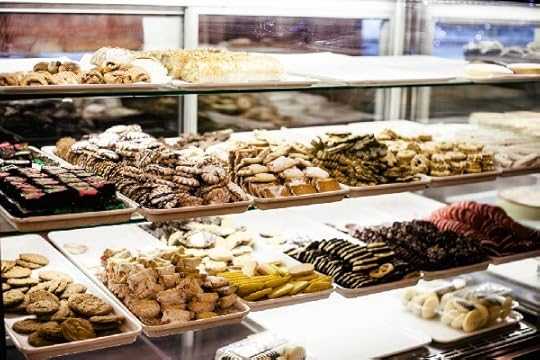
“chocolates pastry display” by Greta Punch on Unsplash
As Jared completes the transaction, he looks up to see a 40-something woman standing in line, dressed in high-waist jeans and a white sweater. Her friendly eyes meet Jared’s as he thanks the man walking out the door with his family. His neck stiffens.
“It’s a beautiful day, isn’t it?” she asks.
Jared rubs the back of his neck. “Pretty foggy right now.”
“Foggy mornings often burn into beautiful sunny days,” she says, looking down at the baked goods. “Perfect time of the morning. Nothing like getting first pick at such beautiful creations. Wouldn’t you agree?”
“Sure,” Jared replies.
“Any recommendations?”
“The raspberry scones are popular,” Jared says, pointing to the basket closest to him with six scones. The joints in his fingers pop as he tried to relax his hands. He winces, then shakes his hand, looking confused.
“I’ll take one.”
Jared cracks his knuckles, then scoops a scone onto a white plate. His hand shakes as he brings it to the counter, and the scone spills onto the counter.
“Feeling a bit tense?” the woman asks.
Jared blushes as he picks up the scone and puts it back into the plate. Crumbs are scattered over the counter.
“Just a hand cramp. Happens in the morning sometimes.”
“My mother always said three things cause pain. Lazy lifestyle, poor food choices, or a heavy conscience.”
Jared looks her in the eye. “Was she a doctor?”
“No,” she smiled, “but she knew things. Just like I do.”
Jared turns to close the display case. But he can’t turn.
“Busy day today?” she asks.
He struggles to maintain his calm demeanor as he tries to turn again. “No more than usual,” he manages. “Just people enjoying breakfast. Like they’re the only ones here.”
“Funny how we don’t notice people around us until we can feel them watching us.”
“close up photo of gray-eyed man” by Quinten de Graaf on Unsplash
Jared feels the woman’s gentle eyes drill into his own. He holds eye contact because he can’t look away, even though he tries.
“How much for the scone, Jared?”
“Two seventy — ”
Jared doesn’t finish the sentence. He isn’t wearing a name tag.
She puts three crisp dollar bills on the counter, resting them on top of the crumbs.
“I know, Jared.”
Jared feels sweat beading on his forehead. The back of his shirt is damp. He tries to wipe his face with his sleeve, but he can’t move his hand from the counter, each finger feeling as if tied down by invisible strings. His shoulder blades clench together.
She points out the window as sunshine pours through the glass. “See? The fog is already burning away.”
Jared stares straight into her eyes, seeing the sun only in his peripheral vision. His skin starts to burn.
“Who told you?” he finally whispers.
“That doesn’t concern you,” she calmly answers. “How we learn a truth doesn’t matter so much as the fact that the truth has gotten out.”
She takes a bite of her scone, holding eye contact.
“Besides, it wasn’t you who did it.”
Jared swallows.
The bell chimes as man and a young girl walk in. Jared feels his eyes strain toward the girl, her curly hair painfully familiar. They ache as he tries to pry them away, but he can’t. They start to water, but he can’t blink.
“Youth is a wonderful thing,” she says. “So much adventure. Innocence. So much presence in the moment. Feeling invincible, almost.”
“But I didn’t do anything,” he says. “It wasn’t me.”
“Did you stop it?” she asks.
Jared’s teeth press together, forcing the tension into his jaw and down his neck.
“We all have names,” she says. “What was hers?”
“You must know it already,” he whispers through clenched teeth.
“I do. But I’d like to hear you say it.”
Jared’s gaze unwillingly follow the young girl as she walks to the counter to get an extra napkin. He feels pressure behind his eyes, as if someone is pushing them out.
“Say her name,” she says calmly.
“Clara,” Jared finally says, his face glistening.
The woman smiles, takes another bite of her scone, and grabs a napkin. She wipes her mouth, then looks Jared in the eye again.
“Yes, Clara. I wonder where sweet Clara is right now. Do you think about her, Jared?”
He tries to walk back to the kitchen but his feet are stuck to the floor.
“We can continue on our path, Jared. Or we can make it right. If you choose to make it right, just let yourself be led. That’s all you need to do. But whatever you do, don’t turn around.”
Jared is ambushed by the memory of the new girl in class, her curly hair. The date she chose a different route home after school. The image of his best friend he’d sworn to protect. The subsequent twenty years he’d fought to keep it all buried.
“I’ve got other stops to make, so I should move along.” She takes another bite of her scone. “This is delicious, by the way.”
Jared watches as she walks out the entrance into the sunshine and strolls down the sidewalk. The door didn’t chime. His eyes are forced down, and he sees no bills or crumbs on the counter. There still are six raspberry scones in the display case.
Against his will, his mouth twists into a smile as his teeth clench together again. He pushes his tongue between his molars to pry them apart. His teeth cut the skin. He swallows the blood. His feet force him around the counter, across the cafe floor and out the door. “Whatever you do, don’t turn around,” he hears her say in his head. He feels his arms spread out at his sides as he walks. Tears roll down his cheeks as he silently fights to scream. He struggles to untwist his smile as he steps into the busy street and the 18-wheeler fails to stop in time.
September 24, 2018
How Quentin Tarantino, Gillian Flynn and Nora Ephron helped me finish my book
My latest book Love, Or Something Like It just came out. Here’s what I knew I would need for it to succeed:
Authentic characters
Complex story arc
Believable dialogue
This was was my third time at writing a piece of fiction, so I wasn’t sweating it as much as I did with my first two books. Then I remembered how hard it is to actually write and finish a book, let alone make it something of which you can be truly proud.

“type writer beside clipboard on wooden surface” by Elijah O’Donell on Unsplash
I marketed the book “1 big, tangled, twisted, all-American tale about love — but not a love story.” The blank page had never been more intimidating than when I was faced with the fear of my beloved characters feeling forced, their conversation fake, or the entire story freaking unbelievable.
To move the stories along without relying too much on exposition, I found a seemingly unconventional trio of teachers. Here are three masterful storytellers who helped me create complex characters, write believable dialogue and bring all the pieces together.

“three people holding puzzles and assembling on brown wooden table” by rawpixelon Unsplash
Quentin Tarantino: Bringing sub-stories into a single arc
This book is a collection of seven short stories, each with their own cast, plot and genre, but all interconnected to make up one large story. It’s a connection of stories. (Tricky, right?)
Quentin Tarantino is a master of bringing multiple story arcs together to create a larger narrative. His finest example of this is Pulp Fiction, with its vast list of characters and a conclusion that brings everything to one glorious, violent finale. This article from The Script Lab says it perfectly:
“Despite the definition Tarantino throws at us, the proof is in the pudding: Pulp Fiction, for all its supposed ‘softness’ or ‘shapelessness’, stands as a shining gold testament to the validity of the 5 Plot Points because of how stridently it adheres to the 5 Plot Point structure and because it uses the 5 Plot Points to tell each of the three major stories. If you’re keeping score at home, that’s 15 total Plot Points to go around. The trick is finding where they go and how they fit together. Tarantino quotes the dictionary to tell you how pulpy his fiction will be, but another quote could be borrowed from Aristotle who coined the phrase, “the whole is greater than the sum of its parts.” Pulp Fiction is made better than it would have been if Tarantino had made any one of the three stories within it into its own solo feature-length film. The fact that the stories of Vince, Butch & Jules revolve around one another like the spokes of a wheel around a center (with Marsellus Wallace being the hub of the Pulp Fiction wheel) is what makes the movie endlessly endearing to watch and allows all those multiple viewings of to be so rewarding, time and time again.”
And so I took that as an awesome inspiration to make my seven lesser parts fully developed so that they could connect as one greater piece.
“person covering face” by Tommy van Kessel on Unsplash
Gillian Flynn: Writing female characters who don’t play to stereotypes
With several leading women in Love, Or Something Like It, I didn’t want them to exist for the sake of supporting the male characters. And when I decided to write one female-led story entirely in the first person, I knew I had to get it right (spoiler: this particular story ended up being my favorite in the collection).
The old adage of “Write what you know” exists to keep us from clumsily trying to write what we don’t know, but I had let it limit myself as a storyteller. My first two books were both anchored by male characters. Sure, there were some supporting female characters, but the main narratives were driven by men. More than the mere fact that I am a man, the majority of books I read up until then were written by men. Solution? I studied complex female characters created by incredibly talented female authors across multiple genres.
Several years ago, Gillian Flynn was my gateway to complex female archetypes. In Gone Girl, Amy Dunne is a complex rule-breaker who literally and figuratively dominated and steered the book’s narrative by defying everything the reader expected from her, and took me captive as I witnessed her call the shots all the way to that controversial finale. (For the record, Gone Girl’s conclusion is one of my all-time favorites because it wasn’t at all what I saw coming, and it’s still just as chilling years after witnessing it.)
I did my best to create female characters with agency, grit and intelligence — like the fictional characters I read, the brilliant authors I follow, and the amazing women in my own life — and they ended up doing the heavy-lifting in this story.
“photos clipped on clothesline” by S A R A H ✗ S H A R P on Unsplash
Nora Ephron: Creating authentic chemistry
If you’ve never been on a bad date yourself, you’ve likely seen one in real life or on the TV screen. What’s the first thing anyone tells their friend when they’re asked why it didn’t work out? “There wasn’t any chemistry.”
Even after managing to create a solid structure and complex character profiles, none of that matters if the characters can’t believably interact with one another. With all this talk about Tarantino and Flynn, I obviously am drawn to complex and dark stories. But I’ll be the first to admit that I’m a sucker for romantic comedies as well. The tried-and-true formula sometimes gets mocked, but there’s a reason we’ll never see an end to films of this genre: we’re captivated by chemistry.
Nora Ephron is a genius and I can watch You’ve Got Mail or Julie & Julia over and over without ever getting bored. She has such an impressive roster of quirky humans who come together, form an unlikely connection, and make the viewer feel something when their romance is eventually realized. Although we see the ending coming, we still cheer when the characters finally kiss at the end of the movie. Just consider some of her famous pairings:
Kathleen Kelly and Joe Fox
Annie Reed and Sam Baldwin
Sally Albright and Harry Burns
These couples all seem the least likely to get together, probably because they don’t hit it off right away. But even with their initial tension and butting-of-heads, that in itself is chemistry: two opposite individuals came together and caused a reaction, and the audience is hooked to see the effects of that reaction.
Even though my book is a collection of multiple genres, each story focuses in on a unique romantic relationship. My goal was to have the reader celebrate the successful relationships, root for the potential bonds, grieve the loss of the authentic ones, and gasp at the unveiling of the darker ones. If I made their chemistry authentic, then I have succeeded in making the stories real.
But like any good storyteller, I’ll let the reader make that call.
August 6, 2018
Book #3 is near!
Third time’s the charm, right? Beyond excited to announce my latest passion project. To be released worldwide (paperback and Kindle via Amazon) in September.
[image error]Think of it as a film festival of sorts. Part tragedy, part comedy, part psychological thriller, part young romance, set in the sunny noir landscape of Los Angeles – all together in a not-as-dire Black Mirror package. There’s love, loss, rage, vengeance, shame, bravado, paranoia, tenderness and hope – an all-American story.
This is the quickest a project of mine has been conceived and birthed (6 months), the most complexly layered a story I’ve imagined, and the work I am most proud of – and by far the most fun I’ve ever had while writing. I think it shows, and I can’t wait to share it with you. Storytelling keeps me young.
Stay tuned!
September 26, 2016
In Praise of #ThreeFictionalCharacters
There are lots of Facebook trends. They’re all fun to watch and follow. For example:
Ice Bucket Challenge
Love Your Spouse Challenge
30-Day Thankfulness Challenge
“If you agree with this, share it. If you don’t, you’re not supportive of [insert cause]
These are all awesome and trendy, but I never really have been enticed to participate. However, there’s a recent one that I can’t help but love: #ThreeFictionalCharacters.
This is a call to post a photo collage with three fictional characters who, when combined, describe you as a person. When I saw the first of these posts in my Facebook timeline, I didn’t think much. Then I started looking for similar posts and totally got why my friends chose their respective collections. I loved it!
What really struck me is why we all can identify with fictional characters: they let us see bits of ourselves reflected on paper, on screen and on stage.
C.S. Lewis once said, “We read to know we’re not along,” and this is why we watch as well. This makes me feel less guilty about my binge-watching habits. Come on, Netflix, you know you don’t need to ask “Are you still watching?”
I recently read a great piece in the New York Times called “The TV Cure.” Here’s the gist:
“Television is a drug to be taken in moderation, sure, but it’s a drug that, more and more, is prescribed specifically for you. Not only are people connecting to these flawed characters, but TV is so good and so specific now that people are connecting to the show itself as a way to cope, because they feel as if the show was made for them. It doesn’t replace relationships, or intimacy, or make us cold strangers to one another, but it can shine a light on our darkest, loneliest corners. It can help us find communities of people who like the same stuff we do, even if we’re not quite sure why it’s speaking to us. Almost anyone can see themselves reflected onscreen, or see other possibilities for their lives. Or watch and just think ‘yes, me too!'”
That being said, I finally joined the trend and posted my three fictional characters. Subtle quirks of Jim Halpert, unintentional awkwardness of Ross Gellar, and unabashed grumpiness of Carl.
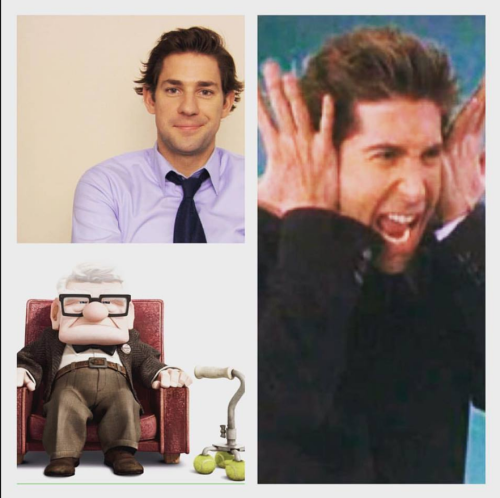
Who are your #ThreeFictionalCharacters? Why?

July 20, 2016
Book Blog Tour for Charades
It has been a whirlwind since the release of Charades, and an awesome one at that! I think the most exciting part of this journey is to hear people’s responses to the story, so it has been fun to talk with my readers after they finish the book.
I also threw a little book release party this month, which was a fun celebration of stories. Here are a few shots of the event.
Click to view slideshow.
Also, my dear friend and fellow bookworm Trisha over at Trishajennreads was so kind to organize a Book Blog Tour to help celebrate the release of Charades. Here are the links to all the beautiful people who took part!
Trishajennreads
Stuffgradslike
Booksandbottles
Zandrew
Jimwoodswrites
These are a few of the updates in my creative world, all of which put a huge smile on my face. Thanks to everyone who has supported me by purchasing Charades, promoting it on their websites and struck up a conversation with me about the story!

June 20, 2016
Charades: Initial Reviews
It has been an exciting few weeks following the release of Charades. Combined with the joy/fear that comes with releasing one’s work to the world, there’s the anticipation of hearing how it has been received.
Here’s what people are saying so far:
Todd Foley has woven a story that takes the mundane moments of interacting with acquaintances and makes them scenes of intrigue. Todd’s characters are entertaining, real, and multifaceted. The prose moves quickly, despite a seemingly simple concept–that of a man who runs a meat shop and wonders who his customers are outside of their brief commercial interactions. The prose is lovely, spirited, and natural. The characterization of the City of Vancouver makes the setting another key member of the cast. Full of surprising moments, revelations, and the magic of relationships – Charades is an eye opening read that will have you questioning the masks of your fellow commuters. I forced myself to digest this short book in small sittings so it would last longer.
As I read Charades, I realized how much the characters were materializing when I found myself asking…”why did he do that?…. she needs to stop it… what the #@$!” It’s a testament to Foley’s skill in crafting grounded characters that pull us closer into the story – I had to remind myself this was a work of fiction. I bought this book for a vacation read right after it was released and devoured it quickly. I would love to see this novella developed even further as this tale had the shimmering of an O. Henry short story with the pacing of a psychological thriller.
Great book, totally recommend. It’s a short read, and it was addicting. The main character, Otis, was intriguing and captivating, and I was really pulled into the book after only a few pages. Todd is a great writer who understands the art of storytelling.
This is a delightful little novella, the second fiction work from writer Todd Foley. He draws the audience in with the engaging narration and interesting cast of characters. While his previous work, Eastbound Sailing, takes place on on island, this story takes place in the city. After reading both, it is clear that Foley has a talent for effectively creating setting. In less than 100 pages, we get a memorable story that will move you and surprise you, as well as make you question what you believe to be true.
Reader feedback is this author’s love language, so I sincerely thank those who have taken the time to embrace this story and share their experiences with me.

May 29, 2016
Book Release!
After four long years, Charades is finally completed.
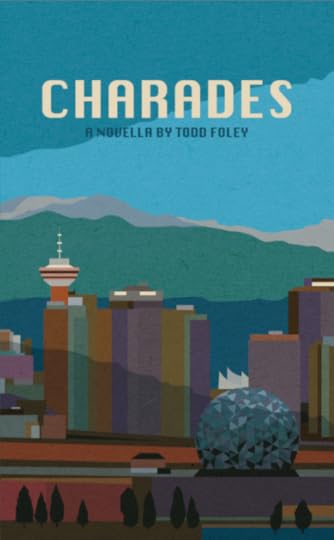
Let the storytelling begin!

May 16, 2016
Back Of The Book
Layer by layer, closer and closer to the June release.