Malorie Mackey's Blog
May 1, 2026
The “Great Disappointment” of 1844: When Thousands Sold Everything for an Apocalypse That Didn’t Happen
In the early 1840s, a surprising number of people became convinced they knew exactly when the world was going to end. Not vaguely either… I’m talking about an actual date.
It mostly traced back to a man named William Miller, a farmer-turned-preacher who spent years studying the Bible and trying to calculate when the Second Coming of Christ would happen. Using his own interpretations of biblical timelines, he landed on a specific window: somewhere between 1843 and 1844. At first, it was just an idea. But it didn’t stay that way for long. It eventually grew into the “Great Dissapointment” of 1844.
How It Picked Up MomentumMiller wasn’t shouting on a street corner—he was organized, methodical, and convincing. His message spread through pamphlets, newspapers, and large public gatherings. This wasn’t some tiny fringe group either. Tens of thousands of people across the United States started paying attention.
They became known as Millerites. And once you start believing something that big, it doesn’t just stay theoretical. It starts shaping how you live. People began preparing in very real ways. Some sold their homes or businesses. Others gave away possessions they thought they wouldn’t need. Crops were left unharvested because, well, what was the point? Not everyone went that far, but enough did that it became noticeable.
Narrowing It Down to a DateEventually, the timeline got more specific. After a few earlier predictions didn’t quite land, one final date gained traction: October 22, 1844. It was presented as the moment everything would happen—the return of Christ, the end of the current world, the beginning of something entirely new.
By that point, people weren’t just casually believing anymore. Some gathered in groups, dressed in what they thought were appropriate clothes for the event. Others stayed at home with family. There are accounts of people spending the day in prayer, watching the sky, expecting… something. Anything.
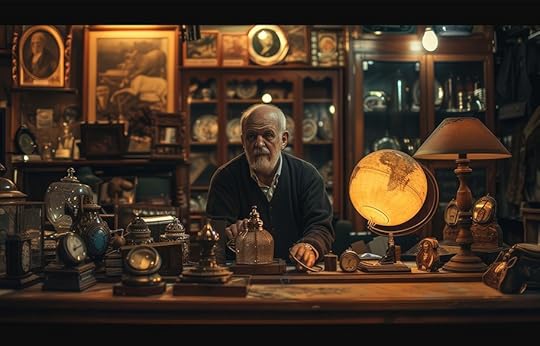
October 22 came and went. Nothing happened. That moment became known as the Great Disappointment, and the name is pretty much exactly what it sounds like. For people who had genuinely believed this was the end, it wasn’t just embarrassing—it was deeply unsettling. They had built their lives around something that didn’t come true, often at a real personal cost.
The Birth of the Seventh-day Adventist ChurchNot everyone reacted the same way. Some people walked away immediately. They gave up on the movement and tried to rebuild their lives, as much as possible. For those who had sold property or made major decisions, that wasn’t always easy. Others didn’t abandon the belief—they reinterpreted it.
Instead of seeing October 22 as a failed prediction, some followers argued that something had happened, just not in a visible, physical way. According to this idea, the event was spiritual rather than literal. That shift might sound like a stretch, but it’s actually a pretty common response when strongly held beliefs don’t match reality. Rather than throwing everything out, people adjust the explanation to make it fit.
Over time, some of these reinterpretations led to the formation of new religious groups, including what would eventually become the Seventh-day Adventist Church.
The post The “Great Disappointment” of 1844: When Thousands Sold Everything for an Apocalypse That Didn’t Happen appeared first on Malorie's Adventures.


The Skeleton Lake of Roopkund: 800 Bodies Found in the Himalayas Killed by the Same “Weapon”
High up in the Indian Himalayas, there’s a small glacial lake that doesn’t look particularly unusual. It’s remote, cold, and only visible for part of the year when the ice melts. But when it does, something strange shows up along the edges and beneath the shallow water: human bones. A lot of them.
This place is known as Roopkund Lake, and for a long time, no one really knew how all those bodies ended up there.
A Discovery That Raised More Questions Than AnswersThe remains were first properly documented in the 1940s, when a forest ranger came across the site and reported what he saw—skeletal remains scattered around the lake, some still relatively intact, others partially buried in ice and sediment.
At first, there were concerns that these might be more recent deaths, possibly linked to conflict or something more recent. But over time, it became clear that the bones were much older.
Eventually, researchers estimated that there were hundreds of individuals—often rounded to around 800—spread across the area. Not buried in any formal way, just… there.
No obvious signs of a typical battle either. No weapons, no organized graves, nothing that clearly explained why so many people had died in the same place.
Clues Hidden in the BonesFor a while, theories ranged all over the place—lost armies, failed expeditions, even ritual events. But things started to get more specific once scientists began studying the remains more closely. One detail stood out: a large number of the skulls showed similar types of injuries. Blunt force trauma, mostly to the top of the head.
Not cuts or blade wounds—more like something heavy had struck them from above. The fractures were consistent across many individuals, which suggested they hadn’t died in separate incidents. It looked like a single event.
That’s where the “same weapon” idea comes from. Not a literal weapon someone was holding, but something that hit multiple people in the same way, at the same time.
 Not a Battle—Something Else
If it wasn’t combat, what could cause that kind of damage? One explanation that’s gained a lot of support is surprisingly simple: a severe hailstorm.
At that altitude, hailstones can get unusually large and hard. If a group of people were caught in an exposed area with no shelter, being hit repeatedly, especially on the head, could be fatal. The pattern of injuries matches that kind of impact: concentrated on the skull, with less damage elsewhere.
It’s not the kind of thing most people think about, but in extreme conditions, weather can be just as deadly as any weapon. And in this case, it would explain why so many people died together, in the same place, without signs of a fight.
Who Were They?That still leaves another question: who were these people, and why were they there? More recent studies, including DNA analysis, have added another layer to the story. The remains don’t all come from the same group or even the same time period. Some date back over a thousand years, while others appear to be more recent, relatively speaking.
There’s also evidence that not everyone was local. Some individuals seem to have come from regions quite far away, possibly even from outside South Asia. Which suggests this wasn’t a single event involving one group, but multiple incidents over time.
The post The Skeleton Lake of Roopkund: 800 Bodies Found in the Himalayas Killed by the Same “Weapon” appeared first on Malorie's Adventures.
The Great French Poisoning Affair: How Louis XIV’s Court Became a Hotbed of Alchemy and Murder
When people picture the court of Louis XIV, it usually comes down to spectacle—Versailles at its peak, carefully staged power, endless rituals. Everything was designed to be seen, controlled, and admired. But underneath that surface, there was a much less stable reality. Court life wasn’t just about elegance… it was also about competition, influence, and survival in a system where your position could change quickly. And in that kind of environment, people didn’t always rely on official or acceptable methods to solve their problems.
By the late 1670s, rumors had already started circulating in Paris about poisonings. At first, they didn’t seem like anything organized. Just isolated cases, the kind that could be explained away as illness or misfortune. But gradually, a pattern began to form. These weren’t random events. There were people supplying poisons, and there were clients willing to use them. What followed became known as the Great French Posioning Affair or the Affair of the Poisons, and it ended up exposing something much larger than anyone initially expected.
An Underground Economy of SolutionsThe use of poison in early modern Europe wasn’t unheard of, but what made this situation different was how accessible it seemed to be. There was an entire underground network operating in and around Paris, offering a mix of services that blurred the line between superstition and practical problem-solving.
Fortune-tellers, herbalists, and self-proclaimed alchemists became central figures in this world. Some of what they offered was relatively harmless—horoscopes, love charms, predictions about the future. But alongside that, there were more serious transactions happening. Substances that could make someone ill, weaken them over time, or kill them outright were being sold discreetly to people who felt they had something to gain.
One of the most well-known figures connected to this network was Catherine Monvoisin, often referred to as La Voisin. She wasn’t just a fortune-teller in the casual sense—she operated something closer to an informal service hub for people looking to influence their circumstances in ways that couldn’t be handled openly.
Her clients reportedly included members of the aristocracy, which is where things became more serious. This wasn’t confined to the margins of society. It was reaching into the same circles that surrounded the king.
Why Poison Made Sense in That WorldTo understand why this escalated, it helps to look at the structure of court life at the time. Positions at court came with real power, access, and financial benefit. Marriages were strategic, alliances mattered, and inheritance could determine someone’s entire future. But at the same time, direct conflict wasn’t always possible. Open violence would have been risky, both legally and socially.
Poison offered an alternative. It could be subtle, difficult to trace, and easy to disguise as natural illness. In a period where medical knowledge was limited, sudden sickness didn’t automatically raise suspicion. That doesn’t mean it was common in the sense of everyday use, but it does explain why it became an option people were willing to consider. And once there was a network supplying it, the barrier to using it became lower.
The Investigation ExpandsThe situation might have remained contained if it hadn’t attracted official attention. But once authorities began to investigate, it quickly became clear that this wasn’t a series of isolated incidents. A special tribunal, known as the Chambre Ardente, was established to handle the growing number of cases. Its purpose was to investigate allegations of poisoning and related activities, and it operated with a level of intensity that reflected how seriously the issue was being taken.
Arrests followed, and with them came interrogations, confessions, and further accusations. As more people were questioned, more names surfaced. The network began to look larger and more interconnected than anyone had initially assumed. What made the situation particularly unstable was the involvement of individuals from higher social ranks. Once members of the nobility were implicated, the investigation stopped being purely criminal and became political.
When It Reaches Too Close to the CenterOne of the most sensitive aspects of the affair was the implication—direct or indirect—of people connected to the king himself. Among those mentioned in testimonies was Madame de Montespan, one of Louis XIV’s most prominent and influential mistresses. The accusations against her included involvement in occult practices and attempts to maintain her position through unconventional means. Whether those claims were accurate is still debated, but their existence alone created a problem.

For a monarchy built on the idea of absolute authority and controlled image, even the suggestion that figures close to the king were tied to something like this was dangerous. It risked undermining the carefully maintained perception of order and legitimacy. At that point, the investigation was no longer just about uncovering the truth. It was also about managing what that truth might reveal.
As the inquiry continued, it reached a stage where pursuing every lead became increasingly complicated. Each new accusation had the potential to implicate someone of higher status, and the deeper the investigation went, the more politically sensitive it became. Eventually, the process was scaled back. Some lines of inquiry were no longer followed, and certain testimonies were restricted or sealed.
Separating Fact from InterpretationOne of the challenges in looking back at the Affair of the Poisons is figuring out how much of it was exactly as described. There is little doubt that poison was being used and that networks existed to supply it. The number of arrests, trials, and executions points to something real and widespread enough to concern the authorities.
At the same time, some of the more extreme elements, particularly those involving elaborate rituals or occult practices, are harder to verify. Confessions obtained under pressure, combined with the atmosphere of fear and suspicion, make it difficult to draw clear lines between fact and exaggeration.
Louis XIV’s court was highly structured, but that structure created its own pressures. With so much value placed on proximity to power, even small shifts in favor could have major consequences. That kind of system naturally encouraged competition, and not all of it stayed within acceptable boundaries.
The post The Great French Poisoning Affair: How Louis XIV’s Court Became a Hotbed of Alchemy and Murder appeared first on Malorie's Adventures.
The Choquequirao Paradox: The “Other” Machu Picchu That We Still Haven’t Fully Mapped
There’s this place in Peru that people keep calling the “other” Machu Picchu, which already tells you a lot about how we tend to look at history. We take one site, make it famous, and then everything else becomes a comparison.
But Choquequirao isn’t just some backup version of Machu Picchu. If anything, it might be just as important—maybe even more in certain ways. The difference is that one of them is easy to get to, and the other… really isn’t. Because here’s the strange part: Choquequirao is huge. Not “impressive ruins”, huge, but genuinely massive. And we still haven’t fully mapped or uncovered it. This is the Choquequirao Paradox.
Getting There Is Half the StoryYou don’t accidentally end up in Choquequirao. To get there, you have to commit to a multi-day trek—down into a deep canyon, then back up again, through heat, altitude, and terrain that doesn’t really let you relax at any point. And that matters more than it sounds. Because when a place is that difficult to reach, everything slows down. Tourism stays low. Infrastructure stays minimal. Archaeological work becomes more complicated, more expensive, and more time-consuming.
Machu Picchu, by contrast, is one of the most visited sites in the world. It’s been studied, restored, photographed, and analyzed from every angle for over a century. It’s accessible, and that accessibility turned it into a global icon. Choquequirao never got that moment.
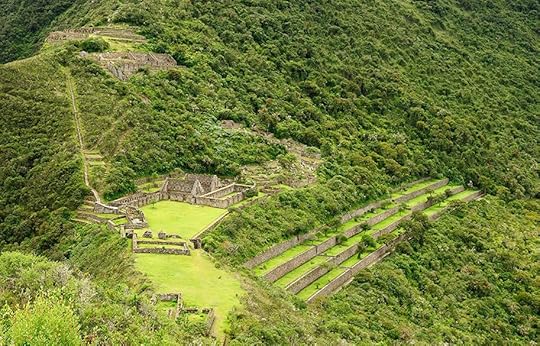
How Big Is It, Actually?This is where things get a bit frustrating, but in a good way. Because we don’t fully know. What’s been uncovered so far already includes terraces, plazas, ceremonial spaces, residential areas, stairways, and storage structures, all spread across a large section of the mountainside. It’s clearly not a minor outpost. It was planned, structured, and important.
But most estimates suggest that only around 30 to 40 percent of the site has actually been excavated. The rest? Still buried under dense vegetation, soil, and time.
And when you start thinking about that seriously, it shifts the whole perspective. What we see now isn’t the site—it’s just the visible part of it. The rest is still hidden, which means the scale we’re working with might be incomplete.It’s like trying to understand a city when most of it is still underground.
Not Just a Pretty LocationLike a lot of Inca sites, Choquequirao sits in a place that doesn’t feel entirely practical. It’s high, remote, and surrounded by steep terrain. Which raises the obvious question: why build something this complex here?
The Inca were incredibly strategic with their locations, so it’s unlikely to be random. One idea is that Choquequirao functioned as a kind of regional hub—connecting different parts of the empire through mountain routes. Another is that it had ceremonial or religious significance, similar to Machu Picchu.
There’s also a more historical angle. After the Spanish arrived and began dismantling the Inca Empire, some groups retreated deeper into the mountains. There’s a possibility that Choquequirao played a role during that period—as a stronghold, a refuge, or at least a place that remained active longer than others. But like a lot of things here, there isn’t one clean answer. It probably wasn’t just one thing.
 The Llamas on the Mountainside
One of the details that always stands out about Choquequirao is something you don’t really expect to find: giant llama figures built into the terraces. Not statues, not carvings—actual patterns formed using white stones, set into the darker surface of the terraces so they stand out from a distance. They’re stylized, but unmistakable.
And they’re big enough that you don’t fully notice them until you step back and look at the mountain as a whole. Then suddenly, they’re there—lined up along the slope like part of the landscape itself. It’s a strange detail, because it’s not purely functional. It doesn’t help with farming or construction. It’s intentional, visual, almost symbolic.
Llamas were essential to Inca life—transport, wool, survival in general—so the imagery makes sense. But the scale and placement suggest something more than just decoration.
Why It’s Still Not Fully UnderstoodAt this point, it would be easy to assume that modern technology would solve the problem. Just scan the whole area, map it out, done. And to some extent, that’s happening.
Tech like LiDAR can detect structures beneath vegetation, giving archaeologists a better idea of what’s there without having to dig everything up immediately. Drones can map terrain in ways that weren’t possible before. But knowing something is there and actually uncovering it are two very different things.
Excavation is slow by design. You can’t just clear everything quickly—you risk damaging the structures you’re trying to preserve. Add in the fact that every tool, every piece of equipment, and every person has to get there the hard way, and the timeline stretches out even more. So even now, progress is steady but slow. Which means Choquequirao is still, in a very real sense, unfinished business.
The Weird Part: It Might Be Just as ImportantWhat makes all of this slightly frustrating is the possibility that Choquequirao isn’t just “another site”—it could be a major one. Comparable to Machu Picchu in terms of complexity, planning, and significance. The only reason it doesn’t feel that way is that we haven’t fully seen it yet.
There’s been ongoing talk about making the site more accessible—most notably, proposals for a cable car system that would drastically cut down the travel time. If that happens, everything changes. More visitors means more funding, more attention, faster excavation. It would probably go from relatively unknown to heavily visited within a few years.
The post The Choquequirao Paradox: The “Other” Machu Picchu That We Still Haven’t Fully Mapped appeared first on Malorie's Adventures.
April 30, 2026
Inside the Life of Henry VIII: Marriage, Power, and Revolution
When people think of Henry VIII, the first thing that usually comes up is his six marriages. It’s become the shorthand version of his entire life—six wives, two executed, one of them Anne Boleyn, and a reputation built around excess and unpredictability.
But if you look at his reign more closely, the marriages weren’t just personal decisions or impulsive choices. They were tied directly to politics, succession, and control over the state. The outcomes of those relationships reshaped England in ways that went far beyond the royal household. By the time Henry died in 1547, he had fundamentally altered the structure of religion and power in England.
Early Reign: A Stable Start That Didn’t LastHenry came to the throne in 1509, young, educated, and, at least initially, not particularly controversial. He married Catherine of Aragon, the widow of his older brother. At the time, the marriage made political sense—it maintained an alliance with Spain and reinforced stability after the transition of power.
For the first part of his reign, things were relatively conventional. England remained firmly within the structure of the Roman Catholic Church, and Henry himself was considered a defender of the faith. In fact, he was given the title Fidei Defensor by the Pope for opposing early Protestant ideas. The problem that eventually disrupted all of this was succession.
The Succession ProblemCatherine of Aragon gave birth multiple times, but only one child survived infancy: Mary I of England. At the time, a male heir was considered essential for political stability. A female ruler wasn’t impossible, but it was seen as risky, particularly in a system where succession disputes could lead to conflict.
As the years passed and no son was born, Henry became increasingly focused on securing a male heir. This wasn’t just personal—it had direct implications for the continuity of the Tudor dynasty. That’s where the situation shifted from a private issue to something with broader consequences.
Anne Boleyn and the Break with RomeHenry’s relationship with Anne Boleyn is often framed as a romantic turning point, but it was also political. Anne did not accept the role of a mistress, and Henry wanted to marry her. That required ending his existing marriage to Catherine, which meant seeking an annulment from the Pope.
The problem was that the Pope, influenced by broader European politics, including pressure from Catherine’s nephew, the Holy Roman Emperor, did not grant it. At that point, Henry made a decision that would define his reign.
Instead of accepting the refusal, he moved to separate England from the authority of the Roman Catholic Church. Through a series of legal and political steps, he established the monarch as the head of the Church in England. This wasn’t just about one marriage anymore. It led to the creation of the Church of England and effectively removed papal authority from English affairs. It was one of the most significant institutional changes in English history, and it started with a succession issue.
Marriage, Power, and InstabilityHenry did marry Anne Boleyn, but the outcome didn’t solve the original problem. She gave birth to a daughter, Elizabeth I, who would later become one of England’s most well-known monarchs. But at the time, the lack of a male heir meant the pressure remained.
Anne eventually fell out of favor. She was accused of adultery, treason, and other charges, and was executed in 1536. Whether those accusations were accurate or politically motivated is still debated, but the result was clear: Henry moved on quickly.
His third wife, Jane Seymour, finally gave birth to a male heir, Edward VI. That resolved the succession issue, but only temporarily—Jane died shortly after childbirth. At that point, Henry had what he wanted in terms of an heir, but his pattern of marriages continued, often driven by political alliances or shifting priorities rather than personal stability.
The Dissolution of the MonasteriesWhile the marriages tend to get most of the attention, one of the most significant changes during Henry’s reign was the dissolution of monasteries. Once England broke from Rome, monastic institutions became targets for restructuring.
Between 1536 and 1541, monasteries across England were closed, their lands and wealth redistributed to the Crown and to nobles loyal to Henry. This had multiple effects:
It increased royal control over land and resourcesIt weakened the economic and social influence of the ChurchIt redistributed wealth in ways that reshaped the English elite Later Years
As Henry aged, his reign became more rigid and less stable. Health issues, including a severe leg injury, affected his mobility and possibly his temperament. He became more suspicious, and political decisions increasingly centered on maintaining control.
Executions became more frequent, not just among political opponents but also among former allies. His later marriages, such as to Catherine Howard and Catherine Parr, were shaped more by court dynamics than by long-term strategy. By this stage, the structure he had created, both politically and religiously, was firmly in place, but it wasn’t necessarily stable.
Henry VIII didn’t just rule England—he changed how it was governed. The break from the Roman Catholic Church established a new model where the monarch held both political and religious authority. That shift had long-term consequences, influencing not just England but also later developments in Britain’s identity and governance.
At the same time, the redistribution of land through the dissolution of monasteries altered the balance of power among the nobility. These weren’t temporary changes. They shaped the structure of the state for generations.
The post Inside the Life of Henry VIII: Marriage, Power, and Revolution appeared first on Malorie's Adventures.
The Weird (& Long) History of the Telephone: A Simple Invention That Transformed the World
The telephone feels simple now. You pick it up, tap a name, and talk to someone instantly, no matter where they are. But the core concept, sending a human voice across distance in real time, wasn’t obvious. It took decades of experimentation, overlapping inventions, and a surprising amount of trial and error to get there. And even after it worked, it didn’t immediately become what we recognize today.
So, let’s explore the weird and long history of the telephone.
Before the TelephoneBefore voice communication was possible, long-distance messaging relied on systems that separated speed from clarity. The most advanced system in the early 19th century was the telegraph. Using electrical signals, operators could send messages across long distances almost instantly—but only in coded form. Systems like Morse code turned language into sequences of dots and dashes, which then had to be decoded on the receiving end.
It worked, but it wasn’t natural. You couldn’t have a conversation in real time, and you needed trained operators to handle both sending and receiving. The limitation wasn’t speed. It was the inability to transmit the complexity of the human voice. That’s the gap inventors started trying to close.
The First Breakthrough (and the Dispute Over It)The invention of the telephone is usually credited to Alexander Graham Bell, who received a patent in 1876 for a device capable of transmitting speech electrically. But the reality is more complicated.
Another inventor, Elisha Gray, filed a similar claim on the same day. There were also others working on related ideas, experimenting with ways to convert sound waves into electrical signals and back again. Bell’s design ultimately became the foundation for the modern telephone, but it wasn’t a single, isolated moment of invention. It was part of a broader wave of experimentation happening at the same time.
The early devices themselves were crude. Sound quality was inconsistent, range was limited, and the technology was fragile. But it worked well enough to prove that voice transmission was possible. That was the turning point.
How Early Telephones Actually WorkedAt a basic level, early telephones relied on converting sound into electrical signals. When you speak, your voice creates vibrations in the air. A diaphragm inside the telephone picks up those vibrations and converts them into electrical signals that can travel through a wire. On the receiving end, the process is reversed—the electrical signal moves another diaphragm, recreating the sound.
That principle hasn’t really changed. What has changed is how efficiently it’s done. Early systems struggled with signal strength, clarity, and interference. Long-distance communication required stronger signals and better materials, which took time to develop. So while the concept was simple, making it reliable at scale wasn’t.
The Era of Operators and Manual ConnectionsOne of the stranger parts of early telephone history is how calls were actually made. There was no direct dialing. If you wanted to call someone, you picked up the phone and were connected to a human operator. That operator would then manually plug your line into the line of the person you were trying to reach. It worked, but it didn’t scale well.
As the number of users increased, so did the complexity of managing connections. Large switchboards required entire rooms of operators handling calls in real time. It was labor-intensive and prone to delays. This system lasted longer than most people expect. Automated dialing didn’t become widespread until later, after the development of mechanical switching systems that could replace manual connections.
Why the Telephone Took Time to SpreadEven after the technology existed, adoption wasn’t immediate. There were practical reasons for that. Building a telephone network required physical infrastructure, wires, poles, exchanges, which meant significant investment. Unlike the telegraph, which was often used by businesses and governments, the telephone had to prove its value to individuals.
At first, it wasn’t obvious why someone would need one. Early use cases were mostly business-related. Companies used telephones to coordinate operations more efficiently, especially in cities. Residential use came later, once the network expanded and the technology became more reliable. There was also a social adjustment. Talking to someone you couldn’t see, in real time, was a new experience. It took time for people to get used to it.
Standardization and the Rise of NetworksAs more people adopted telephones, the need for standardization became clear. Different systems needed to be compatible, and networks had to be organized in a way that allowed connections beyond local areas. This led to the development of centralized exchanges and more structured networks.
Companies like Bell Telephone Company played a major role in building and managing these systems, especially in the United States. Over time, long-distance communication improved, and international connections became possible. What started as a local communication tool gradually turned into a global system.
 The Shift to Automation
Manual switchboards eventually became a bottleneck. As call volume increased, the need for faster, more efficient systems led to the development of automatic switching. Instead of relying on operators, mechanical systems could connect calls based on numbers dialed by the user.
This is where the familiar concept of phone numbers came from. Automation reduced the need for human intervention and made the system more scalable. It also changed how people interacted with telephones—you no longer needed a third party to make a call.
From Landlines to Mobile CommunicationFor most of the 20th century, telephones were tied to physical locations. That changed with the development of mobile communication. Early mobile systems were limited, expensive, and not widely accessible, but they introduced the idea that communication didn’t have to be fixed to a place.
Over time, improvements in technology made mobile phones smaller, more affordable, and more reliable. Eventually, they replaced landlines as the primary form of communication for many people. The transition wasn’t immediate, but it was gradual and consistent.
The post The Weird (& Long) History of the Telephone: A Simple Invention That Transformed the World appeared first on Malorie's Adventures.
The 10 Biggest Historical Reenactments in the World (and Where to See Them)
Historical reenactments can easily sound like niche hobby territory—costumes, staged battles, people playing roles for a weekend. But at their largest scale, they’re something else entirely. Some of these events involve thousands of participants, entire towns reorganized around a specific moment in history, and a level of logistical planning that’s closer to a live production than a casual gathering.
What makes them worth seeing isn’t just the spectacle. It’s the level of detail. When they’re done properly, you’ll feel like you traveled back in time. Here are ten of the largest and most established reenactments in the world.
Battle of Gettysburg Reenactment — United States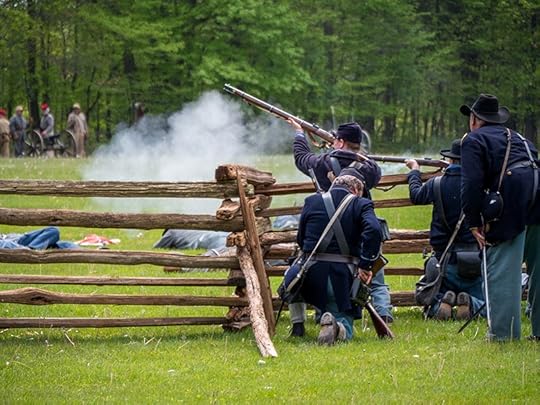
This is one of the largest and most well-known reenactments globally, built around the 1863 Battle of Gettysburg. What sets it apart is scale. Major anniversary events have drawn thousands of participants, with organized infantry lines, artillery units, cavalry, and full encampments set up to match the period. It’s not just the battle itself—there are days of preparation, including camp life, drills, and public demonstrations.
For visitors, the experience is split between watching the staged battle and walking through the camps, where reenactors stay in historically accurate setups. That part tends to be more informative than the battle itself, especially if you’re interested in how people actually lived during the war.
Battle of Waterloo Reenactment — BelgiumHeld near Waterloo, this reenactment focuses on one of the most significant battles of the Napoleonic Wars. Like Gettysburg, the scale is a major factor—large anniversary events have involved thousands of reenactors from across Europe. The uniforms, formations, and timing are tightly coordinated, reflecting the structured nature of Napoleonic warfare.
What makes Waterloo stand out is the level of international participation. Different units represent historical regiments from multiple countries, which adds to the authenticity but also makes coordination more complex.
Hastings Reenactment — United KingdomThe Battle of Hastings reenactment takes place near the original 1066 battlefield, which changes the experience significantly. Instead of open fields used purely for staging, the terrain itself becomes part of the event. The reenactment focuses on the Norman conquest of England, with emphasis on shield walls, close combat, and smaller-scale formations compared to later wars.
It’s less about spectacle and more about historical grounding. Being on or near the original site makes a difference, even if the scale is smaller than some of the other events.
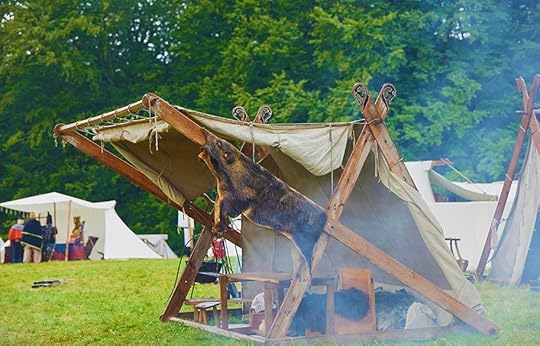
Viking Festival at Moesgaard — DenmarkHeld near Aarhus, this is one of the largest Viking-themed reenactment events in Europe. Unlike battle-focused events, this one leans heavily into daily life. You’ll see blacksmithing, cooking, trading, shipbuilding techniques, and other aspects of Viking-era culture.
There are combat demonstrations, but they’re not the main focus. The strength of this event is how immersive it feels—less like a staged performance and more like stepping into a functioning historical environment.
 Austerlitz Reenactment — Czech Republic
This reenactment recreates the Battle of Austerlitz, one of Napoleon’s most well-known victories. It takes place near Slavkov u Brna, close to the original battlefield. The event includes large troop movements, artillery, and coordinated battle sequences that reflect the strategic complexity of the original engagement.
Like Waterloo, it attracts international participants, many of whom specialize in Napoleonic-era reenactment, which keeps the standard relatively high.
War of 1812 Reenactments — Canada & United StatesRather than a single event, this refers to a series of reenactments across multiple sites tied to the War of 1812. Locations vary, but events are often held at historically significant forts and battlefields. What makes these reenactments notable is their regional focus—different locations highlight different parts of the conflict, including naval engagements, fort defenses, and smaller skirmishes.
This distributed format means you’re not seeing one massive event, but a network of smaller, more localized ones that together cover a broader picture.
Tewkesbury Medieval Festival — United KingdomTewkesbury is one of the largest medieval reenactments in Europe, centered around a battle from the Wars of the Roses. The scale is significant—thousands of reenactors, large encampments, and a full medieval market. The event combines battle reenactment with a broader festival structure, including crafts, food, and demonstrations.
It’s one of the more accessible events for visitors because there’s a lot happening outside the main battle, so you’re not limited to a single viewing experience.
Bicolline — CanadaBicolline is slightly different from the others. It mixes historical reenactment with fantasy elements, but the scale and structure are comparable to major historical events. Held in Quebec, it involves a semi-permanent site with built structures, ongoing storylines, and large-scale battles. While it’s not strictly tied to one historical event, the level of immersion and participation is similar to traditional reenactments, which is why it’s often included in discussions of large-scale events.
Little Bighorn Reenactment — United StatesThis reenactment focuses on the 1876 Battle of the Little Bighorn. It takes place in Montana, near the original site. What makes it notable is the attempt to represent both sides of the conflict, including Native American perspectives, though this is also where some of the more complex discussions around reenactment come in. It’s not just about scale, but about how history is interpreted and presented.
Roman Games at Nîmes — FranceHeld in the ancient amphitheater in Nîmes, this event focuses on Roman history. The setting is a major part of the experience. Instead of recreating a battlefield in an open field, the reenactment takes place in a preserved Roman arena, which adds a level of context that’s difficult to replicate elsewhere. The event includes staged battles, gladiator demonstrations, and large-scale performances tied to Roman history.
The post The 10 Biggest Historical Reenactments in the World (and Where to See Them) appeared first on Malorie's Adventures.
The Underground City of Naours: The 2-Mile Subterranean Refuge Used from the 3rd Century to WWII
In northern France, not far from Amiens, there’s a network of tunnels carved into soft limestone that most people would never notice from the surface. From above, Naours looks like a quiet rural village—fields, houses, nothing that suggests what’s underneath.
But below it, there’s an entire underground system stretching for roughly two miles. Not a cave, not a mine in the usual sense, but something closer to a hidden settlement. We’re talking rooms, corridors, storage spaces, even wells and chapels, all cut directly into the rock.
It’s often described as an “underground city,” which sounds exaggerated until you look at how it was actually used. It was built for people to disappear into when they needed to. And they kept using it, in different forms, for centuries.
 What the Site Actually Is
The tunnels at Naours are part of what’s known locally as a muches—a Picard term for hiding places or underground refuges. They were carved into chalk, which is relatively soft and easy to work with compared to harder stone. That made it possible to create a large, organized network without the kind of heavy engineering you’d need elsewhere.
The scale is what stands out. The system includes around 300 rooms connected by narrow corridors, with multiple entrances and exit points designed to be concealed. Some passages are just wide enough for a person to pass through, while others open into larger chambers that could be used for sleeping, storage, or gathering.
There’s a basic logic to the layout. It’s not random digging—it’s structured, with a main network and smaller offshoots, which suggests it was expanded over time rather than built all at once.
Origins: Earlier Than It LooksThe site is often linked to the 16th and 17th centuries, when it was definitely in active use, but its origins likely go back much further. There’s evidence suggesting that parts of the system may have existed as early as the 3rd century, though not necessarily in the same form. It’s possible that early excavations, whether for shelter, storage, or even resource extraction, were later expanded into something more organized.
That kind of layered development is common with underground sites. What starts as something small and practical gradually turns into something more complex as different groups adapt it for their own needs. By the time it reached its most extensive form, Naours wasn’t just a series of tunnels. It was a place people could live in, at least temporarily.
Why It Was Built and UsedThe main purpose of the underground network was protection. Northern France, particularly regions like Picardy, saw repeated periods of conflict and instability—raids, wars, shifting control between different powers. For people living in small villages, there wasn’t always a reliable way to defend themselves.
So instead of trying to fight, they built a way to disappear. The tunnels allowed entire communities to take shelter underground, bringing with them food, tools, and basic supplies. Some of the chambers were designed for storage, while others were clearly meant for living space. There are even signs of organized use—areas that functioned differently rather than just a single open refuge.
Ventilation shafts were built to allow air to circulate without giving away the location. Wells provided access to water. Some sections included small chapels, which suggests that people weren’t just hiding for a few hours—they were prepared to stay longer if necessary. It wasn’t comfortable, but it was functional.
Life UndergroundSpending time in a place like Naours wouldn’t have been easy. There’s no natural light beyond what you bring with you. Airflow depends on narrow shafts and careful design. Space is limited, and everything you need has to be carried in.
But the structure of the tunnels shows that people planned for this. Rooms were carved with specific purposes in mind—sleeping areas, storage spaces, communal sections. The presence of wells means that people expected to stay long enough to need a steady water supply. The chapels suggest a need for routine and structure, even in hiding.
It wasn’t a permanent settlement in the sense of daily life happening there all the time. It was more like an emergency version of one—a place designed to replicate just enough of normal life to make waiting possible.
Rediscovery and DocumentationBy the 19th century, the tunnels had largely fallen out of use and were rediscovered and explored more systematically. Local priest Ernest Danicourt played a key role in documenting the site and opening it up for visitors. Without that effort, much of the structure might have remained unknown or deteriorated over time.
What makes Naours particularly interesting compared to other underground sites is the amount of writing left behind on the walls. Visitors, especially soldiers, left inscriptions carved into the chalk, including names, dates, and sometimes short messages. These aren’t ancient markings. Many of them date to the late 19th and early 20th centuries.
They turn the space into a kind of record, not just of its original use, but of how it continued to be interacted with long after its primary function had faded.
 Use During World War I
During World War I, the tunnels found a different kind of use. The Somme region became a major area of military activity, and Naours was located close enough to be accessible but not directly on the front lines. Soldiers from various countries visited the site, sometimes using it as a place to rest or explore during periods away from combat.
This is where many of the inscriptions come from. Thousands of names have been recorded, British, Australian, Canadian, and others, carved into the walls. Some include regimental details, dates, and small personal notes.
These markings don’t relate to the original purpose of the tunnels, but they add another layer to the site’s history. It shifted from a place of local refuge to something that intersected with a global conflict.
The post The Underground City of Naours: The 2-Mile Subterranean Refuge Used from the 3rd Century to WWII appeared first on Malorie's Adventures.
April 29, 2026
Why Business Travelers Swear by Credit Cards with Lounge Privileges
If you’ve ever rushed through airport security only to find yourself stuck at a crowded gate with nowhere to sit, you’ll understand why airport lounges feel like an oasis. For many business travelers, access to these lounges isn’t just a perk. Rather, it’s an essential part of making their trips smoother and more productive. But you don’t have to be jetting off for work to see the value of these spaces. Increasingly, leisure travelers are also realizing the benefits of credit cards that come with lounge privileges.
Let’s unpack why travelers swear by lounge access credit cards like Maya Black and how these financial tools can transform the way you experience flying.
1) Comfort Makes the Journey Less StressfulAirports can be chaotic, especially during peak travel times. Long queues, delayed flights, and crowded waiting areas aren’t exactly the recipe for a relaxed start to your trip. Lounges change that dynamic completely. These dedicated spaces offer comfortable seating, quieter surroundings, and a sense of space, all of which make a huge difference when you’re between flights.
For business travelers, this calm environment helps you arrive at meetings less frazzled. For leisure travelers, it means starting your holiday with a bit of luxury instead of stress. After all, sipping a coffee in a comfortable lounge chair is a lot nicer than fighting for space at a noisy gate.
2) Food and Drinks You Don’t Have to Pay Extra forThe prices of goods and consumables in airports are notoriously steep. A sandwich and bottled water, for example, can set you back more than a decent meal in town. Lounge privileges solve this by giving you complimentary food and drinks. Some lounges keep it simple with snacks and coffee, while others go all out with buffets, barista service, or even full bars.
This feature isn’t just about indulgence. For frequent travelers, those savings add up quickly. Over the course of several trips, the value of free meals and beverages can more than offset the annual fee on a premium credit card. It’s a practical perk disguised as a luxury.
3) A Productive Space for WorkFor business travelers, time spent at the airport doesn’t have to be wasted. Lounges provide reliable Wi-Fi, power outlets, and quiet workspaces where you can catch up on emails or finish a presentation before boarding.
Even leisure travelers find this place useful. Think about those last-minute bookings and itinerary checks. You can also use the space to catch up on messages before you go offline for a few days. Having a dependable spot to do this without the distractions of the main terminal makes travel less hectic.
4) Privacy and Peace of MindTraveling puts you in crowded environments where personal space is limited. Lounges can counter this by providing a measure of privacy and security that many travelers appreciate. When you have access to a lounge, you don’t have to keep your eyes glued to your luggage or worry about finding a spot to charge your phone.
This peace of mind allows you to relax, whether that means finishing a work report or simply enjoying a book without constant interruptions. It’s especially valuable during long layovers, when fatigue can make the terminal feel overwhelming.
5) A Better Way to Handle Delays and LayoversFlight delays, unfortunately, are a part of modern travel. But while you can’t control the schedule, you have a say on where to spend your time waiting. Lounges make unexpected delays far more tolerable. Access to this space means that instead of sitting on hard chairs in a crowded departure hall, you have the option to unwind, grab refreshments, or even take a shower in some facilities.
For business travelers, this means staying fresh and focused even if flights don’t go to plan. For leisure travelers, it helps keep the holiday mood intact instead of souring before you’ve even left the airport.
 6) Perks That Enhance the Whole Travel Experience
Going beyond the basics, some lounges offer extras like spa treatments, nap pods, or concierge services to help with rebooking flights. Even if you never use these add-ons, simply knowing they’re available makes you feel better looked after.
This sense of being cared for is what elevates travel from something you “have to do” into something you actually enjoy. And when a credit card unlocks this level of experience every time you fly, it becomes much more than just a payment tool.
7) Value Beyond the LoungeCredit cards that come with lounge privileges often include other travel-related benefits. These might be travel insurance, access to priority boarding, or reward points that can be used for flights and hotel stays. For frequent travelers, this combination of perks makes a strong case for choosing such a card over a standard one. With a lounge access credit card at the tip of your fingers, you can instantly make your journeys more efficient, cost-effective, and enjoyable overall.
The Airport Comfort You Didn’t Know You NeededFor both business and leisure travelers, credit cards with lounge privileges make sense because they transform the most stressful parts of flying into something far more pleasant. So the next time you find yourself heading to the airport, think about whether your card gets you through the lounge doors. Because once you’ve tried it, you may never want to go back to waiting at the gate again.
The post Why Business Travelers Swear by Credit Cards with Lounge Privileges appeared first on Malorie's Adventures.
How to Find Cheap Business Class Tickets to Paris: A Complete Guide for Smart Travelers
Travel to Paris in business class is a symbol of luxury, comfort, and premium service but it doesn’t have to break the bank. With the right approaches, timing, and booking tactics you can get great discounts and at the same time enjoy the full premium experience. Whether you are traveling for business, pleasure, or a special occasion, by learning how to find those affordable business class seats you can make your trip more enjoyable and cost effective.
This guide goes over practical solutions for finding cheap business class tickets to Paris, what elements the price is put into, and how to get the best value without a trade-off in comfort.
Why Choose Business Class for Paris FlightsParis is a top destination that sees millions of visitors annually. For those that fly in from Asia, North America, and beyond, the full experience of business class is well worth it after a tiring flight.
Business class typically offers: Business class usually includes the following:
Fully lie-flat seats for better restPriority boarding and faster airport processingPremium dining and beverage optionsExtra baggage allowanceAccess to exclusive airport loungesMore personal space and privacyWhile these improvements may be seen in large measure during the course of travel, it is at the issue of price that the primary difficulty is found, which is also the reason why it is so important that frequent and economically oriented travelers learn.
Best Time to Book Business Class Tickets to ParisTiming is of great importance in airfare pricing. Airfares that we see at different times fluctuate based on demand, season, and supply.
Here are some general booking tips: Here is what they have for booking tips:
Book early (2–4 months in advance): This is the best time for low business class rates.Avoid peak travel seasons: In summer (June–August) and during major holidays you will see higher prices.Consider shoulder seasons: Spring (March-May) also sees better rates, and in Autumn (September-November) you’ll get great deals.Monitor mid-week flights: Tuesdays and Wednesdays see at times lower rates than weekends.Flex which days you travel, and you’ll see more options for business class discounts.
How to Find Cheap Business Class Tickets to ParisFinding budget-friendly premium tickets is a result of using a mix of research tools, comparison methods, and booking strategies. It is found that using specialized travel sites that focus on discounted premium seats is very effective.
For instance, travelers that are in search of a good deal can find them here:.
Also in terms of specific platforms, try out these:.
Flight search tools, which compare prices of many airlines at once. They help you to find the best deals right away.
2. Set Price AlertsMany fare alert options at travel sites. As soon as business class prices drop for routes to Paris, they notify you.
3. Be Flexible with AirportsParis has many airports to choose from, including Charles de Gaulle and Orly. Also at times it may pay to fly into or out of a different nearby airport.
4. Check Alternate AirlinesNot all airfares are the same. At times partners and smaller airlines may present better rates for the same destination.
5. Look for Last-Minute DealsAlthough at risk, airlines from time to time put out business class seats that didn’t sell.
Insider Tips for Saving on Business Class FlightsExperienced travelers also report using the following, which in turn reduces costs for them while they enjoy top-quality travel.
Frequent traveler programs, which in turn reduce ticket prices.At times buying last minute is a better deal than buying business class.Join airline loyalty programs: Members also get exclusive deals and upgrades.Travel during off-peak hours: In the early hours or late at night, you can find better rates.Check bundled travel packages: Some agencies are selling flight and hotel packages at reduced prices.Through many strategies they see an increase in the chance of better deals.
 Common Mistakes to Avoid
Many people fall into the trap of making mistakes that are easy to avoid.
Booking too late during high-demand seasonsNot comparing multiple booking platformsIgnoring flexible date optionsOverlooking hidden promotions or flash salesAssuming all business class is included at the same price.Avoid which at all times and see which improve.
Why Smart Planning MattersBusiness class travel to Paris is a different experience; it is seen that it’s more than just luxury, which is what it is—also very efficient, very comfortable, and very productive. It is seen that for business travelers, they will arrive in great condition, and that improves their game. And for leisure travelers it means a better all-around vacation experience.
As the competition between airlines is growing, they are seeing an increase in premium discounted fares. The trick is to know which and when just before look.
ConclusionFinding that which business class just before Paris is affordable is very much doable through the right strategy. By timing your booking right, using price comparison tools, being flexible with your travel dates, and going through reliable platforms, travelers may enjoy luxury travel at a lesser cost.
A smart plan can make that dream trip to Paris a budget friendly experience. Whether you are out to book 6 months in advance or only have a short notice for that which is left, what you do today and how well you research is the key to getting the best price for your trip.
The post How to Find Cheap Business Class Tickets to Paris: A Complete Guide for Smart Travelers appeared first on Malorie's Adventures.