David Trawinski's Blog
February 6, 2024
On This Day in February 1807 (and the next) – The Battle of Eylau
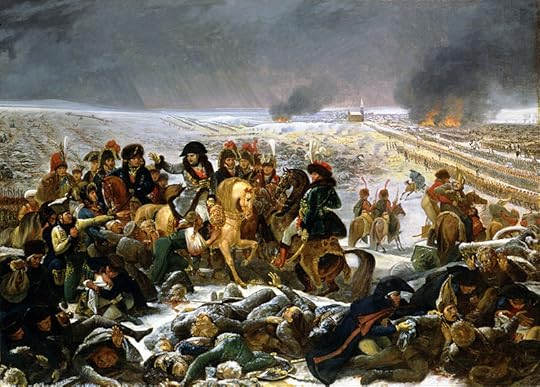
(This day being February 6th, and the next being February 7th, of course)
Napoleon had arrived in Warsaw in the days leading up to Christmas 1806. He soon discovered the joys of his Polish mistress, The Countess Maria Walewska, who reluctantly gave into her countryman’s demands to ease the Emperor’s solitude and loneliness, in hope of having their country’s sovereignty restored. She found in finally capitulating to do so, that she indeed would come to deeply ove the man beneath the famous bicorne hat. Unlike so many others, Marie Walewska stayed faithful to him until his death, and then to her own thereafter.
But this day’s story begins with the hunger and restlessness not of Napoleon, but of his Marshal Michel Ney. Ney was perhaps the most impetuous of the Napoleonic Marshals. While many were bivouacked around Warsaw for the Winter of 1806/1807 in assigned locations, Ney’s VI Corps soon had expended the lands assigned to them for the foraging of foods. So, against the Emperor’s explicit orders, Ney headed north in search of forage. Soon he found himself crossing the border into Eastern Prussia, a state Napoleon was still at war with along with their Russian allies. Near the town of Allenstein (today’s Olsztyn, Poland), Ney stumbled across a stealthy Winter attack force led by the Russian General Levin August von Bennigsen. Hey was tremendously outnumbered, but relayed the location and direction of the Russians to Napoleon, then still in Warsaw.
 Levin August Bennigsen
Napoleon decided to temptingly dangle a small force of troops on his left flank near the Polish town of Torun, then named Thorny the vacating Prussians. The Emperor intended to lure Bennigsen’s army toward Torun and then drive his own forces northward, encircling the Russians from behind. But his plan was spoiled when his orders were given by a freshly arrived junior officer to carry to the troops/ unfamiliar with the lay of the land, the messenger got lost, and quickly captured by Russian Cossacks. Bennigsen was made aware of the trap and retreated north toward East Prussia. Eventually after some skirmishing, on February 6, 1807, Napoleon’s forces engaged Bennigsen at the Prussian village of Ella. Over that afternoon/night and throughout the following day the French and Russians (with some Prussian help) fought through Winter snows bordering on blizzard conditions. The battle was too eventful to fully cover here, but the soldiers fought door-to-door in the village, hand-to-hand in its cemetery, and cannon shot for cannon shot across its frozen snowy plains, Napoleon was nearly captured but for the heroics of his Old Guard (the Grumblers, as they were called. One French unit sent to attack the Russian lines during the heaviest snows became disoriented in the whiteout and soon found themselves in no man’s land between the two sides of artillery and were obliterated. Then Marshal Murat, Napoleon’s brother-in-law led one of the greatest calvary charges in European history to save those who still miraculously survived. While the regiment of Polish lancers would not be formally comished until a few months later, Many, many Poles fought and died in this conflict.
 Attack of the cemetery, painted by Jean-Antoine-Siméon Fort
All in all, it was one of the bloodiest engagements of the Napoleonic Wars. After the second day, the Russians pulled their forces back even deeper into East Prussia, leavingg Napoleon to claim victory. But all knew in truth it was a draw. For the first time, Napoleon proved not to be invincible/ The Myth was, if not destroyed, heavily tarnished.
Napoleon would in the months following the Battle of Eylau defeat Tsar Alexander’s forces and declare Peace at Tilsit in June 1807. France and Russia became allies (for a bit), but when Napoleon took Moscow in 1812, Alexander recalled Eylau, and how the French “Monster” had been battled to a draw.
And back to Marshal Ney, who after the battle reviewed all the dead strew so far and wide, said famously,
In January 1807, the new Russian army commander, Levin August von Bennigsen, attempted to surprise the French left wing by shifting the bulk of his army north from Nowogród to East Prussia. Incorporating a Prussian corps on his right, he first bumped into elements of the VI Corps of Marshal Michel Ney, who had disobeyed his emperor’s orders and advanced far north of his assigned winter cantonments. Having cleared Ney’s troops out of the way, the Russians rolled down on the isolated French I Corps under Marshal Jean-Baptiste Bernadotte. Tough fighting at the Battle of Mohrungen allowed Bernadotte’s corps to escape serious damage and pull back to the southwest. With his customary inventiveness, Napoleon saw an opportunity to turn the situation to his own advantage. He instructed Bernadotte to withdraw before Bennigsen’s forces and ordered the balance of the Grande Armée to strike northward. That maneuver might envelop the Russian army’s left flank and cut off its retreat to the east. By a stroke of luck, a band of Cossacks captured a messenger carrying Napoleon’s plans to Bernadotte and quickly forwarded the information to General Pyotr Bagration. Bernadotte was left unaware, and a forewarned Bennigsen immediately ordered a retreat east to Jonkowo to avoid the trap.
As Bennigsen hurriedly assembled his army at Jonkowo, elements of Marshal Nicolas Soult‘s IV Corpsreached a position on his left rear on 3 February.[16] That day, General of Division Jean François Leval clashed with Lieutenant-General Nikolay Kamensky‘s 14th Division at Bergfried (Berkweda) on the Alle (Łyna) River, which flows roughly northward in the area. The French reported 306 casualties but claimed to have inflicted 1,100 on their adversaries.[17] After seizing Allenstein (Olsztyn), Soult moved north on the east bank of the Alle. Meanwhile, Napoleon threatened Bennigsen from the south with Marshal Pierre Augereau‘s VII Corps and Ney’s forces. Kamensky held the west bank with four Russian battalions and three Prussian artillery batteries.[16] After an initial attack on Bergfried had been driven back, the French captured the village and bridge. A Russian counterattack briefly recaptured the bridge. That night, the French remained in possession of the field, and Soult claimed that he had found 800 Russian dead there.[18] Marching at night, Bennigsen retreated directly north to Wolfsdorf (Wilczowo) on the 4th. The next day, he fell back to the northeast, reaching Burgerswalde on the road to Landsberg (Górowo Iławeckie).[19]
By early February, the Russian army was in full retreat and was relentlessly pursued by the French. After several aborted attempts to stand and fight, Bennigsen resolved to retreat to the town of Preussisch-Eylau and there make a stand. During the pursuit, perhaps influenced by the dreadful state of the Polish roads, the savage winter weather and the relative ease with which his forces had dealt with Prussia, Napoleon had allowed the Grande Armée to become more spread out than was his custom. In contrast, Bennigsen’s forces were already concentrated.
BattleFirst daySee also: Eylau order of battle
 Battle of Eylau in the early stages. French shown in red, Russians in green and Prussians in blue.
Marshal Soult‘s IV Corps and Marshal Murat‘s cavalry were the first French formations to reach the plateau before Eylau at about 14:00 on the 7th. The Russian rearguard under Bagration occupied positions on the plateau about a mile in front of Eylau. The French promptly assaulted the positions and were repulsed. Bagration’s orders were to offer stiff resistance to gain time for Bennigsen’s heavy artillery to pass through Eylau and to join the Russian army in its position beyond Eylau. During the afternoon, the French were reinforced by Marshal Augereau‘s corps and the Imperial Guard, giving him a force of about 45,000 soldiers in all. Under pressure of greatly superior forces, Bagration conducted an orderly retreat to join the main army. It was covered by another rearguard detachment in Eylau that was led by Barclay de Tolly.
The rearguard action continued when French forces advanced to assault Barclay’s forces in the town of Eylau. Historians differ on the reasons. Napoleon later claimed that was on his orders and that the advance had the dual aims of pinning the Russian force to prevent it from retreating yet again and of providing his soldiers with at least some shelter against the terrible cold. Other surviving evidence, however, strongly suggests that the advance was unplanned and occurred as the result of an undisciplined skirmish, which Marshals Soult and Murat should have acted to quell but failed to do so. Whether or not Napoleon and his generals had considered securing the town to provide the soldiers with shelter for the freezing night, the soldiers may have taken action on their own initiative to secure such a shelter. According to Captain Marbot, the Emperor had told Marshal Augereau that he disliked night fighting, that he wanted to wait until the morning so that he could count on Davout’s Corps to come up on the right wing and Ney’s on the left and that the high ground before Eylau was a good easily defensible position on which to wait for reinforcements.
Whatever the cause of the fight for the town, it rapidly escalated into a large and bitterly fought engagement, continuing well after night had fallen and resulting in about 4,000 casualties to each side, including Barclay, who was shot in the arm and forced to leave the battlefield. Among other officers, French Brig. Gen. Pierre-Charles Lochet was shot and killed. At 22:00 Bennigsen ordered the Russians to retreat a short distance, leaving the town to the French. He later claimed he abandoned the town to lure the French into attacking his center the next day. Despite their possession of the town, most of the French spent the night in the open, as did all of the Russians. Both sides did without food—the Russians because of their habitual disorganization, the French because of problems with the roads, the weather and the crush of troops hurrying towards the battle.
During the night, Bennigsen withdrew some of his troops from the front line to strengthen his reserve. That resulted in the shortening of his right wing.
Second day Battle of Eylau early on the second day. French shown in red, Russians in green, Prussians in blue.
Alternative detailed Maps

Situation early 8 February 1807

Situation about 1600, 8 February 1807
(by West Point Military Academy)
Bennigsen had 67,000 Russian troops and 400 guns already assembled, but the French had only 49,000 troops and 300 guns. The Russians could expect to be reinforced by Von L’Estocq‘s detachment of 9,000 Prussians, the French by Marshal Davout‘s depleted III Corps (proud victors of Auerstedt but now only 15,000 strong) and Marshal Ney‘s 14,000-strong VI Corps (for a total of 74,000 men), which was shadowing the Prussians. Bernadotte’s I Corps was too far distant to take part.
Dawn brought light but little warmth and no great improvement in visibility since the heavy snowstorms continued throughout the day. The opposing forces occupied two parallel ridges. The French were active early on probing the Russian position, particularly on the Russian right. Bennigsen, fearing that the French would discover that he had shortened his right, opened the battle by ordering his artillery to fire on the French. They replied and the ensuing artillery duel lasted for some time, with the French having the best of it because of their more dispersed locations.
The start of the artillery duel galvanised Napoleon. Until then, he had expected the Russians to continue their retreat, but he now knew that he had a fight on his hands. Messengers hurriedly were dispatched to Ney to order him to march on Eylau and to join the French left wing.
Meanwhile, the French had occupied in force some fulling mill buildings within musket range of the Russian right wing. Russian jagers ejected them. Both sides escalated the fight, with the Russians assaulting the French left on Windmill Knoll to the left of Eylau. Napoleon interpreted the Russian efforts on his left as a prelude to an attack on Eylau from that quarter. By then, Davout’s III Corps had begun to arrive on the Russian left.
To forestall the perceived Russian attack on Eylau and to pin the Russian army so that Davout’s flank attack would be more successful, Napoleon launched an attack against the Russian centre and left, with Augereau’s VII Corps on the left and Saint-Hilaire‘s Division of Soult’s IV Corps on the right.
 Portrait of Joachim Murat by Antoine-Jean Gros
Augereau was very ill and had to be helped onto his horse. Fate intervened to turn the attack into a disaster. As soon as the French marched off a blizzard descended, causing all direction to be lost. Augereau’s corps followed the slope of the land and veered off to the left, away from Saint-Hilaire. Augereau’s advance struck the Russian line at the junction of its right and centre, coming under the fire of the blinded French artillery and then point-blank fire of the massive 70-gun Russian centre battery. Meanwhile, Saint-Hilaire’s division, advancing alone in the proper direction, was unable to have much effect against the Russian left.
Augereau’s corps was thrown into great confusion with heavy losses,[20] gives Augereau’s official tally[who?] of 929 killed and 4,271 wounded. One regiment, the 14th Ligne, was unable to retreat and fought to the last man, refusing to surrender; its eagle was carried off by Captain Marbot. Its position would be marked by a square of corpses.[21] Bennigsen took full advantage by falling on Saint-Hilaire’s division with more cavalry and bringing up his reserve infantry to attack the devastated French centre. Augereau and 3,000 to.4,000 survivors fell back on Eylau, where they were attacked by about 5,000 Russian infantry. At one point, Napoleon himself, using the church tower as a command post, was nearly captured, but members of his personal staff held the Russians off for just long enough to allow some battalions of the Guard to come up. Counterattacked by the Guard’s bayonet charge and Bruyère’s cavalry in its rear, the attacking Russian column was nearly destroyed.[22] For four hours, the French centre was in great disorder, virtually defenceless and in imminent danger.[23]
With his centre almost broken, Napoleon resorted to ordering a massive charge by Murat’s 11,000-strong cavalry reserve. Aside from the Guard, that was the last major unbloodied body of troops remaining to the French.
 Cavalry charge painted by Jean-Antoine-Siméon Fort.Cavalry charge at Eylau
 Battle of Eylau after Davout’s attack late in the day. French shown in red, Russians in green and Prussians in blue.


January 22, 2024
A January Uprising 1863
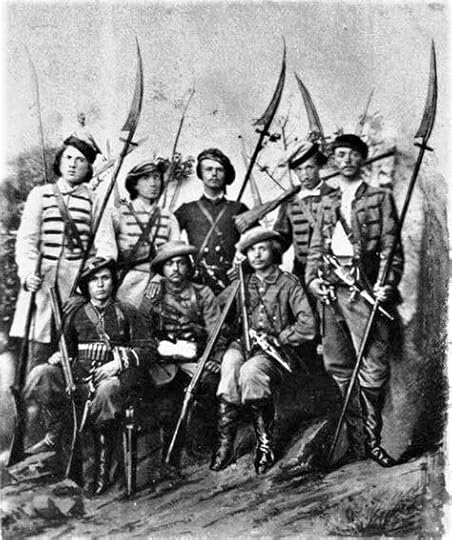
During the middle of the American Civil War, in January 1863, the people of the Russian Kingdom of Poland rose in arms against their overlords. Russia had less than a decade before lost Crimea in their war with the Ottoman/British/French Alliance. Tsar Alexander II told the Poles to “forget their dreams” of independence. Polish youths were cruelly conscripted into the Russian Army for 20 year terms of service. The guerrilla uprising that this precipitated was brutal and lasted well into 1864, when it was finally crushed by Russia. The January Uprising was the longest uprising against their oppressors by the Polish People.
Uprisings were not uncommon in Partitioned Poland. Over the 123 years the nation was wiped from the map of Europe, they occurred in each generation. In 1794, the year before the final partition of 1795, there was the Kosciusko Uprising against Russia. The Poles next rose to in 1807 support Napoleon when he entered Warsaw to battle both the Prussians and Russians, fighting by his side through to his final exile after the battle of Waterloo (even accompanying him in his first exile to Elba). After the Congress of Vienna created Congress Poland upon Napoleon’s defeat, the November Uprising of 1830 was the first to rear up against the Russian overlords! It was this rebellion that spawned a similar revolt by the students of Paris in 1832, which produced the barricades made famous in Victor Hugo’s novel Les Misérables.
Over that 123 years from 1795-1918, the Poles were denied their own language and culture by the Russians and Germans (although the third partitioning power, the Austrians, were more lenient). The Poles taught their language to their own children in the secrecy of their homes. Their revered traditions were outlawed by Russian decree and the German policy of Kulturkampf (Clash of Cultures). In another literary masterpiece, Tolstoy’s Anna Karenina, the Russian aristocracy discuss the troubles they encounter in “Russifying the Poles.”
Even after being restored by Woodrow Wilson’s 14 Points that ended World War One, Poland was near instantly at war again with the Russians in the 1919-20 Polish-Soviet War. In the Second World War, this century plus of uprisings would manifest itself as the strongest underground network of resistance in all of Europe, not only against the Nazi’s of Hitler, but also the Soviets of Stalin.
So, on this day, January 22 of 1863, as the Blue and the Gray battled each other half a world away, the Poles did what they had to in order to retain and defend their culture. THEY ROSE UP!
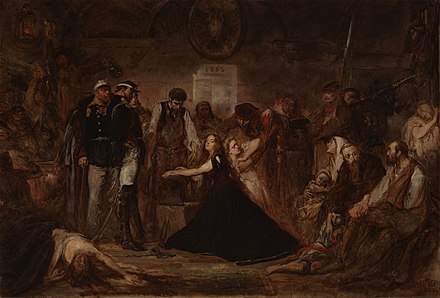 Muzeum Narodowe w Krakowie; http://www.zbiory.mnk.pl ;MNK XII-453;;fot. Pracownia Fotograficzna MNK
December 29, 2023
A Polish Christmas Eve In 1854
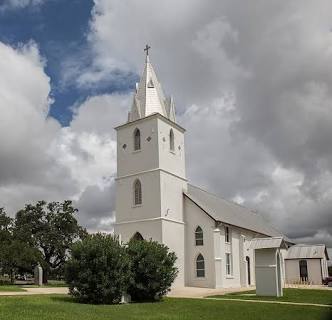
When I was a teenager, the rock band called The Doobie Brothers had a hit with the song China Grove. It was about “a sleepy little town down around San Antone,” and yes there is such a place. And not terribly far away from it is another town called Panna Maria, which just happens to be the first permanent Polish settlement in the United States. Panna Maria, which means “Our Lady Mary” in Polish, was established in December of 1854, after a community of Polish immigrants who had left Silesia arrived after what, by all accounts, was a harrowing two month voyage. Even after arriving at the Gulf Coast of Texas they had to walk to their final settlement location at the convergence of the San Antonio River and Cibolo Creek. Upon arriving at the site, they offered their first mass under the large oak tree there on Christmas Eve of 1854.
Imagine the courage that trip must have taken! They fled Silesia because of the Kulturkamph or Culture Wars where Prussia tried to eradicate the Polish language and culture (It wasn’t enough that in 1795 Prussia along with Russia and Austria had finally wiped the sovereign state of Poland from Europe’s Map by the Third Partition.) They arrived in Texas not only for the land they hoped to settle there, but for the freedom to worship their faith openly, and adhere to the elements of their Polish culture without interference.
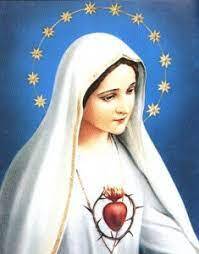
Of course, Poland had long ago in its history been consecrated to Mary, the mother of Our Lord Jesus. It was exactly this Reverence of the Blessed VIrgin that the Poles wished not to have taken away from them. And Panna Maria exists as a community today which still holds its Polish culture dearly close. I strongly recommend anyone in the area to visit it.
Texas was a wild place still in 1854, with Comanche raids occurring regularly until 1874 when the last of that tribe of Native Americans were eventually routed at Palo Duro Canyon and forced onto the Reservation at Fort Sill in what today is lower Oklahoma. There is even a clue in the name of the creek where Panna Maria is located, as Cibolo is the Comanche word for Buffalo, the animal so dear to the sustaining of their way of life.
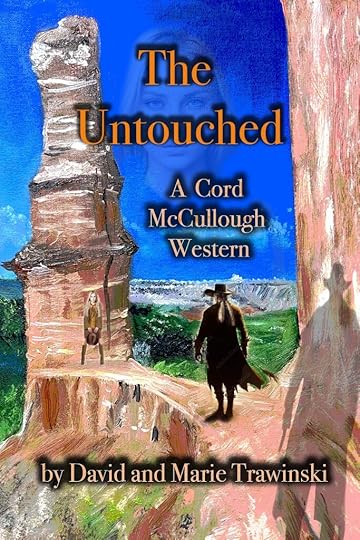
Look this Spring for the latest offering of Historical Fiction from David and Marie Trawinski in our title, “The Untouched.” It is the tale of a Polish young girl from Panna Maria taken by a Comanche half-blood during a stage coach hold-up. It will cover the period of 1874 when the “Red River Wars” climaxed between the Texas Rangers and US Cavalry against the proud Comanche band of Quahadis led by the warrior chief Quannah Parker, himself a half-blooded Comanche, the son of the captured white woman, Cynthia Ann Parker. Attached is a draft cover, hopefully to wet your appetite for this story of clashing cultures.
February 26, 2022
July 5, 2021
The Mysterious Death of General Władysław Sikorski – July 4th, 1943
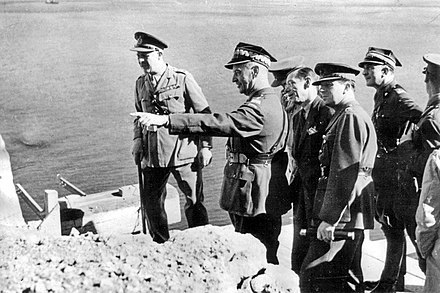
On the morning of July 5th, 1943, the world awoke to the news of the death of the Prime Minister and Commander-in-Chief of the Polish Government-in-Exile, General Władysław Sikorski. The General had been visiting the British military installation at the site of Gibraltar after returning from a tour of Polish forces in the Middle East. He is shown above pointing out features of the The Rock’s fortifications in this photo taken during the day he died.
At 11:07 PM that night, his transport plane lifted off from the sea-level military airport at the foot of The Rock. The plane flew for a mere 16 seconds before crashing into the Mediterranean Sea. Of the eleven souls aboard the aircraft, the sole survivor was the relatively new pilot, a Czech national named Eduard Prchal. General Sikorski, his daughter and personal aide Zofia Lewandowska, and 8 other members of his entourage perished. His poor daughter Zofia’s body was never recovered.
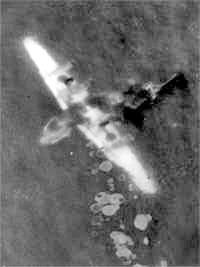 Silorski’s Liberator crashed in the Mediterranean Sea
A hastily convened British Accident Review board two days later found the cause of the crash to be due to jammed actuator controls, meaning the pilot had no control over the aircraft. They then ruled out sabotage, even thought stated they had no idea how the control surfaces became jammed.
To further complicate the situation, there were two very controversial persons on The Rock the day that Sikorski visited and later died. The first was the Soviet Ambassador to the United Kingdom, Ivan Maisky, with whom Sikorski had signed the treaty two years earlier to resume relations between the two countries.
The second mysterious figure was none other than “Kim” Philby, the embedded Soviet spy within the British Secret Service. Prior to going to Gibraltar, Philby had taught courses on sabotage to the British Special Operations Executive. Many wondered if he played a role in the General’s death on behalf of Stalin.It had already been determined that the General’s transport plane had been left unguarded at the airfield.
At the time of his death, Sikorski was locked in a bitter dispute with Stalin over the newly discovered mass graves at the Katyń woods near Smolensk. Sikorski had asked Stalin for nearly two years as to the fate of the missing 22,000 Polish Officers taken by the Soviets during the 1939 invasion. None had been heard from by way of letters to family since June 1940. When the Germans uncovered the mass graves in the Spring of 1941, Stalin merely claimed the Nazis had executed the officers. Sikorski refused to accept this, and when under Sikorski’s direction Poland’s exiled government agreed to participate in the Red Cross investigation offered by the Germans, Stalin and the Soviets cut all ties with the Polish Government in London. That occurred only weeks before General Sikorski’s tragic death.
I would go so far as to say that General Władysław Sikorski was the Polish Government-in-Exile, for after his death it fell into disarray and was no longer an effective organization. As a result, Poland was allowed to fall into the sinister grip of Stalin and the Soviet Union in the post war years. One has to wonder if this would have occurred had General Sikorski survived.
Many have wondered if Sikorski’s fate was sealed by Stalin. Some even go so far as to say the British were complicit, as Sikorski was seen as mucking up the works in regard to the Soviet Allies. One thing is for sure, there are very few who believe that this crash was a simple accident.
 If you enjoyed this post, you might enjoy my two-volume Historical Novel “The Twins of Narvik”
Visit davidtrawinski.com for more on these and other novels based on Poish History.
May 27, 2021
Memories of Polish WWII Veterans
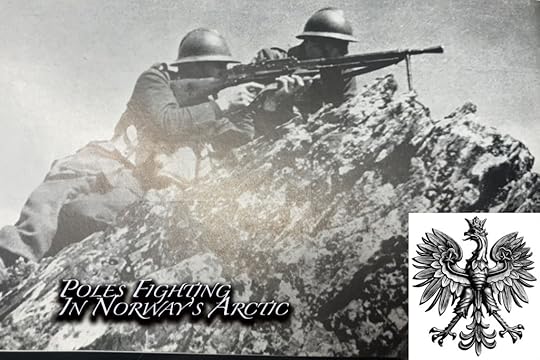
As Memorial Day approaches here in the United States, we come to the anniversary of the invasion by the Allies of the first town to be taken back from the Nazi aggressors. On the overnight of May 27/28, 1940 combined Norwegian, French and Polish Troops took back the port town of Narvik from the Germans in Norway’s Arctic Circle. Shown above, the Poles fought rock-to-rock along with their counterparts while nine British Warships attacked the enemy’s positions from the fjords.
The Germans were not only driven out of Narvik, but chased the length of a fjord and up across a mountainside by the three Polish battalions, while a fourth advanced along the rocky mountainous shoreline of a second fjord (shown in the graphic below). Over the next several days, along with the French and Norwegian troops, the Polish battalions drove the Germans back up against the Swedish border at Bjornfjell. For the sake of clarity, I am only showing the Polish and German positions, not in any way to diminish the bravery of the French and Norwegian ground troops, or for that matter, the British seamen.
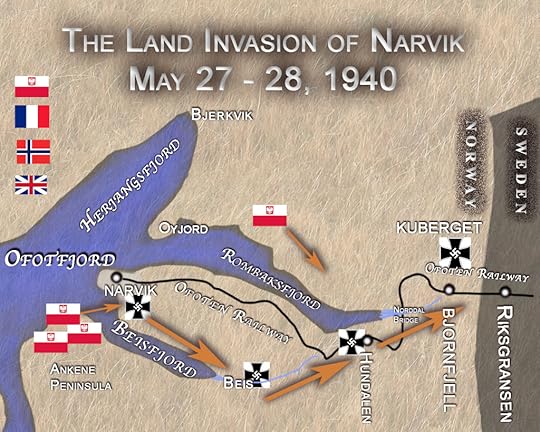
It was at this point, on the verge of driving the Nazis out of Arctic Norway altogether, that Winston Churchill ordered an evacuation of all Allied troops from Norway because of the impending Fall of France. Thus, these hard won gains were given back uncontested to the Germans as the British convoys took the troops back to the relative safety of its Home Island in early June. Except for the Polish troops who were returned to their station in France just in time to engage the advancing German Panzers in the Brittany region just before the Poles were eventually withdrawn to Britain also. The very next day, General Sikorski committed to the iconic British Prime Minister that all Polish soldiers, seamen and airmen would fight alongside the British until the Nazis were defeated. Even though Sikorski didn’t live to see it, his pledge was fulfilled by the courage and skill of the Polish fighting men and women.
These men and woman, whose families and friends had been either annihilated or subjugated to terror under Nazi rule of their occupied homeland. were all too eager to take out their rage in battle against the Nazi scourge, no matter where it was necessary to travel to do so. And if nothing else, the Battles of Narvik proved the Nazi invincibility was a myth. It was a precursor to other Polish successes, including the Polish airmen in the Battle of Britain and General Anders II Corps capturing Monte Cassino.
If you enjoyed reading this blog, you might enjoy my latest historical fiction work. entitled “The Twins of Narvik”, it comes in twin volumes following three Polish, Norwegian and Scottish families as they become entangled in the Battles of WWI and WWII. More information is available at davidtrawinski.com
May 3, 2021
Happy “Majówka”
I remember being a young boy as my brothers and sisters and I progressed our way through St. Stanislaus Elementary School in East Baltimore. One of our favorite times of the year was “Majówka” (“My-oof-ka” for those of you unfamiliar). It is the May celebration, and as Poland has always been a country dedicated to Mary, the Holy Mother, it is a time of reflection, appreciation and celebration. In 1791, during the Partitions of Poland, the country adopted the first constitution in Europe (and only the second in the world after the US) on the Third of May. So Majówka has become the three day festivities leading up to this national day. Our school would sponsor trips to the local amusement park to celebrate Majówka, so you can only imagine how popular that was!
As I was researching my latest novel, “The Twins of Narvik”, I came across perhaps the longest Majówka trip in Polish History: The travels of the Independent Polish Podahle Rifle Brigade during World War II.
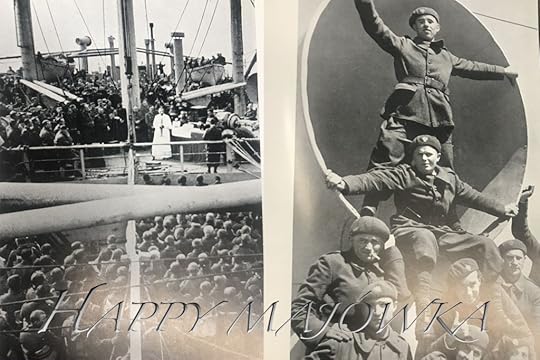
The Polish Army reformed in France in late 1939/early 1940 under General Wladyslaw Sikorski’s leadership as Prime Minister and Commander-in-Chief of the Polish Government-in-Exile. In the overnight hours of April 23/24, they set sail on three French converted luxury liners to head for war. After stopping in Scotland for a change of military escort, they proceeded on to Norway’s Arctic Circle where the Polish Army would play a critical role in recapturing the port of Narvik.
They were still at sea on the 3rd of May, and the Poles aboard all three ships celebrated Majówka with a Mass (left) followed by general festivities (right). Accordionists played national tunes, followed by singing and dancing, emotionally culminating in Dąbrowski’s Mazurka, the Polish National Anthem. Can you image the bolts of inspiration that ran through each man as he sang the lines,
“Poland has not yet perished,
So long as we still live,
What the foreign force has taken from us,
We shall with saber retrieve.”
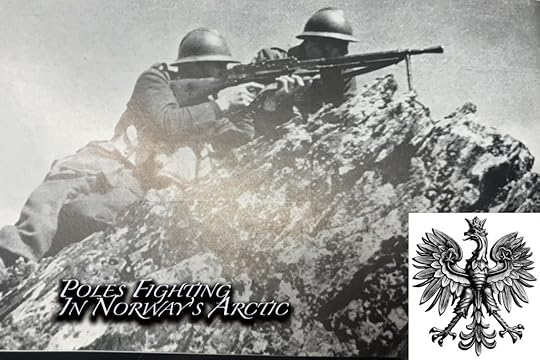
Imagine singing those lines as your home country lay destitute under the controls once again of the dictators of Germany and Russia. So many men had already lost family and friends, and could not wait to take the fight to the Nazis in the volcanically looming mountains over the icy fjords of Norway alongside the Norwegians, British and French. They literally fought from hill to hill, from rock to rock, and the Allies did indeed drive the Nazis out of Narvik. They were on the verge of driving them out of Northern Norway altogether when Churchill ordered an evacuation of all troops because of the Fall of France, and the need for all fighting forces to return to defend against Nazi aggression at home.
The Poles returned to France in time to engage the Wehrmacht’s Panzers there, before being ordered on to the Highlands of Scotland on the 18th of June. At the same time, General Sikorski and the Government-in-Exile relocated to London. The very next day, General Sikorski pledged to Winston Churchill that all Polish troops, be they soldiers, airmen or seamen would fight alongside Britain until Germany was defeated. And even though Sikorski did not live to see it, his pledge was faithfully fulfilled on land, air and at sea.
By the way, these images (sans my overlays) came from a great book my research assistant and lovely wife, Marie, found for me during the “Twins” writing. Entitled “Polish Troops in Norway,” it was published by the Polish Government-in-Exile in July 1943, the month of General Sikorski’s tragic death in the plane crash at Gibraltar. The images in the book were all taken by the Polish troops themselves, and is an amazing photo-documentation of their exploits and sacrifices.
If you enjoy this history, I have captured as much as I could in the plot lines and narrative of the brand new two-book historical fiction “duology” entitled “The Twins of Narvik”. Part I is available now, Part II comes in early July. More details can be found at my website, davidtrawinski.com.
December 31, 2020
Goodbye to December’s Dark Days…
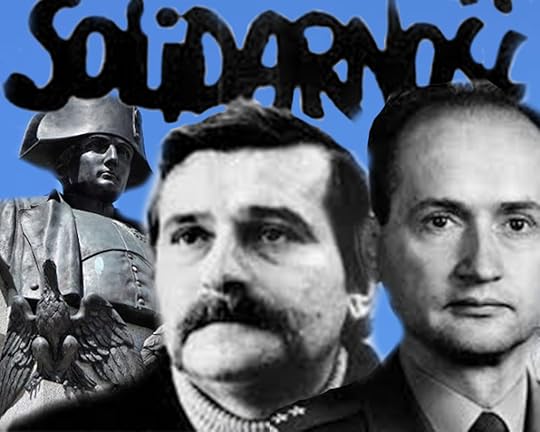
So, perhaps you thought this was a goodbye to 2020 blog? Not quite. But I am very happy to put it behind us. It has been a savage year.
As it turns out, December has been a rather savage month in the history of Poland, so I thought on this last day of 2020, I would attempt to make a connection through three of Poland’s most eventful December days:
December 19, 1806 – Napoleon enters Warsaw. December 14, 1970 – Polish Communist Forces Fire on Striking Polish Workers in the Baltic PortsDecember 13, 1980 – Wojiec Jaruzelski declares Marshall Law in Poland
OK, let’s start with the one that seems out of place – Napoleon entering Warsaw. After the Partitions wiped Poland off the map of Europe (but not from the hearts of Poles) in 1795, Napoleon was welcomed as a liberator. Napoleon stayed in Warsaw as he prepared for the Battle of Eylau (February 1807) and the Battle of Friedland June (1807). Eylau was a militarily inconclusive battle, but The Battle of Friedland represented a major victory of the French over the Russians under Emperor Alexander I. At the negotiated peace of Tilsit (on an opulent raft in the Nieman River), Napoleon agreed to the Vistula River as being the logical border between the French Empire and Russia. In doing so, Bonaparte created the Duchy of Warsaw. While not a sovereign state of its own (it was under the Duke of Saxony as a French satellite holding), it created in the Poles a hope that Napoleon would ultimately reconstitute Poland to its historical status as a sovereign country once more. Even to the point of pressuring one of its own nobles to offer his wife (Marie Walewska) to the Emperor. The Countess became Bonaparte’s mistress and bore him a child out of wedlock. All as a service to her country.
Of course, Napoleon never did make Poland an independent entity once again. Instead, he plucked at the heartstrings of pride of Poland’s pride like a puppeteer manages the strings of a marionette. Except, Bonaparte used the fierce loyalty of his Polish troops and Lancers to a few years later invade Russia and begin his eventual downfall. Many Polish families were destroyed as their Father’s and Son’s lives were squandered not only in Russia, but also in Germany, Spain, Belgium and even Haiti, fighting and dying not for France, but directly for Napoleon.
By 1970, Poland had once again been freed from the grips of the Germans only to have Stalin once again seize its lands as a puppet state to Russia. By this time, the Polish people had learned that real freedom was not to come from emperors or other dictators outside of its borders, but from the bravery still residing in the hearts of its own citizens, where it still burned brightly.
After the Polish Communist Party raised prices dramatically on necessities, on December 14th, 1970 the shipyard workers in the coastal cities of Gdansk, Gdynia, Szczecin and Elbląg went on strike. On December 17, after First Secretary Władysław Gomułka had made the authorizing decision to do so, Polish troops and tanks fired upon workers reporting to work in these cities. The death toll was reported as 42 people with thousands wounded and maimed, although many have thought these numbers to be drastically under-reported by the communists. A young electrician named Lech Wałęsa was a member of the three member worker’s strike representation that settled the strike. While the Polish Communists did set prices back to pre-strike levels (for a period of time), the larger success was that the Russian Overlords forced out Gomułka and replaced him with Edward Gierek.
A decade later, Gierek settled the now famous August 1980 Gdansk Shipyard strike, again with Lech Wałęsa leading the negotiations that would establish the Solidarity Independent Workers Union, and which would eventually lead to the fall of Communism in the entire Eastern Bloc. But it was not until December of 1980 when the new Communist leader (Yes, Giereck was sacked after settling this strike, just as Gomułka had been a decade earlier) Wojciech Jaruzelski declared Marshal Law on the 13th. Of course, the nation would ultimately persevere, and Solidarity led the way to renewing Polish Independence.
THE MORALE of this diatribe: Seek not from the sword of foreign despots what your heart seeks, but find it only in the collective depths of those hearts that beat alongside your own!
November 11, 2020
The Amazing Connections Between Poland and America’s Veterans
[image error]Intersections of American and Polish Veterans
Today, I wanted to do something that honored both our American Veterans who have sacrificed large parts of their lives, and in far too many cases their lives entirely, and the re-constitution of Poland on this day in 1918. So here goes:
To all of our American Veterans, we honor you on this day, which marked the end to the fighting of the Great War (WWI) in 1918, on the 11th hour, of the 11th day of the 11th month. However, thanks to the efforts of the American President Woodrow Wilson’s (far right image of the montage above) famous 14 Points ending the war, the country of Poland, so criminally partitioned and removed from the map of Europe in 1795, was restored as a sovereign nation (Point 13) after 123 years. President Wilson, who while to the best of my knowledge was not a veteran himself, his actions led to a most interesting interaction with American WW1 Veterans and pilots Captain Merian C. Cooper and Col. Cedric E. Fauntleroy (Shown together in front of the biplane in montage’s center).
Just after WWI, Poland found itself in a state of war with Bolshevik Russia, which in 1922 would officially become the Soviet Union. Cooper and Fauntleroy volunteered to staff and lead a squadron of some dozen or so American airmen to fly for Poland against the Bolsheviks. They faced not one but two Russian armies, including one led by a young Josef Stalin himself.
Cooper had developed a deep love for Poland, not only for what he had seen in the Poles defense of Lvov while on a food relief mission in 1919, but also because his great, great grandfather had ridden with Casmir Pulaski (second from left in montage) at the charge of Savannah in 1779. In fact, John Cooper was reported to have been among those who removed Pulaski’s British grapeshot riddled body from the field of battle. Earlier in the war, at the Battle of Brandywine, Pulaski was credited with saving the life of none other than George Washington. Unlike Pulaski, Kosciuszko survived the American Revolution, after which he returned to Poland to lead the ill-fated Kosciuiszko uprising of 1794.
Together, the American Veterans Capt. Cooper and Col. Fauntleroy started what became known as the Kosciuszko Squadron, named after Tadeusz Kosciuszko (far left image). Kosciuszko was a military engineer who fought for the American Revolutionary cause, and his defenses were recognized for having turned the tide in favor of the rebellious colonists at the Battle of Saratoga. Kosciuszko also fashioned the defenses at West Point, those which Benedict Arnold stole and sold to the British enemy.
Thanks to the valiant efforts of the Kosciuszko Squadron flyers, the Poles had an excellent understanding of the location of Bolshevik forces in the field. Marshall Pilsudski, the head of state of Poland, used the information, among other reports to identify a large gap in the Russian forces through which he advanced all remaining Polish troops defending Warsaw. In what became known as the Miracle at the Vistula, the Poles encircled the advancing Bolshevik troops, and not only secured their own country’s immediate future, but also protected all of Western Europe from Lenin’s strategy of advancing the spread of Communism militarily.
The entire Kosciuszko squadron was awarded Poland’s highest military honor, The Virtuti Military. This was the same distinction first awarded to Kosciuszko himself by Poland’s last king, Stanislaus Poniatowski. Sadly, two of the American fliers lost their lives and others, including Cooper, were shot down. But after surviving and escaping from POW camps behind the Russian lines, Cooper returned to America. He moved to Hollywood and became the creator and producer of a little film featuring his beloved biplanes in 1933 called King Kong.
God Bless our veterans.
God Bless Poland.
God Bless the United States.
[image error]
September 28, 2020
The Message of Monuments
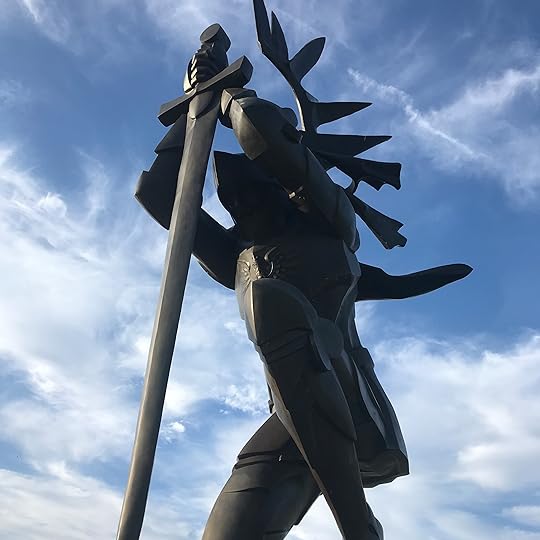
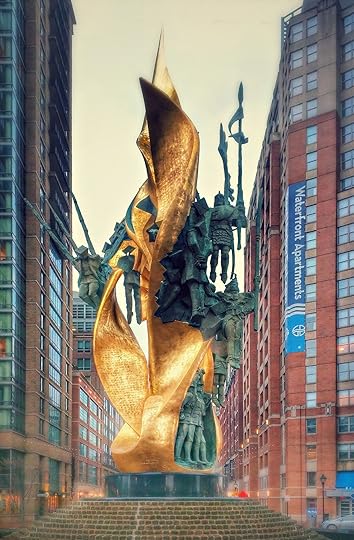
About a year ago I had a booth at the Polish American Festival at The National Shrine of Our Lady of Czestochowa in Doylestown PA. I was selling my Polish themed historical fiction novels. Quite incidentally, I listened to James Michener’s “Poland” on the drive up, only to find out upon arriving that Doylestown is Michener’s hometown. I really don’t believe in coincidences, so I took it as a sign of providence that I was meant to be at that show.
While I manned our booth, my lovely wife Marie slipped into the adjacent church memorial gardens and took the photo above. The image is of a massive sculpture of a Polish Winged Hussar, kneeling in a reflective pose above row after row of memorial markers. I was so impressed with it, I used it on the back cover of my latest release, “The Life of Marek Zaczek Vol. 1” (with the permission of the shrine). It synced up well with the story of a young boy born in 1772 who was raised on stories of Poland’s past might as manifested in the elite winged knights.
What I did not know about the statue is that it is the work of the same sculptor, Andrzej Pitynski, who had created the massive Katyn National Memorial in my hometown of Baltimore, Maryland. My readers might remember this latter sculpture is featured on the cover (again with the Katyn Memorial Foundation’s concurrence) of my novel “Chasing the Winter’s Wind.” In fact, the sculpture plays a critical role in the storyline of the novel.
Both works are visually dramatic, dominate their surroundings and tell the story of Polish heritage in an unforgettable way in a static medium which seems to burst forth with life..
This incredible sculptor, Andrzej Pitynski, was born in Poland two years after the end of World War II, and he was raised in that country under the oppressive yoke of Communism . His works also include, among others, Polish themed monuments in Jersey City, NJ, Boston, MA, as well in Poland itself. He died this month (September 2020), and I just wanted to take. a few minutes to acclaim his artistic genius and his love of the history and heritage of his homeland.
During World War II, both the Nazis and the Communists attempted to break the spirit of Poland by defacing and removing the monuments in her parks and upon her boulevards. Statues of Chopin and Copernicus was removed, but thankfully were recovered and reinstalled after the war in Warsaw.
May the works of this master’s mind and hands stand forever to remind us all of the true oppression of Nazi Germany and the Communist Soviet Union, and more importantly of the Polish people’s ability to sustain their culture and heritage throughout this terrible period.