David Lebovitz's Blog
April 15, 2026
Spring 2026 Book Tour news!

May 5th marks the release of The Great Book of Chocolate which is now available for pre-order from your local independent book seller as well as Bookshop, Amazon, and Barnes & Noble online. And I’m going on book tour! Due to global events, travel has become more challenging, especially internationally.
If you can’t make it to an event, and I’m not coming to where you live, and you’d like a personalized, signed copy of a book, you can order one from Kitchen Arts & Letters (before May 2nd), Omnivore Books (before May 11th) or Now Serving LA (before May 14th), and they will send you a copy. Should you have questions, please contact the shops.Note that a number of events are ticketed, which helps support the bookstores and at places where books can be pre-purchased, that ensures that books will be available to you. If you do have questions about events, please contact the venue directly as they are best equipped to answer your questions. Hope you can make it!
May 4: Chat and booksigning at Rizzoli Bookstore, New York City – tickets here
May 5: Booksigning at Williams-Sonoma, Columbus Circle, New York City – tickets here
May 7: Booksigning at Williams-Sonoma, Short Hills, New Jersey – tickets here
May 9: Markethall Foods, Oakland, CA – more info TBA
May 11: Omnivore Books, in conversation with Kate Leahy, San Francisco, CA – more info here.
May 12: Dandelion Chocolate, San Francisco, CA – tickets here
May 14: Now Serving LA, Los Angeles, CA, in conversation with Clémence de Lutz of Petitgrain boulangerie – tickets here
May 16: Friends & Family Bakery, with Roxana Jullapat, Los Angeles, CA – tickets here. (Note that books should be prepurchased from their website prior to event, and pastry boxes inspired by The Great Book of Chocolate and Ready for Dessert will also be available for pre-purchase. Check their event page to verify and confirm details!)
May 30: Booksigning at La Trésorerie Rive Gauche (48, rue de Grenelle, 7th, Paris), 3pm to 4:30pm. Copies of The Great Book of Chocolate and My Paris Kitchen will be available for sale and signing.

You can purchase or order the book at your local bookstore or online retailer from one of these links:
Amazon | Bookshop.org | Now Serving | Barnes & Noble | Omnivore | Book Larder | Kitchen Arts & Letters | Bold Fork | Books are Magic | Amazon France | Powell’s | RJ Julia | Strand | Smith & Son Paris | Amazon UK | Politics and Prose | Vivienne Culinary Books | Book Passage | Elliot Bay | Village Books | East End Books | Indigo Canada
Events will be published and updated here as they are announced. Please note that events on this page are subject to change and revision. It’s suggested that you contact the venue before an event to confirm the time and date, as well as if a ticket or purchase is required, if you can bring books purchased elsewhere to be signed, or if you have any other questions or need additional information.


March 11, 2026
Seville Orange Marmalade
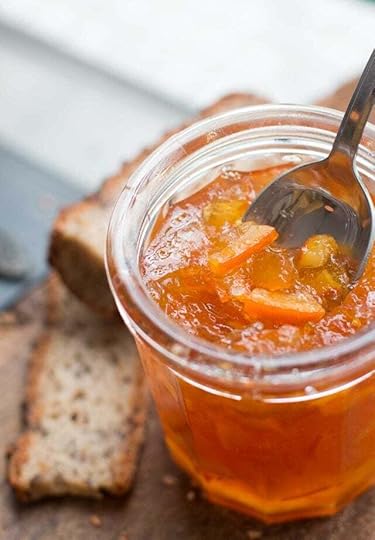
This time of year brings Seville oranges to the markets in Paris. For the past few years, I kept wondering why they were so hard to find since it’s perhaps my favorite of all jams and jellies to make, and eat. But lately, they’ve been everywhere. And I found myself busy making a lot of marmalade, which was easier since I came up with a brand-new, revolutionary technique which I couldn’t wait to share.
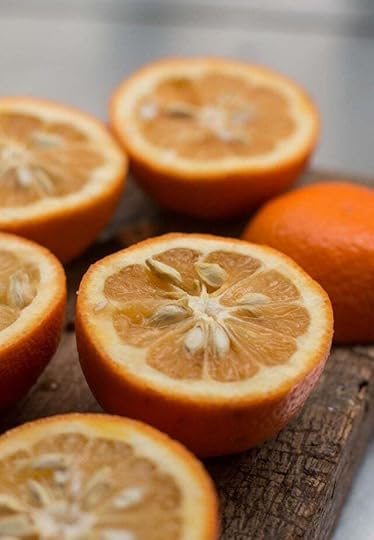
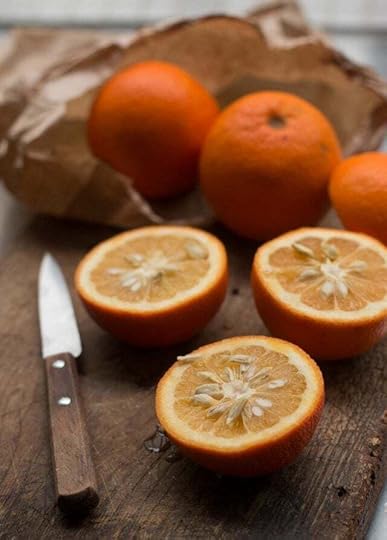
Since Seville oranges are rife with seeds, which makes slicing them difficult since you have to keep moving the seeds around with your slippery fingers, while trying to cut the oranges, then finding more, and fishing around deeper inside to extract more, plucking them out, etc… Each Seville orange has perhaps twenty to thirty inside.
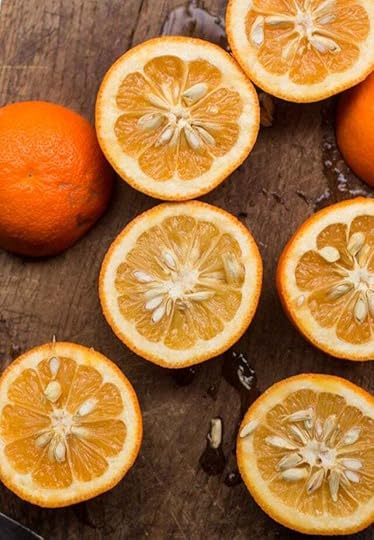
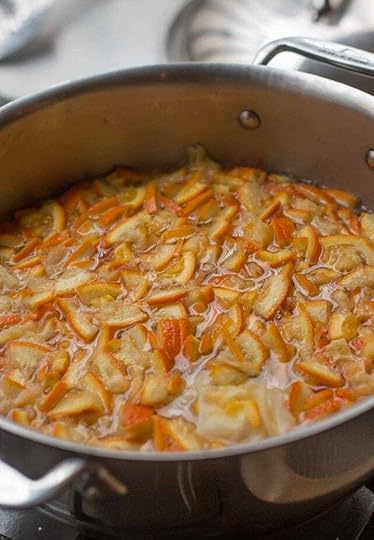
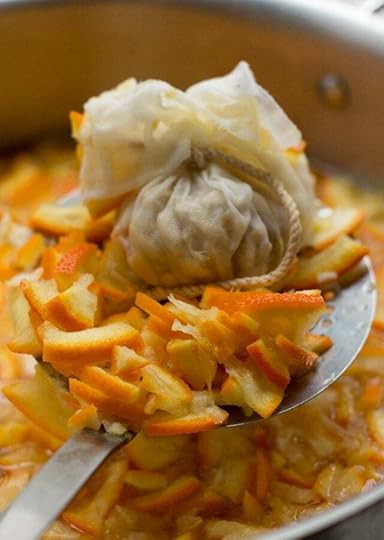
So I thought, what if I was to squeeze the juice and seeds out first, strain them, then pour the juice back in? The seeds are precious commodities in jam-making, and get saved and used since they’re so high in pectin.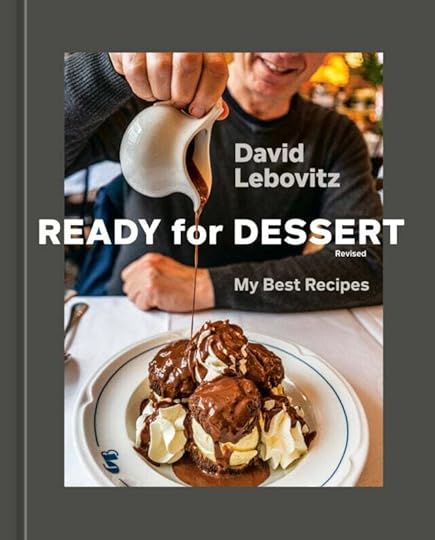
They’re wrapped in a sack and cooked with the marmalade giving the marmalade gets a suave, jellied texture. And this simple method, featured in my book Ready for Dessert, makes the whole process much easier.
You might be interested to know that Seville Orange Marmalade was created because of an error. Apparently, an Englishwoman in 1700, the wife of a grocer, was stuck with some sour oranges that were bought cheaply from a boat that was carrying them from Seville.
Since there was a storm, they wanted to get rid of their stock or oranges quickly, so the grocer bought them. But they were inedibly sour so his wife decided to try making jam from them, and viola!…Seville Orange Marmalade was invented.
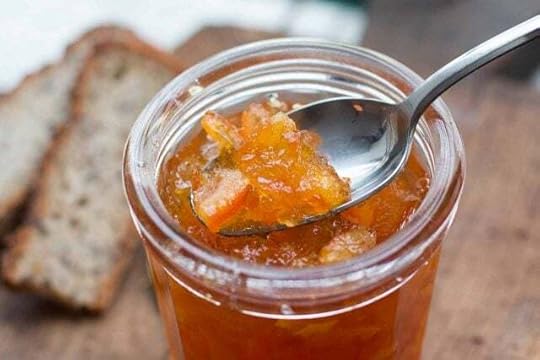
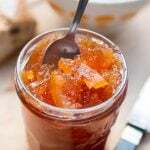 PrintSeville Orange MarmaladeAdapted from Ready for Dessert (Ten Speed) In my book, I advise letting the cooked oranges and the seeds rest overnight. That's an optional step. If you want to go ahead and finish the marmalade the same day you start it, you can.Course BreakfastKeyword confiture, jam, marmalade, orangeIngredients6 Seville oranges (see Note)1 navel orange10 cups (2.5L) waterpinch of salt8 cups (1.6 kg) sugar1 tablespoon Scotch (optional)InstructionsWash oranges and wipe them dry. Cut each Seville orange in half, crosswise around the equator. Set a non-reactive mesh strainer over a bowl and squeeze the orange halves to remove the seeds, assisting with your fingers to remove any stubborn ones tucked deep within.Tie the seeds up in cheesecloth or muslin very securely.Cut each rind into 3 pieces and use a sharp chef’s knife to cut the rinds into slices or cubes as thin as possible. Each piece shouldn’t be too large (no more than a centimeter, or 1/3-inch in length.) Cut the navel orange into similar-sized pieces.In a large (10-12 quart/liter) stockpot, add the orange slices, seed pouch, water, and salt, as well as the juice from the Seville oranges from step #1. Bring to a boil, then reduce to a simmer, and cook until the peels are translucent, about 20 to 30 minutes. (At this point, sometimes I’ll remove it from the heat after cooking them and let the mixture stand overnight, to help the seeds release any additional pectin. But it's not imperative.)Stir the sugar into the mixture and bring the mixture to a full boil again, then reduce heat to a gentle boil. Stir occasionally while cooking to make sure it does not burn on the bottom. Midway during cooking, remove the seed pouch and discard.Continue cooking until it has reached the jelling point, about 218ºF degrees (103ºC), if using a candy thermometer. I cook this slightly less than other jams and marmalades because the high amount of pectin helps the marmalade set up more stiffly. To test the marmalade, turn off the heat and put a small amount on a plate that has been chilled in the freezer and briefly return it to the freezer. Check it in a few minutes; it should be slightly jelled and will wrinkle just a bit when you slide your finger through it. If not, continue to cook until it is.Remove from heat, then stir in the Scotch (if using), and ladle the mixture into clean jars. Sometimes I bury a piece of vanilla bean in each jar. (Which is a great way to recycle previously-used or dried-out vanilla beans.)NotesI don’t process my jams, since I store them in the refrigerator. But if you wish to preserve them by canning, you can read more about the process here.Note: Sour or Seville oranges are called in French oranges amères and are available mid-winter in many other countries around the world as well.
January 9, 2026
Orange-Glazed Polenta Cake
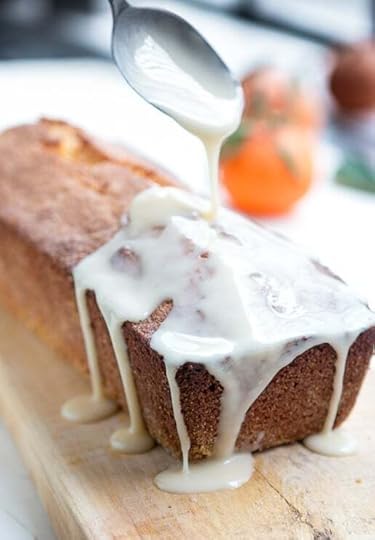
Apparently I’m not the only one who loves polenta cake. The Italians like it so much that it’s called Amor Polenta. Which means “Polenta Love.”
Well, at least that’s what I thought it meant, because amour in French means “love.” And I assumed that it was the same in Italian. (Another reason for finally getting on that life-long ambition to live in Italy and learn Italian.) But for now, checking in an Italian dictionary, I found out that “amor” means “sake.” (As in, for the purpose of.) So I’m not sure how it got its name, but this cake makes a pretty good argument for the sake of whisking polenta into a cake.
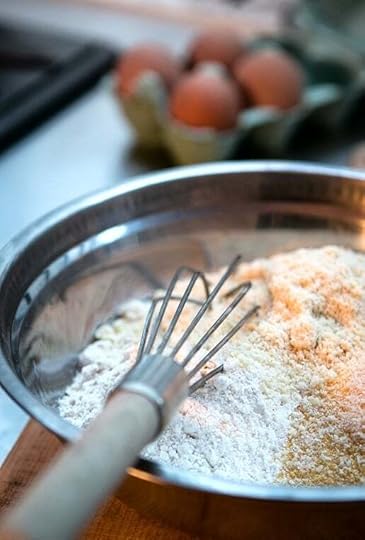
I’m one of those people who is completely crazy for anything with cornmeal, from corn bread to even a kind of kooky polenta ice cream that I’m sure no one else has ever made, because I used a completely obscure polenta that very, very few people can get their hands on. But I felt compelled to make it, for the sake of using up a little bag of that polenta that I had.
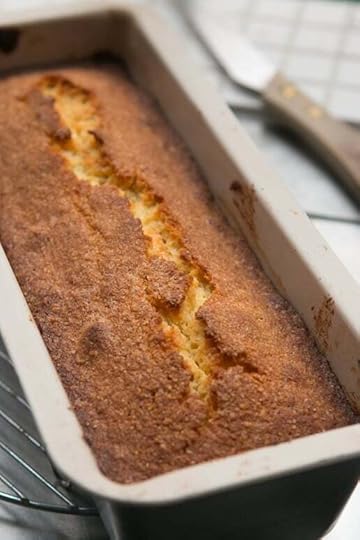
Fortunately, polenta is available just about anywhere. I like to buy stone-ground polenta, which has a crunchier flavor. But you could use instant polenta for this cake, normally something I avoid. But I found myself with a bag of it and was looking for ways to use it up. And here’s where the rest of it landed.
Like many Italian cakes, which are unlike American cakes, this is not a buttery bomb of richness. True, there is butter and a few eggs in there. But the great flavor comes from ground almonds, which tend to make the cake much moister the following day as the nut oils soak the crumb, which is one of those baking terms (unlike amor) that pretty much seems to be what it is talking about. The polenta adds a bit of a savory quality to desserts, which draws me to use it a lot when baking.
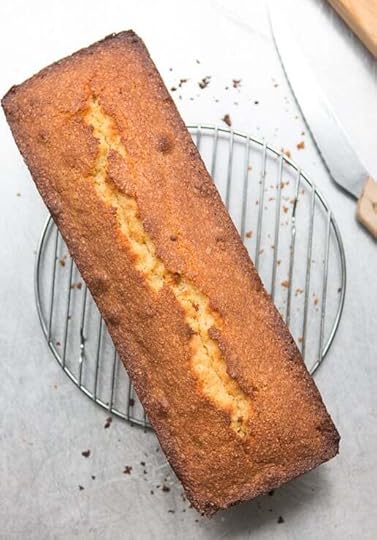
This cake is a great snacking cake and I tend to walk around my apartment several times during the day, somehow landing frequently near the cake, where a serrated knife just happens to be stationed alongside. Ready and waiting to lop a slice off.
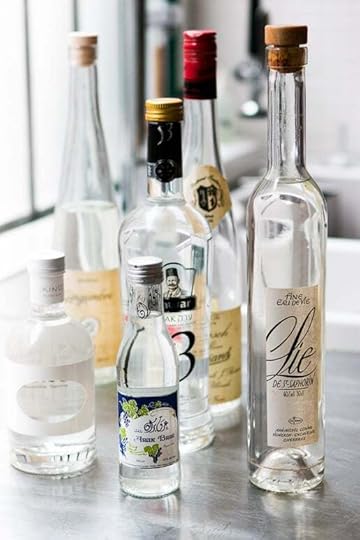
In addition to a collection of polentas, I found myself with a collection of eaux-de-vie on hand. Some were gifts, others were picked up on my travels. A few are anise-based, which pair nicely with polenta, and chocolate. I have a ginger one that is great when summer fruits are in season, like peaches, nectarines, and apricots. And the long bottle in the front right, the eau-de-vie of lees that I got in Switzerland, after I found out how good raisins in lie (eau-de-vie made from leftover grape yeast, and other stuff that falls to the bottom of wine vats post fermentation) was, after gorging on cauldrons of fondue.
As astute readers can see from the fill line of the bottle, that project never came to fruition. (I’m too busy trying organize my polentas and eaux-de-vie. And plotting a way to live in both Italy, and France.) But I did add a few shots of orange liqueur (not shown), which gave it a little boost of flavor. Not enough to be perceptible. But like that bag of instant polenta I’ve had for a few months, I was always conscious that it was there. You can use any kind of liqueur that you want – maraschino, limoncello, absinthe, kirsch, or even anise liqueur.
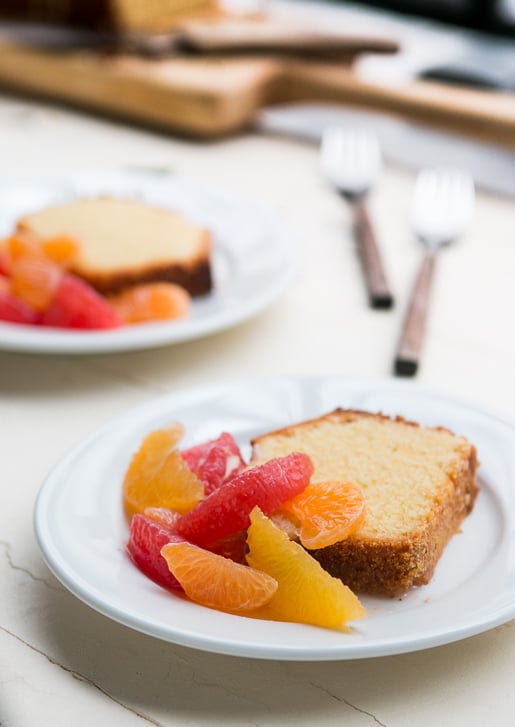
As much as I like this as a snacking cake, it can be dressed up with a fruit compote. I sectioned some tangerines, navel oranges, and pink grapefruits, drizzled a little honey over them, and served them alongside the cake. I had planned to spoon some warm sabayon over the cake and fruit, but decided that I had too many other things to do. Namely, get cracking on using some of those bottles of liqueur that I’ve been hoarding.
 PrintOrange-Glazed Polenta CakeFor this cake, using fine-ground polenta or instant polenta will result in the smoothest texture, although whatever is available will work. I’ve made it with coarse polenta too, and enjoy the crunch. Almond flour is available at specialty stores, Trader Joe’s, and online. If you can’t find it, grind 7 1/2 ounces (215 grams) sliced blanched almonds in a food processor with the flour until the almonds are pulverized.
Although cakes like this don’t always need adornment, I did glaze it with a dribbly orange glaze that firms up and gives the top a citrus-scented fruity crunch. For those wanting to skip the liqueur in the cake, you can leave it out and increase the almond extract to 1 1/4 teaspoon. For the glaze, you replace the liqueur with orange juice.IngredientsFor the cake8 ounces (225g) unsalted butter cubed, at room temperaturescant 1 cup (180g) sugarzest of 1 lemon3 large eggs at room temperature2 tablespoons liqueur or eau-de-vie such as orange liqueur (Grand Marnier or Cointreau), kirsch or grappa3/4 teaspoon pure almond extract3/4 cup (125g) finely ground polenta plus additional for preparing the pan2 cups (215g) almond flour6 tablespoons (55g) all-purpose flour1 1/2 teaspoons baking powder preferably aluminium-free1/2 teaspoon saltFor the glaze1 1/4 cups (170g) powdered sugar1 tablespoon orange juice4 teaspoons orange liqueur (such as Grand Marnier or Cointreau)InstructionsButter a 9-inch (23cm) loaf pan. Dust the inside with polenta, and tap out any excess. (Note: The pan I used has a nonstick finish. If you want to make sure the cake comes out nicely you may want to cut a rectangle of parchment paper and fit it into the bottom of the pan after you prepare it, especially if using an unfinished loaf pan.) Preheat the oven to 350ºF (180ºC).In the bowl of a stand mixer fitted with the paddle attachment, beat the butter, sugar and lemon zest at medium-high speed, until it’s light and fluffy, about 3 minutes. (You can also make this in a large bowl, beating the butter and sugar by hand.)Add the eggs one at a time, stopping the mixer after each addition to scrape down the sides of the bowl. Mix in the liqueur and almond extract.In a medium bowl, whisk together the polenta, ground almonds, flour, baking powder, and salt, until there are no lumps. Gradually mix the dry ingredients into the creamed butter mixture, just until well-combined. Do not overmix.Scrape the batter into the pan, smooth the top, and bake the cake until it is golden brown on top and a toothpick inserted into the center comes out almost clean, perhaps with just a few crumbs attached, 45 to 50 minutes. Let cool on a rack for about 30 minutes, then run a knife along the outside of the cake to loosen it from the pan and tip the cake onto the rack. Let the cake cool completely before icing.To glaze the cake, mix the powdered sugar with the orange juice and orange liqueur until the glaze is thick, but still runny – not too watery, but as thick as a milkshake. If necessary, add a bit more sugar if it’s too thin, or add a bit more liquid if it’s too thick. You can try smoothing a bit over the cake to see if it’s the right consistency for drizzling and dripping down the sides before glazing the entire cake.Spoon the glaze over the cake, encouraging the glaze to run down the sides by nudging it towards the edges with the back of the spoon or a metal spatula.NotesServing: When the glaze has firmed up, serve slices of the cake with a favorite fruit compote, such as fresh citrus segments, caramelized pineapple, poached pears, or sliced and sugared peach slices (peeled) or nectarines.Storage: The cake will keep for up to five days, if well wrapped, at room temperature. The cake will be noticeably moister the day after baking due to the oil in the nuts. It can be frozen for up to two months.
Related Recipes and Posts
Tarte au citron: Lemon Tart Recipe
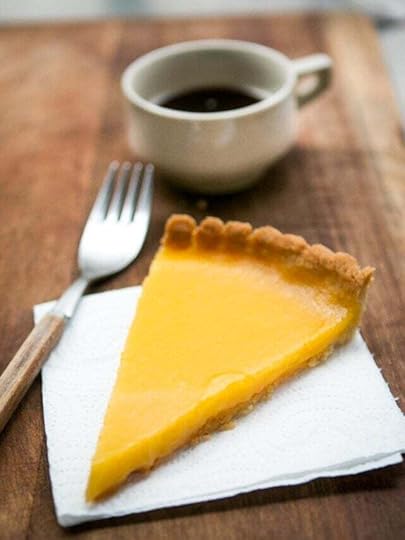
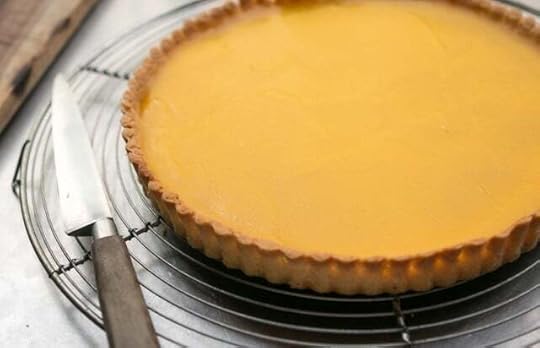
Not everyone thinks of citrus fruits as “winter fruits.” But that’s when oranges, grapefruits, tangerines, tangy lemons, and enticing limes are often at their peak. And that’s a good thing because there’s nothing that brightens up any season – but especially winter – better than a classic French lemon tart.
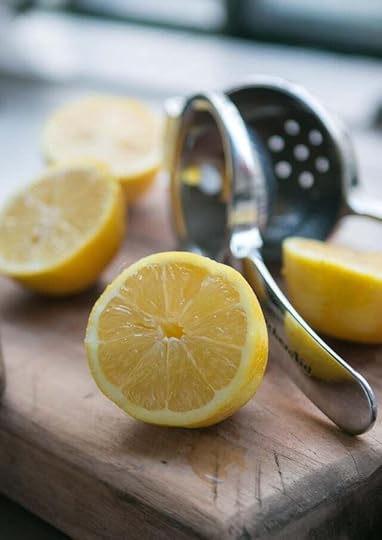
Any bakery in Paris will have a Tarte au citron on offer. Some are on the sweet side, others tart. I like my lemon tart, well…tart, for sure and when I search for lemons at my market, I choose the plumpest, juiciest ones I can find. Fortunately, good lemons are available just about anywhere, so anyone can make this tart. Most of us don’t even have to wait until winter!
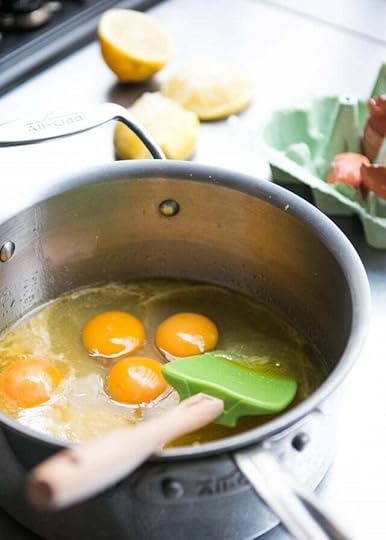
I juiced my lemons, cracked some eggs, and got to work on the tart.
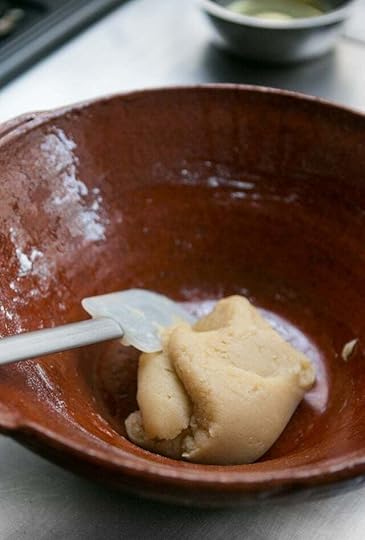
For the base, I used Paule’s pastry dough, which is so easy to make and hasn’t failed me yet. It’s delicious and buttery, and goes particularly well with the delicious lemon topping.
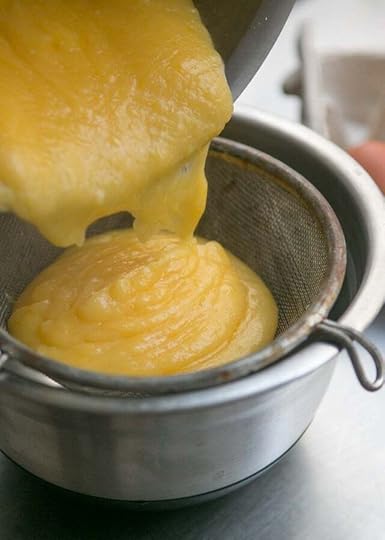
I cooked the filling, a sunny, luscious lemon curd, on the stovetop with the fragrant zest of the lemons, then poured the warm filling through a strainer to make it as smooth as possible.
 One could pipe whipped cream on it or top it with meringue. To do so, let it cool and spread or pipe whipped cream over the top or serve a dollop alongside. If you want to give a go at meringue, check out my Lime Meringue Tart recipe or the marshmallow topping that I use on my Pumpkin Pie with Marshmallow Topping.
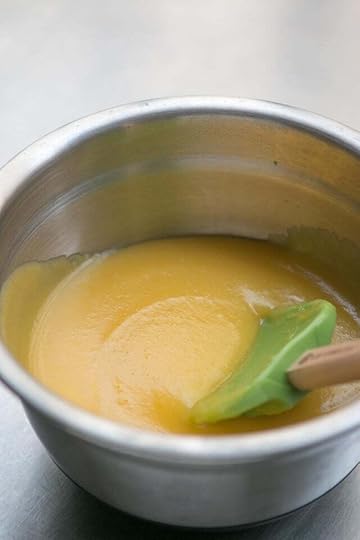
Both are delicious, but just as it is – or as the French say, nature – is just fine with me.
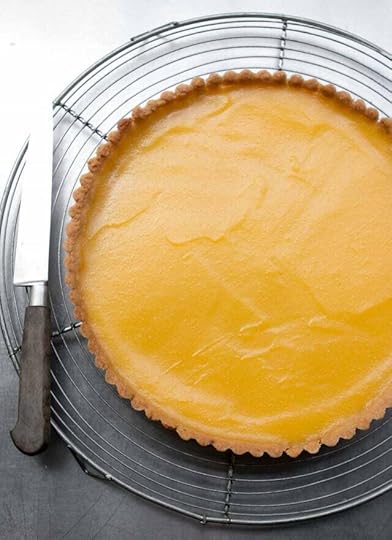
 PrintLemon TartI recently updated this recipe to increase the amount of filling and I dialed down the sugar a bit due to frequent questions about reducing sugar in recipes. You can taste the filling in step 3 and if you'd like it sweeter, add up to 1/4 cup (50g) more sugar
If you find that you have a bit too much filling for your tart shell (they seem to vary), any remaining lemon filling that you don’t use can be spread on toast, fresh biscuits, or scones. You could substitute fresh lime juice for the lemon, and if you have Meyer lemons, reduce the sugar to 1/2 cup (100g). You can use a favorite tart dough recipe, or the one I’ve linked to.Ingredients1 cup (250ml) freshly-squeezed lemon juicegrated zest of two lemons preferably unsprayed3/4 cup (150g) sugar12 tablespoons (170g) butter salted or unsalted, cut into cubes4 large eggs4 large egg yolksOne pre-baked 9-inch (23cm) tart shellInstructionsPreheat the oven to 350ºF (180ºC).In a medium-sized non-reactive saucepan, heat the lemon juice, zest, sugar, butter, eggs and egg yolks. Have a mesh strainer nearby.Stir until the butter is melted, then whisk the mixture continuously until the mixture thickens and holds its shape when you lift some of it up with the whisk and it visibly mounds up when dropped back down over the rest of the mixture in the saucepan. It should just take a few minute.Pour the warm lemon curd though a strainer into a bowl (or directly into the tart shell), scraping with a rubber spatula to press it through.Smooth the lemon filling in the prebaked tart shell and pop it in the oven until the curd is just set. It’ll take about 5 to 6 minutes.Remove from the oven and let cool before slicing and serving.
Related Links
Recipes to Use Up Leftover Egg Whites
What is non-reactive cookware?
October 19, 2025
ready for dessert: behind-the-scenes, baking tips, and errata
There’s a lot going on when you write a cookbook. You begin with an idea, then spend a year or two testing and developing recipes. Once the first draft is done, it goes through a developmental edit where the editor gives feedback on what you’ve done so far and offers up changes, ideas, or things to reconsider.
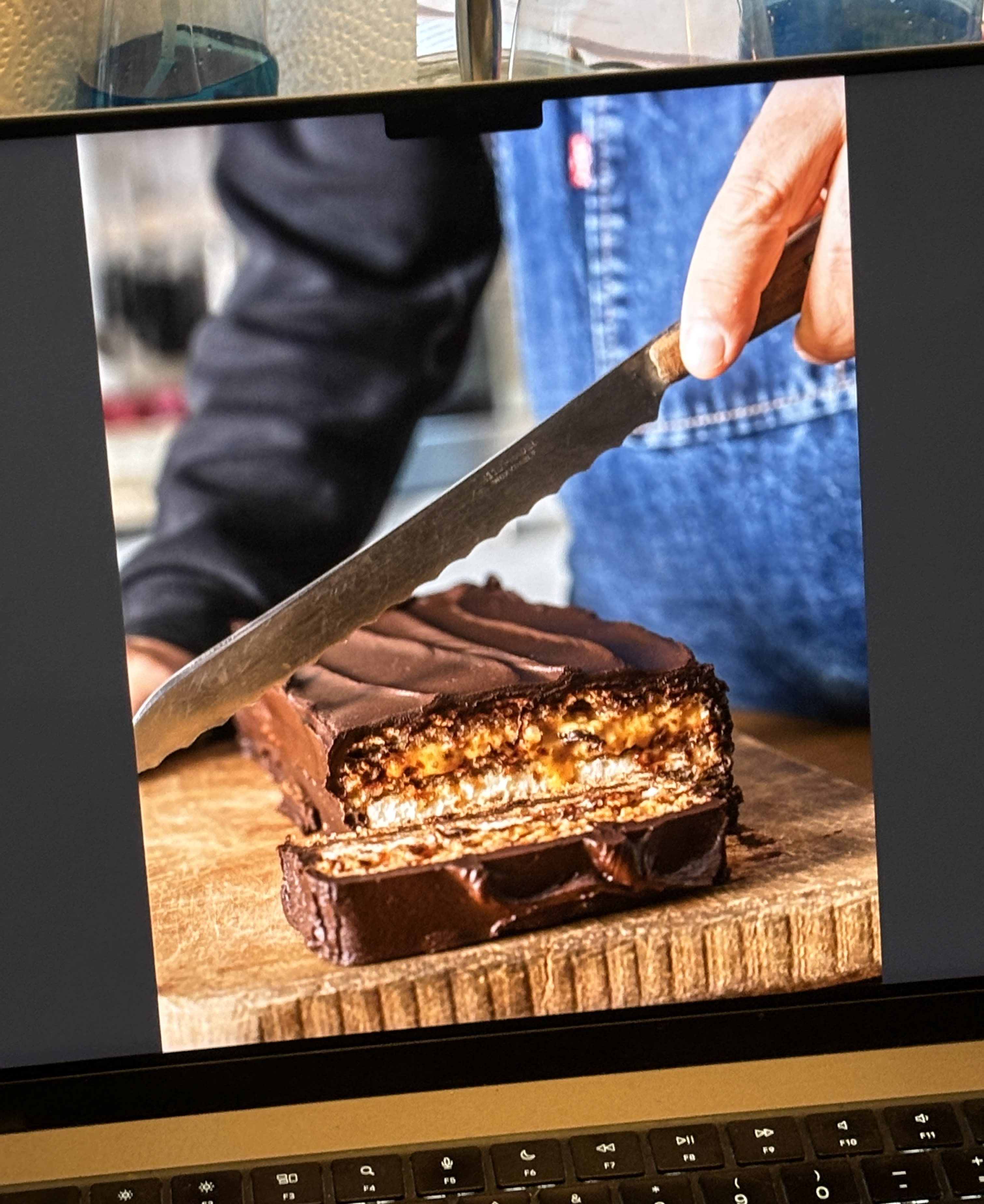 One of my favorite pictures from Ready for Dessert: Slicing the Marjolaine, which is also one of my favorite recipes in the book. (Photo by Ed Anderson)
After you’ve implemented those (or not), it then goes to a copy editor who checks grammar and spelling, as well as scans the recipes for omissions or gaffes, such as forgetting to say when to add an ingredient, and checks your metric conversions. I’ve seen more and more books lately that also credit an “Americanizer,” who presumably takes on that last task, since conversions are a big lift. I kid you not. I’m pretty sure I could write two cookbooks a year if we all used the same system of measurement.
The book then goes to a production editor, who makes sure everything is in the right place, then to a proofreader. (Not all publishers do all these steps. Mine does.) During the process, cookbook authors often send recipes to testers to give the recipes a go and get feedback. Some authors have people develop recipes but I give a tester the finished recipe and get feedback on that.
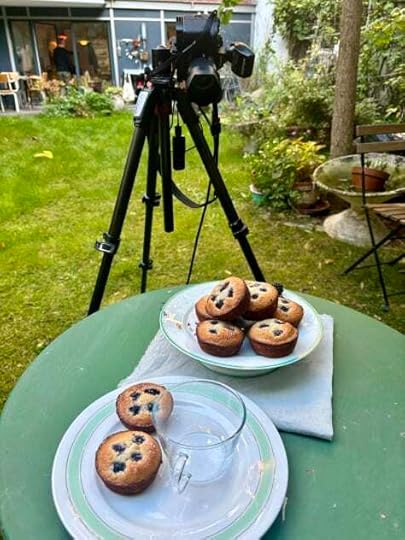 Shooting some of the desserts in our backyard.
If the book is going to be photographed, food stylists generally make the recipes for the photos, although in some cases, the author does. (Which I’ve done.) But it’s a very big job organizing and planning the shoot, then gathering all the ingredients and making everything, which is especially challenging if you plan to shoot five different photos a day. Then there’s the cleanup afterward.
I was fortunate to have George Dolese and Elisabet der Nederlanden working as a team on my book since there were a lot of photos to shoot in 2 1/2 weeks. That’s a very long shoot, but my publisher wanted a lot of photos so we, along with photographer Ed Anderson, delivered.
George arrived with a 7-inch (18cm) thick notebook, and I was startled to see how organized he was. We’d corresponded a lot before he came to Paris, and he asked me what he should bring from the U.S. I said parchment paper circles, natural cocoa powder, Lazzaroni amaretti cookies (why can’t we get those here? Romain has been devouring the leftovers…), almond paste, and chocolate chips — among other things.

When George and Elisabet arrived, armed with massive shopping lists, I took them to a Grand Frais supermarket outside of Paris. For some reason there are no Grand Frais supermarkets in Paris, but they have a remarkable selection of everything, including aisles and aisles of every kind of fruit you can imagine, as well as a massive cheese aisle, a butcher, and shelves of nuts and baking ingredients.
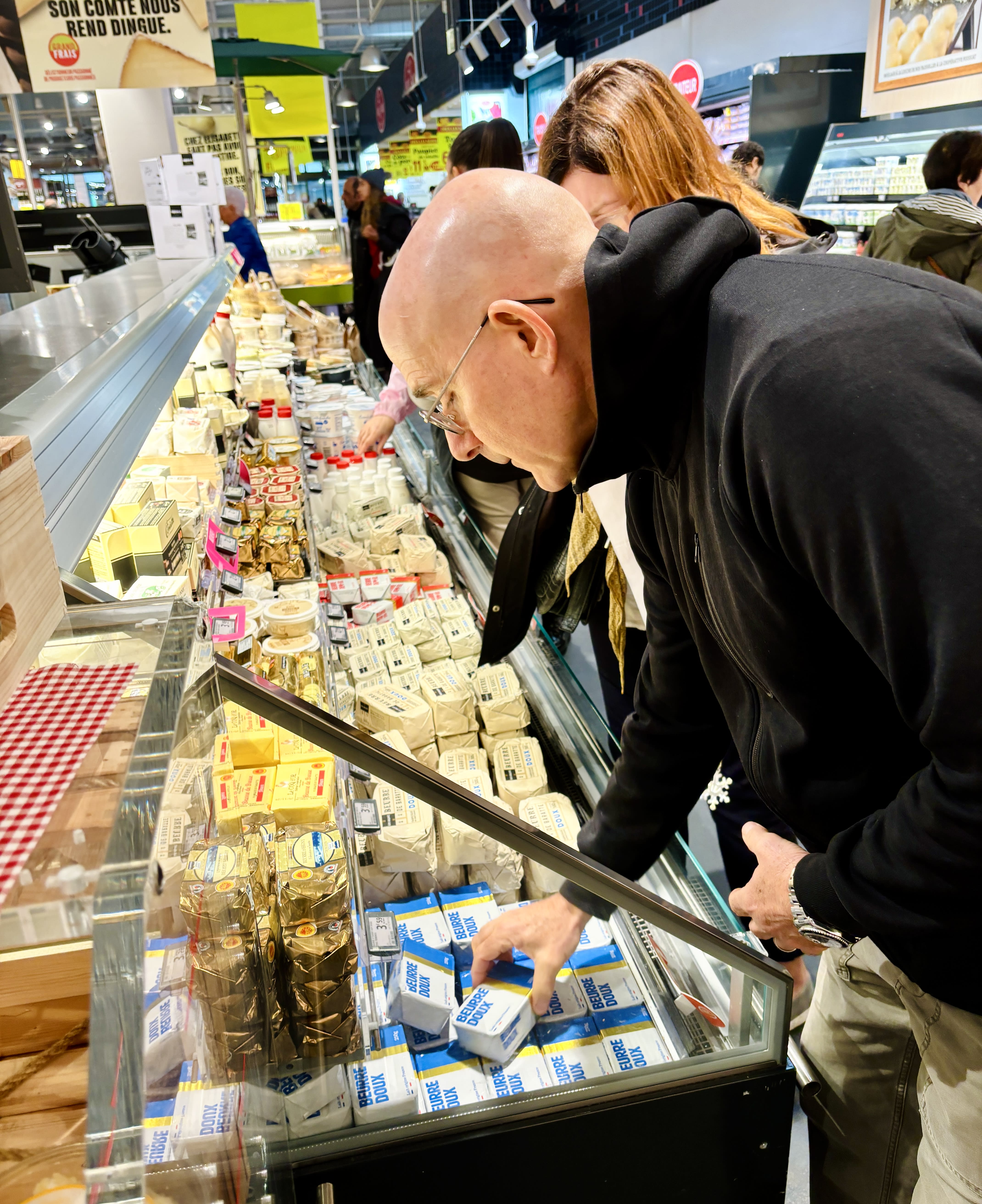 Buying (lots of) butter at Grand Frais.
I also took them to Metro, a membership-only store that requires you to have a resale license. Elisabet is a particularly avid baker and went a little nuts in the baking aisles. She was especially wowed by all the various sugars available in France, from dark, moist cassonade (cane sugar) to crunchy pearl sugar.
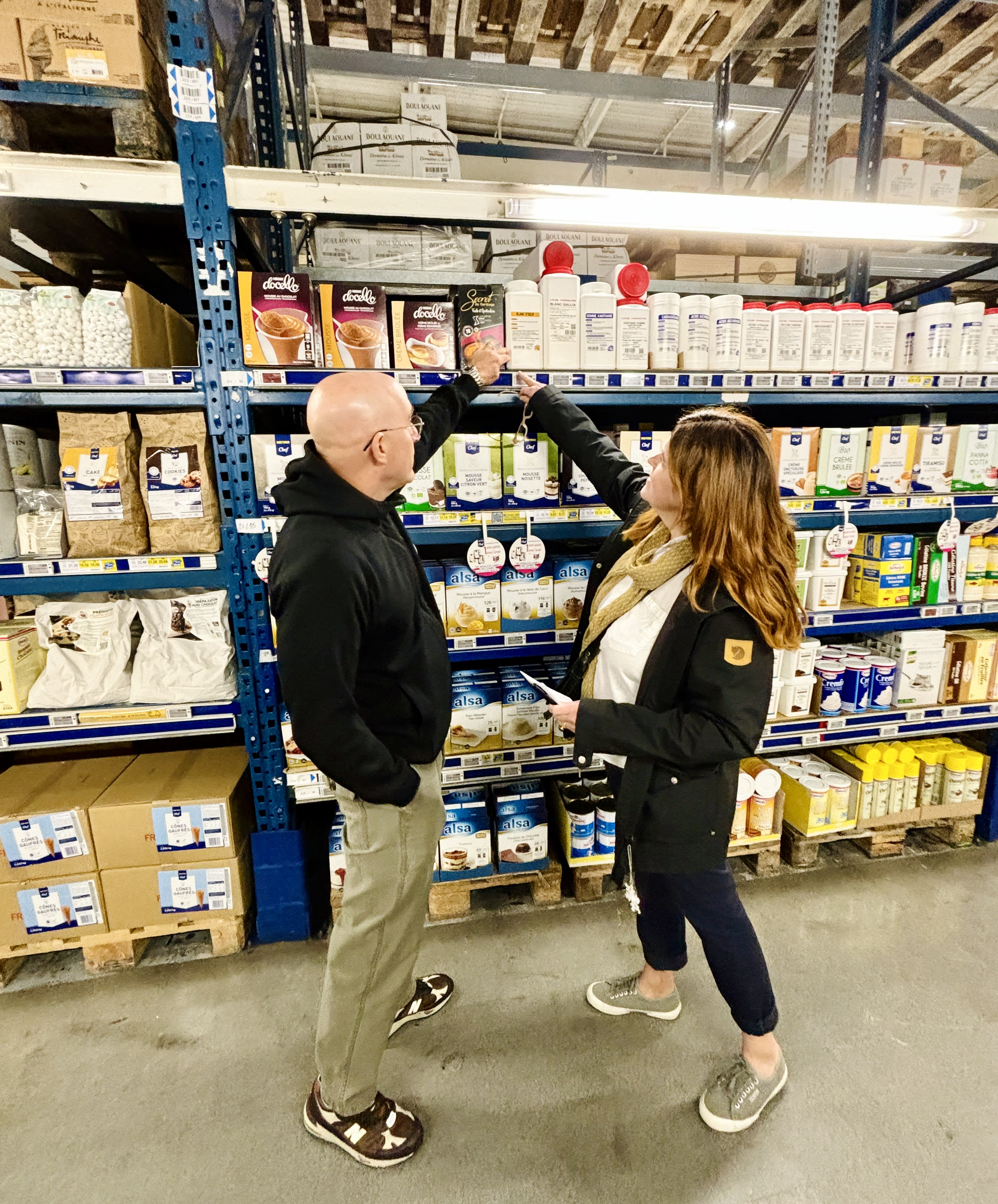
Food stylists are invariably pros at cooking and often give valuable feedback if they run into any issues with the recipes. To be honest, food stylists do a better job than most of us can to make food look good for the camera. No one working on cookbooks uses fake food or anything like that, although when shooting pictures for the first edition of Room for Dessert (I was the food stylist on it), which became Ready for Dessert, I couldn’t find Concord grapes for the pie since it wasn’t grape season. A food stylist friend suggested that since it was only for a photo, I should use black olives. I used regular grapes instead and zhuzhed them up with some grape jelly for color.
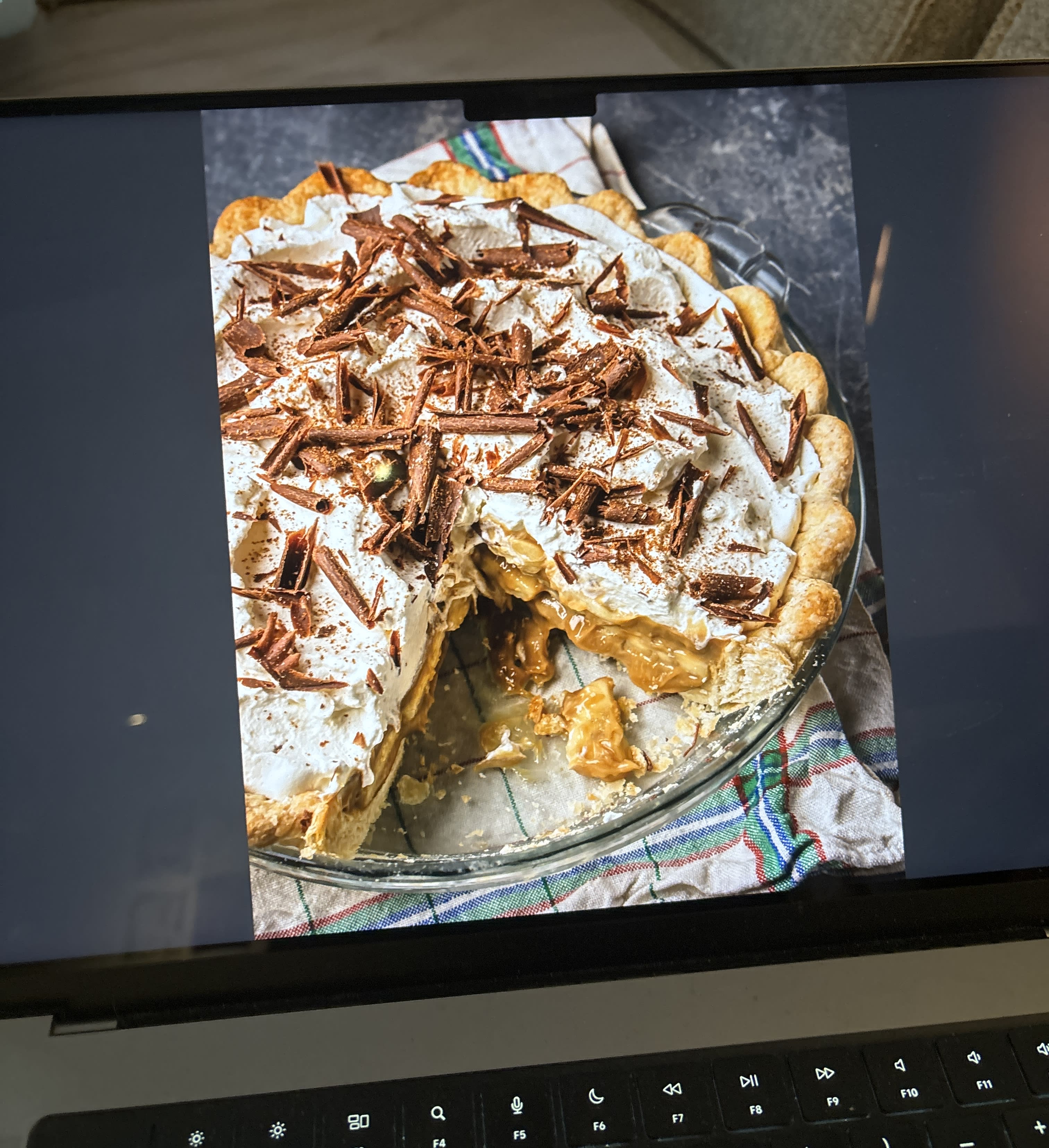 Banana butterscotch cream pie, page 100. (Photo by Ed Anderson)
Once the book is laid out and designed, with everything in place, the publisher sends a PDF of the book to the author to check and make sure everything’s A-OK. Then it’s off to the printer, and when you get the final book in your hands, you notice that tablespoon in one recipe is spelled “tablespooon.” (Which happened to me in another book.)
 Photographer Ed Anderson and I took a coffee break when shooting out and about in Paris, here in the Place des Vosges. I had hot chocolate!
As the great Maida Heatter called them, “gremlins” get into cookbooks, no matter how hard you try to keep them out. Also, as someone who likes to tinker with recipes, I sometimes find different ways to make them. Books also have limited space, so it’s nice we have the internet to fill things in, as I’m doing here.
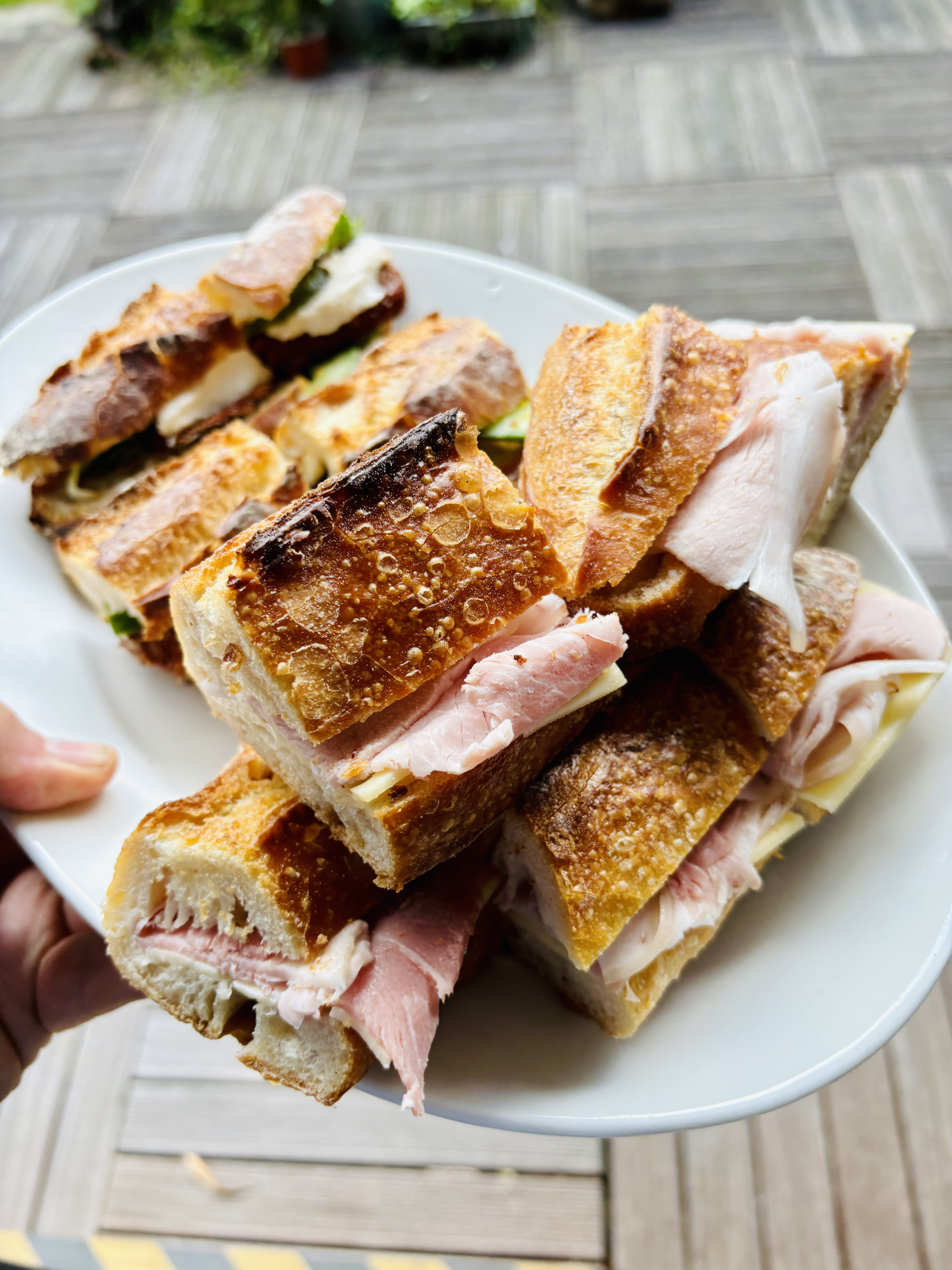 During the photo shoots, I was sometimes tasked with “staff meal.” I kept things pretty French for the crew, and jambon-beurre (ham and butter) sandwiches became the most requested meal…and I was happy to oblige.

Ready for Dessert Recipe Notes & Errata
Here are some additional notes about the recipes, including a few tips on baking times, a little errata the thickness of a cookie recipe, and an bonus recipe, that’s on the cover of the book.
– For the Easy jam tart (page 121), if the dough is a bit too sticky to press into the pan, put the pan with the pastry in it in the refrigerator or freezer for a few minutes to firm the pastry up.
– When making the Peanut butter and jelly linzertorte (page 103), if the ropes that you’re rolling by hand to place over the top break, it’s ok to place the pieces on top of the tart and simply pinch them together. They’ll bake up beautifully. While a lattice topping is traditional on linzertorte (which is really a tart), baker Jessie Sheehan suggested that the dough could be crumbled over the top of the tart, which I’m going to try the next time I make it.
– For the Panna cotta recipe (page 161) you can reduce the amount of sugar to 1/4 cup (50g), and you can omit the cinnamon and lemon zest if you want them with those flavorings in them.
– For the Pâte à choux recipe (page 276), the yield will vary depending on the size you pipe the dough. You may get twenty puffs if you pipe them larger, which is fine!
I also like to play with the temperature of the oven, depending on how I feel that day. Life isn’t always cut-and-dry, and neither is pastry dough. And as I’ve said before, recipes aren’t set in stone. If they were, cookbooks would be very, very heavy.
While the baking temperature in the first printing of the book has you baking the puffs at 425ºF (220ºC), I’m wondering if that’s too high for people? I like my puffs very crispy so that’s fine with me. But if yours are getting too dark for your taste, you can take them out before the recommended baking time. Similarly, you don’t need to keep them in the turned-off oven for 5 minutes after baking.
Another way I prepare pâte à choux puffs is to bake them in a 425ºF (220ºC) oven for 5 minutes, then turn the oven down to 375ºF (190ºC) and bake them until they’re golden brown. You can see the difference here:
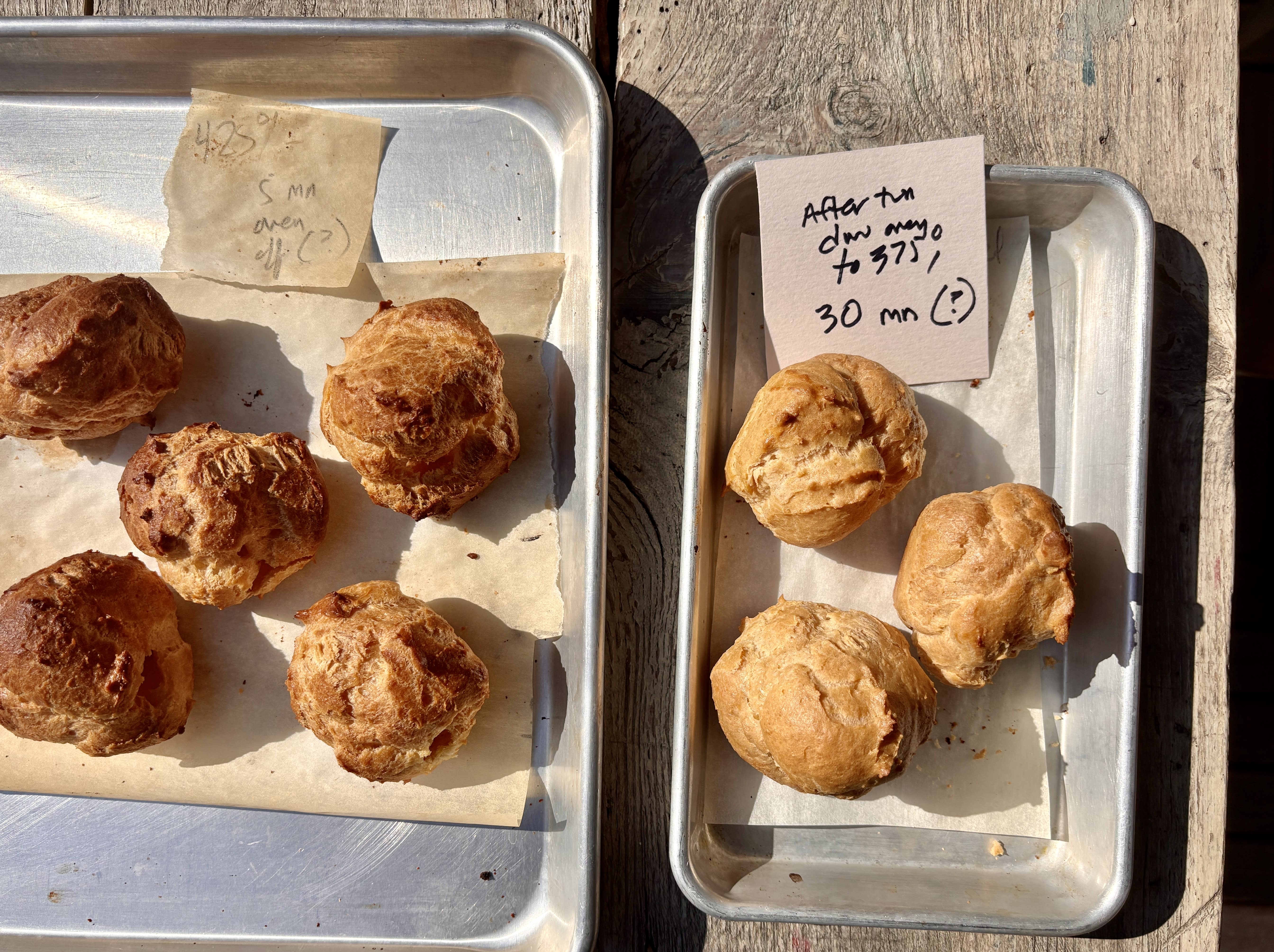 On the left, baked at 425ºF/220ºC only (as the recipe appears in the book). On the right, puffs that were baked for 5 minutes in a 425ºF/220ºC oven, then turned down to 375ºF/190ºC.
When baking, always use visual clues to check for doneness, rather than strictly adhering to a baking time. When I baked professionally, we used a timer to remind us that something was in the oven. We never relied on it to tell us when something was done.
– When rolling out the dough for the Orange poppyseed sandwich cookies (page 246), the dough should be rolled 1/4 inch (6mm) thick, rather than the 1/2 inch in the book. I find the baking time of 12 minutes is just right for me, but if you like the cookies a little darker, I did a test at 14 minutes, shown below:
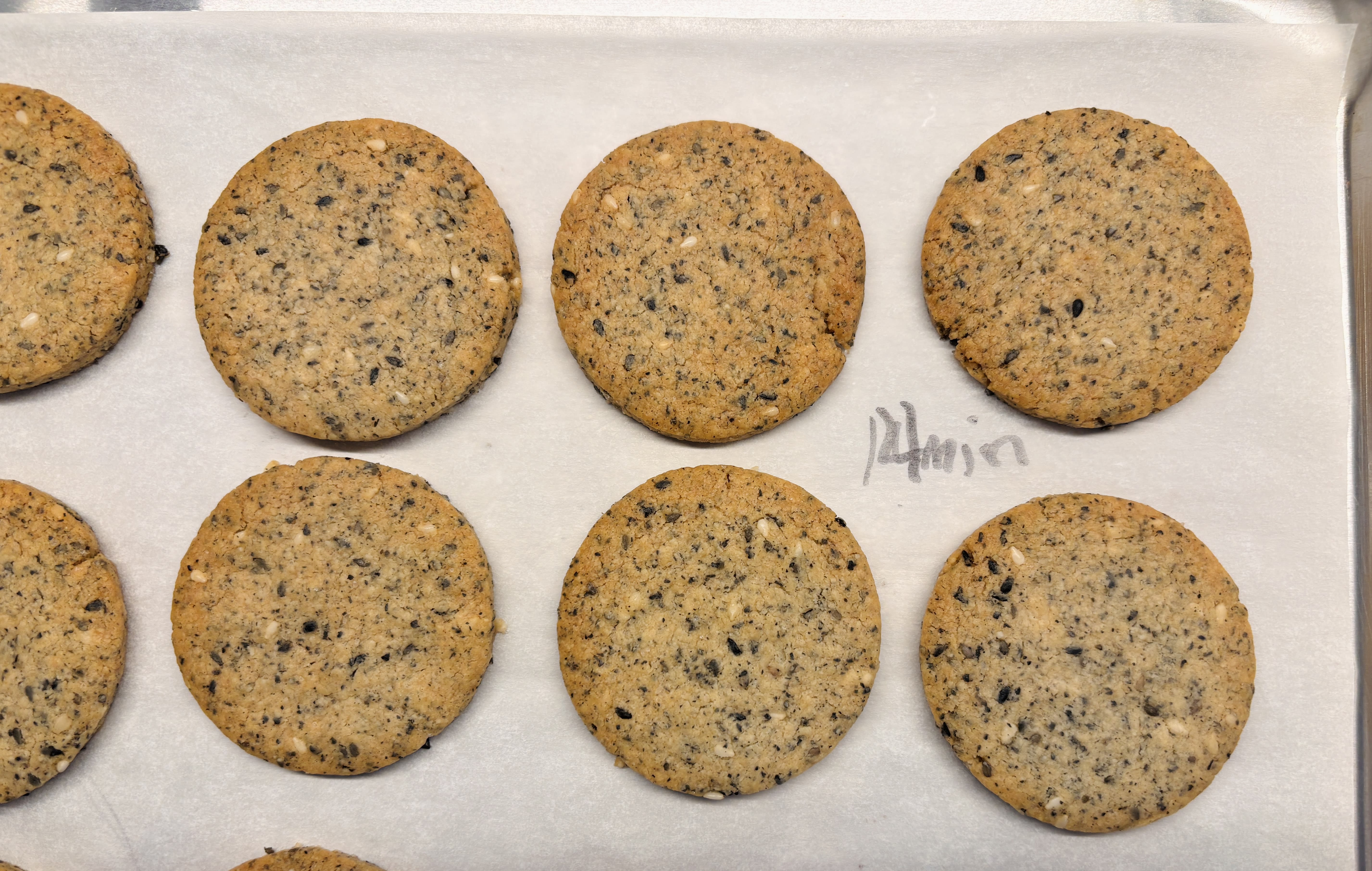 These were baked for 14 minutes; at 12 minutes, they’ll be lighter. The darker ones are crispier but the lighter ones meld more smoothly with the filling.
In the book, I gave a chocolate and chocolate-hazelnut options for filling the cookies, if you’d prefer to do that instead of using jam. But you can also fill them with Salted butter caramel sauce (page 283) that’s cooled until it’s thick and spreadable. And in place of poppyseeds, you can use very coarsely ground black or white sesame seeds instead. Or leave them whole! You’ve got options.
 Poppyseed cookies filled with salted butter caramel.
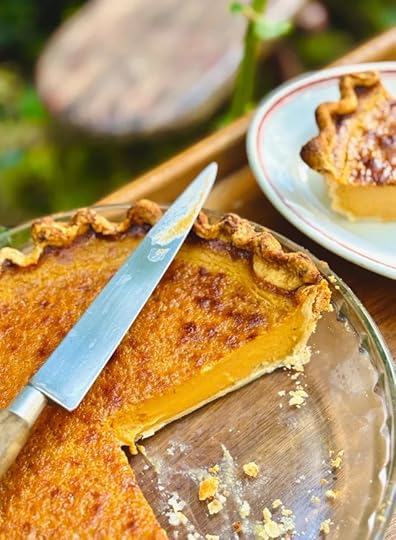
– I’ve been playing with the Butternut squash pie (page 96), which is a great holiday treat. Some have said that it makes a bit too much filling for the dough. I recast the recipe so there’s no leftover filling, and you can get that here.
Sharp-eyed readers might notice the profiteroles on the cover of the book, from Grand Brasserie in Paris, have a layer of craquelin over the top. So I thought I’d share a recipe for chocolate craquelin.
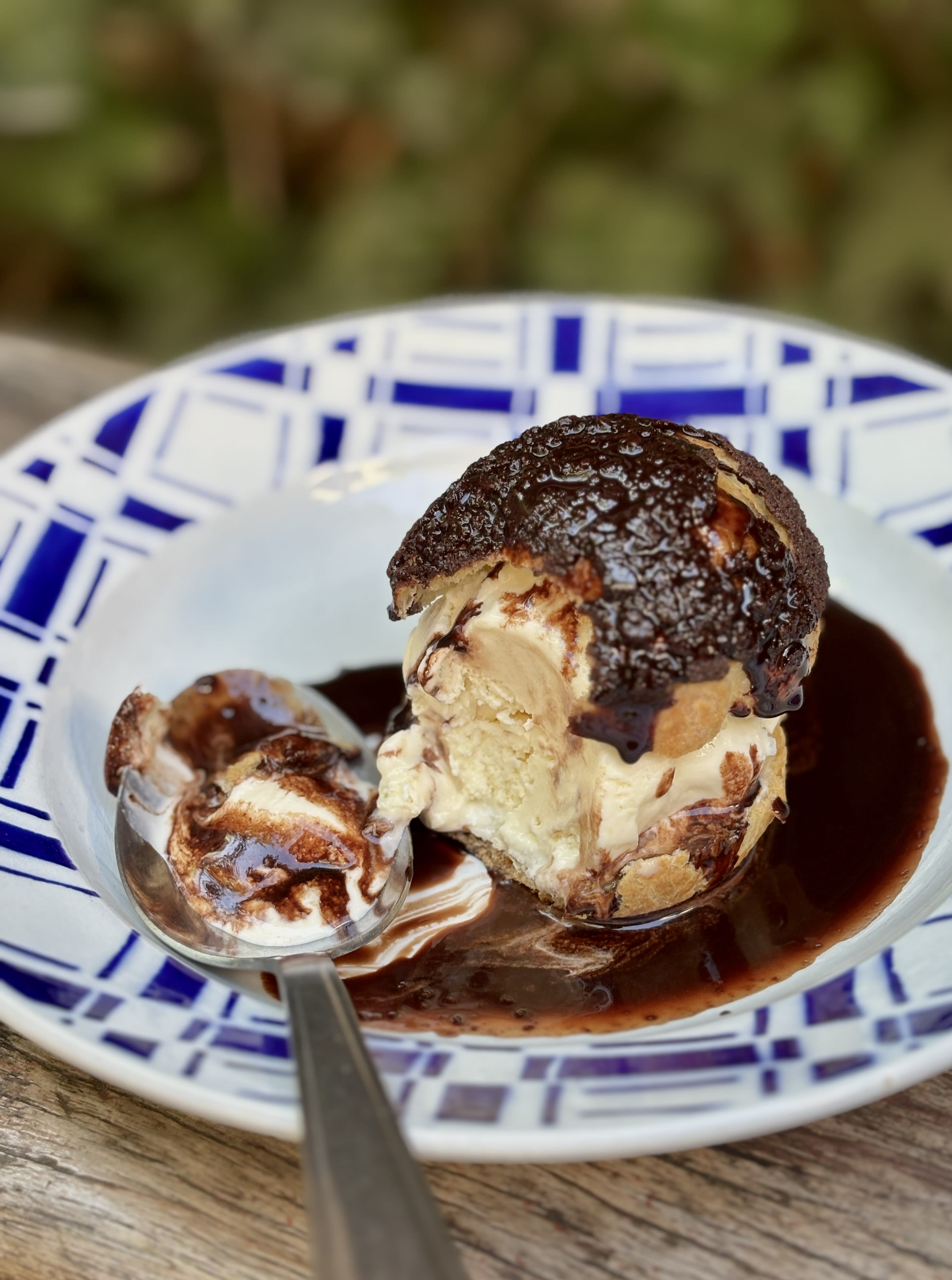
This recipe is based on my craquelin recipe, which I retoggled to make them chocolate. You can get the chocolate craquelin recipe here.
Enjoy!
October 16, 2025
Maple Pecan Sticky Buns
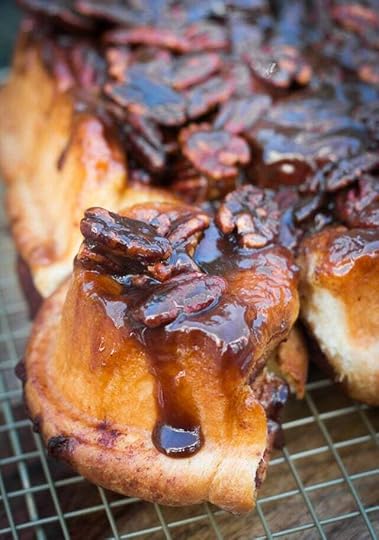
I’ve never been a huge fan of sticky buns because I find many of them teeth-screamingly sweet. That said, these dial down the sweetness in favor of flavor, courtesy of two of my favorite things: pecans and maple syrup. And having the two swaddled in a butterscotch-like caramel seems to make each one taste even better than they do on their own.
I was intrigued by a new baking book, The New Sugar & Spice by Samantha Seneviratne, whose subtitle promises recipes for “bolder baking,” which immediately caught my interest. I don’t need to wow me with innovation – tweaking classics is often good enough. The wheel can only be reinvented so many times and no need to repair something that doesn’t need fixing.
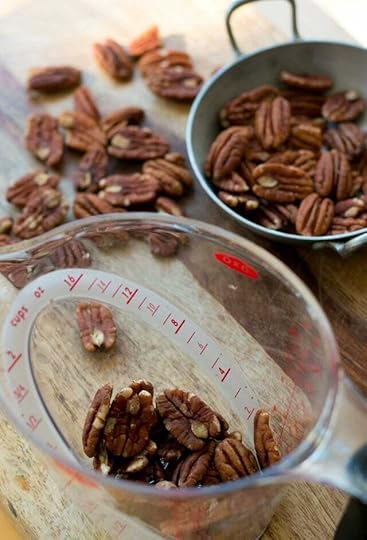
It’s unfortunate that I am hooked on both, and like other expats, maple syrup and pecans are two things that we tend to hoard. Sirop d’érable (maple syrup) is available in Paris, the best bottles are sold at natural food stores, and pecans are around, although I often find them not quite at their freshest by the time they’ve hit the store shelves. So I lug those back with me. Fortunately, on occasion, I’m treated to bags by visiting friends and guests. Thank goodness I now have an American-sized freezer.
Well…to be honest, I used to hide them in the freezer, but since I’m a compulsive nibbler, I was getting tired of teething on frozen pecans. So I gave up and started keeping them in a drawer, which means easier access to these precious beauties.
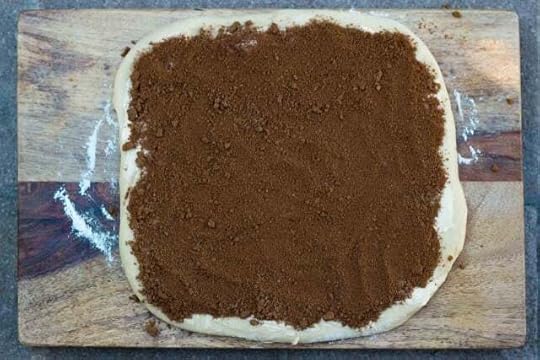
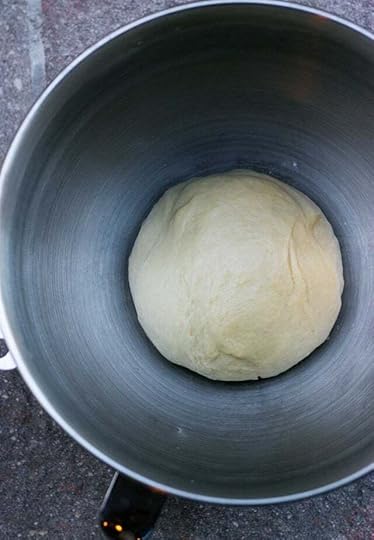
Sticky buns are very easy to make. You start with a simple yeasted dough, softened with milk. Once it rises, you strew the rolled out dough with a mixture of brown sugar and cinnamon. Then comes the fun part: Rolling them up!
The doughy roll then gets sliced into spiraled wheels. Watching them rise in the pan – then rise even further in the oven, is one of the great joys in life. Eating them, of course, is the best part. But if you’ve got kids (or even a middle-aged man, like me), this is a really fun project for a weekend or during a holiday break.
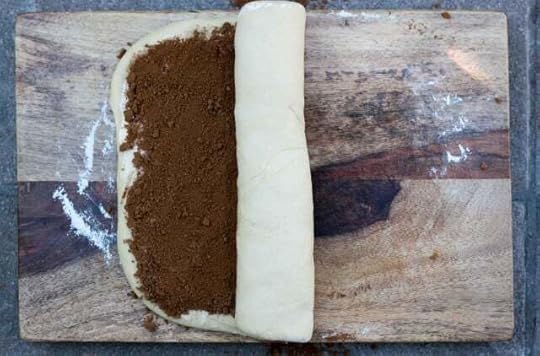
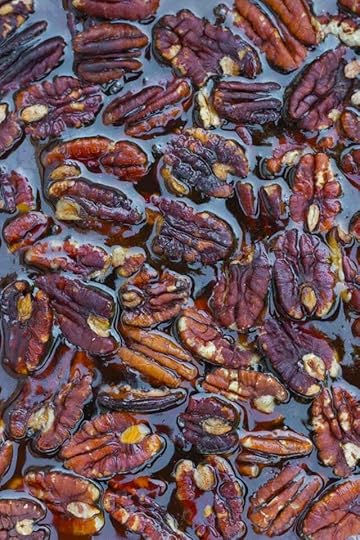
While I was making these, I posted a live video on Snapchat, which is a fun way to share short videos that I’ve been playing around with. The downside is that I got so involved with shooting and sharing that I neglected to chop the pecans before using them, as you can see in the pictures. On Snapchat, posts and videos disappear after twenty-four hours – so when it’s gone, it’s gone! But you can follow me on Snapchat for other tips, future videos and a soupçon of occasional goofiness at davidlebovitz.
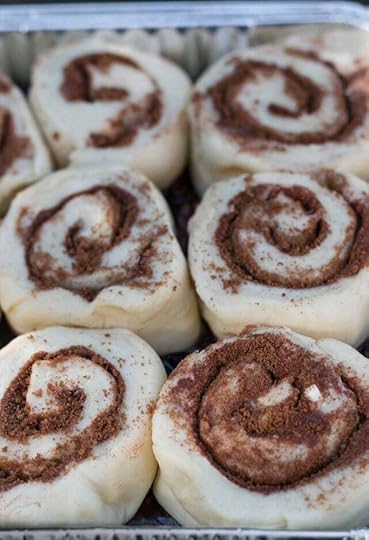
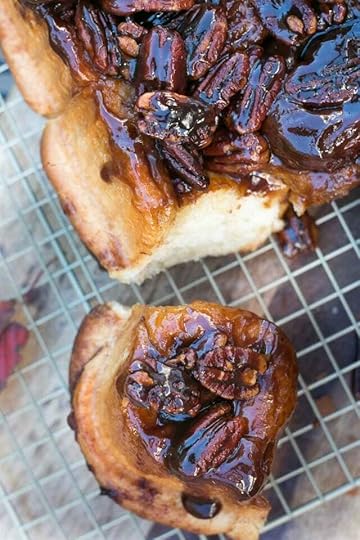
As much as I’m freaked out by new technologies, the old ones tend to vex people, too. Folks get freaked out by candy thermometers, but if you use one, you can get your caramel precisely to where it should be. I “went rogue” and didn’t use one, and my sticky buns got a touch too dark, which I liked for the “on the edge” flavor, but resulted in a sticky bun glaze that was less-runny that what some might be used to. So if you have one, you should put that candy thermometer to use when making these sticky buns.
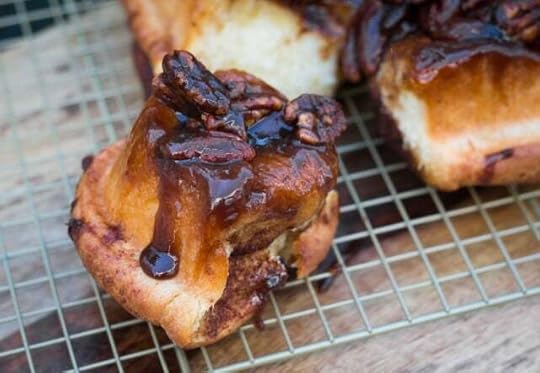
The result of my morning of baking was a tray full of sticky buns that were great for a mid-morning snack but not bad for bringing to a meeting later that evening, which I did. The next day, people raved about them. I’ve got a few other “bold” recipes bookmarked from Samantha’s gorgeous book. And I’m going to make sure my stock of pecans doesn’t run too low, because I’ll be making these again in the near future.
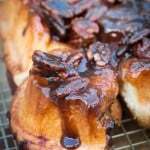 PrintMaple Pecan Sticky BunsAdapted from The New Sugar & Spice by Samantha SeneviratneThe original recipe calls for baking eight spirals in a 9-inch (23cm) round pan, but I wanted to get nine smaller ones, so used an 8-inch (20cm) square pan and cut the rolled up dough into nine disks. You can do either. Note: Do not use a springform pan for this recipe. Because of the maple caramel, the pan may leak. Even if you wrap it well with foil, caramel may seep out and you don’t want the lovely maple-accented glaze on foil. You want it on your sticky buns.The original recipe also called for a mix of walnuts and pecans, and I opted for all pecans since they’re one of life’s great luxuries to me. But you can swap out any nuts as you wish. There was also 1/2 cup (80g) of raisins added to the caramel along with the pecans, which I omitted as well, although you’re welcome to add them, or another dried fruit, like cranberries or sour cherries.You’ll also note the recipe calls for bread flour. Its higher protein content means that you’ll have better gluten formation and sturdier bread, or buns, as in this case. Most well-stocked supermarkets carry it or you can buy it . You can replicate it by replacing 1 1/2 teaspoons of all-purpose flour with 1 1/2 teaspoons of vital wheat gluten, per cup, or 140g, of all-purpose flour. (In France, I use T65 organic flour and add vital wheat gluten, which is available in natural food stores.)Course SnackIngredientsFor the dough6 tablespoons unsalted butter cubed2/3 cups (160ml) whole or lowfat milk3 tablespoons granulated sugar1 3/4 teaspoon active dry yeast1 large egg2 1/2 cups (320g) bread flour1/2 teaspoon kosher or sea saltFor the topping6 tablespoons (3 ounces, 85g) unsalted butter1/4 cup (45g) dark brown sugar1/4 cup (60ml) maple syrup (dark amber)1/2 teaspoon kosher or sea salt1 cup (140g) pecans lightly toasted and coarsely choppedFor the filling1/4 cup (45g) dark brown sugar2 tablespoons ground cinnamon1/2 teaspoon kosher or sea salt3 tablespoons (1 1/2 ounces, 42g) butter salted or unsalted, at room temperatureInstructionsTo make the dough, warm the butter, milk and sugar in a small saucepan. Pour into the bowl of a stand mixer and let stand until slightly tepid. (You can make this without a stand mixer. If so, pour the milk mixture into a medium bowl.) Sprinkle the yeast over the milk, stir gently, and let sit in a warm place until it starts to bubble, about 10 to 15 minutes.Mix in the egg, flour, and salt, and knead with the paddle or dough hook at low-to-medium speed until smooth and elastic, about 5 minutes. (If kneading by hand, it may take a bit longer.) Knead the dough a few times with your hand until it’s a smooth ball, place it back in the bowl and cover the bowl with a kitchen towel. Let rise in a warm place until doubled, about 1 to 1 ½ hours. Time can vary, and it may take longer, or less time.While the dough is rising, make the topping. Lightly butter a 9-inch (23cm) round or 8-inch (20cm) square cake pan. Heat the butter, brown sugar, maple syrup and salt in a small saucepan fitted with a candy thermometer and cook over medium heat until the mixture comes to a boil. When it gets foamy, after a minute or so, when a few of the bubbles start to get larger, remove from heat. (Samantha notes in her book that if using a thermometer, the temperature should read 212ºF (100ºC).Pour the maple caramel into the prepared cake pan and strew the pecans over the caramel. Set aside.To make the filling, mix the brown sugar, cinnamon and salt in a small bowl. Set aside.When the dough has risen, knead the dough a couple of times on a lightly floured countertop and roll it into a 10-inch (25cm) square. Spread the softened butter over the dough and sprinkle evenly with the filling mixture. Roll up the dough as tightly as possible and using a serrated knife, cut the dough into 8 or 9 slices. If using a square pan, cut into 9. If using a round pan, cut into 8. Place them in the pan with the cut side up. Cover loosely with plastic wrap or a clean, lint-free kitchen towel, and let rise until almost doubled, about 1 hour.Ten minutes before you’re ready to bake the sticky buns, preheat the oven to 375ºF (190ºC). Place the pan of sticky buns on a baking sheet lined with foil (to catch any overflow drips or spill) and bake until the center roll is lightly browned on top and it doesn’t feel soft when you press it with your finger, 25 to 30 minutes.Remove the rolls from the oven. Let cool for 5 minutes then run a knife around the outside (if possible, as the buns may have overtaken the rims), then tip the sticky buns out onto a cooling rack or serving platter.NotesServing and storage: Sticky buns are always best served warm, and the day they are made but are fine the next day. If you wish, you can keep them well-wrapped for a few days, rewarming them in a low oven, wrapped in foil until heated through. They can be frozen for up to two months.
Related Posts
Ingredients for American Baking in Paris
Ingredient Ingredients and Substitutions
Vegan Sticky Buns (Minimalist Baker)
Gluten-Free Sticky Buns (Faithfully Gluten-Free)
September 24, 2025
Paris book launch and booksigning of ready for dessert!
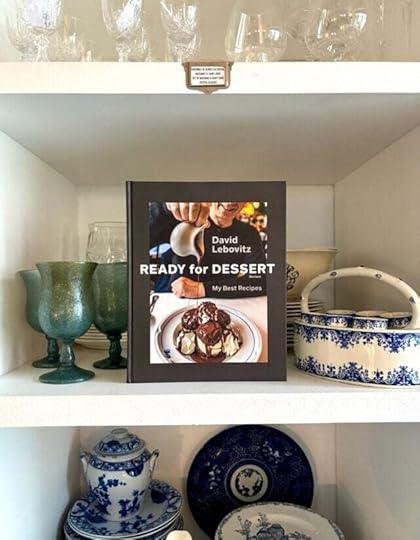
I’ll be at AXS design, one of my favorite shops in Paris, celebrating the release of Ready for Dessert on Sept 30th from 5:30 to 7pm.
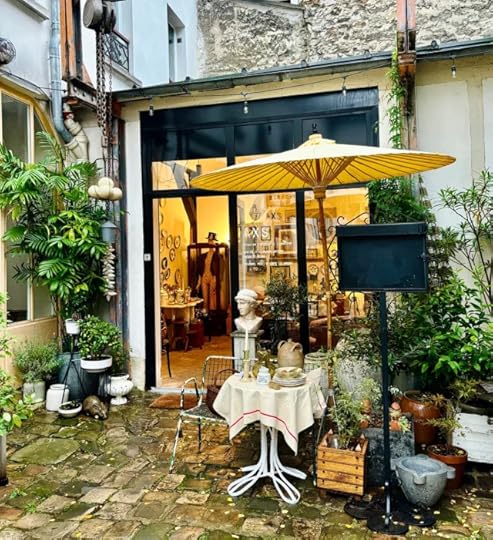
AXS is filled with treasures, including French dinnerware, glasses and linens, and lots more. They were kind enough to lend me some of their beautiful items for the photos in book, so I’m thrilled they’re hosting the book launch and signing. Books will be available for purchase and I’ll be on hand to personalize them for you.
Thanks to Comté for providing samples of French cheese for the event.
See you there!

June 1, 2025
paris book event – june 29, 2025

Join me and my friend Jane Bertch in Paris on Sunday, June 29th, for a booksigning event from 3pm to 4:30pm at La Cuisine Paris at 78 Quai de l’Hôtel de Ville (4th).

I’ll be signing paperback copies of my books L’Appart and The Sweet Life in Paris, and Jane will be signing copies of her memoir of opening a cooking school in Paris, The French Ingredient.

Note that books are in limited supply and you are welcome to bring books you’ve purchased elsewhere. Please note that the venue is not able to take credit card payments on-site.
Stop by and say hi!
April 8, 2025
Get my new book ready for dessert…now available!
It’s almost ready!
Coming this Fall is the new, completely revised edition of Ready for Dessert: My Best Recipes.
[It’s now available at ==> Bookshop, Amazon, Barnes & Noble and at the links below.]
When my publisher told me they wanted a new edition of the book, I decided to revise the book completely, from top to bottom. Ready for Dessert is a compilation of my favorite recipes, so I knew that I wanted to keep my signature Chocolate chip cookies, the Chocolate-cherry biscotti accented with black pepper, and classic Black & white cookies, along with everyone’s favorite, the Fresh ginger cake, as well as a tangy Lemon semifreddo, and the recipe for the Coconut layer cake I made for Alice Waters’ father on his birthday every year.
To sweeten the pot, I added brand-new recipes to Ready for Dessert, favorites culled from my kitchen in Paris, including Île flottante (inspired by the version I always order at a favorite local bistro), a very special Riz au lait (rice pudding) topped with crunchy, candied nuts and salted butter caramel sauce, buttery Palets Breton cookies, and my version of the iconic, and irresistible (truly!), Maple tart from Tapisserie in Paris, the pastry shop of the highly-regarded restaurant Septime, so you can make it at home.
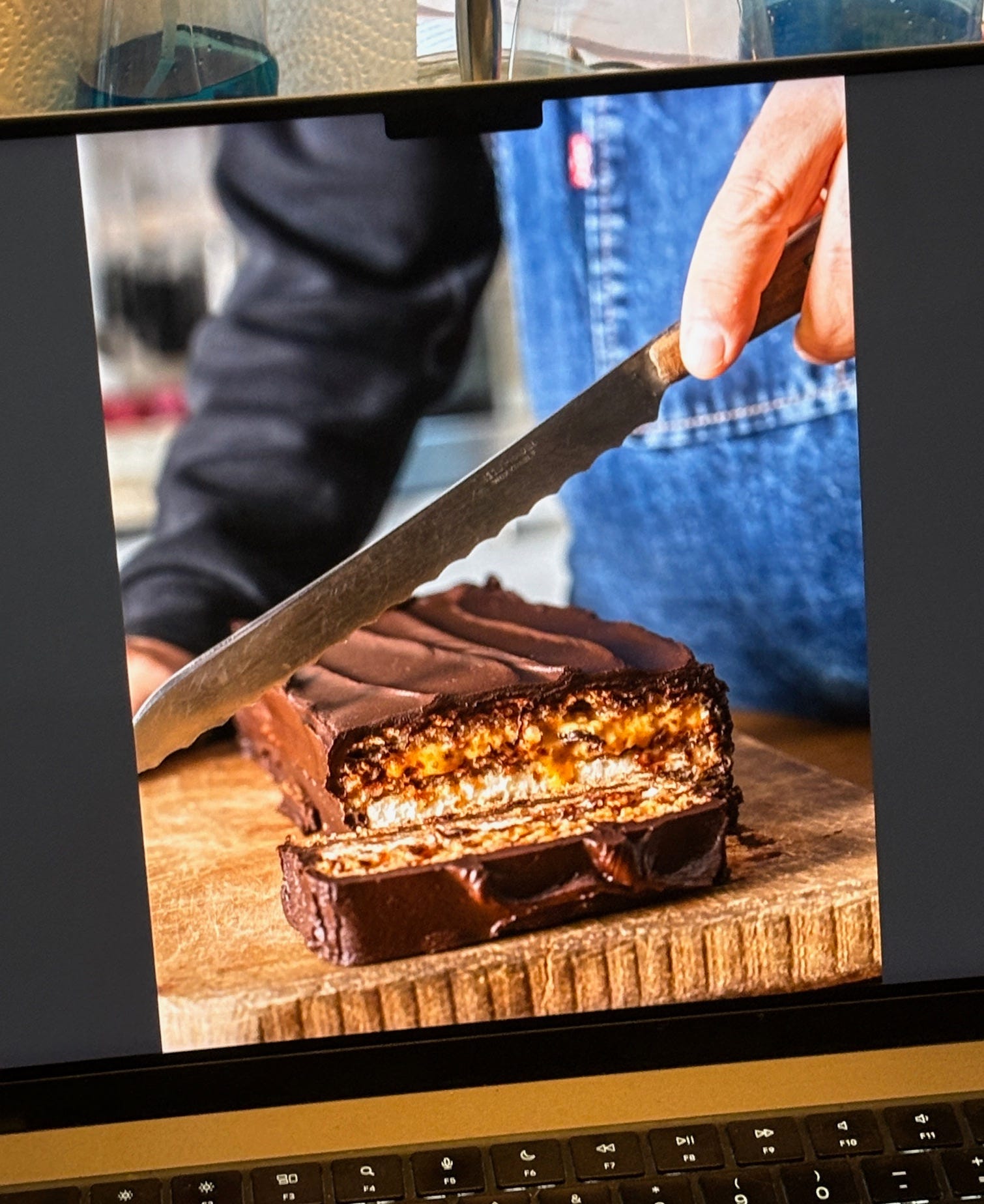 One of my favorite pictures (and recipes) from the new edition of Ready for Dessert is the Marjolaine cake. We made several of these cakes for the photo shoot and gave leftovers to the local butcher shop – and now I’m their favorite customer.
Award-winning photographer Ed Anderson, who photographed my books, My Paris Kitchen, Drinking French, and The Perfect Scoop, returned to Paris to shoot the pictures for the book, in my kitchen and backyard, as well as out-and-about in the city. Another bonus was that I got to work with two of my favorite food stylists, Elisabet der Nederlanden and George Dolese. We had a blast shopping in Paris for ingredients, and making the recipes in my kitchen, then eating them as well.
When the food stylists end up devouring your recipes during a photo shoot, that’s the highest compliment a cookbook author can have. They bake and cook food all day long, so are picky about what they eat. (And boy, did they eat!) I also invited friends to come by and join us, so you’ll find guests shots in the book as well.
The all-new edition of Ready for Dessert is now available at your local independent bookseller and online.
Below are some bookstores and online retailers where you can order the book:
| Amazon | Bookshop.org | Now Serving | Barnes & Noble | Omnivore | Book Larder | Kitchen Arts & Letters | Bold Fork | Books are Magic | Amazon France | Powell’s
| RJ Julia | Strand | Smith & Son Paris | Amazon UK | Archestratus | Politics and Prose | Vivienne Culinary Books | Book Passage | Elliot Bay | Village Books | East End Books | Indigo Canada | Amazon Australia | Shakespeare and Company Paris |
my new book, ready for dessert, is available for pre-order!
It’s almost ready!
Coming this Fall is the new, completely revised edition of Ready for Dessert: My Best Recipes.
[It’s now available for preorder ==> Bookshop, Amazon, Barnes & Noble and at the links below.]
When my publisher told me they wanted a new edition of the book, I decided to revise the book completely, from top to bottom. Ready for Dessert is a compilation of my favorite recipes, so I knew that I wanted to keep my signature Chocolate chip cookies, the Chocolate-cherry biscotti accented with black pepper, and classic Black & white cookies, along with everyone’s favorite, the Fresh ginger cake, as well as a tangy Lemon semifreddo, and the recipe for the Coconut layer cake I made for Alice Waters’ father on his birthday every year.
To sweeten the pot, I added brand-new recipes to Ready for Dessert, favorites culled from my kitchen in Paris, including Île flottante (inspired by the version I always order at a favorite local bistro), a very special Riz au lait (rice pudding) topped with crunchy, candied nuts and salted butter caramel sauce, buttery Palets Breton cookies, and my version of the iconic, and irresistible (truly!), Maple tart from Tapisserie in Paris, the pastry shop of the highly-regarded restaurant Septime, so you can make it at home.
One of my favorite pictures (and recipes) from the new edition of Ready for Dessert is the Marjolaine cake. We made several of these cakes for the photo shoot and gave leftovers to the local butcher shop – and now I’m their favorite customer.Award-winning photographer Ed Anderson, who photographed my books, My Paris Kitchen, Drinking French, and The Perfect Scoop, returned to Paris to shoot the pictures for the book, in my kitchen and backyard, as well as out-and-about in the city. Another bonus was that I got to work with two of my favorite food stylists, Elisabet der Nederlanden and George Dolese. We had a blast shopping in Paris for ingredients, and making the recipes in my kitchen, then eating them as well.
When the food stylists end up devouring your recipes during a photo shoot, that’s the highest compliment a cookbook author can have. They bake and cook food all day long, so are picky about what they eat. (And boy, did they eat!) I also invited friends to come by and join us, so you’ll find guests shots in the book as well.
The all-new edition of Ready for Dessert will be available September 30th, and is now available for pre-order at your local independent bookseller and online.
Below are some bookstores and online retailers where you can pre-order the book:
| Amazon | Bookshop.org | Now Serving | Barnes & Noble | Omnivore | Book Larder | Kitchen Arts & Letters | Bold Fork | Books are Magic | Amazon France | Powell’s
| RJ Julia | Strand | Smith & Son Paris | Amazon UK | Archestratus | Politics and Prose | Vivienne Culinary Books | Book Passage | Elliot Bay | Village Books | East End Books | Indigo Canada | Amazon Australia |
To be one of the first people to get a copy, pre-order your book today!