Meredith Colby's Blog
November 22, 2019
How to Be Happy
 As the days grow shorter, I find myself becoming more often melancholy, lacking in energy, and cranky. For many of us who live in the northern climes, it happens every year. Last year, about this time, I tried something different that was really helpful. It was from the book Before Happiness, by researcher Shawn Achor. Though Achor’s recommendations came easily to me, in the past year I’ve found that’s not the case with everyone.The book makes a big promise: that five simple, daily activities will absolutely lift both your mood and your productivity. “Ok,” thought the part of me that actually hates being depressed, “I’m in”. Just a week in, and I was a new girl. I was happy, energetic, and “annoying” things slid off my back. Sadly, I stopped after a couple of months. (I’ve been pretty irritable lately, a craving sleep like a sleep junkie. Time to reboot.)
 The five things Achor suggests are simple, but for some people not so easy. Three of the five recommendations require you to flex your appreciation muscle. In the year since I first tried this program I’ve noticed, to my dismay, that most people lack either the skill or the inclination to express gratitude. Particularly in the direction of other people.Three of the five daily strategies that require an ability to appreciate are:A Gratitude:Think of three things you’re grateful for, and why. Write it down (or say it aloud). Both the gratitude and the reason for the gratitude.A Positive Experience:Write down (or say aloud) one good thing that has happened to you in the past 24 hours.A Kindness:Write a text, email, or note to someone expressing thanks or appreciation for something they have done, or some way they have positively impacted your life.When I committed to doing all five things every day (here is Achor’s TED talk) a year ago, I found them to be remarkably powerful. The most powerful of all was the discipline of a daily communication of appreciation. It made me feel supported, humbled, and part of a greater whole. It brought into relief how rich my life is because of the people with whom I share my journey. Making that statement is one thing, feeling it in my heart is quite another.I would send texts, emails, or notes that said things like:I'm so grateful you let me share my "voice teacher" rant with you. You never judge me, and usually make me laugh. Thank you!Thank you for dropping off my daughter's coat. It was really thoughtful of you to go out of your way.You're a fabulous husband! Thanks for doing all the driving today. I married well!Your review on my website made me misty! Thank you so much for your kind words and generous spirit.Mom told me about the card you sent. That was so nice! She really got a kick out of it, as you knew she would.
  Just short little notes about a bunch of dumb, everyday stuff. Stuff it would be easy to overlook. Stuff you might say “thanks” for, and be on to the Next Thing before you’re even done saying the word. But it is the stuff of everyday happiness. It is the stuff that knits relationships together. It’s the stuff that lets people know what kind of a person you are, and what’s important to you.Remember that this exercise is about your happiness. These notes are to someone else, but they’re for you. As your abilities to appreciate people and events increase, so too does your happiness.Statistically, it’s likely that you are not very good at this “appreciation” thing. Most people aren’t. (But feel free to comment if you are!) Most people don’t know how to notice or express things they appreciate. They may fear being perceived as disingenuous, fakey, or duplicitous. Either because of genetics or upbringing, they resist expressing positive feelings about people or events.If you’re getting the Northern Blues like I am, you should try this little exercise. If you’re not very good at it, or it makes you feel uncomfortable, you should definitely do it. Especially if you’re a teacher. It will change your life.#happy #happiness #appreciation #shawnachor #howtobehappy #studentretention #teachingwisdom #keepingclients


November 3, 2019
Laryngeal Massage To Destress Your Voice
 Ace voice wizard Karen Sussman at ProVoiceCare.net says you can reduce the effects of stress on the vocal mechanism, even if you can’t entirely de-stress the rest of your life! Circumlaryngeal massage can be used to help warm up the voice before use, to restore voice quality after use, and to reduce vocal symptoms like tension or strain. Very cool!Click HERE to see the video.This was featured in Money Notes Notebook, October 2019. To subscribe to this fabulous once-a-month newsletter for singers, click .#voicecare #vocalhealth #karensussman #moneynotesnotebook #laryngealmassage
November 1, 2019
You Don't Need a Record Label
Wondering how to get signed to a record label? Jayson John Evans is a busy guy. Singer, player, songwriter, touring musician. Also podcast producer, youtube artist, and author of 4D: How to Dominate the New Music Industry. In this podcast, courtesy of Matt B. Thorns and iSing Magazine, JJE tells you why, and how, you should pursue a recording career without involving record labels. Good stuff. Really.Click HERE to hear the podcast.This was featured in Money Notes Notebook, October 2019. To subscribe to this fabulous once-a-month newsletter for singers, click #moneynotesnotebook #gettingsigned #jaysonjohnevans #singerreference #ising
Jayson John Evans is a busy guy. Singer, player, songwriter, touring musician. Also podcast producer, youtube artist, and author of 4D: How to Dominate the New Music Industry. In this podcast, courtesy of Matt B. Thorns and iSing Magazine, JJE tells you why, and how, you should pursue a recording career without involving record labels. Good stuff. Really.Click HERE to hear the podcast.This was featured in Money Notes Notebook, October 2019. To subscribe to this fabulous once-a-month newsletter for singers, click #moneynotesnotebook #gettingsigned #jaysonjohnevans #singerreference #ising
September 28, 2019
NEAR ME: How to Get Your Site to Show Up on Page 1 of Local Searches
Reprinted from the VASTA Voice, September, 2019 I’m an independent instructor. If I want to be on the first page of a Google search for voice teachers, I don’t have a chance of competing with education businesses that have big marketing budgets.I’ve got an edge on the big guys, though, for a certain and very common type of search. The “near me” search. You may have used this search term - sometimes at the suggestion of the search engine itself – in looking to find a service provider in your area.With no budget to hire an online marketing djinn, my website will show up on Page 1 of Google if someone within five miles of my studio searches for “voice teachers near me,” or “vocal coaches near me.” That’s about 185,000 people. If you want to know how I do it, keep reading.Before I get to the list, I want to advise you to keep your wits about you in the face of scary words. It’s hard, I know. Most of us hate this ever-changing and technical marketing stuff, but it’s part of keeping our calendars full.Please remember that I’m no expert in marketing, and if I can do it, you can do it. IN FACT, if you think you can’t do it (whatever “it” is) please go to YouTube and find some nice person who will explain what you need to know. I’m limited in the amount of explaining I can do in an article of this length, but cyberspace is an unlimited universe of information. Someone out there will help you understand each of these bullet points.You don’t have to do all these things. Any one of them will help you in your quest to appear on Page 1, and the more you do, the more likely it is you’ll achieve that coveted placement.
 8 Ways to Optimize for Near Me Searches1. Good Looking with a Nice Set of KeywordsHave a professional, attractive website with lots of keywordsSearch engines don’t much care if your site is pretty, but your potential clients do. You have about 3 seconds to capture their curiosity and make them want to see more. Most drag-and-drop site builders make it easy to create a great site. UsePixabay or Pexels for royalty-free images, and Canva to create terrific graphics.Keywords are the words or terms your potential clients would type into a search bar. Note I said “your potential clients” not “your college professors.” In the copy on your site – especially your home page - use the kinds of words that your clients would use, and answer questions they would have.YES: Cara is a voice coach, speech coach, and dialect coach. She helps actors and public speakers from around the Greater Wellwater, NC area as well as online.NO: Cara holds an undergraduate degree in Communication Sciences and a Master’s in speech-language pathology. She has tutored and taught classes to all levels of theater professionals and professional speakers.2. Create a Google My Business ProfileThere are also business listing pages for other search engines such as Bing, DuckDuckGo, and Yahoo. These listings ask for information about your business so it can show up as being relevant to certain searches. Give it as much information as you can. The two biggest pieces of advice I can give you about this is to list your address and use your potential client’s vernacular (See the previous point.)Here's the link: Google My Business3. Utilize the Google Search ConsoleIn their own words, this tool helps you “understand and improve how Google sees your site.” Google has a surprising number of rules, and you need to play by them to make Google like you. Recently, for instance, my Google console told me that one of my pages was not displaying navigation on the header of one page. I had 30 days to fix that or my site would not show up for anyone except those who typed in my specific address. Yikes! Here's a YouTube video about Google Search Console4. Make Mobile Phones Like You
 According to some trustworthy online marketing diviners, upwards of 80% of “near me” searches are made from mobile devices. If you’ve ever looked at a website on your phone that wasn’t optimized for phones, you know both how squirrelly they can get and how off-putting that is.If you’re using a drag-and-drop site builder you can easily edit your site’s laptop/desktop version as well as its mobile version. Be aware that those are two different editing pages, and you have to attend to both of them. Wordpress sites are not as easy to manipulate, but they are somewhat more reliable. Take the time to make sure your site is mobile-phone-friendly. 5. Keep Search Engines InterestedIf nothing changes on your website, Google will think you’re not interested in it, so they’ll lose interest as well. Things you can do to keep search engines interested:Post valuable information that will benefit your ideal client.Blog regularly. Your entries don’t need to be long, and can occur once or twice a month.Post photos and videos. Make sure you indicate your location when you post. You can invisibly “tag” each image or video with additional information, which should include your name, what you do, and your location. If you don’t know how to do that for your web platform, ask the “help” in your website builder or search the answer online.Create and delete pages as needed. If you’re having a recital for your students, for instance, create a page for that and delete it after the fact. Again, make sure a local address is indicated on the page.6. List Your EventsIf you don’t already have it, create a list of sites that will allow you to announce events. No matter where you live, there are between two and ten sites you can utilize to post your events online. Some are simple calendars (check your local newspaper) and some are ticket sellers. Take a look at their front end (what the customer sees) before you enter information on the back end.No event is too small. For instance, say you decorate your lobby every year during the first week of regular school-year lessons. Turn it into an event by listing days and times your lobby is open, putting some brochures and candy out, and featuring a 10-minute talk on “How the Performing Arts Improve Your Child’s Academic Progress.” Boom! An event!7. List Your Own SelfIf you’re a member of an association, organization, or foundation, be sure your profile is filled out completely, including your address.Additionally, you can look for listing sites that serve your geographic area and your area of expertise. Type “list” or “listing” of “your profession” in “your area.” The search engine will probably show you one or more opportunities you may have missed to list yourself. Make sure you include your location.8. Location, Location, LocationUse location-based keywords on your site. For instance:YES: Eric works with students from Derbyshire, KY schools Austin Middle School and Bennet Middle School. He also schedules private clients at his office in the Pemberley Office Building, 123 Darcy Circle, Derbyshire, KY.NO: Eric works four days a week for the Derbyshire public schools. He’s available to see private clients at his office on weekends.Tag social media posts with locations.Share locally relevant news items on your social media.Make sure you have ONE way of listing your location, and you are consistent between posts and platforms.Your Google search console will show you the analytics for your website, so you can enjoy watching how implementing some of these tips get you more attention online!#freelancemarketing #nearme #gettingfound #growclientnumbers #workgooglesearch
I’m an independent instructor. If I want to be on the first page of a Google search for voice teachers, I don’t have a chance of competing with education businesses that have big marketing budgets.I’ve got an edge on the big guys, though, for a certain and very common type of search. The “near me” search. You may have used this search term - sometimes at the suggestion of the search engine itself – in looking to find a service provider in your area.With no budget to hire an online marketing djinn, my website will show up on Page 1 of Google if someone within five miles of my studio searches for “voice teachers near me,” or “vocal coaches near me.” That’s about 185,000 people. If you want to know how I do it, keep reading.Before I get to the list, I want to advise you to keep your wits about you in the face of scary words. It’s hard, I know. Most of us hate this ever-changing and technical marketing stuff, but it’s part of keeping our calendars full.Please remember that I’m no expert in marketing, and if I can do it, you can do it. IN FACT, if you think you can’t do it (whatever “it” is) please go to YouTube and find some nice person who will explain what you need to know. I’m limited in the amount of explaining I can do in an article of this length, but cyberspace is an unlimited universe of information. Someone out there will help you understand each of these bullet points.You don’t have to do all these things. Any one of them will help you in your quest to appear on Page 1, and the more you do, the more likely it is you’ll achieve that coveted placement.8 Ways to Optimize for Near Me Searches1. Good Looking with a Nice Set of KeywordsHave a professional, attractive website with lots of keywordsSearch engines don’t much care if your site is pretty, but your potential clients do. You have about 3 seconds to capture their curiosity and make them want to see more. Most drag-and-drop site builders make it easy to create a great site. UsePixabay or Pexels for royalty-free images, and Canva to create terrific graphics.Keywords are the words or terms your potential clients would type into a search bar. Note I said “your potential clients” not “your college professors.” In the copy on your site – especially your home page - use the kinds of words that your clients would use, and answer questions they would have.YES: Cara is a voice coach, speech coach, and dialect coach. She helps actors and public speakers from around the Greater Wellwater, NC area as well as online.NO: Cara holds an undergraduate degree in Communication Sciences and a Master’s in speech-language pathology. She has tutored and taught classes to all levels of theater professionals and professional speakers.2. Create a Google My Business ProfileThere are also business listing pages for other search engines such as Bing, DuckDuckGo, and Yahoo. These listings ask for information about your business so it can show up as being relevant to certain searches. Give it as much information as you can. The two biggest pieces of advice I can give you about this is to list your address and use your potential client’s vernacular (See the previous point.)Here's the link: Google My Business3. Utilize the Google Search ConsoleIn their own words, this tool helps you “understand and improve how Google sees your site.” Google has a surprising number of rules, and you need to play by them to make Google like you. Recently, for instance, my Google console told me that one of my pages was not displaying navigation on the header of one page. I had 30 days to fix that or my site would not show up for anyone except those who typed in my specific address. Yikes! Here's a YouTube video about Google Search Console4. Make Mobile Phones Like YouAccording to some trustworthy online marketing diviners, upwards of 80% of “near me” searches are made from mobile devices. If you’ve ever looked at a website on your phone that wasn’t optimized for phones, you know both how squirrelly they can get and how off-putting that is.If you’re using a drag-and-drop site builder you can easily edit your site’s laptop/desktop version as well as its mobile version. Be aware that those are two different editing pages, and you have to attend to both of them. Wordpress sites are not as easy to manipulate, but they are somewhat more reliable. Take the time to make sure your site is mobile-phone-friendly. 5. Keep Search Engines InterestedIf nothing changes on your website, Google will think you’re not interested in it, so they’ll lose interest as well. Things you can do to keep search engines interested:Post valuable information that will benefit your ideal client.Blog regularly. Your entries don’t need to be long, and can occur once or twice a month.Post photos and videos. Make sure you indicate your location when you post. You can invisibly “tag” each image or video with additional information, which should include your name, what you do, and your location. If you don’t know how to do that for your web platform, ask the “help” in your website builder or search the answer online.Create and delete pages as needed. If you’re having a recital for your students, for instance, create a page for that and delete it after the fact. Again, make sure a local address is indicated on the page.6. List Your EventsIf you don’t already have it, create a list of sites that will allow you to announce events. No matter where you live, there are between two and ten sites you can utilize to post your events online. Some are simple calendars (check your local newspaper) and some are ticket sellers. Take a look at their front end (what the customer sees) before you enter information on the back end.No event is too small. For instance, say you decorate your lobby every year during the first week of regular school-year lessons. Turn it into an event by listing days and times your lobby is open, putting some brochures and candy out, and featuring a 10-minute talk on “How the Performing Arts Improve Your Child’s Academic Progress.” Boom! An event!7. List Your Own SelfIf you’re a member of an association, organization, or foundation, be sure your profile is filled out completely, including your address.Additionally, you can look for listing sites that serve your geographic area and your area of expertise. Type “list” or “listing” of “your profession” in “your area.” The search engine will probably show you one or more opportunities you may have missed to list yourself. Make sure you include your location.8. Location, Location, LocationUse location-based keywords on your site. For instance:YES: Eric works with students from Derbyshire, KY schools Austin Middle School and Bennet Middle School. He also schedules private clients at his office in the Pemberley Office Building, 123 Darcy Circle, Derbyshire, KY.NO: Eric works four days a week for the Derbyshire public schools. He’s available to see private clients at his office on weekends.Tag social media posts with locations.Share locally relevant news items on your social media.Make sure you have ONE way of listing your location, and you are consistent between posts and platforms.Your Google search console will show you the analytics for your website, so you can enjoy watching how implementing some of these tips get you more attention online!#freelancemarketing #nearme #gettingfound #growclientnumbers #workgooglesearch
August 3, 2019
The War of Art
 I snapped at a student the other day. She told me something that yanked my crank. Some professional coach (life? business? something…) told her to “find her authentic self” and approach her singing “from a position of impactfulness.”“Is this coach an artist, his own self, by chance”? I inquired. You already know her answer. Of course she didn't get that sage advice from an artist. That's something that only someone who is not in the arts would say.Because, as artists, we know that “finding your authentic self” is one of the rewards of art. It’s the stuffed bear you might win after you’ve thrown your baseball at a hundred thousand stacked milk bottles.As artists, we know that it’s not possible to begin from a place of "impactfulness". We have to begin by trying to finish the dang song with all those eyeballs on us. We have to keep showing up, keep breathing, keep our demons at bay, keep practicing, take criticism, seek instruction, be inspired by others, and keep going. And IF we do all that, then we MIGHT earn a state of mind and spirit that allows us to share our authentic self.The truth is that, when the stars align, you do get to share your authentic self. The spirit of music flows through you to your listener, and it’s all worthwhile. But that probably wouldn’t sell any self-help books.
 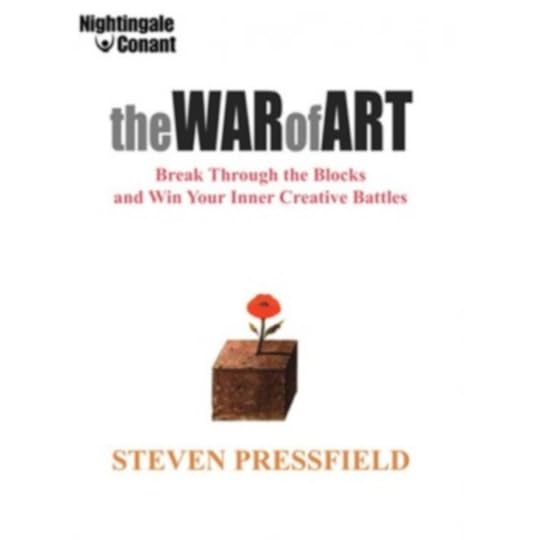 A brave and influential woman in my life recommended one of the only self-help books I'll ever keep. (I've read oodles of them in my day, and have kept three. Three.) It's called The War of Art by Steven Pressfield. It puts into words (much better than mine) the notion I'm trying to convey here.If you're a singer and you want to win the stuffed bear, read this book.You're welcome.#selfhelp #warofart #authenticself #artistsjourney #fearofsinging
June 25, 2019
YOUR WEBSITE'S WELCOME MAT: How to Invite that Next Client In
Reprinted from the VASTA Voice, June 2019 Most freelancers don’t want to think about marketing. We want to set up shop and offer our services. Then we’d like to have great clients show up at our door and be happy to pay us. Unfortunately, and with very few exceptions, that doesn’t happen. Like it or not, we have to market ourselves.In both working and talking with freelance professionals, I’ve noticed that there are three points of disdain that draw a common thread through the fabric of our loathing for marketing.1. We’re typically short on time, and marketing takes time.2. We don’t want to have to conquer our fear of new technologies.3. We feel uncomfortable tooting our own respective horns. About No. 1:There are books, videos, and seminars to help with time management so this article will pass that by.About No. 2:I’ll merely pass on some sage advice given to me by a high school student. If you have to learn something new, spend half an hour watching YouTube videos about how to do it. At the end of the 30 minutes, you’ll either think, “I can do this,” or not. Typically, the tough part is facing your fear, so watching a few videos is a good low-resistance, non-committal first step. I find most consumer-centered technologies these days are pretty easy if you let yourself get the hang of it.That said, if you haven’t explored the drag-and-drop website platforms yet, what are you waiting for? They are the bomb. Beautiful, easy, no webmaster necessary! Wix and Squarespace are the biggies right now, but there are competitors out there, and reviews that compare them. Google away!About No. 3This is the demon we’ll expose to bright lights today.Seriously. What’s worse than writing copy about yourself? Very few of us are capable of honestly assessing our own strengths accurately such that we could expound on them. If you’ve been working in your field long enough that you’ve seen first-hand what your strengths are, how do you talk about that? Or, how do you talk about that without sounding self-important?What we usually end up doing is citing our achievements, awards, degrees, and performances. Not only does that make for a really milquetoast website, it’s probably not attracting clients. Why? Because you’re talking about yourself, rather than about your potential client.Now you may be thinking, “But of course it’s about me! It’s my website about my services. Anyone looking for what I do wants to know about me, the person who’s doing that thing."Nope.[image error]If you’re teaching in a college, you are in the luxurious position of being a developer of talent and skills. If you’re an independent teacher or coach, your job is to solve problems. Clients don’t call you because everything is jim-dandy and they’re just looking for ways to spend money and time. They call you because they have a problem they can’t solve alone, and they’re willing to invest their money and time to solve that problem.Your potential client wants to know that you understand her problem, that you understand her, and that you, the professional, are both qualified and prepared to help her solve her problem or clear her hurdle. Your copy has to talk to her about her issues. Along the way you can let her know that you’re the perfect person to help her.Here’s where the self-horn-tooting comes in. You can put your impressive résumé on your “About” page, but that home page has to zero in on your visitor’s concerns. That person is asking the question, “Can you help me?” and perhaps “How?” Your home page has to answer the first question and guide them to the answer to the second question.
 Let’s say I’m looking for a speech coach. Your home page has to tell me in one second and in no uncertain terms that I’ve come to the site of a speech coach. In that same second (or less) I have to feel good about what I’m seeing. The colors, typefaces, and layouts have to appeal to me. I have to feel comfortable enough to click the links that will answer the question of how you’ll help me.Here are some ways you can invite that person in:The power of having good quality photos of yourself on the home page cannot be overstressed. Show your cute, warm, trustworthy self to the camera!Images are more powerful than words, but poor-quality images look unprofessional. If you’re concerned about the high price of stock photos, get your images from Pixabay.com or Pexels.com. Be nice and leave a few shekels in the tip jar.Don’t overwhelm them with copy or with choices.Have the first thing they see answer the question, “What services does this person provide?” Your banner, logo, or title should say what you do (e.g., Kathy Bird is the Word! Kathy Bird Voice & Speech)Have between one and four clear choices in your menu (e.g. Onsite and Group Classes, Personal Speech Coaching, Executive Coaching).Don’t crowd your copy. Big font sizes, space between lines, and columns that aren’t too wide make for easy reading and scanning.Two fonts. Only two fonts. One for titles, one for copy. Colors matter. Pick your “signature” color, and two complimentary colors to go with it. (Here is a terrific article on color from Canva.com, a site which is awesome-sauce and you should know about it!)Once you have this concept in your head, fly into cyberspace and look at some websites. See how you feel about them, and try to figure out why you feel that way. Having the client-centered-site idea in your head will inform your opinions.If a picture’s worth a thousand words, a website must be worth more. Take a look at a few sites I’ve picked out. This list includes my site and the sites of some successful colleagues. Enjoy, learn, go forth and create! And have fun!Meredith Colbyhttps://www.meredithcolby.com/Clean look, accessible copy, unavoidable navigationSarah Campbellhttps://sarasmusicstudio.com/Beautiful, easy, clean.Sanddollar Musichttps://www.sanddollarmusic.com/Great photos, easy navigation, their copy is the one to beat. Note the pop-ups.The Speakeasy Cooperativehttps://www.faithculturekiss.com/The grooviest. Clear message, beautiful colors and graphics. Note the pop-ups.Eden Casteelhttp://www.edencasteel.com/Warm, fun, clear.The Full Voicehttps://www.thefullvoice.com/Not beautiful, but very clear.#freelance #website #voiceteacher #voicecoach #voicecoachmarketing #website
Most freelancers don’t want to think about marketing. We want to set up shop and offer our services. Then we’d like to have great clients show up at our door and be happy to pay us. Unfortunately, and with very few exceptions, that doesn’t happen. Like it or not, we have to market ourselves.In both working and talking with freelance professionals, I’ve noticed that there are three points of disdain that draw a common thread through the fabric of our loathing for marketing.1. We’re typically short on time, and marketing takes time.2. We don’t want to have to conquer our fear of new technologies.3. We feel uncomfortable tooting our own respective horns. About No. 1:There are books, videos, and seminars to help with time management so this article will pass that by.About No. 2:I’ll merely pass on some sage advice given to me by a high school student. If you have to learn something new, spend half an hour watching YouTube videos about how to do it. At the end of the 30 minutes, you’ll either think, “I can do this,” or not. Typically, the tough part is facing your fear, so watching a few videos is a good low-resistance, non-committal first step. I find most consumer-centered technologies these days are pretty easy if you let yourself get the hang of it.That said, if you haven’t explored the drag-and-drop website platforms yet, what are you waiting for? They are the bomb. Beautiful, easy, no webmaster necessary! Wix and Squarespace are the biggies right now, but there are competitors out there, and reviews that compare them. Google away!About No. 3This is the demon we’ll expose to bright lights today.Seriously. What’s worse than writing copy about yourself? Very few of us are capable of honestly assessing our own strengths accurately such that we could expound on them. If you’ve been working in your field long enough that you’ve seen first-hand what your strengths are, how do you talk about that? Or, how do you talk about that without sounding self-important?What we usually end up doing is citing our achievements, awards, degrees, and performances. Not only does that make for a really milquetoast website, it’s probably not attracting clients. Why? Because you’re talking about yourself, rather than about your potential client.Now you may be thinking, “But of course it’s about me! It’s my website about my services. Anyone looking for what I do wants to know about me, the person who’s doing that thing."Nope.[image error]If you’re teaching in a college, you are in the luxurious position of being a developer of talent and skills. If you’re an independent teacher or coach, your job is to solve problems. Clients don’t call you because everything is jim-dandy and they’re just looking for ways to spend money and time. They call you because they have a problem they can’t solve alone, and they’re willing to invest their money and time to solve that problem.Your potential client wants to know that you understand her problem, that you understand her, and that you, the professional, are both qualified and prepared to help her solve her problem or clear her hurdle. Your copy has to talk to her about her issues. Along the way you can let her know that you’re the perfect person to help her.Here’s where the self-horn-tooting comes in. You can put your impressive résumé on your “About” page, but that home page has to zero in on your visitor’s concerns. That person is asking the question, “Can you help me?” and perhaps “How?” Your home page has to answer the first question and guide them to the answer to the second question.Let’s say I’m looking for a speech coach. Your home page has to tell me in one second and in no uncertain terms that I’ve come to the site of a speech coach. In that same second (or less) I have to feel good about what I’m seeing. The colors, typefaces, and layouts have to appeal to me. I have to feel comfortable enough to click the links that will answer the question of how you’ll help me.Here are some ways you can invite that person in:The power of having good quality photos of yourself on the home page cannot be overstressed. Show your cute, warm, trustworthy self to the camera!Images are more powerful than words, but poor-quality images look unprofessional. If you’re concerned about the high price of stock photos, get your images from Pixabay.com or Pexels.com. Be nice and leave a few shekels in the tip jar.Don’t overwhelm them with copy or with choices.Have the first thing they see answer the question, “What services does this person provide?” Your banner, logo, or title should say what you do (e.g., Kathy Bird is the Word! Kathy Bird Voice & Speech)Have between one and four clear choices in your menu (e.g. Onsite and Group Classes, Personal Speech Coaching, Executive Coaching).Don’t crowd your copy. Big font sizes, space between lines, and columns that aren’t too wide make for easy reading and scanning.Two fonts. Only two fonts. One for titles, one for copy. Colors matter. Pick your “signature” color, and two complimentary colors to go with it. (Here is a terrific article on color from Canva.com, a site which is awesome-sauce and you should know about it!)Once you have this concept in your head, fly into cyberspace and look at some websites. See how you feel about them, and try to figure out why you feel that way. Having the client-centered-site idea in your head will inform your opinions.If a picture’s worth a thousand words, a website must be worth more. Take a look at a few sites I’ve picked out. This list includes my site and the sites of some successful colleagues. Enjoy, learn, go forth and create! And have fun!Meredith Colbyhttps://www.meredithcolby.com/Clean look, accessible copy, unavoidable navigationSarah Campbellhttps://sarasmusicstudio.com/Beautiful, easy, clean.Sanddollar Musichttps://www.sanddollarmusic.com/Great photos, easy navigation, their copy is the one to beat. Note the pop-ups.The Speakeasy Cooperativehttps://www.faithculturekiss.com/The grooviest. Clear message, beautiful colors and graphics. Note the pop-ups.Eden Casteelhttp://www.edencasteel.com/Warm, fun, clear.The Full Voicehttps://www.thefullvoice.com/Not beautiful, but very clear.#freelance #website #voiceteacher #voicecoach #voicecoachmarketing #website
June 3, 2019
Keeping Your Students: The Rules of Cause & Effect Applied to Your Studio
 A couple of decades ago, my roommate Shirley didn’t like to deal with things she didn’t like to deal with. For some people that translates to pragmatism. For Shirley it translated to never-ending personal chaos.One day I watched her peel a parking ticket off her car and throw it away. I asked what (the hell) she was doing and found out ignoring parking violations was just a thing she did. Normally. Like, she got them fairly often. In my mild horror I told her, “If you get a boot on your car, don’t even ask me for money”.Her sincere answer completely threw me: “Why”? To me it was obvious: if you cause something, you’re responsible for the effect.In our physical world, the law of cause and effect is ironclad. The physics that regulate our lives on this spinning sphere are predictable and measurable. It’s possible those rules also apply to bureaucracy, hence my alarm regarding Shirley’s cavalier attitude toward her citations. However, in the world of interpersonal relationships, cause and effect can be a bit squishy. Cause can appear inadvertently, and effect can be unpredictable.Interpersonal Cause and Effect is a big deal for voice teachers and other professionals whose workplace includes the inner recesses of their client’s psyche.Too often voice teachers forget about the context of their students' singing. They instruct based on what they know to be right and healthy, and that instruction may not be applicable to the environment or style in which the student sings.
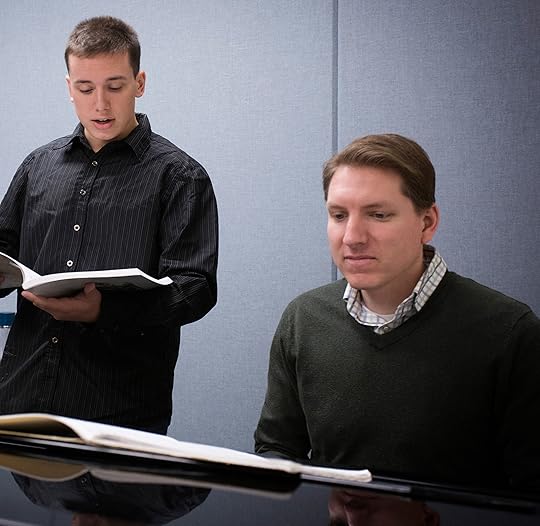 For instance, a teacher may believe that a particular vowel should be produced in a particular way in a given situation. This is what he teaches his student. His student, however, may be a singer in a rock band. So although the instruction is solid, it’s not applicable to the context in which his student is singing. She’s in a situation where she can’t hear herself, and the aesthetics of her genre are such that, if she did follow her teacher’s instruction, she’d sound inappropriate.
  That well-intentioned and pedagogically correct voice teacher thought he was doing his job, showing his student how to create a healthy sound. But in fact, he was creating Cause. The Effect might be something along the lines ofthe student doesn’t feel understood or appreciated for her musical endeavors and quits lessons with no explanation.The student feels exasperated by her teacher’s lack of knowledge and quits lessons with no explanation. The student tries to comply with her teacher’s instruction and ends up with vocal damage. None of those things are what the teacher had in mind. He didn’t know he was creating Cause, because he was acting without awareness of context.Because of the intimacy of what voice teachers do, and the complexity of the human soul, creating Cause is unavoidable. Sometimes we say things that are as innocent as a baby bunny and that cut our student’s egos to the quick. We can, however, look to the typical and frequent reasons we create Cause and make conscious decisions.
 There’s a good-sized handful of issues that are typical and oft-repeating in a voice teacher’s studio, and that initiate Cause and Effect. Failure to appreciate context is only one, but it’s an important one particularly where your CCM/Pop students are concerned. For them, context is everything.Meredith Colby is the author of Money Notes: How to Sing High, Loud, Healthy and Forever. She's a voice teacher the the creator of Neuro-Vocal Method, which uses brain science research to teach healthy CCM/Popular voice. To purchase Money Notes or learn more, click HERE.
April 24, 2019
THE OTHER TRIPLE THREAT: Singing, Dancing, and Acting Aren't Enough
Carly was prepared for her audition. She really wanted one of the very few spots open in a local performing choir. She had auditioned the previous year and not made it. After a year of working diligently on her skills she felt confident that she had a shot. After coaching her, I was also confident that she had a shot. She sounded good, presented really well, and is a really good dancer. She auditioned. She wasn’t cast. Carly certainly isn’t the first client I’ve coached who didn’t get cast. I’ve coached a lot of very talented, serious singers who could also act and dance, and who were not cast for the thing they were shooting for.Any audition coach will tell you that it’s never a good idea to second guess a director’s choice in casting. Trying to figure out why you weren't cast is a fool’s errand. The criteria the director is looking for could have to do with talent or experience, but it could also have to do with things over which you have no control, such as your body or voice type. Unless you’re in a position to talk to the director and expect candor from her, you’re better off chalking that audition up to experience, and then moving on.Unless…
 Unless you haven’t taken into account the other side of the triple threat coin - the other three things that people who succeed typically have. Those things are self-knowledge/confidence, interpersonal skills, and a good attitude. Having success in the arts means making a name for yourself. You’ll work with and for the same people over and over. It won’t be long before your reputation precedes you. The strength of being a capable Triple Threat is hard to overestimate, and if you add to it the skills of the other triple threat, you’ll be unstoppable!
 A Good Attitude The person who shows up a little early, offers to pitch in, doesn’t gossip, lifts others up, and generally makes the best of things is a joy to be around. That person is a joy to have in your cast. I’ve listed this attribute first because, as a professional in the arts, it is far and away the most important tool in your toolbox. Younger people don’t always know this (I know I didn’t) but older, more experienced artists will attest that this is the case. Interpersonal Skills Knowing how to get along with people is gold in the freelance world. (It’s probably also gold in the regular-job world.) Abide by the Golden Rule and you’ll increase your chances of getting cast. I realize this falls into the “simple-but-not-easy” category, but its importance can’t be overstated. The performing arts are a team sport, and if people don’t like you, you can’t play well together. If you don’t give people the benefit of the doubt, you’ll always be suspicious, jealous, or angry. If you’ve never read the classic tome How to Win Friends and Influence People and you were not cast at your last two auditions, now is the time to crack that book open.Self-Confidence and Self-Knowledge I’ve put these two together because, as a performing artist, they go together. Too often performing artists are trying to figure out who they are, are hoping the casting director will figure out who they are, or wishing they were something else.
  Those people are not people who are going to present well at an audition. A good friend of mine who is also a very successful actor once told me that she feels that the audition is the place to show the director what he’s looking for. The confidence of that statement dazzled me. I absolutely love it, and believe her entirely. She knows what she looks like, what sort of characters she can make shine, and what her strengths are. And that’s what she brings to the table. Being able to sing, dance, and act well are necessary skills to succeed in the the world of musical theater. We talk about them all the time, and any number of professionals are available to help an artist improve those skills. But the other side of that coin is equally as important for long-term success. And just like the other demonstrable triple-threat skills, these internal skills can be improved upon. If the traits I’ve mentioned here don’t come naturally to you, and you want to be successful in any of the performing arts, now’s the time to start building those skills.#triplethreat #winningatmusicaltheater #musictheater #musicaltheater #performingarts
Carly certainly isn’t the first client I’ve coached who didn’t get cast. I’ve coached a lot of very talented, serious singers who could also act and dance, and who were not cast for the thing they were shooting for.Any audition coach will tell you that it’s never a good idea to second guess a director’s choice in casting. Trying to figure out why you weren't cast is a fool’s errand. The criteria the director is looking for could have to do with talent or experience, but it could also have to do with things over which you have no control, such as your body or voice type. Unless you’re in a position to talk to the director and expect candor from her, you’re better off chalking that audition up to experience, and then moving on.Unless…Unless you haven’t taken into account the other side of the triple threat coin - the other three things that people who succeed typically have. Those things are self-knowledge/confidence, interpersonal skills, and a good attitude. Having success in the arts means making a name for yourself. You’ll work with and for the same people over and over. It won’t be long before your reputation precedes you. The strength of being a capable Triple Threat is hard to overestimate, and if you add to it the skills of the other triple threat, you’ll be unstoppable!A Good Attitude The person who shows up a little early, offers to pitch in, doesn’t gossip, lifts others up, and generally makes the best of things is a joy to be around. That person is a joy to have in your cast. I’ve listed this attribute first because, as a professional in the arts, it is far and away the most important tool in your toolbox. Younger people don’t always know this (I know I didn’t) but older, more experienced artists will attest that this is the case. Interpersonal Skills Knowing how to get along with people is gold in the freelance world. (It’s probably also gold in the regular-job world.) Abide by the Golden Rule and you’ll increase your chances of getting cast. I realize this falls into the “simple-but-not-easy” category, but its importance can’t be overstated. The performing arts are a team sport, and if people don’t like you, you can’t play well together. If you don’t give people the benefit of the doubt, you’ll always be suspicious, jealous, or angry. If you’ve never read the classic tome How to Win Friends and Influence People and you were not cast at your last two auditions, now is the time to crack that book open.Self-Confidence and Self-Knowledge I’ve put these two together because, as a performing artist, they go together. Too often performing artists are trying to figure out who they are, are hoping the casting director will figure out who they are, or wishing they were something else. Those people are not people who are going to present well at an audition. A good friend of mine who is also a very successful actor once told me that she feels that the audition is the place to show the director what he’s looking for. The confidence of that statement dazzled me. I absolutely love it, and believe her entirely. She knows what she looks like, what sort of characters she can make shine, and what her strengths are. And that’s what she brings to the table. Being able to sing, dance, and act well are necessary skills to succeed in the the world of musical theater. We talk about them all the time, and any number of professionals are available to help an artist improve those skills. But the other side of that coin is equally as important for long-term success. And just like the other demonstrable triple-threat skills, these internal skills can be improved upon. If the traits I’ve mentioned here don’t come naturally to you, and you want to be successful in any of the performing arts, now’s the time to start building those skills.#triplethreat #winningatmusicaltheater #musictheater #musicaltheater #performingarts
April 16, 2019
If We Won't, Who Will? How artists hurt themselves by undervaluing others
We believe that our work has a value; that we should be able to continue to pursue our meaningful work and also pay our bills. We don’t think that’s crazy. I just metwith some music theater professionals. They're planning to stage a show to a nonprofit company for children, and I was attending as the probable music director. They love what they do, love theater, and love the kids. They're planning to use published music without even checking to see if they can license it. In other words, they're planning to steal it because “everyone does.“ I pointed out that using music this way lacks integrity, sets a bad example, and makes me uncomfortable. The director dismissed my concerns without discussion.
 There's a new club in Chicago which was started by a working musician. It features live music. (It is in no way hyperbole to state that live music venues in Chicago have not raised the amounts they pay live musicians in over 30 years.) This club - did I mention the owner is a working musician? - is not only paying musicians an insulting amount of money, but is actually charging them to appear on stage.This club is not only paying musicians an insulting amount of money, but is actually charging them to appear on stage.A colleague, a voice teacher who teaches music theater style singing, was approached by another voice teacher for coaching. She posted a question to her fellow professionals asking whether or not she should charge for her time, considering this was a fellow voice teacher as well as someone with whom she wanted a closer professional relationship. She was concerned, not unreasonably, that if she charged the other voice teacher, said voice teacher may decide not to study with her.
  Recently my friend’s very talented daughter took part in a cabaret night that was organized by a local theater director/producer. That producer was paid, as was the pianist, and the venue. The singers were not paid. Not a thing. Nada. Zilch.My husband creates and sells music. I create and sell informational products. We believe that our work has a value and that we should be able to continue to pursue our meaningful work and also pay our bills. We don’t think that’s crazy. We think it’s fair. We think it's an idea that represents the kind of world we want to live in. Apparently my husband and I are in a very tiny minority.The examples here - which are all true, recent, and not at all unusual - are of artists having issues about paying other artists for their work, their art.If we won't pay one another for our work,if we won't value each other's contributions to the world,if we can't recognize that it's hard enough to put a price tag on a piece of our soul without having to fight for it,how can we expect others to?#artistspay #gettingpaid #professionalartist #professionalmusician #professionalrespect #mutualrespect #intellectualproperty
I just metwith some music theater professionals. They're planning to stage a show to a nonprofit company for children, and I was attending as the probable music director. They love what they do, love theater, and love the kids. They're planning to use published music without even checking to see if they can license it. In other words, they're planning to steal it because “everyone does.“ I pointed out that using music this way lacks integrity, sets a bad example, and makes me uncomfortable. The director dismissed my concerns without discussion.There's a new club in Chicago which was started by a working musician. It features live music. (It is in no way hyperbole to state that live music venues in Chicago have not raised the amounts they pay live musicians in over 30 years.) This club - did I mention the owner is a working musician? - is not only paying musicians an insulting amount of money, but is actually charging them to appear on stage.This club is not only paying musicians an insulting amount of money, but is actually charging them to appear on stage.A colleague, a voice teacher who teaches music theater style singing, was approached by another voice teacher for coaching. She posted a question to her fellow professionals asking whether or not she should charge for her time, considering this was a fellow voice teacher as well as someone with whom she wanted a closer professional relationship. She was concerned, not unreasonably, that if she charged the other voice teacher, said voice teacher may decide not to study with her. Recently my friend’s very talented daughter took part in a cabaret night that was organized by a local theater director/producer. That producer was paid, as was the pianist, and the venue. The singers were not paid. Not a thing. Nada. Zilch.My husband creates and sells music. I create and sell informational products. We believe that our work has a value and that we should be able to continue to pursue our meaningful work and also pay our bills. We don’t think that’s crazy. We think it’s fair. We think it's an idea that represents the kind of world we want to live in. Apparently my husband and I are in a very tiny minority.The examples here - which are all true, recent, and not at all unusual - are of artists having issues about paying other artists for their work, their art.If we won't pay one another for our work,if we won't value each other's contributions to the world,if we can't recognize that it's hard enough to put a price tag on a piece of our soul without having to fight for it,how can we expect others to?#artistspay #gettingpaid #professionalartist #professionalmusician #professionalrespect #mutualrespect #intellectualproperty
March 25, 2019
Animal Sounds & Singing
 Neuroscientist Sophie Scott of University College in London studies laughter. I listened to a podcast – the Hidden Brain episode called The Best Medicine – that explored laughter, as well as Dr. Scott’s Ted talk. It got me thinkin’.Thought #1:Laughter is a way to signal social cues. We’re social apes. We evolved to survive as groups, not as individuals. Everything we do as we interact with one another is about social cues.Laughter is very seldom about responding to what’s funny, it’s about communicating. When we laugh we often do so involuntarily. Laughter is on the list of involuntary, animal noises that we humans make. There are other animal vocalizations we still make, such as yelping with pain, gasping with surprise, or crying out in fear.It seems that other animals that are social in nature (that we know of) have a way of laughing, or something like laughing that creates those same sorts of social cues.
  Dr. Scott talked about how rats have a form of laughter, in a frequency above our hearing, that indicates playfulness. They laughed when they were tickled by researchers, and once they identified the researchers as a source of tickling, they would laugh in order to incite the researchers to tickle them. The rats who had their vocal cords removed for this study were treated differently in play. Rats who could laugh would play together normally, but those without the ability to laugh would find their play often escalated to fighting. Based on the example in this research, I would imagine that every social animal would have to have some form of laughter. Laughter would literally be a life or death issue.Thought #2:
 Research by Daniel Levitin of McGill University, Steven Mithen of University of Reading, and Ani Patel of The Neurosciences Institute in San Diego all suggest the probability that hominids, homo sapiens in particular, sang (or did something a lot like singing) before they spoke. The genome for language processing, as we know it today, is only about 100,000 years old. Since all hominids were communal animals before and at that time, communication was likely a series of visual cues and signing along with pitched vowel sounds (not unlike the communications of chimpanzees and bonobos, our closest relatives). Again, the ability to make the correct sounds – the pitch, vowel, timing, rhythm – were a matter of life or death.If all that’s the case, then people would have, most likely, been singing before they spoke, not the other way around as has been commonly portrayed in popular media. Early speech, then, would fall into the “animal sounds” category of phonation.Thought #3Neuro-Vocal Method, the neurology-based method of voice instruction I’ve developed, has a strong emphasis on the singer utilizing awareness of their facial resonant capacity to measure laryngeal efficiency.
  Most singers have a natural air flow that is too passive to accomplish this in singing. One tool that helps them is a breathing technique which mimics laughter. The singer measures certain behaviors of specific abdominal muscles – the same behaviors found in laughter – in order to create a more energized air flow. This energized air flow, along with an awareness of internal resonance, gives the singer access to an ease and efficiency of phonation which could not be achieved without it.Once the singer is using this awareness of their resonant capacity along with the breathing which is the same as laughter, their ability to phonate is enhanced at every level. They can sing higher and louder, and can sing for very long periods without fatigue or risk of vocal damage. In my experience, this method of phonation can actually allow for healing of damaged vocal folds.Thought #4If singing comes from laughter, why do so few people associate this kind of breathing with singing? Why is singing not an “animal noise”? Or, at what point does it lose that status?I’ve heard great opera singers sing without accessing the nasopharynx, and have read vocal pedagogues who claim that either there is no resonance in the nasopharynx when singing, or that it should not be used.
  Maybe it’s a classical thing. Classical singing, when done well, is a superbly free sound, but it takes a while to get there and many singers never achieve that freedom. Popular singing, on the other hand, is not looking for a particular sound but seeks a manner of making sound that is free from the beginning. There is no pressure to be beautiful, just to be natural.Since I teach only CCM/Popular, I have the luxury of starting each student directly on the path of achieving the ability to make animal sounds. Animal sounds require animal sound production: exhalation akin to laughter, and resonance (via the nasopharynx) akin to shouting or calling.I wish I could wrap up all these thoughts. Right now. Today. But I haven’t concluded anything. I’m ruminating. I think there’s a lot to this. I think there’s probably more to exploiting the peripheral nervous system, in the way I do with Neuro-Vocal Method, than I had heretofore put together. I wonder if I could get Sophie Scott interested in this...#singingandlaughter #sophiescott #animalsounds