
Anna Geiger's Blog
March 1, 2026
How to assess comprehension – with Dr. Kelly Powell-Smith
 RAR Podcast #243: How to assess comprehension
Dr. Kelly Powell-Smith explains how to pinpoint specific comprehension issues using strategic diagnostic assessment—without over-testing your students!
Listen to the episode hereFull episode transcript Resources mentioned in this episodeCFOL (Comprehension, Fluency, and Oral Language) diagnostic from AcadienceThe Reading Comprehension Blueprint, book by Nancy Hennessy, and accompanying Reading Comprehension Blueprint Activity Book, with Julia SalamoneLiteracy How’s Syntax: Knowledge to Practice, by Margie Gillis and Nancy Eberhardt
The post How to assess comprehension – with Dr. Kelly Powell-Smith appeared first on Reach All Readers.


February 22, 2026
What every literacy teacher should know about assessing RAN – with Dr. Erin Pzinski
 RAR Podcast #242: What every literacy teacher should know about assessing RAN
Ever heard of RAN assessment but weren’t quite sure what it was or what to do with it? Dr. Erin Pzinski breaks down rapid automatized naming and explains why it’s like a “check engine” light. You’ll learn what not to do with RAN assessment data and what really helps students with low RAN succeed.
Listen to the episode hereFull episode transcript
Learn more about RANWhat Educators Need to Know about Rapid Automatized Naming (RAN), article by Elizabeth NortonRapid Automatized Naming (RAN) and Reading Fluency: Implications for Understanding and Treatment of Reading Disabilities, article by Elizabeth Norton and Maryanne WolfFree RAN assessment from AcadienceThe post What every literacy teacher should know about assessing RAN – with Dr. Erin Pzinski appeared first on Reach All Readers.
February 15, 2026
Data-based decision making – with Angie Hanlin
 RAR Podcast #241: Data-based decision making
Literacy consultant Angie Hanlin helps us understand exactly what data-based decision making looks like. She describes what should be happening at data team meetings and what teachers should do as soon as those meetings are over. This inspiring and practical episode is a must-listen for any literacy teacher!
Listen to the episode hereFull episode transcript
Get a free sample from Reach All Readers Plus!If This, Then That guideLearn more from Angie Hanlin
It’s Possible!
book by Pati Montgomery and Angie HanlinInterview about her school’s improvement, From 13% to 100% Literacy Proficiency, with Melissa & Lori Love LiteracyPodcast interview with Angie and her superintendent on their school’s improvement, with The Reading LeagueAngie’s website, angelahanlin.comAngie’s monthly newsletter, The Literacy LinkFind Angie on XFind Angie on FacebookFind Angie on TikTokAngie’s email: ahanlin@angelahanlin.comThe post Data-based decision making – with Angie Hanlin appeared first on Reach All Readers.
February 8, 2026
The difference between CBMs and CATs (and why it matters!) – with Alisa Dorman
 RAR Podcast #240: The difference between CBMs and CATs (and why it matters!)
Alisa Dorman explains what makes universal screeners effective and breaks down the difference between curriculum-based measures and computer adaptive tests—and why this difference matters.
Listen to the episode hereFull episode transcript
Join my membership site, Reach All Readers Plus!Get more infoCurriculum-based measures mentioned in this episodeAcadience (free download available of the paper copy)easyCBMaimswebFastBridgeDIBELS 8th Edition (testing materials available as a free download through the University of Oregon)The post The difference between CBMs and CATs (and why it matters!) – with Alisa Dorman appeared first on Reach All Readers.
February 1, 2026
What is CBM, and how should teachers use it? – with Dr. Michelle Hosp
 RAR Podcast #230: What is CBM, and how should teachers use it? – with Dr. Michelle Hosp
Dr. Michelle Hosp, co-author of The ABCs of CBM, explains the history of curriculum based measurement and do’s and don’ts for implementing it. A must-listen for any K-3rd grade classroom teachers and all reading interventionists!
Listen to the episode hereFull episode transcript
Get a free sample from Reach All Readers Plus!Phonemic Awareness and Phonics Diagnostic AssessmentsResources mentioned in this episodeDr. Hosp’s book, The ABCs of CBM: A Practical Guide to Curriculum-Based MeasurementThe International Dyslexia Association (IDA)A handbook, Dyslexia in the Classroom: What Every Teacher Needs to Know, from the IDAScreening for Reading Risk, from the National Center on Improving LiteracyIntroduction to Intensive Intervention course by the National Center for Intensive InterventionThe Reading League’s article, What is the science of reading?The Reading League’s Compass: Your Guide to Navigating the Science of ReadingShort video clips from Reading RocketsReading 101: Self-Paced Learning Modules, from Reading RocketsWhat Works Clearinghouse’s Foundational Skills to Support Reading for Understanding in Kindergarten Through 3rd GradeThe post What is CBM, and how should teachers use it? – with Dr. Michelle Hosp appeared first on Reach All Readers.
January 25, 2026
Reading assessment done right – with Dr. Stephanie Stollar and Kate Winn
 RAR Podcast #238: Reading assessment done right – with Dr. Stephanie Stollar and Kate Winn
Assessment doesn’t have to be overwhelming! Stephanie Stollar and Kate Winn, authors of Reading Assessment Done Right, share practical strategies for screening, diagnosing, and monitoring student progress effectively.
Listen to the episode hereFull episode transcript
Get a free sample from Reach All Readers Plus!Phonemic Awareness and Phonics Diagnostic AssessmentsResources mentioned in this episodeStephanie Stollar’s article on computer adaptive testsList of books by Stephanie StollarFollow Kate Winn on XThe post Reading assessment done right – with Dr. Stephanie Stollar and Kate Winn appeared first on Reach All Readers.
January 18, 2026
The 3 types of assessment teachers need for data-based decision making
 RAR Podcast #237: The 3 types of assessment teachers need for data-based decision making
In this quick solo episode, we take a look at the three types of assessment teachers use within MTSS for data-based decision making. You’ll learn the key questions each one answers, how they work together, and why they’re essential for making informed instructional decisions. I’m also sharing my phonemic awareness and phonics diagnostic assessments from Reach All Readers Plus as a free download.
Listen to the episode hereFull episode transcript
Free sample from Reach All Readers Plus!Phonemic Awareness and Phonics Diagnostic AssessmentsThe post The 3 types of assessment teachers need for data-based decision making appeared first on Reach All Readers.
January 11, 2026
Important lessons from the history of RTI and MTSS – with Dr. Heidi Beverine-Curry
 RAR Podcast #236: Important lessons from the history of RTI and MTSS – with Dr. Heidi Beverine-Curry
We’re continuing our assessment series with Dr. Heidi Beverine-Curry, who walks us through the history of RTI and MTSS—from the “wait to fail” model to today’s data-based approaches. Learn why strong Tier 1 instruction must be the foundation, what went wrong with RTI implementation, and how to get it right in your school.
Listen to the episode hereFull episode transcript
Become a member of Reach All Readers Plus!Get thousands of targeted literacy resourcesResources mentioned in this episodePodcast episode with Irene Daria, “I didn’t believe him – How one mom learned that her son’s school wasn’t teaching him to read”Learn more about The Reading LeagueThe post Important lessons from the history of RTI and MTSS – with Dr. Heidi Beverine-Curry appeared first on Reach All Readers.
November 30, 2025
How to use etymology to help students spell high frequency words – with Fiona Hamilton and Rebecca Loveless
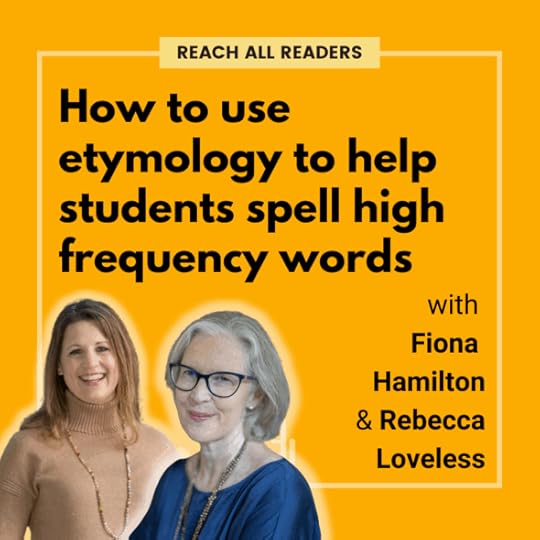 TRT Podcast #235: How to use etymology to help students spell high frequency words – with Fiona Hamilton and Rebecca Loveless
Did you know that teaching students about the history of specific words can actually reduce cognitive load and help students better remember the spellings? Fiona Hamilton and Rebecca Loveless, authors of The High Frequency Word Project, show us how to do just that.
Listen to the episode hereFull episode transcript Free sample resource from Reach All Readers PlusHigh frequency word lessons with decodable textResources mentioned in this episodeGet the book,
The High Frequency Word Project
, by Rebecca Loveless and Fiona HamiltonFree download of the story of the ONE family (coming soon!)Rebecca’s website, Illuminate WordsRebecca’s online coursesFiona’s website, Word TorqueFiona’s workshopsWebsite for The High Frequency Word ProjectHigh Frequency Word Project companion study booklets
Free sample resource from Reach All Readers PlusHigh frequency word lessons with decodable textResources mentioned in this episodeGet the book,
The High Frequency Word Project
, by Rebecca Loveless and Fiona HamiltonFree download of the story of the ONE family (coming soon!)Rebecca’s website, Illuminate WordsRebecca’s online coursesFiona’s website, Word TorqueFiona’s workshopsWebsite for The High Frequency Word ProjectHigh Frequency Word Project companion study bookletsThe post How to use etymology to help students spell high frequency words – with Fiona Hamilton and Rebecca Loveless appeared first on The Measured Mom.
November 23, 2025
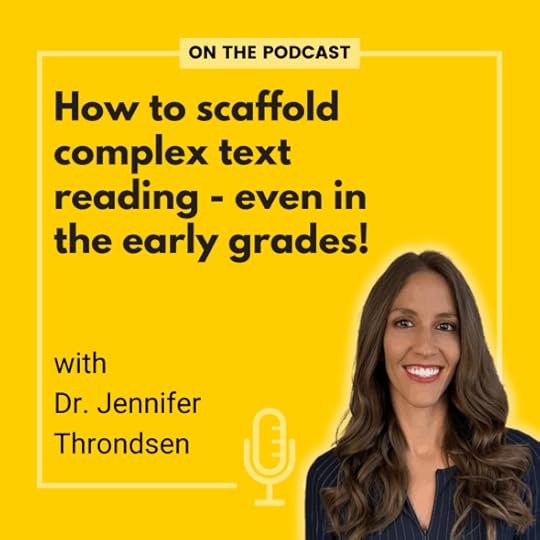
How to scaffold complex text reading – even in the early grades! with Dr. Jennifer Throndsen
 TRT Podcast #234: How to teach phonics to English learners – with Alison Ryan
All students need access to rich, challenging text to grow as readers. But how do we support them? Dr. Jennifer Throndsen shares the why and HOW of scaffolding complex texts. This episode is for you no matter what grade you teach.
Listen to the episode hereFull episode transcript
Learn more from Jennifer ThrondsenBook: Raising Up Readers: Twenty-Five Scaffolding Strategies to Help Students Access Challenging TextWebsite: Impactful Learning DesignsLinkedIn: Jennifer Throndsen, PhDInstagram: jt_travel32The post How to scaffold complex text reading – even in the early grades! with Dr. Jennifer Throndsen appeared first on The Measured Mom.
Anna Geiger's Blog

- Anna Geiger's profile
- 1 follower

