
Anna Geiger's Blog
November 30, 2025
How to use etymology to help students spell high frequency words – with Fiona Hamilton and Rebecca Loveless
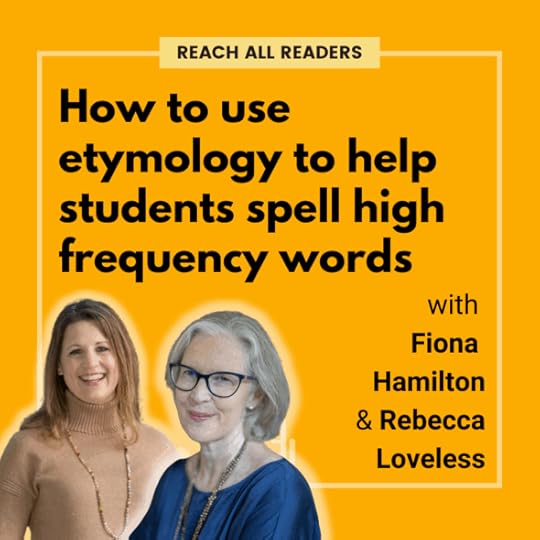 TRT Podcast #235: How to use etymology to help students spell high frequency words – with Fiona Hamilton and Rebecca Loveless
Did you know that teaching students about the history of specific words can actually reduce cognitive load and help students better remember the spellings? Fiona Hamilton and Rebecca Loveless, authors of The High Frequency Word Project, show us how to do just that.
Listen to the episode hereFull episode transcript Free sample resource from Reach All Readers PlusHigh frequency word lessons with decodable textResources mentioned in this episodeGet the book,
The High Frequency Word Project
, by Rebecca Loveless and Fiona HamiltonFree download of the story of the ONE family (coming soon!)Rebecca’s website, Illuminate WordsRebecca’s online coursesFiona’s website, Word TorqueFiona’s workshopsWebsite for The High Frequency Word ProjectHigh Frequency Word Project companion study booklets
Free sample resource from Reach All Readers PlusHigh frequency word lessons with decodable textResources mentioned in this episodeGet the book,
The High Frequency Word Project
, by Rebecca Loveless and Fiona HamiltonFree download of the story of the ONE family (coming soon!)Rebecca’s website, Illuminate WordsRebecca’s online coursesFiona’s website, Word TorqueFiona’s workshopsWebsite for The High Frequency Word ProjectHigh Frequency Word Project companion study bookletsThe post How to use etymology to help students spell high frequency words – with Fiona Hamilton and Rebecca Loveless appeared first on The Measured Mom.


November 23, 2025
How to scaffold complex text reading – even in the early grades! with Dr. Jennifer Throndsen
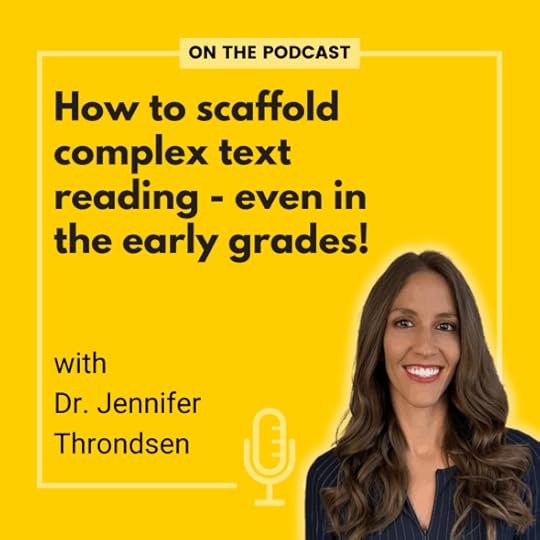 TRT Podcast #234: How to teach phonics to English learners – with Alison Ryan
All students need access to rich, challenging text to grow as readers. But how do we support them? Dr. Jennifer Throndsen shares the why and HOW of scaffolding complex texts. This episode is for you no matter what grade you teach.
Listen to the episode hereFull episode transcript
Learn more from Jennifer ThrondsenBook: Raising Up Readers: Twenty-Five Scaffolding Strategies to Help Students Access Challenging TextWebsite: Impactful Learning DesignsLinkedIn: Jennifer Throndsen, PhDInstagram: jt_travel32The post How to scaffold complex text reading – even in the early grades! with Dr. Jennifer Throndsen appeared first on The Measured Mom.
November 16, 2025
How to teach phonics to English learners – with Alison Ryan
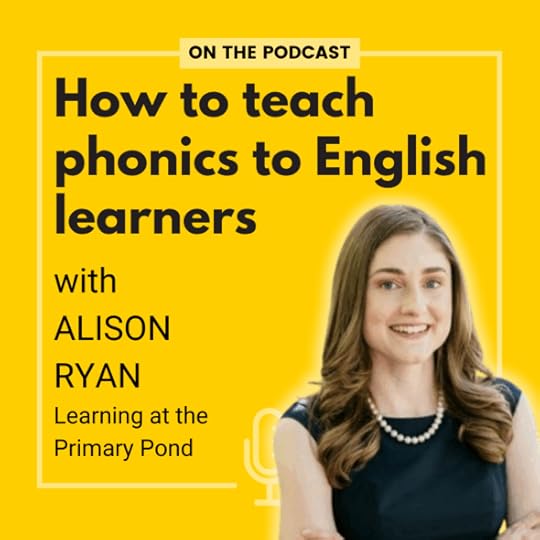 TRT Podcast #233: How to teach phonics to English learners – with Alison Ryan
If you’ve ever wondered how to give extra support to English learners during phonics lessons, this episode is for you. You’ll learn strategies for supporting students in decoding, vocabulary, and comprehension – all within the phonics lesson.
Listen to the episode hereFull episode transcript
Learn more from Alison RyanHer book, The Phonics Playbook: How to Differentiate Instruction so Students SucceedLearning at the Primary Pond websiteYouTube: @learningattheprimarypondInstagram: @learningattheprimarypond Facebook: Learning At The Primary Pond The post How to teach phonics to English learners – with Alison Ryan appeared first on The Measured Mom.
November 9, 2025
Quick tips for teaching morphology in the primary grades – with Sarah Paul
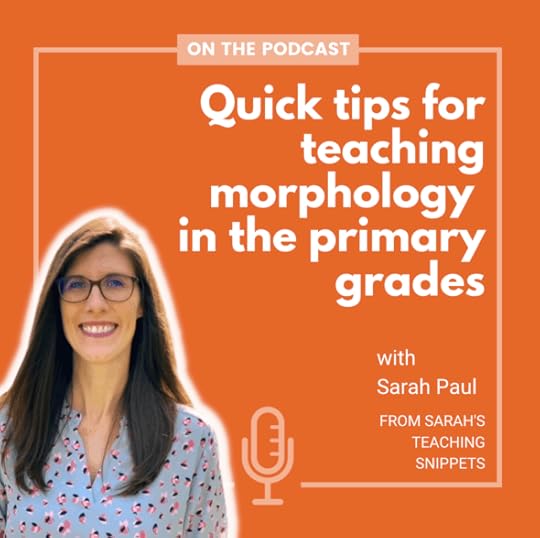 TRT Podcast #232: Quick tips for teaching morphology in the primary grades – with Sarah Paul
If you’ve ever wondered what morphology has to do with K-2, this is the episode for you! Sarah Paul shares fun and simple ways to incorporate morphology into your instruction in the primary grades. A must-listen!
Listen to the episode hereFull episode transcript
Resources mentioned in this episodeSarah’s Teaching Snippets website, and here are a few of my favorite posts:How to Use a Word MatrixTeaching Morphology to Beginning ReadersUnderstanding Morphology: Part 1Free Word Matrices from The Measured MomSarah’s morphology course, with Michelle SullivanFind Sarah on InstagramThe post Quick tips for teaching morphology in the primary grades – with Sarah Paul appeared first on The Measured Mom.
November 2, 2025
A powerful and practical routine for teaching with decodable text – with Brianna Guild
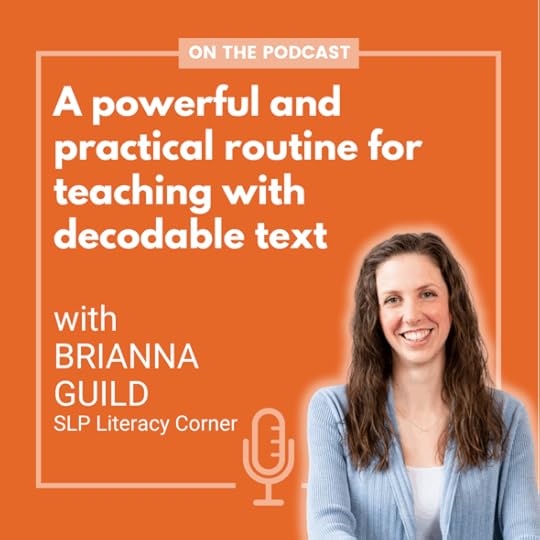 TRT Podcast #231: A powerful and practical routine for teaching with decodable text – with Brianna Guild
Discover how SLP Brianna Guild makes decodable books the heart of her literacy intervention sessions—while naturally weaving in vocabulary, fluency, and comprehension!
Listen to the episode hereFull episode transcript
Resources mentioned in this episodeMeasured Mom Decodable Books – free!Anna’s Ultimate Guide to Decodable BooksBrianna’s list of places to download free decodable textsConnect with Brianna GuildBrianna’s website, SLP Literacy CornerFind her on Instagram: @slp.literacy.cornerSLP Literacy Corner on TPTThe post A powerful and practical routine for teaching with decodable text – with Brianna Guild appeared first on The Measured Mom.
October 26, 2025
How to teach students to use set for variability – with Jen Yagid and Wendy Darasz
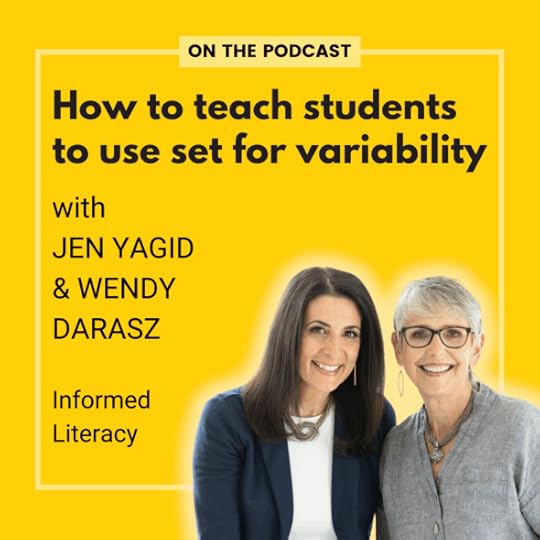 TRT Podcast #230: How to teach students to use set for variability – with Jen Yagid and Wendy Darasz
Jen and Wendy, reading specialists and dyslexia practitioners, explain what set for variability is and why it’s a skill even beginning readers need.
Listen to the episode hereFull episode transcript
Offers for our listenersFree decodable book sampleFree supplemental resource pack with the purchase of the hard copy decodables. Put both in your cart and use the code MM2025. Expires on December 1st!Connect with Jen & WendyTheir blog post about set for variabilityNew decodable booksThe Informed Literacy websiteInstagram: @informedlitYoutube: @informedlitFacebook: @informedlitPinterest: @informedlitResearch studies on set for variabilitySet for Variability as a Critical Predictor of Word Reading: Potential Implications for Early Identification and Treatment of DyslexiaUnpacking the Unique Relationship Between Set for Variability and Word Reading Development: Examining Word- and Child-Level Predictors of PerformanceSpelling as Statistical Learning: Using Consonantal Context to Spell VowelsThe Importance of Flexibility of Pronunciation in Learning to Decode: A Training Study in Set for VariabilityThe Role of Set for Variability in Irregular Word Reading: Word and Child Predictors in Typically Developing Readers and Students At-Risk for Reading DisabilitiesThe post How to teach students to use set for variability – with Jen Yagid and Wendy Darasz appeared first on The Measured Mom.
October 20, 2025
FREE sight word lessons with decodable text
Are you teaching sight words to young readers?
You’re in the right place!
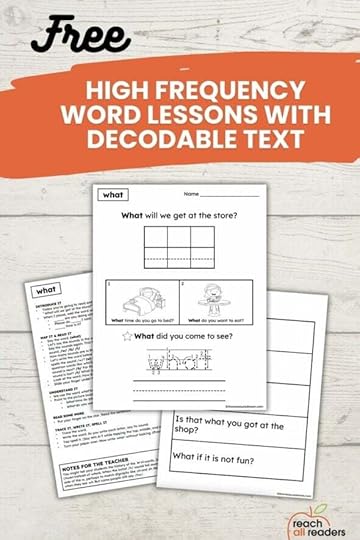
In this post I’ll show you exactly how to teach sight words using easy-to-follow lessons.
But first things first …
What ARE sight words, anyway?It depends whom you ask.
When reading researchers use the term sight words, they’re referring to the words that a reader recognizes instantly, on sight.
Sight words can also refer to words that our readers encounter frequently when reading. That’s the definition I’ll be using here. We want our readers to know these words instantly as they work to become fluent readers.
It’s time to rethink how we teach sight words.I used to think that when we teach sight words to young readers, we should teach them as whole words. This is why I used to share a collection of sight word books that taught the words through repeated exposure. (I’ve since removed them from the site and my shop.)
But research tells us that this isn’t how the brain learns to read.
In order for kids’ brains to make new words a part of their permanent sight word vocabulary (the fancy word for this is orthographic mapping), they need to connect the sounds to the letters.
In other words? Sound it out.
Integrating high-frequency words into phonics lessons allows students to make sense of spelling patterns for these words.
I know what you’re thinking.
What about words that we CAN’T sound out?We call attention to the parts of the word that are phonetic (and there’s usually at least 1-2 of them). Then, if possible, we explain why the tricky parts are spelled as they are.
And – always – we come back to meaning. We make sure students know what the words mean and have heard it used in multiple contexts.
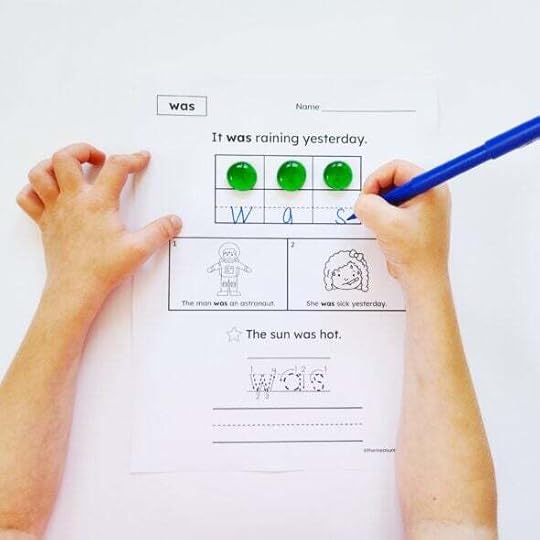
How to teach high frequency words to young learnersFirst, know our goal here. Our goal is not to teach loads of high frequency words as whole words, because kids need to connect the sounds to letters when reading. Instead, our goal is to integrate high frequency word learning with phonics instruction.All set? Great. Name the new word, and have your learner repeat it.Use the word in a sentence.Name the individual phonemes (sounds) in the word. For example, in the word is, there are two phonemes: /ĭ/ and /z/.Spell the sounds. Call attention to any unexpected spelling. In is, we spell /ĭ/ with i and /z/ with s.Teach your students the meaning of the word and use it in different contexts.Have your students write and spell the word.Have your learner read connected text. Connected text can be decodable sentences or books.Free high frequency word lessons with decodable textIf you’re like most teachers, you probably don’t have the time to prepare all these lessons yourself.
Good news – you don’t have to. You can get the full set of 260 lessons in our shop.
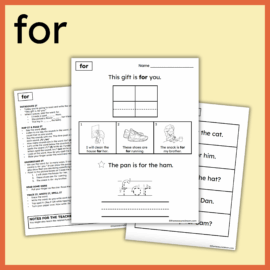
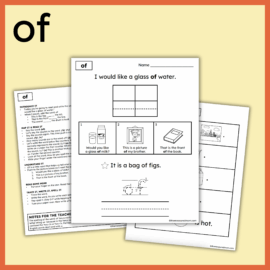
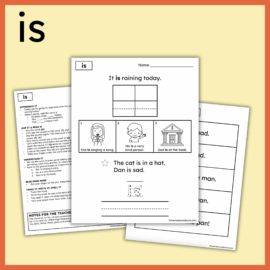
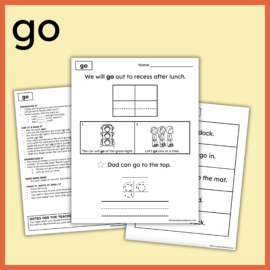
Want to try before you buy? Download the 15 free samples below! Simply click on an image, enter your information, and the file will be sent right to your email.
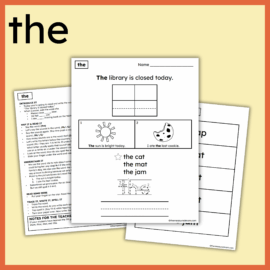
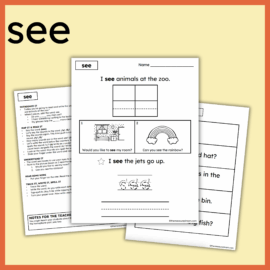
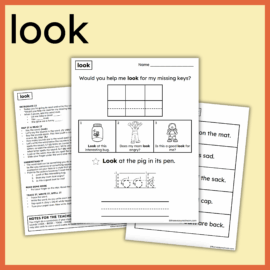
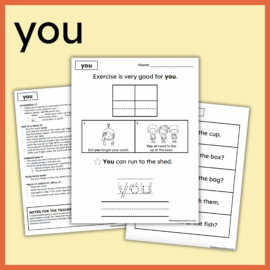
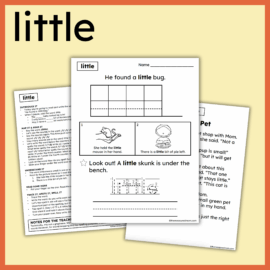
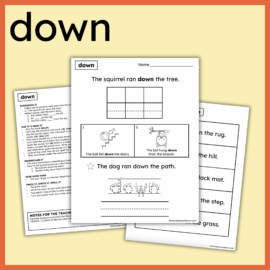
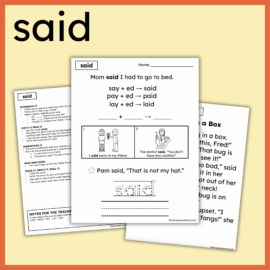
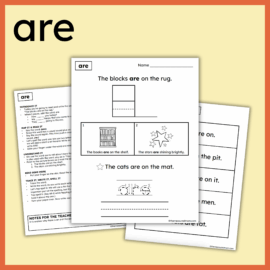
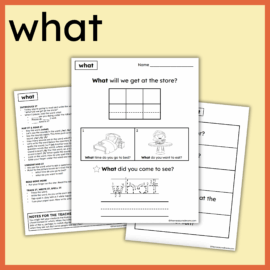
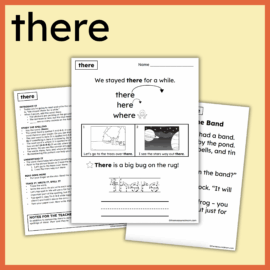
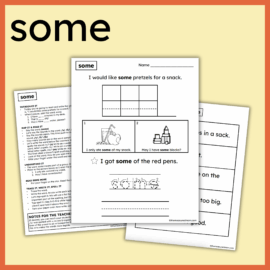
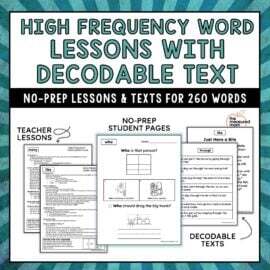
High Frequency Word Lessons with Decodable Texts
$64.00
Get your hands on the complete set of 260 lessons, worksheets, and decodable texts!
Buy Now
Check out the rest of our sight word series
Part 1 Part 2 Part 3 Part 4 Part 5 Part 6 Part 7 Part 8 Part 9
The post FREE sight word lessons with decodable text appeared first on The Measured Mom.
October 19, 2025
Simple writing activities that boost reading comprehension – with Sara Marye
 TRT Podcast #229: Simple writing activities that boost reading comprehension – with Sara Marye
Sara Marye walks us through writing activities that are easy to implement, yet make a big difference when it comes to improving reading comprehension.
Listen to the episode hereFull episode transcript
Resources mentioned in this episodeThe Writing Revolution, book by Judith Hochman and Natalie WexlerSara’s website, The Stellar Teacher CompanySara’s podcast, the Stellar Teacher PodcastThe post Simple writing activities that boost reading comprehension – with Sara Marye appeared first on The Measured Mom.
October 12, 2025
Tips for teaching high frequency words – with Christina Winter
 TRT Podcast #228: Tips for teaching high frequency words – with Christina Winter
Christina Winter and I discuss misconceptions we used to have about teaching “sight words” and what teachers should keep in mind when teaching high frequency words.
Listen to the episode hereFull episode transcript
Resources mentioned in this episodeChristina’s free High Frequency Words Scope & SequenceSure Start Reading, at-home reading lessons for struggling readersChristina’s website, Lead in LiteracyThe post Tips for teaching high frequency words – with Christina Winter appeared first on The Measured Mom.
October 5, 2025
How to do a repeated reading intervention to build fluency – with Melanie Brethour
 TRT Podcast #227: How to do a repeated reading intervention to build fluency with Melanie Brethour
When students read accurately but slowly, research supports using a repeated reading intervention. But how does it work? How long should students read? What kind of feedback should you give? Get answers to these questions and more from reading interventionist Melanie Brethour.
Listen to the episode hereFull episode transcript
Resources for Repeated ReadingHasbrouck & Tindal’s Oral Reading Fluency (ORF) NormsRepeated Reading Log from Soar with DyslexiaReading Universe’s graph for tracking fluency progress4 Steps to Teach Reading Fluency from the National Center on Improving LiteracyWhy Does Fluent Reading Matter? from the National Center on Improving LiteracyFluency resources from Reading UniverseConnect with Melanie BrethourInstagram: @soarwithdyslexiaFacebook: Soar With DyslexiaX (Twitter): Soar With DyslexiaLinkedIn: Melanie BrethourLinktree: https://linktr.ee/soarwithdyslexiaThe post How to do a repeated reading intervention to build fluency – with Melanie Brethour appeared first on The Measured Mom.
Anna Geiger's Blog

- Anna Geiger's profile
- 1 follower

