Shep Hyken's Blog
November 25, 2025
De-Googlize Your Company
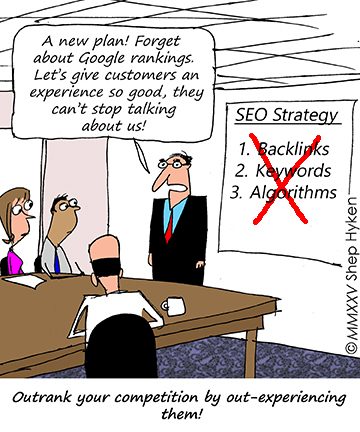 What company doesn’t want to rank high in Google searches? When a customer is looking for whatever you sell, wouldn’t you want to be ranked at the top of the first page? Unless you’re willing to pay and advertise, you have to naturally get there, and that typically takes quite a bit of expertise and effort.
 But, what if Google didn’t matter to your business? What if there were another way to get new customers without vying for high search engine rankings?
If you’ve been following my work, you probably know the answer. Once you have a customer, provide the experience that not only makes them come back, but makes them want to tell others about you. And if you want to make it competitive, like outranking your competition on Google, then out-service them.
So, how do you out-service your competition? Here are five ways:
Ensure your Net Promoter Score (NPS) is high. For those who don’t know, NPS is about the likelihood of a customer recommending you. The question on a survey usually is this: On a scale of 0-10, what’s the likelihood that you would recommend us? If the customer gives you a high score (a 9 or 10), they are a promoter. Depending on the type of business, don’t just feel good about the number. If appropriate, follow up with a customer and ask them, “Who would you recommend us to?”
Find out why your customers would choose to do business with a competitor. This one and the next one come from my “I’ll Be Back” conversation to get customers to say, “I’ll be back.” What are they doing that you aren’t? If it’s something you should be doing, do so, but make it your own. Don’t just copy a competitor. Put your own spin on it to make it yours.
Have a discussion with your team about favorite companies to do business with outside of your industry. Discuss what they do to make you love them. If there is something they are doing that would work for your business, do it. This is a powerful idea that can take you from best-in-your-industry to world-class.
Ask customers why they left. If a customer is willing to share with you why they no longer do business with you, it’s a gift. Learning firsthand from past customers could help save future customers from leaving for the competition.
Ask customers why they didn’t choose you. If there is a way to follow up with customers who you thought would do business with you but didn’t, take advantage of the opportunity. Their feedback is a gift.
Measure how easy it is to do business with you. You may have a great product, and you may offer friendly and knowledgeable customer support, but is it easy to do business with you? My annual customer service and experience research finds that 71% of customers said a convenient experience alone would make them come back. Be easier than your competition, and you’ll win more business.
When you “de-Googlize” your business, you stop chasing clicks and start creating customer evangelists who not only love you but also tell their friends about you. The best search engine in the world isn’t online. It’s in your customers’ minds. Deliver an experience that’s so good customers don’t search for you. They remember you, return to you, and recommend you. That’s how you outrank your competition!


November 24, 2025
How AI and Humans Can Be Better Together with Amazon’s Pasquale DeMaio
This episode of Amazing Business Radio with Shep Hyken answers the following questions and more:
What is the “better together” approach in customer service technology and human interaction?
How can automation and AI improve efficiency in handling repetitive customer service tasks?
Why is genuine empathy important in customer service, and can technology replicate it?
How does empowering human agents with technology lead to better customer outcomes?
How can customer insights from support interactions drive continuous improvement?
Top Takeaways:
Customer service works best when technology and real people come together. While AI and automation can make things faster and easier, people still want to talk to humans for help with complex or emotional problems.
The goal should always be to use AI to support employees, not replace them. Technology should make it easier for humans to do what they do best: listen, empathize, and solve tricky issues.
It’s important to treat every customer with respect and kindness, as you would a friend. Customers want to feel valued, not manipulated, so the best approach is to be sincere by helping them in a way that matches their needs and preferences.
Every interaction is an opportunity to build a relationship and encourage customers to return. Focusing on both solving the issue and making people feel good about the experience creates loyal customers.
Modern tools allow companies to analyze every conversation, not just a few. Every conversation with your customers, whether by phone or chat, is a rich source of information that can reveal trends, problems, and opportunities. This real-time insight can help fix issues faster, spot patterns, and make better decisions to improve service for everyone.
Taking action before problems start, or even before the customer notices there’s a problem, makes for an amazing customer experience. When a customer encounters a problem, contacting them with a new option before they ask for help is an example of proactive service. The best companies work to prevent problems or solve them instantly, making customers feel cared for and stress-free.
AI can make agents’ jobs better, not obsolete. AI can handle the boring and repetitive parts of the job, like taking notes or finding information, so people can focus on helping customers. This makes work more enjoyable and lets agents do what they’re best at, which is solving problems and building relationships.
The end goal should be more than just fixing a problem. Create a positive memory. Make every interaction with a customer one that leaves them feeling happy, satisfied, and eager to return.
Plus, Shep and Pasquale answer the question, “Can computers fake empathy?” Tune in!
Quotes:
“Humans are core to the experience. The end customer is a human being, and often, the main contact they have with a company is through human customer service. Everything we do with technology should be designed to fade into the background and allow any human being to be more effective.”
“When you automate the repetitive heavy lifting, you free your employees up to do what humans excel at, which is empathizing, handling complex problems, listening, learning, and building relationships with your customers.”
“If you want to use 100% humans to solve problems, then you should use AI to help those humans be the best humans they can be.”
“When you think about how you make your customers truly love and want to keep working with your brand, think about how you would want to be treated as a human being. And then think about how AI can help you do that better.”
About:
Pasquale DeMaio is the Vice President and General Manager of Amazon Connect, the cloud-based contact center solution from Amazon Web Services. Amazon Connect leverages the same underlying technology that Amazon’s own global customer service team uses to manage millions of customer interactions every day.
Shep Hyken is a customer service and experience expert, New York Times bestselling author, award-winning keynote speaker, and host of Amazing Business Radio .
What is the “better together” approach in customer service technology and human interaction?
How can automation and AI improve efficiency in handling repetitive customer service tasks?
Why is genuine empathy important in customer service, and can technology replicate it?
How does empowering human agents with technology lead to better customer outcomes?
How can customer insights from support interactions drive continuous improvement?
Top Takeaways:
Customer service works best when technology and real people come together. While AI and automation can make things faster and easier, people still want to talk to humans for help with complex or emotional problems.
The goal should always be to use AI to support employees, not replace them. Technology should make it easier for humans to do what they do best: listen, empathize, and solve tricky issues.
It’s important to treat every customer with respect and kindness, as you would a friend. Customers want to feel valued, not manipulated, so the best approach is to be sincere by helping them in a way that matches their needs and preferences.
Every interaction is an opportunity to build a relationship and encourage customers to return. Focusing on both solving the issue and making people feel good about the experience creates loyal customers.
Modern tools allow companies to analyze every conversation, not just a few. Every conversation with your customers, whether by phone or chat, is a rich source of information that can reveal trends, problems, and opportunities. This real-time insight can help fix issues faster, spot patterns, and make better decisions to improve service for everyone.
Taking action before problems start, or even before the customer notices there’s a problem, makes for an amazing customer experience. When a customer encounters a problem, contacting them with a new option before they ask for help is an example of proactive service. The best companies work to prevent problems or solve them instantly, making customers feel cared for and stress-free.
AI can make agents’ jobs better, not obsolete. AI can handle the boring and repetitive parts of the job, like taking notes or finding information, so people can focus on helping customers. This makes work more enjoyable and lets agents do what they’re best at, which is solving problems and building relationships.
The end goal should be more than just fixing a problem. Create a positive memory. Make every interaction with a customer one that leaves them feeling happy, satisfied, and eager to return.
Plus, Shep and Pasquale answer the question, “Can computers fake empathy?” Tune in!
Quotes:
“Humans are core to the experience. The end customer is a human being, and often, the main contact they have with a company is through human customer service. Everything we do with technology should be designed to fade into the background and allow any human being to be more effective.”
“When you automate the repetitive heavy lifting, you free your employees up to do what humans excel at, which is empathizing, handling complex problems, listening, learning, and building relationships with your customers.”
“If you want to use 100% humans to solve problems, then you should use AI to help those humans be the best humans they can be.”
“When you think about how you make your customers truly love and want to keep working with your brand, think about how you would want to be treated as a human being. And then think about how AI can help you do that better.”
About:
Pasquale DeMaio is the Vice President and General Manager of Amazon Connect, the cloud-based contact center solution from Amazon Web Services. Amazon Connect leverages the same underlying technology that Amazon’s own global customer service team uses to manage millions of customer interactions every day.
Shep Hyken is a customer service and experience expert, New York Times bestselling author, award-winning keynote speaker, and host of Amazing Business Radio .
November 23, 2025
Top 5 Customer Service & CX Articles for Week of November 24, 2025
Every week, I read dozens of articles on customer service and customer experience from a wide range of sources. Below are my top five picks from last week, along with my takeaways. I’d love to hear your thoughts as well.
How to get into customer experience – without starting from scratch by RMIT University
(RMIT University) If you’re tossing up a career pivot into customer experience design (CX), you’re not alone – and you’re probably not starting from zero.
My Comment: We kick off this week’s Top Five with an article I’ll put in the category of “Back to Basics.” This How-To article is perfect for the company that has just made the decision to make CX a priority. The article covers everything from journey mapping, the CX metrics to consider, the skills to train for, and much more.
High-Value Customers: How To Retain Your Ideal Customers by Shopify Staff
(Shopify) High-value customers are loyal to your brand, make consistent purchases over a long period of time, and refer others to you.
My Comment: Wouldn’t it be nice if all our customers were high-value customers? This article goes into the tactics and strategies to do exactly that. It covers loyalty programs, personalization, delivering excellent customer service, surveys, and more. In short, a high-value customer has the highest lifetime value, spending more over time than a typical customer. Our goal should be to move the average customer closer to the high-value customer and move high-value customers into higher-value customers.
Stop Choosing Between Speed and Empathy in Customer Service by Rhys Fisher
(CX Today) AI-powered orchestration frees agents from routine tasks, letting them deliver faster solutions without sacrificing human connection
My Comment: As the title of the article implies, speed and empathy shouldn’t be a choice. Today’s customer wants both. The key is for the company or brand to find the balance between the two. AI-fueled self-service support is efficient, but there will be a time when efficiency isn’t enough. That’s when the human-to-human connection takes over. The point at the end of the article sums it up: AI and any other technology you use to create an efficient experience should amplify empathy, not erase it.
Consumers will pay more for empathy by Bryan Wassel
(CX Dive) Many consumers feel companies are failing at empathy, and the growing use of AI in customer service likely isn’t helping, a Zurich survey found.
My Comment: And as long as we’re talking about empathy, this short, yet important article shares some interesting ideas, including the findings from a survey that three in five consumers are willing to pay more for a brand that demonstrates care and empathy. (My CX research confirms the importance of personalization, finding 84% of consumers prefer companies that offer a personalized experience.)
Contextual Intelligence becomes the new standard for exceptional Customer Experience in 2026 by HR News
(HR News) Zendesk releases today its 2026 Customer Experience (CX) Trends report, revealing that Contextual Intelligence* – the ability to combine AI, data, and human understanding in real time – is redefining what great service means.
My comment: This article states that “contextual intelligence” is the new standard for an exceptional experience. I’m not sure it is “the new standard,” but it is definitely worthy of your consideration. Contextual intelligence is the ability to combine AI with human understanding. This doesn’t mean that AI has feelings, but the information and data about a customer allow for more contextual experiences. And while you’re reading the article, don’t forget to download the full CX Trends report that’s offered.
Shep Hyken is a customer service/CX expert, award-winning keynote speaker, and New York Times bestselling author. Learn more about Shep’s customer service and customer experience keynote speeches and his customer service training workshops. Connect with Shep on LinkedIn.
How to get into customer experience – without starting from scratch by RMIT University
(RMIT University) If you’re tossing up a career pivot into customer experience design (CX), you’re not alone – and you’re probably not starting from zero.
My Comment: We kick off this week’s Top Five with an article I’ll put in the category of “Back to Basics.” This How-To article is perfect for the company that has just made the decision to make CX a priority. The article covers everything from journey mapping, the CX metrics to consider, the skills to train for, and much more.
High-Value Customers: How To Retain Your Ideal Customers by Shopify Staff
(Shopify) High-value customers are loyal to your brand, make consistent purchases over a long period of time, and refer others to you.
My Comment: Wouldn’t it be nice if all our customers were high-value customers? This article goes into the tactics and strategies to do exactly that. It covers loyalty programs, personalization, delivering excellent customer service, surveys, and more. In short, a high-value customer has the highest lifetime value, spending more over time than a typical customer. Our goal should be to move the average customer closer to the high-value customer and move high-value customers into higher-value customers.
Stop Choosing Between Speed and Empathy in Customer Service by Rhys Fisher
(CX Today) AI-powered orchestration frees agents from routine tasks, letting them deliver faster solutions without sacrificing human connection
My Comment: As the title of the article implies, speed and empathy shouldn’t be a choice. Today’s customer wants both. The key is for the company or brand to find the balance between the two. AI-fueled self-service support is efficient, but there will be a time when efficiency isn’t enough. That’s when the human-to-human connection takes over. The point at the end of the article sums it up: AI and any other technology you use to create an efficient experience should amplify empathy, not erase it.
Consumers will pay more for empathy by Bryan Wassel
(CX Dive) Many consumers feel companies are failing at empathy, and the growing use of AI in customer service likely isn’t helping, a Zurich survey found.
My Comment: And as long as we’re talking about empathy, this short, yet important article shares some interesting ideas, including the findings from a survey that three in five consumers are willing to pay more for a brand that demonstrates care and empathy. (My CX research confirms the importance of personalization, finding 84% of consumers prefer companies that offer a personalized experience.)
Contextual Intelligence becomes the new standard for exceptional Customer Experience in 2026 by HR News
(HR News) Zendesk releases today its 2026 Customer Experience (CX) Trends report, revealing that Contextual Intelligence* – the ability to combine AI, data, and human understanding in real time – is redefining what great service means.
My comment: This article states that “contextual intelligence” is the new standard for an exceptional experience. I’m not sure it is “the new standard,” but it is definitely worthy of your consideration. Contextual intelligence is the ability to combine AI with human understanding. This doesn’t mean that AI has feelings, but the information and data about a customer allow for more contextual experiences. And while you’re reading the article, don’t forget to download the full CX Trends report that’s offered.
Shep Hyken is a customer service/CX expert, award-winning keynote speaker, and New York Times bestselling author. Learn more about Shep’s customer service and customer experience keynote speeches and his customer service training workshops. Connect with Shep on LinkedIn.
November 19, 2025
Saving Your Customer Time Shows Respect
 A customer takes the time to buy a product, which could include research, visits to a store, calls to a salesperson, and many other tasks that go into a pre-purchase routine. So once they buy it, the work should be over. But sometimes it’s not. Something goes wrong, or the customer may have a question. Regardless of what it is, they are about to spend more time related to their purchase that isn’t just the actual use of the product.
 My point is that when the customer has to spend more time than they should, make it so easy and reasonable that they have confidence that if there is ever another problem, you’re a company that is easy to do business with and respects the customer’s time.
When you show respect for a customer’s time, it pays dividends in the form of repeat business, customer loyalty, and word-of-mouth referrals. So, how can you prove this to the customer? As I was preparing for an upcoming customer experience keynote speech, I created an acronym for the word TIME.
T is for Timely: Respect the clock and quickly respond. Return calls, emails, and messages when promised – or sooner. Fast response shows respect, and the longer the wait, the less customers trust you. Every unnecessary minute equals disrespect.
I is for Individualized: Make efficiency personal. Know and remember your customer. Use information and data on the customer to anticipate needs and create a more time-efficient experience.
M is for Minimal Effort: This is about being easy. Reduce transfers, logins, and redundant questions, and streamline processes. Two words sum this one up: eliminate friction.
E is for Efficiency: Efficiency is the combination of the T, I, and M. Solve issues in one interaction. Use technology to accelerate an experience, not complicate it. More efficient also means “more easier.” (I know, that’s poor English, but it makes the point.) Efficient means easy, and easy creates confidence.
Time is the one resource your customers can never get back. Every minute they spend navigating your phone system, repeating information, or chasing down answers is a minute stolen from their day. When you make things easy and fast, you’re not just solving a problem, you’re proving that your customers’ time matters to you.
So, here’s a homework assignment. Look at your customer touchpoints. Find if there is friction that’s wasting their time. What process can be streamlined? What one step can be eliminated? Create the experience that’s easy and saves your customer’s time. In a world where everyone is stretched thin, being the company that values time is more than just good service. It’s a competitive advantage.
Shep Hyken is a customer service/CX expert, award-winning keynote speaker, and New York Times bestselling author. Learn more about Shep’s customer service and customer experience keynote speeches and his customer service training workshops at www.Hyken.com . Connect with Shep on LinkedIn .
November 17, 2025
Embracing AI in Marketing and Customer Experience with Tifenn Dano Kwan
This episode of Amazing Business Radio with Shep Hyken answers the following questions and more:
What inflection points in technology have most impacted customer experience in the digital era?
What is hyper-personalization?
How has artificial intelligence transformed digital customer experiences?
What future trends in AI could most impact customer service and experience?
Should companies be transparent with customers about using AI-powered services?
Top Takeaways:
Artificial Intelligence has become one of the biggest game-changers for customer experience. It helps companies remove friction, enabling customers to get help faster and solve problems more easily.
Embracing new tech in CX is about finding ways to make life easier for your customers. Moments like the rise of the web, and the growth of AI mark big turning points that companies must adapt to. Being open to change lets businesses create better experiences for customers and stay ahead of the competition.
Customers want to be treated as individuals, not just a number. Personalization, especially when powered by AI, helps match customers with products, recommendations, or solutions that really fit them.
AI can deliver hyper-personalized experiences that keep people engaged and coming back. But, businesses need to remember that personalization that feels authentic and respectful is what really wins customers over.
Customers prefer when companies are transparent, especially about processes that impact their experiences. Modern customers can easily spot fake or insincere messages. Being authentic means communicating honestly and being open about how technology, like AI, is being used to serve them.
Your AI is only as good as your data. If the information going into the system is wrong or messy, the results might mislead both the company and the customer! Good data leads to smart decisions and better customer outcomes.
Whenever there’s a major technological change, there’s always concern about job losses. While AI can take over some tasks that used to require humans, it also creates new work opportunities. New jobs and skills will be in demand, especially in areas that support or expand what AI can do.
The future of work is about adapting, learning, and growing alongside technology, not competing against it.
Plus, Shep and Tifenn discuss use cases and opportunities for AI to improve the customer experience. Tune in!
Quotes:
“The goal of AI is to remove fiction and deliver delightful, seamless, and outcome-driven experiences for their customers.”
“Hyper-personalization is personalization at scale. The more in touch we are with our customers, the more likely we are to drive conversions.”
“AI is only as good as your data. If you have the wrong data, then you will have the wrong output. It is going to mislead you. More importantly, it will mislead your customers.”
“Embrace what’s next. We are going to see significant evolution in the world of AI. Don’t be afraid to experiment and test.”
About:
Tifenn Dano Kwan is the Chief Marketing Officer at Amplitude. Before working at Amplitude, she was CMO at Collibra, Dropbox, SAP Ariba, and SAP Fieldglass.
Shep Hyken is a customer service and experience expert, New York Times bestselling author, award-winning keynote speaker, and host of Amazing Business Radio .
What inflection points in technology have most impacted customer experience in the digital era?
What is hyper-personalization?
How has artificial intelligence transformed digital customer experiences?
What future trends in AI could most impact customer service and experience?
Should companies be transparent with customers about using AI-powered services?
Top Takeaways:
Artificial Intelligence has become one of the biggest game-changers for customer experience. It helps companies remove friction, enabling customers to get help faster and solve problems more easily.
Embracing new tech in CX is about finding ways to make life easier for your customers. Moments like the rise of the web, and the growth of AI mark big turning points that companies must adapt to. Being open to change lets businesses create better experiences for customers and stay ahead of the competition.
Customers want to be treated as individuals, not just a number. Personalization, especially when powered by AI, helps match customers with products, recommendations, or solutions that really fit them.
AI can deliver hyper-personalized experiences that keep people engaged and coming back. But, businesses need to remember that personalization that feels authentic and respectful is what really wins customers over.
Customers prefer when companies are transparent, especially about processes that impact their experiences. Modern customers can easily spot fake or insincere messages. Being authentic means communicating honestly and being open about how technology, like AI, is being used to serve them.
Your AI is only as good as your data. If the information going into the system is wrong or messy, the results might mislead both the company and the customer! Good data leads to smart decisions and better customer outcomes.
Whenever there’s a major technological change, there’s always concern about job losses. While AI can take over some tasks that used to require humans, it also creates new work opportunities. New jobs and skills will be in demand, especially in areas that support or expand what AI can do.
The future of work is about adapting, learning, and growing alongside technology, not competing against it.
Plus, Shep and Tifenn discuss use cases and opportunities for AI to improve the customer experience. Tune in!
Quotes:
“The goal of AI is to remove fiction and deliver delightful, seamless, and outcome-driven experiences for their customers.”
“Hyper-personalization is personalization at scale. The more in touch we are with our customers, the more likely we are to drive conversions.”
“AI is only as good as your data. If you have the wrong data, then you will have the wrong output. It is going to mislead you. More importantly, it will mislead your customers.”
“Embrace what’s next. We are going to see significant evolution in the world of AI. Don’t be afraid to experiment and test.”
About:
Tifenn Dano Kwan is the Chief Marketing Officer at Amplitude. Before working at Amplitude, she was CMO at Collibra, Dropbox, SAP Ariba, and SAP Fieldglass.
Shep Hyken is a customer service and experience expert, New York Times bestselling author, award-winning keynote speaker, and host of Amazing Business Radio .
Top 5 Customer Service & CX Articles for Week of November 17, 2025
Each week, I read many customer service and customer experience articles from various resources. Here are my top five picks from last week. I have added my comments about each article and would like to hear what you think too.
Data Management: Consent is the Key to Personalization by The Wall Street Journal
(The Wall Street Journal) Personalization can help create a stronger relationship and smoother experience between a company and its stakeholders. It cannot be done without obtaining user consent
My Comment: We kick off this week’s Top Five with an article on personalization. How exciting can an article about data management be? If you’re into creating a personalized experience that enhances customer experience and marketing, this article will do exactly that. Several partners at Deloitte & Touche weigh in on the power of collecting the right information about your customers that they willingly share.
AI Won’t Just Cut Costs, It Will Reinvent the Customer Experience by Richard Hatherall, Priscilla Dell’Orto, Eduardo Roma, and Maureen Burns
(Bain & Company) Beyond efficiency, AI helps create a more personalized experience that delivers a triple play of customer loyalty, employee engagement, and revenue growth.
My Comment: AI makes people and processes more efficient and productive. In the customer service and experience worlds, we’ve barely scratched the surface of AI’s capability, and still, companies and their customers are raving about the results. This article, written by some of Bain & Company’s partners, shares how AI can supports customer loyalty, employee engagement, and increased revenue.
Predictions 2026: AI Gets Real For Customer Service — But It’s Not Glamorous Work by Kate Leggett
(Forrester) Customer service leaders are counting on an impending year of business transformation boosted by the power of today’s AI. Yet 2026 will not be that year. Instead of dazzling transformation, the year ahead will be defined by gritty, foundational work — the kind that rarely makes headlines but is essential to realizing AI’s long-term promise.
My Comment: Forrester has released its 2026 predictions, and as with most prediction articles, AI is at the forefront. There are three predictions, and the overarching theme is their “sobering truth,” which is that while an AI-first customer service strategy is compelling, it is not realistic. Why? Most companies aren’t equipped to deliver what they want and hope their AI-infused customer experience to be.
The New Anatomy of Customer Experience – Part 1 by Disha Bhardwaj
(HackerNoon) We are at the precipice (or perhaps already in the deep end) of what may be the greatest technical revolution in modern history with Generative AI, and I wanted to outline my thoughts and propose a playbook in this two-part series on how this technology can transform the relationship between the modern commerce engine and the customer.
My Comment: I like this article because it starts off describing the first customer complaint letter that is displayed in the British Museum. (I wrote about the oldest complaint letter of all time and my take on it in a recent Shepard Letter article.) The author recognizes that the one thing that hasn’t changed is the importance of a good customer experience. However, the way we go about it today is far different from how complaints were handled 4,000 years ago.
How Can Retailers Crack the Gen Z ‘Riddle’? by Nicholas Morine
(RetailWire) With a recent PwC report referring to Gen Z shoppers as having become a “riddle that many retailers can’t quite crack” in the lede, it may come as little surprise that this generation of consumers was referred to as highly paradoxical as compared to their elder counterparts in Gen Xers, millennials, and baby boomers.
My Comment: We wrap up this week’s Top Five with an article about Gen Z shopping/buying habits. I’m always fascinated by the differences in generations. And you should be, too. Depending on who your customers are, you must understand how they think, buy, and what their expectations are, especially in the world of customer experience. This article gives you a glimpse into the differences between Gen Z and other generations.
BONUS
33 Crucial Customer Service Statistics by Shopify
(Shopify) Customer service statistics suggest that every interaction between consumers and CS representatives or chatbots shapes brand perception, for better or worse.
My Comment: Here’s a bonus article filled with lots of customer service and CX statistics – 33 of them! And several of them come from The State of Customer Service and CX (my annual research). Enjoy!
Shep Hyken is a customer service/CX expert, award-winning keynote speaker, and New York Times bestselling author. Learn more about Shep’s customer service and customer experience keynote speeches and his customer service training workshops. Connect with Shep on LinkedIn.
Data Management: Consent is the Key to Personalization by The Wall Street Journal
(The Wall Street Journal) Personalization can help create a stronger relationship and smoother experience between a company and its stakeholders. It cannot be done without obtaining user consent
My Comment: We kick off this week’s Top Five with an article on personalization. How exciting can an article about data management be? If you’re into creating a personalized experience that enhances customer experience and marketing, this article will do exactly that. Several partners at Deloitte & Touche weigh in on the power of collecting the right information about your customers that they willingly share.
AI Won’t Just Cut Costs, It Will Reinvent the Customer Experience by Richard Hatherall, Priscilla Dell’Orto, Eduardo Roma, and Maureen Burns
(Bain & Company) Beyond efficiency, AI helps create a more personalized experience that delivers a triple play of customer loyalty, employee engagement, and revenue growth.
My Comment: AI makes people and processes more efficient and productive. In the customer service and experience worlds, we’ve barely scratched the surface of AI’s capability, and still, companies and their customers are raving about the results. This article, written by some of Bain & Company’s partners, shares how AI can supports customer loyalty, employee engagement, and increased revenue.
Predictions 2026: AI Gets Real For Customer Service — But It’s Not Glamorous Work by Kate Leggett
(Forrester) Customer service leaders are counting on an impending year of business transformation boosted by the power of today’s AI. Yet 2026 will not be that year. Instead of dazzling transformation, the year ahead will be defined by gritty, foundational work — the kind that rarely makes headlines but is essential to realizing AI’s long-term promise.
My Comment: Forrester has released its 2026 predictions, and as with most prediction articles, AI is at the forefront. There are three predictions, and the overarching theme is their “sobering truth,” which is that while an AI-first customer service strategy is compelling, it is not realistic. Why? Most companies aren’t equipped to deliver what they want and hope their AI-infused customer experience to be.
The New Anatomy of Customer Experience – Part 1 by Disha Bhardwaj
(HackerNoon) We are at the precipice (or perhaps already in the deep end) of what may be the greatest technical revolution in modern history with Generative AI, and I wanted to outline my thoughts and propose a playbook in this two-part series on how this technology can transform the relationship between the modern commerce engine and the customer.
My Comment: I like this article because it starts off describing the first customer complaint letter that is displayed in the British Museum. (I wrote about the oldest complaint letter of all time and my take on it in a recent Shepard Letter article.) The author recognizes that the one thing that hasn’t changed is the importance of a good customer experience. However, the way we go about it today is far different from how complaints were handled 4,000 years ago.
How Can Retailers Crack the Gen Z ‘Riddle’? by Nicholas Morine
(RetailWire) With a recent PwC report referring to Gen Z shoppers as having become a “riddle that many retailers can’t quite crack” in the lede, it may come as little surprise that this generation of consumers was referred to as highly paradoxical as compared to their elder counterparts in Gen Xers, millennials, and baby boomers.
My Comment: We wrap up this week’s Top Five with an article about Gen Z shopping/buying habits. I’m always fascinated by the differences in generations. And you should be, too. Depending on who your customers are, you must understand how they think, buy, and what their expectations are, especially in the world of customer experience. This article gives you a glimpse into the differences between Gen Z and other generations.
BONUS
33 Crucial Customer Service Statistics by Shopify
(Shopify) Customer service statistics suggest that every interaction between consumers and CS representatives or chatbots shapes brand perception, for better or worse.
My Comment: Here’s a bonus article filled with lots of customer service and CX statistics – 33 of them! And several of them come from The State of Customer Service and CX (my annual research). Enjoy!
Shep Hyken is a customer service/CX expert, award-winning keynote speaker, and New York Times bestselling author. Learn more about Shep’s customer service and customer experience keynote speeches and his customer service training workshops. Connect with Shep on LinkedIn.
November 11, 2025
Ten Reasons Why Customers Hate Calling You for Help
 I have good news. Calling customer support is getting better, even if you don’t notice it yet. Part of the reason you might think it’s not improving is that past bad experiences have left such a “metaphorical scar” that you avoid making the call for many reasons I’ll share in just a moment.
 Yes, we may still encounter friction when calling for help or support, but with the latest technology, which includes AI-infused chatbots that either talk or message with you, the experience of getting help is improving. And even without technology, it’s still possible to create an experience that makes customers love you. You just have to know what they hate about calling for support and eliminate those from the experience. So, with that in mind, here are the 10 reasons customers hate calling for help:
Making It Hard to Find Contact Information: This is where customer support starts. Some companies seem to bury contact information, making it hard for customers to find, which creates or adds frustration.
Long Hold Times: Nobody wants to wait. At best, keep hold times short. At worst, which isn’t so bad, let customers know how long the wait will be and give them the option of a call-back.
Making Customers Repeat Themselves: The more times you make customers retell their story, the more frustrated they become.
Being Transferred: The goal should be to not transfer a customer, but if you do, make sure it’s only once. And multiple transfers most likely mean customers are repeating themselves multiple times.
Agents Who Aren’t Empowered: If you hire good people and train them well, they should be empowered to take care of customers, eliminating the need for customers to repeat themselves and be transferred multiple times.
Inconvenient Hours of Operation: Some companies make support available only during normal working hours. This is fine if your customers are unemployed, but for everyone else, be accessible. And with AI being able to handle many issues, some questions and problems can be answered 24/7.
Bad Phone Trees or IVRs (Interactive Voice Response): If you have called for support and none of the choices offered are what you need, or you find yourself trapped in a loop of options, you’ve experienced this. By the way, our annual customer support research found that 76% of customers have been caught in an automated menu system and screamed “Agent” or “Representative” into the phone, before eventually hanging up.
Clunky and Ineffective Self-Service: Customer support of any type should be easy. Self-service systems should be intuitive and easy to navigate.
Telling Customers, “You Have to ____ ”: It’s okay to tell a customer what to do, just phrase it in a way that’s helpful, not forceful. And if you can do it for them, even better.
Customer Anxiety: This may be the most important one! There’s a reason that 34% of customers we surveyed said they would rather go to the dentist than call customer support. It’s because they’ve experienced one or more of the above reasons that customers hate calling customer support. This anxiety causes customers to be frustrated even before they decide to reach out to you.
Yes, there are other reasons that frustrate and anger customers when they have to call customer support. A short summary of the above is to be easy, eliminate friction, respect customers’ time, and give them the right answer the first time. This will make customers love you and say, “I’ll be back!”
Shep Hyken is a customer service/CX expert, award-winning keynote speaker, and New York Times bestselling author. Learn more about Shep’s customer service and customer experience keynote speeches and his customer service training workshops at www.Hyken.com . Connect with Shep on LinkedIn .
November 10, 2025
AI-Powered Personalization with Rick Elmore
This episode of Amazing Business Radio with Shep Hyken answers the following questions and more:
How can companies send personalized handwritten notes to thousands of customers efficiently?
How do handwritten notes compare to email and direct mail in terms of open rates?
What is the impact of personalized handwritten notes on customer retention rates?
How does sending handwritten notes help businesses stand out from digital competitors?
How does sending personalized handwritten notes at scale improve employee engagement and morale?
Top Takeaways:
Getting a handwritten note (or one that looks handwritten) instantly makes the recipient feel special and appreciated. When customers receive an envelope with a handwritten address and a stamp, they are more likely top open it. When it includes a personalized message in the form of something tangible, tactile, and written with a pen, they are more likely to keep it.
Personalization builds strong customer relationships. A way that businesses can do this at scale is to use technology like robots that can mimic human handwriting and powerful AI software to create thousands of truly personalized notes.
Handwritten notes have much higher open rates than regular mail. Studies show that almost every handwritten note gets opened, while most promotional letters or emails get ignored or thrown away. When someone sees a real envelope with a stamp and handwriting, it feels personal. This makes handwritten notes a powerful tool for getting attention.
Sending handwritten notes helps businesses reduce customer churn. It is not just about showing appreciation and acknowledging customers, but it can also make them want to stay and keep buying from you. Businesses have found that thank-you notes and anniversary cards help increase loyalty. Even just a simple “thank you” can have a significant impact and keep clients engaged for years.
Authenticity matters with personal messages. In the age of social media, customers can easily take a picture of a personal handwritten note and share it online. Large language models and intelligent software allow you to generate different messages for thousands of customers, each tailored to their interests or previous experiences. This way, no two notes are exactly alike, even if the general message is the same.
Connecting personally is essential not only for customers but also for employees. Sending birthday cards, holiday cards, or notes recognizing achievements shows team members they are valued. It’s a simple act that can lead to a positive work environment. When leaders do this, it strengthens the bond with their employees, making them happier and more loyal.
The best business opportunities may be in your existing customer base. Instead of constantly chasing new customers, take time to appreciate the ones you already have. Small, personalized gestures can deliver a significant return on investment by building long-term relationships and brand loyalty.
Plus, Shep Hyken and Rick Elmore show how personalization works, sharing examples of successful brands like Chewy using handwritten notes to stand out and strengthen customer relationships. Tune in!
Quotes:
“We’re drowning in digital noise. What’s old is new again. People crave authentic experiences and want to feel valued. A personalized handwritten note is what helps businesses win loyal customers and long-term relationships.”
“When you give customers something tangible, like a handwritten card, it stands out from everything else they get. It’s not just about sending a message. It’s about leaving a lasting impression that people remember.”
“In business, relationships will always matter, especially as we are working more with AI. People want to work with brands they like and trust, and personal touches are what foster that trust.”
“Look at your customer list and database. Opportunities are sitting right under your nose. If you want clients to come back or reconnect even when they haven’t bought from you in a while, focus on building a personal relationship instead of just making an ask.”
About:
Rick Elmore is a former NFL athlete, an award-winning entrepreneur, and the founder of Simply Noted, a leading U.S.-based handwritten direct mail company. He helps organizations build meaningful human connections with their customers at scale.
Shep Hyken is a customer service and experience expert, New York Times bestselling author, award-winning keynote speaker, and host of Amazing Business Radio .
How can companies send personalized handwritten notes to thousands of customers efficiently?
How do handwritten notes compare to email and direct mail in terms of open rates?
What is the impact of personalized handwritten notes on customer retention rates?
How does sending handwritten notes help businesses stand out from digital competitors?
How does sending personalized handwritten notes at scale improve employee engagement and morale?
Top Takeaways:
Getting a handwritten note (or one that looks handwritten) instantly makes the recipient feel special and appreciated. When customers receive an envelope with a handwritten address and a stamp, they are more likely top open it. When it includes a personalized message in the form of something tangible, tactile, and written with a pen, they are more likely to keep it.
Personalization builds strong customer relationships. A way that businesses can do this at scale is to use technology like robots that can mimic human handwriting and powerful AI software to create thousands of truly personalized notes.
Handwritten notes have much higher open rates than regular mail. Studies show that almost every handwritten note gets opened, while most promotional letters or emails get ignored or thrown away. When someone sees a real envelope with a stamp and handwriting, it feels personal. This makes handwritten notes a powerful tool for getting attention.
Sending handwritten notes helps businesses reduce customer churn. It is not just about showing appreciation and acknowledging customers, but it can also make them want to stay and keep buying from you. Businesses have found that thank-you notes and anniversary cards help increase loyalty. Even just a simple “thank you” can have a significant impact and keep clients engaged for years.
Authenticity matters with personal messages. In the age of social media, customers can easily take a picture of a personal handwritten note and share it online. Large language models and intelligent software allow you to generate different messages for thousands of customers, each tailored to their interests or previous experiences. This way, no two notes are exactly alike, even if the general message is the same.
Connecting personally is essential not only for customers but also for employees. Sending birthday cards, holiday cards, or notes recognizing achievements shows team members they are valued. It’s a simple act that can lead to a positive work environment. When leaders do this, it strengthens the bond with their employees, making them happier and more loyal.
The best business opportunities may be in your existing customer base. Instead of constantly chasing new customers, take time to appreciate the ones you already have. Small, personalized gestures can deliver a significant return on investment by building long-term relationships and brand loyalty.
Plus, Shep Hyken and Rick Elmore show how personalization works, sharing examples of successful brands like Chewy using handwritten notes to stand out and strengthen customer relationships. Tune in!
Quotes:
“We’re drowning in digital noise. What’s old is new again. People crave authentic experiences and want to feel valued. A personalized handwritten note is what helps businesses win loyal customers and long-term relationships.”
“When you give customers something tangible, like a handwritten card, it stands out from everything else they get. It’s not just about sending a message. It’s about leaving a lasting impression that people remember.”
“In business, relationships will always matter, especially as we are working more with AI. People want to work with brands they like and trust, and personal touches are what foster that trust.”
“Look at your customer list and database. Opportunities are sitting right under your nose. If you want clients to come back or reconnect even when they haven’t bought from you in a while, focus on building a personal relationship instead of just making an ask.”
About:
Rick Elmore is a former NFL athlete, an award-winning entrepreneur, and the founder of Simply Noted, a leading U.S.-based handwritten direct mail company. He helps organizations build meaningful human connections with their customers at scale.
Shep Hyken is a customer service and experience expert, New York Times bestselling author, award-winning keynote speaker, and host of Amazing Business Radio .
November 9, 2025
Top 5 Customer Service & CX Articles for Week of November 10, 2025
Each week, I read many customer service and customer experience articles from various resources. Here are my top five picks from last week. I have added my comments about each article and would like to hear what you think too.
Have Retail Loyalty Programs Moved Beyond Discounts? by Tom Ryan
(RetailWire) While discounts and points still motivate participation in loyalty programs, softer perks – like exclusivity, early access, and VIP treatment – rank among the strongest loyalty drivers across generations, according to new research from GWI and Razorfish.
My Comment: We kick off this week’s Top Five Roundup with an excellent article about loyalty programs. I’ve written many articles about customer loyalty programs. Most of them offer discounts and perks, making them little more than glorified marketing programs. According to the author, “softer perks – like exclusivity, early access, and VIP treatment – rank among the strongest loyalty drivers.”
The Future of Brand Loyalty by Scott Brandon
(Fast Company) Let’s talk about the future of loyalty programs—the kinds that don’t feel like programs at all, but more like belonging.
My Comment: And while we’re on the topic of loyalty programs, here’s another article that emphasizes the shift from traditional points and perks to an experiential program that delivers value and drives positive emotional feelings toward the company or brand.
Customer Loyalty Still Exists, But It Has Shifted by destinationCRM
(destination.CRM) Ninety-eight percent of U.S. consumers make repeat purchases annually, but 55 percent say their loyalty has changed in the past five years, according to new data from research company Clutch.
My Comment: Is this a third article on customer loyalty? Kind of, but not really. This article isn’t about loyalty programs, but instead sends the message that one of the most important drivers (if not THE most important) of loyalty is trust. With trust and authenticity, you won’t have loyalty. There are several findings from the research company Clutch that support the loyalty/trust concept.
AI-Powered Customer Experience: Moving Beyond the Chatbot by Raymond Tembo
(The AI Journal) Forward-thinking C-suites now view AI as a core differentiator, not a futuristic experiment. It’s helping brands increase satisfaction, cut costs, and build loyalty that goes far beyond transactional interactions. The new frontier of customer experience isn’t just powered by AI—it’s defined by it.
My Comment: When used the right way, AI is creating a better customer experience. The advances in technology, along with a much lower cost of entry, allow companies and brands to better service their customers. Our annual CX research finds that customers are saying it’s easier to use self-service than in the past. AI-fueled chatbots can now recognize customers, personalize the interactions, and proactively solve problems before the customer ever finds out about them
Time for a Reboot How We Measure Customer Success by Michelle Wicmandy
(CMSWire) Legacy metrics no longer tell the full story. It’s time to move beyond handle times and satisfaction scores.
My Comment: We close this week’s Top Five roundup with an excellent article on how we measure customer success. The article starts by emphasizing that customer service is no longer a cost center. It has become the “frontline of brand experience.” There is a lot to unpack here, but two of the topics that most intrigued me were the short section on turning feedback into growth and the new metrics to grade how effectively your customer service experience is creating repeat business and advocacy.
Shep Hyken is a customer service/CX expert, award-winning keynote speaker, and New York Times bestselling author. Learn more about Shep’s customer service and customer experience keynote speeches and his customer service training workshops. Connect with Shep on LinkedIn.
Have Retail Loyalty Programs Moved Beyond Discounts? by Tom Ryan
(RetailWire) While discounts and points still motivate participation in loyalty programs, softer perks – like exclusivity, early access, and VIP treatment – rank among the strongest loyalty drivers across generations, according to new research from GWI and Razorfish.
My Comment: We kick off this week’s Top Five Roundup with an excellent article about loyalty programs. I’ve written many articles about customer loyalty programs. Most of them offer discounts and perks, making them little more than glorified marketing programs. According to the author, “softer perks – like exclusivity, early access, and VIP treatment – rank among the strongest loyalty drivers.”
The Future of Brand Loyalty by Scott Brandon
(Fast Company) Let’s talk about the future of loyalty programs—the kinds that don’t feel like programs at all, but more like belonging.
My Comment: And while we’re on the topic of loyalty programs, here’s another article that emphasizes the shift from traditional points and perks to an experiential program that delivers value and drives positive emotional feelings toward the company or brand.
Customer Loyalty Still Exists, But It Has Shifted by destinationCRM
(destination.CRM) Ninety-eight percent of U.S. consumers make repeat purchases annually, but 55 percent say their loyalty has changed in the past five years, according to new data from research company Clutch.
My Comment: Is this a third article on customer loyalty? Kind of, but not really. This article isn’t about loyalty programs, but instead sends the message that one of the most important drivers (if not THE most important) of loyalty is trust. With trust and authenticity, you won’t have loyalty. There are several findings from the research company Clutch that support the loyalty/trust concept.
AI-Powered Customer Experience: Moving Beyond the Chatbot by Raymond Tembo
(The AI Journal) Forward-thinking C-suites now view AI as a core differentiator, not a futuristic experiment. It’s helping brands increase satisfaction, cut costs, and build loyalty that goes far beyond transactional interactions. The new frontier of customer experience isn’t just powered by AI—it’s defined by it.
My Comment: When used the right way, AI is creating a better customer experience. The advances in technology, along with a much lower cost of entry, allow companies and brands to better service their customers. Our annual CX research finds that customers are saying it’s easier to use self-service than in the past. AI-fueled chatbots can now recognize customers, personalize the interactions, and proactively solve problems before the customer ever finds out about them
Time for a Reboot How We Measure Customer Success by Michelle Wicmandy
(CMSWire) Legacy metrics no longer tell the full story. It’s time to move beyond handle times and satisfaction scores.
My Comment: We close this week’s Top Five roundup with an excellent article on how we measure customer success. The article starts by emphasizing that customer service is no longer a cost center. It has become the “frontline of brand experience.” There is a lot to unpack here, but two of the topics that most intrigued me were the short section on turning feedback into growth and the new metrics to grade how effectively your customer service experience is creating repeat business and advocacy.
Shep Hyken is a customer service/CX expert, award-winning keynote speaker, and New York Times bestselling author. Learn more about Shep’s customer service and customer experience keynote speeches and his customer service training workshops. Connect with Shep on LinkedIn.
November 4, 2025
A Lesson On How to Hire the Right Person From the Richest Man in the World
 The old saying in business, when it comes to hiring people, is this:
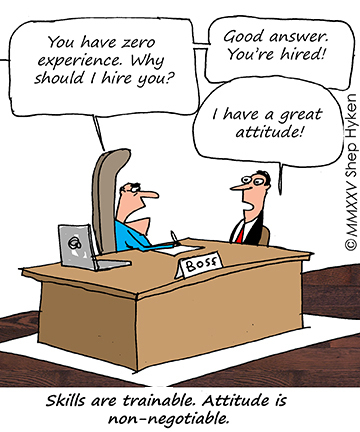
 Hire for attitude, train for skill.
I’ve shared ideas related to this quote in several articles and videos. So, why bring it up again? First, it’s a concept worth revisiting to remind us of this important truth, especially in the world of customer service and experience. Second, I recently heard a version of this that captures the essence and further emphasizes the importance of attitude versus skill.
As I write, the richest man in the world is Elon Musk, the CEO of Tesla and founder of SpaceX, with an estimated net worth north of $500 billion. Whether you like the way he does business or not, we can’t ignore that he may have ideas worth paying attention to, and his take on this old quote is one of those ideas. The concept of hiring for attitude is driven home when he says, “Skills can be taught, but attitude changes require a brain transplant.”
Another man worth paying attention to is Jim Bush. In my book The Amazement Revolution , I interviewed Bush, who at the time was the executive VP of world service for American Express, responsible for customer support centers around the world. He shared that if he could hire someone with years of experience at a support center or working at the front desk of a hotel, he would choose the person with the hotel front desk experience.
Bush said, “We’re talking about human engagement, and that requires the ability to connect.” That’s why American Express began hiring people with hospitality experience. They had the attitude American Express was looking for. After being hired, they could be trained on the technical skills needed to work the computers at a contact center.
Now, before I go further, some of you might be thinking that certain jobs require specific skills, regardless of employees’ attitudes, and you are correct. A surgeon must graduate from medical school before operating. An electrician must learn the trade before wiring a home. Certain jobs require technical proficiency. However, if you hire someone with those skills who has the wrong attitude, they can harm your culture and potentially drive customers away. So, take this concept in the spirit of its meaning.
So, back to Musk’s line about attitude changes requiring a brain transplant. The comment is a bold way of saying that attitude isn’t something you can download like software. It’s hard-wired. People’s attitudes have been formed over their entire lives, from the time they were babies. Leaders who understand this focus on recruiting people who come to the job with the right mindset, with an attitude that fits the personality of the company. The takeaway is simple. Hire people who care. Then, teach them the specific skills they need to perform their job effectively. You can train for competence, but you can’t train for caring.
Shep Hyken is a customer service/CX expert, award-winning keynote speaker, and New York Times bestselling author. Learn more about Shep’s customer service and customer experience keynote speeches and his customer service training workshops at www.Hyken.com . Connect with Shep on LinkedIn .