Hazel Thornton's Blog
April 19, 2026
Grandpa Did What?!?!

One day, when we were discussing our new book club reading list, of which one selection was about the Ku Klux Klan, my aunt said offhandedly, “Oh yeah, Daddy joined the Klan. But then he realized he didn’t agree with what they were doing and quit. Mommy made dresses for us girls out of the white robes.”
WHAT?!?! Nooooo!
How can this be? And how is it possible I’ve never heard it before?
Mind you, I don’t mind uncovering a scoundrel in my research. For example, I included a brief photo story about my 2nd great-granduncle Franklin Wilberforce Thornton, who spent time in San Quentin prison, in my book What’s a Photo Without the Story? How to Create Your Family Legacy. (I will admit, though, that I was just as glad he wasn’t a direct ancestor.)
And my American family tree roots go deep enough to include both southern plantation slaveholders and Quakers who migrated West in protest of slavery.
Black Lives Matter in Genealogy TooThornton Family History Lost & FoundHow and when to find a common ancestorI’m here to learn about history, not to rewrite it.
But now my Indiana farm born-and-raised Grandpa Hankins may have been a member of the Ku Klux Klan???
It hits differently when it’s someone you knew!
Take family stories with a grain of salt
OK, hold on, slow down — is it even true? And is it good news or bad news? Bad if he joined? Good if he quit? Both? Neither?
Remember, it’s important to not take family stories at face value. They may be completely true, or there may be a kernel of truth in them. Then again, they may be pure poppycock. (I don’t think I’ve ever said “poppycock” before, it just popped into my mind. I’ve never had Poppycock popcorn before, either, but now I want some!) In this case it was something that just, um, popped up out of nowhere. It didn’t sound likely to me, but I couldn’t just say “that can’t be true” and let it go, either.
Fortunately I love playing detective! Here are some cases in point:
Playing Detective: Grandma’s Birth Certificate (Why did Grandma Hankins say she was born somewhere that I think she wasn’t?)What’s a photo without the story? (Where is that giant beach hotel located in the background of my Grandma Thornton’s “bathing beauty” photo?)How and when to find a common ancestor (Am I related to Henry Clay the Statesman, like my Great-Grandma Clay said I was?)Mom’s Boxes Part 8: The Gangster Hideout (Did my grandparents really buy a gangster’s hideout to live in because it was cheap and no one else wanted it?)If grandpa were on trial, he (hopefully) would be considered innocent unless and until proven guilty. So we’ll see what happens.
The investigation begins
I had never in my whole life heard this story before and I couldn’t have been more surprised when my aunt dropped the Klan bomb. But I also couldn’t just ignore my aunt just because I knew him as a nice guy. I immediately Googled “KKK Indiana” and found this Wikipedia entry: https://en.wikipedia.org/wiki/Indiana_Klan.
And this chilling photo:
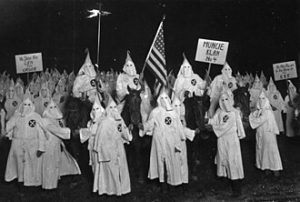
An Indiana Klan gathering in Muncie, Indiana in 1922
Grandpa grew up in Muncie, Indiana! And in 1922 he would have been 24 years old.
Is he in this photo?!?!
Surely not, I thought, but I needed to know more.
The First and Second Klans
I didn’t even know there was a First and a Second Klan. I knew about post-emancipation white robes, Grand Dragons, cross burnings, and lynchings, of course. And about modern-day white supremacy groups. And, by now, I know the difference — that the First Klan (mid-1800s) operated as a clandestine paramilitary group that utilized night riding, beatings, and murders, whereas the Second Klan (early 1920s) operated openly, held public parades, functioned as a “fraternal lodge,” and aimed to dominate local and state politics.
This song — Your Friendly Liberal Neighborhood KKK — was written by June Reizner (aka Bernie Cross) and recorded in 1965 by The Mitchell Trio, featuring the familiar face and voice of John Denver, who replaced Chad Mitchell. It is categorized as political satire and it captures my understanding of the Second Klan perfectly. The Klan’s goals were whitewashed (so to speak) to the point of being socially acceptable to even otherwise-nice folks. The Klan promoted itself as a “100% American” organization, targeting immigrants, Catholics, Jews, and Black Americans. (Um, sound familiar?)
It was pure serendipity that Julie Bestry sent me the song without knowing what I was writing about at that very moment!
The Second Klan was not exclusively located in Indiana, of course, but Muncie — where my grandpa grew up! — was the epicenter of the Klan’s resurgence in the 1920s — when my grandpa was a young man!
Some facts of the case:The book club selection in question was A Fever in the Heartland: The Ku Klux Klan’s Plot to Take Over America, and the Woman Who Stopped Them by Timothy Egan. I hadn’t yet read it when my aunt and I were talking about Grandpa, and I didn’t yet know that much of the action takes place in Muncie, Indiana.The period of time when “everyone” was joining the Second Klan in Indiana was 1922-1925. According to the book, The Klan had control of everything — local businesses, law enforcement, government. Joining the Klan seemed to many to simply be the patriotic thing to do.Although the Second Klan did keep membership records, most of the Indiana records were destroyed after the trial of Grand Dragon (and convicted rapist and murderer) D. C. Stephenson in 1925. Many Klan members didn’t actually quit, but simply fell away after that.My aunt is an unreliable witness. Meaning, she wasn’t there at the time, and wouldn’t swear in court to any particular memories of her own. She was born in 1938 and the family left Indiana for New Mexico in 1945 when she was 7. (I got the impression the dress making happened in Indiana.) She said it was something she had been told, presumably by one or both of her parents. The fact that she doesn’t trust her own memory is what makes her “unreliable”. But it also speaks to a possible kernel of truth in the story.I asked a genealogy cousin (a distant cousin I had not grown up knowing who still lives in Muncie) and she had not heard of any stories like this in her branch of the family. But then, neither had I.Deciding factors?
George Dewey Hankins (1898-1974) was an interesting fellow. Grandpa would have been 24-27 years old in 1922-1925. He left high school early, returning to a regular classroom as an adult — a very unusual thing to do at the time — to graduate at age 28 in 1927. He didn’t marry until age 32.
I’ve already written a couple of posts about him, including this one:
Mom’s Boxes Part 5: The Old Man of the MountainsAnd there are several more posts about him that I could — and may yet — write.
At first I thought maybe he did join when everyone else did, like my aunt said, without knowing, really, what the Klan was all about. But the more I learned, the more I realized he would have had to pay money and take an oath to join, neither of which sounded like what I knew of him. In 1925 it cost $10 to join, and $6.50 for the white robe, for a total of $16.50, which is the equivalent of around $311 today. That’s a lot for someone who spent most of his adulthood wearing a ponytail because he didn’t want to pay for haircuts!
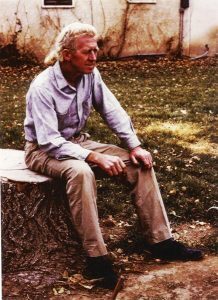
Another thing about Grandpa is that he kept records. He wrote a diary and tracked his expenses. My brother has all of that documentation, and we found nothing at all about the KKK. He has written about other strong opinions, and it seems to us that he would have written about the Klan if he had felt strongly about joining, or about not joining, or about joining and then quitting, for that matter. Although it’s possible he did not record his Klan thoughts or expenses, or got rid of the evidence later, I think it’s more likely that it never happened.
What we did find, meanwhile, are records indicating that Grandpa was homesteading in Colorado during that time. People in Colorado joined the Klan, too, but there is no evidence that he was among them.
I do think it’s possible that many of the adult white men in his life were members, though, even if only briefly. There seems to have been a good deal of peer pressure involved.
Finally, although I haven’t found photographic evidence yet (I’ll be keeping an eye out when I get back to working on photos), I would not at all put it past him to have obtained Klan robes for cheap or free for Grandma to make dresses out of for their three little girls. Times were hard, and they did, after all, buy a gangster’s hideout to live in, because it was cheap and no one else wanted it!
Mom’s Boxes Part 8: The Gangster HideoutThe verdict
I’ve ruled that George D. Hankins is not guilty of joining the Klan due to insufficient evidence that he did.
If he did join, and if he did quit after realizing what they really stood for, the only way I can understand it is to think of today’s Republicans who are decidedly not MAGA. They may have voted for Trump the first time, but then realized, “Nope. This is not what I signed up for.”
Case closed?
So, although the case has been closed, much like the crime cases on TV, and as with all genealogy research, it is subject to being re-opened if future new compelling evidence comes to light. If it does, I will update this blog post.
Have you ever had a family story that you weren’t sure was true?
Did you investigate and were able to prove or disprove it?
Please share with us in the comments below!
__________________________________________________________________________________________.Hazel Thornton is an author, genealogist, and retired home and office organizer.Book: Hung Jury: The Diary of a Menendez Juror Book: What’s a Photo Without the Story? How to Create Your Family Legacy Book: Go With the Flow! The Clutter Flow Chart Workbook Feel free to link directly to this post! Click here to ask about other uses.Copyright 2026 by Hazel Thornton, Organized for Life and Beyond
__________________________________________________________________________________________
The post Grandpa Did What?!?! appeared first on Hazel Thornton.


April 9, 2026
Are you taking it too far? (recycling/donating/selling/repurposing)
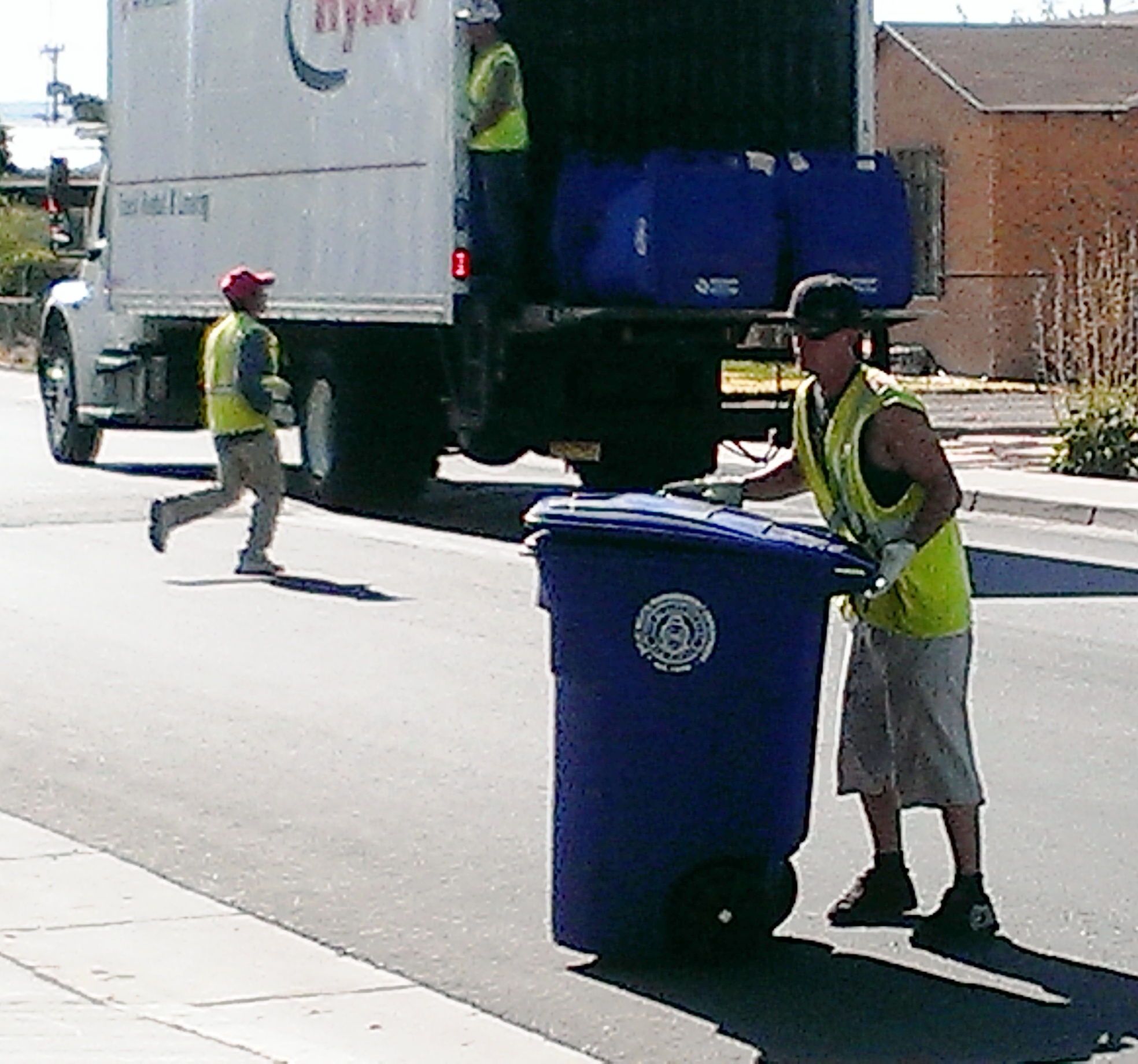
I was so happy when my recycle bin was delivered (in 2015)!
Decluttering and letting go of unwanted items is good for the soul. One man’s trash can indeed be another man’s treasure! Repurposing can be a creative and satisfying endeavor. And recycling is good for the planet. But there’s a limit to what one person can do. You can’t save the planet single-handedly. Don’t forget to save yourself, too!
I’m retired now, but most of my organizing clients were recyclers and donors. Some were crafty up-cyclers. Even so, if I were to put them all in a room there would be a heated debate over what is ACTUALLY recyclable (and donate-able), what is WORTH recycling (and donating), and how BEST to go about it. Local municipalities, too, differ in their capabilities and guidelines. Selling can be good for the pocketbook, but many sellers are disappointed when their stuff isn’t worth what they thought it was, and discouraged when they realize how much time and energy went into the sale.
The cost of being a good citizenHere are some examples where trying to be a good citizen (or a thrifty soul) can get in the way of your responsibility to your own health, well-being, and sanity:
Recycling is SO important to you, and your recycling system is SO complicated, that every room in the house has a mini recycle station. However, you never actually get the recyclables collected into one spot and take them away from the house to the recycle center. So they are piling up, inside and out, and attracting pests. (Three cheers for neighborhoods with city-provided and city-serviced personal recycle bins!)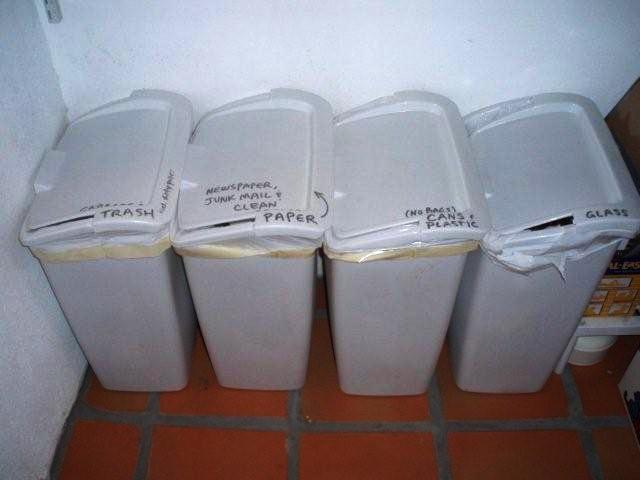
This recycle system served me well for years. I don’t really need it now that I have my blue bin.
You want to donate your unwanted items, but you feel the need to find just the perfect charitable organization to take them to. Blankets to the animal shelter — but you don’t feel you have enough saved up yet to take. Clothing to the women’s shelter — but it’s only open for donations when you are at work. Craft supplies to — whom??? So they are all piling up, getting in your way, and gathering dust.You want to have a garage sale , so you are collecting items in the garage. Now the garage is full of things you don’t want, while your valuable car is parked outside in the elements, because you never actually schedule, and announce, and hold the garage sale. Or, maybe you do have the sale but do not immediately take the leftovers to donate to your favorite non-profit.You want to repurpose that chest of drawers in some way. You’re not sure whether you want to make it into a storage bench or what, exactly, but Pinterest is full of ideas! You never get around to deciding, or planning, or getting the tools and supplies to make it happen. So it just sits there cluttering your home, along with umpteen other projects.Each situation is differentI took my cues from my clients. If they were dedicated recyclers, we by all means recycled unless their methods were costing too much — too much time and effort making decisions; too much space dedicated to recycling; not the best use of our paid time together.
Sometimes I would declare a recycle-free day, much to their relief. The idea is this: In order to make the biggest difference in your space today, let’s just call it trash — gasp! — because it’s easier and faster. We’ll review and simplify your recycling system so that you don’t end up with another backlog, and you can resume being a good citizen of the planet tomorrow, OK?
On the flip side, I’ve had clients who do not ever recycle or donate in any way. In those cases I would say, “Do you mind if I set up recycle and donate bags (or boxes) in addition to trash?” I would use them to gather what I would rather not see in the trash, and take the bags away with me to recycle or donate to an agreed-upon charity.
Are your expectations too high?When a client wants to hang onto something in order to sell it, I ask if they have ever sold on eBay, or on consignment, or held a garage sale before. If it’s something they enjoy doing, more power to them! I will offer local and online selling resources, but I will also strongly encourage them to gift or donate items instead, for the sake of simply being done with it and getting on with their lives.
I recommend picking only one or two places to donate. One of them needs to take just about anything, like Goodwill (check your local guidelines first to be sure), to make it a simple chore that is easy to do. My second choice is our local Friends of the Library because I volunteered there weekly for years and they hold a monthly used book sale.
With repurposing, craft, and fix-it projects I simply ask: Is it really worth doing? Sometimes it just isn’t.
What about you? Are you “taking it too far” and suffering in some way as a result?
Please share with us in the comment section below!
__________________________________________________________________________________________Hazel Thornton is an author, genealogist, and retired home and office organizer.Book: Hung Jury: The Diary of a Menendez Juror Book: What’s a Photo Without the Story? How to Create Your Family Legacy Book: Go With the Flow! The Clutter Flow Chart Workbook Feel free to link directly to this post! Click here to ask about other uses.Copyright 2015-2026 by Hazel Thornton, Organized for Life and Beyond__________________________________________________________________________________________
The post Are you taking it too far? (recycling/donating/selling/repurposing) appeared first on Hazel Thornton.
February 17, 2026
Gold Mines and Moonshine
This is just an illustration of panning for gold.
“Francis Robbins went west to the gold rush and was never heard from again.”
This was a story I had never heard until I started researching my family history. And that’s all there was to it, too. Nothing about the man himself or the family he left behind. Because nobody knew anything else.
Frank left his family
Francis “Frank” Robbins was my 3rd great-grandfather. He was listed on the 1850 census, at age 22, as living with his parents in Parke County, Indiana. In May 1851 he married Eliza Jane Kibby. Their son, Josiah, my 2nd great-grandfather, was born in May 1852. By September 1855 Eliza had married her second husband, Jacob Hiler.
So, when, exactly, did Frank leave, and when did Eliza know he wasn’t coming back?
In 1860 Eliza and Jacob were living with 2 children surnamed Hiler (Minerva 12 and James 9, from Jacob’s first marriage) and 4 children named Robbins (although the younger ones went by Hiler later on): Josiah 8, Mary 3, John 1, and George 4/12.
So, who was the father of Mary, John and George? Probably Jacob, based on the marriage date. But why, then, were they going by Robbins in 1860? (That’s another puzzle for another day.)
Did Frank ever meet (or even know about) his son? Either way, Josiah surely grew up with the knowledge that his father “went west.”
Where did he go?
And where, exactly, was “the gold rush”? It’s kind of hard to research a location if you don’t know where to look! There were multiple gold rushes in the western United States in the mid-1800s, including California, Colorado, Nevada, Montana, and Idaho. But California seemed the most likely candidate.
So why could I not find him?
What happened next?
Did Frank reach his destination? If so, why did his family never hear from him again? Did he intentionally abandon them? Did he and Eliza officially (or unofficially) call it quits before he left? (I have found no divorce record.) Did he strike it rich? (This is highly unlikely, statistically speaking.) Did he start a new family? Did he die on the way and is buried in an unmarked grave somewhere? Have his bones turned to dust next to a secluded stream in which he was panning for gold alone?
Checking periodically
Mind you, I have not spent a ton of time searching for Frank. But I have checked periodically over the years to see if new records are available online that will help me determine what happened to him.
I found multiple Francis/Frank Robbinses in the mid-1800s. The two most likely candidates are in Siskiyou County, California (1860 Federal Census), and Snohomish County, Washington (1889 Territory Census — statehood came later that same year). Both areas were in the heart of gold country. Both men were listed with an approximately correct age or birthdate, with a reported birthplace of Indiana. Both were listed as farmers. So, were either of them “my” Frank? Both? Neither? Did he fail at gold mining (likely) and become a farmer (or farm hand)?
I’ve been slow to declare that I’ve “found” Frank because one document — or two of them, three decades and two states apart, with nothing else to tie them together — is simply not enough to satisfy the Genealogical Proof Standard.
Also, it is worth noting, this is a blog post, not a genealogical proof.
Reviewing what I already know
I recently tried again, starting the way genealogists do when faced with a “brick wall”: I reviewed what I already knew. All I had (after Frank’s disappearance) were the two census records from California and Washington.
And this time I did notice something new!
Previously, in Siskiyou County, California I had noticed Frank was living with a family and a couple of other single men. I thought nothing of that, assuming they were farm hands or boarders. But now I noticed that the head of household was a man roughly Frank’s age who was also listed as being from Indiana. Although it turned out he was born in OH, he had indeed lived in Wabash County, Indiana in 1850 with his parents.
Was Frank lucky enough to find someone from Indiana to board with and/or work for in California? Or did they know each other previously and migrate from Indiana to California together? How did they meet? Wabash is several counties away from Parke. Was Jerry simply passing through on his own way to the gold rush? And did Frank say, “Hey, wait up, I’ll come too” — ?
The man’s name was Jeremiah “Jerry” Heckathorn.
Researching Frank’s FAN club
Another thing genealogists do is they research an ancestor’s “FAN club”.
FAN stands for Friends, Associates and Neighbors. This term was coined by Elizabeth Shown Mills, but I like to include Family in with the Fs to remind myself how often researching a child, or sibling, or cousin, or in-law will shed light on an ancestor’s otherwise shrouded life. (Spouses and parents are more obvious sources of light.)
So I did a deep dive on Jeremiah “Jerry” Heckathorn.
Although records about Frank are scarce, records about Jerry are plentiful, as were the number of children he and his wife Anna had together (thanks in part to two sets of twins). One way I was able to trace Jerry’s movements was by noting the birth years and birth places of his twelve children:
Anna 1854 OR — Ida 1857 OR — Mary 1859 CA — Dora 1859 CA
Martin 1864 CA — Henrietta 1866 CA — Henry 1866 CA — Emma 1868 WA
Florence 1870 OR — Elsie 1873 OR — Francelia 1875 OR — William 1880 OR
In looking at their respective timelines, I tracked both men, found some overlap, and also noticed that both were missing from any 1870 census record.
Frank born 1828 IN > 1850 IN > 1860 CA > 1870??? > 1880??? > 1889 WA (died when and where?)
Jerry born 1827 OH > 1850 IN > 1860 CA > 1870??? > 1880 OR (died 1891 in Siskiyou County, California, and was buried in Jackson County, Oregon)
If Frank settled in WA, did he ever live in OR? (I think it’s safe to say he traveled thru OR to get to WA.)
And if Jerry settled in OR, did he first go to WA? The answer to that question is: Yes! Records show that Jerry’s 8th child Emma was born there in 1868.
Why, then, did Jerry return to Oregon to spend the rest of his life? More digging revealed an obvious tie to the area, the most compelling of all reasons: Family. He and his brother George and their families are considered pioneers of Jackson County, Oregon.
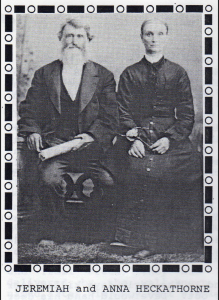
These are not my ancestors. But they were members of Frank Robbins’ FAN club.
Don’t forget about maps!I use Google extensively in my research, as well as paid and free genealogy sites, and I refer to maps frequently when trying to answer questions.
Sample question: Where is one county in relation to another county, and are they maybe the same place, one county having been formed from another, and when did that happen?
In this case, I thought I knew where Siskiyou County was and never looked it up until just now, while writing this blog post. I thought it was near Sacramento, specifically near Sutter’s Mill, where the California Gold Rush started. But it isn’t! It’s way up near the Oregon border. And Jackson County, Oregon is only 50 miles away. They are equidistant from the Oregon/California border, which makes more sense when it comes to 1) Jerry’s first two children having been born in Oregon, 2) another brother, David, having settled in California, and 3) Jerry having died in California and then buried in Oregon.
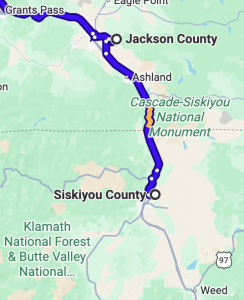
Jackson and Siskiyou Counties are right across the California-Oregon border from one another.
Is wanderlust hereditary?Josiah Robbins (1852-1931) was a traveling salesman. This is according to his granddaughter (and my grandmother) Villa Mae Lawrence Hankins (1904-1986). Although he was variously listed in census records as a coal miner, a sawmill worker, and a farm laborer, she claimed that he simply worked long enough to save up money for a trip. She also credited him with her own wanderlust, which she thought he may in turn have inherited from his father Francis (Frank), who “went west.” Although I don’t think she ever left the country, she did visit many U.S. states, including Alaska and Hawaii. She was more educated than most women of her time, having earned both nursing and teaching degrees, and was nonetheless known to say, “Travel is the best education.”
Josiah, while always a resident of Parke Co, Indiana, was known to periodically pack up some, if not all, of his family members in a covered wagon, and make a trip of over 200 miles down to the Land Between the Rivers area of Tennessee and Kentucky (which later became the Land Between the Lakes recreational area). One of his daughters, Ivan, told her daughter, Edith, who told me, that she never made it past 3rd grade due to being taken along on several of these trips. She also reported that on one trip they buried a baby that had died on the way. (It was probably Josiah’s 3rd wife Jane’s child.)
Was moonshine involved?
Why that area of Kentucky and Tennessee, though? Did they already have ties there, or did they develop them later? We may never know for sure, but a historian I met on a research trip there told me that the people on the Land Between the Rivers were especially poor and were famous for bootlegging moonshine. This is a pet (unproven) theory of mine for all the traveling back and forth, given that my grandma (Villa) also described her father, Horace Lawrence (1882-1952), as “a drunk and a rent jumper.” Her brothers were alcoholics as well. (For reference, Prohibition lasted from 1920 to 1933).
In any case, the Robbins family from Parke County, Indiana apparently met the Lawrence family of Steward County, Tennessee on one of these trips. Sisters Ethel and Ivan Robbins married brothers Horace and Lee Lawrence. And Jennie Lawrence (1859-1905), a sister to Horace and Lee, became Josiah’s fourth wife. Thus, to Ethel and Ivan, Jennie was a sister-in-law and stepmother at the same time!
Josiah was eventually listed as a resident of the Parke County Poor Asylum for a few months in 1927. He died in Parke County in 1931, never having known what happened to his father.
In addition to Frank having “gone west”, there’s something else that may have influenced Josiah. In the 1850 Parke County census, when his mother, Eliza, was still living with her parents, they had two young men staying with them whose occupations are listed as Peddler — a traveling salesman of sorts, trading primarily in household items. Although he wasn’t born until two years later, I wonder if his mom told him stories about the peddlers who stayed with them when she was a girl?

This is a historical photo and has no known connection to my family. Click the image to learn how moonshiners used “cow shoes” to evade the authorities.
What do I still not know about Frank?Back to Frank, there are lots of questions remaining. Did he remarry and/or have children? Did he die alone after all? When and where? Did he intend to leave his family forever, or did one thing just lead to another, making it more difficult as time went by for him to reestablish contact? Did he never own property or do the other sorts of things that usually leave a paper trail?
Some things we can never know. And it’s hard for the imagination not to fill in the gaps. I feel lucky to have learned this much about him!
Meanwhile, I have hundreds of other ancestors to learn more about.
In Frank’s generation alone I have 32 3rd great-grandparents. But many of my lines extend to 7th generation, and others as far as 11th generation. So, there are hundreds of ancestors, all with stories of their own waiting to be told.
So, while I’m always open to new information, and more than willing to adjust accordingly, I think I’ll leave this one alone…for now.
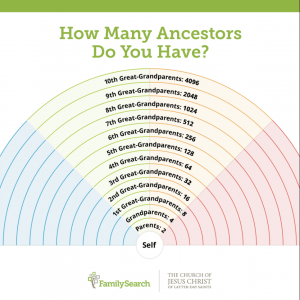
Click image to see larger and read the article.
Did any of your ancestors “go west to the gold rush” and were never heard from again? (It’s not uncommon!)
Have you solved a genealogy mystery by researching an ancestor’s FAN club?
Please share with us in the comments!__________________________________________________________________________________________.Hazel Thornton is an author, genealogist, and retired home and office organizer.Book: Hung Jury: The Diary of a Menendez Juror Book: What’s a Photo Without the Story? How to Create Your Family Legacy Book: Go With the Flow! The Clutter Flow Chart Workbook Feel free to link directly to this post! Click here to ask about other uses.Copyright 2026 by Hazel Thornton, Organized for Life and Beyond__________________________________________________________________________________________
The post Gold Mines and Moonshine appeared first on Hazel Thornton.
February 9, 2026
The Bird Feeder Camera: A Tragedy in Three Acts

This is a stock photo. (We don’t have cardinals in Albuquerque!)
PrologueI received a bird feeder camera for Christmas. What a nice gift!
First, I assembled it — but not right away — and installed the app on my phone.
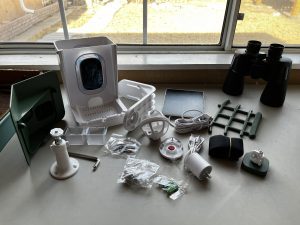
Next, I contacted Xfinity because I couldn’t figure out what sort of WiFi I had. This particular feeder only supports 2.4 GHz, and is not compatible with 5 GHz networks. I did know that a 5G (fifth generation) cellular network is not the same thing as 5 GHz WiFi frequency. I accepted Xfinity’s offer to reduce my WiFi frequency to 2.4 GHz, which has not seemed to inadvertently affect anything else.
Finally, I installed it in the best spot in my yard that I could think of. I even wrapped the tree trunk in stiff, spiky, plastic mesh to thwart raccoons.
Looks good, eh? (Except I could have stuffed that white cord behind the feeder, and would have, eventually.)
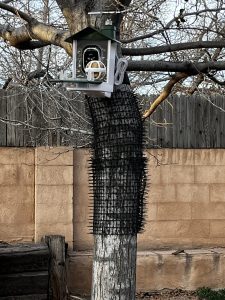
No activity. Well, it was late in the day and sometimes it takes a while for birds to find their new feeder.
At least there were no raccoon intruders!
Act 2: Second Day
Not too exciting, but so far, so good. A nice pair of house finches enjoyed their newfound bounty.
That round thing on the left is a suet holder. The feeder also accommodates seeds, nuts, fruit, nectar, and other treats.
(All videos are 10 seconds long.)
https://www.org4life.com/wp-content/uploads/2026/02/Camera_Finches_2.mp4Act 3: Second Night
The notification system works!
And…well…I’ll let these videos speak for themselves:
https://www.org4life.com/wp-content/uploads/2026/02/Camera_Raccon_1.mp4https://www.org4life.com/wp-content/uploads/2026/02/Camera_Raccoon_2.mp4Drat!
Epilogue
The feeder was hanging precariously when I went out to check. I brought the whole thing inside, lest it be dislodged by the raccoons and crash to the ground below (or be otherwise ruined by them).
And I forgot to turn off the camera.
Guess who discovered the feeder in the middle of the night?
https://www.org4life.com/wp-content/uploads/2026/02/Camera_Ziggy.mp4Hi Ziggy!
I still haven’t actually figured out how to turn the camera off — despite having an instruction booklet and the internet at my disposal — and have deleted many unflattering videos of myself moving about my office, which overlooks the back yard. I tried everything I could think of, short of contacting the company directly. I may just let the battery run down while I contemplate my next move.
Who knows whether I’ll re-deploy the feeder elsewhere for birds, or perhaps to use the camera for home security in some way.
The solution — for me — is not to bring it in each night and put it out again each day. I’ve tried that with other feeders that are easier to manage than this one. This spot was actually a little high for me even to refill the feeder periodically. (I should not be using ladders on uneven surfaces at this point.) And any spot I can reach needs to be out of the reach somehow of raccoons. And skunks. And squirrels.
Alas! The best laid plans!
~ The End ~
What has been your experience with birds, critters, and/or wildlife cameras? (Or home security cameras, for that matter.)
Please share with us in the comments below!
______________________________________________________Hazel Thornton is an author, genealogist, and retired home and office organizer.Book: Hung Jury: The Diary of a Menendez Juror Book: What’s a Photo Without the Story? How to Create Your Family Legacy Book: Go With the Flow! The Clutter Flow Chart Workbook Feel free to link directly to this post! Click here to ask about other uses.Copyright 2026 by Hazel Thornton, Organized for Life and Beyond_____________________________________________________________________________
The post The Bird Feeder Camera: A Tragedy in Three Acts appeared first on Hazel Thornton.
January 30, 2026
MORE Joyscrolling

I was struggling to put together my February newsletter.
My writing group asked: What do you usually do when you’re stuck on what to include?
I replied: Well, usually I have a new blog post to offer. But I haven’t been inspired to write a new one lately.
Then I remembered that I’d been gathering ideas for a new post and just forgot about it in the fog of personal, national, and global uncertainty. And then I found that writing about joyscrolling cheered me up, at least momentarily! Maybe one of these accounts I’m sharing will help cheer you up, too.
For your convenience, here’s a link to my previous Joyscrolling post (which explains what it is and why I’m writing about it):
Joyscrolling for your viewing pleasureYouTube Accounts
As before, even if I discovered the content creator on TikTok or elsewhere, I tried to find the corresponding account on YouTube because it seems more stable and accessible than the other social media platforms do these days.
.
 India Rose Crawford
Is there anything sweeter and cozier than the world of Frog and Toad?
I think not!
https://www.youtube.com/@indiacrawford/shorts
.
 K9 Konvoy
This account is as simple as it gets. It’s all about the dogs. They are so excited to go on their regular bus outing with their friends. They run around in the woods together. They load back onto the bus and get treats. One of them is named Hazel (they all have different schedules, so she’s not in every video).
https://www.youtube.com/@K9Konvoy/videos
.
 Kathleen’s Cravings
All I’ve seen on Facebook is her Single Serving treat posts. I see now that she cooks other things as well.
https://www.youtube.com/@kathleenscravings
. Mary Frances
Mary Frances is the oldest daughter of two famous fiddlers. This article contains the video that first introduced me to her. She had broken her wrist and her dad helps her perform on stage by bowing the notes she is fingering with her good hand. They are both amazing! In this video you learn that every single member of the large, fun, family is also a fiddler.
https://www.youtube.com/@MaryFrances-ih8ip
.
 Finniature Schnauzer
Adorable Finn loves to run. He waits for the signal: “On your mark…Get set…GO!!!” His fans love to suggest ways to try and trip him up: “Say Goat, or Bow, or Go Go Dancing” — but he always waits for GO!!!
https://www.youtube.com/@Finniature.Schnauzer/shorts
.
 Massimo Mandato
This TikTok creator is known for his “I look like everyone” series, where he reacts to followers’ suggestions that he resembles various celebrities and fictional characters. He looks more like some than others, but many of the comparisons are quite accurate and amusing.
https://www.youtube.com/@massmandato
.
 Apollo and Frens
Apollo is an African Grey parrot. I’ve been keeping tabs on him for a few years now. It’s amazing how much he has learned in that time, enough to earn an entry into the Guiness Book of World Records for the most items (12) identified by a parrot in three minutes. I noticed in this video that he is, indeed, naming items, but I know he can also tell you what each item is made of, and what color it is.
https://www.youtube.com/@ApolloandFrens
.
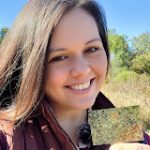
Lisa paints tiny plein air paintings that mimic the view so closely that you can’t even see them until she stands in back of them or moves them.
https://www.youtube.com/@lisacornwellart/shorts
What’s your favorite source of internet Joyscrolling?
If you have one to share, or if you decide you like one of mine, please leave a comment below!
______________________________________________________Hazel Thornton is an author, genealogist, and retired home and office organizer.Book: Hung Jury: The Diary of a Menendez Juror Book: What’s a Photo Without the Story? How to Create Your Family Legacy Book: Go With the Flow! The Clutter Flow Chart Workbook Feel free to link directly to this post! Click here to ask about other uses.Copyright 2026 by Hazel Thornton, Organized for Life and Beyond
_____________________________________________________________________________
The post MORE Joyscrolling appeared first on Hazel Thornton.
November 23, 2025
We’re All Immigrants

As a genealogist, and as a U.S. citizen living in politically stressful times, I think about immigrants kind of a lot. Especially around Thanksgiving time, which is right now, as I write.
NOTE: If you do nothing else, scroll down and watch the video I have provided for you. Thanks!
The first ThanksgivingThe Pilgrims were pioneers. And colonists. And refugees. And immigrants — illegal immigrants.
Well, OK, there was no actual legal process to follow in those days. All they wanted was to escape religious persecution and live a better life. But it’s also not like the Indigenous people they encountered were holding up signs saying, “Give me your tired, your poor, your huddled masses yearning to breathe free.” Those words are from “The New Colossus”, a poem by Emma Lazarus, which was engraved on a bronze plaque on the pedestal of the Statue of Liberty more than 200 years after the Pilgrims landed at Plymouth. Also, I’m not calling it “Plymouth Rock” because, well, have you seen it? LOL!
The first Thanksgiving was (supposedly) all about welcoming and helping strangers, sharing foods and customs, and being grateful together. What could be better? A lot has happened since then, though, and I understand why many Indigenous people consider it a National Day of Mourning. (You can read more about the real first Thanksgiving in articles like this one.)
What’s so special about the Pilgrims?In case it isn’t obvious, I’m no historian. Most of what I know about history comes from whatever I learned in grade school and from reading historical fiction. I remember our 5th grade class painting a mural of George Washington and his men crossing the Delaware, and learning about the Lewis and Clark Expedition — they were so lucky to meet Sacajawea! But the most interested I’ve been in learning history has been in the process of researching my ancestors.
Also, things change.
Here are some things I grew up “knowing”:
Pluto is a planet. Wait, no? (When my neighbor boys told me in 2006 that Pluto had been demoted to dwarf planet status I thought they were pulling my leg.)The Basic Four food groups were all the nutrition advice we needed. (This concept first morphed into the Food Pyramid and later into the My Plate portion model.)Christopher Columbus discovered North America. (No, he didn’t.)The Pilgrims were the first settlers. (No, they weren’t.)I remember being super-intrigued by the Lost Colony of Roanoke, but I don’t remember learning about Jamestown in school. As I learned later, there were many other early colonies as well (see Timeline of the European colonization of North America).
After researching my ancestors I knew that some of them predated, or at least rivaled, the Pilgrims in their arrival to the New World. So, I asked Google: “If the Pilgrims weren’t the first settlers, why are they so famous?”
AI Overview
The Pilgrims are famous because their story of religious freedom, survival, and self-government was promoted heavily in the national narrative, particularly through the Mayflower Compact and the celebration of the first Thanksgiving. While the Jamestown colony was founded earlier and served as the first permanent English settlement, the Pilgrims’ narrative was more closely tied to a story of escaping religious persecution to find liberty, a theme that resonated with the developing American identity. This narrative also helped to sidestep the more complicated history of other colonies, such as the introduction of slavery in Jamestown.
Oh, OK. I get it. It was part of the whitewashing of American history. But not just to make it palatable to children. I know adults who still think the Pilgrims were the first, and who know little about Jamestown.
Well, if it was a race, and the Pilgrims beat out most of the other Europeans, it wasn’t by much!
Mayflower DescendantsThe Mayflower Society is, as stated on their website, the gold standard in lineage societies. To be a Mayflower descendant is considered a genealogical badge of honor. But why?
I’m impressed with anyone who spends the time to prove their lineage, whatever it may be. At the same time, many lineage societies were founded on elitist and racist principles. I’m not going to get too deep into it right now, but this seems like a good spot to park a couple of related articles:
Is My Genealogy Hobby Racist? (by Andrew Gaertner, who, like me, aims to use genealogy to undermine racism and elitism, not enforce it.)
Black Lives Matter in Genealogy Too (by me, Hazel Thornton)
I am not a Mayflower descendant…that I know of…yet. But when you consider how many ancestors I have (we all have) — we have 4096 of them at the 10th great-grandparent level if you don’t count endogomy and pedigree collapse (click here if you don’t believe me) — and when you consider how far back my research goes, still in this country, and how many branches I have yet to explore fully, chances are pretty good that I will encounter a Pilgrim in my tree eventually.
Click image to view it larger and read the article.
Here’s what I wonder:
Was it a coincidence that the first Society of Mayflower Descendants was established in New York City in 1894, two years after Ellis Island opened for business in 1892? I think not.Were my ancestors aware, and opinionated on the subject, of immigrants pouring in through Ellis Island from all over the world? Did they even know their own history? Or were they too busy farming and raising children to care? They certainly didn’t preserve volumes of records for me to eventually inherit!There are lots of other lineage societiesI am not a member of any of these societies. I do have a history of joining geographic genealogical societies, in the regions where my ancestors lived. But I qualify to join all of them if I were to be so inclined:
They consider 1835 or before as qualifying, but my Quaker ancestors go way farther back than that. Thornton Family History Lost & Found
Society of the Descendants of the Founders of Hartford
I haven’t written about this yet, but I’ve been to Hartford to see the Founders Monument, upon which three of my Lord ancestors’ names are engraved.
Associated Daughters of Early American Witches
National society for daughters with proven descent from someone who was accused, tried or executed for witchcraft in American colonies prior to 31 December 1699. I wrote about Anna Wolcott in Witches in the Family.
I hadn’t yet encountered John Clay, my 8th great-grandfather when I wrote How and when to find a common ancestor.
Order of Descendants of Ancient Planters
Speaking of John Clay, the term “Ancient Planter” is applied to those persons who arrived in Virginia prior to June 1616, remained for a period of three years, and paid their passage.
Order of the Crown of Charlemagne
Unproven, with no plans to prove, but I think most of us are descended from royalty in one way or another. Are we all descended from royalty?
Daughters of the American Revolution (DAR)
I haven’t written about this yet, as it pertains to my family.
We’re all relatedI’ve written about this before. In We’re All Related, under “Why Does it Matter?” I wrote:
I think it’s important in these divisive political times to focus on what we all have in common, not what separates us.
This 5-minute film made a big impression on me, and I invite you to watch it too:
Momondo: The DNA Journey | Ancestry
As one originally reluctant participant says, at 3:43, “This should be compulsory. There would be no such thing as extremism in the world if people knew their heritage. Like who would be stupid enough to think of such a thing as a pure race?”
Even the natives were immigrantsI’m not here to justify anything the explorers, colonists, pioneers, or planters did.
I’m also not here to vilify them.
My ancestors were both leaders and followers. Slaveowners and Quakers. Loyalists and Patriots. Rebels and Yankees. Farmers and Politicians. Ministers and Criminals (well, at least one 2nd great-granduncle was, so far).
And so were yours, if you research enough of them.
We’re all immigrants, or descendants of immigrants.
Even the Indigenous population of the Americas were immigrants. Unless something’s changed since I learned it, they migrated from Northeast Asia across a land bridge in the Bering Strait thousands of years ago. And the Pilgrims arrived only 400 years ago.
I’m gonna call it in favor of the Native Americans.
Do you belong to (or qualify for) any lineage societies?
What immigrant ancestors do you have whose stories you know?
Please share with us in the comments below!
___________________________________________________________Hazel Thornton is an author, genealogist, and retired home and office organizer.Book: Hung Jury: The Diary of a Menendez Juror Book: What’s a Photo Without the Story? How to Create Your Family Legacy Book: Go With the Flow! The Clutter Flow Chart Workbook Feel free to link directly to this post! Click here to ask about other uses.Copyright 2025 by Hazel Thornton, Organized for Life and Beyond_________________________________________________________________
The post We’re All Immigrants appeared first on Hazel Thornton.
November 7, 2025
What’s in a name? (family naming patterns)

Who (or what) were you named after? I was named for my paternal grandmother, Hazel Islery Clay Thornton, the “bathing beauty” on the cover of my book What’s a Photo Without the Story? How to Create Your Family Legacy. My mom was named for her maternal grandmother, and my dad was a Junior.
Why are family naming patterns important?I love family naming patterns as much as I love family resemblances. They can be entertaining, helpful, touching, and mystifying. They can also help you find more ancestors and confirm your findings. How?
Entertaining: I find most of the naming patterns discussed in this blog post to be entertaining! My own mom named her children with rhyming first and middle names that are fun to say. I can’t list them all due to privacy considerations, but I can tell you the first two: Hazel Kay and Michael Ray.Helpful: Keep an eye out — one way you might get lucky is that the first or middle name of a child might be the elusive maiden name of the mother. (More on that later.)Touching: I recently realized that my 2nd great-grandmother Emma Cook Lawrence named her son (my great-grandfather) Horace Warren Lawrence in honor of her presumably-dear, closest-in-age brother, Harrison W. Cook. I knew about Harrison W., but not that he went by the nickname Horace and that W. stood for Warren. And not that he died in the Civil War when he was 20 and she was just 15. I found this to be not only touching, but also a helpful indication that I had identified the right wife for James Henry Lawrence.Mystifying: My maternal grandmother’s first name is Villa. Where the heck did that come from? And Norfulet Byrd. Is Norfulet a typo? A surname? And why did my mom say, before she died: “Oh, by the way, Emma Lawrence’s real name was Minerva Jane Kibby.” What?!?! I guess those are the opposite of patterns, but perhaps one day a pattern will reveal itself and help solve one of the mysteries.Not all families have strong naming patterns, but many do! It’s not something you can count on — I think it’s equally as interesting to note when a family did not follow a pattern, as when it did — but noticing them, and learning which common patterns might apply to your situation, can help you piece your ancestors’ families together and learn more about them.
Here are a few I’ve noticed:
English/Irish/Scottish TraditionHere’s the traditional naming pattern:
1st son named after paternal grandfather
2nd son named after maternal grandfather
3rd son named after father
4th son named after father’s eldest brother
5th son named after mother’s eldest brother
1st daughter named after maternal grandmother
2nd daughter named after paternal grandmother
3rd daughter named after mother
4th daughter named after mother’s eldest sister
5th daughter named after father’s eldest sister
In my family tree there are eight Thomas Thorntons. There are also nine James Reeds and six John Clays. My namesakes are, for the most part, spaced out enough in time that I am not confused. But you can end up with a real puzzle if all the sons in a large family stick together in one geographical location and they all name their sons in the same traditional manner. (Does this record pertain to the father, or to his son? Or maybe his nephew?)
The Biblical RobbinsesI have never found any direct evidence that the father of my 4th great grandfather, Noah Robbins, Is Daniel Robbins. Why, then, have I included Daniel, and Daniel’s father Isaac, on my pedigree chart? It’s because in genealogy we also consider indirect evidence. I know that Noah Robbins migrated from North Carolina to Indiana. And I know that a bunch of other Robbinses also migrated from North Carolina to Indiana in the same time frame.
From what I know of the individual families, from other records, the one that comes the closest to being in the right location at the right time, with other children around Noah’s age, is Daniel’s. The years when Noah might have been listed by name on a census with Daniel were pre-1850, the first year all household member names were listed with the head of household. Another clue is that all these related Robbins families had a tradition of giving their sons biblical names. This family is not unique in using biblical names, but I haven’t seen one that uses them as extensively as this one did.
Andrew, Daniel, Eli, Elisha, Elzey, Ezekiel, Hiram, Isaac
James, Jacob, John, Jonas, Jonathan, Joseph, Joshua, Josiah
Mathias, Michael, Moses, Noah, Solomon
I have seen only one use each of these biblical names in the applicable timeframes and locations. If there were another Noah in the same time and place, that would open it up for “my” Noah to belong to another family. But there isn’t another candidate family thus far.
What are the chances that Noah is not a member of this extended family?
I wasn’t even planning to mention the female names, assuming them to be a mixture of biblical and non-biblical. But I started looking them up and found out that more of them were biblical that I thought! A few examples:
Sarah – yes, of course. But also: Tabitha, Priscilla, Rhoda, Anna, Elizabeth, Keziah and Jessie.
The Virtuous QuakersMy Quaker ancestors go back as far as Quakerism itself, which was founded in mid-17th-century England by George Fox. That is, until they started marrying non-Quakers and committing other such infractions. (See Thornton Family History Lost and Found.)
Quakers (and Puritains) often gave their children names that reflected the virtues they wished them to be associated with. These are known as virtue names or grace names. Here are some examples from my family tree. They are all female names unless designated (m).
Charity, Reason (m), Patience, Grace, Thankful, Pleasant (m)
Unity, Temperance, Mourning (I don’t get this one either)
The Patriotic HendersonsAlthough the Hendersons in my family were Quakers, they were apparently also very patriotic, as shown by the names of this father and his sons:
Thomas Jefferson Henderson b. 1809 (Thomas Jefferson, 3rd U.S. President, 1801-1809)
Shadrack Jackson Van Buren Henderson b. 1839 (Andrew Jackson and Martin Van Buren, 7th and 8th U.S. Presidents, 1829-1841)
James Madison Henderson b. 1848 (James Madison, 4th U.S. President 1809-1817)
And, by searching my Ancestry database I found a number of instances, in completely different branches of my tree, of honor being paid to the Father of Our Country:
George Washington Cook
George Washington Keesling Sr.
George Washington Keesling Jr.
George Washington Lear
George Washington Boykin
George Washington Smith
George Washington Reed
Here are a few more patriotic examples:
Robert E. Lee Lawrence b. 1875 (Confederate General Robert E. Lee lived 1807-1870)
James Monroe Speed b. 1818 (James Monroe, 5th U.S.President, 1817 – 1825)
James Monroe Taylor b. 1866 (James Monroe, 5th U.S. President, 1817 – 1825)
Thomas Jefferson Thornton b. 1845 (Thomas Jefferson, 3rd U.S. President, 1801-1809)
Unusual first and middle names can be the best clues!Let’s look at Abraham Garr Henderson. His middle name — Garr — is his mother Eliza’s maiden name. If I hadn’t already known her maiden name it would have been worth a search to see if it might be Garr. Abraham is not even my direct ancestor. He’s my 2nd great-granduncle.
Although I’ve only included this one example, and you can’t count on it, it happens often enough to be worth keeping in mind. And that’s why you need to research the children and siblings of your direct ancestors as well as the direct ancestors themselves!
Reusing the names of your own deceased childrenThis might seem kind of morbid, unless you lived in a time and place where it was common. If it looks like you have duplicates in your tree, it might be that one child died and a subsequent child was bestowed with the same name. I don’t have any handy examples, but I’ve seen it in a few of my branches, and those of genealogy clients (before I retired).
AI Overview
It was popular in early American, European, and other cultures, particularly between the 16th and 19th centuries, to reuse a dead child’s name, especially when infant mortality was high. This practice was a way to cope with grief and preserve the family name and continuity. The tradition was so common that parents would give the same name to a new baby and would continue doing so until a child with that name survived to adulthood.
CatholicsWhile researching for one of my genealogy clients (before I retired), I encountered a family on the census with a large number of children. Although Catholics are known for having large families, or at least they were several decades ago, I didn’t know the family was Catholic. All I knew is that all of the boys on the census record were named Joseph and all of the girls were named Mary. What?!?!? As I was trying to figure out why, I noticed that all of their neighbors also had multiple children named Joseph and Mary! I’ve heard of drunk census takers, and those with sloppy handwriting, writing things down however they heard them, and relying on whoever answered the door to provide the information, but what was going on here? After a little Googling, I confirmed that some Catholics in some areas really did name all their kids Joseph and Mary. And all those kids in their daily lives go by their middle names: John, Thomas, Margaret, Elizabeth, etc.
African-AmericansOK, so this one’s not as entertaining as the others.
When tracing African-American ancestry, the process is the same as usual working my way back in time to 1870, the first census after the Emancipation Proclamation in 1863, and the first time former slaves were listed by name with their own families. Prior to that they were enumerated as property and, most often, not even recorded by their names but by their gender and age.
Some slaves, after emancipation, adopted the surnames of their former owners. But others chose new surnames for themselves, or adopted African naming patterns, to create a new sense of identity. So, while it is always worth looking in the area for a slaveholder with the same surname, it is not proof one way or another without additional evidence. What sort of evidence? Such as living right next door to the former slaveholder in question. Or being listed by name in their will. (See also Black Lives Matter in Genealogy Too)
Genealogy is a Matching GameRemember the children’s game called Concentration, or Memory, in which you turn over cards and try to remember where else you saw that same card? (There are many versions of this game, with many names.) During the writing of this blog post, but entirely unrelated to it, I was looking at the 18th century Byrds for a not-so-fun reason — to see if their wills listed their slaves by name, so I can add them to the . I found a brief court note that mentioned Enos Byrd’s probate administrator, Keziah. As soon as I populated her first name into Ancestry as probably being his wife, several hints popped up indicating that her father’s surname was Denby and her mother’s was — well, how ’bout that? — Norfleet. Ding, ding, ding! Remember Norfulet Byrd from earlier in this post? (I have also seen it as Enorfleet, Noflete, and Noffleet.) This is a strong indication that not only was Norfleet’s name commonly misspelled, but that I guessed right about Keziah being Enos Byrd’s wife.
Do you know where your name came from?
Does your family use one of these naming patterns, or a completely different one?
Please share with us in the comments below!
______________________________________________________Hazel Thornton is an author, genealogist, and retired home and office organizer.Book: Hung Jury: The Diary of a Menendez Juror Book: What’s a Photo Without the Story? How to Create Your Family Legacy Book: Go With the Flow! The Clutter Flow Chart Workbook Feel free to link directly to this post! Click here to ask about other uses.Copyright 2025 by Hazel Thornton, Organized for Life and Beyond_____________________________________________________________________________
The post What’s in a name? (family naming patterns) appeared first on Hazel Thornton.
October 12, 2025
Rabbit, rabbit!

Do you say, “Rabbit, rabbit,” for luck on the first day of the month?
Have you heard others saying it (or seen them posting it on social media) and didn’t know why?
Here’s how I remember it…
Girl ScoutsAt Girl Scout camp, in 1970s Idaho, we had a tradition, on the first day of the month, of circling our beds (or sleeping bags) three times, and saying, “Rabbit, rabbit!” thereby securing good luck for the rest of the month. It was supposed to be done first thing in the morning, before saying or doing anything else. (I don’t remember what you were supposed to do if your bed was shoved up against a wall. Perhaps some other Girl Scouts will chime in to clarify.)
FamilyWhen I came home and told my family about it, this practice somehow got morphed into a competition, whereby if one family member said, “Rabbit, rabbit,” to another, and that person had not yet thought to say it themselves, they were considered to have been “Rabbited.” Jinxed, in the mildest way possible. (They could not, in turn, “Rabbit” anyone else.) No one was actually wishing anyone ill, but it was fun to remember first and to “Rabbit” others. My mom took delight in that game and there was nothing I could say or do to restore it to its original format.
In any case, there seems to be no consensus on the original format.
I thought of it as a Girl Scout thing until the internet was invented and told me otherwise.
WikipediaIf you are the least bit interested in this topic, you will enjoy reading the Wikipedia entry. Here you can find some discussion about the murky origins and several variations of the tradition. Some folks are adamant that there should be THREE rabbits. (We definitely were saying, “Rabbit, rabbit,” but did we say it again each of the three times we circled our bed?) I say it depends on what you grew up with, same as with all traditions.
Origins: No one knows. It seems to be limited to English speaking countries, and the earliest mention anyone can find is 1909.
Variations: “Rabbits!”, “Rabbit rabbit”, “Rabbit, rabbit, rabbit”, “Rabbit, rabbit, white rabbit.” I have never read or heard of anyone else circling their bed while saying it, but some wait up until midnight the last night of the month so they can say it literally first thing the next month. One feature they all have in common, though, is that it’s a first-day monthly ritual with the goal of ensuring good luck.
NOTE: Don’t look too deeply into the tradition of carrying a rabbit’s foot for good luck. Yes, I had one as a child. It seems gruesome and unnecessary now.
AdulthoodThe family game waned a bit when we grew up and spread out to live across the country in several different states. Rabbiting via phone, text, email — and, theoretically, carrier pigeon — totally counts! Skywriting would be fun. And it waned even more when my mom died. But it never disappeared altogether.
When I started my Organized for Life business in 2004, my goal on the first day of each month became (and remains, in my retirement) to get my email newsletter published. So Rabbiting family members wasn’t uppermost in my thoughts. But I also never completely forgot about it.
FacebookEnter Facebook. I only have a handful of Facebook friends — Deanise, Roxanne, Kathy, Mark (RIP) — who post “Rabbit, rabbit!” on the first day of the month. They often include a cute bunny image, and I always enjoy it when they do. I think we could all use a little luck, so don’t be surprised if you see me posting, too, in the future. Not as a “gotcha”, but as a general well-wish to myself and others.
MoreHere are a few additional references to “Rabbit, rabbit”:
This is a Facebook page for those who celebrate: https://www.facebook.com/RabbitRabbitDayGoogle “Girl scout camp” and “Rabbit rabbit” to read this AI overview.This People.com article, like most other articles on the subject, is totally a regurgitation of the Wikipedia page.My friend and organizing colleague, Julie Bestry, while not a monthly “Rabbiter”, mentioned the tradition in this blog post: Organizing a Fresh Start: Catalysts for Success.NPR addressed the topic in this brief segment.As I was writing this post I discovered a “Run, rabbit, run!” prison superstition.I’ll bet you there’s a whole TikTok universe about this (#RabbitTok?), but I don’t have time to go down that, um, rabbit hole. But you can, and report back!
Do you observe Rabbit Rabbit Day?
Where, how, and from whom, did you learn it?
Is there something else you do for luck?
Does your family have another silly tradition or superstition to share with us in the comments?
______________________________________________________Hazel Thornton is an author, genealogist, and retired home and office organizer.Book: Hung Jury: The Diary of a Menendez Juror Book: What’s a Photo Without the Story? How to Create Your Family Legacy Book: Go With the Flow! The Clutter Flow Chart Workbook Feel free to link directly to this post! Click here to ask about other uses.Copyright 2025 by Hazel Thornton, Organized for Life and Beyond
_____________________________________________________________________________
The post Rabbit, rabbit! appeared first on Hazel Thornton.
October 3, 2025
Joyscrolling for your viewing pleasure

I keep hearing people complain about “doomscrolling”. It’s depressing and time consuming. But it’s not inevitable! I’m not sure if they get hooked on the gloom and doom in their news feeds, in the same way we sometimes can’t look away from a slow-moving train wreck, or if they just haven’t figured out how to avoid it (short of avoiding social media altogether, that is).
Avoiding it (while still participating in social media) is a function of settings, algorithms, and user behavior. The more you watch and click on gloomy subjects, the more a social media platform will think you like it and want to see more of it. Meanwhile, the less you interact with accounts you DO like — by “liking”, commenting, and sharing — the less you will see of them over time.
So, what is the alternative to doomscrolling? Joyscrolling!
Dang it, I thought I made that up, but I Googled “joyscrolling” only to find that I’m not the only one calling it that.
AI Overview
Joyscrolling is the act of intentionally seeking out and consuming positive, uplifting, or comforting content online to counteract the negative mental health effects of doomscrolling. Instead of obsessively focusing on bad news, a joyscroller curates their online experience to include inspiring images, videos, and stories that bring them joy, solace, or a sense of connection.
So I’m sharing some of my favorite accounts for your viewing pleasure. And I’d love to know some of yours! If you have one to share, or if you decide you like one of mine, please leave a comment below.
YouTube AccountsI discovered most of these creators on Facebook, Instagram, or TikTok. In recent months, almost all social media platforms have had issues that drive most creators to establish accounts elsewhere as well. They understandably don’t want all their eggs in one basket!
I, too, went through a social media decluttering phase, and updated this blog post accordingly, if you want to know where to find me: Clearing Social Media Clutter
Why YouTube?Because people complain when I include links to social media platforms. They either never had accounts there, or don’t anymore, and they have it in their heads that they can’t click on the links I provide and view what I am sharing. Sometimes it’s true (depending on how I shared it, or how they are viewing it). And sometimes, when they are asked to join the platform, they don’t notice that they can say no thanks and still view what I am sharing. Or they don’t think they can, so they don’t even try. But YouTube is for everyone. (Although there is a paid level for almost everything these days.)
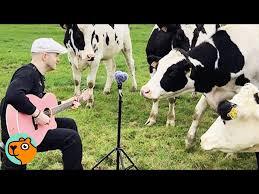 Plumes
This French musician plays music for animals, usually on farms or in zoos. They love it!
https://www.youtube.com/@Plumesmusic/
 Miniature Cusina
Miniature Cusina is the practice of cooking tiny meals using real food and tiny pots and utensils, appealing to both cooking fans and collectors. This is my favorite cooking “show”. I like it partly because the videos are short, there’s no talking, and there are no fancy, long, distracting painted fingernails like I’ve found in almost all other close-up miniature videos (because it features a guy’s hands). Like their logo says: Real food. Real cooking. Real sound.
https://www.youtube.com/@MiniatureCusina/
 Island Ock
This Long Island grocery store owner encourages local kids by rewarding good grades, acknowledging, celebrating, and building their confidence.
https://www.youtube.com/@Islandock1/
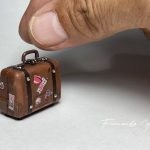 Fernando Yumul
Miniature Artist from the Philippines. I mean, he makes miniatures. Not that he’s a tiny person. I love seeing him transform everyday objects into entirely new (but familiar) things.
https://www.youtube.com/@Fernandoyumul1970/
 Mapic2
German model railroad enthusiast with a cat who is unfazed. (Playlist: Katze vs. Gartenbahn)
https://www.youtube.com/@mapic2/
 Seanthesheepman
30-year-old shepherd and stockman working in Scotland with his 3 sheepdogs. Not only are his dogs amazingly talented, I also enjoy his choice of background music in most cases.
https://www.youtube.com/@seanthesheepman5845/
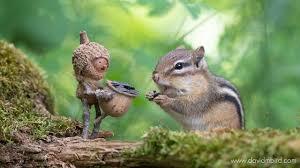 Becorns | David M Bird
He builds little people out of acorns and sticks, then photographs them in the wild with real animals. I like the videos that share his process.
https://www.youtube.com/@davidmbird
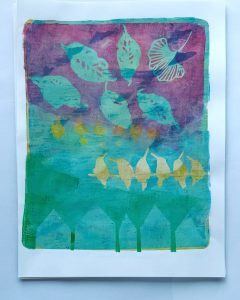
I find it very relaxing to watch her make botanical gel prints. (She does other things as well.)
https://www.youtube.com/@nadya_draws_in_seattle/
WebsitesAnderson Virtual Calming Room
I was looking for live animal cams — there are a gazillion of them these days! — and I found this local New Mexico site for students (and anyone) that not only includes a variety of animal cams, but many other ways to “boost your mood and help you refocus.”
https://www.mgt.unm.edu/calming-room/default.asp
PDX Sidewalk JoyA community of interactive sidewalk installations and exchanges around Portland, Oregon. These “installations” are all Little-Free-Library-adjacent. If you see something you like, you can make your own, wherever you live! (Or search for existing installations where you live.)
https://www.pdxsidewalkjoy.com/
Facebook Groups
Facebook Groups don’t have YouTube counterparts. And these are links to groups, not to individual videos, so yes, you probably do have to have a Facebook account to see much. But they are public groups, so (if you have a Facebook account) you don’t have to join the groups to peruse them. In fact, I have not joined any of them. But I’ve apparently spent enough time looking at their posts for Facebook to think I want to see more of them! I see plenty that way, and know where to find more.
Cookie Cutter Identification (CCID)Sometimes the mystery cookie cutter is identified; sometimes people make alternate suggestions for its use; other times people just get silly about it.
https://www.facebook.com/groups/cookiecutterid
Dollhouse miniatures made from everyday thingsThis group is about sharing ideas for making miniatures from scratch or found items. You can show off what you have made (ideally with some explanation) or ask questions about making miniatures.
https://www.facebook.com/groups/1675907215955924/
FREE PHOTOSHOP help, edits & requestsThere are a number of similar groups. As previously mentioned, I have not actually joined this group. And, in this case, I believe the benefit in NOT joining is that I don’t see their posts in my news feed until they have received a substantial number of replies. The replies range from, “Why do you want to do that?”, to totally awful amateur edits, to impressive expert edits, to hilarious and inappropriate edits. The range of reasons why people want edits is thought-provoking. And I wouldn’t want to see all the new requests and early discussion anyway.
https://www.facebook.com/groups/1154264053384266/
What’s your favorite source of internet Joyscrolling?
Might you try one of these?
Please share in the comments below!
______________________________________________________Hazel Thornton is an author, genealogist, and retired home and office organizer.Book: Hung Jury: The Diary of a Menendez Juror Book: What’s a Photo Without the Story? How to Create Your Family Legacy Book: Go With the Flow! The Clutter Flow Chart Workbook Feel free to link directly to this post! Click here to ask about other uses.Copyright 2025 by Hazel Thornton, Organized for Life and Beyond_____________________________________________________________________________
The post Joyscrolling for your viewing pleasure appeared first on Hazel Thornton.
September 7, 2025
Not all disabilities are visible

I think we’ve probably all heard the terms invisible illnesses and hidden disabilities. Yes? But if you don’t have one yourself, I wouldn’t blame you if you didn’t think about it very often. I didn’t either until I was diagnosed with one that affected my mobility. This post is to raise awareness and offer resources.
An invisible illness is any physical, mental, or neurological condition that limits or challenges a person’s life but is not immediately apparent to others.
People with invisible illnesses often appear healthy, even when they are experiencing severe chronic pain, extreme fatigue, cognitive difficulties, or other debilitating symptoms that significantly impact their daily lives.
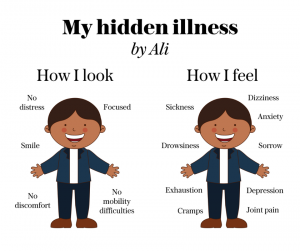
Click here to read “But you don’t look sick!” and to view a larger, clearer image.
Types of invisible illnessesThere are way too many types of invisible illnesses to list them all. A few that affect people I know personally are diabetes, autism, Crohn’s disease, POTS, kidney disease, multiple sclerosis, fibromyalgia, long COVID, and several forms of cancer. Some of these conditions start out invisible and become more apparent as they progress.
Many invisible illnesses affect mobility, but not always to the extent that an extremely visible wheelchair (or other mobility aid) is required. Most involve chronic pain and fatigue.
Multiple conditionsI hate the term comorbidities. It sounds so…well, morbid! And it wasn’t until COVID, when the term was used a lot to identify high-risk individuals, that I realized I have several of them. I’m not going to list all of mine, but when you look at me what do you see? I’m fat, I’m older, and I’m a woman. This is not a recipe for being taken seriously in society or by medical professionals. If you don’t agree with me, you’re probably not a fat, older woman!
When invisible isn’t exactly invisibleOMG, I wasn’t planning to elaborate, but I just saw this video (2:35 min.) and had to include it: Katie Couric interviews Dr. Mary Claire Haver on how being told to look out for “Whiny Women” shaped her career.
Obese people are obviously, visibly, fat. It’s easy to assume they are just lazy and eat too much food. But they can also have multiple other things going on with them that are “invisible”. They can have illnesses (or medications) that contribute to their obesity, and they can have illnesses in addition to being obese.
Fat can be classified in several different ways. For purposes of this post, I have TWO types of visible fat. One type is responsive to diet and exercise, but the other one is not. The fat disease I have — besides obesity — is called lipedema. If you’ve never heard of it, well, neither had I until a year or so ago. If I’d known about it, I could have asked about it by name and shortened the diagnostic period from several years to several weeks (or months, considering how challenging it is to get an appointment around here). I did point out my symptoms to every doctor I saw — heavy legs that were painful to the touch and seemed out of proportion to the rest of my albeit fat body — resulting in a few helpful half-measures, but not quite on the mark when it came to a diagnosis. There is no cure for lipedema, but I always think it’s better to know what’s wrong than to wonder. I’ve learned that there are many things I can do to manage it, and if don’t do all the things, it will get worse over time. And “managing” it doesn’t mean I can do everything I used to do.
Lipedema and lymphedemaLipedema is not rare, but it affects almost exclusively women and is extremely misunderstood and under-diagnosed. (As are many “women’s” diseases.) Since I don’t see lipedema on most lists of invisible illnesses, I asked Google about it.
AI Overview:
Yes, lipedema can be considered an invisible illness, despite its visible physical symptoms. While lipedema causes a disproportionate buildup of fat that can be seen, the underlying disease and the chronic, debilitating pain and fatigue that accompany it are often not understood or acknowledged by others, including medical professionals.
Many lip-edema patients (including myself) also have lymph-edema to one extent or another, or they are in danger of developing it. Everyone looks and feels different in the various stages and types of lipedema. Charts depicting the stages and types of lipedema also differ from each other, which is why I’m not including one here. If you see one, I’m not the worst case, but neither am I the best case. Some individuals have benefitted from surgery (a non-cosmetic form of liposuction), but it’s not a cure, and they still have to do all the things to manage it afterwards or it will return.
This post is not all about me, though, and is not meant as a lipedema tutorial, either. So allow me to leave you with some resources where you can learn more about it:
Printable PDF: “10 Things to Understand about Lipedema” is a good 4-page infographic of the basics.
Websites: The best sources for lipedema information are organizations like the Lipedema Foundation, The Lipedema Project, and Lipedema.com.
Social Media: Type the word “lipedema” into the search box on any social media platform to find lots of resources, different types of support groups, and individuals posting about it.
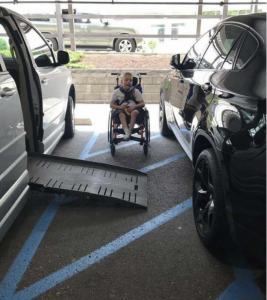
This is why you don’t park in the striped area of a handicap zone.
Mobility (or lack thereof) awarenessOne of the easiest ways of identifying someone with a disability is if they are in a wheelchair or using another mobility aid such as crutches or a rollator. These would be considered visible illnesses or conditions. As a result of mobility difficulties related to lipedema, I have, in my possession, a doctor-prescribed handicap parking placard. But I am not using mobility aids (except when I twisted my knee and used crutches for a while).
Do I use the placard? Yes, sometimes I do. Not always, though.
Whenever I drive somewhere there is a calculation involved:
Is there a parking lot where I’m going? (Or is it street parking, and how far down the street are we talking about?)Is there an open handicap parking spot available? (Often there aren’t enough.)How far from the front door is it? (Sometimes the spots are quite far from the front door. It’s like someone decided no one needs a handicap spot unless they have a wheelchair, and the wheelchair ramp is sometimes at the end of the building, quite far from the front door.)Are there regular spots available closer (or equally close) to the front door? (In which case I would choose one of those, so as to leave the handicap spot free for someone else.)To what degree am I feeling the need to park close to the front door today? (Some days are better than others.)I can’t say anyone’s ever given me a hard time for using a handicap parking spot, but I know others who have been given a hard time, and I always worry that someone will.
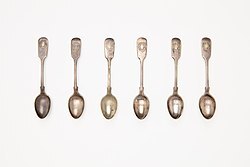
What is it? Here’s the Wikipedia definition:
Spoon theory is a metaphor describing the amount of physical or mental energy that a person has available for daily activities and tasks, and how it can become limited.
A lot of Spoon Theory articles and infographics pertain to neurodivergence. But that just means it applies to them as well as to those with other invisible illnesses. If you click here you are likely to find infographics and articles that pertains to your specific condition.
This isn’t about which diseases are “worse” than others. Even if two people have the same disease, their experience of it can be different in as many ways as they are similar.
I don’t personally use The Spoon Theory, but I think that’s mostly because I don’t have to explain myself very often to others. (“Sorry, I can’t accept your last-minute invitation; I’m down to my last spoon and that would take at least three.”)
Some invisible illnesses are temporary, and others are chronic. I once wrote a post called Organizing to De-Stress a Major or Chronic Illness. It was intended for both those who are ill, and for those who live with or care for them.
I’ve updated it a few times over the years, the last time being in 2019. Which, ironically, is around the time I was seeking my own diagnosis and not finding answers. So there may be a few outdated resources, but the major sub-topics are still good:
Organize Your Medical RecordsOrganize Your Support SystemOrganize Your HomeOrganize Your Self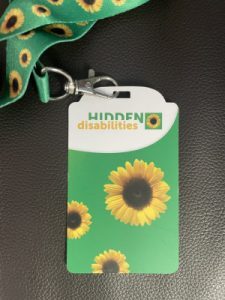 Hidden Disabilities Sunflower Program
The Hidden Disabilities Sunflower lanyard, cards, and pins are simple tools for voluntarily sharing that you have a disability or condition that may not be immediately apparent. The program also provides ways for public places and services to indicate that they are aware and available to help you.
Although they feature a number of disabilities on this page, the site also has an index of 912 (!!!) hidden disabilities on this page (scroll down past the form). I was just about to submit “lipedema” when I realized they DO have both lipedema and lymphedema listed under their British and Australian spellings — lipoedema and lymphoedema.
I don’t know how well this worldwide program is catching on, partly because I don’t get out much these days. But I do know the Regional Director in Canada, Clare Kumar. (I already knew about the program before she started talking about it.) She has a Facebook group called Happy Space Pod, and a podcast called Happy Space Podcast. Check them out!
 Invisible illness awareness
What can you do to help? Well, for starters:
Remember: Be kind, for everyone you meet is fighting a battle you know nothing about. Share this post with others.For more info, Google “invisible illness awareness”. If you see someone wearing a sunflower lanyard or pin, be patient with them if nothing else. (Surely there are people who will wear sunflowers without ever knowing this program exists, because they are pretty. Eh — might as well be kind to them, too!)Keep in mind that the Hidden Disabilities Sunflower program estimates that 1 in 6 people has an invisible illness. That’s a lot of people!Do you, or someone you know, have an invisible illness?
If so, do you have any advice for the rest of us?
Please share in the comments below!
______________________________________________________Hazel Thornton is an author, genealogist, and retired home and office organizer.Book: Hung Jury: The Diary of a Menendez Juror Book: What’s a Photo Without the Story? How to Create Your Family Legacy Book: Go With the Flow! The Clutter Flow Chart Workbook Feel free to link directly to this post! Click here to ask about other uses.Copyright 2025 by Hazel Thornton, Organized for Life and Beyond_____________________________________________________________________________
The post Not all disabilities are visible appeared first on Hazel Thornton.