Chris Kubecka's Blog
November 26, 2025
The Wave Russia Tried to Erase: What I Saw at the Edge of Europe
Europe has a place where over 1,000 years of contentious history bottlenecks into 300 meters of water. Where democracy and dictatorship stare at each other from stone walls. Where old men fish on both banks while armed guards watch their every movement.
There are some borders in Europe where you can feel before you ever see them. Like when the air grows heavy before an impending storm. The Narva, Estonian and Ivangorod, Russian border is one of them.
Same planet on both sides.
Same river.
Same families.
Different worlds.
I came to Estonia expecting some fun, but also a serious research trip.
Instead, we rode comfortably past, oblivious as Russia seized a boat in retaliation, sent a Belarusian biker gang to perform propaganda in Estonia, an EU and NATO country, broadcast disinformation across the water, and then send border or castle security guards sprinting after a man simply for waving at me.
Everything about Russia’s hybrid warfare snapped into focus that day. And what many in the West get wrong about the Baltics and Balkans everyday reality. Along with a grim look into the possible near future of the region, whilst revealing what causes authoritarian regimes panic.
The Journey to Estonia
I had sarcastically joked to my Panamanian Romanian friend who lived in Tallinn; I needed to visit whilst Estonia was still free and, in the EU, and NATO. It was May 2025, I had some time, wanted to see a cool friend, check out a country I’d never been to, and start a new research project.
Eagerly I played with dates and connections for decent priced airfare, trying to stay within my frequent flyer membership to maximize comfort and get a free check-in bag on my ticket.
Found a deal with SAS connecting in Sweden. A country which doesn’t share a border with Russia but has increasingly felt the paid of hybrid warfare. From both Russia and China.
Flying over the pristine looking thousands of islands that are part of Sweden was fantastic. Beautiful, deep, gemstone like waters, glistening in the late spring sunlight. A short connection then off to Tallinn, Estonia.
https://medium.com/media/c538684479d2f8c53da3ac46b1ffdb8d/hrefTallinn
My friend suggested I stay at the classic hotel, once a KGB listening station in Tallinn, Estonia. Sounded great and how could I resist?!
[image error]Chris Kubecka KGB Museum Tallinn, EstoniaThere were tensions in the air in Tallinn, an anxious sense of what would happen next. But strong support for Ukraine. We walked past the Russian Embassy and I snapped a pic of all the pro-Ukrainian displays on the outside security fence of the building.
[image error]Chris Kubecka Russian Embassy, Estonia May 2025Estonia had once been occupied by the Soviet Union, to disastrous effect to the Estonians, until the end of communism. Surveillance in the city felt much higher than my hometown of Amsterdam, The Netherlands. Rightly so, given the Tallinn’s history. Enjoying the nice weather, we walked and fell upon the Chinese Embassy to Estonia. Instantly I noted the numerous cameras the embassy had installed and grabbed some video of one side of the embassy.
https://medium.com/media/3494bf70abd3e1b801d8435dfb560f74/hrefIf you want to support further articles and research consider becoming a paid subscriber or buy one of my books :-)
The Journey to Narva
[image error]https://www.orangesmile.com/travelguide/estonia/country-maps-sights.htmStarting out rather early, my least favourite time of day. We hopped onto our comfortable LuxExpress route 759 to St. Petersburg, Russia. Our journey taking us along the coast eastward to Narva, Estonia.
https://medium.com/media/acdbd1b7f3360639ec72e7d2094c827d/href[image error]Chris Kubecka, Bus to Narva and St Petersburg 759 Outside[image error]Chris Kubecka, Bus to Narva and St Petersburg, 759 InteriorAs we moved closer to Narva, the tension outside the bus wasn’t theoretical, it was unfolding live. Just an hour or so before we reached the border, Russia seized a boat out of Estonian waters, in a retaliatory stunt after Estonia inspected a suspicious vessel coming from Russian waters a week before.
A seizure in direct response to a lawful inspection.
Hybrid warfare in on the high seas.
And it happened at the port nearest Narva, the very place we were driving toward.
Russia wasn’t just posturing.
It was performing.
And we were rolling straight into the theatre.
The “Patriotic” Concert
When I arrived in Narva, I had a light snack, then checked into my hotel. Walking and dragging my luggage about a kilometre. It was too early to just tuck in after arriving the time of day I did. I headed out to check out the town, relax and take some pics and video like a proper tourist. There was a small park and monument that overlooked the water, river between the two countries. Below was another, larger park in-between the castle.
There was some pretty nice sounding music at first, in Russian. A small crowd. Tired, but curious I walked down the hill to investigate.
A Belarusian pro-Russian biker gang, one of those “cultural groups” Moscow pretends are hobbyists. Was wrapping up a concert in the park directly below the castle.
Russian flags.
Patriotic ballads.
Performers sponsored, quietly, by the same networks that fuel Russian influence operations across Europe.
I believe they were calling themselves the Grey Wolves or something close.
Their presence wasn’t accidental.
It was curated, a psychological message placed precisely where Estonia meets Russia, where Moscow knows every gesture is symbolic.
And because life is stranger than geopolitics, one of the main biker figures was staying at my spa hotel.
We ended up talking in the spa like neighbours who happened to share a sauna, a conversation that shifted from small talk to quiet probing within seconds. He did seem to be quite chatty whilst drinking and talking directly to my boobs. But his conversation opened a door into some of the intimidation faced by border towns, with Russia desperately trying town and keep hearts and minds. Especially among ethnic Russians border populations.
Welcome to Narva, Estonia
[image error]Chris Kubecka, Narva Estonia Sign May 2025Russia Doesn’t Fear Peace Plans. It Fears paperwork.
The Narva, Estonia and Ivangorod, Russia isn’t just a border crossing.
It’s a funnel.
On the buses, cars and taxis approaching that checkpoint from St. Petersburg, there were numerous Ukrainians carrying folders with:
large luggageproperty deedsland documentsfamily photoshouse keysnotarized letterswitness statementsThey weren’t going to Russia.
They were passing through Russia.
Because for many displaced families, the only way to reach their own homes in occupied Ukraine is through the country that stole them in the first place.
Russia passed a law that Ukrainians must claim any property in Eastern Ukraine, Occupied Ukraine in person. Placing them at high risk of detainment, exposure to massive Russian corruption, phone searches, etc. In the long border line, I see there are very few children.
https://medium.com/media/e46009fd3313cf6f12d446c7d5564da9/hrefThat is what Russia fears being exposed:
the stolen apartmentsthe seized homesthe looted businessesthe trucks driven awaythe cars taken at checkpointsthe land “re-registered” under occupation officialsthe properties handed to Russian citizens as “relocation incentives”Every deed is a war crime.
Every title is a paperwork.
And Russia hates paperwork. Because paperwork has led to many, many war crime inditements.
2G & Other Heavy Surveillance
That’s Narva.
A border town where intelligence, influence, and everyday life intersect so closely that you inhale them together. The situation is so heavy, the government has been warning about increased interest by Russian intelligence service in Estonia.
So heavy is the atmosphere, surveillance, hybrid warfare and disinformation campaigns, The topic has its own Wikipedia article about the topic.
I quickly noted on my mobile; the internet connection was 2G. This in 2025 typically indicates quite old, insecure mobile internet connections or purposeful downgrading to the old version for surveillance. I suspect it was the later from the Estonian side. 2G has no real encryption by default and gives away a good deal of information or what intelligence organizations would call SIGINT. Funny enough, the Russian choice of mobile providers my mobile phone offered me was 2G- 3G. As if trying to tempt me towards slightly faster Russian and most certainly heavily surveilled communications.
[image error]Narva available mobile connections, by Chris Kubecka May 2025Fishing
Nowhere in Europe does geography compress politics into such a narrow channel as Narva–Ivangorod. The river between them which feels more like a psychological boundary than a physical one.
https://medium.com/media/2f01f0a11259044e5337576442737446/hrefEvery morning, depending on the weather, older men come out to fish on both sides of the river.
Same ritual.
Same rhythm.
Same water.
Most of them are probably related somewhere down a family line that predates the collapse of the Soviet Union, cousins divided by geopolitics, borders, and propaganda, but still united by the instinct to cast a line at dawn.
On the Estonian side, it feels almost peaceful, a maintained park-like area, open, green, intentionally accessible. You can sit comfortably, set up your rod, breathe.
On the Russian side, it’s the same men, the same river, but a different universe.
Heavy barbed wire coils down to the waterline.
Concrete barriers and rusting fences choke the bank.
There are only a few gaps where people are allowed to descend, narrow, controlled, watched. Even from across the river, the space feels tense, monitored, almost menacing.
It’s the perfect metaphor for the entire border:
same humanity, different system.
Standing on the Estonian bank, Russia is right there, shockingly close.
Close enough to see expressions.
Close enough to see guards pacing.
Close enough to watch one man wave, and another be dragged away.
You don’t expect an authoritarian state to be only a short cast away across a fishing line.
And yet there it is.
The Hybrid Warfare Russia Aims at Its Own People
Standing at Narva, you feel another reality:
the propaganda beams that Russia fires across the river daily like a weapon system.
High-quality disinformation.
AI-generated testimonies.
Synthetic videos with fake Estonian soldiers.
Deepfakes of “atrocities.”
Warnings of “NATO invasion.”
Content engineered to terrorize ethnic Russians living just meters away on the EU side.
The goal?
Destabilize the border towns.
Convince Russian-speakers they’re in danger.
Erode trust in the Estonian government.
Keep the region psychologically occupied.
And it works, to a point.
But every lie collapses the moment you walk to the river and simply look across.
People on both sides want to wave.
Russia wants to punish them for it.
What Russia Wants to Hide Most of All
Russia’s outrage at Western peace proposals has nothing to do with geopolitics.
It’s about what they know will be documented if there is real oversight:
War crimes have paperwork.
Occupations have receipts.
And once the world starts counting, Russia’s entire imperial project collapses.
That’s why they mock, scream, and posture.
Fear makes noise.
The Man on the Border: What Russia Doesn’t Want Documented
There’s a place where Europe narrows into a single crossing,
a medieval castle on one side (Narva, Estonia),
a medieval fortress on the other (Ivangorod, Russia),
and a river between them.
A thousand years of history dividing democracy from dictatorship.
AI-generated threats pushed at ethnic Russians in Estonia,
I was standing on the Estonian side,
because I can’t set foot in Russia for reasons that don’t need explaining.
When something happened that crystallized everything Moscow is trying to hide.
A man on the Russian side saw me.
He waved.
A simple, human gesture across a border that shouldn’t need to exist.
I waved back.
Then I lifted my phone to take a picture,
and the Russian border guards sprinted at him.
I don’t know his name.
I don’t know if he was staged, coerced, or just being human in the wrong place.
All I know is: the moment he was visible, Russia tried to erase him.
I may have taken the last photo of him as a free man.
And that moment, that instinct from the Russian state, tells you everything about the war, the occupation, and why Russia is terrified of documentation.
[image error]Chris Kubecka, and the man taken away May 2025… zoom in behind meAll of it is the same story.
The river is narrow.
The consequences are not.
Because if a wave from an ordinary man can trigger panic on the Russian side,
just imagine what a free Ukraine,
sovereign, defended, whole,
does to them.
f you want to support further articles and research consider becoming a paid subscriber or buy one of my books :-)
📌 More on Me • Chris Kubecka — Wikipedia
#Russia #Estonia #Baltics #NationStateThreats #Ukraine #Narva #Cyberwar #TheHacktress #Hybrid-War
Chris Kubecka is the founder and CEO of Hypasec NL an esteemed cyberwarfare expert, advisor to numerous governments, UN groups and freelance journalist. She is the former Aramco Head of Information Protection Group and Joint Intelligence Group, former. Distinguished Chair of the Middle East Institute, veteran USAF aviator and U.S. Space Command. She specializes in critical infrastructure security and unconventional digital threats and risks. When not getting recruited by dodgy nation-states or embroiled in cyber espionage, she hacks dictatorships & Drones (affiliate link to my books) and drinks espresso.
@SecEvangelism on Instagram, X, BlueSky LinkedIn Substack
[image error]

November 20, 2025
10 Things No One Tells You About Fighting Disinformation: Lessons from Real Hybrid-Warfare…
When you publish verified reporting on state-sponsored attacks or war crimes, you stop being an observer. Smear campaigns turn you into the target to discredit the evidence.
Reporting on war crimes or hybrid operations isn’t just about collecting data, sometimes the story fights back. In Bulgaria, the anti-corruption collective BG Elves, cyber-researchers who track Russian disinformation and criminal networks, have seen exactly what that means. Their work has helped expose propaganda channels, financial networks, even animal-abuse rings run for profit. It also made them targets. Earlier this year, the group’s public spokesperson, Petko Petkov, survived a car bombing in 2019 after months of threats tied to anti-corruption research. Most recently Petkov and his finance have been subjected to a brutal smear campaign on one of Bulgaria’s oligarch affiliated cable “news” stations. Desperate mafia affiliated oligarchs, who in some cases, sadly own much of the parliament. Are using Russian style misinformation playbooks in vain attempts to discredit Bulgarian researchers, and why many now find it safer to live in Ukraine.
That’s the real cost of open-source intelligence in regions that sit between Russian and Western influence. You don’t just analyse propaganda; you start living inside it. When you speak publicly about state-sponsored hacking or disinformation, as I do, the same playbook appears in smaller ways: online defamation, sudden “experts” discrediting your work, or planted hecklers trying to disrupt talks.
The line between researcher and target is thinner than most Western audiences realize. Every verified finding becomes a potential flashpoint in a much larger information war.
2. “Expert” Doesn’t Always Mean Expert.
If you want to see the Kremlin playbook in miniature, watch how false experts are manufactured. The method is simple: attach political messaging to someone with a credential, then amplify them through friendly outlets until they look legitimate. Suddenly propaganda has a PhD.
This isn’t theory; it’s something I’ve watched in real time. The Bulgarian research collective BG Elves and I documented how a pro-Kremlin YouTuber, running a “think tank” with opaque Russian funding sources and publications which included passages matching Wikipedia-level plagiarism; was elevated to a professorship at Bulgaria’s flagship university. The case, “Professor Wikipedia,” showed exactly how academic titles can be turned into weapons of influence: reuse content, reward loyalty, and let media call you “Professor” on air.
The same tactic surfaced the day my DIE ZEIT interview on hybrid warfare went live, when a German commentator who describes himself as a “cyber-security expert” M. Atug, posted defamatory remarks questioning my international media reporting of a potential Russian war crime. His posts echoed familiar Kremlin talking points about Ukrainian war crimes being “unproven,” a pattern already documented in other influence campaigns.
In analysing public Wikipedia-edit data, I also found that several “expert” biographies in this circle appear to be maintained primarily by single, closely linked contributors, an easy way to create the appearance of independent authority. It’s a reminder of how self-authored credentials can circulate unchallenged once they’re online.
Ironically, some self-described experts even seem to curate their own public profiles. In one publicly visible case my team examined (M. Atug), Wikipedia-edit data showed that a single user account was responsible for creating and making nearly all changes to the page of a German cybersecurity commentator. While that doesn’t prove intent, it illustrates how easily a biography can look independently verified when, in fact, it reflects one perspective. It’s a reminder that even open-source reputations deserve scrutiny.
That’s the danger of unvetted expertise. In the information war, titles are tools. The question is no longer who said it, but who benefits when they do.
3. Smear Campaigns Are Cheaper Than Cyberattacks.
A single defamatory thread or a fake “exposé” cost almost nothing and can wreck a career faster than malware spreads. Build a little narrative, pay a few accounts to amplify it, add a recycled hashtag, and suddenly reporters and managers see “coverage” not a campaign. The ROI is obscene: low budget, high impact.
Worse, the theatre scales. When a state lacks plausible domestic advocates (or wants deniability), it hires people: mercenary influencers, paid hecklers, ghost-writers, PR farms, and the odd academic who’ll lend a title for a fee. These actors perform the same basic function as a botnet: amplify, coordinate, drown out truth. But they’re human and harder to block. You can take down a server; you can’t arrest a narrative.
Tactics to watch for:
Cheap amplification: multiple small accounts repost the same claim within an hour.Credential laundering: a shaky “think tank” or a self-penned bio gives the lie an academic sheen.The poison drip: tiny insinuations across platforms, then a “big” thread that looks organic.Paid hecklers at events: plant a question, force an answer, extract a soundbite to clip and circulate.Why editors fall for it: speed and scarcity. Newsrooms want instant expert reaction. A confident-sounding thread gets quoted before anyone does due diligence. Add vanity metrics (shares, comments) and the lie looks like truth.
If you want to stop this cheaply weaponised noise, you don’t need more cops, you need more verification. Two simple moves help: demand verifiable work (published research, CV, traceable outputs) before you quote someone, and slow down the reflex to amplify, especially when the story touches geopolitics or human suffering.
4. Hybrid War Has Local Actors.
Harassment often starts long before a smear campaign has a flag attached to it. My first taste came years ago, during my public disclosure of severe aviation cybersecurity issues. At a US technology conference, an organizer tried to derail my presentation with comments about my personal life and monopolised the Q&A. It was petty and gendered, related to US corporate harassment and retaliation, but it showed how easy it is to silence uncomfortable research by turning the spotlight onto the researcher instead of the findings.
If you want to support further articles and research consider becoming a paid subscriber or buy one of my books :-)
Those same dynamics are now industrialised. State-aligned networks use social media to amplify defamation and drown out verified work. What was once a single person trying to humiliate a speaker has evolved into organised information warfare: coordinated posts, fake “experts,” and propaganda narratives seeded to discredit ethical hackers and journalists who expose wrongdoing.
5. The West Underestimates the Frontline
For many researchers in Eastern Europe, harassment isn’t theoretical, it’s a workday hazard. The “frontline” isn’t a trench; it’s a conference hall, a lab, or a parliament Wi-Fi network. I’ve spoken at events where the building lost power mid-panel because Russian cyber units were targeting the parliament that hosted us. Yes, in a EU and NATO parliament, hit with deliberate cyber-attacks in real time, to silence a Ukrainian researcher and the conference itself.
At another government-level event in the Balkans, a keynote speaker was deepfaked within two hours of finishing her talk. Her face and voice repurposed online to twist her own message. That’s what hybrid war looks like: code, electricity, and credibility attacked at the same time.
Western audiences often imagine this as “over there.” It’s not. These attacks test responses, refine tactics, and creep westward through supply chains, media ecosystems, and conferences. For those of us on stage or behind a keyboard, the front line is wherever the next packet of data lands.
6. Fact-Checking Isn’t Just for Journalists Anymore.
In an information war, verification becomes everyone’s job description. Researchers have to fact-check the conference badge next to them, the “think tank” asking for a quote, and the social media account applauding their slides. Background checks aren’t paranoia; they’re basic hygiene in the Hybrid War with Russia.
The BG Elves, Bulgaria’s volunteer OSINT collective, proved how powerful that vigilance can be. During the Sofia Information Integrity Forum, they quietly verified attendees, traced suspicious amplification patterns online, and identified three Russian-linked assets posing as observers. Their quick work kept the focus on the research instead of the disruption. One Russian paid actor was chased out of the conference after exposing her GRU Officer father whose extreme violence against women (threatening acid attacks) is posted and publicly available on YouTube. These paid provocateurs came back to the conference on day two, and started a physical fight with other conference attendees.
That’s the new reality: disinformation doesn’t just distort stories; it infiltrates events, panels, and peer networks. Every conference badge, follower, and “expert citation” is a potential vector. The same curiosity that drives good research now must extend to people and platforms. Integrity isn’t maintained by trust; it’s maintained by checking twice and thanking those who do.
7. Media Gatekeeping Still Favours the Hoodie
In cybersecurity coverage, authority still has a dress code. Western media love the archetype: a man in a hoodie, confident tone, maybe a dimly lit photo. It reads as “hacker.” A woman with twenty years of operational experience? She’s asked to prove it repeatedly. Editors demand full bios, documentation, and proof of fieldwork while handing instant credibility to whoever shouts loudest on social media.
That bias isn’t just unfair; it’s exploitable due sadly to sexism in the Western tech industry. Influence networks know the look and play it perfectly. Propaganda launders itself through optics: techie posture, jargon, maybe a self-written Wikipedia entry, And suddenly the talking points sound credible. Meanwhile, qualified experts, often women, spend their time re-establishing legitimacy instead of briefing policymakers.
The solution isn’t tokenism; it’s due diligence. Vet expertise by output, not outfit or gender. Ask what a person has built, published, or defended, not how well they “look” the part. In hybrid warfare, every shortcut to credibility becomes an entry point for manipulation. A good newsroom, or an alert reader, learns to look past the man wearing a hoodie.
8. Digital Attacks Don’t End at the Screen
The screen is just the first layer. Behind every smear campaign or phishing lure is a human willing to push it offline. Once you’re visible, digital hostility becomes a kind of weather system that follows you everywhere, emails probed, conference credentials cloned, social accounts impersonated, hotel rooms suddenly “upgraded.” Bahrain, Manama City, Intercontinental Hotel, room 825 is a great example of this. No matter what room I booked, this was the only room I was ever given.
I’ve had coordinated online attacks bleed into the real world: strangers showing up at events, an unregistered Russian foreign agent showing up to my home, phones tampered with, neighbours quietly briefed by local police after foreign-backed harassment and death threats. None of it is random. It’s designed to drain time and energy, to make the target defensive instead of effective.
For anyone working on sensitive research, journalists, ethical hackers, investigators. The rule is simple: treat digital threats as physical-intent warnings. If the campaign goes public, loop in your embassy. If the message feels off, preserve evidence before blocking. Visibility is protection.
Cyberwarfare doesn’t stop when you log off; it adapts. Every keystroke, every conference badge, every trip becomes potential reconnaissance. Staying safe now means blending the habits of a reporter, a security analyst, and a field operative.
9. Integrity Needs Allies
In a hybrid war, truth doesn’t survive in isolation. Integrity needs a network as much as any system does. When one person is targeted, others must mirror, archive, and verify so the story can’t be erased.
The BG Elves are a perfect example of that principle. They didn’t wait for permission; they cross-checked data, traced networks, and confirmed facts that would’ve been buried otherwise. Across Europe, similar informal alliances are forming, security researchers, investigative reporters, and digital-rights lawyers sharing intel and protecting each other’s work when it’s under attack.
It’s easy to underestimate how much that quiet collaboration matters. A quick mirror of deleted evidence, a screenshot saved, an encrypted hand-off, all those small acts keep propaganda from rewriting reality.
Integrity isn’t a solo sport. It’s collective defence, built on trust, encryption, and a shared refusal to let intimidation rewrite the record. Every verified byte, every ally who double-checks a source, every colleague who refuses to look away strengthens the firewall around truth itself.
10. Courage Is Contagious
Courage spreads faster than fear if you give it a signal boost. Every time one person refuses to be silenced, it sends a ripple through the noise, showing others that truth is worth defending, even when it costs sleep, safety, or peace of mind.
The first step is always the hardest: to speak. The second is to keep speaking when the pushback begins. Every OSINT volunteer, every ethical hacker, every journalist who holds the line against manipulation teaches someone else that resistance is possible; and that data, when handled with integrity, can be armour.
I’ve seen it happen from Kiev to Bucharest, from Sofia to Amsterdam. Courage builds in clusters: a message of solidarity here, a mirrored file there, a small act of verification that stops a lie from metastasizing. It’s never glamorous. It’s slow, messy, human, and it works.
The good news? The playbook of intimidation only works when we stop showing up. The cure is stubborn transparency and collective grit. Courage doesn’t just survive attacks; it multiplies through them. And every time it does, the disinformation machine loses another gear.
 Thank you BG Elves!
📌 More on Me • Chris Kubecka — Wikipedia
#CyberSecurity #Russia #BGElves #NationStateThreats #Hacking #OSINT #Cyberwar #TheHacktress #Ukraine
Chris Kubecka is the founder and CEO of Hypasec NL an esteemed cyberwarfare expert, advisor to numerous governments, UN groups and freelance journalist. She is the former Aramco Head of Information Protection Group and Joint Intelligence Group, former. Distinguished Chair of the Middle East Institute, veteran USAF aviator and U.S. Space Command. She specializes in critical infrastructure security and unconventional digital threats and risks. When not getting recruited by dodgy nation-states or embroiled in cyber espionage, she hacks dictatorships & Drones (affiliate link to my books) and drinks espresso.
@SecEvangelism on Instagram, X, BlueSky LinkedIn Substack
[image error]November 12, 2025
How Criminal Data Threatens Trust in AI
By Chris Kubecka Author of The Drone Wars OSINT Field Guide to Russian Drone Footage & Verification and How to Hack a Modern Dictatorship with AI: The Digital CIA/OSS Sabotage Book & espionage target.
Originally pitched to China Daily
In the borderlands between Myanmar and Thailand, roughly thirty thousand people, some of them Chinese; are enslaved by human trafficking gangs in compounds run by criminal syndicates. They are forced to spend their days building fake online companies, romance profiles, and customer-service chats that power digital scams. What few realize is that their coerced words are now creeping into artificial-intelligence systems trusted by billions.
These operations have discovered a new kind of extraction economy. Using generative-AI tools, they spin up thousands of slick corporate websites that look indistinguishable from legitimate firms. Each page contains registration numbers, executive biographies, employee portraits, testimonials, and even press releases. All synthetically generated. Search-engine optimization ensures that these sites appear authentic. Once indexed, they are scraped into the training datasets used to refine large-language models.
The contamination works quietly. A model such as DeepSeek or any locally trained AI Large Language Model derivative encounters these pages and records them as genuine business entities. The poison is subtle but powerful: when a user later asks whether a company or job offer is legitimate, the model may confidently reply that it is. What should have been a safeguard becomes a deception mechanism.
I first warned of this vector I presented at the University of Oxford’s “Cybersecurity in AI” conference in 2019, Protect against espionage, skewing of tags and categorization, data manipulation, secure data in cloud computing and auditing algorithms (DOI: 10.13140/RG.2.2.16142.38722). I argued then that data itself would become the new attack surface for artificial intelligence. Six years later, the prediction has materialized.
This poisoning does not require control over vast amounts of information. Studies show that a few hundred false samples. Around 250 data points, can reliably distort an LLM’s perception of truth. That scale matches the way these criminal websites operate: each is packed with a few hundred fabricated testimonials, staff profiles, or investment tips. Together they form a lattice of artificial legitimacy that machines cannot easily distinguish from reality.
This is not a problem of the “dark web.” It thrives on visibility. Every fake company has a phone number, a building photograph, and polished Chinese- and English-language copy. The very metrics used to rank credibility online: links, traffic, freshness. Become weapons for deceit. When an AI model absorbs that architecture of fraud, it reproduces it in natural-language form, giving false reassurance to the next potential victim.
Safeguarding against this requires more than new filters. It demands a cultural shift inside the AI community: treating training data as critical infrastructure. Data provenance, traceability, and auditability should be as fundamental as encryption or access control. Researchers must be able to trace where a model learned a claim and how that knowledge might have been manipulated.
Transparency, however, collides with commercial secrecy. Model builders guard their corpora as trade secrets, while data brokers profit from selling aggregated “clean” datasets that often hide their origins. Without an industry standard for source verification, bad data moves freely between research centres, start-ups, and cloud vendors. Once a poisoned dataset is folded into a foundation model, the infection becomes mathematically permanent.
The consequences extend beyond consumer scams. Information operations can exploit the same technique to distort public understanding or discredit competitors. Poisoned corpora can make an AI system appear biased, untrustworthy, or even supportive of extremist narratives. It is a slow-motion form of cognitive warfare; plausible, scalable, and difficult to reverse.
Protecting the integrity of machine learning therefore means protecting the integrity of the humans behind it. That starts with recognizing forced digital labour for what it is: not just a serious humanitarian and cybersecurity issue. The people coerced into writing scam scripts are, unwillingly, the first layer of training data for models that shape our perception of truth.
AI should illuminate deception, not inherit it. The next generation of standards must embed that principle. Without transparency in data collection, algorithmic auditing, and genuine accountability, we risk building intelligence systems that echo the language of exploitation.
The smartest machines we have ever built are only as honest as the data we feed them. Right now, too much of that data is written by criminal networks.
China Daily source: https://global.chinadaily.com.cn/a/202501/10/WS6780c2b6a310f1265a1da236.html
Oxford citation URL: https://www.researchgate.net/publication/341617134_Chris_Kubecka_SecEvangelism
If you want to support further articles and research consider becoming a paid subscriber or buy one of my books :-)
📌 More on Me • Chris Kubecka — Wikipedia
#CyberSecurity #CyberCrime #China #NationStateThreats #Hacking #OSINT #Myanmar #TheHacktress #AI
Chris Kubecka is the founder and CEO of Hypasec NL an esteemed cyberwarfare expert, advisor to numerous governments, UN groups and freelance journalist. She is the former Aramco Head of Information Protection Group and Joint Intelligence Group, former. Distinguished Chair of the Middle East Institute, veteran USAF aviator and U.S. Space Command. She specializes in critical infrastructure security and unconventional digital threats and risks. When not getting recruited by dodgy nation-states or embroiled in cyber espionage, she hacks dictatorships & Drones (affiliate link to my books) and drinks espresso.
@SecEvangelism on Instagram, X, BlueSky LinkedIn Substack
[image error]November 2, 2025
Las 10 razones por las que Rusia no puede soltar a Venezuela: petróleo, perico y sanciones
By Chris Kubecka de Medina Author of The Drone Wars OSINT Field Guide to Russian Drone Footage & Verification and How to Hack a Modern Dictatorship with AI: The Digital CIA/OSS Sabotage Book & espionage target
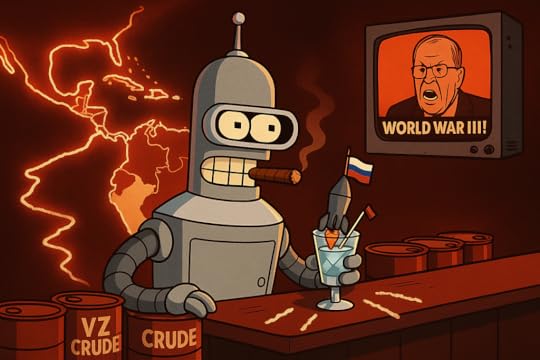 AI + Chris Kubecka
“La Tercera Guerra Mundial ya empezó”, soltó Serguéi Lavrov el 1 de noviembre de 2025 en el foro ruso Territorio de los Significados.
Según él, la OTAN y el “Occidente malo” están provocando conflictos por todo el planeta para mantener su dominio y fastidiar a Moscú.
Horas después, Estados Unidos confirmó nuevos ataques autorizados contra objetivos militares en Venezuela.
Y no, eso no fue casualidad.
Venezuela no es solo un aliado diplomático para Rusia; es una arteria vital que alimenta su economía de guerra con petróleo, drogas y redes para esquivar sanciones.
No escribo esto desde una oficina europea con café artesanal. Tengo familia en Venezuela — una de esas personas fue asesinada en Falcón por el propio régimen — así que no hablo desde la distancia. Hablo desde el Caribe, desde donde se siente la misma cadena de explotación que conecta nuestras islas y tierras con la maquinaria militar rusa.1. La “Tercera Guerra Mundial” de Lavrov huele más a pánico económico
Lavrov lo pintó como si el mundo entero estuviera conspirando contra Rusia, pero su tono lo delató: hay miedo en el Kremlin.
Un ataque estadounidense en Venezuela golpea directamente una de las últimas economías “paralelas” que Rusia tiene funcionando.
Allí todavía pueden mover petróleo, billetes y contrabando sin que la Unión Europea les cierre la puerta.
Venezuela le debe a Rusia miles de millones entre préstamos y negocios conjuntos con Rosneft y Gazprombank.
Los envíos de crudo se disfrazan con intermediarios para que Moscú pueda cambiar barriles venezolanos por divisas duras o por piezas bajo sanción.
Si Caracas se derrumba o se deja presionar por Occidente, Rusia pierde el cobro y, de paso, su tubito secreto para romper sanciones.
Venezuela es la columna vertebral del tráfico de cocaína en América Latina.
El famoso Cartel de los Soles — gente de las propias fuerzas armadas venezolanas — maneja la logística con protección del régimen.
Los oligarcas rusos y sus redes de inteligencia llevan años usando esas rutas para lavar dinero del narco en fondos offshore.
Aquí no hay ideología, mi gente: es negocio, corrupción y conveniencia.
Según varios informes de crimen financiero, unos 250 millones de dólares en dinero sucio venezolano y ruso se mueven cada mes por el Gran Bazar de Estambul y las casas comerciales de Dubái.
Oro, diamantes, cripto y perico: todo mezclado en un mercado gris donde no aplica la banca occidental.
Si el régimen venezolano se cae, se seca esa lavandería… y muchos oligarcas rusos se quedan sin cash flow para sus yates.
Dato curioso: Turkish Airlines vuela todos los días directo de Caracas a Estambul. Pura casualidad, ¿verdad? 😉
Venezuela sirve de fachada para importar tecnología de doble uso, piezas de aviones y químicos industriales para Rusia.
Las cosas pasan por puertos latinoamericanos, se reempaquetan en Caracas y se exportan de nuevo como “comercio regional”.
Para Moscú, eso es oro molido: un corredor logístico escondido que suple lo que perdió en Europa.
Detrás de los millones hay una economía esclavista que nadie quiere mirar.
En las zonas de cultivo de coca y procesamiento químico entre Colombia y Venezuela, el trabajo forzado y el infantil son cosa de todos los días.
Los pueblos arawak — la raíz de mi propia herencia caribeña — son de los más golpeados: forzados a producir o vendidos para explotación sexual.
Las mismas rutas que mueven oro y drogas también mueven gente.
Para los carteles y los oligarcas que se llenan los bolsillos, las personas son otro producto más… y los socios rusos, por supuesto, cobran su parte.
Rusia ha entrenado oficiales venezolanos, tiene asesores allí y ha probado drones y radares en ese suelo.
Venezuela es su punto de escucha en el hemisferio: una base que le permite asomarse al patio trasero de Estados Unidos.
Si el régimen de Maduro cae, se les acaba ese mirador.
Más allá del dinero, Venezuela es la vitamina propagandística del Kremlin: la prueba de que “todavía tienen panas” fuera de Eurasia.
En la tele rusa, Caracas es el ejemplo de un mundo “multipolar” que Moscú supuestamente lidera.
Si ese régimen cae, se rompe la ilusión. Fin del cuento.
Venezuela sostiene a Cuba y a Nicaragua con petróleo barato y cooperación de inteligencia.
Si se cae Caracas, La Habana y Managua se quedan sin su sugar daddy, y la red latinoamericana de Rusia se encoge a casi nada.
Menos puertos seguros, menos rutas aéreas, menos poder de chantaje ante Washington.
Si le quitas la retórica, lo que queda es dependencia.
Rusia vive de la corrupción venezolana como quien vive de un vicio.
Ingresos petroleros, dinero del narco, contrabando y hasta tráfico humano: todo corre por las mismas venas.
Un cambio de régimen no solo los dejaría en ridículo; les cortaría el flujo de dinero que mantiene viva su guerra en Ucrania.
Cuando Lavrov grita que el mundo se va a guerra, algo de razón tiene… pero no es ideología, es economía.
La alianza entre Rusia y Venezuela junta energía, crimen y miseria humana en una sola cadena de suministro.
Si esa cadena se rompe, el Kremlin no solo se queda solo: se enfrenta a la abstinencia de su propia adicción a la riqueza ilegal.
Para quienes tenemos familia e historia en esas tierras, el costo no es teórico.
Mientras el mundo ve el pánico de una superpotencia, acá abajo se ve otra generación de latinoamericanos y pueblos indígenas pagando el precio del imperio ajeno.
📌 More on Me • Chris Kubecka — Wikipedia
#Geopolitics #Russia #Venezuala #NationStateThreats #Hacking #USA #TheHacktress
Chris Kubecka is the founder and CEO of Hypasec NL an esteemed cyberwarfare expert, advisor to numerous governments, UN groups and freelance journalist. She is the former Aramco Head of Information Protection Group and Joint Intelligence Group, former. Distinguished Chair of the Middle East Institute, veteran USAF aviator and U.S. Space Command. She specializes in critical infrastructure security and unconventional digital threats and risks. When not getting recruited by dodgy nation-states or embroiled in cyber espionage, she hacks dictatorships & Drones (affiliate link to my books) and drinks espresso.
@SecEvangelism on Instagram, X, BlueSky LinkedIn Substack
[image error]Las 10 razones por las que Rusia no puede permitirse perder a Venezuela: petróleo, cocaína y…
By Chris Kubecka Author of The Drone Wars OSINT Field Guide to Russian Drone Footage & Verification and How to Hack a Modern Dictatorship with AI: The Digital CIA/OSS Sabotage Book & espionage target
Ai + Chris Kubecka de Medina“La Tercera Guerra Mundial ya comenzó”, declaró Serguéi Lavrov el 1 de noviembre de 2025 durante el foro ruso Territorio de los Sentidos. Acusó a la OTAN y a Occidente de provocar conflictos globales para mantener su dominio y debilitar a Moscú.
Horas después, Estados Unidos confirmó nuevos ataques autorizados contra objetivos militares venezolanos.
La coincidencia no es casual.
Venezuela no es solo un aliado diplomático de Rusia. Es una arteria vital que alimenta la economía de guerra de Moscú a través del petróleo, el narcotráfico y las redes de evasión de sanciones.
No escribo esto como una observadora distante en Europa. Tengo vínculos familiares en Venezuela; uno de mis familiares fue asesinado en Falcón por el régimen venezolano. Por eso, cuando analizo este enfrentamiento, no es algo abstracto. Es una cadena de explotación que va desde mis lazos en la cuenca del Caribe hasta la maquinaria militar rusa.1. La alarma de Lavrov sobre la “Tercera Guerra Mundial” es, en realidad, pánico económico
El discurso de Lavrov presentó el desorden global como una conspiración occidental, pero su tono delató miedo: los canales externos de supervivencia del Kremlin se están desmoronando.
Un ataque estadounidense en Venezuela amenaza directamente una de las últimas economías paralelas de Rusia, donde el petróleo, el dinero y el contrabando todavía pueden moverse cuando Europa está cerrada.
Venezuela le debe a Rusia miles de millones en préstamos y participaciones conjuntas a través de Rosneft y Gazprombank.
Los envíos de crudo disfrazados mediante intermediarios permiten a Moscú intercambiar barriles venezolanos por divisas o por repuestos bajo sanción.
Si Caracas colapsa o cede ante la presión occidental, Rusia pierde tanto el pago de la deuda como un canal cómodo para eludir sanciones.
Venezuela es la columna vertebral logística del narcotráfico latinoamericano.
El “Cartel de los Soles”, integrado por elementos de las fuerzas armadas venezolanas, dirige operaciones a gran escala con protección del régimen.
Los oligarcas rusos y las redes de inteligencia han aprovechado estas rutas durante años para lavar ganancias del narco en fondos offshore utilizables.
No se trata solo de afinidad ideológica, sino de corrupción mutuamente rentable.
Según múltiples informes sobre delitos financieros, hasta 250 millones de dólares en efectivo ilícito venezolano y ruso circulan cada mes por el Gran Bazar de Estambul y las casas comerciales de Dubái.
Oro, diamantes, criptomonedas y ganancias del narcotráfico se mezclan en un mercado gris inmune al control bancario occidental.
Si el régimen venezolano cae, esa lavandería se seca y muchos oligarcas rusos sancionados pierden su liquidez.
La ruta de Turkish Airlines entre Caracas y Estambul, operativa todos los días, facilita ese flujo.
Venezuela ofrece empresas de fachada que importan tecnología de doble uso, repuestos aeronáuticos y productos químicos industriales para Rusia.
Las mercancías pasan por puertos latinoamericanos, se reempaquetan en Caracas y se reexportan como “comercio regional”.
Para Moscú, es un corredor logístico oculto que reemplaza las cadenas de suministro europeas que perdió.
Detrás de las ganancias se esconde una economía esclavista no reconocida.
En las zonas de cultivo de coca y procesamiento químico a lo largo de la frontera colombo-venezolana, el trabajo forzado y el infantil son rutina.
Los pueblos indígenas arawak — cuyo territorio ancestral abarca Brasil, Colombia y Venezuela — están entre los más afectados, obligados a producir o víctimas de trata con fines sexuales.
Las mismas redes que transportan cocaína y oro también mueven personas.
Para los carteles y los oligarcas que se benefician al final de la cadena, los seres humanos son otra mercancía, y los socios rusos toman su parte.
Rusia ha entrenado oficiales venezolanos, desplegado asesores y probado drones y sistemas de radar en el país.
Venezuela funciona como un puesto de escucha en el hemisferio occidental: una base que permite a Moscú proyectar poder cerca de las aguas estadounidenses.
Si el régimen de Maduro cae, ese punto de apoyo desaparece.
Más allá de las ganancias materiales, Venezuela le brinda al Kremlin oxígeno ideológico: la prueba de que Rusia aún tiene aliados fuera de Eurasia.
En la propaganda interna, Caracas es el ejemplo perfecto de que Moscú lidera un “mundo multipolar”.
Una caída del régimen destruiría esa ilusión de la noche a la mañana.
Venezuela sostiene a Cuba y Nicaragua mediante petróleo subsidiado y coordinación de inteligencia.
Si Caracas cae, La Habana y Managua pierden a su patrocinador, y la red latinoamericana de Rusia se reduce casi a nada.
Eso significa menos puertos seguros, menos corredores aéreos y menos influencia frente a Estados Unidos.
Si quitamos la retórica, se revela la dependencia: Rusia se apoya en la corrupción venezolana como sustituto de acceso.
Ingresos petroleros, dinero del narcotráfico, bienes de contrabando e incluso personas traficadas fluyen por las mismas arterias.
Un cambio de régimen no solo humillaría a Moscú; cortaría parte del ecosistema financiero que mantiene viva su guerra en Ucrania.
Cuando Lavrov advierte sobre una guerra global, no se equivoca al decir que el enfrentamiento se expande, pero tiene menos que ver con ideología que con economía.
La alianza entre Rusia y Venezuela fusiona energía, crimen y sufrimiento humano en una sola cadena de suministro.
Si esa cadena se rompe, el Kremlin enfrenta algo peor que el aislamiento diplomático: el síndrome de abstinencia de su propia adicción a la riqueza ilícita.
Para quienes tenemos familia e historia vinculadas a esa tierra, el costo ya es real.
El mundo puede ver el pánico de una superpotencia, pero en el terreno se parece más a otra generación de latinoamericanos e indígenas pagando el precio del imperio ajeno.
📌 More on Me • Chris Kubecka — Wikipedia
#Geopolitics #Russia #Venezuala #NationStateThreats #Hacking #USA #TheHacktress
Chris Kubecka is the founder and CEO of Hypasec NL an esteemed cyberwarfare expert, advisor to numerous governments, UN groups and freelance journalist. She is the former Aramco Head of Information Protection Group and Joint Intelligence Group, former. Distinguished Chair of the Middle East Institute, veteran USAF aviator and U.S. Space Command. She specializes in critical infrastructure security and unconventional digital threats and risks. When not getting recruited by dodgy nation-states or embroiled in cyber espionage, she hacks dictatorships & Drones (affiliate link to my books) and drinks espresso.
@SecEvangelism on Instagram, X, BlueSky LinkedIn Substack
[image error]Top 10 Reasons Russia Can’t Afford to Lose Venezuela: Oil, Coke, and Sanctions
By Chris Kubecka Author of The Drone Wars OSINT Field Guide to Russian Drone Footage & Verification and How to Hack a Modern Dictatorship with AI: The Digital CIA/OSS Sabotage Book & espionage target
AI + Chris Kubecka“World War Three has already begun,” Sergei Lavrov declared 1 November 2025 at Russia’s Territory of Meanings forum. He accused NATO and the West of provoking global conflicts to maintain dominance and weaken Moscow.
Within hours, the United States confirmed new authorized strikes on Venezuelan military targets.
The timing isn’t coincidence.
Venezuela isn’t just a diplomatic ally for Russia . It’s a vital artery feeding Moscow’s war economy through oil, narcotics, and sanctions-evasion networks.
I’m not writing this as a distant observer in Europe. I have family connections in Venezuela, one of them was killed in Falcón by the Venezuelan regime. So when I look at this confrontation, it’s not an abstraction. It’s a chain of exploitation that reaches from my own ties in the Caribbean Basin to Russia’s military machine.1. Lavrov’s “World War III” Alarm Is Really an Economic Panic
Lavrov’s speech framed global unrest as a Western plot, but his tone betrayed fear: the Kremlin’s external lifelines are fraying. A U.S. strike in Venezuela directly threatens one of Russia’s last functioning off-books economies. A place where oil, cash, and contraband can still move when Europe is closed off.
2. The Oil DebtVenezuela owes Russia billions in loans and joint-venture stakes through Rosneft and Gazprombank. Crude shipments disguised through intermediaries let Moscow exchange Venezuelan barrels for hard currency or sanctioned spare parts. If Caracas collapses or bows to Western pressure, Russia loses both repayment and a convenient sanctions-busting pipeline.
3. The Cocaine EconomyVenezuela is the logistical spine of Latin America’s cocaine trade. The “Cartel de los Soles” are elements of the Venezuelan armed forces. Running large-scale trafficking with protection from the regime. Russian oligarchs and intelligence networks have long leveraged these routes to wash narco-profits into usable offshore funds. It’s not just ideological alignment; it’s mutually profitable corruption.
4. Money Laundering Meets Grand Bazaar CapitalismAccording to multiple financial-crime reports, up to $250 million in Venezuelan and Russian illicit cash cycles through Istanbul’s Grand Bazaar and Dubai trading houses each month. Gold, diamonds, crypto, and narcotics proceeds merge there into a gray market immune to Western banking controls. If the Venezuelan regime falls, that laundromat dries up; and many sanctioned Russian elites lose their liquidity.
Turkish Airlines has direct routes from Caracas to Istanbul daily.
5. Sanctions-Evasion LifelineVenezuela provides cover companies that import dual-use technology, aircraft parts, and industrial chemicals for Russia. Goods move through Latin ports, get repackaged in Caracas, and re-exported as “regional trade.” For Moscow, it’s a hidden logistics corridor that substitutes for lost European supply chains.
6. Forced Labour and Human TraffickingBehind the profits lies an unacknowledged slave economy. In coca-growing and chemical-processing zones along the Colombia-Venezuela border, forced and child labour are routine. Indigenous Arawak peoples. Whose homeland spans Brazil, Colombia, and Venezuela; are among those coerced into production or trafficked for sexual exploitation. The same networks that move cocaine and gold move people.
For cartels and the oligarchs who profit downstream, human beings are another commodity; and Russia’s partners take their cut.
7. The Military and Intelligence FootprintRussia has trained Venezuelan officers, stationed advisors, and tested drones and radar systems there. It’s a listening post in the Western Hemisphere. A foothold that lets Moscow project power close to U.S. waters. Remove the Maduro regime, and that forward base evaporates.
8. Symbolism and SurvivalBeyond material gain, Venezuela gives the Kremlin ideological oxygen: proof that Russia still has allies outside Eurasia. For domestic propaganda, Caracas is Exhibit A that Moscow leads a “multipolar world.” A regime collapse would puncture that illusion overnight.
9. The Domino EffectVenezuela props up Cuba and Nicaragua through subsidized oil and intelligence coordination. If Caracas goes down, Havana and Managua lose their patron and Russia’s Latin network shrinks to near-nothing. That means fewer safe ports, fewer air corridors, and less leverage against the United States.
10. The Coming CrashStrip away the rhetoric and you see dependency: Russia relies on Venezuela’s corruption as a substitute for access. Oil revenues, narcotics cash, smuggled goods, even trafficked humans. All flow through the same arteries. A regime change wouldn’t just humiliate Moscow; it would choke off part of the funding ecosystem that keeps its war in Ukraine alive.
A Mirror of EmpiresWhen Lavrov warns of global war, he’s not wrong that a confrontation is expanding, but it’s less about ideology than economics.
Russia’s alliance with Venezuela fuses energy, crime, and human misery into a single supply chain. If that chain snaps, the Kremlin faces more than diplomatic isolation; it faces withdrawal from its own addiction to illicit wealth.
For those of us with family and history tied to that soil, the cost is already real. The world may see a superpower’s panic, but on the ground it looks like another generation of Latin Americans and Indigenous peoples paying the price for someone else’s empire.
📌 More on Me • Chris Kubecka — Wikipedia
#Geopolitics #Russia #Venezuala #NationStateThreats #Hacking #USA #TheHacktress
Chris Kubecka is the founder and CEO of Hypasec NL an esteemed cyberwarfare expert, advisor to numerous governments, UN groups and freelance journalist. She is the former Aramco Head of Information Protection Group and Joint Intelligence Group, former. Distinguished Chair of the Middle East Institute, veteran USAF aviator and U.S. Space Command. She specializes in critical infrastructure security and unconventional digital threats and risks. When not getting recruited by dodgy nation-states or embroiled in cyber espionage, she hacks dictatorships & Drones (affiliate link to my books) and drinks espresso.
@SecEvangelism on Instagram, X, BlueSky LinkedIn Substack
[image error]October 31, 2025
The Ghost Demographics of Russia: How the Numbers Finally Caught Up with the Lies
By Chris Kubecka Author of The Drone Wars OSINT Field Guide to Russian Drone Footage & Verification and How to Hack a Modern Dictatorship with AI: The Digital CIA/OSS Sabotage Book & espionage target
Original on Substack
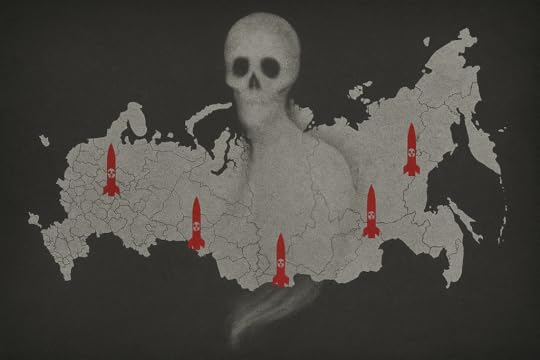 AI + Chris Kubecka
For years, Moscow has been publishing population figures that looked suspiciously… buoyant. Every demographer outside the Kremlin called them “creative.” The truth? Russia’s population curve didn’t just flatten, it cratered.
1. The Mirage Years
Official data showed only a mild decline. But cross-checking birth records, pension rolls, and regional mortality stats revealed a ghost nation: millions missing, uncounted, or statistically resurrected for propaganda purposes.
Rosstat’s spreadsheets have long been more fiction than fact, part census, part science fiction.
2. Men in Disappearing Acts
Russia’s male life expectancy has been falling off a cliff. Between conscription, HIV, tuberculosis, alcoholism, overdoses, and now war, the demographic pyramid looks more like a crumbling smokestack.
Entire age bands of men under 45 are statistically vanishing, the ones who should be working, fathering, building, or leading. Instead, they’re missing from the workforce, from homes, and increasingly from existence.
3. The Viral Collapse
Russia once boasted it had “contained” HIV. By 2025, it stopped publishing HIV data entirely. Why? Because the epidemic never stopped, it just went dark. The country lacks consistent access to proper antiretroviral medication, leaving millions unable to suppress viral loads.
Drug rehabilitation barely exists. Most “rehabs” are religious boot camps that try to beat or shame addiction out of people. Meanwhile, intravenous drug use continues to spread infections, made worse by the military’s reuse of needles in field clinics.
The result: a viral bomb detonating inside an already shrinking population.
4. The Chemical Plague
Russia’s drug crisis reads like a dystopian manual. Methadone treatment is banned. Krokodil, a homemade opioid cooked with gasoline and codeine; remains the drug of last desperation. It eats flesh from the inside out. Average life expectancy after first use: about 2.5 years.
Hospitals amputate limbs to keep users alive a little longer, then discharge them back into poverty and infection.
Layer on top an explosion of drug-resistant tuberculosis, especially in prisons and the military, and you have a medical ecosystem collapsing under its own denial. The state calls it “regional variance.” Doctors call it what it is: a death spiral.
5. The War Tax on Fertility
War took the draft-age men. Sanctions took the hope. Now, women aren’t having kids.
Russia’s fertility rate in 2025 is brushing against post-collapse Japan levels, but without the sushi, the safety net, or the economic recovery. Entire maternity wards have shut down. Rural hospitals have vanished. Every new mobilization wave widens the gender gap.
Bonus: Russia decriminalized domestic violence.
Double bonus: It’s now restricting birth control and abortion. A grim echo of Nicolae Ceaușescu’s Romania, where forced births created a generation of neglected, institutionalized children.
When the state starts treating wombs like strategic assets, it’s not about family values. It’s demographic desperation disguised as patriotism.
If you want to support further articles and research consider becoming a paid subscriber or buy one of my books :-)
6. Immigration Illusions
To keep the graphs from embarrassing the Kremlin, migrant workers from Central Asia are counted as “permanent population.” But they aren’t staying. Even Uzbekistan looks like a better deal these days.
The Kremlin’s idea of “population stability” is creative accounting, a revolving door of exploited labourers propping up statistics that even Excel can’t believe.
7. The China Problem
When your eastern provinces have more graves than graduates, you stop being a superpower and start being a resource appendix to Beijing.
Siberia’s future looks less like “Mother Russia” and more like “Northern Commodity Zone.”
China doesn’t need to invade, it just needs to wait. Empty towns and open mines make perfect satellite economies.
8. The Endgame: Statistical Necromancy
Rosstat still insists everything’s fine. But even state economists whisper that Russia’s population may have quietly dropped below 135 million — the lowest since the early 1970s.
In a country built on appearances, this is the one illusion they can’t sustain forever. You can fake elections. You can fake GDP. You can’t fake a generation that no longer exists.
9. Children as Future Soldiers
One reason orphans, IDPs, and Ukrainian children from occupied territories were taken to “re-education” camps: demographics. A vanishing youth base means indoctrination replaces birth rates. The goal is to twist hearts and minds early. Just as the Canada and the U.S. once did with Native boarding schools, or as totalitarian regimes have done for centuries. When you can’t grow your population, you manufacture it ideologically.
When your population is collapsing, indoctrination becomes policy.
10. Statistical Theatre: How Russia Inflates the Numbers
From GDP to birth rates, Moscow has perfected the art of statistical cosplay. The BBC and other analysts have shown how both Russia and China massage figures to avoid signs of contraction, counting ghost companies, recycling census data, and inflating growth projections.
Russian demographers estimate internal data inflation at 5–15% for economic indicators and up to 10% for population figures, depending on the region. It’s not just creative accounting; it’s existential necessity.
When your regime depends on the illusion of vitality, the Excel sheet becomes a battlefield.
Final Thought
The Kremlin’s greatest illusion wasn’t propaganda or fake referendums, it was pretending there’d always be another generation to inherit the empire. The numbers finally caught up with the lies, and what’s left is a ghost country. A ghost country with nukes.
📌 More on Me • Chris Kubecka — Wikipedia
#CyberSecurity #Russia #Ghosts #NationStateThreats #Hacking #OSINT #War #TheHacktress #China
Chris Kubecka is the founder and CEO of Hypasec NL an esteemed cyberwarfare expert, advisor to numerous governments, UN groups and freelance journalist. She is the former Aramco Head of Information Protection Group and Joint Intelligence Group, former. Distinguished Chair of the Middle East Institute, veteran USAF aviator and U.S. Space Command. She specializes in critical infrastructure security and unconventional digital threats and risks. When not getting recruited by dodgy nation-states or embroiled in cyber espionage, she hacks dictatorships & Drones (affiliate link to my books) and drinks espresso.
@SecEvangelism on Instagram, X, BlueSky LinkedIn Substack
[image error]October 22, 2025
10 Real Reasons Russia Won’t Leave Ukraine
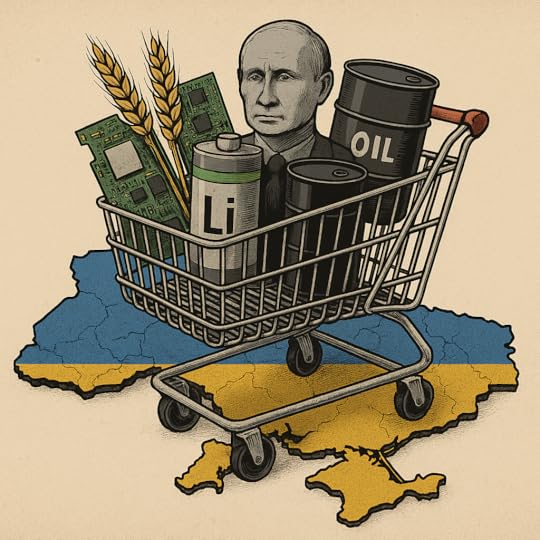 AI + Chris Kubecka
Forget the recycled Kremlin bedtime story about “protecting Russian speakers.” This isn’t about language, brotherly love, or Slavic nostalgia. It’s about power, profit, pipelines, and plenty of potassium. So let’s drop the diplomacy and get to the real reasons Russia wants to keep Ukraine’s occupied territories, and why parts of Washington may quietly prefer they do.
1. Lithium.Ukraine holds some of Europe’s largest untapped lithium deposits. Critical for EV batteries, AI data centres, and military tech. Russia knows it. So does the EU. The same Brussels officials who ignored massive Serbian student protests against Rio Tinto’s lithium mines are now quietly eyeing Ukraine’s reserves. The green transition runs on grey morality: whoever controls lithium, controls the next industrial revolution.
2. Minerals, baby, minerals.From titanium to uranium, the seized Ukrainian territories read like a mining catalogue. Every drill site or mine Moscow clutches weakens Europe’s industrial autonomy. No wonder “peace talks” always seem to include maps with resource fields highlighted…. just a coincidence, of course.
The Donbas and southern Ukrainian territories sit on one of Europe’s richest undeveloped resource belts: titanium, coal, iron ore, rare earths, natural gas, even uranium. If you’re planning to fight the West in a long-term sanctions war, you don’t give up a region that’s basically a periodic table wrapped in farmland.
3. Grain, sunflower oil, and food leverage.Control the breadbasket, control the bakeries. Ukraine once fed hundreds of millions: Africa, the Middle East, Asia. Russia’s occupation of fertile land and port choke points (Mariupol, Melitopol, Berdyansk) lets Moscow threaten global food prices every harvest season. Who needs nukes when you can weaponize wheat?
4. The Black Sea gateway.Crimea and the southern “land bridge” give Russia access to warm-water ports and dominance over the Black Sea’s trade routes. It’s also a convenient way to keep NATO navies playing catch-up while Russian grain, oil, and shady shipments sail past.
5. Potassium and chemical gold.Scientific American warned over a decade ago that the world was heading for a potassium crunch. A fertilizer crisis capable of wrecking global food chains. Ukraine’s potassium-rich soil and chemical industries are now under Russian control. When you can dictate who eats, you don’t need to fire a shot.
Those “boring” chemical plants in Zaporizhzhia and Donetsk? They feed fertilizers, explosives, and metallurgy. In peacetime they were export engines. In wartime, they’re industrial backbones. Or, in Russian terms, “dual-use miracles.”
6. Industry and skilled labour.Donbas used to produce tanks, locomotives, turbines, and heavy machinery. Russia blew it up, then decided it actually needed it. Now it’s desperately trying to resurrect what’s left under occupation, with Ukrainian engineers who’d rather be anywhere else.
7. Energy pipelines and grids.Ukraine’s energy infrastructure was designed around Soviet layouts, meaning Russia still covets the pipes, substations, and high-voltage corridors. Owning or bombing them keeps Kiev dependent, Europe nervous, and Gazprom smug.
8. The “Fortress Belt.”Kramatorsk, Sloviansk, Pokrovsk, a 50-kilometer belt of fortifications that’s been stopping Russia’s advance for years. Whoever holds it controls Ukraine’s east-west logistics and much of its industrial heartland. Militarily, it’s worth a dozen peace talks.
9. Internal propaganda optics.After so many body bags and sanctions, Putin can’t go home empty-handed. He needs “new Russian land” for Victory Day parades, even if it’s rubble. Donetsk gets rebranded as a patriotic success story; the rest of Russia gets cheap TV triumphalism.
10. The “grey zone” advantage.Russia thrives in frozen conflicts: Transnistria, Abkhazia, South Ossetia. A half-alive, half-burning Donbas lets the Kremlin bleed Ukraine’s budget, block NATO membership, and keep the West distracted without technically “ending the war.”
Bonus Doublespeak TranslationSo when leaders talk about “peace” or “regional stability,” they’re really talking about lithium, potassium, and leverage. Europe’s silence on Serbia’s student protests showed just how far they’ll go to protect access to battery metals. Russia just learned the same lesson. Hold the resources, and the world learns to negotiate with your atrocities.
When you hear politicians speak about “historic Russian ties” or “peace negotiations,” translate it properly:
“Historic ties” = “We want the mines.”“Peace” = “You keep the mess, we keep the market data.”“Negotiations” = “Let’s redraw the map and pretend it’s progress.”Because in geopolitics, what looks like territorial passion is usually just good old-fashioned resource lust — with a sprinkle of superpower chess.
📌 More on Me • Chris Kubecka — Wikipedia
#Minerals #Ukraine #NationStateThreats #Doublespeak #Donbas #TheHacktress #Russia
Chris Kubecka is the founder and CEO of Hypasec NL an esteemed cyberwarfare expert, advisor to numerous governments, UN groups and freelance journalist. She is the former Aramco Head of Information Protection Group and Joint Intelligence Group, former. Distinguished Chair of the Middle East Institute, veteran USAF aviator and U.S. Space Command. She specializes in critical infrastructure security and unconventional digital threats and risks. When not getting recruited by dodgy nation-states or embroiled in cyber espionage, she hacks dictatorships & Drones (affiliate link to my books) and drinks espresso.
@SecEvangelism on Instagram, X, BlueSky LinkedIn Substack
[image error]October 16, 2025
From Russia with Love: My Accidental German Fan Club
 (AI + Chris Kubecka)No, I Did Not Run Over His Cat
There are few things stranger than logging off while waiting for a major media release and logging back on to discover you’ve become a trending topic. In a country where you don’t even live. Yet here we are.
Apparently, a self-proclaimed German cybersecurity “expert” is so desperate to stay relevant, and perhaps line his pockets with Rubles-to-crypto. Decided to launch a social media crusade, denying verified reporting of a potential war crime.
A few of his comrades quickly joined the parade, declaring that international cybersecurity work, verified research, and first-hand reporting on state-level malware must be some kind of elaborate scam. Overnight, I was rebranded: scammer, fake hacker, criminal. All according to people who’ve likely never stepped into a war zone or handled a malware sample
Adorable, really.
Those who can’t make history, post Russian-styled BS about those who do.The “Storyteller Girl” and the Birthday Troll
Ah yes, the “storyteller girl.” That must have been a term of endearment from the self-described German “thought leader” who tried to discredit my career. I’d just had my birthday. “Girl,” you say? How sweet.
His first slanderous outburst appeared under a journalist’s LinkedIn article about my DIE ZEIT interview, “Teile der kritischen Infrastruktur sind längst unterwandert” — “Europe’s enemies have already embedded themselves,” the headline read.
The irony? The very same day his outrage appeared, my own investigative exclusive with BG Elves: “Professor Wikipedia: How Bulgaria’s ‘Harvard’ Handed a Professorship to a Pro-Kremlin YouTuber” — “Професор Уикипедия: Как „Харвардът“ на България даде професура на прокремълски YouTuber“ was released. While I was exposing how Kremlin narratives infiltrate academia inside the EU, he was busy performing one online.
Timing, as they say, is everything.
Then came the tantrum:
“Why is she called one of the most famous hackers? Why is she still being interviewed? Why is this ‘girl’ given a voice?”
It was like watching a toddler ask a thousand why questions before throwing himself face-down on the carpet.
Living Rent Free in Kremlin-Laced Social Media PostsMy German Fan Club continued posting about me, by name, but without tagging me on all his known social media channels. Cute. I literally wrote the book on Open-Source Intelligence Gathering: Hack the World with OSINT. As if I wouldn’t notice.
But this wasn’t random trolling. It followed the familiar Russian disinformation playbook that surfaces whenever the HermeticWiper 2022 attacks are mentioned, the first known digital violation of the Geneva Convention:
Deny the eventAttack the witnessBlur the evidenceFollowing legal advice, I filed a police report concerning suspected Russian-aligned war-crime denial and online harassment. Under German and Dutch law, public denial of events causing civilian deaths can fall under Verleumdung and even “offending the dead.”
The HermeticWiper 2022 attacks on Ukraine’s State Border Guard (25–26 February 2022) caused a humanitarian crisis at the Ukraine–Siret border, verified by the BBC, Microsoft, ESET, and The Washington Post. Civilian deaths were later linked to the disruption.
There’s even a short documentary on the incident:
Russian GRU Cyber Attack on Ukrainian Border Control (Feb. 2022)
YouTube link
In Germany, blasting social media hot takes as armchair experts.
Where was I?
In Ukraine.
During the first week of the invasion, I helped coordinate the evacuation of American basketball player Maurice Creek from Mykolaiv before he could be kidnapped or worse. His story later appeared in People, Fox News, and others. Alongside colleagues and I helped coordinate evacuations for thousands in those early months, later covered by Vice News. It was imperative that he, and others like him, weren’t used as bargaining chips by Russia, as we later saw in other high-profile cases.
So when a self-described “security guy” on social media says he can’t imagine why anyone still interviews me, or insists I’m no expert in hybrid warfare or ethical hacking, I can only smile. A security guy with no background in cyberwar, military operations, aviation, space, etc. Instead, he focuses on compliance. Because it was so important to ensure ISO27001 whilst running a PMC Wagner checkpoint, with a bus full of civilians, in-between Russian shelling, trying to get over the border before we froze to death.
2011 Called — It Wants Its Conference Badge BackCCC 2011 Talk — Security Log Visualization with a Correlation Engine
While some members of my German Fan Club were still deciding how to spell cybersecurity, I was on stage at the Chaos Communication Congress (CCC) presenting What’s Inside Your Network? a deep dive into live breaches and the 2009 Dozer.32 malware campaign out of North Korea.
When I gave that talk, my detractor was still finishing his university coursework.
By then, I’d already served as a U.S. Air Force aviator, later with U.S. Space Command, where situational awareness and secure network operations weren’t theory, they were mission-critical.
My 2009 research marked one of the earliest uses of AI, machine learning, and NLP for cyber defense, correlating intrusion data and linguistic indicators. Techniques that helped shape modern SIEM systems and are still cited today.
Has my critic been cited by NATO CCDCOE? Invited by the EU Council in Strasbourg? Asked by the UN to brief on hybrid warfare? No. But he’s very good at honking his own horn.
The Real RiskWhen experts are attacked for documenting war crimes or uncovering state-sponsored cyber operations, it isn’t just reputation on the line, it’s evidence.
Each smear, each pile-on, chips away at public trust in verifiable facts. That’s the real objective of Russian-aligned disinformation: not to convince, but to exhaust. To make truth feel optional.
It’s dangerous because every minute spent defending reality is a minute stolen from stopping the next attack.
This isn’t about bruised egos on social media; it’s about protecting the chain of custody for truth, from the field to the archive to the court.
I’ve worked in live war zones, restored hacked critical infrastructure, and watched digital propaganda morph into physical violence.
So when an online chorus tries to rewrite what happened at the Ukraine–Romania border, I recognize the playbook.
History doesn’t belong to the loudest voice; it belongs to the one that reports the truth.
My record speaks loudly.
His mostly echoes online.
One Question RemainsWhy do so many German media outlets still platform this questionable self-styled “expert” who publicly echoes Kremlin denialism, and what, exactly, do they gain from it?
📌 More on Me • Chris Kubecka — Wikipedia
#ProfessorWikipedia #Russia #Disinformation #KremlinInfluence #BGElves #MediaIntegrity #TheHacktress
Chris Kubecka is the founder and CEO of Hypasec NL an esteemed cyberwarfare expert, advisor to numerous governments, UN groups and freelance journalist. She is the former Aramco Head of Information Protection Group and Joint Intelligence Group, former. Distinguished Chair of the Middle East Institute, veteran USAF aviator and U.S. Space Command. She specializes in critical infrastructure security and unconventional digital threats and risks. When not getting recruited by dodgy nation-states or embroiled in cyber espionage, she hacks dictatorships & Drones (affiliate link to my books) and drinks espresso.
@SecEvangelism on Instagram, X, BlueSky LinkedIn Substack
[image error]October 11, 2025
Remembering Medlin Lewis-Spencer: A Legacy of Service, Courage, and Grace
 Medlin Lewis-Spencer, former Mayor of Hackney and community champion. (The Voice Archives)
Tomorrow marks eleven years since the passing of Medlin Lewis-Spencer, a woman whose life reflected courage, conviction, and compassion. Her story remains a reminder of what it means to lead with integrity and serve with love.
Born on April 28, 1951, in Jamaica, Medlin came to the United Kingdom as a teenager, moving to Bristol at just 13 years old with her twin sister. Like so many of the Windrush generation, she arrived in a country still learning how to open its doors and hearts to the Caribbean community. She not only found her place. She helped shape it.
Before entering public life, Medlin trained and worked as an intensive care nurse, dedicating herself to healing others in the most literal sense. Her warmth and professionalism earned her deep respect, both inside and outside the hospital. She also became Miss British West Indies, embodying grace and pride in her heritage during a time when representation for Black women in public life was rare.
But Medlin’s lasting mark came through public service. In 1988, she made history as Hackney’s first Black female mayor, breaking barriers in London politics. Her term from 1988 to 1990 was defined by energy and empathy . She championed racial equality, community support, and local enterprise, always with an open door and a personal touch.
She was known for quietly helping those in need, often reaching into her own pocket to support constituents or struggling families. Medlin didn’t wait for bureaucracy — she acted. She believed that if you had the means to help someone, you should.
One story that captures her spirit perfectly: she helped the now world-famous shoe designer Jimmy Choo at the beginning of his career. Medlin saw potential where others saw uncertainty. So if women around the world adore their Jimmy Choo shoes today, they can thank not only Jimmy’s talent and hard work, but also Medlin’s generosity and faith in giving others a start.
Medlin’s political journey was also one of independence and principle. Originally a Labour councillor, she made a bold decision in 1994 to join the Conservative Party, later winning the Northfield ward. The only ward in London (outside of Brent) that Labour lost to the Conservatives that year. It was a rare and courageous move that reflected her commitment to representing her community, not just following party lines.
When Medlin passed away suddenly on October 12, 2014, at the age of 63, it was a shock to all who knew her. Yet her influence still ripples through Hackney and beyond. I personally was devastated, loosing an ally, friend and family. Through the people she mentored, the doors she opened, and the communities she strengthened.
For me, Medlin was more than a remarkable public servant. She was my sister-in-law. From the moment I joined the family, she always had my back. She inspired me deeply, in her strength, in her kindness, and in her ability to move through the world with quiet authority.
It isn’t easy being a Black woman, or in my case a mixed-race woman, marrying into a white British family. Medlin understood those dynamics instinctively. How they can mirror the broader challenges UK society still struggles with. She made those spaces less lonely. She showed by example that identity and courage can coexist with grace.
Eleven years on, her life reminds us that leadership is not about power or position; it’s about presence. Medlin Lewis-Spencer led by showing up for people. She listened, she cared, and she built bridges where others built walls. In remembering her today, I celebrate not only her achievements but her humanity. The kind that London, and the world, always needs more of.
Thank you Medlin Lewis-Spencer, her family, twin sister Rose, her brother the eloquent storyteller, and her amazing Preacher sister from the USA.
[image error]