Carol Cooper's Blog
December 19, 2024
WHAT’S THE MOST CHRISTMASSY MEDICAL OBJECT?
A lot of readers enjoy seasonal reading this time of year. I know this from the popularity of books such as Sue Moorcroft’s A Skye Full of Stars and Elaine Everest’s A Christmas Wish at Woolworth’s. So perhaps it should not have surprised me to be asked, “What’s the most Christmassy object in your book?”
 Makes an excellent Christmas gift
I scratched my head. My latest book, The History of Medicine in Twelve Objects focuses, as the title suggests, on a dozen iconic objects in medical history. While writing it, I gave hardly a thought to the birth of Jesus. But, with Christmas now less than a week away, I offer this festive tale of the X-ray machine.
 Roentgen (1845-1923) with a beard fit for Santa
It was December 1895. For over six weeks, German physicist Wilhelm Conrad Roentgen had been busy in his lab in Würzburg – so busy that he missed meals, slept on a cot by his lab bench, and, it’s safe to say, hadn’t even begun Christmas shopping. What exactly was that radiation coming out of his cathode ray tube? Unlike a beam of light, these rays could go through black cardboard. Roentgen tried blocking the rays with a book, some wood, rubber, a deck of cards, and various metal sheets. Only lead stopped them completely.
 Roentgen’s lab in Würzburg
Keen to find out what her husband had been doing, Anna Bertha Roentgen visited the lab. She was asked to hold out a photographic plate in front of the beam. This produced an image of her hand, complete with the bones of her fingers and the ring she was wearing. Definitely one for the family album.
 Anna Roentgen’s hand X-ray, 1895
Roentgen didn’t know what the rays were, so he called them ‘X’. His publication of his discovery on December 28 made the headlines. Public speculation went wild. Could peeping toms use the rays for peering through women’s knickers? In response to this fear, one London manufacturer began making lead-lined underwear.
As it turned out, there were more serious worries. The first medical X-ray was just weeks later. In January 1896, Birmingham doctor John Hall-Edwards (1858–1926) took an image of a needle stuck in the hand of his assistant. Hall-Edwards had an interest in photography and went on to take many more radiographs during his career.
 An early X-ray machine
X-rays weren’t just used for making a diagnosis. Doctors also used them as remedies for a miscellany of conditions, like moles and skin conditions ranging from acne to TB of the skin.
Unfortunately, it soon emerged that prolonged X-ray exposure causes dermatitis, burns, ulceration, hair loss – and worse. Hall-Edwards had to have his left arm amputated below the elbow when he developed cancer. He then lost four fingers from his right hand, leaving him with just one thumb. His left hand can be found in the Chamberlain Museum of Pathology at the University of Birmingham.
Since then, medics have become far more cautious in their use of X-rays and there are plenty of safeguards. What’s more, the concept making the body transparent has led to imaging methods that don’t use X-rays. So that’s a happy ending, although not an ending as such, because as you know inventors love inventing.
Wishing you all a Merry Christmas and a happy, healthy New Year.


October 23, 2024
THEY SAID IT COULDN’T BE DONE
There’s no shortage of great quotes in medicine but this one is among my favourites.
“Once they said it could not be done, it was a sufficient challenge to do it.“
Born on this day in 1918, American heart surgeon Walton Lillehei rose to that challenge and pioneered new ways of doing what couldn’t be done.
 Clarence Walton Lillehei (1918 – 1999)
Some had said it shouldn’t even be attempted. Operating on the heart was too dangerous. Surgery requires a still and bloodless field. But the heart is in continuous motion, pumping 5 litres of blood every minute. If you stop it, there are dire effects on the brain. It can’t survive more than four minutes without a supply of blood.
In Minnesota, Walt Lillehei came up with the idea of operating on children’s hearts using cross-circulation, where one of the parents does the work of the child’s heart and lungs during the operation. His first patient in 1954 was Gregory Glidden, a thirteen-month-old with a hole in the heart called a ventricular septal defect (VSD). Gregory’s father had the same blood group, so he lay on another operating table next to his child and provided oxygen-rich blood during the surgery.
Gregory’s heart was still beating, but it was bloodless as Lillehei stitched up the hole in the heart. The operation took seventeen minutes. Gregory survived his surgery, though sadly he died of pneumonia a few days later.
Lillehei used cross-circulation on many more occasions to correct congenital heart defects. It was the first series of successful open-heart operations.
 Open-heart surgery in 1955
Reactions were mixed. Some doctors thought his technique was immoral because it put the donor at risk. That was true. The method had, as Lillehei admitted, a potential mortality rate of 200 per cent.
The popular press, on the other hand, was in rapture, especially when one five-year-old girl was riding her tricycle seven weeks after open-heart surgery. A New Heart for Pamela became headline news, never mind that it was a repaired heart rather than a new one.
The publicity had benefits for the blood bank too. Each operation needed about 7 litres of blood, and local residents soon flocked to become donors and help save young lives.
 Plastic didn’t come into use for blood bottles until the 1970s
Of course, cross-circulation wasn’t always feasible. Lillehei also worked with colleagues to refine the heart-lung machine, a new device that could take over the work of the patient’s heart and lungs during surgery.
Walt Lillehei is just one of the many shining lights that made the impossible possible. There are more trailblazers and their iconic inventions in my newest book The History of Medicine in Twelve Objects.

“Sometimes gruesome, frequently fascinating, and on occasions very funny indeed”, says the Daily Mail.
By a happy coincidence, the book is out tomorrow in hardback, ebook, and audio. You can find out more right here.
May 23, 2024
SHORT RULES FOR A WRITING RETREAT
Actually there are no rules. Only the cardinal rule that you’re there to concentrate on your writing.
A retreat does not mean silence, I hasten to reassure any who, like me, were convent-educated. Although a retreat can be solitary if you choose to go away on your own to a place where you’ll be left undisturbed to knuckle down to your work in progress.
Every writer puts a lot onto a page. Now and again the creative tank needs topping up, and a retreat is an excellent way to do it.
My preferred retreat is with a group of like-minded author friends in self-catered accommodation, so that your week or however many days you have will be full of conversation and laughter about books and much else.

What you’re escaping is the mundanity of everyday life and the miscellany of duties that so easily squeeze writing out of your day. Typically one of you takes charge of making the booking, while everyone present shares the chores and the costs.
Yes, you do need to eat, which may involve shopping and cooking. So why do it? Because it’s energising and inspiring.
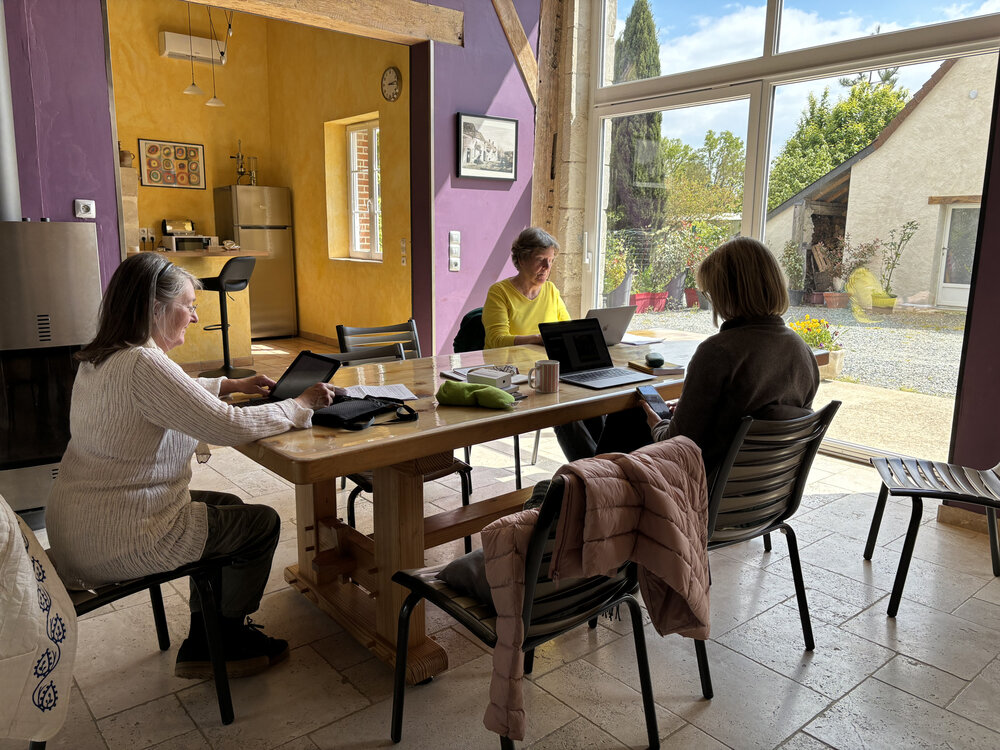 Writer friends at work
You may have insightful discussions with fellow writers, refine your writing techniques or your approach to scheduling your work. On some retreats, authors agree to critique each other’s writing. Perhaps you’ll share information about book events or marketing strategies. In my experience, the knowledge shared can cover almost anything, from identifying songbirds to spotting sepsis.
Feeling cramped isn’t conducive to creativity, so you need enough bedrooms and bathrooms.
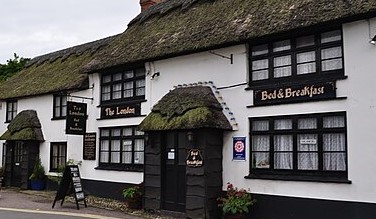
 Not like this place, then
It stands to reason that self-catering works best when you know one another in advance, everyone is willing to pull their weight, and there’s no squabbling over bedrooms.
The venue can be at home or abroad, and it can basic or luxurious. Yes, ours had a heated swimming pool. OK, I’m lying. It had two swimming pools.
 My preferred pool
Based on experience, here are my tips as to what to bring with you:
Power cables and adaptors (and remember to take them home at the end).Soap.Rubber gloves for washing up.A writing-related game to play.We played ‘Who wrote this?’, a game devised by my husband, where we each placed three or so passages from our own books (or from a work in progress into a hat. We then took turns reading them out loud and getting everyone to guess the author.
We chose our extracts with care, as many of us know the others’ work. To avoid giving the game away, some of us changed the characters’ names in our passages. The evening turned out to be fun and insightful, especially on those occasions when the writing fooled us.
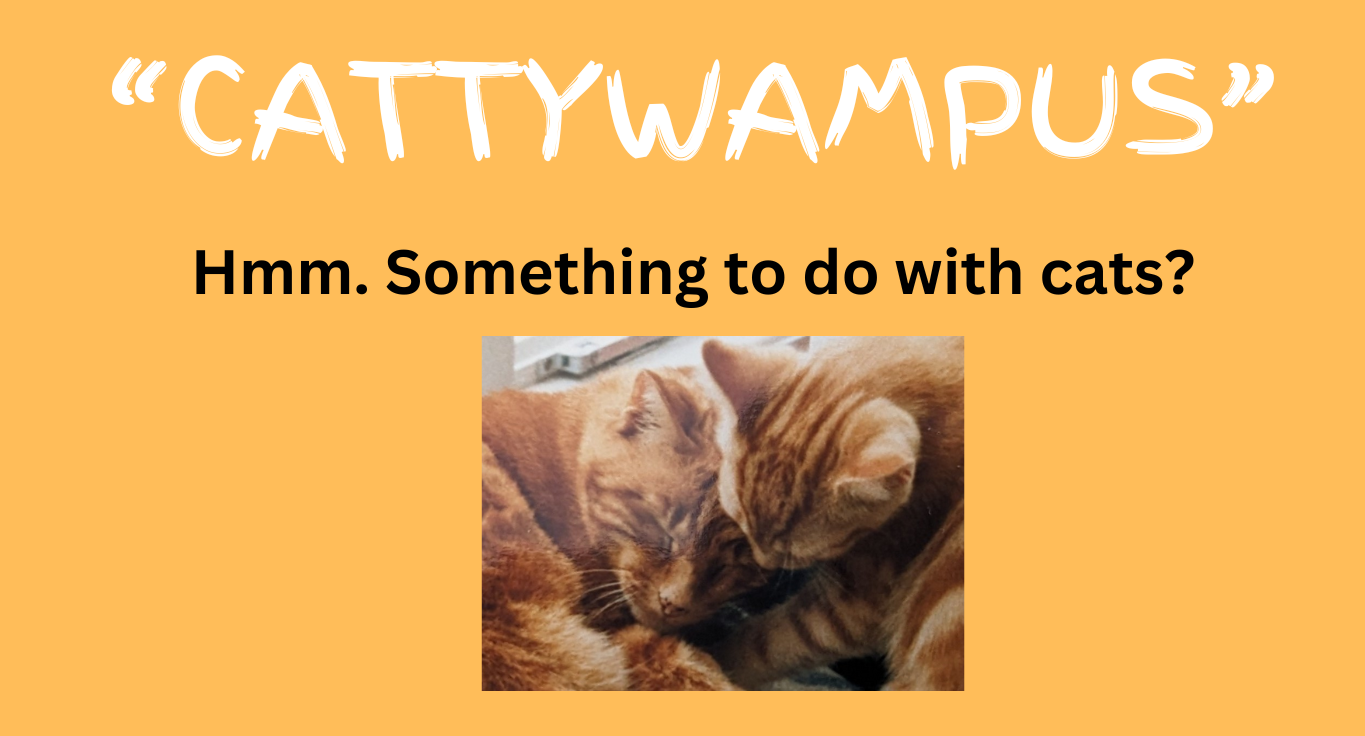
A favourite word game was the Dictionary Game (aka Fictionary which is also a tradename for book editing software – not needed for this game). Players guess the meaning of an obscure word. For each round, one player finds and reads out a challenging word, while the others compose a fake definition for it. The made-up definitions, as well as the correct ones, are collected by the selector and read aloud. Each player then votes on which definition they believe to be correct. Points are awarded for correct guesses, and for having their own fake definition chosen by another player. Another entertaining evening.
Have you been on a writing retreat? I’d love to hear your thoughts. Please drop me a comment below.
December 10, 2023
HOW DANGEROUS IS YOUR CHRISTMAS?
The season of goodwill comes with its toll of health hazards. Queen Victoria brought Christmas trees to this country, so it’s her fault that every year your living room becomes a right royal mess.
Tree needles really are an eyesore. Every hospital in the country sees injuries caused by Christmas trees, usually corneal abrasions from a branch or needle. Several of the 250 species of pinacea also cause allergic reactions on face and hands, and the trees with the most attractive smell tend to produce the least attractive rashes.
 with thanks to www.freeimages.co.uk
Traditional glass baubles originate from the storybook town of Lauscha in Germany. In the mid-19th century, their glassblowers began making fragile ornaments, silvering the inside and lacquering the outside. If you’ve had the good taste and deep pockets to buy these fragile balls for your tree, be careful. The shards can tear your skin to ribbons. Get hideous decorations from the petrol station instead.

Deck the halls with boughs of holly, but beware. Kids enjoy nibbling red berries. As few as 20 can cause a permanent silent night. Mistletoe is dangerous too. Eating more than 10 berries causes severe diarrhoea and abdominal pain. Luckily it’s usually hung out of reach. However you can catch plenty of other things from the antics beneath it.
Actually anything can happen at Christmas. It affects every organ in the body, starting in about September. The pundits agree that the brain is the first to go, helped by lashings of Christmas spirit. If one of your relatives is comatose on the couch, that’s the usual cause, although head injuries, diabetes, and TV programmes are other likely diagnoses.

Then there’s carbon monoxide poisoning, especially if you’re a Scrooge about boiler maintenance. Predisposing factors are conventional flues, high winds, double glazing, and tightly closing windows and doors to maintain a cosy fug. CO poisoning typically causes dizziness, confusion, headaches, and unconsciousness, though it can also mimic almost any condition.
It’s hard not to mention food when the average Brit puts away 7,000 Calories on Christmas Day, which is about four times more than necessary. This Christmas, especially up in western Scotland, more ulcers will burst between 5:00 and 7:00 PM than at any other time of the year.
Other parts of the alimentary tract are also at risk. Some people accidentally swallow sharp objects such as toothpicks along with their Yuletide fare. The elderly are especially prone to this, not because their faculties are impaired, but because dentures interfere with the sensation up eating something sharp.

One woman in her 80s developed peritonitis days after enjoying a traditional Christmas cake with all the trimmings. Surgeons removed a decorative plastic robin from her bowel.
Finally, here’s my Christmas cracker riddle for you.
What’s the difference between Christmas Day and Christmas Disease? Surprisingly, almost everything. Christmas disease is a form of haemophilia due to an inherited lack of factor IX. Without it, the sufferer haemorrhages repeatedly from skin, gut, joints, and muscles. Christmas Day, on the other hand, comes but once a year. There’s just one similarity. Both can bleed you to death.

Stay well and have a happy Christmas.
November 21, 2023
NOVEMBER 22
Everyone has their own memories of that day. In this short anecdote, a girl called Catherine is twelve years old when her hero dies.

It was Friday and I didn’t want to be late for Petal. Ever since I’d started dog-walking after school, I had prided myself on being punctual as well as responsible. I rushed up to the fifth floor.
Mrs Berger trembled all over when she opened her door. ‘Oh, Catherine, it’s the most terrible thing.’
I thought Petal must have swallowed one of Mrs Berger’s pearl earrings again, but it was much worse than that.
‘The president is dead.’
My hand flew to my mouth. ‘No! What happened?’

Mrs Berger dabbed at her eyes as she told me. I could hardly believe it, but she had seen it on TV and she said that President Kennedy had been shot in Dallas around 1 P.M. DC time. I was in the refectory then, wiping down the tables. Even now, my fingers still stank of orange peel, banana skins, and vinegar.
Numb, I thought back to that morning. The geography lesson hadn’t gone too well because I’d got muddled between the St Lawrence Seaway and the Gulf Stream in front of the whole class, but I’d have given anything to be back there being laughed at, just a few hours ago when the best president ever was still alive.

‘It’s so terrible,’ said Mrs Berger.
It was way beyond terrible. And I still had to walk Petal, because dogs need to do their business no matter who got shot. I took her leash, wound my scarf around my neck, and headed out.
In the lobby, Mrs Mezzanine in her mothy coat stopped me and declared it was a dreadful tragedy. ‘America is so violent. In the old country, things like this didn’t happen. Or maybe they did, but I’m so old that I’ve forgotten.’
I nodded. I felt sad too but I had to keep it together for Petal’s sake, so I pulled her away from sniffing Mrs Mezzanine’s bottom and told her, ‘Come on, Petal. Let’s find you a tree.’

As I waited at Petal’s favorite fire hydrant, my fingers knotted and unknotted in anguish. I didn’t know what to do, so I did the usual thing. I walked all the way up New Hampshire Avenue to the little grocery store. Petal sniffed at several trees on the way and tried to eat an empty pack of Lucky Strikes, but she still hadn’t done what she was supposed to do, so I took her down to Virginia Avenue where the State Department is.

This was where I’d been standing the time I saw President Kennedy. It was just one glimpse when he was in his limo on his way to the State Department for a press conference, but from then on it was like I had known him forever. And now he was gone.
Mommy had heard the news too by the time I returned Petal and got to our apartment. She gave me a big hug. For dinner, she made hamburger out of ground round and then she broiled it just how I like it.
I cut into the meat and stared at it. Instead of hunger growling in my stomach, I had a hard knot inside like when I hadn’t done my homework, only much worse. Even thinking of a Hostess chocolate cupcake didn’t help. The hurt from the knot went right through my heart and out the other side.

The TV was on. I couldn’t bear to watch, but I couldn’t bear not to watch, either.
‘His poor family.’ Mom sat there on the couch looking hopeless.

I nodded sickly. The only thing on TV was the same news over and over, and we already knew that Kennedy was dead and that Lyndon Johnson had been sworn in as President on Air Force One. You didn’t need to see Mrs Kennedy in her pink suit stained with blood and brains down the front to know how awful it was.
It’s almost incredible that, even sixty years on, we still don’t know exactly what happened on that day. Let me know what you think.
April 14, 2023
WHAT’S AN AUTHOR TO DO AT THE LONDON BOOK FAIR?
If you write books, work in publishing, or find yourself anywhere near people who do, you’re probably hearing a lot about the London Book Fair right now.

This year LBF is at Olympia from April 18 to 20, and the theme is “Defining the Future of Creative Content”. If you’re an author, your reaction may well be Grrrr! I write books, not ‘creative content’.
There’s nothing like the phrase creative content to put authors in their place. Should an author even bother with LBF? Well, the fair is hardly a must, but it can be useful for the insights you’ll gain into the business of publishing, the chance to network, get some marketing ideas, and listen to some interesting talks.
The Author of the Day interviews are usually worth attending. This year’s guest authors include crime writer Ann Cleeves and children’s author Robin Stevens. I also hope to be there on Tuesday afternoon at Author HQ for the fifth annual Selfies Book Awards which showcase the very best in self-publishing.
Every year the book fair is a little different. I hadn’t entirely expected last year’s energetic display of Arabian dancing.

Still, some features are eternal. If it’s your first LBF, I can confidently pass on seven suggestions.
1 Leave your beloved manuscript at home. Don’t even expect to speak to a publisher or agent unless you have an appointment. LBF is a trade exhibition, so it you can’t expect it to cater wholly for authors or would-be authors.

2 Wear comfortable shoes. Olympia is vast, there’s very little seating, and it’s impossible to keep smiling when your feet are killing you. What’s more, LBF doesn’t sell foot plasters. A gap in the market, right?
3 Bring paracetamol or whatever works for your headaches. LBF doesn’t sell analgesics either.
4 A sandwich wouldn’t come amiss. LBF does sell food, but you may find the fare a tad overpriced.

5 Remember your business cards.
6 Don’t help yourself to books from the stands. There will be freebies like keyrings, bookmarks, tote bags, and the like, but the books on display are intended to show off a publisher’s range, so stop stuffing your bag with glossy new titles.
7 You can’t buy the books either. LBF isn’t a bookshop.
If you go, I hope you have a wonderful time. And let me know of any tips you’d like to pass on to future visitors.

You may enjoy a previous post JANET & JOHN GO TO THE LONDON BOOK FAIR.
WHAT CAN AN AUTHOR EXPECT AT THE LONDON BOOK FAIR?
If you write books, work in publishing, or find yourself anywhere near people who do, you’re probably hearing a lot about the London Book Fair right now.
This year LBF is at Olympia from April 18 to 20, and the theme is “Defining the Future of Creative Content”. If you’re an author, your reaction may well be Grrrr! I write books, not ‘creative content’.
There’s nothing like the phrase creative content to put authors in their place. Should an author even bother with LBF? Well, the fair is hardly a must, but it can be useful for the insights you’ll gain into the business of publishing, the chance to network, get some marketing ideas, and listen to some interesting talks.
The Author of the Day interviews are usually worth attending. This year’s guest authors include crime writer Ann Cleeves and children’s author Robin Stevens. I also hope to be there on Tuesday afternoon at Author HQ for the fifth annual Selfies Book Awards which showcase the very best in self-publishing.
Every year the book fair is a little different. I hadn’t entirely expected last year’s energetic display of Arabian dancing.
Still, some features are eternal. If it’s your first LBF, I can confidently pass on seven suggestions.
1 Leave your manuscript at home. Don’t even expect to speak to a publisher or agent unless you have an appointment. LBF is a trade exhibition, so it you can’t expect it to cater wholly for authors or would-be authors.
2 Wear comfortable shoes. Olympia is vast, there’s very little seating, and it’s impossible to keep smiling when your feet are killing you. What’s more, LBF doesn’t sell foot plasters. A gap in the market, right?
3 Bring paracetamol or whatever works for your headaches. LBF doesn’t sell analgesics either.
4 A sandwich wouldn’t come amiss. LBF does sell food, but you may find the fare a tad overpriced.
5 Remember your business cards.
6 Don’t help yourself to books from the stands. There will be freebies like keyrings, bookmarks, tote bags, and the like, but the books on display are intended to show off a publisher’s range, so stop stuffing your bag with glossy new titles.
7 You can’t buy the books either. LBF isn’t a bookshop.
If you go, I hope you have a wonderful time. And let me know of any tips you’d like to pass on to future visitors.
October 1, 2022
HOW DO YOU FIND SOMEONE WHO’S MISSING?
How do you find your missing sister? Who can you even ask to help when you live in a police state? Not the police, that’s for sure.
This short extract from The Girls from Alexandria goes back to February 1968.

Monsieur Jean, we called the man. It wasn’t his real name. I wondered if he’d ever been a real journalist. Rashida served him coffee when he arrived, and she, too, saw his frayed cuffs and made her disdain plain.
‘Who knows why she left? After all, the brain is a mysterious box, especially a female’s.’ Monsieur Jean spread his hands and laughed at his own wit.
How dare he speak about women like this, and what did he know of the brain, anyway? He was just some old journalist in ragged clothes.
He extended his little finger and sipped his tiny coffee with huge noises. ‘She hasn’t disappeared completely,’ he observed when he’d put down the cup.
True, she hadn’t, because she’d sent postcards now and again. But she was no longer here in Alex with Mother, Father, and most of all me, her biggest fan, even if she did have a tendency to say I was a humara. Well, she could call me a she-donkey all she wanted if only she’d come home.

‘What is her name again?’ asked Monsieur Jean.
‘Simone. Would you like to see the cards she sent?’ Father handed him a small bundle.
‘Any letters?’
‘No.’
Monsieur Jean should have realised that letters took longer to reach Egypt, arriving weeks late, if at all, with a printed strip down one side of the envelope where the censors had slit it open then sealed it up again. Under Nasser, nobody ever wrote letters if a postcard would do.
‘Let’s see.’ The man picked up one of the postcards and held it up to the light coming through the only window. We were sitting in the basement, the one room that we were fairly sure wasn’t bugged. ‘Her handwriting is interesting.’
Father gave a polite smile. ‘In what way?’
‘I am something of an expert in calligraphy.’

Of course he was, I thought. ‘What do you make of her writing?’ I ventured.
‘It’s very mature,’ he said. Since Simone was twenty-four, this was hardly a revelation. He took off his glasses and twirled them in his fingers. ‘I suppose you have spoken to her friends?’
Mother fidgeted in her armchair. ‘Of course.’
‘In cases like this, there’s always something the family overlooks. But I have my methods,’ he assured us.
As a nice young Arab woman, I had to mind my manners, but it was hard to hide my impatience.
Father asked what he proposed to do, and the man outlined his plans. His account clearly aimed to impress, but it was just a long-winded way of telling us he would use the network of contacts he’d made over a thirty-year career in newspapers.
My parents thanked Monsieur Jean courteously, and he left, shoving on his battered hat and promising to be in touch.

‘C’est un pauvre con,’ Father said as soon as the front door had shut.
Mother glared at Father because un con is the height of vulgarity, and not at all the same thing as con in English, though he was probably one of those too. ‘But,’ she said, ‘he’s the only chance we’ve got.’
If that was the case, then we were never going to find my sister.
***
You can read more about Nadia and her missing sister Simone in The Girls from Alexandria. Shortlisted for the Rubery Book Award, it’s available in paperback, ebook, and audiobook.

August 6, 2022
A VINTAGE SUMMER HOLIDAY

Every summer, like a swarm of locusts, Cairenes deserted the dusty, choking heat of the capital and swooped down onto Alexandria, avid for the cool city that they mocked the rest of the year. They came spilling out of trains, buses, and cars, frantic to get to the sea.
They came with their picnic baskets and their bedding—the government clerks and their portly wives, the shrill mothers-in-law covered with fat and cheap jewellery, the well-fed pashas twiddling their amber beads, the cooks, nannies, and suffragis—and they settled on the beaches until there wasn’t an inch of sand to be seen. At night, the locusts donned white sharkskin jackets and invaded the restaurants, cinemas, and casinos. The only thing for an Alexandrian to do was to pack his bags and take the first ship to Europe, usually with his car.
Back then there were no exit visas or travel restrictions of any kind. Most of these came with the Palestine War of 1948.

High up in the Dolomites, it was quiet and peaceful. There were only a few cows—and about half of Alexandria. “Chérie!” they’d cry to one another in surprise, even though they had come over on the ship together. “What brings you here?”
The answer was always, “I’m escaping from those dreadful Cairenes.”
It was an advantage to be able to speak Arabic without anyone understanding. Unfortunately, there were exceptions, like the time on a bus at Cortina d’Ampezzo when my sister Helen asked to change places because the old hag on her right smelled. The old hag turned round and told her in perfect Arabic that she was a very rude little girl.
 My mother as child on a donkey in France
Some people were so excited when they found out we came from Egypt that they ran around screaming “The Egyptians are coming,” and “The Egyptians are leaving,” as though we were Pharaoh’s armies. They’d glue their noses to the license plate on the car as if studying hieroglyphics, and everyone suddenly had a passion for Egyptian stamps.
Two ladies approached us most forcefully one day. Mother was too taken aback to say a word.
“Take it easy, Ethel,” said one. “The poor thing obviously only speaks Bedouin language. Let me try to speak to her.” She bent down so that her nose almost touched Mother’s. “We’re Americans.” As though anyone within ten miles had any doubts. “America, Bay City, Michigan.”
“What’s your name, little Bedouin lady? I’m Mildred and this is Ethel. We’re travelling round the world playing the piano. At least, I’m the pianist and Ethel sings.”

When Father returned to the hotel and heard this, he refused to pretend to be a Bedouin or to live in an oasis in the middle of the Sahara, even though Mother implored him for the sake of Michigan.
He did, however, suggest that Ethel and Mildred join us for a drink and perhaps perform for us afterwards. They did. It was a riot, with half the people in the hotel running down to see who had been murdered. We learned many interesting things about the natives of Bay City, Michigan.
Europe was all right for a holiday but there was no place like Alexandria in the whole world. As we returned, we leant over the rail of the SS Ausonia and watched the pale yellow outline of Alexandria come into focus. The pilot’s launch flitted lightly across the water, the green flag with its crescent and three stars flying in the wind, and soon the pilot was climbing up the rope ladder followed by the port authorities and a few shaweesh (policemen) in white uniforms and red fezzes.

The quayside itself was a mass of galabeyyas—the long robes worn by most of the less affluent Arabs—and red fezzes. Everyone shouted and waved handkerchiefs. Sleek new cars and battered taxis inched their way through the crowd, honking their horns at length, and a group of ragged-looking men, ropes tied round their middles, chanted in refrain as they hauled an enormous crate away from the ship.
At the bottom of the gangway, one policeman, the corners of a checked handkerchief showing under his fez to keep the sweat from falling into his eyes, noisily came to blows with a man selling rugs. The man, with the unshaven look of a badly-plucked chicken, screamed at the top of his voice that the whole of the police force were sons of dogs, and that this particular policeman was something quite unprintable.
It was good to be home.
***
You may also enjoy these posts:
March 27, 2022
“ARE YOU GOING TO THE LONDON BOOK FAIR?”
If you write books, work in publishing, or find yourself anywhere near people who do, chances are you’re hearing a lot about the London Book Fair right now. This year LBF is at Olympia from April 5 to 7. It’s the first one since 2019 and, as you can imagine, it’ll be a bit different to book fairs held before the pandemic.
For one thing, there are allocated time slots for arrival, so no meeting your mates outside the station and entering en masse, unless they have the same time slot.
LBF has put together their Covid-19 guidelines on this link. I won’t repeat them except to point out that you may need to provide evidence of Covid vaccination. And that’s in the form of the NHS app, not the NHS Covid app or the tatty little card you’ve kept in your wallet for over a year. The NHS app can take a day or so to verify your identity. Best not leave it till the last minute, then.
This year, the market focus is Sharjah and the tagline for the fair is YOU ARE THE STORY. But is it your story if you’re not a publisher?

Dipping into my experience of LBFs past, I can tell you that it’s not a place for readers, though it can be useful for authors as long as they’re realistic. Here are seven mistakes to avoid. I should know. I’ve made them myself.
1 Thrust your manuscript into a publisher’s hands. Don’t even expect to speak to a publisher. The fair is still industry-led, and, unless you have an appointment, you can’t see a publisher.
In the last few years, LBF has become more aware of authors, with the belated recognition of who it is that actually writes books. There’s a small enclave called Author HQ with a range of events relevant to writers. When I say ‘small’, I mean sitting cheek by jowl (yes, this year I’ll be wearing a mask). But LBF is still a trade exhibition, so it you can’t expect it to cater wholly for authors or would-be authors.

2 Try to find an agent. You’re more likely to win the lottery, even if you didn’t buy a ticket. You’ll even be pushed to chat with your own agent, if you have one. Literary agents are usually hard at work in the International Rights Centre, for which an appointment is needed.
3 Expect to buy lots of books. Although it would be magical to shop in a massive bookstore, LBF isn’t one of them.
4 Help yourself to books from the stands. There will be freebies like keyrings, bookmarks, carrier bags, and the like, but the books on the various stands are intended to show visitors a view of a publisher’s range. Stop stuffing your tote bag with glossy new titles.

5 Ask lots of stupid questions. Nobody expects you to know everything, but naivety has limits, and not every speaker is as patient or as courteous as romantic novelist Katie Fforde who, at one of her talks, was asked “How does one start to write a book?”
6 Wear high heels. Comfy shoes are the order of the week. Vertiginous heels will soon become unbearable, and LBF doesn’t sell foot plasters. I know. A gap in the market. Not sure they’ll sell masks either.
7 Expect to sit down. There is some seating here and there, though not much. A lot of people end up sitting on the floor or perch precariously on an exhibit to eat their over-priced sandwich.
So why attend the fair at all if you’re an author? Mainly for the insights you’ll gain into publishing, the chance to network or make new contacts, attend a few interesting talks, and get new marketing ideas.
For me, there’s also inspiration in hearing celebrated authors like Maggie O’Farrell and Afra Atiq at Author of the Day events. This is how I met Egyptian novelist Alaa’ al-Aswany a few years ago. It’s no secret that I’m a huge fan of his book The Yacoubian Building. That short conversation with him at LBF encouraged me to write my novel The Girls from Alexandria.

So, are YOU going to the London Book Fair?
__ATA.cmd.push(function() { __ATA.initDynamicSlot({ id: 'atatags-26942-6241621ccdef2', location: 120, formFactor: '001', label: { text: 'Advertisements', }, creative: { reportAd: { text: 'Report this ad', }, privacySettings: { text: 'Privacy', } } }); });