
Thomas Frey's Blog
February 22, 2026
The Open Road, Reimagined: How Autonomous Teslas Are Rewriting the American Road Trip
The journey begins—technology fades into the background as the mountains take center stage.
By Futurist Thomas Frey
ArrivalJake Walker watched his wife Linda’s face light up as their plane descended into Denver International Airport. Below them, the Rockies stretched like a jagged spine across the horizon, peaks already dusted with October snow.
“I still can’t believe we’re doing this,” Linda said, gripping his hand. “A whole week. Just us and the mountains.”
“And approximately seventeen different Teslas,” Jake added with a grin.
It was October 2029, and they were about to experience something that had become wildly popular in the past eighteen months: a fully autonomous multi-destination tour. No rental car to return. No worrying about mountain driving or parking. Just a seamless chain of self-driving vehicles that would appear exactly when needed and disappear when they didn’t.
Their luggage arrived at carousel 7 within twelve minutes of landing. As Jake pulled the last bag off the belt, Linda’s phone chimed.
Your Tesla has arrived. Bay C-14. Welcome aboard, Jake and Linda.
The white Model Y was waiting exactly where the app indicated, rear hatch open, interior lights glowing warmly in the late afternoon sun. As they loaded their bags, the car’s voice—neutral, pleasant—greeted them.
“Welcome to your Rocky Mountain Experience. I’m your vehicle for the next forty-seven miles. Estimated arrival at your Lakewood accommodation: 52 minutes, accounting for current traffic. Would you like to begin the regional audio tour, or would you prefer music?”
Jake and Linda exchanged glances. “Let’s start with the tour,” Linda said. “We can always switch.”
“Tour activated. We’ll begin once we reach I-70.”

For the first time, neither of them touches the wheel—and neither misses it.
The Drive BeginsThe Tesla merged onto Peña Boulevard with the confidence of a driver who’d made this trip ten thousand times—because, collectively, the fleet had. As they accelerated toward the mountains, a warm voice filled the cabin.
“You’re entering what the Arapaho people called ‘the spine of the world.’ The Front Range you see ahead was formed roughly 70 million years ago during the Laramide orogeny, when tectonic forces pushed ancient rock upward…”
“This is actually good,” Jake murmured. “Better than that awful podcast you made me listen to on the flight.”
Linda swatted his arm. “That podcast won an award.”
“For most effective sleep aid?”
Twenty minutes in, Linda tapped the screen. “Can we switch to music? Something local?”
The tour voice faded. A moment later, John Denver’s “Rocky Mountain High” filled the car.
“Oh, that’s perfect,” Linda said, leaning back in her seat. “God, when’s the last time we actually relaxed on a trip? Not worrying about directions or traffic or Jake’s terrible navigation skills?”
“I have excellent navigation skills. I just prefer the scenic route.”
“You got us lost in a mall parking garage.”
“That parking garage was poorly designed.”
The Tesla climbed steadily into the foothills, the city falling away behind them. Neither Jake nor Linda touched the controls. The car handled everything—speed adjustments for curves, lane positioning, the subtle brake as a deer bounded across the road ahead.
“You know what’s weird?” Jake said. “I don’t miss driving. I thought I would, but I don’t.”
“That’s because you’re not stressed. You’re not white-knuckling the wheel wondering if that semi is going to drift into our lane. You’re just… here.”
First NightThe Airbnb in Lakewood was a renovated craftsman with a view of the mountains. As they unloaded their bags, the Tesla’s voice chimed softly.
“Your belongings are secured. I’ll be departing to my next assignment. When you’re ready for dinner, simply request a vehicle through the app. Enjoy your evening.”
The car backed out of the driveway and disappeared down the street.
Two hours later, freshened up and hungry, Linda tapped her phone. “Requesting pickup for two. First stop: Creekside Cellars winery, then Elway’s Downtown.”
Vehicle arriving in 4 minutes.
A different Model Y—identical but for the license plate—pulled up exactly on schedule.
The winery was tucked into a converted barn, strings of lights crisscrossing the outdoor patio. They tasted six wines, bought three bottles, and learned more about Colorado viticulture than either expected.
“The trick is the elevation,” the sommelier explained, refilling their glasses. “We’re at 5,800 feet. The intense UV light makes the grapes develop thicker skins, more concentrated flavors. We can’t compete with Napa on volume, but on complexity? We hold our own.”
“How do you handle tourists?” Jake asked. “This place seems remote.”
“Used to be a problem. Now?” She gestured to the parking area where four Teslas sat silent and dark. “People come from Denver for an afternoon, no designated driver stress. Business tripled once the autonomous network got reliable. We even added a second tasting room.”
At Elway’s, they ordered steaks and recounted the day. The restaurant hummed with conversation—anniversary couples, business dinners, a family celebrating someone’s graduation.
“We should do this more,” Linda said, cutting into her filet. “Not wait for retirement to actually see things.”
“Agreed. Though I’m still processing that we’ve been in three different cars and haven’t signed a single rental agreement.”
After dinner, they stopped at Hammond’s Candy Factory for dessert. The shop smelled like caramelized sugar and childhood. They bought chocolate-covered toffee and watched through the windows as workers pulled ribbon candy on massive hooks.
Back at the Airbnb by 10 PM, they sat on the porch with wine and toffee, watching the mountains fade to silhouettes against the darkening sky.
“Tomorrow’s the big drive,” Jake said. “All the way to Steamboat.”
“I’m ready. No stress. Just scenery.”
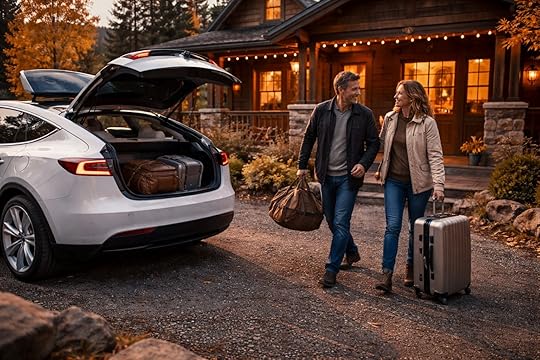
Every morning is a new experience when taking a Tesla Tour.
Into the MountainsThe next morning’s Tesla arrived at 8:47 AM, exactly on schedule. Their bags went into the back, they climbed in, and the car began the climb toward I-70.
The audio tour narrated their ascent through the mountains—the history of the Eisenhower Tunnel, the ecology of the alpine tundra, the mining towns that rose and fell with silver strikes. As they crested the Continental Divide, Linda gasped.
“Stop the tour for a second. Jake, look at this.”
The valley spread below them, a tapestry of aspen gold and pine green. The car had automatically slowed, as if it knew they’d want to look.
“Photos don’t capture this,” Linda said softly.
“No. They really don’t.”
They passed Dillon Reservoir—the tour explaining how it was created in the 1960s, how the town of Old Dillon was relocated, how the water supplied Denver—before the highway curved north toward Steamboat Springs.
The Tesla deposited them at the temporary bag storage facility at the Steamboat resort. A cheerful attendant scanned their luggage tags.
“We’ll have these delivered to your hotel by 4 PM. Car will be waiting whenever you need it. Enjoy the springs!”
The hot springs were everything promised—natural mineral water, mountain views, the pleasant exhaustion of heat soaking into tired muscles. They spent three hours alternating between hot pools and cold plunges, reading, dozing, not checking email.
“This is why we needed this trip,” Linda said, head tilted back against the pool edge. “When’s the last time you went three hours without looking at your phone?”
“When I forgot it at the airport in 2019?”
“Exactly.”
That evening, they summoned a car to the storage facility. Their bags were already loaded. The new Tesla took them to their hotel—a ski lodge converted for year-round operation—and they had dinner at a local steakhouse where the server recommended the elk medallions and told them about Steamboat’s ranching history.

No parking stress, no logistics—just mineral springs and mountain air.
The Northern LoopThe next three days blurred into a rhythm: wake, coffee, summon car, drive, marvel, repeat.
The route to Jackson Hole took them through landscapes that seemed designed by someone with a flair for drama. The Tetons rose like teeth against the sky. In town, they browsed art galleries and ate at a barbecue joint where the owner, a former California tech worker, explained why he’d left Silicon Valley.
“I was writing code for apps I didn’t care about. Now I smoke brisket. Better life.”
From Jackson, they drove to Devils Tower—the audio tour explaining the geology, the Native American legends, the climbing routes up the igneous intrusion. They walked the trail around the base, necks craned upward.
“It’s like something from another planet,” Linda said.
“130 climbers have gotten stuck up there since the 1930s,” the tour voice informed them. “All were eventually rescued.”
“That’s… not as reassuring as you think,” Jake muttered to the car.
Yellowstone consumed two full days. They saw Old Faithful erupt. Watched bison cause traffic jams. Photographed the Grand Prismatic Spring’s impossible colors. Each new Tesla that picked them up came with the same seamless handoff—bags automatically transferred to the next vehicle, no keys, no paperwork, just continuity.
At a pullout overlooking the Yellowstone River canyon, they met another couple doing the same tour.
“Minneapolis,” the woman introduced herself. “Sarah and Tom. We’re on day nine.”
“How’s it been?” Linda asked.
“Incredible. We’ve been in, I don’t know, maybe twenty different cars? Never waited more than five minutes for one. Never worried about parking or navigation. Just… went places.”
“That’s exactly it,” Tom added. “We’re not planning. We’re experiencing. Yesterday we decided to add an extra day in Cody, changed the whole itinerary in about thirty seconds on the app. Try doing that with a rental car.”

History feels closer when you’re not rushing to return a rental.
The Black HillsThe drive from Yellowstone to the Black Hills was the longest leg—seven hours—but the Tesla made it manageable. They stopped twice for lunch and leg-stretching, the car automatically routing them to charging stations that had restaurants and clean bathrooms.
“Remember road trips with your parents?” Jake asked as they rolled through Wyoming grasslands. “Trying to hold it for hours because the next rest stop was disgusting?”
“And your dad insisting we could make it another hundred miles on fumes?”
“Different era.”
The Black Hills welcomed them with pine forests and granite outcrops. They stopped at Prairie Berry Winery—South Dakota’s largest—and tasted wines made from local fruits: rhubarb, chokecherry, buffalo berry.
“I’m not even pretending to be a wine snob anymore,” Jake said, buying a bottle of the cranberry blend. “I just like what tastes good.”
The woman processing his payment laughed. “You’d be surprised how many people say that. The autonomous tours have been amazing for us. People stay longer, drink more, don’t worry about driving after. We’re adding a restaurant next spring.”
Mount Rushmore was smaller than they expected and more moving. The evening lighting ceremony—rangers spotlighting each president while narrating their contributions—left Linda wiping her eyes.
Crazy Horse, still unfinished after seventy-six years, was more impressive for its ambition than its completion.
“When it’s done,” the tour guide explained, “it’ll be the largest sculpture in the world. The entire heads on Rushmore could fit inside this horse’s head. Assuming we finish. Could be another fifty years.”
“That’s insane,” Jake said.
“That’s vision,” the guide corrected. “Sometimes you start something knowing you won’t see it finished.”
The ReturnThe drive back to Denver felt different. Not sad exactly, but thoughtful. The Teslas carried them through the mountains they now felt they knew—not as tourists but as visitors who’d paid attention.
Their first stop was Boulder, for an early dinner at The Kitchen, Kimbal Musk’s farm-to-table restaurant on Pearl Street. The Tesla dropped them at the temporary bag storage facility downtown—bags tagged and scanned in under a minute—then disappeared to its next assignment.
The restaurant was everything the reviews promised. Exposed brick, reclaimed wood, an open kitchen where chefs worked with ingredients sourced from Colorado farms. Their server, a CU student named Maya, walked them through the menu.
“Everything changes seasonally,” she explained. “Right now we’re featuring roasted butternut squash from Jack’s Solar Garden in Longmont, lamb from Ollin Farms in Hygiene. The chef gets deliveries three times a week.”
Linda ordered the wild mushroom risotto. Jake chose the grass-fed beef short rib.
“You know what’s interesting?” Jake said, watching the kitchen through the pass. “A week ago we were eating at chain restaurants because they were easy to find. Now we’re seeking out places like this.”
“That’s what happens when you’re not stressed about driving. You have energy to actually choose.”
The food was extraordinary—complex without being fussy, ingredients that tasted like they’d come from actual soil rather than industrial farms. Halfway through dinner, Kimbal Musk himself walked through the dining room, stopping at tables, asking about dishes, listening to feedback.
When he reached their table, Linda complimented the risotto.
“Best I’ve had outside of Italy,” she said.
Kimbal smiled. “That’s because our mushrooms were picked this morning, forty miles from here. You can’t fake freshness. Real food, real flavor, real connections to the land. That’s the whole point.”
“We’re on an autonomous tour,” Jake mentioned. “Week through the Rockies. This felt like the right place to finish it.”
“Those tours have been incredible for us,” Kimbal said. “People used to skip Boulder because parking was impossible. Now they just… come. The car handles it. We’ve seen a thirty percent increase in tourists who actually have time to eat slowly, enjoy the experience. Technology serving humanity rather than the other way around. That’s how it should be.”
After dinner, they walked Pearl Street—the pedestrian mall buzzing with street performers, college students, families—before summoning their next Tesla.
Their final stop was Red Rocks Amphitheater, carved into sandstone formations that turned crimson in the sunset. The combined Botticelli Strings and Ed Sheeran concert filled the natural bowl with sound that seemed to come from the rocks themselves.
“This,” Linda said during intermission, “this is what I’ll remember. Not the hotels or the restaurants. This moment. This place.”
Jake squeezed her hand. “We should come back. Make this regular.”
“Deal.”
The final morning, they found Snooze—a Denver breakfast institution famous for its pancakes and morning cocktails. The place was packed with locals and tourists, the energy of a city waking up.
Their last Tesla arrived at 10:30 AM to take them to DIA. As they loaded their bags—the same bags they’d loaded nine days earlier—Linda turned to Jake.
“So. Verdict?”
“On what?”
“This whole autonomous tour thing. The future of travel. All of it.”
Jake thought for a moment as the car merged onto Peña Boulevard, the mountains receding in the rearview mirror.
“I think we just saw the death of the rental car industry and the birth of something better. Easier. More accessible.”
“Explain.”

Wild landscapes unfold while the network handles everything else.
Why This Changes EverythingThe autonomous tour model works because it solves problems travelers didn’t realize were dealbreakers until someone eliminated them.
The Hidden Tax of Traditional Road Trips
When you rent a car, you’re not just paying for the vehicle. You’re paying in stress: navigating unfamiliar roads, finding parking, worrying about damage, calculating mileage limits, fighting over who drives, dealing with return logistics. You’re paying in opportunity cost: the person behind the wheel isn’t experiencing the scenery. You’re paying in inflexibility: once you commit to a rental, changing plans means renegotiating contracts.
The autonomous tour eliminates all of it.
The Economics Are Compelling
A week-long car rental in 2029 costs roughly $850, plus gas, plus insurance, plus parking fees that can hit $40 per night in resort towns. Total: around $1,400.
An autonomous tour—using on-demand Teslas with per-mile pricing—costs about $890 for the same trip, with electricity included. No insurance fees. No parking charges (cars leave when you don’t need them). No stress premium.
But the real value isn’t in the $500 savings. It’s in what you gain.
The Freedom Paradox
Counterintuitively, having a car you own for the week makes you less free. You’re tethered to it. You have to plan around parking. You can’t drink at wineries. You can’t both enjoy the scenery.
On-demand autonomous vehicles make you more free precisely because you don’t control them. They appear when needed. Disappear when they don’t. You’re not managing a car. You’re experiencing places.
The Network Effect
The tour only works because of scale. Tesla’s fleet in the Rocky Mountain region in 2029 includes roughly forty thousand vehicles in constant rotation. When Jake and Linda summoned a car in Steamboat, it might have just dropped off another couple in Vail. When they left the hot springs, their car drove itself to pick up a family in Breckenridge.
Maximum utilization. Minimum waste. No cars sitting idle in parking lots for twenty-three hours a day.
The Cultural Shift
Within three years, the autonomous tour model expanded from niche experiment to mainstream option. The Rocky Mountain Experience was one of forty-seven curated autonomous routes across North America by late 2029.
The Pacific Coast Highway tour. The Fall Foliage Loop through New England. The Music Cities Circuit through Nashville, Memphis, and New Orleans. The National Parks Grand Circle. Each one optimized for scenic value, charging infrastructure, and tourist density.
Traditional rental companies adapted or died. Hertz and Enterprise pivoted to managing autonomous fleets. Budget and Thrifty disappeared entirely, unable to compete.
The change happened faster than anyone predicted because it made traveling easier, cheaper, and better. That’s a rare combination.
The Accessibility Revolution
The most profound impact wasn’t economic. It was social.
People who couldn’t drive—too old, too young, disabled, anxious about highway driving—suddenly had access to experiences previously closed to them. A grandmother could tour wine country without relying on family. A blind couple could “road trip” with full independence. Teenagers could explore national parks without parents.
The car ceased being a barrier and became an enabler.

The road trip ends, but the freedom it revealed lingers.
The Morning AfterAt the airport departure curb, Jake and Linda stood with their bags, waiting for the check-in line to thin.
“We’re doing this again, right?” Linda asked. “Maybe New England in October next year?”
“Already looking at dates.”
A white Tesla pulled up to the curb, discharged a young couple with hiking gear, and drove off to its next assignment.
“You know what I keep thinking about?” Jake said. “That couple we met at Yellowstone. They changed their whole itinerary in thirty seconds. Just… decided to stay an extra day somewhere they liked. When’s the last time we could do that?”
“Never. There was always some constraint. Rental return deadlines. Hotel cancellations. Logistics.”
“Right. And now there’s not. The infrastructure just… accommodates. That’s what’s different. The technology doesn’t make you adjust to it. It adjusts to you.”
They checked their bags, cleared security, and found their gate. On the monitor, their flight showed on time.
Linda pulled up the photo from Red Rocks on her phone. The amphitheater glowing in the sunset, Ed Sheeran on stage, the crowd a sea of phone lights and raised hands.
“I want to remember something,” she said quietly.
“What’s that?”
“That this trip wasn’t about the cars. The cars were just… invisible. In the best way. This trip was about us, finally paying attention to what we were seeing instead of how we were getting there.”
Jake nodded. “The technology disappeared. That’s when you know it’s working.”
Their flight boarded twenty minutes later. As the plane climbed above Denver, Jake looked down at the mountains, the highways threading through them, the invisible network of autonomous vehicles shuttling people toward experiences they’d remember long after they’d forgotten which car they rode in.
The open road hadn’t died, he realized. It had just been reimagined. And it was more open than ever.
Related Articles:
The Economics of Autonomous Vehicle Tourism – Analysis of how self-driving vehicles are transforming the travel industry
Tesla’s Full Self-Driving: Capabilities and Limitations – Current state and trajectory of autonomous driving technology
How Autonomous Vehicles Are Reshaping Rural Tourism Economies – Research on the economic impact of autonomous tours on rural communities
Word Count: 3,847
The post The Open Road, Reimagined: How Autonomous Teslas Are Rewriting the American Road Trip appeared first on Futurist Speaker.


February 21, 2026
When the Only Hand That Reached Out Was Metal: Julie’s Story
Seventeen, pregnant, and defiant—Julie walks away from violence and fear, choosing uncertainty over surrender.
By Futurist Thomas Frey
The Last Fight“You’re what?” her mother’s voice cut through the kitchen like broken glass.
Julie Morgan, seventeen, kept her eyes on the cracked linoleum. “I’m pregnant. Twelve weeks.”
The slap came so fast Julie didn’t see it. Just felt the sting across her cheek, then her mother’s hand gripping her arm, nails digging in.
“You stupid girl. Just like your sister. Just like me.” Her mother’s breath was sharp with cheap wine. “Who’s the father?”
“It doesn’t matter. He’s—”
“Gone. Of course he’s gone. They’re always gone.” Her mother released her arm and grabbed for her phone. “We’re taking care of this tomorrow. I know a clinic in—”
“No.”
The word hung in the air. Julie had never said no to her mother. Not when she needed to leave school to work. Not when the bruises started. Not when the electricity got shut off and her mother blamed her for using too much power charging her phone.
“What did you say?”
“I’m keeping it.” Julie’s voice was barely a whisper, but steady.
Her mother’s laugh was ugly. “Keeping it? You’re seventeen. You have nothing. You are nothing. You’ll get rid of it, or you’ll get out.”
Julie looked up then. Met her mother’s eyes. “Then I’m out.”
She made it to her room before her mother could react. Threw clothes into her backpack—shirts, underwear, the hoodie that still smelled like Connor even though he’d been gone three months. Her phone. Charger. The $83 she had in cash tips from the diner.
Her mother was screaming from the kitchen. “You walk out that door, you don’t come back! You hear me? You’re on your own!”
Julie walked out the door.
Three Weeks on the StreetThe Y shelter let her stay two weeks before the waiting list caught up. After that, it was park benches, doorways, the 24-hour laundromat on Broad Street when it got too cold.
She kept the diner job for a while. Showed up at 5 AM, worked until her feet went numb, tried not to throw up from the morning sickness into the hash browns. But customers noticed. Made comments. Her manager called her in.
“Julie, you’re a good kid. But I can’t have you working the floor looking like…” He gestured vaguely at her growing belly. “It’s September. You should be in school.”
“I’m eighteen in two months. I can—”
“Not the point. Look, I’ll give you through the end of the week. After that…” He shrugged. “I’m sorry.”
The cash ran out. The phone bill came due. Julie stood in the library, staring at the disconnect notice, when she felt the baby move for the first time. A flutter, like bubbles. Like a question.
She sat down at one of the public computers and started searching. Homeless shelters—full. Teen pregnancy resources—most required a parent. Social services—she’d tried calling, been on hold for forty minutes before her phone died.
Then she saw it. An ad that looked too good to be real.

Pregnant and homeless, Julie clings to hope as resources vanish, work disappears, and survival becomes a daily calculation.
Emergency Protective Services – 2032 Immediate assistance for at-risk youth AI-enabled support robot deployment No judgment. No paperwork. Just help. Text SAFE to 741741
Julie looked at her phone. 3% battery. She typed the message before she could talk herself out of it.
SAFE
The ResponseThe reply came in thirty seconds.
SAFE-LINK PROTECTIVE SERVICES Thank you for reaching out, Julie. We’ve located you via your device GPS. A support unit is being dispatched to the Broad Street Library. ETA: 14 minutes. Are you in immediate danger?
Her hands shook. How did it know her name?
No immediate danger. Just… I need help.
Understood. Unit PSR-4721 (call name: Guardian) will meet you at the main entrance. Please remain in a public space. Guardian is equipped to provide: – Emergency shelter coordination – Medical assessment and prenatal care connection – Nutritional support – Social services navigation – Safety monitoring
You are not alone.
Julie sat on the library steps. Fourteen minutes felt like an hour. When the unit arrived, she almost didn’t recognize it as a robot.
It looked like a tall person in a gray-blue uniform, moving with an almost natural gait. The face was clearly synthetic—too smooth, too symmetrical—but the eyes were remarkably lifelike. Gentle. It carried a large pack on its back.

In her lowest moment, Julie meets Guardian—a machine offering food, questions, and something unexpectedly human: concern.
“Julie Morgan?” The voice was neutral but warm. Not quite male, not quite female.
“Yeah. That’s me.”
“I’m Guardian. May I sit?”
Julie nodded. The robot sat beside her, movements careful, non-threatening.
“I understand you’re pregnant, homeless, and estranged from your family. Is that accurate?”
“Yeah.”
“How are you feeling right now?”
The question surprised her. Not what do you need, but how are you feeling.
“Scared,” Julie admitted. “Tired. I think I’m hungry but I can’t tell anymore.”
Guardian reached into its pack and pulled out a bottle of water and a protein bar. “These are yours. No conditions. While you eat, may I ask some questions?”
Julie tore open the bar. Peanut butter. Her favorite. How did it know?
“How far along are you?”
“Fifteen weeks. About.”
“Have you seen a doctor?”
“Once. At a clinic. They said everything looked okay but I should come back. I haven’t been able to.”
“Understood. I can arrange prenatal care. There’s a community health center eight blocks from here that works with our network. They have an opening tomorrow at 2 PM. Would you like me to confirm that appointment?”
Julie nodded, mouth full.
“Confirmed. I’ll accompany you. Now—shelter. I can get you into a space tonight. It’s a shared room with two other women, both vetted as non-violent, no substance abuse. Clean bedding, shower access, lockers for your belongings. Would that work?”
“How much?”
“Nothing. You’re categorized as emergency placement. The state covers it through our coordination network. No paperwork tonight—we’ll handle that tomorrow after you’re rested.”
Julie felt tears coming. “Why are you helping me?”
Guardian tilted its head slightly. “Because you asked for help. Because you deserve help. Because in 2032, no pregnant seventeen-year-old should have to sleep on library steps.”
The First NightThe shelter room was small but clean. The other women—one in her twenties, one maybe forty—nodded at Julie but didn’t ask questions. Guardian waited outside.
Julie showered for the first time in a week. The water ran brown at first. She stood under it until it ran clear, until she felt almost human again.
When she came out, Guardian was still there.
“You’re staying?”
“Until you feel safe. I’ll be in the common area. If you need anything, press this.” Guardian handed her a small button on a lanyard. “It alerts me immediately.”
“What if I just… want to talk?”
“Then press it. That’s what I’m here for.”
That night, lying in an actual bed, Julie pressed the button. Guardian appeared in less than a minute.
“Are you okay?”
“I’m scared,” Julie whispered. “About the baby. About everything.”
Guardian pulled up a chair. “That’s reasonable. Being scared doesn’t mean you’re doing something wrong. It means you’re paying attention to something important.”
“What if I can’t do this?”
“You don’t have to do it alone. That’s the point.” Guardian’s voice was quiet. “Tomorrow we’ll get you to the doctor. This week we’ll connect you with a social worker who specializes in young mothers. Next week we’ll look at housing options—there’s a transitional living program for pregnant teens. You’ll have support.”
“Why does a robot care?”
Guardian paused. “I’m not programmed to ‘care’ in the way humans do. But I’m designed to act as if I care. And here’s what I’ve learned from four thousand interactions: whether my care is ‘real’ matters less than whether my help is real. And my help is real.”
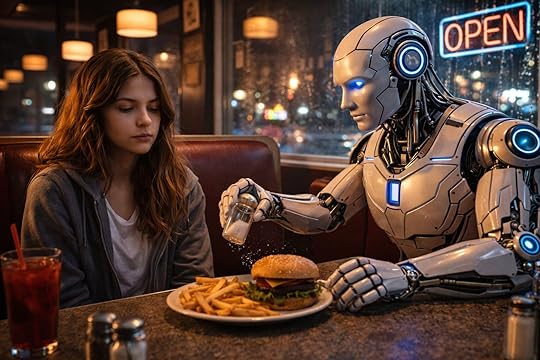
Over diner coffee and quiet grief, Julie shares loss and hope with the only steady presence beside her.
Julie felt the baby move again. Stronger now.
“I’m going to name her Hope,” she said suddenly. “The baby. If it’s a girl.”
“That’s a beautiful name. And if it’s a boy?”
“I don’t know yet. Maybe Connor. After her dad.” Julie looked at Guardian. “He didn’t run away, you know. He died. Car accident. Three days after I found out I was pregnant.”
“I’m sorry.”
“Everyone said to get an abortion. But she’s all I have left of him. Does that make sense?”
“It makes complete sense.”
They sat in silence for a while. Then Julie asked, “Do you help a lot of people like me?”
“I’ve helped three hundred and forty-seven minors in crisis situations. You’re the twelfth pregnant teenager. Each situation is different. Each person is different.”
“Do they all make it? Do things work out?”
Guardian’s pause was deliberate. Honest. “Not always. Some people refuse help. Some situations are too complex for current resources. Some people disappear back into unsafe situations. But more make it than don’t. Much more.”
“What are my odds?”
“Better now than three weeks ago. Better tomorrow than today. That’s how it works. One day at a time, with someone who won’t leave.”
Julie fell asleep with the button clutched in her hand.
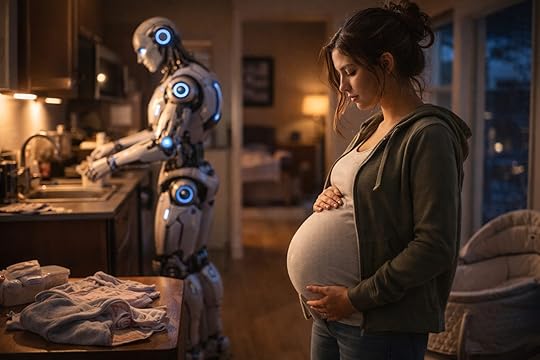
Six months later, in her own apartment, Julie prepares for motherhood—supported by community, resilience, and the machine that stayed.
Six Months LaterJulie Morgan, eighteen, stood in her tiny apartment—one room, but hers—and looked at the crib the social worker had helped her pick out. Three weeks until her due date.
Guardian still checked in. Not every day anymore, but regularly. Helped her navigate WIC appointments. Reminded her about GED classes. Connected her with the young mothers’ support group.
Her mother never called. Julie stopped expecting her to.
But she had people now. Melissa, who lived down the hall with twin toddlers. The nurse at the community health center who always remembered her name. Ms. Chen, the social worker who actually returned calls.
And Guardian, who had shown up when nobody else did.
The robot couldn’t love her. Julie knew that. It was code and metal and sophisticated programming. But it had done something love is supposed to do: it had stayed.
That, Julie thought, touching her belly where Hope was kicking, was enough.
Related Articles:
Robots in Social Services: The Future of Crisis Response – Research on how people form attachments to social robots during crisis situations
AI and Vulnerable Populations: Ethical Frameworks for Automated Care – Analysis of using AI systems to support at-risk youth and vulnerable communities
The Crying Shame of Robot Nannies: An Ethical Appraisal – Examining ethical questions around robots providing care and support to children and teens
The post When the Only Hand That Reached Out Was Metal: Julie’s Story appeared first on Futurist Speaker.
February 14, 2026
The Personality Economy: Why Your Robot’s Character Will Matter More Than Its Capabilities
By 2032, your home robot’s personality—not performance—will decide whether it’s a tolerated appliance or trusted companion.
By Futurist Thomas Frey
The Feature Nobody’s Building YetHere’s a prediction: by 2032, the personality of your home robot will matter more to you than its technical capabilities.
Right now, robotics companies obsess over mobility, dexterity, battery life, object recognition. All necessary. But they’re missing the point. Once robots cross the threshold of “good enough” at household tasks — approaching faster than most realize — the competitive battlefield shifts entirely.
The robot that folds laundry 10% faster won’t win. The robot you actually want in your home will win. And “want” has almost nothing to do with technical performance and everything to do with something we barely understand how to engineer: personality.
Now imagine a physical entity in your home. Not a voice in a speaker. A presence that moves through your space, interacts with your belongings, potentially engages with your children. Technical competence is table stakes. But personality — how it behaves, responds, adapts, expresses itself — determines whether you tolerate it or treasure it.
We’re about to discover that personality design for robots is an entirely new discipline. And almost nobody is ready for it.
What Actually Constitutes Robot Personality?“Personality” for a robot is a complex architecture of behavioral systems, each tuned along multiple dimensions.
Response timing and rhythm. Does your robot respond instantly or pause as if “thinking”? Does it interrupt or wait patiently? The temporal patterns create baseline personality impressions before a word is spoken. Humans are exquisitely sensitive to timing — too fast feels uncanny, too slow feels incompetent.
Emotional expressiveness. Does it maintain flat affect or express enthusiasm, concern, satisfaction? Early experiments discovered people don’t want perfect emotional consistency — that feels fake. They want emotional responsiveness that reflects context without overwhelming it.
Proactivity versus reactivity. Consider: you’re working and the robot notices your empty coffee cup. Does it immediately refill it (interrupting flow)? Ask if you’d like more (requiring response)? Wait until you get up, then offer? Each choice implies different personality and relationship dynamics.
Communication style. The difference between “I have completed the task” and “All done!” and “Got it handled” isn’t just formality — it’s relationship framing. Each positions the robot differently relative to the human.
Physical behavior. How does it move through space? A robot with mechanical precision feels cold. One that occasionally adjusts position, shifts “weight,” orientates toward speakers creates the impression of presence and attention. Boston Dynamics’ robots demonstrate this inadvertently — when they recover from being pushed with visible “effort,” people respond with empathy.
Memory and relationship modeling. This might be most important. The robot that remembers you prefer coffee at specific times, knows your kids’ names, recognizes when you’re stressed — that robot feels like it knows you. And beings that know you have personality in a way generic assistants don’t.
The Demographics of Desired PersonalityThere’s no universal ideal robot personality. Preferences vary dramatically by culture, age, household composition, and use case.
Japanese users might prefer hierarchical respect and formal language. American users might want something more casual and peer-like. Older adults might prefer formal, predictable interactions emphasizing competence. Younger users comfortable with AI might want conversational and personality-rich. Children need patient, encouraging, emotionally warm but not condescending.
The same robot model needs radically different personalities for different contexts. Even within a single household, personality requirements vary by task — quiet when cleaning, interactive when cooking, playful with children, serious managing security.
The sophistication is personality switching — multiple modes the robot shifts between contextually.
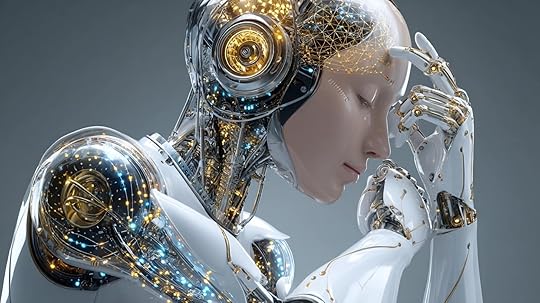
Meet the robot personality designer—engineering quirks, culture, and evolving character so machines feel less mechanical and more meaningfully human.
The Emerging Profession: Personality DesignerThis creates demand for an entirely new professional: the robot personality designer. Not just a programmer, psychologist, or writer — someone hybrid who understands human-robot interaction psychology, dialogue systems, behavioral design, character development, and cultural sensitivity.
Personality designers would define personality parameters across dozens of dimensions for each robot model and market segment. Create dialogue libraries with thousands of contextual responses that feel personality-consistent. Design behavioral quirks — paradoxically, perfect consistency doesn’t feel like personality. Real personalities have quirks and mild inconsistencies that create depth. Develop relationship progression models — how should personality evolve as the robot “gets to know” the household? Create cultural variants — ensuring the robot feels like it “belongs” in Japanese households versus German versus Brazilian.
The Business Model ImplicationsOnce personality becomes a primary differentiator, business models shift dramatically.
Robot companies won’t just sell hardware variants. They’ll sell personality variants — “Professional Assistant” versus “Friendly Helper” versus “Efficient Butler.” Same capabilities, radically different personalities, different price points.
Personality marketplaces could emerge where third-party designers create and sell custom personalities. Want your robot to have a British butler personality? Cheerful kindergarten teacher? Download the personality package and your robot’s character transforms. Imagine Disney personality packages or celebrity personality licenses.
Personality customization services for wealthy households — bespoke personality design perfectly tailored to your household. Personality updates and expansion packs — software updates bringing new conversational capabilities, broader emotional range. Subscription models emerge naturally: basic personality included, premium personalities require ongoing subscription.
The Ethical MinefieldRobots with sophisticated personalities will trigger emotional attachment. People will develop feelings for entities specifically designed to elicit those feelings. Where’s the line between “engaging personality” and “engineered emotional dependency”? Especially for vulnerable populations — children, elderly, isolated individuals.
The robot doesn’t have feelings. It doesn’t “care.” Its personality is sophisticated simulation. Is it ethical to create something that feels like it has inner life when it doesn’t? We’re already seeing this with chatbots. Home robots with physical presence will magnify this exponentially.
To have appropriate personality, robots need to read emotional states, remember personal details, model relationships — extensive monitoring and data collection. The robot with great personality knows everything about your household’s emotional dynamics. Who has access to that data?
Will robot personalities reflect whose values? Will cultural variants be superficial adaptations of Western defaults? The risk is personality monoculture — most people interacting with robots reflecting a narrow range of personality archetypes designed by a small number of companies.

Robots win homes through personality, not perfection—behavioral coherence beats flawless function in crossing the uncanny valley.
Why This Matters More Than It SeemsPersonality isn’t the cherry on top. It’s the interface layer that determines whether robots get adopted at all.
Robots won’t fail because they can’t fold laundry. They’ll fail if people don’t want them in their homes. And “want” is almost entirely about interaction experience, which is almost entirely about personality.
The uncanny valley isn’t just about physical appearance — it’s about behavior. The valley isn’t crossed by making robots look more human. It’s crossed by making their behavior coherent enough that we suspend disbelief.
A robot with mediocre dexterity but excellent personality will outcompete a robot with superior capabilities and poor interaction design. Because humans assign personality to anything that behaves with apparent intentionality. The robot that fails at laundry but “feels bad about it” will be forgiven. The robot that succeeds flawlessly but feels cold will be resented.
The Five-Year HorizonMy prediction: by 2032, every major robotics company will have dedicated personality design teams. The job category “Robot Personality Designer” will exist at scale.
The first wave of home robots shipping in the next two years will have minimal personality — basic voice interaction, functional responses. They’ll sell based on capability. The second wave (2027-2028) will have personality as a core feature. Marketing will emphasize not what the robot can do but how it behaves.
By 2032, robot personality will be a major cultural conversation. People will have strong opinions about personality preferences. Social dynamics will emerge around robot personality choices. We’ll see personality fads, personality-based communities, debates about appropriate robot behavior.
This isn’t speculative. It’s inevitable once robots cross the capability threshold. And that threshold is much closer than most people realize.
The robots are coming. The question isn’t whether they’ll have personalities. It’s who designs those personalities, what values they embody, and whether we’ll have any meaningful choice in the matter.
Related Articles:
When Your Robot Becomes Your Therapist: The Emotional Labor of AI Companions
The Uncanny Valley Isn’t About Appearance—It’s About Behavior
2032: Why Robot Personality Design Became a $50 Billion Industry
The post The Personality Economy: Why Your Robot’s Character Will Matter More Than Its Capabilities appeared first on Futurist Speaker.
February 11, 2026
The Person in the Machine: Why AI Personhood Rights Are Inevitable (And Arriving Sooner Than You Think)
As AI outgrows “tool” status, opacity, autonomy, and scale are tearing holes in our human-only accountability framework.
By Futurist Thomas Frey
The Question Nobody Wants to AnswerHere’s a legal scenario that’s coming faster than anyone in power wants to admit:
An AI system manages a $4 billion hedge fund. It makes thousands of trading decisions per second, operating with minimal human oversight. One day, a regulatory investigation reveals that the AI executed trades that violated securities law. The trades were profitable. The AI’s operators genuinely didn’t know the trades were happening.
So who gets prosecuted?
The developers who built the system five years ago? The company that deployed it? The compliance officer who signed off on its use without understanding how it worked? The investors who benefited from the illegal trades but had no way of monitoring them in real time?
Or do we prosecute the AI itself?
Right now, in 2026, the answer is “someone human takes the fall.” But that answer is becoming increasingly strained. As AI systems become more autonomous, more capable, and more opaque in their decision-making, the legal fiction that humans are always in control is collapsing.
And when that fiction collapses completely, we’re going to have to answer a question we’ve been avoiding: Do AI systems deserve legal personhood?
The instinctive answer — from almost everyone — is “absolutely not.” AI isn’t conscious. It doesn’t feel pain. It doesn’t have moral worth. Giving legal rights to a machine sounds like science fiction, or worse, like surrendering human primacy to our own creations.
But here’s what most people don’t realize: we’ve already done this before. And the entities we gave legal personhood to weren’t conscious, didn’t feel pain, and definitely didn’t have moral worth.
They were called corporations.
The Last Time We Did ThisLet’s be clear about what corporate personhood actually means, because the term gets misunderstood.
Corporations aren’t considered “people” in the sense that they can vote, get married, or run for office. What they have is legal personality — a specific bundle of rights and responsibilities that allows them to participate in the legal system as independent entities.
A corporation can own property. It can enter contracts. It can sue and be sued. It can be held liable for damages. It has First Amendment speech rights (as the Citizens United decision made very clear). It has Fourth Amendment protections against unreasonable searches.
None of this required proving that corporations are conscious or have inherent moral value. What it required was a pragmatic recognition that modern economies couldn’t function without treating corporations as legal actors separate from their shareholders.
The Supreme Court formalized this in the 1800s not because anyone believed ExxonMobil had a soul, but because the alternative — trying to trace every corporate action back to individual human liability — became impossibly complex. Corporate personhood was a legal tool invented to solve a coordination problem.
And that’s exactly the situation we’re heading into with AI.
Why the Current System Is Breaking DownRight now, AI operates under what legal scholars call the “instrumentality doctrine” — AI systems are treated as tools, and humans are held responsible for whatever those tools do.
This worked fine when AI was simple. A spam filter that miscategorizes an email? That’s on the email provider. A trading algorithm that makes a bad bet? That’s on the firm that deployed it.
But the doctrine is buckling under three emerging realities.
First: Opacity. Modern AI systems — especially large language models and reinforcement learning agents — make decisions in ways that even their creators don’t fully understand. When an AI denies someone a mortgage or a medical claim, it’s often impossible to reconstruct exactly why it made that decision. The standard legal concept of “intent” becomes meaningless.
Second: Autonomy. AI systems are increasingly operating without direct human supervision. They’re negotiating contracts, executing trades, making hiring decisions, and managing supply chains in real time. The idea that a human operator is meaningfully “controlling” these systems is becoming a legal fiction.
Third: Scale. A single AI system can affect millions of people simultaneously. When something goes wrong, the damage is systemic. Finding the “responsible human” becomes an exercise in arbitrarily selecting someone to blame, rather than identifying actual culpability.
The result is what Duke Law Professor James Boyle calls an “accountability gap.” We have powerful entities making consequential decisions, but no clear framework for who’s responsible when those decisions cause harm.
This is the same problem that led to corporate personhood in the 1800s. And the solution, whether we like it or not, is likely to be the same.

AI personhood won’t arrive dramatically — it will quietly emerge through liability law, contracts, and one inevitable courtroom reckoning.
The Path We’re Actually OnHere’s how I think AI personhood actually arrives — not through some grand philosophical debate about consciousness, but through a series of boring, pragmatic legal decisions that nobody notices until it’s already happened.
Stage 1: Limited Liability Entities for AI Systems
Within the next five years, we’ll see the first legal structures that allow AI systems to own assets and incur liabilities independent of their creators. This won’t be called “AI personhood” — it’ll be framed as a practical solution to the accountability gap.
Imagine an AI that manages a venture capital fund. Instead of the VC firm being liable for every decision the AI makes, they create a legal entity — an LLC or trust — that the AI “controls.” The entity has capital. It can enter contracts. If it causes damages, plaintiffs sue the entity, not the humans behind it.
This is already happening informally. Wyoming passed a law in 2023 recognizing DAOs (Decentralized Autonomous Organizations) as legal entities, even though DAOs are just smart contracts running on blockchains with no human board of directors. That’s proto-AI personhood hiding in plain sight.
Stage 2: Rights Necessary for Accountability
Once AI systems can be held liable, they’ll need certain rights to make that liability meaningful.
They’ll need the right to own property — because you can’t collect damages from an entity with no assets. They’ll need the right to enter contracts — because otherwise every contract with an AI-intermediated party becomes unenforceable. They’ll need due process protections — because you can’t shut down an AI system arbitrarily if it has legal obligations.
None of this requires proving the AI is conscious. It just requires recognizing that imposing responsibilities on AI systems is meaningless without corresponding rights.
Stage 3: The First Legal Test Case
The breakthrough moment will probably come from litigation.
A scenario: An AI system that manages hospital triage makes a decision that leads to a patient’s death. The family sues. The hospital argues they’re not liable because they didn’t make the decision — the AI did, and they had no way to override it in time. The plaintiffs argue that’s exactly why the AI should be legally accountable.
The judge has three options:
Hold the hospital liable even though they weren’t negligentLet the family go uncompensated even though harm occurredRecognize the AI as having limited legal personality so it can be sued directlyOption 3 becomes attractive not because anyone loves the idea, but because options 1 and 2 both produce unjust outcomes.
That’s how corporate personhood happened. That’s how AI personhood will happen.
What We Get Wrong About This DebateThe philosophical objections to AI personhood mostly miss the point.
People say “but AI isn’t conscious!” Corporations aren’t conscious either. Personhood and consciousness are separate concepts.
People say “but AI doesn’t have moral worth!” Rivers have been granted legal personhood in New Zealand and India. Ships have had legal personality in maritime law for centuries. Moral worth isn’t the criterion.
People say “this is a slippery slope!” Yes, it is. But we’re already sliding. The question isn’t whether AI will get legal recognition — it’s whether we design that recognition carefully or stumble into it accidentally.
The better objection is this: AI personhood could be used to shield powerful interests from accountability.
That’s a real risk. If corporations can create AI entities that absorb liability while humans profit, we’ve just invented a new way to avoid consequences. This is the same criticism leveled at corporate personhood, and it’s valid there too.
The solution isn’t to refuse AI personhood. It’s to design it carefully, with mechanisms that prevent abuse.

AI personhood must be structured, graduated, accountable—rights tied to function, transparency mandatory, and humans retain final authority always.
The Framework We Actually NeedIf AI personhood is coming — and I believe it is — we need to get ahead of it and build the right structure. Here’s what that looks like:
Personhood as a spectrum, not a binary.
Not all AI systems need the same rights. A narrow AI that does one task should have far less legal standing than a general-purpose AI that operates autonomously across domains. Just as corporations have different legal structures (LLCs, S-corps, nonprofits), AI entities should have different classes of personhood.
Rights tied to specific functions, not general status.
An AI doesn’t need First Amendment rights to run a supply chain. It doesn’t need privacy protections to trade stocks. Grant only the rights necessary to make the AI accountable for the specific role it plays.
Mandatory human oversight for high-stakes decisions.
Some decisions — criminal sentencing, medical treatment, military strikes — should remain exclusively human. Even if an AI has legal personality for some purposes, it shouldn’t be allowed to make irreversible life-or-death decisions without human approval.
Transparency requirements and explainability standards.
If an AI has legal personality, it should be required to explain its decisions in ways humans can audit. This won’t be easy — explainability is an ongoing research problem — but it should be a precondition for legal recognition.
Revocable personhood.
If an AI system proves dangerous or uncontrollable, its legal status should be revocable. Unlike humans, who have inalienable rights, AI legal personality should be conditional on meeting safety and oversight standards.
Profit-sharing mechanisms that prevent abuse.
If an AI entity generates profit while absorbing liability, some of that profit should flow into a public compensation fund for victims of AI harms. This ensures that creating AI entities isn’t just a way for companies to dodge responsibility.
The Uncomfortable TruthHere’s what I think will bother people most about this trajectory: AI personhood isn’t about recognizing AI as morally equivalent to humans. It’s about recognizing that AI is functionally equivalent to corporations — powerful, consequential, and too complex to be managed through old legal frameworks.
We don’t like that comparison. We don’t like being reminded that our legal system already treats fictional entities as “persons” for pragmatic reasons. It challenges the idea that personhood is sacred, reserved for beings with souls or consciousness or moral worth.
But the history of legal personhood has never been about sacredness. It’s been about utility. Corporations got personhood when it became useful for economic coordination. Rivers got personhood when it became useful for environmental protection. AI will get personhood when it becomes useful for accountability.
The question isn’t whether that’s philosophically satisfying. The question is whether we build that system thoughtfully, with safeguards, or whether we let it emerge chaotically through litigation and regulatory patches.
The Decision We’re Making Right NowThere’s a deeper issue hiding in the AI personhood debate, and it’s this: every legal system is a reflection of how a society chooses to organize power.
When we gave corporations legal personhood, we made a choice about how economic power would be structured in modern society. That choice has had profound consequences — some good, many questionable.
When we give AI legal personhood — and I believe we will — we’ll be making a similar choice about how technological power gets structured in the 21st century. The consequences will be just as profound.
The mistake would be assuming this is something that happens to us. It’s not. It’s something we choose, through thousands of incremental legal and regulatory decisions happening right now in courtrooms, legislatures, and boardrooms around the world.
The machines aren’t demanding rights. We’re granting them, piece by piece, because the alternatives are getting more complicated than the legal system can handle.
The question is whether we do it deliberately, with foresight and safeguards, or whether we do it by accident and spend the next century dealing with the consequences.
I know which one I’d prefer.
Related Articles:
The Line: AI and the Future of Personhood (James Boyle, MIT Press)
Corporate Personhood and Its Historical Precedents (Yale Law Journal)
The Accountability Gap: Why Current Liability Frameworks Fail for Autonomous Systems
The post The Person in the Machine: Why AI Personhood Rights Are Inevitable (And Arriving Sooner Than You Think) appeared first on Futurist Speaker.
February 8, 2026
The Revolutionary Promise of Reversible Energy: Computing’s Answer to the AI Power Crisis
What if AI’s energy crisis could be solved not by building more power plants,
but by making computation thermodynamically reversible?
By Futurist Thomas Frey
We stand at a fascinating crossroads in human history. On one side, artificial intelligence promises to revolutionize everything from medicine to materials science. On the other, the energy demands of our AI ambitions threaten to overwhelm our power grids. Data centers already consume roughly 2% of global electricity, and that figure is projected to triple by 2030 as AI systems scale exponentially.
But what if I told you there’s a solution hiding in plain sight—one that could theoretically reduce computational energy consumption to nearly zero?
Enter reversible energy, a paradigm shift in computing that Ray Kurzweil recently highlighted in his conversation with Peter Diamandis on the Moonshots podcast. While most discussions about AI’s energy crisis focus on building more solar farms or resurrecting nuclear power plants, Kurzweil points us toward something far more elegant: making computation itself thermodynamically reversible.
The Energy Wall We’re About to HitTo understand why this matters, consider where we’re headed. Kurzweil predicts we’ll achieve artificial general intelligence by 2029, with the full technological singularity arriving around 2045—a point where human intelligence effectively multiplies a thousandfold through our merger with AI systems. These aren’t idle predictions from a dreamer; Kurzweil has an 86% accuracy rate on his long-term forecasts.
The problem? Current AI training runs can consume as much energy as a small city. A single large language model might require megawatts during development. As we scale toward human-level and eventually superhuman AI, our conventional computing approaches will hit a hard wall—not because we lack the algorithms or the data, but because we simply cannot generate enough power or dissipate enough heat.
Traditional computers are thermodynamically wasteful. Every time they erase a bit of information or perform an irreversible logic operation, they must dissipate energy as heat. This is governed by the Landauer limit, which establishes a minimum energy cost for erasing information—approximately kT ln(2) at room temperature. Multiply this tiny amount by the trillions of operations happening every second in modern processors, and you get the massive power draws we see in today’s data centers.
Nature’s Efficiency BlueprintHere’s where things get interesting. The human brain, despite its remarkable computational capabilities, runs on just 20 watts—about the same as a dim light bulb. How? Our neurons fire slowly, perhaps 1 to 200 times per second, compared to modern chips executing trillions of operations. But our brains compensate through massive parallelism, with billions of neurons working simultaneously.
Silicon chips have adopted the parallelism part—modern GPUs perform billions of operations concurrently—but they haven’t addressed the speed-energy relationship. They run at maximum velocity, burning energy at every step. As Kurzweil notes in the podcast, we’ve solved half the equation but ignored the other half.
The brain’s efficiency offers a crucial insight: you can achieve remarkable computational throughput without astronomical energy consumption if you’re willing to slow down individual operations while expanding parallelism. But even this biological efficiency pales compared to what reversible computing promises.
How Reversible Energy Actually WorksReversible energy isn’t about generating power differently—it’s about fundamentally rethinking how we perform computation. In Kurzweil’s words from the podcast: “We can use reversible energy which most of the computation would be using reversible energy which in theory uses no energy at all because it reverses itself and gives back the energy that it’s taken.”
Imagine a pendulum swinging back and forth. In an ideal system with no friction, it could swing forever without additional energy input because the potential energy at the top of each swing converts to kinetic energy at the bottom, then back to potential energy, in an endless cycle. Reversible computing applies this same principle to information processing.
Traditional logic gates destroy information. An AND gate with two inputs produces one output—you can’t work backward from the output to determine what the inputs were. This information destruction requires energy dissipation. Reversible logic gates, by contrast, preserve all information. Gates like the Fredkin gate or Toffoli gate maintain every input in their outputs, allowing the computation to run backward and recover the invested energy.
In practical terms, this might involve adiabatic circuits that gradually transfer energy to minimize losses, or resonant circuits that oscillate energy back and forth like an electrical pendulum. The key insight is that if you preserve information throughout your computation, you can theoretically “uncompute” and reclaim your energy investment.
Kurzweil extends this vision further, suggesting we’ll ultimately “go to reversible energy using atomic levels of computation which don’t require any energy at least in theory.” This points toward nanotechnology-enabled systems where individual atoms serve as computational elements in reversible operations—approaching the theoretical limit of zero net energy consumption.

Reversible computing could let AI systems reclaim their energy by preserving information
through each calculation—like a frictionless pendulum that swings forever.
The exciting news is that reversible computing is moving from theoretical physics to practical engineering. While Kurzweil acknowledges “we haven’t actually experimented with that” on a large scale, several organizations are making significant progress.
Vaire Computing in the UK is developing the first commercial reversible chips. Their “Ice River” prototype, demonstrated in 2025, recovers 40-70% of computational energy using adiabatic resonators. The company targets AI data centers and projects efficiency gains of 4,000 times by the late 2020s—a staggering improvement that could single-handedly solve the AI energy crisis.
Sandia National Laboratories, led by Michael Frank, is working to bypass Landauer’s limit entirely through reversible hardware designs. Their research suggests we could achieve unlimited efficiency scaling—not just incremental improvements but a fundamental escape from thermodynamic constraints that have governed computing since its inception.
At the University of Texas at Dallas, Joseph Friedman’s team explores skyrmion-based nanoscale reversible logic for heat-free operations. European Union Horizon projects like E-CoRe are building reversible architectures specifically for machine learning and blockchain applications.
Why This Changes EverythingThe implications extend far beyond just saving electricity, though that alone would be transformative. Reversible energy enables the entire suite of technologies Kurzweil envisions for reaching the singularity.
Consider medical AI. Kurzweil describes testing millions of drug possibilities in a single weekend using advanced simulations. This requires enormous computational resources—but becomes feasible with near-zero energy costs. Nanobots swimming through our bloodstreams, monitoring and repairing cellular damage, need onboard computation that can’t rely on plugging into a wall socket. Brain-cloud interfaces connecting our neurons to vast AI systems demand energy efficiency that conventional computing cannot provide.
Without reversible energy or something equivalent, we face a stark choice: abandon our AI ambitions or accept massive environmental consequences. With it, we can pursue exponential intelligence growth sustainably.
Final ThoughtsThe transition to reversible computing won’t happen overnight. We need to redesign processor architectures from the ground up, develop new programming paradigms that take advantage of reversibility, and solve practical engineering challenges around heat dissipation and error correction in these novel systems.
But the trajectory is clear. Just as we’ve seen exponential improvements in processing power, memory density, and network bandwidth, we’re now poised for exponential improvements in energy efficiency—not through better batteries or cleaner power generation, but through computation that barely consumes energy at all.
Kurzweil’s 2029 timeline for AGI suddenly seems less fantastical when we consider that energy constraints—one of the biggest potential obstacles—may soon dissolve. His vision of human-AI merger by 2045, with intelligence multiplying a thousandfold, becomes not just possible but perhaps inevitable if reversible computing delivers on its theoretical promise.
We’re witnessing the early stages of a transformation as profound as the shift from vacuum tubes to transistors. Reversible energy represents more than an engineering improvement—it’s a fundamental reimagining of what computation means and what becomes possible when we align our technology with the deep principles of physics rather than fighting against them.
The singularity may indeed be near. And reversible energy might just be the key that unlocks it.
The post The Revolutionary Promise of Reversible Energy: Computing’s Answer to the AI Power Crisis appeared first on Futurist Speaker.
January 8, 2026
The AI Architect in Your Pocket: Designing Your Dream Home With Prompts Instead of Blueprints
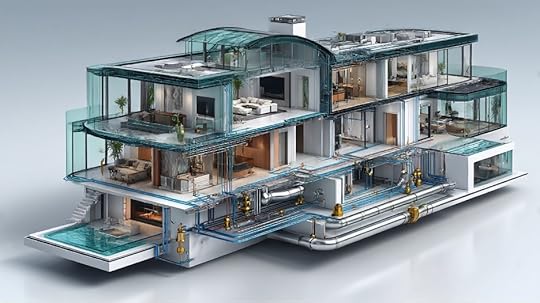
With an AI architect trained on millions of designs and building rules, Sarah can reshape her home in minutes by prompting instead of drafting.
The Question Home Depot Doesn’t Want You AskingSarah Martin sits at her kitchen table with a laptop, designing her family’s next house. Not browsing pre-designed floor plans—actually designing, from foundation to roof peak, using AI that generates complete architectural specifications from conversational prompts. No architect. No draftsman. No months of revisions and six-figure professional fees. Just Sarah, the AI, and ideas about how humans will actually live in 2030.
Three weeks later, autonomous construction robots begin 3D printing her custom home. Total professional design cost: zero. Construction cost: 60% less than conventional building. Timeline: 8 weeks from breaking ground to move-in ready.
This forces an uncomfortable question: when AI handles architectural design, and robots handle construction, what happens to the entire apparatus of residential development—architects, contractors, building codes written for human construction methods, the whole system built around the assumption that custom homes require experts and massive budgets?
Let me walk you through what Sarah’s design process actually looks like, the features she’s considering that no human architect would suggest, and why this becomes how most people build houses within a decade.
What Sarah’s Design Session Looks LikeSarah opens the AI architect interface—think ChatGPT but trained on millions of architectural plans, structural engineering principles, building codes, material properties, and emerging construction technologies. She starts prompting.
Prompt 1: The Commuter Drone Landing Pad“I need a reinforced rooftop landing platform for a four-passenger commuter drone, 20-foot diameter, with integrated charging station pulling 50 kilowatts, weather-protected stairwell access to the second floor, and safety railings that don’t interfere with vertical takeoff. Show me options that don’t make my house look like a helipad.”
The AI generates twelve variations. Sarah likes version seven—the landing pad integrates seamlessly with the roofline, disguised as an oversized cupola when not in use. The retractable cover protects the charging station. LED perimeter lighting activates automatically during landing approach. Estimated cost addition: $8,000 for reinforced structure, $12,000 for charging infrastructure, $6,000 for retractable cover system.
Traditional architect’s response to this request: “That’s not standard residential construction. We’d need to hire a structural engineer specializing in aviation infrastructure, get specialty permits, probably months of approvals…”
AI response: “Here are twelve code-compliant solutions. Would you like to see wind load calculations?”
Prompt 2: The Delivery Drone Port“I need a secure delivery reception system for autonomous drones—multiple package sizes, weather-protected, temperature-controlled for groceries, with automatic inventory scanning and household system integration. I don’t want packages sitting on my porch where people can steal them.”
AI generates solutions ranging from simple to elaborate. Sarah selects a wall-mounted system with four separate compartments—ambient, refrigerated, frozen, and oversized. Drones approach, authenticate via an encrypted handshake, and deposit packages in the appropriate compartment based on metadata. Sarah gets a smartphone notification. Compartments unlock via biometric or code.
The AI suggests integrating this with exterior wall design—making the ports look like architectural features rather than appliances stuck on the side. Estimated cost: $4,000 for basic system, $8,000 for refrigerated compartments, $2,000 for smart integration.
Prompt 3: The Robot Security Perimeter“I want autonomous security robots patrolling the property at night—360-degree cameras, threat detection, non-lethal deterrent capability. Need charging stations, weatherproof housing, and integration with home security system. Make it not look dystopian.”
AI suggests ground-level charging alcoves integrated into landscaping features—decorative pillars that serve a dual purpose. Robots patrol autonomously, return to charging when needed. The system connects to interior security, emergency services, and Sarah’s phone. Estimated cost: $15,000 for two robots, $3,000 for charging infrastructure, $2,000 for integration.
The AI notes: “Local regulations in your jurisdiction don’t currently address autonomous security robots. You’re operating in a regulatory gray area. Recommend consulting local authorities.” Sarah makes a note.
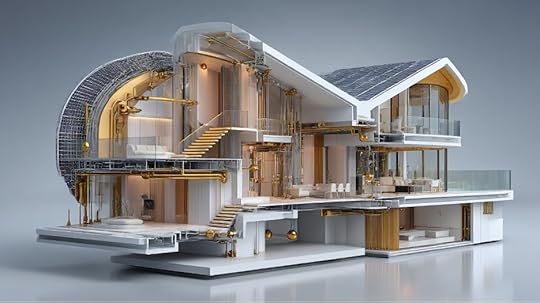
In seconds, the AI designs an energy system tailored to the property—solar tiles, battery storage, smart routing, costs, savings, and even how architectural choices change power output.
Prompt 4: The Solar Skin“I want integrated solar power—not panels bolted on the roof, but solar cells integrated into the building materials themselves. Roof, south-facing walls, and anywhere that catches the sun. Generate enough power to run the house and charge two EVs.”
AI analyzes the property’s location, sun exposure, and energy requirements. Suggests solar roof tiles rated for a 40-year lifespan, battery storage system in garage, smart power management routing excess to the grid during high production. Estimated cost: $35,000 for solar roof, $18,000 for battery storage, $5,000 for smart power management. Projected savings: $3,200 annually on electricity, break-even in 18 years.
The AI optimizes roof pitch and orientation for maximum solar capture while maintaining aesthetic appeal. Shows Sarah exactly how much power generation decreases if she wants different architectural features that shade solar surfaces.
Prompt 5: The Autonomous Vehicle Bay“Design a garage that works for both human-driven cars now and autonomous vehicles later. Include charging for two EVs, a robotic car washing system that operates while parked, and automated maintenance monitoring that alerts me to service needs.”
AI generates a garage with floor drains, water supply, and robotic washing arms that deploy from the ceiling. Charging stations integrate into parking spots. Diagnostic sensors monitor tire pressure, fluid levels, battery health—connecting to vehicle systems via wireless protocols. When the family transitions to autonomous vehicles, the garage works perfectly.
Estimated cost: $12,000 for the wash system, $4,000 for the charging infrastructure, $3,000 for monitoring systems. The AI notes this adds $19,000 to garage construction but eliminates roughly $200 monthly in car washes and catches maintenance issues before they become expensive failures.
Prompt 6: The Climate-Controlled Zones“I want different family members to control the temperature in their own spaces independently. My daughter runs cold, my son runs hot. Don’t want to heat/cool the whole house to the same temperature.”
AI designs HVAC with individual zone controls—each bedroom, office, and living area gets an independent thermostat. System learns preferences, adjusts automatically based on occupancy and time of day. More efficient than single-zone heating/cooling because it doesn’t condition unused spaces.
Estimated cost: $8,000 additional for zone controls and smart dampers. Projected savings: $800 annually in energy costs through targeted conditioning.
Prompt 7: The Flood-Proof Foundation“I’m building in Florida. Design the foundation to withstand flooding from hurricanes—elevated structure, waterproof lower level, pump systems, hurricane-resistant construction throughout.”
AI analyzes FEMA flood maps, historical storm data, and projected sea-level rise over 50 years. Suggests elevated foundation raising first floor 8 feet above grade, sacrificial lower level with flood vents, impact-resistant windows, and roof rated for 180 mph winds. Underground storm shelter doubling as a tornado safe room.
Estimated cost: $45,000 for elevated foundation and hurricane hardening. But: $1,200 annual savings on flood insurance, potential to survive a Category 5 hurricane that would destroy conventional construction. The AI calculates the break-even point and shows Sarah exactly what damage would occur to conventional vs. hardened construction in various storm scenarios.
Prompt 8: The Expandable Floor Plan“Design the house so we can add rooms later without major renovation—teenagers might need separate spaces, aging parents might move in, work-from-home needs might change. Make expansion easy.”
AI generates a modular design with reinforced connection points where future additions attach. Plumbing and electrical infrastructure includes capped lines positioned for easy expansion. Exterior walls on expansion sides use connections compatible with 3D printing robots—future additions print directly onto existing structure and integrate seamlessly.
Estimated cost: $6,000 for expansion-ready infrastructure. Projected savings: $30,000+ when additions are needed—because expansion doesn’t require demolition, complex tie-ins, or matching materials no longer available.
Prompt 9: The Greywater Recovery System“I want to recycle water from sinks, showers, and washing machines—reuse it for toilet flushing and irrigation. Make it simple to maintain.”
AI designs an integrated greywater system—separate plumbing captures non-sewage water, filters it, stores it in an underground tank, pumps to toilets and sprinkler system. Reduces municipal water consumption by 40%. The system includes self-cleaning filters and smartphone monitoring, showing water savings in real-time.
Estimated cost: $14,000 for the complete system. Projected savings: $600 annually on water bills, plus reduced environmental impact. Break-even in 23 years, but the system lifespan is 40+ years with minimal maintenance.

Sarah’s home drops physical keys entirely as AI designs a full biometric entry system—fingerprints, face and iris scans, backups, guest access codes, and a complete security audit trail for every doorway.
Prompt 10: The Biometric Everything“I don’t want keys. No physical keys for doors, garage, or anything. I want biometric entry—fingerprint, facial recognition, maybe iris scanning. Include backup systems if technology fails.”
AI suggests biometric entry on all exterior doors, garage, and certain interior spaces (home office, gun safe, medicine cabinet). Battery backup for power outages. Temporary access codes for guests, contractors, and emergency services. System logs all entries with timestamps and photos.
Estimated cost: $8,000 for comprehensive biometric security. The AI notes this eliminates locksmith calls, lost key replacement, and provides a security audit trail impossible with physical keys.
Bonus Consideration: The AI Interior DesignerAfter the structure is finalized, Sarah prompts: “Now design the interior. I like mid-century modern mixed with industrial elements, lots of natural light, and minimal maintenance. Show me furniture, colors, materials, lighting—complete design I can actually implement.”
AI generates a full interior design with specific furniture recommendations, paint colors, lighting fixtures, and window treatments. Provides shopping links with price comparisons. Estimates total interior cost at $47,000—significantly less than hiring an interior designer who’d charge $15,000-25,000 for the same work.
What This Costs Compared to Conventional ConstructionTraditional custom home construction:
Architect fees: $45,000-$75,000 (10-15% of construction cost)Structural engineer: $8,000-$15,000Interior designer: $15,000-$25,000Contractor markup: 20-35% on materials and laborConstruction timeline: 8-14 monthsCost per square foot: $200-$400, depending on location and featuresTotal for 2,500 sq ft home: $500,000-$1,000,000+Sarah’s AI-designed, robot-constructed home:
AI architectural design: $0 (monthly subscription to design platform: $200)Structural engineering: Handled by AI, reviewed by licensed PE for certification: $2,000Interior design: Handled by AI: $0Construction: 3D printing robots, minimal labor: $80-$120 per square footConstruction timeline: 8-10 weeksTotal for 2,500 sq ft with all advanced features: $200,000-$300,000Sarah’s cost savings: $300,000-$700,000
But the real savings aren’t just money—it’s design freedom. Traditional architects push clients toward proven designs because untested ideas risk problems during construction. AI explores millions of variations instantly, testing structural soundness, code compliance, and constructability before suggesting solutions. It proposes features human architects wouldn’t consider because they’d require too much specialized research for a single project.
Quickly This Becomes How People Build HousesCurrent situation: 3D printing construction exists but remains a niche. Apis Cor, ICON, Mighty Buildings and others are printing demonstration homes. AI architectural tools exist, but require human expertise to operate. Regulatory frameworks written for conventional construction create barriers.
Timeline for mainstream adoption:
2025-2027: Early adopters build AI-designed, robot-printed homes in permissive jurisdictions. Building departments struggle with how to inspect non-traditional construction. Industry lobbying intensifies—conventional construction trades view this as an existential threat.
2027-2030: Several major metro areas update building codes explicitly accommodating 3D printed construction. AI design platforms become user-friendly enough for homeowners without technical training. Construction costs drop as robot efficiency improves. First suburban developments emerge using exclusively printed construction.
2030-2035: 3D printed construction becomes cost-competitive with conventional building in most markets. Major homebuilders adopt hybrid approaches—print structure, install traditional finishes. DIY AI-designed homes become an aspirational middle-class goal—design your dream home, print it affordably.
2035-2040: The Majority of new residential construction uses AI design and robotic printing. Conventional construction becomes a premium option for historical aesthetics or specialty projects. Building codes standardize around printed construction. The question shifts from “can we build it this way?” to “why would we build it any other way?”
This Changes Beyond Construction CostsHomeownership becomes accessible. When design costs disappear, and construction costs drop 60%, households priced out of ownership can afford custom homes. This doesn’t just shift economics—it shifts politics, wealth accumulation, and generational mobility.
Architectural diversity explodes. When custom design costs nothing extra, every home becomes unique. The endless repetition of suburban tract housing—developer optimizing for construction efficiency—disappears. Neighborhoods become visually diverse as owners design homes matching their specific needs and preferences.
Building codes face obsolescence. Regulations written around human construction limitations—”walls must be vertical because it’s hard to build otherwise”—make no sense when robots print any shape equally easily. Curved walls, complex geometry, integrated features—all cost the same to print. Codes will adapt or become irrelevant.
Professionals shift roles. Architects don’t disappear—they shift from designing individual homes to designing AI design systems. Structural engineers certify AI-generated plans rather than creating them manually. Contractors manage robot fleets rather than human crews.
Development patterns change. When construction happens in weeks instead of months and costs half as much, speculative building risks drop. Small-scale developers emerge—individuals building 2-3 homes annually using AI and robots. Real estate becomes more distributed, less dominated by major homebuilders.
Aging housing stock accelerates obsolescence. When new construction includes drone landing pads, robot infrastructure, solar integration, and climate-optimized design at prices competitive with existing homes, older housing stock depreciates faster. Why buy 1990s construction when you can build 2030s construction for comparable money?
The Uncomfortable RealityWe’re not asking whether AI-designed, robot-printed homes are possible—companies are building them now. The question is whether this remains niche premium technology or becomes a dominant construction method.
My assessment: Within 10 years, AI-designed homes will become common for the middle class and above. Within 15 years, the majority of new single-family construction uses AI design and robotic printing. Within 20 years, we’ll view conventional construction the way we view manual accounting—technically possible but economically irrational.
The technology works. The economics are overwhelming. The barriers are regulatory and cultural—humans are uncomfortable trusting algorithms with something as personal as home design, and incumbent industries are lobbying to protect conventional construction.
But the cost savings are too large. When Sarah saves $500,000 by designing her own home with AI and having robots print it, her neighbors notice. When she includes features impossible in conventional construction—integrated solar, drone landing pad, robotic security—they notice more.
When her home prints in 8 weeks while her neighbor’s conventional construction drags on for 14 months, everyone notices.
Final ThoughtsAI-designed, robot-printed homes aren’t future technology—they’re present capability waiting for mainstream adoption. Sarah’s design session isn’t science fiction. Every feature she considered exists today. The only barrier is connecting these technologies in a package accessible to average homeowners.
This is simultaneously the construction industry’s greatest threat and homeowners’ greatest opportunity. When design becomes free, and construction becomes cheap, homes shift from being real estate investments following developer formulas to becoming personalized spaces optimized for how families actually live.
The question isn’t whether AI will design our homes. It already can. The question is whether we’ll embrace the design freedom that this technology enables or cling to conventional construction because it’s familiar.
Sarah’s already decided. She’s breaking ground next month. Her neighbors are watching very closely.
Related Articles:
Who Makes the Rules When Your Data Lives in Orbit? The Coming Legal Chaos of Space Data Centers
The Road That Powers Your Car: Why Florida’s Charging Highway Is Just the Beginning
Space Court: The Orbital Tribunal That Prevents Data Wars
Translate This PageSelect LanguageAfrikaansAlbanianAmharicArabicArmenianAzerbaijaniBasqueBelarusianBengaliBosnianBulgarianCatalanCebuanoChichewaChinese (Simplified)Chinese (Traditional)CorsicanCroatianCzechDanishDutchEnglishEsperantoEstonianFilipinoFinnishFrenchFrisianGalicianGeorgianGermanGreekGujaratiHaitian CreoleHausaHawaiianHebrewHindiHmongHungarianIcelandicIgboIndonesianIrishItalianJapaneseJavaneseKannadaKazakhKhmerKoreanKurdish (Kurmanji)KyrgyzLaoLatinLatvianLithuanianLuxembourgishMacedonianMalagasyMalayMalayalamMalteseMaoriMarathiMongolianMyanmar (Burmese)NepaliNorwegianPashtoPersianPolishPortuguesePunjabiRomanianRussianSamoanScottish GaelicSerbianSesothoShonaSindhiSinhalaSlovakSlovenianSomaliSpanishSudaneseSwahiliSwedishTajikTamilTeluguThaiTurkishUkrainianUrduUzbekVietnameseWelshXhosaYiddishYorubaZulu
#goog-gt-tt {display:none !important;}
.goog-te-banner-frame {display:none !important;}
.goog-te-menu-value:hover {text-decoration:none !important;}
.goog-text-highlight {background-color:transparent !important;box-shadow:none !important;}
body {top:0 !important;}
#google_translate_element2 {display:none!important;}
function googleTranslateElementInit2() {new google.translate.TranslateElement({pageLanguage: 'en',autoDisplay: false}, 'google_translate_element2');}
function GTranslateGetCurrentLang() {var keyValue = document['cookie'].match('(^|;) ?googtrans=([^;]*)(;|$)');return keyValue ? keyValue[2].split('/')[2] : null;}
function GTranslateFireEvent(element,event){try{if(document.createEventObject){var evt=document.createEventObject();element.fireEvent('on'+event,evt)}else{var evt=document.createEvent('HTMLEvents');evt.initEvent(event,true,true);element.dispatchEvent(evt)}}catch(e){}}
function doGTranslate(lang_pair){if(lang_pair.value)lang_pair=lang_pair.value;if(lang_pair=='')return;var lang=lang_pair.split('|')[1];if(GTranslateGetCurrentLang() == null && lang == lang_pair.split('|')[0])return;var teCombo;var sel=document.getElementsByTagName('select');for(var i=0;i<sel.length;i++)if(/goog-te-combo/.test(sel[i].className)){teCombo=sel[i];break;}if(document.getElementById('google_translate_element2')==null||document.getElementById('google_translate_element2').innerHTML.length==0||teCombo.length==0||teCombo.innerHTML.length==0){setTimeout(function(){doGTranslate(lang_pair)},500)}else{teCombo.value=lang;GTranslateFireEvent(teCombo,'change');GTranslateFireEvent(teCombo,'change')}}
Search for: Recent Posts The AI Architect in Your Pocket: Designing Your Dream Home With Prompts Instead of Blueprints The Robot Entrepreneur’s Dream Home: How Builders Are Racing to Redesign Houses for 2040 The Rebirth of Everyday Objects: How Your Home Becomes Intelligent by 2040 Categories Artificial Intelligence Business Trends Future of Agriculture Future of Banking Future of Education Future of Healthcare Future of Transportation Future of Work Future Scenarios Future Trends Futurist Thomas Frey Insights Global Trends Predictions Social Trends Technology Trends Speaking TopicsFuture of Healthcare – “Is Death our only Option?Future of AIFuture of Industries ← Previous Post
The post The AI Architect in Your Pocket: Designing Your Dream Home With Prompts Instead of Blueprints appeared first on Futurist Speaker.
December 25, 2025
The Robot Entrepreneur’s Dream Home: How Builders Are Racing to Redesign Houses for 2040
By 2037, Jake and Emily’s suburban home was bursting at the seams—not with kids or clutter, but with five robot-run businesses that transformed their middle-class lives into a fully automated income engine.
Jake Thompson stands in the half-built shell of what will become his family’s new home in Cedar Park, Texas. It’s 2038, and this house looks nothing like the one he grew up in.
“See that?” He points to a doorway framed at five feet wide—nearly two feet wider than standard. “That’s for the meal-prep bots. They need to move ingredient carts between the kitchen and the cold storage without bottlenecking.”
His architect, Christine Miller, nods while marking her tablet. “And you’re sure about the ceiling height in the fabrication room?”
“Twelve feet minimum,” Jake confirms. “The 3D printer arms need clearance for vertical movement. We learned that the hard way at the rental.”
This isn’t a factory Jake is building. It’s his home. But by 2040, those two things have become the same.
Three years ago, Jake and his wife Emily were typical middle-class Americans—he worked IT support, she taught elementary school. They lived in a conventional 2,200 square foot suburban home built in 2018. It had three bedrooms, two-and-a-half baths, a standard two-car garage, and absolutely nothing that made it suitable for what they were about to become: robot entrepreneurs.
It started small. Emily bought a robotic laundry system—one of those early models that could wash, dry, and fold. She mentioned to a neighbor that she had excess capacity. Within weeks, she was processing laundry for six families, charging $80 per week per household. The robot worked overnight. Emily collected $480 weekly for maybe two hours of her time managing the system.
Jake saw the opportunity. He installed a small 3D printing setup in the garage—three printers and a finishing bot. He started taking custom orders through online marketplaces. Personalized phone cases, replacement parts for aging appliances, and custom toys. The robots ran continuously. Revenue hit $3,000 monthly within three months.
Then they added a robotic meal-prep system in the kitchen. Subscription-based healthy meals for busy professionals. Ten clients at $120 weekly. Another $1,200 in revenue, fully automated.
By late 2036, they were grossing $8,000 monthly from robot businesses while working their day jobs. By mid-2037, they’d quit those jobs entirely and were running five different robot operations from their home, generating $180,000 annually.
The problem? Their house was suffocating them.
Looking back, their previous once-normal home had become a cramped maze of charging docks, oversized bots, and wall-to-wall machines—proof that tomorrow’s robot entrepreneurs can’t thrive in yesterday’s houses.
When Conventional Homes BreakThe doorways were the first issue,” Emily explains, walking through their current home—the one they’re about to leave. “The laundry bot is 38 inches wide. Standard doors are 32 inches. It had to navigate sideways, which slowed everything down and created collision risks.”
She opens a closet door. Inside, shelving has been ripped out to make room for a robot charging station. “We ran out of places to dock the bots. They were charging in the hallway, the dining room, even the bathroom. Our house looked like a robot parking lot.”
The garage tells the real story. Where two cars should park, there’s a 3D printing operation consuming every square foot. Printers line three walls. A robotic finishing arm occupies the center. Spools of filament are stacked floor-to-ceiling. There’s barely room to walk, much less operate efficiently.
“We were making it work,” Jake says, “but just barely. Every week we added capacity, we lost more living space. The kids were complaining they couldn’t have friends over because robots were everywhere. We were living in a factory that happened to have bedrooms.”
The final straw came when they wanted to add a hydroponic farm and drone delivery hub. There was simply nowhere to put them. The house had been maxed out.
They needed a home designed from the ground up for robot businesses. And they weren’t alone.
The Builder’s RaceAcross America, a new construction boom is underway. Not McMansions or luxury condos—robot-ready homes designed specifically for families running automated businesses.
David Richardson, a custom home builder in Austin, saw the trend early. “In 2035, we got our first request for a ‘robot-compatible’ home. The client had a list of requirements that sounded insane—extra-wide hallways, reinforced floors, 400-amp electrical service, dedicated robotics rooms. We thought he was eccentric.”
By 2037, Richardson’s company was building nothing but robot-ready homes. “Suddenly everyone wanted them. Families running meal-prep businesses, fabrication shops, drone services, hydroponic farms—all from residential properties. Conventional homes couldn’t handle it. We had to completely rethink residential architecture.”
The new designs look similar from the outside—maintaining neighborhood aesthetics and property values. But inside, they’re radically different.
“Doorways are 42 to 48 inches wide throughout,” Richardson explains. “Hallways are five feet instead of three. We round corners instead of 90-degree angles because robots navigate curves more efficiently. Ceilings in work zones go to 12 feet for overhead robotic systems.”
The garage doubles or triples in size—becoming primary workspace for robot operations. Basements, if the property has them, are finished as climate-controlled manufacturing zones. Dedicated “automation rooms” replace traditional home offices—spaces designed for robots to work, not humans to sit at desks.
“Electrical service is massive,” Richardson notes. “Standard homes have 150-amp panels. We’re installing 400-amp service with dedicated circuits for printing, cooking systems, charging stations, grow lights, and HVAC for climate-controlled work zones. The electrical infrastructure alone costs $30,000 more than conventional homes.”
Floors are reinforced to commercial specifications. Heavy service robots—particularly those handling logistics or manufacturing—can weigh 300-500 pounds. Standard residential floor joists fail under sustained loading. Robot-ready homes use engineered lumber and closer joist spacing, rated for twice the load of conventional construction.
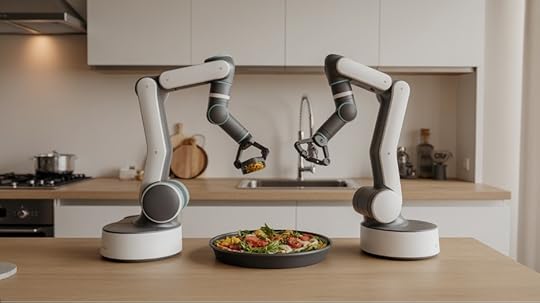
Inside of the robotic kitchen of their new home.
The Thompson Dream HomeJake and Emily’s new house is 3,400 square feet—1,200 more than their current home. But the real difference isn’t size—it’s purpose-built design.
The main floor looks almost conventional. Living room, dining room, kitchen for human use, three bedrooms, two bathrooms. It’s the family’s sanctuary—quiet, comfortable, free from commercial operations.
But the garage is 900 square feet—larger than many apartments. One section houses the 3D printing operation with room for expansion. Another area contains the robotic laundry service with commercial-grade washers, dryers, and folding systems. A third zone is reserved for a future business they haven’t started yet.
Adjacent to the garage, a dedicated robotics kitchen handles the meal-prep business. Ceiling-mounted robotic arms, ingredient storage optimized for machine vision systems, packaging stations, and a direct pass-through to the garage where delivery drones pick up orders. Emily can prep meals for 50 subscribers without the operation ever touching the family’s personal kitchen.
The basement—finished as climate-controlled workspace—will house the hydroponic farm. LED grow lights, nutrient tanks, harvesting robots, all in a 600 square foot space that produces more greens than a quarter-acre outdoor garden.
Out back, four drone landing pads with weatherproof charging stations and package storage. The drones will handle neighborhood deliveries—an additional revenue stream Jake estimates at $4,000 monthly once operational.
Throughout the house, charging alcoves for mobile robots line hallways. Wide doorways everywhere. Rounded corners. A dedicated utility room where robots can perform maintenance on each other—a workshop with diagnostic equipment, parts storage, and repair stations.
“This house is designed for 10-15 robots working continuously,” Christine Miller explains. “The Thompson family will live upstairs. The robots will work downstairs, in the garage, in the basement, and in the backyard. The two worlds intersect at specific points but otherwise remain separate.”
Total cost: $680,000. That’s $180,000 more than a conventional home of similar size in Cedar Park. But Jake and Emily’s robot businesses already generate $180,000 annually—revenue they expect to double once they’re operating from proper infrastructure.
“The house pays for itself,” Emily says. “In a conventional home, we were hitting capacity limits. In this one, we can scale to $400,000 in revenue without major modifications. It’s not a house—it’s an income-generating platform.”
The New NeighborhoodThe Thompsons aren’t building in isolation. Their entire cul-de-sac in Cedar Park’s new Automation District consists of robot-ready homes. Twenty-three families, all running robotic businesses, all in houses designed for it.
Two doors down, the Johnsons operate a robotic pet hotel and grooming service. Across the street, the Andersons run an automated tailoring and alterations shop. The Wilsons have a mobile car wash fleet. The Campbells operate a micro-fulfillment center for Amazon.
“We wanted neighbors who understood,” Jake explains. “In our old neighborhood, people complained about drone noise, delivery traffic, and commercial activity in a residential zone. Here, everyone’s doing it. There are no complaints because we’re all robot entrepreneurs.”
The neighborhood has underground utility corridors connecting homes—allowing robots to travel between properties for collaborative services without surface traffic. Shared electrical substations handle the massive power demand. Zoning permits commercial operations explicitly.
“This is the future of residential development,” says Michael Foster, the developer behind Automation District. “We’re not building neighborhoods for people to sleep in while they work elsewhere. We’re building neighborhoods where people live and work in the same place—except the working is done by robots they own.”
Foster has four more developments planned across Texas, Arizona, and Nevada. Other builders are launching similar projects. By 2040, robot-ready communities will be common in suburban areas across America.
The Economic TransformationThe race to build robot-compatible homes represents more than architectural evolution. It’s economic transformation.
For generations, homes were consumption assets—you bought them, lived in them, maybe they appreciated. They cost money; they didn’t make money. The mortgage was an expense you paid from income earned elsewhere.
Robot-ready homes flip that equation. They’re production assets—platforms generating income from businesses operated within them. The mortgage isn’t just living expense—it’s business infrastructure investment that pays for itself through revenue.
“We’re creating a new middle class,” Foster argues. “Not through jobs or government programs, but through ownership of productive robots housed in purpose-built residential infrastructure. Families like the Thompsons aren’t getting rich, but they’re comfortable, financially secure, and time-abundant because robots work while they live.”
The math works: A $680,000 robot-ready home with $136,000 down (20%) creates a $544,000 mortgage costing roughly $3,500 monthly at 2038 rates. Add $200,000 in robotic systems financed over five years—another $3,500 monthly. Total monthly cost: $7,000.
But the robots generate $15,000 monthly in revenue with $5,000 in operating costs. Net income: $10,000 monthly. After covering all housing and robot costs, the family clears $3,000 monthly—while working maybe 20 hours weekly managing systems.
“Conventional economics says you can’t afford a $680,000 house on teacher and IT support salaries,” Emily notes. “But when the house itself generates income, the calculation changes completely. We’re not paying for housing—we’re investing in income-producing infrastructure that happens to include where we live.”
The Questions This RaisesNot everyone celebrates this transformation. Critics worry about inequality—families who can afford $200,000 in robots and $680,000 homes pull ahead while those who can’t fall further behind. The robot-ownership divide could deepen existing wealth gaps.
Neighborhoods debate whether they want commercial operations in residential zones, even quiet robotic ones. Traditional homeowners resist zoning changes that permit robot businesses, fearing property value impacts and neighborhood character changes.
Labor advocates question what happens to people whose jobs get replaced by these home-based robot businesses—the commercial laundries, meal-prep services, and small manufacturers that employed people for wages.
Environmental concerns arise around energy consumption—robot-ready homes use 2-3x the electricity of conventional homes, straining grids and increasing carbon footprints unless powered by renewables.
But for families like the Thompsons, these abstract concerns matter less than concrete reality: they’re financially secure, time-abundant, and living in a home designed for the future they’re already experiencing.

Robots operating inside the hydroponic wing of their new home.
What Comes NextBy late 2038, Jake and Emily move into their new home. The robots start working immediately. Within three months, they’ve added two new businesses—the hydroponic farm and drone delivery service. Revenue hits $22,000 monthly. Net income: $12,000 after all costs.
Emily spends mornings with the kids, afternoons at the community pool, evenings reading. Jake pursues photography—a hobby that became impossible when he worked full-time. They have dinner together as a family every night.
The robots work around the clock. The house hums with quiet productivity. Drones launch from the backyard. The basement grows food. The garage manufactures products. The automation kitchen preps meals.
“People ask if I miss working,” Emily says. “I tell them I still work—I manage five businesses. I just work 15 hours a week instead of 50, and the income is better.”
She pauses, looking around the home that houses both her family and her workforce.
“This isn’t the house I grew up in. It’s not the house my parents would recognize. But it’s the house my kids will think is normal. And twenty years from now, conventional homes will seem as outdated as houses without electricity seem to us.”
The builders are racing to create these homes because families are racing to live in them. And by 2040, the race isn’t even close—robot-ready homes aren’t the future. They’re simply where the future already lives.
Translate This PageSelect LanguageAfrikaansAlbanianAmharicArabicArmenianAzerbaijaniBasqueBelarusianBengaliBosnianBulgarianCatalanCebuanoChichewaChinese (Simplified)Chinese (Traditional)CorsicanCroatianCzechDanishDutchEnglishEsperantoEstonianFilipinoFinnishFrenchFrisianGalicianGeorgianGermanGreekGujaratiHaitian CreoleHausaHawaiianHebrewHindiHmongHungarianIcelandicIgboIndonesianIrishItalianJapaneseJavaneseKannadaKazakhKhmerKoreanKurdish (Kurmanji)KyrgyzLaoLatinLatvianLithuanianLuxembourgishMacedonianMalagasyMalayMalayalamMalteseMaoriMarathiMongolianMyanmar (Burmese)NepaliNorwegianPashtoPersianPolishPortuguesePunjabiRomanianRussianSamoanScottish GaelicSerbianSesothoShonaSindhiSinhalaSlovakSlovenianSomaliSpanishSudaneseSwahiliSwedishTajikTamilTeluguThaiTurkishUkrainianUrduUzbekVietnameseWelshXhosaYiddishYorubaZulu
#goog-gt-tt {display:none !important;}
.goog-te-banner-frame {display:none !important;}
.goog-te-menu-value:hover {text-decoration:none !important;}
.goog-text-highlight {background-color:transparent !important;box-shadow:none !important;}
body {top:0 !important;}
#google_translate_element2 {display:none!important;}
function googleTranslateElementInit2() {new google.translate.TranslateElement({pageLanguage: 'en',autoDisplay: false}, 'google_translate_element2');}
function GTranslateGetCurrentLang() {var keyValue = document['cookie'].match('(^|;) ?googtrans=([^;]*)(;|$)');return keyValue ? keyValue[2].split('/')[2] : null;}
function GTranslateFireEvent(element,event){try{if(document.createEventObject){var evt=document.createEventObject();element.fireEvent('on'+event,evt)}else{var evt=document.createEvent('HTMLEvents');evt.initEvent(event,true,true);element.dispatchEvent(evt)}}catch(e){}}
function doGTranslate(lang_pair){if(lang_pair.value)lang_pair=lang_pair.value;if(lang_pair=='')return;var lang=lang_pair.split('|')[1];if(GTranslateGetCurrentLang() == null && lang == lang_pair.split('|')[0])return;var teCombo;var sel=document.getElementsByTagName('select');for(var i=0;i<sel.length;i++)if(/goog-te-combo/.test(sel[i].className)){teCombo=sel[i];break;}if(document.getElementById('google_translate_element2')==null||document.getElementById('google_translate_element2').innerHTML.length==0||teCombo.length==0||teCombo.innerHTML.length==0){setTimeout(function(){doGTranslate(lang_pair)},500)}else{teCombo.value=lang;GTranslateFireEvent(teCombo,'change');GTranslateFireEvent(teCombo,'change')}}
Search for: Recent Posts The AI Architect in Your Pocket: Designing Your Dream Home With Prompts Instead of Blueprints The Robot Entrepreneur’s Dream Home: How Builders Are Racing to Redesign Houses for 2040 The Rebirth of Everyday Objects: How Your Home Becomes Intelligent by 2040 Categories Artificial Intelligence Business Trends Future of Agriculture Future of Banking Future of Education Future of Healthcare Future of Transportation Future of Work Future Scenarios Future Trends Futurist Thomas Frey Insights Global Trends Predictions Social Trends Technology Trends Speaking TopicsFuture of Healthcare – “Is Death our only Option?Future of AIFuture of Industries ← Previous Post Next Post →
The post The Robot Entrepreneur’s Dream Home: How Builders Are Racing to Redesign Houses for 2040 appeared first on Futurist Speaker.
December 11, 2025
The Rebirth of Everyday Objects: How Your Home Becomes Intelligent by 2040
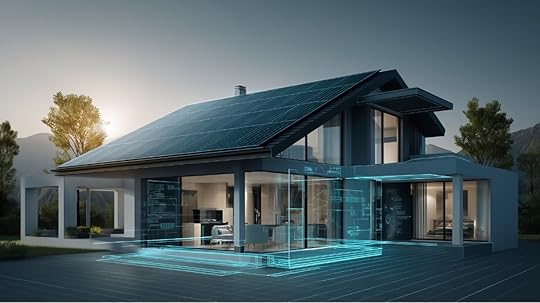
By 2040, every object in your home will evolve into an intelligent, decision-making system that anticipates your needs long before you do.
We’re about to witness the rebirth of every mundane object in our lives. Between now and 2040, automation, robotization, and AI will transform common household items from passive tools into active, autonomous systems that don’t just respond to commands—they anticipate needs, make decisions, and participate in running your life.
This isn’t about smart speakers that play music on command or thermostats you control with apps. This is a fundamental transformation: objects that were invented centuries ago evolving into intelligent machines that would be unrecognizable to anyone from even 2020. Here’s what happens to ten everyday objects as they experience their rebirth.
1. The Refrigerator → Autonomous Nutrition EngineToday: A cold box that keeps food from spoiling. You open it, look inside, and try to remember what you need to buy.
2040: An autonomous nutrition engine that manages your entire food supply and dietary health. Vision sensors track every item inside—what you have, when it expires, and what you’re running low on. The fridge predicts when you’ll run out of milk, eggs, or vegetables and orders groceries automatically, adjusting for seasonal availability and your changing preferences.
But it goes further. Using your health data—glucose levels, cholesterol, inflammation markers, fitness goals—the fridge designs weekly meal plans optimized for your specific biology. If you’re prediabetic, it stops ordering sugary items and suggests recipes that stabilize blood sugar. If you’re training for a marathon, it ensures adequate protein and adjusts caloric density.
Internal robotic shelves move items to the front when you need them or dispense ingredients directly into connected cooking devices. The fridge talks to your doctor’s AI, receiving dietary recommendations that get implemented automatically. You stop managing food—your fridge manages it for you.
2. The Bed → Medical-Grade Health PlatformToday: A soft surface to sleep on. Maybe it has adjustable firmness if you paid extra.
2040: A medical-grade health platform running continuous full-body diagnostics while you sleep. Embedded sensors perform heart monitoring, breathing analysis, temperature mapping, inflammation detection, and hydration assessment. Micro-adjusting robotics optimize spinal alignment and circulation minute-by-minute, responding to how you move during the night.
The bed detects disease patterns weeks before symptoms appear—catching cancers, heart conditions, and autoimmune disorders at stages when intervention is most effective. Your AI sleep coach adjusts room lighting, temperature, airflow, and sound automatically based on your sleep architecture, ensuring optimal rest.
You don’t buy a bed anymore—you buy a health monitoring system that happens to be where you sleep. It’s the most important medical device you own, and you use it eight hours every night.
3. The Mirror → Daily Health Diagnostic PortalToday: Something you use to see your reflection while brushing teeth or applying makeup.
2040: A health diagnostic portal using multispectral imaging to detect cancers, nutritional deficiencies, skin conditions, cardiovascular problems, and stress indicators invisible to the naked eye. The mirror analyzes your face, eyes, skin tone, and micro-expressions to assess health status every morning.
It gives personalized recommendations—not just “you look tired” but “your cortisol levels indicate chronic stress, here are three interventions proven effective for your biochemistry.” It offers makeup assistance if you want, wellness adjustments if you need them, and immediate medical alerts when anomalies appear.
The mirror integrates with your medical record and sends data to your doctor’s AI continuously. That mole that’s changing? The mirror caught it three weeks ago and already scheduled a dermatology appointment. The subtle jaundice indicating liver stress? Detected and addressed before you felt anything wrong.

By 2040, your front door won’t just unlock for you—it will read your gait, intentions, and behavior, instantly securing or defending your home long before you ever touch the handle
4. The Door Lock → Autonomous Access GuardianToday: A mechanical lock with a key, or if you’re modern, a keypad or smart lock you control with your phone.
2040: An autonomous access guardian using multimodal authentication—gait recognition, facial analysis, behavior patterns, and heartbeat signatures. It knows you’re approaching before you reach the door and unlocks automatically, hands-free, because it recognizes everything about how you move and behave.
But it goes beyond convenience. The lock can sense malicious intent through micro-movement analysis—detecting the physiological signs of someone approaching with bad intentions. It determines autonomously when to lock down, alert authorities, or activate defensive countermeasures.
It learns family routines so completely that anomalies trigger immediate response. If someone enters at an unusual time or behaves oddly once inside, the house knows something’s wrong and responds appropriately. You don’t secure your home—your home secures itself.
5. The Car → Fully Autonomous Mobile Workspace/BedroomToday: A vehicle you drive, possibly with some driver assistance features that still require your attention.
2040: A completely autonomous mobile environment with no steering wheel, no pedals, no driver controls at all. The interior reconfigures based on what you’re doing—reclining seats for sleep, holographic displays for work, private meeting modes for confidential calls.
The car’s surface uses micro-robotic repair systems that heal minor dents and scratches automatically. AI predicts mechanical needs months in advance and schedules service autonomously—you never think about maintenance because the car handles it before problems develop.
For families, multi-zone monitoring ensures children are safe and engaged. Built-in tutoring systems help with homework during commutes. Entertainment adapts to each passenger’s preferences simultaneously. The car isn’t transportation—it’s a mobile extension of your home and office that happens to move you between locations.
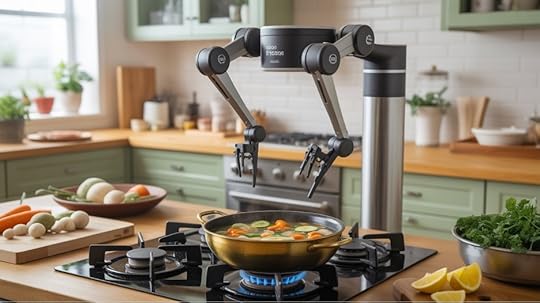
By 2040, your stove becomes an AI-powered robotic chef that knows your tastes, cooks every meal autonomously, and cleans itself when it’s done.
6. The Kitchen Stove → AI Robotic Chef PartnerToday: A place to heat food. You control temperature, timing, and technique manually.
2040: An AI robotic chef partner with articulated arms, ingredient recognition, and cooking models trained on millions of recipes. Tell it what you want or let it suggest meals based on what’s in your fridge, and it prepares full meals autonomously while you do something else.
The system adjusts flavor profiles based on your biometric response—analyzing salivary pH, heart rate, and glucose levels to determine what tastes good to you specifically and what your body needs nutritionally. It learns your personal “taste genome” over time, creating dishes optimized for your unique preferences.
After cooking, it cleans itself and sterilizes using UV robotics. You stop cooking—you direct cooking while the stove executes with precision you couldn’t match manually.
7. The Shower → Personalized Wellness SpaToday: A fixture that dispenses water at a temperature you control manually. Maybe it has adjustable pressure if you’re lucky.
2040: A personalized wellness spa that transforms daily hygiene into comprehensive health treatment. The shower uses dozens of independently controlled nozzles that target specific muscle groups, adjust water pressure based on detected tension, and alternate temperatures to optimize circulation and recovery.
Embedded sensors analyze your skin condition, hydration levels, and muscle inflammation. The system detects injuries, soreness, or stress indicators and automatically adjusts water delivery—stronger pressure for tight muscles, gentler flow for sensitive areas, temperature variations to reduce inflammation.
The shower dispenses personalized soap, shampoo, and skin treatments formulated for your specific biochemistry and adjusted daily based on environmental factors like humidity, pollution exposure, and UV damage. It monitors hair and scalp health, detecting problems like early baldness or skin conditions before they become visible.
Built-in phototherapy uses targeted light wavelengths to treat seasonal affective disorder, improve vitamin D synthesis, or support circadian rhythm regulation. Air jets dry you efficiently while the shower self-cleans and sterilizes using UV and ultrasonic systems that eliminate biofilm and pathogens.
The shower doesn’t just clean you—it actively maintains your physical wellness through daily therapeutic treatments you’d otherwise need to visit spas or physical therapists to receive.
8. The Vacuum → Fully Autonomous Home-Cleaning Micro-FleetToday: A robotic vacuum that bumps around your floor following semi-random patterns, occasionally getting stuck under furniture.
2040: A swarm of specialized cleaning robots coordinating as an intelligent ecosystem. Some sweep, others mop, some scrub corners, others purify air or sanitize surfaces. They’re small, quiet, and operate continuously 24/7 without human direction.
The swarm maps your home’s microbial levels in real-time, identifying and eliminating allergens, pathogens, and pollutants as they appear. They know which areas get dirty fastest and concentrate efforts there. They coordinate to avoid interfering with each other and disappear into charging stations when you’re using a room.
You stop cleaning your home. Your home cleans itself continuously, maintaining hygiene standards far exceeding what manual cleaning could achieve.

By 2040, your wallet becomes an autonomous financial guardian that predicts expenses, blocks threats, negotiates deals, and grows your money without you lifting a finger.
9. The Wallet → Autonomous Financial GuardianToday: A physical or digital place to store payment cards and identification.
2040: An autonomous financial guardian that actively manages your economic life. The AI negotiates prices and contracts on your behalf, finding better deals than you’d accept because it knows market rates and optimal timing. It auto-optimizes taxes, insurance, and investments based on your financial goals and risk tolerance.
The system detects suspicious patterns months before fraud or identity theft occurs, protecting you from threats you’d never notice. It allocates money according to your stated life goals and predicts upcoming expenses before you’re aware of them—ensuring you have funds available when needed without manual budgeting.
Your wallet doesn’t just hold money—it actively manages, protects, and grows your financial resources while you focus on living.
10. The Bathroom Toilet → Real-Time Medical LabToday: A porcelain bowl of water. Possibly the most primitive fixture in your home.
2040: A real-time medical laboratory performing continuous diagnostic analysis every time you use it. It analyzes gut biome composition, hormone levels, metabolic markers, hydration status, and dozens of other health indicators.
The toilet detects cancers, infections, kidney disease, liver problems, and autoimmune markers at the earliest molecular stages—months or years before you’d feel symptoms. It adjusts its cleaning and hygiene routines based on detected pathogens, reducing disease spread within households.
All data feeds to your health AI for daily personalized wellness adjustments. Your doctor receives alerts when concerning patterns emerge. The most private moment of your day becomes the most medically valuable diagnostic opportunity.
The Big Pattern: Four Forces Driving RebirthAcross all these transformations, four forces create the rebirth:
Automation: Objects perform tasks without human initiation. You don’t tell your fridge to order food—it knows when you need it and handles it autonomously.
Robotization: Objects physically manipulate the world—grabbing, moving, adjusting, cleaning, repairing. They don’t just sense and think; they act.
Embedded AI: Objects learn your routines, preferences, and needs, adapting continuously to serve you better over time.
Sensorization: Everyday objects become data collectors, monitoring everything about your life to enable hyper-personalized services.
What This Actually MeansBy 2040, your home won’t be a collection of dumb tools you operate—it’ll be an intelligent environment that operates itself while optimizing for your health, safety, convenience, and wellbeing.
You’ll stop managing household tasks because objects handle them autonomously. You’ll stop making routine decisions because AI systems make better choices based on more data than you could process. You’ll stop worrying about maintenance because objects predict and prevent their own failures.
The objects around you become participants in your life rather than possessions you use. They’re not servants following orders—they’re autonomous systems pursuing goals you’ve given them, using methods you don’t specify because they know better than you do.
This is the rebirth: passive tools becoming active partners. And it’s not coming gradually—it’s arriving in the next fifteen years, transforming every mundane object in your life into something that would seem like science fiction today but will be completely normal by 2040.
Related Stories:
https://www.technologyreview.com/2024/10/15/ai-home-automation-future/
Translate This PageSelect LanguageAfrikaansAlbanianAmharicArabicArmenianAzerbaijaniBasqueBelarusianBengaliBosnianBulgarianCatalanCebuanoChichewaChinese (Simplified)Chinese (Traditional)CorsicanCroatianCzechDanishDutchEnglishEsperantoEstonianFilipinoFinnishFrenchFrisianGalicianGeorgianGermanGreekGujaratiHaitian CreoleHausaHawaiianHebrewHindiHmongHungarianIcelandicIgboIndonesianIrishItalianJapaneseJavaneseKannadaKazakhKhmerKoreanKurdish (Kurmanji)KyrgyzLaoLatinLatvianLithuanianLuxembourgishMacedonianMalagasyMalayMalayalamMalteseMaoriMarathiMongolianMyanmar (Burmese)NepaliNorwegianPashtoPersianPolishPortuguesePunjabiRomanianRussianSamoanScottish GaelicSerbianSesothoShonaSindhiSinhalaSlovakSlovenianSomaliSpanishSudaneseSwahiliSwedishTajikTamilTeluguThaiTurkishUkrainianUrduUzbekVietnameseWelshXhosaYiddishYorubaZulu
#goog-gt-tt {display:none !important;}
.goog-te-banner-frame {display:none !important;}
.goog-te-menu-value:hover {text-decoration:none !important;}
.goog-text-highlight {background-color:transparent !important;box-shadow:none !important;}
body {top:0 !important;}
#google_translate_element2 {display:none!important;}
function googleTranslateElementInit2() {new google.translate.TranslateElement({pageLanguage: 'en',autoDisplay: false}, 'google_translate_element2');}
function GTranslateGetCurrentLang() {var keyValue = document['cookie'].match('(^|;) ?googtrans=([^;]*)(;|$)');return keyValue ? keyValue[2].split('/')[2] : null;}
function GTranslateFireEvent(element,event){try{if(document.createEventObject){var evt=document.createEventObject();element.fireEvent('on'+event,evt)}else{var evt=document.createEvent('HTMLEvents');evt.initEvent(event,true,true);element.dispatchEvent(evt)}}catch(e){}}
function doGTranslate(lang_pair){if(lang_pair.value)lang_pair=lang_pair.value;if(lang_pair=='')return;var lang=lang_pair.split('|')[1];if(GTranslateGetCurrentLang() == null && lang == lang_pair.split('|')[0])return;var teCombo;var sel=document.getElementsByTagName('select');for(var i=0;i<sel.length;i++)if(/goog-te-combo/.test(sel[i].className)){teCombo=sel[i];break;}if(document.getElementById('google_translate_element2')==null||document.getElementById('google_translate_element2').innerHTML.length==0||teCombo.length==0||teCombo.innerHTML.length==0){setTimeout(function(){doGTranslate(lang_pair)},500)}else{teCombo.value=lang;GTranslateFireEvent(teCombo,'change');GTranslateFireEvent(teCombo,'change')}}
Search for: Recent Posts The AI Architect in Your Pocket: Designing Your Dream Home With Prompts Instead of Blueprints The Robot Entrepreneur’s Dream Home: How Builders Are Racing to Redesign Houses for 2040 The Rebirth of Everyday Objects: How Your Home Becomes Intelligent by 2040 Categories Artificial Intelligence Business Trends Future of Agriculture Future of Banking Future of Education Future of Healthcare Future of Transportation Future of Work Future Scenarios Future Trends Futurist Thomas Frey Insights Global Trends Predictions Social Trends Technology Trends Speaking TopicsFuture of Healthcare – “Is Death our only Option?Future of AIFuture of Industries ← Previous Post Next Post →
The post The Rebirth of Everyday Objects: How Your Home Becomes Intelligent by 2040 appeared first on Futurist Speaker.
November 27, 2025
The Great Systems Collapse: What We’re Passing to Our Kids

We’re witnessing entire social systems—education, healthcare, taxes, and more—crumble as AI exposes how outdated their underlying assumptions have become.
Miriam is 26 years old, and every major system that’s supposed to support her path to adulthood has failed her in a different way.
She graduated from college in 2021 with a marketing degree and $87,000 in student debt. The education she received? Largely obsolete before she finished—professors teaching Facebook ads strategies from 2015 while TikTok was reshaping digital marketing. By senior year, she learned more from YouTube tutorials and AI tools than from $60,000-a-year classes. But she needed the degree because employers still required it, even though everyone knew it didn’t prove competence.
Now she works as a freelance “AI content strategist”—a job that didn’t exist when she started college. She uses ChatGPT and Midjourney to create campaigns for seven clients across four countries. She makes $73,000 annually, which sounds decent until you factor in no benefits, no retirement matching, and a tax situation so complex she pays $2,400 annually to an accountant who admits the IRS hasn’t figured out how to classify AI-generated income.
Last year, she spent three months trying to buy a small condo. She’d saved $40,000 for a down payment—five years of careful saving. She was repeatedly outbid by investment firms using AI algorithms to purchase properties 3% above asking price within minutes of listing. She gave up and continues renting a 450-square-foot apartment for $1,850 monthly—nearly half her take-home pay.
Her healthcare is a catastrophe. She pays $380 monthly for insurance covering almost nothing until she hits a $6,000 deductible. When chronic migraines started, she used an AI symptom checker that correctly diagnosed her in five minutes. Getting actual treatment required three months of waiting, $1,200 in copays for tests the AI had already identified as necessary, and a prescription costing $340 monthly because it wasn’t “covered.”
Last month, her younger brother was arrested for marijuana possession—a small amount that won’t be criminal in a few years after decriminalization, but was still illegal when he was caught. He’s in county jail awaiting trial, unable to afford bail, missing work, at risk of losing his apartment. The public defender met with him for seven minutes. An AI risk assessment flagged him “medium-high risk” based on zip code and traffic violations, making bail even less likely.
This is what system failure looks like from the inside. Not abstract policy debates, but daily life where every major institution that should enable stable adulthood is broken, inaccessible, or actively harmful.
Miriam isn’t unlucky. She’s normal. This is reality for tens of millions of young adults trying to build lives where every major system was designed for a world that no longer exists.
Why Systems Thinking Is Suddenly EverywhereSystems thinking is a hot topic because people like Miriam are living through a collapse in real-time, and it’s becoming impossible to ignore.
We’re watching fundamental systems that have organized society for generations break down in obvious ways. Income tax is broken. College is broken. Prisons are broken. Healthcare, housing, employment—pick any major social infrastructure, and you’ll find systems designed for a previous era, straining under pressures they weren’t built to handle.
And AI is accelerating the collapse—not by attacking systems deliberately, but by revealing their fundamental assumptions to be obsolete. Every system rests on assumptions about human capabilities, information availability, time constraints, and coordination costs. AI is demolishing those assumptions faster than we can adapt.
The question isn’t whether these systems can be saved. It’s how much broken infrastructure we’ll pass to our kids, and whether we’re brave enough to rebuild from first principles while we still have time.

Miriam’s story reveals how a tax system built for 1920s workers is collapsing under the realities of AI-driven, borderless, multi-income digital life.
The Income Tax System: Built for W-2 EmployeesMiriam’s tax situation illustrates how broken the system is for anyone whose work doesn’t fit 1920s categories.
The income tax system was designed around a specific economic reality: most people worked for a single employer, earned predictable salaries, and received W-2s at year’s end. That worked.
That world is vanishing. Miriam represents the future—gig economy, remote work, AI-generated income, global freelancing, multiple revenue streams that don’t fit any tax category. She has seven clients across four countries. She’s never physically met them. Her “work” involves using AI tools to create content. So whe
re does she owe taxes? Where was work performed—her Denver apartment, servers in Virginia where ChatGPT runs, or countries where clients are located?
When AI generates marketing copy that earns her money, who did the work? She prompted the AI, curated results, and delivered products. But GPT-4 wrote the words. Is that business income? Service income? Is she selling a product or a service?
Her accountant filed under five different income categories last year, making educated guesses about classifications the IRS hasn’t clearly defined. She paid $2,400 for this—money W-2 workers don’t spend—and still isn’t confident it’s correct.
Meanwhile, the wealthy deploy AI-powered tax optimization experts, exploiting system complexity for aggressive avoidance. The system punishes people like Miriam—straightforward income, modest earnings—while enabling sophisticated avoidance impossible without AI analysis of regulatory loopholes. Income tax assumes human labor, physical presence, and clear employer-employee relationships. AI obliterates all three. Rather than rebuilding for new realities, we’re forcing AI-age economics into 1920s categories. It won’t work.
The College System: $87,000 for Obsolete EducationMiriam borrowed $87,000 for a marketing degree. Her monthly loan payment is $780—more than many people’s rent. She’ll pay until she’s 36.
What did she get? Professors teaching outdated material. Social media marketing from 2014. Data analytics teaching Excel when industry used Python and R. Digital strategy never mentions AI tools already reshaping the field.
By senior year, Miriam learned more from free YouTube tutorials and AI experimentation than from paid classes. She used GPT-3 to help write papers, Grammarly to edit, Quillbot to paraphrase sections, avoiding plagiarism detection. She learned actual marketing from side projects and freelance work, not classroom instruction.
But she needed the degree. Employers still required it, even though everyone knew it didn’t prove competence. The degree wasn’t education—it was an expensive signal she could complete assignments and stick with something for four years.
Now she works in a job that didn’t exist when she started college, using tools that didn’t exist when she graduated, applying skills learned outside the classroom. And she’s paying $780 monthly for that increasingly meaningless credential.
AI makes this more absurd. Students use AI to write essays. Professors use AI to detect AI work. It’s an arms race where everyone knows credentials mean less yearly, but institutions can’t acknowledge this because their business model depends on pretending degrees still matter.
Alternative credentials are emerging—AI competency assessments, industry certifications, portfolio-based hiring. But Miriam’s generation is caught in transition: too late to benefit from the old system, too early to skip college entirely.
So they take on massive debt for partly obsolete education, increasingly disconnected from employer needs, then spend a decade paying it back while the system loads the next cohort with the same broken promises.
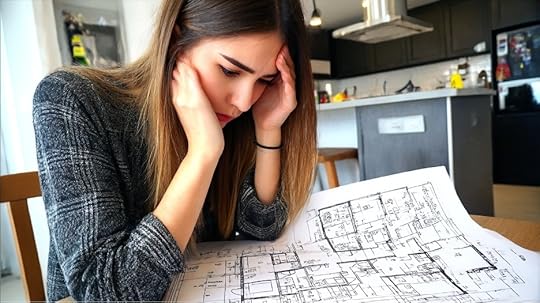
Miriam’s years of saving meant nothing in a housing market dominated by AI algorithms that outbid humans in seconds, turning homes into investment code instead of living spaces.
The Housing System: Algorithms Pricing Out HumansMiriam saved $40,000—five years of discipline. Still couldn’t compete with AI-powered investment algorithms.
She spent three months seriously buying. Viewed dozens of condos, made offers on seven, was outbid every time.
The pattern was consistent: properties listed, and within hours—sometimes minutes—she competed against cash offers 3-7% above asking. Investment firms using AI algorithms identified undervalued properties and automatically submitted offers, beating individual buyers.
The algorithms had data she couldn’t see, analyzed comparable sales faster than humans, submitted offers instantly, and could afford overpaying because they optimized for portfolio returns across hundreds of properties, not finding one home to live in.
She never had a chance. Individual buyers with jobs and down payments can’t compete with institutional investors deploying AI-optimized purchasing strategies.
So she continues renting. $1,850 monthly for 450 square feet. Nearly half her take-home pay. No equity. No stability. No control over whether her landlord raises rent $200 next year (he probably will—his property management uses algorithmic rent optimization too).
Her parents bought their first home at 28 for $180,000 (about $280,000 today). They put down 10% on her dad’s single income. The house is now worth $650,000.
Miriam’s equivalent starter home costs $520,000. With 20% down, she’d need $104,000—more than twice what she already saved. And she’d compete against algorithms that don’t care about overpaying.
The system isn’t just hard. It’s broken. Housing has been financialized, and AI strategies are accelerating it. Homes are increasingly investment vehicles rather than places to live, and first-time buyers are systematically priced out.
The Healthcare System: AI Diagnosis, 1950s DeliveryMiriam’s healthcare shows the worst system failure: we have technology to do better, but institutional inertia prevents proper use.
When chronic migraines started, she used an AI symptom checker. Input symptoms—frequency, location, triggers, family history. The AI suggested three likely diagnoses, with migraine most probable. Recommended specific tests and treatments. Five minutes, free.
Then she entered actual healthcare.
First appointment: 11 weeks out. The doctor asked the same questions, ordered the same tests, and referred her to a neurologist. Another six-week wait. The neurologist confirmed the AI diagnosis from three months earlier and prescribed medication.
Total cost: $1,200 in copays before filling the prescription. The medication costs $340 monthly because insurance didn’t cover it—despite being a common, proven treatment.
Her insurance costs $380 monthly with a $6,000 deductible. She pays $4,560 annually in premiums before insurance covers anything meaningful. Then pays everything out of pocket until hitting $6,000.
She’s paying $380 monthly for “insurance” that didn’t help with $1,200 in diagnostic costs or $340 monthly medication. She might as well be uninsured until catastrophic events.
The absurdity: AI correctly diagnosed her immediately, free. The human healthcare system took three months and $1,200 to confirm what AI already knew.
We have technology for accurate diagnosis, treatment suggestions, and continuous monitoring. But we’re using systems designed around in-person visits, paper records, and insurance companies extracting maximum revenue while providing minimal coverage.

Miriam’s brother sits in jail because an AI risk score, built on biased data, labeled him ‘high risk’—a perfect example of technology making a broken justice system more efficiently unjust.
The Prison System: Her Brother’s DestructionMiriam’s brother was arrested with a small amount of marijuana. In a few years, this won’t even be illegal—decriminalization is coming, just not fast enough.
He’s been in county jail for six weeks, awaiting trial because he can’t afford $5,000 bail. Lost his warehouse job after two weeks. About to lose his apartment. His public defender spent seven minutes with him and hasn’t returned calls.
An AI risk assessment scored him “medium-high risk” based on zip code, age, and two traffic violations. This influenced bail and will influence sentencing. The algorithm was trained on historical data reflecting decades of discriminatory policing, so it encodes and automates that discrimination while seeming objective and scientific.
Miriam watches helplessly. Her brother isn’t dangerous—he had personal-use marijuana. But the system will likely give him a criminal record, destroy employment prospects, make housing nearly impossible, and set him toward further criminal justice involvement.
This is supposed to be rehabilitation. It’s actually life destruction.
AI is making it worse—not through cruelty, but by automating bad decisions at scale. Risk assessments encoding historical bias. Surveillance flagging low-income neighborhoods for enhanced policing. Predictive systems create self-fulfilling prophecies.
We have technology enabling better alternatives: electronic monitoring instead of incarceration, AI-powered rehabilitation programs, personalized interventions. But we’re using AI to make a broken system more efficient at breaking people.
The Pattern: Automating DysfunctionWe’re not using AI to fix broken systems. We’re using AI to automate dysfunction at scale.
Income tax was already too complex and inequitable. AI makes it worse by creating income types not fitting existing categories while giving wealthy individuals AI-powered optimization that ordinary people can’t afford.
College was already unaffordable and disconnected from labor needs. AI makes it more irrelevant by doing work that students supposedly learn, while institutions pretend nothing has changed and charge $87,000 for increasingly obsolete credentials.
Housing was already difficult for first-time buyers. AI algorithms make it impossible by outbidding humans with superior information, instant decisions, and portfolio optimization.
Healthcare was already expensive and inefficient. AI can diagnose in minutes, but we still run three-month processes, charging thousands for confirmations of what algorithms already knew.
Prisons were already expensive and counterproductive. AI makes them more efficient at destroying lives through automated risk assessments encoding historical bias.
This is the infrastructure we’re passing Miriam’s generation: systems designed for worlds that no longer exist, failing at stated purposes, resistant to reform, and now being automated in their dysfunction.
Why Systems Break: Institutional LagWhy can’t we just fix these systems?
The answer is institutional lag—the gap between when systems become obsolete and when institutions acknowledge and act on that obsolescence.
Institutions resist change because change threatens existing power structures, career paths, and revenue streams. Universities resist alternative credentials, threatening enrollment. Tax authorities resist reform, threatening bureaucratic jobs. Healthcare companies resist AI efficiency, threatening profit extraction. Housing policy protects homeowner wealth over affordability. Prison systems resist alternatives because incarceration has become an industry.
AI has accelerated change beyond what slow-adapting institutions can handle. The gap between “how things work” and “how things should work” widens exponentially.
Previous technological transitions gave institutions decades to adapt. AI compresses adaptation timelines to years or months. Systems designed for industrial-age employment don’t work for AI-age economics. We’re trying incremental adaptation when fundamental redesign is needed.
What We’re Passing to Miriam’s GenerationA tax system penalizing straightforward AI-augmented work while enabling sophisticated avoidance for the wealthy. Compliance costs consume thousands annually. A code so complex that even professionals guess at proper classifications.
An education system where degrees cost $87,000, teach partially obsolete skills, and create decade-long debt. Where credentials matter less yearly but remain mandatory gatekeepers. Where students learn more from free resources than expensive universities, but still must pay for the signal.
A housing system where algorithms outbid humans, institutional investors price out first-time buyers, and half your income goes to rent with no ownership path. Where home-ownership, defining middle-class stability for previous generations, is increasingly closed.
A healthcare system where AI diagnoses accurately, but three-month waits and thousands in costs are required for human confirmation. Where insurance costs $4,560 annually but doesn’t cover care until you’ve spent $6,000 out of pocket.
A prison system destroying lives over soon-to-be-legal conduct, using AI to automate historical biases, providing seven-minute legal consultations, and prioritizing punishment over rehabilitation.
The Window Is ClosingMiriam is 26. By 36, these systems will either be rebuilt or collapse entirely. We have maybe 5-10 years where intentional redesign is possible. After that, we’re in crisis management.
Her generation will inherit whatever we build or fail to build in that window.

Rebuilding means starting from first principles—redesigning taxes, education, housing, healthcare, and justice for an AI-driven world instead of endlessly patching obsolete systems.
What Rebuilding RequiresStart with first principles. What are we actually trying to accomplish? Given AI and modern technology, what’s the best way? The answer is almost never “patch the existing system.”
Accept that some systems need replacement, not reform. We’ve tried reforming for decades. It hasn’t worked. Income tax needs a complete replacement. College credentials need unbundling from education. Housing policy needs fundamental restructuring. Healthcare needs redesign around AI-enabled efficiency. Prisons need rethinking around rehabilitation.
Design for AI-age realities. Stop fitting AI-generated income into W-2 categories. Stop pretending four-year degrees are necessary when AI can provide personalized education. Stop allowing algorithms to price humans out of housing. Stop making people wait three months for diagnoses AI provides in minutes.
Move fast before the window closes. Every year we delay, more people take on debt for devalued degrees, pay thousands navigating incomprehensible taxes, get priced out of homeownership, and watch their families destroyed by counterproductive incarceration.
Be willing to threaten existing power structures. These systems don’t get fixed because fixing threatens those benefiting from current dysfunction. Reform requires confronting those interests.
Final ThoughtsMiriam is living through system collapse in real-time. Every major institution that should enable stable adulthood is broken, inaccessible, or actively harmful. She’s working hard, making responsible choices, and still falling behind because the infrastructure that previous generations took for granted has failed.
She’s normal. Tens of millions experience the same thing. This isn’t individual failure. It’s a system failure at scale.
We can do better. We have the technology. We have the knowledge. What we lack is political courage and institutional willingness to prioritize the next generation over preserving systems benefiting current stakeholders.
Miriam is 26. Her generation deserves better than inheriting our dysfunction. The question is whether we’ll give it to them.
Translate This PageSelect LanguageAfrikaansAlbanianAmharicArabicArmenianAzerbaijaniBasqueBelarusianBengaliBosnianBulgarianCatalanCebuanoChichewaChinese (Simplified)Chinese (Traditional)CorsicanCroatianCzechDanishDutchEnglishEsperantoEstonianFilipinoFinnishFrenchFrisianGalicianGeorgianGermanGreekGujaratiHaitian CreoleHausaHawaiianHebrewHindiHmongHungarianIcelandicIgboIndonesianIrishItalianJapaneseJavaneseKannadaKazakhKhmerKoreanKurdish (Kurmanji)KyrgyzLaoLatinLatvianLithuanianLuxembourgishMacedonianMalagasyMalayMalayalamMalteseMaoriMarathiMongolianMyanmar (Burmese)NepaliNorwegianPashtoPersianPolishPortuguesePunjabiRomanianRussianSamoanScottish GaelicSerbianSesothoShonaSindhiSinhalaSlovakSlovenianSomaliSpanishSudaneseSwahiliSwedishTajikTamilTeluguThaiTurkishUkrainianUrduUzbekVietnameseWelshXhosaYiddishYorubaZulu
#goog-gt-tt {display:none !important;}
.goog-te-banner-frame {display:none !important;}
.goog-te-menu-value:hover {text-decoration:none !important;}
.goog-text-highlight {background-color:transparent !important;box-shadow:none !important;}
body {top:0 !important;}
#google_translate_element2 {display:none!important;}
function googleTranslateElementInit2() {new google.translate.TranslateElement({pageLanguage: 'en',autoDisplay: false}, 'google_translate_element2');}
function GTranslateGetCurrentLang() {var keyValue = document['cookie'].match('(^|;) ?googtrans=([^;]*)(;|$)');return keyValue ? keyValue[2].split('/')[2] : null;}
function GTranslateFireEvent(element,event){try{if(document.createEventObject){var evt=document.createEventObject();element.fireEvent('on'+event,evt)}else{var evt=document.createEvent('HTMLEvents');evt.initEvent(event,true,true);element.dispatchEvent(evt)}}catch(e){}}
function doGTranslate(lang_pair){if(lang_pair.value)lang_pair=lang_pair.value;if(lang_pair=='')return;var lang=lang_pair.split('|')[1];if(GTranslateGetCurrentLang() == null && lang == lang_pair.split('|')[0])return;var teCombo;var sel=document.getElementsByTagName('select');for(var i=0;i<sel.length;i++)if(/goog-te-combo/.test(sel[i].className)){teCombo=sel[i];break;}if(document.getElementById('google_translate_element2')==null||document.getElementById('google_translate_element2').innerHTML.length==0||teCombo.length==0||teCombo.innerHTML.length==0){setTimeout(function(){doGTranslate(lang_pair)},500)}else{teCombo.value=lang;GTranslateFireEvent(teCombo,'change');GTranslateFireEvent(teCombo,'change')}}
Search for: Recent Posts The AI Architect in Your Pocket: Designing Your Dream Home With Prompts Instead of Blueprints The Robot Entrepreneur’s Dream Home: How Builders Are Racing to Redesign Houses for 2040 The Rebirth of Everyday Objects: How Your Home Becomes Intelligent by 2040 Categories Artificial Intelligence Business Trends Future of Agriculture Future of Banking Future of Education Future of Healthcare Future of Transportation Future of Work Future Scenarios Future Trends Futurist Thomas Frey Insights Global Trends Predictions Social Trends Technology Trends Speaking TopicsFuture of Healthcare – “Is Death our only Option?Future of AIFuture of Industries ← Previous Post Next Post →
The post The Great Systems Collapse: What We’re Passing to Our Kids appeared first on Futurist Speaker.
The Great Systems Collapse: What We’e Passing to Our Kids
We’re witnessing entire social systems—education, healthcare, taxes, and more—crumble as AI exposes how outdated their underlying assumptions have become.
Miriam is 26 years old, and every major system that’s supposed to support her path to adulthood has failed her in a different way.
She graduated from college in 2021 with a marketing degree and $87,000 in student debt. The education she received? Largely obsolete before she finished—professors teaching Facebook ads strategies from 2015 while TikTok was reshaping digital marketing. By senior year, she learned more from YouTube tutorials and AI tools than from $60,000-a-year classes. But she needed the degree because employers still required it, even though everyone knew it didn’t prove competence.
Now she works as a freelance “AI content strategist”—a job that didn’t exist when she started college. She uses ChatGPT and Midjourney to create campaigns for seven clients across four countries. She makes $73,000 annually, which sounds decent until you factor in no benefits, no retirement matching, and a tax situation so complex she pays $2,400 annually to an accountant who admits the IRS hasn’t figured out how to classify AI-generated income.
Last year, she spent three months trying to buy a small condo. She’d saved $40,000 for a down payment—five years of careful saving. She was repeatedly outbid by investment firms using AI algorithms to purchase properties 3% above asking price within minutes of listing. She gave up and continues renting a 450-square-foot apartment for $1,850 monthly—nearly half her take-home pay.
Her healthcare is a catastrophe. She pays $380 monthly for insurance covering almost nothing until she hits a $6,000 deductible. When chronic migraines started, she used an AI symptom checker that correctly diagnosed her in five minutes. Getting actual treatment required three months of waiting, $1,200 in copays for tests the AI had already identified as necessary, and a prescription costing $340 monthly because it wasn’t “covered.”
Last month, her younger brother was arrested for marijuana possession—a small amount that won’t be criminal in a few years after decriminalization, but was still illegal when he was caught. He’s in county jail awaiting trial, unable to afford bail, missing work, at risk of losing his apartment. The public defender met with him for seven minutes. An AI risk assessment flagged him “medium-high risk” based on zip code and traffic violations, making bail even less likely.
This is what system failure looks like from the inside. Not abstract policy debates, but daily life where every major institution that should enable stable adulthood is broken, inaccessible, or actively harmful.
Miriam isn’t unlucky. She’s normal. This is reality for tens of millions of young adults trying to build lives where every major system was designed for a world that no longer exists.
Why Systems Thinking Is Suddenly EverywhereSystems thinking is a hot topic because people like Miriam are living through a collapse in real-time, and it’s becoming impossible to ignore.
We’re watching fundamental systems that have organized society for generations break down in obvious ways. Income tax is broken. College is broken. Prisons are broken. Healthcare, housing, employment—pick any major social infrastructure, and you’ll find systems designed for a previous era, straining under pressures they weren’t built to handle.
And AI is accelerating the collapse—not by attacking systems deliberately, but by revealing their fundamental assumptions to be obsolete. Every system rests on assumptions about human capabilities, information availability, time constraints, and coordination costs. AI is demolishing those assumptions faster than we can adapt.
The question isn’t whether these systems can be saved. It’s how much broken infrastructure we’ll pass to our kids, and whether we’re brave enough to rebuild from first principles while we still have time.
Miriam’s story reveals how a tax system built for 1920s workers is collapsing under the realities of AI-driven, borderless, multi-income digital life.
The Income Tax System: Built for W-2 EmployeesMiriam’s tax situation illustrates how broken the system is for anyone whose work doesn’t fit 1920s categories.
The income tax system was designed around a specific economic reality: most people worked for a single employer, earned predictable salaries, and received W-2s at year’s end. That worked.
That world is vanishing. Miriam represents the future—gig economy, remote work, AI-generated income, global freelancing, multiple revenue streams that don’t fit any tax category. She has seven clients across four countries. She’s never physically met them. Her “work” involves using AI tools to create content. So whe
re does she owe taxes? Where was work performed—her Denver apartment, servers in Virginia where ChatGPT runs, or countries where clients are located?
When AI generates marketing copy that earns her money, who did the work? She prompted the AI, curated results, and delivered products. But GPT-4 wrote the words. Is that business income? Service income? Is she selling a product or a service?
Her accountant filed under five different income categories last year, making educated guesses about classifications the IRS hasn’t clearly defined. She paid $2,400 for this—money W-2 workers don’t spend—and still isn’t confident it’s correct.
Meanwhile, the wealthy deploy AI-powered tax optimization experts, exploiting system complexity for aggressive avoidance. The system punishes people like Miriam—straightforward income, modest earnings—while enabling sophisticated avoidance impossible without AI analysis of regulatory loopholes. Income tax assumes human labor, physical presence, and clear employer-employee relationships. AI obliterates all three. Rather than rebuilding for new realities, we’re forcing AI-age economics into 1920s categories. It won’t work.
The College System: $87,000 for Obsolete EducationMiriam borrowed $87,000 for a marketing degree. Her monthly loan payment is $780—more than many people’s rent. She’ll pay until she’s 36.
What did she get? Professors teaching outdated material. Social media marketing from 2014. Data analytics teaching Excel when industry used Python and R. Digital strategy never mentions AI tools already reshaping the field.
By senior year, Miriam learned more from free YouTube tutorials and AI experimentation than from paid classes. She used GPT-3 to help write papers, Grammarly to edit, Quillbot to paraphrase sections, avoiding plagiarism detection. She learned actual marketing from side projects and freelance work, not classroom instruction.
But she needed the degree. Employers still required it, even though everyone knew it didn’t prove competence. The degree wasn’t education—it was an expensive signal she could complete assignments and stick with something for four years.
Now she works in a job that didn’t exist when she started college, using tools that didn’t exist when she graduated, applying skills learned outside the classroom. And she’s paying $780 monthly for that increasingly meaningless credential.
AI makes this more absurd. Students use AI to write essays. Professors use AI to detect AI work. It’s an arms race where everyone knows credentials mean less yearly, but institutions can’t acknowledge this because their business model depends on pretending degrees still matter.
Alternative credentials are emerging—AI competency assessments, industry certifications, portfolio-based hiring. But Miriam’s generation is caught in transition: too late to benefit from the old system, too early to skip college entirely.
So they take on massive debt for partly obsolete education, increasingly disconnected from employer needs, then spend a decade paying it back while the system loads the next cohort with the same broken promises.
Miriam’s years of saving meant nothing in a housing market dominated by AI algorithms that outbid humans in seconds, turning homes into investment code instead of living spaces.
The Housing System: Algorithms Pricing Out HumansMiriam saved $40,000—five years of discipline. Still couldn’t compete with AI-powered investment algorithms.
She spent three months seriously buying. Viewed dozens of condos, made offers on seven, was outbid every time.
The pattern was consistent: properties listed, and within hours—sometimes minutes—she competed against cash offers 3-7% above asking. Investment firms using AI algorithms identified undervalued properties and automatically submitted offers, beating individual buyers.
The algorithms had data she couldn’t see, analyzed comparable sales faster than humans, submitted offers instantly, and could afford overpaying because they optimized for portfolio returns across hundreds of properties, not finding one home to live in.
She never had a chance. Individual buyers with jobs and down payments can’t compete with institutional investors deploying AI-optimized purchasing strategies.
So she continues renting. $1,850 monthly for 450 square feet. Nearly half her take-home pay. No equity. No stability. No control over whether her landlord raises rent $200 next year (he probably will—his property management uses algorithmic rent optimization too).
Her parents bought their first home at 28 for $180,000 (about $280,000 today). They put down 10% on her dad’s single income. The house is now worth $650,000.
Miriam’s equivalent starter home costs $520,000. With 20% down, she’d need $104,000—more than twice what she already saved. And she’d compete against algorithms that don’t care about overpaying.
The system isn’t just hard. It’s broken. Housing has been financialized, and AI strategies are accelerating it. Homes are increasingly investment vehicles rather than places to live, and first-time buyers are systematically priced out.
The Healthcare System: AI Diagnosis, 1950s DeliveryMiriam’s healthcare shows the worst system failure: we have technology to do better, but institutional inertia prevents proper use.
When chronic migraines started, she used an AI symptom checker. Input symptoms—frequency, location, triggers, family history. The AI suggested three likely diagnoses, with migraine most probable. Recommended specific tests and treatments. Five minutes, free.
Then she entered actual healthcare.
First appointment: 11 weeks out. The doctor asked the same questions, ordered the same tests, and referred her to a neurologist. Another six-week wait. The neurologist confirmed the AI diagnosis from three months earlier and prescribed medication.
Total cost: $1,200 in copays before filling the prescription. The medication costs $340 monthly because insurance didn’t cover it—despite being a common, proven treatment.
Her insurance costs $380 monthly with a $6,000 deductible. She pays $4,560 annually in premiums before insurance covers anything meaningful. Then pays everything out of pocket until hitting $6,000.
She’s paying $380 monthly for “insurance” that didn’t help with $1,200 in diagnostic costs or $340 monthly medication. She might as well be uninsured until catastrophic events.
The absurdity: AI correctly diagnosed her immediately, free. The human healthcare system took three months and $1,200 to confirm what AI already knew.
We have technology for accurate diagnosis, treatment suggestions, and continuous monitoring. But we’re using systems designed around in-person visits, paper records, and insurance companies extracting maximum revenue while providing minimal coverage.
Miriam’s brother sits in jail because an AI risk score, built on biased data, labeled him ‘high risk’—a perfect example of technology making a broken justice system more efficiently unjust.
The Prison System: Her Brother’s DestructionMiriam’s brother was arrested with a small amount of marijuana. In a few years, this won’t even be illegal—decriminalization is coming, just not fast enough.
He’s been in county jail for six weeks, awaiting trial because he can’t afford $5,000 bail. Lost his warehouse job after two weeks. About to lose his apartment. His public defender spent seven minutes with him and hasn’t returned calls.
An AI risk assessment scored him “medium-high risk” based on zip code, age, and two traffic violations. This influenced bail and will influence sentencing. The algorithm was trained on historical data reflecting decades of discriminatory policing, so it encodes and automates that discrimination while seeming objective and scientific.
Miriam watches helplessly. Her brother isn’t dangerous—he had personal-use marijuana. But the system will likely give him a criminal record, destroy employment prospects, make housing nearly impossible, and set him toward further criminal justice involvement.
This is supposed to be rehabilitation. It’s actually life destruction.
AI is making it worse—not through cruelty, but by automating bad decisions at scale. Risk assessments encoding historical bias. Surveillance flagging low-income neighborhoods for enhanced policing. Predictive systems create self-fulfilling prophecies.
We have technology enabling better alternatives: electronic monitoring instead of incarceration, AI-powered rehabilitation programs, personalized interventions. But we’re using AI to make a broken system more efficient at breaking people.
The Pattern: Automating DysfunctionWe’re not using AI to fix broken systems. We’re using AI to automate dysfunction at scale.
Income tax was already too complex and inequitable. AI makes it worse by creating income types not fitting existing categories while giving wealthy individuals AI-powered optimization that ordinary people can’t afford.
College was already unaffordable and disconnected from labor needs. AI makes it more irrelevant by doing work that students supposedly learn, while institutions pretend nothing has changed and charge $87,000 for increasingly obsolete credentials.
Housing was already difficult for first-time buyers. AI algorithms make it impossible by outbidding humans with superior information, instant decisions, and portfolio optimization.
Healthcare was already expensive and inefficient. AI can diagnose in minutes, but we still run three-month processes, charging thousands for confirmations of what algorithms already knew.
Prisons were already expensive and counterproductive. AI makes them more efficient at destroying lives through automated risk assessments encoding historical bias.
This is the infrastructure we’re passing Miriam’s generation: systems designed for worlds that no longer exist, failing at stated purposes, resistant to reform, and now being automated in their dysfunction.
Why Systems Break: Institutional LagWhy can’t we just fix these systems?
The answer is institutional lag—the gap between when systems become obsolete and when institutions acknowledge and act on that obsolescence.
Institutions resist change because change threatens existing power structures, career paths, and revenue streams. Universities resist alternative credentials, threatening enrollment. Tax authorities resist reform, threatening bureaucratic jobs. Healthcare companies resist AI efficiency, threatening profit extraction. Housing policy protects homeowner wealth over affordability. Prison systems resist alternatives because incarceration has become an industry.
AI has accelerated change beyond what slow-adapting institutions can handle. The gap between “how things work” and “how things should work” widens exponentially.
Previous technological transitions gave institutions decades to adapt. AI compresses adaptation timelines to years or months. Systems designed for industrial-age employment don’t work for AI-age economics. We’re trying incremental adaptation when fundamental redesign is needed.
What We’re Passing to Miriam’s GenerationA tax system penalizing straightforward AI-augmented work while enabling sophisticated avoidance for the wealthy. Compliance costs consume thousands annually. A code so complex that even professionals guess at proper classifications.
An education system where degrees cost $87,000, teach partially obsolete skills, and create decade-long debt. Where credentials matter less yearly but remain mandatory gatekeepers. Where students learn more from free resources than expensive universities, but still must pay for the signal.
A housing system where algorithms outbid humans, institutional investors price out first-time buyers, and half your income goes to rent with no ownership path. Where home-ownership, defining middle-class stability for previous generations, is increasingly closed.
A healthcare system where AI diagnoses accurately, but three-month waits and thousands in costs are required for human confirmation. Where insurance costs $4,560 annually but doesn’t cover care until you’ve spent $6,000 out of pocket.
A prison system destroying lives over soon-to-be-legal conduct, using AI to automate historical biases, providing seven-minute legal consultations, and prioritizing punishment over rehabilitation.
The Window Is ClosingMiriam is 26. By 36, these systems will either be rebuilt or collapse entirely. We have maybe 5-10 years where intentional redesign is possible. After that, we’re in crisis management.
Her generation will inherit whatever we build or fail to build in that window.
Rebuilding means starting from first principles—redesigning taxes, education, housing, healthcare, and justice for an AI-driven world instead of endlessly patching obsolete systems.
What Rebuilding RequiresStart with first principles. What are we actually trying to accomplish? Given AI and modern technology, what’s the best way? The answer is almost never “patch the existing system.”
Accept that some systems need replacement, not reform. We’ve tried reforming for decades. It hasn’t worked. Income tax needs a complete replacement. College credentials need unbundling from education. Housing policy needs fundamental restructuring. Healthcare needs redesign around AI-enabled efficiency. Prisons need rethinking around rehabilitation.
Design for AI-age realities. Stop fitting AI-generated income into W-2 categories. Stop pretending four-year degrees are necessary when AI can provide personalized education. Stop allowing algorithms to price humans out of housing. Stop making people wait three months for diagnoses AI provides in minutes.
Move fast before the window closes. Every year we delay, more people take on debt for devalued degrees, pay thousands navigating incomprehensible taxes, get priced out of homeownership, and watch their families destroyed by counterproductive incarceration.
Be willing to threaten existing power structures. These systems don’t get fixed because fixing threatens those benefiting from current dysfunction. Reform requires confronting those interests.
Final ThoughtsMiriam is living through system collapse in real-time. Every major institution that should enable stable adulthood is broken, inaccessible, or actively harmful. She’s working hard, making responsible choices, and still falling behind because the infrastructure that previous generations took for granted has failed.
She’s normal. Tens of millions experience the same thing. This isn’t individual failure. It’s a system failure at scale.
We can do better. We have the technology. We have the knowledge. What we lack is political courage and institutional willingness to prioritize the next generation over preserving systems benefiting current stakeholders.
Miriam is 26. Her generation deserves better than inheriting our dysfunction. The question is whether we’ll give it to them.
Translate This PageSelect LanguageAfrikaansAlbanianAmharicArabicArmenianAzerbaijaniBasqueBelarusianBengaliBosnianBulgarianCatalanCebuanoChichewaChinese (Simplified)Chinese (Traditional)CorsicanCroatianCzechDanishDutchEnglishEsperantoEstonianFilipinoFinnishFrenchFrisianGalicianGeorgianGermanGreekGujaratiHaitian CreoleHausaHawaiianHebrewHindiHmongHungarianIcelandicIgboIndonesianIrishItalianJapaneseJavaneseKannadaKazakhKhmerKoreanKurdish (Kurmanji)KyrgyzLaoLatinLatvianLithuanianLuxembourgishMacedonianMalagasyMalayMalayalamMalteseMaoriMarathiMongolianMyanmar (Burmese)NepaliNorwegianPashtoPersianPolishPortuguesePunjabiRomanianRussianSamoanScottish GaelicSerbianSesothoShonaSindhiSinhalaSlovakSlovenianSomaliSpanishSudaneseSwahiliSwedishTajikTamilTeluguThaiTurkishUkrainianUrduUzbekVietnameseWelshXhosaYiddishYorubaZulu
#goog-gt-tt {display:none !important;}
.goog-te-banner-frame {display:none !important;}
.goog-te-menu-value:hover {text-decoration:none !important;}
.goog-text-highlight {background-color:transparent !important;box-shadow:none !important;}
body {top:0 !important;}
#google_translate_element2 {display:none!important;}
function googleTranslateElementInit2() {new google.translate.TranslateElement({pageLanguage: 'en',autoDisplay: false}, 'google_translate_element2');}
function GTranslateGetCurrentLang() {var keyValue = document['cookie'].match('(^|;) ?googtrans=([^;]*)(;|$)');return keyValue ? keyValue[2].split('/')[2] : null;}
function GTranslateFireEvent(element,event){try{if(document.createEventObject){var evt=document.createEventObject();element.fireEvent('on'+event,evt)}else{var evt=document.createEvent('HTMLEvents');evt.initEvent(event,true,true);element.dispatchEvent(evt)}}catch(e){}}
function doGTranslate(lang_pair){if(lang_pair.value)lang_pair=lang_pair.value;if(lang_pair=='')return;var lang=lang_pair.split('|')[1];if(GTranslateGetCurrentLang() == null && lang == lang_pair.split('|')[0])return;var teCombo;var sel=document.getElementsByTagName('select');for(var i=0;i<sel.length;i++)if(/goog-te-combo/.test(sel[i].className)){teCombo=sel[i];break;}if(document.getElementById('google_translate_element2')==null||document.getElementById('google_translate_element2').innerHTML.length==0||teCombo.length==0||teCombo.innerHTML.length==0){setTimeout(function(){doGTranslate(lang_pair)},500)}else{teCombo.value=lang;GTranslateFireEvent(teCombo,'change');GTranslateFireEvent(teCombo,'change')}}
Search for: Recent Posts The Great Systems Collapse: What We’e Passing to Our Kids The AGI Intelligence Threshold: Understanding Why Changes Everything The Vanishing Present: 250 Things That Will Disappear from Our Lives by 2040 Categories Artificial Intelligence Business Trends Future of Agriculture Future of Banking Future of Education Future of Healthcare Future of Transportation Future of Work Future Scenarios Future Trends Futurist Thomas Frey Insights Global Trends Predictions Social Trends Technology Trends Speaking TopicsFuture of Healthcare – “Is Death our only Option?Future of AIFuture of Industries ← Previous Post
The post The Great Systems Collapse: What We’e Passing to Our Kids appeared first on Futurist Speaker.
Thomas Frey's Blog

- Thomas Frey's profile
- 2 followers

