Kay Dibianca's Blog
November 3, 2025
THE CRAFT OF WRITING ROMANTIC SUSPENSE – NOVEMBER 2025
Welcome back to another episode of great writing advice on the CRAFT OF WRITING blog. This year we’re focusing on Genres, and we’re learning about approaches to writing thrillers, mysteries, romances, and more. Each month I interview an accomplished author who writes in a particular genre, so get ready to learn from the experts!
Today’s guest is my good friend and USA Today bestselling author Patricia Bradley who is here to give us insight into the craft of writing romantic suspense. and it just so happens Patricia’s latest romantic suspense novel, On the Edge of Trust, is being released today!
Click the image below to go to the Amazon book page.
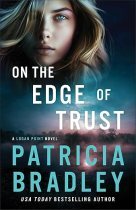
The name of each person who enters a comment on today’s blog will be put into the drawing for a copy of On the Edge of Trust. So join the conversation and earn a chance to win. I’ll post the name of the winner after 9 PM Central Time tonight, and Patricia has agreed to provide a copy of the book to the winner.
Now sit back and enjoy this conversation with Patricia.
The Craft of Writing Romantic Suspense with USA Today Bestselling author Patricia Bradley
Share on X
* * *
What is your definition of romantic suspense?
My definition is probably a little different from others in that I lean more toward the suspense side than the romantic side. After all, it’s a little hard to have romantic moments when you’re running for your life.
Why did you decide to write romantic suspense? Have you ever written in another genre?
Romantic suspense and thriller/suspense are what I have always read, starting with The Black Stallion and then Mary Stewart’s Airs Above the Ground, onto Mary Higgins Clark…and yes, I have written sweet romances for Harlequin’s Heartwarming line. I missed the suspense, though.
Tell us about your latest book.
My latest book is On the Edge of Trust, and picks up with my very first book, Shadows of the Past ten years later. When decorated FBI undercover agent Scott Sinclair suffers a gunshot wound in his right arm, the injury threatens his future career in the field. He is determined to regain his former job by training himself to use his left hand, and failure is not an option—especially when he’s unofficially pulled into an investigation.
Tori Alexander is a passionate crime reporter and podcaster who has dedicated her life to seeking justice. Her relentless pursuit of the truth has freed a man from prison who was falsely convicted, making Tori an enemy of the killer. When her nephew is accused of murder, nothing can stop her from getting involved and clearing his name.
Soon after Tori and Scott reconnect on the case, shots are fired, leaving them to wonder which one of them has been targeted. As the investigation intensifies, so do the threats and the sparks between them, but Tori’s doubtful if she can extend grace and trust to Scott. They’ll have to combine their skills and rely on their growing relationship to outsmart the killer.
Can you give us a brief outline of the process—from concept to completion—that you use to write your books?
Every book is different. Some I outline more than others. With On the Edge of Trust, I outlined kind of like I drive in fog—only as far as I could see. I always start with the two characters, a villain, and the crime. My first question is always why did this crime happen now? Why not last year, ten years ago or sometime in the future. Once I know that, I start to work on my characters.
I must have their names and know what they look like before I begin writing, and if the name doesn’t fit once I start writing, I have to find one that does fit. Then I put descriptions of my characters into AI, and the image I get is very close to what I see in my head. Once I have the name and description, I can work on their inner demons like what their greatest fear is, what are they hiding. But I can only go so far with that. It takes the actual writing and putting them in jeopardy to bring the characters to life.
I lay down the suspense/crime line first and see how that part plays out, then I go back and beef up the romance…it’s much easier to kill someone off than to get two characters together!
Do you have a particular audience you write to?
Most of my readers are women 35-65+, but I really just tell the story that God gives me.
What advice would you give an author who decides to write romantic suspense?
Study the craft. I can’t say that enough. There are so many good craft books out there and you never go wrong with one of James Scott Bell’s.
Then write—I once had a friend who wrote the screenplays for the early Tarzan movies tell me it takes a million words to become a writer. And he was right. I would also tell them it takes discipline to sit in front of a computer and pound out a story. Most of the time it’s like pulling dandelions out of the ground. Then there are those moments when I’m in the flow and the movie I see in my head flows through my fingers to the keyboard. There is no high quite like it.
Who are your favorite authors? And besides your own books, what other novels would you recommend?
As for my favorite authors, I have so many and for different reasons. James Scott Bell for his awesome Mike Romeo series and craft books, Charles Martin for his Shepherd Murphy series, Susan May Warren and Rachel Hauck, not only for their awesome books, but for the way they poured themselves into showing me what was missing in my manuscripts.
For other novels I would recommend…again so many. Anything by the authors I mentioned above. Any Lynette Eason and Elizabeth Goddard novel, Nancy Mehl’s latest, Dark Design. I’m sure I’ve left many out!
Are you working on a book now?
I am. I soon will go to the Elephant Sanctuary just off the Natchez Trace near the Meriwether Lewis Monument to explore the setting. It will be a Natchez Trace Park Ranger book set in the Northern District and will feature a forensic anthropologist along with a park ranger…both get involved when a murder the ranger is investigating ties into a human bone one of the elephants brings to the barn…
Where can we find out more about you and your writing?
You can find me best on my blog. Every Tuesday I feature a Mystery Question—right now it’s four dumb crimes, three that are true and I make up one…and you wouldn’t believe how hard that is! And on Fridays I review a book I’ve read.
I’m on all the social media sites:
Websites: https://ptbradley.com/ https://www.patriciabradleybooks.com/
Blog: www.patriciabradleyauthor.com/blog
X: @ptbradley1
FaceBook: www.facebook.com/patriciabradleyauthor
Instagram: https://www.instagram.com/ptbradley1/
Pinterest: https://www.pinterest.com/ptbradley/
Thanks so much for this opportunity, Kay!
The Craft of Writing Romantic Suspense with USA Today Bestselling author Patricia Bradley
Share on X
***
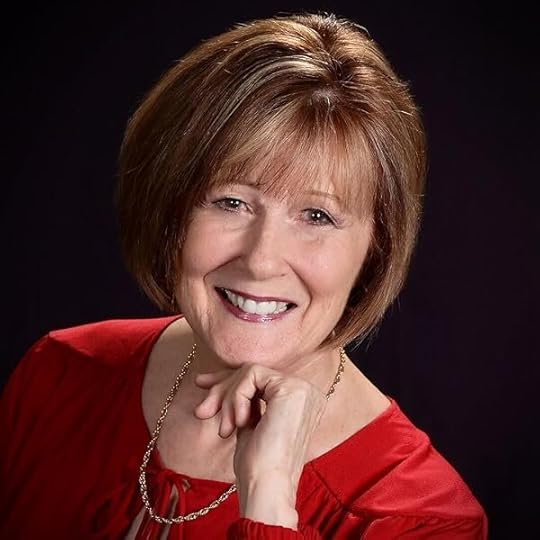
Meet Patricia Bradley
***
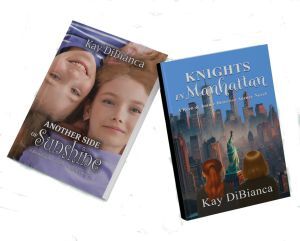
Whether they’re hunting for hidden treasure or tracking down dangerous thieves in Manhattan, the Reen & Joanie Detective Agency is on the job.
Join Reen and Joanie to make the world a better place.
Click the image to go to the Amazon Series page.
The post THE CRAFT OF WRITING ROMANTIC SUSPENSE – NOVEMBER 2025 appeared first on Kay DiBianca.


October 19, 2025
THE CRAFT OF WRITING REGIONAL FICTION – OCTOBER 2025
Welcome back to another episode of great writing advice on the CRAFT OF WRITING blog. This year we’re focusing on Genres, and we’re learning about approaches to writing thrillers, mysteries, romances, and more. Each month I interview an accomplished author who writes in a particular genre, so get ready to learn from the experts!
Today’s guest is my good friend Lisa Simonds. Lisa writes under the name of L.K. Simonds, and she’s here to give us insight into the craft of writing regional fiction. She certainly has the credentials—her novel Stork Bite won an IPPY Award for Regional Fiction in 2021.
Click the image below to go to the Amazon book page.
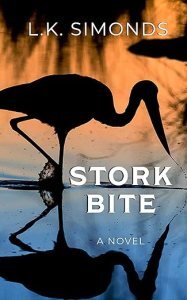
The name of each person who enters a comment on today’s blog will be put into the drawing for a copy of Stork Bite. So join the conversation and earn a chance to win. I’ll post the name of the winner after 9 PM Central Time tonight, and Lisa has agreed to provide a copy of the book to the winner. (Ebook, paperback, or audio, whichever the winner would prefer.)
The Craft of Writing Regional Fiction with LK Simonds
Share on X
* * *
Welcome, Lisa, and thank you for being on the Craft of Writing blog!
What is your definition of regional fiction?
Stories in which the setting (location and time) is a major character. I couldn’t resist comparing my definition to Google’s. Google cited some specific characteristics of regional fiction I think are helpful: detailed descriptions of the locale, characters who are shaped by their region, local dialects, and community rituals. I would add the cuisine because I am a foodie who is fortunate to also be Southern.
Why did you decide to write regional fiction?
The characters I wanted to write about lived in a location and time that shaped their lives. The location (Louisiana) was made meaningful to me by my family, beginning with my grandfather, who was born there in 1888. My grandfather was a storyteller, and he fueled my childhood imagination. There were others who told me about their lives. Most importantly, my aunt, who inspired the character of Mae. My aunt showed me the love letters from her high school sweetheart, whom she jilted to marry a racy boy she met in Shreveport. Also my mother’s cousins, my parents, my brother. My mother’s uncle kept a diary during WW1 that inspired some scenes in SB. My niece is a genealogist and is always coming up with interesting documents that flesh out our family’s Louisiana story. One was a newspaper clipping about my great uncle, who tried to break out of the LeCompte jail by climbing up through the hangman’s trapdoor on the roof. He eventually spent time in Angola. A little tidbit of his story—he was convicted of murder rather than a crime of passion because he reloaded his shotgun—made it into SB. All these people and their stories informed the novel. Besides relying on my own family lore, I did a ton of research on everything from cotton farming to Reconstruction.
Your book Stork Bite is set in Louisiana in the early part of the twentieth century. Tell us about your book and why you picked that place and time?
SB explores how the time and place (early 20th century Louisiana) shaped people’s lives in very different ways. First, there’s David Walker, a young black man whose life’s course is dramatically altered by a chance encounter with a Klansman. Then there’s Cargie (rhymes with Margie), a brilliant young black woman who has just graduated college with an accounting degree and can’t find work. There’s Mae, a young white woman who has everything going for her in a time and place that favored people like her. Yet she makes decisions that turn her into an outcast in the society that would have welcomed her with open arms. There are other characters whose lives are shaped by the region. The Tatums, who own a cotton farm; Jax, who woos Mae; and last but not least Thomas, who loves and enables Cargie.
As I mentioned earlier, I picked the setting because I could write about it with a depth of knowledge I don’t possess for any other locale. I don’t feel I know my own region (the Dallas-Fort Worth area) as well as I know the Louisiana of my family’s past.
Did you encounter any problems writing about such a remote place and time?
There’s an advantage to writing about a remote setting, especially if it involves a time or place that no one living has actually experienced. The author has the opportunity to create the universe of the story. If a writer can “keep it real” the reader will suspend disbelief and follow. Here’s an example of what I mean. Some of the characters in SB are black. I don’t think I could write about black characters living in today’s world and “keep it real.” I don’t have the knowledge or experience. But writing about black characters during Jim Crow was different. I did a lot of research besides the many books I had already read, such as, Black Like Me by John Howard Griffin, The Ways of White Folks by Langston Hughes, and Life is So Good by George Dawson. It became easy to imagine how I or anyone would feel in that time and place.
There’s a scene in SB in which David Walker’s family sits him down and explains race relations and how he must behave to avoid trouble with whites. The conversation became necessary because David had been raised in a remote area but was going to make supply trips to Shreveport with his grandfather. I never imagined when I wrote that scene that many black families still have a conversation on that topic with their young sons today. I learned that later from friends of color who read the book. I learned a lot writing this novel.
Was it difficult to capture the essence of the characters in your book?
I would not say any of the characters were difficult, but two of them took me a long time to understand. The first was Mae Compton, who was inspired by my Aunt Mabel, to whom the book is dedicated. It took me some time to permit Mae to come out from my aunt’s shadow and emerge as a personality who was her own woman. The second was David Walker, who made a decision I could not understand. I was so troubled that I went to prayer about David and eventually came across a psychology book that gave me insight into what was going on with him.
Writers approach their characters in different ways. I begin with something a character is doing or has done. My understanding of the character’s motives, etc. deepen through the writing process. That’s where they reveal who they really are, deep down. I really love an interview with William Styron about a character revealing herself to him during the writing process. You have to subscribe to The Paris Review to read the interview, but here’s the excerpt I’m talking about:
STYRON: There’s a scene near the beginning of Sophie’s Choice about Sophie’s childhood in Poland, and she begins to talk about her father. I was trying to establish her personality through the memory she had of Poland and her father. As this monologue unspooled and I wrote it down, I began to feel as if I were listening to an actual voice. She tells how her father—a professor at the Jagiellonian University in Krakow—had become a passionate fighter during the war to save Jews from the depredations of the Nazis. Then the most amazing thing happened: I suddenly said to myself, This woman is lying to me; this fictional character that I’m creating is telling me a lie. This couldn’t be! I knew I had to wait for a long time in the book to reveal it, but I realized that her father was in reality a vicious anti-Semite. This is what I mean about the autonomy of the character: how characters become more real than real. What amazed me was that I discovered this about this young woman even as I was writing—this revelation came out of the blue. But I was totally convinced that she was telling the truth first, and I only realized in my inner self that she was lying. That to me is a testimony of the ability for characters in a novel—at least of the kind I was writing—to take on a life of their own.
Can you give us a brief outline of the process—from concept to completion—that you used to write Stork Bite?
Well, it was a years-long process of imagination and experimentation. I had thought about writing a novel inspired by my Aunt Mabel’s life for a long time. I wanted to explore the decisions she’d made as a young woman, decisions that had run her future off the rails of what everyone expected for her. Over many months, I imagined the character Mae and the major characters. The most prominent ones are Cargie, who counterbalances Mae, along with Thomas, Jax, and David Walker. As the characters formed, I could see how their lives influenced one another.
The structure for all these characters’ stories became unwieldy quickly, mainly because David Walker’s story happened much earlier in time. I experimented with alternating chapters in each character’s POV, but that involved going back and forth between different time periods. Other novels have done this successfully, but it did not seem to work for SB. It was just too choppy and hard to follow. I wanted to give the reader an immersive, cohesive experience. What I came up with was a two-part novel. Part One is David Walker’s story. Part Two picks up in Shreveport with a new cast of characters a few years after Part One ends. This structure makes sense as the story unfolds to its conclusion.
I admit some readers struggle with the two-part format. When Part One ends and the Shreveport story begins, some readers are like, Hey! What happened to David Walker? And who are all these new people? Others seem to just settle in and enjoy the ride. To my thinking, those are the readers who demonstrate a lot of trust that the author will come through and satisfy them in the end. Still others love the feeling they got two novels in one and relish the mystery that is eventually revealed. I personally feel the format gives the novel depth it wouldn’t have had otherwise, much like discovering a long-hidden family secret. Suddenly all the years make sense whereas they were confusing before.
Writers can’t please everyone. I believe you have to be true to your own sensibilities and the story itself. It may not make for a bestselling book, but hopefully it will make for a novel that stands the test of time.
Here’s a link to the Kirkus page by a reviewer who was in the “What happened to David?” category. That review really disappointed me in 2021. I read it again for this interview and focused on all the good things Kirkus said and their recommendation to get the book. I was thrilled! Just shows the perspective that time and a little emotional distance from her work gives a writer. That’s a good thing.
What advice would you give an author who decides to write regional fiction?
First and foremost, know the place you’re writing about. It doesn’t matter how you know it, but you have to be really, really knowledgeable to create an immersive experience for readers. I never lived in Louisiana, but the place was a constant presence throughout my childhood. We went there all the time to visit relatives, who told story after story. My grandfather told stories. My aunts and uncles told stories. My parents told stories. My brother told stories. We ate the food, which is fantastic. All of this romanticized Louisiana in my mind, and I hope I was able to pass that allure along to readers who pick up SB.
I must add that even my familial saturation with all things Louisiana wasn’t enough. I researched this, that, and everything else during the writing of the book. (All novelists know research is much more fun than actually writing!) Speaking of research, I think regional fiction demands the writer use good judgement when weaving research into their story. Most readers don’t want to wade through an info dump in the middle of a scene.
Besides your own books, what other novels would you recommend?
I can’t NOT recommend To Kill a Mockingbird for regional fiction, or any fiction. Besides that phenomenal work, Fair and Tender Ladies by Lee Smith, set in Appalachia. I recommend the audiobook, which is beautifully done. I think the dialect in Ladies might be difficult in print and make the story less enjoyable. The Olive Kitteridge books by Elizabeth Strout are set in Maine. Strout is a wonderfully readable and subtle writer. Dear Committee Members by Julie Schumacher, in which the regional setting is a university. Kay, I think you know something about universities having their own very strong cultures. Hamnet by Maggie O’Farrell is set in Shakespeare’s England. There are so many more, but these are some of my favorites.
May I list a few memoirs, even though they aren’t fiction? Out of Africa by Isak Dinesen (Kenya), A Moveable Feast by Ernest Hemmingway (Paris), West with the Night by Beryl Markham (Africa), The Liars’ Club by Mary Karr (Texas coast). These are powerful works that show how a region shaped a writer.
Are you working on a book now?
I am, although this one is not regional fiction. It’s the story of a young wife and mother who gets caught up in a police investigation into a crime committed by her neighbors. This book will be a quick, feel-good story that targets a wider range of potential readers than my other novels.
Where can we find out more about you and your writing?
I recommend going to Goodreads under L.K. Simonds. That’s the best place to find reviews of my books and questions from readers. My reviews of the books I’ve read are there too.
I’m also on Facebook and Instagram under lisaksimonds
Thank you, Lisa, for being with us today!
The Craft of Writing Regional Fiction with LK Simonds
Share on X
***
Meet Lisa Simonds
L. K. Simonds is a Fort Worth local. She has worked as a waitress, KFC hostess, telephone marketer, assembly-line worker, nanny, hospital lab technician, and air traffic controller. She’s an instrument-rated pilot and an alumna of Christ for the Nations Institute in Dallas.
Her debut novel, All In, was released in August 2019. Her second novel, Stork Bite, released in November 2020.
***
The post THE CRAFT OF WRITING REGIONAL FICTION – OCTOBER 2025 appeared first on Kay DiBianca.
September 21, 2025
THE CRAFT OF WRITING CHRISTIAN FICTION – SEPTEMBER 2025
Welcome back to another episode of great writing advice on the CRAFT OF WRITING blog. This year we’re focusing on Genres. We’ll be looking at approaches to writing thrillers, mysteries, romances, and more. Each month I interview an accomplished author who writes in a particular genre, so get ready to learn from the experts!
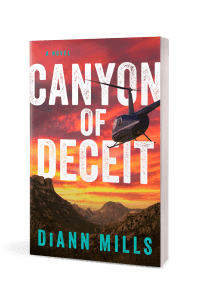
Award-winning author DiAnn Mills is returning today to talk to us about the craft of writing Christian Fiction, and she has a new Christian Mystery & Suspense novel, Canyon of Deceit , which was released this month so we’ll have a lot to talk about.
Click the image to go to the Amazon book page.
* * *
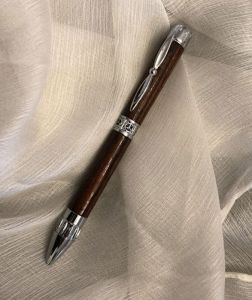
Many thanks to my good friend and master craftsman Dr. Steve Hooley who has provided me with another unique and fabulous “Wilbur and Orville 1903” propeller pen. Hand crafted by Steve, the pen is made from Ash, one of the woods the Wright brothers used to build their first aircraft. The market value of this beautiful creation is around $80.00.
The name of each person who enters a comment will be put into the drawing for the pen. So join the conversation and earn a chance to win. Because of a prior commitment, I won’t be able to randomly select a winner until Tuesday night around 9 PM Central Time, so you’ll have more time to enter your comments! (Previous 2025 winners are not eligible to win.)
The Craft of Writing Christian Fiction with DiAnn Mills
Share on X
* * *
Welcome, DiAnn, and thank you for being on the Craft of Writing blog!
What is your definition of Christian Fiction?
A story in which one or more of the characters solve their problems or strive for their goals from a Christian worldview. My goal is to show a character’s faith by their actions not by telling.
How is Christian Fiction different from other genres?
Basically, three points:
Omit swearing/cursing. Instead, the writer uses a metaphor, or he/she cursed so the reader understands the context of the scene. The reader can fill in what they imagine the character saying.Omit sex scenes.Omit unnecessary violence scenes. As a suspense writer, violence is part of the story. Christian writers use enough to show the reader what is happening without too many graphic details.
What’s the most important aspect of a Christian fiction novel?
I’d say hope. I write romantic suspense because we live in a dangerous and unpredictable world. The world craves hope.
Why did you decide to write Christian Fiction?
I am a Christian. My responses to the previous questions show why I believe good vs. evil is reality. Not a make-believe world, but a life that hits all of us no matter what our beliefs. I want to show hope and an all-powerful God.
Can you give us a brief outline of the process—from concept to completion—that you use to write a novel?
This may make you laugh!
An idea – what-if?Let it cook in my mind.Consider what kind of character has the most to lose and the most to gain from succeeding.Let the character cook in my mind.Complete 14 -17 pages of characterization that includes backstory pertaining to the character’s role/problem in the story.Write – I’m a seat of the pants writer.I never know how the story ends until I’m there!
What advice would you give an author who decides to write Christian Fiction?
Give your life to Jesus and follow Him with all your heart.Read Christian authors in your genre. Some Christians write in the Christian market, and some write in the general market.Attend Christian writing conferences to learn the craft and network with other writers, agents, and editors.
Can you tell us a little about your new novel, Canyon of Deceit?
Survival isn’t just about the wilderness—it’s about who you can trust.A desperate father, a hidden truth, and a child in danger. When wilderness expert Therese Palmer agrees to find a missing girl, she never expects the case to uncover a high-stakes international conspiracy. Now, with a Texas Ranger at her side and enemies closing in, survival isn’t just about the wild—it’s about who they can trust.
Book page: https://diannmills.com/books/canyon-of-deceit/
Besides your own books, what other novels would you recommend?
I’d rather give authors who never fail me with their stories: Jerry Jenkins, Tosca Lee, Steven James, Charles Martin, Lynette Eason, Terri Blackstock, Colleen Coble, and David Baldacci.
Are you working on a book now?
Just finished a romantic suspense novel that will be released in September 2026. And I’m in the characterization “cook” stage for another.
Where can we find out more about you and your writing?
Readers can find me at online for behind-the-scenes glimpses, writing tips, and lively discussions: Facebook, X, Instagram, Pinterest, Goodreads, BookBub, YouTube, LinkedIn, or my website: diannmills.com.
Thank you, DiAnn, for being with us today!
The Craft of Writing Christian Fiction with DiAnn Mills
Share on X
***
Meet DiAnn Mills
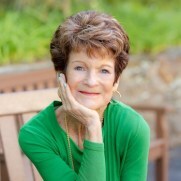
DiAnn Mills is a bestselling author who invites her readers to step into stories where suspense meets adventure and romance warms the heart. Known for crafting unforgettable characters tangled in unpredictable plots, DiAnn believes every breath we take unfolds a story waiting to be told—so why not make it thrilling?
Her novels have consistently landed on bestseller lists including CBA, ECPA, and Publishers Weekly, and have won prestigious awards such as the Christy, Selah, Golden Scroll, Inspirational Readers’ Choice, and Carol awards.
DiAnn is a founding board member of American Christian Fiction Writers and Conference Advisor for the Blue Ridge Mountains Christian Writers. She actively participates in Advanced Writers and Speakers Association, Mystery Writers of America, the Jerry Jenkins Writers Guild, International Thriller Writers, Outliers Writing University, and The Christian Pen. DiAnn passionately invests in helping fellow authors succeed through mentoring, book coaching, and editing. She travels nationwide speaking and teaching engaging writing workshops.
A proud coffee snob who roasts her own beans, DiAnn also enjoys diving into good books, experimenting in the kitchen, and unabashedly spoiling her grandchildren—whom she insists are the smartest kids in the universe. She and her husband make their home under the sunny skies of Houston, Texas.
Connect with DiAnn online for behind-the-scenes glimpses, writing tips, and lively discussions: Facebook, X, Instagram, Pinterest, Goodreads, BookBub, YouTube, LinkedIn, or her website: diannmills.com.
***

AND NOW FOR SOMETHING NEW!
The Reen & Joanie Detective Agency has landed in Manhattan… and New York will never be the same.
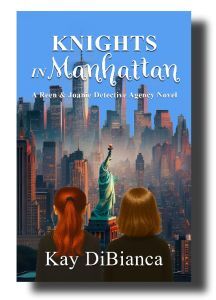
A gang of tricky thieves is on the loose in Manhattan, but no need to worry. The Reen & Joanie Detective Agency is on the case. The two pint-sized detectives track the crooks through some of the most famous landmarks in New York, but can the girls decode the strange clues and stop the criminals before they get away?
Hamsters, secret passageways, and a seven-year-old genius named Miles all contribute to this fun, action-packed romp through the streets and buildings of Manhattan.
Click the image to go to the Amazon book page.
The post THE CRAFT OF WRITING CHRISTIAN FICTION – SEPTEMBER 2025 appeared first on Kay DiBianca.
August 13, 2025
THE CRAFT OF WRITING FANTASY – AUGUST 2025
Welcome back to another episode of great writing advice on the CRAFT OF WRITING blog. This year we’re focusing on Genres. We’ll be looking at approaches to writing thrillers, mysteries, romances, and more. Each month I interview an accomplished author who writes in a particular genre, so get ready to learn from the experts!
Today’s guest is my friend and colleague, Beth Alvarez, who gives us insight into the craft of writing fantasy novels. Beth and I are members of the same writing group in Collierville, TN, so I’m familiar with her and her award-winning work. She’s published over twenty fantasy novels, so you’re in for a treat today.
Here’s one of her books. Click the image to go to the Amazon book page.
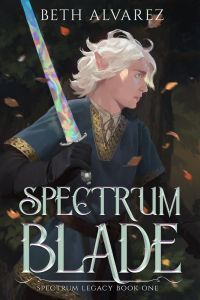
The name of each person who enters a comment on today’s blog will be put into the drawing for a copy of Spectrum Blade. So join the conversation and earn a chance to win. I’ll post the name of the winner after 9 PM Central Time tonight, and Beth has agreed to provide a copy of the book to the winner. (Either ebook or paperback, whichever the winner would prefer.)
The Craft of Writing Fantasy Novels with Beth Alvarez
Share on X
* * *
Welcome, Beth, and thank you for being on the Craft of Writing blog!
What is your definition of a fantasy story?
Fantasy is one of the broadest categories under the speculative fiction umbrella, but to me, the defining characteristics of fantasy are that it includes elements that simply aren’t possible in the real world. Be it magic or fantastical creatures like dragons and unicorns, a fantasy story contains at least one element of make-believe that means a scenario could never truly happen.
How are fantasies different from science fiction?
There’s actually a lot of overlap between fantasy and science fiction, to the point the two are often confused and hotly debated! But while both fantasy and science fiction revolve around telling a “what if?” sort of story, science fiction speculates on what could be possible with the correct technological advancements. We probably won’t ever find a unicorn outside of books and art—at least, not anymore—but space travel? Robotic enhancements? Well, we’re already doing some of that! Sci-fi just stretches the imagination beyond what we can already do.
What’s the most important aspect of a fantasy?
I believe the main component of what makes fantasy the genre it has become is a lack of plausibility. This ties into the differences between it and science fiction, too. We can’t ride dragons or attend an academy to learn magic, and we probably never will. There are many different subcategories of fantasy, though, and they all have their own rules for what makes the genre tick. Magical realism, for example, is a less-common subgenre of fantasy defined by a story being set in a very realistic world, often our own, with a single magical element added that doesn’t change the way the whole world functions.
My personal favorite is high fantasy, where the author is tasked with creating an entire new world from the ground up, which means establishing new rules for how that world works! Most of my books are high fantasy, and the majority of them are epic fantasy, where I first create a new world… then my story’s heroes have to save it.
Why did you decide to write in the fantasy genre?
Honestly, I’m not sure I had a choice. My mother had a bit of a whimsical side and I spent my childhood surrounded by paintings, statues, and stuffed animal unicorns that belonged to her, while she read me Narnia books at bedtime and taught me all about The Lord of the Rings. Fantasy was such an innate part of my life from my earliest days that I always believed adding your own stories to this library of fantastical creations was something you just did when you grew up. My earliest fantasy stories were written when I was four or five. You know, around the time you start being able to write sentences. It was as natural as breathing and I don’t think I ever considered any other genres.
Can you give us a brief outline of the process—from concept to completion—that you use to write a fantasy?
Concepts are the easy part, they just spring out of nowhere and I have more of them than I’ll ever have time to write. I try to focus on the ones I’m most excited about, or I’d never get anywhere.
I’m big on outlining, and I think my favorite method for planning any story is when I scrawl out a one- or two-sentence description of a story idea and then outline it with index cards. I believe you do something similar with sticky notes, where you frame out the overall structure and pacing of the story and then use individual index cards or notes to explain the major events that need to happen for each character.
Once I have a solid outline and everything is in the right order, I sit the stack of index cards on my desk and spend the next few months writing. I am a linear writer, so I start at page one and end at the last word of the book every time. Whenever I finish a chapter, I pass it off to my husband to see if he can poke holes in my plot or if I’ve explained my new magical or fantasy world concepts well enough. I cannot overstate how valuable that feedback is to me as I write, because it gives me a chance to correct or clarify things immediately and set myself up for success as I go.
After the whole book is done, it goes straight to my amazing team of beta readers to see if they have any thoughts. I usually send it to my editor at the same time. Yes, the first draft goes straight to edits! I write pretty clean drafts, so there’s rarely much revision to do, since all my problem solving happened during the outlining and planning stage. If my betas do turn up any issues, my editor is an incredible resource for helping me iron them out.
My books usually get 4 editing passes before they’re complete. When that very last editing pass is done, that’s my favorite part, because my husband always celebrates my hard work by delivering a pint of my favorite mango sorbet.
What advice would you give an author who decides to write a fantasy?
Make a lot of time for daydreaming. My best ideas and strongest inspiration always come when I have time to just sit and look at the clouds, or when I can let my mind wander while doing mundane things. Doing dishes, pulling weeds in the garden, folding laundry—any time I can keep my hands busy and my mind bored is perfect for dreaming up new possibilities. Those ideas are what will fuel your creativity more than anything else, so lean into it!
Besides your own books, what fantasies would you recommend?
I think the last series that swept me up and consumed me was The Emperor’s Edge by Lindsay Buroker. But lately it’s been hard to find time for long epics like that, so I have really enjoyed exploring a lot of shorter, sweeter fantasies and fairy tale stories. Frey and the Icy Orchard by Scarlett Luna Strange is one I’m enjoying now. Another is Love, Ships & Sea Serpents by Elaine Canyon.
Are you working on a book now?
Yes! I told myself I’d take a break after finishing my epic fantasy series Spectrum Legacy, but I only made it a few days before I started a new project. The Cinders and the Crown is my second fairy tale retelling, although I use the term “retelling” loosely. It’s a Cinderella story, except instead of her carriage turning into a pumpkin, the prince is transformed into a dragon at the stroke of midnight and it becomes her job to rescue the kingdom… and save him from his curse. I hope for it to be released by the end of the year.
Where can we find out more about you and your writing?
My home base is my website at https://www.ithilear.com and share lots of extras about my stories, characters, and fantasy worlds on Instagram as @authorbethalvarez – I’d love to see you there!
Thank you, Beth, for being with us today!
The Craft of Writing Fantasy Novels with Beth Alvarez
Share on X
***
Meet Beth Alvarez
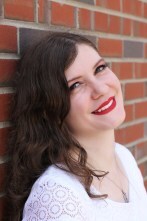 Beth Alvarez is an Illinois-born author living in Memphis, Tennessee, along with her husband, daughter, and a very mean cat. A visual arts major, she worked previously as a freelance graphic designer. Against all advice, she makes her own book covers.
Reading The Hobbit led Beth to fall in love with fantasy at age 8. She later developed a love for vampires and the supernatural, which is unsurprising, given she never outgrew the goth phase.
In her free time, Beth enjoys drawing, hitting the road in her beloved Mustang, sipping tea, sewing for her Asian ball-jointed dolls, and making her prior-Marine husband spar in the kitchen for sake of writing more convincing combat scenes.
She can be contacted via her website, where you can find her personal blog, and also sign up for bonus content and advance notification of new and upcoming titles: http://www.ithilear.com/newsletter.html
***
Another Side of Sunshine
ON SALE NOW 99¢
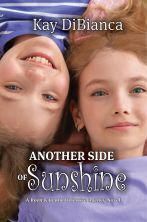
A Middle Grade Mystery featuring those two irrepressible detectives, spunky 10-year-old Reen and her shy 9-year-old cousin Joanie.
“The story excels at honoring the emotional realities of childhood without veering into sentimentality. It’s a smart, well-constructed mystery that values relationships over rivalry, process over prizes, and growth over glory.” —Prairie Book Reviews
Click the image to go to the Amazon book page.
The post THE CRAFT OF WRITING FANTASY – AUGUST 2025 appeared first on Kay DiBianca.
July 28, 2025
THE CRAFT OF WRITING COZY MYSTERIES – JULY 2025
Welcome back to another episode of great writing advice on the CRAFT OF WRITING blog. This year we’re focusing on Genres. We’ll be looking at approaches to writing thrillers, mysteries, romances, and more. Each month I interview an accomplished author who writes in a particular genre, so get ready to learn from the experts!
Today’s guest is my friend and colleague, Dale Ivan Smith, who gives us insight into the craft of writing my favorite genre: cozy mysteries. Dale writes his cozy mysteries under the name Dale Ivan, and his cozy series, the Meg Booker Librarian Mysteries, is set in the Pacific Northwest in the 1980s. The first two books in that series are pictured below. Click on either one to go to the Amazon detail page.
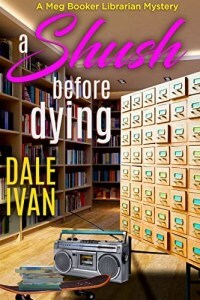
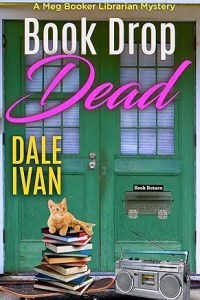
The Craft of Writing Cozy Mysteries with Dale Ivan
Share on X
* * *
Many thanks to my good friend and master craftsman Dr. Steve Hooley who has provided me with another unique and fabulous “Wilbur and Orville 1903” propeller pen. Hand crafted by Steve, the pen is made from Ash, one of the woods the Wright brothers used to build their first aircraft. The market value of this beautiful creation is around $80.00.
The name of each person who enters a comment will be put into the drawing for the pen. So join the conversation and earn a chance to win. I’ll post the name of the winner after 9 PM Central Time tonight. (Previous 2025 winners are not eligible to win.)
* * *
Welcome, Dale, and thank you for being on the Craft of Writing blog!
What is your definition of a cozy mystery?
For me, a cozy mystery is a mystery with a lighter tone, at least some humor, a character-focused subplot or two, which stars an amateur sleuth and a cast of fun, quirky characters in a colorful, distinctive, and intriguing setting. Cozies can be whimsical, even cute, and often have “punny” titles.
How are cozies different from other forms of mystery?
Great question! The tone is usually lighter than in other forms of mysteries, and the murder typically happens off-stage.
While the violence of the murder is usually not shown in cozies, the murder methods themselves can run the gamut from poison to encounters with a blunt instrument, falls, shootings or stabbings, and so on.
Cozy mysteries can be less complex than other forms of mystery, but there’s a wide range of “twistiness” with cozies, and some have quite involved mysteries.
The intriguing setting is also a character, and the community there often drives both the cozy “B plot” and the mystery plot.
Despite individuals who can be annoying, obnoxious or otherwise troublesome, the community in a cozy mystery is essentially good, and restoring balance to the community after a murder has occurred is another important distinction between cozies and say, police procedurals. All mysteries deal with solving a crime, often a murder, and the issue of justice. But in a cozy, justice is usually found, while things can be more nuanced in other sorts of mysteries where some of the time justice isn’t achieved. In a cozy, the killer is usually caught and will pay the consequences for their crime.
What’s the most important aspect of a cozy mystery?
Relationships are central to cozy mysteries—the amateur sleuth often has a best friend who helps her, as well as friends and family that provide support, create conflict, and who can often aid her in solving the mystery.
Our sleuth-hero has connections to different members of the community, connections which can be forged in the course of solving one mystery and then persist in subsequent ones. A taxi driver who helped them once, or a clerk who gave them valuable information, etc. Co-workers in the spice shop, book store, library etc. Of course, there can be challenging aspects to those relationships. A police officer ally who might also be a friend or even a love interest, which can add a personal dimension to concerns about the sleuth-hero running around trying to solve murders.
A romance is usually part of a cozy series. It can be very slow burn, and play out over several books. Sometimes the romance involves two love interests which create a romantic triangle with all sorts of dramatic possibilities.
Why did you decide to write in the cozy mystery genre?
I had thought about writing mysteries for years, encouraged by library colleagues to “write that library mystery” I had inside me. But it wasn’t until I finished the fifth and final novel in my Empowered urban fantasy series in May 2020 that I finally decided to write a cozy.
The goodness embodied in cozies, and the humor, and whimsical aspects tugged at me – I wanted to revisit the literal cozy library I started my library career in back in 1987, and show the now bygone world of books, paper card catalogs, date due stamps and all the rest I knew from back then.
Can you give us a brief outline of the process—from concept to completion—that you use to write a cozy mystery?
I usually start with a premise, such as a neighborhood fight over development, or a sketchy character found dead in the library book drop, and then figure out who the murderer was. Brainstorming reveals motivations, and helps work out what James Scott Bell calls “the Shadow Story,” what the killer was up to before the story begins and how the killer reacts to the amateur sleuth when they figure out she’s investigating the murder.
I also brainstorm a cozy subplot—such as Meg’s burgeoning romance with a colleague or the wacky musical her actor brother is putting on.
The shadow story also helps me plot out the details of her investigation while the cozy subplot gives me a “fun and games” counterpoint to solving the mystery.
Once I have these details I do an outline, mapping out the story beats and the major structure points, such as the mirror moment at the midpoint and the inevitable reveal and confrontation with the murderer.
Then I begin drafting.
During the entire process from first idea to completed draft I keep a novel journal where I brainstorm plot points, the mystery, the web of suspects, character motivations etc. While I know the murderer’s identity and story before I begin, I come up with more details as I draft, such as clues, red herrings, misdirects and so on.
I’ll rewrite and revise the draft, and then send it to my beta readers who are all mystery lovers. Once I’ve heard back from them, I’ll make further revisions based on their feedback, do a copy pass, and then send to my copy editor. Once she returns it, I implement her edits, proof read the book one last time, then upload it at all the major eBook retailers for publication.
What advice would you give an author who decides to write a cozy mystery?
Of course, it’s important to read in the genre, and steep yourself in cozy mysteries, to internalize their aspects and develop a sense of cozy mystery reader expectations.
When it comes to writing your own cozy mystery, going with a setting and occupations you know or can readily learn about can spur your imagination, and let you draw on your own knowledge and experience. Coming up with characters you love or hate, but most of all, have fun writing about, is also essential.
Besides your own books, what cozies would you recommend?
Some of my favorite cozies include the the Murder on Location books by Sara Rosett, the Corgi Casefiles series by Jeffrey Poole, the Library Lovers mysteries by Jenn McKinlay, Spice Shop Mysteries by Leslie Budewitz, the Hannah Swenson Mysteries by Joanna Fluke, the Cottage Garden Mysteries by H.Y. Hanna, and the Survivors Book Club series by Lynn Cahoon.
Are you working on a book now?
I’m in the middle of revising my third Meg Booker 1980s librarian mystery, Fine Me Deadly. It’s been a longer process than I bargained for (mysteries usually seem to be, for me), but the time spent has been worth it. I’m hoping to have the book out later this year.
Where can we find out more about you and your writing?
My website: daleivansmith.com. You can sign up for my mystery newsletter there.
Fantastic Fiction (https://www.fantasticfiction.com) has a list of both my cozies as Dale Ivan and my fantasy novels as Dale Ivan Smith. I’m on Bluesky: @daleivan.bsky.social. I also post at the Kill Zone blog (https://killzoneblog.com) every other Saturday and am usually there in the comments the rest of the time.
Thank you, Dale, for being with us today!
The Craft of Writing Cozy Mysteries with Dale Ivan.
Share on X
***
Meet Dale Ivan Smith
 Dale Ivan got into trouble in Fifth-Grade for sneaking off to the school library during class, so naturally wound up becoming a librarian, starting out at a small branch library in Portland, Oregon. A long-time mystery reader and watcher, Dale’s thrilled to have the opportunity to write a “near historical” library cozy mystery series. When he’s not writing or reading mysteries, he’s watching mystery shows with his wife, doing jigsaw puzzles together, stargazing, and enjoying another cup of tea.
***
Another Side of Sunshine
ON SALE NOW 99¢
A Middle Grade Mystery featuring those two irrepressible detectives, spunky 10-year-old Reen and her shy 9-year-old cousin Joanie.
“The story excels at honoring the emotional realities of childhood without veering into sentimentality. It’s a smart, well-constructed mystery that values relationships over rivalry, process over prizes, and growth over glory.” —Prairie Book Reviews
Click the image to go to the Amazon book page.
The post THE CRAFT OF WRITING COZY MYSTERIES – JULY 2025 appeared first on Kay DiBianca.
June 22, 2025
THE CRAFT OF WRITING A BOOK ABOUT THE CRAFT OF WRITING – JUNE 2025
Welcome back to another episode of great writing advice on the CRAFT OF WRITING blog. This year we’re focusing on Genres. We’ll be looking at approaches to writing thrillers, mysteries, romances, and more. Each month I interview an accomplished author who writes in a particular genre, so get ready to learn from the experts!
Today’s guest is my good friend and award-winning author Debbie Burke who has taken on the task of writing a book about the craft of writing. Her new work, The Villain’s Journey, gives us insight into crafting a compelling bad guy for our stories. Click the image to go to the Amazon page.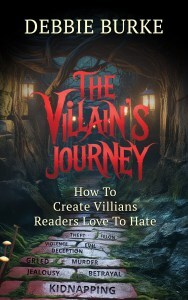
The Craft of Writing a Book about the Craft of Writing with Debbie Burke
Share on X
* * *
Many thanks to my good friend and master craftsman Dr. Steve Hooley who has provided me with another unique and fabulous “Wilbur and Orville 1903” propeller pen. Hand crafted by Steve, the pen is made from Ash, one of the woods the Wright brothers used to build their first aircraft. The market value of this beautiful creation is around $80.00.
The name of each person who enters a comment will be put into the drawing for the pen. So join the conversation and earn a chance to win. I’ll post the name of the winner after 9 PM Central Time tonight. (Previous 2025 winners are not eligible to win.)
* * *
Welcome back, Debbie, and thank you for being on the Craft of Writing blog!
Kay, it’s always wonderful to visit with you and your readers. Thanks for inviting me again.
I understand this is the first time you’ve dipped your pen into writing a book about the Craft of Writing. What made you decide to write The Villain’s Journey and how did you decide that particular topic?
It all started with a couple of posts I wrote for The Kill Zone (TKZ) about villains and how they, not the hero, drive crime fiction. Although a story is usually seen through the hero-sleuth’s eyes, the villain is the character who actually sets the plot in motion by committing a crime.
A regular TKZ reader mentioned she’d read a lot about the hero’s journey and asked if there was a comparable villain’s journey.
When I looked for an answer to her question, I was surprised there wasn’t a comprehensive guide about villains. So I decided to try to fill that gap on the writing reference shelf.
How did you go about getting source material for your book?
I read a lot of mysteries, thrillers, and suspense, and true-crime accounts.
Readers like to talk about their favorite villains, so I asked followers of TKZ, members of the Authors Guild, Mystery Writers of America, and International Thriller Writers; writing groups, and book clubs. I even pestered strangers reading books on planes and in coffee shops. They were always very good natured and answered my questions about why certain villains fascinated them.
Hannibal Lecter, Randall Flagg (Stephen King’s recurring villain), The Joker, and Lady MacBeth are often mentioned as GOATs (greatest of all time).
Additionally, I researched psychology texts to learn what motivates people to do wrong. What are the backgrounds of psychopaths, narcissists, and predators? What triggers them?
A few people are born malicious, but some are forced into desperate situations by circumstance. Others want to protect loved ones but instead become unwitting criminals. The variations are endless and fascinating.
Can you give us a brief outline of the process—from concept to completion—that you used to write The Villain’s Journey. How was it different from writing fiction?
I’m used to writing short nonfiction articles which are like chapters in a book. So I wrote a chapter about charming, irresistible villains, then one on serial killers, then Robin Hood villains, femme fatales, and so on.
Pretty soon I had a whole bunch of chapters about different types of villains, but they needed to be organized into a logical, interesting through-line. That took time, as well as compiling an index—not fun!
Since The Villain’s Journey is a how-to guide, I created “Build-a-Villain” worksheets to help writers drill deep into their character’s motives, desires, and rationalizations. Scattered throughout the book are useful tips and techniques I learned in 35+ years of writing, critiquing, and editing.
Fiction is making stuff up. Nonfiction is backing stuff up because it needs to be factual and accurate.
I enjoy both because they challenge different parts of the brain. I’m always learning.
Did you run into any unexpected issues while writing The Villain’s Journey?
Because I cite many examples from books, films, and TV shows, I wanted to be sure not to inadvertently violate any creator’s copyright. So I had an intellectual property attorney review the manuscript to be sure everything fell under the doctrine of fair use.
What qualifications do you feel an author should have before attempting to write a book about writing?
A book about writing is essentially teaching. I’ve known authors who were gifted wordsmiths and storytellers but lousy teachers. Conversely, I’ve learned from exceptional teachers who never published a book.
The ability to communicate abstract concepts in an understandable way is the key to good teaching. And writing is full of abstract concepts that are difficult to grasp.
An author can practice by writing articles for magazines, journals, blogs, newsletters, Substacks, etc. Establish credibility with respected publications. If you discover a fresh concept or way to explain craft skills, test it out by writing short pieces. If the message resonates with readers, you might have a solid book idea.
In your opinion, why is it important for authors to read books about their craft?
Nobody knows everything. There is always more to learn. Sometimes you read a craft book and shrug because it doesn’t apply to what you’re working on at the time. However, a year from now, that same book might have exactly what you need to learn.
What are your favorite craft of writing books?
Anything by James Scott Bell and Jack Bickham; H.R. D’Costa’s series; the Thesaurus series by Angela Ackerman and Becca Puglisi.
And of course, Christopher Vogler’s The Writer’s Journey that led me to write The Villain’s Journey.
Where can we find out more about you and your writing?
Visit my website: https://www.debbieburkewriter.com/
Every other Tuesday, you’ll find me at The Kill Zone.
The Villain’s Journey – How to Create Villains Readers Love to Hate will be published July 13, 2025. It’s available now for preorder at this link.
Thanks, Debbie, for being with us today.
Kay, it’s always my pleasure!
The Craft of Writing a Book About the Craft of Writing with Debbie Burke
Share on X
***
Meet Debbie Burke
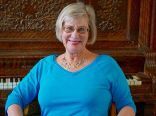 When readers meet Debbie Burke in person, they often say, “You look like such a nice lady but you’re always killing people!” She reminds them her murders only happen on the page. Her award-winning Tawny Lindholm Thrillers feature twisty plots, quirky characters, and breakneck pacing. She lives in northwest Montana near Glacier Park where she can be found scouting locations for her next crime.
***
Another Side of Sunshine
A Middle Grade Mystery featuring those two irrepressible detectives, spunky 10-year-old Reen and her shy 9-year-old cousin Joanie. And yes! There’s a villain.
“The story excels at honoring the emotional realities of childhood without veering into sentimentality. It’s a smart, well-constructed mystery that values relationships over rivalry, process over prizes, and growth over glory.” —Prairie Book Reviews
Click the image to go to the Amazon book page.
The post THE CRAFT OF WRITING A BOOK ABOUT THE CRAFT OF WRITING – JUNE 2025 appeared first on Kay DiBianca.
May 12, 2025
THE CRAFT OF WRITING WOMEN’S FICTION – MAY 2025
Welcome back to another episode of great writing advice on the CRAFT OF WRITING blog. This year we’re focusing on Genres. We’ll be looking at approaches to writing thrillers, mysteries, romances, and more. Each month I interview an accomplished author who writes in a particular genre, so get ready to learn from the experts!
Today’s guest is the accomplished and prolific author Kelly Irvin who gives us insight into the craft of writing women’s fiction. Kelly has published more than thirty novels in the Amish, Romantic Suspense, and Women’s Fiction genres. Her latest novel, The Year of Goodbyes and Hellos is pictured below. Click the image to go to the Amazon page.
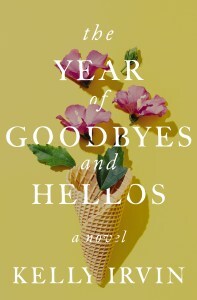
The Craft of Writing Women's Fiction with Kelly Irvin
Share on X
* * *
Many thanks to my good friend and master craftsman Dr. Steve Hooley who has provided me with another unique and fabulous “Wilbur and Orville 1903” propeller pen. Hand crafted by Steve, the pen is made from Ash, one of the woods the Wright brothers used to build their first aircraft. The market value of this beautiful creation is around $80.00.
The name of each person who enters a comment will be put into the drawing for the pen. So join the conversation and earn a chance to win. I’ll post the name of the winner after 9 PM Central Time tonight. (Previous 2025 winners are not eligible to win.)
* * *
Welcome, Kelly, and thank you for being on the Craft of Writing blog!
What is your definition of women’s fiction? Does it mean it’s written by a woman author? About women? Or for women?
The definition of women’s fiction has been the topic of much debate, some of it heated. Some authors will hotly deny they write women’s fiction—even if it fits the definition. That may be because some critics want to draw a straight line from chick lit and beach reads to the genre. Some want to call it other names such as family fiction or relationship fiction. I can only share what my definition of the genre is. Women’s fiction is a story about an emotional journey of the protagonist. It can be written by a man or a woman, it can share elements of other genres, but the primary focus is on an emotional journey that somehow changes your character’s worldview in a dramatic way.
How are women’s fiction books different from other forms of fiction, especially the romance genre?
There may be romance in women’s fiction, but that romance serves the emotional journey, rather than the other way around. Women’s fiction doesn’t guarantee the happily-ever-after that is required in the romance formula. You can have multiple protagonists, dual timelines, historical settings, sci-fi, really any genre as long as the focus is on the character’s story arc and how she is changed by her experiences.
In your opinion, what’s the most important aspect of a women’s fiction book?
For me, it’s being able to see how the events throughout the journey shaped the character into who she becomes and how she’s better for it. The events can be devastating, usually they are, but she arrives at an understanding of why she had to traverse that journey. She’s stronger and braver and tougher and more compassionate. At least that’s what I like to see in the women’s fiction I read. She doesn’t need a man for that transformation, but if there’s one along the way, that’s a nice perk.
Why did you decide to write in the women’s fiction genre?
I wrote more than 25 Amish romances and 5 romantic suspense novels for a publishing house, each edited by the same phenomenal editor. My Amish stories weren’t the typical sweet romances readers in that genre expect. They always had a bigger issue, whether it was overcome disability, the inability to forgive, domestic violence, postpartum depression, loss of a spouse, etc. My editor mentioned a number of times that she believed I was a women’s fiction writer at heart. When they decided to phase out Amish romances and my romantic suspense novels didn’t sell as well as they’d hoped, she suggested I use the opportunity to write a women’s fiction novel. I jumped at the chance. I chose to write a story close to my heart—how a cancer diagnosis impacts on marriages and family relationships. As a woman living with metastatic ovarian cancer for nine years, I had done all the “research” already. The Year of Goodbyes and Hellos is a book of my heart that proved itself in resonating with readers with similar experiences in some form or fashion. Considering the cancer statistics, just about every reader has either experienced cancer herself or has a family member who has. Being the daughter, sister, mother, friend, and grandmother of a family member makes this a story that can hit close to home.
Can you give us a brief outline of the process—from concept to completion—that you use to write your books?
I’m an organic writer, that is to say I don’t outline or write character sketches. I don’t do synopses (in advance). It’s hard to explain. With the Amish romances, I read a newspaper called The Budget that printed little blurbs from Amish scribes living in communities across the country. Little snippets catch my eye and fire up my imagination. A wildfire that affected an Amish community in Montana because a novel about a family that lost its home to the fire and how it affected their relationships. A blurb listing statistics such as births, deaths, and number of widows in a Missouri community became a four-book series about four widows, each in a different season in their lives. Romantic suspense novels often come from reading about crime in the newspaper. From there I imagine the story. I know who my protagonist is, I know what problem she faces, and I know who her love interest is going to be and what his challenge is (in the romance genre).
For women’s fiction, the books have come out of my own experiences, but are not autobiographical. The Year of Goodbyes and Hellos, features an oncologist who’s neglected her marriage and her two daughters because of her career. Then her sister is diagnosed with ovarian cancer and the oncologist jumps off the career fast track to walk through the treatment with her sister. This leads to trying to mend emotional wounds from their childhood, dealing with their father abandoning them and their mother dying of breast cancer. I knew what the conflicts were in their emotional journey, but I had to write the story to figure out how they would deal with them. Even I didn’t know how the cancer journey would end until I wrote the story. I’m often amazed by the turns the stories take. That’s the magic of it—the joy of it. I write it all in a messy first draft. Then I begin the revising and editing process, which will be intensive because I don’t outline. I may need to add and subtract to deal with threads that don’t get tied up. It’s a crazy process, but it works for me and allows my imagination to have full rein.
What advice would you give an author who decides to write a women’s fiction novel?
Pick a topic that is important to you. Be willing to dig deep. Don’t cheat the reader by taking the easy way out. Not all women’s fiction stories are like The Year of Goodbyes and Hellos. Some are light and breezy. Just not the ones I enjoy reading. Lol. Be sure this is the genre for you. I recommend joining the Women’s Fiction Writers Association if you’re serious about the genre. They have lots of webinars, workshops, and retreats that help writers develop their craft in this genre.
Besides your own novels, what women’s fiction books would you recommend?
Both authors would deny they write women’s fiction, but Kristin Hannah and Jodi Picoult’s books meet my definition of the genre. Kristen Hannah writes some amazing novels such as The Women, The Great Alone, and Firefly Lane. Jodi Picoult’s House Rules, Leaving Time, The Storyteller, and Songs of the Humpback Whale are a few examples. I think several of Charles Martin’s books qualify as women’s fiction, Lessons in Chemistry by Bonnie Garmus, most books by Liane Moriarty (Like Her Husband’s Secret and Big Little Lies.) Sorry! Get me started about books recommendations and I could go on all day!
Are you working on a book now?
I just finished the first messy draft of a women’s fiction novel with the working title of Bouquet of Thorns. It’s about the far-reaching intergenerational repercussions of family violence. I have personal experience with the issue. It’s a story I’ve been waiting most of my life to write. My agent plans to start pitching it in May so fingers-crossed we find a publishing home for it.
Where can we find out more about you and your writing?
My website is www.kellyirvin.com. You’ll find me on Facebook (www.facebook.com/Kelly.Irvin.Author), Instagram (@Kelly_irvin), and X (@kelly_S_Irvin)
Thanks, Kelly, for being with us today.
Thanks for having me!
The Craft of Writing Women's Fiction with Kelly Irvin
Share on X
***
Meet Kelly Irvin
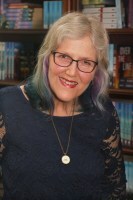
Award-winning author Kelly Irvin has published more than thirty novels and a dozen novellas in Amish romance, romantic suspense, and women’s fiction genres. Irvin explores themes of family, forgiveness, trust, love, and faith. A former journalist and public relations professional, she now writes fiction full-time. Having lived with ovarian cancer for nine years, she also writes blogs advocating for new cancer treatments and research. She and her husband reside in Texas. They’re the parents of two children and grandparents to four grandchildren. In Irvin’s spare time, she loves to read, write poetry, and play with her grandchildren.
***
IT’S HERE!
Another Side of Sunshine
A Middle Grade Mystery featuring those two irrepressible detectives, spunky 10-year-old Reen and her shy 9-year-old cousin Joanie.
“The story excels at honoring the emotional realities of childhood without veering into sentimentality. It’s a smart, well-constructed mystery that values relationships over rivalry, process over prizes, and growth over glory.” —Prairie Book Reviews
Join the launch team for Another Side of Sunshine! Post just once about the book to social media, and you’ll be entered in a drawing for a $25 Amazon gift card. Contact Kay through the contact form on her website for details.
Click the image to go to the Amazon book page.
The post THE CRAFT OF WRITING WOMEN’S FICTION – MAY 2025 appeared first on Kay DiBianca.
April 1, 2025
THE CRAFT OF WRITING HISTORICAL FICTION – APRIL 2025
Welcome back to another episode of great writing advice on the CRAFT OF WRITING blog. This year we’re focusing on Genres. We’ll be looking at approaches to writing thrillers, mysteries, romances, and more. Each month I’ll interview an accomplished author who writes in a particular genre, so get ready to learn from the experts!
Today’s guest is Carol Baldwin, whose debut historical fiction novel Half-Truths is released today! Click the image to go to the Amazon page.
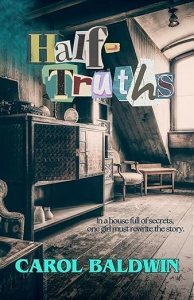
Carol shares details of the book as well as her writing journey, so get ready to travel back in time with Half-Truths!
The Craft of Writing Historical Fiction with Carol Baldwin
Share on X
* * *
Many thanks to my good friend and master craftsman Dr. Steve Hooley who has provided me with another unique and fabulous “Wilbur and Orville 1903” propeller pen. Hand crafted by Steve, the pen is made from Ash, one of the woods the Wright brothers used to build their first aircraft. The market value of this beautiful creation is around $80.00.
The name of each person who enters a comment will be put into the drawing for the pen. So join the conversation and earn a chance to win. I’ll post the name of the winner after 9 PM Central Time tonight. (Previous 2025 winners are not eligible to win.)
* * *
Welcome, Carol, and thank you for being on the Craft of Writing blog!
Thank you for having me!
What is your definition of historical fiction?
A story that takes place 50 years before the date of publication. I think critic Sarah Johnson’s definition says it well. Historical fiction refers to “novels in which the author is writing from research rather than personal experience.”
How are historical fiction books different from other forms of fiction?
Historical fiction incorporates real events, places, people, or all three. It brings together fiction and history.
What’s the most important aspect of a historical fiction book?
In one word: authenticity. In HALF-TRUTHS I researched deeply and widely to ensure that the story I was creating could have happened.
Why did you decide to write in the historical fiction genre?
I didn’t like history as a teenager—learning facts and dates was boring! Once I started reading historical fiction I loved the genre. People relate to stories more than they do to dry facts and it’s an engaging way to learn about other time periods. I also wanted to give teens a picture of what life was like in this part of the South before Civil Rights. To me, there is no better way than doing that than through fiction which shows “how the way things were.” That’s a phrase that both my Black and White experts repeated.
Your debut novel, Half-Truths, is being released today! Can you give us a brief outline of the process—from concept to completion—that you used to write your book?
First, I researched. I read about Charlotte, about the 1950s, about the conflict in Korea (at one point that was going to be a bigger part of the story); about the Black experience, fashion, people, and the news. You name it, I wanted to know it! In the early stages, I read articles from The Charlotte Observer on microfilm. More recently, I’ve read stories archived online which is much easier!
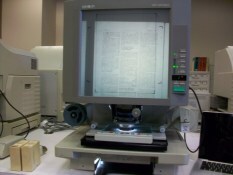
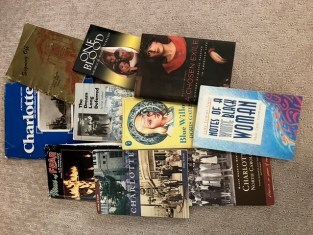
Second, I interviewed close to 100 people who lived in Charlotte during the period or had heard stories from family members. Bits and pieces of their stories got woven into mine. Sometimes it was hard to figure out what not to include!
Third, I visited places. In the End Notes of Half-Truths, I talk about visiting a former Rosenwald School in Charlotte. The personal stories of the two men I met and a picture on the school’s wall were pivotal in creating my plot. I visited the remains of an African American cemetery less than a half mile away from an upscale mall and restaurants. That cemetery was part of the inspiration for the cemetery scene in my book. I visited the Second Ward Alumni House and met alumni Vermelle Ely and Price Davis. Throughout many conversations, they showed me how important their Black high school was to the community and gave me a picture of what life was like for Black teenagers in the 50s in Charlotte.
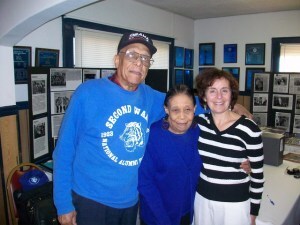 Carol with Price Davis and Vermelle Ely at the Second Ward Alumni House in 2010
At the same time that I was researching, I created the backstory, composed outlines, and wrote many drafts. Since the story involves family secrets, it was very important to get the genealogy correct. I wish I had used Ancestry.com to create the family tree from the beginning! I often referred to the backstory which included significant events as well as birth, marriage, and death dates, while I wrote.
Since this is my first novel and the family backstory is complicated, it was hard figuring out what and how the family secrets would be revealed. Outlines helped guide this process. In addition, although I had a vision of a White girl and a Black girl forming an unlikely friendship, and I even knew “the point of no return” which would test their friendship, I rewrote the “muddy middle” many times.
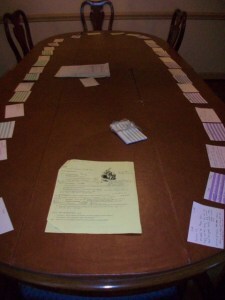
By the way, I wrote the beginning a lot. It took me a long time to figure out where the story began. When I finally came up with the beginning I knew it was the perfect place to start my protagonist’s journey.
What advice would you give an author who decides to write a historical fiction novel?
Create an organizational system and stick to it. This will help you keep track of the information, pictures, interviews, and maps, which you will accumulate. Create an account on Mybib.com and create a bibliography as you write. Some publishers will want to see that bibliography with your query. Watch YouTube videos or movies from the period if that is available. Listen to popular music. Create a Pinterest board with images that help you imagine the people and places. Here is one of mine for accessories. Follow me to view several more!
Besides your own novel, what historical fiction books would you recommend?
My mentor, Joyce Moyer Hostetter, has a series in Hickory, North Carolina that spans 20 years. I learned about digging deep for emotional resonance by reading her books. I also love Kimberly Brubaker Bradley and Ruta Sepetys. They are both masterful storytellers who incorporate historical events into their stories.
Are you working on a book now?
Out of the Flame is a middle-grade book with two timelines (My BFF says I always make things hard for myself! J. Here’s the pitch: At the turn of the 20th century, a young factory worker is surrounded by deafening noise, blisteringly hot glass, and mind-numbing exhaustion. There is no end in sight until he finds mysterious notes from a boy who lived this life 150 years earlier.
Where can we find out more about you and your writing?
All of my links are here: https://linktr.ee/carolbaldwin
If you’re curious about my path to publication, including reviews of some of the books I read, I’ve blogged about it here.
Thanks, Carol, for being with us today.
It’s been my pleasure to answer your unique questions!
Here’s the book trailer for Carol’s novel:
The Craft of Writing Historical Fiction with Carol Baldwin
Share on X
***
Meet Carol Baldwin
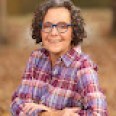
Frequent library trips, Saturday mornings reading in bed, word games around the kitchen table, and letters to pen-pals—these are the photographs from my childhood. My mother told me, “You have a way with words.” I believed her and grew into that blessing.
I started by publishing nonfiction because I felt comfortable translating my observations and experiences into words. Gradually, I left the safety of my own experiences and worked into writing fiction. I didn’t leave nonfiction behind though. Every story I plan to write will be rooted in real events and real places. Every writer has their favorite genre. I admire books that show tapestries of relationships and the interior life of a character’s emotions and choices. I hope that my books will capture that same experience for my readers.
***
COMING SOON!
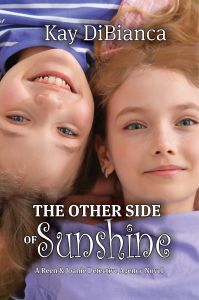
The Other Side of Sunshine
A Middle Grade Mystery
When spunky ten-year-old Reen learns of a hidden treasure in her quiet university town, she enlists the help of her shy nine-year-old cousin Joanie to help her find the loot. They form the R&J Detective Agency and follow clues through dictionaries, microfiche machines, and all around the campus. But Reen’s arch-nemesis Alicia is looking for the treasure too, and she’s not playing by the rules.
The post THE CRAFT OF WRITING HISTORICAL FICTION – APRIL 2025 appeared first on Kay DiBianca.
March 3, 2025
THE CRAFT OF WRITING BLENDED GENRE – MARCH 2025
Welcome back to another episode of great writing advice on the CRAFT OF WRITING blog. This year we’re focusing on Genres. We’ll be looking at approaches to writing thrillers, mysteries, romances, and more. Each month I’ll interview an accomplished author who writes in a particular genre, so get ready to learn from the experts!
Today, I’m posting an interview with my friend and colleague Terry Odell. Terry has carved out a lane for herself in a genre that blends police procedural with cozy mystery.
Terry’s latest book, now available for pre-order at this link: https://terryodell.com/danger-abroad
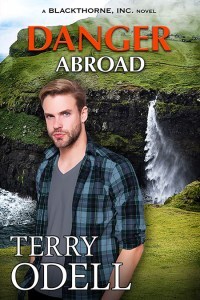
So read, enjoy, and engage in Blended Genre.
The Craft of Writing Blended Genre with Terry Odell
Share on X
* * *
Good news! In recognition of my Lady Pilot-in-Command series, my good friend and master craftsman Dr. Steve Hooley has provided me with this unique and fabulous “Wilbur and Orville 1903” propeller pen. Hand crafted by Steve, the pen is made from Ash, one of the woods the Wright brothers used to build their first aircraft. The market value of this beautiful creation is around $80.00.
The name of each person who enters a comment will be put into the drawing for the pen. So join the conversation and earn a chance to win. I’ll post the name of the winner after 9 PM Central Time tonight. (Previous 2025 winners are not eligible to win.)
* * *
Welcome, Terry, and thank you for being on the Craft of Writing blog!
Thanks so much for having me, Kay. I’m delighted to be here.
You write police procedural / cozy mystery novels. Define that blended genre for us.
When I wrote my first Mapleton Mystery, Deadly Secrets, I had no idea it was a “blended genre.” I simply told the story I wanted to tell. A police chief who had accepted the job reluctantly. I tested him by creating the first homicide in the town’s collective memory—and let things unfold.
I also realized that the mystery books I enjoyed most were those where the protagonist had a life beyond the job. I was reading many of them twice: once for the private life and again for the mystery. So, I gave Gordon, my police chief, a life outside the office as well. He’s very private when it comes to his outside relationships—almost shy—so in the first book, we meet Angie, the owner of the town café, the woman he has a personal interest in, but he’s reluctant to pursue it. He feels it’s inappropriate to be seen in any kind of relationship. (Angie puts him straight.)
And that was about it. I let things play out, and now, with 8 novels and 3 novellas, their relationship has grown.
Once I’d finished the book, I pursued the at-the-time process for finding a publisher. I met one editor at a conference, and she requested the manuscript. When she responded, her comment was, “I don’t know if this is a police procedural or a cozy.” She gave me the option of rewriting it, one way or the other, and resubmitting, or writing a new book which she said she’d be happy to look at.
After talking to the editor. I realized then that publishing was all about the marketing. Where would that book, as written, fit on the bookstore shelves? But I liked the book the way it was. Indie publishing was still in its infancy, but it seemed to me there must be other readers out there who like things a little different.
So, I guess to answer your question, a blended genre novel has elements of more than one genre.
How are police procedural / cozy mystery books different from other forms of fiction?
I would say they’re different the same way any other fiction genres are. People gravitate toward the genres that appeal to them, be they mystery, romance, science fiction, paranormal—the list goes on. As long as you meet reader expectations, such as making sure the crime is solved at the end of the book in a mystery, I think there’s plenty of room to include aspects of other genres.
Why did you decide to write in a blended genre?
An early reviewer praised the book as a police procedural with a cozy feel, so I accepted that and ran with it. Until then, I thought I was writing a straight police procedural with characters with lives beyond solving a crime. However, I don’t follow the ‘rules’ of the cozy genre. My protagonist is a cop, not an amateur sleuth. He’s in a relationship with someone who doesn’t solve crimes, but she’s a good sounding board and has helped Gordon from time to time. She doesn’t go off trying to solve crimes on her own. And, sorry, but there are no pets, talking or otherwise. Animals appear from time to time, but they’re on the periphery.
For the record, the Mapleton series is only a little different from traditional mysteries. When I read mysteries, I liked seeing what the cops did off the job, so there was more to the book than Gordon showing up at work every day. I preferred to put his personal life on the page, not between chapters.
Can you give us a brief outline of the process—from concept to completion—that you use to write your blended genre novel?
I’m not a plotter, so I don’t have an outline or a ‘formula’ when I set out to write one of my Mapleton Mystery books. For me, the process with the first book, Deadly Secrets, was basically the same as my process for any book. I follow the case, and I follow Gordon and Angie’s relationship as the story moves along. Some books might be more about the case, others might put more emphasis on Gordon and Angie’s home life, but I don’t track that. I let it unfold organically.
Note: for me, any book is all about the characters, so that’s where I focus.
What advice would you give an author who decides to write a blended genre novel?
If you’re looking to be traditionally published, it might be a harder sell than a single-genre, for the marketing reasons stated above. If you’re going to publish the book yourself, you’ll have to work at marketing—but then, unless you’re a Big Name Author, it doesn’t matter how you’re published. You’re going to have to do some—or a lot—of the heavy lifting.
Besides your own books, what other BG books would you recommend?
I’d recommend any romantic suspense. Those were the first books I had published, and they’re definitely blended genres, even though they’re not marketed that way. There’s a mystery/crime/suspense element and a relationship element, and both have to be resolved to fulfill reader expectations by the end of the book.
Are you working on a book now?
Yes, I have my 12th Blackthorne, Inc. novel, Danger Abroad, coming out next month. It also qualified, in my mind at least, as a blended genre, since there’s some suspense, a mystery, and a relationship. In fact, I call ALL my books “Mysteries With Relationships.”
Where can we find out more about you and your writing?
My website
My blog
My Substack https://terryodellauthor812.substack.com
The Craft of Writing Blended Genre with Terry Odell
Share on X
***
Meet Terry Odell
I was born in Los Angeles and now make my home in Divide, Colorado. An avid reader (my parents tell everyone they had to move from our first home because I finished the local library), I always wanted to “fix” stories so the characters did what I wanted, in books, television, and the movies. Once I began writing, I found this wasn’t always possible, as evidenced when the mystery I intended to write rapidly became a romance.
However, my entry into the world of writing can be attributed to a “mistake” when my son mentioned the Highlander television series on a visit home. Being the “good mother” I began watching the show and soon connected with the world of fan fiction, first as a reader, then as a critique giver, and then, one brave weekend, I wrote my first short story.
Things snowballed and soon I was writing my first original novel. Much later, I mentioned something about a recent Highlander episode to my son, and he said, “Oh, I’ve never actually watched the show, I just thought the concept was cool.” Little did he know what he’d started.
I love getting into the minds of my characters, turning them loose in tight spots and seeing what they do. Too often, they surprise me.
My published works include the Pine Hills Police Series, the Blackthorne, Inc. covert ops series, the Triple-D Ranch series and the stand alone, What’s in a Name? — all Romantic Suspense, as well as the Mapleton Mystery series, which have been described as a blend of police procedural and cozy mysteries. Heather’s Chase is a stand alone International Mystery Romance, which I had a blast researching on a trip through the British Isles. My mystery short story collection, Seeing Red, is a Silver Falchion award winner. I also have a collection of contemporary romance short stories.
When I’m not writing, or watching wildlife from my window, I’m probably reading.
* * *
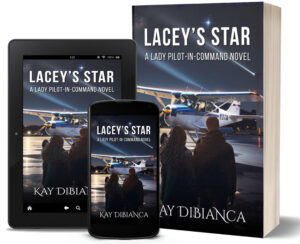 “a spectacular tale of decades-old murder mystery, human drama, and a hint of romance…” —Prairie Book Reviews
Available at Amazon, Barnes & Noble, Kobo, Google Play, or Apple Books.
The post THE CRAFT OF WRITING BLENDED GENRE – MARCH 2025 appeared first on Kay DiBianca.
February 10, 2025
THE CRAFT OF WRITING MIDDLE GRADE – FEBRUARY 2025
Welcome back to the February edition of the CRAFT OF WRITING blog. This year we’re focusing on Genres. We’ll be looking at approaches to writing thrillers, mysteries, romances, and more. Each month I’ll interview an accomplished author who writes in a particular genre, so get ready to learn from the experts!
Today, we’re talking Middle Grade Fiction with Dr. Steve Hooley, the author of the Mad River Magic series of Middle Grade books.
The Craft of Writing Middle Grade Fiction with Steve Hooley
Share on X
* * *
Steve is present in more ways than one today! He is also the master craftsman who created this unique and fabulous “Wilbur and Orville 1903” propeller pen. Hand crafted by Steve, the pen is made from Ash, one of the woods the Wright brothers used to build their first aircraft. The market value of this beautiful creation is around $80.00. (See more of Steve’s legacy pens at https://stevehooleywriter.com/legacy-pens/)
The name of each person who enters a comment will be put into the drawing for the pen. So join the conversation and earn a chance to win. I’ll post the name of the winner after 9 PM Central Time tonight.
* * *
Welcome, Steve, and thank you for being on the Craft of Writing blog!
Thanks for the invitation, Kay. It is my pleasure to be here.
What is your definition of a middle grade novel?
Most authors define “middle grade fiction” as being written for ages 8 – 12 (third grade through sixth grade), and containing no sexual content or realistic violence. I think that another way to look at it is the intelligence and information processing skills of the reader. “Children” of this age are reaching the age where they can understand adult logic and reasoning. And they are not yet filled with the adolescent hormone-driven physical and sexual attraction that is found in young adult material, and that clouds their thinking.
How are middle grade books different from other forms of fiction?
They differ from books for younger readers in that they are more like adult books, longer, with plot and structure. And they differ from books for YA and adult in that they usually contain no profanity, sex, or overt violence.
What’s the most important aspect of a middle grade book?
In my opinion, the age group of readers of middle grade books is in the innocent age of transition to adulthood. This permits the reader to learn principles from the book that will prepare them for their adult life. And it gives the author a unique opportunity to present material which the reader can evaluate and consider regarding choices for their adult life.
Why did you decide to write in the middle grade genre?
Grandchildren is the one-word answer. I actually write for advanced middle grade and early YA. Since I write Christian fiction, I call it “clean teen” fiction, no profanity or sex. I have 10 grandchildren, most of whom are in elementary school, but moving into Jr. Hi and high school. I wanted to provide reading material for them that is free of the negative influences infiltrating so many middle grade and YA books.
Can you give us a brief outline of the process—from concept to completion—that you use to write a middle grade novel?
Find an issue that is creating problems or concerns for readers of that age groupLook for a creative way to develop an adventure that uses symbolism and fantasy to provide entertainment while allowing the reader to confront the problem – entertain, don’t preachPlot the story in the mythical structure of the writer’s journey (Campbell and Vogler)Keep the material and content appropriate for the age groupWrite and edit, constantly keeping the age of the characters in mindSeek feedback from advanced middle grade or high school students
What advice would you give an author who decides to write a middle grade novel?
I was fortunate to find a middle school (grades 5-8) gifted and talented coordinator at our local school who recruited volunteers for beta reading. This is a great way for us oldsters to learn how the current generation of middle schoolers are communicating. Prepare yourself for their honesty and bluntness.
Also, prepare yourself to find a wide discrepancy between boys and girls and what kind of reading material they want.
I would also advise, if you are a male writer, it is safest to use a teacher or coordinator to be your contact person.
Besides your own books, what MG books would you recommend?
Of course, the Harry Potter series and the Percy Jackson series.
Another book that I found extremely helpful was S.P. Sipal’s A Writer’s Guide to Harry Potter. This is actually a comprehensive book on all aspects of writing fiction, using J.K. Rowling’s work as examples.
Are you working on a book now?
Yes. I’m currently working on #7 in the Mad River Magic series. The context is the current huge problem of fentanyl deaths in young people.
Where can we find out more about you and your writing?
Go to https://stevehooleywriter.com/ for information on my books.
Also, sign up on the opening page of the site for my newsletter if you would like to get monthly updates, and have an opportunity to be in monthly drawings for “legacy pens” such as Kay’s Propeller Pen. I make pens from old trees and old buildings to “leave a legacy.”
Thanks, Steve, for being with us today.
Thanks, Kay, for the opportunity.
The Craft of Writing Middle Grade Fiction with Steve Hooley
Share on X
***
Meet Steve Hooley

Steve Hooley is a physician/writer. He has published seven short stories in four anthologies, his father’s memoirs, and is currently working on a middle-grade fantasy series, Mad River Magic.
Steve lives with his wife, Cindy, in rural western Ohio. They have five children and nine grandchildren. When not writing, he makes legacy pens and takes care of his enchanted forest.
To learn more, please visit SteveHooleyWriter.com.
* * *
“a spectacular tale of decades-old murder mystery, human drama, and a hint of romance…” —Prairie Book Reviews
Available at Amazon, Barnes & Noble, Kobo, Google Play, or Apple Books.
The post THE CRAFT OF WRITING MIDDLE GRADE – FEBRUARY 2025 appeared first on Kay DiBianca.