Bruce Cleveland's Blog
July 24, 2019
The Traction Gap Framework®: It’s Not Just For Startups

In February this year, we released, Traversing the Traction Gap. The purpose of the book is to provide a roadmap — the Traction Gap Framework — for entrepreneurs so they can successfully go from ideation to scale.
In it, I shine a bright light on the go-to-market phase, a period of time when more than 80% of all startups fail. I wrote the book as a “how-to” guide to provide entrepreneurs with something tangible to help them during the murky early stage go-to-market phase, so venture firms are willing to invest in them.

We are happy that it’s been a best-seller (see reviews here) and I have been graciously invited to lecture on the Traction Gap Framework principles at universities such as Babson, Columbia, Stanford, University of Chicago, and others.
One of the questions I’ve received since the book came out is whether the Traction Gap Framework can be applied to companies that are no longer startups. My response is an unequivocal “yes”! However, to explain, I need to refer to a book published by my Wildcat partner, Geoffrey Moore, iconic author of Crossing the Chasm.
Zoning to WinIn Geoff’s latest book titled, Zone to Win, he describes an issue most incumbent companies face at one time or another: a new product enters the market and threatens the incumbent. The typical corporate response is to reach into an innovation lab — or skunk works teams — take what is there and quickly release the product into the hands of the marketing and sales teams so they can eliminate the competitive threat.
In most cases, this proves to be highly ineffective. A recent article by Harvard Business Review points out many of the reasons innovation labs fail, including: lack of alignment with the business, lack of metrics to track success, and lack of balance on the team.
To address this common and challenging issue, Geoff worked with Marc Benioff, CEO of Salesforce, and other notable CEOs to create a much more effective way for companies to respond. In Zone to Win, Geoff defines and describes four zones that comprise a company: performance, productivity, incubation, and transformation.
Performance — contains the products, processes, personnel — and business model — that currently drives the majority of a company’s revenue.Productivity — contains the people and processes that support the products and personnel in the performance zone.Incubation — contains the people building a new product or service and is classically located inside a development organization.Transformation — a new organizational construct. Contains a “virtual” team of people who come together from various business functions inside the company — product management, sales, marketing, legal, finance, support, etc. — to ready a new product for entry into the performance zone.Here is how these zones appear graphically: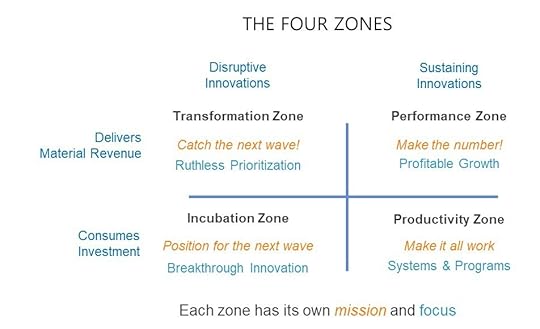
I highly recommend that every large company executive team read Zone to Win because the problem it addresses is universal.
The Traction Gap Framework and Large CompaniesThis brings me to how the Traction Gap Framework can apply to an incumbent company.
The incubation zone is essentially a startup housed inside a large company and this is where the Traction Gap Framework is applicable. All new products/product lines must go through the three phases defined in the Traction Gap Framework: go-to-product, go-to-market, and go-to-scale.
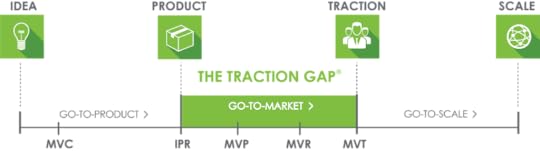
All of the framework valuation inflection points and the “market engineering” work I describe and define in Traversing the Traction Gap apply to products and teams inside the incubation zone.
The BIG difference is that the metrics I derived from successful SaaS companies and the key investment points that venture firms seek that I discuss in the book can be quite different from the objectives large companies are concerned with.
To make the Traction Gap Framework applicable for larger companies, teams inside these companies should simply replace the value inflection point metrics I discuss in the book and replace them with the company’s internal objectives and metrics of success. These might include revenue targets, gross margins, investment capital, investment hurdle rates, etc. But, while the metrics may be different the Traction Gap Framework value inflection points and architectural pillars (product, revenue, team and systems) are all still relevant.
If you’re a member of a team inside a large company tasked with bringing a new product to market, I would encourage you to consider using the Traction Gap Framework as a way to think about the process. And, again, I highly recommend you read Zone to Win; it offers a great way to organize the company so it can successfully introduce new products.
Want more? Visit www.wildcat.vc and follow us on Twitter , LinkedIn , Facebook & Instagram .
The opinions expressed here represent those of the author and not necessarily the views of Wildcat Venture Partners.

The Traction Gap Framework®: It’s Not Just For Startups was originally published in Wildcat - A POV on Medium, where people are continuing the conversation by highlighting and responding to this story.


April 29, 2019
So, You Want to Build a Category…

So, You Want to Build a Category…
The book Traversing the Traction Gap explains how you can take an idea and turn it into a $B+ outcome using the Traction Gap Framework®. In it, you will learn that all early stage startups must become great at “market engineering”, and, a key component of market engineering is “category creation”.
Make no mistake, though, category creation is hard work.
I was a very early executive at Siebel Systems, the company that created what eventually became the CRM category. However, when Tom Siebel and Pat House founded Siebel, no company had ever invested in an enterprise “sales information system”. No one was even looking for one.
After my operating career I turned venture investor. I was fortunate to be a first investor in Marketo. When Phil Fernandez, Jon Miller and Dave Morandi founded Marketo, no company had implemented a lead generation and scoring “marketing automation system”. No one was even looking for one.
There were no budgets for these applications. Many of the economic buyers were skeptical of their value. Most venture firms were unconvinced that a market existed for them.
Each companies’ first product releases were ugly. The feature sets were incomplete — they were not “whole products” and required significant training and hand holding to stand up and generate value.
In Marketo’s case, they had to scrap a significant amount of initial development work because what they had built wasn’t generating traction. Churn was high. Adoption was low.
It wasn’t until the team introduced “lead scoring” — a marketing funnel, along with an application that supported those capabilities based upon a year’s worth of customer feedback — that Marketo began to see traction in the market.
In those early years, Tom and Pat (Siebel) and Phil and Jon (Marketo) invested significantly in thought leadership activities to make people “think different”. Tom and Phil each wrote a book that laid out thought-provoking principles. Both spoke extensively at conferences, with industry analysts, and focused on winning their first notable accounts.
To go after the “Early Adopters/Visionaries”, Siebel borrowed Andersen’s (Accenture’s) brand and used that to generate legitimacy for Siebel’s products inside large accounts.
In Marketo’s case, they chose to begin in the SMB and didn’t need a large integrator but instead focused on capturing notable Silicon Valley startups as their initial customers.
Geoffrey Moore identified key issues associated with the early market years ago in his iconic book, Crossing the Chasm. Technology startups — that focus on enterprise solutions — need to identify “early adopters” who believe what the startup believes. These are the few potential customers who believe your solution will give them a competitive advantage and are willing to work with an incomplete product.
These visionary customers primarily respond to thought leadership vs. demand generation programs. At this stage, your job as a startup team is to find opportunities to build your category by telling your epic story — through writing books and blogs, delivering keynotes at conferences, etc. — which lays out the world as it could be, not as it is.
Publicly telling your story over and over again will go a long way toward engaging with the potential “early adopters” you need before you can move on to a larger market segment, “pragmatists in pain”. These are the companies that know they have a problem but won’t be willing to be “the first adopters”.
So, when you’re in the very early stages of building your B2B startup, you should be prepared to put a significant amount of effort into the market engineering task of category creation that includes provocative thought leadership language, concepts, and ideas that you can propagate. These category creation precepts will make people “think different” and separate your startup from the cacophony of the status quo.
Want more? Visit www.wildcat.vc and follow us on Twitter , LinkedIn , Facebook & Instagram .
The opinions expressed here represent those of the author and not necessarily the views of Wildcat Venture Partners.

So, You Want to Build a Category… was originally published in Wildcat - A POV on Medium, where people are continuing the conversation by highlighting and responding to this story.
April 12, 2019
Why We Invested In Vlocity

Some decisions are easier than others.
Unlike other investments we have made, we knew from the very beginning Vlocity would be a winner.
Why?
We use the four Traction Gap Framework pillars (Product, Revenue, Team and Systems) as an evaluation model when making investment decisions.
Vlocity was led by a seasoned pro, David Schmaier, who had captained the Products division of Siebel Systems — the company that created CRM. David and his organization built all of Siebel’s original horizontal and vertical CRM product offerings. Siebel was the fastest growing company in US history at the time — $0 to $2 Billion annual revenue in 5 years (more than 750,000% CAGR) and had reached a peak market cap of $29 Billion before its acquisition by Oracle in 2006. So, out of the four pillars, we knew Product, Team, and Systems were covered. Salesforce was also fully behind the company as a major investor and partner, so the fourth pillar, Revenue, was nailed.
With all four pillars covered, it was hard to envision Vlocity not succeeding.
When Vlocity recently raised a $60 Million Series C round of financing, establishing a $1 Billion valuation this reaffirmed the principles in the Traction Gap Framework.
While everyone seems to know the consumer startup “unicorns” few know their enterprise counterparts. Vlocity is a Forbes Cloud 100 company and one of Salesforce.com’s bigger — and one of its fastest growing — partners. They build, market, and sell industry-specific cloud and mobile CRM solutions that utilize the Salesforce horizontal platform.
MARKET OPPORTUNITY
Vlocity CEO David Schmaier was an early pioneer in the CRM space. He was a member of the original founding executive team at Siebel Systems. David and I worked together for many years at Siebel; David ran the Products organization and I ran Marketing and Alliances. He was (is) a phenomenal leader who had scaled with Siebel from its very early days. So, it was easy for us to have confidence in his executive and leadership capabilities.
 David Schmaier
Not long ago, David was looking to get back into the startup game, so he attended Salesforce’s “Dreamforce” conference and discovered Veeva — a company that delivers industry cloud solutions that provide data, software, services and an ecosystem of partners to support pharmaceutical and healthcare business functions. At the time, Veeva had become one of Salesforce’s more successful partners by helping companies of all sizes bring products to market faster and more efficiently while maintaining compliance.
This was David’s aha moment — when he realized that his vertical industry experience could be leveraged into a cloud offering that would cover not one core vertical, such as Veeva, but five. Vlocity now embeds industry-specific functionality including best practices and business processes for the Communications & Media, Insurance & Financial Services, Health Insurance, Energy and Public Sector industries. These pre-built apps enable companies to be more agile and deliver better time-to-value across digital and traditional channels.
According to a recent report by Gartner, in 2019 spending for SaaS-based CRM will reach approximately $42 billion and represent 75% of the total CRM software spend.

At Siebel, we learned that companies are far more willing to invest in SaaS-based CRM software when they can get access to vertically-focused solutions that are tailored for their industry, flexible in deployment, provide an overall increased business agility, and help deliver a better customer experience — at a significantly reduced total cost of ownership. The Vlocity team took the lessons they had learned at Siebel and built a suite of modern vertical solutions for the Salesforce platform.
THE PRODUCT
With its industry-specific cloud and mobile software, Vlocity helps drive digital transformation for the world’s largest companies and government entities including notable companies such as: New York Life, Cigna, Liberty Mutual, Colorado Department of Health Care, Delta Dental, and T-Mobile. And, they partner with Adobe, DocuSign, and NTT to name a few.

As an “industry cloud” pioneer, Vlocity was built in partnership with Salesforce, the global leader in CRM. Their cloud and mobile applications transform customer processes and experiences to improve overall engagement while easing deployment.
WHAT THIS MEANS
If we take a closer look at Vlocity’s journey from initial startup, we see the ideal case for the premise of my new book, Traversing the Traction Gap.
Too often, we’ve seen companies trip at each value inflection point along the Traction Gap Framework — Minimum Viable Category (MVC), Initial Product Release (IPR), Minimum Viable Product (MVP), Minimum Viable Repeatability (MVR), and Minimum Viable Traction (MVT).
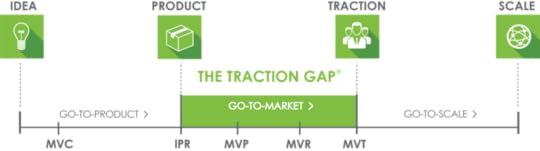
David’s team has pegged each value inflection point and the four core architectural pillars of the Traction Gap enabling them to secure a C-round with the highest valuation and a minimum amount of dilution.
Product Architecture. Not only is their product based on the success of SaaS-based CRM systems, it is built on the largest CRM platform in the world.Revenue Architecture. It’s a simple message — all the power of the Salesforce platform, priced similarly, verticalized so it is optimized for companies in specific industries, and endorsed and jointly sold in partnership with Salesforce.Team Architecture. Vlocity prides itself not only on award-winning technology, but also on the talent and experience of its team. The company is comprised of some of the most experienced executives in cloud computing and industry transformation.Systems Architecture. This team has experienced rapid growth in the past and knew how to prepare for those times when they’d need to scale.This is an experienced team with previous success working together. They had a clear vision they felt they could execute and knew what they needed to traverse the Traction Gap from Ideation. Congratulations to David and the entire Vlocity Team!

Why We Invested In Vlocity was originally published in Wildcat - A POV on Medium, where people are continuing the conversation by highlighting and responding to this story.
February 28, 2019
The Final Hurdle: Reaching Minimum Viable Traction and Preparing to Scale
Minimum Viable Traction (MVT) marks the final value inflection point, the end of the Traction Gap.
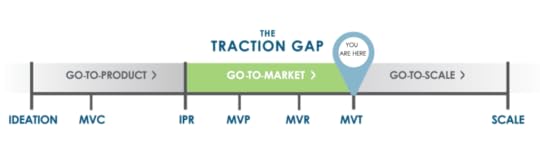
Once you arrive there, congratulations! You have successfully traversed the Traction Gap, the most challenging period of time in an early stage startup’s journey to business success. You are now a member of a tiny group of startups that survive this process (less than 20%) and are ready for the go-to-scale phase. Break out the champagne and give your whole team a big pat on the back.
Securing Funding: Getting from Minimum Viable Repeatability (MVR) to Minimum Viable Traction (MVT)Getting from Minimum Viable Repeatability (MVR) to Minimum Viable Traction (MVT) often requires a fresh round of capital, and often quite a lot of it.
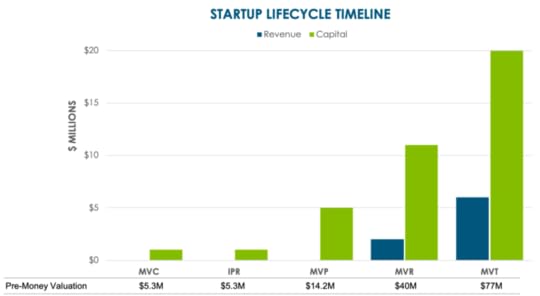
For example, if you are a B2B SaaS company, at MVR you will be generating about $2M ARR. To reach MVT, you must triple that within the next 12 to 18 months. You will need at least $1 of fresh capital for every new $1 of bookings. More likely, you will need $2 capital for $1 of bookings. So, if you are at $2M ARR and you need to get to $6M ARR, you will need to add $4M of new bookings/revenue. You will need anywhere between $4M and $8M to cover your sales and marketing costs, let alone engineering, G&A and the rest, to make your way to MVT.
Here are a few words on raising the capital to take you from MVR to MVT:
Your last capital raise (prior to Minimum Viable Product [MVP]) was based upon your team, the market opportunity, and some early customer/consumer wins. But this round will be based upon your business performance. Your valuation will be a function of your growth velocity, judged by your Customer Acquisition Cost (CAC), CAC ratio, gross margins, new customer attainment, churn rates, etc.
Whereas your last investor deck led with an overview that showcased the market opportunity and described how awesome your product was, your new investor deck must begin with and feature the performance of the business. Mid-to-later stage investors are interested in performance first; everything else is secondary. For this reason, a word to the wise: in your investor deck, have the details of the product itself come later. Start with an epic story about the grand vision, and then get right into the quantitative evidence. Why you are winning. This is what these investors will care about. Product demo and everything else should come later. This is unorthodox, but at Wildcat we’ve observed the successes and the failures of literally thousands of early stage startup presentations. We’ve seen what works and what doesn’t.
Many VCs won’t invest at MVR and want to wait until MVT. But there are true early stage investors out there. If you go in with the approach described here, you give yourself the best chance of securing some much-needed capital.
Are we there yet?How do you know you’ve reached MVT?

Here’s a simple way to think about it: MVT = MVR plus multiple quarters of growth. There are lots of ways to measure growth: the obvious one is revenue, but you might also focus on engagement, downloads, usage or other metrics. It depends in large part on whether you are B2B, B2C, or B2B2C. However you measure it, if you’ve grown rapidly over the prior four to six successive quarters, then the market is accepting you. Your trajectory is up and to the right. For SaaS companies, about $6M ARR or $500K MRR is considered to be MVT.
Some reliable indicators that you’ve hit MVT are:
You have released several versions of your product, and marketed and sold your offerings multiple times to companies or consumers. Internally, you’re feeling pretty confident about your skills on this front.You have demonstrated you can recruit and hire talented people into the organization, and there is solid team cohesion all round.You are able to reliably predict prospect conversion rates because you are building a historical track record of your startup’s pipeline and team’s performance. Your marketing and sales processes enable you to cost-effectively and reliably identify and acquire new customers each month.Once you have reached MVT, you’re ready to really scale the business. But with success comes more work. Scaling means more capital, more people, and more technology. You’re at the point when many of the mid to late stage venture firms will aggressively reach out to see if you’re interested in taking on more capital v. you having to reach out to them. This is great, but it’s more work at a time when you’re also managing your ever-growing business and need to hit your target objectives. Bear in mind, as you reach MVT, the real scaling work is just beginning.
Your team has done incredible work, and you are in an exclusive club of survivors. But after MVT, if you want to match the growth rates of the most successful startups, your startup must prepare to triple the next year ($18M ending ARR), then double, year over year, for at least the next three years. This is typically the minimum amount of time — 8 years — it takes to arrive at a liquidity event, whether an IPO or an acquisition.
The business challenges that arise after MVT are beyond the scope of the Traction Gap Framework. We always recommend Wildcat Partner, Geoffrey Moore’s classic work, Crossing the Chasm, to get a handle on the next phase.
This article is the eighth in a series of blog posts related to the Traction Gap, the challenging go-to-market phase where the vast majority of early stage startups — more than 80% — fail.
To read the prior blog posts about the Traction Gap, click here .To get a copy of the book, “Traversing the Traction Gap”, click here .To get a deeper understanding of the Traction Gap principles, check out these resources:
Traction Gap Infographic Traction Gap Framework Traction Gap NewsThis article was first published by Wildcat Venture Partners on February 25, 2019.
Want more? Visit www.wildcat.vc and follow us on Twitter , LinkedIn , Facebook & Instagram .
The opinions expressed here represent those of the author and not necessarily the views of Wildcat Venture Partners.


The Final Hurdle: Reaching Minimum Viable Traction and Preparing to Scale was originally published in CEO Quest Insights on Medium, where people are continuing the conversation by highlighting and responding to this story.
February 26, 2019
Thinking Beyond the Product: The Challenge & Opportunity of Minimum Viable Repeatability (MVR)
Okay, so you’ve declared Minimum Viable Product (MVP). You’ve nailed your value propositions and your pricing and terms, and you are confident that your category positioning is on point. Your team is now marketing and selling your product. This means your next challenge is to reach the Traction Gap value inflection point called Minimum Viable Repeatability (MVR).
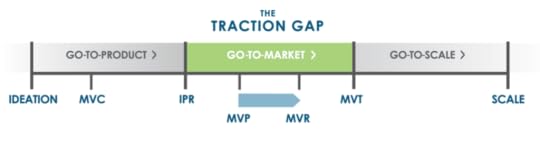
To reach MVR, you must demonstrate that you have been able to successfully release multiple versions of your product, market and sell your product many times to many companies, hire top talent personnel, and develop the internal systems that enable you to quickly and cost-effectively manage the business. This is the first significant step in your journey of “scaling” your business. And, to be on track with the best startups at this phase, you only have a year and a half to go from MVP to MVR.
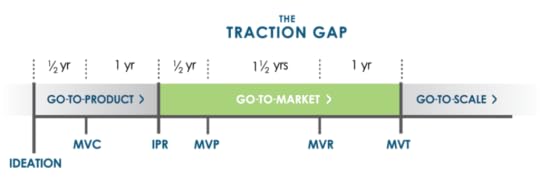
Make no mistake: getting to this next Traction Gap value inflection point is the most difficult phase you and your team will face. As far as the venture investment community is concerned, your ability to go from MVP to MVR in the next 18 months — which, trust us, will fly by — will determine whether your startup sinks or swims. And during this time, not only will you need to demonstrate you can grow your business, but you may also be faced with having to raise your next round of capital. It’s one of those times when caffeine will be your savior.
This is an intense phase because you are now fully at the mercy of forces other than your own ingenuity. In the go-to-product phase, it was all you. Your design, your innovation, your decisions. But as you leave the go-to-product phase, you throw yourself upon the unforgiving market, in the form of potential consumers or customers. The market will either be convinced and purchase your product or service, or the market will toss your idea in the bin along with 80% or more of all other startups. Capitalism is ruthless.
So: the clock is ticking. After you declare Minimum Viable Product (MVP), savvy investors expect to see healthy growth metrics — downloads, conversion rates, usage rates, and revenues. If those metrics aren’t there, no amount of future promises will save you. A fancy slideshow or prototype describing how great it will eventually be will no longer cut it. You will be evaluated on hard, empirical metrics.
Here’s the crucial thing about getting to MVR. Remember how the Traction Gap Framework is built upon four core architectures of an enterprise: product; revenue; team; and systems? Up until now, most of your attention has been focused on developing and delivering the first version of a quality assured product using your product engineering and market engineering skills.
Now that focus shifts. Market awareness and demand are now crucial, and this means your requirements have shifted with it. At this phase, the other three Traction Gap pillars begin to play a more prominent role.
Here’s how these three pillars relate to the crucial MVP to MVR phase.
MVR & Team Architecture
The universal feedback from every CEO interview we have ever conducted is that team is by far the most important of the four Traction Gap architecture pillars. This is never more true than while the enterprise is working toward MVR. Most early-stage startup CEOs and their teams have experience building products — but once you’re moving beyond Minimum Viable Product (MVP), many teams begin to move out of their comfort zone.
At this point, you must begin the challenging process of expanding your team beyond people with specific product skills. You need to add a few team members with a mix of revenue and systems architecture skills. Furthermore, you must find people with a combination of strategy and execution skills — a rare breed. And, you can’t afford to hire the wrong people, because mis-hires at this stage cost time, a resource that is in short supply. This is a time when you can’t afford mistakes.
This is also the point in your company’s life cycle when a few members of your team — possibly even some of your closest friends, people who were with the company when it was just an idea on a napkin — may not be well-suited to continue. Some people can have great product talents, but not make great team members. Or, as the company grows, those with otherwise remarkable individual skills are not capable of scaling with the company. This is where the decision-making, instincts and the savvy of a good CEO are essential.
MVR & Revenue Architecture
Once you declare MVP, you are formally on the hook to start growing your customer or user base. And investors will expect you to grow at least as fast as comparable startups that use a similar business model. The race is on.
B2BIf you are a SaaS company, the following are the metrics that B2B companies such as Salesforce, Marketo, Workday, and many other now successful companies achieved when they were at this stage of growth:
Once you reach MVP, you must grow your revenue to at least $1M (ending ARR) within one year.You must add another $1M ARR (a total of $2M ending ARR) in the following six months.So, from MVP you have twelve months to reach $1M ending ARR and another six months to reach at least $2M ending ARR, the minimum amount of ARR you will need to declare MVR.An important comment about MVR here for B2B startups. Although revenue is certainly an important metric, so is the number of customers/users you’ve acquired. Investors want to see “repeatability” and that means obtaining a good number of logos (customers) or users who are deriving value from your product. So, if you have a complex enterprise application with an ACV of $500K, then four customers or less might generate $2M ARR. That isn’t MVR. Investors will likely want to see that you have at least 20 customers, maybe more, before feeling confident you have repeatability.
A Note of Caution
Do not invest in significant marketing and sales resources until you reach at least $1M ARR. At this phase, the management team needs to act as the sales team and close the majority of new business. The reason for this is that you need to be extremely confident that you have a solid sales process (e.g., presentation, demo, service level agreements, etc.) and that your messaging (e.g., value propositions, category definition, et al) are really working before you bring on very expensive marketing and sales resources. Many startups burn through a lot of capital only to realize after it’s too late that they haven’t nailed the market engineering. Don’t do it.
B2CIf you are a B2C software startup, you differ slightly from your B2B brethren, in that reaching MVR is not typically linked to revenue. Instead, investors will judge your success on other factors such as downloads, daily active usage rates, and churn.
After interviewing many successful B2C investors, we were surprised to learn that most don’t use hard and fast metrics to determine MVR — the earliest point in time where good venture investors are willing to make a serious investment in a B2C software startup. That said, a common MVR metric we’ve heard cited by a number of venture firms skilled in B2C investments seems to converge around 1M active users.
Since most B2C software startups use a revenue model supported by advertising or data monetization, the size of the overall user base and the frequency at which the application or marketplace is accessed determine its ultimate value. So, it makes sense that investors look for similar metrics that advertisers will value.
MVR & Systems Architecture
When you are initially advancing from MVP to MVR, you do not need many more systems beyond the ones you set up at the beginning of your startup. And, most of those should be primarily back office-oriented for the finance (e.g., payroll, A/P, A/R, etc.), engineering, and product teams.
However, as you move further away from MVP and closer to MVR, you will need to investigate specific front-office marketing and sales technologies that you will want to use to power your business model and successfully scale.
At this point, the typical challenge becomes selecting from the more than 7,000 marketing and sales technologies available in the marketplace. It can be an overwhelming, paralyzing experience.
We suggest keeping the process as simple as possible and using industry-leading software, for no other reason than when you hire marketing and sales personnel, they are likely to know how to set up, run, and maintain your selected applications.
You Can Do It!Getting from MVP to MVR will be your toughest entrepreneurial challenge. But it’s doable. It’s a transition phase; when you make it, you will have transitioned from being a slide deck startup to a spreadsheet startup — a company with real performance you can show an investor. It’s all about metrics now: month-over-month growth, churn, downloads, and all the rest. The Traction Gap Framework can help guide you by expanding your thinking beyond a narrow focus on product to a broader view that includes the other core architectures: revenue; team; and systems. With this wider lens, you can continue your journey in confidence toward traction and steady growth.This article is the sixth in a series of blog posts related to the Traction Gap, the challenging go-to-market phase where the vast majority of early stage startups — more than 80% — fail.

This article is the seventh in a series of blog posts related to the Traction Gap, the challenging go-to-market phase where the vast majority of early stage startups — more than 80% — fail.
To read the prior blog posts about the Traction Gap, click here .
To get a copy of the book, “Traversing the Traction Gap”, click here .
To get a deeper understanding of the Traction Gap principles, check out these resources:
This article was first published by Wildcat Venture Partners on February 19, 2019.
Want more? Visit www.wildcat.vc and follow us on Twitter , LinkedIn , Facebook & Instagram .
The opinions expressed here represent those of the author and not necessarily the views of Wildcat Venture Partners.

Thinking Beyond the Product: The Challenge & Opportunity of Minimum Viable Repeatability (MVR) was originally published in CEO Quest Insights on Medium, where people are continuing the conversation by highlighting and responding to this story.
February 22, 2019
The Great Lie — Learning to Code Isn’t Going to Save the American Workforce

Over the last few years, you would have been hard pressed to have missed the hue and cry claiming digital transformation will require the preponderance of the American workforce to transform. We are told that the digital economy requires people who can code, with deep technical skills, and desire a career in a STEM-related (Science, Technology, Engineering & Math) field.
Academia, politicians — at the local, state and federal level, the media, and even the tech industry have propagated and amplified this concern.
A report issued by the US Bureau of Labor Statistics in January 2015 titled, “STEM Occupations Past, Present and Future” cites “there were nearly 8.6 million STEM jobs in May 2015” and of these, “computer occupations made up nearly 45 percent of STEM employment”.
The message is easy to grasp. The US needs workers who can code!!! Articles proclaiming we can convert coal miners into coders abound.
The Rise of the Coder
In response, for profit coding academies and programs have proliferated and universities have increased course offerings to address this dire emergency. Parents, terrified their children will be left behind or left out of the workforce altogether, are pushing their future workers away from liberal arts and other “irrelevant” studies.
The Facts
Unfortunately, there are a few pesky facts that have been “excluded” or, perhaps I shall graciously say “less well covered” in this epic story.
In that same US Bureau of Labor Statistics report, it states that STEM jobs represent only 6.2% of all US jobs. And, over the next decade, this percentage isn’t going to increase by much. A simple math calculation shows that, today, if 45% of all STEM jobs are computer science related, then this represents only 2.8% of all US jobs.

Out of the entire US economy, only 2.8% of all jobs are in computer science fields. Wow — based upon the clamor, you would think that 90% or more of the US economy and its global standing was dependent upon solving this national epidemic.
Another annoying fact. A report issued in January 2017 by the World Economic Forum, titled, “Realizing Human Potential in the Fourth Industrial Revolution. An Agenda for Leaders to Shape the Future of Education, Gender and Work, states, “…skills such as coding may themselves soon become redundant due to advances in machine learning.” The implication? Even if you learn how to code, a machine is eventually going to take your job away. [Note from Bruce — Not necessarily. Basic coding skills (e.g., web sites) will likely be replaced with machine learning applications. However, most complex infrastructure and applications will still require human computer scientists with deep math skills for years to come.]
Finally, statistics show that only 24% of all US high school seniors score high enough (650 or more) on the math section of the SAT to be accepted into a high quality, higher ed STEM program. So, even if there were a vast number of computer science jobs open for future US workers, very few from our talent pool — US high schools — have the innate talent, or the interest, to fulfill jobs in this area. Thus, IMO, the need for the US to issue more H1-B visas for foreign workers with these skills but, alas, that is the topic for a different post.
If you — your sons or daughters — have the aptitude and interest in math and computer science, a high paying job and great career is likely in your future. As the data shows, 75% of the future workforce graduating from high school isn’t qualified for these roles. So, you are set up well against “the competition”.
Digital Transformation & Business Science
It is true that digital transformation will require a different type of professional workforce. But, the statistics show that this workforce is not going to be dominated by coders, computer scientists, mathematicians, et al. Instead, it will be largely comprised of people with digital skills and work experience using them; people who have proven they understand how to operate and apply — not code — digital business applications.
This new professional workforce will be largely comprised of “business scientists”. People who are trained, certified, and experienced using the business application software that now powers every business function in companies and organizations of all sizes. Applications developed by companies such as Adobe, Oracle, Salesforce, SAP, and others.

These jobs aren’t posted as “business scientist” roles — yet. They have titles such as “demand gen specialist” or “sales operations manager”, etc. They all require at least a basic understanding of how to set up and apply business application software. And, if you perform a search on job sites such as Indeed.com, you will find open job requisitions for hundreds of thousands of workers — millions, actually — who possess these skills and experience.
In fact, there are now — and will continue to be — 7x the number of positions currently open for business scientists vs. computer or data scientists. These people are in high demand, paid well, will continue to be in demand for decades to come, and not easily replaced by machine learning/artificial intelligence.
And, as it turns out, many of the best business scientists come from liberal arts studies where you are taught to think critically, write, communicate and collaborate well with peers. So, parents, there is hope for that child studying Art History!
In recognition of this fact, new companies such as GreenFig (www.greenfig.com) have emerged to train and certify business scientists. So, if you — or your sons or daughters — are concerned about the ability to participate in the future workforce, take advantage of these programs. They are designed to quickly and cost-effectively provide both the digital skills and the experiential learning employers seek.
Want more? Visit www.wildcat.vc and follow us on Twitter , LinkedIn , Facebook & Instagram .
The opinions expressed here represent those of the author and not necessarily the views of Wildcat Venture Partners.

The Great Lie — Learning to Code Isn’t Going to Save the American Workforce was originally published in Wildcat - A POV on Medium, where people are continuing the conversation by highlighting and responding to this story.
February 21, 2019
On the Hunt for Users and Usage: Getting to Minimum Viable Product (MVP)
By the time your startup has reached a Minimum Viable Product (MVP), it’s already come a long way.
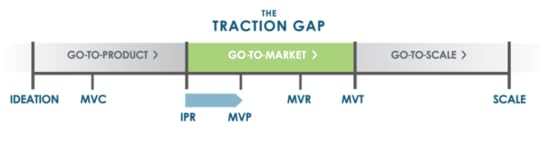
What was once simply an idea now has a team behind it, has market validation, and is picking up steam. The team has defined (or redefined) a Minimum Viable Category (MVC), performed statistically valid research, and has raised a Seed or even a full round of financing. It has also placed the first version of a product — Initial Product Release (IPR) — into the hands of a few consumers or business users, captured their feedback, and revised features and/or positioning based on that feedback.
Your team is learning how to become “market-first”; that is, you are focused on using quantitative and qualitative feedback and other data from customers, non-customers, partners, etc. (the overall market) to make all your product, pricing, and positioning decisions.
Now, all energy needs to be focused on creating a product that your team can aggressively take to market. And there’s no time to waste: Industry data suggests that after reaching IPR, you have only about six months to reach MVP.
Our advice for the pre-MVP stage can be broken down into four (interconnected) areas: The Beta program, pricing strategy, user feedback, and engagement analysis.
Beta ProgramTo have any chance of reaching MVP, startups must develop and implement a well-functioning Beta program. This lets them flush out bugs, polish the user interface, and take care of some of that technical debt they’ve accumulated along the way.
MVP traditionally has been defined as the minimum number of features for which a customer is willing to pay. At Wildcat, we see things a little differently. With B2B products, we like to see companies pay for Beta software. If they’ll pay for the Beta, you can be confident that you’re solving an important problem and delivering value to people who need it. You know that you’re developing something people want.

And, even if charging for the Beta version sounds too aggressive, this is still the time to get serious about establishing and monitoring Daily Active Usage (DAU) metrics.
For B2C startups, the acid test during the Beta phase is usually how often consumers use your product. This is why DAU rates are so important, especially for consumer applications, which intend to generate revenue via advertising.
For both B2B and B2C startups, usage and usage rates are the metrics that Wildcat recommends companies closely monitor, unless they have a really good reason to choose an alternative.
At this point, everyone on your product team should be focused on the Beta program. Those with marketing, product marketing, and customer support skills should be completing market engineering tasks such as preparing company launch plans (e.g. media strategy, initial revenue systems, support systems, etc.).
Pricing StrategyRevenue will be the standard by which all startups will ultimately be valued. For this reason, teams should begin experimenting with revenue/pricing models earlier vs later.
You don’t need to lock anything in, but this is the period to test the market and gain a sense of what will and what won’t work. A simple way to do this is to craft a basic landing page attached to a digital ad in LinkedIn that acts as a one-question survey and asks, “What would you pay for this product?”
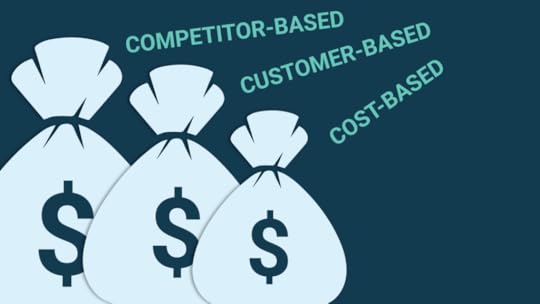
Many B2B startups attempt to use Return on Investment (ROI) calculations when developing their pricing and discount models. This approach is okay, but it needs to be balanced against other products that may already exist in the category. If you attempt to price your product five times higher than an alternative in the market, and that alternative is “good enough”, you won’t succeed. You can’t determine price in a vacuum.
Knowing the product features and capabilities of other companies in or near your category, their pricing, and other terms (e.g., Service Level Agreements) is a mandatory best practice if you intend to be a market-first company.
Today, there are great products available for tracking competitors: Trackmaven, AirPR, or even Google Alerts. And knowing what your competitors or potential competitors are doing at all times is not a bonus, it’s mission-critical. If you think you don’t have any competitors, then we hate to break it to you, but you’re wrong. The status quo, for example, is a powerful competitor.
User FeedbackStartups must design a Beta program that can effectively capture, process, and share data-driven feedback from business/consumer product use. Amplify, MixPanel, Pendo and Totango can all provide you with various forms of daily product usage data and analytics that can be used to track user behavior.

During this phase, make sure the team is also focused upon the qualitative feedback. You can’t rely solely upon metrics. Qualitative feedback only comes from meeting face-to-face with end-users, watching how they use the product and where they get stuck, and being ruthless about delivering a quality user experience (UX).
Investing in face-to-face time enables businesses and consumers to provide you with information not just about how often they use your product, but how they “feel” about using it. You need this feedback because how users feel will determine whether or not they recommend your product to other potential customers. People will be honest with you, if you ask them to be. And it’s the only way to find out what you’re doing right and perhaps more importantly, what you’re doing wrong.
Engagement AnalysisReleasing your product is great. High-fives all round in the office; a speech from the CEO. But now you must ask the really important question: How are we doing?
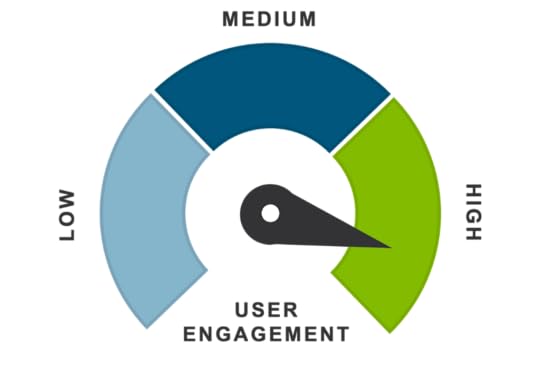
During this phase, you need to have your engagement analysis strategy up and running. Engagement is critical. If no one continues to use your product or feature, you’re in trouble, no matter how many people initially tried it. At Wildcat, we’ve noticed that some startups — typically B2Bs — don’t gather any of this usage data. Not gathering data can be a deadly mistake.
On the other end of the spectrum, some startups gather a ridiculous amount of data (e.g. clickstream), and don’t know what to do with it all. Too little data isn’t good and too much is simply overkill. It’s up to you to decide the amount and type of data you need to base your product decisions upon. But have a plan, and then execute it.
Declaring MVPIf you are smart about managing your Beta program, developing your pricing strategy, capturing user feedback and performing engagement analysis, you should reach the point where you can confidently declare MVP.
At this point, your company should have worked with many consumers/businesses and you should be confident — not from a gut feeling, but from data and feedback — that you have the right value propositions, initial pricing, and category positioning so you can begin marketing and selling your product in earnest.
If you are ready to declare MVP, you are — or you are rapidly becoming — a truly market-first team. You listen to market signals. And you have proven you have the right market/product fit because companies have indicated they are willing to pay — or have already paid — to use your product. In the case of consumers, they are actively using your product, and downloads and DAUs are increasing due to word-of-mouth and other virality programs you’ve developed.
Now, here is a very important point that you must internalize: You have complete control over when you declare MVP. The decision to pull the trigger is a vitally critical decision point for you and your startup. Few investors will fault you if you decide to take an extra six months to make that user experience really shine.
But, once you do formally declare MVP, investors will scrutinize and compare your growth (traction) with other similar early-stage companies using a similar business model. Investors will measure how fast you are acquiring revenue, users, usage — or all three. If you fail to scale at the same or better pace as other startups in a comparable market using a similar business model, investors will lose interest and you may find that you become yet another failed startup statistic.
So, choose your moment to declare MVP wisely.

This article is the sixth in a series of blog posts related to the Traction Gap, the challenging go-to-market phase where the vast majority of early stage startups — more than 80% — fail.
To read the prior blog posts about the Traction Gap, click here.
To get a copy of the book, “Traversing the Traction Gap”, click here.
To get a deeper understanding of the Traction Gap principles, check out these resources:
This article was first published by Wildcat Venture Partners on February 11, 2019.
Want more? Visit www.wildcat.vc and follow us on Twitter , LinkedIn , Facebook & Instagram .
The opinions expressed here represent those of the author and not necessarily the views of Wildcat Venture Partners.

On the Hunt for Users and Usage: Getting to Minimum Viable Product (MVP) was originally published in CEO Quest Insights on Medium, where people are continuing the conversation by highlighting and responding to this story.
February 14, 2019
Use Market Data to Build Your Product…Not Just Intuition
Every successful startup begins with an idea for a new product or service. In the go-to-product phase, significant market research is required to ensure that the idea is intelligently framed and validated. And, while the product and its initial feature set are being validated, successful startup teams must also invest in market engineering exercises to establish a Minimum Viable Category (MVC) by creating and defining a new category or disrupting an existing one.
These are the tasks that all early stage startups must perform in order to develop a “killer” product — and market — from the ground up and prepare themselves to take that product to market.
Once MVC has been established, the next challenge a startup faces in its journey across the Traction Gap is to reach Initial Product Release (IPR).
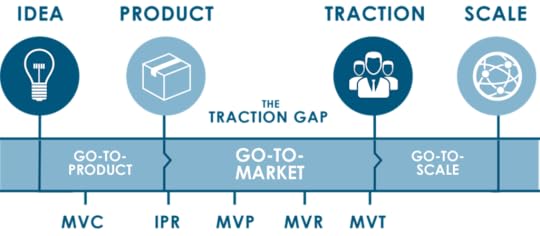
IPR is the first point at which the product (often a Beta version) becomes available to the public, and to the target user(s). At this stage, you are on the hunt for market and customer validation metrics demonstrating that your product or service has merit in the marketplace.
Early stage entrepreneurs often make the mistake of being too insular. At IPR, you need to be outward-facing, or as Steve Blank says, “get outside the four walls”. You need to engage with prospective customers or users to test and validate your impressions, instincts, and hunches. You need to actually sit down and speak with some of the people you one day hope will buy your product or service.
This should happen before you spend hours writing code or developing the product, because industry statistics show that more than 70% of products fail (or become “zombies”) early. And the number one cause? No market need. In other words, you may think your product idea is brilliant, sure to be a huge success, but unless you confirm that by asking your hypothetical buyers, you are taking a big risk.
Offsetting this risk means doing proper, statistically-valid market research, before moving into “build mode”. Proper research means not self-selecting for positive responses, not glossing over uncomfortable feedback, and always being willing to adjust in response to constructive criticism. The Wildcat team is constantly exposed to companies that claim to care about market data, but don’t really listen to the data they receive. They prioritize intuition and unrepresentative anecdotes about their customers over what the customer and market feedback is actually telling them.

Capturing customer and market feedback properly can be hard. High-level market research is often beyond the internal skill sets, financial resources, and time-constraints of most established companies, let alone startups. Outside firms are expensive, and the research can take time. Everyone wants to be going to market, yesterday!
But multiple studies show that this attitude is why so many products fail — in fact, according to MIT Sloan, more than 80%. To nail your IPR, you need more than product/market fit, you need market/product fit. Because without a market, there is no need for your product.
Achieving market/product fit requires adopting a market-first mindset. This means that, despite the challenges, you have to find a way to capture useful market data and feedback. You need to discover what drives your potential customers; what they like, don’t like, and what will motivate them to adopt your new product or service.
All of this comes down to the collection and interpretation of market signals. Market signals, from both customers and non-customers, enable you to identify existing and potential problems to be solved. A strong market signal combines what the market says — captured through surveys, focus groups, social media and so on — with what the market actually does. This is valuable intel. However, if you act on weak market signals — a survey that is too small, a few sparse anecdotes — you are setting yourself up to fail.
In summary, a successful IPR requires you and your entire team to develop a market-first mindset and perform proper market research before you begin building anything. This requires discipline and determination. Armed with statistically-validated market and customer data, you will be able to better identify true market signals to guide you rather than depending on just intuition.
To learn more about the Traction Gap Framework, head here.
To get a deeper understanding of the Traction Gap principles, check out these resources:
This article was first published by Wildcat Venture Partners on February 4, 2019.
Want more? Visit www.wildcat.vc and follow us on Twitter , LinkedIn , Facebook & Instagram .
The opinions expressed here represent those of the author and not necessarily the views of Wildcat Venture Partners.

Use Market Data to Build Your Product…Not Just Intuition was originally published in CEO Quest Insights on Medium, where people are continuing the conversation by highlighting and responding to this story.
February 12, 2019
Without a Category, Your Startup is Doomed
The go-to-market phase — as outlined in the Traction Gap Framework — begins with a startup’s first product release, and ends with market validation and a foundation to scale. Within this phase are four value inflection points: Initial Product Release (IPR), Minimum Viable Product (MVP), Minimum Viable Repeatability (MVR) and Minimum Viable Traction (MVT).
However, before you can enter the go-to-market phase, your startup must reach an earlier milestone: Minimum Viable Category (MVC). A category is just a different name for a problem: what problem does your solution solve?

Your challenge is to either define a new category or redefine one that currently exists. Attempting to compete in an existing category is a recipe for disaster; the current category leader (“the category king”) determines the rules of the category (product features/attributes) and the rules of engagement (business model). As a startup, you are ill-equipped to take on a category king. You must build a different kingdom (category) that you can rule.
If you expect to survive (and eventually thrive) as a company, you must perform market engineering work early on. One of the key market engineering tasks you must complete is to establish your Minimum Viable Category (MVC) by naming it, defining its attributes, and creating the value propositions associated with it.
The Importance of CategoriesWhy is category design so important? Simply put, we are natural comparers. Though we enjoy novelty, we have to be convinced to change our habits — whether personal or business-related — and we instinctively compare any new offering with what we already know. This is how we determine where innovative ideas and products fit into our existing reality.

Steve Jobs didn’t invent the cell phone or the tablet categories. When he introduced the Apple iPhone and iPad, he created two new and unique categories with novel attributes such as a touchscreen UI and the ability to host and run mobile applications using both cellular and wifi networks.
Similarly, a startup needs to quickly and effectively explain its product, where that product “fits in” and why anyone would need it. One way to know that you have successfully named and defined a new category is to create an “elevator pitch”. Can you briefly (and successfully) state the name of your company, what you do, why your product is different/unique, and why it is important?
People’s attention spans are short, and if you can’t grab them in a moment, you will probably never grab them at all.
You’d be amazed at how many CEOs/founders are unable to succinctly tell their story. Many can’t effectively communicate why they are different than the competition and why the world is better off with their product than without. It’s a recipe for failure.
B2B startups that fail to explain their category find themselves in delayed sales cycles, and find it challenging to escape the shadow of existing category kings. For B2C or even B2B2C startups, it’s worse. Consumers will just ignore the startup and its products entirely. In an instant, lacking a quick understanding of what is being offered, the consumer is clicking off to another company or product or cat video.
Creating Your Category
Play Bigger: How Pirates, Dreamers, and Innovators Create and Dominate Markets is a book that explains how category kings capture around 76 percent of all profits in their category. It also explores why trying to displace a king in an existing category is expensive, time consuming, and rarely successful.
This is why it’s essential for new startups to either redefine an existing category (think Apple with the cellphone), or create a new one (think cloud computing, and perpetual enterprise software).
Many startups don’t understand the importance of carrying out category creation work from the get-go. As a result, even if they manage to traverse the Traction Gap, they ultimately fail to achieve market leading status. In the long run, a startup that hasn’t developed and defined its category is likely to find itself one among many competitors and unlikely to generate significant returns for employees or investors.
Some of the most tragic cases are those startups that have a ready-made new category waiting for them — but don’t see it, can’t define it, and can’t articulate why they should exist in simple, easy to understand language.
Establishing your Minimum Viable Category (MVC) is crucial. Without it, you might as well shut your startup down because you are destined to fail outright, or deliver suboptimal returns to you, your employees and your investors.

To learn more about the Traction Gap Framework, head here.
To get a deeper understanding of the Traction Gap principles, check out these resources:
This article was first published by Wildcat Venture Partners on January 28, 2019.
Want more? Visit www.wildcat.vc and follow us on Twitter , LinkedIn , Facebook & Instagram .
The opinions expressed here represent those of the author and not necessarily the views of Wildcat Venture Partners.

Without a Category, Your Startup is Doomed was originally published in CEO Quest Insights on Medium, where people are continuing the conversation by highlighting and responding to this story.
February 7, 2019
Structuring Your Startup for Success: The Four Pillars of the Traction Gap Framework
The Traction Gap Framework offers a way to think about the key stages in a startup’s early life. However, the go-to-market phase isn’t a straight shot, where a startup can simply move from Initial Product Release (IPR) to scale. Most startups move in fits and starts, going through iterative cycles as they learn and adapt by working with customers and consumers.
To help you with this process, the four Traction Gap architectural pillars — product, revenue, team and systems — provide a structured way to benchmark your progress. You must ask yourself, “Are we prepared to move from where we are to the next stage along the Traction Gap?”.
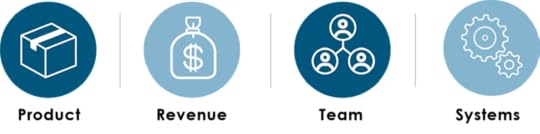
Each of these pillars have specific requirements linked to each stage of the Traction Gap Framework journey. To prevent project delays and wasted capital — and to avoid jeopardizing future funding — you must properly understand these requirements.
Let’s look at each of the four core pillars in turn:

Product Architecture
A startup’s product architecture refers to its collection of defining technologies, applications and features. A well-developed product architecture helps a startup to achieve rapid product/market fit by successfully appealing to customers (users).
Of the fundamentals critical to achieving traction, product architecture is where most early stage startups are the most effective. No surprise, as most entrepreneurs decide to start a company because they believe they have a great idea for a product.
Sometimes, in order to nail product/market fit, a team may discover they need to pivot. This could mean building out new product capabilities, or just a change in positioning or market segmentation. Remember that these pivots are common, and a totally healthy practice — many successful companies started out as completely different enterprises.
If a team does decide to pivot, early stage investors must be open to providing more time and capital. Most will be — if the team can make a convincing argument the potential for decent value creation still exists. More importantly, startup teams must be 110% sure that customer and market validation has been achieved before declaring product/market fit. In other words, they must determine they have the metrics that show they have definitively achieved a Minimum Viable Product (MVP).
Startup teams should resist the urge — and pressure from investors — to declare MVP too soon. They must be willing to postpone expensive go-to-market scaling until product/market fit has been confirmed.
Revenue Architecture
Revenue architecture includes a number of key components including: the name and attributes of the startup’s category; a messaging matrix; a pricing strategy; a sales strategy and other business model elements. A comprehensive revenue architecture should be designed to enable a startup to generate and monetize awareness, engagement, and usage. Shaky revenue architecture is bad news, posing the greatest near-term risk of failure for early stage startups once they enter the go-to-market phase.
When a startup declares it has a Minimum Viable Product (MVP), its value propositions should be well thought through but are seldom yet entirely proven. The startup will likely still need to experiment with its business model and processes; different ways to convert awareness and interest into revenue.
For B2B startups, revenue architecture involves strategies to:
Lower Customer Acquisition Costs (CAC);Identify upsell opportunities;Increase usage rates; andOptimize Top of the Funnel (TOTF), Middle of the Funnel (MOTF), and Bottom of the Funnel (BOTF) conversion rates.For B2C (or B2B2C) startups, this process normally means testing methods that:
Optimize Lifetime Value (LTV) to Customer Acquisition Cost (CAC) ratios (including organic as well as paid acquisition);Create efficient supply-side acquisition in the case of marketplaces;Experiment with margin on transaction fees, subscriptions, etc., building toward positive unit economics and contribution margins;Increase engagement of Monthly Active Users (MAU) and Daily Active Users (DAU); andBuild repeatable and scalable geographic or market segment roll-out strategies for multiple consumer marketplaces and services.Whatever the product and business model, entrepreneurs must be prepared to build critical momentum. They need to establish a Minimum Viable Category (MVC), develop thought leadership concepts, and create an “epic story” talk track that compels the world to use the startup’s product or service. All of this is part of the “market engineering” that must be performed alongside product engineering.
Solid market engineering puts startups on the right track to generate the momentum they need to propel them across and out of the Traction Gap with sustained and significant growth.
Team Architecture
Ask any experienced investor: A huge risk, and one of the biggest causes of startup failure, is related to team dynamics.
Early stage startups often have small, product-oriented teams, and have not yet hired a complete management team, or the other personnel needed to scale. Competition for A-level talent is fierce, further impeding a startup’s ability to grow. Often, the wrong people are hired for the wrong role, or early team members are unable to evolve in line with the company. These people can easily become toxic to the rest of the team.
Other times, the founding team may pull together a good core management team, but lack a comprehensive strategy to address the extended team: the board of directors, customer advisory board, products council, employee advisory group, and so on. Team architecture is a complex beast!
Entrepreneurs must systematically build up their teams and dramatically reduce the team dynamic risk. This is quite the balancing act. But the more you can fill out your team and the longer you work together, the less risk there is in the eyes of investors.
Systems Architecture
The systems and processes of a startup can either help it accelerate growth, or make it stagnate. A successful systems architecture must integrate front and back offices, establish performance metrics, and cultivate the progressive culture startups need to thrive.
When Wildcat invests in early stage startups, many of them are using a rudimentary CRM solution for sales and support, a simple development system, and maybe a basic e-commerce platform for the web. They typically outsource back-office functions such as payroll. Once we invest, we ask them to architect — though not necessarily implement, yet — new back- and front-office systems and processes. These are the systems and processes they will eventually require to scale.
As well as operational systems, startups must ensure they have a solid development stack (the suite of applications that a startup uses to manage its development process). We have found that the type of engineering management infrastructure a startup uses can negatively impact margins and hamper the company down the road.
We have worked with many high-growth technology startups, and we counsel founders and teams to build systems and processes with the right foundation early. This allows operational efficiency to fuel, as well as keep pace with, growth — while minimizing the amount of financing required.
How to use the Traction Gap Framework
The Traction Gap begins at a startup’s Initial Product Release (IPR) — typically a year or so into its existence. It stretches to the value inflection point of Minimum Viable Traction (MVT) — which can occur as much as three years later, when the startup has achieved a certain level of revenue growth, engagement, downloads, or usage. These variables signify market validation and positive growth.
In other words, the Traction Gap is the all-important 36-month span that determines whether a company will blossom or perish. During this period, the importance of the four pillars — product, revenue, team and systems — will vary.
From ideation to Initial Product Release (IPR), the go-to-product phase, team and product take a front seat.From IPR to Minimum Viable Repeatability (MVR), revenue architecture is paramount.From MVR to Minimum Viable Traction (MVT), systems architecture must come to the fore front as the company prepares for the go-to-scale phase.We can’t guarantee you will succeed if you use the Traction Gap Framework with its four architectural pillars and foundational principles, but we firmly believe if you don’t you are more likely to fail. We want you to succeed!
To learn more about the Traction Gap Framework, head here.
To get a deeper understanding of the Traction Gap principles, check out these resources:
This article was first published by Wildcat Venture Partners on January 22, 2019.
Want more? Visit www.wildcat.vc and follow us on Twitter , LinkedIn , Facebook & Instagram .
The opinions expressed here represent those of the author and not necessarily the views of Wildcat Venture Partners.

Structuring Your Startup for Success: The Four Pillars of the Traction Gap Framework was originally published in CEO Quest Insights on Medium, where people are continuing the conversation by highlighting and responding to this story.