Wes Bush's Blog
March 28, 2025
State of B2B SaaS in 2025 (Analysis of 446 Companies)
As founders and leaders in the B2B SaaS space, you're constantly bombarded with advice about how to grow your businesses.
Focus on product-led growth.
"Go upmarket."
"Optimize your pricing."
But which of these actually moves the needle? And how do priorities change as your company evolves?
Instead of relying on anecdotes from unicorn outliers or theoretical frameworks, I wanted to share some fascinating insights from a comprehensive study of 446 real B2B SaaS companies.
It's based on the data we've gathered from the companies that have taken the ProductLed Assessment from October 2024 to March 2025.
This research reveals clear patterns that separate high performers from the pack, and the findings might challenge some of your assumptions about what drives growth.
The Self-Serve Revenue RevelationIf there's one insight that jumps out from the data, it's this: developing self-serve revenue capabilities is the single most powerful lever for B2B SaaS performance.
Companies with self-serve revenue consistently outperform their counterparts across virtually every metric.
The most dramatic performance improvements happen during the initial transition from zero to even modest self-serve revenue ($100K-$500K).
Companies making this transition reported:
14.5% higher overall performance scores25.8% higher pricing optimization capabilities25.9% better free-to-paid conversion rates18.3% faster time-to-value deliveryNearly twice the profitability rate compared to companies with no self-serve revenue (68% vs. 36.4%)And surprisingly, the benefits extend far beyond revenue metrics to encompass improvements in strategy, user understanding, and team effectiveness.
Why Does Self-Serve Revenue Create Such a Powerful Multiplier Effect?The research reveals several compounding benefits that explain why self-serve revenue drives such outsized performance improvements:
1. It Forces Product Experience ImprovementsWhen your growth depends on users being able to adopt your product without human assistance, you're forced to improve onboarding, simplify interfaces, and eliminate friction points.
You can't rely on salespeople or customer success teams to paper over the cracks in your product experience.
One particularly telling data point: companies with self-serve revenue scored 18.3% higher on time-to-value delivery than those without.
They simply can't afford to have complicated onboarding flows or confusing first-use experiences.
2. It Generates More (and Better) Customer DataSelf-serve channels provide incredibly rich behavioral data that companies can use to identify friction points, optimize conversion paths, and improve targeting.
Instead of relying on second-hand feedback filtered through sales teams, you get direct visibility into how users actually interact with your product.
The data shows that companies with self-serve revenue scored 19% higher on data capabilities than those without.
3. It Enables Rapid ExperimentationWhen you're not limited by sales cycle timing or customer success bandwidth, you can test new packaging, pricing models, and features much more quickly.
The research shows that companies with self-serve revenue reported a 19% higher ability to translate execution into growth, largely because they could iterate faster on key business elements.
4. It Dramatically Improves Unit EconomicsReducing the sales touch required for conversion improves contribution margins and enables more efficient scaling.
The data reveals that 68.4% of SaaS companies generate under $100K revenue per employee, but those with established self-serve motions achieve far better efficiency metrics, often exceeding $300K per employee.
5. It Creates a Foundation for Hybrid ModelsCompanies with established self-serve channels can layer sales-assisted approaches on top for larger customers, creating efficient hybrid motions that capture the benefits of both approaches.
The data shows that as companies scale their self-serve revenue beyond the $1M mark, they increasingly adopt these hybrid approaches while maintaining the efficiency benefits of their self-serve foundation.
The Big Three: What Actually Differentiates Top PerformersBeyond self-serve revenue, our research identified three specific capabilities that most strongly correlate with overall business performance:
1. Free Model Intentionality (0.73 correlation with performance)How deliberately have you designed your free offering?
Companies with highly intentional free models (scoring 8+ on a 10-point scale) reported 57% better free-to-paid conversion rates than those with unintentional approaches (scoring 3 or below).
What makes a free model "intentional"?
The research identified several key elements:
Clear alignment between free and paid offerings, where the free tier showcases core value while creating natural upgrade needs.Deliberate value limitations that create organic upgrade paths.User segmentation to identify and nurture high-potential customers.Strategic friction reduction for key activation actions.Visible upgrade benefits built directly into the free experience.The data shows that 35.4% of companies rate their free models as unintentional, representing a massive opportunity for improvement.
And interestingly, free model intentionality scores actually increase as companies scale their self-serve revenue, suggesting that successful companies continuously refine their approach.
2. Time-to-Value Delivery (0.69 correlation with performance)How quickly can new users experience the core value of your product?
Companies in the top quartile for time-to-value delivery (scoring 7+ on a 10-point scale) reported 38% higher overall performance scores and 62% better conversion rates than those in the bottom quartile.
Despite its importance, 40% of SaaS products rate themselves poorly on delivering value quickly.
Common time-to-value challenges include:
Front-loading configuration requirements before providing valueRequiring excessive customer data during signupMisunderstanding what constitutes "value" for different user typesPoor onboarding guidance and educationHigh-performing companies obsessively measure and optimize time-to-value, treating it as one of their most important product metrics and systematically removing friction from initial experiences.
3. Bottleneck Awareness (0.65 correlation with performance)Can you consistently identify the #1 constraint limiting your growth?
Companies that excel at pinpointing their primary bottlenecks report 41% faster revenue growth than those that struggle with this capability.
Yet 32.1% of companies acknowledge they cannot consistently identify these bottlenecks, causing them to solve the wrong problems while real limitations persist.
Common manifestations of bottleneck blindness include:
Simultaneously pursuing too many improvement initiatives.Addressing symptoms rather than root causes.Misattributing growth limitations.Making decisions based on anecdotes rather than data.Lacking consistent analytical frameworks for diagnosis.Companies that excel at bottleneck identification develop systematic approaches for diagnosing constraints, prioritizing actions, and measuring results.
They treat bottleneck identification as a formal process rather than an occasional discussion topic.
The Eight Critical Growth Blockers in B2B SaaSThe research identified nine specific challenges that prevent B2B SaaS companies from reaching their full potential.
These growth blockers represent the highest-leverage opportunities for improvement:
1. The Monetization Blind Spot55.4% of SaaS companies score themselves below 5/10 on free-to-paid conversion capability (averaging just 4.11/10).
This challenge manifests in several ways:
Unclear or missing conversion paths within the productFailure to identify and target high-intent usersOverreliance on sales outreach for conversionsPoor timing of upgrade promptsValue misalignment between free and paid offeringsCompanies with self-serve revenue score 25.9% higher on free-to-paid conversion capabilities than those without.
They've developed systematic approaches for identifying conversion triggers, optimizing upgrade points, and aligning product value with pricing tiers.
2. The Revenue Efficiency Crisis68.4% of SaaS companies generate under $100K revenue per employee, while top performers achieve $300K+ per employee.
This operational inefficiency typically stems from:
Overinvestment in customization for individual customersManual processes that could be automatedMisalignment of team structure with growth prioritiesSpreading resources too thinly across multiple initiativesFailure to optimize customer acquisition costsThe data shows that as companies develop self-serve revenue, their revenue efficiency improves dramatically.
3. The Self-Service Gap36.3% of B2B SaaS companies report generating zero self-serve revenue, despite its proven impact on performance.
This gap typically results from:
Unnecessary complexity in product experiencesOverreliance on sales-led motionsLack of clear expansion pathways within the productMissing or ineffective product analyticsResistance to changing established sales processesInterestingly, the research shows that companies with zero self-serve revenue actually have decent user understanding (62.9%) and team capabilities (56.9%).
They have the foundational knowledge and skills, but haven't translated these into effective self-serve experiences.
4. The Strategic Pricing VacuumPricing received the lowest self-assessed component score (40.5%) across all business dimensions measured in the research.
Common pricing challenges include:
Failing to align pricing with customer-perceived valueUsing cost-plus or competitor-based pricing approachesOverly complex pricing structuresInconsistent discounting practicesPoor packaging of features across tiersThe data shows that companies with self-serve revenue score 25.8% higher on pricing optimization than those without.
They've developed approaches for testing price sensitivity, measuring value perception, and aligning their pricing structure with natural customer segments.
5. The Time-to-Value Delay40.0% of SaaS products rate themselves poorly on delivering value quickly, despite this being one of the strongest predictors of overall performance.
This challenge typically stems from:
Front-loading configuration requirementsRequiring too much customer data before providing valueFailing to identify and optimize critical first experiencesMisunderstanding what constitutes "value" for different usersPoor onboarding guidance and educationThe research reveals that time-to-value delivery improves significantly as companies develop self-serve revenue, with self-serve companies scoring 18.3% higher on this dimension.
6. The Differentiation Deficit40.2% of companies struggle to position themselves as the obvious choice in their market.
This challenge manifests as:
Generic messaging that could apply to any competitorFeature-focused rather than outcome-focused positioningFailure to articulate unique capabilities or approachesInconsistent positioning across customer touchpointsPoor alignment between marketing claims and product realityInterestingly, market differentiation scores improve by 15.9% as companies develop self-serve revenue, suggesting that the process of creating self-serve paths helps clarify and strengthen positioning.
7. The Activity-Results Disconnect41.0% of companies believe they cannot effectively translate business execution into growth.
This disconnect typically stems from:
Focusing on output metrics rather than outcome metricsPoor alignment between activities and strategic prioritiesLaunching features without clear success criteriaFailing to connect team activities to business resultsRewarding effort rather than impactCompanies with self-serve revenue score 19% higher on execution-to-growth translation, suggesting that self-serve motions create clearer connections between activities and results.
8. Bottleneck Blindness32.1% of companies report they cannot consistently identify their #1 growth constraint, despite this capability showing a strong correlation with performance.
This blindness manifests as:
Simultaneously pursuing too many initiativesSolving symptoms rather than root causesMisattributing growth limitationsMaking decisions based on anecdotes rather than dataFailing to develop consistent analytical frameworksThe data suggests that bottleneck awareness improves as companies develop more systematic approaches to growth, with execution-to-growth translation scores increasing by 19% as companies develop self-serve revenue.
Different Stages, Different Challenges: How Priorities EvolveOne of the most valuable aspects of this research is how it reveals distinct performance patterns at different growth stages.
The data shows that companies face an evolution of challenges as they scale, and the most successful companies adapt their focus accordingly.
Pre-Self-Serve Revenue StageCompanies with zero self-serve revenue show a distinct pattern of strengths and challenges:
Highest Strengths:
User understanding (62.9%)Team capabilities (56.9%)Biggest Gaps:
Free-to-paid conversion (3.53/10)Pricing optimization (34.8%)Critical Focus Areas:
Product experience simplificationInitial self-serve path developmentIntentional free model designAt this stage, companies typically have decent understanding of their users but struggle to translate this understanding into effective product experiences that can drive self-serve conversion. Their teams often have the necessary capabilities but lack the processes and tools to execute effectively.
Key performance indicators to focus on include time-to-first-value, user activation rate, product satisfaction metrics, and sales-assisted conversion rate.
Early Self-Serve Revenue Stage ($100K-$500K)Companies at this stage show significant improvements in several areas:
Highest Strengths:
User understanding (63.9%)Free model intentionality (5.82/10)Biggest Gaps:
Pricing optimization (42.1%)Data capabilities (49.8%)Critical Focus Areas:
Conversion path optimizationPricing model refinementData capabilities developmentThese companies have established initial self-serve paths but often struggle to optimize pricing and leverage data effectively. They typically see improved profitability (56.8% are profitable compared to 36.4% at the previous stage) but face new challenges in scaling their self-serve approaches.
Key performance indicators shift to self-serve conversion rate, free-to-paid upgrade rate, revenue per visitor/user, and customer acquisition cost.
Scaling Self-Serve Stage ($500K-$4M)Companies at this stage demonstrate more balanced capabilities:
Highest Strengths:
Time-to-value delivery (5.42/10)Execution-to-growth translation (5.36/10)Biggest Gaps:
Team scaling (58.2%)Process optimization (55.9%)Critical Focus Areas:
Process systematizationTeam structure optimizationGrowth process formalizationThese companies have established effective self-serve motions but face challenges in systematizing processes and scaling their teams efficiently. They typically see improved unit economics (65.3-71.9% are profitable) but struggle with organizational scaling.
Key performance indicators evolve to revenue per employee, customer lifetime value, expansion revenue percentage, and growth rate sustainability.
Advanced Self-Serve Stage ($4M+)Companies at this stage show more varied patterns, but generally:
Highest Strengths:
Free model intentionality (5.90/10)Differentiation (5.68/10)Biggest Gaps:
Consistent performance across business dimensionsCritical Focus Areas:
Balanced optimization across all business dimensionsMulti-channel strategy developmentExperience quality maintenance at scaleThese companies have typically developed relatively balanced capabilities across most dimensions, with few obvious weaknesses. Their primary challenge becomes maintaining consistent performance as they continue to scale, particularly in maintaining product quality and customer experience.
Key performance indicators shift to net revenue retention, market share growth, customer satisfaction metrics, and employee productivity metrics.
Practical Recommendations for Your Growth StageBased on this research, here are specific recommendations tailored to different growth stages:
For Companies with Zero Self-Serve RevenueCreate Your First Self-Serve PathThe data is clear: even modest self-serve revenue correlates with significant performance improvements. Start small:
Identify your simplest use case with the clearest value propositionDesign a streamlined onboarding experience focused on fast time-to-valueImplement frictionless payment options with appropriate starter pricingStart with a limited scope rather than trying to enable all featuresRemember that 36.3% of B2B SaaS companies report zero self-serve revenue, so even modest progress here can create competitive advantage.
2. Develop an Intentional Free Model
Free model intentionality shows the strongest correlation with overall performance (0.73), yet 35.4% of companies rate their free models as unintentional:
Design your free tier to showcase core value while creating natural upgrade needsImplement clear upgrade triggers based on usage patterns or value milestonesBuild visibility into upgrade benefits directly within the free experienceFocus on activation metrics before focusing on conversion metrics3. Optimize Time-to-Value
The research shows time-to-value delivery has a 0.69 correlation with overall performance, yet 40% of products rate themselves poorly on this dimension:
Map and measure your current time-to-first-valueEliminate or defer unnecessary setup and configuration stepsProvide pre-populated examples and templates where possibleDevelop guided onboarding experiences for key user typesFor Companies with Early Self-Serve Revenue ($100K-$500K)Optimize Your Pricing ModelPricing received the lowest self-assessed component score (40.5%) across all business dimensions, and companies at this stage still struggle with pricing optimization (42.1%):
Test different pricing structures to identify optimal price pointsDevelop tiered offerings aligned with distinct customer segmentsImplement customer-friendly trials and expansion pathsCreate clear differentiation between tier capabilities2. Build Data Capabilities
Data capabilities represent a significant gap (49.8%) for companies at this stage:
Implement event tracking across the entire user journeyDevelop dashboards for key conversion and engagement metricsStart building predictive models for conversion likelihoodEstablish experimentation capabilities for continuous optimization3. Systematize Conversion Paths
Free-to-paid conversion improves at this stage (4.53/10) but still has significant room for growth:
Implement behavior-based upgrade triggersDevelop personalized conversion messaging based on usage patternsCreate seamless upgrade experiences without registration barriersEstablish regular testing cadence for conversion elementsFor Companies with Scaling Self-Serve Revenue ($500K-$4M)Systematize Growth ProcessesExecution-to-growth translation becomes a strength at this stage (5.36/10), but process optimization remains a gap (55.9%):
Develop formalized frameworks for identifying growth bottlenecksEstablish cross-functional growth teams with clear metricsImplement regular review processes for key performance indicatorsCreate playbooks for repeatable growth activities2. Optimize Team Structure
Team scaling emerges as a significant gap (58.2%) at this stage:
Align team organization with customer journey phasesDevelop clear ownership boundaries for cross-functional responsibilitiesImplement metrics cascades that connect individual work to business outcomesCreate specialized roles focused on optimization rather than just feature delivery3. Balance Acquisition and Expansion
At this stage, expansion revenue becomes increasingly important:
Develop distinct strategies for net-new acquisition vs. expansion revenueImplement account expansion triggers based on usage patternsCreate seamless cross-sell and upsell paths within the productOptimize unit economics separately for acquisition and expansion motionsFor Companies with Advanced Self-Serve Revenue ($4M+)Maintain Experience Quality at ScaleAs you scale, maintaining consistent experience quality becomes challenging:
Implement robust quality metrics across the customer journeyDevelop proactive monitoring for experience degradationCreate specialized teams focused on experience optimizationBuild customer feedback loops into all product development processes2. Develop Multi-Channel Strategy
At this stage, balancing self-serve and sales-assisted approaches becomes crucial:
Create seamless handoffs between self-serve and sales-assisted motionsDevelop complementary pricing and packaging for different channelsImplement account scoring to route prospects to appropriate channelsBuild unified analytics across all customer acquisition channels3. Optimize for Retention and Expansion
The research shows that net revenue retention becomes increasingly important at this stage:
Develop sophisticated health scoring modelsImplement predictive churn identificationCreate personalized expansion recommendations based on usage patternsBuild automated expansion paths for common growth scenariosThe Bottom Line: What This Means for Your BusinessThe most striking conclusion from this research is that developing self-serve revenue capabilities represents the single most important transition for B2B SaaS companies.
The data shows that even modest progress in this direction correlates with significant improvements across all business dimensions.
The most dramatic performance improvements occur during the initial transition from zero to $500K in self-serve revenue. Companies making this transition see a 14.5% improvement in overall performance scores and are nearly twice as likely to be profitable.
This transition typically requires several fundamental changes:
Streamlining the onboarding experienceCreating deliberate conversion paths in the productDeveloping frictionless payment processesBuilding internal analytics capabilitiesEstablishing self-serve customer support systemsFor most companies, these improvements require significant cross-functional effort but yield compounding benefits far beyond the initial self-serve revenue. The question isn't whether to develop self-serve capabilities, but how quickly you can begin the transformation.
The research also highlights the importance of adapting your focus as you grow.
The challenges you'll face at $500K in self-serve revenue are different from those at zero, and the metrics that matter will evolve accordingly. By understanding these patterns, you can make informed decisions about where to focus your resources for maximum impact.
What's particularly encouraging about this research is that it reveals clear, actionable paths to improvement.
These aren't theoretical frameworks or unicorn strategies. They're practical approaches validated across hundreds of real B2B SaaS companies at different growth stages.
The gap between average and high performers isn't magical or mysterious. It's systematic and addressable.
By focusing on the right capabilities at the right time, you can navigate the journey from zero to significant self-serve revenue and unlock the performance improvements that come with it.
This analysis is based on comprehensive assessment data collected from 446 validated B2B SaaS companies between October 2024 and March 2025.
The post State of B2B SaaS in 2025 (Analysis of 446 Companies) appeared first on ProductLed.


October 28, 2024
How to Use Aha Moments to Drive Onboarding Success
Looking to improve the onboarding process in your business to maximize your product-led growth (PLG) motion?
If so, you've come to the right place.
In this article, we'll give you a framework to help you set key milestones in your onboarding process, guide users towards them, and measure the results of your efforts.
Let's start by talking about one of the most important onboarding milestones there is: the Aha moment.
What is an Aha moment in Onboarding?In regular English, an Aha moment is simply a moment of insight. In the product world, there can (and should) be multiple Aha moments at each stage of the customer journey.
But for the purposes of this article, we're talking specifically about the Aha moment that occurs during user onboarding. This is one single point in the onboarding process where the user realizes emotionally for the first time that your product is going to be valuable to them. A lot of the time, the Aha moment is often conflated with activation, but the two aren't the same.
Activation is when a customer actually experiences your product's value first-hand for the first time versus the emotional realization that the product is valuable.
This is all still a bit theoretical, so let's use Uber as an example:
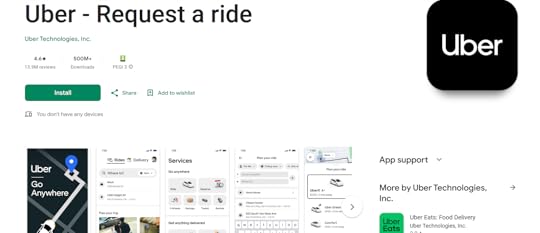 Aha moment: Reading the app's description on Google Play and realizing that you can order an Uber in minutes to your current location.
Activation: Installing the app and ordering your first Uber.
Exactly when the Aha moment takes take place varies from user to user and company to company. It's not as simple as placing the Aha moment into a generalized onboarding pathway that can apply to all situations.
PS: Want to learn what your product's Aha moment is? Find out in this article.
Why "Aha Moments" Lead to Product Adoption and Long-Term SuccessThe Aha moment is a critical milestone in the SaaS onboarding process–to the point when reaching it is often the difference between a user activating or churning.
The reasons for this are largely psychological: we all crave that feeling of an "Aha." But what impact does that feeling have on user behavior?
Let’s look at a few examples to find out.
Increased motivation to explore the productPipedrive does a great job of leading prospective users towards the Aha moment above the fold on their homepage:
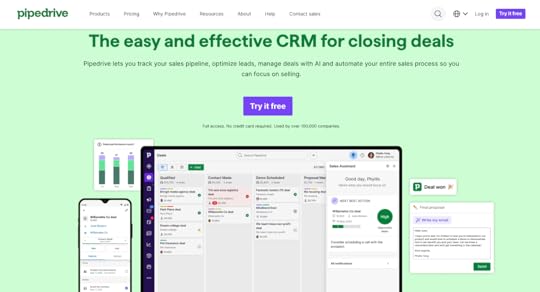
The screenshot of the dashboard visually demonstrates what it will look like to manage a sales deal flow using Pipedrive. If you’re a solo entrepreneur who’s feeling overwhelmed by the chaos of managing deals in your head, this image is sure to give you a feeling of relief!
The image is placed so high on Pipedrive’s homepage is bound to encourage users to explore further.
Improves product understanding and perceived valueHere's a fact about human nature: we only pay for products or services that we perceive to be valuable. And the amount we're willing to pay correlates with the amount of value we perceive.
It stands to reason that businesses need to communicate the value of their product to some degree before a user is willing to sign up and spend money.
GrowthMentor, a platform offering unlimited mentorship for a subscription payment, does a good job of this. They communicate their value as follows:

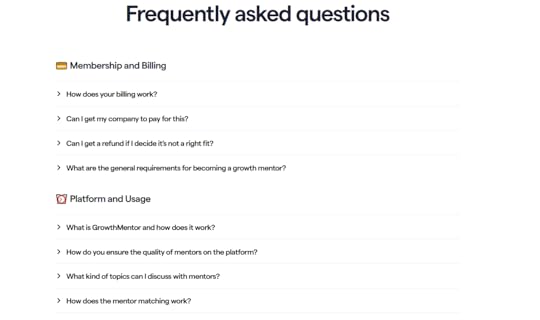
They follow this up with FAQs so their audience can further increase their knowledge of their product:
 Drive emotional connection and brand loyalty
Known for its ability to help board game fans manufacture their own games, the Game Crafter has a slightly unusual way to nudge leads towards the Aha moment.
Rather than using text or images to explain what they do, they have a one-minute explainer video:
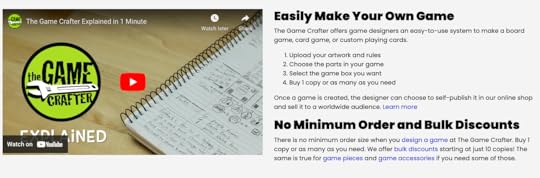
If you’re a board game fan, you’re bound to get excited as you start to imagine what playing a game that you had made would feel like.
The Game Crafter continues to build that sense of emotional anticipation later down their homepage, with images of indie games from around the world:
 Onboarding tips to bring users to the Aha moment quickly and consistently
To maximize your odds of becoming a successful product-led business, let's explore some practical steps you can take in your business to improve your onboarding process and ensure users reach the Aha moment more efficiently.
Identify user goalsYou can't know what will constitute an Aha moment for your users without having a deep understanding of their needs and goals.
The best way to deepen your understanding is to talk to your customers. The book Lean Customer Development sets out a framework for interviewing users in such a way that you listen to their problems without biasing them with your solution.
Additionally, have a look at platforms like Mixpanel and Amplitude and see what you can learn about your users' behavior. Where are they spending time in your app?
You can even bring the dialogue with your users inside your app itself, just how Dropbox does it:
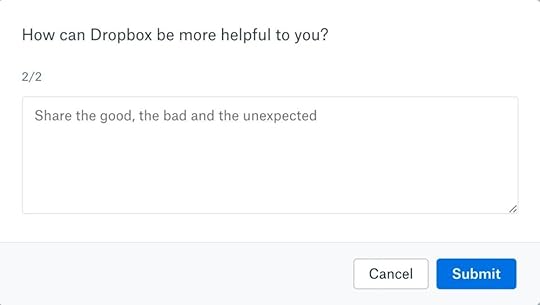
A simple in-app survey like this is a great way to get to know your users and their priorities better. It will also make them feel heard.
Personalize the JourneyWhen you start out, it's advisable to target one user segment and solve one problem for them. But as you scale, your audience will become more complex, and the range of problems your app solves will likely broaden.
What constitutes an Aha moment for one part of your audience won't necessarily be meaningful for another part.
Onboarding platforms like UserGuiding let you segment your users according to their particular product goals–often referred to as "Jobs to be Done" (JTBD).
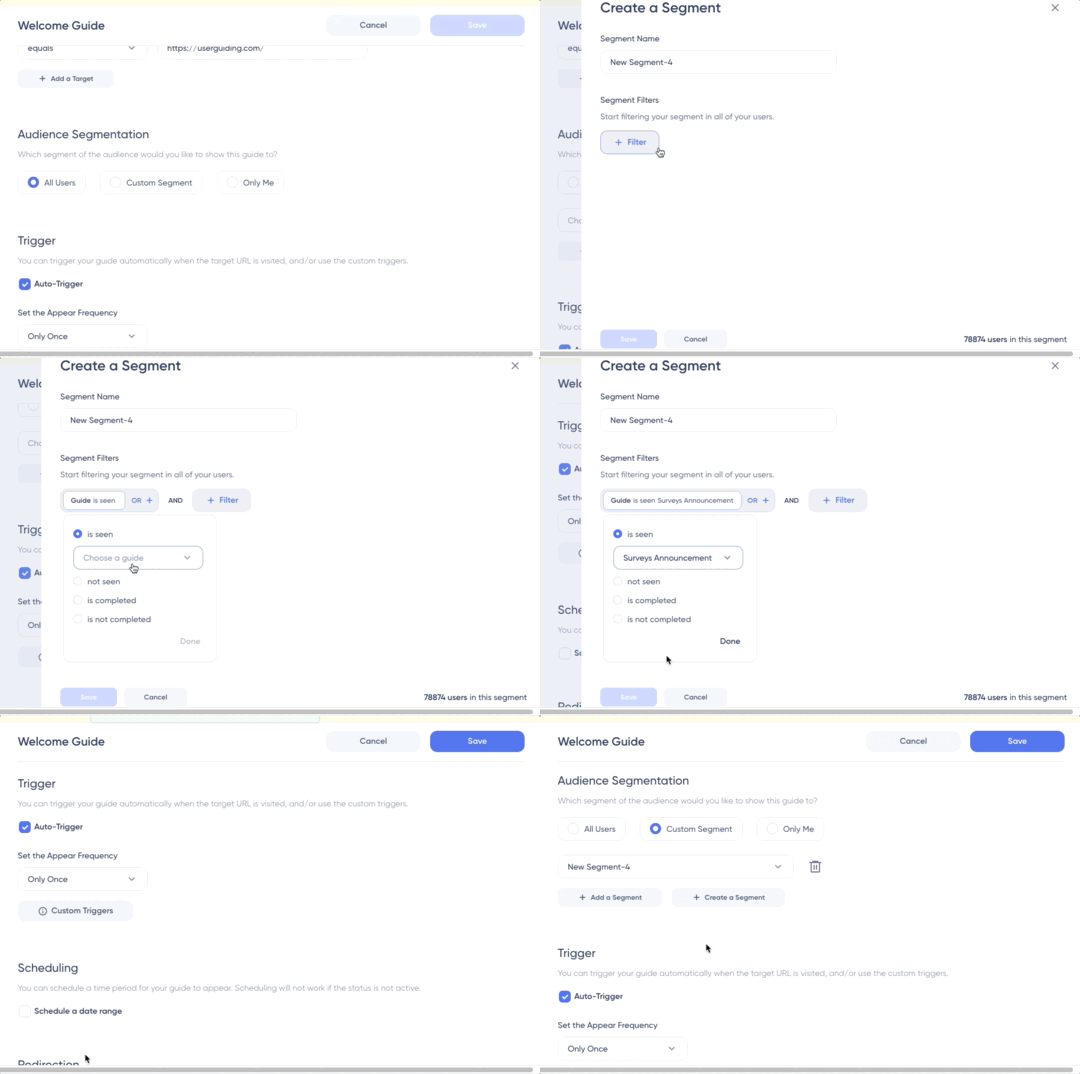
Ideally, you want to be segmenting your users at the beginning of their journey based on their JTBD and then put them through onboarding material that speaks to their specific needs.
For example, HubSpot asks their users upfront which category they belong to:
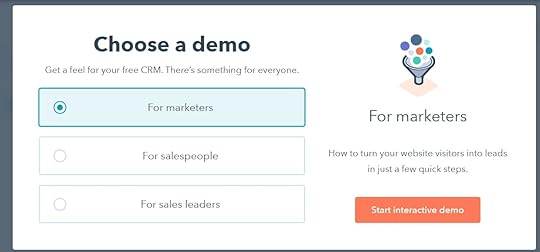
The rest of the onboarding is customized according to the answer given.
Focus on UsabilityThe easier your platform is to use, the more likely it is that people will stick around long enough to get to the Aha moment.
Onboarding tools are your friend here.
You can use them to build tooltips and hotspots to highlight individual features that you think are important for particular customer segments:
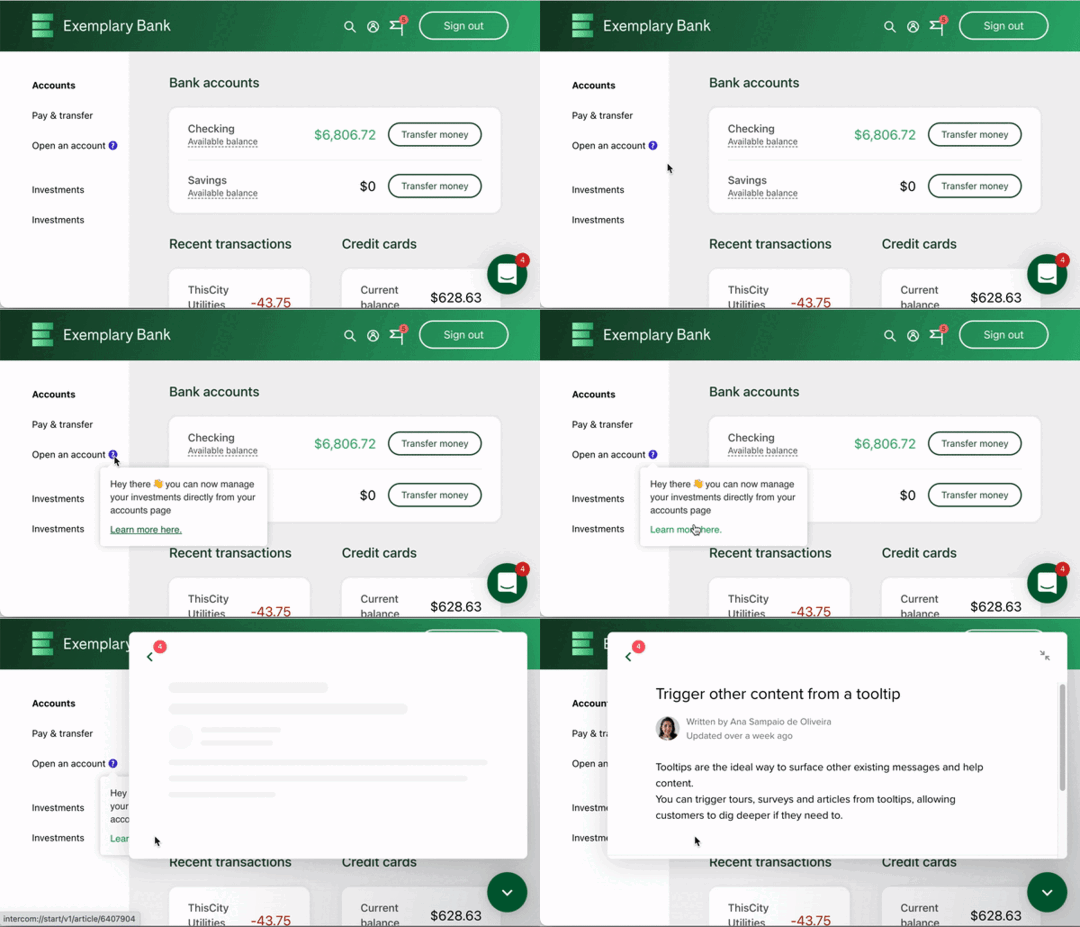
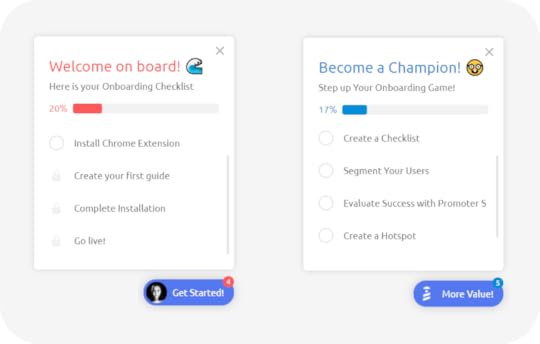
Or you can create product tours that walk them through the features that they'll eventually need to use in order to activate. A best practice here is to group those features into a checklist and have new users work through them, one by one:
 Showcase positive user experiences
Nothing demonstrates trust more than communicating, "Look at all these people who have used our product to do what you want to do."
This begins before users even sign up for your app. Your website should be peppered with testimonials and smiling faces of users who have achieved success with your product.
This is likely to lead to new users thinking: "Aha, I could set this up for my business too!"
A more advanced version of this can also be done in-app. There are lots of products that greet new users with empty states like this:
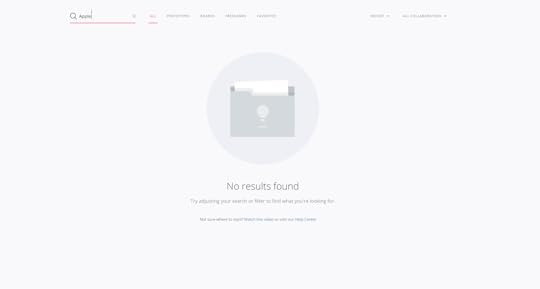
Few things are more demotivating–the user feels like there's no sense of community, and they have to start from scratch.
It would be far better to replace those empty states with demo user data. That way, users can imagine what success with your product will look and feel like. If you can get them to do that, the Aha moment won't be far behind.
Incorporate Feedback MechanismsEven if you follow all the guidance in this post, you won't get your onboarding right the first time. So, you should build feedback mechanisms into your onboarding process to allow you to acquire insights that facilitate continuous improvement.
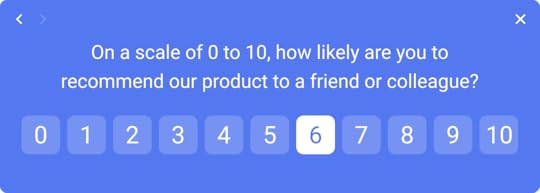
In-app surveys can be as simple as NPS surveys that score features between 1 and 10…
… or as complicated as in-depth questionnaires that really get to the bottom of product usage:
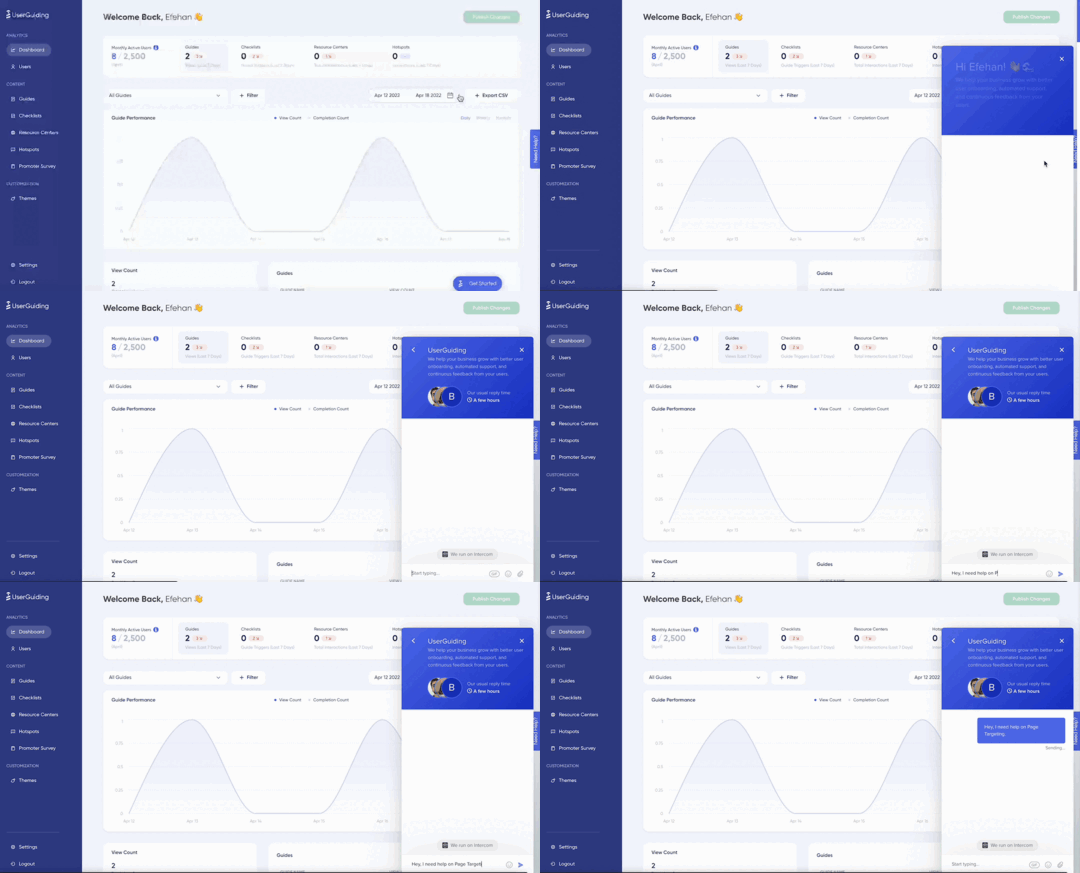
There's also value in embedding an in-app chat widget so that users can reach out to you when they have questions:
All this raises the question, though: which data should you be collecting to measure the success of your onboarding?
How to measure the impact of onboarding processesThe first thing you'll want to track is the percentage of users who complete key steps in the onboarding process.
To do this, use your onboarding platform of choice to define a goal. For example, it could be "completing the product tour" or whatever you decide equates to hitting the Aha moment.
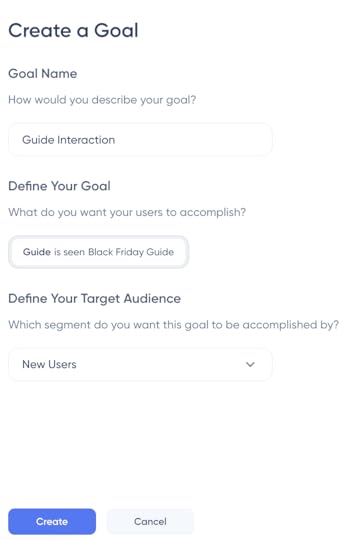
Your onboarding tool will now tell you how many users complete that goal, what segments those users are in, and how long it takes users to complete the most important steps.
Is there a step where users consistently drop out of the process? That's a good sign that your onboarding needs to be improved.
Mixpanel and Amplitude can also help you track user engagement metrics such as feature usage and session duration.
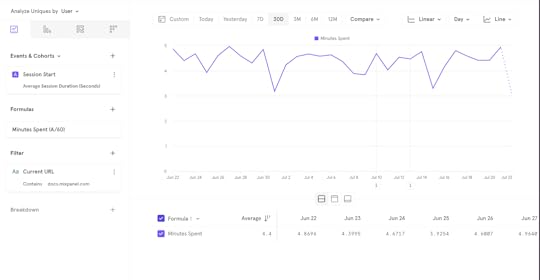
Again, if the analytics are showing you that an important feature isn't being used or people are clicking away from it in a second or two, then your onboarding needs some work.
Looking at this question from the perspective of your whole business, instead of just individual product features, is also essential to track your user retention and churn rates.
For new user onboarding specifically, your retention rate over the first day or the first week will be the most important. You'd be shocked by how many thousands of users most businesses lose just within the first few days of product usage.
Are your users churning before they hit the Aha moment? If so, that's an indicator to look at your onboarding again and keep testing new configurations until you find what works.
Wrapping UpHaving read this article, you should now have a framework to understand:
What the Aha moment isWhy the Aha moment is a critical milestone in onboardingHow a good onboarding process can boost your PLGHow you can improve the chances of users reaching the Aha moment and onboarding successfullyAnd how you can track whether your onboarding is workingFor more details about how to set up a frictionless onboarding process for your business, why not consider signing up for ProductLed Academy? Over 400 product-led companies have already used our the ProductLed System to scale effectively.
Here's the link you need to get started.
The post How to Use Aha Moments to Drive Onboarding Success appeared first on ProductLed.
October 27, 2024
How to create an irresistible offer to get more signups for your product-led business
This article is based on one core component that's revealed in The Product-Led Playbook. Packed with case studies and templates, it's the go-to manual you need to build a successful product-led business.
Imagine having an offer so good people would feel stupid to say no.
With this kind of no-brainer, you could scale your business so much easier with a fraction of the effort.
In this article, we’re going to unpack how you can craft an irresistible offer from top-to-bottom. We’ll even give you free templates that will help build out your irresistible offer and turn it into a high-converting homepage.
But first, let's get on the same page about what an offer really is—an offer in a product-led business is nothing more than a promise to help.
The best offers go beyond mere sales pitches. They genuinely connect with visitors and address their pain points—and provide solutions that resonate deeply with them.
But not all offers are created equal.
Let’s create your irresistible offer.
Why a free offer is criticalThe Offer Component was created by Wes Bush and Pedro Cortés. Combined, they have helped hundreds of software companies such as Baremetrics, Expandi, Microsoft, and Wavo create irresistible offers.
The second someone learns about your brand, they make a snap decision on whether you can help them or not.
Within seconds, your users will put you in one of three buckets:
You can’t help me (not a good place to be).You might be able to help me (not sure if it’s the best solution).You can absolutely help me, and I believe this is the best solution for me (bingo!).If your visitors can’t figure out if you can help them or not, they’ll move on and most likely never engage with your company again. Even if you solve exactly the problem they need help with.
If your user thinks you might be able to help, they might sign up for the product to check it out. But they’re not going to be that motivated to go through and set it up or try it out because they’re still unclear if you can really help them or not. These are typically the users who bail halfway through your onboarding experience because your offer didn’t give them enough “motivation juice.”
Lastly, you’ll have users who “get it,” and are hungry for your solution.
The goal is to get as many of your users to this point regardless of what stage in the customer journey they are in.
Sounds simple, but why is creating an irresistible offer hard?
Why creating an irresistible offer is hardAn irresistible offer involves both great positioning and messaging.
Positioning is the exercise of planning how you want to come across to potential users and buyers. (Remember, we defined the market that cares a lot about you in the User Component.)
Messaging is making sure that people actually understand how you want to be positioned.
Positioning without proper messaging will be just a bunch of useless exercises. If you ever spent a few hours thinking about the perfect positioning but then had no idea how to communicate it, then this article is for you!
We’ve broken this piece down into three phases:
Phase 1: Defining your offer.Phase 2: Nailing your messaging for your offer.Phase 3: Launching your offer so you can earn a position in your user’s mind.By the end of the Offer Component, you’ll have a high-converting offer that clearly states what the heck you do and, more importantly, compels your ideal users to sign up.
You can use this to replace your existing homepage or test it out as a landing page first.
Note: if you get this irresistible offer right, it will likely be unappealing to those who are not your ideal user.
One of my favorite stories is about a company that went through this same process with Pedro. Although they only had a 10% increase in their signup rates, the users that did sign up converted into paying customers, resulting in 40% more revenue. Why? It spoke to their ideal users and what made the company’s product more unique, which meant that the users who did sign up were more motivated and saw the value in their solution.
I’m by no means promising that you’re going to 2x your revenue, but I am indicating that if you apply everything we’re going to walk you through here, it’s not uncommon for you to see an increase in:
Signup ratesUsers getting to valueUsers upgradingAll because you have a compelling offer.
So, enough hyping you up.
Let’s dive into Phase 1 and nail your offer.
Phase 1: Define your offerYou know your product is awesome—but does anybody else?
April Dunford
At its core, defining your offer is the pursuit of answering why your product is awesome for your users.
But where do you start?
Pedro argues that building an irresistible offer is as simple as mastering three key pillars. Once you do that, you shouldn’t need to spend countless hours poring over copywriting and positioning books. It all comes down to understanding your market and your users' needs.
These three pillars of a winning offer are:
The ResultThe AdvantageThe AssuranceTo establish these pillars, you need to dig deep into your customer's psyche. Ask "why" at every stage to uncover the true essence of their problem, along with the unique benefit your product provides. Otherwise, you're stuck at surface level, blending in with the crowd, which won't get you conversions or strong positioning.
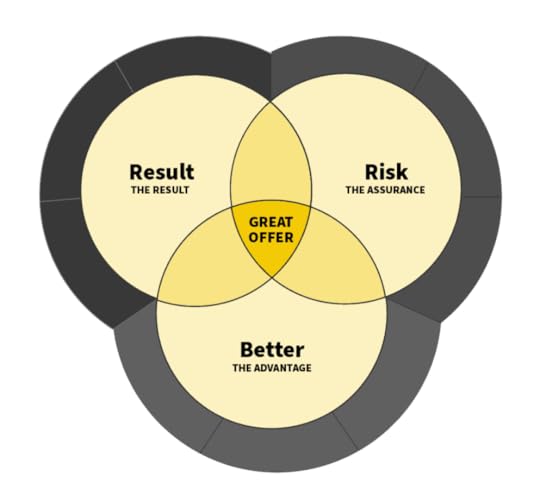
Let’s dig into each of these.
Pillar #1: The ResultThis is the tangible, measurable outcome your product delivers. It’s not about vague benefits; it's about concrete results that align with the top priorities of your user. What are you doing to help your users save time or increase their profits? Anything not directly attached to an outcome is not specific enough.
Example: Let's take the case of a business with an email automation tool for WordPress. An ineffective approach would be to use vague terms such as: "better," "faster," or that it will "grow their business." That doesn’t really promise a specific result.
The better approach? Highlight specific, relevant benefits. Their tool was "Designed for agencies using WordPress," eliminating the need to learn a new platform and saving them time. They also offer flat rate pricing, which translates to significant cost savings as an email list grows. These points directly address the user's needs and position their product in a compelling way.
Pillar #2: The AdvantageThis is where you need to highlight how your product is significantly better than other options in the market. If your product only seems marginally better, you won’t convince potential customers to make the switch. It has to be a game-changer.
Example: Claims like "we're easier to use" or "our platform is faster" won't cut it. It lacks substance and doesn't provide a clear context of how your product is better.
The better approach? Dig deeper. Why is your product easier to use? What specific feature or aspect of your product is currently impossible with their existing solution?
Pillar #3: The AssuranceThis one is crucial. If potential customers believe there's a risk involved in switching to your product, they won't make the leap, regardless of how good your offer is. Addressing their fears and uncertainties directly can make all the difference.
Example: Vague assurances like "fast" or "easy" won't convince anyone.
The better approach? Be specific about why it's easy to get started with your product and why there's no risk. Quantify everything, and explain in concrete terms why their fears are unfounded.
Pro Tip: The crucial tip here is to continually ask "why" at every stage of crafting your offer. It helps you dig deeper and arrive at answers that resonate strongly with your potential users.
Hopefully, by now, you can see why these three components are critical.
Take a company that communicates the Result and Assurance – why should you use that solution and not another? You don’t know why that solution is better.
Take a company that communicates its Result and Advantage - what’s the risk of signing up?
Take a company that communicates the Assurance and the Advantage - what’s the result? Why should you invest your time signing up for your solution?
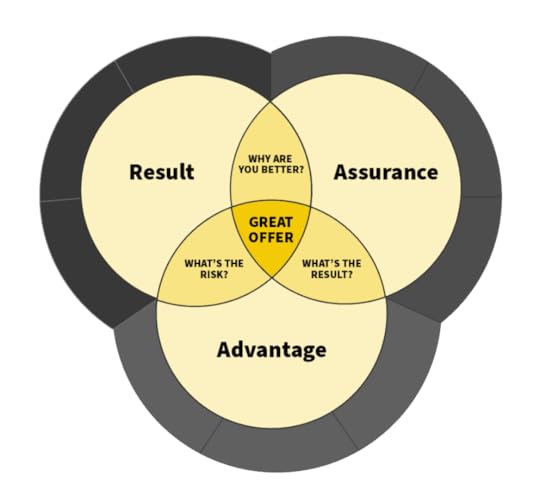
It’s not enough to have one or two of these components; you need all three to position your offer correctly.
Luckily, we’re going to show you an easy way to approach this.
First, you need to start by asking yourself three questions:
What are the results your product provides?What makes your product 10x better than others?What is the perceived risk of signing up?Each of these questions unpacks what the Result, Advantage, and Assurance outcomes are.
To get the best results, start by listing out as many potential answers to the questions above. It’s not about quality at this point. Just list everything you can think of for each question.
To unpack your key result, think about what user success is for your ideal user (remember, we defined this in the User Component. If you don’t have that yet, you’ll want to complete it first). Take it one step further and ask what measurable ways this user would get if they knew they got value. Is it revenue? More signups? More time? And if so, how much? The more specific you can get about the result, the better.
Next, you’re going to unpack three clarifying questions to hone in on your irresistible offer:
What’s the one main underlying result?What’s the one main underlying reason why you’re better?What are the two to three most important perceived risks to address?Unlike answering the first question, this time, you’re going to get hyper-specific on what really makes your offer, in fact, irresistible.
Pro tip: Complete the first three questions individually and then book a meeting with your team to hone in on your irresistible offer. Nothing brings clarity like a heated debate.
Action items:
Complete and fill out the Offer Canvas.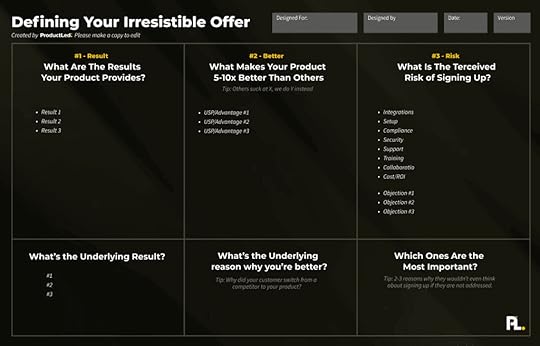
Once you’ve filled out the Offer Canvas, you’ve got the foundation for an irresistible offer. But just like a skeleton is a core to making your body stand on two feet, you need muscle, tissue, and organs to actually walk, talk, and do all the amazing things you’re capable of doing. That’s why you need strategic messaging that persuades your ideal user that this offer is, without a doubt, right for them.
Let’s give your offer legs.
Phase 2: Nail Your MessagingImagine you’re an artist for a second.
You’re at the top of a mountain overlooking a beautiful lake that’s surrounded by a dense forest. Everywhere you look, it’s green, and there’s no sign of civilization around you. It’s quiet, yet you can hear birds chirping and leaves rustling as a cool, refreshing breeze flows down the mountain. It’s a bright sunny day, and you pull out your blank white canvas and start to paint.
It’s time to capture this beauty.
You start by outlining the main components, such as the ridges of the mountain and lake, and the key elements in the view.
Then, you give some of the main components more definition by building them out.
Lastly, you invest time in building out everything else and truly bringing the painting to life.
That’s how crafting your messaging should feel.
One step after the other brings your messaging to life until it pops.
To turn your messaging into an irresistible offer, we’ll follow three steps:
Step 1: Define the components.Step 2: Write the headlines.Step 3: Fill in the blanks.By the end of these three steps, you’ll have crafted a product-led homepage that converts.
Let’s dig in.
Step 1: Define the SectionsThe best product-led home pages all have the same sections.
After analyzing hundreds of home pages, Pedro boiled this down to six sections. Here’s a free template to fill out yourself based on this exact structure.
A Hero Component outlines the main value proposition and focuses on getting your attention by clearly communicating the main value you’ll get from the product.A Problem Component that clearly communicates the main problem your product solves and builds your interest around what the solution might be.A Solution Component that explicitly answers the “How does it work?” question that so many users want to know before signing up.A Risk Reversal Component addresses the main reasons that might prevent someone from signing up.A Social Proof Component assures the user they’re making a great decision to sign up.A Call-to-Action Component that asks the user to sign up and gives compelling reasons to support why they need to take action.It’s easy to overcomplicate your homepage with way too many sections, but at its core, these are the main ones you need.
Let’s break down these six sections and build them out for your homepage.
Deal?
Step 2: Build Each SectionBuilding out each section can take the majority of your time when it comes to crafting your messaging. Although it’s tempting to delegate this step to a copywriter, I’d strongly encourage you against doing so at this point. You want to complete the first draft so you can ensure that your irresistible offer comes through.
You can use this template to build out your product-led homepage.
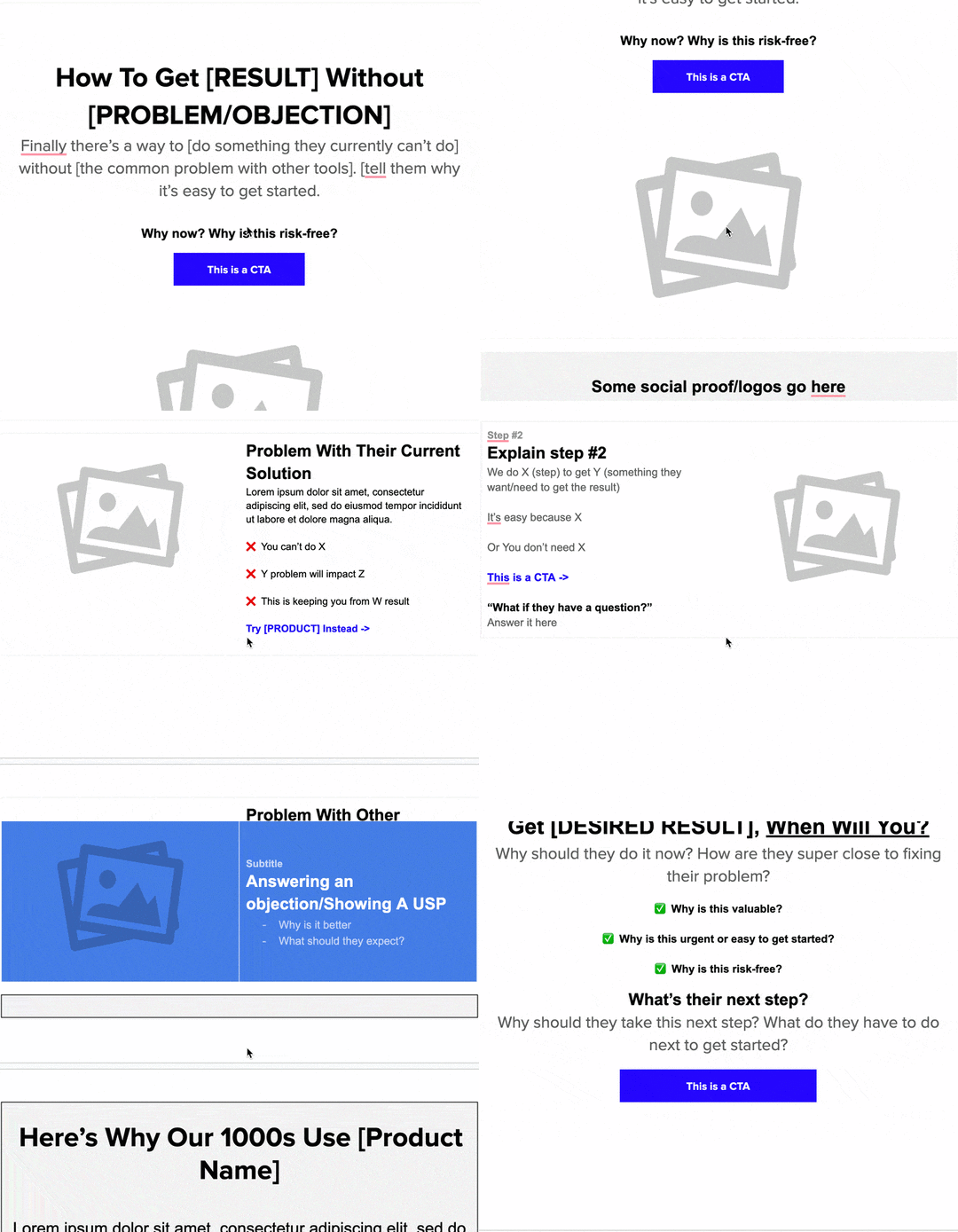 Hero Section
Your Hero section holds the first words users see when they land on your homepage. It’s arguably the most important part of your entire homepage. Why? Because it sets the impression for what you do as a business, and in seconds, your user will decide whether they should continue scrolling down or ditch your site completely and never return again.
Our goal is to help you craft a hero section that grabs your user’s attention.
Here’s our Hero section template:
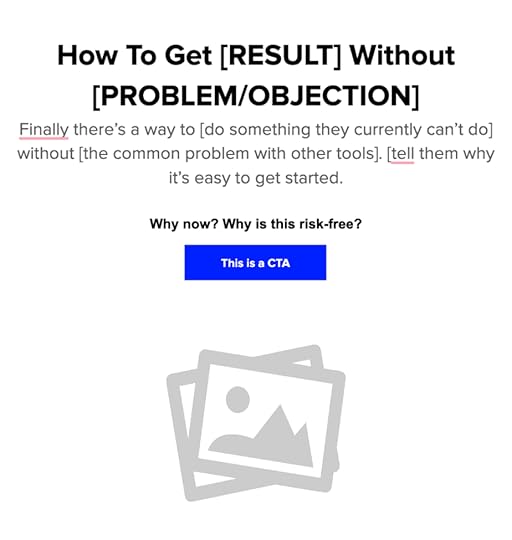
If we break it down further, there are really five pieces to cover:
A tagline communicates the main underlying result you offer as a business.The sub-copy reinforces what you do as a business and prompts them to get started.A call-to-action is nothing more than a simple prompt to take the first step to sign up.A visual aid is optional but can often quickly communicate what your product does in ways that words can’t.Finally, social proof assures your users that you are dealing with a reputable business.Since you’ve already done the hard work of filling out your Offer Canvas, you’ll notice that completing the Hero section is a lot easier as you’re not starting from scratch when it comes to defining your result and common objections.
Now it’s your turn to take action:
For your V1 Hero section, complete the tagline, sub-copy, and call-to-action.Bonus: Complete the visual aid and social proof pieces.Remember: a great Hero section leaves your users wanting to sign up and learn more - it must be compelling.
Once you’ve completed your Hero section, let’s dig into your Problem section.
Problem SectionA good Problem section quickly points out why your current approach is not the best path forward.
At ProductLed, we’re strong advocates of why it makes sense to be product-led versus sales-led, so our Problem section used to focus on that in the early days of product-led growth.
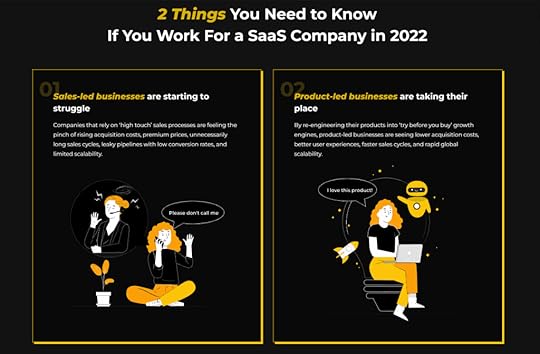
Your Problem section might point out:
What the problems are with other tools.What the main problems are with their current solution.Just point out the underlying problem they need to address.One of the easiest ways to define what to lead with for your Problem section is to think about the main obstacle that blocks your users from seeing value.
For example, at ProductLed, we’ve helped hundreds of companies transition to PLG and scale from pre-revenue to billions in revenue. When we started to analyze what separated the successful product-led companies and the ones that weren’t having success, we realized that if a company didn’t approach product-led growth as a company-level strategy, or understand that it was more than a free model, then they were basically screwed.
Not to say they couldn’t adapt. But if they held the common belief that “product-led growth was no more than a free trial,” then they weren’t “all-in” and, therefore, wouldn’t find success.
Wes Kao, founder of Maven, refers to this as your spiky point of view. It should be a tad bit controversial. Not over the top, but it should definitely not be something everyone can agree to.
If you’ve done a good job identifying the underlying reason why you’re better as a business, your spiky point of view should absolutely play into it.
For instance, at ProductLed, what makes us better than anyone else in our space is that we have a holistic approach to product-led growth. So when our problem statement is “Product-led growth is more than a free trial,” it leans into the fact that we believe a free trial is just one of many pieces of a successful product-led business.
Here’s the template you can use to build out your Problem section:
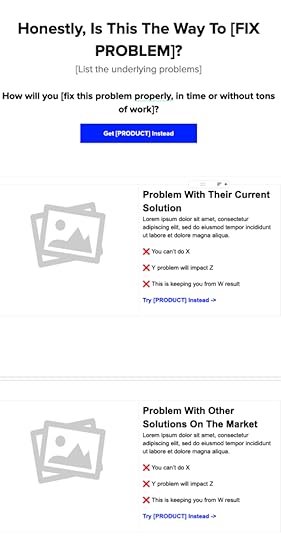
Now, unlike the Hero section, which is pretty clear-cut, your Problem section is flexible.
If it takes a lot for your users to understand what the main challenges are with their current approach, you may opt for something like the template above, or if it’s more well-known, you could slim it down and use something more streamlined like this.
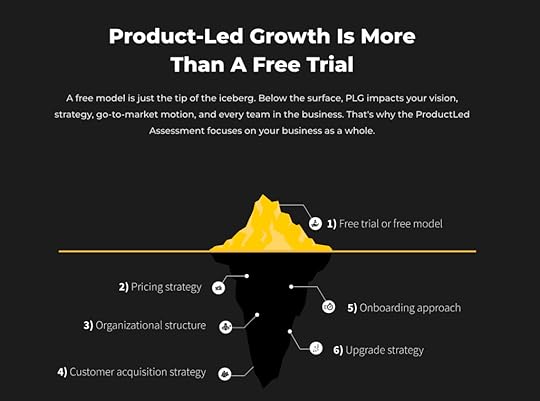
The golden standard in messaging is to communicate more with fewer words.
Now it’s your turn to take action:
Build out your Problem sectionPro Tip: Write your Problem section out as a LinkedIn post and see if it strikes a chord with your audience. If it falls flat on its face, chances are you don’t have a spiky point of view. If it drives a lot of engagement quickly, chances are that you’re on to something!
Once you’ve built out your Problem section, let’s put on our solution hat.
Solution SectionA good Solution section answers the “How does it work?” question that so many users want to know before signing up.
Yet, when most companies get to this section, they tend to overcomplicate it and list out ALL of the required steps to get to value. If your solution section leaves users feeling overwhelmed, you’ve gone too far. If your solution section leaves users feeling empowered, you’re on the money.
A great solution section reinforces the underlying result that your product promises while typically showcasing how much easier, simpler, or faster it is to achieve that specific result.
Here’s your solution section template:

Ideally, you have no more than four or five steps when it comes to breaking down what you do.
Each step of the solution doesn’t have to be linear.
The best solution sections reinforce that you can achieve a specific result…
in less time,without doing a lot of grunt work andever worrying about doing it again.What makes a Solution section compelling is that you need it to feel like you could achieve that specific result after reading the copy alone.
A bad example of a Solution is something like this:
Step 1: Sign up for our free product.Step 2: See the incredible value.It doesn’t feel believable. It’s too quick and trimmed down.
Everyone with a brain knows there’s usually a bit more to it.
Now it’s your turn to take action:
Build out your Solution componentOnce you’ve completed your Solution component, we can dig into reversing the risk associated with potentially signing up.
Risk Reversal SectionOut of every 100 visitors that go to your website, only a select few will decide to take action.
Something is holding these users back from taking action on your homepage at this point.
They understand your offer.
They understand what’s unique about it.
They understand how it works for them.
Yet, something is holding them back.
The million-dollar question is - what specifically is doing that?
I can’t tell you what that is for your solution.
However, someone on your team probably has a hunch why.
If you are customer-facing, you probably hear reasons why your users don’t sign up.
Start listing them out every time you hear why a potential customer doesn’t sign up for your product to spot the patterns.
Alternatively, if you have a good amount of website traffic, you can deploy an exit intent popup that asks why they didn’t bother to sign up.
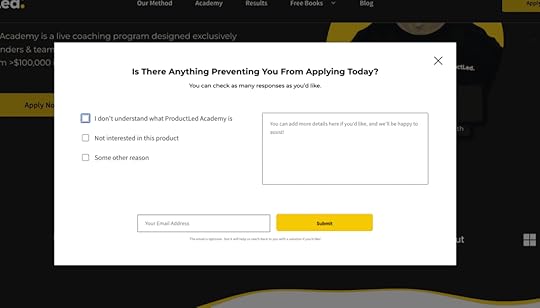
This can quickly help identify some of the top objections.
Once you’ve got a list of your top objections, narrow it down to the top three objections and then confront them.
Here are a few great examples of how to do just that:
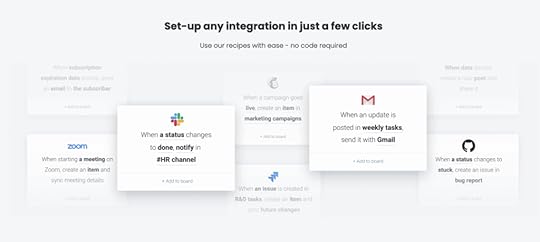
Objection: “Does it work with the tools I use? What can I do with them? How long does it take to implement?”
Let's say your SaaS tool integrates with Slack. Instead of showing the Slack logo, your website might say:
"Supercharge Your Team Collaboration: With our Slack integration, you can automatically receive updates in your preferred Slack channel whenever there's a change in our tool. This ensures your entire team stays informed and can act immediately, boosting productivity and efficiency."
This message not only demonstrates the integration but showcases a tangible benefit of using your tool with Slack.
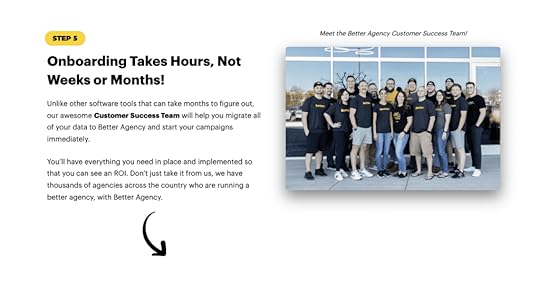
Objection: Setup time – “How long does it take to set up? Will you help me migrate data over?…”
Let's look at BetterAgency. This client did all the heavy lifting in terms of migrating data over and getting their customers up to speed but never mentioned it on their previous website version. We took it upon ourselves to make sure these features were emphasized, addressing setup time, support, and training objections in the process.
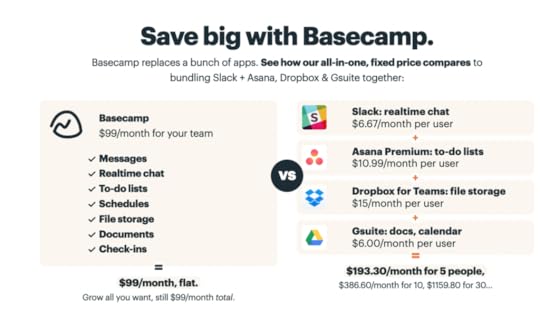
Objection: ROI – “What’s the result I’ll get versus the price I’m paying for this? Are there any hidden costs? Are there any contracts required?”
Normally, you’d answer these on pricing pages. Look at this example from Basecamp, where they anchor their price based on how much you’ll be able to save with an all-in-one tool that charges the same regardless of how big your company is.
Hopefully, by now, you’re able to see that when you confront these objections head-on, you’re able to increase your overall conversion rates dramatically.
Feel free to start off by filling out this Risk Reversal template to get started:

Action items:
Identify all objections to why users don’t sign up for your product.Narrow it down to the top three objections.Address your top objections on your homepage - if this is the first time you’re going through this, start with addressing one objection.Now that you’ve taken away a lot of the risk from signing up for your product, there are still some users who need some assurance that this is the right thing to do.
Social proof is how you make that happen.
Social Proof SectionThink about a time when you visited a landing page and spotted a familiar logo or testimonial from someone you knew or respected. Instantly, you felt a wave of trust. Great social proof assures your user that everything is going to be okay and that you’re making the right decision.
Although social proof is its own section, it doesn’t necessarily have to have its own place on your homepage. You can deploy social proof alongside every section.
For instance, you can and should include it below the above-the-fold section.
You can use a before and after story from a customer to reinforce the Problem section of what it was like before your solution and what it is now.
You can use social proof below each step of your Solution component to expand on either how easy it was, how much time it saved them, or how big the result was.
And of course, you can use social proof for risk reversal. In fact, it might even perform better for you if your customer says the objection and why they made the right decision to sign up instead of your company.
It just comes across as more authentic.
Although Social Proof is one of the easiest sections to roll out, it can be tempting to think that quantity trumps quality, and that couldn’t be further from the truth.
You want to use Social Proof to reinforce the Result, Assurance, or why your solution is better.
And the more specific, the better.
For instance, say you’ve got two testimonials. One says, “This solution is great!” and another says, “This solution helped us save $10,342 on our last tax return,” opt for the latter as it’s more specific.
For the Social Proof section, here are your action items:
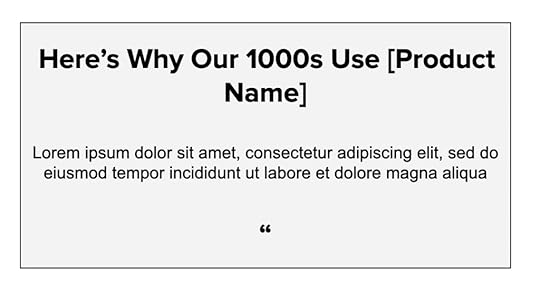
List out all of your social proofReinforce each component with social proofCreate a testimonial section that leans into the core Result, why your solution is Better, and Assures users they’re making the right choice.Here’s the Social Proof template you can start off with:
Once you’ve reassured your user why they’re making a great choice to signup, it’s time to wrap up the page with a compelling call-to-action.
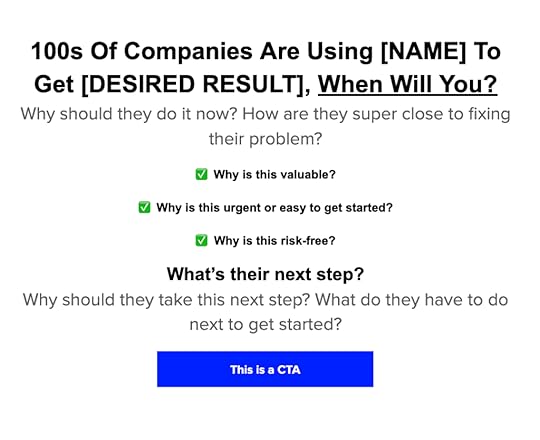
Call-to-Action SectionA good call-to-action asks the user to sign up and gives compelling reasons to support taking action.
The key here is not to introduce any new content or insights. It’s a recap of the main reasons why these users should sign up. After reading a compelling call-to-action section, you should feel “fear of missing out (FOMO)” if you’re an ideal user for that product.
To do that, you must lean into the top reason why someone should sign up for your solution and then cover why your solution is better, less risky to use, and gives people a lot of great results.
Here’s a great template to follow for a call-to-action section:
Now it’s your turn.
Action items:
Build out your call-to-action section.Make sure it passes the FOMO test.Once you’ve completed your call-to-action section, let’s put everything together!
Putting it all togetherNow that you’ve built out every component, you’ve officially just created your high-converting homepage with your new offer.
Congrats!
As I’ve mentioned in this chapter, every time you answer each of the columns, it’s important to keep asking “why” so you can go from surface-level insights to real ones that you can use to improve your positioning and conversions.
Step #1: What’s the result your product provides? It can’t be something vague like “saving time.” If it’s not directly related to saving or making more money in the most specific way possible, then it won’t sound interesting enough.
Step #2: Why is your product better? Not marginally better, 10x better! Those USPs need to be everywhere in your marketing. A good way to think about these is to figure out why people switched from other products to yours in the first place. It takes even more convincing to have someone switch from a competitor to a similar tool, so if you find out why, it will help you filter through the best USPs much faster.
Step #3: What’s the perceived risk of signing up? Think about all the reasons that could keep people from signing up, like the ones we’ve covered before (support, integrations, compliance…). Then find the top three and think about a good way to address each one.
Step #4: Get rid of 80% of what you wrote. Now that you’ve filled all of the columns, it’s now time to find the underlying reasons for each topic. Boil it down to three items to get the clarity needed to make your messaging as clear as possible.
Pro Tip: Find what’s common with all of the items you wrote in each column. That should give you a good indication of what’s the underlying point here.
Often at this point, I get asked if you should follow the section templates to a tee.
The answer is no. Make them your own and ensure your irresistible offer is front, right, left, and center in each section.
Unless you’re a professional Conversion Copywriter or a Product Marketer, don’t be cute adding additional components.
Now that you’ve built the homepage, let’s get this offer out into the wild.
Phase 3: LaunchDepending on the size of your business, you may need to refine this offer further and send it to your Design and Marketing teams to improve.
However, it’s important to set an aggressive deadline to ship this page.
We can edit it on the go once it’s live.
Too often, I see companies spend months refining their homepage to ensure it’s perfect.
But here’s the truth. Because we started with defining an irresistible offer, this page will most likely convert better than a well-designed page that doesn’t have those same elements.
Even if your page doesn’t feel “perfect,” still launch it.
Once you launch, you can gain user feedback faster.
Your page will not be perfect, but that’s okay.
Launch it.
Now that you’ve made it to the end of the Offer Component, please share your top takeaway(s) in the comments below!
To continue on your journey of building a successful product-led business, be sure to continue building out the other eight components of the ProductLed System .
.
Up next is building out your Onboarding Component. You can read that here.
Alternatively, if you’d like to work with a coach to implement these components into your business, be sure to check out the ProductLed Implementation Program.
It’s our intensive implementation program where we’ll help you build a strong foundation for product-led growth so that you can scale faster and with more control.
What’s unique about this program is we’ll work with you and your team to implement the proven ProductLed System so that you can scale faster with less stress.
We’ll go through everything we went through today with your team so you can create an irresistible offer for your users.
Just click here to learn more and apply now.
About the AuthorsWes BushWes is the CEO & Founder of ProductLed and wrote the bestselling book Product-Led Growth: How to Build a Product That Sells Itself.
Pedro CortésPedro helps PLG companies convert more visitors or attract more enterprise deals through the use of clearer messaging and positioning.
The post How to create an irresistible offer to get more signups for your product-led business appeared first on ProductLed.
October 17, 2024
The 50+ best SaaS books every founder & CEO should read in 2025
Building a SaaS business has never been easier.
What used to cost $1M to build 10 years ago now costs less than $10k.
Given the low barrier to entry, SaaS companies are popping up faster than ever before.
This sounds great until you realize that this is driving customer acquisition costs through the roof on a macro level.
What used to cost $1,000 to acquire a customer five years ago now costs north of $1,550 to acquire the same customer.
Pair that with the fact that customer willingness to pay for features has dropped by 30% over the same period and, well, your expenses go up while your profitability goes down.
Not a good combo.
As a result, argues Andrew Chen, it’s becoming more expensive to acquire customers.
To thrive, you can’t risk playing it safe by using the same marketing and sales playbook that everyone else is using. That’s why I asked some of the top SaaS leaders to share their most helpful books with you.
Each of the books below shows you how to build a modern SaaS business.
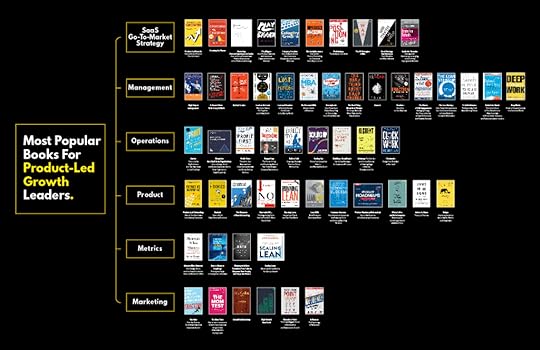 11 indispensable SaaS go-to-market strategy books
Every company needs a go-to-market strategy. There’s no replacement for it. But of course, developing and carrying out a go-to-market strategy is easier said than done. If you read these 11 books, you’ll find yourself more confident in your ability to create a go-to-market strategy that yields positive results.
1. The Product-Led Playbook: How to Unlock Self-Serve Revenue and Dominate Your Market (With a Tiny Team)In this actionable playbook, you'll discover the nine key components that make up the ProductLed System. This simple system provides a step-by-step approach to operationalizing PLG in your business. It enables any SaaS founder to move from frenetic to focused, with a sustainable pace of execution that provides more bang for your buck.
About the author: Wes Bush (that's me!) is the founder and CEO of ProductLed.
Who should read it: A must-read for any SaaS founder or CEO who already has a product-led motion (or is currently transitioning) and wants a structured approach to implementing PLG.
2. Product-Led Growth: How to Build a Product That Sells ItselfI am proud to have authored the number one book on product-led growth (released 2019), which focuses on developing a go-to-market strategy. You can read my first book for free here.
About the author: Wes Bush (that's me!) is the founder and CEO of ProductLed.
Who should read it: A must-read for anyone seeking guidance in creating a defined go-to-market strategy based on years of experience and thousands of conversations with industry leaders.
3. Crossing the ChasmCrossing the Chasm is in its third edition thanks to its attention to detail, advanced case studies, and updated insights and findings.
About the author: Geoffrey Moore is an author, speaker, and consultant who has worked with Salesforce, Microsoft, and Google among others.
Who should read it: Moore touches on the ins and outs of developing a go-to-market strategy, with a focus on the chasm between early adopters and the early majority.
4. Mastering Product Experience (in SaaS): How to Deliver Personalized Product Experiences with a Product-led StrategyThe title says it all. Mastering Product Experience is all about teaching you how to acquire and retain customers by providing an industry-leading product experience.
About the author: Mickey Alon has more than 12 years of experience building and managing high-growth SaaS companies.
Who should read it: Anyone seeking go-to-market guidance from a product-led expert with first-hand experience.
5. Play Bigger: How Pirates, Dreamers, and Innovators Create and Dominate MarketsAn in-depth study of category-creating companies and how they reached the top of their space. Find out how Amazon, Salesforce, Uber, and IKEA, among others, took their brand to market.
About the author: Al Ramadan is a co-founder at Play Bigger Advisors. From entrepreneur to CEO, Ramadan has held roles across the spectrum.
Who should read it: Do you want to follow in the footsteps of the biggest brands in the world? Play Bigger gives you the playbook for doing just that.
6. Category Creation: How to Build a Brand that Customers, Employees, and Investors Will LoveCreating a category and winning big as a result requires a detailed and concise go-to-market strategy. Category Creation provides lessons from Salesforce, HubSpot, and many other category-leading brands.
About the author: Anthony Kennada is the chief marketing officer at Gainsight, where he is responsible for creating a new software category of “customer success.”
Who should read it: Creating a new category is a tall task. This book helps you define your go-to-market strategy, which is critical to hitting the ground running.
7. Obviously Awesome: How to Nail Product Positioning so Customers Get It, Buy It, Love ItOut of all the books on this list, Obviously Awesome is the one that spends the most time on product positioning and how to use it when creating a go-to-market strategy.
About the author: April Dunford is an expert in positioning and market strategy with 25+ years of bringing successful products to market.
Who should read it: Product positioning goes hand in hand with your go-to-market strategy. This book gives you the knowledge necessary to position your product in a way that will attract and retain customers.
8. Positioning: The Battle for Your MindI like the way Positioning is described on its Amazon page:
The first book to deal with the problems of communicating to a skeptical, media-blitzed public, Positioning describes a revolutionary approach to creating a "position" in a prospective customer's mind-one that reflects a company's own strengths and weaknesses as well as those of its competitors.
Reaching your audience today is more challenging than ever before. Positioning helps you break down the barriers.
About the author: Al Ries is an author, branding strategist, and founder of the concept of “positioning.” You can’t create a go-to-market strategy until you know how to position your product.
Who should read it: Any entrepreneur, CEO, or business leader who wants to properly position their product for their market.
9. The 33 Strategies of WarExamples from history that show what it takes to overcome the competition. An in-depth look into the strategies of Napoleon, Shaka the Zulu, Ulysses S. Grant, and more.
About the Author: Robert Greene has written several bestselling books, including The 33 Strategies of War. Others include The Art of Seduction, Mastery, and The 48 Laws of Power.
Who should read it: If you want to learn from the best thinkers and leaders from the past, The 33 Strategies of War is a good place to start.
10. Good Strategy Bad Strategy: The Difference and Why It MattersGood Strategy Bad Strategy provides examples of what works and what doesn’t when taking your product to market.
About the author: Richard Rumelt is a UC Berkeley and Harvard Business School graduate, Emeritus Professor at UCLA Anderson, and an internationally recognized writer and speaker on strategy.
Who should read it: A good go-to-market strategy positions your company for success. A bad go-to-market strategy can kill your company before giving it a chance to succeed. That’s reason enough to study this book.
11. Inside the Tornado: Strategies for Developing, Leveraging, and Surviving Hypergrowth MarketsA leading book on how to take your product from early adopters to the mainstream market, which includes various marketing strategies that have been proven successful.
About the author: Geoffrey Moore is an author, speaker, and consultant who has worked with Salesforce, Microsoft, and Google among others. He’s also the author of Crossing the Chasm (see #2 above)
Who should read it: Anyone who realizes the importance of using their go-to-market strategy to capture early adopters and then move into the mainstream market.
Now that you know our Top 10 to get you started, let's get into the weeds a little bit and look at the best SaaS books for different stages of your business.
15 valuable SaaS management booksSaaS management books touch on a variety of topics, including but not limited to:
How to attract customersHow to retain customersHiring and training How to use innovation to save resourcesEliminating distractions to boost productivityAlong with the above, many of these books back up my belief that first principles thinking is critical to developing an effective product-led growth strategy.
2. It Doesn’t Have To Be Crazy At Work
4. Leaders Eat Last: Why Some Teams Pull Together and Others Don't
5. Lost and Founder: A Painfully Honest Field Guide to the Startup World
6. The Personal MBA: Master the Art of Business
7. Startupland: How Three Guys Risked Everything to Turn an Idea into a Global Business
8. The Hard Thing About Hard Things: Building a Business When There Are No Easy Answers
9. Rework
10. Traction: Get a Grip on Your Business
13. To Sell Is Human: The Surprising Truth About Moving Others
15. Deep Work: Rules for Focused Success in a Distracted World
9 must-read SaaS operations booksYour approach to product operations can make or break your product-led organization. While it’s often put on the back burner, operations should be one of your primary focuses.
The following nine SaaS operations books can put you on the right track and keep you there.
1. Sprint: How to Solve Big Problems and Test New Ideas in Just Five Days
3. Profit First: Transform Your Business from a Cash-Eating Monster to a Money-Making Machine
4. Topgrading: The Proven Hiring and Promoting Method That Turbocharges Company Performance
5. Built to Sell: Creating a Business That Can Thrive Without You
6. Scaling Up: How a Few Companies Make It...and Why the Rest Don't
7. Building a StoryBrand: Clarify Your Message So Customers Will Listen
8. Alchemy: The Dark Art and Curious Science of Creating Magic in Brands, Business, and Life
9. Clockwork: Design Your Business to Run Itself
11 practical books on SaaS productsOne of the best ways to achieve success with your SaaS product is to take cues from successful companies before you. Below is a list of 11 books that provide information on product-led growth, building a successful product, running lean, reducing churn, growing recurring revenue, and more.
1. Product-Led Onboarding: How to Turn New Users Into Lifelong Customers
2. Hooked: How to Build Habit-Forming Products
3. The Elements of User Onboarding
4. Start with NO...The Negotiating Tools that the Pros Don't Want You to Know
5. Running Lean: Iterate from Plan A to a Plan That Works
6. Lean B2B: Build Products Businesses Want
7. Customer Success: How Innovative Companies Are Reducing Churn and Growing Recurring Revenue
8. Product Roadmaps Relaunched: How to Set Direction while Embracing Uncertainty
9. When Coffee and Kale Compete: Become great at making products people will buy
10. Jobs to be Done: Theory to Practice
11. Nudge: Improving Decisions About Health, Wealth, and Happiness
4 essential books about SaaS metricsThere’s no shortage of product-led growth metrics to track. These help you determine what’s working, what’s not, and where you need to focus your resources in the future.
If SaaS metrics are on your mind, here are four books to read.
1. Measure What Matters: How Google, Bono, and the Gates Foundation Rock the World with OKRs
2. How to Measure Anything: Finding the Value of Intangibles in Business
3. Winning with Data: Transform Your Culture, Empower Your People, and Shape the Future
4. Scaling Lean: Mastering the Key Metrics for Startup Growth
6 pivotal books about SaaS marketingSaaS marketing books will open your mind to new ways of reaching your target audience. As you learn more about product-led marketing, you’ll find that these books serve as a foundation for the strategy you’ll develop and subsequently rely on in the future.
1. Traction: How Any Startup Can Achieve Explosive Customer Growth
6. Influence: The Psychology of Persuasion
Get expert guidance building your SaaS businessYou can read every SaaS book out there, but nothing comes close to actually doing it.
Most companies approach product-led growth from the surface level.
The problem is, your free trial, onboarding experience and pricing are only the tip of the iceberg.
You need to plunge beneath the surface to build a solid product-led organization base too.
When your organization has the proper infrastructure and cross-team collaboration, you can build the right processes to collect data and launch high-impact experiments to drive powerful holistic PLG growth.
In the ProductLed Academy coaching program, you work directly with Wes Bush and product-led specialists to implement a three-phase framework to successfully scale your product-led business.
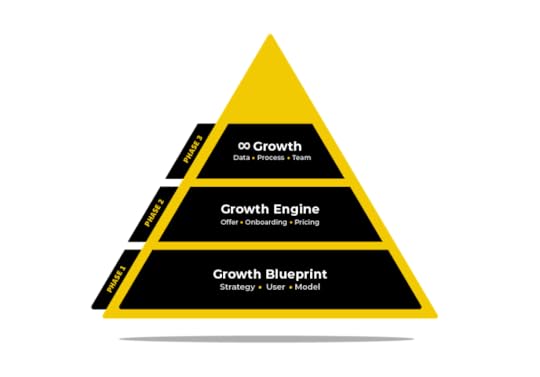 The ProductLed System by Wes Bush
 As you progress through each phase, you'll work through these nine core components:
Strategy: Craft a winning strategy for your company User: Go deeper than "jobs to be done" with improved customer research process and KPIsModel: Identify and fine-tune the best product-led model for your users (beyond simply freemium or free trial)Offer: Distill the value of your product into an irresistible offerOnboarding: Improve your onboarding by deploying a proven framework for getting users to value fasterPricing: Optimize for scale by aligning pricing with value metrics ( so revenue scales with customer success)Data: Identify the metrics that are mission-critical for monitoring potential bottlenecks as you scaleProcess: Install a seven-step process for building experiments, prioritizing the high-impact ones, and launching them. Team: Make sure your team is full of A players with an org structure that can scaleWhile you can have one or more of these components dialed in perfectly, if you’re missing one of these key elements, you’re going to have a hard time with growth.
If you're ready to break through to the next level and master your pricing strategy, be sure to check out coaching program.
FAQs about SaaS booksEven with the above list guiding you, it’s likely that you’ll have questions about SaaS books. While there’s no right or wrong answer to these questions, the following information should provide more direction.
What are some of the best SaaS marketing books that every start-up SaaS marketer must read?The best jumping-off point for learning more about SaaS marketing is The Mom Test: How to talk to customers & learn if your business is a good idea when everyone is lying to you.
Once you’ve laid the foundation, read High Growth Handbook for more advanced tactics.
What are the best books to read on SaaS metrics?Measure What Matters: How Google, Bono, and the Gates Foundation Rock the World with OKRs and Winning with Data: Transform Your Culture, Empower Your People, and Shape the Future are two of the most highly-rated books on SaaS metrics.
What are the best UX books for SaaS?While many of the books above touch on UX, one that’s missing is Productize: The Ultimate Guide to Turning Professional Services into Scalable Products. For all things SaaS UX-related, read this book from cover to cover.
What is the best book on SaaS pricing?You can pick up pricing advice in many of the 50+ books I’ve mentioned, but there’s another to add to the list: Price To Scale: Practical Pricing For Your High Growth SaaS Startup. This book is all about how to price your SaaS product for high growth.
What book should every SaaS entrepreneur read?Product-Led Growth: How to Build a Product That Sells Itself marks every checkbox. Building a product is different than building a product that sells, and Wes Bush will teach you what it takes to succeed.
What comes after reading these books?You may never read all of these SaaS books, but you should pick one or two from each category and dive in as time allows. And of course, if you need help in a specific area — such as metrics or marketing — choose titles from the applicable category.
Reading these books will help you build a modern SaaS business but, at the end of the day, execution is the ultimate differentiator.
In my nine years in the product-led space, I've seen spectacular successes and promising companies that ultimately didn’t make the cut. Having coached over three hundred SaaS founders, I know what it takes from a strategy perspective and the commitment required from founders and their teams.
If you're serious about scaling your SaaS company, explore the ProductLed Academy coaching program and apply today.
The post The 50+ best SaaS books every founder & CEO should read in 2025 appeared first on ProductLed.
June 28, 2024
Comparing 7 top product adoption software solutions [Vendor Review]
As many as 60% of users who sign up for a free trial of your SaaS app will use it once and never come back.
Consequently, a wide array of new SaaS solutions has emerged to address this issue. While having many options might seem beneficial, the reality is that the market is now crowded and confusing.
In this vendor landscape, I break down the main product adoption software solutions, helping you better understand which solution might be the best fit for your business.
What to consider when comparing product adoption softwareIn this vendor review, I will evaluate seven market leaders based on four main factors to consider when purchasing a product adoption solution.
Increase Conversions: Improve the adoption rate of new users and engage existing users with walkthroughs and personalized in-app messaging.User Feedback: Launch a survey to find out your net promoter score (NPS) or identify at-risk accounts.Product Analytics: Measure your onboarding funnel.Employee Onboarding: Help your employees use software faster.For this vendor review, I will rank the seven market leaders on how well they solve these four factors above:
If you’d like to skip to the vendor review of a solution you’re currently evaluating, just click the solution below:
AppcuesGainsightPendoUserlaneWalkMe GrowthWhatfixUserGuidingAlternatively, if you’re looking for the best solution based on specific criteria, here are my “Best-In-Class” ratings for each solution:
Best user onboarding solutionBest valueBest mobile onboardingMost secureCutting edge solutionCustomer support heroNo-code-setupAlright, let’s dive into comparing the top product adoption software solutions, starting with Appcues.
1. Appcues vendor reviewBest-In-Class: User onboarding solution
Appcues is a solid point solution if you want to drive product adoption and learn more about your users through NPS surveys or custom feedback forms.
Appcues specializes in user onboarding and has gone out of its way to provide you with onboarding tools like Interactive Modals, Checklists, Walkthroughs, and Callouts, which can help you convert new users into paying customers.
If you already have a third-party analytics tool, Appcues can easily be rolled out to your application and is one of the most affordable solutions in the space.
However, if you don’t have product analytics already in place, you might be better off checking out another solution.
One thing you never want to do is optimize an application without product analytics. It’s like trying to find the fastest way from Toronto to Los Angeles without a map.
Core problems Appcues addressesProduct Adoption SolutionsIncrease Adoption User FeedbackProduct Analytics
 Employee Onboarding
Appcues' FeaturesFeaturesEmployee Onboarding
IntegrationsProduct Analytics
Surveys & Polls
NPS
In-App Messaging & Guides
Feature Adoption
User Segmentation
User Onboarding
Mobile App Walkthroughs
Appcues overview Great for: The SaaS product team that wants to easily roll out user onboarding, feature announcements and NPS surveys.Ideal customer: The SaaS business with a free trial or freemium model, between 50 and 10,000 employees, and a third-party analytics tool in place, such as Amplitude or Mixpanel.Pricing: Plans start at $249 per month for 1 App (3 team members)2. Gainsight vendor review
Employee Onboarding
Appcues' FeaturesFeaturesEmployee Onboarding
IntegrationsProduct Analytics
Surveys & Polls
NPS
In-App Messaging & Guides
Feature Adoption
User Segmentation
User Onboarding
Mobile App Walkthroughs
Appcues overview Great for: The SaaS product team that wants to easily roll out user onboarding, feature announcements and NPS surveys.Ideal customer: The SaaS business with a free trial or freemium model, between 50 and 10,000 employees, and a third-party analytics tool in place, such as Amplitude or Mixpanel.Pricing: Plans start at $249 per month for 1 App (3 team members)2. Gainsight vendor reviewBest-In-Class: For what you get, Gainsight is the best value.
Gainsight takes a holistic approach to solving product adoption and enables customers to execute product-led growth strategies. It’s one thing to build user onboarding walkthroughs, but knowing what impact you’re making on the business is what counts.
Most user onboarding solutions provide analytics on walkthrough performance but won’t help you understand your impact on sales.
Gainsight is extremely powerful at:
It provides both user and account-level product analytics. This feature is extremely helpful if you want to be proactive about combating churn and growing the lifetime value (LTV) of each account.Most analytics software will show you the performance of each user in your product, but this isn’t really too helpful if you’re trying to decide which accounts are at risk or could benefit from a new solution your company’s rolling out.
The solution identifies product-qualified leads (PQLs). If you know what PQLs are, you know that they are extremely important to understanding how users are adopting your product.Overall, Gainsight has built a product adoption platform that can help you improve your customer acquisition efforts, increase each customer's LTV, and identify at-risk accounts to combat churn.
Core problems Gainsight addressesProduct Adoption SolutionsIncrease AdoptionUser FeedbackProduct AnalyticsEmployee Onboarding
Gainsight features FeaturesEmployee Onboarding
IntegrationsProduct Analytics
Surveys & Polls
NPS
In-App Messaging & Guides
Feature Adoption
User Segmentation
User Onboarding
Mobile App Walkthroughs
Gainsight overview Good for: SaaS businesses that want to understand how people use their product and be able to do something about itSolution is not recommended for: Early stage companies that are not yet prepared for a comprehensive solution.Ideal customer: High-growth B2B SaaS companies typically with annual revenue above $20M who are looking to improve product adoption, reduce churn, and increase trial conversion.Pricing: Not transparent. You need to talk to a Sales Rep to find out the pricing.3. Pendo vendor reviewBest-In-Class: Mobile onboarding hero
Pendo is heavily focused on helping product teams provide user insight, guidance, and communication seamlessly.
The software solution accomplishes this by utilizing user feedback and detailed usage data to automate and personalize user onboarding and in-app communications. Pendo does more than just help users understand the impact of their onboarding content; it also allows them to automatically customize that content based on user or account profiles, provided feedback, in-app behavior, and previous interactions with the content.
In addition, Pendo stands out from its competitors with two key differentiators:
Mobile apps: Most product adoption solutions in the B2B SaaS space focus only on Web apps. Pendo provides a solution that spans both web and native mobile apps. If you do have a mobile app, this may be a great solution for you.Integrations: Pendo has over 50 integrations including many common knowledge base, help desk, and chat tools. These allow users to bring relevant support content directly into the product rather than forcing users to search through external portals.Overall, Pendo’s product seems very straightforward. They also have a free NPS tool worth checking out.
Core problems Pendo addressesProduct Adoption SolutionsIncrease AdoptionUser FeedbackProduct AnalyticsEmployee OnboardingPendo featuresFeaturesEmployee Onboarding
Integrations
Product Analytics
Surveys & Polls
NPS
In-App Messaging & Guides
Feature Adoption
User Segmentation
User Onboarding
Mobile App Walkthroughs
Pendo overviewGood for: A product team that wants to understand and guide their users.Why founders don’t choose Pendo: Many early-stage SaaS companies opt not to use Pendo primarily because of its cost.Ideal customer: Well-established, expansion-stage B2B SaaS companies who have a freemium or free trial offer.Pricing: Pendo offers a free product for up to 500 monthly active users. I tried to get pricing on their paid plans, but they don’t like to share that info, even if you ask nicely. But you can request pricing for the Base, Core, Pulse, and Ultimate plans. 4. Userlane vendor reviewBest-In-Class: The most secure product adoption platform
Userlane prioritizes function over design. This is partly because Userlane has one of the most secure systems in the world, and its platform is being used in some sectors, like banking.
Userlane differentiates itself in two big ways:
Security: Userlane prides itself on security. Its platform can be installed on-site and has been used by some of the largest banks and investment firms in the world.Employee onboarding: Userlane helps companies with complex internal tools get up to speed faster. This is much like user onboarding, with the exception that you don’t have to onboard people on your software.If your highly paid employees can save hours or days learning new software, you could potentially save millions over the course of a year.
Overall, Userlane takes a unique position in the market by focusing on security and speed. If these two elements are crucial for your business, I’d recommend checking out Userlane.
Core problems Userlane addressesProduct Adoption SolutionsIncrease AdoptionUser FeedbackProduct AnalyticsEmployee Onboarding
Userlane featuresFeaturesEmployee Onboarding
Integrations
Product Analytics
Surveys & Polls
NPS
In-App Messaging & Guides
Feature Adoption
User Segmentation
User Onboarding
Mobile App Walkthroughs
Userlane overviewGood for: Enterprise teams that need a navigation system for software both internally and externally.Why founders don’t choose Userlane: Userlane is not the best option if you’re looking for a pretty design. Userlane prioritizes function over design.Ideal customer: Fortune 500 and mid to large SaaS companies.Pricing: Choose from a range of scalable pricing tiers, with a plan tailored to your business priorities.5. WalkMe Growth vendor reviewBest-In-Class: Cutting-edge user adoption platform
WalkMe is the pioneer of the product adoption space. Founded in 2011, they have defined many of the features and best practices for a product adoption platform. For the purposes of this vendor review, I'm going to focus on their product WalkMe Growth.
Like Gainsight and Pendo, WalkMe Growth focuses on taking a holistic approach to addressing product adoption.
Two of the most unique offerings of WalkMe Growth are:
Using AI to improve retention and find accounts that are likely to churn. This feature can come in handy if you have a large number of users and want to pin down what actions in the product are leading indicators of churn or, on the bright side, upgrading their account.User recordings: Watching your users go through and use the product can help your product team build a better user experience and identify frustrating moments in the product. What’s extra special about this is that if you use Zendesk or another support integration, you can see the user recording associated with each customer support ticket. This can help you save time identifying what the real problem is.Overall, WalkMe Growth borrows many of the power features from its enterprise products and packages them well to improve product adoption. That said, it is one of the more expensive applications on the market.
Core problems WalkMe Growth addressesProduct Adoption SolutionsIncrease AdoptionUser FeedbackProduct AnalyticsEmployee OnboardingWalkMe Growth featuresFeaturesEmployee Onboarding
Integrations
Product Analytics
Surveys & Polls
NPS
In-App Messaging & Guides
Feature Adoption
User Segmentation
User Onboarding
Mobile App Walkthroughs
WalkMe Growth overviewGood for: SaaS businesses that want a holistic approach to solving product adoption.Why founders don’t choose Walkme Growth: The cost is much higher than point solutions.Ideal customer: SaaS companies who have 150 employees or less.Pricing: WalkMe Growth starts at $1,500/month. The company’s pricing plans vary depending on application/user count.6. Whatfix’s vendor review
Best-In-Class: On-demand support
Whatfix is known for its ease of use, ability to support on-demand enablement, and exceptional service.
Whatfix differentiates itself in two big ways:
Just-in-time help widget: This helps improve user productivity by providing query resolutions that are highly specific and contextual to the user’s state within the application.Simplicity: If your team is using popular enterprise applications like Salesforce, SuccessFactors, ServiceNow, or Oracle you can easily roll out training templates to your team that will reduce your onboarding and product adoption time significantly.Overall, Whatfix is heavily geared towards helping on-demand support teams. They do this by helping companies drive adoption through effective onboarding in a simple, intuitive manner while shortening the learning curve for users.
If your team is swamped with customer support tickets and wants a solution to minimize requests while providing a better user experience, Whatfix might be a good fit.
Core problems Whatfix addressesProduct Adoption SolutionsIncrease AdoptionUser FeedbackProduct AnalyticsEmployee Onboarding
Note: Although Whatfix does offer product analytics, it is not as comprehensive as Pendo.io's analytics. With that being said, Whatfix does currently offer ways to see how users engage with your product, with more things on the roadmap.
Whatfix featuresFeaturesEmployee Onboarding
Integrations
Product Analytics
Surveys & Polls
NPS
In-App Messaging & Guides
Feature Adoption
User Segmentation
User Onboarding
Mobile App Walkthroughs
WhatFix overview: Good for: Companies looking to provide effective product adoption for users by reducing onboarding time.Why founders don’t choose Whatfix: B2C SaaS companies whose main goal is to track users and drive conversions based on product analytics.Ideal customer: SMBs for user onboarding and support. Enterprise for digital adoption, employee training, and change management.Pricing: Whatfix's pricing is fully customized and can vary depending on the application, user count, and number of walkthroughs.7. UserGuiding vendor reviewBest-In-Class: No-code-setup
UserGuiding is a no-code product adoption platform that helps increase activation and retention and reduce churn using many in-app walkthroughs and widgets as well as standalone Knowledge Base and Product Updates pages.
You can provide your users with all the self-serve help they need throughout their journey and gather valuable insights and feedback from them with in-app surveys, which can give you direction and improve your product development.
The best part is you can do it all without breaking the bank and with zero technical expertise, thanks to the easiest-to-use interface on the market.
Core problems UserGuiding addressesFeaturesIncrease Adoption
User Feedback
Product Analytics
Employee Onboarding
UserGuiding features FeaturesEmployee Onboarding
Integrations
Product Analytics
Surveys & Polls
NPS
In-App Messaging & Guides
Feature Adoption
User Segmentation
User Onboarding
Mobile App Walkthroughs
UserGuiding overviewGood for: Digital Product People looking to boost adoption and retention proactively, gather insights and feedback, and communicate updates and releasesWhy founders don’t choose UserGuiding: May not be an ideal fit for large enterprises with complex onboarding. Ideal customer: SaaS businesses of all sizes that are looking for a no-code tool to help improve trail conversion and product adoption while reducing churn.Pricing: Plans start at $89 per month. Ready to implement your software solution? Although there are quite a few product adoption solutions, each one has its unique take on the market.
If you already have product analytics such as Amplitude or Mixpanel and want to improve your user onboarding, I’d recommend checking out Appcues or Whatfix.
If you want to train your employees in external applications (ie SalesForce), I’d recommend checking out Userlane or Whatfix.
If you want a comprehensive solution that includes product analytics, user onboarding, and user feedback, you can’t go wrong with checking out Gainsight, WalkMe Growth, or Userguiding..
Regardless of what solution you choose, I hope this vendor review helps you make a smart decision for your company.
If you need clarification on where product adoption software solutions fit into your scaling strategy for your SaaS, question if the timing is right, or consider if you should focus on another element of your product-led model first, take our free assessment.
My company, ProductLed, has invested over 80 hours to build this tool, and in under 5 minutes, you can get a personalized 27-page report for your SaaS. The report includes:
Phase-wise Recommendations: Start with foundational improvements based on your user profile or product-led model.Benchmark Scores: Understand your standing across various components like data, process, pricing, and strategy to identify immediate issues.Tips + Resource Recommendations: Get targeted tips and free resources to address specific weaknesses in a strategic order.Get your free personalized report here.
Alternatively, if you’d like to work with a coach to implement a successful product-led approach into your business, check out ProductLed Academy.
Our intensive coaching program helps product-led founders and their teams build a strong foundation for product-led growth so that you can scale faster and with more control.
What’s unique about this program is my team and I will work with you and your team to implement the proven ProductLed System so that you can scale faster with less stress.
You can learn more about our coaching program here.
The post Comparing 7 top product adoption software solutions [Vendor Review] appeared first on ProductLed.
June 4, 2024
Understanding the differences between product-led growth and product-led sales
Product-led sales (PLS) is all about which users should be prioritized and how to nurture the leads to close deals.
While the terms product-led growth (PLG) and product-led sales are often used interchangeably, they encapsulate very different concepts.
Product-led growth is a go-to-market strategy that involves the entire organization and focuses on leveraging the product experience as a key driver to grow revenue.
On the other hand, product-led sales involves understanding which users should be prioritized for conversion, the following upsell efforts, and how to target them best to close deals.
In this article, I dive into the current definition of PLS as a functional strategy led by the sales team, and explain why this definition has overshadowed a powerful strategy to drive revenue growth in product-led organizations.
Shifting towards a PLG strategy is not a functional effort, but rather a fully-fledged go-to-market strategy that involves a mindset shift from the entire organization.
In traditional sales-led organizations, customer-facing functions like sales and marketing are largely separated from those responsible for product development. However, in a product-led organization, each department needs to leverage the product to achieve its business objectives and is thus tightly connected with the product team, which acts as a central orchestration layer for the entire organization.
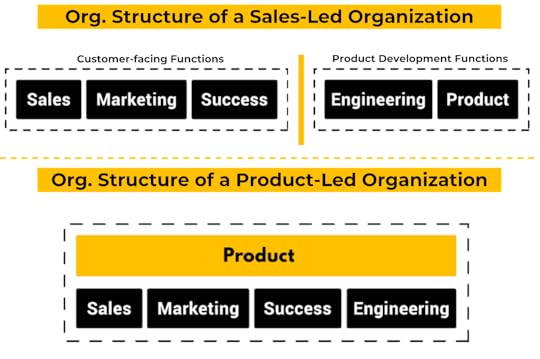 The design of Sales-Led and Product-led organizations -
ProductLed
The design of Sales-Led and Product-led organizations -
ProductLed
In PLG organizations, the role of each function changes to adapt to the new business objective (of creating delightful product experiences) that convert and upsell users:
Engineering and product teams focus on creating seamless onboarding experiences and on highlighting the most high-value features.They know that the users are trying the product for free and could lose interest at any time. They need to keep them engaged and minimize the time it takes for them to reach the “aha” moment that will convince them to convert to a paid plan.
Marketing teams direct their efforts toward creating content that can generate hype around the product and build a community of engaged users who share tips and strategies on how to extract value from the product.Sales teams are undoubtedly the ones that undergo the biggest change in their approach – so much so that the term "product-led sales" was created to describe their role in a PLG organization.What product-led sales is
PLS refers to the new approach that sales teams need to adopt in PLG organizations.
In more traditional sales-led organizations, sales teams are responsible for nurturing leads that marketing qualifies as “hot.” These Marketing Qualified Leads (MQLs) have never seen the product in action, but the sales teams need to convince these leads to make a purchase – and typically do so through sleek product presentations and video demos.
In a product-led model, the leads are at least partially aware of the product’s features – they’re already using it through a free trial or freemium version.
PLS is all about which users should be prioritized by the sales team and how to nurture the lead to close deals.
In a PLG organization, sales teams look at product usage data to identify the most valuable prospects and are often referred to as Product Qualified Leads (PQLs). It’s important to note here that sometimes they aren’t called PQLs internally. They could be labeled something different such as a Tier One lead instead. No matter what it’s called, the idea is the same: these users have used the product already and are identified as likely to upgrade.
Several software tools exist to help sales teams understand the likelihood a user will convert to a paid plan. These tools are based on a machine learning model that compares a user’s profile and product usage patterns with those of users who have successfully converted or upgraded plans in the past.
Sales teams then get to work on the identified PQLs, explaining the value of paid features to freemium users, giving a limited-time discount to those on a free trial, or convincing individual paid users to invite their team to the platform.
However, the most effective PLS outreach strategies go beyond this basic account information and leverage product insights to identify PQLs and personalize the campaign.
Consider these two messages below: which one are you most likely to reply to?
Message A
Hi Martin,
Great to see that your team is using Loom. I’d love to jump on a call some time week to show you how you can achieve more using the complete feature set of Loom for Business. Please feel free to suggest some availabilities.
Best,
Yann
Message BHi Martin,
Great to see you just shared your 3rd Loom video. You're doing great with 75 cumulated views already!
I noticed that you haven't yet tried our recording highlight feature. You could 10x engagement on your videos by using this feature.
Below, is a short demo of how we use it here at Loom. I would love to jump on a call and show you how you can achieve more with Loom for Business! If that could be of interest, feel free to book some time here.
Highlight Demo Loom - Watch Video
Best,
Yann
______________
At this point, you are likely thinking: Yes, I’d love to send message B, but where do I find the time to gather all this data for each of my PQLs?
This is a key point: effective tools and automations are indispensable if you want to realize the full value of your PLS strategy. In fact, not only does the message writing need to be automated, but it also needs to be optimally timed to reach the users at the moment when they are most likely to respond.
Here is an example of a real-time Slack notification that can help automate the email above.
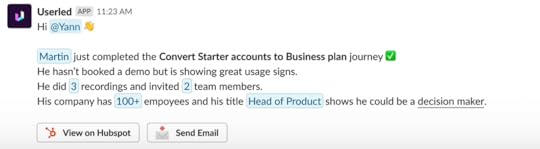 A screenshot from
Userled
’s no-code tool displaying part of a sample journey.
A screenshot from
Userled
’s no-code tool displaying part of a sample journey.To summarize, the definition of product-led sales does a good job at clarifying how sales teams should operate inside a PLG organization: using product information to identify your top leads to personalize outreach campaigns.
Now that you know the power of PLS, are you ready to implement these learnings?
Before you do, let me address a key shortcoming of the current PLS definition: it overlooks a strategic opportunity to unlock a truly product-led growth motion.
Introducing your new best salesperson: your productWhat’s missing from the traditional definition of product-led sales is the realization the product should take center stage in the company's sales efforts.
While “product-led” is a key component of the term “product-led sales,” the PLS approaches discussed in the previous sections only leverage the product to segment and identify leads, leaving the targeting to the sales team.
However, a growing body of market research shows that B2B customers want more independence in the buying process, and 50%+ of them prefer to buy without any interaction with a sales team.
Prospects with a strong preference towards self-serve buying find themselves enrolled in outreach campaigns by sales which are unlikely to yield the desired result and instead risk backfiring and putting the customers off completely.
So how do you nudge self-serve buyers to complete their purchase journeys, while at the same time prompting those who would prefer to speak to sales to do so?
By adding a new, powerful asset to your sales team: your product!
Using in-product prompts as the first touchpoint to target your PQL means you can leverage the product insights you have gathered on your users to nudge them towards the desired action – be it a self-serve conversion/upgrade or booking a call with sales.
Let’s review how this can work.
Imagine that a lead is visiting your pricing page for the third time in a week. You can show them a tailored prompt offering a limited-time discount on the first three months. If they dismiss the prompt, you may decide to wait for 2 days and then prompt them to book a call with sales.
Now, this is only one of the many possibilities that you unlock by hiring your product into your sales team, and prompts can be made even more powerful when they’re personalized based on product usage and firmographic data. I.e. the size of the account and the user’s job role within the firm.
For example, you can leverage product usage data to:
Moreover, firmographic data can help you design targeting actions such as:
Prompt a call with sales when the account has over 50 employees.If there are multiple users within the same account, prompt them to create a team subscription to take advantage of collaborative features.Importantly, while there are clear benefits to using the product as the first touchpoint in targeting PQLs, this doesn’t mean that a PLS outbound strategy should be discarded.
Any targeting strategy needs to clearly define when and how the sales team should pick up ownership of the account and insert it in their outbound sequences.
When transferring ownership of a PQL from the product to the sales team, timing is of the essence. The best course of action is to notify the sales team immediately after the user dismisses the last prompt in a targeting sequence.
You can do this automatically by integrating a tool with Slack that alerts you.
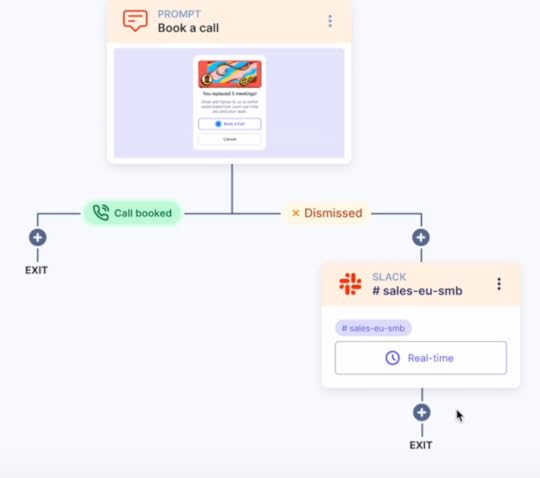 A screenshot from
Userled
’s no-code tool displaying part of a sample journey.
A screenshot from
Userled
’s no-code tool displaying part of a sample journey.By using the product as a first interaction layer and carefully designing this handover, PLG businesses can maximize the effectiveness of their targeting approach.
This means they can use the product to close deals that are most likely to convert. Then, the sales team can focus on the harder-to-convert, higher-value leads where their expertise can prove crucial to a successful outcome.
In conclusion, successful PLG businesses are realizing the traditional definition of product-led sales hides one of the core pillars of product-led growth – that their product should be the first touchpoint for their sales efforts.
These businesses are turning to carefully curated and data-driven in-product experiences to covert and upgrade users, while redirecting the effort of sales teams where their skills can yield the most value – convincing high-value users who dismissed in-product prompts.
The post Understanding the differences between product-led growth and product-led sales appeared first on ProductLed.
May 22, 2024
How to conduct a SaaS team audit and maintain high-performance standards
When should you hire, fire, and promote your team members?
These are critical and often uncomfortable questions that you, as a product-led founder, must navigate as you build your dream SaaS team.
In this article, I’ll guide you through a simple framework for auditing your team. These five steps streamline your decision-making process, helping you maintain high-performance standards and scale your company. Learn who your rock stars are, tap into your team’s motivation to drive success, identify a critical point where it’s best to terminate a hire, and more.
Why company standards are essential for effective auditingThe only way to create a high-performance team is to maintain high standards.
SaaS founders should focus on establishing standards in the following five areas:
Core ValuesMotivationSkillsetCapacityResultsCheck out my previous article to better understand these five standards and how they impact your product-led organization (PLO).
Once defined, your company's core standards should remain consistent. This way, you can audit your team members against these standards to create an environment for your team to thrive.
The secret to an effective audit processMany founders evaluate team performance by checking who is hitting their KPIs. However, this results-focused approach often makes them question whether team members are well-suited for their roles prematurely.
At ProductLed Academy, we prioritize results last, not first.
I coach founders to implement a holistic team audit framework in the Team component of the ProductLed System that considers core values, motivation, skillsets, and capacity standards before assessing results.
This intentional sequence in the auditing process helps uncover and address underlying performance issues, such as skill training or team members feeling overwhelmed by too many responsibilities.
The following section will dive into our step-by-step framework for effectively auditing your team.
5-step framework to audit your PLG teamTo begin, set up a spreadsheet tracker. You can use this audit template here.
Here’s what it looks like:
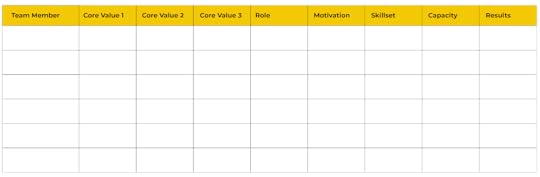
With this template, you can see:
How each team member aligns with each one of your core values.How each team member ranks in terms of motivation, skill gap, capacity, and results for the roles they are responsible forAs you work through these five steps and fill in the audit tracker, you'll quickly see how vital auditing is for making informed decisions about your team.
Let’s move to the first step: core values.
Step 1: Core value quick auditStart your team audit by rating how each team member rates against your company’s core values.
Your template should list each core value of your PLO.
For each core value, input the appropriate rating:
Consistently alignsOccasionally alignsRarely alignsHere’s a sample entry:
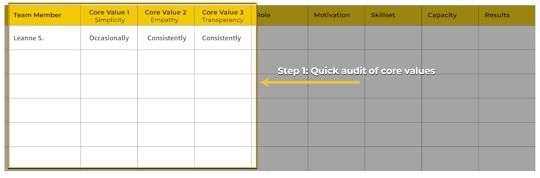
How does your current team align with your core values?
This initial quick audit goes beyond merely ticking boxes. It involves open discussions about maintaining high standards for your company's success. When a team member aligns with only two of your three core values, it's essential to consider the broader implications.
Say a core value is simplicity. If your company scales 10x, what will it mean if a significant portion of your team doesn't fully grasp simplicity? How could this affect the rest of your company and its ability to grow?
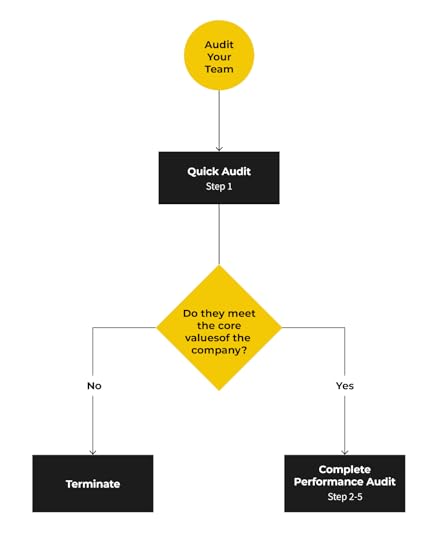 Step 2: Motivation evaluation
In your audit tracker, record the specific role assigned to each team member for your PLO.
If a team member is responsible for multiple roles, create separate entries for each role in the spreadsheet.
Begin by evaluating the motivation for each of these roles individually.
Use this motivation rating scale:
High Motivation: They’re excited about their responsibilities.Neutral Motivation: They will perform the task but don't view it as a long-term commitment.Low Motivation: They’re unhappy with the task and want to stop soon.Very Low Motivation: They actively avoid the task due to strong dislike.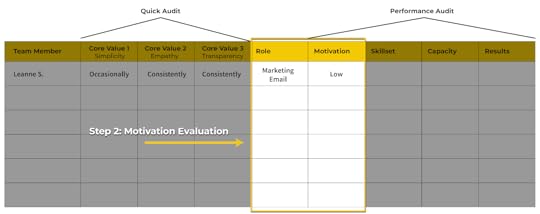
Let's say Anthony K. remarks in your weekly growth meeting that email marketing isn't his jam. So you’d categorize this role as “Low” on your audit tracker. This insight could lead to discussing transitioning him out of this role if it aligns with your business capabilities.
At ProductLed, I’ve encouraged each team member to list all the roles they manage (if you’ve been following the System, you’ll have already done this in your Accountability Chart). This exercise clarifies their responsibilities and offers valuable insights into their preferences and strengths. By observing their tone and how they talk about a specific role, you can better understand their capabilities and interests.
Step 3: Skillset evaluationNext, you’ll move to the next column on your template and evaluate the skill level for every team member’s role(s).
Use the following skill rating system:
High Skill: They could do this in their sleepOk Skill: They can do an average job in this role with their current skillsSubpar Skill: They’re not trained well to do a good jobLacking Skill: They have no idea what to doInput these ratings in the Skillset column.
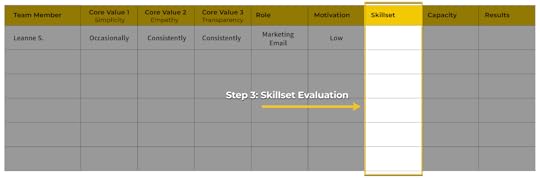
Addressing the skillsets in your team isn’t always straightforward, especially if you're not an expert in that area.
If a team member struggles with email marketing and you have some prior experience in this area, you could record a training video and establish a standard operating procedure to help them out.
Alternatively, for specialized skills like graphic design, you may need to invest in a course to help the person grow in that role.
Let's say a team member shows high motivation in her graphic design role but possesses moderate skill. Enrolling her in a course to enhance her skills would be beneficial both for her personal development and for your company.
Step 4: Capacity evaluationAuditing your team’s capacity standards helps you understand if your team has the right amount of time to do a great job.
Here’s a rating scale you can use to fill out the Capacity column:
High Capacity: They have ample time to do the job — this is probably their only task.Good Capacity: They have a couple of other roles on their plate, but they can do a good job.Neutral Capacity: Just enough to do it, but not well.Subpar Capacity: They don’t have time.Burnout Capacity: They have no idea what to do.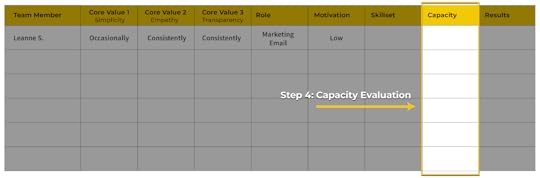
So, what actions do you take next when your audit tells you that you must take roles off team members' plates?
I like to use the four Ts method to optimize team roles and tasks.
The four T's consist of:
Trim: Delegate tasks that don't require your direct involvement to contractors or other external help to handle the bulk of the work.Transfer: Identify tasks that can be reassigned to other team members interested and excited about taking them on.Treasure: Focus on tasks that align with an individual's long-term goals, high motivation, and skill sets, allowing them to devote more time and develop in these areas.Trash: Eliminate tasks that add little value. This is the best way to increase efficiency in your PLO without hiring more people.Founders must audit their own roles, as well as those of their team members.
Founders often manage multiple responsibilities. They hesitate to delegate tasks because they fear others may not execute them correctly. However, through this self-auditing process, many founders I coach come to realize that they need help in certain areas to free up more capacity for the tasks they love.
Step 5: Results EvaluationIf you follow the ProductLed System, you know that each role should have its own KPIs. Typically, we recommend setting a quantity and quality metric for each team member, which is evaluated during weekly growth meetings.
Use this result rating scale for your audit:
Above and Beyond: They consistently smash their targets.Hits KPIs: They consistently meet their targets.Occasionally Hits: They occasionally hit their KPIs.Rarely Hits: They rarely hit their KPIs.Never Hits: They never hit their KPIs.Enter this information about your team in the last column and give yourself a high five — you’ve just completed your performance audit!
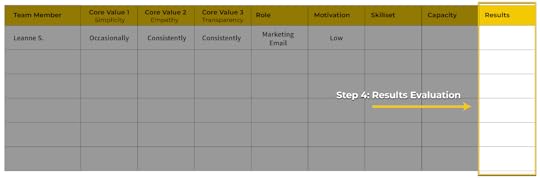 What to do after completing your performance audit
Now, it's time to create an action plan for each role to enhance performance.
There are many directions you can take from here.
For instance, consider a team member with low motivation and skill in email marketing. Investing in their training may not be beneficial if their interest in improvement is lacking. Instead, finding someone passionate about this area and eager to excel would be more effective.
On the flip side, if a team member is highly motivated and has moderate email marketing skills, investing in further developing their abilities makes sense.
Tips for conducting effective team auditsAs you get started auditing your team, consider the following:
Start with yourself: Begin by auditing your own performance. This is beneficial for anyone, not just founders, as you'll learn a lot about building this action plan to increase performance on your team.Evaluate Core Values Collaboratively: Step 1 of the audit should involve looking at core values with your leadership team. This collaborative approach allows different perspectives to come forward, highlighting instances where, for example, a person may consistently treat the founder well but show disrespect towards other team members.Delegate audits: Department leaders should be responsible for auditing team members who report directly to them (Steps 2 to 5). Auditing someone you don't work with directly can limit your understanding of their work and motivation.Audit contractors, too: Auditing contractors and freelancers who work closely with your core team. Start building an elite team for your product-led businessWhether you're a startup or optimizing your current staff, this team audit process will help you make important team management decisions that will profoundly impact your company’s future.
Auditing your team gives you a really great lens through which to examine and adjust your focus on areas that can help level up your team.
Without this process, you won't build the high-performance team you dream of.
Moreover, building a high-performance team begins with developing a high-performance founder whose workflow lets them focus on high-value roles.
Auditing your team is the final element of the Team component of the ProductLed System, a three-phased framework designed to scale your self-serve revenue to 7-figures with a lean team.
I’ve coached 324+ companies to implement this system, and it's always the ones that show up consistently and complete every assignment that sees the best results.
If you’re serious about making a big dent in your self-serve revenue, check out the ProductLed Academy.Learn more about the coaching program here!
The post How to conduct a SaaS team audit and maintain high-performance standards appeared first on ProductLed.
April 30, 2024
Why the right environment matters when you’re building a world-class team
The effectiveness of a team is only as high as the standards set by its leaders.
In this article, we’ll explore the five standards to set with your product-led organization (PLO), how these standards impact your company and the strategic order in implementing them. When people purchase from your company, they aren’t just buying a product; they’re buying into your standards.
Setting the right standards for your product-led organizationStandards provide a benchmark for assessing and, if necessary, shifting or replacing team members who don’t align with the DNA you envision for your business.
As responsibilities shift and your team matures, your standards should stay consistent. You should audit your team members against these standards to ensure you create the right environment for everyone to flourish.
Here are five core areas where product-led founders should establish standards:
Core Values: What values do you want to instill in your team?Motivation: How motivated are your employees in their specific roles?Skill Gaps: Does your team have the right skills to succeed in their roles? Capacity: Do employees have the capacity to excel in their specific responsibilities?Results: What standards do you set for hitting expected results?Before we go through each of these, I want to point out that there is an intentional order to roll these out at your company. While most founders start with results, we finish with results. The reason will be apparent by the end of this article. 
Let’s dive in.
1. Core ValuesCore values are embedded in the culture of your organization.
Your culture amplifies what you want to happen in your business.
Companies should expect employees to uphold specific table-stake standards like integrity, accountability, and teamwork.
However, other core values are more industry-specific and vary from company to company.
For most product-led companies, you’ll likely want these core values:
Simplicity: As a product-led company, simplicity helps fine-tune your strategy to get users to value quicker so they upgrade. Transparency: Your team needs to be crystal clear on what you’re giving away for free and have an effective pricing page where users know in a snap what they’re getting when they upgrade. Empathy: You want your entire company to understand the core challenges of users.When your PLO embraces core values like these, your team will be better at building a product by default because everyone understands what's required for this business model to work.
You should approach the core values you set with intention. Without them, it’s going to be harder to hire and you won’t create the right environment for your team to flourish.
How to measure core value alignmentA group setting and an evaluation scale can help determine whether a person aligns with your company’s core values.
Let’s look at the core value of simplicity.
When hiring, your leadership team can meet to discuss where a person falls on a scale like the one below.
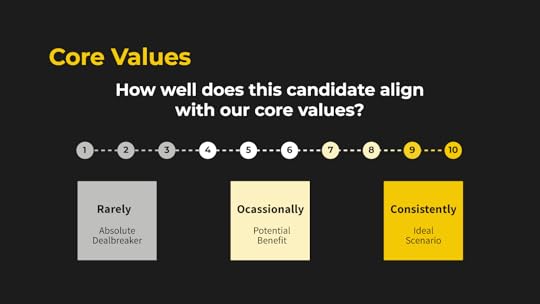 Mistakes to avoid when picking core values
Founders make two common mistakes when defining their core values.
First, they set too many core values that weaken their overall impact.
Keep your core values to three or four that resonate with your organization's beliefs.
Second, they incorporate obvious, non-negotiable values like integrity or teamwork instead of selecting great ones that aren’t table stakes.
How you know you have the best core values in placeThe core values are more than internal guidelines. They should embody what your company stands for.
When people think about why they prefer your company, their reasons should circle back to your core values and how your company makes them feel.
2. MotivationThe key to motivating your team lies in understanding their long-term goals — whether it's five, ten, or even 25 years into the future. How do they see their career, finances, and personal life?
The motivation of team members shifts when they see how their current work ties into their future ambitions.
When that happens, they’re no longer working for you; they’re working for themselves.
Now, it’s important to note that not every employee will have clearly defined goals. As a founder, you can foster a culture where employees feel confident having open conversations that allow you to offer career advice and help them clarify their vision.
Our graphics designer at ProductLed is a perfect example of this. She started helping our team with administrative tasks but mentioned she’d like to learn more about graphic design. Over the past two years, her skills have blown us away. Every week, she gets better and better at her craft. We aim for you to have a team full of employees with high motivation for what they’re doing.
Ultimately, you want to shift your employee’s motivation from simply earning a paycheck to viewing their work as an investment in their future goals.
3. Skill GapsYour company's third focus area is identifying whether team members have the right skills to succeed in their roles.
You may see the intentional order of these standards by now, with each building on the next.
Initially, you want to ensure that every team member upholds your product-led core values. Those who don't align with these standards aren’t a good fit for your organization.
Next, you want to set a standard where employees are motivated by long-term goals, understanding how their role and hard work at your company make this possible.
But now it’s time to address skill gaps.
In startups, it’s common for founders and their teams to wear multiple hats. Everyone learns and develops skills on the job.
However, as your company grows, each person must have the right skills to do an incredible job. A skill assessment is valuable in understanding how everyone stacks up.
Here’s a simple skill ranking scale you can use:
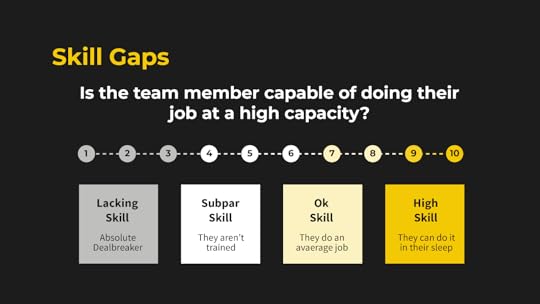
Applying this evaluation across all roles in your company gives a holistic view of where skill gaps exist and what actions to take.
For example, if an employee is motivated but needs help in a particular area, you could offer them a training course to fill that skill gap.
Within startups where employees are juggling multiple responsibilities, you’ll likely need to evaluate which roles match their strengths. If a person shows low motivation and skill in some areas, a short-term plan might involve targeted training to enhance their capabilities and transition them to roles that better suit their sweet spots.
We’re all gifted with different passions, interests, and curiosities — what I like to call your unique ability. If a task doesn’t tap into that unique ability, even the most comprehensive training isn’t going to develop that world-class kind of skill in that area.
4. CapacityExpecting your team to perform at a world-class standard is unrealistic if they lack the necessary capacity to do it.
As you examine this area of standards, your focus should be on determining whether your team has the right amount of time to do a great job.
If you follow the ProductLed System, you know accountability charts are part of the Team component. Accountability charts map out all the jobs and metrics for each role and, among many insights, provide you with a clear picture of a person with a realistic amount of time to hit their results.
If an employee has the right skills and motivation but lacks the capacity due to other tasks, you can (and should) trim or transfer their responsibilities.
5. ResultsMost founders judge an employee's performance immediately based on results. This makes it easy to conclude that a person isn’t the right fit for the job because they’re not hitting their mark.
Instead, I urge you to take a more holistic approach.
Why?
Because an employee can align with your core values, show motivation, capacity, and skill, and still fall short of expectations.
Working through this five step checklist one-by-one helps you pinpoint how to evaluate your team's performance to meet company standards.
In my previous article, I discuss the importance of tracking a core quantity and quality metric for every role in your company. Tracking these KPIs each week helps you understand whether someone is consistently, occasionally, or rarely hitting their marks.
The results of these weekly KPIs can help you create a customized coaching plan for anyone who needs help getting back on track to maintain your high standards.
Define these five standards for your product-led businessThe effectiveness of a team hinges significantly on the standards set by its leaders.
Establishing and maintaining core values, motivation, skill gaps, capacity, and result standards is paramount for success within a PLO.
Identifying and setting standards is part of the Team component of the ProductLed System, a three-phase framework designed to scale your self-serve revenue to 7-figures with a lean team.
I’ve coached over 324 companies to implement this system, and it's always the ones that show up consistently and complete every assignment that sees the best results.
We've opened up enrollment for the next cohort of ProductLed Academy.
It's a 12-month program... so it's quite a commitment and only for serious founders looking to make a big dent in their self-serve revenue.
Please apply only if you're serious about becoming the obvious choice in your industry.
Learn more and enroll by May 10.
The post Why the right environment matters when you’re building a world-class team appeared first on ProductLed.
April 26, 2024
3 simple tactics to improve organizational efficiency and effectiveness
Enhancing the effectiveness of your product-led organization (PLO) doesn’t have to be daunting. In fact, it can be quite simple.
In this article, you’ll learn how to get more done without adding more headcount.
The three simple techniques I’ll discuss will boost your team’s efficiency and help you use your time more intentionally.
Let’s get started.
What is organizational efficiency?An efficient PLO uses its product to drive user acquisition, conversion, and retention. There’s no need for a large sales team because the product should be able to solve most problems.
Take a look at these two companies below.
Company ACompany BARR:$4 million$4 millionNumber of Employees:330Business Model:Product-ledSales-ledOperational Strategy:Delegates tasks to the productRequires more personnelCapital Efficiency:HighLowerThe core differentiator is that Company A leverages its product for growth rather than scaling up the workforce. This approach is more efficient as it shrinks operational costs since most of your problems can be solved with your product.
So… which company would you like to be?
I’ll take a guess and say Company A.
To do that, you’ll want to take a thorough look at your current team and understand what might be holding your business back.
You can do that with the next three steps.
Building an Elite Team is one component of the ProductLed System, which takes a holistic view of growing your product-led business and has helped SaaS companies make $1B+ in self-serve revenue. To implement it into your business with the help of Wes Bush, be sure to check out ProductLed Academy.
An accountability chart lays out the hierarchy and everyone’s responsibilities within your organization so you can see who does what. (In this article, I discuss accountability charts and provide a free template to get started.)
Here’s what it looks like.
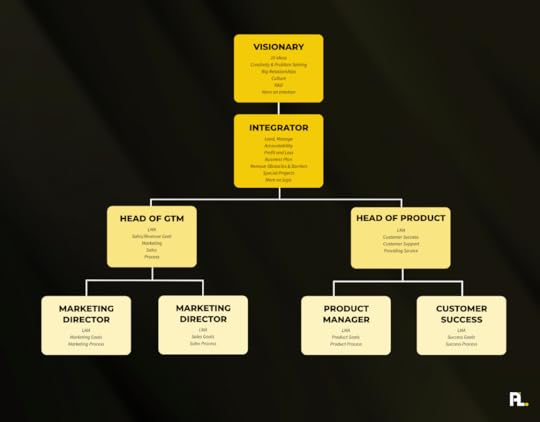
Once you outline all of your company's seats and roles, it’s time to color-code each responsibility with one of the four T classifications: Trim, Trash, Treasure, or Transfer.
This exercise shouldn’t take more than five minutes and helps your team identify areas of inefficiency and opportunities to save time.
Let’s define these labels.
Trim (Yellow)Trim roles that are no longer as crucial.
Responsibilities you label yellow eat too much of your time, and you want to delegate them to someone on your team or a contractor. Trimming these responsibilities lightens your workload and frees up your time.
At ProductLed, I enjoy product marketing and drafting content for new program pages, but it’s time-consuming. To manage this, I delegate the work to a contractor and then focus on reviewing the final content. This is an example of a task I’d label yellow on our accountability chart.
Trash (Red)Trash outdated tasks that don’t impact core operations.
Highlighting non-essential tasks on your accountability chart – like social media ads that don't generate valuable leads – is particularly beneficial in startups. Here, founders and team members often juggle multiple roles. By lightening their load, you can reduce the risk of burnout and allow them to focus on activities that help the company scale.
Treasure (Green)Treasure the roles that add significant value.
Green label jobs are critical to business growth and building your core product.
For many founders, their passion lies in building their products. This role should often be treasured because it’s the unique value their company brings to the market, which means other jobs that support it should be transferred so they can focus on that specific role.
Transfer (Blue)Transfer tasks to someone with more time or motivation.
Use a blue label on your accountability chart to indicate essential tasks that must be transferred to another team member.
The main difference between trimming and transferring tasks is that you still oversee the task with trimming, but you hand over ownership with transferring.
Classifying every role on our accountability chart drives organizational efficiency by balancing the workflow and ensuring that the right talent completes essential tasks.
Now, let's move on to the second tactic.
2. Calibrate actionable KPIs for each role to drive performanceAssigning a quantity and quality metric to each role is a simple but effective way to manage and evaluate performance.
It's not just about how much a team member gets done but the impact of their actions.
At this stage in this nine-component system, you and your leadership team have already built a company scorecard. Here, you can add high-level quality and quantity metrics to review in weekly growth meetings.
As your organization grows, a department may track a separate scorecard, and it makes sense to input relevant key performance indicators (KPIs) there.
3. Chart your time to help identify your next hireA common mistake founders make is hiring for a new role, only to discover a few months later that it's not the right fit.
How do you determine which hire will give you the most leverage?
Adding a new role not outlined in your accountability chart isn’t the solution.
Instead, tracking your time is!
This is honestly the easiest way to pinpoint your next hire.
Initially, I was reluctant to track my time, but doing so paid off big time and led to our most recent hire.
Here’s why:
I realized I spent 10 to 15 hours each week preparing for workshops and handling client communications. When I started to do the math, I realized that reallocating that time to more one-on-one engagements could easily generate another million dollars in ARR for our company.
This insight gave me the confidence to hire our first customer success employee.
You can start by tracking and categorizing your activities in 15-minute intervals using an app like Clockify.me. After one month, you’ll be able to identify what tasks occupy a lot of your time and calculate whether hiring makes sense.
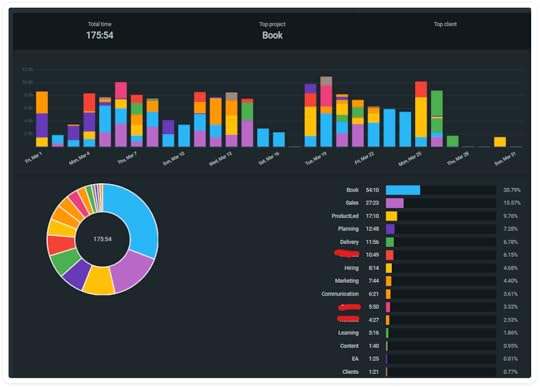
Time tracking can reveal uncomfortable truths about how you spend your hours. However, if you’re honest, this awareness can help you use your time more effectively. You can be more intentional with your time—whether that means hiring someone new to free up more of your time or simply being more mindful to boost your productivity.
Pulling these three organizational methods togetherTo recap, start with the first step: labelling your accountability chart with the four T classifications: Trim, Trash, Treasure, or Transfer.
Next, calibrate each role. On your accountability chart, each role should have two KPIs.
Then, chart out your next hire. Begin by tracking your hours to really understand where you are investing your time. From there, revisit the four Ts and decide what to trim, trash, treasure, or transfer on your own activities.
For more insights on building an elite team and product-led strategy, visit ProductLed Academy. You'll work with a team of PLG experts to implement our proven three-phased system designed to scale a million-dollar SaaS without a sales team.
The post 3 simple tactics to improve organizational efficiency and effectiveness appeared first on ProductLed.
April 15, 2024
How to build a company that runs itself
Every founder wants to see their company thrive.
But here’s the reality…
Most founders wear too many “hats” within their organization. While this is often necessary in the early stages of a startup, there comes a time when you can become a bottleneck.
This article explores your role as a CEO or founder of a product-led company and how to get on the path to a self-managing company. We’ll cover the founder's journey through different levels of company involvement and the art of assembling a resilient team of elites.
What a self-managing company is & why it’s the gold standardA self-managing company has a leadership team that can run the business independently and scale it without owner involvement.
This structure lets the founder step back from daily operations and focus on strategic CEO-level decisions.
Building a self-managing company gives you peace of mind when you take a long vacation. Your company can run without you. Even better, it can grow without you.
How to approach company resilience with clarityBefore your product-led company can move in the direction of building a self-managing company, you need to really look at who does what in your organization.
That starts by mapping out an accountability chart.
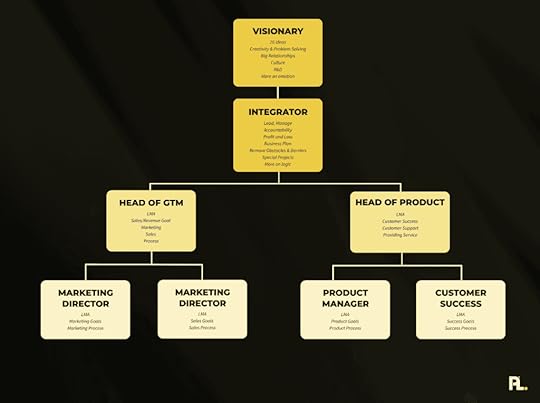
This will clarify the hierarchy and responsibilities of everyone on your team. You’ll be able to identify areas where people are getting bogged down with too many tasks and spot inefficiencies in workflows, which will help you with hires down the road.
The levels of building a self-managing companyI've defined four different levels of building a self-managing company.
Levels 1 to 3 demonstrate how a founder lets go of day-to-day tasks, which paves the way for a self-managing organization.
Level 4 is a significant milestone. This is where the founder’s primary responsibility becomes the CEO, and it sets the stage if they want to step back or sell their company one day.
Your ultimate goal should be Level 4. Let's look at each level so you can see where you fit in now, and to understand how far you need to go.
Level 1: No specialized positionsAt this initial level, the founder often wears multiple hats, and there are no specialized positions in the organization.
Level 2: No Director/Head PositionsAt Leve 2, you have a couple of leadership positions under you.
For you as the founder, this means you are delegating specialized tasks to an elite leadership team and transitioning into a more supervisory role.
Some founders may find it hard to reach this level because they want to keep doing the roles they enjoy and are really good at. When they don’t, growth plateaus because they continue juggling too many tasks.
Level 3: You’re the COO/Integrator & CEOThe founder is also the Chief Operating Officer (COO) as well as the CEO at Level Three. They manage the day-to-day operations.
At this point, the growth of the company is still very dependent on the founder.
Level 4: You’re just the CEOAt this level, the company is self-managed.
Your sole focus is your role as CEO. Founders can launch innovative projects and shape long-term strategies.
Because their leadership team manages the day-to-day responsibilities, the founder can take a long vacation without fear of their business crashing when they're out.
Level 5: You’re the Executive Chairman/AdvisorI've added this one as a bonus level. At this final level, founders have exited their company and may move into a role where they give advice and help with big decisions as an Executive Chairman or Advisor.
How to reach Level 4When people ask how long it takes to reach Level 5, I often say it depends on their experience of founding companies (i.e. it's going to take a first-time a lot longer than a third-time founder).
Here’s what usually holds founders back…
They cling to specialist roles and are reluctant to step into executive and leadership positions. Doing so prevents a company from assembling an elite team and becoming self-managed.
That's why understanding the five levels of founder involvement gives you a path forward. You know what you're overall vision is, and you can map out a path to get there. Mapping out your accountability chart will help you pinpoint how many roles you currently fill and where your gaps currently are.
To reach level 4, start by asking these questions:
What level are you at right now?Where do you want to be by the end of this year? (Be realistic.) What’s holding you back from reaching the next level?Next, write down:
The revenue range your company needs to be at to transition toward self-management.The number of employees needed to fill those core seats. An accountability chart becomes an essential tool here, helping you visualize roles within your company and determine whether to fill these with full-time employees or contractors. Understand what revenue per employee (RPE) you want to maintain and what profit you need to achieve that.Choose a realistic timeline for when that’s possible.In my experience building ProductLed into a self-managing company, I initially set an unrealistic $20 million revenue target. After deep analysis, I realized a more attainable goal was a $2 million revenue target with a dedicated team of 7 to 8 elite employees.
Start designing your self-managing companyGet really clear on your current founder level and why you’re putting in all the effort. To succeed, you’ve got to be genuinely excited about your company’s future vision.
Be sure to map out your accountability chart to help you visualize the structure of your self-managing company and who you need to hire to get there.
Creating a self-managing company is part of the Team component of the ProductLed System . It's the final step in building and scaling a product-led company.
The ProductLed System is a comprehensive go-to-market system that includes the nine key components of a successful product-led business.
Alternatively, if you’re serious about working with a coach alongside other SaaS founders to implement a winning product-led strategy in your business, check out ProductLed Academy.
Our next cohort opens in May. Learn more about the program here!
The post How to build a company that runs itself appeared first on ProductLed.