Nicole Libin's Blog
September 3, 2020
Seeing and Letting Go of Filters
We don’t just see the world or ourselves in it. We see the world as filtered by our experience, past and present. It’s like we are all wearing a pair of glasses that colour everything we see, everything we experience. Part of this practice is to keep it simple. To see the lens. To be aware of that filter. And then to choose kindness.
The post Seeing and Letting Go of Filters appeared first on Follow Your Breath.


September 2, 2020
Guided Meditation – Letting it Be. And loving what is
Meditation isn’t about making anything happen. It’s just about giving ourselves an opportunity to see what’s happening and then to choose how we want to be with it. We can’t choose what’s happening. But we can choose kindness. We can choose acceptance. We don’t have to fight how we are, who we are, or what’s happening.
The post Guided Meditation – Letting it Be. And loving what is appeared first on Follow Your Breath.
June 23, 2020
Guided Meditation – Dealing with Thoughts
There are many different ways of being with thoughts and thinking in meditation. Here are a few that might be helpful, especially if you’ve been feeling assaulted by your thoughts lately.
Thoughts are not the enemy! The idea is to be able to think when we want to think.
So how do you distinguish between thinking and being lost in thought?
Please let me know what you think. How do you get space from your thoughts?
The post Guided Meditation – Dealing with Thoughts appeared first on Follow Your Breath.
To Best Support Our Kids, We Need to First Support Ourselves
I always thought that when I yelled at my daughter, it was because of her.
I was wrong.
It’s not her. It’s me.
It turns out, I yell because I’m stressed not because she’s doing any thing wrong! (Or, at least, not doing anything that she wouldn’t normally be doing.)
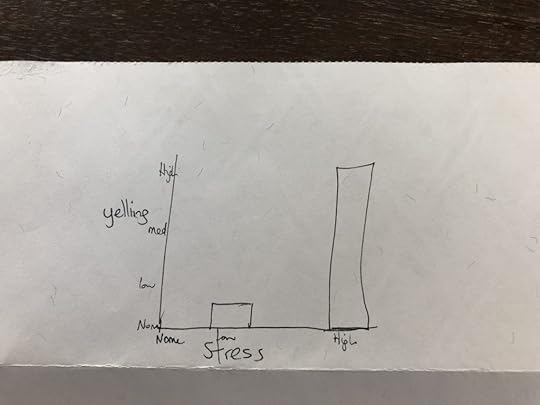 Here’s a really lame graphic to prove my point.
Turns out, my tools of discipline are directly related to my own mood and frame of mind!
Maybe this seems obvious. I mean, we all know things are harder to handle when we’re overtired or overworked. I just never realized that my yelling at my kid had so much more to do with me than her.
Here’s an uncomfortable truth: we can’t control our kids. And while we know this, somehow, this sneaky little thought keeps worming its way back into our consciousness. If I just repeat myself again or raise my voice to just the right tone, she will do what I say immediately. Not exactly a reliable method. We can’t control their tantrums, their joys, their sleeping, or their growth rate. We can do our best but we aren’t actually in charge of the bad grades or the mean friends, the gossip or the trends in society.
We cannot control most of what happens to us either. We aren’t in charge of the weather, traffic, or the price of food. We aren’t really even in control of most parts of ourselves. Think about it: we have something like 50-100 thousand thoughts each day. How many of those do we actually ask for? How often are we really in control of our emotions? Anyone else get stressed about stuff that you know isn’t objectively stressful? Or can’t help worrying even when you know worrying doesn’t help? And sure, we can control parts of our bodies, but definitely not all. When our children cry or get hurt, we experience a visceral response. And our emotions? Almost entirely out of our control, at least initially. When our children say they hate us or slam the door, emotions just follow unbidden.
The primary thing we can control is how we respond to all of that. We don’t choose what’s happening but if we can see it, we can choose how we respond to it. And that can change everything. What does that mean? It means we have to support ourselves FIRST in order to support our kids BEST.
Put Your Own Oxygen Mask on First
The first step of taking care of our kids is actually taking care of ourselves. The oft-repeated airplane instructions make this clear: put your own oxygen mask on first before helping others. We can’t help anyone else if we haven’t first helped ourselves. If I am not okay (at least okay enough), I can’t support anyone else to be.
This can be hard for parents or guardians because our instinct is to tend to our children first. We put their needs before ours. And we are even shamed or called selfish for doing anything but. No wonder so many of us feel bad about taking time for ourselves. But caring for ourselves is not selfish. It’s a basic human need and right and, if those aren’t reason enough, it’s actually the only way we can really care for our children.
This whole thing makes sense when we consider that the human nervous system is a collective one. You know this from experience. If one person comes into a room in a major panic, it becomes hard not to react to that panic. When someone else is really excited, you feel excited too. Humans regulate their nervous systems to each other. It’s most obvious when our children are infants. Remember all that time you spent rocking, shushing, holding, swaying, talking softly, touching them gently but firmly enough so they felt secure and safe? We do this in order to regulate their nervous systems. For the most part, babies can’t self soothe. Much of the time, our kids co-regulate their nervous systems with ours. We can support them to find balance when they’ve lost it, but only when our own systems are regulated.
I remember a time when my daughter was a few weeks old (admittedly, the memory is hazy but I swear it’s there). I was overtired, hormonal, and stressed. She wouldn’t stop crying for what felt like hours and, to be honest, I couldn’t either. The more upset she got, the more upset I got. And vice versa, so it seemed. Luckily, I had help. Within minutes of my husband taking her, the crying stopped, and she was fine. (And after a long shower and a break, I was too.) I just didn’t have it in me at the time to be able to soothe her.
Caregivers cannot pour from an empty cup. If we are burnt out, it becomes almost impossible to offer real care to our children. And if we’re always in fight/flight mode, they will feed off that and become increasingly agitated with us. Think of a field of white-tailed deer. When one hears a sound or senses something suspicious, its tail goes up. Almost immediately, all of the other tails go up too until the threat passes, one way or another. When it comes to our children, if we want their ‘tails’ to be down, we can’t come in with ours up. When our nervous systems are dysregulated, it’s all too easy to pass that onto them.
This doesn’t mean that you always have to be calm or you can go and get a million massages (sorry). It just means that the first step in supporting your child is supporting yourself. It’s taking a breath or two and checking your own nervous system before you help them (unless, of course, there is immediate danger).
This moment or breath will help you be more present and stable for your own life as well as for them. It will also make you less likely to react on autopilot or behave in a way that doesn’t help at that moment.
But how do you actually do this?
Checking and regulating your own nervous system might be something you’ve never really thought about but you’ve done it many, many times. Any time you’ve stopped and taken a breath, any time you needed some space and went for a walk, or anytime you paused before saying something you might later regret, you’ve been self-regulating. It’s not about telling yourself to stop worrying or to control yourself. Self-regulation is much more (and much more realistic) than control. It’s about recognizing and responding to stress and/or disruptive emotions and thoughts in a healthy, more supportive manner.
And I don’t want to leave you hanging. But I swear I’ll talk more about how to self-regulate in the next post. Stay tuned…
This blog post contains excerpts from my upcoming book, How To Discipline Your Kids with Positive Parenting. Published by Rockridge Press.
The post To Best Support Our Kids, We Need to First Support Ourselves appeared first on Follow Your Breath.
May 3, 2020
Guided Meditation: The Masterpiece Within
The story goes that someone asked Michelangelo how he could make a masterpiece out of a block of old marble
To which he replied: “The sculpture is already complete within the marble block, before I start my work. It is already there, I just have to chisel away the superfluous material.”
Whether the story is true or not, we all have a masterpiece inside us. We just sometimes lose sight of it.
The post Guided Meditation: The Masterpiece Within appeared first on Follow Your Breath.
April 20, 2020
Sticky Brains Resources – Introducing Negativity Bias to Kids
 You can mold and change the shape and ability of your brain!
Sticky Brains teaches children about the negativity bias, mindfulness, and neuroplasticity. Here are some ways (discussion and activities) to bring these ideas to life with your students or children:
Right now feels like the perfect moment to practice focusing more on the positive. As this pandemic goes on, it can seem impossible not to be overwhelmed by all the negative in the world. When we are stressed (as almost all of us are right now), it’s much easier to get frustrated or get into fights or arguments with our family or loved ones. That means we might pay even more attention to the bad stuff! But, the most important things to remember are 1) it’s not your fault when you get stuck on the negative. You don’t have to feel bad for feeling bad! Our brains are wired to see the bad more than the good in order to keep us safe, even if it feels crappy some of the time. 2) You can do something about it! Did you know that your brain gets good at what it practices? That means, the more you look for the good, the better your brain gets at seeing it and seeking it out more in the future. You can change your brain to see more of the good, more often, just by paying attention.
Practice/Classroom Exercise: Five Good Things For Every Bad One
Did you know that our brains need FIVE good things to balance out every ONE bad one? Doesn’t seem fair, right? But if you know that, then you can remember that your brain doesn’t always show you the whole picture. If you are feeling really stuck in the negative, you can help your brain by looking for the positive.
Give It A Try
Make a deliberate effort to look for good, beautiful, nice, or kind things in the world. You can look for good news on the internet, check out which flowers are growing in your neighbourhood, really enjoy a bite of a cookie or a cool drink of juice, or even just do something nice for someone else. If you get in a fight with your brother or sister and you feel like you really hate them right now, try to think of five good times you’ve spent together in the past. (You can look at pictures if you really don’t feel like thinking of anything.) If you feel like you’re no good at something or you made a big mistake, make a list of five (or more) times when you succeeded, especially those times when you failed or had trouble at first. If you feel sad, scared, or angry, try to surround yourself with five things that make you feel soothed (like a soft blanket, favourite book, gentle music, a note from a friend, and/or a hug from a loved one.
Our brains might see the bad more than the good but that doesn’t mean we are stuck that way. We just need to give the good a bit more help sometimes!
Sticky Brains will be available in May. Click here to sign up for more details.

The post Sticky Brains Resources – Introducing Negativity Bias to Kids appeared first on Follow Your Breath.
April 14, 2020
Guided Meditation – Holding Ourselves with Compassion
Everything is insane right now!
Here is a meditation that might help: not to get rid of the pain but to hold ourselves with a bit more kindness and compassion.
Because if life sucks anyway, we might as well try to be nicer to ourselves during it.
The post Guided Meditation – Holding Ourselves with Compassion appeared first on Follow Your Breath.
April 13, 2020
Parenting in a Time of Crisis
A virtual panel discussion wtih Dr. Nicole Libin and four other influential parenting experts
We all need some help and support as we face these challenges. In this webinar, parents will be empowered parents with information about how children may be traumatized by the current events, and how to best support kids through changes and help them cope with fear.
Support for parents who are struggling to manage home schooling their kids, cope with stress from the global COVID-19 pandemic, and still be patient, present and loving with their kids even in times of crisis. This virtual gathering empowers Expert panelists: Dr. Bryan Post, Dr. Susan Pollak, Leslie Potter, Kim Lange and Dr. Nicole Libin (yup, me!)
The post Parenting in a Time of Crisis appeared first on Follow Your Breath.
March 31, 2020
Guided Meditations
Until I get much, much better at embedding, here are the links to my guided meditations on soundcloud.
The post Guided Meditations appeared first on Follow Your Breath.
Suggestions for when everything feels uncertain: coronavirus response
Here are some thoughts and strategies for managing fears and cultivating kindness and compassion amid this epidemic
For anyone who is really struggling with getting anything done
It’s totally understandable that you can’t think straight or shut down when you try to work. You have too much on your mind and it would be totally unreasonable to be any other way. No one can think straight with all this chaos. No one I know is remotely at full capacity right now. So, if nothing else, it can be helpful to get the reminder that you are not alone and there is nothing wrong with how you are feeling. It’s totally understandable, even if that doesn’t make it any less crappy.
And that’s the thing: we can’t get rid of what’s happening. We can’t control what’s going on outside of us. And that sucks. But we never really could control any of it anyway. Think about it: we can’t control traffic or weather, how our kids do in school, what our boss says to us, how boring that thing is that we have to read. We can’t control most of what we think or feel too. I know I’m definitely not in control of my emotions most of the time. And thoughts? We have something like fifty to a hundred thousand thoughts a day. How many of those do we choose? So there’s so much we can’t control.
The primary thing that we can control is how we respond to all of that. I can’t control what’s happening in the world or that I feel scared, but if I can see it, I might just be able to be kinder to myself when it’s happening. I can’t control what’s happening but if I can see it, I might just be able to change my relationship to what’s happening. And that can make all the difference.
Right Now It’s Like This…And it’s Okay
Right now, most of us are scared, anxious, frustrated, or nervous. And we are probably spending a great deal of energy just trying to be “fine.” One of the most helpful things you can do at a time like this is to validate all your feelings. It’s okay to feel however you feel. It’s okay to be sad or scared or happy or bored or annoyed. You don’t have to figure out why it’s there or what you should do about it, it’s just ok.
One thing that can be helpful is to use the phrase “right now, it’s like this.” So when you notice you’re freaking out: right now it’s like this. When you notice worry or frustration: right now it’s like this. And it’s okay. If we can notice that it’s happening in this moment, it helps us see that it won’t last forever.
Practice: Name It to Tame It
When we feel carried away by our emotions, it’s often because the amygdala (the alarm bell of the brain) is over-firing, preventing the prefrontal cortex (the CEO or decision maker) from making rational, healthy decisions. Research shows that naming emotions helps decrease their power over us and reengages the prefrontal cortex, letting us respond deliberately rather than feeling hijacked by our emotions or getting caught up in the thoughts that are fueling them.
Giving your emotions a name brings that rational part of your brain back online.
Instructions
Find a comfortable posture. Even if your mind is going crazy or you feel overly emotional, try to find some gentleness in your body. If you can’t sit still, you might choose to sway or walk slowly.Take a few deep breaths, feeling what it’s like to breathe. Let your breathing be natural and notice how your body feels. However you feel, try to notice it just as it is, without needing to eliminate it, figure out why it’s there or what you’re going to do about it, or change it in any way.When you’re ready, gently ask yourself, “what am I feeling right now?”You don’t have to come up with the perfect answer. It doesn’t even have to be a word at all. Just try to name something (aloud or in your head) that describes how you feel right now. Then explore how it feels in your body. What does anger feel like? Where do you feel sadness? Is boredom heavy or light? As you pay attention to the emotion, you might notice that it changes and that your mind doesn’t want to stay with your body. Your mind might get caught up in thinking, blaming, or worrying. That’s okay. You can name those emotions or actions too. And whenever you notice your mind has wandered, gently bring your attention back to your breathing, your body, and this moment right now.When you’re finished, notice how you feel. You might even name how you feel right now.
This practice might make you feel vulnerable because you’re facing emotions that may be challenging. It’s helpful to know that it isn’t creating emotions; it’s just letting the ones that are present be felt. If it feels like too much, you can always come back to awareness of breathing or connecting to the external environment with your senses.
This meditation helps you become more familiar with your patterns so you can see them more clearly in the future. Every time sadness, frustration, or your big emotions arise, see if you can give them a name, noticing how they feel. You can even get creative with the names: F**’d up Fatima, Horrible Harry, etc.
If/When You’re Panicking
Panicking is easy. I know; it’s my default. It’s natural and automatic. And it doesn’t help even though it’s SO natural. When you start to panic, try to pause, take a few deep breaths or feel your body in space, letting go of the narrative of the thoughts as much as possible. What if the thoughts were just thoughts, like sounds passing by? I know it’s hard.
If you’re stuck in panic mode, please stop reading/watching the news. (I lived in Toronto when SARS was everywhere. And in the city itself, it was concerning but manageable. When I came home to Calgary and saw the news, I became instantly terrified for those poor people suffering under that terror…until I remembered that I was one of them! The news makes everything sound much, much worse.) In the moment, day by day, it’s going to be okay. As Mr. Rogers said, look for the helpers. Check out uplifting news sites like https://www.reddit.com/r/UpliftingNews/..
Avoiding the Second Arrow
There’s a story in the Buddhist tradition where the Buddha asks a group of people if it would hurt to get struck by an arrow. Of course, the people say yes. Then the Buddha asks if it would hurt more to be hit by a second arrow. “Yes,” the people say, “that would be much worse.” Life gives us that first arrow. It’s the inevitable pain that comes from being human: getting sick, stubbing our toes, feeling hurt, etc. But often, we shoot that second arrow at ourselves unknowingly. The first arrow is pain, the second arrow brings suffering.
It’s okay to be scared and feel anxious. That’s the first arrow. All the other arrows are fuelled by the what ifs and fears, the media, and the momentum of panic that builds. Second arrows are when we feel bad about feeling bad, when we compare ourselves to others, or when we think we shouldn’t feel however we feel. And they are natural too! Our job is not to berate ourselves for getting caught in second arrows but to choose to be gentle when we do notice them. Letting all of our feelings be okay is a key strategy to avoid second arrows.
Practice: What’s Underneath the Thoughts?
Most of us get struck by pretty terrible thoughts, even more so right now. The following practice is designed to help us see that thoughts are just thoughts, they aren’t necessarily true or right even if though they feel 100% right at the time. The goal isn’t to control your thoughts, it’s to stop letting them control you and stop letting them fuel automatic reactions. The way to do this is to notice what’s really happening when a thought takes hold by paying attention to the process of thinking rather than the content of the thought and by seeing that you are not your thoughts and they don’t have to define you.
In many Eastern cultures, thinking is another sense. Just like the ears hear, the mind thinks. And just like we can let sounds come and go without needing to do anything about them or take them personally, we can do the same with thoughts.
Give It A Try
Start the same way as the breath practice: find a comfortable, upright posture and take a few deep breaths, checking out how you feel right now.Let the breath be natural. Spend a few moments on the physical sensations of breathing.When you notice that you are thinking, see if you can let those thoughts come and go without getting caught up in their story. You might imagine the thoughts are clouds in the sky or even cars going by as you wait for the bus. You get to just watch them pass without needing to do anything but notice. Don’t worry about getting caught up in the thoughts. It’s inevitable and definitely okay. Whenever you do notice you have been thinking, gently come back to the feeling of breathing and letting those thoughts come and go. As soon as you notice thinking, you’re actually back in the present moment. If you feel like you’re stuck in a thought or worry, rather than trying to force yourself to let it go, see if you can explore what it feels like instead of trying to get rid of it, diving into it, or beating yourself up for having it. Thoughts are usually connected quite closely to emotions. Rather than thinking the thought, see if you can pay attention to the emotion. Besides thinking, what’s really happening at this very moment? What does it feel like? Where do you feel it in your body? Every time you get caught back up in thinking or judging, try to let go of the story of the thought and come back to the physical sensations of this moment. Notice what your breath feels like. Notice everything you can about what you are feeling right now.It doesn’t matter if you have a million thoughts while you do this. The idea is to see the thoughts and explore what’s underneath them, rather than trying to think your way through them or make them go away.
It’s helpful to remember that thoughts aren’t bad and you don’t have to get rid of them. If you can see them, even if you see that you are really stuck in them, then you still get some space from that thought.
Give Yourself a Break or You Don’t Have to Become a World-Class Yodeller During this Time
One of the loveliest things that’s coming out of this chaos is the many offerings available online. And that can cause pressure on all of us. So here it is: you don’t have to master a new skill, learn a new language, visit all of the (or any) art museums, or take every yoga class. You don’t need to master homeschooling or even be good at it. It’s okay for parents to relax our rules around screen time. If the only thing you do during this time is stay home and do your best to take care of yourself, that’s enough.
Set Limits on Media/Social Media Use or Get Off Your Phone Before It Makes You Crazy (crazier?)
We want to be informed but the 24 hour, non-stop, pressure-filled news cycle is enough to make anyone panic, even without an epidemic. It can be very helpful to monitor how often you check your phone or the news or even how long you talk about what’s going on. You might actually set a timer. Literally give yourself 5 minutes to check the news and then that’s it, done for the day. You’ll still be informed and you’re less likely to get caught up in the momentum of the bad news that makes for good headlines.
Self-Compassion
It doesn’t matter how many times we tell ourselves or someone else tells us that it’s okay to be sad or to try not to listen to those rampaging thoughts. It’s just too hard to avoid sometimes! So instead of trying to talk yourself out of it, beat yourself up for feeling this way, or analyzing the problem (which usually leads to more suffering, not less); it can be really helpful to try some self-compassion.
Most of us are experts at self-criticism. It’s deeply ingrained and one of the hardest habits to change. Think about it: would you ever talk to anyone else as cruelly as you speak to yourself? How mean is the voice in your own head, at least some of the time? Self-compassion has three main components: kindness, mindfulness, and common humanity. We connect to these qualities to give ourselves some much needed care.
Give it a try:
Start by taking a few deep breaths. Notice what it feels like to be you right now. Do your best to let it be without judging it or trying to get rid of it even if what you’re feeling is really hard.You might need to remind yourself that it’s okay to take this time for yourself. If you have time, begin with a short breath meditation or take a moment to release any obvious tension in your body. This can help settle your mind a bit, giving you a chance to really be with the self-compassion practice. Imagine you could breathe in kindness and compassion and breathe out anything that’s not helpful. In your mind, say some of the following phrases (or ones you create for yourself).
Kindness: “I’m okay.” “I don’t have to solve this right now.” “I wish to be peaceful.” “I love myself.” Mindfulness: ‘I’m really suffering right now.” “This moment is really hard.” “This hurts.”Common Humanity: “I’m not alone.” “There is nothing wrong with me.” “Other people feel this way too.”
It can be helpful to imagine someone you love or someone who loves you giving you a hug and saying the phrases with or to you. As much as possible, let go of the need to fix or solve whatever arises as you do this. Instead just try to let yourself be cared for by those phrases and intentions. If it brings up tears or judgments, that’s okay. Imagine holding yourself the way you hold your children when they are in pain, giving yourself the care you would give them.Take a few more deep breaths and let yourself feel supported.
If this feels phony or fake, don’t worry. It’s a natural response and you aren’t doing it wrong. If you can do it anyway, you’ll probably find it makes a difference, regardless of how it feels at first.
Self-compassion isn’t about getting rid of painful feelings. The intention is to be kind and gentle to ourselves just as we are while things are hard. You might find your own phrases that resonate for you.
The post Suggestions for when everything feels uncertain: coronavirus response appeared first on Follow Your Breath.