Cindy Brookshire's Blog
January 29, 2024
Writing about Romance … and Recovery
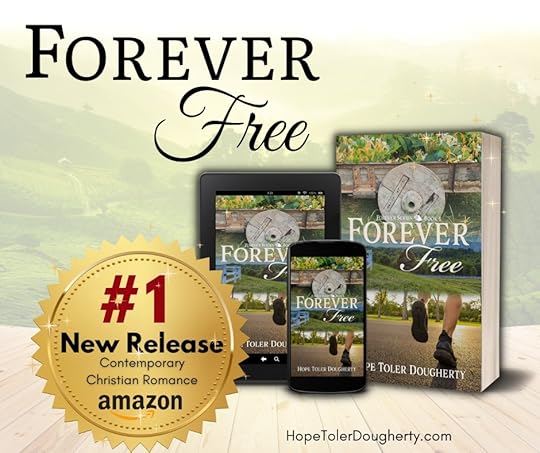
I remember the skeins of colorful wool yarn, the gift of cut flowers, the importance of a spiritual connection with God.
Hope Toler Dougherty is an inspirational romance author living in North Carolina. Her seventh book, Forever Free, is the last of four in a series about the Daniels siblings: Josie, Ben, Sam and now Heath.
Heath is a young man working on a farm owned by an elderly man and his granddaughter, Phoebe. Heath is anxious and looking to do service to maintain his recovery (in the past he used alcohol to handle his feelings).
“In the high achieving Daniels clan, he’s the one who dropped out of college, the one who struggled with substance abuse, the one who feels less than,” Hope says of her main character. “Guilt from an early tragedy along with bad choices play important parts in Heath’s personality.”
On the other hand, Hope’s character Phoebe has her hands full nurturing her cut flower farm. Stubbornly, she doesn’t need someone else to offer her advice, especially a man. In order to work together, they both have to work through their feelings. Heath needs to come out of isolation. Phoebe needs to open up to help from others. The story is their journey.
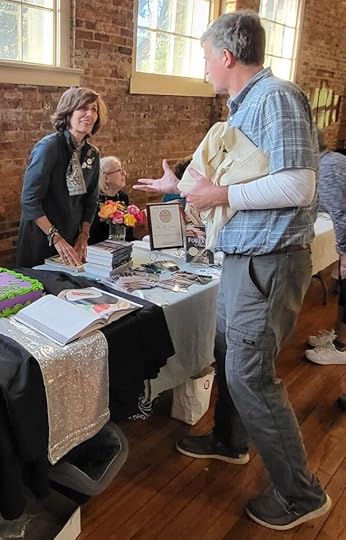
At the time I met Hope Dougherty in 2015 at a local writers group, she had authored two books. One is Irish Encounter. I liked the book because the main character, Ellen, was in search of wool yarn in Ireland for her shop in the states. I love being emersed in a world with which I’m not familiar, and learning something new. I liked the plot – a widow and a widower have a chance encounter and embark on a new journey beyond their grief. Hope has given several presentations to the local writers group on the subject of character development, developmental editing, line editing and more.
From both of these books, I remember the yarn, the fresh-cut flowers, the importance of family and relationships; of healing from grief, of feeling your feelings in a healthy way; of reaching out to others because you can’t do life alone. What stays with me most is seeking a spiritual connection with God, and letting that Higher Power lead the way.
I enjoyed getting to know Hope’s characters in Forever Free, especially Heath. I hope you’ll read Hope’s newest book. It is available online. For more information, go to her website, www.HopeTolerDougherty.com. There you’ll find a delightful trail of personal stories and even a free cookbook, Baking with Hope. Here’s one of the recipes Hope allowed me to share with you. The photo is a variation on the Swedish Nut Cake Phoebe bakes for her grandfather in Forever Free.

Swedish Nut Cake
Ingredients for cake: Ingredients for icing:
2 C flour 1 8 oz pkg creamed cheese
1 ¾ C sugar 1/2 stick butter
2 eggs 1 t vanilla
2 t baking soda 1 ½ C powdered sugar, sifted
1 t vanilla
½ chopped nuts
1 20 oz. can crushed pineapple with juice
Directions:
Mix all ingredients for cake and bake in a greased 9×13 pan at 350 degrees for 30-40 minutes. For icing, mix all ingredients and frost the cooled cake. Store in the refrigerator.


March 29, 2023
What makes Selma NC strong?
Selma, North Carolina is currently competing in Strong Towns’ #StrongestTown contest. The Town of Selma and Activate Selma, of which I am one of the co-founders, nominated the town of 7,000 people and was delighted to learn we have been selected!
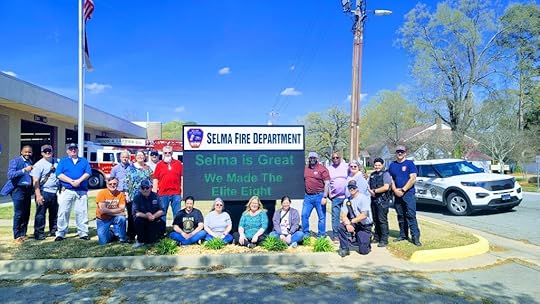
We started the bracketed competition last week — a Sweet Sixteen of 16 selected towns across the US and Canada. We were matched with Los Altos, California. By Friday, Strong Towns notified us we had advanced the Elite Eight with 70 percent of the vote total in the first round. Phew! For two days we’ve been in the heated second round of voting, matched with Brattleboro, Vermont. Town staff and council members, our “activators” in Activate Selma and others have done everything we can think of to get the word out to VOTE. (If you read this before March 30, 2023 at 1 pm Eastern Standard time, please vote for Selma NC: https://www.strongtowns.org/journal/2023/3/27/stc2023-r2-selma-brattleboro
Yesterday, when I saw our local news site, JoCo Reports, had posted about the competition, and I read snarky comments from anonymous commentors, I posted – and repeat here – why I think Selma, North Carolina is strong.
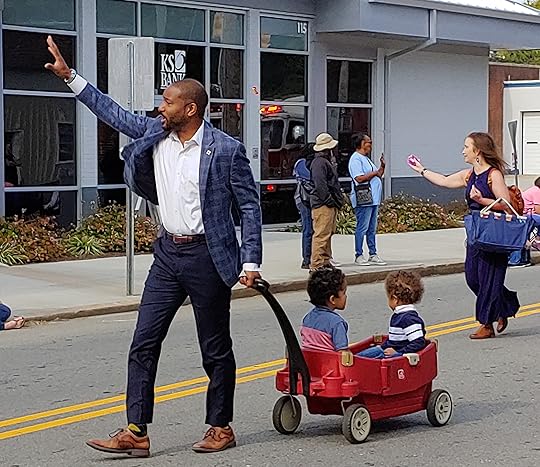
First, there are our ongoing, weekly, grassroots conversations that build community. Activate Selma meets every Wednesday at 9 am, and anyone is welcome – business owners, retirees, volunteers, stakeholders. We move around, so today’s meeting is at The Farm at 95, 215 Batten Road, but our upcoming April meetings move from the 40-acre farm R Ranch, to Barn Shelter Antiques, Coffee on Raiford and Call Pernell Heating & Air Conditioning. We take people out of their silos so they can see the town from other people’s shoes. Our motto is, “we don’t complain, we take action” to change ourselves, and in the process, change the town. That what makes Selma strong.
Second, we follow Strong Towns’ approaches. In his book, Strong Towns: A Bottom-Up Revolution to Rebuild American Prosperity, Charles Marohn explains his four-step process before investing in any kind of solution to a town’s challenges:
a. Humbly observe where people in the community struggle.
b. Ask the question: What is the next smallest thing we can do right now to address that struggle?
c. Do that thing. Do it now.
d. Repeat.
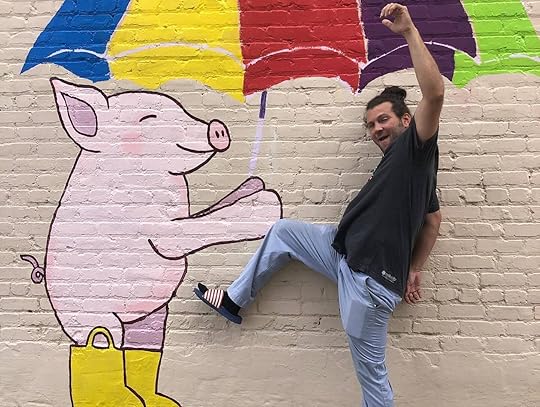
That’s what Activate Selma is doing. When you see high school students painting building art in “activate alleys,” when you see a man go from selling quinceanera dresses in his garage to owning his own building with a boutique that caters to a market that stretches across the state; when people are pouring into their own downtown “living room” for a Rockin’ on Raiford concert — you know that your town is doing small incremental changes to get past the vacant buildings and apathy of the past. It takes a long time — but those small changes are the longest lasting ones.
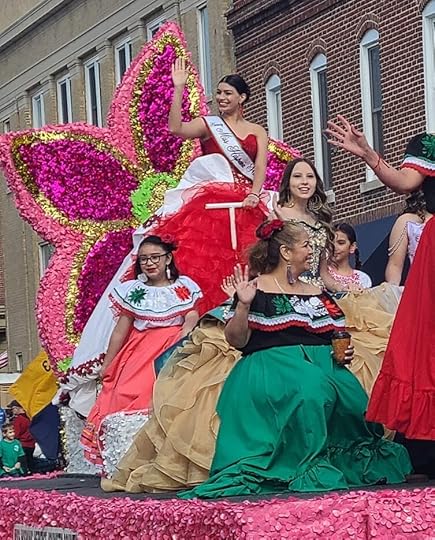
Third, we carry the message. Watch a Facebook livestream by one of our activators, Michael Sneed, owner of Appliance Bootcamp and Old Fashioned Ice Cream in Selma. He explains it better than I can. He shared this with his 8,400 subscribers to his YouTube channel: https://www.youtube.com/watch?v=VdW88qngXA8&t=2538s
By Friday, we’ll know if we are in the Final Four of the #strongesttown competition. We’re giving it everything we’ve got! If you read this before March 30, 2023 at 1 pm, VOTE. I just know, no matter what, Selma, North Carolina is already strong, and getting stronger.
February 28, 2023
Experiencing our town in a different way
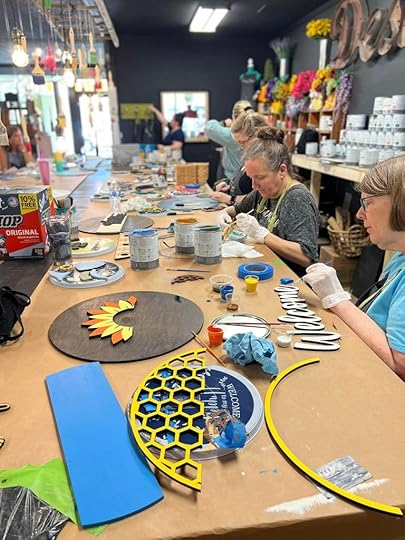
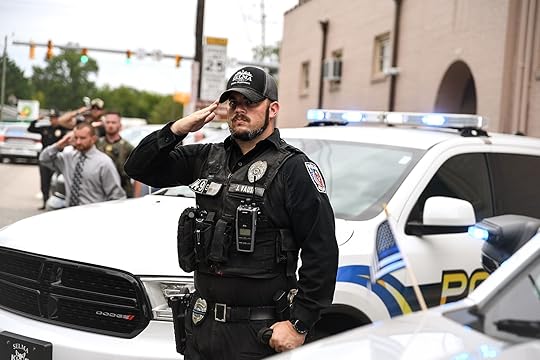
As an activator in a grassroots group called Activate Selma, I’ve been working to encourage people to come visit our active rail community of Selma, North Carolina. In social media posts, weekly e-news editions and even my book, A Heart for Selma, I tell them about the year-round live music at The Rudy Theatre, seasonal Rockin’ on Raiford street concerts, Saturday chalk-paint workshops at The Southern Bostonian or Sunday afternoon trivia games at Coffee on Raiford.
One of the hardest audiences to convince are the long-time residents who have yet to rediscover the “living room” of their own downtown.
“I didn’t know this ice cream shop was here,” is a common reaction to my posts. Or, “There’s a concert tonight at The Rudy? I thought they only did Christmas shows.” One young person lamented, “I came to visit my parents in Selma. I was so bored, I had nothing to do. My only spot was the dollar store. Now I see this and I’m sad I didn’t go downtown. I could have enjoyed all the other places.”
When you’ve lived in the same environment for a long time, you hold a mental picture of how it used to be, even if it isn’t that way anymore. You drive by familiar sites without really looking. You park in the same place, walk with your head down, do your business and leave.
When a new experience arrives and opens their doors, like the Old North State Food Hall, locals can be brutally critical about price or palate. Comments like, “Someone told me the food is too expensive,” or comparing fast-food familiarity to these unusual tastes is unfair. Stretching your appreciation to include the butter chicken at “Curry in a Hurry” or empanadas at “Aroma de Cuba” is a healthy practice.
In the past three years investors and developers have been buying and renovating historic buildings downtown and opening up new opportunities for entrepreneurs — and even moving into upstairs apartments. They’ve created a vibrant feel to this 156-year-old train town. There is the pasture-to-market of Lisa Velasquez and Ken Gossett’s Hank E. Panky Farm and Soap Shop. Stop in at Strickland Art Gallery and you’ll be greeted by the popular paint-smeared artist himself, William Strickland, as he works on commissioned paintings and repurposed furniture. Sign up for a health talk with mother-daughter chiropractors, Dr. Mindi Jentes and Dr. Kayla Jentes Sagester at Brio Wellness Center. Selma is a communal stage upon which anyone can share their best creative selves, from Pastor Todd Daniels’ drum lessons for youth at On Beat Ministry studio, to the mow-your-lawn therapy of selecting the perfect new riding mower at Surf N Turf.
In “The art of noticing: five ways to experience a city differently” (The Guardian, May 9, 2019) journalist Rob Walker challenges readers to approach a place in five new ways:
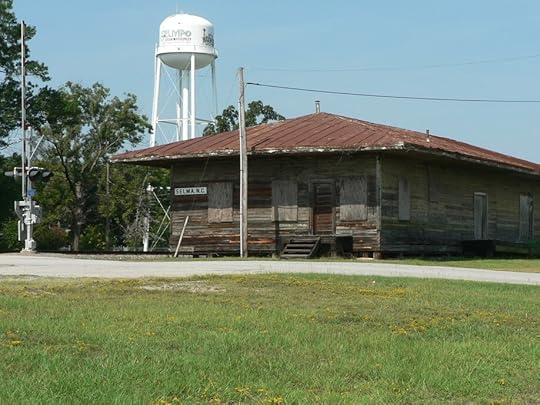
Look for ghosts or ruinsGet there the hard wayEat somewhere dubiousRead the plaqueFollow the quietYou can apply those five ways to experience Selma. There are plenty of ghosts or ruins at the Mitchener Station, named after a plantation owner’s family, and one of the oldest train stations in North Carolina. In 1865, Confederate soldiers moved through to take part in the Battle of Bentonville.
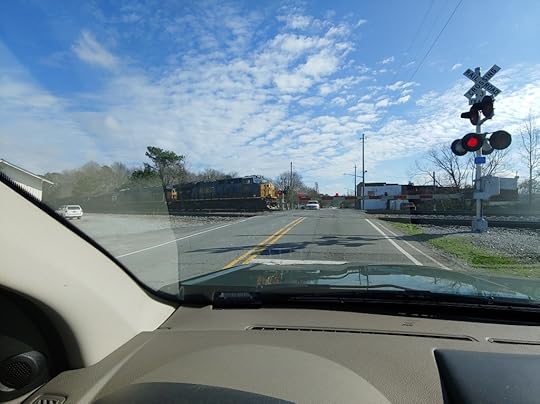
The trip from downtown Selma to the Old North State Food Hall is only a seven-minute, three-mile drive. Getting there the hard way involves a scenic trip through the back fields of Pine Level, or a curvy swing down Ricks Road. The freight trains are always working. Safety first!
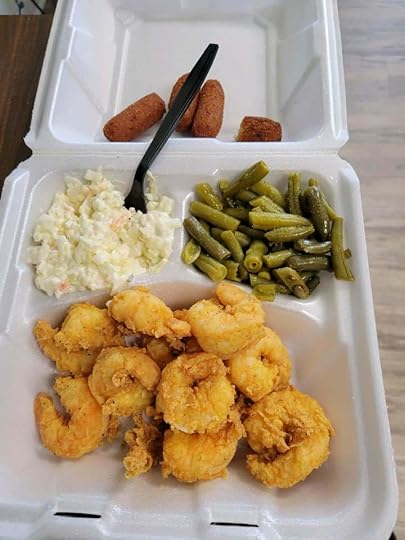
Eating somewhere dubious turns out to be quite delicious. Folks rave about two other-side-of-the-railroad tracks restaurants, Pizza Xpress and the Florentine Café. Glen Darden has opened a fish/seafood plate food truck right next to his fresh-catch D’s Seafood Market on West Waddell Street.
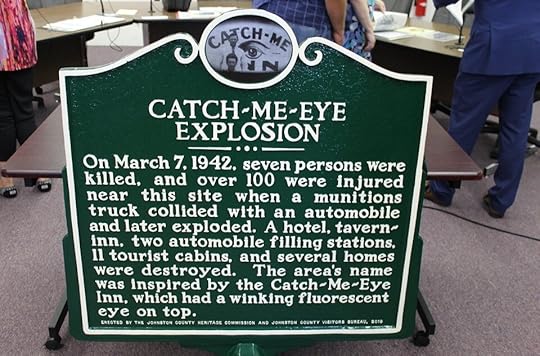
There are many historic markers in Selma. Read the plaque at the intersection of I-70 and U.S. 301 (in the parking lot of Tractor Supply) for Catch-Me-Eye, an explosion that happened near the start of World War II when a car hit a munitions truck and the resulting explosion blew out the window panes at Selma Cotton Mill.
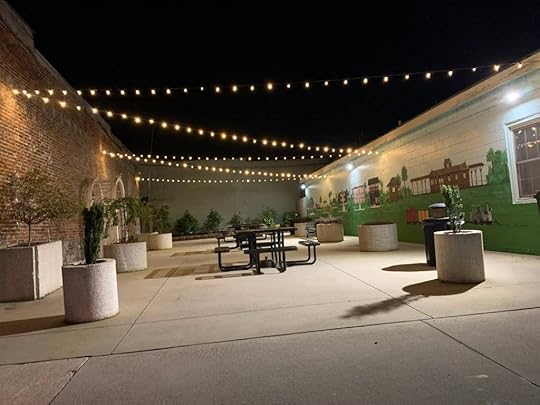
One of places in Selma where you can follow the quiet is Vick Park, a cozy little pocket park on East Anderson Street between a barber shop and the town council chambers. It has picnic tables, umbrellas to shield visitors from the sun, chess sets and a long mural that highlights the historical buildings in town. At twilight, the lights strung from the two buildings crisscross and create a beautiful setting.
To find out more about the joy of experiencing your town in a different way, read Rob Walker’s book, “The Art of Noticing: Rediscover What Really Matters to You” (published by Ebury Press).
Come visit Selma, NC!
January 6, 2023
Acceptance comes in its own time
Happy 12th day of Christmas! The Magi have arrived in wonder to see ceramic baby Jesus in the middle of the library table in the living room. At sundown, I can pack them away to go back up in the attic with all the other holiday decorations.

This is Epiphany, the Christian feast day that celebrates the revelation of God incarnate as Jesus Christ. It is the long-told story of hope and faith that unfolds today in my own life.
I have seen the wonder of my grandson growing toward his second year in the sheltering embrace of my daughter and son-in-law. He loves reading board books.
I’ve danced with my son at his micro-wedding to a wonderful new daughter-in-law in the upstairs banquet room of a woman-owned distillery. The groom/mom song: We all live in a “Yellow Submarine,” of course. Priceless!
I’ve experienced the faith of working on my first mother-in-law’s death-leaving just three weeks ago, knowing that at 91 she has passed over into the Great Cosmic Love with the waiting souls of her husband and son.
I’m left to process the mountain of papers and photographs left behind in bins in my guestroom, releasing so many feelings held at bay with big glompy crying jags with my second husband, anxiety-producing blowups at others; sudden desires to sleep, sleep, sleep in the overwhelmingness of a new year and new deadlines in my writing.
It’s okay to feel sorrow, anger, weariness. I am making my own pilgrimage toward acceptance — one of those Kubler-Ross stages. “Acceptance also comes in its own time, and I do not berate myself for not having it on demand,” says the little white book For Today. Life is messy. If I think I will ever reach Marie Kondo organization, it’s not going to happen. The stages of grief are not linear.
All I have is today, this moment. I can make it a selfish miserable one or an awe-inspiring holy one of service to others.
I look to the three figures on this one day of simple and striking reality. I seek the wisdom of the Magi, and listen. They followed a star. They sought the Child. Can I do anything else?
Take-away:
Are you looking for a welcoming church home? Try the Episcopal Church.
Epiphany Resources
Are you processing a death? A friend, Laura Lyster-Mensh, is serving as Death Doula in residence for 2023 at Congressional Cemetery in Washington DC. Read more about what end-of-life doulas are, and how “talking openly about death is healthy and important to appreciating life.”
July 12, 2022
Oscar, the little dog.
Oscar was a fine, fine dog. At 17 years old, he passed over the rainbow bridge today. I am honored to write a few words about him.
Oscar was a shelter dog, a terrier mix; stray dogs knew him as a terriorist. We called Oscar many things, thanks to Curtis’s humor. He was Mr. Waggy Tail, Mr. Dawdle Dog, Mr. Snorty Pig, Mr. Wiggle Waggle. While Curtis grilled outside after church, Oscar lolled by the tree as The Lord of the Yard. When visitors came, there was Dogdemonium. “Life is exciting when you’re a little dog,” Curtis would say. Oscar’s girlfriend was Jimmy’s little powderpuff dog across the street, Maggie, who barked at him like “You better come over here and see me!” In the house, Curtis and I kept a regular call-and-response down the hall: “He’s Not a Big Dog…” “He’s a Little Dog…” to roust him out of Curtis’s closet where only a nose stuck out from under the hanging clothes.
When we traveled the Little Dog Care Plan took him to Willow Run’s kennel, where they cared well for him and always commented on how healthy he was physically for an old dog. It was because of Curtis’s many daily walks with him over the years, as neither our house in North Carolina nor our house in Virginia had a fence. “To do a little dog walk, we must first start with a little dog,” Curtis would say, putting on his well-worn leash. Oscar was definitely a writer’s companion and figures in my journals and poetry, such as “Requiem for a Recliner.” I will always remember the day Carrie, Jamie, Curtis and I brought him home from the shelter 15 years ago – how could anyone abandon him! Because they did, we are forever grateful for our many years with him.
It’s hard to say goodbye. Oscar, like Cooper, the big red hound, before him, was family. We loved that our Episcopal churches in Manassas VA and Smithfield NC both invited pets into their sacred places with their “Blessing of the Animals” services. We are people of faith, and believe we will sense and know his presence again one day. Maggie, we are certain, has already welcomed him.
Bless, O Lord, your creature, Oscar, and fill our hearts with thanksgiving for his being. Rest in peace, faithful and well-loved little dog.
 [image error]
May 7, 2022
My poem won a grand prize
I ended my National Poetry Month challenge (write a poem a day) with a dozen new poems. I sent out seven poems to various publications and contests and boy, did I hit the mark!
 This “Gas Station Hat” inspired one of my 12 poems.
My poem “English” won the grand prize in the Carolina Woman magazine 2022 Writing Contest! You can read it online, or pick up a print copy in the Triangle area of North Carolina.
I wrote “English” earlier, after we first moved to North Carolina, and it feels great to finally see it published. Members of my writing group in Virginia, Write by the Rails, framed it and hung it on a wall in a community center in Manassas Park, Virginia as part of their “Poetry Around Town” project. I like having my words in different places, like art works. I have a poem framed in a pizza shop in Smithfield, North Carolina, and another in a time capsule in Selma, North Carolina. I once handed out poems instead of business cards at a Chamber of Commerce event!
But that’s not all! This past month I wrote a poem after taking WFDD’s challenge to write to prompts. The prompt I chose was “the scent of fire.” I sent my poem in, and at the end of the month they notified me that my poem, “The Scent of Fire,” is now included in WFDD’s inaugural poetry collection!
I just sent out five of my poems to try for the James Applewhite Poetry Prize through the North Carolina Literary Review. One of my poems was a finalist in a previous year, but it was not published in the NCLR. That deadline was last week. And currently I am gathering and working on five poems to submit and compete for a poetry fellowship in North Carolina. The fellowship honors the memory of Susan Laughter Meyers, whom I was fortunate to meet before she passed away. I look at past residency winners, and I see all the prestigious places they have published their poems, and all their hard-earned degrees. My inner critic says “you don’t have a chance.” I just push that pesky critic aside and continue to write and submit, or at least write and read at local open mics.
I write because I enjoy the process of writing. I write in community — participating in critique groups and then performing my work in public — because that’s what I am, a grassroots community activist and writer, weaving community in a time of disruption. Writing brings me close to the Creator. I process my thoughts, write them down and share them. That encourages others to do the same. I am a listener, a “believing mirror” for others, as Julia Cameron says in The Artist’s Way. I also create “circles” for community dialogue at the library, at the senior center, at the coffee shop — anywhere people gather.
Thank you, Carolina Woman magazine! Thank you WFDD! And thank you to all the local community spaces that welcome open mics or post framed poetry! Writers: Keep writing!
[image error][image error][image error][image error]
April 4, 2022
Poetry month challenge
It’s National Poetry Month! Every April I like to challenge myself to write a poem a day for 30 days. So far I have “The Errant Corgi,” “God of the Canopy of Trees,” “Unkissed,” and “My Backyard Neighbor Miss Betty.” When I find a word or phrase I like I park it for later. I don’t force poems; they take root or they don’t. At the end of the month I might have three or four worth revising and sharing with my critique group for feedback, reading at an open mic or sending out. I keep all of them in a file, and visit them from time to time to see if one is ready to grow. Here’s my rough first poem:
Errant corgi
The loaf-shaped dog on short legs slipped from its leash
And trotted away from an elderly woman’s yard.
“Bagel,” she called, squeezing a squeak toy.
The dog circled a tombstone in the small family graveyard
Squatted to relieve herself in the wiry grass.
“Bagel!” the owner called again. As she neared,
the corgi ran the fence line toward the alley
Drunken with unfettered freedom.
The owner met her head on
At the alley’s other end, cornering her there.
“There you are,” she said, kneeling stiffly,
Slipping the red leash over her head
“You don’t want to miss your treat.”
Regaining her balance, the owner felt
The corgi nose her calf, then led the pair home.
I’m sure I will make many changes when I come back to this poem at the end of the month. I want to go much deeper than the surface description of the woman, the dog, the cemetery. The important thing is to get a rough draft down. Like a skeleton, I can flesh it out later.
To me, writing a poem is immediate gratification. It relieves me of the tension I experience when working on longer manuscripts. I have two manuscripts right now that are haunting me. What a relief to go trotting off like a leashless corgi, to enjoy writing a poem!
I encourage you to challenge yourself, too! Here’s a place for prompts: https://www.napowrimo.net/ or other suggestions https://poets.org/national-poetry-month. In North Carolina, check out https://www.ncpoetrysociety.org/. In Selma North Carolina, there is a Selma Open Mic on Friday, April 22 at 6 pm at Old Fashioned Ice Cream, 124 N Raiford St. downtown. Bring your best poem and join us!
 Bagel
Bagel
January 29, 2022
Trees
I started meditating every morning with an online group in January.
We meet on Zoom at around dawn, two dozen people from several countries, each of us in our little boxes on the computer monitor. A different person leads each day, having hand-picked a 15-to-20-minute meditation from any of numerous sites online, or by reading our own. Some leaders light candles or hit the side of a prayer bowl to signal the start. At the signal, we mute and turn off our video. The words on the audio usually begin with some version of “Find a comfortable position” and “Take a deep breath. Breathe in. Breathe out.”
In the three weeks I’ve been doing this I’ve noticed the effects throughout my day, like a lower heart rate at rest on my Fitbit and a deeper calm to handling the numerous curve balls thrown my way. I solve problems easier. I go with the flow.
I also notice things I’d looked past before, like trees! A meditation by the late Thich Nhat Hanh had me thinking of a tree I had cherished in the past, and I imagined I was standing on the grounds of a stately mansion-turned-retirement-home in Virginia, where there was a colorful maple I loved seeing change from green to orange leaves every fall.

Then I thought about the tree on the road leaving Pine Level for Selma, how the tree was trimmed by working crews to avoid power lines and now the tree looks like a chicken.

Later, after that meditation, I was walking out the door of the Harrison Center for Active Aging in Selma, and I glanced to my left. There, across the street, spreading its limbs in a cosmic hug, was the most magnificent tree.

It has a thick split-open trunk, like a grandfather wearing his jacket open because it doesn’t fit closed anymore. In seven years I have never noticed this tree. I guess I looked right through it, really. I know I saw the houses beneath its canopy because there are always people coming and going, or moving about on their porches, living their daily lives, bicycling, mowing the grass, talking to neighbors. I just never thought about how they were under this tree’s sheltering embrace.
In fact this huge tree had been waiting patiently seven years for me to look up at her. When I did, I sensed motion, as if it was drawing me closer, like a mother who opens her arms to encourage a child running home. I felt that if I went and hugged the tree, it would envelop me in her bosom.
I photographed the tree so I could write about it here. I’d like to explore drawing the tree as well, and getting advice from a local artist about bringing the tree to a fuller dimension on paper.
Now, every time I park at the center, I stop to nod my head and greet the tree. I get the feeling she has stories to tell me, now that she has my attention. I plan to keep meditating to see what else I can explore.
Namaste.

December 25, 2021
Little Towns
The year 2021 is almost over! I’ve been doing “tech week,” where I go through and delete emails, update social media, and set goals for 2022. Life got so busy after my first book was released, I didn’t even market my second book, or do a blog post about it. So here it is.

Little Towns is basically a collection of 16 of my short stories and 16 of my poems, several of which were already published in magazines like Carolina Woman or journals like the Pisgah Review. Watson Brown did the cover photo. He is a former city planner in Raleigh and is a photographer who gives new life to scenes of backroads and abandoned houses in eastern North Carolina. Explore his 6,000+ images on Instagram @planterboy or Facebook @carolinabackroads. Read about Watson in this Our State article.
You’re welcome to follow my author page on Facebook as well.
Victor Rook produced this book, as well as my first, A Heart for Selma: 12 Stories of Activate Selma NC.
Enjoy the last week of 2021! I wish you much success in your 2022 endeavors!
September 7, 2021
Are we there yet?
Roads May Get Us There, but Streets Are the Platforms for Building Wealth

I may not be a transportation expert, but I know what a road is. Or at least I thought I did.
As a supporter of Strong Towns and an “activator” in Activate Selma NC, sparking change in Selma, North Carolina, I eagerly read an advanced copy of Charles Marohn’s second book, Confessions of a Recovering Engineer: Transportation for a Strong Town. In it, he explains the basics: a road is a path to get you from place to place, while a street is a platform for building wealth. Then he invites the reader to rethink everything you thought you knew about the paths that connect us – from widening roads to commuter rail.
For local example, if the NC Department of Transportation spends about $5 million to widen a road of less than a mile, is that a good thing? What if it carves off two dozen land parcels and the front yard of a peaceful homeowner? What if the result is now a visual speedway that pedestrians and bicyclists fear to cross? (Watch Marohn’s popular animated “Conversation with an Engineer” on YouTube)

What if high-level decision-makers are pushing the Cadillac of commuter rail to our cornfields when all we need right now is an expanded bus and van service that can take local low-income residents with no cars where they need to go to shop, bank and buy groceries? Can we still work toward a streamlined commuter rail service when we need it five or ten years from now?
Like in his first book, Strong Towns: A Bottom-Up Revolution to Rebuild American Prosperity, Marohn reiterates a four-step process before investing in any kind of solution to a town’s challenges, including transportation:
Humbly observe where people in the community struggle.Ask the question: What is the next smallest thing we can do right now to address that struggle?Do that thing. Do it now.Repeat.Both of Marohn’s books convince me that I’m on the right track in focusing on sparking change at the street level to strengthen Selma’s platform for wealth. In the past, county residents have looked down on Selma because there is a high level of poverty this side of the railroad tracks. Marohn offers hope:

“Having a wealthy city does not mean having a city of wealthy people. In fact, the highest wealth-producing places in the United States today are often where some of the poorest people live.” – Charles Marohn
As activators, here are some things we apply a Strong Towns approach to:
We encourage entrepreneurs to invest in the downtown streets of Selma’s central business district: Anderson, Noble, Oak, Pollock, Raiford, Railroad, Waddell, and Webb.We increase communication and cross promotion among these entrepreneurs so that “all boats rise.”We plan and support activities and mini-events that engage people from feeder neighborhoods to walk or bike to town, and visitors to park their cars and get out and walk, have fun and spend money.We support the activities of local organizations, like American Legion Post 141, Selma Lions Club, and My Kid’s Club so that they self-strengthen with new supporters and members and prioritize community over commuters, people over cars, living, working and having fun in this town first.I’m hoping to share more of Marohn’s ideas for Strong Towns from both of his books with others in Activate Selma, like advocating for denser development to bulk up our neighborhoods and downtown residents. His example is that four $100K houses with 25-foot frontage each are better than one $300K home with 100 feet frontage.
It may seem controversial but it sounds like common sense to me: Marohn even recommends that local police get rid of traffic stops as a law enforcement tool. We had a second generation immigrant come to one of our meetings and explain that while she loves Selma because she grew up here, she felt compelled to move away as an adult because she kept getting pulled over in her own neighborhood and she felt unsafe. Marohn gives examples of the same illogic in his Minnesota hometown. One of the things I saw in Manassas, Virginia, where I lived for three decades, was a less authoritarian and more community policing approach. City police officers rode bicycles in the downtown area, so they could interact with people more.
One of Marohn’s ideas, though not new, seems radical to me – taking down the stoplights in town to make the intersections a “shared space environment” where people, bicycles and cars are all moving slower, waiting on each other and moving when it’s their turn. I stood at the corner of Anderson and Raiford and tried to imagine that. What I experienced were noisy truckers barreling through and people running to cross the street even with green signals in their favor. Would they both really be more attentive, communal … and safe without the signals?

When the print copy of Marohn’s book that I ordered finally arrives, I’m going to highlight it, sticky note it, dog-ear it, and keep it on the back seat of my car so I can have it for our weekly Activate Selma meetings, or take it to the podium with me when I speak at citizen’s time before town council. That makes more sense than handing a shiny, jacketed copy to the town manager.
We may not be “there” yet in Selma – Marohn says that “private to public investment ratio should be 20:1 at a minimum; 40:1 is more stable. But again, I take hope from his words:
“The highest wealth-producing places in the US today are often where some of the poorest people live,” he says. “Not only are small investments in poor neighborhoods the lowest-risk, highest-returning way for a community to build wealth, but they are also the best way to lift a neighborhood out of decline without displacing the people who live there.”
Confessions of a Recovering Engineer: Transportation for a Strong Town, by Charles L. Marohn, Jr. is available at https://www.confessions.engineer/ – check out his book tour there as well.
Cindy Brookshire is the author of two books, A Heart for Selma: 12 Stories of Activate Selma NC and Little Towns, a collection of short stories and poems about little towns.