Angela Edwards's Blog - Posts Tagged "immigration"
THE WITCHES OF NEW YORK
Where it comes to witchcraft, most of us are more likely to think of Salem, Massachusetts, than New York, New York. But the truth is, some form of folk magic has been practiced in most of the United States, with a surprising amount in the cities. For the metropolis has always held an attraction for the immigrant, who carries luggage, but also the practices of his or her homeland.
Italian immigrants have had a presence in New York City that predates the Great Migration of 1880-1920. Along with pasta, large funerals, and devoted families, they introduced the Italian strega (witch) to lower Manhattan, Italian Harlem, and every corner of the city.
Herbalist and folk healer, holy person and spell caster, keeper of intimate secrets, the strega's life must have been the stuff of melodrama. Those who dealt in black magic might cast spells to bring bad luck, ill health, or ruined relationships to others. Yet, little to no attention was paid to the enigmatic figure of the witch, who could be male or female, until relatively late in the Italian American experience.
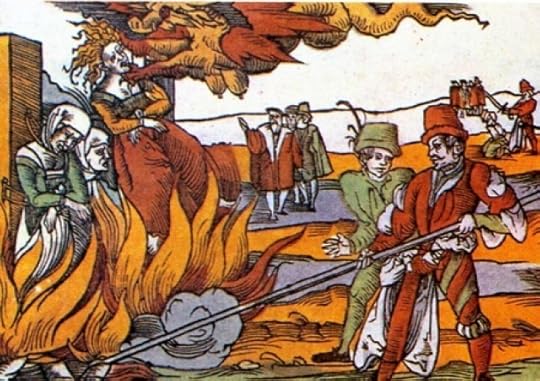
Witches from the Medieval Period
Charlotte Chapman was an American who resided and studied life in a Sicilian village for 18 months in the late 1920's. From her work, "Milocca: a Sicilian Village", we learn that belief in witchcraft and spirits was typical in Sicily's small towns and villages. Traditional magic, according to Chapman, was often passed down in families, with details of spells and incantations kept secret. This generational secrecy could partly account for the reticence of Italians on the subject of the craft. But in this country, the silence was equally due to efforts throughout the U.S. to assimilate newcomers by pushing "superstitious" practices underground, where progressives thought they belonged. As a result, folk magic was extinguished in many Italian American families, carefully hidden in others.
It was the grandchildren and great-grandchildren of the earlier immigrants who would revive and try to make these folk beliefs their own. To this end, some of them adopted Stregheria, a version of Italian folk magic popularized by author and lecturer Raven Grimassi. While branded as traditional magic by Grimassi and devotees, many have said Stregheria is closer to the neopagan witchcraft religion, Wicca.
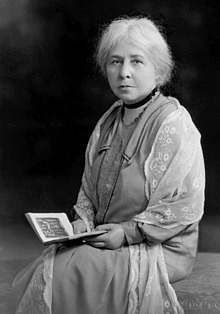
Margaret Murray
The source for both practices was Margaret Murray's sentinel publication, "The Witch Cult of Western Europe", a book that identified certain pagan practices as the remnant of an ancient religion and shaped our ideas about witchcraft today. But while both Stregheria and Wicca have significant followers, critics say that neither is an authentic form of witchcraft. More ironic still is that at the same time Murray's book was released, millions of true believers of witchcraft and the occult were entering the U.S. in record numbers, only to find their traditional ideas denigrated.
The book was released in 1921, a time when archeological finds--like the intact burial chamber of Egyptian King Tutankhamun in 1922--were rewriting history, and revelations about the cultures behind the discoveries were part of the daily media diet. But while the age was curious about the ancients, living survivors of Murray's witch cult found themselves in hot water where it came to putting their beliefs into practice.
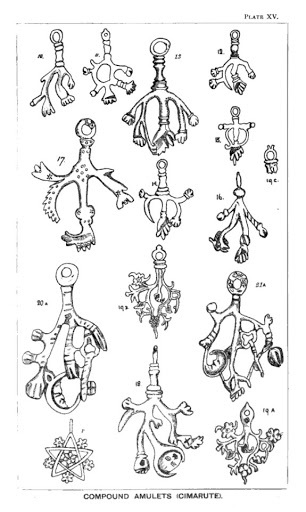
Witch's Charms
The stand-off becomes clear in newspapers of the time. In one story, readers are told: "In the New York Italian District, some Sicilians are said to believe in magic jewelry." A New York Times article claims "The East Side Still Has its Witches", then goes on to say a Mrs. Carmen Rubino scammed a woman into paying $370.00 to get rid of a long list of predicted ills and adversities, including herself of stomach troubles, her house of devils, and her son of a murder rap. When Rubino was finally hauled into court, the magistrate remarked: "Now I understand why they used to burn witches."
Yet, it would be patently untrue to say every witch in the Italian American community was a con artist. Chapman records that some witches in Milocca refused money or payment of any kind for their services. Other sources say the Old World witch often performed good works only to raise his or her reputation and prestige in the community at large.
Perhaps proof of the beneficence of the traditional Italian witch lies in their tendency to become midwives here in America. Indeed, the very resurgence of the witch from the 1960s onward seems to disclose an essential need, here in the West, at least, for someone to fill the role. And while their actions may not ring true to some, it could be said those practicing Stregheria, and Wicca, too, are authentic in that they embrace ancient forms in defiance of an increasingly modern world. It's an attitude I believe would be approved by those emigree witches of long ago.
Little Italy Diary
If you wonder about the Old World life your immigrant ancestors left behind or how people from both sides of the Atlantic came to terms with each other, read Little Italy Diary. Its pages tell far more than the history of one man’s family: they are an American history. Available in Amazon.
Little Italy Diary is Angela Edwards' first book. She is also an accomplished poet whose work has been published in Tribeca Poetry Review, Potomac Review, Journal of NJ Poets, Turnings, and other places.
Italian immigrants have had a presence in New York City that predates the Great Migration of 1880-1920. Along with pasta, large funerals, and devoted families, they introduced the Italian strega (witch) to lower Manhattan, Italian Harlem, and every corner of the city.
Herbalist and folk healer, holy person and spell caster, keeper of intimate secrets, the strega's life must have been the stuff of melodrama. Those who dealt in black magic might cast spells to bring bad luck, ill health, or ruined relationships to others. Yet, little to no attention was paid to the enigmatic figure of the witch, who could be male or female, until relatively late in the Italian American experience.
Witches from the Medieval Period
Charlotte Chapman was an American who resided and studied life in a Sicilian village for 18 months in the late 1920's. From her work, "Milocca: a Sicilian Village", we learn that belief in witchcraft and spirits was typical in Sicily's small towns and villages. Traditional magic, according to Chapman, was often passed down in families, with details of spells and incantations kept secret. This generational secrecy could partly account for the reticence of Italians on the subject of the craft. But in this country, the silence was equally due to efforts throughout the U.S. to assimilate newcomers by pushing "superstitious" practices underground, where progressives thought they belonged. As a result, folk magic was extinguished in many Italian American families, carefully hidden in others.
It was the grandchildren and great-grandchildren of the earlier immigrants who would revive and try to make these folk beliefs their own. To this end, some of them adopted Stregheria, a version of Italian folk magic popularized by author and lecturer Raven Grimassi. While branded as traditional magic by Grimassi and devotees, many have said Stregheria is closer to the neopagan witchcraft religion, Wicca.
Margaret Murray
The source for both practices was Margaret Murray's sentinel publication, "The Witch Cult of Western Europe", a book that identified certain pagan practices as the remnant of an ancient religion and shaped our ideas about witchcraft today. But while both Stregheria and Wicca have significant followers, critics say that neither is an authentic form of witchcraft. More ironic still is that at the same time Murray's book was released, millions of true believers of witchcraft and the occult were entering the U.S. in record numbers, only to find their traditional ideas denigrated.
The book was released in 1921, a time when archeological finds--like the intact burial chamber of Egyptian King Tutankhamun in 1922--were rewriting history, and revelations about the cultures behind the discoveries were part of the daily media diet. But while the age was curious about the ancients, living survivors of Murray's witch cult found themselves in hot water where it came to putting their beliefs into practice.
Witch's Charms
The stand-off becomes clear in newspapers of the time. In one story, readers are told: "In the New York Italian District, some Sicilians are said to believe in magic jewelry." A New York Times article claims "The East Side Still Has its Witches", then goes on to say a Mrs. Carmen Rubino scammed a woman into paying $370.00 to get rid of a long list of predicted ills and adversities, including herself of stomach troubles, her house of devils, and her son of a murder rap. When Rubino was finally hauled into court, the magistrate remarked: "Now I understand why they used to burn witches."
Yet, it would be patently untrue to say every witch in the Italian American community was a con artist. Chapman records that some witches in Milocca refused money or payment of any kind for their services. Other sources say the Old World witch often performed good works only to raise his or her reputation and prestige in the community at large.
Perhaps proof of the beneficence of the traditional Italian witch lies in their tendency to become midwives here in America. Indeed, the very resurgence of the witch from the 1960s onward seems to disclose an essential need, here in the West, at least, for someone to fill the role. And while their actions may not ring true to some, it could be said those practicing Stregheria, and Wicca, too, are authentic in that they embrace ancient forms in defiance of an increasingly modern world. It's an attitude I believe would be approved by those emigree witches of long ago.
Little Italy Diary
If you wonder about the Old World life your immigrant ancestors left behind or how people from both sides of the Atlantic came to terms with each other, read Little Italy Diary. Its pages tell far more than the history of one man’s family: they are an American history. Available in Amazon.
Little Italy Diary is Angela Edwards' first book. She is also an accomplished poet whose work has been published in Tribeca Poetry Review, Potomac Review, Journal of NJ Poets, Turnings, and other places.