Frederic Martin's Blog
April 24, 2026
Review: A Scar like a River


March 9, 2026
Review: The Amateur
September 25, 2025
Review: We Fell Apart
April 9, 2025
Review: Plainsong
October 17, 2024
A New Genre...
Bildungsroman.
Hah! A term/genre new to me, anyway. Recently a reviewer called the Vox Oculis series "a true bildungsroman." I am not ashamed to say that I have never heard that word before. At first, I though it was a typo, but then I looked it up and there it was:
"Bildungsroman: In literary criticism, a Bildungsroman is a literary genre that focuses on the psychological and moral growth of the protagonist from childhood to adulthood, in which character change is important."
I don't know if VO falls in that category or not. I'll have to think abaout it. What do you think? Here is an interesting article I found describing bildungsroman - https://celadonbooks.com/bildungsroman-definition/
October 3, 2024
Review: The Jackal's Mistress
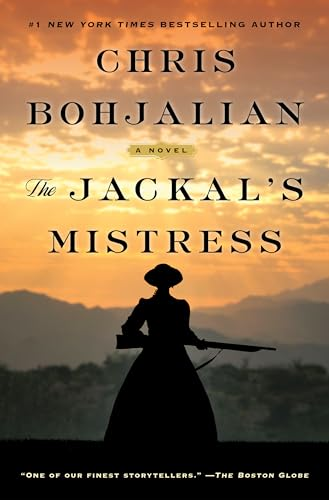
The Jackal’s Mistress is an American Civil War novel inspired by a true event wherein a woman in the Confederate state of Virginia hid a critically wounded Union officer, nursed him back to health, and safely returned him to a Union garrison. Bohjalian uses this story as the basis of his own fictionalized account of a Union captain who, when crippled by a cannon blast, is discovered by a freed slave named Sally. Sally’s employer, Libby, the wife of an imprisoned Confederate captain, decides to conceal the Union captain and try to save his life in an act of humanity and decency that she wants to believe would be reciprocated by a Union counterpart if her husband were in a similar situation. She does this at great risk to herself, her twelve-year-old niece, and her two freedman employees, Sally and Joseph, as the constantly roving Confederate rangers are ruthless towards those who aid the Union and especially brutal to negroes, whether they are slaves or freedmen.
I’ve always admired the authors of historical fiction. The great ones such as Anthony Doerr (All the Light We Cannot See), Amor Towles (A Gentleman in Moscow), Alice Walker (The Color Purple), and Barbara Kingsolver (The Poisonwood Bible), to name a few, can craft period-accurate yet relatable characters and weave them into an authentic and historically significant setting while capturing the reader with thoroughly engrossing story-telling. I’ve especially admired any author willing to dive into the American Civil War as their work is guaranteed to be thoroughly scrutinized by the throngs of aficionados whose obsession with the Civil War borders on cult status. Although I don’t know what his standing will be among those enthusiasts after the book is published, I am happy to report that Bohjalian, in my view, brought the best of his expert storytelling skills and historical research to Jackal’s Mistress and can be compared favorably to the authors mentioned above. The result is what I consider one of his best novels.
Why? I find that Bohjalian’s novels seem most dialed in when he is writing either historical fiction (The Sandcastle Girls) or metaphysical mysteries (The Sleepwalker, The Law of Similars). In Jackal’s Mistress, his historical fiction instincts are fully dialed in with his well-thought-out characters, balanced pacing, insightful dialogue, and detailed description of the setting and action. His multiple perspective, omniscient point of view is executed nimbly, avoiding, for the most part, the trap of jarring head-hopping that can occur when taking this approach. That being said, multiple perspectives are almost demanded by this story as the many themes that are presented—slavery, war, bigotry, racism, sexism—would be flat and meaningless if delivered exclusively from the POV of a white, male Yankee captain. And yet, this approach also presents the risk that all authors are challenged with; authentically portraying the point of view of someone who has grown up with a reality that is beyond what you could ever fully understand. Bohjalian often braves this territory in his books, but rarely a story with as much diversity as Jackal’s Mistress—slave, freed slave, woman, adolescent girl, Confederate, Union college professor. Bohjalian, to his credit, doesn’t attempt to assimilate these characters, instead, he presents them as they would present themselves in dialogue. It is more of a discussion between the different points of view than a deep analysis of each character.
And deep analysis isn’t necessary. Accurate portrayal is often best served through sparse descriptions and dialog, allowing the reader to fill in the character. Along that line, I’ve always found Bohjalian’s adolescent and teenage characters exceedingly well done. One of his best is Emily Shepard in Close Your Eyes, Hold Hands. I’ve used the term already, but I’ll use it again: He is really “dialed-in” to the adolescent/teen brain, and his twelve-year-old character in Jackal’s Mistress, Jubilee, in many ways can be considered a central character of the book. A frequent scene-stealer, she injects the story with a critical dimension that helps define the underlying theme of the book—how the Civil War changed America. After all, kids like Jubilee were the phoenixes to arise from the conflict as the next generation of Americans. It was her attitudes (and those of her generation) towards slaves, freed slaves, northerners, southerners, men, and women, that shaped our world after the war.
In short, Bohjalian brings the best of his storytelling prowess, along with sensitive and perceptive portrayals of his diverse cast of characters, to The Jackal’s Mistress. He guides us through a harrowing but all too plausible side story occurring during one of the most disruptive yet definitive periods in the history of America. This is a compelling read that will find a welcome spot in many “best historical novels” collections.
4.7/5 stars
June 29, 2024
Review: Street of Storytellers
I find that coming-of-age fiction set in a historical context can be a powerful and compelling combination. Books like Anthony Doerr’s excellent “All the Light We Cannot See” provide a portal for us to experience history in a very intimate way: reliving a very vivid and formative time of our life in a completely foreign setting.
For me, “Street of Storytellers” is just such a book, though I have a hard time reconciling myself to the fact that the time-period setting, the early 1980s, is, in fact, a historical period (I was in my twenties!). However, the fact that this is recent history means that events of that time (such as the genesis of Al Qaeda) still resonate strongly with ongoing consequences in the present. That in itself is enough to keep you flipping the pages, but even in the absence of that, Wilhelm’s story-telling skill from fifteen-year-old Luke’s perspective is engrossing and authentic.
Luke is unwillingly dragged to Peshawar, Pakistan, by his father, and his resulting I-don’t-wanna-be-here attitude is laid out in full American teen splendor. His sarcastic attitude is gradually modulated by the intriguing sights and sounds of a radically different culture. His befriending of a young Afghan Pashtun, Yusuf, evolves into a rich experience immersing Luke in the diverse and fractured Muslim community in Peshawar. Another Pashtun friend, Rashi, who has been seduced to join the Wahhabi, an orthodox form of Islam, presents an early-life conundrum for Luke as he is pressured to conform to two very different competing influences—Yusuf’s peaceful and welcoming side of Islam or Rashi’s ultra-conservative and strict form of Islam. The resulting conflict produces a series of unexpected yet shockingly plausible life-threatening events.
Wilhelm’s teen narrative is expertly written and his rich descriptions of 1980’s Peshawar’s physical and cultural landscape are engrossing and reflect his thorough research as well as his personal experience (he lived in Pakistan for two years during the 80s).
If it were up to me, I would put this on a banned book list in Florida which, by my standard, flags it as extremely worthy reading for anyone from teen to senior.
4.6/5 stars
February 29, 2024
Review: Rocky Mountain High
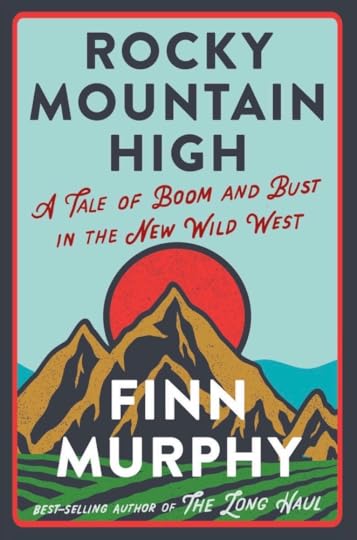
Right off the bat I'll tell you that, at 200 pages, I found this to be a quick and highly engaging read. There is no fluff or padding in this story, and that reflects the author’s personality as well as his approach to the “Hemp Space” business that he started during the Colorado hemp boom years of 2018-2019.
On the other hand, I have a different take on this book than most reviewers. I consider it a book about business and in that regard, I rank it up at the top of my list for must-reads for entrepreneurs, alongside two of my favorites; Honest Business (Michael Phillips and Salli Rasberry) and Growing a Business (Paul Hawken). The common theme of all three books is that they were written by people who not only started businesses from the ground up, they engaged in face-to-face interactions with every individual involved in their business, whether it was an undocumented day laborer, law enforcer, bookkeeper, customer, government bureaucrat, or honey-wagon driver. Even when delegation of duties to other people became necessary, they never allowed themselves to get isolated from the lowest tier workers by layers of “businesstocracy.” (I think I just invented a new term!)
One startling observation that can be made about these three books is that although they were written in different eras, there is almost no mention of the internet. Honest Business (1981) and Growing a Business (1987) were pre-internet, pre-cell phones while Rocky Mountain High (2023) was written in an era where internet and cell phones were ubiquitous. That a modern business book can be written with little reference to the internet is witness to the fact that basic economics and business principles have nothing to do with technology and everything to do with how humans interact.
The other commonality is how each writer reveals how fertile, thriving business environments rely heavily on the basic honesty, trust, and persistence of each individual as well as a judicious business legal structure with firm yet properly constrained regulation. In short, they rely as much on cash-and-a-hand-shake as they do OSHA safety regulations. Both, in proper measure, create a very fertile business environment where negotiations can happen very quickly but within the constraints of oversight that protects individuals from being bulldozed by the soulless aspects of capitalism.
Okay, “business” business aside, Murphy is also a darn good yarn teller with good strong opinions and lessons expressed in a light-hearted, self-deprecating, and perhaps ever-so-slightly narcissistic tone (at times ;). His language is lean, concise, and sophisticated without being condescending (see “narcissistic”) though some may find him so. I think that those who object to his strong opinions may not have spent a lot of time mingling with tradespeople and so lack that perspective. I have spent a lot of time working with, among, and as a trades-person and find his observations spot-on and delightful.
Beyond business, yarn-telling, and opinion, Murphy’s insider view of the guts of the Hemp Space boom of the 20-teens is a worthwhile read for everyone as it is a case study of entrepreneurism in 21st century United States. I might even recommend it as required reading for business majors ;^)
4.6/5 stars for being extremely well written.
December 17, 2023
Review: Challenger Deep
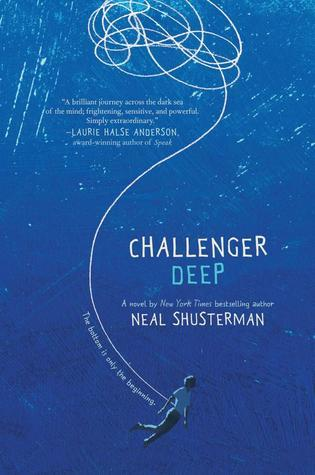
Note: This is a review I posted in Goodreads a few years ago. It is worth repeating here because I think this is one of Neal Shusterman's best works.
To write a story from the point of view of a brain scrambled by a biochemical imbalance, and to make it feel authentic, requires a great deal of skill and creativity. Shusterman has both. Reading Challenger Deep put me in an alternate state of mind and brilliantly navigated my "healthy" brain through the horrible fun-house that people with mental illness endure until a dedicated person or institution can rescue them.
Exceedingly well written with some unforgettable passages. If you can hang in with this wild ride to the end, you will find it immensely satisfying in a way that you may not immediately be able to express. And that is a good thing and a sign of an exceptional book.
4.8/5 Stars
December 13, 2023
Flash Fiction: "Pass"

A big thank you to the staff of San Antonio Review for publishing my flash-fiction short story, "Pass." It is a quick (and free) read on their website. San Antonio Review is a great literary journal with a really nice online design and wonderfully curated published works from some very talented writers. It is an honor to be published alongside them.