
AngryWorkers's Blog
April 15, 2026
“Meet our demands!” – Workers’ uprising in India
Translation from Wildcat with additions from AngryWorkers
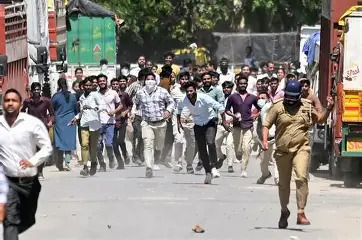
Since the 13th of April, a mass workers’ uprising has been raging in the southern industrial areas of Delhi. On the one hand, this was a direct response to the rising costs caused by the war in Iran; on the other, workers’ protests had been taking place repeatedly in industrial centres since the start of the year. They demanded shorter working hours, higher minimum wages, higher overtime pay, payment of outstanding wages and equal working conditions for temp workers and permanent staff.
The background: Yellow Helmets and inflationBetween January and March 2026, at least 28 major strikes and workers’ protests took place across India, most of them at industrial construction sites. A brochure by the Migrant Workers Solidarity Network documents this movement as the ‘Yellow Helmets’, as the protesters are mostly construction, oil and steel workers wearing yellow helmets. Their main demands were for outstanding and higher wages, as well as better safety measures and shorter working hours, with a maximum of eight hours per day. For example, in Panipat, following a workplace accident that left two workers dead, 30,000 agency workers at India’s largest oil refinery took to the streets, pelted security forces with stones and damaged their vehicles. In Hazara, more than 2,000 steelworkers went on strike, drawing direct parallels with the struggle of the refinery workers in Panipat. The demands for higher wages and an eight-hour day had a mobilising effect, particularly on construction workers, but also spread to the textile and energy industries – in Gujarat, workers at Alok Textiles and in Mundra, at India’s largest coal-fired power station, went on strike.
The Iran war triggered an energy crisis in Asia that is directly affecting Indian workers. Migrant workers’ wages are now even less sufficient for survival, as the price of LPG, which workers use for cooking, has risen sharply. Local governments had promised to raise minimum wages by 35 per cent with effect from the 1st of April 2026, but either this did not happen or the increase was far too small. As early as March, shortly after the start of the Iran war, thousands of nurses in the southern state of Kerala went on strike demanding a doubling of the minimum wage. On the 3rd of April, Honda and Scooter India workers in Manesar demonstrated for a higher minimum wage.
Uprising in NoidaOn the 8th of April, workers in Noida, a suburb of Delhi with a population of 650,000, joined the protest. With thousands of industrial firms, including those in the automotive supply and electronics sectors, Noida and the wider industrial belt of Delhi is one of Asia’s largest industrial centres. The workers demanded the 35 per cent increase. For a week, they were ignored.
On the 13th of April, their anger erupted. Between 40,000 and 45,000 workers took to the streets. “Factory workers from dozens of plants in the Noida industrial area staged violent protests on Monday to demand better wages and working conditions. They threw stones, destroyed vehicles and set several of them on fire,” wrote The Indian Express. Factory buildings were also set on fire. In many instances, the police deployed to the scene were forced to flee. In videos uploaded by the workers themselves to platforms including Instagram, one can see a demonstration marching through a factory hall, with workers shouting: “Meet our demands!” In another, construction workers are demolishing a building. Yet another shows a walkout from an IT office.
On the 14th of April, domestic workers joined in; on the 15th of April, gig workers gathered and also made wage demands. The uprising spread to other areas – from Gurgaon via Faridabad to Noida, workers are fighting. It is the largest wave of strikes in the region since 2014/15. And unlike then, it is not confined to the textile and automotive sectors. One of the differences between 2014/15 and today is that we haven’t seen any longer factory occupations yet, but rather street blockades. An interesting factor in the spreading of the uprising is the fact that various companies have factories in different, often fairly distant industrial areas. When workers at Richa garment company went on strike, were attacked by police in Manesar and retaliated, the workers at Richa factory in NOIDA started their strike in response. The Mothersons factory played a similar role, as first the workers in NOIDA walked out, then workers at Mothersons in Faridabad and Bhiwadi, which is roughly 90 kilometres away in Rajasthan.
Local comrades said that a few ‘egalitarian’ sentiments prevailed during the movement: “we are doing the work in the factories, why does the ‘staff’ (management, white-collar workers) walk away with all the money” and “why are the minimum wages different in each state” (The industrial area is clustered into different states: Delhi state has its own minimum wage, NOIDA pays Uttar Pradesh wage, Gurgaon or Manesar the Haryana wage, Bhiwadi workers get the Rajasthan minimum wage. Differences can be considerable).
In an initial response, the local government announced it would raise the minimum wage – though, as things stand, by well under 35 per cent. It has also invoked ‘Article 163’, a ban on assembly. But the workers are not complying. Now the state is attempting to restrict social media (including Instagram, where the videos are proving quite mobilising). This, too, has had only limited success. Under police protection, company managers are reading out to workers the improvements and pay rises they will be implementing. Trade unions are currently struggling to restore calm. Marxist-Leninist groups are calling for people to remain peaceful and ‘not to spread anarchy’.
Assembled in India?This workers’ uprising – particularly the demand for shorter working hours – is the culmination so far of a development of global significance. For since the Covid strikes by Foxconn workers in China in 2022, Apple in particular has been attempting to shift more and more of its production to India and move away from its ‘Assembled in China’ strategy – with the support of the US and Indian governments. As early as 2024/25, the first struggles and organising successes in the Indian electronics industry indicated that this would not be so easy.
Indian workers are radically opposing the ‘global race to the bottom’!
The post “Meet our demands!” – Workers’ uprising in India first appeared on Angry Workers.


April 14, 2026
Strike and riots of construction / temp workers in India
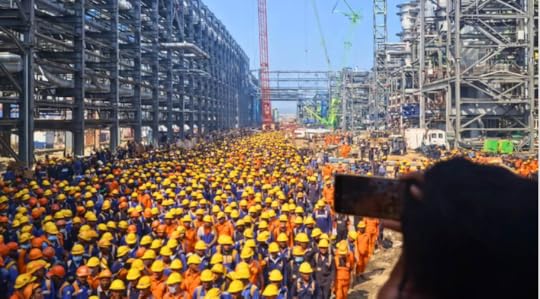
A compilation of the ongoing wave of large-scale protests and strikes by temporary workers in the underbelly of premier industrial complexes in India, amidst the deafening silence of mainstream media…
Migrant Workers Solidarity Network, March 2026
DOC-20260325-WA0006.DownloadThe post Strike and riots of construction / temp workers in India first appeared on Angry Workers.
The Uprising in Iran – Wildcat no.115
We translated this article from Wildcat no.115 – further background can be found here…
Phase 3Less than three years ago, a broad-based movement shook the Iranian regime to its core. It was led by women and featured entirely new slogans. Despite months of struggle and considerable support from abroad, it ultimately achieved nothing more than a more liberal approach to the dress code. The repression was severe.
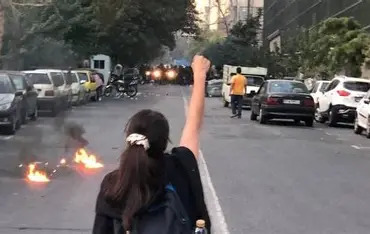
Because living conditions for the majority are getting worse and worse, whilst the corrupt ruling class visibly lives in luxury, there were repeated smaller protests by workers, pensioners and others, which went largely unnoticed internationally. Six months after the Twelve-Day War in June 2025 and the reimposition of tougher sanctions, a protest movement began in December that spread across the whole country within days. The centres of the movement were the poorest regions and the outskirts of the major cities.
The US government saw an opportunity for massive intervention. Reza Pahlavi, the son of the last Shah who had been living in exile in the US since 1979, called for an uprising on the nights of the 8th and 9th of January. Huge crowds poured into the streets. The monarchists saw this as a ‘national revolution’, whilst the regime labelled it a ‘coup’ and ‘terrorism’. The Islamic Republic shut down the internet and other communication channels and carried out the most heinous massacre in the country’s history on the streets.
On the 28th of February, Israel and the US began their bombing campaign. This brought all movements in Iran to a standstill. On the very first day, 110 schoolgirls died in the attack on the primary school in Minab; a total of 168 people were killed.
Economic developments under sanctionsIn the final months of 2025, the Iranian currency plummeted. As a result, inflation rose to 42 per cent in December, and for foodstuffs even to 72 per cent compared with the previous year. US Treasury Secretary Bessent claimed that Washington had caused a Dollar shortage in Iran in order to destabilise the Iranian Rial and trigger protests in Iran.
At the end of December 2025, President Peseschkian presented his new budget. The government had decided to abolish the preferential exchange rate for oilseeds, fertiliser and animal feed as well. Instead, 80 out of 93 million Iranians receive one million tomans per month for nine staple foods, credited to their payment cards. [1] Following the announcement of this decision, prices for meat, poultry, eggs and pasta rose sharply, whilst the price of vegetable oil tripled.
Exchange rate fluctuations and supply shortages caused by international sanctions are threatening the livelihoods of over four million small shop-owners and their families. After wage workers and salary earners, they make up the largest proportion of households. The country’s water crisis has also contributed to the social unrest.
Protests in three phasesOn the 28th of December, retailers of electronic goods and smartphones closed their shops and protested on the streets of Tehran for several days. The regime deployed water cannons and tear gas.
Subsequently, in small towns far from Tehran, the second phase of protests began, which was qualitatively different, featuring street barricades, attacks on banks and retail chains, and attempts to occupy government buildings or police stations. Within two weeks, the protests had spread to over 682 locations in 203 towns and 55 universities across the country’s 31 provinces. The boundaries between economic and political demands became blurred. [2]
The regime now struck back with far greater severity – particularly in Ilam Province, where the population is disproportionately poor and many deaths had already been recorded during previous uprisings. Here, the first fatalities caused by live ammunition were now reported.
From the second weekend onwards, the protests escalated in the major cities, particularly in Tehran, Isfahan and Mashhad, Iran’s second-largest city.
Pahlavi’s call to the streets marked a turning point. It ushered in the final phase of the protests; this phase lasted only two or three days. On the 8th of January, hundreds of thousands took to the streets in major cities and provincial capitals across the country, and some, fuelled by great anger, launched violent attacks against the forces of repression. Particularly on the 8th and 9th of January, a broad spectrum of society was present – that is, traditionalists and modernists, alongside many young people and all age groups from grandmothers to children. It is not unlikely that older people joined the protests following Trump’s verbal support, confident that the forces of repression would back down. The calls from Pahlavi, Trump, Netanyahu, Pompeo and co., and the increasingly widespread slogan “This is the final battle, Pahlavi is coming back” had created a climate that led some to believe an end to the regime was in sight – possibly through a military operation similar to that in Venezuela.
There are no reliable figures. Iranian intelligence and security agencies put the number of demonstrators at one and a half million. Eyewitnesses estimate far higher numbers. Some speak of five million, or just under eight per cent of the adult population. In some major cities, people had the streets firmly under their control until late into the night.
The repressionOnly through indiscriminate killings was the regime able to maintain the upper hand. Snipers were also stationed on mosques and hospitals. In Rasht, the Grand Bazaar was burnt down during the massacre. Large sections of the protesters believed that the forces of repression had withdrawn. Trump wrote on X that Mashhad had been liberated – the BBC contradicted this. And indeed, what remained afterwards was scorched earth.
In response to Trump’s warnings that the US would come to the aid of the protestors should the regime shoot at people, Ali Khamenei spoke out on the 3th of January for the first time since the protests began: “The rioters must be put in their place.” The regime and its supporters viewed the protests as a war, as a repeat of the Twelve-Day War of June 2025.
Pahlavi also responded on the 2nd of February in an interview with CBS to the presenter’s question as to whether it was justifiable to send citizens to their deaths: “This is a war, and in a war there are casualties.”
This time, the regime had blocked all communication channels: landlines and mobile networks, SMS services and domestic messaging apps, channels run by regime loyalists on domestic platforms, group chats on websites, even the comments sections of commercial websites and domestic news agencies. Satellite reception was severely disrupted, and some satellite dishes were confiscated. The exile broadcaster Iran International became the dominant, indeed the only available, source of news in private households. The broadcaster is openly the voice of Israel as well as the exclusive mouthpiece of the Pahlavis.
The regime stated the total number of fatalities whose names were known as 3,117. The identity of 131 remained unclear. Khamenei divided the dead into four categories: ‘martyrs’ (regime members and supporters), ‘terrorists’, ‘confused individuals’ (who were also described as ‘our children’), and bystanders.
Time Magazine claimed on the 25th of January that the Iranian government had killed 30,000 people on the 8th and 9th of January alone. The only source named is a German-Iranian eye surgeon. The website The Dissident revealed that Amir Parasta is not a neutral doctor, but acts as a ‘technical adviser’ to NUFDIran, a lobby group supporting Pahlavi and a US- and Israeli-led operation for regime change in Iran. [3] Iran International puts the death toll at 36,500 – a figure that has been accepted and repeated by Trump and many in the West.
HRANA has reviewed more than 143,330 reports from exclusive and publicly available sources to provide verified figures. The results are presented in a detailed report. [4] They put the death toll at 7,007: of these, 6,488 were demonstrators, 236 children (counted separately), 76 civilians who were not demonstrators, and 207 members of the military and government forces. People were killed in all 31 provinces of the country; however, the death toll is significantly higher in certain provinces. The highest figures are 1,588 in Tehran, 753 in Isfahan, 622 in Mashhad, 419 in Gilan and 395 in Kermanshah. [5]
A further 11,744 cases are currently still being investigated by HRANA, which is difficult as many people have gone into hiding to avoid arrest. And since the US-Israeli bombings, millions of people have left Tehran and found refuge somewhere in the countryside.
25,846 civilians and 4,884 members of the military and security forces were injured. A total of 53,777 people have been arrested (555 children, young people and school pupils; 147 students). 369 forced confessions have been documented, along with 11,053 summonses. So far, four young people have been publicly executed after being charged in summary trials with the killing of security forces.
Since 2016, there have been repeated small-scale strikes, demonstrations and sit-ins by workers, pensioners and others demanding wages, salaries and better working conditions. There are around 4,000 such protests each year. In December 2025 alone, there were at least 97 workers’ protests and 33 strikes, as well as 115 gatherings of professional associations and trade unions. [6]
Since January, such struggles have faced massive repression. On the 9th of February, the Tehran Bus Drivers’ Union highlighted the mass arrest of workers in Asaluyeh: Workers who wanted to strike were arrested and locked up in their companies’ warehouses. Even the pro-government ILNA (Iranian Labour News Agency) reported that workers at the 10th refinery of the South Pars gas complex had gone on strike for the fifth consecutive day on the 7th of February in protest against their living conditions. The area is home to a large gas field, gas processing plants and refineries. Workers, who have moved here from the poorest parts of the country, work under severe health and safety risks. In recent years, they have repeatedly taken to the streets with strikes and protests against their working conditions, unfair wages and the agency labour system.
On the 18th of March, Israel carried out extensive attacks on precisely these facilities in Asaluyeh. The danger of toxic gas leaks, widespread air and water pollution, and the destruction of the region’s ecosystem now pose a direct and ongoing threat to the workers and hundreds of thousands of local residents.
The composition of the insurgentsThe slogans were a step backwards compared to ‘Woman, Life, Freedom’ three years ago. They were predominantly male-dominated, authoritarian, anti-intellectual and anti-democratic: ‘This is the final battle, Pahlavi is returning.’ “This is the year of blood, Seyed Ali [Ali Khamenei, the Supreme Leader] will be overthrown.” “This is the final message: we have the entire system in our sights.” “All these years of crime – death to the Velayat [rule of clerical authority].” “Reza Shah, may your soul be blessed.” “Poverty, corruption, injustice – death to tyranny”. [7]
The Iranian newspaper Etemad claimed on the 28th of January that 77 per cent of the 11,252 arrested were under 30, and 27 per cent were under 18. Two-thirds of the protesters came from the middle and lower-middle classes, and one-third from the working class. 88 per cent had a lower secondary school qualification or lower. 60 per cent were small-scale self-employed (economically unstable) and only two per cent held a government job. 17 per cent were school pupils. Evidently, it was primarily proletarians and members of the lower middle classes – the ‘left behind’ – in poor neighbourhoods and regions who took to the streets.
An eyewitness from Kashan, in Isfahan Province, reports: “I told my mate that these people have no sense, reacting like that to Pahlavi’s call. Many people had come without masks and felt they had the right to raise their voices without resorting to violence. The people’s chants ranged from ‘Iranians, shout loud, demand your rights’ to ‘This is the price of inflation’. It was the first time Kashan had taken to the streets, and that was because the riot police had left the city the nights before to head for Qom, Tehran and Isfahan. The crowd of several thousand people advanced as if nothing could stop them. – Gradually, the chants gave way to Pahlavi slogans: ‘This is the final battle’, ‘Long live the Shah’ – I couldn’t help myself, I had to cry. I felt how utterly useless I was as a communist, that these oppressed people, who clearly came from the lower classes, were seeking their salvation in the ‘sperm’ [that is one of the countless insults for the Shah’s son] of the privileged Pahlavis. As we continued on, security forces suddenly appeared in front of us. The crowd pressed in tightly; the riot police were helpless. They only fired rubber bullets and tear gas, but the crowd did not disperse … But then the next day came, and Khamenei said on television that they ‘do not negotiate with terrorists.’ [8] Der Spiegel quotes an eyewitness from Tehran who was himself shot: ‘[On the 8th of January] the security forces seemed unsettled, clearly overwhelmed by the huge crowd of demonstrators. The next day it was different; the faces of the security forces showed anger and determination.’ [9]
The sociologist Asaf Bayat writes: “The regime claims that hundreds of mosques, banks and other institutions were set alight by ‘terrorists’, ‘Mossad agents’ and organised hostile groups. In almost all previous uprisings, the regime has also attributed the protests to foreign agents. It is entirely conceivable that elements inspired by foreign forces were involved in some violent incidents. However, the scale of the protests in 400 cities and 900 locations across the country far exceeds what such elements could achieve. … But in a confrontation between two unequal forces, the weaker side should logically not resort to the same tactics as the stronger side, for it will lose the game.” [10]
The restraint shown in Kurdistan and Baluchistan, the two regions that had led the Women-Life-Freedom protests, was striking. The Kurds did not take to the streets on the nights of the 8th and 9th of January, but went on strike during the day in their towns. The virtual absence of the Azeris, the largest ethnic minority, may also be attributed to the clamour of pro-Pahlavi slogans.
There is no doubt that the demonstrators on the 8th and 9th of January were influenced by Pahlavi’s call. However, it is difficult to gauge how much support the monarchist movement actually has in Iran. It is not only in AI-generated fake videos by the monarchists that support for Pahlavi is completely exaggerated. A group of media experts in Sweden (Mazdak Azar), after analysing 4,500 video clips across various platforms, concluded that only 17 per cent of the slogans during the 20-day period contained monarchist content such as ‘Long live the Shah’; the overwhelming majority wanted regime change and chanted slogans such as ‘Death to the dictator’. Iran International portrayed 81 per cent monarchist slogans in its broadcasts, whilst BBC Persian showed 35 per cent. [11]
The motives of the protestersA left-wing group called the ‘Committee for Organised Workers’ Action’, which took part in the protests, writes: ‘One should bear in mind that this crowd did not necessarily take to the streets “because of”, but rather “under the pretext of”, and some even “despite”, Reza Pahlavi’s call. … Our own experiences on the ground have shown that, contrary to initial expectations, many of them are not political in the strict sense; one should not mistakenly assume that we are dealing with an army of Pahlavi supporters on the streets. We have found that simply taking a stand from a minority position and expressing open opposition can cause the pro-Pahlavi chants in the crowd to fall silent, or in some cases even create a situation in which part of the crowd joins in and chants slogans directed simultaneously against the Islamic Republic and against the monarchy.” [12]
Many people in Iran are utterly desperate due to the miserable living conditions. The so-called moderates, in particular, hoped to persuade the regime to make concessions to the US. Some hoped for intervention from Trump, Israel or Pahlavi: that Trump would bomb the Revolutionary Guard’s bases and kill Ali Khamenei. Many simply stood by and watched; they were indifferent, such as those holding US Dollars or farmers, who likely profit well from inflation.
The changing face of the diasporaThe Iranian diaspora is large in number and has a long history. Every movement in Iran experiences the ensuing repression and the forced exile, the spying and assassination of opposition figures even abroad, the constant fear of being arrested upon travelling home… Events in Iran are ever-present for all Iranians abroad.
A political shift has taken place within the diaspora. Historically, the left and the People’s Mujahideen were the active forces; later, the so-called reformists (the Berlin Conference organised by the Greens; Habermas in Iran; critical dialogue, the nuclear deal, etc.). Today, the right wing sets the tone.
In January and February, there were numerous demonstrations abroad against the Iranian regime, with a diverse range of participants – from monarchists to left-wingers. There was agreement (viewed from the outside) that those in power in Iran should go, but not on how this could happen or what should happen in the country afterwards.
The 14th of February 2026 marked the climax of these rallies – Reza Pahlavi had called for a ‘Global Day of Action’ – in three locations, among others: Toronto (with an estimated 350,000 participants according to police), Los Angeles (more than 300,000 according to police) and Munich during the Security Conference. There, Pahlavi called on the US to carry out “humanitarian intervention”. At the Theresienwiese (location in Munich), he spoke at a rally he had organised; the police counted up to 250,000 participants – clearly a grossly exaggerated figure. Here, the slogan ‘One people, one flag, one leader’ was chanted repeatedly in Farsi. Before the rally began, a voice urged caution: Certain slogans were banned; participants were asked to refrain from chanting “Death to the three corrupt ones…” and instead to shout “Shame on the three corrupt ones…”. This refers to the slogan “Death to the three corrupt ones – the mullahs, the leftists, the Mujahideen”, one of the most popular chants among Pahlavi supporters
How and when did Shah 2.0 come about?It was only with Trump I that Pahlavi was once again taken seriously outside the tabloid press. During the Women-Life-Freedom movement, the monarchists were placed on the list of the ‘democratic’ opposition. Intellectuals, feminists and Kurdish organisations began to collaborate with him.
After the uprising was crushed, the collaboration failed, partly due to his claim to sole representation. Thereafter, a force emerged that possesses both the will and the strength to deal a decisive blow to the Islamic Republic: Israel. In April 2023, Pahlavi was in Jerusalem and met Benjamin Netanyahu. Israel escalated the ‘controlled conflict’ that had been ongoing for years with the Twelve-Day War and the missile strike on the meeting of the ‘Supreme National Security Council’. Even before that, a network of fake user accounts and AI bots, funded by the Israeli government, had been set up to generate a wave of support for Pahlavi on social media. [13] Since then, Israel has devoted considerable resources and energy to establishing him as an alternative.
Pahlavi is neither a charismatic leader nor does he possess the organisational structures to become a stable and credible political force in Iran. It was only Trump’s messages about ‘supporting the demonstrators’ that turned him into a ‘symbol’ of a force with ‘real power’ and gave him weight on the streets. ‘Many of those who led the “Pahlavi is coming back” chants showed no affinity with Pahlavi in private conversations and described the reasons for these slogans as “tactical”. In this respect, what we are witnessing on the streets is not a widespread illusion about Pahlavi, but a widespread illusion about the power behind him (imperialism and its ‘liberating’ war).” [14]
A US intelligence report presented to Trump a week before the war began concluded that Pahlavi did not have a sufficient network within the country to lead an overthrow of the regime. Trump and his aides began to refer to Pahlavi as the ‘loser prince’. [15]
Other opposition groupsThe People’s Mujahideen (MEK) – who call themselves the National Council of Resistance of Iran (NCRI) – do not seek a return to the monarchy, but they do cooperate with Israel. During the Iran-Iraq War, they fought on Saddam’s side. The group claims to have thousands of ‘rebel cells’ in Iran. Although the MEK probably enjoys little support within Iran, it carries out successful lobbying abroad. Numerous prominent politicians attend its ‘Free Iran’ conferences every year. Their president, Maryam Rajavi, who lives in exile in Paris, is supported by former Republican officials such as ex-US National Security Advisor Bolton, ex-Secretary of State Pompeo and Rudy Giuliani, the former mayor of New York. Associated with the NWRI is the Society of German-Iranians (GDI), which is active throughout Germany and also took part in the recent protests.
Ground troops?We do not know whether the war will escalate further or how the regime in Iran (and Trump in the US) will survive it. Members of the German Bundestag of Iranian origin, such as Omid Nouripour (Greens) and Reza Asghari (CDU), right up to the ‘Anstalt’ TV programme on the German television channel ZDF, agree that it is the right course of action. Meanwhile, however, the war has brought so much death, displacement, destruction and food shortages that the jubilation in the diaspora is waning; even many constitutional monarchists are now against its continuation. Many regret their support for Trump. They say he should remove the regime, not bomb Iran!
By the 30th of March 2026, HRANA had counted 1,574 civilians killed, including 236 children, 1,211 soldiers and 707 unclassified individuals. The regime arrests people daily for contact with foreign media – as it did in 2025 following the Twelve-Day War. Political prisoners have been executed. The hope held by certain circles that the regime would be weakened and a power vacuum created has not materialised.
Footnotes[1] The minimum wage was ten million tomans. It was increased by 60 per cent to 16 million tomans for the Iranian New Year 1405, which began on the 21st of March 2026; the usual increase had previously been 30 per cent.
[2] Figures from the human rights organisation HRANA (Human Rights Activists News Agency), which was founded in Iran but has been based in the US since 2010.
[4] Comprehensive Report on the First 50 Days Following the Onset of Nationwide Protests in Iran (Dec 2025–Feb 2026), HRANA
[5] These figures were cited by The New Yorker in its article ‘The Distant Promise of Iran’s Would-Be King’.
[6] See the ‘Iran’ dossier containing all the articles we have published
[7] According to HRANA, see above.
[8] An example from the Persian-language website of a left-wing group
[9] An Iranian in hiding on the protests, recorded by Thore Schröder, Spiegel 13 February 2026
[12] Uprising 1404: Half a step forward, two steps back. (Persian)
[13] Report in the Israeli newspaper Ha’aretz from October 2025, based on research by the Citizen Lab cyber research centre. Until three years ago, the Israeli government had supported the People’s Mujahideen, a relatively isolated but organised and serious force. To this day, not all Israeli security agencies have agreed on supporting Pahlavi – it is the exclusive policy of the ruling faction led by Netanyahu.
[14] According to: Uprising 1404: Half a step forward, two steps back, see above.
[15] The New Yorker, 22 March 2026
The post The Uprising in Iran – Wildcat no.115 first appeared on Angry Workers.
January 28, 2026
‘Chinga la migra!’ – Wildcat on undocumented workers and the struggle against ICE
The next issues of the magazine Wildcat will focus on the question of who can stop Trump. To this end, we will examine class relations in the USA: ‘the lumpen,’ ‘the service proletariat,’ ‘tech workers,’ ‘industrial workers’ and ‘the undocumented,’ i.e. migrants without identity papers or legal residence status. In light of the dramatic escalation in Minneapolis, we are publishing this section in advance as a work in progress. (This section does not deal with Trump’s radical restructuring of the state; that will be covered elsewhere.)
Undocumented workersIn the United States, people without official residence permits are referred to as ‘undocumented’. Most of them are refugees from Latin America, Asia and Africa who can be easily deported, at least according to their status. Depending on the source, there are between 10 and 15 million undocumented. The latest estimates from the Pew Research Center and the Migration Policy Institute put the figure at 14 million (2023) – four per cent of the population. A study conducted in August 2025 was able to assign 8.5 million to specific sectors: 20 per cent in construction, 12 per cent in hospitality, 11 per cent in manufacturing, 10 per cent as support staff in public infrastructure, 8 per cent in retail and 3 per cent in agriculture. Although 95 to 99 per cent of the 8.5 million work continuously, only 53 per cent have health insurance. 52 per cent have been living in the US for at least ten years, 28 per cent for at least 20 years. Only a third of these workers have almost no formal education. The study assumes that the figure for agriculture (3 per cent or 300,000 undocumented migrants) is too low.1 According to data from the US Department of Agriculture, foreign-born undocumented migrants make up about 40 per cent of the total 1.2 million workers in the industry, which would be 480,000.2
In recent decades, undocumented immigrants have fought for and achieved significant improvements – not only ‘tolerated stay’, but recognition through the so-called ‘sanctuary policy’. This dates back to the church asylum movement of the 1980s, which supported civil war refugees from Central America under Reagan. ‘Sanctuary’ is a formal term and consists of laws, statutes, administrative orders, guidelines, resolutions and regulatory documents from various institutions, such as city governments, universities, states, company premises, etc. The degree of legal binding and formality is often related to the degree of legal autonomy of the respective institution. Many rules are informal and highly contested.3 Roughly summarised, a ‘sanctuary policy’ means that immigration enforcement agencies have been decoupled from social and legal infrastructures. In 2025, over 150 cities, counties and states practised this. ‘Sanctuary cities’ (New York City, Chicago, Los Angeles, etc.) have established themselves as relatively safe places for undocumented immigrants. There, they can obtain health and social insurance as well as government benefits (Medicaid, SNAP food assistance, etc.). Police officers and other officials do not ask about residence status or request documents. The police-military ‘deportation complex’ has no access to social security numbers.
Trump’s attack on the ‘sanctuary policy’It is true that ‘Deporter-in-chief’ Obama, US President from 2009 to 2017, had already reversed the ratio between “returns” (rejections at the border or voluntary departures) and ‘removals’ (deportations) in favour of the latter. But Obama and others before Trump II did not organise raids and systematically deport people who had been living in the US for a long time and were integrated into social life there.
The ‘Project 2025’ paper, published in 2023, which serves as a blueprint for Trump’s second term, makes a clear statement on the ‘sanctuary policy’: ‘All ICE memoranda identifying “sensitive zones” where ICE personnel are prohibited from operating should be rescinded.’ 4 Trump is attacking the ‘sanctuary policy’ head-on.
According to the US Department of Homeland Security (DHS), 605,000 people were deported in 2025, 66,000 are in deportation detention centres, and 1.9 million left voluntarily. 4,250 people have gone missing since their arrest, 30 people have died in deportation camps, four during arrests and one during deportation. The number of deportations in 2025 was twice as high as the average for the years 2014-2024.5 However, there are indications that this figure has been artificially inflated by the ministry.
Over two-thirds of those arrested by the Immigration and Customs Enforcement (ICE) agency have not committed any crimes. Many others have been targeted for traffic tickets or drug use.
Trump’s SA?Ten years ago, members of the right-wing militia Patriot Prayer threatened to ‘clean up’ the left-liberal sanctuary city of Portland. The Portland Bureau of Police was in close contact with Patriot Prayer and its leader Joey Gibson, who ran for the Republicans.6 For his attack on the undocumented, Trump has institutionalised right-wing militias such as the Proud Boys under the banner of ICE (the second immigration agency in the Department of Homeland Security is CBP, Customs Border Protection, the border protection agency). He pardoned Proud Boys boss Enrique Tarrio, like many others who took part in the storming of the Capitol. Tarrio introduced the ‘Iceraid’ app, which allows users to report illegal immigrants and receive cryptocurrency as a reward.7 Hardliner Tom Homan was ICE director under Trump I. After Trump’s re-election, he became border protection commissioner and met with Proud Boy Terry Newsome to discuss mass deportations.8
The current ICE director, Todd Lyons, wants to establish efficient deportation logistics ‘modelled on Amazon’ for the planned 3,000 arrests per day. The government is spending over 150 billion USD on this: investments in infrastructure and new personnel, the large US prison companies GEO Group and CoreCivic are building new deportation prisons, Palantir is programming anti-immigrant software called ImmigrationOS, and ICE is buying mobile phone data from advertising companies to track people using their location data9. They are all earning very well under Trump II (a third of all CoreCivic‘s revenue comes from deals with ICE alone). During the government shutdown from the 1st of October to the 12th of November 2025, Trump wanted to withhold money for food aid and thousands of civil servants were no longer paid – but he continued to pay the ICE and CBP thugs and gave new recruits a 40,000 USD hiring bonus, above-average health insurance and repayment of student loan debts over 60,000 USD. In order to get as many armed troops on the streets as quickly as possible, Trump has reduced the training period for new ICE recruits from 13 to six weeks and cancelled Spanish language courses. In October 2025, NBC revealed that new ICE personnel had been sent into service before the completion of official screening procedures and that some had failed drug tests.10
Even during the George Floyd rebellion, former Bush homeland security chief Michael Chertoff warned against the ‘politicisation’ of the Department of Homeland Security. The then NBPC president, Brandon Judd, had said in 2016 that immigrants were ‘worse than animals’ – under Trump II, he has now become ambassador to Chile! The NBPC (National Border Patrol Council) and NIC (National ICE Council) are the two unions in the Department of Homeland Security. Even back then, they were demanding more money and an expansion of their powers. They saw Trump as their natural ally, and Trump saw them as a potential power base. After losing the 2020 election, Trump tried to use the NIC and NBPC against Biden. The then Deputy Secretary of Homeland Security, Ken Cuccinelli, wanted to strengthen both unions. When that failed, ICE officials opposed the Biden administration. In 2022, they filed a complaint with the Department of Labour demanding more autonomy from the umbrella unions AFGE (American Federation of Government Employees) and the AFL-CIO, which they saw as ‘far-left organisations’.11 Cuccinelli then wrote the section on homeland security in the Project 2025 paper, where he calls for the abolition of ‘sanctuary cities’. Michael Macher, author of the online newspaper Phenomenal World, sees the right-wing hardliners organised in NIC and NBPC as ‘incubators for right-wing projects’ in the department.12
When Trump wanted to stop the raids in June 2025 after complaints from the agricultural sector, his fascist security adviser Stephen Miller allowed them to continue. After the raid on a Hyundai factory construction site in Georgia on the 4th of September, Trump was forced to apologise. ‘The close relationship between ICE/CBP and Trump has paradoxically begun to limit Trump’s own room for manoeuvre.’ (Michael Macher)
On the 14th of January 2026, journalist Ken Klippenstein published leaked documents showing that ICE is conducting secret operations. Among other things, they are trying to recruit informants within the immigrant community. ICE is even splitting the FBI over this.13
ResistanceUndocumented workers have repeatedly fought important battles throughout history: at the beginning of the 20th century, the immigrants, day labourers and migrant workers who built the US infrastructure (wood and railways) organised themselves as the IWW (Wobblies). The Wobblies were strong because they were incredibly mobile and well organised, but also because the capitalists could not build the transport routes without them. During and especially after the First World War, they were wiped out. In the 1960s and 1970s, workers in the fields of industrial agriculture organised themselves under the slogan ‘Sí se puede!’ (‘Yes, it is possible!’) into a large trade union, the United Farm Workers. In the mid-1990s and 2006, the undocumented mobilised once again for their interests, including mass demonstrations in major cities. In 2006, one of the slogans was: ‘We are workers, not criminals!’ During the mobilisations, millions of people took part in rallies in Los Angeles and Chicago for legalisation and against tougher immigration laws.
After Los Angeles and Chicago, Portland was the next major city that Trump declared a war zone and training ground for deportations and riot control in 2025. Broad social opposition to this developed in the cities. Depending on the context, people organise themselves in different ways: in Portland, left-wing groups and anti-fascists stand in the way of ICE troops14, while in Chicago and Los Angeles, this is done by large parts of the neighbourhoods and Hispanic community (including lawyers, etc.)15. In Seattle, Boeing union members, among others, are organising rallies in front of deportation centres to demand the release of one of their colleagues.16
The vast majority of sanctuary cities are administered by Democratic Party mayors. This is part of the picture, but it is not the decisive factor in why Trump chose Los Angeles as the first place to launch his attack. It is the melting pot where immigration and labour and community struggles mix in a politically highly effective way; in LA in particular, migrant and labour struggles are constantly present and often indistinguishable. On the 6th of June 2025, ICE arrested a migrant day labourer organiser and SEIU trade unionist (Service Employees International Union, the largest US trade union in the service industry) in LA. Thousands of people immediately showed their solidarity in their own ways – some set cars on fire and blocked roads, others programmed warning apps, and many used encrypted social media channels such as Signal to organise new blockades. Neighbours warned each other and set up telephone chains and hotlines, while motorists honked their horns and blocked ICE SUVs. From the 8th of June onwards, the protest spread across the country. Demonstrations and blockades were reported in San Francisco, Austin, Dallas, New York, Philadelphia, Tampa, Seattle, Atlanta, Santa Ana, New Orleans, Chicago and Louisville. The last anti-ICE action in this wave of protests took place on the 19th of June in downtown LA.
In December 2025, DHS operations and raids in cities were banned by the courts, but Trump and the DHS don’t care. ICE and CBP are not backing down and continue to rage.
Metro Surge: Attack on MinneapolisThe twin cities of Minneapolis and Saint Paul are located in the state of Minnesota. Minneapolis, with a population of 430,000, is governed by Democratic Mayor Jacob Frey, and the state of Minnesota by Democratic Governor Tim Walz, Kamala Harris’s 2024 vice-presidential campaign candidate. Minnesota voted against Trump in 2016, 2020 and 2024.
The metropolitan area, with four central ‘sanctuary counties,’ is home to 3.7 million people, including one of the largest groups of indigenous people and refugees from all over the world. Minneapolis is also home to an above-average number of descendants of slaves who were brought from Africa, as well as refugees from the African civil wars of the 1990s. Most of these have been naturalised; of the 100,000 Somalis throughout Minnesota, 90 per cent are US citizens (58 per cent of all US Somalis were born in the US, and 87 per cent have citizenship).
Relative to the population, the proportion of undocumented immigrants in the state is below the national average at 2.2 per cent, or 130,000 people, according to the Pew Research Centre, and well below the figures in Republican-governed states such as Texas and Florida. 17 But Minneapolis in particular has been the hotspot for large grassroots mobilisations more often than other places, unionisation rates are much higher than in other parts of the US, and non-profit organisations and social services are above average by US standards. Since 2018, workers who have immigrated from Somalia in particular have been organising strikes. The centre of the mobilisation is the Amazon warehouse in Shakopee, a suburb south of Minneapolis with a population of 44,000.
In May 2020, George Floyd was murdered by officers of the Minneapolis Police Department. Some people were so angry that they quickly reacted by setting fire to the police building. This was followed by the largest street mobilisation in US history. One of the slogans was ‘Defund the Police,’ meaning no more money for the apparatus of repression. Little has changed in material terms; statistically, police officers in Minneapolis and St. Paul are still above average in terms of violence.
In early December, the Department of Homeland Security announced that it would carry out ‘Operation Metro Surge,’ ‘the largest operation ever,’ in Minneapolis-Saint Paul. Trump kicked things off by declaring the 35,000 Somalis living in Minneapolis to be ‘garbage,’ literally ‘low-IQ garbage.’ He did so against the backdrop of a social welfare fraud case in Minnesota that has been under investigation for five years and involves Somalis. Some of those convicted so far had contact with Frey and other Democrats, at least two of whom are of Somali descent.18 In October 2025, Trump organised the ‘Roundtable on Antifa,’ to which he invited right-wing extremist influencer Nick Shirley. He then travelled to Minneapolis and produced a report on social security fraud by Somalis.19 Vice President JD Vance and Elon Musk shared the video.
In mid-December 2025, 2,000 armed and masked ICE and CBP officers descended on the Twin Cities (ICE and CBP carry out most operations jointly; and, as during the George Floyd protests, right-wing militias came from far and wide to support them). They went door to door, interrogating residents to find out if they knew of any places where illegal immigrants could be found. They smashed the windows of houses and cars where they suspected illegal immigrants were staying. They pursued cars and used flashbang grenades. Comrades report that ICE even arrested Native Americans!
The widely organised defence‘ICE has made the classic Nazi mistake. They’ve invaded a winter people in winter.’
(someone on the ground)
Federal officials had not anticipated such strong resistance from the population. Left-wing groups have reactivated organisational structures from the George Floyd movement. Existing migrant solidarity, neighbourhood and church groups, NGOs and tenants’ unions have organised support, blockades, legal aid, behavioural training, etc. In addition, there was direct solidarity in the workplace: colleagues in hospitals and schools organised alarm groups, and self-protection was also organised in small migrant-owned businesses; guards were posted in places where many immigrants traditionally work, such as supermarkets and DIY stores. Local trade union chapters supported the actions. There were and still are attempts to organise wildcat strikes. And many are specifically seeking out the hotels where ICE personnel are staying in order to deprive them of sleep with music and other actions.20
Added to this is the weather, with temperatures well below zero degrees Celsius being normal for a winter in Minnesota. This causes problems for the ICE thugs, who often slip and slide on the ice sheets themselves and their SUVs when patrolling from house to house. The local population is better equipped for these temperatures and can endure being outside for longer.
The brutality of the repression has brought many people together. In the fight against the raids in Los Angeles and Chicago, ICE Watch Rapid Responder Groups have been formed to disrupt ICE operations and help those affected. This model has been adopted in Minneapolis. They are able to organise blockades and legal protection within two to twelve minutes (ICE Watchers in Minneapolis report new ICE actions every 15 minutes on average). There are Safety Brigades, Neighbourhood Rapid Response Groups, Business Safety Brigades, Native-led Community Defence, etc. Even the local police escort school buses to protect them from ICE raids!
To avoid being recognised, ICE thugs have plastered their cars with ‘Free Palestine’ stickers, attached toy trailers, affixed disabled stickers, frequently changed their number plates, etc. People who film ICE operations and responder group activists are beaten up, seriously injured with broken bones and eye injuries leading to blindness – and now they are even killed.
On the 7th of January 2026, ICE officer Jonathan Ross shot and killed Rapid Responder Group activist Renée Nicole Good, 37 years old and mother of three children. Good lived in a neighbourhood with Somalis and Hispanics.21 Her shooting was the sixth ICE murder,22 but the first execution. Her killer served in Iraq and has been working for ICE since 2016. He is described as a Christian fundamentalist and staunch MAGA supporter.
The videos of the murder show the agency’s tactics: as two ICE officers approach Good’s car, one tells her to drive away while the other shouts, ‘Get out of the fucking car!’ No matter how you react, you violate one of the instructions and thus provide the pretext for escalation.
JD Vance announced on the 8th of January that Ross enjoys ‘absolute immunity’. On the 9th of January, CBP officers shot and seriously injured two immigrants in Portland; On the 14th of January, an ICE officer shot a Venezuelan man in the leg in Minneapolis.
By early January 2026, there were already at least 2,800 armed federal officers in Minneapolis. The Minneapolis Police Department employs 600 police officers. Trump reserves the right to invoke the Insurrection Act so that he can deploy the military and the National Guard; this act was last used during the 1992 Los Angeles riots. Homeland Security Secretary and ICE chief Kristi Noem has hinted that she wants Governor Walz out of office. The Justice Department has launched investigations against him, Mayor Frey and others. As of mid-January, ICE had arrested nearly 3,000 people in Minneapolis-St. Paul.
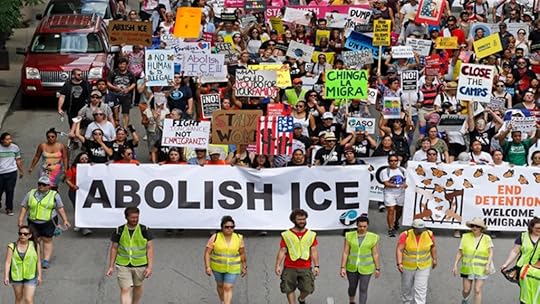
But demonstrations continue to take place under the slogan ‘Chinga la migra!’, which means ‘Fuck ICE’. After Renée Good was shot on the 7th of January, the protests intensified. On the 8th of January, 10,000 people took to the streets. Six prosecutors resigned because the US Department of Justice wanted to force them to launch a police investigation against Good’s widow. At the end of January, the FBI agent who investigated Ross resigned after the Department of Justice demanded that she drop the investigation.
‘ICE out!’ The day of action on the 23rd of JanuaryThe day before the day of action, JD Vance had come to Minnesota especially for this purpose. In a press conference, he blamed the local authorities and the Democrats. Because they did not cooperate with ICE, he said, things had gotten ‘out of control.’ By this he probably means that ICE and CBP can no longer take a step without being disturbed.
The 23rd of January was the biggest day of protest so far. Hundreds of shops remained closed, employees stayed away from work, and students and pupils stayed away from school. With temperatures as low as minus 25 degrees Celsius, more than 50,000 people took to the streets. The four demands: ICE out of Minnesota (‘ICE out!’); charges against Jonathan Ross; no additional money for ICE; companies should no longer do business with ICE. Many small business owners closed their shops, some served only food in support, and many in the education and health sectors went on de facto strike. Religious leaders and supporters attempted to block the airport which ICE and CBP use to deport people. In the run-up to the protest, some voices called for a general strike, but most trade unions prevented this because they adhere to existing collective agreements that prohibit strikes. There is no evidence or figures yet on mass sick leave. Some institutions have announced that they will waive sanctions if people stay away from work. Solidarity demonstrations took place in New York, among other places; Payday Report counted 300 solidarity actions across the United States.
What was special about this day of protest was that it was almost exclusively supported by ‘documented’ individuals. For their own protection, undocumented individuals remained at home. Local authorities have introduced virtual lessons for vulnerable pupils (half of Spanish-speaking children and a quarter of students with Somali roots are currently not attending classes). Even UN Human Rights Commissioner Volker Türk said on that day that he was ‘dismayed by the now daily mistreatment and degradation of migrants and refugees’ in the USA.
The next day, CBP officers executed a second person: Alex Jeffrey Pretti, a 37-year-old intensive care nurse at a hospital for veterans, US citizens and city residents. Pretti was filming an ICE operation; when the cops knocked a woman down, he stepped in between them. At least six officers pinned him to the ground, beat him and fired ten (!) shots at him. Then came the usual bullshit from the government and DHS: the officers had to defend themselves, Alex was about to commit a ‘massacre of the officers,’ he was a ‘domestic terrorist.’, which is how they had described Renée Nicole Good, as well. Alex was a legal gun owner and apparently had a gun with him. But he wasn’t holding a gun in his hand, he was holding his smartphone. As early as June 2025, a paper was circulated within the Department of Homeland Security criminalising the filming of ICE officers as an ‘illegal tactic of civil disobedience’.
Attorney General Pam Bondi wrote a letter to Governor Walz on the same day, saying that his “rhetoric” was promoting “lawlessness on the streets”. She demands that Walz hand over all documents relating to the federal programmes (Medicaid, SNAP) affected by the above-mentioned fraud to the Department of Justice, that the Minnesota police cooperate with ICE, and that the Minnesota voter registry be handed over. (In early January, Trump claimed that the elections in Minnesota were rigged and that he had done ‘greatly’ there.)
Trump has now sent Tom Homan to Minnesota to lead the operations there. After Renée Good’s death, Homan had called for ‘further consistent action without apology.’
Civil war or class struggle?Hundreds of people quickly gathered at the scene of the murder. Walz has now called in the National Guard to de-escalate the situation. National Guard soldiers are to wear neon vests so that they can be distinguished from ICE/CBP. This further militarises the conflict.
In armed street fighting, ‘civil society’ doesn’t stand a chance. It looks like Trump, who’s under massive pressure on many fronts, is banking on armed conflicts escalating into a civil war scenario. After the 23rd of January, ICE wants to be able to raid homes without a search warrant – until now, people have been safe in their homes. Now the primary task is to confront the right-wing extremist shock troops en masse and defend the ‘sanctuary cities.’ Residents are preparing for a tough fight. According to information from hotel employees, ICE has booked rooms until the end of June 2026.
As after the murder of George Floyd, many people have become newly politicised and want to ‘get involved’; they show incredible acts of solidarity. Leftists are discussing what they need to do better after the experiences of 2020, what forms of organisation can make the protests stronger. The emerging self-organised infrastructure of networked initiatives will play an important role.
Would undocumented workers have the power not only to stop the ICE raids, but even to challenge the Trump administration? A ‘general strike’ by all undocumented workers is probably a utopian dream, but even a significant proportion of them could paralyse many sectors and confront those fellow workers who have citizen status with the intolerable conditions that the undocumented have to deal with. In an escalated situation, many would have to decide which fate they share: duck away or fight together? The advantage at the moment is that many of the Hispanics who voted for Trump are turning away from him.
Organising in these areas is difficult. In the harsh winter, there is no work in the fields or on construction sites. But migrant hotel employees could refuse to accommodate ICE officials. Employees of car rental companies, where ICE thugs pick up their neutral SUVs, could refuse to give them the keys. These suggestions are not fictional; initial attempts have been made and they are being discussed.23 Blockading important transport infrastructure such as the airport could build pressure. The Minneapolis-St. Paul region is also an important hub for parcel and rail logistics. Trump’s thugs do not care about law and order; they use the state terrorist methods of narco-states and military dictatorships. People must find their way in this situation and come up with new answers.
Stopping Trump will require more than neighbourhood mobilisations and a courageous civil society. Many called the combination of street protests, blockades and walkouts on the 23rd of January a ‘21st century general strike’.24 But without extending the strikes to large businesses, transport and warehouse logistics, Trump’s troops cannot be stopped.
Part of the class is threatened with deportation and death, and supporters are to be deterred with executions. Trade unions are likely to find it difficult to maintain industrial peace – initial meetings to organise genuine work stoppages across the US are now taking place.
The Minnesota Post has current pictures of the protest
The Guardian on US-wide protests
—————————–
Footnotes:[1] Centre for Migration Studies, 27 August 2025
[2] Economic Research Service of the Department of Agriculture, 18 November 2025
[3] Janika Kuge: Bleiberecht jenseits des Nationalstaats: Kämpfe um Sanctuary Policy in den USA (Right of residence beyond the nation state: struggles over sanctuary policy in the USA), Westfälisches Dampfboot 2025, p. 22ff.
[4] Project 2025 (p. 174 in the PDF)
[5] Economic Policy Institute, 10 July 2025
[6] The New Republic, 19 August 2025
[7] The Atlantic, 5 August 2025
[8] Jeff Tischauser, SPL Center, 7 February 2025
[9] Joseph Cox, 8 January 2026 on 404media
[10] NBC News, 22 October 2025
[11] Washington Times, 21 June 2022.
[12] Michael Macher, Enforcement Regime – Immigration hardliners in the US state, 9 January 2026
[13] Ken Klippenstein, 14 January 2026
[14] Die Zeit, 19 October 2025
[15] The American Prospect, 22 October 2022
[19] The Intercept, 31 December 2025.
[20] YouTube https://www.youtube.com/watch?v=CRwbQ..., https://www.youtube.com/shorts/K731Qs..., https://www.instagram.com/reel/DTUJ0Q...
[21] Labor Notes, 1/2026.
[22] On the 10th of July 2025, farmworker Jaime Alanís Garcia fell to his death while fleeing ICE agents during a raid in California; on the 14th of August, day labourer and trade unionist Roberto Carlos Montoya Valdez was run over by an SUV as he fled from ICE officers who were raiding a Home Depot store in Southern California. On the 12th of September 2025, ICE officers shot and killed Silverio Villegas González during a traffic stop in Chicago. On the 23rd of October, gardener Josué Castro Rivera was run over by a truck in Virginia as he attempted to flee during an ICE traffic stop. In mid-January 2026, an autopsy revealed that Cuban Geraldo Lunas Campos did not die by suicide on the 3rd of January in the largest deportation prison in El Paso, as claimed by the DHS, but by murder.
[23] Counterpunch, 9 January 2026
[24] The Intercept, 24 January 2026
The post ‘Chinga la migra!’ – Wildcat on undocumented workers and the struggle against ICE first appeared on Angry Workers.
January 25, 2026
An organisation of workers’ autonomy? – Historical texts and current considerations (1)
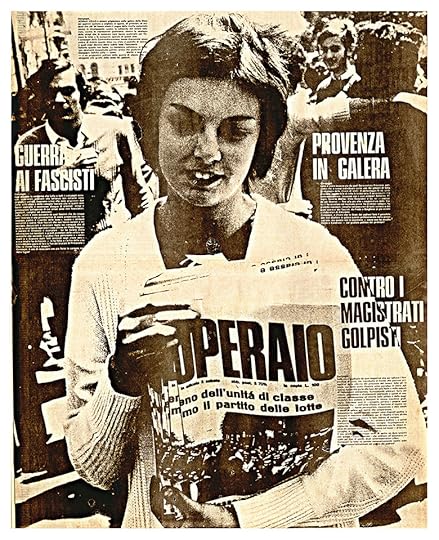
The question of political organisation is pressing and we have to pose it precisely: how should a political organisation relate to the class movement?
In order to approach this question we have a look at the organisational efforts that existed at a peak moment of class movement, the 1970s in Italy and try to draw conclusions from that. We find a seemingly contradictory situation. The two national extraparliamentarian organisations that were formed after the upheaval of 1968/69, namely Lotta Continua and Potere Operaio, entered a deep crisis exactly at a point when the class conflict intensified in the 1970s. Both organisations were questioned from within, primarily by local autonomous organisations of workers’ committees, and in the case of Lotta Continua, also by the emerging feminist movement. These committees criticised the national political organisations in two ways: in class terms (“against the leadership of intellectuals”) and politically (e.g. regarding the shift towards electoral politics and alliances of Lotta Continua). The autonomous organisations represented the working class core of the political organisations. They were also most closely engaged in actual practical efforts, from factory struggle to housing occupations to self-reduction of energy and transport prices to militant antifascist actions. It was not surprising that their experiences started to clash with the central lines of Potere Operaio and Lotta Continua, e.g. their abstract claim of party leadership and program or the decision to enter into alliances with more moderate ‘antifascist’ forces, who, like the Communist Party PCI, would oppose and denounce autonomous workers’ activity.
The workers’ committees contributed to the dissolution of the two main national organisations of the radical left, as they had lost touch with the more radical parts of their proletarian base, but, as often noted, the ‘workers’ autonomy’ was not able to ‘solve the organisational question’ either. This doesn’t mean that they were not aware of the fact that localism or sectorial boundaries would have to be overcome and that a coordinated and centralised political body was necessary. There were several larger organisational efforts to coordinate the autonomous bodies nationally and to intensify the debate around a common strategy. With this small series we want to retrace these efforts.
This first part of the series is a translation from 2022 that sets the scene of the first larger national congress of autonomous workers’ committees in Bologna in 1973 and the relation of the autonomous committees to Potere Operaio. The upcoming second part consists of a translation of an organisational proposal put forward by the committees and workers’ assembly at Sit Siemens, Pirelli and Alfa Romeo in 1973. In terms of chronology we suggest also reading the following article on Senza Tregua, which was a project of various autonomous committees to form a national structure and common strategy around 1975. The third part will be a strategic paper by comrades from Via Volsci in Rome, written after the movement of 1977, which sketches out their perspective on organisation, dual power and revolution. The final article of the series will try to summarise these developments politically and relate them to our organisational question today.
————————-
The “area” of workers’ autonomy
The first autonomous factory organisations began to form in 1971, taking the form of assemblies, committees and collectives. Many militants who had gradually left the political groups joined these autonomous organisations. This happened either as a result of an individual choice or because the grassroots structures, in which they carried out their political activities, gradually became distant from the extra-parliamentary organisation. For example, between 1972 and 1973 in Rome, the Enel Political Committee, the Policlinico Workers’ Collective and other autonomous organisations left the group Manifesto (partly due to a critique of Manifesto’s electoral plans – the translator); in Milan, the Alfa Romeo Autonomous Assembly broke with the Lotta Continua group to oppose the latter’s claim to hegemony over its line [1]; in Porto Marghera, the Autonomous Assembly, which arose in the aftermath of the rejection of the contract by the chemical workers of Petrolchimico and Chatillon in November 1972 [2], gradually distanced itself from Potere Operaio. An article published in ‘Potere Operaio del Lunedì’ in November 1972 stated:
“Even before the contract disputes of 1972, workers’ autonomy had felt the profound unease of not being able to express, either within the groups of the revolutionary left or in the (factory) councils where trade union control was strong, the content and forms of struggle that it potentially contained. Just as the Autonomous Assembly was formed in Marghera, so too are autonomous organisations springing up in many other situations in factories, neighbourhoods, towns and schools.”
This was followed by polemical tones towards the political groups:
“For this reason, we think it is wrong to see these organised moments of autonomy as mere instruments for the mass transmission of pre-established political lines, or as instruments for the organisation of sectoral struggles that are reunified by the political position of a group. In other words, we are against those groups that believe they are the revolutionary party and that autonomous organisations should become their mass organisations [3].”
The autonomous organisations also expressed the need to find moments of organisational centralisation that would prevent the confinement of struggles to their specific sphere, that would create a link between the factory and the social sphere, that would break the isolation of the working class by involving other subjects, such as students, the unemployed and women, in the struggle.
With this intention, on the initiative of the organised groups of Rome and Naples, a conference was held in Naples on the 25th and 26th of November 1972 to discuss the question of workers’ autonomy and the problems of the South. The themes of the need for revolutionary violence and a guaranteed wage were taken up again as central objectives (articulated in the struggles against “enforced mobility and flexibilisation, dismissals, work rhythms, high rents and high bills”) around which to unify different social sectors: workers, students, migrants and the unemployed. Finally, the problem of centralisation was addressed, putting it in the following terms:
“The organisation of workers’ autonomy is achieved not through the simple coordination of multiple struggles, but through the centralisation of the autonomous vanguards around a programme they set themselves and through the choice of appropriate tools. Centralisation is an indispensable condition in the process of building a revolutionary party [4].”
Once again, the key issue was the absence of an overall workers’ organisation, characterised by a genuine revolutionary will, resulting from a process of aggregation from below of existing assemblies and autonomous committees, capable of providing individual struggles with a general political meaning. To address this problem, some autonomous bodies organised a series of joint conferences in an attempt to develop a common line and overcome the fragmentation of the various situations of conflict. The first was the “pre-conference” held in Florence on the 27th and 28th of January 1973, in preparation for the “national meeting of organised workers’ autonomy” [5] in Bologna, scheduled for the 3rd and 4th March of 1973.
Potere Operaio gave ample space in its newspaper to the debate that took place at the Florence conference, showing curiosity and attention towards the proliferation of autonomous mass organisations, independent of the initiatives of extra-parliamentary left-wing groups and often taking positions that contrasted with, if not surpassed, those of the groups themselves.
Numerous interventions were reported in ‘Potere operaio del lunedì’ [6], and all of them highlighted the same issues, albeit in different contexts: the impossibility of resorting to trade unions in times of struggle, because they were now considered irretrievably subservient to the logic of capitalist restructuring; the need to “socialise” the conflict, i.e. to link factory struggles with those in the local area (house occupations, rent strikes, non-payment of transport), in order to unify the different proletarian categories on the basis of “material needs”; the urgency of creating a process of centralisation of the workers’ vanguards, which could give the struggles political and not just economic significance. The issues highlighted had to be resolved by overcoming the “logic of groups”, their claim to provide the line from outside [7] and the tendency to consider autonomous organisations as their own mass movement. Potere Operaio was explicitly invited to take a clearer stance:
“The problem remains, perhaps, for the comrades of Potere Operaio, who still have to decide on the long-term organisational issue of workers’ autonomy. There cannot yet be a relationship external to workers’ autonomy, but there must be interpenetration. Since its inception, Potere Operaio has been able to articulate slogans that have become part of the movement. For this reason, I believe that Potere Operaio must come to terms with the growing reality of workers’ autonomy. It must work to organise it, to build it, to make it the point of reference against the state [8].”
The attitude of the autonomous organisations towards the groups was not uniform: it included positions of decisive rejection [9], a willingness to engage in dialogue [10], and a willingness to open up and integrate. The meeting in Florence was followed by the national conference in Bologna. [11] The objectives to be pursued were set out in the conference announcement:
“What is under discussion is a project to centralise the organised forms of workers’ autonomy which – within the crisis of the system – will become the movement’s organised response to the concentrated attack by the bourgeoisie, providing a positive solution to the crisis of the groups and the sectoral nature of individual struggles and experiences.”
It also specified:
“It will not be a conference of workers’ autonomy (we do not claim the right to represent workers’ autonomy) […]. The national meeting in Bologna will have to decide on the date of a conference open to all organised autonomy (neighbourhood committees, proletarians, student-worker collectives, peasants, labourers, construction workers) and to those groups that make discussion and involvement in the programme of autonomy a long-term rather than a tactical choice [12].”
Potere Operaio was forced to confront the emergence of organisational attempts that were taking place outside the influence of the main left organisations. From an initial attitude of mistrust, it came to recognise the importance of these attempts for the future construction of the workers’ party, in light of the clear desire to overcome the limited scope of the committee in favour of a broader political organisational synthesis.
Potere Operaio appeared optimistic in feeling that the solution to the problem of the “workers” leadership’ of the movement was now close at hand, identifying it precisely in the experiences of the political committees and their attempts at aggregation:
“A political programme and an organisation capable of implementing it. This can and must lead to the overcoming of the experience of the committees and groups and their convergence and merging into a single political project and practice [13].”
Not all autonomous organisations were present at the Bologna conference. Many mass organisations were excluded. Only those groups that had already shown a shared set of objectives and a willingness to act according to a common approach, aimed at centralising the experiences of struggle, participated.
Despite initial caution, differences emerged at the meeting both on the timing of a possible national organisational process of workers’ autonomy and on the political line to be followed. Two positions emerged on the first point: on the one hand, there were the autonomous organisations of the south, particularly those in Rome and Naples, which were pushing for an accelerated organisational process; on the other, there were the autonomous organisations of Milan, which considered it necessary to proceed with a preliminary consolidation of action within their respective areas of intervention. On the second issue, the debate saw the committees in Marghera and Rome on one side
“with a political line inspired by the theses of Potere Operaio […] which starts from an assessment of the crisis of the bourgeoisie and the need to accentuate this crisis by introducing into the movement a whole series of objectives that cannot be integrated by capital, and then organising the movement to face the inevitable clash in the struggle for these objectives [14]”
on the other, the autonomous organisations of Milan, namely the assemblies of Sit-Siemens, Pirelli and Alfa Romeo, which argued that “the political line is the result of the real experiences of the working class, which the autonomous organisations interpret and guide, and not a pre-established platform”. They therefore opposed the “crystallisation of a pre-established political line that risks becoming ideology in the current situation, in which each organisation must deal with the particularities of its own situation” [15]. In the end, the debate saw the substantial affirmation of the positions supported by the organisations in Milan, with a scaling back of the organisational process and a commitment to intervene in concrete situations without first establishing a mandatory and abstract line to follow.
In Bologna, the ‘national coordination of autonomous assemblies and committees’ was established, a provisional commission tasked with dealing with mutual relations between the various organisations. The first product of this coordination was the ‘Bulletin of Autonomous Workers’ Organisations’, which was published in May 1973 and of which only two issues appeared [16].
Potere Operaio, which among its positive comments on the conference had noted the absence of the triumphalism usually present at meetings between workers’ vanguards, did not want to be excluded from what was happening. After stating that responsibility for the organisational process could not be placed solely on the autonomous committees, but rather “within the revolutionary camp as a whole”, it declared its “willingness to work together to build the workers ‘ network of work refusal, the party in the communist revolution” [17].
The internal debate within the autonomy area profoundly influenced the history of Potere Operaio. According to Judge Palombarini [19], based on witness statements given at the “7th of April” trial, the real break-up of Potere Operaio occurred after the third organisational conference in September 1971, around the issue of the formalisation of the party. Many militants, disagreeing with the position expressed by the national leadership, distanced themselves from it, continuing to carry out political activities as individuals or as part of grassroots organisations within the area of workers’ autonomy that was being organised. This satisfied the demands of those who, while wishing to create a national workers’ organisation that would unify the various local realities, did not believe in the possibility of a single group representing that moment of centralisation and saw Potere Operaio’s claim to become such a group as leading only to the progressive bureaucratisation of its structures and a loss of contact with the real situation.
Footnotes
[1] “We do not believe that the revolutionary workers” party can be formed in the traditional way: intellectuals setting a line which is then taken down to the factories to seek out the vanguards who will carry this line forward. This is not possible. The various autonomous movements must contribute directly to building the party of the working class. And we do not recognise this party in any group”. (Statement by a comrade from the Alfa Romeo Autonomous Assembly, “Potere operaio del lunedì”, no. 42, 25 February 1973, also reported in Autonomia operaia, edited by the Autonomous Workers’ Committees of Rome, Rome, Savelli, 1976, p. 25.
[2] See Marghera, oltre il bidone, Potere operaio del lunedì, no. 19, 19 November 1972, and L’Assemblea autonoma di Porto Marghera, Potere operaio del lunedì, no. 26/38, 28 January 1973.
[3] Document from the Naples conference of the 25th and 26th of November 1972, in Autonomia operaia, cit. p. 27.
[4] Communiqué from the Organising Committee of the Conference of Autonomous Committees and Assemblies, Potere operaio del lunedì, no. 43, 4 March 1973.
[5] The speeches are reported in issues 41 (18 February 1973), 42 (25 February 1973) and 43 (4 March 1973) of Potere operaio del lunedì.
[6] “Above all, the organs of workers” autonomy must be a point of convergence between the economic struggle and the political struggle: this division […] which traditionally gave rise to the trade union on the one hand and the party on the other, has been rightly criticised by a number of groups that have contributed to the birth of a revolutionary movement. But today we are witnessing the fact that these groups are reproducing this logic of dividing the economic and political spheres: they also want to promote the formation of autonomous mass organisations, but these are subordinate to the general line of the group, which claims to be the repository of the general vision” (statement by a comrade from the Sit-Siemens committee, Potere operaio del lunedì, no. 41, cit.).
[7] Statement by a comrade from the Enel committee in Rome, Potere operaio del lunedì, no. 41, cit.
[8] “As far as the groups are concerned, it must be said that, within the discourse on autonomy, the role of the groups has objectively come to an end. We must not fight them, but do them political justice” (statement by a comrade from the Workers-Students Collective of the Policlinico di Roma, “Potere operaio del lunedì”, no. 42, cit.).
[9] “The relationship with the groups must be seen solely in terms of these comrades’ willingness to actively pursue the workers’ objectives. I do not mean that the groups must in turn be at our service and do what we workers do not want to do in the factory. They must join our organisations and share their experiences with us, acting as a link between the struggle in the factory and that in the neighbourhood. The autonomous assembly does not present itself as an alternative to the union and the groups; it must present itself as a directly working-class organisation, and on this there is room for discussion with the groups and with certain factory councils” (statement by a comrade from Chatillon in Porto Marghera, “Potere operaio del lunedì”, no. 42, cit.).
[10] “For this reason, while recognising the profoundly different needs of the movement, today we cannot do without a political relationship with the organised vanguards, with the sections of organisation which, when they do not eliminate themselves by arrogating to themselves the role of the party of the class, are indispensable in the construction of what will be the workers” organisation of the communist revolution’. (statement by a comrade from the autonomous assembly of Porto Marghera,Potere operaio del lunedì, no. 42, cit.).
[11] The following autonomous organisations participated in the conference: the Autonomous Assembly of Alfa-Romeo, Pirelli, the Sit-Siemens Struggle Committee of Milan, the Autonomous Assembly of Porto Marghera, the Fiat-Rivalta Workers’ Committee of Turin, the Enel Political Committee and the Workers’ and Students’ Collective of the Policlinico of Rome, the Workers’ Committees of Florence and Bologna, the USCL (Trade Union of Struggle Committees) of Naples, the Red Leagues of the farmers of Isola Capo Rizzuto and Crotone, and the “Raniero Panzieri” Circle of Modena.
[12] Communiqué from the Organising Committee of the Conference of Autonomous Committees and Assemblies, “Potere operaio del lunedì”, no. 43, cit.
[13] Potere operaio del lunedì, no. 44, 11 March 1973. Editorial. However, Potere Operaio issued a stern warning: ‘It therefore seems essential to us that the comrades of the Committees address these issues at the conference and afterwards, not only in speeches but also in their political work. […] Otherwise, the controversy with the groups, with which some comrades of the Committees are so obsessed with, ends up being the pointing finger behind which to hide one’s own ineptitude. Because, let it be clear that in the absence of new things, the experience of some revolutionary groups remains the only fixed point from which to start in Italy”.
[14] Interview with a comrade from the Alfa autonomous assembly, ‘Potere operaio del lunedì’, no. 45, 18 March 1973.
[15] Dito
[16] The bulletin bore the signatures of the following organisations: Alfa Romeo Autonomous Assembly, Pirelli Autonomous Assembly, Sit-Siemens Struggle Committee, Fiat Workers’ Group, Porto Marghera Autonomous Assemblies, Enel Political Committee, Policlinico Workers-Students Committee, Trade Union Struggle Committees. On this subject, see Aut. Op.La storia e i documenti: da Potere operaio all’Autonomia organizzata, edited by Lucio Castellano, Rome, Savelli, 1980, p. 83.
[17] Il convegno dei comitati, ‘Potere operaio del lunedì’, no. 45, cit.
[19] G. Palombarini, op. cit., pp. 111–112.
The post An organisation of workers’ autonomy? – Historical texts and current considerations (1) first appeared on Angry Workers.
January 14, 2026
The Political Economy of the Current Uprising in Iran
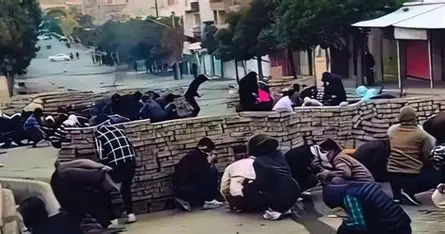
Neoliberalism and the Architecture of Disaster, by Iman Ganji
We document a text sent to us by a comrade
Lead: With hundreds of protesters killed within days in Iran, amid a blackout imposed by a state that blocks any flow of information, parts of the international Left have rushed to pronounce judgments in a mode of immediacy that ignores history and misreads the situation. This article addresses one such claim: that Iran “is not capitalist,” has not undergone neoliberalization, and that sanctions alone explain its economic crisis—a statement that would bewilder any Iranian worker, but circulates unhindered among leftists in the imperial core. This text does not address two other determinants of the conjuncture: the reactionary political hegemony over the uprising and the role of imperialist intervention—both targets of other uninformed assessments in recent days. Denying massacres and neoliberal austerity does not serve the cause of anti-imperialism in the long term, even if realpolitik and geopolitical considerations push some toward immediate discursive interventions in the current situation. Statism is not internationalist solidarity. Nor does the immediate embrace of the situation as “revolutionary,” coupled with the dismissal of imperialism and fascism, serve the cause of revolution.
Iran, Angola, Ecuador, Bolivia in 2025. Angola in 2023. Kazakhstan and Jordan in 2022. Iran, Lebanon, Ecuador, and Zimbabwe in 2019. France, India, and South Africa in 2018. Mexico in 2017. Sudan in 2013. Nigeria in 2012. Bolivia in 2010. The United Kingdom, Germany, France, the Netherlands, Spain, and Russia in 2008. Iran in 2007. Yemen in 2005.
This is an incomplete list of countries where, over the past two decades, fuel price hikes and the removal of state subsidies have been among the triggers of subsequent protests and uprisings. Raising fuel prices is one of the recurring markers of neoliberal structural adjustment, and almost everywhere governments have taken this step, they have encountered popular resistance.
One country appears three times on that list: Iran. Do not listen to so-called regime experts who present gasoline price hikes under Mahmoud Ahmadinejad as a success story and count on our historical amnesia. On the night increases to the price of fuel were announced, people set fire to 12 gas stations in Tehran and chanted slogans against the president. Hence, the question naturally arises: given that historical experience, and in the midst of a suspended wartime situation with Israel, by virtue of what criteria and on what basis does the Iranian state decide to raise gasoline prices once more?
An increase in the price of gasoline was not even the sole element in the government’s structural adjustment policy: Currency devaluation and the removal of the preferential exchange rate for essential goods are two other key factors that have intensified the mass impoverishment of the population in Iran and have fed into the ongoing uprising in the streets of cities across the country.
Other, equally prominent, determining factors are at play in the situation in Iran. [1] None of this, however, negates the simple fact that the neoliberal policies implemented by Masoud Pezeshkian’s government — as with all previous governments since the end of the war with Iraq — with the cooperation of the rest of the state apparatus has provided both the primary social cause and the genetic grounds for the affective contagiousness of the ongoing uprising. Just as they have repeatedly done in the past, populations resist these policies, and do so with varying degrees of intensity. And the fact that state-repression successfully truncated previous waves of resistance does not mean that they will not resist again.
Poverty and misery, even when widespread, do not by themselves lead to uprising; and those who think that “sanctions” alone succeeded in driving the poor into the streets cannot explain the counterexamples. It is true that international sanctions have further worsened the economic situation on multiple fronts, though not in the reductionist way the received accounts portray. The decline in government revenues has produced a structural budget deficit, while efforts to bypass sanctions have generated rents that have transformed Iran’s political-economic order into an oligarchic system. Shock therapy, however, by deliberately producing a crisis of social reproduction (independently of sanctions, but especially under sanctions), leads to resistance and revolt — this is the first law of social thermodynamics. And do not imagine that the so-called economic experts who design these policies are unaware of this law. On the contrary: many policymakers and technocrats influenced by neoliberal economics and the Chicago tradition — including the current minister of economy, a graduate of the University of Chicago — are fully aware that anti-welfare reforms and shock therapy generate social resistance and political crises. Historical experience shows that in such models, reliance on police and security power is not accidental but a structural component of how these policies are implemented. The core idea is simple: the crisis produced by these reforms is not meant to be prevented; it is meant to be managed.
Yet the central question remains: how — in a wartime situation, and after rhetorically praising “popular unity” in the face of Israeli attacks — does the Iranian state decide to raise gasoline prices and abolish the preferential exchange rate? How does a government at war with an external power choose to wage economic war against its own populations rather than purchasing domestic peace through social welfare policies?
Pezeshkian has argued that he will carry out any policy with socio-political consequences; any “hard decision” that leads to “public dissatisfaction;” because he is only supposed to serve a single presidential term. This, however, is not merely a case of strapping a grenade to oneself and blowing up as an individual; it is a structural sign of what the author has previously analyzed, in terms of political economy, as a “suicidal state.”
The answer to this central question should be pursued in two parts. First — this article — we examine the recent genealogy of the current political economy and the policies of the past several years. This should be read while we keep in mind that There is a long trajectory behind Iran’s neoliberalization policies. Since the start of the revolution, para-statal military and religious foundations absorbed the assets of the previous regime, forming a parallel economic body. This body operates outside the legislative and administrative authority of the government, including the central bank, and is directly supervised by the Office of the Supreme Leader.
The parasitic relationship such foundations initially formed with the government reversed somewhere along the way, such that today it is the government itself that parasitizes these foundations, now transfigured into giant holdings, together controlling over 55% of the total GDP. [2] The turn towards privatization of the entire economy was implemented just as the eight year war with Iraq came to a close, and over the course of the next six presidencies, it came to exhibit all the hallmarks of neoliberalization – welfare retrenchment, the erosion of public infrastructure, and labor flexibilization. Crucially, structural adjustment was designed in such a way that the very foundations already dominating the largest shares of public property were able to consolidate and expand their control through opaque auction mechanisms in collusion with each successive government. This is the picture in which mechanisms of immiseration, impoverishment, and the accelerating class divide in contemporary Iran must be understood, lest we stay with broad unhelpful abstractions.
From Currency Policy to Structural Adjustment: Madani-Zadeh’s Suicidal Prescription for a “Sick Economy”
In this first section, we must turn to Seyed Ali Madani-Zadeh, a professor at Sharif University of Technology and a central figure for understanding the political economy that has led to both the current uprising and that of Aban 1398 (November 2019). Included among Madani-Zadeh’s achievements are the drafting and formulation of the ‘Framework for Structural Reform of the Budget with an Approach to Cutting the Budget’s Direct Dependence on Oil,‘ issued by the Plan and Budget Organization in Khordad 1398 (June 2019). This is a, high-level, policy document whose proposals began being implemented under Hassan Rouhani’s government, continued under Ebrahim Raisi, and is currently being carried out at full speed under Masoud Pezeshkian’s administration.
Among those responsible for Iran’s economic disaster, Madani-Zadeh has, in recent years, been its chief architect. For this reason, what follows will focus on this latest contemporary heir to the Chicago boys, in order to arrive at one part of an answer to our central question.
Structural Reforms
The Plan and Budget Organization’s document, “Framework for Structural Budget Reforms,” presents itself as a technical and unavoidable response to the state’s fiscal crisis compounded by economic sanctions. Its dominant language is one of necessity, discipline, and technocratic rationality — as if economic policy were not a terrain of conflicting social interests but merely a matter of calculation and management. Yet behind this neutral language lies a project that, both theoretically and in terms of policy design, clearly continues the model of IMF-style structural adjustment and the assumptions of neoliberal economics—especially in the Chicago tradition—albeit wrapped in localized terminology and the rhetoric of a “resistance economy.”
In fact, it is enough to compare Madani-Zadeh’s document with the IMF’s most recent Iran’s Article IV consultation report (2018) to see how, without ever citing the IMF, it structurally reproduces the same policy logic, priorities, and sequencing of interventions. The core of these recommendations rests on fiscal discipline, cuts to public spending, the primacy of austerity over growth, the weakening of universal social policy, and the transformation of social justice into a technical, targeted issue. The Plan and Budget Organization’s framework proceeds on precisely these assumptions. The main difference lies not in substance but in political context: what in Europe and Latin America was imposed through pressure from supranational institutions and financial markets is, in Iran, implemented within an authoritarian setting and through reliance on the state’s administrative and security capacities. From this perspective, we are facing a kind of “Article IV economics without the IMF”: the same structural adjustment logic, but without the IMF label and without the need for social consensus. Iran has followed IMF prescriptions before as well, and Mahmoud Ahmadinejad was once praised by that notorious international institution for cutting subsidies and raising energy prices.
Let us now look more closely at the substance of the structural reform document. Its point of departure is the identification of a “core problem” — or, in Madani-Zadeh’s terms, the diagnosis of the Iranian economy’s main disease: the structural budget deficit. Inflation, economic instability, declining welfare, and even threats to people’s livelihoods are all reduced to this single variable, to this supposed “root evil.” This reductionism is not accidental. Within this framework, inflation is not understood as the product of distributive conflicts, power structures, sanctions, rent-seeking, or modes of accumulation, but as the mechanical outcome of the state’s fiscal indiscipline. And that, first and foremost, means removing politics from the analysis and reducing the economy to a technical domain.
From this diagnosis follows the prescribed cure: the establishment of a binding “fiscal rule” that pre-sets ceilings on government spending, deficits, and debt for several years in advance. This instrument, presented in neoliberal discourse as a guarantor of “credibility” and “stability,” in practice means tying the hands of future policymaking. Budgetary decisions — which should by their nature be political, distributive, and contested — are turned into quasi-constitutional rules that operate beyond social interests. Greece’s experience after the 2010 debt crisis clearly showed how such rules, even in formally “democratic” systems, can strip society of economic sovereignty and hand it over to technocratic and supranational institutions.
Subsidy reform and the “realignment of prices” constitute another pillar of this framework. Subsidies for energy and basic goods, along with non-cash forms of support, are all treated as “distortions” — distortions that must be eliminated so that prices can send the “right” signals. To contain the social fallout of this removal, targeted cash transfers are proposed — the very approach Pezeshkian’s government has pursued in the midst of protests. But this logic is exactly the same model implemented across Latin America since the 1980s, from Mexico and Argentina to Brazil: price liberalization, cuts to universal support, and minimal compensation for the poor, not as a social right but as a tool for managing discontent.
Within this framework, social justice is reduced to an administrative problem. The issue is no longer structural inequality, but “inclusion and exclusion errors;” not the concentration of wealth and power, but databse deficiencies. Social policy is downgraded from a redistributive project to a mechanism for managing the effects of austerity. Egypt’s experience after 2016 — combining currency liberalization, the removal of energy subsidies, and the expansion of cash-transfer programs — offers a clear example of how this combined set of policies can produce fiscal stability at the cost of rising poverty, food insecurity, and social dependency.
The institutional section of the document — performance-based budgeting, a treasury single account, a medium-term expenditure framework, asset sales through exchange-traded funds (ETFs), and the expansion of the debt market — aligns almost entirely with the IMF’s public financial management reform agenda. These reforms render the state more “legible” — thus, easier to monitor and discipline — at the cost of reducing politics to performance management and indicators. Hence, ministries become cost centers, programs become measurable outputs, and the budget turns into a managerial document. What is lost in the process is the conflict of social interests and the most fundamental question of social justice: who pays the price for these structural reforms and who repeats their benefits?
What is absent from the Plan and Budget Organization’s document is as telling as what it contains. Madani-Zadeh offers no serious analysis of the labor market, wage suppression, capital–labor relations, or the role of monetary and exchange-rate policy in wealth redistribution. In his framework, society appears not as a political actor but as a source of social risk that must be managed through “transparency” and “persuasion.” Sanctions, meanwhile, are treated merely as an “external shock,” rather than as a mechanism that reshapes accumulation patterns and rent extraction. Put more plainly, the document as a whole is a class project aimed at stabilizing the dominant class.
This framework implicitly relies on an authoritarian setting. In the absence of mechanisms for social bargaining, independent unions, and democratic accountability, austerity reforms do not proceed through social agreement but through administrative capacity and coercive power. The document’s repeated emphasis on “policy consensus” makes clear that the consensus that matters is not between state and society, but within the ruling elite — what, in the regime’s newer vocabulary is called vafaq (“unity” or “accord”). The reason is not hard to grasp: every historical experience, from Greece to Latin America to Egypt, shows that the costs of structural adjustment are systematically shifted onto the most immiserated segments of society.
In light of all this, the Plan and Budget Organization’s document—contrary to the neoliberal rhetoric of its advocates about “economic surgery”—does not mean a smaller state. Rather, as Michel Foucault showed in The Birth of Biopolitics with regard to the neoliberal state, it represents a reconfiguration of the state: a large, interventionist, yet disciplined, state; one that retreats from redistributive intervention while strengthening its instruments of control and surveillance. This model can be called “authoritarian austerity:” a model in which the global doctrines of structural adjustment are implemented in a non-democratic context, and social discontent is treated as a predictable cost. In other words, the structural budget reform framework normalizes crisis and turns austerity into permanent policy. Poverty, inequality, and livelihood pressure are not policy failures; on the contrary, they are manageable side effects of “good governance” — the very logic underlying Pezeshkian’s proclaimed “self-sacrifice” and his promise of a single-term presidency.
Exchange-Rate Policy
Like many economists who share his outlook, Madani-Zadeh identifies the budget deficit and the inflation it generates as the core disease, but treats price controls as the underlying cause of that disease. This view extends from basic goods and services all the way to the exchange rate. In one of his final interviews before taking office as minister of economy, he explained the Islamic Republic’s exchange-rate problem in precisely these terms: just as all prices should be left to the market, the price of foreign currency should not be set through mechanisms such as the NIMA exchange system or the preferential exchange rate. And if high inflation is the main problem, then it will necessarily be reflected in the exchange rate as well. In other words, for him and his allies, foreign currency is a commodity like any other — a claim fundamentally at odds with the realities of Iran’s political economy.
This discrepancy is not lost on Madani-Zadeh. In one study published under his supervision — where he appears as second author — this very inconsistency is, in fact, emphasized. The study, published in 2015, reaches conclusions that run directly counter to the policies he now advocates, and to those currently pursued by Iran’s economic system more broadly. In “Exchange Rate Pass-Through and Its Determinants in Iran,” Sajad Ebrahimi and Seyed Ali Madani-Zadeh examine the impact of rising exchange rates on producer and consumer prices — that is, the exchange-rate pass-through. In this research, they set aside the effect of the budget deficit — the same “supreme evil” said to drive inflation — and defend a multiple exchange-rate system under Iran’s specific conditions, precisely because it keeps pass-through low and avoids costly socio-political consequences:
In a multiple exchange-rate system, some imported goods and services enter through the official exchange-rate channel. As a result, changes in the unofficial exchange rate have little effect on the domestic prices of goods imported via the official channel. This implies a low exchange-rate pass-through.
They identify exchange-rate volatility as a key driver of higher pass-through, noting that “importers of goods and services respond more strongly to exchange-rate changes in order to hedge against the risk and uncertainty generated by exchange-rate movements, which leads to higher exchange-rate pass-through.” Another finding of the study is that, whether inflation is high or low, it has “no significant effect on exchange-rate pass-through.”
In short, maintaining access to foreign currency for importing essential goods and striving for exchange-rate stability — minimizing volatility — are crucial for limiting the impact of exchange-rate increases on consumer and producer prices, regardless of whether inflation at a given moment is high or low.
These findings stand in stark contradiction to all of Madani-Zadeh’s recent policies and recommendations. Eliminating preferential currency for importing essential goods will raise exchange-rate pass-through and lead to sharp increases in the prices of basic commodities — effects that will become visible within one or two quarters.
Moreover, Madani-Zadeh now argues that if an external shock hits the exchange rate, the price of foreign currency should be allowed to rise to its peak, after which the central bank should bring it down through a Dutch auction of dollars. He also insists that the exchange rate should be allowed to fluctuate, so that no one has an incentive to buy foreign currency — all policies that, according to his own 2015 research, will increase the impact of exchange-rate changes on domestic prices in Iran. Finally, his central focus on the budget deficit and high inflation has no bearing whatsoever on this pass-through effect.
These policies, however, have other consequences as well. The government claims that eliminating the preferential exchange rate will harm rent-seekers, who will no longer be able to profit from the gap between the subsidized dollar and the free-market rate. On paper, this claim is correct. What officials do not tell you is the policy’s real effect. After years of rent allocation, the import and export of many goods has already become highly concentrated and quasi-monopolistic. As the dollar price rises, this concentration intensifies, because a more expensive dollar pushes smaller players out of the market and leaves only large actors — capitalists with deep pockets — standing. They are the only ones able to afford the higher prices. Those who once operated at the level of hundreds of thousands of dollars in trade are forced out in favor of those dealing in millions. Moreover, as imported goods become more expensive, the profits these large players extract from selling them compensate for, if not exceed, the rents lost from the exchange-rate gap.
The policy of Dutch auctions in the currency market has similar effects. In these auctions, where the price starts high and sales occur where demand finally materializes, large players enjoy a clear advantage. Actors with deeper pockets, by they institutions or private capital, can tolerate more risk and make faster decisions, leading to further concentration of ownership in the hands of a few. The result is nothing but greater state dependence on a narrow financial network and the reproduction of rent. Dutch auctions are a crisis-management tool for financial markets, not a sustainable policy framework.
So Why?
The policies being implemented are not a response to the profound crisis of social reproduction as experienced by Iran’s proletarian and surplus populations, and at a moment when food inflation has exceeded 70 percent while prices for basic goods have risen by as much as 110 percent. Instead, these policies constitute a class-based project aimed at reproducing the state under crisis conditions.
The Iranian state has repeatedly gambled on shock. The subsidy-targeting plan under Ahmadinejad was on the agenda as early as 2008, but it was likely the burning of twelve gas stations that delayed its full implementation until 2010, during the Green Movement protests. The assumption was that society was already in shock, and that this was therefore a good moment to push through the reforms. During the 2022 protests, the exchange rate hit a historic high in Mehr of that year. This time, following Israel’s attack and amid a suspended wartime situation, the state placed yet another bet: assuming a state of shock, it moved to liberalize gasoline prices and raise the dollar, and amid the protests, eliminated the preferential exchange rate.
The current protests are not merely “economic.” Political economy gives shape to their political, social, and class dimensions. The suicidal state is not irrational; its rationality is simply limited to reproducing the state itself and its class relations, at the cost of producing death for the populations it is meant to manage. Till now, security forces have reportedly killed hundreds of protestors in the ensuing uprising.
Footnotes
[1] Including: the competitions among oligarchies; imperialist influence; and so on. In any case, the political hegemony of the protests currently lies in the hands of reactionary right-wing forces, and it does not yet appear that other forces will be able, in the very near future, to exercise counter-hegemonic agency and overcome the right. But these factors influencing the uprising’s outcome do not erase the class struggle that defines this revolt.
[2] Vahabi, Mehrdad. Destructive Coordination, Anfal and Islamic Political Capitalism. Cham: Springer International Publishing (Palgrave Macmillan), 2023, p. 300
The post The Political Economy of the Current Uprising in Iran first appeared on Angry Workers.
January 4, 2026
Venezuela – Class struggle against imperialism and the myth of national independence
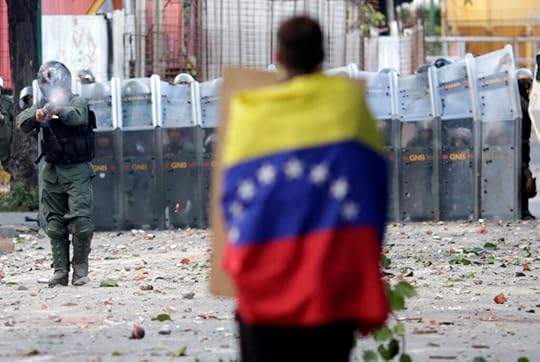
The attacks of the US army in Venezuela are an expression of imperialism, but how can we respond to them? Understandably, the reaction of many people is to rally for ‘national independence’. From a working class perspective and the perspective of international emancipation, the battle cry for ‘sovereignty’ is a dangerous myth. The situation in Venezuela is part of a global panorama of block confrontation and as international workers we have to find ways not to get crushed in the middle.
Venezuela and China
One of the reasons given by the US government for fighting ‘communism’ in Venezuela is its close ties to ‘enemies of the US’: China and Iran. On the evening before his abduction, Maduro received a high-ranking Chinese delegation. Shortly after the meeting ended, he was sitting in a US army helicopter. China is now effectively the only relevant factor countering the current march of the US and US-aligned movements in Latin America (Milei/Argentina, Bukele/El Salvador, Nasrallah/Honduras, Kast/Chile, Mulino/Panama, etc.).
China currently imports approximately 80% of Venezuela’s daily oil production of 950,000 barrels per day (as of November 2025, i.e. before the first tanker was seized by US troops). There is no data whatsoever on the actual prices at which China has been buying Venezuelan oil over the last 10 years or at which the ‘enormous collection of goods’ delivered from China to Venezuela on credit (house hold appliances from Haier, Yutong buses, cars) is being charged. Even a factory for assembling Yutong buses was set up in Yaracuy in 2015.
In Chancay, Peru, the Chinese logistics giant COSCO operates a large deep-sea port 100 km north of the capital Lima. From there, the voyage to China takes 23 days, down from 40 days previously. In Panama, the US wants to oust China from the two ports at either end of the canal (Colón and Balboa). Meanwhile, Black Rock/MSC and COSCO are fighting over the shares. Panama has left the Chinese supply-chain project ‘Silk Road’ again.
It appears that there are no US troops in Venezuela, at least not in any significant numbers. When Trump announces that the US will now govern the country until an ‘orderly transition’ takes place, this can only be based on the threat (made real by the kidnapping of Maduro) that they could strike effectively and deadly anytime, anywhere.
The war in Ukraine and the genocide in Palestine are part of this picture
We can see the outcome of the alleged struggle for ‘national independence’ in Ukraine: working class people from both sides are sent into the meat grinder. The Russian government needs the war to maintain its power and becomes increasingly dependent on supplies from China and Iran. The Ukrainian government depends absolutely on EU and US military and financial support and sells agricultural land and infrastructure to western companies in return. Instead of ‘defending democracy’ the Ukrainian state curbs trade union and political rights and forcefully conscripts young men to the front line. ‘Leftists’, like the Green Party in Germany, but also groups closer to home, repeat the myth of ‘national self-defence’ in order to demand more and more weapons for the massacre.
Even the genocide in Palestine cannot be understood outside the picture of block confrontation. It was no coincidence that the confrontation escalated shortly after the Chinese government managed to bring the Saudi Arabian and Iranian government to the negotiating table. It was clear that this was undermining the earlier Abraham Accords that had been brokered by the US and that the regional power-balances would shift drastically. At this point, everyone who had a stake in the game wanted to exert their influence. The territory of Palestine is used as a minor chip in the bargain, in particular by the regime in Iran, which is the main sponsor of Hamas. On the other side the west and the US bolster the Israeli war machine. While tens of thousands of richer Palestinians were able to flee the region, the local proletarian population in Gaza pays the price.
We can see that the idea of ‘national independence’ in a global capitalist world is a myth. The problem is that the counterpart to the US block – meaning, states like China, Iran, Russia – also has nothing to offer in terms of workers’ liberation. While we see Iranian flags being waved at protests against the war in Gaza, in Iran itself thousands of working class people currently clash with the state forces, protesting against inflation and the regime. Which side are we on?
Working class resistance against the drive to war
We currently witness a global arms race, led by the US, which will spend over a trillion US-Dollar on military defence in 2026. The EU plans a military budget of over 2 trillion Euro for the coming seven years. It is clear that they pay for this by cutting our income and welfare, such as health and education. Every government wants to normalise this preparation for future wars, in the UK we are repeatedly told that we are at war with Russia.
We have to refuse this in our day to day struggle. We have to develop a wider strategy on how to sabotage the war machine, how to defend ourselves against state aggression, such as the attacks on migrants by ICE units. We need strategies of underground proletarian resistance, combined with struggles where we have larger collective power. Workers at ST Microelectronics in France went on strike against the use of their product for the military, tram drivers in Munich refused to drive trams with army recruitment advertisement, dock workers in Genoa block ships with weapon deliveries and call for general strike, school students in Germany protest against the state effort to reintroduce army conscription, health workers demonstrate against plans to draft them into the military medical apparatus, DHL workers protest against the involvement of their company in military logistics, VW workers denounce the companies plan to sell parts of the plants to the weapon industry.
All these small struggles are expressions of the question of worker control: who decides what happens with the things that we produce or the services that we provide? We have to gradually expand this battle over control to the social level. Against global war, for a free and communist future.
The post Venezuela – Class struggle against imperialism and the myth of national independence first appeared on Angry Workers.
December 22, 2025
Spontaneous strikes at Arcelor Dunkirk and steel worker riots in Genoa – And in the UK?
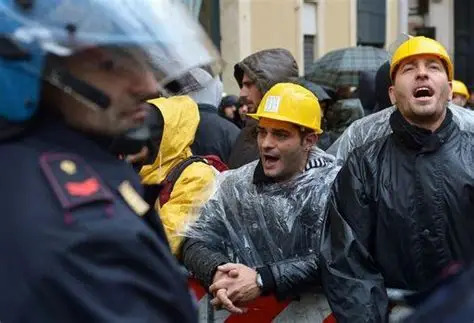
We translated this article by comrades from France, as we think that it has international relevance. The global steel industry is at the centre of trade wars and, related to this, the process of militarisation. With the downturn of the automobile industry we see a global overproduction of steel. The US and the EU react by putting up tariffs, which squeezes the steel industry in the UK.
In reaction to the blackmail from steel companies, the Labour government promises further subsidies with their £2.5 billion ‘steel fund’. In times of general preparation for larger wars, steel production becomes a national security asset. When the Chinese steel manufacturer Jingye announced the closure of the blast furnaces at the Scunthorpe site in April 2025, the UK government stepped in and semi-nationalised the plant. As you can read in the article below, nationalisation has little to offer for the workers on the ground.
Given this global picture it is not a coincidence that things are kicking off elsewhere. In November and December 2025, steel workers in Genoa occupied squares, blockaded motorways to the airport and used heavy forklifts during confrontations with the police. Steel workers in the region also went on a general strike against the threat of 6,000 job cuts.
We are at a watershed moment. The threat of mass redundancies on one side and the promise to save jobs by vamping up arms manufacturing on the other. It is good to see that the steel workers’ protests in Genoa are happening in the wake of large anti-war strikes and blockades in Italy and in proximity to the most serious effort to defend factory jobs under worker control by the ex-GKN workers. These are the necessary components for a wider class movement against the crisis.
——————–
Since the Arcelor group’s management announced a new redundancy plan last April, strikes have been on the rise at the Dunkirk site. In the background, the vested interests of industrialists from various sectors and local decision-makers are intertwined.
From Usinor to Arcelor
Usinor was founded in Dunkirk in 1962 and immediately established itself as one of the largest steelworks in the region. The plant covered an area of 25 km2 and employed up to 11,400 people in the mid-1970s. At that time, workers were recruited from no fewer than 200 surrounding municipalities, some of them former miners who had retrained, others steelworkers who had been displaced from eastern regions. Industrial restructuring was already beginning to have an impact. However, this gigantic recruitment did not mean that the workforce was concentrated in one place, as in other sectors such as the automotive industry. Usinor was spread across several separate sites, far apart from each other. Today, after decades of production concentration, only 3,500 direct jobs and a thousand subcontractors remain in the factory.
Lobbying and public money
Arcelor has 40 production sites in France, where it employs some 15,000 people. In May 2025, the group’s management announced the elimination of 600 jobs, mainly in Dunkirk and Florange, as well as the closure of its small factories in Reims and Denain (1). The employers’ argument, invariably the same, cites: ‘unfair competition (2), weak demand and high production costs’. Admittedly, demand for steel has fallen by 20% in France over the last five years, and the sector is facing a global crisis of overproduction (3). But over time, the steel barons, whether from Lorraine or India, were able to use their wailing about the crisis to gorge themselves on billions in public subsidy money, using their networks of influence and the blackmail of possible job cuts in turn.
Alarmed that ‘the steel industry in Europe is in crisis’ and that ‘all sites are at risk’, the president of Arcelor France has been calling for EU protection and higher customs barriers. In the meantime, the group is freezing its investments in CO2 emission reduction, particularly at its Fos and Dunkirk sites. This decision seems incomprehensible at first glance, given that he also complains that CO2 adds 10% to the selling price of his steel.
In reality, it is a godsend for the employers and a question of timing (4). With its France 2030 plan, the government has announced that it will mobilise €4.5 billion for the decarbonisation of industry and is preparing to provide €13.6 million in aid to the Dunkirk industrial port area, which ranks second among the areas with the highest greenhouse gas emissions. Once again, for the steel bosses it will be a matter of waiting and seeing how to benefit the most…
Decarbonisation, electrification, mystification
For both the steelmaker and the CGT trade union, decarbonisation must first involve the electrification of production. The idea seems obvious, especially since the Gravelines nuclear power plant is located a stone’s throw from the steel complex. Arcelor has been relentless in its contradictory announcements on the subject, using misleading communication. Hoping to reassure both the public authorities and its employees, the group simultaneously announced a major redundancy plan and a €1.7 billion investment in the construction of electric furnaces. In the end, the manufacturer scaled back its plans and changed course, with the electrification of production no longer on the agenda. At the Mardyck site, a stone’s throw from Dunkirk, only €500 million will be invested, not in electric furnaces as previously announced, but in three production lines for ‘electrical steel’, obtained from recycled scrap metal and intended for the production of car engines.
Nuclear power in an era of rising sea levels
Let us pause for a moment to consider the implications of replacing coal with electricity in the steel manufacturing process. As we have written, the Gravelines nuclear power plant is seen as an essential player in this conversion. It is the asset of the ‘ecological transition’ of the Dunkirk industrial basin and is the focus of much attention, especially since the recent installation of new energy-intensive industries such as gigafactories (5).
Commissioned in 1974, the Gravelines power plant is one of those whose lifespan has been repeatedly extended beyond the standards established at the time of construction. Two EPR 2 reactors are set to replace the ageing structure by 2040, but the project faces significant constraints. For example, the density of EPR reactors is twice that of the facility currently in operation, meaning, they are much heavier and put more strain on the ground. The mechanical characteristics of the soil located on the coast are considered poor by the ASNR, as a substantial layer of it is too mobile (6). In addition, the risks of submersion and soil liquefaction are now proven due to the effect of coastal retreat and sea level rise…
‘A spontaneous strike’
It was in this context that, in early December, a spontaneous strike movement took both the company’s management and the CGT trade union by surprise. According to the latter, the plant was operating at only 30% of its capacity and a blast furnace had been shut down. It should be noted that this movement arose in the very official context of the NAO, the obligatory annual negotiations between employer and unions, which were then suspended. The mobilisation is said to have originated in sectors of the factory that were not usually involved in industrial action. The demands themselves were very traditional: higher wages, bonuses, improved working conditions, hygiene, etc.
This was enough for the CGT representative to declare this episode ‘historic, unprecedented.’(7) According to him, we are “in an insurrectionary situation (…) given how the movement started, it is beyond our control (…) certain departments that had never gone on strike are now mobilising, and these are not CGT strongholds. As for management, it cites ‘the seriousness of the economic situation’ and “invites” workers to ‘return to work as soon as possible.’
In this case, it would appear that resistance to restructuring has become mixed up with more immediate demands. The announcement of a new redundancy plan in a context of attacks on wages and deteriorating working conditions may have encouraged the grassroots initiative. But in the game of bluff poker being played by both the group’s bosses and the trade unionists, there is no indication of the path the strikers will take in the coming days, and they themselves are probably unaware of it: is this a sudden outburst of anger or a broader aspiration to go beyond a certain framework? (8) In this context, the CGT’s heated statements seem like an invitation to management at a time when the National Assembly is once again voting on the nationalisation of the site.
In any case, this struggle is part of a new cycle of company closures that employers are vigorously pursuing, and it is in this context that the balance of power at stake must be assessed.
When nationalisation resurfaces
The nationalisation of Arcelor Mittal is a demand that has been made in Dunkirk by the CGT for over a year and relayed in a pre-election context by the parliamentary left-wing parties, led by La France Insoumise (LFI). It resurfaces with every restructuring, but this time, MPs adopted it at first reading on Thursday, the 27th of November 2025. However, there is little chance that the text will pass the Senate, where the right and centre have a majority.
In the early 1970s, the nationalisation of key sectors was included in the ‘Common Government Programme’ drawn up at the time by the PS and the PCF. At the end of the decade, with ‘the steel crisis’, it became the battle cry of the CGT at Usinor, whose slogan was “There is only one solution: nationalisation. “ It did indeed take place once the left came to power. At the time, the SLT (Syndicat de Lutte des Travailleurs d’Usinor-Dunkerque) (9), created on the initiative of activists who had left the CGT and a number of others who had been ousted from the CFDT, which was then in the process of refocusing, set limits on it and stated: ‘nationalisation does not necessarily offer prospects for struggle.’(10) At present, in a period of decline, nationalisation seems to some to offer a guarantee in the face of a more than uncertain future.
Nationalisation and its lessons
Let us return to an episode that occurred within the newly nationalised company. On the 4th of June 1982, a piece of steel struck five workers operating a continuous casting machine in steelworks number 2. Two of them died, one an hour after the accident, the other five days later. Immediately, a power struggle ensued between the SLT and Usinor’s management. The union pointed to the latter’s full responsibility for the deaths of the two workers. The factory hierarchy responded by orchestrating a set-up against a union representative, whom it suspended and then managed to dismiss, overruling the decision of the labour inspector (11). The left was in power at the time, having nationalised the factory, and as usual, it sided with order and ruling class justice.
On the 26th of February 1983, Pierre Mauroy, challenged by SLT activists during a municipal council meeting at Lille Town Hall, praised “the struggle of the Usinor workers. ‘ On the left, there was much talk of ’new citizenship in the workplace”; it was the era of the Auroux laws… But never mind, at the same time, the Prime Minister’s office ruled in favour of the bosses. In a letter addressed to the SLT, it decided that: ‘The government respects the management autonomy of nationalised companies and has no intention of intervening in social relations within these companies.’ Social relations in the workplace are precisely what the left will never tackle, nationalisation or not!
In May 1977, activists from the Usinor Communist Party organised a referendum in favour of nationalisation at the site’s exit. One of them understood this, musing that: “Even if we manage to get rid of the steel industry bosses, the managers and supervisors will still be there… “
Boulogne-sur-Mer, 18/12/2025
———————-
Footnotes
(1)The redundancy plan was approved by the State on the 17th of December. 608 jobs are being cut, including 84 in Dunkirk and 4 in Mardyck.
(2)‘Unfair competition’, a perfect truism.
(3) According to the OECD, steel overproduction is expected to reach 721 million tonnes by 2027. China remains the world’s leading producer with 1,882.6 million tonnes in 2024, compared with 130 million for the EU and 11 million for France.
(4) The amount of public aid received by Arcelor is impressive and difficult to establish precisely: €392 million in state aid since 2013, according to one survey; €192 million in tax credits; €100 million in aid to reduce electricity bills; preferential interest rate loans from the State and €4.5 million in aid from the Environment Agency; €56 million from the State and local authorities to modernise its facilities. On the EU side, aid paid since 2008 amounts to €4.7 billion. Finally, between 2006 and 2021, through business operations, Arcelor has earned €3.2 billion from the resale of pollution allowances.
(5) In early December, the Vektor electric battery factory was inaugurated, the third such facility to be established after those in Billy-Berclau and Lambres-lez-Douai.
(6)The ASNR sets out its expectations regarding the ground reinforcement system required for the installation of EPR2 reactors at the Gravelines site: https://www.asnr.fr/actualites/lasnr-formule-ses-attentes-concernant-le-systeme-de-renforcement-du-sol-necessaire
(7) Contrary to what this delegate claims, this is not ‘unprecedented’. Usinor’s labour history was marked by spontaneous, wildcat strikes and hunger strikes during the 1970s and 1980s.
(8) For some time now, there has been a resurgence of grassroots initiatives, with wildcat strikes at the SNCF Technicentre in Châtillon and the national strike movement by ‘train commercial service’ agents.
(9) Brochure from the CFDT union section dissolved by the federation on 1 June 1979: ‘In the struggles, the creation of the CFDT Usinor-Dunkerque section: a fight we are continuing’. June 1979.
(10) About a public debate evening we organised with comrades from the SLT at the municipal library in Boulogne-sur-Mer: https://lamouetteenragee.noblogs.org/post/2011/10/05/au-pays-dusinor-la-projection-et-le-debat-autour-de-lexperience-du-syndicat-de-lutte-des-travailleurs-dusinor-dunkerque/
(11) SLT brochure from April 1983: At Usinor Dunkerque – a nationalised company – a scandalous and illegal dismissal.
The post Spontaneous strikes at Arcelor Dunkirk and steel worker riots in Genoa – And in the UK? first appeared on Angry Workers.
October 20, 2025
Vital Signs no.5 is out! – Thoughts on the party
While waiting for further announcements from Zarah and Jeremy…
We are about to distribute a new issue of Vital Signs Magazine amongst our 18,000 fellow hospital workers here in Bristol. Vital Signs is independent and we could do with donations to cover our print-costs.
What is Vital Signs?
Vital Signs is the publication of a small circle of communists who organise meetings and actions with fellow health workers, e.g. against the exclusion of precarious bank workers from the NHS pay increase or against outsourcing of hospital theatres to private companies or against the military attack on health workers in other parts of the globe.
Vital Signs is an experiment of new independent working class politics. We are not aware of many other explicitly revolutionary workplace publications in the UK and hope to contribute to the debate through practical experience. Through a process of sustained activity and publication, our aim is to create a basis upon which a new independent communist organisation can be built. We see this organisation as being grounded in the creation of workers’ political committees in mass workplaces and neighbourhoods. We don’t only see this as a point of principle, but as a practical necessity in conducting effective working class struggles.
What are strategic class locations?
As revolutionaries we are a minoritarian segment of the working class and we have to decide strategically where to base our political activity. The decision of where we focus our activity should not be led by an insular organisational interest, e.g. how can we recruit as many new members to our particular organisation. Instead, it should be led by the question of where struggles of our class can be powerful, break down social divisions within the class and develop a new political horizon.
The UK left is largely concentrated in a few areas: education, hospitality, the voluntary or NGO sector. This means that we are out of touch with many strategic locations. For example with new industries and the engineering sector, where the contradictions between the potential of new technologies and their capitalist application become the most apparent; traditional industries like truck driving or construction, where the combination of internationalisation and self-employment has contributed to the fact that the far-right has gained more of a foot-hold; the essential mass industries that are necessary to take-over in order to produce new social and natural relations, e.g. energy, transport, health, agriculture and manufacturing
A revolutionary organisation has to be able to connect the various elements that different segments of our class bring to the table of social rupture: the socially detached technical knowledge, the experience of industrial collectivity, the experiments of different ways of working and living, the mass anger and proletarian violence. For that we need strategies based on intricate class analysis.
What is revolutionary politics within the workplace?
In general, leftist workplace politics often reproduces the bourgeois separation between economic and political struggle. We see traditional workplace bulletins that primarily focus on rank-and-file ‘trade union’ issues and add leftist positions as external politics.
With Vital Signs we are attempting to do something different. We try to uncover, with our fellow workers, how ‘political decisions’ of the state impact on our working lives and how the structure of the health sector itself is political. We try to criticise the capitalist nature of how our work within the NHS is structured, from the stifling division between intellectual / scientific and manual labour to the hurdles that both bureaucratic and market relations create for our daily cooperation at work. We want to understand the intricate and global structures of the health sector in order to envision how it can be run by workers themselves, in the interest of all.
Here we see a direct relation between the experience of self-organisation in the daily struggle to defend our wages and conditions, to an expansion of worker control and social responsibility as workers, to the development of a plan to take-over our industries and defend them against our class enemy.
For example, for this issue of Vital Signs we interviewed pharmaceutical workers in order to share insights about the contradictions of this segment of the health sector. We spoke to admin workers and occupational therapists, whose labour is often hidden from the rest of the hospital work-force. We wrote on our responsibility as surgical theatre workers to find out where tissue or bone donations originate from. We also included an article that denounces the current migration politics of the state as a divisive attack against the lowest paid workers. We analyse the strengths and weaknesses of recent health workers strikes, and we include information about recent international workers’ actions against war and militarisation.
From collective to party
Rather than waiting for the next hype, for the next ‘mass vehicle’, we have to start small steps of communist politics within our class and reflect on them openly and self-critically for others. From these real experiences we can coordinate practical actions and centralise our strategies in new forms of political organisation.
We cannot dilute a proletarian perspective, which assumes the need for an insurrectionary take-over of the means of production and the defeat of the state forces, by getting lost in electoral politics. We have to prepare ourselves and our fellow workers for the task of transforming the current system of production and distribution. Electoral politics is incapable of preparing us for this, on the contrary, they contribute to the individualisation of our class of collective producers by addressing them as citizens. Voting and the hope that the right people on top will fix things for us turn us into passive spectators.
If the DSA or Die Linke are anything to go by then hundreds, perhaps thousands of comrades of the radical left in the UK are likely to spend most of their political energy on fighting over internal platforms and factions within Your Party, believing that they are engaging in working class politics. It is a political black hole that is structurally limited by UK parliamentarism and its legal system.
This doesn’t mean that the emergence of Your Party is irrelevant. We have to find each other in these tense times. Let’s make sure that the current hope for ‘mass politics’ does not end up in the usual leftist approach of preaching to the masses, but in new working class initiatives. We are eager to hear your comments on our efforts. We want to collaborate with any comrades who are looking for new forms of class politics in mass workplaces and industries.
The post Vital Signs no.5 is out! – Thoughts on the party first appeared on Angry Workers.
July 30, 2025
Thoughts on the ‘Fundamental Principles of Communist Production and Distribution’
In order to guide our day-to-day political activity and medium-term organisational strategies we need a general understanding of what a working class revolution in the 21st century could look like and what the immediate steps of transformation from a capitalist to a communist mode of production are.
In the current moment, the chaos and drift towards destruction of the existing system forces a lot of people to reconsider the question of transformation and alternatives. These theories are closely tied to their practice. People who predict a collapse rather than a social revolution propose ‘leftist prepping’, people who believe that companies like Walmart already contain the basic framework for a socialist planned economy propose the nationalisation under a leftist government.
For comrades who assume that the ‘emancipation of the working class must be the deed of the workers themselves’ there are fewer theoretical elaborations out there. Those that have been circulated recently, such as ‘The Contours of the World Commune’ or ‘Forest and Factory’, are influenced by ‘The Fundamental Principles of Communist Production and Distribution’, written in the early 1930s by the Group of International Communists (GIC). The thorough and systematic argumentation of the text still makes it the main reference point and a theoretical basis for new initiatives.
The text was written as a response to the situation in the Soviet Union, where after a failed chaotic attempt to introduce a money-free economy during war communism, the state re-introduced both money and wage labour. Given that the state had systematically undermined the power of workers’ councils, it lacked input from the immediate sphere of production, which led to a planning system from above that was not only exploitative and oppressive, but also ineffective. Despite all propaganda, the fact that the dictatorship of the proletariat had turned into a dictatorship over the proletariat spread political despair amongst worker communists around the globe.
On the other hand, and this might be even more fruitful for the debate within our milieu, the comrades criticise the alternatives to central planning that have been formulated by libertarian communists and anarcho-syndicalists. The GIC criticises the libertarian idea of random take-overs of factories and the idea of localised self-management, which then, somehow, has to form a federal structure of decision-making. The anarcho-syndicalists get the stick for their egomaniacal thinking that the new society will be structured through the industrial unions of their own organisation.
For the comrades the crux of the matter with both the state communist and the libertarian communist economic models is that they hinge on personal decision-making. In the Soviet Union economic planning is done by members of central commissions from the top, which disempowers the producers. In the libertarian communist version the decision-making by local assemblies and factory councils will either not join up to a social whole, or re-create a libertarian version of a federalised bureaucracy.
Instead they propose a de-personalised system of general principles in the form of labour-time accounting. Every individual and every productive enterprise relates to the social production process through a transparent flow, or exchange, of labour-time. This form of open book-keeping can then be the basis for social decision-making, e.g. do we reduce our working hours now or do we work more over the short-term in order to build certain infrastructures that can help us reduce working hours even more in five years time. They claim that this de-personalised system solves the tension between autonomy and individual needs on one side, and the general interest and need for social planning on the other.
I think the text is still the main reference point for our debate for a good reason. It is non-utopian, in the sense that it derives its communist principles from the material conditions that are already given through the process of concentration and socialisation of labour in capitalism. I have two main criticisms of the text:
Firstly, rather than principles of communist production the text describes principles of circulation. It seems that for the GIC a ‘communist mode of production’ is mainly characterised through the absence of the capitalist forms of circulation, namely commodities and money, and a change in the formal ownership. In the text, workers are given an equal amount of labour time vouchers, but they still seem to be attached to either manual or intellectual jobs. It remains unclear whether the comrades think that the material form of production itself has to change, e.g. the various forms of division of labour (intellectual vs. manual, town vs. countryside, production vs. reproduction) or the form of technology. With Marx we can say that these material divisions are the main reason why capital or money, which are products of social labour, can appear as an alien, self-sustaining power. A communist mode of production would have to change the division of labour fundamentally in order to create the material basis for a true participation of everyone in the social process of decision making. If I am reduced to a particular repetitive job, I might have a formally equal ‘right’ to take part in wider decision making processes, but I will always lack the actual insights to do so.
Secondly, the text remains opaque about the question of how to come to wider political decisions, e.g. of how to deal with conflicts between particular and general interests. The fact that a political class has taken power over workers in the Soviet Union seems to push them into thinking that you can solve the issue of political power by delegating social decisions to an ‘economic’ system of measurement and circulation, based on a new legal system. Not only does this seem to perpetuate the bourgeois division between the political and the economic sphere, it also seems to reproduce a certain fetish of the independent power of ‘the movement of things’ and laws. This derives, as a consequence, from their lack of clarity concerning the need for actual changes of the form of production. If I can’t explain why workers have actual control over a production process, e.g. because the strict division between manual and intellectual has been abolished, then I have to give them a legal right to do so. If wider society has no actual control over what is happening within an enterprise, e.g. because there is a rotation of workers between various production processes, then I have to resort to the legal right of access. The problem is that these legal rights stand on sandy ground if they are not expressions of actual human activity.
In this sense the text reflects the debates of its time: how can economic planning not only be effective, but also maintain individual freedom? How can you, for example, encourage a large number of people, if that should be necessary after the revolution, to shift from their marketing job in front of flat screens to some hands-on work on tomato plantations? It seems that similar to the bourgeois theoreticians who they quote, prominently amongst them Ludwig von Mises, they hope that a certain ‘invisible hand’ of labour-time accounting can solve the puzzle. Given the two alternatives they see, the dictatorship of the supreme council or anarchist bricolage, this hope is understandable.
I think their model can serve as a general framework for a transitional phase after the destruction of the bourgeois state and the money economy, while the political focus has to be on the subsequent material transformation of the global production system. We will need an accurate system of bookkeeping in order to understand what productive legacy we have inherited and in order to discuss future social priorities. At the same time, the labour time accounting system has some in-built risks of becoming either a draining bureaucratic effort or a low-level economic fetish that might make people believe that they don’t have to take on certain things head-on politically. In the following I want to exemplify some of the arguments, using quotes from the text.
General conceptsAutonomy vs. social interestIndividual labour time and individual consumptionAccounting problemsImpact on consciousnessRevolution and transition————————
General conceptsThere is a certain vagueness when it comes to the use of ‘economic’ and ‘political’:
“So, this book can never replace this class struggle. It only wants to express economically what will happen politically.” (p.15)
It seems that the comrades equate ‘political’ with an external force and ‘economic’ with the level of working class influence. While this is true for capitalist relations, it seems that they reproduce this distinction when talking about a post-capitalist social formation:
“Since working time is the measure for the distribution of social products, the entire distribution falls outside any "politics".” (p.216)
In order to defend the ‘economic sphere’ and thereby workers’ autonomy from the possibility of political domination or the necessity of personal intervention, they describe the system of labour time accounting as a kind of self-regulating entity:
“The objective course of operational life decides itself how much product is returned to the production system and how much each employee receives for consumption. It is the self-movement of operational life.” (p.216 - emphasis by GIC)
“We are not "inventing" a "communist system". We only examine the conditions under which the central category - the average working hour in society - can be introduced. If this is not possible, then the exact relationship of producer to total product can no longer be maintained, then the distribution is no longer determined by the objective course of the production apparatus, then we get a distribution by persons to persons, then producers and consumers can no longer determine the course of the operational life, but then this is shifted to the dictatorial power of the "central organs", then the state enters the operational life with "democracy", then state capitalism is inevitable.” (p.83)
“In the association of free and equal producers, the control of production is not carried out by persons or instances, but it is guided by the public registration of the factual course of operational life. That is, production is controlled by reproduction.” (p.253 - emphasis by GIC)
As already mentioned, the GIC does not analyse how the form of production itself creates the domination of capital, nor do they base the control of workers over the communist production process on a material change. This means that the control – either by capital, or by the workers – is primarily explained by a legal right:
“The right of disposal over the means of production, exercised by the ruling class, brings the working class into a relationship of dependence on capital.” (p.22)
“This abolition can only consist in the abolition of the separation of work and the work product, that the right of disposal over the work product and therefore also over the means of production is again given to the workers.” (p.26 - emphasise by GIC)
“The abolition of the market is in the Marxist sense nothing more than the result of the new legal relations.” (p.206)
According to GIC the working class has to impose, through a political act, a new legal order and economic principles that make further political interventions unnecessary. Perhaps in a transitional period, when the production process is still largely determined by its capitalist heritage, such kind of ‘guiding principles’ are necessary for a general orientation and in order to stabilise reproduction. In the long run it will be too weak a foundation to base the control of producers just on a legal declaration and an egalitarian system of distribution.
Autonomy vs. social interestThe main social agents in terms of decision-making that the text refers to are the ‘operational organisations’, something like company councils, and ‘consumer cooperatives’. The GIC says that not the formal ownership of the means of production is decisive for the question of the emancipation of the producers, but who decides about the product of labour.
“It is not some Supreme Economic Council, but the producers themselves, who must have the disposal of the work product through their operational organizations.” (p.55)
“After this preliminary orientation on our topic, in which we have identified as characteristics of communist operational life the self-management by the operational organizations with an exact relationship from producer to product based on working time accounting…” (p.73, emphasis by GIC)
At the same time GIC is aware of the problem of self-management in the classical sense, meaning that workers ‘own’ their company and their product and ‘trade’ it on the market.
“The type of syndicalism that seeks "free" disposal of operation must, therefore, be seriously combated.” (p.81)
They are adamant that the operational organisations don’t own their company, but that they produce for society and that the labour accounting system forces them to balance the books: they have to show wider society how much they have consumed in terms of social labour time (raw material, machines, living labour) and how much they have produced. Although there is no buying and selling there are transparent ‘exchanges’ of labour time.
“Thus, as a compelling demand of the proletarian revolution, it turns out that all operational organizations are obliged to calculate for the products produced by them how much socially average working time they have taken up in production, and at the same time to pass on their product according to this "price" to the other operations or to the consumers. (...) ‘They are given the right’ (corrected translation) to receive the same amount of social work in the form of other products in order to be able to continue the production process in the same way.” (p.57)
In the Marxist sense, however, the new legal relationship is that the operations belong to the community. Machines and raw materials are social goods controlled by the workers and entrusted to the workers responsible for production management. This directly means that the community must also have control over the proper management of its products. However, libertarian communism firmly rejects such control, since the workers are then again "no bosses in their own house". (p.86)
“In the association of free and equal producers based on the calculation of working hours, control is of a completely different nature, because we are dealing with different legal relationships here. The workers receive the buildings, machines, and raw materials from the community to produce new goods for the community. Each operational unit thus forms a collective legal entity which is responsible to the community for its management." (p.252 - emphasis by GIC)
As seen earlier, the mere referral to ‘new legal relationships’ when it comes to the relationship of the community to the operational organisations is weak – the community and the productive sphere will have to merge in much more material forms, e.g. rotation of jobs, in order to guarantee control.
This leaves at least two questions open: what does the autonomy of these main organisations of the working class actually consist of and how does society decide about wider social aims, such as the expansion of production.
The first question of the degree of autonomy is difficult to answer, and the comrades of GIC do not help us much. For example, they don’t even mention an ‘ideal size’ for the operational organisations, despite the fact that this is decisive. In terms of transparency and social control, operational organisations could clearly be too big. If a single organisation would include various production steps, for example like old car plants did (from steel rolling to rubber production) then we only see one large number of labour time going in and one coming out. In a way capitalism has a similar issue, for example with companies like the NHS with 1.4 million employees. For managers to have more control over effectiveness and productivity they introduced an ‘internal market’ in the early 1990s. Now every department had to ‘buy’ services from other departments. This increased the control of managers, but it also bloated the bureaucracy – allegedly 10% of labour within the NHS is just due to the additional tasks of organising intra-company transactions. It is not that communism according to the GIC’s principles would be free from this problem. The smaller the units, the more transactions have to be recorded and the larger the social ‘expenditure’ on unproductive accounting labour. The issue is that the work process actually remains exactly the same, it’s just a question where you draw an ‘accounting boundary’. But these are not ‘economic’ questions, in the end they are a question of political control – and it seems that GIC wants to hide this question behind a seemingly impersonal system, similar to the seemingly impersonal force of the market.
“It is certainly a bitter irony that bourgeois economists, in particular, have made good progress in the science of communism, unless unintentionally. When it appeared that the downfall of capitalism had come within reach and communism seemed to conquer the world by storm, Max Weber and Ludwig Mises began their criticism of this communism, whereby of course first and foremost Hilferding’s "General Cartel", that is Russian communism, had to suffer.” (p.78)
We can later on see how this ‘non-capitalist market’ impacts on the consciousness even of the authors of the text.
The second question on who makes the wider social decisions is kind of fudged in the text. In general, the ‘system of book-keeping’ seems to be self-regulatory, with the occasional nudge from the operational organisations, a kind of cybernetic entity. As a side note, I don’t think it is by chance that the council communist tendency had a fair share of astronomers in the past and software programmers in the present, people who appreciate closed systems. But the comrades are aware that somehow wider decisions have to be made. So they finally introduce on page 220 a kind of social authority, the ‘general congress of works councils’ – pretty much out of the blue, without further explanation or mentioning:
“However, the expansion of the operational unit can not take place arbitrarily, as in this case there can be no question of a social production system. The general congress of works councils will, therefore, have to set a certain general standard within which the expansion must take place. For example, congress can stipulate that the operational unit may not be expanded by more than 10% of the means of production and raw materials. This simple decision will then regulate the entire economic life as far as the expansion of the operational units is concerned… without the producers becoming dependent on a central economic authority.” (p.220 - emphasis by GIC)
This council also has the say when it comes to wider decisions, such as the construction of railways:
“This kind of expansion of production absorbs a significant proportion of the social product, from which it follows that an important part of the discussions at the economic congresses of the worker's counsels (sic) must deal with the questions to what extent these works should be initiated and which ones are the most urgent.” (p.225)
Fair enough, it is not surprising that the GIC assumes that it will need some more centralised institutions in order to come to wider social decisions, but at the same time their idea that a combination of cybernetic book-keeping and rank-and-file organisations can form an alternative to Soviet Union style planning relied on their absence:
“In our considerations, we have consistently adhered to the economic laws. As far as the organizational structure was concerned, we only referred to the operational organizations and cooperatives.” (p.284)
After having taken the ‘general councils’ out of the picture again, they introduce a ‘centre’ a couple of pages later:
“From general social accounting, however, economic life is an uninterrupted whole, and we have a center from which production, although not controlled and managed, can undoubtedly be monitored.” (p.288)
This means that the relation between ‘general council’ and ‘centre’ on one hand and the autonomy of operational organisations remains undefined. They seem to see the problem, too, and use ‘legal rights’ to guarantee, or fudge, that autonomy:
“In any case, it is essential that the operational organizations ensure that they have the right to extend if this is necessary to meet demand.” (p.222 - emphasis by GIC)
Individual labour time and individual consumptionIn other left-communist criticisms of the ‘Principles’ one main focus has been the fact that they link individual labour time to individual consumption levels. The criticism has been that this would sustain a ‘coercion to work’ or value production. I don’t think it would sustain value production in any exploitative or alienating sense and I don’t think that it is wrong to encourage everyone to do their share of work. My problem with the text’s strong focus on individual consumption is that it seems to take the previously mentioned bourgeois economists at face value, who tell us that individual consumption and needs are society’s main driving force. The GIC comrades transfer this onto the communist society:
“The process of growth from "taking according to needs", moves within fixed limits and is a conscious action of society. In contrast, the speed of growth is mainly determined by the "level of development" of consumers. The faster they learn to economize with the social product, i.e., not to consume it unnecessarily, the faster the distribution will be socialized.” (p.180)
This means that social ‘effectiveness’ is determined by consumption, rather than by an increase in social productivity, e.g. through an explosion of creativity and new forms of collaboration.
“The needs are, therefore, the driving force and the guideline of communist production. Or, as we can also say, production is geared to "demand".” (p.211 - emphasis by GIC)
While communism, unlike capitalism, is not ‘production for production’s sake’, we can still expect that new needs and dynamics will primarily emerge from a new creative cooperation amongst people, rather than their changed consumption patterns. Their focus on consumption matches their neglect of the question how production must change in concrete terms in order to become a communist mode of production.
The ‘system’ cannot replace direct social engagement
The discussion whether the individual labour time accounting enforces an ‘individual coercion to work’ does not seem so interesting to me, the question is rather, if they are not avoiding the issue of coercion by transferring it onto an economic dynamic! “I won’t get involved if the other guy is a slacker, the voucher system will do it.” I am not sure what is more communist, if a collective tells individual members to get their act together or to leave this task to an apparatus. And the apparatus will only register the time worked, but if your comrade pisses about for an hour and wants to have it counted, you will still have to tell them. We could also argue the other way around. Do we want to encourage that particular people can work loads of ‘overtime’ in order to be able to ‘afford’ a particularly luxurious diet to which they invite selected members of the collective in order to improve their social status? Again, I think this is a secondary matter. More important is the fact that through the individual form of consumption, a possible lack of social productivity is not mainly experienced as a collective issue, but as a lack of individual purchasing power.
Workforces have no interest in productivity increases
But perhaps more interesting than thinking about individual behaviour would be to discuss what impact the system might have on an entire workforce. The system of ‘payment by labour time’ means that a workforce, if it would continue to exist as a separate entity, has no interest in increasing productivity: they are paid by the hour, not by output. The only way that the GIC comrades address this issue is by ‘comparison’ (competition) – using the example of three different workplaces that all produce shoes, unit 1 and 3 producing more productively than unit 2:
“If the shoes are charged with 3.18 hours in consumption, then the operational units 1 and 3 have hours "over" in the accounting, which correspond to the "deficit" in the accounts of unit 2.” (p.136)
The question here is if it will be mainly social pressure that will force the workers of unit 2 to produce within the average productivity range or whether the ‘deficit’ in the account will exert the pressure – it is unclear what that ‘deficit’ means exactly. The next question would obviously be whether productivity can be compared like that and what would happen if there are no comparable units.
The division between simple and complex labour persists
As mentioned, when it comes to individual labour the main issue is not necessarily that it is paid differently, but that some people are supposed to sweep roads all day, while others develop machinery. The comrades criticise sharply that workers receive different amounts of money or working time vouchers for the work they are doing, but otherwise they mainly appeal that skilled workers should not look down on unskilled workers – instead of demanding that communism does away with this division:
“We are familiar with this ideology, which makes the skilled look contemptuously at the unskilled (...) a doctor is not a garbage collector. The extent to which the workers change this ideology in the course of the revolution remains to be seen.” (p.152)
“The working class must fight with the greatest energy against such a view and demand the same share of social wealth for all.” (p.117)
It also ignores the issue of how to counter the tendency of intellectual workers to blackmail post-revolutionary society to pay them more, due to dependency on their ‘expertise’ (for example surgeons in Russia or Cuba etc.). If I don’t want to bribe them with extra-vouchers I need a different plan to collectivise their knowledge.
Accounting problemsThe claim of the GIC is that for the labour time accounting system to be transparent and allow everyone to take part in the planning of production it must ‘add up’, meaning, every transaction of labour time, either within production chains or of final consumption, has to be recorded. I wonder whether a) the aim of ‘balancing the books’ can get in the way of social needs and b) whether the recording of transactions is actually possible given the complexity of social interactions.
“And since it is one of the "lay idea" of capitalism as well as of communism, when one believes that goods can be transferred without charging, the receiving operational unit must "charge" the incoming goods against the supplying operational unit.” (p.185)
Perhaps, in order to guarantee social reproduction, a particular enterprise (perhaps agriculture, perhaps mining) requires an enormous input of social labour time, but cannot ‘balance the books’, meaning that it will always have the exact amount of ‘hours in the bank’ in order to continue production. For the GIC this is the main form of social control: you have to produce within your means, because the system has an inbuilt justice of ‘equal exchange’ – but does that actually work out? Again, it is good to have a transparent public accounting system that manages to allocate labour and resources – but the main issue will still be the political debate: Should we ‘substitute’ this or that enterprise, because it is socially necessary? Should we confront the guys who work in the shoe factory, because they have been wasting resources?
“Each company reproduces itself. And thus, the entire social economic life is reproduced.” (p.113 - emphasis by GIC)
This is of course a quite compelling logic, not too different from a market logic. But does it not also have potentially similar consequences in terms of the consciousness of workers who beaver away within the companies: “As long as our books look alright and we won’t get a bollocking in the general council, things are cool. Why bother about the wider social production cycle?”.
There are further tendencies and factors which make an accurate accounting more and more difficult, some of which have been mentioned in other critiques, e.g. the question how to account time spent on innovations that impact on millions of products, such as the introduction of industrial norms. Another example is the inbuilt potential of re-creating regional unevenness in income and development:
“For example, if the workers in one district want to set up several public reading rooms, they can do so without further ado. New institutions are then added, which have a more local significance so that the necessary costs must also be borne by the district concerned. For this district, the payout factor will be changed, which has the effect of a "local tax".” (p.180)
In addition to the operational organisations and the places of final consumption here they introduce another accounting unit, the ‘district’. These districts might have their own ‘reading rooms’ but they still depend on wider social production, which will make the calculations enormously complex. But this is more than just a technical challenge, it is a political one: would workers who live in a different district, where their ‘payout factor’ is higher, not be allowed to use the reading room? What about long-term consequences, e.g. some districts or regions invested loads in education, for example reading rooms, other districts or regions just ‘spend’ all labour time on good food. Won’t that recreate social imbalances?
In response to the political decisions in the early Soviet Union to nationalise only those companies that are ‘ripe’ for socialism they say:
“In the Marxist sense, there are no "ripe" or "not ripe" enterprises, but society as a whole is ripe for communism.” (p.34)
Are they not avoiding a thorny issue that sneaks into their own model? What about the question, which enterprises produce a ‘free’ good and which ones (still) have to produce in exchange for labour time vouchers? Is that not also a question of ‘being ripe’ for a different level of social production, meaning, some companies are ‘ripe’ for a production of ‘everyone according to their needs’, while others have to stick to production in return for vouchers?
“With the growth of communism, this type of operation [enterprise] will probably be expanded more and more, so that also food supply, personal transport (this is also individual consumption!), housing service, etc., in short: the satisfaction of general needs, will come to stand on this ground.” (p.178)
Impact on the consciousnessAt various points in the text the authors say that there is no value produced in communism, but that the measure of labour-time embodied in products has similarities to value. In order not to use the word they call it ‘production time’.
“In fact, this is a transformation of concepts, as we have seen previously in terms of value, income, and expenditure, etc. And just as language will preserve all these old names for the time being, it will also preserve the name "market". (...) The abolition of the market can, therefore, be understood to mean that it continues to exist under communism, according to its external appearance.” (p.208 - emphasis by GIC)
That all this is not only about semantics – whether to call things ‘exchange’ or flow – or appearances can be seen in the following examples, where it seems that the capitalist logic still rules the minds of the authors. About whether a company hands out their products in exchange for vouchers or without vouchers they say:
“Of course, it must always be considered in advance whether such a distribution for a particular sector does not involve too great a sacrifice for society.” (p.178)
It is interesting that they call it ‘sacrifice’, as the goods and services that are handed out without exchange of labour vouchers are as much based on social labour as those who aren’t. In this sense society doesn’t have to ‘sacrifice’ anything, e.g. people don’t have to work more or tighten their belts, society has only less of a control over consumption. Meaning, the ideology or consciousness of “oh, this is given for free, but someone surely has to pay for this” also remains in the heads of the authors. This seems also to be the case when they write about ‘hardship funds’ for emergencies, such as natural catastrophes:
“Under communism, this type of hardship will have to be borne by the whole of society, so it is natural that a "general fund" should be set up with the help of the payout factor. The speed with which this stockpiling is carried out is in the hands of the councils, which must determine the amount of this fund at the congresses.” (p.227)
How would this ‘stock-piling’ actually work? Do they talk about producing additional rescue vehicles? Do they say that each district should calculate a margin that in case of an emergency a certain amount of labour can be withdrawn from general production? Both would not really constitute a ‘fund’. So it seems that they think that a kind of accumulated ‘fund’ of labour-time could sit somewhere that could be tapped into in times of an emergency – again, this is a capitalist logic of money accumulation.
To give another example of how an external ‘accounting system’ can negatively change the consciousness of workers, I will talk about our hospital. From the Emergency Department (ED), where patients are admitted, to the discharge process on the wards, there is a constant bombardment with ‘targets’: patients should not stay in ED longer than a certain amount of time; they should be ‘treated’ according to certain ‘evidence based’ standards, e.g. official sepsis screening time-frames; they should be discharged once certain criteria are met. All this is not mediated through value, money or profits, although ‘saving money’ is a compulsion in the background. Workers, in particular workers in ‘responsible’ positions, sometimes focus more on these figures, the ‘patient flow’, than the concrete conditions of patients. The internal ‘accounting system’ of the NHS creates its own alienation.
Revolution and transitionTheir ‘economistic’ understanding of workers’ power also influences the way in which they describe the revolutionary period:
“The economic dictatorship of the Proletariat - Finally, we must say a few words about the dictatorship of the proletariat. This dictatorship is self-evident to us and does not really need special treatment, because the introduction of communist economic life is nothing other than the dictatorship of the proletariat.” (p.273 - emphasis by GIC)
“It is also a dictatorship which is not carried out by bayonet, but by the economic laws of the movement of communism. It is not "the state" that carries out this economic dictatorship, but something more powerful than the state: the laws of economic movement.” (p.276)
We can agree that a working class revolution is not primarily a civil war which is won militarily. It is true that the main weapon of the working class is the social production process itself, although this is different from ‘the laws of economic movement’. Still, there seem to be certain white spots when it comes to the necessity of concerted political intervention even after the revolution has succeeded. Here the main challenge won’t be transparent book-keeping, that might be the easiest part.
For any revolutionary strategy we need to know which social and material changes can be achieved during a class movement and revolutionary process itself and which changes can only take place when the working class has taken power. We have to know what can be done within the first 100 days of proletarian dictatorship and what needs a longer period.
A revolution in terms of active struggle with the class enemy is necessarily a temporary affair, there is a certain time-window within which the question of power has to be solved. It is true that the revolutionary process itself will dismantle a lot of capitalist divisions within the production process, e.g. in terms of socialisation of knowledge or changes from small-scale domestic reproduction to collective forms. We can call this ‘communisation’, but it is limited in terms of scope.
Other changes will necessarily need much longer than the immediate period of revolutionary upheaval, due to their material nature. This means that we will deal with the material legacy of capitalism – and the potential that these material structures, which still form part of our social reproduction, re-impose social hierarchies. To name a few:
a) The division between town and countryside. It will probably need a generation or more in order to dismantle the large urban concentrations and to re-populate the countryside – in a way which does not reproduce rural poverty and idiocy. Even more so if this process is not supposed to have a character like the Great Leap Forward etc.
b) The division between different regional stages of development. Capitalist hierarchy produces and sustains itself by regional disparity in the development of the forces of production. This also includes regions that are naturally blessed by good climate or fertile soil.
c) The reparation of nature that has been exhausted by the capitalist mode of production and the extra labour due to the move away from fossil fuels.
In the actual moment of revolutionary upheaval there is a lot of enthusiasm for social change, but it is not guaranteed that this enthusiasm will be generalised and expanded forever. To change the material conditions mentioned above will require an extra-amount of social labour during a period of transition.
Looking at historical examples it is not unlikely that, e.g. regions that are privileged in terms of their inherited productive structure or land fertility will be less inclined to make an extra-effort to even-out global disparity; or that in order to guarantee a better living standard short-term, necessary reparations of nature are postponed and future generations left to deal with it. It is not absurd to assume that it will need a strong internationalist communist force and perspective, that galvanised during the time of revolution, to ‘encourage’ that these necessary material changes are undertaken, with the aim to create the basis for a global human community.
The open question is what form this communist force takes and how it relates to wider society. I don’t imagine a Communist Party in the old sense nor a workers’ state. I assume that the challenge will be to instill a communist core in those industries that are primarily concerned when it comes to the material transition: large scale manufacturing, transport, energy, agriculture etc.. It will be this central working class that will have to pull the rest of society through this period of transition – not because workers in these industries are by and in themselves prone to have a higher degree of consciousness, but because these industries are structurally the most socialised and global. If the communist project has a material base, it is there – though it will also always need external proletarian pressure to socialise.
The text by the GIC does not really prepare us for these political tasks. It is a valuable framework to stabilise social reproduction, but it runs the risk to make workers believe that with the establishment of an equal system of distribution the ‘deed is done’ and no persistent political struggle for an internationalist, feminist and sustainable construction of communism is necessary even years after the revolution. Our task would be to debate and update the text and integrate it into a wider political strategy.
The post Thoughts on the ‘Fundamental Principles of Communist Production and Distribution’ first appeared on Angry Workers.
AngryWorkers's Blog

- AngryWorkers's profile
- 2 followers

