Anita Sullivan's Blog
June 16, 2025
Red Gold


October 28, 2024
The Girl of the Sea of Cortez
Peter Benchley is best known as the author of ‘Jaws’, published 50 years ago (in 1974). He also wrote a beautiful novel about a young freediver trying to protect the marine environment around her island in the Baja California.
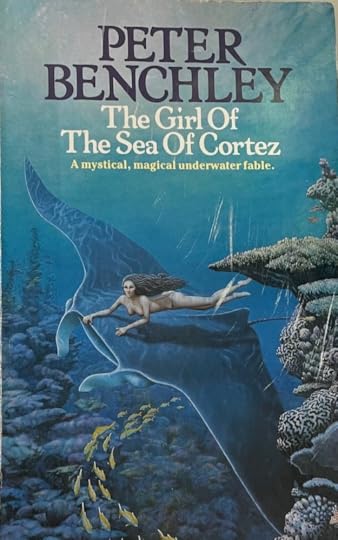
I first read ‘The Girl of the Sea of Cortez’ when I was eleven. I still have that copy (photo left) and used it write my Radio 4 adaptation some four decades later: both of us crumpled from multiple house-moves, finding ourselves in a changed world.
When I was growing up YA fiction was a rarity not a genre, and it was amazing to read a book with a strong teen female lead who was so physically powerful and independent. I swam with Paloma as she explored her incredible undersea world, felt the freedom and danger. I’m still fascinated by life seen through a snorkel-mask today, even if it’s just hermit-crabs marching across the silt of the English Channel. Although often the water is too polluted to swim.
‘Jaws’ was a classic ‘monster vs man’ story, and there’s a taste of that in The Girl of the Sea of Cortez. But the sea-view in Cortez goes much deeper, inspired by Benchley’s chance meeting and friendship with diver Teddy Tucker. He also had an extraordinary encounter with an injured manta in the Sea of Cortez in 1980. The manta allowed the divers to tend its wounds and to ride on its back. It stayed with them three days. Benchley became a marine conservationist, with a specific interest in protecting sharks. His legacy is continued by his wife Wendy through the Peter Benchley Ocean Awards.
‘Cortez’ was also inspired by Steinbeck’s ‘The Log from The Sea of Cortez’ a travelogue and catalogue of the intertidal sealife of Baja California. “The exposed rocks had looked rich with life under the lowering tide, but they were more than that, they were ferocious with life.” In his book, Benchley’s descriptions of its creatures, tides and weather are scientifically correct, location-specific and written with love. The sea is an ubiquitous presence, with enormous story-upturning power.
The story is also about loss, with a fractured family at its core. Paloma’s father who taught her to dive has been killed in a storm. He has left her a secret seamount, a tower of rock rising from the deep ocean supporting a teeming reef habitat. Her 15 year-old brother José is now the breadwinner, fishing for the family’s survival. It’s not a life he wants and finding a rich seamount could change everything.
When pitching a story to Radio 4 you need to answer two key questions: why is this audio, and why now?
A story with a young Mexican characters set entirely beside, on or under the sea isn’t an obvious choice. But working with independent director/producer Nicolas Jackson at Afonica made this possible. Afonica had created the beautiful documentary Jump Blue about freediving, and powerful drama The Beast with a cast of Mexican characters. It all fitted together. It was recorded in London and LA, and the cast thread Mexican Spanish through the drama, giving a sense of place and culture.
The timing was also right. The story has a new relevance with the creation of Marine Reserves
https://en.wikipedia.org/wiki/Marine_protected_area (No-Fish Zones) in Baja California, intended to replenish fish stocks and diversity, while growing eco-tourism. It’s an investment for future generations, but it takes time for an ecosystem to recover. How do you manage the years between? For local fishing communities it can be a tough transition.
This is where I’ve placed the adaptation of the novel, in the present day as the community on Paloma’s island faces these choices. I wanted the stakes to feel real for the characters. I also wanted to capture the detail of the marine creatures, give the listener the sensation of freediving, or being out on open water in a small pirogue. A sense of what could lost.
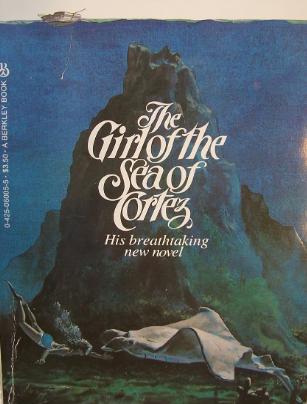
Paloma’s grief and her memory of her father weaves through the book as a live presence, but her mother Miranda is oddly absent. The ending is brilliant, unexpected and uplifting, but leaves the young characters literally at-sea. There are many unanswered questions. Why are there no other girls Paloma’s age on the island? What was the parent’s marriage like? Why isn’t Miranda worried by her daughter’s daily absences at sea? And what will happen after the last page? Is there a world where both the seamount and the family can be saved?
As a tweenage reader I didn’t think to ask. But as writer/ adapter moving prose into drama, I had to know. The audience would want to know.
In my adaptation, the book’s last page is my first. I created a present-tense conversation between Miranda and Paloma, taking us a few hours beyond the original end of the book. The family history unfolds as the two women reflect on their different views of the past and say the unspeakable. This immediately dramatises that tricky relationship and gives the female characters connection and agency.
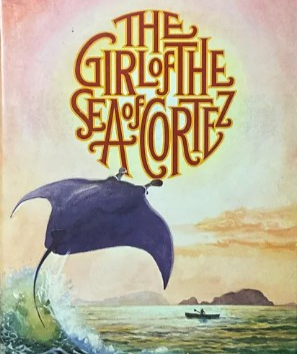
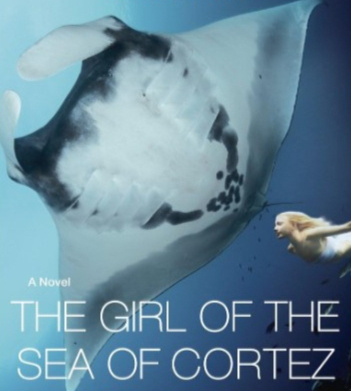
Which brings me to those book covers and way Paloma is portrayed. Radio cannot objectivity teenage Paloma or dilute her Mexican identity as the illustrators did, because we don’t view her from the outside. We meet her mind and see through her eyes. We feel the weight of the responsibility and loss she carries. We hear her true voice in her own language, and share the magical world she fights for.
I hope this drama will give you an experience as exciting as my first reading the book.
An Afonica production for BBC Radio 4
Produced and directed by Nicolas Jackson
Sound design by Adam Woodhams
Broadcast on Radio 4 Sunday 8th December 2024
October 22, 2024
The Mosquito
A climate farce with bite
In October 2023 I was invited to take part in an Experimental Stories project. These are regular collaborations between BBC Radio 4 and OKRE (a development charity attached to the Wellcome Trust). The objective is to bring scientists and audio creatives together to tell stories about the future of science and humanity. This process supported Oliver Emanuel’s amazing piece about antibiotic resistance (and Elvis) ‘The Truth about Hawaii’. in 2018.
Of course, I’d wanted to be invited onto Experimental Stories for years! In previous dramas I'd looked at aphasia neurology, pollinator robots, animal consciousness and using human hibernation to reduce resource consumption. ‘Titanium’ my biography of Gagarin and ‘Moon’ about Apollo 11 involved a collaboration with NASA scientists.
I was even more excited when I found out this year’s theme was ‘climate change and health’, something both me and producer John Norton are passionate about. But the BBC wanted it to be hopeful and entertaining. Tricky…
The first meeting was a speed dating event. I’m not kidding. Twenty creatives and twenty scientists met at Coal Drops Yard Kings Cross, and we moved from table-to-table exchanging two-minute conversations. Everyone then ranked the people we most wanted to work with. I met so many fascinating people in so many diverse areas, it was hard to choose. I made a mixed selection of hard-data experts and social/health-science champions.
I was delighted to be paired with Prof Andy Morse (meteorology and climate impacts on society, particularly infectious disease vectors) and Omnia El Omrani (COP Health Envoy and climate and health policy at Imperial College).
Next step was to hear the OKRE brief in more detail and thrash out some ideas. We told stories, chucked thoughts at each other, sifted, rejected. I wanted to understand what happens at COP conferences: to demystify the process and language for me and the audience. John was interested in a '‘sleepers awake to find the world changed’ story. Andy was interested disease vectors (insects) moving with climate change.
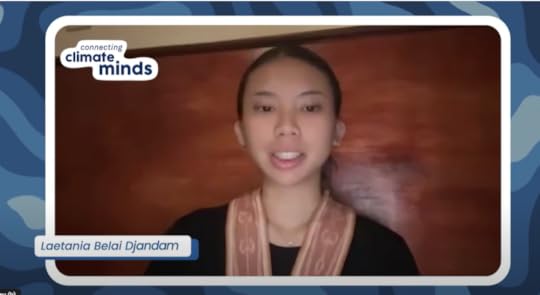
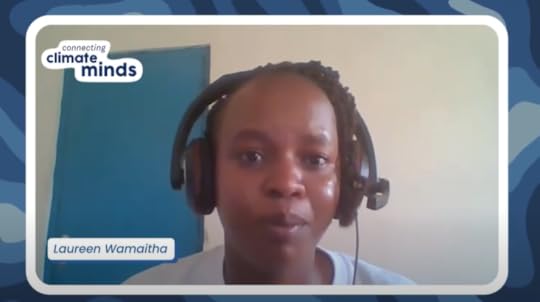
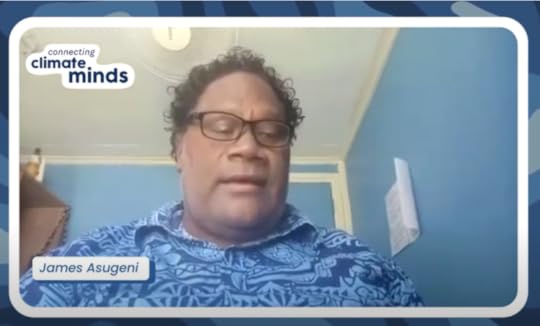
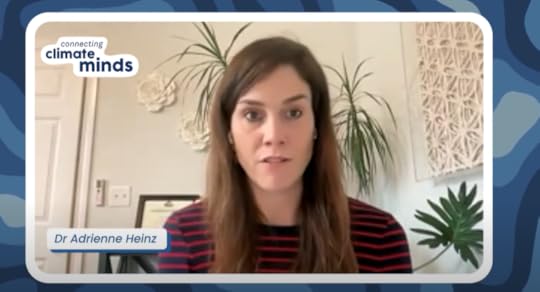
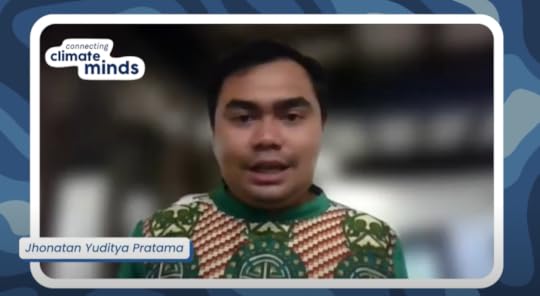
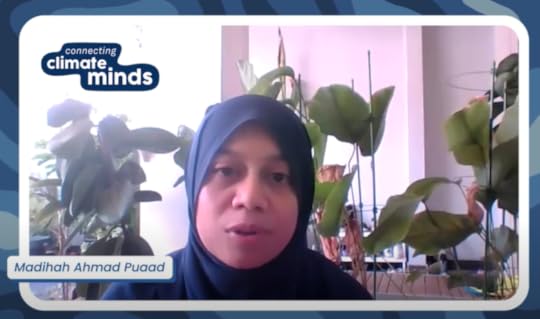
Omnia offered access to an amazing resource: interviews with 34 people from communities impacted by climate change globally. These are the people shown here. You can listen to them all at 'Connecting Climate Minds Lived Experiences' . We're very grateful to be able to include them in the drama.
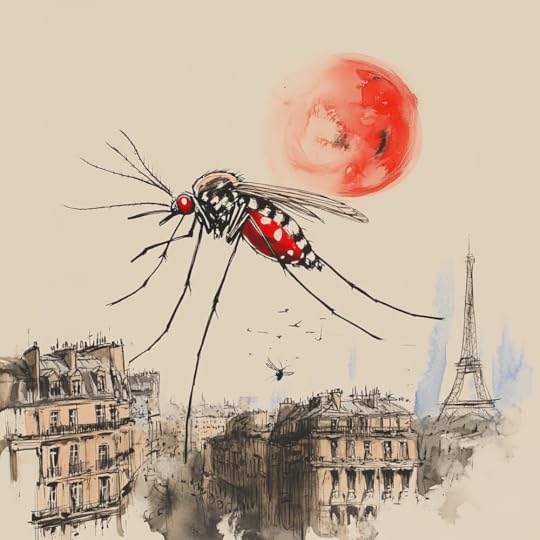
Tying all this together with OKRE’s health agenda took imaginative leaps in multiple directions, but distilled to this: a dengue infected mosquito infiltrates a COP conference in Paris and gives the UKs hapless Energy minister a fever-dream of two possible futures. Meanwhile a climate campaigner holds an exhibition in the Green Zone (the open-to-the public area of COP) . This features Omnia’s testimonies. I also threw in a lobbyist, a flash flood and a silver lining.
The research phase was intensive, covering everything from mosquito courtship songs to the security protocol at COP. I spoke to a policy advisor who had attended the last three COPs supporting ministers. I also spoke to an ‘oil industry insider’ who explained how lobbying works. That was a heart stopping, chilling conversation. The output of all this is a biting political comedy driven by a talking mosquito.
The script was tweaked in the recording, keeping pace with the latest news and language about the UKs Carbon Capture agenda. But the tragedy behind this comedy is the response to climate change isn’t moving fast enough. The satire is likely to be current for some time to come.
But mosquitos have survived two extinction events already. There’s hope!
The Mosquito was directed and produced by John Norton at BBC Wales
Sound engineering and design by Catherine Robinson
First broadcast 12/11/24 to coincide with COP 29 Azerbaijan
(Mosquito art by Midjourney AI)
March 22, 2024
SILOS: WORLD BUILDING
My BBC Radio 4 Serial Silos is a future-fiction thriller about human consciousness and climate change. To create it, I had to invent a world. (Beware minor spoilers...)
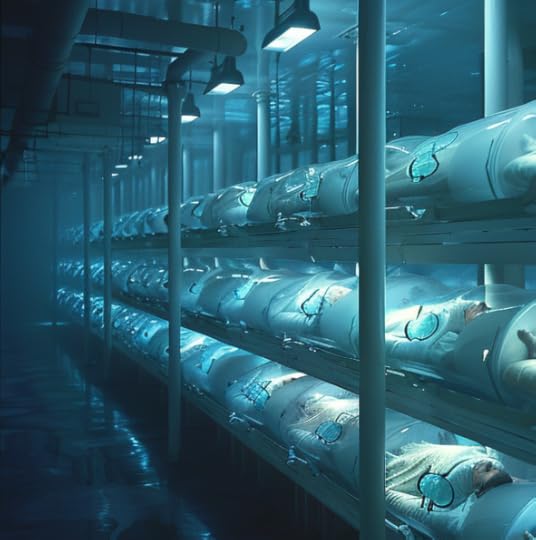
Silos is set in a fictional near-future where climate events are forcing people to relocate. But those in resource-hungry nations are still not doing enough to adapt their lifestyles. The alternative is human hibernation. A ‘sleep vacation’ in an energy efficient sleep-tube is used to offset your personal consumption. It’s a form of National Service with benefits. As the Si-Life advertisements say:
"Sleep yourself smart with our audio learning programmes. Sleep yourself fit, with our patented muscle-stimulation toning. Want to quit smoking or lose weight? Just sleep it off! Stasis has proven benefits for many long-term conditions and mood disorders. Book your tube-time to miss the winter. Save sleep-credits to pass on to your family as a legacy. Do your sleep-time, help the planet and wake up… a better you!"
Would you vote for this?
That’s what the people of our fictional island of Lanza did.

Making an island
For the story to work, I needed an island that was wealthy, large enough to be a political player, vulnerable to climate events, with an international, multicultural population. But using a real place felt too specific, not universal. So I invented an island, with its own physical geography, history and identity. From the Si-Life asylum-seeker induction:
"Lanza sits off the coast of Southwestern Australia. It’s about the size of New Zealand, with a similar history to Madagascar but a cooler climate. It’s in top 50 GDP nations, a leader in green initiatives including silos."
I must thank Francis Gallop for explaining why I couldn’t set it in New Zealand!
Developing the technology
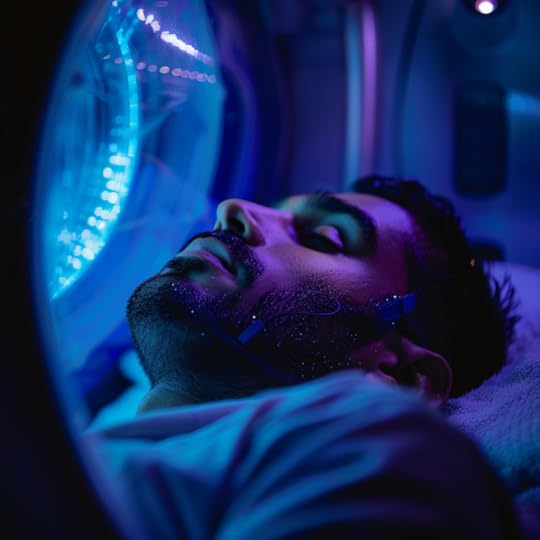
The hibernation technology for Silos is based on real research from NIAC/ NASA in preparation for a Mars Mission. The study looked at two methods of inducing stasis in humans to reduce payload in transit: hypothermia and torpor. The report is in the public domain. It concludes that torpor is the safest and lowest energy solution.
Torpor is a natural decrease of physiological and metabolic activity in an animal, a slowing of body function that conserves energy during cold or heat. When torpor is extended, it becomes hibernation. It’s thought humans used extended torpor to survive the ice-age and that ability is still in our DNA. It is used by the Aṉangu peoples to survive cold desert nights in central Australia. People can also experience it during freediving and meditation. It is an evolutionary survival skill.
Inventing a legal system
The lead character in Silos is a stasis lawyer, trying to protect her clients from new technology and rushed legislation. Her bible is the Climate Emergency Rights Act… which I had to invent. I’m indebted to lawyer Elizabeth Barrett. She used current UK legislation for people in custodial care (prisons and carehomes) to create fictional laws for the Silos. She really got into it!
Building a community
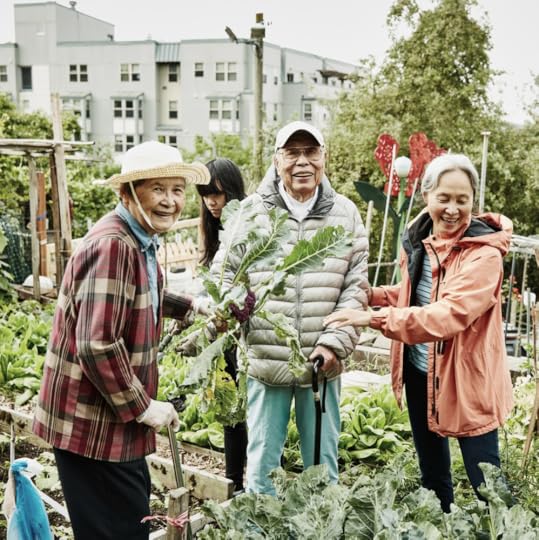
Community is at the heart of the story, a web of connections from a building to a neigbourhood to an island… to the world. It asks questions about how we integrate cultures and languages while retaining individuality, how we help people who have lost everything recover from trauma and reorientate. It explores how we navigate our changing world, how hyperconnection can divide us.
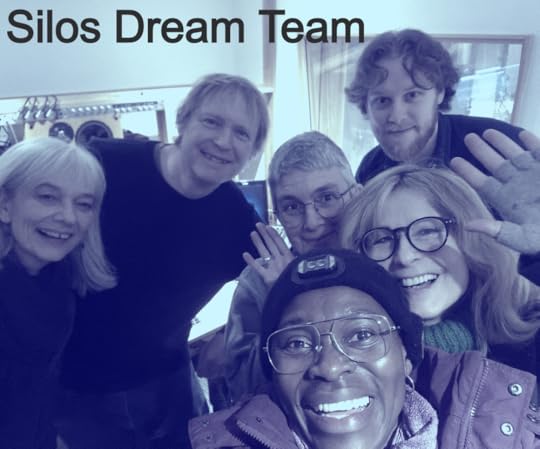
Thank you to the team for making those connections feel real in the drama: Anastasia Hille, Paul Bazely, Rakie Ayola (shown below), Raad Rawi, and producer Karen Rose. They were my compass, navigating a diverse set of characters.
Broadcasting hope
The world of Silos is challenging for the people living in it, at times a difficult listen for the audience. But it’s also a story full of humanity, a strong belief in our capacity to connect and find solutions. Call me naïve, but I believe the more we tell tales like this the more possible connection becomes. The more we accept the divisions and dystopias we are fed, the more likely we are to bring them upon ourselves.
Photo shows: Sarah Tombling (producer), David Thomas (sound design), Anita Sullivan (writer), Rakie Ayola ('Rozmay'), Karen Rose (director), Ethan Elsenburg (production assistant)
A Sweet Talk Production for BBC Radio 4
Directed by Karen Rose
Series broadcast from March 19th 2024
February 28, 2024
Catching the Ear: Broadcast vs Podcast
How do you make a broadcast radio play hold your listener? And how is that different for an on-demand drama podcast? This article explores the pros and cons of broadcast or podcast for audio drama.
Introductions, annos, adverts and other intrusions
Radio drama has to fit into a broadcast schedule, between other programmes. Your quirky comedy may have to follow a hard-hitting news bulletin. Your dangerous vision may segue right into the jaunty theme tune from The Archers. And there there's the live dimension. After 'The Last Breath' the flustered announcer stammered, 'Well, that was different', before moving on. Another announcer called my drama 'Manrake' instead of 'Mandrake'... which would have been a very different story. Whatever the schedule, your drama has to get your listener out of the last program and into your world in a heartbeat.
With a podcast on-demand audience, your show stands alone and free-floating, without annos. But if you want to monitise you have navigate adverts. This means planning break-points around advertising topics and energies you can't control. You need to script an out-point (mini cliff-hanger) and a reentry-point (recap, reengage) to bridge that ad. You'll also need a ear-catching sound design to land the listener straight back in the drama.
Listening 'while',A broadcast audience can walk out any time, may arrive mid story and generally can't hit pause. They usually listen 'while': driving, cooking, cleaning, doing the tax return. Sometimes they hear rather than listen, your masterpiece becomes the background noise of their day. A radio drama has to be strong and clear moment-to-moment, so whatever your audience hears their ears prick up.
A podcast audience is also listening 'while'. Realm told me many of their listeners are night-workers, the drama providing a human connection while the world sleeps. But that 'while' audience has chosen what they're listening to, and may even have paid or subscribed. They are motivated to stay with it.
Podcast distributors see genre as the hook: if you know what 'kind' of story you're entering into you 'get it' more quickly. And if you liked that show, there's more of the same. The BBC is starting to go this way too, particularly around its online offering Sounds. But what catches the ear isn't genre, it's specificity: a line of dialogue, a character's voice, the emotional pitch, the action/ reaction, or sound design that says clearly 'you are exactly here'.
White noise
Twenty years ago the test of a good radio sound design was whether it could be played over the worst speakers you could find and still sound good. With digital radio 'broadcast' is a loss-less medium, and radio drama is now designed for high-fidelity headphone listening. It is complex, layered and subtle. This is not always brilliant for the broadcast audience, listening across airwaves and through the ambient sound of their room or vehicle. For this audience the voice needs to sit clearly above atmos and music. Older people and people with hearing loss struggle with layered sound design and are turning off. Do we mind that? Should we care?
As broadcast radio drama goes digital it enters the podcast marketplace. The BBC is still bound to schedules and the old formats don't all translate well to podcast listening habits. But it does provide content free millions of listeners without adverts. But competition is healthy, it drives quality and attracts new listeners.
Embrace your medium, feed the imagination
With the infinite universes available in audio, its a mean-minded writer who sets a drama around a kitchen table. The best stuff happens:
-On horseback
-In a temporary refugee camp in an Airport
-Inside the mind of an octopus
-Orbiting Earth
-Stuck in a human exodus on a freeway
-Far upriver, at sea, in a vintage bi-plane
-At pub table. But with a tiny lost alien in your ear
Podcasts and broadcast have different challenges, defined by their context and audience. But ultimately, the goal for both is the same. They must catch the ear and keep that focus despite distractions and interruptions. They both achieve this through strong story and character, supported by sound design that establishes and holds the listener in a believable world.
My favourite feedback is not from press reviews, but hearing that someone sat in the car after their journey finished to listen to the end of the drama (Mandrake). Or they stood in their cold workshop for a whole one-hour drama because they didn't want to leave to get a chair (End of Transmission). Or they listened to every episode through the night, because they couldn't leave the characters (We Need to Talk About Kevin).
That's the true measure of success, not matter what form you write for.
September 8, 2023
Model Village Theatre: New Perspectives
A model village rebels and the ‘bigs’ have to intervene. But should the historic village stay in 1930’s England, or move forward? The audience decides. A new theatre show about two worlds, on two scales. Model Village theatre: New Perspectives Theatre Company touring through October and November 2023.


Where did the idea come from?
When my husband Ben Fearnside graduated in furniture design from High Wycmbe University in 1997, he briefly worked at Bekonscot Model Village in Buckinghamshire. He was an ‘architectural miniaturist’ and one of his projects was building an oast house. A decade later when we got together, he took me to see ‘his house’. I fell in love with Bekonscot’s tiny world. Whatever your age, you can’t walk through the gates without smiling.
Bekonscot Model Village Buckinghamshire
The village of waist-high buildings has a little of everything. There are castles, cottages, country-estates, churches, a Cornish fishing village, factory, cinema, zoo, town-hall and even a small airfield. The buildings are surrounded by perfectly tended bonsai, lawns and mini lakes. A Gauge 1 railway through tunnels, bridges and seven stations. But for me, the heart of the village is the miniature people, the witty scenes early C20th life. It was created by Roland Callingham, London accountant turned model-maker, and opened to the public in 1929. It was ‘A little piece of history that is forever England’.

A comforting story?
You have to admire the village’s blind optimism, or defiance, in the face of a looming World War. Did that tension drive the need to create a neat, safe miniature world? I also wondered what ‘forever England’ means to us now, in a country with so many divisions and currents of need and belief. And what about the tiny people, whose makers put such life and love into them? What about their working conditions? The giant grabby kids, huge feet, big weather and enormous frogs? Do they know they’re stuck in time? What do they think of their modern visitors? What would they say if they could?
This was a story I wanted to explore. A lot of my drama is radio. The sound design for the big/ small worlds would be fantastically creative. But it just felt too eccentric for Radio 4 in the afternoon. It wasn’t a film, it wasn’t a novel. Could it be… theatre?
New Perspectives Theatre Company
In 2019 Jack McNamara, then artistic director of New Perspectives, commissioned me to adapt Janet Frame’s ‘An Angel at my Table’. We were at the point of booking the tour when Covid struck. By the time touring was possible again, Jack had moved on and Angharad Jones was the new Artistic Director. A get-to-know-you Zoom about ‘Angel’ turned into a conversation about Model Village. It felt perfect for a rural touring audience and Angharad seemed confident that the big/ small worlds were possible on stage.

Interactive possibilities
This new context got my mind whirring. I had a pretty rural upbringing, with the local village-hall the centre of my creative life. (If an am-dram gender-reversal version of South Pacific counts as creative?) I also have a background in interactive narrative design and site-specific theatre. So I imagined the audience singing the village anthem, choosing the version of England they wanted. Maybe we could run workshops, start discussions about village life in contemporary England? Feed some of that content into the live shows… At the time of writing I don’t know how much of that will actually happen, but it’s all being talked about!
Research
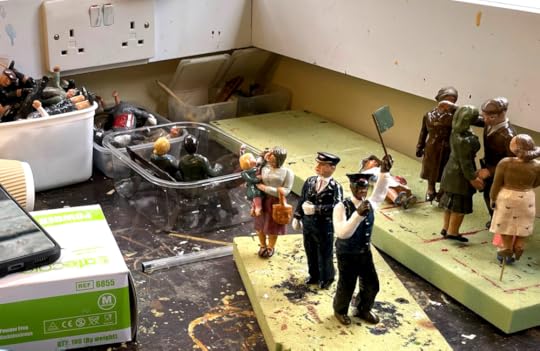
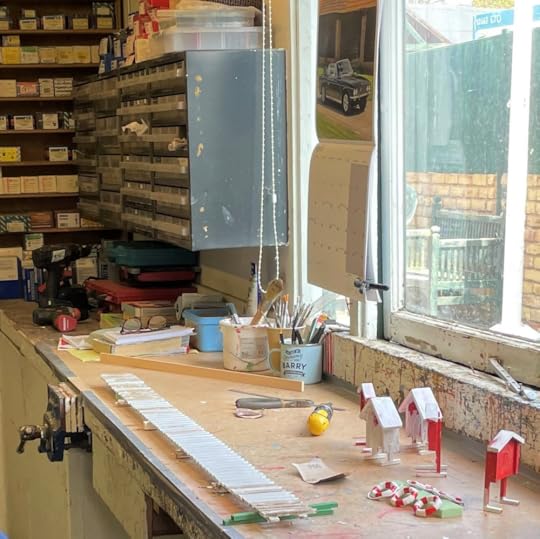
Once commissioned, I returned to Bekonscot and talked to the incredibly generous Maura Buckland and Brian Newman-Smith, who gave me a detailed tour of the workshops, showed me how buildings were made and maintained, and the scale figures were created. The village in my story isn't specifically Bekonscot: it borrows from other villages and Tim Dunn’s book on the history of model villages. Many greats, now deceased. Whatever I did, I had to honour the skill and dedication of these makers.
Development
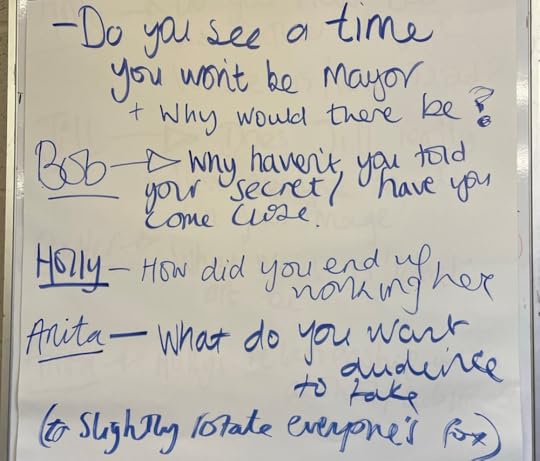
Scriptwriting was a joy. It seemed to write itself, the characters standing up and springing into life, sometimes making me laugh aloud. I also had the pleasure of working with composer Nick Underwood on the songs, following the success of our cabaret version of Dr Faustus. Angharad ran an R&D session on the script, with Duane Hannibal, Abbey Pidgeon and Joe Wiltshire-Smith. They were a great team. We really burrowed into the logic of the double world, how time worked and the characters’ drivers and secrets.
Production
I’m delighted Duane and Abbey could join the company for the tour, with Lee Rufford. I’m also really excited to see how Gemma Caseley-Kirk solves the double-world in 3D on stage, with a set that can tour anywhere. It’s a big challenge, but I have complete faith. All will be revealed in three weeks when rehearsals start!
In writing this blog I realise how much playfulness runs through the project. So although Model Village is satirical and raises some big questions about ‘what is England’, it has the same heart, humanity and humour you’d find in any model village around the country. Smiles guaranteed.
Touring
For more information and tour dates visit the New Perspectives Theatre Company website.
If there isn’t a show within your reach, do the next best thing: visit your local Model Village and have a chat to the little residents.

July 10, 2022
End of Transmission
The story of HIV told from the point of view of the virus. A Radio 4 Saturday Drama by Anita Sullivan.

Positive Voices
I am a Positive Voices speaker with Terrence Higgins Trust. Positive Voices go out to schools, corporates and healthcare settings: we tell our stories of living with HIV to whoever needs to listen. And there is plenty of good news to spread, like the government’s goal to end transmission of HIV in the UK by 2030.
Does that news surprise you? If so, no wonder.
Don’t Die of Ignorance
There has been no government issued health advice on HIV since the Don’t Die of Ignorance campaign in the 1986. Since then, the story of HIV has been told in vignettes. Personal journeys, stories of the activism or science. The lens has often been Northern-Hemisphere and focused on the 80’s and 90’s. The picture is much, much bigger. That’s the story I wanted to tell. Radio 4 gave me an hour: the Saturday Play. How to put all of that in an hour? It was a big challenge and a huge responsibility, shared with my fearless producer Karen Rose of Sweet Talk productions.
Research
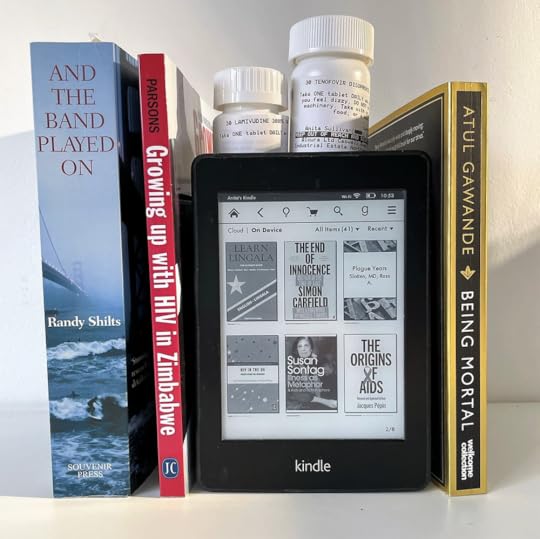
I live with HIV. I give talks about HIV. I have listened to the wonderfully diverse and powerful stories of my fellow Positive Voices speakers. I’ve been on panels and focus groups.
But I had a huge amount of research to do. I read books, watched documentaries and films, listened to podcasts and viewed web pages from virologists through to denialists. I interviewed people. I asked questions like ‘when you imagine the virus in your body, what do you see?’ I threw the net as wide as I could. When first draft script was ready I had it fact-checked by THT and the British HIV Association. I did my homework, but End of Transmission is not a documentary.
Radio drama
In the drama, it’s Jude’s 50th birthday. She has never known for certain how she caught the HIV. But the virus does. She stops taking her medication and brings her virus out of its 20-year stasis to ask questions. The virus is happy to oblige, but only if she listens to his story first. He begins in German Cameron in 1918 and ends a century later, the links in a chain of transmission finally leading to Jude.
Yes, the virus is 100 years old. Listen to Chris van Tulleken’s The Jump’ or read Jacques Pépin's The Origin of AIDS of you want to know how this was discovered.
Fact and Fiction
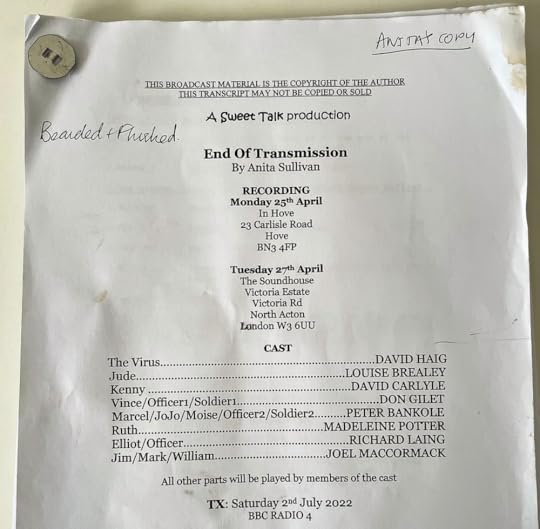
In the drama fact and fiction meet. Jude is my age. Like me, she has lived with the virus long enough to see significant medical advances. She’s lived in some of the cities I have. But Jude is not me. Her HIV journey is different. She is also more interesting than me, especially when voiced by the amazing Louise Brealey (Sherlock). She shared her ‘perfect day’ with (It’s A Sin) and was supported by an amazing ensemble cast who wove a story across decades and continents.
The drama was counterpointed by the real stories of Positive Voices speakers Jess, Stephen, Tim, Allan, Roland, Mary, Ese and Niamh. They are the heart of the drama and it's truth.
But there is a danger of the virus being more interesting than any of us, particularly when played by the mercurial (Killing Eve).
VIRUS: I’m not like other plagues. Arriving with a splash like Ebola, surfing in waves like flu. I am a slow, silent tide. I cruise. Travel on your passport, hitch up for the long-haul. Float in your blood, semen, vaginal fluid. Milk. Doesn’t get more intimate than that. And then I have to watch you die.
The virus should not have the last word, that’s the point.
JUDE: I have one last story to tell you. A secret. I can’t pass it on. Together, we will end you.
,THE GOOD NEWS ABOUT HIV
There is still no cure or vaccine for HIV, but..
· All blood products in the UK have been screened for HIV since 1985 and are safe
· Prenatal testing for HIV in the UK has reduced mother-to-baby transmission to zero
· Post Exposure Prophylactic (PEP) medication can stop HIV if you have recently been at risk
· Pre-Exposure Prophylactic (PrEP) medication prevents HIV infection
· HIV tests are as quick and simple as a lateral flow test, and you can test at home
· On effective medication people with HIV have undetectable levels of the virus..
· WE CAN’T PASS IT ON no matter what we do
When did you last test for HIV? To find out if you are HIV negative go to https://freetesting.hiv/
‘End of Transmission’ was broadcast on BBC Radio 4 July 2nd 2022 (also on BBC Sounds and iPlayer). It was a Sweet Talk production directed by Karen Rose, with sound design by David Thomas.
September 19, 2021
BBC Radio Drama Commissioning 101

Quick fact 1. You can only pitch to the BBC through a producer, either an in-house BBC producer, or independent radio producer.
Quick fact 2. Send an idea, not a script. Hardly anyone in the cash-strapped audio world has time to read unsolicited scripts. Also, it's harder to pitch work that's already been produced (e.g. as a stage play) as Radio drama only commissions original work. Good reviews and a production or publication track record can get a producer interested.
THIS IS THE PROCESS
STEP ONE When you hear something you love, approach the producer and tell them why you want to work with them. Mention your experience or aspirations, include links to social or your website and offer to send examples of your work.
All BBC email addresses have the same format so if you know someone’s name, you know their email address! You can find a list of independent radio producers on AudioUK . LinkedIn and Twitter are also good for tracking people down.STEP TWO Know your slot. For Radio4 & Radio3 consider the slots available (durations/ serials), the audience and how your idea might fit. Ask yourself is ‘is my idea radio drama?’ (i.e. not a stage-play, screenplay or essay in disguise). Is there a dramatic arc? Is sound a character? If those questions make no sense read this blog.
STEP THREE Consider the brief. Commissioning rounds happen twice a year. Commissioners issue a statement about what they do and don’t want. Your producer will help you check the viability of the idea e.g. will it meet compliance, has something similar been done recently. They will also help you interpret the 'BBC-speak' of the commissioning brief (see this example)
STEP FOUR Write your pitch. You need to distil your idea into a 250 word paragraph describing your work and why it fits the brief. Your producer will help you identify what will sell the work. Listen to their advice.
STEP FIVE Wait. The decision process is slow. If your idea is shortlisted you’ll be asked to submit a more detailed pitch responding to the commissioning editor's feedback. This will hopefully lead to a commission.
STEP SIX Sign the contract. The BBC uses a standard audio drama agreement, so you don’t need an agent to negotiate your contract or get paid. The rates increase as you rack up more broadcast hours. It's worth joining ALCS to make sure you receive all your royalties.

If the idea of writing something that conforms to a brief or a slot depresses you, consider the Podcast world. You won’t have such an instant audience as with the BBC, but you will have more freedom. Your work isn’t bound to a Radio4 agenda or schedule, you can play with format. Drama podcast producers are still slightly niche (80% of podcasting is factual). To sample what's out there try PlayerFM.
Again, get in touch with people whose work you like. Build a relationship, get things made.
Whatever audio route you take, you may find useful support through online writers groups, with people ready to do readings or give feedback on work.
Why am I helping people compete with me for work? I don't know! Maybe just 'cos I want to hear more good stuff. I hope this is helpful and wish you luck on your quest. First step, find a friendly producer!
January 24, 2021
Facing the Heart of Darkness
Adapting Joseph Conrad's challenging work for ,Radio 4 drama.
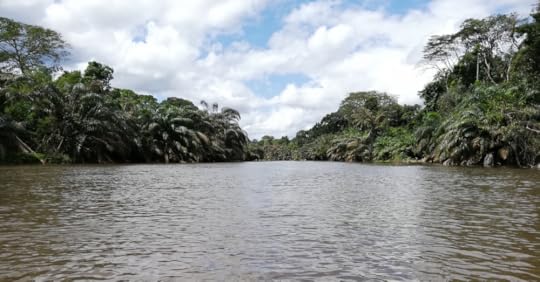
My interest in Conrad is longstanding. My first theatre play was a notoriously terrible adaptation of Lord Jim, with a student theatre company. Thirty years and sixty plays later, my interest was rekindled when I read about oil prospecting under swamp forest in Republic of Congo. This alongside the toxic mineral-grab in Eastern and Southern DRC made me think of Heart of Darkness, an updated version where corporations replace colonial powers as the exploiting force. I was really excited by the idea, but also daunted by both the book’s literary status and cultural legacy. I was aware of Chinua Achebe’s critique.
I was also very struck by the outburst of wildlife cameraman Vianet D’jenguet's in his documentary 'My Congo':
,'Whoever wrote Heart of Darkness was wrong; this is a place of light'.
I was determined that my own version would put DRC characters at the heart of the story as active protagonists who spoke for themselves, in their own languages. That the landscape would be rich and beautiful, with 'light glancing off the stained-glass wings of enormous dragonflies, and iridescent Congo sunbirds'. I also knew I was carrying an ‘intolerable presumption’ of understanding, and a big responsibility.
I pitched the idea to the BBC radio drama in February 2020 and was commissioned in October 2020. This was to be an accelerated ‘fast track’ production, with just three months from green-light to recording. That timeframe is important as two things had happened between pitch and contract: Covid 19 and Black Lives Matter.
Covid 19 had big practical implications for my research phase. When writing stories about things I have not experienced, I meet and talk with people who have lived it. This can involve individuals, whole groups, and even opposing groups, sometimes encountering the story as it happens. I back this up with a lot of reading. Exiled from Paradise, Just Whores, Gull Therapy, Countrysides and many other of my plays followed this research model. During Covid 19 I wasn’t able to do this. I was able, however, to work remotely with Ange Kasongo and Tracey Nyemba. I asked Ange particularly as a DRC political commentator, she would not pull her punches. I found Tracey through her wonderful Lingala teaching YouTube channel. They were both supportive and generous, but I really missed the actual sitting down and talking, growing a network of experts and their stories.
Black Lives Matter sent ripples through the project. My first though was that I should be telling this story; although I never doubted it should be told, as it touches so many current issues. I felt I should drop out of the project, but my producer encouraged me to continue. In that process, the story changed in one important way. I had originally imagined Maya (Marlow) as a Nigerian-British woman, encountering central Africa for the first time. We decided not to do this because it felt like such big story to tell on top of Conrad’s that we couldn’t do justice to both in 60 minutes. All the other characters stayed the same from pitch to recording: the cast brought their diverse perspectives to the text, on the lookout for blind spots and assumptions.
Recording was done remotely. Each actor performed at home in their DIY sound booths (in one case, a wardrobe), across the UK. Voices were connected by high bandwidth recording technology, engineered from Cardiff by Nigel Lewis. Me and director James Robinson communicated by WhatsApp. It was worked amazingly well.
Thank you to Georgia Henshaw, , , Ashleigh Haddad, and .
So the process had its challenges and I perhaps I wasn’t the right person to write the script. But I trust that the people around me had the integrity to challenge me and interrogate the text. I have loved the journey.
I start and finish with my love of the novel. It was so in advance of its time, in narrative and construction. The brutal truth of Conrad’s lived experience blazes through every page. I believe when Conrad talks about ‘darkness’ he isn’t talking about a people, a landscape or a continent, but the dark potential at the heart of all people. We lose sight of it, wrapped in the normal constraints of law, family, religion, political-stability and satellites. But when those things fail we are forced to look inside ourselves. Do we find values of self-governance and compassion? Or are we the ‘flabby, pretending, weak-eyed devils of rapacious and pitiless folly… going at it blind’.
That’s the horror. It’s as current now as it ever was.
January 18, 2020
Write Out Yourself (or 'The Joy of Research')
Our first few scripts are about subjects close to our hearts:
-Our unique Life Experience
-Our current Big Dilemma
-Our long-standing Obsession
If those scripts are vivid and true, they’ll make a impact. But if you want to turn that first hit into a career you need to go beyond yourself and find new stories. Otherwise you'll get stuck in the same emotional landscape, always playing the central character in your work... and eventually writing about a middle-aged writer stuck for ideas.
But how can you write outside your gender, class, age-experience, ethnicity, nationality, or time? What if the subject is biographical or technical? How can you write about the struggles of others? Do you have the right? And what if you get it wrong?
Be brave. You can tackle any subject if you engage with empathy and imagination... and do the research.
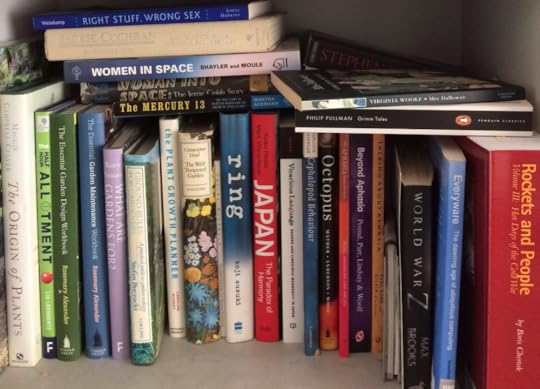
I love research. It's not just about reading books or online trawling. It’s an excuse to talk to people you find interesting, whether that’s string-theorists, apiarists, fox-hunters, aviators or aerial installers. Want to know what all those people in hi-vis are actually doing at the side of the railway line? How the greatest art fake was made? Or what happens in a funeral home?

You’re a playwright, you can ask.
The great thing about being a playwright not a journalist is people are more inclined to trust you. You’re not filming them or taking their photo. They have deniability and can be anonymous. By speaking directly to someone with real experience you find out not just the facts but the passion, the language and culture of their world. You get all the essential ingredients to shape character and drama.
So you just ring someone up, out of the blue? Send them an email?
Yes, you do. A bit of internet browsing should identify the right person to approach, or at least the person-that-knows-the-person. Connections build
trust. Being able to say ‘Dr Bigwig
recommended you as the expert ’ is a great way to introduce yourself.
People like to show off their expertise and talk about their passion. They're pleased to have someone taking an interest. It really is that simple.
So don’t be afraid. You have nothing to lose. And a world of stories to gain.
#Playwriting #Research #Autobiography