Catching the Ear: Broadcast vs Podcast
How do you make a broadcast radio play hold your listener? And how is that different for an on-demand drama podcast? This article explores the pros and cons of broadcast or podcast for audio drama.

Introductions, annos, adverts and other intrusions
Radio drama has to fit into a broadcast schedule, between other programmes. Your quirky comedy may have to follow a hard-hitting news bulletin. Your dangerous vision may segue right into the jaunty theme tune from The Archers. And there there's the live dimension. After 'The Last Breath' the flustered announcer stammered, 'Well, that was different', before moving on. Another announcer called my drama 'Manrake' instead of 'Mandrake'... which would have been a very different story. Whatever the schedule, your drama has to get your listener out of the last program and into your world in a heartbeat.
With a podcast on-demand audience, your show stands alone and free-floating, without annos. But if you want to monitise you have navigate adverts. This means planning break-points around advertising topics and energies you can't control. You need to script an out-point (mini cliff-hanger) and a reentry-point (recap, reengage) to bridge that ad. You'll also need a ear-catching sound design to land the listener straight back in the drama.
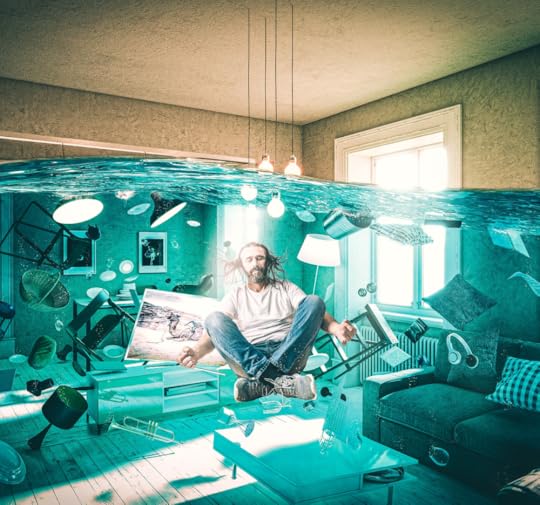
Listening 'while',A broadcast audience can walk out any time, may arrive mid story and generally can't hit pause. They usually listen 'while': driving, cooking, cleaning, doing the tax return. Sometimes they hear rather than listen, your masterpiece becomes the background noise of their day. A radio drama has to be strong and clear moment-to-moment, so whatever your audience hears their ears prick up.
A podcast audience is also listening 'while'. Realm told me many of their listeners are night-workers, the drama providing a human connection while the world sleeps. But that 'while' audience has chosen what they're listening to, and may even have paid or subscribed. They are motivated to stay with it.
Podcast distributors see genre as the hook: if you know what 'kind' of story you're entering into you 'get it' more quickly. And if you liked that show, there's more of the same. The BBC is starting to go this way too, particularly around its online offering Sounds. But what catches the ear isn't genre, it's specificity: a line of dialogue, a character's voice, the emotional pitch, the action/ reaction, or sound design that says clearly 'you are exactly here'.

White noise
Twenty years ago the test of a good radio sound design was whether it could be played over the worst speakers you could find and still sound good. With digital radio 'broadcast' is a loss-less medium, and radio drama is now designed for high-fidelity headphone listening. It is complex, layered and subtle. This is not always brilliant for the broadcast audience, listening across airwaves and through the ambient sound of their room or vehicle. For this audience the voice needs to sit clearly above atmos and music. Older people and people with hearing loss struggle with layered sound design and are turning off. Do we mind that? Should we care?
As broadcast radio drama goes digital it enters the podcast marketplace. The BBC is still bound to schedules and the old formats don't all translate well to podcast listening habits. But it does provide content free millions of listeners without adverts. But competition is healthy, it drives quality and attracts new listeners.

Embrace your medium, feed the imagination
With the infinite universes available in audio, its a mean-minded writer who sets a drama around a kitchen table. The best stuff happens:
-On horseback
-In a temporary refugee camp in an Airport
-Inside the mind of an octopus
-Orbiting Earth
-Stuck in a human exodus on a freeway
-Far upriver, at sea, in a vintage bi-plane
-At pub table. But with a tiny lost alien in your ear
Podcasts and broadcast have different challenges, defined by their context and audience. But ultimately, the goal for both is the same. They must catch the ear and keep that focus despite distractions and interruptions. They both achieve this through strong story and character, supported by sound design that establishes and holds the listener in a believable world.
My favourite feedback is not from press reviews, but hearing that someone sat in the car after their journey finished to listen to the end of the drama (Mandrake). Or they stood in their cold workshop for a whole one-hour drama because they didn't want to leave to get a chair (End of Transmission). Or they listened to every episode through the night, because they couldn't leave the characters (We Need to Talk About Kevin).
That's the true measure of success, not matter what form you write for.