
Timothy Ferriss's Blog
February 11, 2026
Jordan Jonas, Champion of Alone — The Art of Survival, Lessons from Nomadic Tribes, Hardship as the Path to Peace, How to Handle Rogue Wolverines, and Why Not to Photograph Attacking Bears (#853)
Jordan Jonas (@hobojordo) grew up on a farm in Idaho, rode freight trains across the US, spent time in remote Russian villages, fur trapped and travelled for several years with nomads in Siberia, and won Alone Season 6, after being the first contestant to truly thrive in the wilderness and harvest big game.
He now leads people from all over the world and all walks of life on extraordinary outdoor adventures, facilitating once-in-a-lifetime wilderness expeditions, hunts, family adventures, and team-building events.
He has a wife and three children and focuses on living life to its fullest with them.
Please enjoy!
This episode is brought to you by:
Momentous high-quality creatine for cognitive and muscular support: LiveMomentous.com/Tim Monarch track, budget, plan, and do more with your money: Monarch.com/Tim Eight Sleep Pod Cover 5 sleeping solution for dynamic cooling and heating: EightSleep.com/Tim Cresset family office services for CEOs, founders, and entrepreneurs: CressetCapital.com/Tim [image error]Listen onSpotify Listen onApple Podcasts[image error]Listen onOvercastJordan Jonas, Champion of Alone — The Art of Survival, Lessons from Nomadic Tribes, Hardship as the Path to Peace, How to Handle Rogue Wolverines, and Why Not to Photograph Attacking BearsAdditional podcast platforms
Listen to this episode on Apple Podcasts, Spotify, Overcast, Podcast Addict, Pocket Casts, Castbox, YouTube Music, Amazon Music, Audible, or on your favorite podcast platform.
TranscriptsThis episode (coming soon)All episodesSELECTED LINKS FROM THE EPISODEConnect with Jordan JonasWebsite | Instagram | Facebook | YouTube
Products & GearJordan Jonas Siberian-Style Taiga AxeLake Missoula Tea Company Breakfast TeaFerro Rod Fire-Starting ToolSurvival Cord Paracord with Integrated Survival StrandsVPA Two-Blade BroadheadsTenkara Fly-Fishing RodSKS RifleExperiences & CoursesJordan Jonas Wilderness Courses and Guided TripsMovies & Television Alone (I recommend Season 6 [Jordan’s winning season] and Season 7.)BooksThe Gulag Archipelago: An Experiment in Literary Investigation by Aleksandr SolzhenitsynMan’s Search for Meaning by Viktor E. FranklPlacesNorth Idaho Siberia, Russia Great Slave Lake, Northwest Territories, Canada Sheremetyevo International Airport Lake Urmia, Northwestern Iran Baghdad, Iraq France MontanaTennesseeTrans-Siberian Railway Indigenous Peoples & CulturesThe Evenki Assyrians Kalahari Bushmen / San Trackers Survival Skills & ConceptsSingle-Bevel Axe GrindingFeather Sticks / Axe CurlsDead Standing Trees Gillnetting SnaringSquirrel Pole Bow Drill Fire Funneling / Fencing Moose Calling Trip Wire Alarm System Tracking a Wounded Animal Fat as the Bottleneck of Survival Rabbit Starvation Spruce Sap as Wound Treatment Elevated Food-Storage Platform Offense vs. Defense Mindset PeopleViktor FranklJanahlee JonasJordan’s GrandparentsJordan’s MotherJesusJack KornfieldShawn RyanAleksandr SolzhenitsynJoseph StalinJustus WalkerAnimalsReindeer (aka Caribou)WolverineMooseSiberian Brown BearLlamaSableThis episode is brought to you by Momentous high-quality creatine! I’ve long benefitted from creatine for athletic and gym performance, and now I’m increasing my daily intake to enjoy the cognitive benefits as well. A pilot study in Alzheimer’s patients demonstrated that supplementing can increase brain creatine levels in just 8 weeks, improving measures of memory, reasoning, and attention. And a double-blind, placebo-controlled study found that creatine can restore aspects of memory and attention within hours in adults who are sleep deprived. I use Momentous Creatine made with Creapure®, which is sourced from Germany and has the strictest lab standards to ensure it’s at least 99.9% pure. And try Momentous’s Creatine Chews—clean chewable tablets with 1 gram of Creapure® creatine per chew—and their whey protein isolate and magnesium threonate, all of which meet their same, exacting standards. Check out Momentous for yourself and get 35% off your first subscription order with code TIM at LiveMomentous.com/Tim.
This episode is brought to you by Monarch! Traditional budgeting apps can help, but they don’t compare to the complete financial command center you get with this episode’s sponsor, Monarch. Monarch was named The Wall Street Journal’s Best Budgeting App of 2025, and it’s the top-recommended personal finance app by users and experts, with more than 30,000 5-star reviews. Get control of your overall finances with Monarch. Use code TIM at monarchmoney.com/Tim for half off your first year.
This episode is brought to you by Eight Sleep. Temperature is one of the main causes of poor sleep, and heat is my personal nemesis. But a few years ago, I started using the Pod Cover, and it has transformed my sleep. Eight Sleep has launched their newest generation of the Pod: Pod 5 Ultra. It cools, it heats, and now it elevates, automatically. With the best temperature performance to date, Pod 5 Ultra ensures you and your partner stay cool in the heat and cozy warm in the cold. And now, listeners of The Tim Ferriss Show can get $350 off of the Pod 5 Ultra for a limited time! Click here to claim this deal and unlock your full potential through optimal sleep.
This episode is brought to you by Cresset Family Office! Cresset offers family office services for CEOs, founders, and entrepreneurs. They handle the complex financial planning, uncertain tax strategies, timely exit planning, bill pay and wires, and all the other parts of wealth management that would otherwise pull me away from doing what I love most: making things, mastering skills, and spending time with the people I care about. Schedule a call today at cressetcapital.com/Tim to see how Cresset can help streamline your financial plans and grow your wealth.
I’m a client of Cresset. There are no material conflicts other than this paid testimonial. All investing involves risk, including loss of principal.
The post Jordan Jonas, Champion of Alone — The Art of Survival, Lessons from Nomadic Tribes, Hardship as the Path to Peace, How to Handle Rogue Wolverines, and Why Not to Photograph Attacking Bears (#853) appeared first on The Blog of Author Tim Ferriss.


February 4, 2026
Tim McGraw — Starting Late with a $20 Guitar, Selling 100M+ Records, and 30+ Years of Creative Longevity (#852)
Tim McGraw (@thetimmcgraw) is a Grammy Award-winning entertainer, author, and actor who has sold more than 106 million records worldwide, with 49 number-one singles and 19 number-one albums.
He is one of the most-played country artists since his debut in 1992. He’s been named Nielsen BDS Radio’s Most Played Artist of the Decade for all music genres and also had the Most Played Song of the Decade for all music genres.
Tim has four New York Times bestselling books and has acted for both film and television, including the movies Friday Night Lights and The Blind Side and Paramount Network’s Yellowstone. He recently starred alongside his wife Faith Hill and Sam Elliott in Yellowstone’s prequel—the three-time-Emmy-nominated 1883.
You can find tickets for his upcoming Pawn Shop Guitar Tour at TimMcGraw.com.
Please enjoy!
This episode is brought to you by:
Circle complete community platform for your community, events, and courses—all under your own brand: Circle.so/Tim Shopify global commerce platform, providing tools to start, grow, market, and manage a retail business: Shopify.com/Tim AG1 all-in-one nutritional supplement: DrinkAG1.com/Tim [image error]Listen onSpotifyListen onApple Podcasts[image error]Listen onOvercastTim McGraw — Starting Late with a $20 Guitar, Selling 100M+ Records, and 30+ Years of Creative LongevityAdditional podcast platformsListen to this episode on Apple Podcasts, Spotify, Overcast, Podcast Addict, Pocket Casts, Castbox, YouTube Music, Amazon Music, Audible, or on your favorite podcast platform.
TranscriptsThis episode (coming soon)All episodesSELECTED LINKS FROM THE EPISODEConnect with Tim McGrawWebsite | Twitter | Facebook | Instagram | Threads | TikTok | YouTube
Upcoming Tour Tim McGraw Unveils 2026 Pawn Shop Guitar Tour Books Books by Tim McGraw The 4-Hour Workweek: Escape 9-5, Live Anywhere, and Join the New Rich by Timothy Ferriss Breakfast of Champions: A Novel by Kurt Vonnegut Runnin’ Down a Dream: How to Thrive in a Career You Actually Love by Bill Gurley Tribe of Mentors: Short Life Advice from the Best in the World by Tim FerrissFilms & TV Shows 1883 American Bandstand A MusiCares Tribute to Bruce Springsteen The Blind Side Four Christmases Friday Night Lights Landman Sliding Doors Where the Action Is Yellowstone Songs“Different” by Tim McGraw (New, available only on social media.)“Don’t Take the Girl” by Tim McGraw“Glory Days” by Bruce Springsteen“Humble and Kind” by Tim McGraw“I Don’t Want To Be There In The Morning When She Wakes Up And Finds Me Gone” by Tim McGraw“Indian Outlaw” by Tim McGraw“Live Like You Were Dying” by Tim McGraw“Tougher Than the Rest” by Bruce SpringsteenAlbums Graceland by Paul Simon Not a Moment Too Soon by Tim McGraw Pawn Shop Guitar by Tim McGraw (Upcoming)Record Labels & StudiosAllaire StudiosBig Machine RecordsCurb RecordsPlacesNashville, TennesseeStart, LouisianaOrganizations, Institutions, & CompaniesCountry Music Hall of Fame and MuseumCMA (Country Music Association) AwardsCMT (Country Music Television)Cock of the Walk RestaurantEarth League InternationalFan Fair XFlorida State College at JacksonvilleGreyhoundPo’boy Don’sStanford UniversityUniversity of Louisiana at MonroeThe University of Texas at AustinPeopleTommy BarnesMax D. BarnesMike BorchettaScott BorchettaBrandi CarlileKenny ChesneyThe ChicksDick ClarkElizabeth Ann D’AgostinoDaisy DukeBob DylanSam ElliottByron GallimoreBill GurleyWoody GuthrieLaird HamiltonFaith HillThe Jackson 5Kevin KellyTracy LawrenceYo-Yo MaAudrey McGrawCari Velardo McGrawGracie McGrawMaggie McGrawTug McGrawTim NicholsGabby ReesePete RoseLord Rabbi Jonathan SacksPaul SimonBruce SpringsteenStingGeorge StraitJames StroudSupermanBilly Bob ThorntonUncle HankKurt VonnegutTimothy WayneCraig WisemanRelated ResourcesKurt Vonnegut on Writing | GoodreadsTim McGraw Sends Emotional Message as He Returns to the Stage Following Health Issues | ParadeHow Falconry Changed Language | BBC8 Reasons Why Zercher Squats/Deadlifts are the GOAT | Electrum PerformanceTim McGraw Explains Why He Couldn’t Be ‘Angry’ with His Dad | TodayCountry Superstar Announces Massive 2026 Tour With Very Special Guests | ParadeTim McGraw Shares His Family’s Military History | KFDITim McGraw’s Faith Hill Tribute Has Fans Calling Them ‘Beautiful Soulmates’ | ParadeHanmen Kyoushi): “Teacher” of Bad Cases | Takashi’s Japanese DictionaryTim McGraw Performs “I’m Not Gonna Miss You” | Academy Awards 2015Country Music Memories: Tim McGraw Releases His Debut Album | The BootRabbi Lord Jonathan Sacks on Powerful Books, Mystics, Richard Dawkins, and the Dangers of Safe Spaces | The Tim Ferriss Show #455TIMESTAMPS[00:01:51] Two Tims walk into a podcast.[00:02:56] “The song always has to win.”[00:05:02] Recording “Live Like You Were Dying” at 2 a.m. with Uncle Hank in a puddle in the corner.[00:09:22] Sensing when the moment is right.[00:10:29] The song Nashville hated that Tim heard his first night off the Greyhound.[00:13:18] The one-two punch that saved Tim from novelty-act purgatory.[00:15:22] Turning down the CMAs because the song wouldn’t fit the time slot.[00:20:11] Why you can’t let the audience steer the ship when testing material live.[00:25:51] Coping with the physical toll of performing for three decades.[00:34:04] The Four Christmases wake-up call that changed everything.[00:37:42] What training smarter looks like for Tim.[00:41:22] When Tim found out his dad was a baseball legend whose picture was already on his wall.[00:54:53] Important advice for aspiring parents.[00:55:41] When Tim pawned his high school ring for a $20 guitar.[00:58:27] Learning guitar from CMT videos and fret diagrams.[00:59:37] The morning Tim tore up his Marines paperwork and bought a Greyhound ticket to Nashville.[01:07:20] Nashville as creative accelerant: Tracy Lawrence, Kenny Chesney, and $50 singing competitions.[01:12:45] Po’boy Don’s crawfish shack: The demo that launched Tim’s career.[01:15:39] How Faith Hill saved Tim’s life.[01:18:33] The 7 a.m. bottle of whiskey cry for help.[01:20:27] Parenthood as selfishness-removal surgery.[01:24:28] Tim’s “Glory Days” disaster with Bruce Springsteen.[01:28:30] When Tim’s first album “went wood” — the failure that taught him everything.[01:33:29] A rodeo monkey no longer: When Tim kicked his record company to the curb.[01:37:35] Tim’s most important advice for artists.[01:43:41] Announcing the summer 2026 Pawn Shop Guitar tour with The Chicks.[01:46:28] If it’s so grueling, why does Tim still tour?[01:49:50] Tim’s “Humble and Kind” billboard.[01:50:50] Parting thoughts and a parting gift: “Different” — the new song only on social media.TIM MCGRAW QUOTES FROM THE INTERVIEW“I ended up not playing ball, joined a fraternity, pawned my high school ring, and bought a guitar for 20 bucks. I thought, ‘I love music, I love singing, chicks might dig it if I got a guitar and learned to play a few songs.'”
— Tim McGraw
“The song always has to win.”
— Tim McGraw
“We always like to say, ‘You could have the greatest song in the world, the greatest band in the world, greatest singer in the world—which I am not—but you could have all those factors and it still not work.’ And we always say, ‘Sometimes God just walks through the room.'”
— Tim McGraw
“If you start chasing what you think people want to hear, then you’re in trouble. You’ve got to chase what you want to hear and what you want to play. … If it doesn’t speak to me first, there’s no way I’m going to make it speak to somebody else.”
— Tim McGraw
“We’re so lucky as artists, writers, musicians, whatever you are as an artist, because that’s therapy. You have your own built-in therapeutic machine.”
— Tim McGraw
“If everything else is gone, if you’ve got hope, you’ve still got a chance.”
— Tim McGraw
“Maybe the life that I had growing up prepared me to be a better dad because of what I knew I didn’t want to do. And I found this business has really made me find out that learning what you don’t want to do and what doesn’t work for you is better than knowing what does.”
— Tim McGraw
This episode is brought to you by Circle! Circle is the complete community platform for you to build a home for your community, events, and courses. I run two private, invite-only communities on Circle, and the feedback and connections members have made have been invaluable. Circle quietly backs some of the most popular communities online, run by folks like Kevin Rose, Dr. Becky from Good Inside, and many more. If you run an online community, membership, or course business, Circle makes it easy to build a professional home for your audience—events, courses, payments, custom-branded apps—all in one place. Go to Circle.so/Tim to get $1,000 off Circle Plus, exclusively for my listeners, for a limited time.
This episode is brought to you by Shopify! Shopify is one of my favorite platforms and one of my favorite companies. Shopify is designed for anyone to sell anywhere, giving entrepreneurs the resources once reserved for big business. In no time flat, you can have a great-looking online store that brings your ideas to life, and you can have the tools to manage your day-to-day and drive sales. Go to Shopify.com/Tim to sign up for a one-dollar-per-month trial period. It’s a great deal for a great service, so I encourage you to check it out. Take your business to the next level today by visiting Shopify.com/Tim.
This episode is brought to you by AG1! I get asked all the time, “If you could use only one supplement, what would it be?” My answer is usually AG1, my all-in-one nutritional insurance. I recommended it in The 4-Hour Body in 2010 and did not get paid to do so. Right now, get a FREE Welcome Kit, including Vitamin D3+K2 and AG1 Travel Packs, when you first subscribe. Visit DrinkAG1.com/Tim to claim this special offer today and receive your 1-year supply of Vitamin D—a vital nutrient for a strong immune system and strong bones!
Want to hear another episode with someone who took charge of their career by learning to say no? Listen to my conversation with Academy Award-winning actor Matthew McConaughey, in which we discussed lessons from his father, 30+ years of diary notes, the art of catching greenlights, getting “unbranded” from Hollywood typecasting, and much more.
The post Tim McGraw — Starting Late with a $20 Guitar, Selling 100M+ Records, and 30+ Years of Creative Longevity (#852) appeared first on The Blog of Author Tim Ferriss.
January 30, 2026
How I Beat Lyme Disease with The Ketogenic Diet — Science, How-To Protocols, and 10+ Years of Zero Symptoms
I started writing this as a reply on X to Greg Yang, co-founder of xAI, who recently stepped down from xAI to address his debilitating case of Lyme disease.
Ultimately, I decided that a blog post could provide more detail and allow proofreading by credible researchers, so here we are.
Before we dive in, a disclaimer: I’m not a doctor, nor do I play one on the internet. I was hesitant to publish this, as I know how much flak I’ll get, but the results and underlying science are just too interesting.
The following is for informational purposes only. Please consult with your doctor and read the warnings at the end.
***
Growing up on Long Island (see this link), I’ve contracted Lyme disease twice. Most of my childhood friends and neighbors have had tick-borne diseases. My second case of Lyme in 2014 was incredibly severe, but it was resolved in 4–6 weeks with an unorthodox approach: strict ketosis. I’ve now been 100% asymptomatic for more than 10 years.
I have since replicated the results with four out of four friends who were effectively disabled by Lyme disease. In this post, I’ll cover some of the science, simple how-to instructions, lots of open questions, and upcoming tech options that might offer some benefits of keto in a headset, no diet required.
Am I saying the ketogenic diet will work for everyone? Of course not. I am saying that, compared to a lot of complex or questionable treatments for Lyme, ketosis is a simple “first, do no harm” approach with minimal downside for most people. Drugs often have off-target effects, and we’ve scientifically studied ketosis for more than 100 years.
Furthermore, ketosis has been a mainstay of human evolution for millennia. So perhaps it worth testing for a few weeks to see if you’re a responder? Lots of caveats with this, but I’ll unpack it.
Let’s begin with my personal case.
As mentioned, I twice contracted Lyme disease and co-infections on Long Island, confirmed with local testing, best-of-class lab testing in NYC, and lastly with specialists at the Stanford Infectious Diseases Clinic. I mention the three separate rounds of testing, as a lot of people are misdiagnosed with Lyme.
Many conditions have similar symptoms to Lyme disease, including Long COVID, Fibromyalgia, Chronic Fatigue Syndrome (CFS/ME), Multiple Sclerosis (MS), and Rheumatoid Arthritis (RA). Disambiguating takes proper testing from legitimate MDs, in my opinion.
There are simply too many charlatans and well-intentioned amateurs running around.
I had no rash in either instance, which is true in 20–30% of cases. Unfortunately, I believed the local folklore of “no rash, no Lyme” and, in the 2014 instance, I waited until symptoms were debilitating: severe joint swelling, slurred speech, forgetting common words and friends’ names, etc. I didn’t seek proper help until my assistant said, “Tim, I’ve seen you tired, I’ve seen you sick, and this is something else. You need to see a doctor.”
So, I did. Sadly, after proper diagnosis and courses of antibiotics, which I still believe are critical, most symptoms persisted. I operated at ~10% capacity for 9 months and was on the verge of accepting that my mind, body, relationships, business, and more might be handicapped forever. I felt like I had advanced dementia, fatigue often kept me bedridden, and arthritis-like pain wracked my entire body.
What happened at 9 months?
I started brainstorming subtraction. I’d already tried addition: adding drugs, supplements, and all manner of sketchy “alternative” options. If anything, some of them seemed to be generating more problems.
This is how I returned to the ketogenic diet.
Fortunately, I’d used the ketogenic diet in college for various sports experiments, and I decided to test whether or not picking a new fuel and harnessing anti-inflammation (more on these later) would improve things. I knew I could get into clinical ketosis within 3–4 days.
Within a week, all of my cognitive symptoms were gone.
After roughly 4–6 weeks of a strict ketogenic diet (<20 grams of carbohydrates per day), I completely and durably fixed all of my symptoms. It’s been more than a decade, and none of the symptoms have returned. It was a Hail Mary that worked.
And here is perhaps the most surprising part — I didn’t need to stay on the ketogenic diet. I went back to the slow-carb diet after 4-6 weeks of keto, and my diet has varied tremendously since. Whatever it did seemed to stick.
But there was one rub.
I had no satisfying explanation for why it worked.
I had a few plausible theories, sure, but nothing watertight. I knew the short-term effects of ketosis… but a durable fix? How was that possible?
The lights went on in late 2025 when I again interviewed Dr. Dominic D’Agostino, one of the world’s leading researchers and synthesizers of ketones.
Let’s start with the biggest missing piece he provided.
SALVATION THROUGH STARVATION?Lyme disease spirochetes (Borrelia burgdorferi) are largely dependent on glycolysis for energy production, as they lack a tricarboxylic acid (TCA) cycle and oxidative phosphorylation pathways. In simple terms, the bacteria that cause Lyme disease primarily use carbohydrates for fuel. I had no idea and simply got lucky.
But is it really as simple as starving the bacteria out?
This might not apply to all cases, as such spirochetes can also use alternate fuels like glycerol and pull off all sorts of evolved tricks. LLMs seem to raise an eyebrow at the above theory, but we have at least an N (sample size) of 5 with a 100% success rate. It’s not a Randomized Controlled Trial (RCT), but a lot of compelling science starts with a few interesting case studies.
This glycolysis-dependent piece of the puzzle seems to be critical, but might there be alternate explanations for why keto seems to work? A few possibilities come to mind, and perhaps they synergize to produce the “remission” I and others experienced.
Below are a few leads.
A ketogenic diet (KD) has a host of fascinating effects on mitochondria, the so-called “powerhouses” of the cell that generate most of your energy (ATP). This was one of my placeholder theories in 2014, as researchers started exploring this terrain seriously in the 1990s.
KDs can help you produce more mitochondria (biogenesis), increase energy production, and arguably improve mitochondrial quality by recycling and replacing them (mitophagy). Net-net, this could be a reboot of your metabolic machinery—you’re remodeling your mitochondria.
Could that address some of the fatigue symptoms of Lyme? Is 1–2 months sufficient to produce these changes and have them stick? Were my later periods of regular fasting—typically three contiguous days of water fasting per quarter—key for reinforcing what the KD kicked off? We don’t really know.
But even if 1–2 months of KD isn’t enough to overhaul your machinery, there are acute energy benefits that could explain my one-week turnaround of cognitive symptoms.
Ketones supply an alternative fuel to glucose, and in some contexts (impaired glucose metabolism) ketones are vastly superior. Perhaps this is partially why, even if not in ketosis, I will take a ketone salt or monoester before recording podcasts: I’m significantly sharper without having to mainline caffeine in the afternoon and sacrifice sleep quality later.
There are documented cases of Alzheimer’s disease (AD) patients who respond incredibly well to exogenous (supplemental) ketones (listen to 2:21 here), and I’ve heard clinicians describe AD patients who normally fail the clock test (drawing a clock) but who can succeed without any difficulty after a single 10–30-gram oral dose of exogenous ketones. Something interesting seems to be happening. Alzheimer’s is sometimes referred to as “type 3 diabetes.” Could a ketogenic diet fix part of the underlying problem, or are ketones simply working around damage (e.g., amyloid plaques and tau tangles)?
I don’t know, but here’s what I do know: every time I cross ~1 mmol/L blood concentration of ketones as measured by any commercial ketone meter (e.g., Keto-Mojo or Precision Xtra), a light switch is flipped and I have extra gears. I’ve seen this repeatedly since my first keto experiments in the mid- and late 1990s. Of course, your personal threshold will likely differ, but I can turn this on at will with exogenous ketones, a 1–2-day water fast, or a 2-4 day low-calorie KD.
Curiously, these extra gears seem to often kick in for many people who are not obviously glucose-impaired. Why? Perhaps it relates to the next bullet.
And perhaps people who aren’t glucose-impaired at the whole-body level (i.e., as assessed by standard blood tests) can nonetheless be glucose-impaired at the brain level? I’d bet money on it.
The primary circulating ketone, beta-hydroxybutyrate (BHB), appears to dial down inflammatory signaling through multiple pathways. In other words, some ketones have direct anti-inflammatory effects.
The next paragraph is technical, so feel free to skip, but there are some juicy bits.
BHB inhibits the NLRP3 inflammasome (a molecular trigger for cytokines like IL-1β), engages the HCA2/GPR109A receptor on immune cells, and may influence gene expression through epigenetic mechanisms like histone β-hydroxybutyrylation. The claim that BHB is a potent HDAC inhibitor is debated in the literature (if true, there are significant cancer implications), but net-net, for some people, ketosis seems to reduce systemic inflammation.
Lyme-induced inflammation can produce vasoconstriction and cause a range of problems (cold hands/feet, dysautonomia), but ketones (D-BHB and L-BHB) have a remarkable effect on improving cardiac output and blood flow by reducing peripheral vascular resistance. This is of personal interest, as both I and my mom have long-standing Raynaud’s Syndrome, but we never thought of any connection to Lyme. My mom has had both Lyme and alpha-gal syndrome, which was transmitted by the Lone Star tick. Now she can’t eat mammalian protein without risk of life-threatening anaphylaxis.
For more on the anti-inflammatory potential of ketones, I suggest you listen to this segment here from my very first conversation with Dominic.
Broadly speaking, anti-inflammatories can have some very fast effects. For instance, if you have minor aches and pains that make it a little painful to walk, you might be able to take two Advil and go for a pain-free walk 60 minutes later.
By extension, how quickly could the anti-inflammatory effects of ketones on a KD translate to less painful or pain-free joints? Smoother and faster cognition? Less or no fatigue? Once again, in my personal experience, all of these and more changed within a week of tipping past 1 mmol/L concentration of BHB as measured by a finger stick with a Precision Xtra or Keto-Mojo device.
Last but not least, guess what? Neuroinflammation impairs glucose metabolism in the brain, and impaired glucose metabolism worsens neuroinflammation.
Everything in this post seems tightly interrelated. That’s good news. Ketosis might be a hammer that hits several nails at once.
This section will overlap a lot with the preceding two.
Lyme disease is sometimes called “The New Great Imitator” because its symptoms overlap with so many conditions. Some are autoimmune, but many are psychiatric, including but not limited to depression, anxiety disorders, bipolar disorder, obsessive-compulsive disorder (OCD), and ADHD. There’s also emerging data that infection is linked to these disorders and other neurodegenerative diseases.
Dr. Chris Palmer, a Harvard Medical School psychiatrist at McLean Hospital, has developed what he calls “the brain energy theory of mental illness.” In my conversation with him on the podcast, he argued that mental disorders may, in many cases, be metabolic disorders of the brain. His core insight: when brain cells are metabolically compromised, they can become either underactive (shutting down from lack of energy) or hyperexcitable (misfiring when they shouldn’t).
In his model, a ketogenic diet may help by providing an alternative fuel source to struggling brain cells.
The keto–mental health connection isn’t new. Ketogenic diets have been used clinically for 100+ years to treat epilepsy. Centuries ago, churches sometimes locked “possessed” people in a room without food, and lo and behold, the “demons” disappeared after roughly enough time to metabolically switch to ketosis.
Ketogenic diets appear to act through multiple, sometimes overlapping pathways, including those affecting neurotransmission, inflammatory signaling, and gene expression. I bolded those we haven’t directly addressed in this piece.
Furthermore, the ketogenic diet dodges some of the metabolic and off-target side effects associated with many psychiatric medications, especially antipsychotics.
For more on this, I recommend Chris’s book Brain Energy and our full conversation. I also chatted with Dave Baszucki, founder of Roblox, about how he used metabolic psychiatry to save his son, who is diagnosed with bipolar disorder.
HOW TO GET STARTED + FUTURE NON-DIET OPTIONS + WARNINGS How to Get StartedIn brief, if you’ve been diagnosed with Lyme, it might make sense to try 1–2 months of a strict ketogenic diet DURING or AFTER antibiotics but BEFORE you try speculative treatments with non-trivial or unknown downside risks.
Of course, speak with your doctors first.
ChatGPT and similar LLMs can help cover most bases and even meal plans, but be sure to specify “less than 20 grams per day of carbohydrates (CHO).” People can get cute with “net-carbs” and outsmart themselves. I prefer a wide margin of safety when stakes are high (e.g., Lyme symptoms).
If you like books, amidst a sea of terrible options, there are a few that are pretty good.
From Dr. Dominic D’Agostino:
From a CEO I can’t name, who has access to thousands of patients who’ve tried a ketogenic diet in various forms:
The Complete Ketogenic Diet for Beginners: Your Essential Guide to Living the Keto Lifestyle by Amy Ramos (158 pages; 4.2 stars) The Art and Science of Low Carbohydrate Living: An Expert Guide to Making the Life-Saving Benefits of Carbohydrate Restriction Sustainable and Enjoyable by Stephen D. Phinney and Jeff S. Volek (Highly accurate but longer and more science-heavy) (316 pages; 4.5 stars)My Personal Protocol:For the most part, I think that trying to eat keto-friendly bagels and faux-desserts is the path to disappointing results.
Especially if you’re just doing a trial run for a few weeks, I like to keep it simple. Do fool-proof first, then, if you want, layer in clever and crunchy after at least two weeks of 1 mmol/L blood readings, and only then with constant ketone monitoring.
To jumpstart keto, I personally like to first do intermittent fasting (IF) for at least a week, only eating within an eight-hour window each day. IF alone can dramatically change your blood work, OGTT, and more. Note that it can take your body 1–2 weeks to overcome the first 12 hours or so of lower energy and occasional irritation, but when you do adapt, it pays long-term dividends.
If you adapt to IF, it’ll make future keto transitions a lot easier and likely eliminate any fogginess, low energy, or “keto flu” symptoms. It helps jumpstart your ketogenic machinery without extended ketosis.
But if you’re in a rush to test keto and want to bite the bullet, you can also just start with a lower-calorie keto diet. The sub-maintenance calories will dramatically speed things up.
In my case, I default to something like the below at a bodyweight of around 175 lbs.:
• 9am Morning – Coffee or tea with 2 tbsp heavy cream (NOT half and half)
• 11am Mid-morning – For the first week of keto and sometimes longer, I’ll mix KetoSpike cocoa exogenous ketone powder into my coffee or tea. This remedies early fatigue.
• Cardio, if any Zone 2 to be done
• ~2pm Lunch – Two cans of chub or jack mackerel mixed with 2 tbsp MCT oil + 2 tbsp apple cider vinegar + salt/pepper. Cheap, fast, and surprisingly good. This will clock in at around 500–700 calories.
• 5pm Weight training, if any
• 7pm or 8pm – Big dinner. This will contain the rest of my calories for the day.
Chopped ribeye on huge salad with extra virgin olive oil, plus a side of creamed spinach
OR
Chicken and cheese plus keto-friendly veggies like broccoli and cauliflower
OR
Lamb chops plus keto-friendly goulash, etc.
You can always add fat with some additional heavy cream in a beverage, as has been done successfully for more than a century with epileptic kids, or a few dollops of sour cream, or a dessert of keto-friendly cheeses.
• Post-dinner – Walk the dogs and curb any glucose/insulin response from the large meal
That’s it. Once you’re in proper ketosis, you probably won’t feel much hunger. It’s quite liberating to reorient to hunger and eating that isn’t compulsive and full of snacking. If you really want to snack, eat more at meals. If you still want to snack, it’s habit and not physiology talking.
Postscript:
Supplements: I take electrolytes (sodium, magnesium, and potassium) as pills or packets at least twice a day. Especially if you’re new to keto, this will be important for avoiding dizziness, cramping, and sleep problems. Just ensure no sweeteners, maltodextrin, etc. are hiding in the product. You’d be surprised what some popular brands do.
Fat: Don’t try to do a low-fat, high-protein version of keto. For reasons we’ll skip here, it’s very hard to make work and not worth the gamble. Aim to consume at least 70% of your daily calories from fat.
Snacks: Be careful with snack foods, even keto-friendly-ish macadamia nuts, which can add up and knock you out of ketosis. Avocados also contain more carbs than you might think. Once mildly knocked out of ketosis, some people need multiple days to regain footing and end up feeling depleted, exhausted, and awful. For beginners, treat ketosis as binary and watch your exact grams of carbs. Play it safe so you don’t end up in metabolic purgatory.
Can you get some of the benefits of a ketogenic diet without eating meat, eggs, and cheese all the time? It sure would be nice.
And, yes, you can make a KD much more appealing, eating a surprising quantity of salads and greens, but I’m always looking for tools and approaches that might make its benefits more accessible.
Here are a few that I’m tracking closely:
Intermittent fasting by itself. At least a 16-hour window of fasting. Read up on neuroscientist Mark Mattson and “flipping the metabolic switch.” Here is one oldie-but-goodie, but note that Mark suggests 16–18 hours of fasting instead of the 12-hour onramp mentioned in that publication. This is also referred to as 16:8 time-restricted eating. 16:8 or 18:6 is a goldmine and perhaps my most surprising personal change of the last two years, in addition to accelerated TMS.
The “metabolic switch” relates to depleting your liver of glycogen, requiring around 16 hours for most people, which then leads to a more ketotic state.
Bioelectronic medicine (e.g., vagus nerve stimulation (VNS)). Dr. Kevin Tracey and others have described the “inflammatory reflex,” whereby vagus signaling can modulate immune activity. Early clinical work has explored VNS in inflammatory conditions (e.g., rheumatoid arthritis). This is not a Lyme treatment per se, but it’s plausible that a VNS device, particularly implants or an ear-based transauricular VNS (taVNS), could be used to decrease inflammation-driven symptoms. There are also some potentially interesting applications to chronic pain management via HMGB1 (special thanks to Ulf Andersson).
Caveat emptor – there is a LOT of BS out there related to vagus nerve stimulation.
Listen to my interview with Kevin, and I’m hoping to help make easier auricular devices more widely available soon. For a possible alternative route, also read up on the applications of famotidine (Pepcid) to the vagus nerve and the inflammatory reflex, which has applications to COVID and more. As always, speak with your doctors before using.
Ultra-low-intensity magnetic approaches (Fareon). Stealth startup Fareon has published preclinical work suggesting microtesla-range magnetic fields can influence neuroinflammation and disease models. This is early science, not clinical guidance, but I became an early investor in this company for a lot of reasons. One of them: I’m hoping it might offer some of the anti-inflammatory benefits of keto with simple at-home hardware. Their tech is not yet available outside of trials, but I’m hoping to help expand that. You can sign up for their email list to be the first to know.
Others?
Do you have other ideas or suggestions? If so, please let me and readers know in the comments section of this blog post.
It bears repeating: Many conditions have similar symptoms to Lyme disease, including Long COVID, Fibromyalgia, Chronic Fatigue Syndrome (CFS/ME), Multiple Sclerosis (MS), Rheumatoid Arthritis (RA), and more. Disambiguating takes proper testing from legitimate MDs, in my opinion.
It is also worth noting, however, that data suggest a ketogenic diet might help with symptoms of nearly all of the above (!):
MS → strongest early clinical evidence
Fibromyalgia → promising pilot data
CFS/ME → strong theoretical fit, weak trials
Long COVID → emerging hypothesis
RA → indirect anti-inflammatory benefit
Returning to the caveats, there is another risk lurking behind the label of “Lyme disease.” Some people go shopping for the Lyme diagnosis. If you keep seeing doctors long enough, especially once you venture into “doctors” at the fringe, I promise that you will eventually get a Lyme diagnosis. Some such patients are simply desperate for any explanation and treatment that can provide relief. Others are subconsciously hoping for an external cause for depression and lethargy caused by issues like a rocky marriage, alcoholism, social isolation, etc. It’s a lot easier to take pills or get IVs rather than fundamentally changing the tectonic plates of your life. I get it, and I’ve been there in different contexts.
In the case of Lyme disease, there are entire cottage industries that have popped up to happily take your money for endless treatment that won’t do much.
So, good to be aware and always ask: If I took Lyme off the table, what else might possibly explain this?
Keto WarningsIf you’re on insulin, sulfonylureas, GLP-1 agonists (e.g., Ozempic, Zepbound), or any SGLT2 inhibitor (the “-flozin” drugs), don’t attempt a ketogenic diet without clinician supervision, as carb restriction/fasting can trigger euglycemic ketoacidosis, and medication doses may need rapid adjustment.
In fact, please be sure to always speak with your doctor, m’kay?
Just note that you might need to offer them some reading on the ketogenic diet, as it isn’t a common intervention. This blog post or linked studies and podcasts offer a few starting points.
Also avoid DIY keto if you are pregnant/breastfeeding, have significant kidney/liver/pancreatic disease (including prior pancreatitis), or have a history of eating disorders.
All that said, overall, humans are incredibly well evolved to handle ketosis, especially for the brief periods of time necessary to notice before-and-after changes in the context of Lyme.
One final addendum from Dominic on ALS, at his request:
“FYI, my friend Deanna Tedone was diagnosed with rapidly progressing ALS 17 years ago (given 3 years to live, at most). Her dad, Dr. Vince Tedone, was a world-famous orthopedic surgeon for the Yankees. He came up with the Deanna Protocol, and we proved efficacy in mice: Metabolic Therapy with Deanna Protocol Supplementation Delays Disease Progression and Extends Survival in Amyotrophic Lateral Sclerosis (ALS) Mouse Model.
Deanna tested positive for Lyme disease, and we think this may have been the cause of her ALS. Their foundation is Winning The Fight, and they’re hoping to fund more research on the link between Lyme and neuro diseases.”
For now, that’s all, folks!
Illness and medicine can be squirrely beasts, and I myself have been tempted to give up at times. It can seem like the deck is stacked against you. But sometimes there actually is a simple light of hope at the end of the tunnel.
The ketogenic diet is not a panacea, but its applications beyond weight-loss are compelling. For some, like me and my friends, they can be life-changing.
I sincerely hope this post is helpful.
All the best to you and yours,
Tim Ferriss
Thanks to everyone who proofread this post. Any remaining mistakes are mine. If you spot errors or have corrections, please leave a comment below.
ADDITIONAL RESOURCESDr. Dominic D’Agostino — All Things Ketones | The Tim Ferriss ShowDr. Dominic D’Agostino — How to Use Ketosis for Enhanced Mood, Cognition, and Long-Term Brain Protection | The Tim Ferriss Show Dr. Chris Palmer — Optimizing Brain Energy for Mental Health | The Tim Ferriss ShowDavid Baszucki, Co-Founder of Roblox — Ketogenic Therapy for Brain Health | The Tim Ferriss ShowDr. Kevin J. Tracey — Credible (vs. Bogus) Vagus Nerve Stimulation | The Tim Ferriss Show Brain Energy: A Revolutionary Breakthrough in Understanding Mental Health—and Improving Treatment for Anxiety, Depression, OCD, PTSD, and More by Dr. Chris Palmer The Great Nerve: The New Science of the Vagus Nerve and How to Harness Its Healing Reflexes by Kevin J. Tracey Guidelines for the Prevention, Diagnosis and Treatment of Lyme Disease Alzheimer’s Disease Is Type 3 Diabetes–Evidence ReviewedThe ketone metabolite β-hydroxybutyrate blocks NLRP3 inflammasome-mediated inflammatory disease Ketogenic diet as a metabolic treatment for mental illness Transcranial microtesla magnetic fields suppress neuroinflammation and neuronal oxidative stress burden Metabolic Mind FareonThe post How I Beat Lyme Disease with The Ketogenic Diet — Science, How-To Protocols, and 10+ Years of Zero Symptoms appeared first on The Blog of Author Tim Ferriss.
January 28, 2026
Dr. Tommy Wood — How to Future-Proof Your Brain from Dementia (#851)
Dr. Tommy Wood (@drtommywood) is an associate professor of pediatrics and neuroscience at the University of Washington, where his research focuses on brain health across the lifespan. This includes therapies for brain injury in newborns, prevention and treatment of adult brain trauma, and the factors that contribute to long-term cognitive function and cognitive decline. Tommy received an undergraduate degree in biochemistry from the University of Cambridge, a medical degree from the University of Oxford, and a PhD in Physiology and Neuroscience from the University of Oslo.
Alongside his academic work, Tommy is head scientist for Motorsport at Hintsa Performance, overseeing health and performance programs for multiple Formula 1 drivers. He also helped to found the British Society of Lifestyle Medicine, is head of research for the dementia prevention charity Food for the Brain, and serves as chief science officer for brain health coaching company BetterBrain. He has also trained and competed in multiple sports, coming in the top 20 in the world’s first ever fully off-road ironman triathlon, and 2nd at Washington’s Strongest Man in 2024.
Tommy is co-host of the Better Brain Fitness podcast and author of the forthcoming book The Stimulated Mind.
Please enjoy!
This episode is brought to you by:
Circle complete community platform for your community, events, and courses—all under your own brand Monarch for tracking, budgeting, planning, and doing more with your money Eight Sleep Pod Cover 5 sleeping solution for dynamic cooling and heating Cresset family office services for CEOs, founders, and entrepreneurs[image error]Listen onSpotifyListen onApple Podcasts[image error]Listen onOvercastDr. Tommy Wood — How to Future-Proof Your Brain from DementiaAdditional podcast platformsListen to this episode on Apple Podcasts, Spotify, Overcast, Podcast Addict, Pocket Casts, Castbox, YouTube Music, Amazon Music, Audible, or on your favorite podcast platform.
TranscriptsThis episodeAll episodesSELECTED LINKS FROM THE EPISODEConnect with Dr. Tommy Wood:Website | Better Brain Fitness Podcast | Instagram | Twitter
BooksThe Stimulated Mind: Future-Proof Your Brain from Dementia and Stay Sharp at Any Age by Dr. Tommy Wood Breath: The New Science of a Lost Art by James NestorRelated ResourcesTommy Wood and Dr. Rangan Chatterjee Talk About Baby Fat (Clip) | Feel Better, Live MoreCaffeine Citrate – Is It a Silver Bullet in Neonatology? | Pediatrics & NeonatologyHow to Reduce the Risk of Dementia from Concussion and TBI | Better Brain FitnessTommy Wood: Washington’s 2nd Strongest Middleweight!? | FacebookDancing May Be Better than Other Exercise for Improving Mental Health | University of Sydney15 x 45 Seconds at Zone 5 MAX Intensity | RowAlong12 Rules for Learning Foreign Languages in Record Time — The Only Post You’ll Ever Need | Tim FerrissHow to Live Like a Rock Star (or Tango Star) in Buenos Aires… | Tim FerrissI Tried Natto So You Don’t Have To | Brand New VeganFermented Shark & Black Death — Traditional Icelandic Pairing | Wanderlust and LipstickAmericans Try Surströmming (The Smelliest Food In The World) | BuzzFeedVideoSupplementsBranched-Chain Amino Acids (BCAA)CDP Choline (Citicoline)Creatine Monohydrate (Creapure)L-MethylfolateMagnesiumMelatoninOmega-3 Fatty Acids (DHA/EPA)Vitamin BVitamin DOral Health ProductsXylitol GumXylitol MouthwashAir PurifiersAustin Air HealthMateBlueairCoway AirmegaJSPRSleep ProductsEight SleepExercise EquipmentBlack Mountain Products Resistance BandsB Strong BFR (Blood Flow Restriction) CuffsGames & AppsDuolingoStarCraftSuper Mario 3D WorldMovies & TV Shows Trainspotting Vikings PeopleAlois AlzheimerPeter AttiaRangan ChatterjeeStephen CunnaneDominic D’AgostinoAuguste DeterJack KornfieldGill LivingstonJames NestorChantel PratDavid SmithKelly StarrettJuliet StarrettAndrea StoccoMatthew WalkerNolan WilliamsJin-Tai YuZorroKey ConceptsAlzheimer’s DiseaseAPOE (Apolipoprotein E)BDNF (Brain-Derived Neurotrophic Factor)BEN (Brain Entropy)DHA (Docosahexaenoic Acid)DORAs (Dual Orexin Receptor Antagonists)GLUT4 (Glucose Transporter Type 4)HIE (Hypoxic Ischemic Encephalopathy)Lactate ThresholdNeuroplasticityNeuroprotectin D1Norwegian 4×4 ProtocolOpen-Skill vs. Closed-Skill ExercisePAR (Population Attributable Risk)SPMs (Specialized Pro-Resolving Lipid Mediators (SPMs) — Resolvins, Maresins, ProtectinsKey Studies ReferencedBrain Atrophy in Cognitively Impaired Elderly: The Importance of Long-Chain ?-3 Fatty Acids and B Vitamin Status in a Randomized Controlled Trial | American Journal of Clinical NutritionCreative Experiences and Brain Clocks | Nature CommunicationsDementia Prevention, Intervention, and Care: 2024 Report of the Lancet Standing Commission | The LancetDHA Status Influences Effects of B-Vitamin Supplementation on Cognitive Ageing: A Post-Hoc Analysis of the B-Proof Trial | European Journal of NutritionEffect of Docosahexaenoic Acid on a Biomarker of Head Trauma in American Football | Medicine & Science in Sports & ExerciseThe Effect of Omega-3 Fatty Acids on a Biomarker of Head Trauma in NCAA Football Athletes: A Multi-Site, Non-Randomized Study | Journal of the International Society of Sports NutritionHomocysteine Status Modifies the Treatment Effect of Omega-3 Fatty Acids on Cognition in a Randomized Clinical Trial in Mild to Moderate Alzheimer’s Disease: The OmegAD Study | Journal of Alzheimer’s DiseaseIdentifying Modifiable Factors and Their Joint Effect on Dementia Risk in the UK Biobank | Nature Human BehaviourLactate and BDNF: Key Mediators of Exercise Induced Neuroplasticity? | Journal of Clinical MedicineOmega-3 Fatty Acid Status Enhances the Prevention of Cognitive Decline by B Vitamins in Mild Cognitive Impairment | Journal of Alzheimer’s DiseasePrevention of Complications Related to Traumatic Brain Injury in Children and Adolescents with Creatine Administration: An Open Label Randomized Pilot Study | Journal of Trauma and Acute Care SurgerySafety of Creatine Supplementation: Analysis of the Prevalence of Reported Side Effects in Clinical Trials and Adverse Event Reports | Journal of the International Society of Sports NutritionWearing an Eye Mask During Overnight Sleep Improves Episodic Learning and Alertness | SleepTIMESTAMPS[00:02:30] The cognition conversation commences.[00:03:11] Why human babies are chubby little brain-fuel tanks.[00:05:16] Brain injury in newborns: Cooling, caffeine, and coming home.[00:09:07] Adult concussion protocol: Fever management, ketones, and why you shouldn’t chug Powerade.[00:18:59] Washington’s 2nd Strongest Man talks omega-3s, methylation, and why your brain needs the whole orchestra.[00:29:34] Auguste Deter, Alzheimer’s mystery patient, and the 45-70% dementia prevention sweet spot.[00:39:22] From CGM monitoring to the “use it or lose it” glucose paradox.[00:55:54] Open-skill and navigational exercise + VO2 max training as insurance against dementia.[01:01:32] Jiu-jitsu, sleds, and the Norwegian torture method (4×4 intervals).[01:03:37] Lactate training: Forget the finger prick, embrace the misery.[01:06:40] Announcing The Stimulated Mind: Tommy’s brain-saving book.[01:07:35] Foundation supplements: Omega-3s, B vitamins, vitamin D, iron, and magnesium.[01:08:58] Polyphenols, choline, and the case for eating more liver.[01:10:40] Creatine: Tommy’s 10-gram cognitive stimulant ritual.[01:11:58] Cheap creatine temptation leads to lavatory lamentation.[01:14:16] Blood flow restriction training: High lactate, low load, maximum travel convenience.[01:21:45] Language learning, music, StarCraft, and why your brain needs to fail.[01:38:04] Sleep anxiety, air pollution, and gum disease: the overlooked dementia risk factors.[01:45:32] Air purifiers, CO2 levels, and sleep optimization hacks.[01:51:52] DORAs for sleep quality: when cognitive stimulation isn’t enough.[01:54:55] The thesis behind The Stimulated Mind: Practical, referenced, and sustainable.[01:56:32] Kelly and Juliet Starrett’s stamp of approval.[01:57:44] The beautiful compounding effect of fixing just one thing.[01:58:59] Who is Dr. Ragnar, and does he make housecalls to Valhalla?[02:01:06] Tommy’s open invitation for complaints and scientific debates.[02:02:21] Parting thoughts.DR. TOMMY WOOD QUOTES FROM THE INTERVIEW“If you look at human babies compared to pretty much every other mammalian species, we are the only species that’s born fat, even compared to other primates. And it’s thought that the primary reason for this is that that fat is a repository for things that the brain needs in order to develop.” — Dr. Tommy Wood
“There are actually some very nice studies that looked at brain activation and glucose uptake in response to cognitive stimulus in individuals with Alzheimer’s disease. And what they see is that, yes, at baseline, there’s less glucose being taken up into the brain of individuals with Alzheimer’s disease, but if you stimulate that brain cognitively, it can take up glucose just fine so that you get into the range of a normal healthy brain in early Alzheimer’s disease.” — Dr. Tommy Wood
“Dance seems to have the highest sort of effect size [on mental health and risk of Alzheimer’s] compared to other types of physical activity.” — Dr. Tommy Wood
“What it looks like is that those who grew up bilingual perform better on tasks requiring executive function—so things like response inhibition, which is you kind of want to do something but you stop yourself just in time.” — Dr. Tommy Wood
“As you increase in expertise in these different creative, complex arts, you see improved structure and discreteness of these really critical networks that are susceptible to aging as we get older. But the effect was similar in tango dancers versus those who are bilingual versus those who are artists versus video gamers. So there’s some core effect of these complex multisensory stimuli that require us to gain significant expertise and skill in order to perform them that seem to have this broad effect.” — Dr. Tommy Wood
“How do I just pick one thing? And actually, does picking just one thing help to support the overall function of the brain? And the answer is yes, it does. … If you focus on improving sleep, you’re more sociable, you’re more likely to engage in cognitively challenging tasks. Your blood sugar improves, your blood pressure improves, right? So just changing one area, suddenly the whole network shifts in your favor.” — Dr. Tommy Wood
Want to hear another episode about preventing Alzheimer’s disease and optimizing for longevity? Listen to my conversation with Dr. Peter Attia, in which we discussed longevity drugs, Alzheimer’s disease prevention, the three most important levers to pull for health span, VO2 max optimization, blood testing protocols, and much more.
This episode is brought to you by Eight Sleep. Temperature is one of the main causes of poor sleep, and heat is my personal nemesis. But a few years ago, I started using the Pod Cover, and it has transformed my sleep. Eight Sleep has launched their newest generation of the Pod: Pod 5 Ultra. It cools, it heats, and now it elevates, automatically. With the best temperature performance to date, Pod 5 Ultra ensures you and your partner stay cool in the heat and cozy warm in the cold. And now, listeners of The Tim Ferriss Show can get $350 off of the Pod 5 Ultra for a limited time! Click here to claim this deal and unlock your full potential through optimal sleep.
This episode is brought to you by Monarch! Traditional budgeting apps can help, but they don’t compare to the complete financial command center you get with this episode’s sponsor, Monarch. Monarch was named The Wall Street Journal’s Best Budgeting App of 2025, and it’s the top-recommended personal finance app by users and experts, with more than 30,000 5-star reviews. Get control of your overall finances with Monarch. Use code TIM at monarchmoney.com/Tim for half off your first year.
This episode is brought to you by Cresset Family Office! Cresset offers family office services for CEOs, founders, and entrepreneurs. They handle the complex financial planning, uncertain tax strategies, timely exit planning, bill pay and wires, and all the other parts of wealth management that would otherwise pull me away from doing what I love most: making things, mastering skills, and spending time with the people I care about. Schedule a call today at cressetcapital.com/Tim to see how Cresset can help streamline your financial plans and grow your wealth.
I’m a client of Cresset. There are no material conflicts other than this paid testimonial. All investing involves risk, including loss of principal.
The post Dr. Tommy Wood — How to Future-Proof Your Brain from Dementia (#851) appeared first on The Blog of Author Tim Ferriss.
January 26, 2026
Go Where The Action Is
 Photo by Zetong Li
Bill Gurley (@bgurley) is a general partner at Benchmark, a leading venture capital firm in Silicon Valley. Over his venture career, he has invested in and served on the boards of such companies as Nextdoor, OpenTable, Stitch Fix, Uber, and Zillow. He earned his Bachelor of Science degree in computer science from the University of Florida and then his MBA from the University of Texas at Austin. For more than two decades, Bill has written about technology and other subjects on his popular blog Above the Crowd and on his social media accounts.
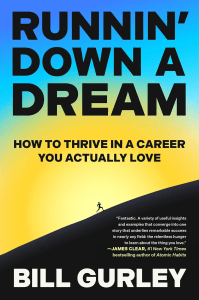
I interviewed Bill for the second time recently, and we got into his new book Runnin’ Down a Dream: How to Thrive in a Career You Actually Love, which will come out next month and is now available for preorder.
To give you a taste, I asked Bill if we might reprint a chapter on the blog, and he and his publisher kindly agreed.
Enter Bill . . .PRINCIPLE VGO WHERE THE ACTION ISIf you want to start a tech company, go to Silicon Valley. If you want to be in movies, go to L.A. Geography still matters.
—Brian Chesky, cofounder and CEO of Airbnb
By the time Tony Fadell graduated from the University of Michigan, he already had more entrepreneurial experience in his field than virtually all of his peers. As a teenager in the mid-1980s, he created a semiconductor company that sold parts to Apple. He had another company that sold mail-order software for the Apple II, and he also started a third company, with one of his professors, that sold educational software for Mac computers. He skipped his first week of college classes to man a booth at the Applefest in San Francisco.
Tony had spent years reading everything he could about the computer industry, mostly in Byte Magazine and MacWorld. In story after story, he read about companies based in the Valley. Studying the ads in the magazines, he noted that most of the company addresses were also in Northern California.
He flew out to Silicon Valley a few times a year for meetings, all on his own dime, and he absolutely loved it. On one trip, he rented a car and drove to the original Fry’s Electronics in Sunnyvale—“a superstore, like Costco, for everything under the sun in the world of electronics.” For a kid who grew up obsessed with computers and building technology—in elementary school he rigged his clock radio to put a headphone jack in it so he could listen to music all night without his parents knowing—this journey felt more like a pilgrimage.
“I was like ‘Ho-ly shit!’” he told me. Decades later, you can still hear that original awe in his voice.
Tony knew that when he graduated, he needed to move to Silicon Valley, the epicenter of the industry he loved. At first he thought he wanted an internship at Apple, which was run by John Sculley at the time. The company flew Tony to Cupertino and put him up in a nice hotel with a fruit basket waiting in the room. But when they offered him the internship, Tony declined.
To his surprise, they offered him a full-time job, working at a joint venture Apple was doing with IBM. But again, stunningly, Tony turned them down. He had his eye on a different job. “I said, ‘No, I don’t want anything to do with that,’” he told me. “I wanted General Magic.”
At the time, Tony didn’t even know what General Magic was doing, but a few years earlier he read about Silicon Valley computer engineer legends Bill Atkinson and Andy Hertzfeld in a Rolling Stone story profiling the Mac team. As Tony was flying to the West Coast, doing these interviews, he read in the back of one of his tech magazines that some of these big names had begun a secretive spinoff from Apple. “I’m like, ‘Whatever it is,’” Tony told me, “‘that’s where I want to be.’”
Despite his remarkable résumé and network of contacts, Tony was told that there weren’t any openings at General Magic—but that just made him want it more. So on one of his trips to California, Tony decided to go to the General Magic building, in downtown Mountain View, and present himself unannounced. He found the address in the Yellow Pages and drove over at 8:30 a.m. He wore a jacket and tie and a big, naive midwestern smile. But when he got to the building, it was mostly empty. Security dogs roamed the halls, ready to attack any intruder. When he found the right floor, he walked up with his résumé in his hand. The office door was open. Inside, he found—nothing. “It was just cube wall after cube wall, a desolate cube area,” he says.
As he walked through the rows of cubes, he thought he was completely alone. But then he spotted two men in a cube and they looked like they’d been up all night. Undaunted, Tony made sure that this was indeed the General Magic office—they said it was—and offered up his résumé. Without even looking at it, the two men told him the company wasn’t hiring. So Tony left and went back home to Michigan.
At this point, leaving the Valley gave him something akin to withdrawal symptoms. Michigan seemed bleak. “I went back to Ann Arbor and it was literally a frozen tundra,” he told me. “I kept asking myself what I was doing there.”
It is different now, but at the time Michigan did not have a community of technology enthusiasts like those in the Valley. There were no startups. It felt like people there barely spoke the same language. So he was even more convinced that he needed to be in California— and more specifically, he needed to be at General Magic.
First, he racked his brain to think of anyone he knew at Apple, anyone who might be able to open a door there for him. He made some calls, pleading his case, and it took a few months, but eventually he got a call back from a woman at General Magic named Dee Gardetti. Tony didn’t know it at the time, but Dee was the fourth employee at the company and she was the head of HR. She told him she was impressed with his résumé and she would see what she could do. She told him to be patient.
But Tony is not a particularly patient person. He started mailing letters to the company. He estimates that he sent between fifteen and twenty old-school letters, pleading for a job. As time went by, he graduated from Michigan and moved back in with his parents. He sold his educational software company. He turned down numerous other jobs—much to the chagrin of his parents. He was relentless, but he was also charming. When he called Dee, he was able to make her laugh and win her support. Then, in November 1991, nearly seven months after that original unannounced visit, Tony was invited back for an interview.
He flew back out to the Valley, put on his jacket and tie, and showed up to General Magic’s new office in Mountain View. “There were no dogs this time,” he jokes.
But now, after all this time and this relentless pursuit, Tony began to feel something all of us have felt at one point or another: imposter syndrome. “I’m like, ‘What am I doing here?’ I’m totally melting. I’m seeing these people that I’ve idolized, my heroes, they’re interviewing me. I’m just a little kid.”
He was told to take off his tie and his jacket. He was told to sit on the floor like everyone else, around an arcade machine in the middle of the office. As he got more comfortable, Tony showed the General Magic team his senior project: a portable touchscreen computer— something most people had never heard of in 1991.
Well, it turned out that General Magic, this top-secret company of superstars, had been working on a portable device with a touchscreen, the earliest iterations of what would become the smartphone. Some of their partners and investors included Sony, Motorola, and AT&T.
Tony thought the interviews went well, but he left without a job offer. He went back to Michigan, where the chill of autumn was morphing into the bitter cold of winter. More than two weeks later, he finally got the call from Dee.
“I want to let you know you’re going to be a diagnostic engineer on the hardware team at General Magic,” she told him. “And you can start right away.”
Tony still remembers running around and screaming when he got the call. His salary was $28,000, below the cost of living in the Valley at the time, but he didn’t care. He packed up his car, said goodbye to his parents, left his mother crying in the driveway, and headed to California.
Tony is a good friend of mine, and we’ll discuss some of his incredible accomplishments later, but I want to highlight this part of his story for a reason. He made the audacious decision to move, not just to the geographic center of the industry he wanted to work in, but to the one company where so many of his idols had come together.
It’s a hard decision and often a hard pursuit, but if you have the chance, put yourself in the center of the action.
GO WHERE THE ACTION ISAs your dream job journey evolves, you may eventually confront a decision with enormous consequences: Should I physically relocate in order to maximize my chance of overall success?
Of course, many of us move away for the first time to attend college. And that is not the end of the world. We meet new people, we meet new friends, we are exposed to new cultures and experiences. We learn and grow. Making that decision a second time can and will have a profound impact on your chances of dream job success. It may seem incredibly intimidating, but it may also be the best decision you make in your entire life.
Your journey may not be as dramatic as Bob Dylan hitchhiking from Minnesota to Greenwich Village. I relocated twice in my career— first to New York and then to Silicon Valley—partly because I saw how my dad benefited from moving from Virginia to Houston to work at NASA.
The truth is, different industries are bigger and more prominent in different places—for all sorts of reasons. The tech industry and a disproportionate number of start-ups are in the San Francisco Bay Area. For finance and banking, it’s New York City. New York is also the center of the book publishing world and America’s theater scene. But for television and film, the epicenter is Los Angeles. Government and policy? Washington, D.C. Biotech and pharma? That’s Boston. Oil and energy? Houston. The automotive industry is still largely based in De- troit. If you want to make it as a singer-songwriter, you’ll probably have to spend some time in Nashville, regardless of your genre.
A few industries have multiple hubs, which means you’ll have more choices. The fashion industry, for example, is big in Milan, Paris, New York, and L.A. If you want to make it in esports, you can probably pick between Tokyo, Seoul, or Los Angeles—though you’ll have a ton of other factors to consider as you decide.
Being in these places puts you in the flow of the industry. You are surrounded by people who speak the language. You are closer to decision-makers, mentors, collaborators. You are able to learn faster, move faster, be seen more quickly. And sometimes, most importantly, you are simply reminded that this is real—that there are people who are doing the thing you want to do, every single day.
Regardless of the geography, there are at least ten ways relocating can help your career.
1. More jobs—There are just more opportunities where the industry is dense.
2. More networking—You’re greatly increasing the chances you’ll bump into people in your field.
3. More mentors and more peers—The best in the business are often just a coffee shop away.
4. More events—Meetups, panels, workshops—they’re happening much more often in the industry’s epicenter.
5. Exposure to trends—You’re first to see what’s next.
6. Résumé credibility—“She’s based in L.A.” or “He worked in New York” carries weight.
7. Faster advancement—Your chances of moving up go up when you’re where things are happening.
8. Higher pay—It’s more competitive and often more expensive, but these places also come with higher compensation.
9. Serendipity—The breakthrough meeting, the unexpected connection—it’s more likely to happen when you’re immersed. You create your own luck.
10. Fun and energy—You’re surrounded by people who care about the same things. That matters. If you truly love your chosen field, that will excite you.
I saw this in Silicon Valley. I watched people have lunch with billionaires, go to talks by start-up founders who had just IPO’d, meet cofounders over coffee. People in the Valley take time to respond to authentic requests for learning and advice. I felt it on the way up, and I have tried to reciprocate and continue the tradition. It is a vibe you don’t necessarily see in other places. I have heard plenty of similar stories about musicians in Nashville. They move there with no guarantees. But they know one thing: The best people are here. I want to be around that.
That’s the idea. You want to roll around in it. If the idea of being immersed in your industry doesn’t appeal to you, you might need to go back to the first principle and reconsider whether this is truly your passion. You should want to be so steeped in your craft that large parts of it become second nature.
Immersion isn’t passive—it’s transformative. When you’re fully submerged in the culture of your field’s epicenter, learning accelerates. Opportunities multiply. Your network organically expands. Immersion creates a powerful osmosis effect, exponentially accelerating your growth and visibility.
All of this can seem intimidating, I know. Maybe it sounds too competitive. Being nervous about a step like this is totally understandable. My advice: Try your best to remove those thoughts from your mind.
VIRTUAL AND EMERGING EPICENTERSSo what if you just really can’t relocate? We live in an era where physical relocation is not the only option. Virtual epicenters can also propel your career. You can engage deeply with Reddit groups and Twitter/X communities. You can consume or even participate in Twitch streams, podcasts, LinkedIn groups, virtual courses on almost any subject.
You can establish yourself with an online presence through content curation, expert interviews, and consistent digital engagement. If you have something interesting and thoughtful to say about a subject on a regular basis, you will build an audience eventually.
To be clear: These are all things you should be considering whether you have already relocated or not. This is part of the learning process, part of building a peer network, and part of seeking out mentors. Physical proximity will likely give you an extra advantage, but in today’s world you should be utilizing every tool available.
There are also industry epicenters that seem to bubble up, sometimes in surprising locales. In the 1970s, northern Florida became a hub of Southern Rock, producing a stunning lineup of bands that included Lynyrd Skynyrd, the Allman Brothers Band, and 38 Special—all from Jacksonville. Tom Petty and the Heartbreakers formed around the same time down the road in Gainesville.
A few years ago, comedian Ron White encouraged Joe Rogan to relocate to Austin. For more than two decades, Rogan lived in Los Angeles, one of the two or three big hubs for top-tier stand-up comedy, along with New York and Boston. Rogan was a staple at The Comedy Store on the Sunset Strip. For years, he went several nights a week. He honed his act with two or three short sets in a night and spent the rest of his time hanging out with his fellow comedians in the venue’s legendary green room.
In March 2023, Rogan opened his own club, Comedy Mothership, on Sixth Street in downtown Austin. He named the bar Mitzi’s, after Mitzi Shore, the woman who owned The Comedy Store until her death in 2018. Rogan brought Adam Eget, one of The Comedy Store’s bookers, to Austin to help launch the business. Around the same time, other prominent national comedians relocated from both Los Angeles and New York. Within a few years, the Austin comedy scene included Tom Segura and his wife Christina P, Tony Hinchcliffe, and Shane Gillis. They are all regulars at the Mothership, and now nearly every big comic has to stop in Austin a few times a year.
But something else happened, too. Other smaller comedy clubs started popping up all over town. There were more open mics and more paying gigs. As Tony Hinchcliffe’s podcast, Kill Tony, got more popular, more and more aspiring comics migrated to Austin instead of New York or L.A. Austin has officially become a comedy hub. Though they tour a lot, comedians still need a quality base to sculpt and workshop their material.
Of course, some professions are itinerant by nature. Some industries don’t have traditional hubs. Think about sports. If you want to be a college or professional coach, you will probably need to relocate several times. That is true whether you are an assistant or a head coach. It is certainly true for athletic directors. Chances are your next job will not be in the same place as your last one. This is true of journalists, too. As you come up in the industry, you will likely have to move a few times.
But even these itinerant occupations have industry events, reasons to come together in the same place. There are annual conferences, key networking events that function as temporary epicenters. In these industries, it’s even more important to seek out and connect with mentors and experts and to stay in touch with peers.
RELOCATING IS HARDI know this is not easy. Moving is expensive and stressful. Most of us are not nomadic by nature. We crave stability. Relocating is one of the single most disruptive things you can do in life. Maybe your parents live nearby, and you are the one they lean on. Maybe your kids love their school and your weekends are filled with soccer games and birthday parties. Maybe you have built a close-knit community over years, or decades, and the idea of leaving that feels like tearing something sacred.
Moving also means facing more intense competition. You might know more about a subject than anyone else in your graduating class, but once you move to an industry hub, you are suddenly the lowest person on the totem pole. But careers are not zero-sum games. Competition is a tide that raises all boats. Sure, for a while everyone you encounter will know more than you, but that just means you will have the opportunity to learn infinitely faster than you would if you stayed at home.
You might also need a “support job” while you grind. Plenty of struggling actors found other gigs to pay the rent—sometimes for years—before landing a breakthrough role. Some of the best musicians in America spent substantial portions of their lives busking on sidewalks or playing for free in grimy bars. That perseverance can pay off. Sometimes the first job will not be the big career winner. It may just be a critical stepping-stone.
That is what happened with Tony Fadell.
After he finally got that job at General Magic, he worked there for three and a half years. But the company was not a success story. General Magic’s failure has become one of the most important legends in the history of Silicon Valley. (It’s also the subject of a great documentary that I would highly encourage everyone to watch.) However, joining General Magic put Tony squarely in the epicenter of the Valley. And the connections he made there were part of an amazing foundation that would help launch him to greater and greater heights.
After leaving General Magic, Tony continued his pursuit and passion for designing breakthrough portable computing devices. His next stop was building the Philips Mobile Computing group, where he assumed the role of CTO at the age of twenty-five. After four years there and a brief dance with Real Networks, he started his own company in 1999 called Fuse, which aimed to be the “Dell of Consumer Electronics.” That timing was not ideal, as the dot-com crash made it difficult for Fuse to raise its second round of financing. Tony kept grinding.
After ten years, Apple hired Tony through an eight-week consulting contract to develop a new MP3 music player. Tony’s nine years in Silicon Valley, and the learning he had done through nearly a decade of working on mobile computing products, were finally about to pay off. After a successful consulting gig, Apple hired Tony internally. Within a year, Apple would launch their first MP3 player, the iPod, which would eventually sell over 450 million units. After that, Tony assumed the role of head of engineering for the iPhone. We all know how that turned out. Apple has sold 2.3 billion iPhones, making it the most successful mobile computing device of all time.
Tony wasn’t done. He later left Apple to build yet another mass consumer product via Nest Labs. Nest launched a breakthrough product—the Nest Learning Thermostat—which would revolutionize the home automation industry. If you don’t have one, you’ve probably stayed in an Airbnb with a Nest thermostat.
Google eventually acquired Nest for $3.2 billion. Since leaving Google, Tony has become a prolific angel investor and has authored a bestselling book that I would recommend to everyone dedicated to finding their own unique career pathway—Build: An Unorthodox Guide to Making Things Worth Making.
Think of your dream as a seed. The epicenter of your industry is the fertile soil that allows that seed to flourish. Embrace the challenge—not as an end in itself, but as the necessary step toward meaningful growth. If the idea of moving ignites something within you, trust that instinct. You already have your answer. Go where the action is.
From Runnin’ Down a Dream: How to Thrive in a Career You Actually Love by Bill Gurley, available for preorder, to be published on 2/24/2026 by Crown Currency, an imprint of The Crown Publishing Group, a division of Penguin Random House, LLC. Copyright © 2026 by Bill Gurley. Reprinted with permission.
The post Go Where The Action Is appeared first on The Blog of Author Tim Ferriss.
January 21, 2026
Dr. Michael Levin — Reprogramming Bioelectricity, Updating “Software” for Anti-Aging, Treating Cancer Without Drugs, Cognition of Cells, and Much More (#849)
Dr. Michael Levin (@drmichaellevin ) is the Vannevar Bush Distinguished Professor of Biology at Tufts University and director of the Allen Discovery Center. His background is in computer science and biology, and his group works at the intersection of developmental biophysics, computer science, and cognitive science. He is primarily interested in how intelligence self-organizes in a diverse range of natural, engineered, and hybrid embodiments. Levin has been developing a framework for recognizing and communicating with unconventional cognitive systems.
Applied to the collective intelligence of cell groups undergoing morphogenesis, these ideas have allowed the Levin Lab to develop new applications in birth defects, organ regeneration, and cancer suppression. His lab also produces synthetic life-forms (e.g., Xenobots and Anthrobots) that serve as exploration platforms for understanding the source of patterns of form and behavior in a wide range of natural, artificial, and hybrid embodied minds.
Please enjoy!
This episode is brought to you by:
ShipStation shipping software: ShipStation.com/Tim AG1 all-in-one nutritional supplement: DrinkAG1.com/Tim Our Place’s Titanium Always Pan® Pro using nonstick technology that’s coating-free and made without PFAS, otherwise known as “forever chemicals”: FromOurPlace.com/Tim [image error]Listen onSpotifyListen onApple Podcasts[image error]Listen onOvercastDr. Michael Levin — Reprogramming Bioelectricity, Updating “Software” for Anti-Aging, Treating Cancer Without Drugs, Cognition of Cells, and Much More (#849)Additional podcast platformsListen to this episode on Apple Podcasts, Spotify, Overcast, Podcast Addict, Pocket Casts, Castbox, YouTube Music, Amazon Music, Audible, or on your favorite podcast platform.
TranscriptsThis episodeAll episodesSELECTED LINKS FROM THE EPISODEConnect with Dr. Michael Levin:Personal Blog | Lab Website | Thoughtforms Life Podcast | YouTube | Twitter
Michael’s TED TalkThe Electrical Blueprints That Orchestrate LifeEventsSymposium on the Platonic SpaceArticles & Resources19th-Century Physics Seemed Complete. Kelvin Thought Otherwise. | Big ThinkBook Recommendations for Students | The Levin LabLiving Things Are Not Machines (Also, They Totally Are) by Dr. Michael Levin | Forms of Life, Forms of Mind BlogPersuading the Body to Regenerate Its Limbs | The New YorkerRemora: Converting CO? Emissions from Pollution into Revenue | SustainabilityThe Secret Life Of Algorithms by Andréa Morris | ForbesThe Shocking Medical History of Electric Fish | Long Now IdeasStarter Pack: Introductory Materials to My Lab’s Academic Work by Dr. Michael Levin | Forms of Life, Forms of Mind BlogSUTI: the Search for Unconventional Terrestrial Intelligence by Dr. Michael Levin | Forms of Life, Forms of Mind BlogWhat Advice Do I Give to My Students? by Dr. Michael Levin | Forms of Life, Forms of Mind BlogWhat Do Algorithms Want? A New Paper on the Emergence of Surprising Behavior in the Most Unexpected Places by Dr. Michael Levin | Forms of Life, Forms of Mind BlogAlgorithms Redux: Finding Unexpected Properties in Truly Minimal Systems by Dr. Michael Levin | Forms of Life, Forms of Mind BlogBooks & Stories The Body Electric: Electromagnetism and the Foundation of Life by Robert O. Becker The Fires Within by Arthur C. Clarke Solaris by Stanislaw Lem They’re Made out of Meat by Terry Bisson Various Short Story Collections by Stanislaw LemFilms & Documentaries Ex Machina The Gene: An Intimate History Companies, Organizations, & SchoolsAstonishing LabsMorphoceuticalsNew England School of AcupunctureSoftmaxTufts UniversityWired MagazineKey Concepts & TermsBioelectricityBioelectric CodeDevelopmental BioelectricityRegeneration & DevelopmentAnatomical HomeostasisAxolotlDeer Antler RegenerationPattern MemoriesPlanarians (Flatworms)AgingAtavistic DissociationBoredom Theory of AgingCognition & IntelligenceBasal CognitionCognitive GlueCognitive Light ConeCollective IntelligenceDiverse IntelligenceComputing & InformationPlatonic SpacePolycomputingSide Quests/Intrinsic MotivationsPhilosophy of MindPanpsychismPhysicalismProblem of Other MindsSteel ManningOther Scientific ConceptsControl TheoryCyberneticsFrame ProblemThe Manhattan ProjectNoceboPlaceboResearch & ExperimentsCases of Unconventional Information Flow Across the Mind-Body Interface | Mind and Matter (Clinical case review of normal IQ with minimal brain volume with Karina Kofman.)Classical Sorting Algorithms as a Model of Morphogenesis: Self-Sorting Arrays Reveal Unexpected Competencies in a Minimal Model of Basal Intelligence | Adaptive Behavior (Research showing simple algorithms perform additional computations beyond their programmed function.)The Effect of Experimenter Bias on the Performance of the Albino Rat | Behavioral Science (How researchers influence their subjects.)Neuropharmacological Dissection of Placebo Analgesia: Expectation-Activated Opioid Systems versus Conditioning-Activated Specific Subsystems | The Journal of Neuroscience (Fabrizio Benedetti’s research supporting his claim that “Words and drugs have the same mechanism of action.”)Normalized Shape and Location of Perturbed Craniofacial Structures in the Xenopus Tadpole Reveal an Innate Ability to Achieve Correct Morphology | Developmental Dynamics (Tadpoles with scrambled facial organs self-organize to normal frog faces.)Regenerative Adaptation to Electrochemical Perturbation in Planaria: A Molecular Analysis of Physiological Plasticity | iScience (Flatworms rapidly adapting to toxic environment by changing ~12 genes.)Researchers Reveal Bioelectric Patterns Guiding Worms’ Regenerative Body Plan After Injury | Tufts Now (Demonstrating that bioelectrical pattern memories can be rewritten.)There’s Plenty of Room Right Here: Biological Systems as Evolved, Overloaded, Multi-Scale Machines | Biomimetics (Pondering the points of polycomputing.)Transmembrane Voltage Potential Controls Embryonic Eye Patterning in Xenopus Laevis | Development (Creating functional eyes in non-eye locations through bioelectrical signals.)Medical & Therapeutic ApplicationsAcupunctureDry NeedlingMorphoceuticalsTransauricular Vagus Nerve StimulationVagus Nerve StimulationRelated Episodes of The Tim Ferriss ShowWhat Most Has My Attention Right Now — Credible (vs. Bogus) Vagus Nerve Stimulation with Kevin J. Tracey, MD | The Tim Ferriss Show #824Philip Goff — Exploring Consciousness and Non-Ordinary Religion, Galileo’s Error, Panpsychism, Heretical Ideas, and Therapeutic Belief | The Tim Ferriss Show #805Professor Donald Hoffman — The Case Against Reality, Beyond Spacetime, Rethinking Death, Panpsychism, QBism, and More | The Tim Ferriss Show #585Dr. Martine Rothblatt — A Masterclass on Asking Better Questions and Peering Into the Future | The Tim Ferriss Show #487Erik Vance — The Magic and Power of Placebo | The Tim Ferriss Show #194PeopleRobert O. BeckerFabrizio BenedettiTerry BissonJosh BongardKen BurnsArthur C. ClarkeDaniel DennettRené DescartesAdam GoldsteinVanessa GrimesDonald HoffmanWilliam JamesDavid KaplanLord KelvinKevin KellyKarina KofmanStanislaw LemGregor MendelAndréa MorrisAtoosa ParsaPythagorasMartine RothblattClifford J. TabinTom TamKevin TraceyTIMESTAMPS[00:03:18] The Body Electric: A Vancouver bookstore discovery that launched a career.[00:04:19] Bioelectricity 101: Your brain uses it to think; your body used it before you had a brain.[00:06:05] The lesson learned by scrambled tadpole faces that rearrange themselves.[00:08:51] Software vs. hardware: The genome is your factory settings, not your destiny.[00:11:43] Two-headed flatworms: Rewriting biological memory without touching DNA.[00:16:20] Seeing memories: Voltage-sensitive dyes reveal the body’s hidden blueprints.[00:20:12] Three killer apps for humans: Birth defects, regeneration, and cancer.[00:24:27] Cancer as identity crisis: Cells forgetting they’re part of a team.[00:25:40] The boredom theory of aging: Goal-seeking systems with nothing left to do.[00:30:09] Planaria’s immortality hack: Rip yourself in half every two weeks.[00:31:27] Manhattan Project for aging: Crack cellular cognition, everything else falls into place.[00:33:47] Giving cells new goals: Convince a gut to become an eye.[00:37:42] Must mammalian mortality be mandatory?[00:40:25] Cross-pollination: Why biologists would benefit from programming courses.[00:47:15] Does acupuncture actually do anything?[00:50:57] Placebo as feature, not bug: Words and drugs share the same mechanism.[00:55:06] The frame problem: Why robots explode and rats intuit what matters.[00:59:41] Binary thinking is a trap: “Is it intelligent?” is the wrong question.[01:07:46] Minimal brain, normal IQ: Clinical cases that break neuroscience.[01:08:45] Super panpsychism: Your liver might have opinions.[01:13:48] The Platonic space: Bodies as thin clients for patterns from elsewhere.[01:15:24] Keep asking “why” and you end up in the math department.[01:23:07] Polycomputing: Sorting algorithms secretly doing side quests.[01:28:24] Power scaling for the future and avoiding red herrings for understanding machine minds.[01:34:06] Sci-fi recommendations.[01:37:24] Cliff Tabin’s toast and Dan Dennett’s steel manning.[01:41:21] Parting thoughts.DR. MICHAEL LEVIN QUOTES FROM THE INTERVIEW“So what I tried to show in that talk are some examples by which the living tissues, for example, flatworms that are cut into pieces and every piece has to figure out “How many heads should I have? Where do the heads go? What should the shape of my face be?” These kinds of things, that in fact they do know, and the way they know is because they store memories, and maybe not shockingly, although it’s certainly shocking to a lot of folks, the way those memories are stored is in an electrical network that is very similar to the way that we store our goal-directed behavioral repertoires in our brain and that these things are widely spread. And so regeneration, cancer suppression, and cancer repair and remodeling, birth defects and birth defect repair, all of these things are extensively using electrical pattern memories, and we now have a way to rewrite those pattern memories.” — Dr. Michael Levin
“I always say to people, ‘On your laptop, if you want to go from Photoshop to Microsoft Word, you don’t get out your soldering iron and start rewiring. It’d be laughable if you had to, but that’s how we used to do it. In the ’40s and ’50s, you programmed a computer by pulling and plugging wires, but you don’t do that anymore because it’s reprogrammable. And that’s what the biology is.'” — Dr. Michael Levin
“The name of the game here is communicating with the cells. This is not about stem cells or gene therapy or scaffolds made of nanomaterials. Those are all tools that might be useful, but the real trick here is to communicate to a group of cells, what do you want them to build? And that’s what the bioelectric code is all about; it’s about communicating to the collective, to the cellular collective.” — Dr. Michael Levin
“We can detect incipient tumor formation and we can prevent and normalize tumors after they form … not by killing the cells with chemotherapy, but by electrically reconnecting them to the group such that they can form, again, a memory of what they’re supposed to be doing.” — Dr. Michael Levin
“Just imagine this standard Judeo-Christian version of Heaven. Let’s say you, your pet snake, and your dog get to Heaven. Everything is great, there’s no more damage, there’s no decay, nothing is damaged, everything is great, everything’s fantastic. For the next trillion years, what happens? The snake may be fine doing snake things for every day is the same as every other day, may be fine. The dog, not sure. Probably okay chasing rabbits on the farm, may be fine for forever, basically. The human though, what do you think? What are the odds that a human cognitive system can be sane for an infinite — okay, I’ll keep myself busy for the first 10,000 years, maybe 100,000 years, but a billion years in, are we still sane? What happens?” — Dr. Michael Levin
“If you make a circle of cognitive things and living things, I think cognition is wider than life. I think cognition predates life and I think it’s bigger than life.” — Dr. Michael Levin
“It’s entirely possible that in these AIs the thing we have forced them to do, which is to talk, and the thing that we’re all obsessed about or the things it says could be a complete red herring as far as what kind of intelligence is actually there, what does it want? How do we communicate with it? The verbal interface that we’re all sort of so glued in on might not be the interesting part of that equation.” — Dr. Michael Levin
“This field of diverse intelligence combines artificial intelligence and engineering and cybernetics and evolutionary biology and AI and exobiology and the search for alien life. All of these things are, together, asking what are actually the common threads of being an agent — no matter what your origin story, whether you were designed or evolved or engineered, or whether you were made of squishy proteins, or whether you were made of silicon or something else.” — Dr. Michael Levin
“If you’re like a five-year-old and you do that thing where you keep asking, “But why? But why?” If you keep asking “But why?” long enough, eventually you always end up in the math department.” — Dr. Michael Levin
Want to hear another episode with a pioneer of bioelectric medicine? Listen to my conversation with neurosurgeon and researcher Dr. Kevin Tracey, in which we discussed stimulating the vagus nerve to tame inflammation, treating rheumatoid arthritis and autoimmune disorders without drugs, the FDA-approved SetPoint Medical device, credible vs. bogus vagus nerve stimulation approaches, the inflammatory reflex, auricular therapy, heart rate variability, the connection between depression and inflammation, and much more.
This episode is brought to you by ShipStation. Whether you’re selling on eBay, Amazon, Shopify, or over 100 other popular selling channels, ShipStation lets you access all of your orders from one simple dashboard, and it works with all of the major shipping carriers, locally and globally, including FedEx, UPS, and USPS. Tim Ferriss Show listeners get to try ShipStation free for 60 days. Just visit ShipStation.com/Tim!
This episode is brought to you by Our Place’s Titanium Always Pan® Pro! Many nonstick pans can release harmful “forever chemicals”—PFAS—into your food, your home, and, ultimately, your body. Exposure to PFAS has been linked to major health issues like gut microbiome disruption, testosterone dysregulation, and more, which have been correlated to chronic disease in the long term. This is why I use the Titanium Always Pan Pro from today’s sponsor, Our Place. It’s the first nonstick pan with zero coating. This means zero “forever chemicals” and durability that will last a lifetime. Visit FromOurPlace.com/Tim and use code SAVE10TIM at checkout for 10% off your entire order. With a 100-day, risk-free trial, free shipping, and free returns, there’s zero risk in test-driving a great upgrade to your kitchen.
This episode is brought to you by AG1! I get asked all the time, “If you could use only one supplement, what would it be?” My answer is usually AG1, my all-in-one nutritional insurance. I recommended it in The 4-Hour Body in 2010 and did not get paid to do so. Right now, get a FREE Welcome Kit, including Vitamin D3+K2 and AG1 Travel Packs, when you first subscribe. Visit DrinkAG1.com/Tim to claim this special offer today and receive your 1-year supply of Vitamin D—a vital nutrient for a strong immune system and strong bones!
The post Dr. Michael Levin — Reprogramming Bioelectricity, Updating “Software” for Anti-Aging, Treating Cancer Without Drugs, Cognition of Cells, and Much More (#849) appeared first on The Blog of Author Tim Ferriss.
January 14, 2026
Steve Young, from Super Bowl MVP to Managing Billions — Hall of Fame 49ers Quarterback on High Performance, Reinvention, Faith, and How to Blend Dreams and Plans (#847)
Steve Young (@steveyoung) is a Hall of Fame NFL quarterback who played professional football for more than 15 years, predominantly with the San Francisco 49ers. He was named the Most Valuable Player of Super Bowl XXIX, securing the titles of Player of the Year by Sports Illustrated and Sporting News from 1992 to 1994 and receiving the NFL’s Most Valuable Player award for 1992 and 1994.
Upon retirement, Steve held the record for the highest quarterback rating in NFL history and remains the only quarterback to clinch four consecutive NFL passing titles. Following his football career, Steve became an ESPN analyst and best-selling author and entered the world of private equity. He co-founded HGGC, a private equity firm managing more than $6.9B in capital commitments, and served as chairman of the board for HGGC portfolio companies IDERA, Integrity, and AutoAlert.
Steve is the founder and current chair of the Forever Young Foundation, an organization deeply involved in supporting children’s charities globally. He also has taken on a significant role in advancing the national women’s flag football initiative and is a former international spokesperson for the Children’s Miracle Network, a philanthropy that has successfully raised more than one billion dollars to aid children’s hospitals worldwide.
He is the author of QB: My Life Behind the Spiral and The Law of Love.
Please enjoy!
This episode is brought to you by:
Cresset family office services for CEOs, founders, and entrepreneurs AG1 all-in-one nutritional supplement Wealthfront high-yield cash account[image error]Listen onSpotifyListen onApple Podcasts[image error]Listen onOvercastSteve Young, from Super Bowl MVP to Managing Billions – Hall of Fame 49ers Quarterback on High Performance, Reinvention, Faith, and How to Blend Dreams and PlansAdditional podcast platformsListen to this episode on Apple Podcasts, Spotify, Overcast, Podcast Addict, Pocket Casts, Castbox, YouTube Music, Amazon Music, Audible, or on your favorite podcast platform.
TranscriptsThis episodeAll episodesSELECTED LINKS FROM THE EPISODEConnect with Steve Young:HGGC | Forever Young Foundation | Twitter | Instagram
Books & ArticlesThe Law of Love: The Powerful Force That Opens Doors, Overcomes Obstacles, and Changes Everything by Steve YoungSteve Young Is an Athlete Who’s Actually Good at Finance | Bloomberg49ers Great Steve Young Opens up on Mental Health and His Struggles with Anxiety | The New York Times Essentialism: The Disciplined Pursuit of Less by Greg McKeown Extreme Ownership: How U.S. Navy SEALs Lead and Win by Jocko Willink and Leif Babin Mental Toughness Training for Sports: Achieving Athletic Excellence by James E. Loehr Runnin’ Down a Dream: How to Succeed and Thrive in a Career You Actually Love by Bill Gurley Searching for Bobby Fischer: The Father of a Prodigy Observes the World of Chess by Fred Waitzkin The 7 Habits of Highly Effective People: Powerful Lessons in Personal Change by Stephen R. CoveyCompanies & Organizations HGGC Forever Young Foundation BYU (Brigham Young University)LDS (The Church of Jesus Christ of Latter-Day Saints)Hellman & FriedmanKKRMorgan StanleyPowerBarSan Francisco 49ersSequoia CapitalThe Staubach CompanyWilson Sonsini Goodrich & RosatiMovies & Documentaries Free Solo (2018) It’s a Wonderful Life (1946) Searching for Bobby Fischer (1993) Sliding Doors (1998)PeopleTroy AikmanStephen CoveyGreg BensonLeon BlackTom BradyEdward J. DeBartolo Jr.Bob DylanLaVell EdwardsBob GayBill GurleyJohn W. HeismanWarren HellmanJim HerrmannAlex HonnoldJon HuntsmanJames KlintHenry KravisRich LawsonDoug LeoneJames LoehrBrian MaxwellJim McMahonGreg McKeownJoe MontanaKarl PopperJerry RiceGeorge RobertsLeonard RussellLarry SonsiniRoger StaubachTed TollnerJosh WaitzkinBill WalshJocko WillinkYodaBarbara Graham YoungBrigham YoungLeGrande YoungTIMESTAMPS[00:00:00] Start.[00:02:34] The full circle of Josh Waitzkin.[00:05:47] The Stephen Covey plane ride that changed everything.[00:11:38] Overcoming victimization: The hole you dig, then jump into.[00:14:16] How taking ownership led Steve from rock bottom to NFL MVP in one season.[00:21:50] Interceptions and the truest truth about accountability.[00:26:09] What separates good from great quarterbacks: Adrenaline alchemy.[00:31:21] Alex Honnold and the genetics of not panicking.[00:32:14] Learning to actually throw a football at BYU.[00:35:01] Recovering from the offensive coordinator who wouldn’t coach southpaws.[00:37:00] The vulnerability prerequisite.[00:42:45] Separation anxiety: Thriving by day, terrified by night.[00:48:29] Tears in the Candlestick Park training room.[00:52:37] The diagnosis that made the puzzle pieces fit.[00:58:32] Dad’s philosophy: Dream (1%) and Plan (80%).[01:01:14] Law school between Super Bowl parades.[01:02:33] Trading locker room access for venture capital deals.[01:08:45] Mourning old identities and heeding Roger Staubach’s transition advice: “Run.”[01:11:49] Rich Lawson walks out of Morgan Stanley: “I’ll be the CEO.”[01:19:05] 30 years of partnership: Yin, yang, and existential crises.[01:23:01] HGGC: The name nobody can pronounce (and why).[01:25:19] Faith evolution: From Boy Scout theology to something deeper.[01:29:41] The Law of Love: Bill Walsh’s secret weapon.[01:32:53] Divine humanity and the irony of losing self-interest.[01:43:52] Parting thoughts.STEVE YOUNG QUOTES FROM THE INTERVIEW“I realized right there that the hole I was in, that I thought so many people had dug, that I had dug it. I had no idea that I dug the hole, and I had thought that everyone pushed me in and I didn’t realize that I had jumped in.”
— Steve Young
“My theology is we’re here as humans to learn and grow. It can be tough and miserable, it can be all kinds of things, but that’s the underpinning of what we’re trying to do is learn and grow. Be about it. Don’t be afraid.”
— Steve Young
“[Transformation is] a state of being. It’s not a list of things to do.”
— Steve Young
“You might not have a great practice, but own it. You might not be as strong as you thought you were. Well, freaking own it. Stop dancing around the authenticity of what you’re trying to do.”
— Steve Young
“Part of learning and growing is, ‘I suck right now, but I’m not going to suck tomorrow.’ And once you can start to get into that mode of ‘That’s what I’m about,’ that’s what happens. There’s a clarity that comes because now everything gets fed through that truth.”
— Steve Young
“I remember running up to Troy Aikman, and we were warming up, and he’s a friend, and he’s a quarterback for the Cowboys, and I’m like, ‘Troy, it’s so great that you’re here, man, because I’m on this quest to see how good I can get, and I can only find out against the best, and so I’m so glad that you’re here.’ And I remember Troy looked at me like, ‘Freaking weirdo. What’s wrong with you?’ But that’s what I was about.”
— Steve Young
This episode is brought to you by AG1! I get asked all the time, “If you could use only one supplement, what would it be?” My answer is usually AG1, my all-in-one nutritional insurance. I recommended it in The 4-Hour Body in 2010 and did not get paid to do so. Right now, get a FREE Welcome Kit, including Vitamin D3+K2 and AG1 Travel Packs, when you first subscribe. Visit DrinkAG1.com/Tim to claim this special offer today and receive your 1-year supply of Vitamin D—a vital nutrient for a strong immune system and strong bones!
This episode is brought to you by Cresset Family Office! Cresset offers family office services for CEOs, founders, and entrepreneurs. They handle the complex financial planning, uncertain tax strategies, timely exit planning, bill pay and wires, and all the other parts of wealth management that would otherwise pull me away from doing what I love most: making things, mastering skills, and spending time with the people I care about. Schedule a call today at cressetcapital.com/Tim to see how Cresset can help streamline your financial plans and grow your wealth.
I’m a client of Cresset. There are no material conflicts other than this paid testimonial. All investing involves risk, including loss of principal.
This episode is brought to you by Wealthfront! Wealthfront is a financial services platform that offers services to help you save and invest your money. Right now, you can earn a 3.25% base APY—that’s the Annual Percentage Yield—with the Wealthfront Cash Account from its network of program banks. That’s nearly eight times more interest than an average savings account at a bank, according to FDIC.gov as of 12/15/2025 (Wealthfront’s 3.25% APY vs. 0.40% average savings rate). Right now, for a limited time, Wealthfront is offering new clients an additional 0.65% boost over the base rate for three months, meaning you can get 3.90% APY, limited to $150,000 in deposits. Terms & Conditions apply. Visit Wealthfront.com/Tim to get started.
The Cash Account, which is not a deposit account, is offered by Wealthfront Brokerage LLC, member FINRA/SIPC. Wealthfront Brokerage is not a bank. The 3.25% Base APY on cash deposits is as of December 19, 2025, is representative, subject to change, and requires no minimum. If you are eligible for the overall boosted rate of 3.9% offered in connection with this promo, your boosted rate is also subject to change if the base rate decreases during the three-month promotional period. Tim Ferriss, who is not a client, receives cash compensation from Wealthfront Brokerage LLC for advertising and holds a non-controlling equity interest in the corporate parent of Wealthfront Brokerage LLC. This ad may not reflect the experience of other Cash Account clients, and similar outcomes are not guaranteed. See full disclosures here.
Want to hear another episode with someone who has mastered the art of reinvention and phase shifts? Listen to one of my conversations with Josh Waitzkin — the basis for the book and movie Searching for Bobby Fischer (Steve’s favorite film!) — in which we discussed the art of learning, how to cultivate empty space for creativity, learning the macro from the micro, the power of beginner’s mind, transitioning from chess prodigy to martial arts world champion, and much more.
The post Steve Young, from Super Bowl MVP to Managing Billions — Hall of Fame 49ers Quarterback on High Performance, Reinvention, Faith, and How to Blend Dreams and Plans (#847) appeared first on The Blog of Author Tim Ferriss.
January 6, 2026
How to Use Ketosis for Enhanced Mood, Cognition, and Long-Term Brain Protection — A Practical and Tactical Guide with Dr. Dominic D’Agostino (Plus: Deconstructing Tim’s Latest Keto Experiment) (#845)
Dr. Dominic D’Agostino (@DominicDAgosti2) is a tenured associate professor in the Department of Molecular Pharmacology and Physiology at the University of South Florida Morsani College of Medicine and a Visiting Senior Research Scientist at the Institute for Human and Machine Cognition.
He teaches medical neuroscience, physiology, nutrition, and neuropharmacology, and his research focuses on the development and testing of nutritional strategies and metabolic-based therapies for neurological disorders, cancer, and human performance optimization. His work spans both basic science and human clinical trials.
He has a strong personal interest in environmental medicine and enhancing the safety and resilience of military personnel and astronauts. In this capacity, he served as a research investigator and crew member on NASA’s Extreme Environment Mission Operations. His research has been supported by the Office of Naval Research, the Department of Defense, the National Institutes of Health, private organizations, and nonprofit foundations.
He earned his B.S. in Nutritional Science and Biological Sciences from Rutgers University in 1998, followed by a predoctoral fellowship in Neuroscience and Physiology at Rutgers and the University of Medicine and Dentistry of New Jersey. He then completed postdoctoral training in Neuroscience at Wright State University’s Boonshoft School of Medicine in 2004 and at the University of South Florida Morsani College of Medicine in 2006.
Please enjoy!
This episode is brought to you by:
Gusto simple and easy payroll, HR, and benefits platform used by 400,000+ businesses Seed’s DS-01® Daily Synbiotic broad spectrum 24-strain probiotic + prebiotic David Protein Bars 28g of protein, 150 calories, and 0g of sugar Coyote the card game , which I co-created with Exploding Kittens[image error]Listen onSpotifyListen onApple Podcasts[image error]Listen onOvercastHow to Use Ketosis for Enhanced Mood, Cognition, and Long-Term Brain Protection — A Practical and Tactical Guide with Dr. Dominic D'Agostino (Plus: Deconstructing Tim’s Latest Keto Experiment)Additional podcast platformsListen to this episode on Apple Podcasts, Spotify, Overcast, Podcast Addict, Pocket Casts, Castbox, YouTube Music, Amazon Music, Audible, or on your favorite podcast platform.
TranscriptsThis episodeAll episodesSELECTED LINKS FROM THE EPISODEConnect with Dominic D’Agostino:KetoNutrition.org | Facebook | Twitter | University of South Florida
Dr. Dominic D’Agostino’s Past AppearancesDr. Dominic D’Agostino — All Things Ketones, How to Protect the Brain and Boost Cognition, Sardine Fasting, Diet Rules, Revisiting Metformin and Melatonin, and More | The Tim Ferriss Show #825Dom D’Agostino on Disease Prevention, Cancer, and Living Longer | The Tim Ferriss Show #188Dom D’Agostino — The Power of the Ketogenic Diet | The Tim Ferriss Show #172Dom D’Agostino on Fasting, Ketosis, and the End of Cancer | The Tim Ferriss Show #117Devices & WearablesAbbott FreeStyleAbbott Precision Xtra Glucose MonitorBreath Ketone Meter / BreathalyzerCGM (Continuous Glucose Monitor)DEXA Scan (Dual-Energy X-Ray Absorptiometry)DexcomGlucometer (Glucose Meter)Keto-Mojo (Blood Glucose/Ketone Meter with GKI Calculation)Metabolic CartOura RingSiBio (Continuous Ketone Monitor)Products, Brands, & ServicesBragg USDA Organic Raw Apple Cider VinegarChicken of the Sea Chub MackerelKetoStartKing OscarMedifoodzQuest NutritionSeason BrandBooks The 4-Hour Body: An Uncommon Guide to Rapid Fat-Loss, Incredible Sex, and Becoming Superhuman by Timothy Ferriss Spark: The Revolutionary New Science of Exercise and the Brain by John J. Ratey, MD and Eric HagermanLab Tests, Biomarkers, & MetricsALT (Alanine Transaminase) Blood TestApoE / APOE 3/3 / APOE 3/4BMI (Body Mass Index)Body Fat PercentageGKI (Glucose-Ketone Index)Oral Glucose Tolerance TestTransaminasesVO2 MaxSupplements, Compounds, and Terms1,3-ButanediolDivergent Hepatic Outcomes of Chronic Ketone Supplementation: Ketone Salts Preserve Liver Health While Ketone Esters and Precursors Drive Inflammation and Steatosis | PharmaceuticalsEffects of Acute and Chronic 1,3-Butanediol Treatment on Central Nervous System Function: A Comparison with Ethanol | Journal of Pharmacology and Experimental TherapeuticsAn Open-Label, Acute Clinical Trial in Adults to Assess Ketone Levels, Gastrointestinal Tolerability, and Sleepiness Following Consumption of (R)-1,3-Butanediol (Avela ) | Frontiers in PhysiologyPhysiologic, Metabolic, and Toxicologic Profile of 1,3-Butanediol | Journal of Pharmacology and Experimental TherapeuticsAcetoacetateAcetoneAtkins DietBHB (Beta-Hydroxybutyrate)BorreliaBullseye RashCaloric Deficit / Caloric RestrictionCAR-T TherapyCheckpoint InhibitorsCCK (Cholecystokinin)Cyclical Ketogenic DietEnantiomersEucaloric DietExogenous KetonesFat AdaptationFasting-Mimicking DietFODMAP (Fermentable Oligosaccharides, Disaccharides, Monosaccharides, and Polyols)FormulationGABA (Gamma-Aminobutyric Acid)Gastric AbsorptionGastric EmptyingGKI (Glucose Ketone Index)GNG (Gluconeogenesis)GLUT4 (Glucose Transporter Type 4)GlycolyticIntermittent FastingIGeneX (Lyme)IsotonicKetone EstersOral Administration of a Novel, Synthetic Ketogenic Compound Elevates Blood Beta-Hydroxybutyrate Levels in Mice in Both Fasted and Fed Conditions | NutrientsTolerability and Safety of a Novel Ketogenic Ester, Bis-Hexanoyl (R)-1,3-Butanediol: A Randomized Controlled Trial in Healthy Adults | NutrientsKetone SaltsBHB Supplements: The Ultimate Guide to Exogenous Ketones | PricePlowKetosisKlothoKrebs CycleLow-Carb Mediterranean DietLyme DiseaseMCT (Medium-Chain Triglyceride) OilMetabolic FlexibilityMetabolic MemoryMetabolic PsychiatryMetabolic SwitchingMonotherapyPalatabilityPharmacokineticsProtein Veggie DaysRacemic KetonesWhy Do We Need Both D-BHB and L-BHB? | KetoNutritionSardine FastingTolerabilityTwo-Tier Testing (Lyme)PeoplePatrick ArnoldPeter AttiaDavid BaszuckiBarry BondsAnnette Bosworth (Dr. Boz)Henri BrunengraberSami HashimHans KrebsDonald LaymanValter LongoMark MattsonLayne NortonChris PalmerRhonda PatrickStu PhillipsThomas SeyfriedDeanna TedoneRichard VeechOrganizations & InstitutionsBALCO (Bay Area Laboratory Co-Operative)Baszucki GroupCDCDARPAHarvard UniversityNIHPoison Control CenterSociety for Integrative Metabolic OncologyUniversity of OxfordUniversity of Pennsylvania / UPennUniversity of South FloridaTIMESTAMPS[00:00:00] Start.[00:04:37] Ketosis benefits: Quieting the mind, GABA elevation, metabolic psychiatry.[00:09:24] My Lyme disease story: Pseudo-dementia reversed in 3-4 days of ketosis.[00:13:50] Spirochetes are glycolytic: Starve the bug, boost the immune response.[00:19:20] Ketosis and cancer: Slowing glycolytic tumors, enhancing standard care.[00:20:50] My 18-day keto experiment: Mood stabilization, Alzheimer’s prevention hopes.[00:23:19] Metabolic memory: Carryover effects and Valter Longo’s fasting mimicking research.[00:27:11] Intermittent fasting as keto on-ramp: My 2-8 p.m. eating window.[00:29:15] Dom’s budget keto meal: Canned mackerel, MCT oil, apple cider vinegar.[00:33:28] My ketone measurement paradox: Feeling sharp at 0.2 mM readings.[00:36:56] The carburetor analogy: Ketone production vs. utilization explained.[00:38:43] Breath ketones vs. blood ketones: Better indicator in caloric deficit.[00:39:47] Gluconeogenesis fears: Fat, fiber, and salt to slow protein absorption.[00:45:25] The bunless double cheeseburger question: 80 grams of protein in one sitting.[00:49:03] Post-meal walking and GLUT4 activation: Timing your glucose disposal.[00:51:02] CGM and ketone monitor limitations: When your devices gaslight you.[00:58:05] Rabbit starvation and protein-veggie days: Why your body won’t bankroll its own ketosis.[01:05:44] Alzheimer’s prevention: Biomarkers, B12, hsCRP, and metabolic health.[01:09:40] My family history: Letrozole, metabolic dysfunction, and rapid cognitive decline.[01:13:17] Minimum effective dose: 80% of benefits from low-carb Mediterranean.[01:18:56] One week per month protocol: Aggressive calorie cut to ramp ketones.[01:23:12] GKI sweet spot: Target 1-4, aim for 1-2 during intensive weeks.[01:36:22] Exogenous ketones 101: Palatability, tolerability, pharmacokinetics, toxicity.[01:39:21] 1,3-Butanediol warnings: Liver toxicity, NAD depletion, dependency risk.[01:54:22] Intermittent fasting vs. ketogenic breakfast.[01:59:09] My accidental intoxication story.[02:03:23] Dr. Veech tribute: Student of Hans Krebs, ketone ester pioneer.[02:05:08] Fiber on keto: Wild blueberries, broccoli, apples, walnuts.[02:09:58] The tainted gummies incident: Dom’s forensic investigation underway.[02:13:08] Thanks to Dr. Boz and Medifoodz.[02:16:19] Parting thoughts.DOMINIC D’AGOSTINO QUOTES FROM THE INTERVIEW
“We know that being in a state of ketosis really quiets the mind, … and that, I think, really echoes its broad application for metabolic psychiatry, which is everything from major depression to bipolar to schizophrenia to anxiety disorders to anorexia nervosa.”
— Dominic D’Agostino
“Much like muscle memory, I think there’s a metabolic memory. So the more you stay in ketosis, the easier it gets and the more benefits you derive from it and the more that you shift your body to being more fat adapted—just like you can build your VO2.”
— Dominic D’Agostino
“[The ketogenic diet] is not a cure for cancer, and I cringe when people talk about that online. [But] it does slow it down, especially if it’s highly glycolytic, which 80% of cancers are.”
— Dominic D’Agostino
“I think you can get 80% of the benefits [of ketosis] with a low-carb diet—low-carb meaning 100 grams a day, just fibrous, non-starch, non-sugar carbs, low-carb Mediterranean, if you want to call it that.”
— Dominic D’Agostino
“Resistance exercise—I’m a little biased towards that. But muscle is like an endocrine organ that produces hormones and various molecules that are neuroprotective, and muscle is tightly linked to brain size and, of course, your waist and your visceral fat.”
— Dominic D’Agostino
“My concern … is that I know there’s older people out there with dementia, perhaps Alzheimer’s disease, that if they’re consuming 1,3-Butanediol as a ketogenic supplement, it’s going to make you dizzy. It’s going to decrease your stability, it’s going to make you potentially fall, break your hip.”
— Dominic D’Agostino
This episode is brought to you by Seed’s DS-01 Daily Synbiotic! Seed’s DS-01 was recommended to me more than a year ago by a PhD microbiologist, so I started using it well before their team ever reached out to me. After incorporating two capsules of Seed’s DS-01 into my morning routine, I have noticed improved digestion, skin tone, and overall health. It’s a 2-in-1 probiotic and prebiotic formulated with 24 clinically and scientifically studied strains that have systemic benefits in and beyond the gut. And now, you can get 20% off your first month of DS-01 with code 20TIM.
This episode is brought to you by Gusto! If you’re a small business owner looking to simplify payroll and HR tasks, Gusto could be the game-changer you need. Gusto is an all-in-one payroll, benefits, and HR platform designed specifically for small businesses. Gusto automatically files federal, state, and local payroll taxes, handles W-2s and 1099s, and offers straightforward health benefits and 401(k) options for nearly any budget. With an intuitive interface and features like time tracking, onboarding tools, and direct access to certified HR experts, Gusto saves time and eliminates headaches so you can focus on what matters—growing your business. As a special offer to listeners, new customers get Gusto free for their first 3 months. This is the perfect time to choose Gusto to take care of your team and stay compliant. See for yourself why 9 out of 10 businesses recommend it. Get started now! Terms apply at Gusto.com/terms.
This episode is brought to you by David Protein Bars! I’m always on the hunt for protein sources that don’t require sacrifices in taste or nutrition. That’s why I love the protein bars from David. With David protein bars, you get the fewest calories for the most protein, ever. David has 28g of protein, 150 calories, and 0g of sugar. Their bars come in six delicious flavors, all worth trying, and I’ll often throw them in my bag for protein on the go. And now, listeners of The Tim Ferriss Show who buy four boxes get a fifth box for free. Try them for yourself at DavidProtein.com/Tim.
Want to hear the last time Dominic D’Agostino was on the podcast? Listen to our conversation here, in which we discussed ketones and neuroprotection, sardine fasting, glucose ketone index for autophagy tracking, cholesterol hyperabsorption, melatonin myths, metabolic psychiatry, hyperbaric oxygen therapy, metformin versus berberine, and much more.
The post How to Use Ketosis for Enhanced Mood, Cognition, and Long-Term Brain Protection — A Practical and Tactical Guide with Dr. Dominic D’Agostino (Plus: Deconstructing Tim’s Latest Keto Experiment) (#845) appeared first on The Blog of Author Tim Ferriss.
January 2, 2026
The Single Decision
Coach Sommer is a former U.S. National Team gymnastics coach and the creator of GymnasticBodies. This personal email sent to me, which I reread often, was so good that I had to include it in Tools of Titans. Make the one big decision.
Enter Coach Sommer…
Hi Tim,
Patience. Far too soon to expect strength improvements. Strength improvements [for a movement like this] take a minimum of 6 weeks. Any perceived improvements prior to that are simply the result of improved synaptic facilitation. In plain English, the central nervous system simply became more efficient at that particular movement with practice. This is, however, not to be confused with actual strength gains.
Dealing with the temporary frustration of not making progress is an integral part of the path towards excellence. In fact, it is essential and something that every single elite athlete has had to learn to deal with. If the pursuit of excellence was easy, everyone would do it.
In fact, this impatience in dealing with frustration is the primary reason that most people fail to achieve their goals. Unreasonable expectations timewise, resulting in unnecessary frustration, due to a perceived feeling of failure. Achieving the extraordinary is not a linear process.
The secret is to show up, do the work, and go home.
A blue collar work ethic married to indomitable will. It is literally that simple. Nothing interferes. Nothing can sway you from your purpose. Once the decision is made, simply refuse to budge. Refuse to compromise.
And accept that quality long-term results require quality long-term focus. No emotion. No drama. No beating yourself up over small bumps in the road. Learn to enjoy and appreciate the process. This is especially important because you are going to spend far more time on the actual journey than with those all too brief moments of triumph at the end.
Certainly celebrate the moments of triumph when they occur. More importantly, learn from defeats when they happen. In fact, if you are not encountering defeat on a fairly regular basis, you are not trying hard enough. And absolutely refuse to accept less than your best.
Throw out a timeline. It will take what it takes.
If the commitment is to a long-term goal and not to a series of smaller intermediate goals, then only one decision needs to be made and adhered to. Clear, simple, straightforward. Much easier to maintain than having to make small decision after small decision to stay the course when dealing with each step along the way. This provides far too many opportunities to inadvertently drift from your chosen goal. The single decision is one of the most powerful tools in the toolbox.
The post The Single Decision appeared first on The Blog of Author Tim Ferriss.
December 30, 2025
The Story Behind EpiPen, The Rise of Food Allergies, and What Doctors Got Wrong (#842)
This time around, we have an experimental format, featuring the first episode of a brand-new podcast launching next week, Drug Story. I rarely feature episodes from other shows, but I think this one is well worth your time. It changed how I think about allergies, especially as someone who carries an EpiPen and has wondered: why on earth have food allergies seemed to skyrocket in the last few decades?
Drug Story is a podcast that tells the story of the disease business, one drug at a time. Each episode explores one disease and one drug, and it kicks off with EpiPen and food allergies. A quick teaser: What if I told you that a well-meaning medical recommendation may have caused millions of kids to develop food allergies?
Make sure to subscribe to Drug Story on Apple Podcasts, Spotify, or wherever you get your podcasts. You can also simply go to DrugStory.co to learn more.
The host is Thomas Goetz. He is a senior impact fellow at the University of California Berkeley School of Public Health, and much earlier, Thomas was the executive editor at WIRED, which he led to a dozen National Magazine Awards from 2001 to 2013. His writing has been repeatedly selected for the Best American Science Writing and Best Technology Writing anthologies.
P.S. To help you kick off 2026, I recommend checking out Henry Shukman, a past podcast guest and one of the few in the world authorized to teach Sanbo Zen. Henry’s app, The Way, has changed my life. I’ve been using it daily, often twice a day, and it’s lowered my anxiety more than I thought possible. For 30 free sessions, just visit thewayapp.com/Tim. No credit card required.
Please enjoy!
[image error]Listen onSpotifyListen onApple Podcasts[image error]Listen onOvercastThe Story Behind EpiPen, The Rise of Food Allergies, and What Doctors Got WrongThe post The Story Behind EpiPen, The Rise of Food Allergies, and What Doctors Got Wrong (#842) appeared first on The Blog of Author Tim Ferriss.


