Sherell Bernard's Blog
July 2, 2021
What is an ellipsis and when do you use it?
An ellipsis is the three periods or dots you sometimes come across in writing. (Plural: ellipses) Stemmed from a Greek word meaning ‘leave out’, it does just that— show that something has been left out or omitted. Some writers use spaces between dots (. . .), other’s don’t (…). This is not a hard and fast rule, but a matter of style. Whether or not you choose to put spaces between the dots, just be sure to remain consistent throughout your manuscript.
When do you use an ellipsis?
When quoting, to indicate that there have been words omitted from the original sentence or source. E.g.Original quote: “If you want to be a writer, you must do two things above all others: read a lot and write a lot.” – Stephen King
Quote with omission: “If you want to be a writer, you must . . . read a lot and write a lot.” – Stephen King
2. To imply to the reader an action or incident that follows. E.g.
She stood and faced him. This time he was not going to hurt her. And if he tried, then . . .
3. When dialogue or thought trails off. E.g.
Where was Jake, Alice wondered, tapping her fingers on the coffee table. Maybe he was stuck in traffic. Maybe . . . Oh what the hell!
4. When a character pauses to think or lighten the meaning of their words. E.g.
“Is this the, um . . . you know, new project? Karen asked.
“He is rather . . . eccentric,” Maria said.
Do you use ellipses in your writing? Share your thoughts or tips in the comments.


June 21, 2021
Line editing. Copy-editing. What’s the difference?

When you hire a copy-editor, what type of service do you expect?
Editing that will address the style and flow of your words?Editing that will deal with the mechanics of grammar, spelling & punctuation?Both?There are professionals in the editing community who will provide both, under the service: line editing/ copy-editing, using the terms interchangeably. But there are also those who may offer it as two separate edits: Line editing or Copy-editing. So it’s always good to clarify what is included in the service.
That being said, when distinguished as two separate services, what is Line editing? What is Copy-editing?
The Job of a Line Editor
A line editor is attentive to style, showing interest in how words are used at the sentence level to reflect and bring out the tone of the passage. It is also the job of a line editor to address questions about the writer’s purpose and determine if the language clearly conveys that purpose. A line editor will also look at how words are arranged to create sentences which contribute to the overall pacing of the story, and ensures that there is a logical flow, clearing up any redundancies and tightening dialogue.
The Job of a Copy-editor
Like the line editor, a copy-editor is also interested in how words are used at the sentence level, looking closely at the mechanics: grammar, spelling, punctuation. He/she will address such issues as:
Does the writer maintain consistency with regards to his/her choice in using British or American spelling?Is the writing in accordance with industry standards and style guides?Are acronyms used appropriately?Are there any internal inconsistencies about character detail?To understand better what line editors and copy-editors do, read the sentences below and see how it will be approached by a line editor and copy-editor.
It was late evening and Marianne stood on the porch looking out at the blazing sun in the sky. It was her favourite time of day, looking out at the warm colors in the sky.
A line editor will question whether ‘blazing sun’ is appropriate for the time of day which is ‘late evening’. Also, he/she will note that, in referring to the sun, the words ‘in the sky’ which follow, appear redundant.
A copy-editor will spot that there are commas missing after ‘evening’ and ‘porch’. As well as British spelling is used for ‘favourite’, but American spelling is used for ‘color’. The copy-editor will also note that ‘looking out’ and ‘in the sky’ are repeated.
What do you think? Feel free to share other ways the sentences may be edited. Leave your thoughts in the comments.
What type of service does Idle Sky offer?
As some copy-editors do, I offer both the services of line and copy-editing as one. If you would like to work together, leave a comment or visit the contact page here.
What are your thoughts on line editing and copy editing. Do you think there should be a difference? Or should both services be offered as one?
June 9, 2021
Thinking of publishing your stories on Kindle Vella?
First of all, what is Kindle Vella? It is a platform where authors can publish serialized stories in English and is currently available to US authors only.
Each story is released in short episodes, ranging from 500-6000 words.
The first three(3) episodes in the author’s series are available to readers for free. Thereafter, readers will need to acquire tokens to unlock future episodes.
The required number of tokens is dependent on the story-episode’s length: 1 token per 100 words. And authors receive 50% royalties on the tokens used by readers of the series.
Pros vs Cons
PROS
Kindle Vella is an easy-to use platformAn author’s stories can be available elsewhere(but not be accessed freely)Authors can compile their episodes and publish as a book(the story-episodes must first be unpublished from Kindle Vella)CONS
There is no commenting by readers. Reader interaction is limited to ‘likes’, ‘follows’ and ‘faves’. Tokens will be made available through mobile channels that charge a fee which will be deducted from the author’s 50% royalties.So, thinking of using Kindle Vella?
Be sure you are committed to providing consistent and regular installments for readers. Also, consider your genre and writing style. Is it suitable for episodic reading? Keep in mind that your readers’ initial hook into your story has to come in the first three episodes then they will know if it’s something they are willing to continue reading by paid tokens. So if your writing style is more expository or the story takes some time to get into, then it may be that Kindle Vella readers will be dissuaded from continuing.
It’s a new avenue on the writing market for authors to explore. Maybe it’s not your thing, or… it might just be for you! Share your thoughts in the comments.
April 1, 2021
Let’s Talk POVs: 2nd Person
Previously I shared with you, points on 1st Person P.O.V. Now we’re looking at the less popular, 2nd Person P.O.V.
So, what’s that? The 2nd Person P.O.V. immerses the reader almost immediately into the story. It is a more intimate approach than the 1st Person because, with this type of narrative, the reader becomes the character.
Use of the pronoun ‘you’, transforms the reader into the character, as the reader experiences the emotions, thoughts and actions of the character.
Unlike 1st Person P.O.V., no interpretation is needed on the readers part; the reader is told what to feel and experience.
Example:
“Most days you awake early, in the hours before the dawn. Today though, is different. Today you do not have the desire to get out of bed. You remain between the sheets, haunted by the replaying images of a dream the night before. You lie there. You reflect. You contemplate. You then will your mind to forget the dream so that you can get up, start the already unfolding day, and move on with your life.”
 Use of the pronoun, ‘you’, transforms the reader into the character
From the example above, we see how use of ‘you’, places the reader right there in the setting. This uncommon P.O.V., provides a more interactive reading experience.
But… is this P.O.V. the best choice for writers? It depends:
What genre are you writing?How do you wish to portray your character?How intimately do want your readers involved in the story?For instance, a murder-mystery where the character- ‘you’, is the murderer, may not be the ideal story to use 2nd Person P.O.V. But what if the main character- ‘you’, is the person solving the murder? This may be a more suitable approach to using 2nd Person P.O.V. as the reader, in the form of the character, goes along and solves a mystery.
That being said, is it still a good idea to use the 2nd Person P.O.V.? It can be a bit risky. Why?
It may not be the most effective point of view for your story. Ask yourself: Do you want the reader to get this close to your character, or is your goal to create a measure of distance or suspense?Show vs Tell. 2nd Person P.O.V. does more telling than showing. Readers are told what to feel, think, and do. If not written well, this can take away rather than add to the reading experience. It removes interpretation and controls the reader’s thoughts and emotions. A tiresome reading experience. If not written effectively, it can also become tiresome to the reader who is being told each step of the way, how to think, feel and act. More work, less creativity. It is a lot of work on the writer’s part to effectively create the 2nd Person and can get confusing. At the same time, as was mentioned in the previous point, creativity can easily be lost as there is more telling than showing.So am I saying not to use the 2nd Person P.O.V.? Nope! All I’m doing is presenting to you, the advantages and disadvantages and points to consider, before choosing to write in this P.O.V. The choice is yours.
There are a number of great books written in the 2nd Person and some amazing Fan-fiction. Check out Goodreads Second Person books: https://www.goodreads.com/shelf/show/second-person
What about you? Which P.O.V. do use and how effective have you found it to be?
February 8, 2021
Let’s talk POVs: 1st Person
All stories are told by someone and the POV or Point of View, is the perspective from which the story is seen and experienced by the reader. How the reader understands and engages in a story, is primarily determined by the point of view the writer chooses.
TYPES OF POV.s
There are three types of POVs. In this article, the 1st person POV will be featured. Look out for future articles which will feature the 2nd and 3rd person POVs
The First Person POVThe first-person POV, told from the perspective of the narrator, brings the reader into an immediate and intimate connection to the story. Pronouns such as ‘I’, ‘Me’, ‘We’ or ‘Us’ are used. There are two kinds of first-person POV character: one that participates in the story and one that observes the story.
First Person Participant
The narrator in this instance, is the protagonist, the leading character in his story. He reveals his thoughts, but can only speculate as to what other characters are thinking or feeling. Examples of such 1st person participants can be found in:
Great Expectations by Charles DickensGreen Days by the River by Michael Anthony A Tell-tale Heart by Edgar Allen PoeAdvantages of 1st person participant:
Readers become intimate with the protagonist Presence of being there in the story is strongly feltDisadvantages of 1st person participant:
The reader is limited to one perspective. Where the protagonist goes, the reader goes so the reader has access only to the information this character knowsThoughts and intentions of secondary characters are only what the narrator perceives them to beFirst Person Observer
Unlike the first-person participant, the narrator is not the protagonist, but someone else on the outside, looking in – observing. Examples of such 1st person observers can be found in:
The Great Gatsby by F. Scott FitzgeraldMiguel Street by V.S NaipaulThe Adventures of Sherlock Holmes by Sir Arthur Conan DoyleAdvantages of 1st person observer:
This character can give the reader insight into the protagonist’s life and personality from a different angle, one that may help the reader to empathize with a protagonist who is not easily likedLike the first-person participant, readers experience that intimacy with the narrator and the presence of being there in the story, is felt stronglyDisadvantages of the 1st person observer:
The perspective is limited to what the narrator sees or experiences Readers can only know what the protagonist is doing when this character (1st person observer) is in the sceneTips for using 1st person POV:
Work on character development. Whether you choose first-person participan t or first-person observer , remember this is the character who connects readers to your story so create a character who is interesting. Do not over use pronouns. If most of the sentences, start with, ‘I did this’, ‘I felt this’, ‘I thought it should be this’, your character can appear egotistical which may be annoying to the reader. How can this be avoided?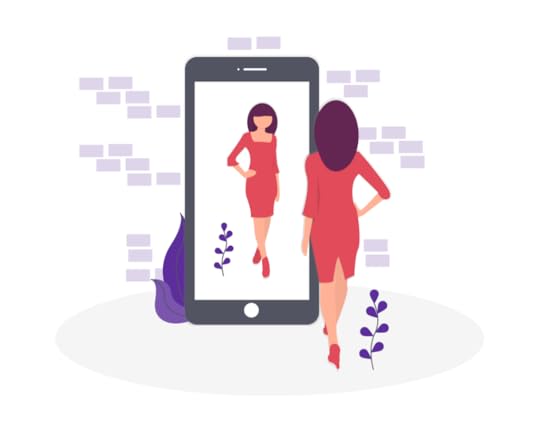 Work on character development. Over use of pronouns can make your character appear egotistical.The character does not need to soliloquize everything he or she thinks, feels or hears. Find the right balance between character description and setting description. Use sounds or scents to create setting. Example:
Instead of: ‘As I stepped outside, I could smell the pungent scent of the Marigolds that grew nearby.’
Try: ‘The pungent scent of Marigolds filled the air outside.
2. Use body language to convey how this first-person narrator feels. Maybe the character is angry. He does not have to voice, ‘I felt angry.’ Instead use actions or body language: ‘slamming a door’,’ hitting a wall’, ‘eyes bulged with fury’… etc.
3. Allow another character to voice an opinion of the narrator. Example:
Instead of: I looked gorgeous in the red dress. The sleek cut accentuated my shapely legs.
Makes your character sound a bit vain, yeah?
Try: “Oh that red dress! You look gorgeous. Showing off those killer legs, eh?” Julie complimented as she joined me on the balcony.
Another tip is, use more dialogue and/or body language to convey the thoughts and feelings of secondary characters in the story, if you want readers to understand how secondary characters feel. Remember, first-person POV is limited so using dialogue or body language will help readers to connect with your secondary characters.What other POVs are there? Look out for my next post where I write about 2nd and 3rd person POVs.
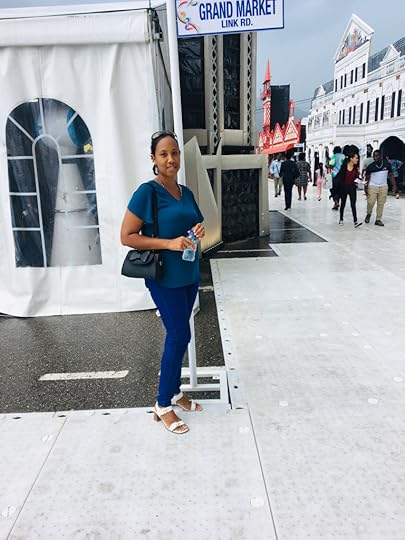
I’m Sherell Bernard… writer, editor here at Idle Sky. I’m also a book-collector, book-nerd, grammar-nerd and coffee-lover. I have been working with indie writers/authors since 2016 and I have a background in Accounting and 10+ years in Education. I love the English language and enjoy learning the etymology of words. I wish to use my knowledge, and my passion for English to help indie writers understand how to use words appropriately in fiction writing so that they will be able to create stories that are not only entertaining, but also well-edited.
January 10, 2021
Should you hire an editor?
Hiring an editor can be expensive. Prices vary, but on average, the cost of Developmental Editing may start at 0.17/word, Copy-editing may start at 0.15/word and Proofreading at 0.01/word.

It’s always advisable to get familiar with editing costs and those who provide this service before you are ready to edit. This way you can plan ahead within your budget.
Some editors will have a workable, flexible payment plan that may be suitable for you. So browse around, don’t be afraid to ask questions and get to know the reputable professionals in the writing community who can work along with you to edit your manuscript.
And whilst some indie authors choose not to hire an editor, you should know that this is risky. Maybe you are great with content and grammar and you have a team of beta-readers and critique partners. Though such persons are invaluable during your drafting and revising stages, it is important to hire a copy-editor and proofreader before publishing. Why?
Amazon’s Look Inside Feature: Amazon previews the first 10% of your book so readers can get a free sample of your story. If your book has even one grammar error in the first pages, readers are going to assume there will be more and this may persuade them not to buy your book.Indie books are given a bad reputation because a number of writers have self-published without having their book professionally edited so some readers are skeptical about paying for a book that they think may have errors.If your book has grammar or punctuation errors, readers may not buy/download any future releases you have even if it’s a free book promotion.
So think of hiring an editor as an investment in your craft. You have written a great story… now it’s time to get it polished and prepared for publication.
I’m Sherell Bernard… writer, editor here at Idle Sky. I’m also a book-collector, book-nerd, grammar-nerd and coffee-lover. I have been working with indie writers/authors since 2016 and I have a background in Accounting and 10+ years in Education. I love the English language and enjoy learning the etymology of words. I wish to use my knowledge, and my passion for English to help indie writers understand how to use words appropriately in fiction writing so that they will be able to create stories that are not only entertaining, but also well-edited.
I live on the twin-island of Trinidad and Tobago with my husband and our three teenaged daughters. Our family loves animals! We have a dog, a tortoise and three cats.
I look forward to meeting new authors and readers!
December 15, 2020
New Site…New Resources
I’m so happy to share my new site with all of you members of the writing and reading community!!
There are new resources for writers and fun giveaways for readers. Click on the images below to learn more.
Check out the new features and share your thoughts on the comments!
Looking forward to hearing from you. Until then… I’ll be shifting hibiscus moons behind dreaming eyes!