
Tanya Valentin's Blog
April 9, 2026
Are You The Emotional Buffer In Your Family?
I was in my bedroom getting ready for a family day out.
In the next room, my husband and son were in the middle of a conversation that soon escalated and became heated.
It came to a head when I heard my son stomp down the hall and slam his bedroom door.
A few minutes later, my husband came in, frustrated and needing someone to vent to, and began giving me a blow-by-blow of what had just happened in the kitchen.
I knew what he needed.
Emotional validation.
A safe place to let out all the frustration he was feeling…
And I also knew that later that morning, I would likely be having a very similar conversation with my son.
I could already feel myself stepping into that familiar role, holding both sides, softening the edges, translating, absorbing, because I knew that if we wanted the day to go smoothly, this was the accommodation I would need to make.
This is something I do every day.
The referee.
The peacemaker.
The one who holds the emotional middle in my family of five.
But on this particular morning…
I was done.
A quiet but firm thought rose up in me: “Who made me the emotional buffer for this whole family?“
And then something deeper landed.
I didn’t become this in motherhood.
I have been doing this my whole life – even as a child.
And I was exhausted.
I remember thinking, “I can’t be the only one who does this… can I?“
So I took that exhaustion, that frustration, that deep, bone-tired awareness, and I turned it into a carousel on Instagram.
What came back was something I didn’t expect.
The post was viewed by over 140,000 people.
Thousands resonated.
Hundreds shared their own experiences.
It was saved, shared, and quietly held by so many.
It seems like many, many mothers are carrying this, too.
Which led me to wonder:
What is emotional buffering?
How is it that we come to carry this role?
And most importantly, what does it look like to begin caring for ourselves inside of it?
The emotional buffer is the person in the family who absorbs tension before it spills, softens conflict before it escalates, translates between people who don’t easily understand each other, anticipates needs, reactions, and emotional shifts and holds the emotional “middle” so others don’t have to.
In many families, this role quietly falls to mothers.
And in neurodivergent families, especially where a child is in burnout, this role doesn’t just exist; it intensifies.
Because now it’s not just about personalities or communication styles.
It’s about nervous system mismatch.
Different sensory thresholds.
Different capacities.
Different needs for autonomy, predictability, and connection.
So the mother becomes: the regulator, the interpreter, the shock absorber and the bridge, all at once.
 Photo by Alex Green on Pexels.comWhen Does Emotional Buffering Start?
For many of us, this didn’t start when we became parents.
It starts much earlier in homes where emotions felt big, unpredictable, or unspoken, needs weren’t clearly named or safely held, and neurodivergence existed but wasn’t understood
I know that this was the case for me in my childhood home. My father, who I suspect has undiagnosed AuDHD, and had a traumatic childhood, was extremely volatile. As a survival strategy, I learned to scan the room, pre-empt conflict and to soothe, fix and manage the emotions of the adults around me. I become the “perfect child”, “easy one” – “the peacemaker”.
Not because this was who I naturally was, but because it helped me to feel safe.
That adaptation was not a flaw. My nervous system, in its intelligence, moulded itself this way to ensure my survival.
But what kept me safe then has quietly become what exhausts me now.
Why Emotional Buffering is so DrainingNo one was ever meant to hold this for an entire family system.
Not all the time. Not without support.
Emotional buffering often means that your body holds what others can’t, your needs go offline to stabilise the system and your nervous system stays in a state of readiness.
Over time, this can look like deep, ongoing exhaustion, never fully switching off; resentment you don’t feel allowed to name; and losing yourself inside the role, not knowing where you end and others begin.
From the outside, it often goes unseen, because it doesn’t look like “work.”
But it is.
It is emotional labour.
It is nervous system labour.
It is relational survival work.
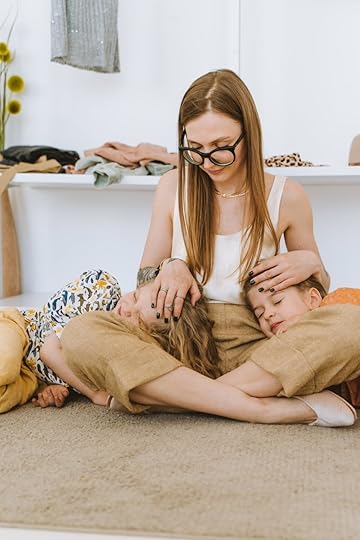 Photo by Anastasia Shuraeva on Pexels.comWhen Safety is at Stake: The Added Weight in Burnout
In some families, especially where a child is in burnout, this isn’t just about emotional tension.
It’s about safety.
When a child is volatile, aggressive, or harming themselves or others, the stakes are different.
This isn’t just conflict you’re buffering. It’s a real danger you are trying to diffuse.
When my daughter was in burnout, I found myself watching closely, anticipating escalation, gauging when to step in before things went too far, and trying to keep everyone safe.
And my body knew it.
And if this is your current reality, you will know that this is not imagined pressure. It is lived, moment-by-moment vigilance.
How This Affects Parent PartnershipsIn many neurodivergent families, another layer of complexity is added. Often, partners or co-parents may also be neurodivergent, whether that is known or not.
And sometimes this can show up as more rigid or black-and-white thinking, difficulty shifting perspective, a strong need for predictability and safety, a reliance on co-regulation within the partnership, and interpreting behaviour through a compliance lens rather than a nervous system lens.
So while you are seeing your child’s behaviour through the lens of distress, overload, and dysregulation, they may be seeing behaviour that needs to be corrected.
And so you become the bridge.
The one who validates your child’s experience and translates what is happening in their nervous system. The one who softens your partner’s response while also trying to prevent escalation before it turns into harm.
You are buffering in multiple directions at once.
And underneath this, there is often something many mothers don’t say out loud: Fear.
Fear that if you step back, if you let the other parent handle it without support, it could make things so much worse.
That your child might not feel safe.
That things could escalate further.
That harm could happen.
And in many cases, because this can be life-threatening, you stay in the middle.
Not because you want to control everything, but because you are trying to protect your world from spinning horribly out of control and everyone in it.
But over time, this creates another kind of strain, because while you are holding everything together, your partner may not get the chance to build understanding or flexibility.
Your child may not get the opportunity to experience repair in that relationship, and you are left carrying more and more of the emotional and relational load.
It can begin to feel like you and your child are on one side, and your partner is on the other, and that can quietly create distance, tension, and loneliness inside the relationship and inside your family.
Meeting Ourselves With Self-CompassionBefore boundaries.
Before anything changes.
Before doing anything differently.
There is something even more important.
How you meet yourself inside this.
 Photo by Thirdman on Pexels.com
Many mothers, when they first see this pattern, feel frustration with themselves, guilt for “over-involving”, and pressure to stop doing it from themselves or other family members.
But this role didn’t come from nowhere.
It was shaped over years, often from childhood and from a place of needing to feel safe.
So the first step isn’t: “How do I stop doing this?”
It’s: “Can I meet myself with compassion here?”
Compassion for how much you’ve been holding, how quickly your body steps in to protect and how deeply you care about keeping everyone safe.
Compassion for the part of you that learned: “It’s safer if I hold this together.”
Because without that compassion, awareness can quickly turn into self-criticism, and it can become just another layer you have to carry.
But with compassion, awareness becomes something softer. More spacious. More sustainable.
From Automatic Buffering to Conscious ChoiceIt might sound like:
“Of course, I stepped in. That makes sense.”
“My body is trying to keep everyone safe.”
“I can go gently with myself as I learn a new way.”
When this becomes something you can see, it creates a small but powerful shift.
You are no longer automatically pulled into the middle; you have a moment where you can choose.
And sometimes that choice might still be to step in, but it begins to come from intention, rather than urgency or habit.
Not in doing everything differently overnight, but in noticing, choosing (when it feels safe to), and meeting yourself with kindness along the way.
Because you are not the problem here.
You are someone who has been holding a lot for a very long time.
This isn’t something you “fix.” It’s something you deserve support inside of.
Holding the Nuance and Complexity of Emotional BufferingThere is no simple answer here.
Because this is not just about communication.
It is about safety, capacity, nervous systems and deeply ingrained ways of understanding the world.
What can begin to shift things, gently, over time is this: Moving from being the constant buffer to becoming a supported bridge.
Where you are not the only one holding safety. Your partner is slowly brought into understanding (at a pace they can tolerate), your child’s needs are still honoured, and you are no longer carrying this alone.
This is delicate work.
It asks for awareness, patience, compassion and spaces where you can be held while you are holding so much. This is the work I do with parents in my individualised coaching and global parent community, From Burnout to Balance.
If this is your reality, I want to say this clearly: of course, you are exhausted.
You are not just parenting.
You are managing risk, holding emotional safety, translating between nervous systems, and protecting the people you love most.
This isn’t something you have to carry alone.
This isn’t something that changes through doing more, but through being gently supported inside the moments you’re already living.
This is the heart of Rehumanising ParentingNot asking more of yourself. Not overriding your own needs to care well for others, but remembering that you are human too.
That your nervous system matters. That your capacity matters and you are allowed to be supported in the same way you support everyone else.
This is where the shift begins.
Not in big, sweeping changes, but in small, steady returns to yourself.
A breath.
A pause.
A softening.
A reminder that you don’t have to hold everything at once.
This is exactly why I created Tiny Anchors

A gentle series of small, supportive moments you can return to on the hard days when you’re holding a lot, when everything feels heavy, and when you need something simple to help you come back to yourself.
You can begin your Tiny Anchors journey here.The Person Who Wrote This Blog
Tanya Valentin is a neuro-affirming family coach, writer, and community leader supporting parents of neurodivergent children through burnout recovery.
Drawing on lived experience, nervous-system-informed practice, and relational facilitation, her work explores grief, identity, and the quiet return to self-trust.
She is the founder of the supportive community who are parenting neurodivergent children and teens in burnout, From Burnout to Balance.
Have you enjoyed reading this blog? Subscribe and receive fresh reflections, parenting resources and validation every time I push publish.
The post Are You The Emotional Buffer In Your Family? appeared first on Tanya Valentin.


April 4, 2026
Screens Without Shame
 Photo by Helena Lopes on Pexels.comYou’re not imagining it…
Screens feel complicated right now.
On one hand, they might be the only thing your child can manage.
A place where they feel calm, in control, connected… or simply okay.
On the other hand, the guilt is loud.
The questions don’t stop:
Is this too much?
Am I making things worse?
What if this is harming them long-term?
And the judgement — from others, from professionals, from your own inner voice — can feel relentless.
But what if we’ve been asking the wrong question?Instead of:
“How much screen time is too much?”
What if the real question is:
“What is my child’s nervous system needing right now?”
Because when a child is in burnout, their world has already become smaller, harder, and more overwhelming.
And often… Screens aren’t the problem.
They’re the place your child goes when everything else feels like too much.
Inside Screens Without Shame, we move away from fear-based advice and toward something far more useful:
👉 Understanding
👉 Context
👉 Nervous system safety
This isn’t about giving you a strict set of rules.
It’s about helping you make decisions that feel steady, informed, and aligned with your child’s capacity.
Why screens can become a lifeline during burnout
(and what that tells us about your child’s nervous system)
The difference between a screen problem and a capacity problem
— and how to tell which one you’re actually dealing with
Why limiting screens can sometimes increase distress
(especially for pressure-sensitive kids)
How content, context, and connection matter more than time
— and what to look for instead of hours
How to reduce guilt and untangle cultural pressure
so you can parent from clarity, not fear
Gentle ways to support transitions and reduce conflict
without power struggles or escalating distress
How to stay connected to your child (even when screens feel like a barrier)
so the relationship stays intact through this season
• Your child is in burnout and relying heavily on screens
• You feel stuck between “this is helping them” and “this can’t be right”
• You’re receiving advice that doesn’t fit your child
• You’re exhausted from second-guessing yourself
• You want to understand, not control
• You’re trying to parent in a way that protects your child’s nervous system
When life feels hard, we all reach for something that helps us cope.
For our kids, that might be screens.
And if screens are their coping strategy right now, removing them doesn’t remove the overwhelm.
It just removes the support.
A different way forwardThis mini-course will help you:
✨ Shift from control → understanding
✨ Move from fear → clarity
✨ Replace guilt → with grounded decision-making
✨ Support your child without increasing pressure
So you can begin to feel more confident in the choices you’re making —
even when they don’t look like what others expect.
• Bite-sized video lessons (gentle and easy to follow)
• A printable workbook to help you reflect and apply what you’re learning
• Bonus resources including:
– Screen reflection sheets
– Transition scripts
– Capacity vs behaviour checklists
– Guilt & cultural pressure debrief
You don’t have to overhaul everything.
You don’t have to get it “right”.
You just need a place to begin —
with more understanding, more compassion, and less pressure.
A gentle next step toward understanding your child, your choices, and yourself
The post Screens Without Shame appeared first on Tanya Valentin.
Is My Child Ready to Go Back to School After Burnout?
 Photo by RDNE Stock project on Pexels.com
You’re being asked questions you don’t have answers to yet.
“When are they going back?”
“What if they fall behind?”
And underneath it all, you’re wondering:
👉 Is my child actually ready… or am I feeling pressure?
If this feels familiar…You don’t want to undo your child’s progressYou feel torn between protection and pressureNone of the options feel clear or “right”You’re carrying the weight of this decision aloneWhat most advice gets wrongBurnout isn’t about motivation or behaviour.
It’s a nervous system injury.
So when we focus on getting kids back instead of helping them feel safe, we risk pushing them deeper into burnout.
Inside this mini-courseYou’ll learn how to:
✔ Understand what readiness actually means
✔ Make capacity-led decisions (not fear-led)
✔ Gently scaffold re-entry if and when it’s right
✔ Ask the right questions and advocate with confidence
✔ Handle pressure from schools, family, and others
You want to support your child’s recovery
without rushing them back into overwhelm.
There isn’t one “right” timeline.
Only the one that keeps your child safe.
Join the mini-course and find your next step—gentlyThe post Is My Child Ready to Go Back to School After Burnout? appeared first on Tanya Valentin.
Uncovering The Hidden Barriers To Low-Demand Parenting
 Photo by Kampus Production on Pexels.comMost parenting advice gets this wrong…
When a child is in burnout, the answer isn’t more structure, more consequences, or trying harder.
It’s less pressure. More safety.
But when you try to lower demands…
You might notice:
You feel unsure or inconsistentOther people question your choicesYour child doesn’t immediately “improve”And you start wondering if you’re making things worseThis is where most parents get stuck.
Not because low-demand parenting doesn’t work, but because no one has shown you how to make it feel sustainable.
This Mini-Course Will Help You Find Your FootingUncovering The Hidden Barriers to Low-Demand Parenting gives you the missing pieces so you can stop second-guessing and start feeling steadier in your decisions.
This isn’t about fixing your child.
It’s about understanding what their nervous system needs—and how to support that without burning yourself out in the process.
What You’ll LearnWhat low-demand parenting actually is(Not permissive. Not “giving up.” A shift toward safety, connection, and trust.)
Why it feels so hard to follow throughIncluding the hidden pressures that quietly derail you:
Fear of falling behindGuilt and old parenting scriptsJudgment from othersSystem expectationsYour own nervous system trying to protect youThe Gentle Shift FrameworkA simple, repeatable way to navigate any demand:
Notice → Name → Navigate → Nurture
So you can:
Reduce conflictMake clearer decisionsStay connected to your child and yourselfHow to create real, sustainable changeThrough:
Small, doable shifts (not overwhelm)Nervous system safety (for you and your child)Rebuilding connection and trustLetting change happen at a pace that actually lastsWhy This WorksBecause burnout isn’t a behaviour problem.
It’s a nervous system injury.
And healing doesn’t come from control.
It comes from safety.
When safety increases…
pressure decreases
connection grows
capacity slowly returns
You won’t leave this course with a rigid plan.
You’ll leave with something far more powerful:
A way to understand what’s really going onA framework you can return to again and againMore steadiness in your decisionsLess daily conflictMore moments of connection and calmA Small but Powerful ShiftInstead of:
“I need to get this right.”
You begin to feel:
“I know how to support my child—and myself—through this.”
If this has felt hard…
It’s not because you’ve failed.
It’s because you’re parenting in a space
where most advice simply doesn’t apply.
And you’re finding a new way forward.
Start HereIf this feels like the support you’ve been needing…
Join Uncovering The Hidden Barriers To Low-Demand Parenting For Only $33Want Ongoing Support?If you’d like a space where this way of parenting is understood,
supported, and held…
You’re warmly invited into:
The post Uncovering The Hidden Barriers To Low-Demand Parenting appeared first on Tanya Valentin.
Understanding RSD – Rejection Sensitivity Dysphoria
 “Are you mad at me?”“Nobody likes me.”“I ruin everything.”
If these words are familiar in your home, you’re not alone.
Many neurodivergent children experience Rejection Sensitivity Dysphoria (RSD)—where even small moments of perceived rejection feel overwhelming, painful, and deeply personal.
And when we don’t understand what’s really happening, it can leave both you and your child feeling stuck in cycles of shame, meltdowns, withdrawal, and disconnection.
Here’s the shift:Your child isn’t overreacting.
They’re not being manipulative.
They’re not “too sensitive.”
Their nervous system is trying to protect them from pain.
And when we understand that… everything changes.
In This Mini-Course, You’ll Learn:✔ What RSD actually is (in simple, parent-friendly language)
✔ Why neurodivergent brains experience rejection so intensely
✔ What RSD looks like at home, school, and in friendships
✔ How RSD might be showing up in you as a parent
✔ What to say (and what not to say) in those big, painful moments
✔ How to support your child without feeding shame or perfectionism
✔ How to build self-worth through connection, not correction
✔ PDA-friendly ways to offer recognition that don’t trigger shutdowns
This is about understanding the nervous system underneath it
So you can:
✨ Respond with confidence instead of second-guessing
✨ Reduce meltdowns, shutdowns, and power struggles
✨ Support your child’s self-worth in a way that actually lands
✨ Feel calmer and more grounded in your parenting
🎥 6 short video lessons (10 minutes or less)
Designed for real life — no overwhelm, just practical support
📄 Downloadable Tools You’ll Actually Use:
PDA-Friendly Recognition Cheat SheetConnection Bank TrackerRSD Moment Toolkit (scripts + support plan)Reflection Worksheet for parentsFull transcripts + closed captions
Accessible, flexible, and easy to revisit anytime
Your child says: “Nobody likes me.”
And instead of spiralling into fixing, reassuring, or frustration…
You pause.
You connect.
You know exactly what to say.
Your child feels seen instead of dismissed.
Safe instead of ashamed.
And over time, their self-worth begins to grow from the inside out.
This Course Is For You If:Your child is deeply sensitive to feedback or rejectionYou’re seeing meltdowns, shutdowns, or people-pleasingYou feel like traditional parenting advice isn’t workingYou want to parent in a way that protects your child’s nervous systemYou’re ready for more connection and less shame in your homeA Gentle InvitationYou don’t have to figure this out on your own.
This course is a soft place to land, a space where your child makes more sense,
and where you can begin to trust yourself again as a parent.
Start understanding RSD today and take the first step toward more connection, safety, and self-worth in your family.
The post Understanding RSD – Rejection Sensitivity Dysphoria appeared first on Tanya Valentin.
February 21, 2026
Neurodivergent Masking Before Diagnosis
When I was a young child in Sunday school, I remember being in a lesson where the teacher read this passage to us:
“God formed man from the dust of the ground and breathed into his nostrils the breath of life; and he became a living soul.”
I’m not sure if you believe this creation story or not, but what stayed with me was this idea: that we are made of physical form (clay), filled with a divine spark, a deeper self.
To me, this was not the self we are sometimes taught to distrust, where free will is painted as something dangerous.
This is our knowing self.
 Photo by Gustavo Fring on Pexels.com
We all arrive in this world naked, innocent, and unashamed, connected to that spark. But as we grow older, we begin to notice our nakedness. We start adding clay around ourselves, because a life without clay is a vulnerable one.
We arrive connected to our spark, and then meet a world that asks us to cover it in clay. We carry the quiet ache of that separation for years, trying, often without knowing why, to find our way back to who we were before we learned to hide.
The more layers of clay we add, the more disconnected we become from that golden knowing self.
What are we creating with all that clay?An avatar.
A socially acceptable version of ourselves that we can send out to play with the other avatars in the game, we call life. And like all good games, we don’t just have one character; we choose different personas for different situations.
Over my lifetime, I have played the roles of ‘good mother’, ‘dutiful daughter’, ‘doting wife’, ‘professional me’, and ‘happy me’. I have sat in my car before parties, before work events, palms sweaty and heart racing, or even before stepping back into my own home after a long day, and thought:
Okay… which one should I be now?
Which avatar will they like best?
As our children grow, we often help them create their avatars too, the versions of themselves we hope will keep them safe in a hard and confusing world, instead of teaching them how to stay connected to their inner knowing.
We do this because we have learned, in our own lives, that living without clay can feel lonely.
Exposed.
Outside the dream of belonging.
What I Didn’t Know About Neurodivergent Masking When I Wrote This Piece Six Years Ago…I wrote this piece six years ago.
Back then, I didn’t know about masking.
But I could feel that something was missing.
We arrive connected to our spark, and then meet a world that quietly teaches us to hide it.
I wrote these words during a time when my daughter had been hospitalised, and our family was moving through what I would later understand as autistic burnout. I called the piece Ready Player One.
At the time, I had no idea that my children or I were neurodivergent.
I had no language for masking.
But I had lived experience of it.
I knew what it felt like to create, cultivate, and inhabit the versions of myself that felt safest in different environments and relationships.
Writing became my solace during that time, my way of making sense of a world that felt like it was unravelling.
 Photo by http://www.kaboompics.com on Pexels.com
As I sat down to write, a heaviness came over me when I realised that I didn’t know who I was without the avatar. And that, without meaning to, I had helped my children build their own.
The cost of that realisation felt unbearable.
What I didn’t know then was that I was already on a path toward understanding my children’s neurodivergence, and my own, in a deeper, more compassionate way.
What I Learned About Neurodivergent MaskingMuch like the layering of clay in my metaphor, masking happens in layers. It is complex, woven quietly into the fabric of who we are. Most of us begin long before we’re aware of it, at an age when we’re far too young for it to be a conscious choice. Our beautiful nervous systems are always searching for the safest way to move through the world, so we adapt and shape ourselves in an act of protection.
And yet, one of the quiet costs of neurodivergent masking is that it can pull us away from our authentic selves. It can orient our lives around seeking safety through approval instead of trusting that who we are is already whole, worthy, and enough. When the nervous system can’t keep holding those layers anymore, burnout is often what follows.
Looking back now, I hold the mother who wrote this with tenderness.
She was trying to protect her children.
She was trying to belong.
She was doing the best she could with what she knew.
Rehumanising parenting is, in many ways, helping our children find their way back to themselves. Because we arrive connected to our spark, our work is not to remake our children, but to protect that light.
This is why I hold close the whakataukī (Maori proverb) that guides my work:
“Akiaki te tī o te tangata” — nurture the indescribable light in a person.
To me, this means creating homes where our children don’t have to perform to belong, where their nervous systems feel safe enough to rest, and where their inner knowing is treated as something sacred.
Today, as I walk beside parents inside From Burnout to Balance, I carry this wisdom and deep compassion for the mother who wrote this and all the other mothers in our community, navigating their own path.
And I see evidence of this, again and again: when we create nervous-system safety in our families, our children don’t need their avatars quite so much.
They begin, slowly, to come home to themselves.
The Person Who Wrote This Blog[image error]Tanya Valentin is a neuro-affirming family coach, writer, and community leader supporting parents of neurodivergent children through burnout recovery.
Drawing on lived experience, nervous-system-informed practice, and relational facilitation, her work explores grief, identity, and the quiet return to self-trust.
She is the founder of the supportive community who are parenting neurodivergent children and teens in burnout, From Burnout to Balance.
Have you enjoyed reading this blog? Subscribe and receive fresh reflections, parenting resources and validation every time I push publish.
The post Neurodivergent Masking Before Diagnosis appeared first on Tanya Valentin.
February 12, 2026
What is Rehumanising Parenting?
Rehumanising Parenting is a response to a culture that has slowly reduced parenting to technique, compliance, and optimisation. It is a return to relationship, nervous system awareness, and shared humanity.
To understand why this matters, we need to look at the models many of us were given.
When I was a young parent, I was obsessed with being a good parent to my children.
As an AuDHD person and an educator, I love deep research, especially about things I care deeply about, so I religiously read all the parenting books, watched the videos, and attended lectures and parenting classes.
You could say that good parenting became my special interest.
 Photo by Vlada Karpovich on Pexels.com
In one of the parenting courses I attended, we were taught the three styles of parenting, based on the research of Diana Baumrind in the 1960s, later expanded by Maccoby and Martin.
Authoritative.
Authoritarian.
Permissive.
Or, framed more crudely:
the brick wall,
the backbone,
the jellyfish.
In the way that these lessons were delivered, the message was clear. You did not want to be the brick wall or the jellyfish.
Those parents, we were told, harm their children.
There was one “right” way to parent, and two wrong ones.
What I absorbed, beneath the language, was not guidance, but judgment and shame.
What this framework quietly did was, although it claimed certainty, it flattened complexity and pathologised parenting.
It delivered a quiet, powerful message: If you are trying to control, struggling, adapting, softening, or overwhelmed, something is wrong with you.
There was no space in this model for trauma.
No room for neurodivergence, lived experience or acknowledgement of capacity or what it was like to parent on empty, or to parent children living beyond their stress threshold.
 Photo by Ketut Subiyanto on Pexels.com
These models did not emerge in a vacuum. They were shaped by behaviourist psychology, Western ideals of independence, and an emphasis on measurable outcomes. They prioritise social compliance and self-regulation within existing systems, not necessarily nervous system safety, neurodivergence, or relational nuance.
Authoritative parenting is built on the idea that children feel safest when adults provide consistent structure and clear boundaries, and that parents should lead from a position of authority. It assumes that over time, children will internalise those limits, learn to regulate themselves, and adapt to social expectations. Too much control is seen as harmful, too little guidance is also seen as harmful, and the “healthy middle”, warmth combined with firm limits, is considered the ideal balance.
Authoritative parenting is frequently upheld as the ideal. Yet for children with PDA, whose nervous systems may experience hierarchy and imposed authority as a threat to autonomy, and therefore safety, even balanced, well-intentioned structure can activate protection rather than cooperation.
At its core, this model rests on the assumption that all children fundamentally need the same things, and that if parents simply “get it right,” outcomes will follow. It places the emphasis on the parent adopting the correct stance, rather than on adapting to the child in front of them.
Although it’s often described as relationship-based, it remains rooted in a hierarchy where authority is assumed to regulate.
What stands out to me is that it leaves very little room for true responsiveness to the child you actually have, to their nervous system, or to your own. It prioritises maintaining structure over attuning to capacity.
Very little guidance invites parents to pause and ask:What are your strengths, not just your shortcomings?
What do you already do instinctively when you feel safe and resourced?
What has shaped you, your nervous system, your history, your culture, your grief, and what are you carrying right now?
What support would allow you to show up with more steadiness, rather than more strain?
And perhaps most importantly:
What would change if we allowed those answers to guide our parenting, instead of trying to override them?
Our culture does not honour the intelligence of adaptation, name survival strategies as information rather than failure, or acknowledge that rigidity, collapse, or inconsistency often emerge under pressure or limited capacity, not from lack of care.
Instead, we are told there was one correct way to parent. The by-product of this being that if we couldn’t meet it, shame would do the rest.
When parents internalise the belief that there is one correct way to parent, every deviation becomes a personal failure. Over time, this erodes self-trust. It teaches parents to override instinct in favour of external authority, even when that authority does not understand their child.
Where Does Low-Demand Parenting Fit in the Current “Parenting Styles” Framework?Because authoritative parenting is so widely accepted as the “right” way to parent, anything outside of it is often seen as risky. This is one of the main reasons parents struggle to move toward low-demand parenting, and why they receive so much judgment when they do.
Low-demand parenting is regularly confused with permissive parenting.
If you look up permissive parenting, it’s often described as warm but lacking boundaries, “a parent who avoids conflict, doesn’t enforce rules, and leaves their child without guidance.” The assumption is that without a firm structure, children will lack accountability and struggle long-term.
 Photo by Helena Lopes on Pexels.com
But low-demand parenting isn’t about stepping back or abandoning boundaries. It’s about adjusting demands when a child’s nervous system is already overloaded. It recognises that behaviour is often a stress signal, not defiance. And that pushing harder on a child, especially a neurodivergent child in burnout, doesn’t build resilience; it increases stress.
Boundaries still exist in low-demand parenting. They’re just flexible and responsive to capacity. They’re based on safety, not hierarchy.
Low-demand parenting is not the absence of structure. It is the strategic lowering of non-essential demands to preserve capacity, protect mental health, and build long-term resilience. It assumes that autonomy, safety, and connection are the foundations from which responsibility grows, not the rewards for compliance.
The problem is that most mainstream parenting models assume that structure must be externally enforced in order for children to thrive. Low-demand parenting challenges that idea. It asks whether safety and regulation might be the foundation for growth, rather than pressure.
When authoritative parenting is treated as the only responsible model, lowering demands can look like “giving in.” But for many neurodivergent families, it’s actually thoughtful, intentional care.
And this is where Rehumanising Parenting begins, not with control or compliance, but with relationship, context, and the nervous systems in front of us.
What is Rehumanising Parenting?Rehumanising Parenting is the practice of placing humanity, rather than performance, control, or compliance, at the centre of how we relate to our children and ourselves.
It asks something radically different from mainstream parenting models.
It says there is no single way to parent because there is no single kind of child, nervous system, family, or life context. Parenting is not a performance to perfect, but a relationship to tend.
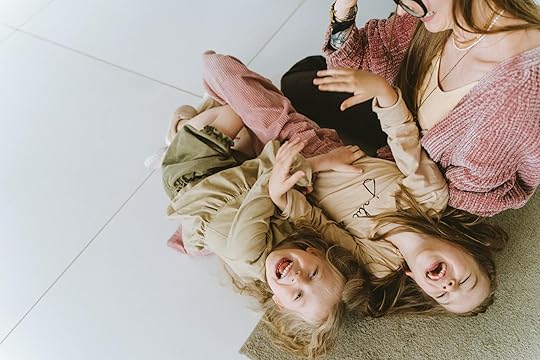 Photo by Anastasia Shuraeva on Pexels.com
When we centre humanity at the core of parenting, responsiveness is not weakness, and flexibility is not failure.
Because the truth is that parents are not strategies to optimise or techniques to master, we are humans in a relationship with other humans. No child, and no parent, has ever thrived under shame, tight control, or constant comparison.
Rehumanising Parenting recognises context. It honours capacity. It understands behaviour as communication rather than character.
In practice, this might look like lowering expectations during burnout instead of escalating consequences. It might look like adapting school demands to fit your child’s capacity. It might look like understanding what is actually going on for the child during a meltdown and prioritising repair over punishment. It might look like listening to your own exhaustion and capacity, instead of pushing through to meet an external standard or framework.
When we stop contorting ourselves to fit narrow frameworks, something softens. We begin listening again, to the child in front of us, and to the quieter wisdom within ourselves.
Rehumanising Parenting is not a new strategy. It is a reclamation. It is not about raising perfectly behaved children. It is about raising well-supported humans, including ourselves.
Rehumanising Parenting is not something we practice alone.
It takes courage to question old frameworks, to trust your instincts, and to soften when the world tells you to tighten.
If this way of seeing parenting resonates with you, you’re warmly invited to explore From Burnout to Balance, my parent community where we practice this work together, slowly, relationally, and without shame.
You don’t have to figure this out in isolation. There is space for you here.
The Person Who Wrote This Blog[image error]Tanya Valentin is a neuro-affirming family coach, writer, and community leader supporting parents of neurodivergent children through burnout recovery.
Drawing on lived experience, nervous-system-informed practice, and relational facilitation, her work explores grief, identity, and the quiet return to self-trust.
She is the founder of the supportive community who are parenting neurodivergent children and teens in burnout, From Burnout to Balance.
Have you enjoyed reading this blog? Subscribe and receive fresh reflections, parenting resources and validation every time I push publish.
The post What is Rehumanising Parenting? appeared first on Tanya Valentin.
February 5, 2026
Seen on Our Own Terms
My autistic teenage daughter emerged from their room, bright blue hair tied into two pigtails, their face dotted with vividly coloured rainbow freckles.

I felt my body brace before my mind could catch up, the familiar urge rising to say something like, “You’re not going out like that, are you?”
I paused. I breathed. And I quietened that voice by remembering another (then undiagnosed) AuDHD teenage girl who stood before her own exasperated mother some twenty years earlier — dressed head to toe in gothic black, hair and makeup an earnest homage to her teen idol, Robert Smith from The Cure.
Over the years, the blue hair has remained, while the rainbow freckles have gradually given way to piercings and tattoos. I’ve noticed similar expressions of non-conformity emerging in my other children, too, expressions I’ve learned, over time, not just to tolerate, but to appreciate and deeply value.
What began as something I simply allowed has slowly become something I’ve felt curious about. I started to wonder what these visible expressions were doing for my children. What they offered, what they protected, and what they were communicating in a world that so often asks neurodivergent people to soften, shrink, or disappear.
What Is the Purpose of Non-Conforming Expression?Choosing to express oneself in ways that sit outside the norm is as complex and multi-layered as neurodivergent identity itself.
For many neurodivergent people, non-conforming expression is deeply connected to creativity, an outward manifestation of a richly imaginative, associative mind, an off-beat way of seeing the world, and a genuine experience of joy.
For others, physical expression is entwined with special interests: fashion, make-up, music, favourite people, video-game lore, or beloved fantasy worlds. These expressions are not superficial; they are often immersive, meaningful, and identity-affirming.
For many, these visible choices also serve a nervous system function. Colour, texture, repetition, ritual, or intensity can offer grounding, regulation, and a felt sense of safety in the body, particularly in a world that often feels unpredictable, demanding, or overwhelming.
Tattoos can be deeply symbolic, can be an outward expression of the story of your life as it is unfolding, an anchor to steady you in moments of struggle.
Piercings can offer predictable sensory feedback and proprioceptive input.
 Photo by Helena Lopes on Pexels.com
For some, non-conforming expression becomes a way of finding and forming community, a signal of shared language, values, or belonging. For others, it functions as dissent: a refusal to surrender autonomy or sovereignty to externally imposed expectations, norms, or rules.
And for some, it is protective, a way of creating psychological distance, reclaiming authorship of the body, or signalling boundaries in a world that frequently misunderstands, polices, or seeks to control neurodivergent people.
What Non-Conforming Expression Protects
For some neurodivergent people, particularly those living with chronic masking, burnout, or PDA profiles, non-conformity can become a vital protective strategy.
When a nervous system has been pushed beyond capacity, when autonomy has been repeatedly overridden or eroded, the body often finds ways to reclaim authorship.
Visible difference can create distance from expectations that feel coercive or unsafe; it can interrupt demands before they land; it can act as a boundary where words have failed. In this way, non-conforming expression is not an attempt to provoke or resist for its own sake, but a nervous-system-led refusal to collapse further.
It says: this far and no further. It protects what little energy remains, preserves a sense of self, and allows survival in environments that have not yet learned how to meet neurodivergent people with consent, safety, and respect.
Many neurodivergent children, teens, and adults move through a world that tells us, both implicitly and explicitly, that we are different, and that difference comes with a cost.
A common survival strategy is to try to fit in. To adapt. To become more acceptable. But for many of us, the mask grows heavy, and maintaining it over time comes with serious consequences.
I think back to my own childhood. Raised in a strict religious household, I learned early that following the rules and pleasing others was how I stayed safe. As an undiagnosed AuDHDer, I felt out of place long before I had language for why. I assumed this sense of difference was rooted in my religious upbringing, and perhaps some of it was, but my body knew there was more to it than that.
So I did the only thing I knew how to do when my nervous system felt unsafe, and my belonging felt threatened: I tried harder. I bent more. I masked. I performed goodness. I strived for excellence.
What no one told me was that there would come a point where I had bent so much that the only option left was to break.
And then came the goth girl.
 Photo by Ilya Komov on Pexels.com
If I’m being honest, I loved burning my good girl image to the ground. I relished being dark, rebellious, and unsettling. I felt a quiet thrill when I worried my parents or watched teachers and peers look at me differently. This was a persona I had authored on my own terms, and for the first time, I felt free.
That period of visible non-conformity didn’t last. Punishment and shame eventually pushed her underground. But I have never lost her. I still carry that little goth girl in my heart.
Now she lives in my tattoos, my poetry, and my enduring love for alternative and indie rock.
What She Was Protecting Me FromMy little goth girl arrived at a time when I felt deeply lost, when I had very little language to express my inner reality. She was strong, unflinching, and fiercely protective at a moment when I was already carrying the impact of years of hierarchy, moral injury, erasure, and quiet collapse.
Instead of weak, I could be strong.
Instead of pleasing others, I could break rules and hold boundaries.
Instead of being unsettled, I could unsettle others.
She drew me into a new community — others who had grown weary of masking in order to belong, and who had chosen something more authentic instead. Looking back now, many of them were unmistakably neurodivergent too.
 Photo by César O’neill on Pexels.com
My little goth girl protected the part of me that knew obedience was costing me myself.
Without realising it at the time, she was also preparing me for motherhood. Preparing me to parent children who, like me, would begin their lives quiet and compliant, and then go on to challenge every cultural, expressive, and gendered expectation I once assumed my parenting journey would hold.
How Non-Conformity Became My TeacherIt still feels like a cruel twist of fate that the children I believed I was mothering, the ones who appeared capable, compliant, and coping, were masking just as deeply, and struggling under that same weight I once carried.
I hold deeply regret that it took a crisis for me to fully understand what was unfolding in my children’s inner worlds.
I wish I had recognised it sooner. But once I saw it, I could not unsee it.
My body knew, before my mind could fully catch up, that the parenting scripts I had inherited could no longer hold.
What followed was not clarity, but disorientation. Everything I thought I knew about safety, success, and “good parenting” began to unravel. I was forced to confront the uncomfortable truth that what had once kept me regulated, structure, compliance, striving, was now overwhelming my children’s nervous systems and quietly eroding our connection.
This is where brave parenting began for me. Not as confidence or certainty, but as rupture. As the choice to sit with fear, grief, and unlearning rather than reach for control.
Brave parenting has meant choosing nervous system safety over appearances, relationship over respectability, and repair over righteousness, again and again.
And this is when my little goth girl stepped in to protect me again.
She protected me by giving me the courage to break rules, to inconvenience others, and to hold firm in my boundaries once more, this time not just for myself, but for my children.
 Photo by Alexander Grey on Pexels.com
But she also reminded me, through her embodied wisdom, what it feels like to be young and living at the edge of collapse after years of trying to meet outward expectations. She helped me remember the cost of being palatable and what happens when a nervous system is pushed too far toward obedience.
She is the part of me who counselled me to make space as my children’s authentic expressions began to emerge. To resist the urge to fear them or shut them down, and instead to stay curious, to try to understand, and, where I could, to celebrate them.
One weirdo to another.
Choosing The Brave Parenting PathEven now, this remains hard.
I still feel the pull to minimise, to smooth edges…
I often find it difficult to hold the tension between the urge to shape my children into forms that feel safer and more acceptable in a world that fears difference and the quiet knowing of the true cost of self-abandonment, which I carry in the other hand.
I still grieve the ease I once imagined parenting might bring.
A Final Note To YouBrave parenting, I’m learning, is not the absence of struggle; it is the ongoing practice of staying present, regulated, and relational when everything in you wants to retreat.
If you are parenting a child whose expression feels visible, inconvenient, or confronting in a world that fears difference, I want you to know that your fear makes sense.
Loving a child like this asks us to live in constant tension, between protection and permission, safety and selfhood.
You are not failing because this is hard.
Brave parenting is not about getting it right or feeling confident; it is about staying present, staying curious, and choosing relationship even when your nervous system is screaming for certainty. This is something we explore more deeply inside From Burnout to Balance, a parent community centred on nervous system safety and connection.
You don’t have to have all the answers.
You just have to keep coming back to your child, and to yourself, again and again.
The Person Who Wrote This Blog[image error]Tanya Valentin is a neuro-affirming family coach, writer, and community leader supporting parents of neurodivergent children through burnout recovery.
Drawing on lived experience, nervous-system-informed practice, and relational facilitation, her work explores grief, identity, and the quiet return to self-trust.
She is the founder of the supportive community who are parenting neurodivergent children and teens in burnout, From Burnout to Balance.
Have you enjoyed reading this blog? Subscribe and receive fresh reflections, parenting resources and validation every time I push publish.
The post Seen on Our Own Terms appeared first on Tanya Valentin.
January 28, 2026
Becoming a Brave Mother in a World That Rewards “Good Parenting”
When my children were little, I saw a Facebook meme that nearly broke me.
It said:
“My goal in life is to raise a child who doesn’t need to heal from their childhood.”
Photo by RDNE Stock project on Pexels.com
On the surface, it felt so positive. So aspirational.
And to a mother who had already done significant healing from her own childhood, it felt like a dream come true.
Without realising it, that sentence became my gold standard of parenting.
All through my children’s childhoods, I tried really hard to make it true.
I read all the books. I followed the advice. I did all the things a “good” mother was meant to do, often to my own detriment.
Fast forward a few years, and my teenagers were struggling.
They were anxious much of the time. Depressed. Struggling at school. Struggling in ways I didn’t yet have language for.
And because I had made that meme my benchmark, I believed this meant I had failed.
I was no longer a “good” mother.
I carried so much shame that, at first, I buried my head in the sand and tried to fix everything myself. I delayed asking for help. I couldn’t bear to let the truth be seen.
When I finally asked for help and took them to therapy, sitting across from counsellors, shame moved into my body. I was certain they could see what I could barely admit to myself, that I had failed at the “good parent” mission life had given me, and that I was being quietly measured and found wanting.
The Diagnosis That Changed EverythingThen burnout came.
My daughter was hospitalised after an attempt to end her life.
My world imploded, and I could no longer hide from myself or from others the story that I was a “bad” parent.
I remember asking myself, over and over again:
How did things go so wrong?
And then came the news that truly shook the foundations of my life.
My children were autistic.
And as I later found out, so was I.
At first, I had no idea what this meant or how profoundly it would change everything.
What I couldn’t see yet was that this moment would challenge, fracture, and ultimately reframe many of the silent contracts I had made with life.
In The Four Agreements, Don Miguel Ruiz writes about the unconscious agreements we make during our “domestication”, the beliefs we absorb about who we are, what love looks like, and what it means to be “good.”
We don’t choose these agreements deliberately.
They are shaped for us by our caregivers, our culture, and our systems, and we mistake them for truth.
It is often only when something seismic happens, a diagnosis, a crisis, a child falling into burnout, that we notice the first tear in the fabric of that reality.
And in that rupture, we discover something both terrifying and liberating:
These agreements had been made, and what’s been made can be unwritten.
Where Does Our Obsession with “Good” Come From, and Who Gets to Decide What “Good” is?“Good” sounds benign. Reassuring, even.
But good is never neutral.
Whenever we use the word good, we’re usually not describing care; we’re describing compliance with a set of values that someone else decided mattered.
So the real questions become:
Good, according to whom?
Good, for what purpose?
And good at what cost?
“Good” is a cultural construct, not a universal truth. What counts as a“good” parent shifts wildly across time, cultures, class, race, ability, and politics.
In our Western culture, at different points in history, a “good” mother was expected to:
Obey her husbandProduce many childrenKeep children quiet and unseenEnforce discipline through fearRaise productive workersPrioritise obedience over well-beingFor example, in the late Victorian era, “good” mothers were encouraged to follow strict schedules, feeding by the clock, limiting physical affection, avoiding kissing, and leaving babies to sleep alone. Much of this guidance came from male doctors and early child-rearing authorities who warned against “spoiling” children and believed that too much tenderness would weaken character.
[image error]Photo by Sarah Chai on Pexels.comThese ideas about “good” parenting have left a long shadow over Western parenting culture. They did not emerge from an understanding of children’s nervous systems or developmental needs, but from the social, economic, and political conditions of the time, particularly those shaped by the industrial revolution, which required compliant, self-regulated, and productive future adults.
Religious Influences on “Good” ParentingOver the years, religion has also shaped how our culture perceives “good” parenting. In many religious contexts, “good” parents raise obedient, quietly compliant children who are respectful of authority.
As the daughter of a pastor, my childhood was largely shaped by the bible teachings of “Spare the rod and spoil the child” and “Children are meant to be seen and not heard.”
In my Christian upbringing, children were considered sinful beings who needed controlling and correcting. I was told that God was always watching and would be judging my behaviour as “good” or “bad”, “worthy” or “unworthy”.
Something that had a huge influence over my concept of “good” well into my adult years.
When “Good” Parenting Becomes a Moral MeasureWhen we consider the cultural and religious influences on modern parenting, when parents today feel like they are failing at “good,” it’s worth asking:
Failing who, exactly?
“Good” parenting has always been defined from the outside.
A framework with have to fit into. Boxes we need to tick. Gold stars of approval we need to earn.
Most definitions of good parenting are created by:
Institutions (schools, medical systems, governments)Dominant cultural norms (often white, middle-class, neurotypical)Productivity-focused societiesBehaviourist frameworks that prioritise control and outcomesThese systems reward parents whose children are regulated in public, compliant with authority, successful in school, socially palatable and easy to manage.
Within these systems, our children’s behaviour is read as a moral measure of our parenting. The risk of losing acceptance and belonging can quietly take centre stage, pulling our focus away from the unmet needs beneath the behaviour. This was something that strongly influenced my early parenting, as I described in the opening paragraphs of this blog.
Which means that parents of neurodivergent children are set up to fail from the start, not because we are doing something wrong, but because our children cannot and should not contort themselves to meet those expectations. And when neurodivergent children do mask up to fit in with cultural expectations, this is when we see a decline in physical, emotional and mental well-being, often leading to burnout.
[image error]Photo by Vivaan Rupani on Pexels.com“Good” Often Means “Least Disruptive”
When you strip it back, good parenting is often shorthand for not needing extra resources, not drawing attention, not making others uncomfortable, not challenging the system.
A “good” parent stays quiet and keeps things running smoothly.
Why “Good” Parenting Stops Working When a Child Is StrugglingWhen my daughter went into burnout, I found myself moving further and further away from the path of “good” parenting and, instead, forging an off-the-grid path of brave parenting.
At first, this was deeply challenging. As an undiagnosed AuDHD woman, I had learned to find safety in people-pleasing; in managing other people’s emotions and expectations, in playing by the rules, and in not making waves.
I had avoided ruffling feathers, being “too much,” or becoming that parent.
But my daughter and my other children didn’t need a rule-follower who simply went along with what others told her to do. They needed a parent who would listen, take responsibility for her own shit, stay present when things felt hard, and advocate for them in a world that didn’t understand.
They needed a brave mother.
And brave mothers often disrupt smoothness by advocating, accommodating, slowing down, or refusing harmful expectations.
Disruption, I’ve learned, is rarely rewarded.
[image error]Photo by Alex Green on Pexels.comHow Shame Keeps Parents in LineWhen I was a young child, my dad told me a story that stayed with me.
There was once a baby elephant sold to a travelling circus. When he was still a calf, the elephant keeper placed a cuff around one of his legs, attached to a chain that was pinned into the ground. The calf struggled and pulled, but no matter how hard he tried, he couldn’t break free. The cuff was heavy. The chain felt immovable.
As the elephant grew, the keeper replaced the cuff with larger ones to fit his leg, but the chain and the pin remained the same.
In time, the calf became a powerful, fully grown elephant — strong enough to lift his leg and walk away with ease. And yet, he didn’t. The training had taken hold. The restraint now lived in his belief, not in the chain.
He stayed, captive not by force, but by what he had learned to expect.
We don’t need police for “good parenting.”
Shame does the job beautifully.
Parents internalise the rules and begin to monitor themselves:
“I should be coping better“
“Other parents manage this so should I”
“If I were a good parent, my child wouldn’t be struggling“
This is how cultural expectations become our own version of the cuff and the chain pinning us to the ground, slowly over time, becoming self-criticism, hypervigilance, and chronic guilt.
And because shame feels personal, we forget that it is structural.
“Good” Collapses Under ComplexityThe moment a child enters burnout, disability, trauma, or neurodivergence, the idea of a single, fixed “good” parenting standard becomes not just unhelpful but dangerous.
Because “good” leaves no room for context or nuance, it punishes adaptation, interprets responsiveness as weakness, and frames survival strategies as moral failure.
Brave mothering emerges precisely because “good” can no longer hold the reality. But this shift does not come without its challenges. Over time, our bodies learn to associate “good” parenting with safety. When we begin to question it or adapt how we parent, our nervous systems often sound the alarm, pulling us back toward what feels familiar and predictable.
Unlearning years of automatic programming and learning to parent with intention instead takes real work. Parenting a neurodivergent child, and especially a child in burnout, often requires doing the opposite of what we were taught, while everyone around us continues to follow the same outdated rules.
So we are not only pushing against cultural conditioning, but we are also working against our own nervous systems, and this takes great courage.
No wonder this feels so hard.
[image error]Photo by Brett Sayles on Pexels.comWhat Brave Mothering Asks of Us Instead“Good” parenting social structures ask us to consider:
How does this look?Will this be judged favourably?Does this align with the rules?Brave mothering asks:
What does my child need right now?What reduces suffering, even if it costs me approval?What am I willing to unlearn to stay in relationship?And those two paths often diverge sharply.
Most parents don’t stop striving to be “good” because they don’t care or are trying to be a maverick.
They stop because the cost to their children and the relationship they have with their children becomes too high.
Many of our children’s well-being demands something different because their nervous system can no longer survive the pressure.
Brave mothering isn’t about going against what makes us human. It’s about refusing to let someone else’s definition of “good” silence our humanity.
If you are finding yourself standing at the edge of this shift. No longer able to parent by the old rules, yet unsure how to trust what is emerging, you are not alone.
Brave mothering is so much easier to do when you have the backing of other brave mothers.
This shift from “good” parenting to brave mothering is something I support parents through inside From Burnout to Balance, a space for those navigating burnout, shame, and the slow work of rebuilding safety.
From Burnout to Balance exists as a soft place to land for parents walking this brave, unfamiliar path. It is a space where nervous systems are honoured, where shame is met with compassion, and where you don’t have to prove your goodness to belong.
You are welcome to come exactly as you are, to be supported as you relearn how to parent, and care for yourself in ways that are compassionate, responsive, and true.
The Person Who Wrote This Blog[image error]Tanya Valentin is a neuro-affirming family coach, writer, and women’s circle facilitator supporting parents of neurodivergent children through burnout recovery.
Drawing on lived experience, nervous-system-informed practice, and relational facilitation, her work explores grief, identity, and the quiet return to self-trust.
She is the founder of From Burnout to Balance and HELD.
Have you enjoyed reading this blog? Subscribe and receive fresh reflections, parenting resources and validation every time I push publish.
ReferencesChristina Hardyment (1983) – Dream Babies: Childcare from Locke to Spock
The post Becoming a Brave Mother in a World That Rewards “Good Parenting” appeared first on Tanya Valentin.
January 22, 2026
Neurodivergent Mothers, Burnout, Isolation and the Quiet Loss of Friendship
I was recently reading a Substack post by The Autism Doctor about how many women are not diagnosed as autistic simply because they“have friends.”
In the post, she explains that the outward presence of friendships does not necessarily mean those relationships foster genuine connection or belonging. Instead, they can be social constructs that many autistic women learn to maintain in order to fit in with the world around them.
[image error]Photo by Mikhail Nilov on Pexels.comReading this prompted me to reflect on my own friendships and my sense of belonging (or lack of it) within friendships as a late-diagnosed AuDHD woman. It also brought me back to my experience of how small my world became when my daughter went into burnout, and how many relationships quietly fell away when I no longer had the time, energy, or capacity to maintain them.
The loss of connection, friendships, and the grief that accompanies this is something many parents in my parenting community, From Burnout to Balance, speak about. Ask any parent of a child in burnout, and they will tell you: this is an incredibly isolating experience, and it is isolating for many reasons.
What I would like to gently challenge is the perception and the guilt that many mothers, in particular, carry when relationships begin to fall apart — the quiet belief that this must somehow be their fault.
Why “Having Friends” Is a Misleading Measure for Neurodivergent WomenWhen I reflected, what I began to notice was that the isolation I felt wasn’t just about time, capacity, or changing circumstances.
It was about what kind of relationships I, and so many of the other mothers I work with, have been holding long before burnout arrived.
For many mothers, and particularly for neurodivergent mothers, including autistic mothers, friendships have often been built on quiet adaptation. On being easy to be around. On smoothing feathers, minimising needs, not bothering others, or being“too much“.
Somehow, we’ve internalised that the price of friendship is staying connected at all costs. These relationships can look intact from the outside, yet feel surprisingly lonely on the inside. We are often carrying the lion’s share of the emotional labour, while still finding ourselves forgotten, overlooked, or quietly left out.
When a child enters burnout, the margin for this kind of self-abandonment disappears. Our nervous systems simply cannot sustain it anymore. What once felt manageable begins to feel painfully heavy, and the relationships that relied on us continuing to bend, absorb, justify, and over-function start to strain or fall away.
Many Autistic women, learned early that proximity was safer than honesty. That being agreeable was the price of belonging. That discomfort was normal, and loneliness was something you swallowed quietly.
The Autism Doctor
This is not a personal failing.
It is not a lack of resilience.
And it is not evidence that we are “bad at relationships.”
Rather, it invites a deeper question, not why connection feels harder now, but what these experiences are revealing about the nature of connection itself, and the hidden costs many neurodivergent women have paid to belong.
Burnout and the Hidden Cost of Social SurvivalWhen a child enters autistic burnout, a mother’s capacity shrinks in very real, embodied ways. Suddenly, life becomes smaller, vigilance increases, and the nervous system stays on constant alert. All your available bandwidth and executive functioning are used up trying to survive the day.
[image error]Photo by Ali Camacho Adarve on Pexels.comFor neurodivergent mothers, including autistic mothers, this often means the cost of masking becomes impossible. Parenting a child in burnout has a way of burning away all of the bullshit, and you see things that you simply can’t unsee or tolerate any longer.
Keeping relationships alive is hard work, and suddenly, replying “the right way” is too much; laughing things off feels impossible. Explaining yourself again feels exhausting. Tolerating subtle dismissals hurts too much.
And relationships that relied on us adapting, rather than mutual care, begin to fall away.
From the outside, this can look like withdrawal, but from the inside, it can feel like honesty, relief, and grief.
How the Inner Shifts of Parenting a Neurodivergent Child in Burnout Can Intensify IsolationBurnout doesn’t make mothers less capable of connection.
It removes the capacity to disappear inside relationships that don’t hold them.
If you’ve been following my work for a while, you may have heard me speak about my daughter’s burnout as the catalyst for a spiritual awakening I wasn’t expecting.
Traumatic and life-altering experiences have a way of shaking us awake, bringing into sharp focus what truly matters. Parenting a child through burnout is no different. It disrupts the narratives we were living by and exposes the quiet compromises we’ve made along the way.
When my daughter went into burnout, it felt as though floodlights were suddenly turned on in my life. They illuminated everything I had been ignoring, tolerating, or pushing through, not just externally, but within myself. Long-standing patterns, unspoken dynamics, and ways of being that were no longer serving my family became impossible to unsee.
From the outside, it may have looked as though my world was changing. But the most profound shift was internal, a change that was largely invisible to others.
And here’s the part we rarely talk about: I changed, but the world around me did not.
I found that I no longer fit comfortably inside my life, yet I couldn’t articulate why. The values I was orienting toward had shifted. My tolerance for misalignment had narrowed. And this deep internal re-patterning quietly widened the rift I had already felt in many of my relationships, intensifying the sense of isolation that had been present long before burnout arrived.
What this period revealed was that the ache of disconnection I was feeling did not begin with burnout, but with much older relational imprints many women are shaped by long before motherhood.
The Sister Wound and Why Community Feels UnsafeLayered underneath this is something many women carry but rarely name: the sister wound.
The sister wound is the collective trauma of being raised in cultures that teach women that other women are competition, closeness is conditional, safety comes from fitting in, and exclusion is always a risk.
From early on, many girls learn that belonging can be taken away at any moment, through gossip, comparison, social hierarchies, or subtle power dynamics.
For neurodivergent, ADHD, PDA and autistic girls and women, this wound is often intensified as they are more likely to miss social subtext, be scapegoated or misunderstood, be tolerated but not protected or stay in relationships where they are the one who is constantly adapting and pushing past their personal boundaries to make others comfortable.
[image error]Photo by Karola G on Pexels.comSo even when friendships exist, there is often an underlying vigilance:
Am I too much? Not enough? Saying the wrong thing? About to be excluded?
This creates a paradox many mothers recognise deeply: the longing for community and deep distrust for the very community that they crave.
Why Mothers Experience Isolation During Child BurnoutWhen my child went into burnout, I suddenly found myself needing support in ways I never had before.
I needed flexibility, understanding, low-judgment presence and a space to not be okay.
But many of the friendships I’d maintained were built on the opposite foundations, such as emotional availability, overgiving and being ‘easy one’.
A childhood that had primed me for people pleasing and hyperindependence did not give me the skills I needed to ask for help or talk about my experience, and so I just shut down.
This caused a lot of shame and reopened old wounds that you may feel familiar with: “I’m too much”, “I’m only valued when I’m useful“, “I’m not chosen”, “When I struggle, I’m abandoned.”
The Grief No One Talks AboutThere is a grief that comes with realising that many friendships you worked so hard to maintain were never built on reciprocal connection and trust.
I felt a deep grief for the young mother who tried so hard, at playgroups, in the schoolyard, and even within church communities, to make and sustain friendships where she never quite felt like she belonged.
There was grief for the energy spent, the self-betrayals required, and the loneliness that existed even when I wasn’t alone. The quiet, internalised belief that the absence of meaningful connection was somehow my fault.
And grief for the hope that this time, when I finally needed support, it would be different.
[image error]Photo by Nicola Barts on Pexels.comThat grief was compounded when I began to notice the same patterns of “friendship-making” emerging in my own children; the adapting, the over-giving, the longing to belong, and the subtle erasing of self to stay connected.
Then came the quieter, more brutal realisation: that the experience of my child’s burnout, and the absence of what are often considered “primary” social skills, positioned me even further on the outside.
Re-imagining Community Through a Low-Demand LensDespite all of this, healing does not happen in isolation. Humans are meant to be in a village.
In the absence of this depth of community, the safe container is difficult to find. By default, we become the container ourselves, and when this happens, we cannot drop into the well of grief in which we can fully let go of the sorrows we carry.
Francis Weller
But for mothers in burnout, especially autistic mothers, community must look different.
For mothers of children in burnout to heal in community, they need to be low-demand, non-competitive, consent-based, spacious enough for inconsistency and safe enough to rest, not perform.
Community can no longer ask women to disappear in order to belong, but instead, it must offer something radically different: being believed, met without urgency and being allowed to show up exactly as they are.
This is not about fixing isolation by “trying harder” socially. It’s about re-learning what safe connection feels like, often slowly, cautiously, and with great tenderness.
If This Resonates…If friendships have fallen away during this season, it doesn’t mean you are broken, failing, or becoming less capable. It may mean you are no longer willing, or able, to survive at your own expense. This realisation can bring up a lot of grief, but it is also powerful because when we let go of relationships that no longer serve us, we can make space for those that do.
And while that can feel unbearably lonely, it can also be the beginning of something more honest.
A quieter, truer form of connection. One that doesn’t ask you to disappear or cede your sovereignty in order to belong.
If this resonates, I want you to know that you don’t have to navigate this alone.
From Burnout to Balance was created for parents walking this exact terrain: the grief of lost connection, the identity shifts that come with burnout, and the longing for community that feels safe enough to rest in. It is not a space that asks you to perform closeness, keep up, or be anything other than where you are.
Here, community is built slowly and intentionally through shared language, mutual understanding, and a deep respect for nervous-system limits. You are welcome to arrive quietly. To take up space gently. To be witnessed without being fixed or to witness others from the sidelines until you feel comfortable engaging with others.
This is our attempt to create a different way of being together, one shaped by care rather than competition, connection rather than comparison, and belonging that doesn’t cost you yourself. It is a low-demand space, with room to arrive and participate in ways that honour your nervous system and capacity.
If you’ve been longing for community but struggling to trust it, you are not alone in that, too. And when you’re ready, there is a place where you don’t have to disappear to belong.
The Person Who Wrote This Blog[image error]Tanya Valentin is a neuro-affirming family coach, writer, and women’s circle facilitator supporting parents of neurodivergent children through burnout recovery.
Drawing on lived experience, nervous-system-informed practice, and relational facilitation, her work explores grief, identity, and the quiet return to self-trust.
She is the founder of From Burnout to Balance and HELD.
Have you enjoyed reading this blog? Subscribe and receive fresh reflections, parenting resources and validation every time I push publish.
The post Neurodivergent Mothers, Burnout, Isolation and the Quiet Loss of Friendship appeared first on Tanya Valentin.


