Kathryn Knowles's Blog
April 23, 2025
How to Balance Reading as an Author
There’s no denying, it’s difficult to make time to write a novel. We only have a specific amount of “free time” and we have to choose how to spend it. I used to spend all my free time writing and working on projects, but now I struggle to set aside even a few hours for this.

When I wrote The Quiescence Trilogy, I wasn’t reading anywhere near as much as I’m reading now. At the time, I told myself, “I’m a writer, not a reader.” A hilariously arrogant thing to say, in retrospect.
Of course I am a reader!
Writers have to be readers. We need to read other stories to learn what works and what doesn’t, what innovative things people are trying, and what stories people are interested in. This is all important industry research. (Not to mention, we have to support other authors if we expect people to support us!)
One of the main reasons I love to write is because I love getting lost in a story. I love getting to know new characters and caring about them as if they were real people. I love the magic of stepping into a new world, where the rules are different, maybe there’s a little magic to go along with the mayhem.
Lately, I’ve been struggling to disappear into one of my own projects, though. And I wonder if it’s because I’m too happily getting lost in other people’s stories instead.
I have read some truly exceptional stories lately (and a few stinkers but let’s not worry about those). I like to think that these amazing stories are inspiring me and pushing me to become a better writer, but what if they’re doing something else too?
What if they’re intimidating me, or making me feel like nothing I do could ever compare. Or what if they are simply satisfying my hunger for a good story so I no longer feel compelled to write my own?
There’s also the fact that more reading simply takes up more time. Is it actually feasible to read multiple books a month while also making time to write a book? Once you factor in a full time job, commuting, family responsibilities, trying to exercise and take care of yourself… etc.
The “free time” gets whittled away awfully quickly.
So how can I balance this moving forward? Should I limit the number of books I’m allowed to read? Give myself a quota of pages written before pages read? I’m not sure there’s an easy formula for it.
So, I thought I should reflect on my motivations for reading and writing to see if I can find a path towards better balance.
So, why do I read?I read for three reasons:
To relax and enjoy downtime; To get inspired and learn new ways to write; and To disconnect from the real world, and connect to something else.Maybe it’s weird to admit this, but part of why I love to read is because it’s easier and safer to connect with and care about fictional characters—fictional problems—than real ones. Fictional characters will never actually hurt me, and fictional problems aren’t really my problem.
But what about the times when I don’t like how a plot was resolved (remember the stinkers I mentioned?), or I don’t like the decisions a character made? I start feeling dissatisfied with the stories I’m reading.
This is interesting…Yes, it’s nice to give up control and let the fictional characters (aka other authors) make all the decisions. But what if part of why I write is because I want to have some semblance of control in an otherwise uncontrollable world. Maybe these micro universes are outlets for me to feel some agency…
Why do I write?There’s a lot of overlap in motivations for reading and writing, but when I parse out the differences I realize two key motivators for writing:
1. I want to control the story. At the risk of sounding like a megalomaniac, I want to make all the decisions! I want to create a story I find satisfying and create the kinds of people I like.

I swear I’m not a power-hungry super villain. I just like that writing is a space where anything is possible for me. Nothing needs to hold me back.
2. I enjoy the act of writing, the language and the storytelling. Heck, I even enjoy the editing. And if I enjoy it this much, maybe I should stop thinking about it as work, and give myself permission to do this as my downtime. More like a hobby… but one I take very seriously.
Maybe part of the solution will be learning to view writing as more of a hobby again, instead of work. In my efforts to achieve work-life balance, I may have strayed too far away from the activities that fill my cup the most. If the work is something I love, then why not prioritize it? Why do I view reading as rest time, but writing as work?
If reading is getting swept away, then writing is like sweeping myself away. It’s the difference between taking a pre-packaged vacation or planning my own. Sure, the latter takes more work, but ultimately it will probably be more satisfying.


January 11, 2025
5 Takeaways From My First Kickstarter
Happy New Year!
In fall of 2024 I hosted my first ever Kickstarter campaign to launch my new book, These Gossamer Recollections.
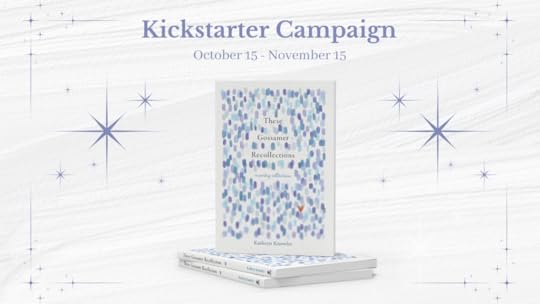
I had a great experience and learned a lot about strategies for direct sales and crowdfunding. I thought I’d share 5 key takeaways from the experience.
1. It Was FunYep, that’s right. I had a lot of fun running the Kickstarter campaign. Before I started, I was worried it would be a lot of work, not to mention stressful and difficult to manage. But I’m happy to say this was not the case. The platform was incredibly easy to navigate on my end. And designing the page, story, and marketing materials was really satisfying. It did take a bit of time, but honestly not too much. And it paid off in the end!
Now, I know my campaign was relatively small in comparison to some of the behemoths I’ve seen. But I think the workload was appropriate for the size, and I think that would apply to bigger campaigns as well.
It was really fun watching pledges come in, posting updates, and preparing the packages. I really enjoyed getting to put a personal touch on all the orders, and getting to actually thank the individual people who supported me. It felt really meaningful.
One area I’d like to improve on for next time would be the marketing initiatives. Figuring out how to get the word out to a wider audience. But… you know, isn’t that always the case?
2. It Was More Confusing for CustomersAs fun and user-friendly as the experience was for me, I don’t think that was the case for my potential customers. Some people really dig Kickstarter and the way it’s set up. They feel confident navigating the pledge pages and sifting through all the options. Other customers found it utterly overwhelming. Several people told me they couldn’t figure it out and they’d rather just wait and buy it directly from me later. And honestly, that’s fine.
I used Kickstarter as a way to facilitate direct sales, and I was hoping more people would use it instead of the old school buy a book out of the trunk of my car method. But it’s important to realize that these crowdfunding initiatives might not be comfortable shopping experiences for some people. It’s good to keep using a wide range of sales methods, to make sure there’s a solution for everyone. In my experience, people do want to buy my books, but I have to meet them where they’re at with their shopping habits and whims. It’s not easy to cover all my bases, but I will keep trying my best. Kickstarter is a great new avenue to add, but it is not a catch all solution.
3. Do Something SpecialI didn’t do anything fancy with this first Kickstarter, but I think for the next one, I will really lean into making it a unique offer. I’ve seen lots of authors who have success using Kickstarter for their exclusive special editions. I think this is probably a great idea. It’s good to give people a reason to use the Kickstarter instead of waiting to buy it some other way later. What’s the specific draw of the Kickstarter?
This time, I did offer some specialty add-ons and extra goodies, but I didn’t lean into those ideas enough. For my next book, I might try releasing the hardcovers exclusively on Kickstarter, and make them fancy! So, if you want a hardcover, the only way to get it is through the Kickstarter. This is partly because regular hardcover sales are kind of annoying anyway. The distributors take a huge cut and I’m not making much money on them so I don’t know that it’s worth it to sell them regularly… Plus, fancy hardcovers are cool and people seem to get excited about them.
4. Supporters Who Don’t Want Your BookSome people in my life really want to support me, but they also really don’t want to read my books. Maybe they don’t really like fantasy or poetry, or maybe they just aren’t big readers. Whatever the case, I know some of them feel bad that they don’t support me, or they do buy the books but then they don’t read them and then that makes them feel guilty. Gah! I don’t want to make people feel bad!
But with Kickstarter, there’s an option to pledge the campaign and not receive an award. I thought this was odd at first, but then I had a few people choose this option. Even some total strangers. I guess there are just some super cool, generous strangers out there who enjoy supporting artists on Kickstarter. Magical benevolent people.
There was also an option to add on some additional support. So, some people pledged for a paperback and then tossed some extra money on top, just to be awesome and nice.
Both of these features are great! You never know who wants to support you and they’re just looking for an easy way to do it. So, let’s make it easy for them. Genius!
5. Plan Well and Be RealisticThis is an ode to excel sheets. Oh, how I love excel sheets. Or google sheets or whatever!
Before I started, I created a massive, comprehensive excel sheet mapping out the estimated costs for every aspect of the campaign. I factored in cost of producing the items, I weighed my books and used that to get shipping quotes for areas in Canada and the US. Every single expense I could imagine went in the sheet, including the percentage that Kickstarter would take. And then I used that to project how many pledges I was likely to get in each category and how many I would need in order to succeed. Projecting the sales takes a bit of guess work. Educated Wishes (for any Deadpool fans out there haha).
But I’m so glad I made this sheet. It meant that I was totally ready to go when it came time to fulfill packages and there were no unexpected expenses. In fact, some of my actual expenses came in well below my estimates, and my sales came in way over my estimates. Surprisingly low costs + surprisingly high revenue = yay!
Some Bonus TakeawaysShipping to the UK and Europe was not as expensive as I thought it would be. Next time I’ll include those regions and look into others as well.A longer timeline on fulfilment is okay. Most people don’t mind waiting (This will be necessary if I do fancy hardcovers).Some add-ons are lame and no one wants them. That’s okay.Add-ons get buried and people don’t know about them. Make sure you advertise your coolest items well. (I offered custom poems and very few people knew I was offering that!)Friends and family want to support you, but…do you want them to do it on Kickstarter where you have to give away a cut of the money? How many hand-to-hand direct sales are you prepared to do?That’s all for now. Needless to say, I am definitely doing another Kickstarter soon! What are some other things to consider about doing these kinds of crowdfunding campaigns?
November 19, 2024
What Scenes are Hardest to Write?
Key scenes are easy and exciting. They flow off the page without much effort. But the quiet scenes, the in-between scenes…these ones take some work.
I am one of those authors who lives for the moments when I get to write key scenes. These are the scenes that live rent free in my head, calling to me. And striving to reach those scenes is what keeps me going.
Honestly, the first draft of my novel read more like a movie script, because I was often racing between key scenes, without relishing in the world building or adding details to support character development. It was during the rewriting phase that I went back through and got really into the nitty gritty stuff, and had fun expanding everything.
Ideally, if I’ve paced my novel well, there will be a good balance of key scenes with quieter, connecting moments in between.
So, how do you make a connector scene interesting?
First, I’ll say that connector scenes should not just be filler scenes. If a reader can skip past them without missing something important, then you have a problem. Connector scenes are great moments to expand on your characters and your world, to build tension or ambiance in your story and give the reader more clarity about the story.
In my first draft, my connector scenes were often dull, bland and skippable, because I had no goal for them. But now I try to ask myself: what happens in this scene to propel the story forward? What does the character learn about themselves or about others?
In essence, what is the goal of this scene?
If I don’t have a goal yet, that’s when I struggle the most. Sometimes, I discover the goal as I write. Other times, I cobble together something passable and come back to it during rewrites. Sometimes, during rewrites, the scene gets chopped out—so why did I bother writing it in the first place? Gah! Well, I try not to think like that. All writing is important for the process. It’s how I dig into the story, and uncover what I’m truly trying to say.
I don’t think it’s necessarily bad to write filler scenes in your first draft. As long as they don’t derail your momentum. Sometimes these filler scenes are so boring that I lose my excitement for the story. This is definitely a problem.
I’m still working on resolving this problem. Honestly, I think the crux of the issue is incomplete planning at the beginning. When I plan my stories, key scenes are very detailed. But filler scenes are often as basic as “Chapter eight: they go their separate ways for a while…”
…ok…
But…

What does that MEAN, Kathryn?!

I don’t have a solution for this yet. In an ideal world, my planning would be perfect from the beginning so every scene feels like a key scene in my mind. Then every writing session would have that magic flow, and I’d never lose momentum.
But I’m a mixture of a planner and a discovery writer. I don’t know if I’ll ever be able to plan my novels perfectly from the start. So maybe I just need to give myself permission to phone it in on the connector scenes and then I can fix them in the re-writes.
Or maybe I should skip these scenes during the first draft. Like questions on an exam I don’t know the answer to. Skip them and come back to them at the end…
Hmm…
You know what, I think I might go try that. I’ll let you know how it goes!
October 8, 2024
How Long Does it Take to Write a Book?
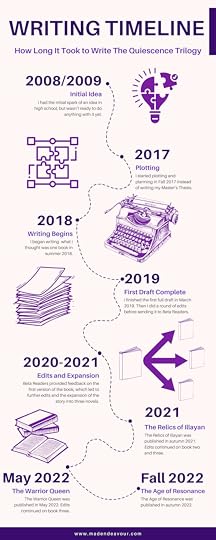
The short answer is, it took me approximately 5 years to write three books. So, I suppose on average, that’s 1.66 years per book…
I expect there are some authors out there who simply sit down and write a book, and it’s all wonderfully straight forward. I, however, am not one of those authors. My books seem to need a twistier, more confusing path towards completion.
Even now, as I write my fourth novel, I seem incapable of following a straight path through the project. There are so many pauses to work on other projects, pivots to re-direct the plot, and…well… distractions.
But more on that later.
For now, I’ll look back on the process and timeline for writing my first three novels, The Quiescence Trilogy.
 Initial Idea
If you don’t already know this about me, I keep an idea journal. This is where I jot down every random creative idea I ever have, so that I can return to them later when I have time or I’m ready to work on a new project.
There are a couple of ideas in my journal that I can track back as far as high school. The Quiescence Trilogy came out of one of those ideas. In 2008 or 2009 I came up with the initial idea for the story. It involved a golden potion that bestows powers, and a very basic version of the final plot with only three of the main characters (Catanya, Cadyan, and Jémys).
I jotted the idea down in my journal and let it sit there for years.
Fun fact: I originally wanted to write the story in French. Actually, I was determined it had to be that way. So, part of why it took me so long to get around to writing the novel was because I was waiting until I felt strong enough in my written French to write an entire story. Finally, I realized I should just write it in English because no matter how good my French gets, it will never be that good.
Plotting and PlanningSomewhere along the line, I realized that if I wanted to write books, I should just write one and see what happens.
I was in my last year of my Masters in Music Composition, and generally not very happy. Stressed and disillusioned with the life of a composer, I decided to hide inside a story for a while. I didn’t think it would go anywhere, but I started plotting the novel, and then it snowballed. Every night, I came home excited to plot some more of the book. It was just a bullet list in a basic Word document, but it kept getting longer and longer, and twistier and turnier, and so so much fun! I plotted the entire thing in something like 5 weeks.
But then I remembered I had to write my master’s thesis. So, I forced myself to stop and go do the work I was supposed to do. Ugh.
WritingWith my Master’s degree over, I dove back into the novel. I had a full-time job and a part-time job at the time, so I only wrote on weekends and evenings. But I pretty much wrote all night every night and all weekend every weekend.
Then I took a week of vacation in March 2019. I only had something like ten chapters left, and I was determined to finish it. So, I stayed home writing all day every day that week.
And the first draft of the novel was done!
I think I took a break after the first draft, but honestly, I’m not sure.
Edits and ExpansionNext came edits. I did at least two full edits of the novel, fine tuning it and making sure it was ready to be seen. I remember towards the end of writing the first draft, I came up with a new idea that I retroactively incorporated into the story. I remember sitting with the first draft, and knowing in my heart that the idea was a good idea and I needed to flesh it out way more than I had. I knew the story needed to be expanded into three shorter stories, but I was having trouble admitting it.
Then I asked some of my friends and family to read it and give me feedback. This was so wonderful. For a while, I lived off the excitement of hearing people’s reactions and feedback. It was awesome.
As the feedback came in, I continued editing. And more and more, I realized that it needed to be expanded. So that’s what I did.
I did a massive edit and expansion rewrite, hacking and slashing at the blah stuff, and adding in new characters, new subplots, and more world-building. It was early 2021 when I finally had three distinct novels.
PublishingBy this time, I had decided to self-publish the trilogy. Lots of factors went into this decision, which I’ll detail in another post. But once that decision was made, I set aside book two and three temporarily, to focus on book one.
I hired a copyeditor for the first book. She was great, and she worked incredibly fast. I learned a lot from her notes and worked on improving my actual writing. I also had one of my beta readers do another pass of the first novel, and she was incredible. She sent me hundreds and hundreds of notes about plot and characterization. She was as helpful as a developmental editor would have been.
Book One, The Relics of Illayan, was published in November 2021. And then I returned to book two. I did another edit of two and three, to make sure I didn’t miss anything or cause any problems for book three. Then I set book three aside again, and repeated the editing process for book two. I didn’t hire the copyeditor again, because I felt confident on my own. But I did hire the amazing beta reader to officially do developmental edits.
Book Two, The Warrior Queen, was published in May 2022 and Book Three, The Age of Resonance, was published in November 2022.
ConclusionSo, I suppose you could say the novel took me 14 years to write, but I don’t think that’s accurate. I started seriously plotting the novel in Autumn 2017 and I published the third book in autumn 2022. That’s 5 years for three books. 1.66 years per book.
Right now, I’m working on a standalone novel, and I was hoping I could have it ready in 1.5 years, but life keeps getting in the way. I also keep forgetting that balancing multiple creative projects is difficult. When I wrote the trilogy, it was my sole creative focus most of the time. Now, I have a dozen different projects tugging at my attention.
As I write this, I realize my timeline for my next novel may have been unrealistic. But I think I can still aim to have the book ready in 2025, which would mean it took 2 or 2.5 years to write.
That’s not too bad, is it?
September 24, 2024
Book Recommendation: The Shades of Magic Trilogy
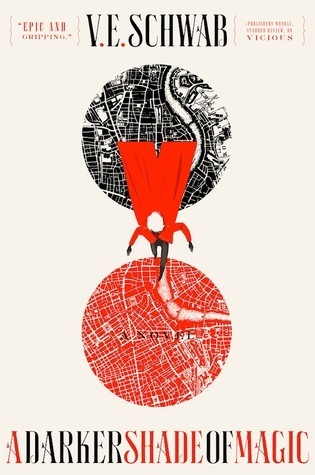
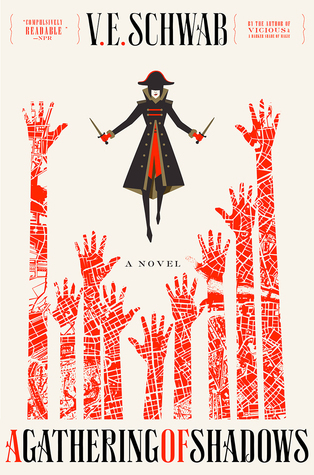
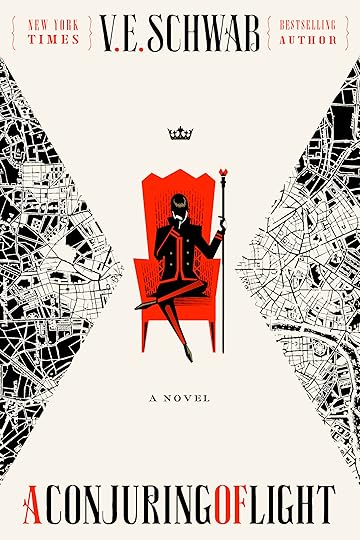
The Shades of Magic Trilogy
Adult Fantasy Adventure
by V.E Schwab
I finally read the Shades of Magic Trilogy by V.E. Schwab! V.E. Schwab is one of my favourite authors and this trilogy is lauded as one of her absolute best, so I went in with very high expectations. The books weren’t my favourites of hers, but they were definitely very good. I liked them better with each subsequent book. So, the third was my favourite. The second was quite slow-paced, but I don’t mind that, and I enjoyed the character development in it.
The story follows two main viewpoint characters. Kell, a magician with a rare ability to travel between parallel Londons—Red, Grey, White, and Black London, all with varying amounts of magic; and Delilah Bard, a cunning and ruthless pickpocket living in Grey London. A chance encounter throws them together on a perilous journey across the different Londons.
The magic system is pretty unique and the world building is effective. My favourite characters were definitely Kell and his brother Rhy (the two brothers would die for each other!). I know VE Schwab has recently started a sequel trilogy, the Threads of Power trilogy. I don’t always love sequel stories, because they run the risk of changing how I feel about the original story. That being said, I think this world has lots of potential, so I will probably read the sequels eventually. Also, I think I’ll just read everything V.E. Schwab writes at some point.
Why I think you might like it:A really well-crafted and distinct fantasy trilogy!Gaslamp fantasy setting. Alternate history/parallel worlds. I love stories that are set in almost reality or almost real history.Some romance but definitely not the focus. The romances are believable and slow-build, and ultimately very easy to root for.Strong character relationships, especially Kell and Rhy, and several others that appear later in the trilogy (no spoilers!)September 17, 2024
Announcing the Kickstarter for These Gossamer Recollections
Signed copies of my poetry collection, These Gossamer Recollections, will be available for direct purchase through a kickstarter campaign this fall.
Go to the Kickstarter
About the KickstarterIt all began when I set myself the challenge to write 30 poems in 30 days. And through that challenge I found something I never expected. I found a way to explore my emotions, unlock mysteries within myself, and unravel my deepest fears. I found a place where I could be myself; be the person I already am, and discover the person I want to become.
In 2020, I wrote 30 poems in the month of April, as a way to celebrate National Poetry Month. I loved it so much that I did it again in 2021. Then again in 2022 and 2023. And now I know I will never stop writing poetry.
I’m so excited to share this poetry with you and connect more meaningfully with my readers. That’s why I’m doing this Kickstarter campaign. I want to get to know you all better and share this truly personal project with you.
Here’s some of what’s available through the Kickstarter: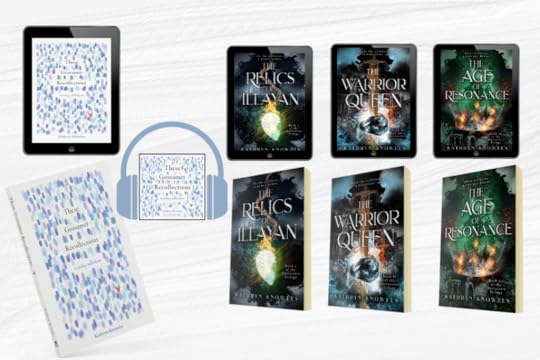 These Gossamer Recollections eBook, audiobook (narrated by me!) and signed paperbackseBook copies of all my books so far (The Relics of Illayan, The Warrior Queen, The Age of Resonance, and These Gossamer Recollections)Signed Paperbacks of all my books so far (The Relics of Illayan, The Warrior Queen, The Age of Resonance, and These Gossamer Recollections)Signed Hardcovers of the Quiescence Trilogy (The Relics of Illayan, The Warrior Queen, The Age of Resonance)Exclusive stickers and bookmarksCustom Poems – written just for you!A One-of-a-kind Annotated Paperback of These Gossamer RecollectionsWhen is it?
October 15 to November 15, 2024
What is a Kickstarter campaign?Kickstarter is a way of funding creative projects. It allows me to sell my books directly to you lovely readers without having to use a third-party distributer.
It’s a bit like fundraising. I’ve set a campaign goal and I’m asking you to make pledges to help me meet that goal. The big difference is that you all get awesome products in return for your pledges. So, it’s not a donation. It’s a purchase of a product. I set $400 as my funding goal, and Kickstarter is all-or-nothing. If I don’t reach the $400 goal, nobody gets charged and nothing happens. If I meet the $400 goal then I receive the money, and everybody gets the rewards they pledged. If I get more than $400, then we can start unlocking the Stretch Goals—these are bonus rewards to thank everyone for their support.
How do I participate?It depends on two things. How much money do you want to spend, and what products do you want? The lowest cost tier is the eBook copy of the book. It’s only $10. The highest cost tier is all four of my books in eBook and paperback, plus the audiobook of These Gossamer Recollections. This Tier is $130.
Then there are lots of cool little add-ons if you want something extra. Stickers, Custom Poems, Bookmarks, Signed Hardcover copies of The Quiescence Trilogy, and more!
If you want to support me but you’re not really interested in the poetry book, there’s an option for that too! You can just pledge without requesting a reward.
Is the Kickstarter the Only Way to Buy the Book?Nope. Kickstarter is not the only place you can buy the book. The ebook and paperback will go on sale at all retailers in December 2024, and the audiobook will follow shortly thereafter.
However, the Kickstarter is the only way to get signed copies, and other special limited edition items. It’s also the best way to buy the book if you want me to get the highest percentage of the money. When I sell through places like Amazon, Indigo, Apple, Kobo etc., they take a significant portion of the sale, and I make much less money.
I’m also using the Kickstarter to connect more with all of you wonderful readers and supporters. So you can expect a personal touch on your purchase if you go through the campaign. 
September 13, 2024
5 Reasons Main Characters Are the Hardest to Write
I’ve read so many books lately where it seemed like the author had a great idea, detailed world-building, interesting side characters, and a decent plot—yet still, the book fell flat. I’ve been pondering why this happens, and I believe it’s because the main character is not compelling enough to lead the story.
It’s easy to criticize an author for failing to write a compelling main character. On the surface, it seems like this character should be the easiest one to write, doesn’t it? The main character should be the most interesting—the one the author loves the most. Right?
Well, in my experience, main characters are the absolute hardest characters to write. Give me a villain, a best friend, or a love interest any day. But main characters are hard!
As I draft my latest fantasy novel, I still find myself struggling with the main characters. Whenever I get stuck in my writing or lose momentum, it’s usually because there’s a gap in the main character’s design that I need to solve before I can move forward. It means I don’t really understand my character yet, and I need to get to know them better. This is easier said than done, especially because I have the power to make my characters whoever I want them to be. So, somehow I have to figure out who they really are, amidst all the options.
Why are main characters so hard to write?1. Flawed but not too flawed.
Your main character has to have flaws, otherwise the story is boring. But you have to be careful to balance those flaws with other merits, otherwise you run the risk of them being really unlikeable. Of course, no character will be universally loved by readers (that’s good, it means they’re realistic!) but you have to make them a compelling mix of good and bad, and create some tension between those two sides.
2. They are the reader’s tour guideYour main character is essentially the story’s tour guide. They lead the reader through the book and show them all the sights. The reader experiences everything through the filter of the main character’s mind. They have to have opinions, emotions, and backstory, but somehow also be enough of a blank slate to experience everything for the first time on behalf of the reader. It’s like how Doctor Who always has a human companion who travels with them, so the human can be our eyes and ears in time and space. They can ask all the questions we need answered. They can react to things for the first time, so we know how to react. I think this is part of why YA books are so popular, because younger protagonists can be more of a blank slate and they have an easier time leading the readers on their journey of growth and discovery.
3. Understanding their motivationsWe’ve all read characters who do infuriating things, things that make us want to shake some sense into them. But the best characters are the ones who can do infuriating things, and somehow it’s still understandable. We know why the character behaved the way they did. That’s evidence that the author has laid the foundation really well. It comes down to what a character needs and wants, and how they react when things interfere with their plans. Not everybody reacts the same way to certain situations. So unless we want readers to be frustrated saying “that’s not believable” or “nobody would do that”, we need to know why and how our characters react, and we need to lay it out clearly for the readers. This is true of supporting characters as well, but main characters are the ones with the most “screen time”, the ones whose motivations will be questioned the most.
4. Living inside their mindYou have to live inside your main character’s mind for the entire book (or most of the book). This means you have to know every little detail about them. Everything from how they feel about themselves and the other characters, all the way to how they’d react in any situation ever.

It’s an intense depth of knowledge. You even have to know what the character doesn’t know, what they’re in denial about, what they need. It’s just a lot. And frankly, I think it’s hard to prepare all this information ahead of time. I’ve tried to do excruciatingly detailed character plans, but then, as I write, I discover my plan is wrong or flawed and I have to update it. I guess that’s the equivalent of “gaining life experience”, for these fictional characters.
5. Their perspective on everything and everyoneAlong with living inside the main character’s mind, readers also see everything and every other character filtered through the main character’s perspective. They only get partial information from the other characters, and they have to decide how to react based on how the main character reacts. The main character is a really useful tool for enabling the other characters’ development. They can show/tell us that the villain is terrifying, or the love interest is attractive. But we don’t have another character’s perspective on our main character, so the author has to work twice as hard to bring them to life. And if they don’t succeed, it filters back through all the other characters. If our main character’s perspective isn’t clear, we miss out on strong cues for everything and everyone else in the story.
ConclusionMain characters may be the most difficult characters to write, but I think we can all agree that the effort is worthwhile. When you read a book that has a truly compelling main character, it transforms the entire reading experience. The characters become your friends—people you look forward to seeing on the pages.
For myself, I think I will always have something to learn about writing compelling main characters. But at the end of the day, my goal is to write people who feel real. I think the best way to do that, is to treat them like they are real and try to get to know them like I would anyone else in my life.
What do you think is the hardest thing about writing main characters? Are there other strategies to try to write compelling main characters? Let me know in the comments!
August 26, 2024
Book Recommendation: Gods of Jade and Shadow
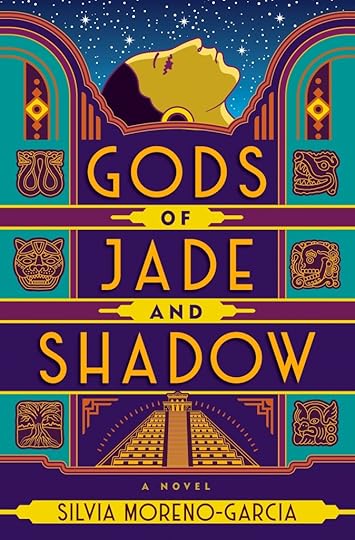
Gods of Jade and Shadow
Historical Fantasy Romance
by Silvia Moreno-Garcia
This book was exactly what I wanted it to be—a fun adventure story steeped in Mayan mythology, with a sprinkling of historical fiction, and a thread of forbidden romance. Set in Mexico during the Jazz era, it follows Casiopea Tun, a young woman living an unhappy life where her family treats her like a servant. One day, she accidentally frees the spirit of the Mayan god of death, Hun-Kamé, and then gets swept up in an adventure with him. They travel from the Yucatán to Mexico City on a mission to recover Hun-Kamé’s stolen throne from his brother.
I really enjoyed the dive into Mayan mythology and I learned a lot about Mexican history. Casiopea was a cinderella-esque heroine who was easy to like. Hun-Kamé was the perfect brooding, mysterious, and misunderstood god character drawn by his growing attraction to this mortal woman.
It’s a lovely, rich, and evocative fairytale, full of wonder and possibility. I was swept away from page one, and the ending left me with a warm, satisfied feeling.
Why I think you might like it:Fast-paced adventure! Casiopea and Hun-Kamé cover a lot of ground in a short time. Magical creatures and folklore. I enjoy stories where the characters interact with lots of different magical creatures and beings, all with different motives and priorities. You never know what’s around the next corner! Epic stakes, but fairytale vibes. Casiopea is entangled with actual gods, and she even has to go to the underworld. But the book’s vibe is whimsical and gentle.Historical fantasy! I love historical settings with fantasy twists. It’s magical realism, so it’s fun to imagine it could have really happened. Nuanced approach to good and evil. The god of death is nether evil nor heroic. And neither is Casiopea. Good revenge story. Hun-Kamé is definitely out for revenge on his brother, who imprisoned him. The power of love, and its limitations. The romance in this book is beautiful but ill-fated. But through love, we see the characters grow into new people.July 30, 2024
5 Strategies to Maintain Momentum as a Writer
Being an author is, at times, the easiest thing I’ve ever done, and, at other times, the hardest thing I’ve ever done.

For me, the hardest part of being a writer is momentum. Maintaining the momentum to see a project through from start to finish. I would hazard a guess that this is a common problem for most creative professionals, no matter the field.
Especially since most artists are expected to do all the work upfront with no guarantee of a payoff in the end. This makes it difficult to prioritize these projects over traditional jobs and everything else going on in our lives.
It’s the reason we have things like NaNoWriMo (National Novel Writing Month), to give authors tools, structure, and encouragement so they can write a book. To give them deadlines and a community of people holding them accountable.
Now, personally, I’ve never actually done NaNoWriMo. I have, however, used National Poetry Month to motivate myself to write 30 Poems in 30 days. I’ve done this for four years in a row, and I love it. And over the years I’ve found a few other tricks to help keep myself motivated and maintain momentum with writing.
So here are my five strategies to maintain momentum in a creative project!
1. DeadlinesIt’s easier to get something done, if you have a due date in mind. This probably sounds like a no-brainer, but you’d be surprised how often I need to remind myself to do this. Set deadlines. It’s incredibly difficult to stick to a deadline when there’s no actual repercussion if you don’t. So maybe early on, you can use things like NaNoWriMo, or ask a creator friend to hold you accountable to your deadline. But over time, I think you can build up your own sense of accountability. You don’t want to let yourself down, right? Because ultimately, that’s who you’re doing this for. You don’t owe anyone else anything.
One caveat to this, is that I need to get better at setting realistic deadlines. I always put way too much pressure on myself to accomplish a billion things by a certain deadline, and then I beat myself up every day I don’t make “enough” progress until I realize the deadline was bonkers to begin with. Then I have to go through a whole song and dance of conniving myself it’s okay to extend my deadline, or set a new deadline. It’s ridiculous. (I’m currently in the middle of this process at the moment. So, this is me, putting it in writing: it’s okay for me to set reasonable deadlines and not expect myself to be a machine.)
2. Track ProgressThere’s a reason apps like Duolingo track your daily progress and give you small challenges to complete every day (I’m on a 132-day streak right now!). Because it’s good for our brains to see our growth and progress. It’s great positive reinforcement to measure our improvement, but it also stings when we see the days we didn’t progress as much. So, as an author, this can be as simple as tracking word count every day, or setting the goal to write one chapter every day, and then ticking them off a list.
For me, it’s word count.

I feel motivated by watching the word count tick upwards. It definitely bums me out when I don’t write as much on a given writing day, but progress is progress, no matter how small. Some days I’ll write thousands of words, and some days I may struggle to write a few hundred. But as long as I see that number counter tick upwards a bit, it helps me remain committed.
3. ScheduleI’ve talked about this before, but schedules are my number one tool for maintaining momentum and motivation. I set myself a weekly schedule that blocks in all the things I need to do each week. I set aside chunks of time for my creative projects, and I lock them in the same way I would any other work commitment. Then I don’t have to “find the time” to be creative. The time is already allocated, all I have to do is sit down and do it. I can also use this schedule to be unapologetic about boundaries. “No, I can’t have a meeting tomorrow morning, because that’s my writing time.”
4. Disable Your Inner CriticWe all have an inner critic who wants to see us fail. That annoying voice telling us there’s no point, or that what we’re doing isn’t good enough. Ugh. That voice is the absolute worst voice to listen to during the initial creation phase. Whenever my inner critic rears her ugly head, I have to fight pretty hard to shut her up. I have to remind myself that the goal is not to create something perfect (yet). The goal is just to get a first draft done. And for that first draft, I have absolutely no need for an inner critic. She can just shut her face and wait until I tell her she can come out. It’s easier said than done. But I think this goes back to section 2: Tracking Progress. In the initial creation phase, it’s not about the big picture. It’s about each day’s small goal. It’s about having fun in the moment with today’s writing session and just ticking the box to mark my progress.
Now, I will say, after many years I have developed an appreciation for that inner critic—at the right time. I think it is important to train that voice to give ourselves constructive criticism so we continue to improve and we don’t accept our projects when they reach the “okay” stage, rather we push for them to get to the “good” or “great” stage. My inner critic is a great editor. She’s exacting and unemotional, she can hack and slash away the crap and hone in on the higher quality idea.
But she needs to wait her turn.
5. Procrastinate WellNow this one might seem like a weird one but hear me out. We’ve all heard writers making the jokes about how the only time they clean the house is when they should be writing, or how a new idea will come to them when they’re supposed to be finishing the one they’re working on now.
I’ve noticed a trend here for myself. Whenever my brain wants to procrastinate, I ask myself why? What is it about the current project that isn’t exciting to me right now? Often, I discover the reason is actually more important than I think it is. Sometimes it’s a symptom of my brain wanting to do more world building or character development because something about the story I’ve created isn’t resonating for me, it isn’t drawing me back in. This means I should take some time to do this work instead of forcing myself to keep writing. So, I might dive into some research, which could look like anything from Wikipedia diving all the way to reading or watching tv—I know right? I can justify this type of procrastination as long as it’s related to my project (i.e., if I’m writing a dystopian musical, maybe I should listen to some musicals or read a dystopia).
Other times, this urge to procrastinate is a symptom of fatigue and burnout and I need to learn how to listen to my stupid body. I suffer from creative burnout fairly regularly and I can’t and shouldn’t try to push through this. Usually, I just need to give myself space to rediscover my excitement for the project. The best way I know how to do this is by using something I call “creative rest”. For me, creative rest, is working on a creative project that isn’t priority number one right now. This could be something as simple as cooking a new recipe, or it could be writing a blog post (like I’m doing right now), or—even better—plotting a completely different novel.
It does me the world of good to get caught up in a new idea for a while. I let myself go as far as I can until my energy wanes a bit. This loosens up some tension in my brain and re-ignites my excitement about being a writer. And bonus, I actually did some work for a future project, which is not a waste of time at all!
ConclusionThese are just five strategies I use to keep myself committed and maintain momentum. When I lose momentum it’s usually because of one of four reasons:
I don’t have a clear end goal — So I set a deadline!I get bogged down in the size of the project — So I focus on tracking small progress!I can’t find the time — so I stick to a schedule!My inner critic is discouraging me — So I tell her to shut it!I’m getting distracted — so I ask myself why!Every once in a while, I lose momentum completely and end up shelving a project for later. But for the most part, these five strategies keep me going. What are the reasons you lose momentum? Do you have any strategies you recommend to keep going?
July 22, 2024
Book Recommendation: Elements of Cadence Duology
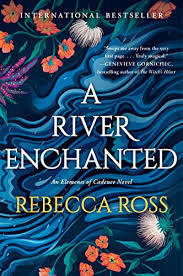
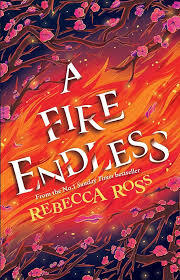
A River Enchanted and A Fire Endless
Fantasy Romance duology
by Rebecca Ross
Rebecca Ross has a great ability to create believable relationships between characters. She creates depth and maturity without sacrificing any of the yearning or heartache.
This duology primarily follows Jack, who returns to his mystical home on the island of Cadence. On the island, capricious spirits rule the elements—fire, water, earth, and wind—and they delight in interfering in the lives of humans. Jack discovers his music has the ability to command the spirits, and he reconnects with childhood rival Adaira, who is now heiress of the eastern clan.
The story also follows a second couple, Sidra, the clan’s healer, and Torin, the captain of the east guard. Their story navigates some heavier romantic issues, including communication challenges, and the struggles of raising a child together while taking care of the entire clan.
Overall, the story is very lush and atmospheric. When I read A River Enchanted, I was surprised at how gently melancholic it was. I wasn’t expecting that. But going into the second book, I was prepared for a more wistful story, and I devoured it! A quiet, mysterious, and emotional, it might not be for everyone. But if you’re like me, it might be the perfect mood read.
Why I think you might like it:Mature romantic relationships with depth and nuance.Mystical and mysterious vibes. It had a really unique atmosphere. Very character-driven, with multiple interesting perspectives. Set on an island. I don’t know why I love this but I do. It gives it a lush almost spooky setting.Celtic-inspired mythology.Rich world-building and lush writing.Music as magic. It’s hard to make music work as a magic system, but this story does it well.