Heather Dolson's Blog
November 27, 2025
🌺 Kundalini Sacral Flow: Awakening the Creative Fire Within
Our bodies are living temples of energy and wisdom, and when we learn to listen—really listen—we begin to feel the subtle pulsing of life moving through us. This practice, Kundalini Sacral Flow, is one of my favorite ways to awaken that inner current. It’s sensual, fluid, and alive—an invitation to return home to your body.
The Inspiration Behind This FlowThis practice was inspired by my own roots in Kundalini yoga and my love for the sacred feminine. I wanted to weave together the structure of traditional Kundalini movements—like spinal flexes, Sufi grinds, and frog pose—with the intuitive, sensual freedom that naturally rises when we connect to the sacral chakra.
Our sacral energy center (Svadhisthana) lives in the lower belly, hips, and pelvis. It’s the seat of creativity, pleasure, and emotional flow. When it’s balanced, we feel connected to our sensual nature, our creative spark, and our right to feel joy. When it’s blocked, we might experience guilt, disconnection, or creative stagnation.
Through this flow, we awaken that inner river—breathing life into the hips, softening rigidity, and allowing the waters of creativity and desire to move freely again.
Practice With Me🕉️ You can follow the full Kundalini Sacral Flow video below:
Move gently. Let your breath guide you. Allow yourself to be moved more than you try to move. Notice the waves of sensation rising and falling—this is your body remembering its own rhythm.
I recommend practicing in a quiet space with soft lighting. Maybe light a candle, put on your favorite sensual playlist, and bring your awareness to your sacral space as you move.
The Energetics of the Sacral ChakraThe sacral chakra’s element is water, reminding us to stay fluid and adaptable. It teaches us that pleasure isn’t indulgence—it’s presence. Pleasure is the body’s way of saying, yes, I am alive.
To nourish this chakra off the mat, try:
Dancing slowly and intuitively to music that stirs emotion.
Journaling about what truly brings you joy and creative fulfillment.
Taking a warm bath or spending time near natural water.
Wearing orange tones or working with carnelian or moonstone crystals.
Each small act of honoring your sensual, creative self becomes an offering to the divine feminine within you.
Closing ReflectionWhen we awaken the sacral chakra, we remember that creation begins from within. The more we allow energy to flow through this center, the more we magnetize beauty, abundance, and connection in our outer world.
✨ May this practice remind you that your body is sacred. Your pleasure is sacred. Your creativity is your power.
💫 If you enjoyed this flow and want to explore more sensual embodiment practices, check out my books The Roots of Pelvic Floor Yoga and Divine Feminine Unveiled.


November 6, 2025
When Love Runs Loose: On Attachment, Safety, and the Dogs Who Taught Me About Letting Go
It was 4:22 a.m. again. The number synchronicities I've been seeing lately. Just the night before I was awake at the same time...4:22 a.m.
Fern needed to go out, and I was half-asleep, but something about the night felt too still. She usually does her business and comes right back, tail wagging softly in the dark, scratches at the door. Ten minutes passed. No sound of paws at the door.
I went out, I called her name once, twice, again. Nothing. She usually comes running within seconds.
My chest tightened. That old familiar panic started to rise — the kind that bypasses logic and goes straight to the nervous system. I grabbed a flashlight and stepped into the yard, calling her again. Usually her eyes reflect off the light. My voice echoed back at me. I knew she wasn’t there. I could feel it. That deep intuitive knowing that every cell in your body recognizes before your mind even catches up.
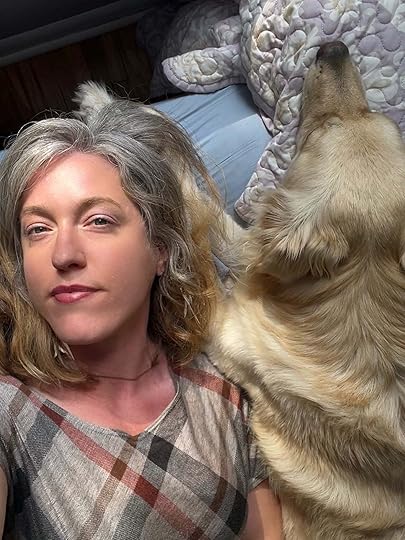
I continued to walk around, leaves crunching under my slippers, calling her, the moon full and bright above me.
Then she finally came running back through the yard with a force of energy, I felt both relief and tears sting my eyes. I discovered in the morning light that the board we’d placed along the fence for puppy-proofing 4 years ago had fallen over. She must have slipped out, wandering and sniffing around at the neigbouring street that is behind our backyard fence and neighbours. But she heard me and she found her way back.
This morning, as I told my kids, I cried. Because it wasn’t just about Fern running off for a few minutes. It was the wave of everything that moment awakened — the grief, the fear, the memories.
I had lots of dogs growing up and I loved every one of them, but I lost two dogs tragically as a child. One was hit by a car. The other was killed by our neighbour’s dogs. Both losses left something unspoken lodged inside me — a tender place that never fully stopped bracing for loss. When you lose something you love suddenly, your nervous system learns to prepare for the worst even when everything looks fine.
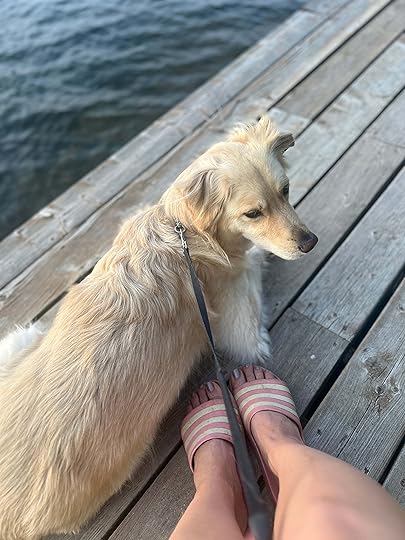
So when Fern didn’t come, my mind didn’t just wonder where she went. My body remembered what it felt like to lose.
She’s only four. And I can’t fathom losing her.
These moments remind me how easily attachment and fear weave together. How love — especially for our animals — becomes this beautiful, primal, unconditional bond that’s also laced with the ache of impermanence. Fern isn’t just my dog; she’s comfort, companionship, grounding, and pure heart all wrapped in fur.
Sometimes I see how tightly I hold on — not just to her, but to the illusion that I can control or protect everything I love. That’s what trauma does. It teaches you that safety is something you must earn or guard, rather than something you can simply rest in.
But healing — the kind that lives in the body — invites me to soften that grip. To notice when fear is whispering stories that aren’t true anymore. To breathe into the space between love and control. To remember that attachment doesn’t have to mean anxiety.
Maybe Fern running off was another quiet lesson from the universe — a reminder to trust what I love to find its way home.
Because love isn’t about holding on so tightly that nothing can move. It’s about presence. It’s about gratitude for the paws that return, the warmth beside you in the morning, the gift of another day together.
So this morning, I held her a little longer. I told her thank you — for coming back, for teaching me trust, for helping me remember that safety isn’t always about walls and fences. Sometimes it’s about faith.
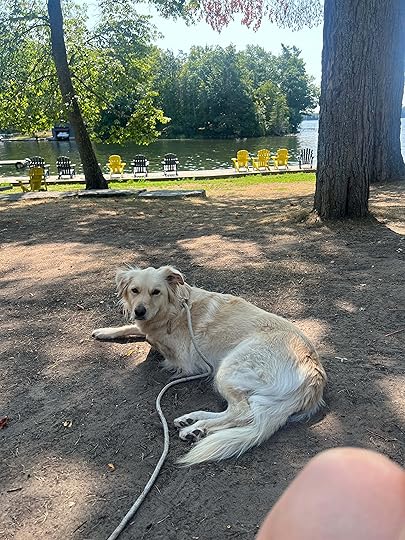
And maybe love, after all, isn’t about keeping things from running loose…
but learning to trust that what’s meant for you will always find its way home.
If you’ve ever loved and lost an animal, you know how their presence becomes woven into your heartbeat.
What if every goodbye, every moment of panic, every reunion is really an invitation—to trust love a little more deeply, and to remember that safety lives inside you, too?
October 18, 2025
Motherhood, Embodiment, and the Day My Son Was Confronted by My Online Work
It was one of those conversations that stops you in your tracks — not because it was unexpected, but because it hit a nerve so deep that it made me question everything I thought I had reconciled within myself.
My son came home from school and told me that another boy had said to him, “I saw explicit photos of your mom online. It was weird.”
I remember sitting there, trying to process the weight of those words. My first instinct, of course, was to protect him. I wanted to wrap him in my arms, shield him from cruelty, and somehow make the sting of that comment disappear. But underneath the maternal instinct was another wave — anger, guilt, and a flicker of shame — not because I had done anything wrong, but because my choice to live authentically had just collided with the complicated reality of raising children in a world that often misunderstands women like me.
The Intersection of Authenticity and MotherhoodWhen I began sharing my work online about 3 years ago — my sensual embodiment practice, my teachings on feminine energy, my creative expression through dance and movement — I knew there might be whispers. I live in a small town, and people talk. They project. They judge. It’s inevitable. But I did it anyway because something inside me knew that shrinking myself to fit someone else’s idea of “appropriate” would slowly kill my spirit.
What I didn’t fully prepare for was the moment when my authenticity would ripple out and land in my child’s world — when the boldness of my work would become a topic on a school playground.
I asked him gently, “Are you embarrassed of me?”
He wouldn’t answer, looking me directly in the eyes with those dark, mysterious soulful eyes of his.
“Did you feel embarrassed?”
He finally nodded and said it wasn’t me — it was the situation. He felt embarrassed to be put on the spot like that. And that distinction mattered deeply to me.
I immediately asked myself: What does this boy think he saw? What does “explicit” even mean to him? Because by definition, explicit means pornographic — and nothing I share online is that. My work is sensual. It’s embodied. It’s artful. It’s deeply rooted in helping women reconnect to their bodies, reclaim their pleasure, and release shame.
I sat down with my son and explained that. I showed him my Instagram account. “This is what I do,” I told him. “This is sensual dance. This is embodiment. This is part of my work and who I am.” I explained the difference between sexualization and sensuality, between empowerment and exploitation, between agency and objectification. And I reminded him that the internet can twist things — that people will often project their own discomfort onto others.
My children have always known that I teach sensual embodiment. They’ve seen me live my values and build a business around them. But that day reminded me that living authentically doesn’t just mean being true to yourself — it also means helping those closest to you understand and navigate the impact of your truth in a world that might not be ready for it.
The Feminine Double StandardThis incident also cracked open a bigger conversation — one that I’ve explored deeply in my work and writing. Society still struggles to hold space for women who embody their sensuality, especially when they’re mothers. We’re expected to nurture, but not seduce. To guide, but not gyrate. To love, but not long for more.
If a woman celebrates her body, explores pleasure, or teaches others how to connect to theirs, she’s often labeled — “too much,” “inappropriate,” or “explicit.” And if she happens to be a mother doing it? Then the scrutiny doubles.
We rarely stop to ask why. Why is a woman’s sensuality threatening? Why is embodiment — the act of living fully and unapologetically in one’s body — confused with pornography? And why do we shame mothers for daring to exist as whole, sensual beings?
That day, I had to do some inner work too. I had to meet the guilt and the shame that surfaced — not as evidence that I was doing something wrong, but as old conditioning that still lived in my body. I had to remind myself that living authentically was never supposed to be easy. It’s supposed to be real. And real sometimes means uncomfortable.
I also had to remind myself of one of the greatest lessons I hope to teach my children: that the path to fulfillment isn’t paved by people-pleasing. It’s paved by integrity — by choosing who you are, even when the world misunderstands you.
I want my kids to witness that. I want them to see a mother who is unapologetically herself — not because she wants attention, but because she wants freedom. I want them to learn that being misunderstood isn’t a reason to shrink — it’s a reason to stand taller.
The Bigger Picture: Beyond the PlaygroundThis experience opened my eyes to how desperately we need broader conversations about sensuality, embodiment, and feminine expression — especially in the age of social media. When a 12-year-old boy uses the word “explicit” to describe a fully clothed woman teaching embodiment practices, it’s a sign of how warped and narrow our cultural lens has become.
This is why I write. This is why I teach. This is why I share stories that make people uncomfortable — because discomfort is where deeper understanding begins. And this is why I’ll never apologize for the work I do. Because every time I guide a woman back to her body, I’m planting a seed for a world where our daughters — and our sons — will see sensuality not as shameful, but as sacred.
I still think about that conversation. I think about how it stirred up so many emotions in me — the protectiveness, the guilt, the frustration, and ultimately, the deep clarity that I’m on the right path.
Authenticity doesn’t mean perfection. It means choosing alignment over approval. It means walking a path that might be misunderstood — but is undeniably yours. And it means modeling that courage for the next generation, even when the world tries to make you feel small.
At the end of the day, I know my son isn’t embarrassed by me. He’s growing up, navigating the messy terrain of identity and peer perception just like we all did. And maybe, in time, he’ll realize that what I do — and who I am — is a reflection of something much bigger: a woman reclaiming her wholeness and showing the world that you can be a loving mother and a liberated woman at the same time.
💗 If this story resonated with you, you might also love my memoir I Was the One I Was Waiting For, where I explore these themes of authenticity, shame, sensuality, and healing on a much deeper level. I also dive into shame and sexuality in my book, The Roots of Pelvic Floor Yoga. Explore my books here.
And for a more intimate look behind the scenes — including the conversations I have as I process moments like this in real time — join me on Patreon for exclusive reflections and embodiment practices.
October 5, 2025
Two Names, One Woman: My Integration Adventure
Oh man — the truth? I was stepping into a new online platform and needed a screen name that felt more alive. “Heather - Conscious Woman” just wasn’t the vibe. A coach suggested something more exotic, and the words Heather Wild rolled off my tongue so easily that I didn’t even have to think about it. It felt right. Free. A little daring.
I still remember sitting at my desk, fingers hovering over the keyboard, searching for a name that felt like home and adventure at once. When I said Heather Wild out loud, it was like exhaling truth I hadn’t given myself permission to live yet.
In those early days, I was exploring my sensuality — both privately and through my creative work online. What started as playful curiosity became sacred experimentation. The name Heather Wild turned into more than a pseudonym; it became a portal. Under that name, I could explore without shame or limits, creating space for parts of me that had been caged for years.
Then there’s Heather Dolson — the clinical nurse.I graduated nursing in 2009 and practiced for about 14 years in adult acute mental health, child & adolescent programs, community care, and long-term care. If you count the education years, nursing has been part of my life for nearly two decades. I even took a hiatus during training, wondering if nursing was truly my calling. That pause led me to yoga — and my first true spiritual awakening.
Eventually I went back and completed my degree, realizing that mental health nursing was where I was meant to be. From six-bed lock-down units in downtown Toronto to dementia wards where I helped families navigate loss, I learned what it means to sit beside someone in their most human, vulnerable moments. My work taught me presence. It taught me dignity. It taught me how to hold space for people at their rawest.
So when I stepped into sensual embodiment work, it wasn’t a departure — it was a return.
For the first time, I turned that same presence inward. I began offering to myself what I had given patients for years: care, listening, love, attention. My embodiment practice became a way of tending to my own aliveness — through breath, movement, self-touch, stillness, and creative expression. It was where nurse Heather met wild Heather.
At first, I kept them separate — different accounts, different voices. One polished and professional, the other bold and unfiltered. But lately I’ve realized they can’t be separated. They are the same woman.
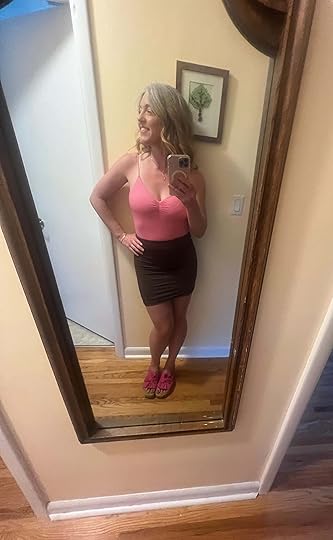
Heather Wild is my courage, my sensual truth, my edge. She’s the part of me that doesn’t apologize for being fully expressed.
Heather Dolson is my groundedness, my compassion, my ability to hold others in tenderness and care. She’s the woman who listens deeply and meets pain with patience.
Together, they are whole.
They are the reason I can teach embodiment with both soul and science, both fire and grace.
Integration isn’t about erasing who we were — it’s about letting every version of us be seen.
The nurse and the artist. The healer and the sensualist. The caregiver and the creator. They’re all here, and they all belong.
Maybe you have your own “two names.”
Maybe there’s a version of you that the world has seen, and another that you only meet in your private moments. The magic happens when they stop competing and start dancing together.
For me, Heather Wild has evolved into my pen name — the one I write under when I share my memoirs and poetry. But she’s also more than a name. She’s a permission slip. She’s the reminder that I don’t have to choose between soft and strong, sacred and sensual, nurse and muse.
Two names.
One woman.
And a lifetime of integration still unfolding.
By the way, find out more about my books here.
September 20, 2025
Sin, Sovereignty, and Speaking Up: Choosing Self-Resurrection Over Silence
This week reminded me of the cost—and the gift—of telling the truth.
When you write a raw memoir, you don’t just get applause. You also get judgment. I’ve had a couple reviews this past week that said my book was about “careless living” and that I “need Jesus.” Another reader questioned the flow, judged my choices, and even commented on whether my English leaned U.S. or U.K. Yes, I'm Canadian....somewhere in between, eh?
At first, it could have stung. But the truth is—it didn’t.
I could see it for what it was: projection. Their story, not mine.
Because here’s the thing: I didn’t ask to be saved. I saved myself.
Jesus Christ Within UsNeville Goddard taught that Jesus Christ lives in each of us. My mentor reminds me of this, too. Divinity isn’t outside us, waiting to swoop in and rescue us—it’s within. It’s the spark that allows us to choose differently, to rise again, to resurrect ourselves when life feels impossible.
So when someone says my memoir is about sin or bad choices, I smile. Because I know my story is really about sovereignty. About reclaiming myself, forgiving myself, and choosing to rise.
From the Page to Real LifeAnd this isn’t just theory. It’s showing up in my life right now.
I’m currently in a legal process with my ex-husband, standing up for my daughter. She deserves to be heard, valued, and comfortable with both parents. For years, I compromised. I stayed silent. I swallowed my words in the name of keeping peace.
I recently met with legal counsel about the ongoing family matters. While the conversation included practical realities we may need to navigate, I also reached a boundary: I’m done protecting others at the cost of my daughter’s comfort. Standing up for her—and for how we want to be treated—was a turning point for me. My voice is not for swallowing anymore.
I felt the fire rise in me. I said: “I’m done sucking it up. I’m done staying silent and compromising my daughter’s comfort. I won’t swallow my voice anymore.”
That was a powerful moment. For me. For my daughter. Because she needs a model of what it looks like when girls and women use their voices, when they say “no more,” when they refuse to shrink to make others comfortable.
The Bigger ThreadAnd that’s what ties it all together: the memoir, the reviews, the Jesus comments, and my real life right now.
This is sovereignty. Not waiting to be saved. Not handing our power away. But standing in the truth of who we are and what we will no longer accept.
Some people will call it sin.
I call it sacred.
In the video I’m embedding below, I alchemized something my ex-husband recently said about my memoir—a judgment he used in an attempt to distract or instill fear in me.
It didn’t work.
If anything, the fact that he actually read my memoir after we’ve been separated for ten years and divorced for eight speaks volumes about where his focus still is.
I know exactly who I wrote this memoir for. I write for adults. I didn’t write it for my children, nor do I read my books to them. Maybe one day, when they are grown, I’ll share pieces if it supports their healing process or sense of identity.
Looking back, I can see how every moment like that—whether in a relationship, a courtroom, or a book review—was training me to rise.
ClosingIf you’ve read my memoir I Was the One I Was Waiting For, you know this is its heartbeat: sovereignty over sin, reclamation over silence, self-resurrection over waiting for rescue. Learn more about my memoir right here.
If it spoke to you, I’d be so grateful if you left a review. Your words help my story find the women who need it most.
Because telling the truth won’t please everyone.
But it will set you free. 🌹
August 28, 2025
The Power of Presence: Mindfulness in Nursing, Healing, and Everyday Life
When I look back on my nursing education, one paper stands out. It was the first time I allowed myself to write authentically about something I truly cared about — something that wasn’t just about memorizing disease processes or charting requirements, but about the heart of what drew me to nursing in the first place.
That paper was about presence.
Presence is more than being physically in the room with someone. It’s about truly being with another human being — listening, witnessing, honoring their experience in that exact moment. It’s not about rushing to fix, perform, or multitask. It’s not about trying to be empathetic, or about “doing” care. True presence is about “being.”
And while I wrote those words as a student years ago, I see them now through an even wider lens — not only as a nurse, but as a woman, a mother, and a teacher of yoga and embodiment. Presence is essential in the hospital room, but it’s just as essential in our homes, in our relationships, and within ourselves.
Why Presence Matters

In healthcare — and in life — it’s so easy to slip into what I once called “automatic pilot.” You may recognize it: going through the motions while your mind is already somewhere else. Thinking about your to-do list, your worries, your past conversations, your future plans. Your body is here, but your mind is everywhere else.
In nursing, that can look like rushing from task to task, focusing on the chart instead of the patient, or feeling like there’s simply no time for connection. But patients — and all of us, really — don’t only remember what was done. We remember how we were met.
Research repeatedly shows that when patients experience presence, they report greater satisfaction and even better health outcomes. But the gift isn’t only for those receiving care — it’s also for the caregiver. Nurses who practice presence often describe greater fulfillment, less burnout, and more meaning in their work.
And beyond healthcare, the same is true. When we are present with our children, partners, friends, or even with ourselves, the quality of connection shifts. We begin to feel rooted, whole, alive.
The Cost of DisconnectionThe opposite of presence is disconnection — and it takes a toll.
We live in a culture that prizes multitasking, but neuroscience shows that our brains aren’t designed for it. Switching from one thing to another actually lowers accuracy and increases stress. In nursing, where lives are literally at stake, this constant switching can feel like living on high alert — a recipe for exhaustion.
I still remember learning that even our immune systems are impacted by perceived overload. One study found that people with high workload intensity showed decreased levels of secretory immunoglobulin-A — a key defense against illness. The body, it seems, knows when we’re spread too thin.
Beyond the science, we know this intuitively. Disconnection looks like driving somewhere and not remembering the road you took. It feels like being with a loved one but realizing later you weren’t really listening. Over time, it leaves us feeling depleted and dissatisfied.
So how do we return to presence? One of the simplest, most powerful ways is the breath.
Breath is with us from the first moment of life to the last. Yet most of the time, we barely notice it. Simply pausing to notice your inhale and exhale — the way your belly rises and falls, the air moving in through the nose and out through the mouth — can bring you back into the present moment.
In my nursing research, I discovered studies showing that even two minutes of deep, diaphragmatic breathing could lower blood pressure and heart rate. Students who practiced deep breathing before exams reported less anxiety. Nurses who adopted breathing practices described greater calm and resilience in stressful environments.
And in my yoga teaching, I’ve seen it countless times: the moment someone shifts from shallow chest breathing to deep, full belly breathing, their shoulders soften, their mind clears, and their body begins to relax.
The breath is always here, waiting to return us to ourselves.
Presence isn’t something you “achieve” once and for all. It’s a practice — something we return to, moment after moment.
Meditation is one way to cultivate it, and it doesn’t need to be complicated. You don’t have to sit on a cushion for an hour, nor do you have to subscribe to any particular spiritual tradition. At its core, meditation is simply paying attention.
Start with the breath. Or with noticing your senses: the feel of your feet on the ground, the sound of birds outside, the taste of your tea. When thoughts arise (and they always will), simply notice them without judgment and return to the present.
Reflective practice can deepen this presence too. Asking yourself gentle questions like:
Where am I rushing through life on autopilot?
What does presence feel like in my body?
How can I honor my needs while being present for others?
These questions don’t always have answers — and that’s okay. Part of presence is learning to live with ambiguity, trusting that life unfolds in its own mysterious way.
Living PresenceIn nursing, the ultimate goal isn’t just to complete tasks, but to meet people as whole human beings. Presence honors the mystery of life, the uniqueness of each person, and the sacredness of each moment.
The same is true in our personal lives. When we practice presence, we begin to experience more intimacy, vulnerability, and connection. We discover that being in the moment doesn’t take more time — it actually gives time back to us, because we’re living fully instead of half-absent.
Presence is a gift. A gift to our patients, to our families, and most of all, to ourselves. And it begins in the simplest of ways: right here, right now, with a single breath.
If this reflection speaks to you, and you’d like to explore more about presence, mindfulness, and nursing theory, here are some of the works that shaped my own journey:
Further Reading
Jon Kabat-Zinn, Full Catastrophe Living: Using the Wisdom of Your Body and Mind to Face Stress, Pain and Illness
Rosemarie Parse, The Human Becoming School of Thought: A Perspective for Nurses and Other Health Professionals
Brown, K. & Ryan, R. (2003). The Benefits of Being Present: Mindfulness and its Role in Psychological Well-Being, Journal of Personality and Social Psychology
Katz, J. et al. (2005). The Effects of Mindfulness-Based Stress Reduction on Nurse Stress and Burnout, Holistic Nursing Practice
Beddoe, A. & Murphy, S. (2004). Does Mindfulness Decrease Stress and Foster Empathy Among Nursing Students?, Journal of Nursing Education
Presence begins with a single breath. If you’re ready to explore more ways to bring mindfulness into your daily life, explore my YouTube channel and get my Free 3-day mini video series exploring breath and somatic movement.
August 23, 2025
From Trauma to Transformation: A Preview of Sensual Flow & Healing Practices
I just released a new YouTube video — a tender preview of Sensual Flow accompanied by natural ASMR sounds from my space. It’s just a glimpse, but it carries the essence of what I share more deeply inside my Patreon sanctuary.
This week, I’ve been walking tenderly with my own healing. I finally reported sexual trauma from years ago, sitting with the weight of paperwork, recounting my story, and opening to supports and resources. At the same time, my heart has been moving through the echoes of a toxic relationship — the unraveling, the heartbreak, and the slow weaving of myself back together. In the midst of it all, movement, dance, somatic therapy, and reflection continue to be my lifelines. They remind me that even in the deepest ache, there is breath, there is rhythm, there is the possibility of release.
Patreon has become the place where I hold space for these journeys — mine and yours. Inside, I share:
🌿 intimate reflections and insights from my own healing path
📝 journal prompts and invitations to explore your own inner world
💃 guided practices in somatic movement and sensual embodiment
🎥 livestream Sensual Flow sessions 2–3 times each month (with replays)
In September, I’ll also be reviving my signature Sensual Cannabis class — a sacred weaving of sensual flow with cannabis medicine, opening the body and spirit in new ways.
And for those who are ready to walk more closely with me, Tier 3 includes 1:1 embodied connection coaching — a deeper doorway into my world.
Here’s a little preview to drop into the energy with me:
<
💌 If these words, movements, and reflections touch something in you, I’d be honored to welcome you into my Patreon community. Together, we can walk this path of embodiment, healing, and freedom.
August 20, 2025
Healing from Anxious Attachment and Codependency—Real Steps to Stop Settling
When love feels like chasing crumbs, it’s time to pause and ask—what am I truly hungry for?
In this post, I’m sharing my YouTube video, Breaking Free from Anxious Attachment and Codependency – No More Breadcrumbs. Inside, I read a raw excerpt from my audiobook I Was the One I Was Waiting For. It’s a chapter born from heartbreak, healing, and the radical decision to stop accepting fragments when my soul was made for wholeness.
This is more than a video—it’s a reclamation. A reminder that you are worthy of love that is steady, honest, and nourishing.
If these words stirred something in you, know that they’re just a glimpse of the full journey I share in my memoir. I Was the One I Was Waiting For is available in audiobook, Kindle, and paperback—a story of untangling trauma bonds, reclaiming self-worth, and remembering that the love we seek begins within.
Get the book in Paperback
Because you deserve more than breadcrumbs—you deserve a feast.
August 5, 2025
Somatic Remembering: How My Body Led Me to Report the Doctor Who Violated Me
I'm going to tell you my story—how cannabis and somatic work have helped me heal from sexual trauma.
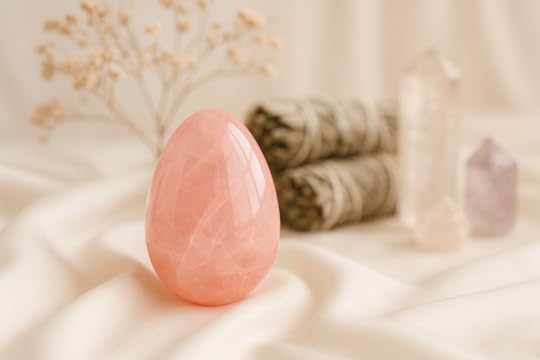
⚠️ Trigger Warning: This post contains references to sexual trauma and medical assault. Please take care while reading.When I began using cannabis in a more sacred and conscious way, I simultaneously became more connected to my womb—and to the feminine energy that lives there. As I deepened into this connection and added a yoni egg practice, something profound began to unfold.
I didn’t know it at the time, but this was the beginning of my somatic awakening.
During one particular cannabis ceremony, I became severely nauseous. This was strange for me, as I had used cannabis for many years to relieve nausea—especially when it was tied to chronic pain or tension in my body.
[You can grab my free Radiant Conscious Cannabis Masterclass here.]
But this time was different.
The nausea was intense. Debilitating. I couldn’t move. I had to lie still and let it move through me.
At the time, I didn’t understand why it was happening. But a few days later, while I was at work, that same wave of nausea hit me again—sudden and familiar. I thought, Maybe I just need to sit down, eat something, drink some water. My body is trying to tell me something.
And then it became clear.
I walked past one of the Care Centers… and saw him.
The same man who, 20 years earlier, had violated me during a gynecological exam.
That was the moment I understood: my body had remembered before my mind did.
Trauma is stored in the body.
And sometimes, the body speaks first—through tension, nausea, flashbacks, or shutdown. It whispers until it screams. And that day, mine screamed.
We go to doctors to be cared for. We trust them. And yet, when I was 17, that trust was broken in the most intimate way.
Years later, as a nurse working in the same region, I found myself having to navigate professional spaces where this man was still practicing. I shared parts of my history with a few trusted colleagues—not all the details, but enough so they’d understand why I preferred to avoid contact with him whenever possible. They were supportive, and usually I was able to keep distance.
But one particular shift, I was the only RN on duty, and I had to contact him regarding a patient. He had recently undergone some sort of surgery, and I guess he was in a vulnerable state. But what happened next shocked me.
When I reached out, he got angry—and accused me of violating him simply by contacting him.
I was stunned. Speechless.
Here was the same man who had once touched me without consent—who had violated my body as a teenager—now telling me that I had crossed a line.
I remember wanting to scream, Do you not remember who I am?
How dare you.
But like so many women, especially in healthcare, I stayed professional. I swallowed it. I got through the shift. But that moment never left me.
It was a visceral reminder of how often power protects itself—and how rarely survivors get the space to speak their truth. That moment deepened my healing. It validated the somatic memory. And it planted a seed.

While we were waiting for her, this doctor asked me if I wanted to become more familiar with my anatomy because a lot of young girls are not familiar. My 17-year-old self declined and said, no, thank you, I'm good. This doctor ignored and proceeded to touch my genitals, start labelling my clit and onwards, put his fingers inside me to press on my g-spot…as he fondled me, labelling all my parts. At the time I dealt with it in the way that I thought was best. I left that day and I wrote a letter to him and told him that it was inappropriate for him to do that. He responded with a letter, apologizing and agreed that he would omit that from his exam going forward in the future. I didn't realize when I was my 17-year-old self how that trauma would store in my physical body, the emotional shame that I carried, and the anger towards myself for not doing something more like reporting it or getting up and walking out. This experience with nausea that arose for me in the sacred cannabis ceremony lead me to be able to identify this trauma that was stored in my womb. Having awareness is the starting point.
With that awareness, I could finally choose to begin releasing the pain.
I consciously moved the energy through my womb and out of me—in ceremony, in meditation, in movement.
I’m so grateful for the wisdom of my womb, my sensual yoga practice, and the sacred rhythm of my cycles that helped me feel, process, and transmute this trauma.
For years, I practiced forgiveness as a daily ritual. Forgiving him. Forgiving myself. Every time he came into my consciousness, I returned to that practice. I kept loving myself unconditionally and showing up for the girl inside me who once felt voiceless.
And now, all these years later, I’ve taken another step.
I reported him.Not because I expect a specific outcome—but because I finally understand that speaking the truth is an act of self-love. I’m doing it for the 17-year-old girl who said no and wasn’t heard. I’m doing it for the woman I am now—who knows she is worthy of safety, respect, and being taken seriously.
I am no longer silent.

Sexual trauma comes in many forms. It’s not always the most violent, obvious kind we associate with rape or assault. It can also be subtle, manipulative, hidden behind authority or trust. It can be medical. It can be the times we froze instead of fought. The times we didn’t say anything because we didn’t know how.
But no matter the form—your story matters.
I’ve learned that I can embrace my femininity, my sensuality, my pleasure—and still be safe.
I can have strong boundaries and a soft heart.
I can be fully expressed and still protected.
This is your permission:
You are allowed to be sexy and safe.
You are allowed to speak up—no matter how much time has passed.
You are allowed to be free.
🔻 Ready to begin your own journey of embodied healing?
If this story resonated with you—if your body holds memories you’re only beginning to understand—I want to offer you two deeply personal resources to support your healing journey:
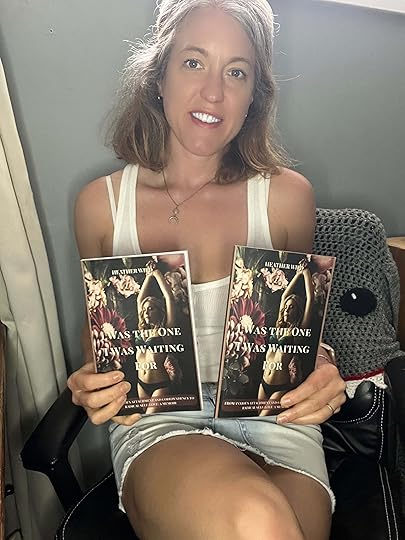
✨ Grab my memoir I Was the One I Was Waiting For — a raw, intimate reflection on love, trauma, healing, and reclaiming power through embodiment, motherhood, and voice.
👉 Get it here
🌿 Join my free Radiant Conscious Cannabis Masterclass — and discover how to work with cannabis in a sacred, intentional way to access your body’s wisdom and release stored pain.
👉 Get the recording
🎧 Listen to Somatic Meditations: A Journey Through the Body
This 30-minute guided audio practice invites you into a deep, nurturing reconnection with your body—supporting emotional release, nervous system regulation, and inner peace.
👉 Listen to the audiobook.
Your body remembers.
Your voice matters.
Your healing is sacred.
And it's never too late to come home to yourself.
August 1, 2025
Deep Hip Opening Flow | Release Emotion, Reclaim the Feminine
This practice was more than just movement—it was an emotional cleanse. A soft yet powerful journey through the hips, where so much of our emotion, tension, and unspoken truth gets stored. In this 15-minute flow, I guide you through a sensual, grounding release—perfect for days when you feel overwhelmed, disconnected, or in need of feminine reconnection.
Your hips hold stories.
Old tension, buried grief, untold desires—this flow is your invitation to release it all.
This isn’t just hip opening… it’s emotional unraveling.
A return to the body.
A reawakening of your feminine energy.
Breathe. Move. Let it rise.
Whether you're here for somatic healing, emotional rebirth, or simply to move and breathe, this one’s for you.
🎥 Watch below or on YouTube and please subscribe for more flows and embodiment practices.
If this practice moved something in you—emotionally or physically—I invite you to explore deeper with my memoir, I Was the One I Was Waiting For. It’s a story of release, reclamation, and rising. 📘 Browse my books here