Ed Meek's Blog
April 27, 2016
Hijacked by Technology
We’ve been hijacked by technology; our emotional connection to others has been kidnapped and is being held hostage by our phones. Do we need to pay a ransom to professionals to get back in touch with our emotions?
Donna Hylton, an activist for the rights of women in prison, was released from a maximum security prison not long ago after 27 years inside. The day she was released she took a walk through Central Park. She couldn’t understand what people were doing. They seemed to be talking aloud to themselves. Others were staring down as they walked, doing something with their fingers and thumbs. At the bus stop no one was talking to anyone else and once people got on, they were all in their own little world. Someone had to explain Bluetooth and what had happened with phones to Donna.
“People have stopped talking to each other,” she said to me. “And they’ve stopped touching each other,” she said touching my arm.
Luckily, we can go to a professional cuddler or a massage therapist if we want to be touched. And we can hire a trainer or go to a counselor or get our hair done if we want to talk to someone.
Starbucks designed their coffee shops to create a sense of community, but if you go into a Starbucks the only talk you’ll hear is someone ordering or picking up a coffee. Everyone else is sitting staring at a laptop, most with headphones on. Gyms used to be friendly hangouts where you could always talk sports even with strangers. They’ve been replaced by sports clubs where people walk around listening to their own music. I’ve been going to a local sports club for ten years with people who have never spoken a word to one another. Instead of getting to know people with whom they obviously have a few things in common (love of exercise, weight-loss, proximity) they go on Match.com or Tinder to find people to date or hook up with.
“People don’t recognize the power of touch,” Donna says to me.
Of course, talking with strangers is awkward because all strangers are sketchy. This is what the news has taught us.
At the sports club, if I do want to ask someone a question like: “Are you using the attachment that’s sitting on the floor at your feet?” I have to tap the person on the shoulder or motion her to take off her headphones so she can hear me. I have to interrupt her in the middle of listening to the new Justin Bieber! Even if I’m telling someone that a machine is broken it’s awkward and intrusive. People would apparently rather stare at themselves in a mirror while they exercise with their headphones on in their own private Idaho rather than talk to anyone.
Luckily if you go to Snugglebunnies.com, you can find Holden “an eccentric man-boy in touch with his sensitive side” who, for 60 dollars an hour will cuddle with you, or Melanie a “modern day Renaissance woman” who, for $400, will nuzzle with you all night.
Here is Melissa in an article for Salon explaining a snuggle experience: “Hess moved us into the “Side Pocket,” in which I lay on my side, snuggled against her with my head resting on the nape of her neck and my arm draped across her body.” Hess is a certified cuddler who knows one hundred positions.
Meanwhile back in the real world, our lack of personal interaction results in a certain lack of civility. If my neighbor does not speak to me when I say Hi, after a few attempts I begin to dislike her. Just as I dislike the people at the club who spend forty minutes looking deeply into their own eyes in the mirror, or worse, pick at their skin, or check over their shoulder at their butt as if they are alone, or stare past me to check their biceps.
Yet, it’s no coincidence that this move to online communication limited to members of your own tribe creates a distance from others that enables people to engage in online bullying, shaming and ad hominem twitter attacks. We’ve been hijacked by technology; our emotional connection to others has been kidnapped and is being held hostage by our phones. We need to pay a ransom to professionals to get back in touch with our emotions. We could give someone a hug like the November Project does after their mass morning workouts or we could hire a professional hugger. Certified of course.


December 5, 2015
Men Over 50, a little Modesty, Please!
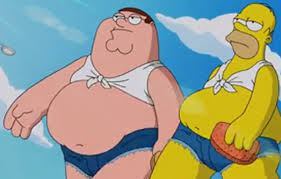
Our era is characterized by a near universal lack of modesty. Celebs Miley Cyrus, Kim Kardashian, Beyonce and Nikki Menaj come to mind. Beyonce seems to think it’s an expression of feminism. My favorite comedians, Louis C.K., Amy Schumer and Sarah Palin, oops I mean Sarah Silverman, turn immodest taboos into humor and satire. But friends, there are limits to displaying oneself and exhibiting bad taste. Memo to men 50 and older: show a little modesty at the gym!
I work out two or three days a week at a sports club. I also take a swim class at another club. At both sites, men of a certain age strut around in the locker room nude. They throw their towel over their shoulder and waltz to the shower. They don’t completely close the curtain. They stand in front of the mirror patting baby powder on their pale bodies and let me tell you, these dudes are not in good shape. Bellies protrude like blimps, butts sadly sag, and shoulders droop and frown. They are unconcerned. They stand in front of the mirror with placid looks on their flaccid faces.
They don’t seem to understand that our culture has changed. Although sex fills the airwaves, male locker rooms have embraced modesty. Fifty years ago, when I was in middle school, we boys took showers in a big open room with a dozen showerheads. After football practice our coaches sometimes showered right alongside us. At the YMCA, men sat beside each other nude in the sauna and steam room. But over the past 50 years that has really metamorphosized. High school showers are now constructed for individuals rather than for groups. Young guys today are actually pretty modest. They change quickly and wear towels to the showers. Some even put a towel on before removing their boxers under the towel.
This issue struck home when one of my students recently said, “I don’t like to go to the Y because there are too many old guys there.” He said he didn’t mind working out with the aged. He just didn’t like seeing them parade around naked. And he’s right! It isn’t pleasant to come around a corner as I did the other night and find myself facing some old guy bending over in front of his locker. Please!
These are not the same guys whose low-riding pants reveal too much skin when they lean forward or bend over in front of you at the movie theater. These guys come into the club well dressed from work. My wife thinks they are self-satisfied businessmen who are so happy with their success that they consider themselves attractive to those younger women (the second wife) who married them for their money and access.
Of course there is an equivalent to this regarding women. Madonna needs to stop prancing around in skimpy outfits in her videos. There should be an age-limit for all males and females exhibiting themselves publicly. Older guys should keep the tee shirts on when they run. Even young girls should think twice about what they wear in public. A young mother pushing a baby carriage wearing jeans that show a pink thong and tattoo—it’s just wrong. And girls, if you dress like a porn star, don’t be surprised if guys actually think you might be interested in having sex.
Meanwhile, back to the club. I find myself walking quickly to the shower these days trying not to look at the nude dudes in my peripheral vision, but it’s hard. Maybe if I wore a hoodie I could block them out. Meanwhile, here’s my plea: men over 50, put your clothes on, wear a towel, close the shower curtain, for God’s sake, have a little modesty!
July 16, 2015
Review/feature on Spy Pond
Volume 20, No. 33 www.miltonntimes.com
July 16, 2015 Milton Times
By Tom Pilla
Times Staff
Scenes and memories of Milton in the 1960s come to life with wit and poignancy on the pages of Ed Meek’s latest volume of poetry, “Spy Pond,” released in April under the Prolific Press label. Eightof the 84 poems in the Somerville-based writer’s book are set in or written about the town where he grew up and graduated from high school in 1969.
Subjects including the grassy hills of Cunningham Park, cars full of recent Milton High graduates speeding down Gun Hill Street and Edge Hill Road and crows and coyotes picking food scraps, terroriz-ing neighborhoods, are snapshots that hit with immediate familiarity.
Alternating playfulness and solemn contemplation lend the pieces depth and urge a visit in person to see how Meek’s interpretations fit the real place. In “A Murder of Crows,“ a telephone wire becomes the hangout territory of a gang of nickel-flipping gangster birds, reflecting the real-life cartoonishness of a pack of crows moving in on a block: “If there’s anything crows hate, / it’s pretty birds with silly songs.”
In contrast, near-tragedy and a series of events that every parent dreads are painted in plain relief in “Talk about Luck”: “On Gunhill, he floored it just for fun. / At the rotary we felt the tires lose theirgrip. / We hit the stone wall dead on at 60. / It didn’t give much. We all crawled / out the driver’s side window, / shaking glass from our hair.”
From 1985 to 2000, Meek taught English and writing at Curry College, also directing a first-year seminar program, before moving on to Austin Preparatory school in Reading. These days, he is awriting coach, as well as an author of poetry, fiction and essays. This is his third volume of verse, the most recent a 2007 release, “What We Love,” which also contains a group of Milton poems.
He said he first started writing poetry at Milton High School under the encouragement of a number of teachers. At the time, he lived on Granite Avenue. He was also the editor of the MHS student literarymagazine his senior year.
The rest of “Spy Pond” offers a broad range of styles and subjects, from prose poem to terse, experimental blank verse; confession and ode, to point-of-view, to polemic. A vein of political ruminations and arguments runs through the volume, from what might be termed a distinctly liberal point of view on top-of-mind subjects like terrorism, mass shootings and drone strikes.
The book is front-loaded with the current event-focused pieces, then cools off as the presence of the author takes a step back to consider ideas and objects of nature, humanity and art. Science, love,death, even the history of poetry itself are equal targets to explore complex ideas.
“I like experimenting in different styles,” said the author in an interview. He also offered thoughts on his art genre in general and its usefulness: “I think that poetry and art is a place where you can take a kind of shortcut, through metaphor, where you can move people a little bit on ideas, get them to think about things that they wouldn’t if they were written in an essay.”
Meek said that he tries to write for people to read, in an accessible style, contrasting with the often “purposefully obscure and difficult”work that has become the prototype for modern verse in major publications like The New Yorker or Atlantic Monthly.
“Spy Pond” is available on Amazon.com or www.prolificpress.com.
Ed Meek will hold a reading at the Milton Public Library Tuesday, April 5, 2016. He will also be at the Newton Free Library, 330 Homer St., Newton, on Tuesday, Sept. 2. The 64-year-old poet lives in Somerville with his wife, Elizabeth. His work has appeared in numerous publications including The Paris Review, The Christian Science Monitor and The Boston Globe. You can follow him on Twitter @emeek or visit www.letsrethink.org for his blog.
June 2, 2015
Ghosts
If there is an Oversoul
as the transcendentalists thought
ghosts inhabit it…
Maybe Undersoul
is more accurate.
Underneath the earth,
deep underground
a railroad: cars filled
with the dead children
of Sandy Hook, Columbine, Virginia Tech,
on their way to Paradise…
I like to think I hear the train whistle
in the distance as I walk to work,
and as I lie dreaming at night in bed,
anxiously drifting in and out of sleep.
May 28, 2015
Book Review: Portrait of an Artist…
Doug Holder is a force in Somerville. His press, Ibbetson Street, publishes local poets. He interviews writers and artists on his blog and on SCAT—the local television station. He is the Arts Editor for The Somerville News where he introduces and publishes a poem each week, and he is the founder of Bagel Bards, a group of poets who meet Saturday mornings in Davis Square at Au Bon Pain. He teaches writing at Endicott and Bunker Hill Community College and still finds time to dedicate to his first love: writing. It’s kind of surprising how many people actually still write poetry in our digital age surrounded as we are with entertainment, sports, movies, television, music and video games. As one of those people, I was excited to hear that Doug Holder had published a short memoir in the form of prose poems with Big Table Publishing Company, a new local press whose Acquisitions Editor Robin Stratton is another force in the local writing community.
Portrait of the Artist as a Young Poseur covers the years of 1974-1983 when Doug Holder had just graduated from college. As a contemporary of Holder, I know those years in the mid-seventies were hard times to find jobs. The market was flooded with baby boomers and many of us found ourselves using our college degrees to tend bar or like Holder, flip burgers behind the counter as a short order cook, barely getting by. But in those days, you could find a room for $38 per week on Newbury Street! There he’d run into luminaries like the great Richard Yates, author of Revolutionary Road, or the young, but just as rumpled, Barney Frank.
Though his parents told him to “Get the hell out of there!” Lucky for us, Holder stuck around and eventually found a job at MacLean’s Hospital, whose famous “guests” included James Taylor, David Foster Wallace and Sylvia Plath. Famous people are not the focus of Holder’s book though. He’s more likely to zero in on details. “The croissants from the Savory Bakery in Audubon Circle were flaky concessions, the dark beers and the dark cavernous bar at Browns, my balm. And the elevated tracks on Harrison Avenue—elevated me—I was a transcendent blur cross-town.” Whether you’d like insight into what it was like in Boston back then or you’re someone who appreciates good writing, you might want to pick up a copy of Portrait of the Artist as a Young Poseur by Doug Holder.
March 2, 2015
Civility Helps When the Going Gets Tough
All this snow makes the world smaller. It’s claustrophobic. The streets are narrow; the sidewalks are single lane with white walls rising on both sides like parapets. City blocks have turned into mazes and the corners are guessing games where vehicles emerge like blimps from clouds. Parking spaces are as valuable as beachfront property. Cyclists weave between cars. At dusk, shadow people walk the streets like zombies. Runners and walkers jam gyms and clubs and line up for treadmills.
Such conditions bring out the best and worst in people. You can’t avoid contact. We have to step around each other on the sidewalk, or let other people pass. At the gym we’re forced to share space. It’s so crowded, there’s barely enough room in front of the mirrors to check yourself out while exercising! We still mostly manage to avoid talking to one another. Everyone is too busy checking the playlist and watching television to talk to anyone else. It’s a better idea to go online and meet someone you’ve never actually seen in person if you want someone to talk to. Or you could hire a personal trainer.
Driving is tricky. On secondary roads two lanes are reduced to one without enough room for two vehicles to pass each other. You have to wait behind parked cars while cars coming the other way pass by or hope you can scoot around fast enough to get back into your lane before someone coming the other way hits you.
This is only bearable when we’re polite to each other. When we’re bumping into one another and stepping in front of each other and hopping around and jostling and slipping; manners can help. Lack of manners creates an additional level on an escalator of stress.
The other day when I was on my way to work, a truck turned onto a two way street on which I was driving; it was too narrow for both of us. Rather than stopping and letting me by, the driver drove right at me! I threw it into reverse and backed up to the other end of the street where I had to back my car out to let him go by. I felt like I was in middle school being bullied.
It isn’t all bad news. Incivility is often based on distance both physical and technological. Confronted with one another in difficult situations, people more often than not, turn out to be nice. One of my neighbors cleared my sidewalk with his snowblower. When I went for a run outside, most drivers stopped at crosswalks and slowed down to give me room to run on the side of the road when a sidewalk was covered with snow. A neighbor saved me a parking space on the street in front of my condo. The college kids who live across the street helped me shovel. In twenty minutes, my driveway was cleared and now we know each other’s names. With all this snow, the phrase, it’s a small world has taken on new meaning. We just have to remember to use a few long lost words: Excuse me. Sorry. Let me give you a hand. Thank-you.
February 5, 2015
Hijacked by Technology
We’ve been hijacked by technology; our emotional connection to others has been kidnapped and is being held hostage by our phones. Do we need to pay a ransom to professionals to get back in touch with our emotions?

Donna Hylton, an activist for the rights of women in prison, was released from a maximum security prison not long ago after 27 years inside. The day she was released she took a walk through Central Park. She couldn’t understand what people were doing. They seemed to be talking aloud to themselves. Others were staring down as they walked, doing something with their fingers and thumbs. At the bus stop no one was talking to anyone else and once people got on, they were all in their own little world. Someone had to explain Bluetooth and what had happened with phones to Donna.
“People have stopped talking to each other,” she said to me. “And they’ve stopped touching each other,” she said touching my arm.
Luckily, we can go to a professional cuddler or a massage therapist if we want to be touched. And we can hire a trainer or go to a counselor or get our hair done if we want to talk to someone.
Starbucks designed their coffee shops to create a sense of community but if you go into a Starbucks the only talk you’ll hear is someone ordering or picking up a coffee. Everyone else is sitting staring at a laptop, most with headphones on. Gyms used to be friendly hangouts where you could always talk sports even with strangers. They’ve been replaced by sports clubs where people walk around listening to their own music. I’ve been going to a local sports club for ten years with people who have never spoken a word to one another. Instead of getting to know people with whom they obviously have a few things in common—they exercise, watch their weight, are close in age, relatively attractive and live in the same area—they go on Match.com to find people to date.
“People don’t recognize the power of touch,” Donna says to me.
Of course, talking with strangers is awkward because all strangers are sketchy. This is what the news has taught us.
At the sports club, if I do want to ask someone a question like: “Are you using the attachment that’s sitting on floor at your feet?” I have to tap him on the shoulder or motion her to take off her headphones so she can hear me. I have to interrupt him in the middle of listening to the new Taylor Swift! Annoying! Even if I’m telling someone that a machine is broken it’s awkward and intrusive. Not that anyone tells me if a machine is broken. I have to find out for myself.
People would much rather stare at themselves in a mirror while they exercise with their headphones on in their own private Idaho rather than talk to anyone else. Luckily if you go to Snugglebunnies.com you can find Holden “an eccentric man-boy in touch with his sensitive side” who, for 60 dollars an hour will cuddle with you. Or Melanie a “modern day Renaissance woman” who, for $400, will nuzzle with you all night.
“Hess moved us into the “Side Pocket,” in which I lay on my side, snuggled against her with my head resting on the nape of her neck and my arm draped across her body.” Explains Melissa in an article for Salon. Hess is a certified cuddler who knows one hundred positions. Imagine.
Meanwhile back in the real world, our lack of personal interaction results in a certain lack of civility. If my neighbor does not speak to me when I say Hi, after a few attempts I begin to hate her. Just as I hate the people at the club who spend forty minutes looking deeply into their own eyes or worse, picking at their skin, or checking over their shoulder at their butt as if they are alone, or staring past me in the mirror to check their biceps while ignoring everyone else. I’m exaggerating of course. I don’t hate them—I don’t know them!
Yet, it’s no coincidence that this move to online communication limited to members of your own tribe creates a distance from others that enables people to engage in online bullying and ad hominem attacks in response to anyone who posts a political position. We’ve been hijacked by technology; our emotional connection to others has been kidnapped and is being held hostage by our phones. We need to pay a ransom to professionals to get back in touch with our emotions. We could give someone a hug like the November Project does after their mass morning workouts or we could hire a professional hugger. Certified of course.
January 30, 2015
Review: Klein vs. Kolbert

by Ed Meek
Naomi Klein and Elizabeth Kolbert are, in a sense, both on the same team. They both write about climate change and humans’ devastating impact on our fragile planet. They start from the premise that there is no doubt about what is happening. The evidence is all around us. Where Klein and Kolbert differ lies in what they focus on. Although she is concerned about the future of humanity, Kolbert is more taken with the effects that we, “the weedy species,” she calls us, are having on the rest of the animals inhabiting the Earth. Humans, she says, are like an invasive species and we’re currently contributing to and witnessing mass extinctions of species like the Brazilian frog, as well as bats, rhinos, all large mammals, etc. Klein focuses on climate change and how, although it presents us with terrible effects now and tremendous dangers in the future, it also offers us an opportunity to create a better world.
Klein is an optimist while Kolbert is not. Naomi Klein wrote an earlier book entitled The Shock Doctrine in which she discusses our leaders’ propensities for taking a crisis and using it to advance a certain agenda. New Orleans was flooded by Hurricane Katrina and the authorities used that catastrophe to replace all the public schools with charter schools. The Bush Administration reacted to the destruction of the World Trade Center by 19 Islamic radicals, 17 of whom were Saudi Arabian, by using the tragic event as a reason to invade Iraq—a country that had nothing to do with 9/11. Neo-cons advanced the idea of the United States straightening out the Middle East. Cheney and friends decided this was the time to disregard all those silly laws about habeas corpus and fair trials and the Geneva Conventions. “It’s time to take the gloves off,” Wolfowitz said. You get the idea. It’s like Arthur Miller’s The Crucible. When there’s a crisis, there’s an opportunity.
In her new book, Klein turns this idea around and says, couldn’t we use a crisis to improve our lives rather than just ceding more power to the government or vested interests? Couldn’t we seize control and change our fate? Kolbert is not so sanguine. She would also like to see us take steps to slow the rate of climate change but she sees us in the throes of what she and a number of scientists refer to as The Sixth Extinction. “Right now, in the amazing moment that to us counts as the present, we are deciding, without quite meaning to, which evolutionary pathways will remain open and which will forever be closed,” Kolbert writes. There have been five other extinction events in the history of the earth. The last one is the one we are all familiar with: 66 million years ago the dinosaurs were wiped out when, most scientists now agree, an asteroid smashed into the earth filing the atmosphere with dust leading to a massive die off. But there were four other mass extinctions that paleontologists now know of and Kolbert refers to these in her book as a pretext for pointing out that extinction can and is happening right now.
One of the interesting notions that one takes away from The Sixth Extinction is expressed by a number of the scientists Kolbert talks to. When you look at this long history of life on earth that stretches back 450 million years with these mass extinctions, you begin to get the idea that it’s obvious we humans are not going to be around forever and, in fact, we may be gone soon. Once an extinction begins, it seems to proceed rather quickly. We’re witnessing a number of species disappearing right now, in our lifetime–from frogs in South America to polar bears in the Arctic.
Naomi Klein gives numerous examples from around the world of how people are responding locally to the challenges of climate change. The Dutch have created massive dams and gates to hold back water, the Germans derive more and more energy from wind farms and solar power. The Chinese have agreed to stop building coal plants eventually. The United States is finally getting onboard with more fuel-efficient cars and so on. Klein proposes that we all scale back our energy use and live a more community oriented lifestyle and participate in “the unfinished business of liberation.” Whether you think more along the lines of Naomi Klein or Elizabeth Kolbert might come down to how optimistic you are about our future. Reading and listening to these two (they’ve both been on Moyers and have talks available on YouTube), it does, however, seem like Kolbert is the grown-up in the room.
Experts from a number of different fields have identified our problem. E.O. Wilson says we aren’t a super-organism. Contrast humans and ants. Ants are like some utopian communist society where everyone has a role and they all work together for the common good. Stephen Pinker says our problem is we identify strongly with groups—our group. This is great for sports, not so great for government. Peter Singer says we take care of our circle of family and friends but are not so concerned about people on the other side of the country, never mind the other side of the globe. Here’s another problem: we’re good at thinking short term (as in quarters), not so good at thinking long term (as in the next fifty years).
Fitzgerald has a famous line about intelligence being the capacity to hold two opposing ideas in mind at the same time and still retain the ability to function. On the one hand, the country may seem as if it’s falling apart; on the other hand, there are some people working hard to improve our lives and whatever we think, we still have to keep on trying. So it is with climate change and the sixth extinction. It doesn’t look good, but that doesn’t mean we shouldn’t try to do something about it. Reading these two illuminating books is a start.
December 5, 2014
Every Day is Groundhog Day

When you’re retired, every day is Groundhog Day. You remember the movie with Bill Murray. I was watching it again recently and it struck me. Every day is the same. That’s why people my age have trouble keeping track. The other day I walked up the street to get some fruit and veggies at the farmer’s market and found out it had been held the day before. Last weekend my wife and I sat down to watch Masters of Sex only to realize it wasn’t on for another night. One has to check the calendar. I’d check my watch for the date, but I’ve stopped wearing it. I don’t really have to be anywhere most of the time.
When Bill Murray first learns that every day is Groundhog Day, he is depressed. Many people feel like that when they first retire. Some never pull out of it. But after a few misguided suicide attempts, Murray realizes that he needs a new attitude. What if he used the opportunity to remake himself? In effect, he decides to create a second story in which he becomes the kind of person that his beautiful coworker (Andie MacDowell) would be attracted to.
He begins taking piano lessons. He volunteers. He learns ice sculpture. This is the situation those of us who are retired find ourselves in. We can learn something new, whether it’s a language, or a musical instrument or a skill. My wife has signed up for a storytelling class. I’m trying to learn Spanish. Upstairs, the piano beckons. Volunteer organizations are many and varied. One called Re-serve allows you to get paid a modest stipend while using your expertise to help a nonprofit.
Not that there’s any rush. I’m getting up an hour later than I did for work. I tend to let people go in front of me when driving. I take my time at the supermarket. Not that I want to hold others up. I don’t want to lag. There’s just no reason to stress out about time anymore. “Do not stop; do not hurry,” Confucius said.
As I’m sure you’ve heard, those of us over 60 appreciate the little things if you can call sunsets, full moons, trail hikes, the light reflecting in a lake in the late afternoon little things. In fact, I’ve been thinking, recently about what I’ll miss when I’m gone: swims with my wife in the glacial ponds in Wellfleet, White Crest Beach on the national seashore, bike rides in the fall, snowboarding with my son. But there’s plenty of time left you say? I know. I know.
Also, the memories of parents and friends seem more vivid lately. You could almost call them ghosts. I think of them often. Some more than others. My parents of course, but also, Skip, QB on my high school team who died in his 30s when a cold got into his central nervous system, Sue, my best female friend in high school who died mysteriously in her 40s. Melody, who never woke up from a pulmonary embolism. She was 57.
It doesn’t quite seem fair, but as we all know, life is not fair. The universe is indifferent to justice, friends. That’s a human construct. When you’re retired you have a time to think about that and if you choose, to do something about it—“the good not done,” as Larkin put it. Or not.
November 3, 2014
Charlie Baker’s Tears Made Me Cry

I voted for Charlie Baker because he cried on TV. I wasn’t going to vote for him because The Boston Globe endorsed him and that probably means John Henry and Baker are in cahoots and now Baker is elected Governor he’ll get free Red Sox tickets right behind home plate or maybe on the Green Monster and the players will all get free health care from Pilgrim and the Globe will get access to the Governor’s office. But I don’t care about any of that.
I know that Charlie Baker cares and when he took over Pilgrim and laid off all those people and shipped those jobs overseas he probably cried like a baby. I’m sure his wife consoled him. What are wives for? He may have made a mint at Pilgrim but those crocodile tears show that he’s a regular dude. Not a stuffed shirt “Charles” or a “Chuck” and certainly not a “Chuckie,” but a Charlie—the kind of guy you could have a Slumbrew or two with.
And who doesn’t feel the pain of the fishermen with all the Obama and Deval-like regulations they’ve had to endure unless they’re lobster fishermen in which case they’ve done pretty well. And the two young guys who could have gone to college on scholarships, not to Harvard like Obama on some Kenyon minority deal but maybe to Yale or Princeton or Umass-Lowell to play football and lead them to their first national championship. Now instead they’ve probably quit the beleaguered fishing industry and become hairdressers or nurses or firefighters. One of my friends is a firefighter who does lobstering on the side—maybe they should consider that option.
Anyway, that’s why I voted for Baker, not because he wants to throw those welfare moms out in the street or because he’s against early education or funding the rebuilding of our roads and bridges through the gas tax, but because he’s a sensitive guy who cares and that’s obvious, because he cried on TV.