Jane Allen Petrick's Blog: Meditations at The Microwave
September 30, 2015
Getting Organized on The Sixth Day (Or, How To Salvage the Old Year)
So, autumn is here again.
I had a completely laid back, absolutely relaxing, totally unproductive summer. But as the days shortened and the leaves began to turn, I started to wonder, "Gee, isn't there something I'm supposed to be doing this year?" And then I remembered. Right. My New Year's resolutions.
New Year's resolutions. You know, those promises we all made to ourselves nine months ago, most of which, somehow, are no closer to full term than the day they were first conceived. So, what happened?
Maybe I thought I had plenty of time. "Hey, it's only March. How long can it take to lose 10 pounds?"
Maybe I thought I had to prioritize first. "Before I can do C I have to do B. But before can do B I have to do A, and before I can do A I feel so tired thinking about it all, I jthink I'll just take a nap."
Maybe I just got distracted or overwhelmed or depressed. "I did clear and plant one flower bed (all those stones!), but then the deer ate it."
Autumn, however, can be a second chance. A chance to revisit those resolutions. Tackle the ones that make sense to me, and purposively throw out the ones that don't. Because as Organizing Adage #3 says, "If you want to know how to organize your life, look at what's important to you." (From my book, Beyond Time Management)
Autumn is our grace period: a time when we can wrap up the old year and be ready to begin the new one with a clear conscience, free of guilt, and with a smile. I'll cross the flowers off the list. But I still have a shooting chance at the 10 pounds. As New Yorker cartoonist Roz Chast suggests, even God might be able to relate to that.
In a way, Autumn is our sixth day.
[image error]
I had a completely laid back, absolutely relaxing, totally unproductive summer. But as the days shortened and the leaves began to turn, I started to wonder, "Gee, isn't there something I'm supposed to be doing this year?" And then I remembered. Right. My New Year's resolutions.
New Year's resolutions. You know, those promises we all made to ourselves nine months ago, most of which, somehow, are no closer to full term than the day they were first conceived. So, what happened?
Maybe I thought I had plenty of time. "Hey, it's only March. How long can it take to lose 10 pounds?"
Maybe I thought I had to prioritize first. "Before I can do C I have to do B. But before can do B I have to do A, and before I can do A I feel so tired thinking about it all, I jthink I'll just take a nap."
Maybe I just got distracted or overwhelmed or depressed. "I did clear and plant one flower bed (all those stones!), but then the deer ate it."
Autumn, however, can be a second chance. A chance to revisit those resolutions. Tackle the ones that make sense to me, and purposively throw out the ones that don't. Because as Organizing Adage #3 says, "If you want to know how to organize your life, look at what's important to you." (From my book, Beyond Time Management)
Autumn is our grace period: a time when we can wrap up the old year and be ready to begin the new one with a clear conscience, free of guilt, and with a smile. I'll cross the flowers off the list. But I still have a shooting chance at the 10 pounds. As New Yorker cartoonist Roz Chast suggests, even God might be able to relate to that.
In a way, Autumn is our sixth day.
[image error]


February 9, 2015
A Valentine to The Women of New Jersey (And Another "Hidden" Testament To Diversity)
In October 2014, I had the honor of making a presentation on Norman Rockwell and people of color to a long-established women's book club based in Metuchen, New Jersey. The president of the group informed me that the ladies of this book club did not come out just for coffee and cookies: they were incisive and focused in their interactions with their guest authors. Thanks to this heads up, I did even deeper pre-program research than usual and found a wonderful connection between New Jersey's women, diversity, and the often hidden messages in American illustration.
Contrary to popular belief, 1920 was not the first time American women got the vote. The women of New Jersey had the suffrage for the first thirty-one years of our nation's history, from 1776 – 1807.
The first constitution for the state of New Jersey granted the vote to "all inhabitants of this colony, of full age, who are worth fifty pounds ... and have resided in the county ... for twelve months." Although married women could own no property in their name and therefore could not vote, single women who met all of the other criteria could. Between 1776 and 1807, unmarried women voters in New Jersey regularly spoke out on issues and participated in elections.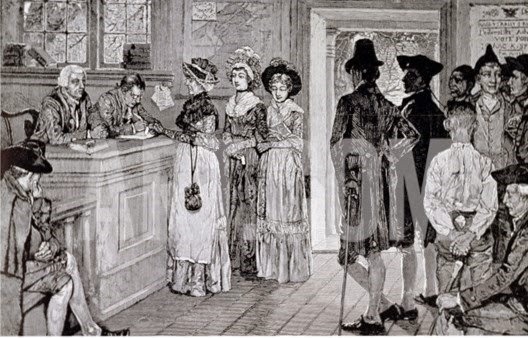 Women at the Polls in New Jersey in the Good Old Times (Howard Pyle, 1880)
This bright spot in American history was captured by the famous illustrator Howard Pyle in his 1880 drawing for Harper's Weekly magazine entitled, Women at the Polls in New Jersey in the Good Old Times. In it, women are shown lining up, casting their vote.
These women are presumably all single, of "full age", and each worth at least fifty pounds. But they are not all white. Look carefully at the last woman in line, the woman standing in the shadow on the other side of the open doorway. (You may have to "blow up" the picture on your computer to see the detail. I was able to study the original drawing at the Museum of American Illustration in Newport, Rhode Island.)
This New Jersey woman voter is black, with a gold earring in her ear and a small smile upon her face. Hidden in plain sight, she is Howard Pyle's testimony to New Jersey's racial as well as gender "good old times".
Those good times disappeared in 1808 when, as part of a political deal that also denied the vote to aliens and any non-taxpayers, the New Jersey legislature ignored its constitution and restricted the vote to white male citizens who paid taxes. But for the first 31 years of our Republic, at least some of the women of New Jersey, black and white, were able to exercise their "inalienable right".
So, I post this Valentine to those first women New Jersey voters, and to my friends from the women's book club in New Jersey who continue in that same strong spirit.
Contrary to popular belief, 1920 was not the first time American women got the vote. The women of New Jersey had the suffrage for the first thirty-one years of our nation's history, from 1776 – 1807.
The first constitution for the state of New Jersey granted the vote to "all inhabitants of this colony, of full age, who are worth fifty pounds ... and have resided in the county ... for twelve months." Although married women could own no property in their name and therefore could not vote, single women who met all of the other criteria could. Between 1776 and 1807, unmarried women voters in New Jersey regularly spoke out on issues and participated in elections.
 Women at the Polls in New Jersey in the Good Old Times (Howard Pyle, 1880)
This bright spot in American history was captured by the famous illustrator Howard Pyle in his 1880 drawing for Harper's Weekly magazine entitled, Women at the Polls in New Jersey in the Good Old Times. In it, women are shown lining up, casting their vote.
These women are presumably all single, of "full age", and each worth at least fifty pounds. But they are not all white. Look carefully at the last woman in line, the woman standing in the shadow on the other side of the open doorway. (You may have to "blow up" the picture on your computer to see the detail. I was able to study the original drawing at the Museum of American Illustration in Newport, Rhode Island.)
This New Jersey woman voter is black, with a gold earring in her ear and a small smile upon her face. Hidden in plain sight, she is Howard Pyle's testimony to New Jersey's racial as well as gender "good old times".
Those good times disappeared in 1808 when, as part of a political deal that also denied the vote to aliens and any non-taxpayers, the New Jersey legislature ignored its constitution and restricted the vote to white male citizens who paid taxes. But for the first 31 years of our Republic, at least some of the women of New Jersey, black and white, were able to exercise their "inalienable right".
So, I post this Valentine to those first women New Jersey voters, and to my friends from the women's book club in New Jersey who continue in that same strong spirit.
January 6, 2015
Love Ouanga: The Norman Rockwell Picture with an All Black Cast
Love Ouanga, Norman Rockwell’s two page illustration created to accompany a short story by the same name, was the famous artist’s first and only illustration portraying just black people.Written by southern writer Kenneth Perkins, Love Ouanga appeared in the June, 1936 issue of American Magazine. Set in 1930’s New Orleans, the story is a beautifully and richly told reprise of La Traviata, but this time with two special twists. It has a happy ending. And all of the characters in the tale are black.
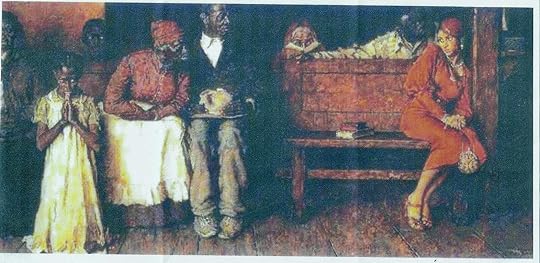
Reproductions of Love Ouanga appear in a number of Rockwell anthologies, but never within the context of Kenneth Perkins’ story. Presented without that context, the picture elicits reactions ranging from bafflement to embarrassment to downright offense. On its face, Love Ouanga is not the Norman Rockwell the world knows and loves. For example, I showed Love Ouanga to several black Rockwell models without their knowing the story behind it. When I mentioned that I was considering using the painting for the cover of my book, their recoil from the idea was as obvious as that of fair skinned Spice from the very dark congregants of Blood of the Lamb Tabernacle.
Click this link to read:
"Love Ouanga", a short story by Kenneth Perkins. (American Magazine, June, 1936)
Yet Love Ouangaaffirms Norman Rockwell’s talent for telling stories with paintings as much as any Saturday Evening Post cover. The blacks in this painting are not the caricatures typical of their portrayal in that era. Nor do they all “look alike”.
It is clear that Rockwell sought out and selected models from the black community for each figure in Love Ouanga: he selected them just as carefully, for example, as he chose his models from the white community for one of his Post covers from the same period, First Haircut. A stickler for veracity, one can even imagine Norman Rockwell attending a couple of black church services in his home town of New Rochelle, just to get the images right.
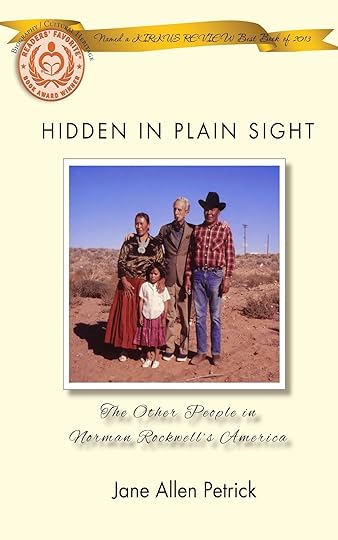
Learn more about "the other people in Norman Rockwell's American" in my award-winning book,
Hidden in Plain Sight: The Other People in Norman Rockwell's America.
Cordially,
Jane
.jpg)
Reproductions of Love Ouanga appear in a number of Rockwell anthologies, but never within the context of Kenneth Perkins’ story. Presented without that context, the picture elicits reactions ranging from bafflement to embarrassment to downright offense. On its face, Love Ouanga is not the Norman Rockwell the world knows and loves. For example, I showed Love Ouanga to several black Rockwell models without their knowing the story behind it. When I mentioned that I was considering using the painting for the cover of my book, their recoil from the idea was as obvious as that of fair skinned Spice from the very dark congregants of Blood of the Lamb Tabernacle.
Click this link to read:
"Love Ouanga", a short story by Kenneth Perkins. (American Magazine, June, 1936)
Yet Love Ouangaaffirms Norman Rockwell’s talent for telling stories with paintings as much as any Saturday Evening Post cover. The blacks in this painting are not the caricatures typical of their portrayal in that era. Nor do they all “look alike”.
It is clear that Rockwell sought out and selected models from the black community for each figure in Love Ouanga: he selected them just as carefully, for example, as he chose his models from the white community for one of his Post covers from the same period, First Haircut. A stickler for veracity, one can even imagine Norman Rockwell attending a couple of black church services in his home town of New Rochelle, just to get the images right.
Learn more about "the other people in Norman Rockwell's American" in my award-winning book,
Hidden in Plain Sight: The Other People in Norman Rockwell's America.

Cordially,
Jane
October 23, 2014
Motivated by "Hidden in Plain Sight", Norman Rockwell Museum Finds and Displays Rockwell's Socially Conscious Painting, Glen Canyon Dam
 Glen Canyon Dam, Norman Rockwell (1969)
“In the rigid back of John Lane, the drooping shoulders of his son, the fixed glare of his wife, even the bewildered expression of the dog, Rockwell painted not only the dam, but more significantly, the Indians’ condemning reaction to it.” So I wrote in my book, Hidden in Plain Sight: The Other People in Norman Rockwell's America. And now this powerful painting is finally out of the closet and on display.
Norman Rockwell was one of 40 American artists who were commissioned by the United States Bureau of Reclamation in the late 1960s to create works inspired by its water reclamation projects. In October of 1969, Rockwell arrived in Page, Arizona with his wife Molly, and toured the area with the Bureau’s public relations team; according to public affairs officer Will Rusho, the artist asked “where’s some human interest,” when presented with the idea to paint the dam. Rusho drove the Rockwells out onto the reservation, where they met Navajo John Lane and his family, who are depicted in the final illustration.
 John Lane Family with Will Rusho
Those who commissioned Glen Canyon Dam didn't care much for the final product. It languished at a government facility in Page, Arizona until The Norman Rockwell Museum, prompted by a presentation I gave to its board of directors on Glen Canyon Dam and other "hidden in plain sight" social statements made by Norman Rockwell, arranged to borrow and display the illustration at the museum in Stockbridge, Massachusetts. I'm thrilled that I shall be going up to see it in November. Ah, the power of the pen.
 Norman and Molly Rockwell at Glen Canyon Dam
For more information on the display of Glen Canyon Dam and on visiting the Norman Rockwell Museum, go to:

October 8, 2014
Thanks-Giving Square - I Find Another Dallas
 www.thanksgiving.org
Last week, I had the honor of presenting a program on "the other people in Norman Rockwell's America" in Dallas, thanks to the sponsorship of the Thanks-Giving Square Foundation.
Thanks-Giving Square is a beautiful three-acre park, chapel and museum in the heart of downtown Dallas with a setting to inspire gratitude. The park is an oasis for the city’s growing residential life, as well as a daily spot to hear rushing water and a respite for professionals who work in the nearby high-rise office buildings.
The chapel has a unique spiral exterior designed by world-famous architect Philip Johnson and an interior spiral of 73 stained-glass panels created by French artist Gabriel Loire (the largest horizontal stained glass window in the world). The museum is a rare compilation of historical documentation around Thanksgiving, as it takes place all over the world, but especially in the United States, dating back to the Continental Congress.
And on "The Wall of Praise", one of the walls leading to the entrance to the park? A colored glass mural of Norman Rockwell's Do Unto Others : The Golden Rule. Thanks to the hospitality of the board members and staff of the foundation, I found that Dallas is much more than conference hotels.
Take your own short tour of Thanks-Giving Square with this YouTube video made by two college students for a project. (And note, thanks to the foundation board's focused efforts over the past several years, no part of the square is any longer "neglected and deteriorating". )
Cordially,
Jane
April 13, 2014

February 7, 2014
Wish I Had Said That! A Review of One of My Books Says It Better Than I Did
I very much appreciate the reviewers who having been posting their thoughts on my book about Norman Rockwell and people of color. I was so moved by the comments of one reviewer that I thought I would share them with you. I welcome your adding your thoughts.
Cordially,
Jane
NORMAN ROCKWELL'S VISION OF AMERICA -- REVISITING WHAT YOU THINK YOU SAW
Marilyn Armstrong, February 6, 2014
Amazon Review of Hidden in Plain Sight: The Other People in Norman Rockwell's America
This beautifully written book about Norman Rockwell, the artist and his work focuses on the non-white children and adults who are his legacy. The book will be an eye-opener for many readers despite the fact that anyone who goes to the Rockwell Museum in Stockbridge, Massachusetts ... or seriously looks at Rockwell's body of work can easily see that Norman Rockwell never portrayed a purely white America. This country's non-white population have always been there, even when he had to more or less sneak them in by the side door.
These people -- Black people, Native Americans and others -- are not missing. Rockwell was passionate about civil rights and integration. It was his life's cause, near and dear to his heart. It is merely that the non-white peoples in his pictures have been overlooked, become invisible via a form of highly effective selective vision. Despite their presence, many people choose to focus on the vision of white America and eliminate the rest of the picture. Literally.
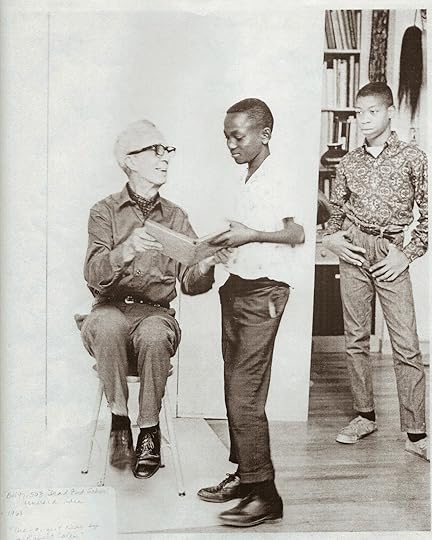
The author tells the story not only of Rockwell's journey and battle to be allowed to paint his vision of America, but also of the people who modeled for him, both as children and adults. She has sought out these people and talked to them, getting their first-hand experiences with the artist.
It's a fascinating story and I loved it from the first word to the last.
Cordially,
Jane
NORMAN ROCKWELL'S VISION OF AMERICA -- REVISITING WHAT YOU THINK YOU SAW
Marilyn Armstrong, February 6, 2014
Amazon Review of Hidden in Plain Sight: The Other People in Norman Rockwell's America
This beautifully written book about Norman Rockwell, the artist and his work focuses on the non-white children and adults who are his legacy. The book will be an eye-opener for many readers despite the fact that anyone who goes to the Rockwell Museum in Stockbridge, Massachusetts ... or seriously looks at Rockwell's body of work can easily see that Norman Rockwell never portrayed a purely white America. This country's non-white population have always been there, even when he had to more or less sneak them in by the side door.
These people -- Black people, Native Americans and others -- are not missing. Rockwell was passionate about civil rights and integration. It was his life's cause, near and dear to his heart. It is merely that the non-white peoples in his pictures have been overlooked, become invisible via a form of highly effective selective vision. Despite their presence, many people choose to focus on the vision of white America and eliminate the rest of the picture. Literally.
The author tells the story not only of Rockwell's journey and battle to be allowed to paint his vision of America, but also of the people who modeled for him, both as children and adults. She has sought out these people and talked to them, getting their first-hand experiences with the artist.
It's a fascinating story and I loved it from the first word to the last.

December 15, 2013
Snow As Rorschach (Meditation)
A few days ago, I sent the two photos below (both taken from the windows of my home in the Hudson Valley) to friends and colleagues in the sunny southland. I wished to assure them that although this would be the third snow storm in four weeks, I was well: the wood was in, the beans were cooked, the classic movies were queued and I was looking forward to that special quiet and peace only snow days can bring.
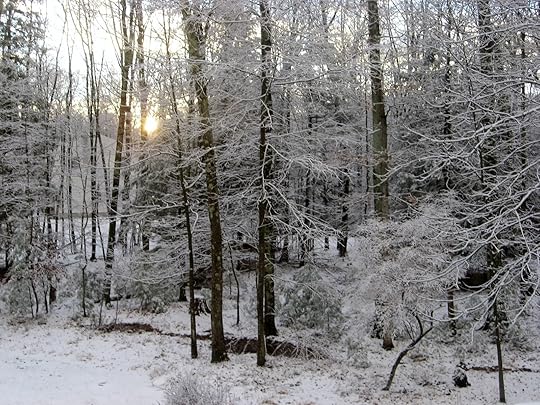
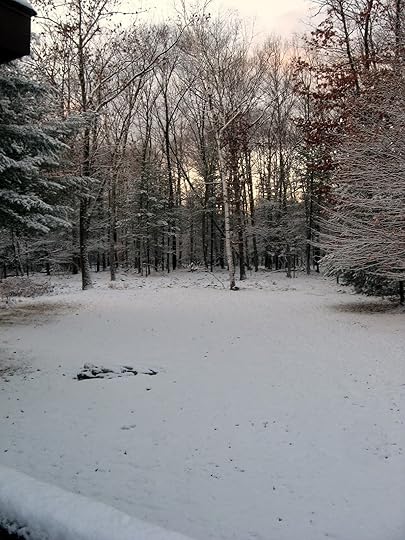 The number and range of responses was amazing. From "Oh, how wonderful, I wish I could be there!" to "Better you than me!" to "If God wanted us to live in snow he would have put ski slopes in the garden of Eden." (The last is a bit of poetic license on my part, but that was the general drift.)
So, what feelings do images of snow stir up in you? As the winter solstice approaches, I'd love to hear and share what this mysterious season means to you.
Cordially,
Jane

 The number and range of responses was amazing. From "Oh, how wonderful, I wish I could be there!" to "Better you than me!" to "If God wanted us to live in snow he would have put ski slopes in the garden of Eden." (The last is a bit of poetic license on my part, but that was the general drift.)
So, what feelings do images of snow stir up in you? As the winter solstice approaches, I'd love to hear and share what this mysterious season means to you.
Cordially,
Jane
August 2, 2013
Take A Trivia Break .....(Meditation)
Some of you know I graduated from Barnard College, the women's college of Columbia University and the home of the trivia movement that sprang up in the late sixties. I do collect data like lint on a black coat.
So I created some trivia questions on Norman Rockwell and people of color that are based on information from my book, Hidden in Plain Sight: The Other People in Norman Rockwell's America, and posted these questions on GoodReads. Take a break and check them out. (For example, did you know that each of the three places in which Norman Rockwell lived and had his studios was at or near an underground railroad station?) Enjoy!
Trivia Questions from Hidden in Plain Sight: The Other People in Norman Rockwell's America
So I created some trivia questions on Norman Rockwell and people of color that are based on information from my book, Hidden in Plain Sight: The Other People in Norman Rockwell's America, and posted these questions on GoodReads. Take a break and check them out. (For example, did you know that each of the three places in which Norman Rockwell lived and had his studios was at or near an underground railroad station?) Enjoy!
Trivia Questions from Hidden in Plain Sight: The Other People in Norman Rockwell's America