Pamela Slim's Blog
November 18, 2025
Why you can’t half ass your commitment to your body of work

How do I get the book deal I crave?
Once I publish my book, how can I ensure I get the most book sales possible?
How do I crack six or seven figures?
How do I break into a new market where I know my work could thrive?
All these are common and understandable questions from entrepreneurs who desire to make a living from knowledge, ideas and methods.
Part of what is frustrating is seeing some of your competitors in the marketplace who seem to have figured out the best product-market fit and are thriving in an area where you know you could make a difference.
What it takes to generate real resultsBecause our heroes and mentors are accessible online, and because many people sell the dream of shortcuts and hacks to success, we often underestimate the amount of work it takes to achieve our goals.
We compare ourselves to others who might have huge unseen advantages, or years or even decades of invisible work that led to a market breakout that seemed to come out of nowhere.
Just like any other physical part of your body of work, for example, if you want to build a house from scratch, you have to save for and purchase materials, buy land, create the blueprint, then build each part piece by piece.
It is hard labor that is often tiring and frustrating.
If you want a beautiful, secure home that will withstand the weather and the humans living inside of it, you have to be committed to the work.
If you want to bring an idea to market, it needs your fuel, fire and commitment – it won’t survive half-assed effort.
It also will not flourish if you automate your content production and produce AI-fueled mediocre slop. The volume of content on a topic is not what makes it sticky — what makes it sticky is a clearly differentiated point of few, a human voice and an energy fueled by a sense of true purpose.
Here are some long-term behaviors that are not cheap hustle culture, but rather a demonstration of wholehearted commitment to your body of work:
1. You must commit to building and testing with real people in the real world … for a really long timeI met my friend Ramit Sethi, founder of I Will Teach You to be Rich, 20 years ago when he was just starting his blog and selling low cost ebooks and programs. Through the years he has grown his site into a training and media powerhouse, has written books, and hosted a Netflix show and a podcast.
Ramit is a very direct person and frequently pisses off readers and followers. But he is exceptionally committed to his body of work and has stuck with his brand over many decades.
Very often, even when we have a strong point of view and really great content, we either don’t spend enough time building momentum and visibility, or we abandon a platform just when it starts to pick up steam.
I will never advocate sticking with an idea that is not working, that is draining your life force, or that won’t monetize.
I will share that like any home building project, expect it to take twice as long, and pay twice as much as you think when you start out.
2. You must learn the rules of the game you are playingDo you want to get a book deal from a traditional publisher?
I hate to break it to you, but the most important thing in this game is not having a great book or idea.
It is having a big platform — like hundreds of thousands of subscribers to your newsletters or 6+ figures of LinkedIn or Instagram followers.
Is it fair? No.
Will that necessarily sell copies of your book? No.
Does it freeze out great talent and critical ideas? Yes.
Will it greatly increase the likelihood of you getting a deal if you meet these numbers? Yes.
If you do the work to build a big audience are you guaranteed a deal? No. You still have to have a book they deem worthy of the deal.
Do some people buy their way onto bestseller lists? Yes.
Kind of overwhelming and yucky, isn’t it? Yet, if you are committed to the idea of getting a traditional deal, you have to know how the game is played. If it is important enough to you, you will find a way through the process and spend the time, money and energy to position yourself for success.
All of us have had a moment with our body of work when we are tired, bored or just exhausted from never feeling finished.
If at this moment you still desire to continue the work because you determine it is not done, you need to know that it is worth it.
My friend Todd Henry described it thus in his great book Die Empty:
What are you willing to lay your body down for and say, “Not on my watch!”?
Passion can look like a lot of different things, much akin to relationships.
It can look like the kitchen counter sex kind of passion, portrayed in every racy movie on Netflix (to which I always think: “did they really need to break all those dishes to clear the counter? or “Which one of them is going to sterilize it afterwards?!?”)
It can look like bringing a cup of coffee to your partners’ bedside every morning without being asked.
Beyond concrete ways you demonstrate your commitment to your body of work, somewhere inside you have to know that it is worth doing, regardless of the outcome.
My Dad Lewis Stewart, whom I wrote about in Body of Work, spent over 40 years as a volunteer slowly restoring a 100 year old school in his town so it could be a community center. At the end of his life, right when real traction was happening, a group of local residents (who had rarely lifted a finger to help) suddenly decided they didn’t like the direction the project was going. They protested. It got ugly. My Dad’s heart shattered.
We never imagined such an outcome after such a tremendous commitment to a community project.
Was it worth it?
Hell yes it was worth it.
Committing to something you believe in, and having loved ones witness this commitment, will shape the drive and character of generations to come. No matter how things turn out.


October 28, 2025
When can you call yourself an expert?
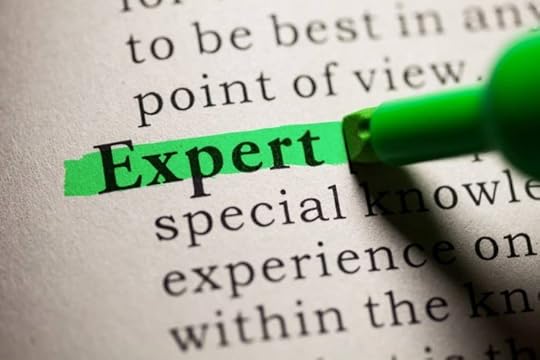
My son Josh is planning to go to medical school after completing his undergraduate degrees. To this end, knowing that clinical experience bodes well on a medical school application, he spent the summer doing an EMT (Emergency Medical Technician) certification so he can clock clinical hours working as an EMT on weekends and summers.
He got through all the online learning components of the certification, then planned to take the in-person hands-on exam in December.
Josh told me right before we went on a trip to California that he can’t wait until the time he can raise his hand when the flight attendant asks “Is there a doctor or medical professional on board?”
As fate would have it, on our flight from Phoenix to Oakland, the passenger sitting right next to my daughter Angie passed out and fell into the aisle. (Don’t worry — she recovered).
The flight attendant picked up the microphone and said “Is there a doctor on board?”
I looked back at Josh and smiled at him. I could tell he was fidgeting in his seat as he waited to see if anyone ran back to help the passenger.
Thankfully, there were both a doctor and nurse on board who took good care of the patient.
When we all filed out of the plane I looked at Josh and asked “How hard was it to not raise your hand to help?” Josh laughed and said “I was going to say:
I have completed the online portion of my EMT certification which means I can’t administer any direct medical aid, but I can observe the other medical professionals! I am certified as a lifeguard, though!
We were doubled over laughing.
There will be a day in the near future when Josh will be able to confidently raise his hand when someone needs medical help on an airplane.
For now, he does not have the proper training to be considered a medical expert.
When can you call yourself an expert?There are some fields, like medicine or law, that have very specific criteria for identifying when and how practitioners can be considered experts.
For many other service based professions, the criteria is more murky. And I think we do ourselves and our clients a disservice by not defining “expert” in a more specific set of ways.
We often jump to defining an expert as someone who has the following kinds of attributes:
Graduated from a prestigious university like Harvard, Stanford or Oxford with an advanced degreeHas decades of experience working in their area of expertise to great critical acclaimHas accomplished extremely difficult things with remarkable results, like scaling a business to a billion dollarsThese are all accurate descriptions of experts.
But it leaves out both other ways to develop expertise, as well as valid claims on the word “expert” that do not involve so much time or professional rigor.
Let’s define “expert”Miriam-Webster defines expert as:
one with the special skill or knowledge representing mastery of a particular subject
Which leads to define the word “mastery:”
a highly developed skill in or knowledge of something
Note in both definitions there is not an indication of where someone learns the skill or knowledge, how they learn it or how long it takes to learn it.
As consumers of services, we have the right to define the specific kind of expertise we are looking for.
If we need brain surgery, we probably want a brain surgeon who went to a rigorous medical school, and who has an excellent history of successful surgeries.
If we want to make more money in our business, is it essential that our coach or consultant went to Harvard or has made $100M?
Maybe or maybe not.
What I think we want is confidence that whomever we are hiring to help us is capable of delivering the results we desire.
3 Kinds of Smarts That Lead to ExpertiseI have a shorthand for categorizing different ways to develop expertise: Book Smarts, Street Smarts and Natural Smarts.
Book SmartsBook Smarts are developed in a very deliberate, rigorous and measurable academic environment. There are some fields that benefit and grow from such rigor, and suffer when they are not in place.
My friend Bob Sutton, Professor of Management at Stanford, recently wrote a great post on LinkedIn about lessons he learned from being a co-founder of the d.school and a fellow at IDEO for almost 20 years, developing the design thinking methodology.
Bob said:
“I believe one of the mistakes we made was to award novices “certificates” in design thinking after three to five day programs without teaching them sufficient humility. All too often, these eager rookies would race off, and in full Dunning-Kruger cry, and launch design thinking projects and classes that were badly conceived and implemented. Their colleagues then concluded “design thinking doesn’t work.” Unfortunately, some participants would then teach one hour design thinking workshops and award certificates. One company trained thousands that way. I asked them, over and over, “can you name a product or service that has been improved with design thinking?” They never could.
Bob cautioned against the same thing happening with AI:
Yet the same “certificate problem” seems to be repeating itself when it comes to AI. Universities and private companies are handing out AI certificates at a blistering rate. And I keep stumbling over folks who use such certificates to brag about, exaggerate, and peddle their new-found “certified expertise.” I bet you do too.
Academic rigor is really important in certain fields, and it can be absolutely worth your time and money to invest in an advanced degree or undertake an academic approach to research if you want to develop expertise in that area.
Life SmartsLife Smarts are developed outside of academic halls, by getting your hands dirty doing work in your field.
I make no claim to fame on Book Smarts. I graduated with a BA in International Service and Development from a tiny experimental liberal arts college called World College West. It doesn’t even exist anymore (it merged with New College, then New College closed). I have never gotten an advanced degree, mainly because I much prefer to learn through practical, hands-on experience.
My learning ground is the work I do every day with clients, conversations and collaborations I have with experts in my field, project debriefs and lessons learned conversations with my team, and voracious consumption of books and podcasts in my field.
Every 5-7 years, I synthesize what I learn in a book.
After 30 years of doing this, I have developed expertise in a number of specific areas.
Natural SmartsNatural Smarts have no correlation with academic training or practical experience.
There are some folks, many of them very young, who just know how to do something really, really well the first or second time they do it.
They are either extremely gifted in the exact skills needed to accomplish the task or old souls hiding in a young body (kidding on that last one).
This can be a 20 year old entrepreneur who dropped out of college and grows a massively profitable software business in 6 months.
They have “it,” which can allow them to claim the definition of expert: “special skill or knowledge representing mastery of a particular subject.”
So when can you call yourself an expert?That’s not my call, that is your job to claim the title that fits how you know yourself. I recommend doing this:
Examine where your expertise comes from: Book, Life or Natural Smarts or a mix of all three.Determine your criteria for feeling confident you can deliver the results your clients desire on a consistent basis. If you meet the criteria, call yourself an expert.Don’t get twisted up around the term “expert.” You don’t have to use it if it causes you stress.The more important consideration for entrepreneurs is: “Do I care about the people I work with and can I help them solve their problems or achieve their aspirations? Am I willing to never stop learning how to do it better?”
Focus on that and you will do great work.
August 4, 2025
accelerate progress through tiny experiments: plus/minus/next

It is no secret that I am a fan of tiny habits — I have taught my flagship course Tiny Marketing Actions over 15 times and fall more in love with it each cohort.
The reason I love tiny habits so much is it takes an overwhelming goal like “double your revenue” or “learn to speak French” or “save enough to have a stable retirement” and breaks it down into simple, feasible steps that are easy to execute each day.
Despite the efficacy of using tiny habits to reach goals more quickly and effectively, there has always been an undercurrent of “use habit science to hack our way into being a super human worker” which is not something that I nor many people I work with aspire to be.
What we crave is creative flow, mental and physical well-being, financial stability and meaningful, significant impact.
Enter Tiny ExperimentsAnne-Laure Le Cunff’s new book Tiny Experiments gripped me from the first time I picked it up last week. I became so obsessed with it that I took it with me into the pool, and bought the audio book to accompany me on my morning and evening walks.
It connects significant work and life frameworks and is a simple concrete guide to activate my definition of success from Body of Work which is to “enjoy my life while I am living it.”
Finding a way to observe my thinking and learning process to create flow in all areas of life always felt overwhelming. I couldn’t see blocking out hours for morning pages or extensive journaling.
Which why I was so excited to read about this metacognition tool in the book, called Plus/Minus/Next.
Plus/Minus/NextPlus/Minus/Next is Anne-Laure’s weekly journaling tool that she describes like this:
At this point, most people know about the benefits of journaling. Read any self-development blog and you will stumble on at least one article telling you why keeping a journal will change your life.
The problem? Most people can’t build the habit. We know we should keep a journal. But we don’t know how to keep a journal. I have tried most of the journaling methods out there—one line a day, free writing, doodling, the bullet journal—and none worked for me. None of them felt goal-oriented enough, and some of them required too much work.
So I made my own journaling method. It’s dead simple, it may not work for everyone, but it’s perfect for me and I’ve managed to stick with it. I call it “plus minus next” journaling—and it does what it says on the tin.
Here is the nutshell:
This method can work with whichever medium you prefer, but since I’m a big fan of handwriting, let’s pretend you have a notebook. Open your notebook, write the date at the top of a page, and draw three columns. At the top of each column, write “+” for what worked, “–” for what didn’t go so well, and “→” for what you plan to do next. This is what it should look like:
 Plus Minus Next Model from Anne-Laure Le Cunff.
With this simple habit of reflection, you get an integrated view of what is working in your life that you have gratitude for (awesome clients! the song of birds in the morning! love notes from my daughter! conversations about neuroscience with my son!), the things that are not working (recurring subscriptions that are hard to cancel! project communication friction! not being able to fall asleep quickly at night! not making time for writing my book every day!) and next steps that are concrete ideas for getting things off the things that are not working list (consolidate all subscriptions to one credit card to make them easier to track and cancel! move my phone to the other room an hour before bedtime! have Brittany write SOPs for standard project deadlines for communication protocols! hard wire writing blocks in my calendar!).
I am so excited to start my Plus/Minus/Next reflection this Sunday and continue it weekly to gain insight and make progress on my mental and emotional wellbeing.
Read about the whole method here. Join Ann-Laure’s newsletter here and grab the book here.
My professional crush Ann Handley has some serious competition with Ann-Laure but that’s ok — I collect awesome people as a hobby and I have all the space in the world for a large collection. 
Build more pipeline certainty using math

If you are in business in 2025, you are likely glued to financial and market news to decipher how the winds are going to blow.
It is true that political chaos, tariffs and global conflict are having a big impact on our psyche and hearts, but also on our businesses, and in particular the certainty of our new client pipeline.
Because I do not have a crystal ball, in times like these, I rely on the only thing that has created certainty in my business in the past 3 decades:
Work the math of my marketingGet busy with Tiny Marketing Actions.How to Work the Math of Marketing:While marketing is a field of human connection and storytelling, it is also a world of math.
The specific kind of math is estimating the amount of activity we need to do in specific areas to reach our intended outcomes in the form of revenue and profit for our business.
Most business owners go on a roller coaster ride of all or nothing, where we do big blasts of marketing activity, followed by silence or low activity when we get too busy with client work to market.
This leads to chronic under-seeding, and a very unpredictable flow of new leads.
What we need is a formula to estimate the amount of seeds we need to plant divided across our desired daily, weekly and monthly output.
We then need to monitor these efforts so that we gather real data to validate our assumptions about the amount of activity needed to drive a consistent flow of new leads in our business.
Marketing Math Goal ExamplesTo increase your visibility and opportunity as an expert-led business, you could set the following goals:
Podcasts: 4 guest interviews per month (48/year)
Speaking Engagements: 12 per year (1 per month average)
Webinar Partnerships: 4 per year (1 per quarter average)
Build a set of assumptions around each marketing activity. If you are an AI user, you can query for industry averages in your particular field and have it do the math for you (like I did for this model). If not, you can do research on Google then create a spreadsheet for your calculations.
Podcast OutreachPodcast Outreach Projection Assumptions:
Industry-standard cold outreach-to-booking rate: 10–15%
Warm referrals can increase this to 20–25%, but we’ll calculate conservatively with 12% average.
Some outreach may yield bookings months later, so consistent volume is key.
Goal: 4 bookings/month ÷ 12% conversion = ~33 podcast outreach emails/month.
Rounded: 35 podcast outreach emails/month
Pro Tip: Batch your outreach weekly (about 8–10 per week). Over time, you’ll gain momentum, and older pitches may convert later.
Speaking Engagement Outreach Projection Assumptions:
Speaking proposals have a lower acceptance rate due to limited slots, vetting, and often annual planning cycles.
Average success rate: 5–10%
For planning purposes, assume 7% success rate.
Goal: 12 accepted talks/year ÷ 7% conversion = ~172 speaking inquiries/year 172 ÷ 12 months = ~14–15 proposals/month
Rounded: 15 speaker proposals or inquiries/month
Pro Tip: Focus on 60% conferences with open calls for speakers, and 40% on warm referrals or known hosts for a better blend of conversion potential and timeline control.
Co-Hosted Webinar Outreach Projection Assumptions:
Webinar partnerships require more relationship building.
Cold email conversion: 5–8%, higher if warm introductions.
We’ll assume 6% for projection.
Goal:
16 webinars/year ÷ 6% conversion = ~267 outreach emails/year 267 ÷ 12 months = ~22 webinar proposals/month
Rounded: 25 webinar outreach emails/month.
Pro Tip: Focus on associations, communities, or networks already serving your audience. Track webinar response time and nurture slower-moving leads.
Summary Channel Outreach Emails/Month
Podcast Interviews 35
Speaking Engagements 15
Webinar Partnerships 25
Total 75 outreach emails/month
This averages a weekly cadence of 18–20 targeted emails/week.
Response rate will improve over time with refined templates, follow-up systems, and referral pipelines.
You can work with a VA to help research, organize and structure your outreach efforts.
If you have a dedicated marketing person on your team, these goals and metrics will be owned by them.
Create a Metrics DashboardIt will be very useful to track your efforts and results.
Use a tool like Google Spreadsheet or a Notion Dashboard to set your goals and report on your weekly activities.
As a strong reminder, you can control your efforts (number of outreaches), not your results. Focus on completing your Tiny Marketing Actions, learning and adjusting as you go, and you will start to see the impact.
If you get too tied up in the results too early, such as:
This is not working! I have sent out 20 emails and no one has responded!
remind yourself that what matters is taking action, and making adjustments as you go.
You may find that a marketing tactic in your plan is not a good fit or it is too hard, so remove it after a quarter and adjust your tactics.
These three examples are marketing actions many experts do to grow their business, but you could go another direction entirely, such as enacting a LinkedIn outreach campaign, working with paid ads or writing and sharing thought leadership content with an email capture attached.
What matters is zeroing in on the marketing tactics most likely to drive leads in your business, doing the math on the amount of activity required, then putting your head down and executing like heck.
While Theater Kids may save our soul in these times, Mathletes will save our pocketbooks.
Do the math!
May 2, 2025
From Becoming Minimalist to Scalable Impact: How Joshua Becker Brought the Becker Method to Life

Joshua Becker has helped millions embrace a simpler life through his books, blog, and courses on minimalism. But as the founder of Becoming Minimalist looked ahead, he faced a challenge: How do you preserve and expand a life’s work beyond yourself?
The answer came through a clear goal—build a scalable way to pass on his method to others. With guidance from the Pamela Slim Agency, Joshua turned that idea into a full-fledged certification program now known as Becker Method Certified.
Turning a Vision into a SystemJoshua had been teaching people how to “own less and live more” for years. But the deeper purpose behind his work was helping people live with intention—not just through decluttering, but in all areas of life. The challenge was figuring out how to teach others to carry that mission forward so he could maximize his impact in the world.
Joshua mapped out the path: start with a pilot, refine the content, and build a structured program that could train others—particularly professional organizers—to bring his philosophy directly into homes. What started with a simple Zoom pilot in January 2023 turned into a robust, video-based certification program launched by September.
A Program That ResonatesBecker Method Certification isn’t limited to professional organizers. In fact, nearly half of the 130+ graduates come from diverse backgrounds: social workers, life coaches, doctors, pastors, estate planners—even people who just wanted to help their communities. One graduate, a widow, now helps other widows downsize with care and purpose.
This broad appeal speaks to the heart of Joshua’s mission: this work isn’t about stuff—it’s about helping people live better lives.
The StructureThe certification includes 11 videos—six core lessons and five bonus sessions—alongside three live coaching calls where Joshua answers questions, offers fresh insight, and helps participants apply what they’ve learned. Graduates can list their services on his site for an annual fee and join quarterly networking calls for continued support.
What It Made PossibleFor Joshua, the impact has been twofold. Professionally, the program has created a new, sustainable revenue stream. More importantly, it has extended his reach far beyond what he could do alone. “Now when someone emails me looking for hands-on help, I can send them a page with 100+ trained people ready to support them,” he said.
The Becker Method is now a living body of work—something that will outlast him, and something others can carry into their own communities, businesses, and lives.
Powered by Purpose and the Right PlanJoshua credits PSA with turning a long-held dream into a tangible, working system. “You carved out a path for me that I never could have done previously,” he said. “You made it achievable.”
And that’s the spirit of this project—a legacy built not on complexity, but on clarity. A method designed not just to teach, but to equip. And a system that turns intention into lasting impact.
Want to see more of Joshua Becker’s work? Visit https://beckermethodcertified.com/
PSA Services used: Certification Blueprint.
From Vision to Global Impact: How Dr. Romie Built the BrainSHIFT Movement

When Dr. Romie Mushtaq first came to Pamela Slim, she was holding a bold idea in her hands and wondering if it was brilliant—or completely unrealistic.
As a neurologist and integrative medicine physician, Dr. Romie had already seen what burnout and chronic stress were doing to people’s minds and bodies. Long before the pandemic made “workplace wellness” a mainstream topic, she was already thinking about how to shift the narrative entirely. Her concept: the Busy Brain—a science-backed, paradigm-shifting approach to how we understand mental health, productivity, and leadership in high-pressure work environments.
But visionary ideas need structure to thrive. And that’s where the partnership began.
From “Is This Crazy?” to “This Is Real”“I needed someone who could help me tell the difference between visionary and just plain crazy,” Romie says. “Pamela gave me both emotional support and a framework. She’s one of the rare people who can hold space for big ideas and break down the logistics to bring them to life.”
In a whiteboard session back in 2017, they mapped out what would become the BrainSHIFT Institute—from keynote talks and corporate consulting to research and eventually a book. Every pillar they envisioned that day? It’s now real.
Romie laughs as she recalls Pamela warning her, “Please don’t go B2C,” when she flirted with building a course before the infrastructure was ready. That mix of honest guidance and strategic support laid the foundation for everything that followed.
Research, Results, and Real ChangeOne of the earliest wins with Dr. Romie’s body of work around BrainSHIFT was a research study conducted at Evolution Hospitality, where Romie piloted her digital detox and wellness program. The impact was so profound that Evolution created a new role for her—Chief Wellness Officer—based on the results.
That single project turned into a keynote, then a signature offering. From 500 participants in that first study, the research has now scaled to over 17,000 employees across industries and continents, thanks to a tech-based platform developed during the pandemic.
Building an Ecosystem, Not Just a BusinessDr. Romie built an entire ecosystem around her mission. Today, it includes:
Keynotes that blend neuroscience, mindfulness, and real-world leadership solutions.C-suite consulting with recurring six-figure revenue.A USA Today Bestselling book, The Busy Brain Cure , now translated into nine languages.A fully operational back office and outbound sales system.Representation by Leading Authorities, one of the top speaker bureaus in the U.S.And the impact is deeply human. From shifting company cultures to stories of individual transformation—like a woman who lost 115 pounds, healed from burnout, and started competing in fitness events—Dr. Romie’s work is touching lives at every level.
What’s Next: The Science of HopeDr. Romie’s next big idea? Studying and scaling hope. Gallup recently named “hope” the number one quality employees want in a leader. Dr. Romie plans to use brain science and mindfulness to teach how to restore it—especially in workplaces facing chronic stress.
But this time, she’s walking in with a plan—and the confidence that she can build it.
“Back in 2017, I had no systems. No marketing. Just prayer and grit. Now, we have a business that’s 8 to 10x what it was. And I know how to take an idea and make it real.”
Want to see more of Dr. Romie’s work? Visit https://drromie.com/
PSA Services used: Prep to Scale: Business strategy coaching
Building Something We Needed: Ericka Hines on Thriving at Work for Black Women

When Ericka Hines began her research into the work lives of Black women, she wasn’t chasing accolades—she was chasing truth. She’d seen too many Black women who, by all traditional measures, had “made it”—only to burn out, break down, or disappear from the workforce altogether. Something wasn’t adding up. Success, as it was commonly defined, was costing too much. So Ericka asked a bold question: Is there an alternative to success?
That question kicked off what would become the Black Women Thriving project—an initiative rooted in deep intention, community care, and actionable change.
A Purpose-Driven PivotFor Ericka, this project marked a powerful shift. After years of consulting in DEI, she moved into a space focused specifically on what it takes for Black women to thrive at work. This wasn’t just professional evolution—it was personal. “It’s part vocation and part business opportunity,” she said. “There’s this strong connection and drive to say, ‘No, this is possible.’”
From the start, Ericka approached the work with clarity. She wanted the project to be led by a Black research team. She wanted it to feel purposeful from top to bottom. And she wanted the data to do more than sit in a report—it needed to move people to change.
From Data to ImpactThe first phase of the project began with raising funds and assembling the research team. From there, Ericka, lead researcher Dr. Mako Ward of ASU and her collaborators gathered data from hundreds of Black women. That research revealed a stark truth: 88% of respondents reported experiencing burnout at work.
It’s a stat that now circulates the Internet—sometimes without credit—which, in a way, shows how deeply it resonates. “It’s like the ‘70% of workers are disengaged’ stat from Gallup research that was published in 2013. It’s just accepted now,” Ericka laughed. “But that’s how you know it hit.”
Ericka didn’t stop at data. She created a toolkit—directly linked to the research—that helps organizations turn insight into action. Each part of the project builds on the last, forming a clear learning journey: data, interpretation, recommendations, implementation. “We removed the barrier of not knowing how to act,” she said. “Now we can say: ‘Here’s a toolkit. Go do the work.’ ”
A New Business ModelThis work isn’t just changing organizations—it’s changing Ericka’s business. By building out productized services based on her research, she’s moving away from traditional consulting toward a scalable model that still reflects her values and voice.
That shift means more freedom, more focus, and the ability to dream bigger. “If we can get that system right,” she said, “then we can figure out what else we can do. What’s the next shoot that’s growing out of that?”
The Legacy of Purposeful WorkWhat makes Ericka’s work stand out is the unmistakable intentionality behind it. From the makeup of her research team to the clarity of her deliverables, everything was built with care. And that care is being felt—by clients, by Black women who see themselves in the work, and by peers who keep telling her, “You have something here.”
Want to see more of Ericka Hines’ work? Visit Black Women Thriving
Services used: Prep to Scale: Business Consulting, Package Services: Footprint
April 7, 2025
Feeling out of control? Stop, drop and organize

As if running a business isn’t hard enough when the market is stable, when things get rocky, it is easy to feel out of control.
Our job when navigating the ups and downs of business, especially when you are working on streamlining and scaling, is to live what Jim Collins called The Stockdale Paradox in Good to Great:
“You must never confuse faith that you will prevail in the end—which you can never afford to lose—with the discipline to confront the most brutal facts of your current reality, whatever they might be.”
If you feel overwhelmed, out of control or anxious, use a tool my Tiny Marketing Actions alumni know as:
Stop, Drop and OrganizeHere is how it works:
Sit down away from your computer with a pad of paper (or an electronic tablet with a pen)
List out everything that is in your head. Include finances, errands, conversations you need to have, projects and work items.
Scan the list and circle the items that are in your control and are realistic to accomplish in the day (or hours) ahead of you.
Look at the list of remaining items and tell them (aloud if you wish) that you promise to look at them again tomorrow.
Create your short list of action items and get busy.
It is very important to set aside the long list and just look at the short list of action items front of you.
Science supports the power of making a list, evidenced by these studies:
1. Cognitive OffloadingResearch Support:
Risko & Gilbert ( 2016 ): Described how writing things down frees up working memory. This is known as cognitive offloading—reducing mental burden by storing information externally (like on paper).When you make a list, your brain no longer has to juggle multiple tasks or worries, which reduces anxiety and mental fatigue.2. Perceived Control Reduces AnxietyResearch Support:
Lachman & Weaver ( 1998 ): Found that a greater sense of control is linked with better emotional well-being.Lists provide a sense of structure and predictability. This perception of control—even if it’s just over your day—can lead to an immediate decrease in stress.3. Reduces the Zeigarnik EffectResearch Support:
Bluma Zeigarnik (1927): Identified the Zeigarnik Effect—the tendency to remember uncompleted tasks more than completed ones.Making a list turns vague stress about “unfinished stuff” into a finite, manageable set of actions, reducing cognitive tension.Whether you do it to test the science, or just to stop your head from spinning, I promise you will feel better when you Stop, Drop and Organize.
Pretty soon, you will work this tool into your monthly and weekly routines, and will feel an ongoing sense of ease, calm and control.
February 26, 2025
Your Business Leadership 5 Point Check Up
When do you really learn who you are as a leader in business? Is it watching your financials tip into the “met my big number goal!” column of your spreadsheet? Is it in the afterglow of a great talk when you hear the audience applause bouncing off the walls? Is it in that time-stopping moment […]
The post Your Business Leadership 5 Point Check Up appeared first on Pamela Slim.
December 8, 2024
How to keep your fire burning, despite obstacles
I recently opened a letter I had written to myself at a self care retreat in December, 2023. In the letter, I described what my life would look like in December, 2024. The retreat leader Emily held onto the letter then mailed it so it would hit my mailbox a year later. My 2023 vision […]
The post How to keep your fire burning, despite obstacles appeared first on Pamela Slim.