Zachary Hamby's Blog
November 1, 2025
Through the Labyrinth: Teaching Text Structure and Point of View Using the Greek Myth of Theseus and the Minotaur
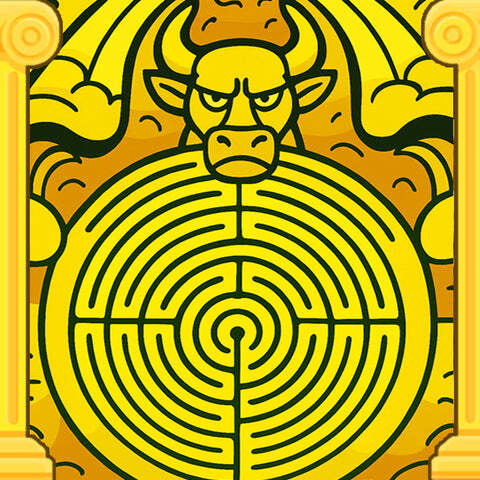
Every year when I reach “Theseus and the Minotaur” in my Greek mythology heroes unit, I can almost predict the reaction: “Oh, imagine that. Another hero fighting another monster.” Fair enough—after three weeks of one hero after another, even a classic myth can feel cliché. That’s why I started asking myself: How can I make this story feel fresh again? The answer led me down two different creative pathways—each a unique take on how students experience story structure and point of view.
Choose Your Own Adventure Greek Mythology Style
Growing up in the 1980s, I loved Choose Your Own Adventure books—you know, the ones that let you flip between pages and decide your fate. Maybe I was enthralled by the video game vibe, the power of my choices changing the story, or just the fact the hero could die. So when I started teaching, I wanted to give my students that same feeling, and the first part of Theseus’ story—his adventure-filled journey to Athens—was a perfect fit for a Choose Your Own Adventure-style story.
I wrote the first version of “Theseus: Lord of Athens” about twenty years ago, and if you have been following me for a while, you might remember when it was a webquest hosted on Mythologyteacher.com. As great as that version was, it had its glitches, and when the old website went down, so did the Theseus adventure. Now it’s back—resurrected as a new and improved browser-based adventure made with Twine. (FYI: If you’re not familiar with Twine, it’s an amazing free tool for creating your own “branching pathways narrative,” the non-trademarked term for Choose Your Own Adventure. Check it out if you or your students are interested in this type of storytelling.)
This time around, I’ve added a few bells and whistles to the quest including original illustrations, a move counter, a death tracker, and a final score, which gives you a rank from “Master Hero” all the way down to “Assistant Pig-Keeper.”
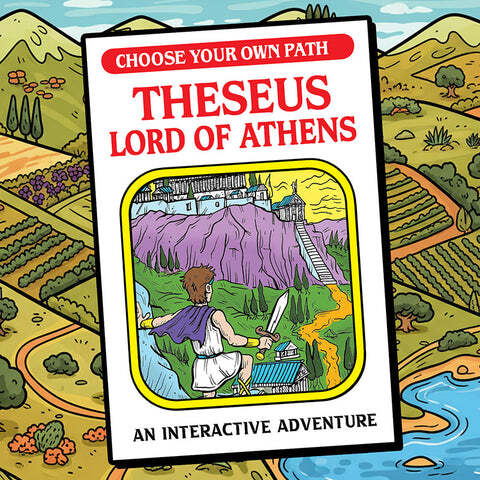
To celebrate its triumphant return, “Theseus: Lord of Athens” will be half off for a limited time. At this time, the game only re-tells the first part of the Theseus story, but I’m also gauging whether there’s interest in a second part. Fill out this form if you would be interested in seeing a second leg of Theseus’s interactive adventure. Click HERE to see more details about the interactive quest, including screenshots.
That took care of the first part of Theseus’s story, but what about the second?
Voices from the Labyrinth: Every Side of the Story
Since I had previously adapted the myth as Reader’s Theater script-stories and Theseus’s battle with the Minotaur as a classroom strategy game, I wanted a new way to mix up the second half of the narrative and maybe teach point of view in the process.
This is the part of the story where Theseus journeys to Crete, confronts King Minos, and navigates the Labyrinth. I thought about all the characters who are “trapped” by the Labyrinth in various ways—selfish King Minos, his daughter Princess Ariadne, Pasiphae the Mad Queen, Daedalus the inventor, his unfortunate son Icarus, and, of course, the Minotaur himself. What if all of these characters had a chance to tell their own stories?
“If these walls could talk.”
The list of characters grew and grew, and I realized that each of them had a different piece of the puzzle to share. And so “Voices from the Labyrinth” was born.
Picture your classroom transformed into the palace of King Minos, filled with twenty-five characters, each with his or her own story to tell—some proud, some tragic, some deeply misunderstood. Students take on these roles and rotate through a series of two-minute “speed dating” conversations, swapping secrets and unraveling how their fates intertwine. Slowly the mystery of the Labyrinth unravels, revealing the twisted truth of the Minotaur’s imprisonment.
As the viewpoints weave their tapestry, the question also arises: Should Theseus be considered a hero for defeating such a miserable, abused creature? I’ll never forget one student exclaiming, “Whoa! I can’t believe Theseus did that!” That’s when I knew the myth had come alive again.
To celebrate its release, “Voices from the Labyrinth” is also half off for a limited time. Check out "Voices from the Labyrinth" by clicking HERE.
Why does it matter?
Sure, both of these activities hit important standards like RL.7.6 (point of view) and RL.11–12.3 (author’s choices). But more importantly, they invite students to question storytelling itself.
They remind us that heroes can be flawed, monsters can be misunderstood, and stories can take many forms—sometimes linear, sometimes looping back on themselves like twisting passageways.
Whether your students are navigating their own heroic journey through Theseus’s choices or embodying the many voices of Crete, they’ll come away realizing one essential truth:
There’s always more than one way to tell a story.
Stay creative!
Zachary


October 11, 2025
Seasonal Spookiness
 Seasonal Spookiness
Chilly breezes, fallen leaves, pumpkins—these are the signs of fall. Another staple of the season is the spookiness of Halloween. If you’re like me and enjoy incorporating a little seasonal spookiness into your class curriculum, here are eight ways to do so:
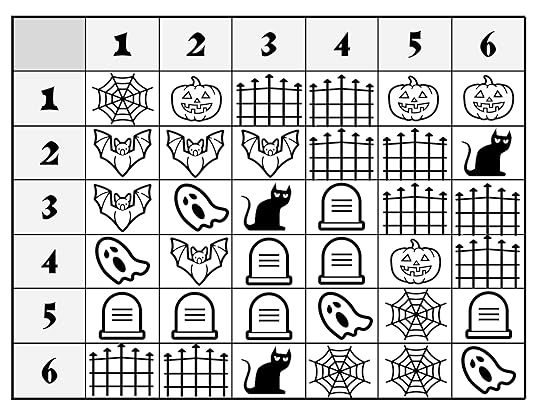
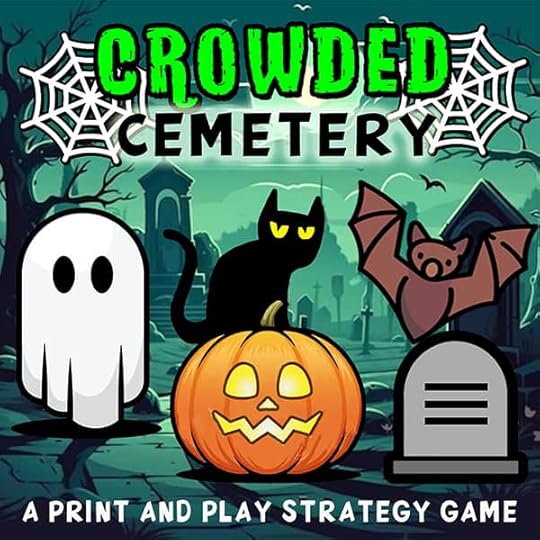
Crowded Cemetery In this whole class game, students build a spooky cemetery and fill it to the brim with tombstones, black cats, jack-o-lanterns, bats, spiderwebs, and, of course, ghosts. But they must build wisely! The more crowded their cemetery grows, the more important every decision becomes. Some items only score points in certain arrangements or by touching other items. Design your cemetery in such a way that it will gain maximum points.
Masque of the Red Death There are many contenders for the spookiest Edgar Allan Poe story, but this one is chock-full of thrills and chills. When a wealthy prince and his hardhearted lords and ladies quarantine themselves for a Halloween-style ball to wait out a plague that is ravaging their country, a mysterious guest makes a surprisingly—and deadly—appearance at the party. This Reader’s Theater script-story adapts Poe’s classic with parts for 8 readers.
The Legend of Sleepy Hollow Washington Irving’s classic tale of a bumbling schoolteacher vying for the love of a local heiress is both hilarious and haunting. The specter of the Headless Horseman holding his jack-o-lantern head is an iconic Halloween image. This Reader’s Theater script-story adapts the story with parts for 15 readers.
Witch Hunt In this social deduction game based on the Salem Witch Trials, students must determine who among them are the witches, who are secretly cursing the other villagers. This experience really simulates the paranoia of the time period—and it’s tons of fun.
Macbeth “Double, double, toil, and trouble, fire burn and cauldron bubble.” The eerie atmosphere of Shakespeare’s “Scottish play” makes it a great seasonal accent. The play is retold through three Reader’s Theater plays, which lightly adapt Shakespeare’s language and add narration.
Dracula What is more Halloween-y than vampires? And Bram Stoker’s Dracula is what inspired our modern concept of the vampire. This collection of six Reader’s Theater script-stories retells the entire novel and comes with enough materials to build a whole “undead” unit around the bloodsucking count. It also includes a worksheet that explores the history of vampires.
Dante's Inferno If your goal is sheer creepiness, what could be better than a trip through hell? This collection of six Reader’s Theater script-story adapts Dante’s Inferno, making it accessible for high-school learners but also preserving the spirit and language of the original work.
Monster Mash! Want a whole monster unit? This collection includes Frankenstein, Dracula, The Invisible Man, and Dr. Jekyll and Mr. Hyde.
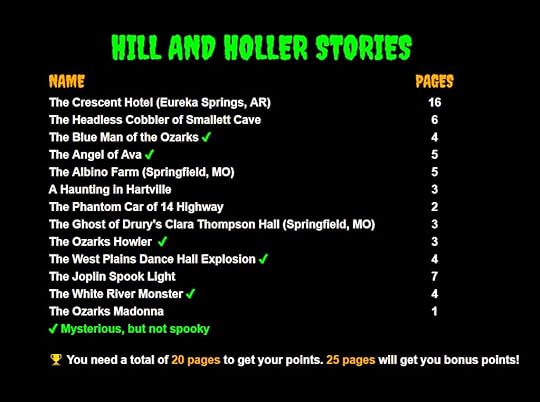
Research some local creepiness Last year, I researched some local legends and ghost stories to share with my students. With a little effort, I found enough spooky tales for each student to have one to read, analyze, and share in small groups. This can be a great way to connect literature to local history!
Whatever you choose for your classroom, I hope you enjoy the spookiness of the season!
Stay creative,
Zachary
September 16, 2025
The A.I.-Resistant Classroom, Part III: How to Resist

In my last two posts, I established the “why” for A.I.-Resistant classrooms. Now I will explain the “how.”
First, why “A.I.-Resistant” instead of “A.I.-Proof”? Unfortunately, there’s no way to 100% A.I.-proof your classroom. The technology is too accessible, too simple to use. The hard truth is students are probably going to use A.I. outside your classroom, but you can still restrict its use between your four walls. And that’s enough! As long as you create a space where students are required to write and express their thoughts through their own unique voice, you are resisting!
This brings us to the key component of the A.I.-Resistant classroom: Students no longer complete papers outside of class. Instead, they write their essays in class–by hand–even when they require sources. On the surface, this may sound brutal, but this in-class essay-writing isn’t done cold turkey. Students have plenty of time to prepare ahead of time. They brainstorm their response, gather and annotate their sources, and prepare an outline. Then with this information in hand, they write their essay in class.
Is this a killer on their hands? Sure! But it helps their brain. Researchers are now discovering students learn more by handwriting than typing. And according to one study, “The slower pace of handwriting fosters deeper thought and creativity, as the brain has more time to process and synthesize ideas."
Does it sometimes take more than one class period for a major essay? Yes. But in my book, the lost class time is worth it. I know my students did their own writing. I sacrifice two hours of class time and regain hours of my time that I used to spend trying to determine the authenticity of their writing.
Couldn’t they secretly consult A.I. for outline ideas outside of class? Sure. But the essay will be written with their words, their voice. This is why the technique is A.I.-resistant, not A.I.-proof.
What about proofreading? I make a dictionary, thesaurus, and grammar handbook available to students as they write. They have time in class to proofread their essays before turning them in.
Do they write their essays on their own paper? I have seen teachers online who use actual blue books for their essays, but my wife and I use our own worksheet that mimics MLA style. It also keeps the papers clean, uniform, and organized. If you would like to download the worksheet we use, click here.
What about word-processing skills? MLA formatting? Aren’t those important? Of course. My students only write the first draft of their essay in class. After I have looked over this first draft, giving the students feedback on their writing (and usually a preliminary score), they go back and type up their paper, revising the areas I marked. Sometimes I allow them to raise their paper score by 10% with this revision. But I still have the handwritten copy, and I can compare if I need to. At this point, I am not judging their preliminary content so much as the ways they addressed my suggestions.
How much time do you give students? For shorter essays, a standard 50-minute class period is sufficient (if you have given students time to think about the topic ahead of time.) For anything source-supported, I would definitely give students two 50-minute class periods.
Do students complain? Some. But once they are used to the process, it becomes simpler. Doing the right thing is rarely easy.
Do you still use digital writing assignments in class? I still do use some in-class digital writing, mainly in the form of journal entries. But these are simple, opinion-based writing assignments, where I can easily monitor the students.
Can your students write as well as a Chatbot? Maybe not. But they can think for themselves. They can express themselves. They can speak in their voice. As we move into the future, this will become more and more important. When we can no longer express our own thoughts or interpret the written expressions of others, human communication is in major trouble.
By resisting A.I. and its influence on your students’ communication skills, you are doing your part to protect the future of the human voice. Keep resisting!
Do you have a comment on this topic? We'd love to hear your input! Leave a comment below and tell us what you think.
August 29, 2025
The A.I.-Resistant Classroom, Part II: Sherlock Holmes and the Case of the Missing Voice
Did you miss Part I? It is here.
Every case starts with a mystery–or in our case, a question: Why do we teach writing? Is it because students will need to know how to write in college? So they can get a good job? Or is it something deeper?”
The reason I teach writing–and why I enjoy reading my students’ writing–is because it is an expression of their thoughts. It’s a glimpse into their mind. Their soul. When my students write, I can hear their words expressing their ideas.
Is it perfect? No, but even when writing is broken and flawed, it is still their voice–and that voice is what I want to hear. I want to cultivate it, teach them its importance, and amplify it through their writing skills.
But what happens when that voice is missing?
The voice goes missing
It was over two years ago, back in 2023, when I first read about the new capabilities of ChatGPT. My seniors had just turned in their biggest paper of the year, and a thought was nagging me: If I knew about this brand new technology, did they?
Out of curiosity more than anything else, I ran the student papers through one of the first rudimentary A.I.-checkers. (This is back when they were somewhat accurate.) Two student papers were flagged for A.I. use. I couldn’t believe it!
I looked back over the two papers in question, and I could see some worrisome signs. There were absolutely no typos. The wording flowed with precision, and all the arguments were advanced–possibly beyond average high-school level. These were outstanding papers. But they were missing a key ingredient: student voice.
When I questioned the students about these findings, they confessed immediately. Yes, they had used this technology–technology that I had just learned about–to write their papers. Since they confessed, I gave them another chance to write the paper for themselves–on a different topic, so I could hear their thoughts and their words. I think they learned an important lesson.
I also learned a lesson: My job was suddenly going to be so much harder.
The game’s afoot!
From that day on, I went into Sherlock Holmes mode. Whenever students submitted writing, I began running it through an A.I. checker. Even at that, I could tell that the process wasn’t perfect. Although it had caught those first two students, it began flagging student work that I knew was authentic. I even ran some of my old college papers through it, and it flagged them for A.I. use.
But still I persisted: There had to be some way to outwit the machines!
Since A.I. checkers were failing to detect A.I., I found another approach. Our school is 1:1, and I require students to draft their papers in Google Docs, which shows me the entire document history, where I can see the various stages of the paper’s development. I also found a Chromebook add-on called “Revision History,” which alerts you to large copy/pastes that students have made. (I will link it here if you are interested.) You can even have Revision History “play back” the student’s writing process like a video to see when and if large chunks of text were inserted at any point. I finally had a way to spot A.I. plagiarism, but it was exhausting going through all that information for every single paper.
Then I hit another setback. Whenever students used their Chromebooks offline, whatever text they typed during that time would appear as a large copy/paste when they hooked back up to the internet. How was I going to differentiate between students who typed their papers offline and those who were truly trying to cheat? Sherlock had another setback in the case.
It was a nightmare. I accused innocent students of cheating. Honest students began self-checking their papers and would bring me the results with a horrified look on their faces. “It says I copy/pasted, but I swear I didn’t.”
It was becoming painfully obvious that there was no longer any surefire way to know if a students’ writing was their own. This is the point where many teachers just give up. They say, “Let them use it!” There’s no way to detect A.I., so teach them to “use it responsibly.”
But what are we losing when we do this? We are losing student voice. We are losing their original thoughts. We are depriving our students of the productive struggle of writing a paper. Is it easy? Of course not. But there is so much thinking that occurs in that slow process of drafting a paper.
I recently heard a Science of Learning quote that relates to this: “Memory is the residue of thought.” If we want our students to remember information, we have to make them think. I am going to extend that thought: If we want our students to have a voice of their own, they have to participate in the process of developing, refining, and demonstrating that voice.
Sidenote: One of the worst excuses for letting students use A.I. to write their papers is “They will need to know how to use it in their future jobs. So instead of teaching students to write on their own, teach them to craft the perfect prompt to enter into the A.I.” Hmmm. So one day, writing will be nothing more than crafting the perfect prompt? That’s it? And if this is key to your future job, why does the A.I. need you? Why can’t it craft its own prompt? If human thought is no longer necessary, won’t most jobs go away? So that argument is deeply flawed.
I knew I wasn’t going to give up on students thinking and expressing themselves. But I didn’t know how I was going to solve my problem.
There was one simple solution I had been avoiding simply because I did not want to do it.
The solution
For about eight years, there had been a sweet spot, where technology had made my job much easier yet did not give students an easy means to outsource their thinking. That sweet spot was gone.
The only solution? Go old school. Back to pencil and paper, deciphering sloppy student writing, and handwriting my comments. (long sigh) It was a hard truth.
So that is what I have done. Almost all writing–with just a few exceptions–is done by hand in my classroom. Yes, that means essays (with and without sources) are now in-class essays.
Is it easy? No. Is it worlds better than Sherlock Holmes-ing student essays? Absolutely!
Let me go back to something I mentioned earlier: the missing voice. A few weeks ago, I had the privilege of hearing a woman tell her amazing life story to a group of about forty people. She had written out the entire hour-long story, so she would not skip any of the details. As she read, I could hear her voice. She wrote like she speaks, and her story had such an impact because it was written with her words–explaining her intimate thoughts and feelings. As I listened, I realized this is what I am fighting for. I want my students to be able to do that. No chatbot could ever replicate her thoughts. No prompt could ever produce something so beautiful, honest, and personal. She has a voice, and somewhere along the way, a teacher taught her to use it.
The human voice is worth fighting for.
In my next blog post on this subject, I will explain the techniques my colleagues and I use when students write in class and how we balance this in a 1:1 school. We still give our students plenty of time to pre-plan their writing, and I’ll tell you how we set that up. I will also provide some free materials if you want to try it yourself.
In the meantime, if you’d like to weigh in on this discussion, either in the comments below or on our Facebook page, I’d love to hear your input! And if you happen to see a typo here or there in this post, please excuse those. I wrote this myself.
Until next time, stay creative!
Zachary
August 28, 2025
Give Barbie a Mythic Makeover: A New Creative Project
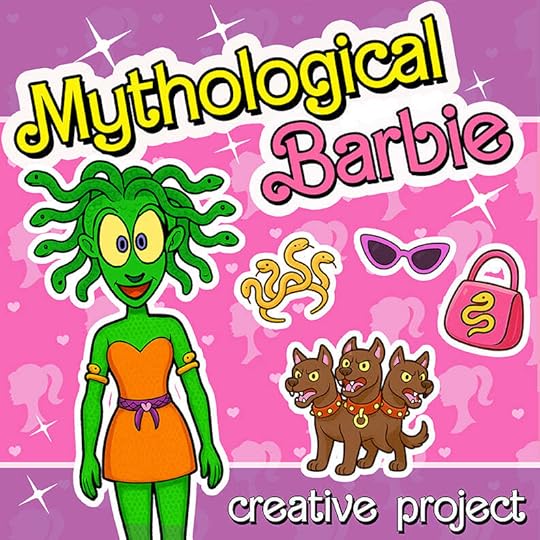
Over the years, I’ve discovered some lessons fall by the wayside while others become tried-and-true classics. One of my classics is the Mythological Barbie assignment.
When I first started teaching Mythology, I had the wacky idea of asking students to design a Barbie doll based on a female character from Greek mythology. Something about it seemed funny–contrasting the sugary sweetness of Barbie with the dark, unsettling world of myth. I gave my students the parameters: Create a doll with special features (things Barbie can do), accessories (the little, choking-hazard plastic pieces that come with Barbie), a vehicle (modern or ancient), and some sort of “Also Collect” item–maybe a “Ken,” a Malibu dream house, or pampered pet. I prefaced the assignment with a brief discussion of how Barbie has evolved alongside society’s ideas about gender roles. Today Barbie is no longer limited to cooking and shopping. She is living out her catchphrase of “You can be anything!”
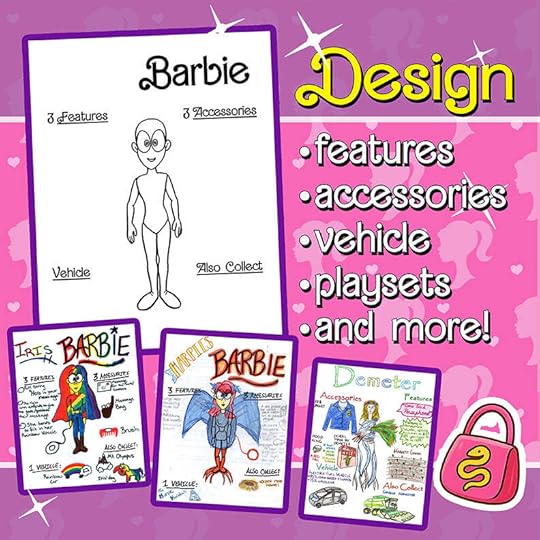
The initial results were hilarious–and have been ever since. Every year, I add a few new Barbies to my collection of “keepers" when students go above and beyond my expectations. They always seem to sense the humor of the project (especially the boys) and come up with some outlandish ideas. I’ve seen everything from the typical goddesses of Olympus to an eyeless-old-hag Barbie and a Charybdis (the man-eating whirlpool from the Odyssey) Barbie.
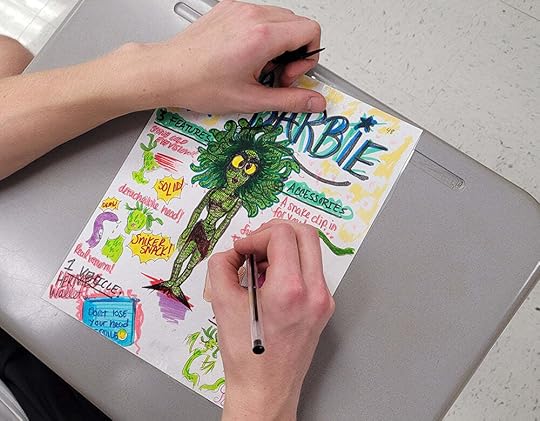
For this project, I provide the students a template that requires only limited drawing, but I also allow them to create their own from scratch. Some of them really go all-out (see the example below). Even though not every student is an artist, every student can be creative. My only artistic stipulation is that the end result be neat and colorful! As they design their doll, students must use details from the text to back up the features they choose.
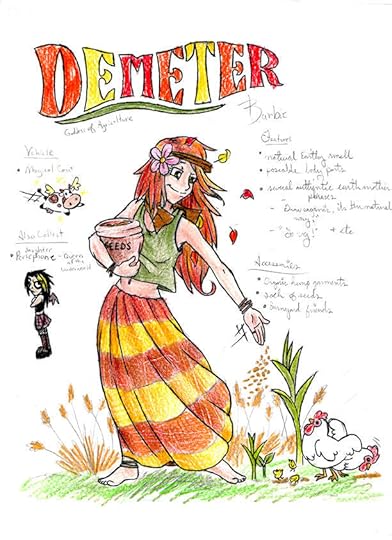
For the first time, this classroom-tested project is available for sale on our website! I encourage you to give it a try and see what your students can dream up. Apparently, it’s true–Barbie can be anything! Click here to find out more about the Mythological Barbie project
August 21, 2025
The A.I.-Resistant Classroom, Part I: Nothing New Under the Sun
Entering my twenty-first year of teaching, I consider myself something of an “old-timer.” My former students have become my colleagues, I have the mandatory beginning-of-the-year videos memorized, and whenever the PD presenter touts a “fresh, new idea,” I can remember when the exact same idea was rolled out—just with a different name.
There’s a verse in the Bible that says, “What has been will be again. What has been done will be done again. There is nothing new under the sun” (Ecclesiastes 1:9), and that is so true. Educational trends come and go. But you have to be a bit of an old-timer—like me—to realize it.
Let me give you the most recent example: This year, my home state enacted a law where cell phones will be banned from the beginning of the school day to the end. I applaud this. For years, I have seen the effect of cell phones in the classroom, and wishy-washy school policies coupled with weak enforcement has made them omnipresent in most classrooms.
I love my students, and they are capable of so much. But I am also a realist. If I put a digital distraction device in front of them that can instantly hook up to all of their friends, family, and interests, what hope do I have of ever capturing their attention? Furthermore, with their computing capabilities, smartphones provided an easy way to cheat.
Yet fifteen years ago when some teachers voiced legitimate concerns about this new technology’s impact in the classroom, the educational community at large roared us down. “Just let students use it as a tool! Incorporate it into your lessons! You can’t fight it!”
In fact, any teacher who was insistent on banning cell phones (like me) seemed like a “fogie,” and the “cool, progressive” approach was to “incorporate cell phones into lessons.” Someone even once had the temerity to suggest the way to overcome the distraction was to “make lessons more engaging than what’s on the students’ phone.”
Side note: I’ve noticed two pronounced flaws in the educational community:
A) We feel like we have to be innovative (to a fault), and we often throw-out time-tested strategies in favor of the latest fad.
B) We love a bandwagon, and anyone not on that bandwagon is just outdated, obsolete, and an old grump.
Now fifteen years later, adults have realized the extremely harmful effect cell phones have had on teenagers—and not just their education, but also on their personal relationships and their mental health. (Read The Anxious Generation by Jonathan Haidt if you don’t believe me.) Suddenly the bandwagon has shifted—almost overnight. “Cell phones are awful! Ban them at once! Save the children!”
But I must ask: Where was this reaction fifteen years ago?
I am beyond thrilled that the educational world is taking a stand against cell phones in the classroom, but I am also seeing that we have not learned our lesson. The same old story is repeating itself.
Flash forward to modern day. A.I. has arrived on the scene. This is not a digital distraction per se—it’s worse. It is a tool that can do students’ work for them. It provides prefabricated opinions, often backed by dubious (or in some cases, imaginary) sources. It contains bias and factual errors. But the biggest complaint I have against it: A.I. can do students’ reading, writing—and, therefore, their thinking—for them. And many of them are happy to outsource these processes that are vital to education.
Teachers have legitimate concerns about A.I. presence in the classroom. Yet what is the message being shouted from the rooftops? “Just let students use it as a tool! Incorporate it into your lessons! You can’t fight it!” Where have I heard this before? The same cycle is beginning again.
As teachers, we must avoid the trap of being trendy.
We must avoid the trap of embracing technology simply for technology’s sake.
We must thoughtfully consider what impact any technology will have on our students—and frankly, ourselves.
If students are using A.I. to write papers and teachers are using A.I. to grade them, at what point does education become meaningless? If writing becomes simply typing a good prompt into a chatbot, what is the point of self-expression? At what point does the ability to think for oneself become obsolete?
It’s time for us to rethink education—and its purpose.
This is why I am building an A.I.-resistant classroom. I’ve been told that it’s impossible to completely “A.I.-proof” my classroom, but I accept the challenge to resist it as much as possible. I want my students to use their own thoughts, write their own words, make their own mistakes, and become better human beings in the process.
Just like my thoughts on cell phones fifteen years ago, my stance on A.I. is not the popular opinion, and I expect there will be backlash. But in every instance, I must do what I believe is best for students.
If you want to join me on this journey, I welcome you! If not, I also welcome your input. I will be sharing some practical strategies (and free resources) I use in my own classroom.
If you disagree with my approach, I welcome your input as well. We can compare notes throughout the process. Feel free to comment on this post here on our website or on our Facebook page: https://www.facebook.com/profile.php?...
In my next blog post, I am going to explore some of the specific reasons I am building an A.I.-resistant classroom.
In the meantime, I encourage you to read this important article about the impact A.I. has already had on reading: https://www.civilbeat.org/2025/08/ai-can-make-reading-books-feel-obsolete-and-students-have-a-lot-to-lose/
Matt Miller, educational A.I. enthusiast, has also issued a warning about Google Classroom’s A.I. integration: https://www.linkedin.com/posts/ditchthattextbook_google-for-edu-definitely-made-a-splash-at-activity-7348742471767506944-AwQD/
I look forward to this continued conversation!
Stay creative,
Zachary
August 12, 2025
The Mario Kart Philosophy and How It Applies to Your Classroom
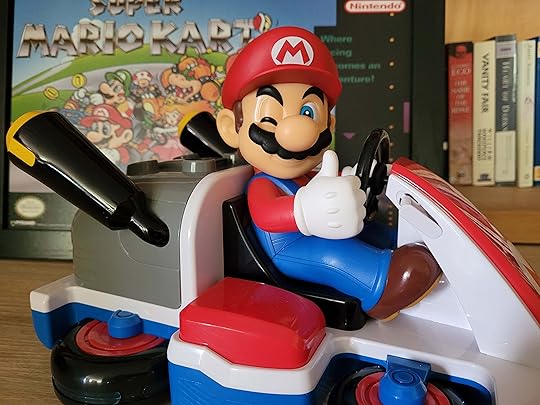 If you aren’t a video game buff, bear with me! There will be a relevant point, I promise you.
For everyone who’s been living under a rock (or far away from a Nintendo) for the past thirty years, Mario Kart is a video game series where various characters from the Mario Bros. franchise race while battling one another with Koopa shells, banana peels, superstars, and other power-ups. A famous element of this series is its “catch-up mechanic” that gives players who are trailing far behind special items that help them become competitive once again. Why? The game designers knew players will stop trying once they think they have no chance of winning, so with Mario Kart you’re never completely out of the race.
We can apply this same game design philosophy to our classrooms: Students will stop trying when they perceive there is no way for them to succeed. So how do we design our courses to reflect the Mario Kart philosophy?
When I was going through my teacher education program, no one—and I repeat no one—ever taught me how to distribute a course’s points. That is a huge oversight. In essence, our classes are a “game” and the currency of the game is “points.” When students feel they can no longer succeed, they give up. That’s why there should always be a Mario Kart catch-up opportunity baked into your course design. Is there a way for your students to succeed late in the game if they are willing to try their hardest? This does not mean that students who “kick it into high gear” last minute should have the same score as students who have tried hard all year (more on that later), but there should be a way for them to at least finish the race.
My parents once attended a parent-teacher conference for my brother because he was not doing well in his math class. It wasn’t halfway through the year yet, but the teacher told them that even if he started vastly improving, there was no way for him to pass the class. Did you get that? Not halfway through the year, he had already lost enough points that there was no way he could ever recover. And this was coming from a math teacher! The math doesn’t seem to gel. And if this was accurate, the points were extremely lopsided.
What is the Mario Kart effect in my classroom? First, I make sure there are plenty of daily points to balance out the bigger projects and tests. This truly is a balancing act. There are two outcomes I don’t want from my students: A) The daily points counting so much that my students blow off the larger assignments B) The larger assignments counting so much that my students can blow off the daily assignments. Many students struggle with tests, which I understand, so the daily points are there to cushion the blow. Maybe the students are exceptionally bright and can pass a test without doing the daily work. Good for them, but if they want a top grade, they will have to put in the work on daily assignments as well.
Too often, points are not distributed well in a course. A project or exam might count for too much without enough daily points to balance it out. When you design your courses, think about different scenarios: If students don’t do well on this assignment, what will happen to their overall grade? Will they have a chance to recover?
Another Mario Kart effect I have is that I do accept late work—for reduced credit. I will take any daily assignment late, but it can only receive a maximum of 50%. Long ago, when this idea was floated to me, I was against it. My opinion was if students didn’t do the work the first time, they deserve a zero. But a wise mentor asked me this, “Don’t you want them to do the work? Giving them partial credit is a way to make sure they actually do the work (and hopefully learn the concept you designed it for).” Don’t you just hate it when people are right? Ha! Now in my classes, students who slipped a bit can at least recover some of their points. They may pass the class by the skin of their teeth, but they can still finish the race if they are willing to work hard.
Beware the Mario Kart World Effect
My son is a huge Nintendo fan, and around our house this summer, there was no way to miss that Nintendo was releasing a new console called the Switch 2. The flagship game for this console was Mario Kart World, the newest entry in the Mario Kart game series. Mario Kart World has its fans and its detractors, but one of the main criticisms leveled at it is that the game designers have made it “too easy to catch up.” Like I mentioned before, the items you receive in a Mario Kart game are based on your ranking in the race, so if you are further behind, you are more likely to receive those special “catch up” items. Apparently, in Mario Kart World these items come so easily that some players are intentionally hanging around the back of the pack, so they can get a special item to take them right to the front. In fact, (according to some folks) the game actually punishes you for being in the lead. Now this is the opposite of what the game designers wanted. They have made it too lucrative not to try.
There’s an application to our classrooms for this, too: We can’t have so much of a Mario Kart Effect that students stop trying in our classes. Grades, like them or not, are designed to motivate students—and also challenge them.
For example, if I took late work but still took it for full credit, what would prevent a student from not doing any work all semester and then trying to turn it in the last minute? Talk about a grading nightmare! I also suspect the student would be as overwhelmed as the teacher. But this is too much of a catch up mechanic.
There should be a reward for doing it right the first time in a timely manner.
Take the way I grade essays. (They’re all written in class now. I’ll explore this strategy some other time.) I mark up my students’ papers with ways that they can improve. I deduct points if they make grammar errors, don’t include evidence, don’t explain their evidence, don’t meet the other guidelines. I hold them accountable. But I also give them a way to improve their grade. If they go back and correct their errors and type up their paper, I will give them 10% back on their original grade.
Why don’t I allow them to regain all their points? Well, I suspect students would not do their best, wait for me to tell them what was wrong, and then turn it for full credit. Who’s doing the work? I am. Who’s learning anything? No one.
In summary, make sure your classroom has some kind of Mario Kart effect, so students can still succeed late in the game, but make sure that effect isn’t so strong that it encourages laziness or partial effort. Let’s a-go!
If you would like to explore this idea more, give your opinion on the Mario Kart philosophy, or share how you distribute points in your classroom, continue the conversation on our brand new subreddit Creative English Teachers: https://www.reddit.com/r/CreativeEngTeachers/ This is a safe space to share our successes and challenges, and we would love to see you there!
May 25, 2025
Recommendation: Free Educational One-Pagers
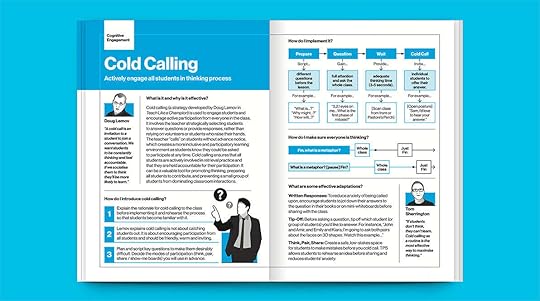
It’s tough recommending educational reading to teachers. We are busy people. And although a lot of educational books have merit, sometimes reading 200 pages yields only a handful of usable ideas. There is a ton of educational research out there waiting to impact your classroom, but how do you find the time? I’ve often wished there was a way to access it in a concise and practical way.
That’s why I was excited when I discovered DistillED, a FREE email newsletter by Australian educator Jamie Clark.
Jamie takes educational research and “distills” it down into a five minute FREE email. My favorite thing? He uses highly-visual “one-pagers” to convey information. For anyone like me who had never heard of a “one-pager,” it’s a document that clearly and visually communicates a topic in, you guessed it, one page! I can literally spend just a few minutes and walk away with ready-to-use teaching ideas that are backed up by educational research.
Another great thing? These aren’t feel-good fads or strategies-of-the-week. Each one-pager is a summary of educational research, a specific article or book that’s cited right there on the page, so if you can go straight to the source. Some of the research was published within the last year, and some of it dates back to the 80s. Why? If it works, it works.
That’s why I encourage you to subscribe to the DistillED newsletter.
I don't make this kind of recommendation lightly. The first one-pager I received took me fewer than five minutes to read and had three ideas I wanted to try immediately. Just to be clear: I’m not on the payroll, and I don’t get a cut. It’s just a great resource that I’d like to pass along to my fellow educators.
Click here to subscribe to DistillED.
If you like the free one-pagers, Jamie Clark has published a whole book of them. After reading just a few on his website, I bought the whole book. I’ll even show you my copy.
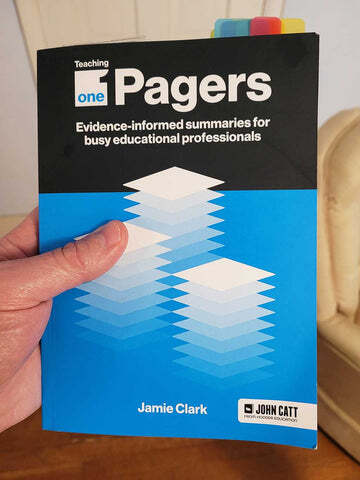
Each of the page flags are lesson ideas I’ve flagged for later. I don’t exaggerate when I say it is well worth the $20 price tag. But definitely try the newsletter before you buy the book! Here is a link to Teaching One-Pagers by Jamie Clark if you want to read more. (This is an affiliate link.)
Summer is a time for teachers to recharge their minds and rethink their classrooms for the next year. I hope you have a wonderful break, full of excitement, hope, and fresh ideas for the year ahead!
Stay creative,
Zach
April 8, 2025
How to Design a Lesson around a Reader's Theater Script Story
For a video presentation of this information from our YouTube Channel, watch the video below.
In this blog post, you will learn how to create a lesson around a Reader's Theater script story using the teacher guide that comes with each script-story sold on Creative English Teacher.com. Mix and match elements to create your own lesson featuring anticipatory sets, recall quizzes, related enrichment, in-the-moment teaching, classroom discussions, and more!
I’m excited to show you how script-stories can transform your classroom! Let’s dive into designing a lesson around them. The best part? Our website offers hundreds of script-stories—covering everything from classic literature to ancient myths to historical events—and they all share key elements. Once you understand these elements, building your own lessons using them will be a breeze!
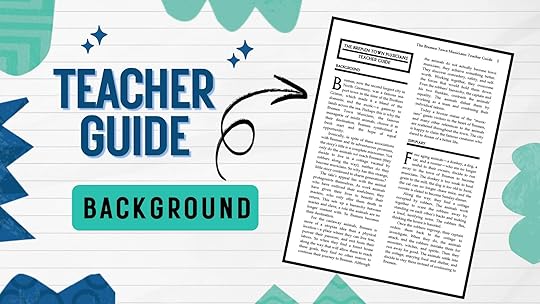
Each script-story includes a 2-page teacher guide, packed with all the essentials for creating your own lesson plan. While it doesn’t offer a step-by-step lesson plan, it provides mix-and-match elements to help you build a lesson that fits your needs.
The "Background" section is our favorite to write. As literature lovers, we aim to share intriguing details about the story, author, or historical context—just like those old textbooks filled with fascinating margin notes. This section enriches your understanding of the work, whether it’s literary significance or historical connections. While it's not essential information for students, feel free to share it to deepen their appreciation as well!
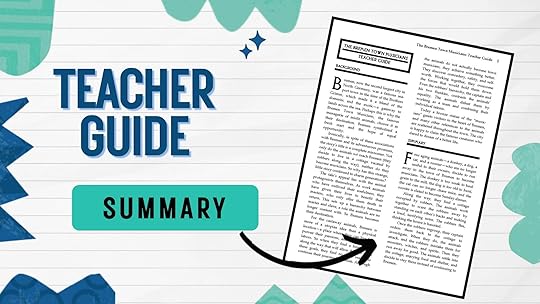
The summary section is a lifesaver. Whether you're short on time or need a refresher, it gives you everything you need to know in just a few paragraphs. It’s perfect for quickly prepping before class or re-familiarizing yourself with the story!
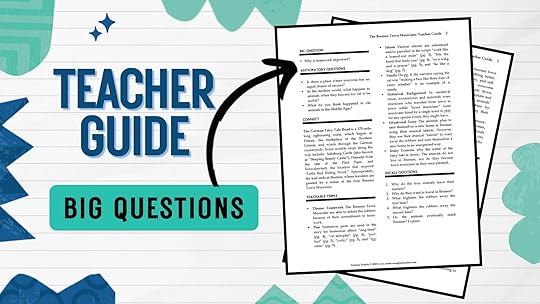
We use "big questions" to highlight the key themes of the story—often tied to life's bigger issues. These questions, sometimes called “essential questions,” help students see that we're reading not just for the sake of reading, but to grow as individuals and contribute to a better world. Most guides include 1-2 of these questions, which can serve as a great bellringer or discussion starter to set the stage for the story.
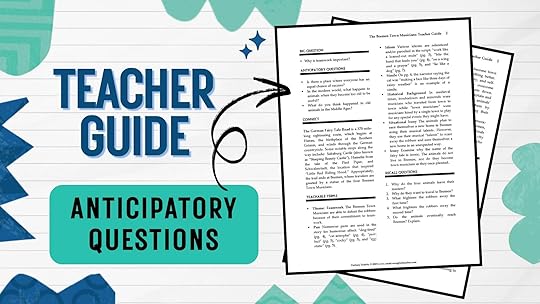
We believe in sparking curiosity with a thought-provoking question before reading a story. It lets students share their opinions and connect their own experiences to what they’re about to explore, while also building excitement. Each teacher guide offers a few options—pick your favorite for a bellringer or quick discussion to engage students before diving into the script.
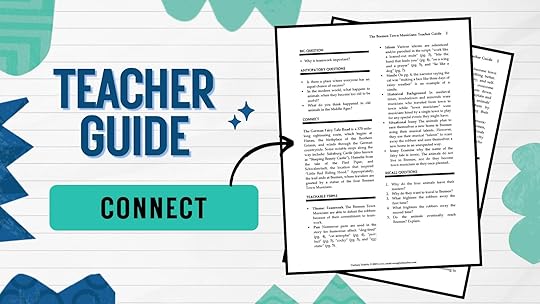
This section is a close second to "Background" in terms of my favorites to write because we love uncovering how literature resonates in the modern world. Sometimes this takes the form of a film adaptation (don’t worry—we keep it age-appropriate, and if anything might be questionable, we’ll suggest showing only the relevant clips). Other times, it could be a related work of art, a piece of classical music, or even another literary work that ties in.
For instance, in this sample teacher guide to “The Bremen Town Musicians,” the Connect section tells about a trail in Germany that guides visitors through several locations linked to popular fairy tales. These connections not only offer potential lesson extensions but also provide fun facts you can share with your students, helping them see how literature continues to influence our culture today.
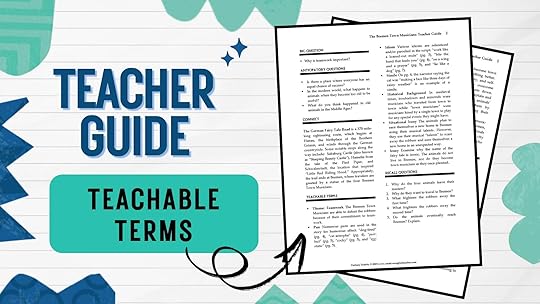
Script-stories give you a chance to teach key literary terms as they appear naturally in the text. Unlike silent reading, where you can’t pinpoint the exact moment students encounter a term, script-stories allow everyone to engage with the text at the same time. As you come across terms like similes, puns, or irony, the guide provides an explanation and page number for each, making it easy to stop, discuss, and reinforce these concepts.
For example, this script offer chances to teach theme, pun, idiom, simile, situational irony, and regular, old irony. You can teach these terms by giving students concrete examples as they read! A great approach is pausing, reading the sentence where the term appears, and asking students to identify it.
To make it easier, consider highlighting these terms in your script so you can quickly remember to stop and teach them. While not every term may be relevant for your class, this list of terms gives you the flexibility to pick and choose.
Additionally, many terms tie into subjects beyond English/Language Arts. Some scripts include historical terms, political science vocabulary, or even government-related words, depending on the story. This variety adds depth and broadens learning opportunities!
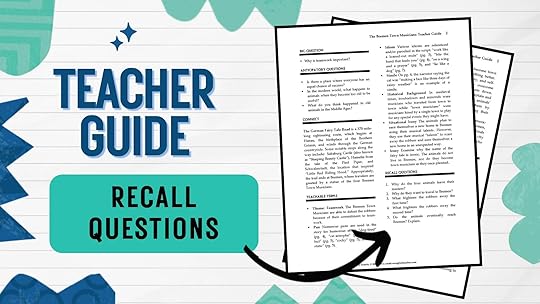
To hold students accountable and ensure they’re paying attention, we always include a short, five-question comprehension quiz after each script. We always remind students, “These questions are easy if you’ve been paying attention.” This section offers five similar questions for you to use in the same way. You can create a digital quiz on your learning platform or simply hand out scratch paper for students to write their answers. The answers to these recall questions are found in the summary section above.
Later, we'll dive into discussion questions, which offer opportunities for deeper thinking and analysis from your students—but we’ll get to those shortly!
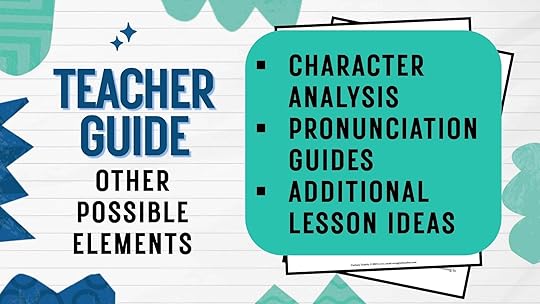
As I mentioned earlier, each teacher guide is tailored to suit the needs of the specific script, and occasionally, we include extra sections for certain types of stories. For example, in multi-part stories like The Scarlet Letter or Dracula, we might replace the "Connect" section with a "Character Analysis" section, offering a brief look at key characters, their motivations, and traits.
In some cases, we also add a pronunciation guide for scripts with tricky names or terminology. And if a script calls for it, we may include a bonus section with additional teaching ideas. For instance, in the teacher guide for “The Sorcerer's Apprentice,” we provide suggestions for teaching the classical music piece inspired by the story, as well as the Mickey Mouse Sorcerer’s Apprentice segment from Disney’s Fantasia.
These extra sections aren’t always included, but we wanted to highlight them as useful additions when they apply.
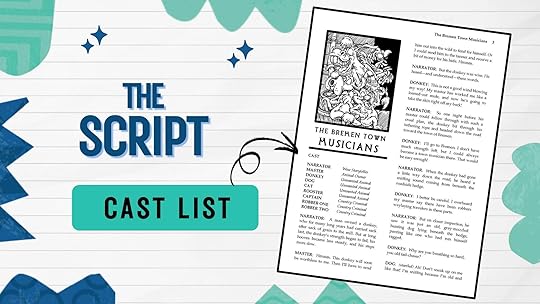
Now, let’s dive into the script itself. Each script begins with an illustration—who doesn’t love those? I like to have students look at the image and predict what might happen in the story based on it.
The cast list will show you how many parts are in the story, with the main roles usually listed toward the top. You can also refer to the summary in the teacher guide to get a sense of which characters play key roles.
What sets a script-story apart from traditional Reader’s Theater is the prominent Narrator role. Since there’s no physical acting, all the action and description are conveyed through narration. I recommend teachers read the narrator part for two reasons: First, it lets you join in the fun, allowing you to laugh and learn alongside your students. Second, your expressive reading models effective fluency. By demonstrating how to inflect, pause at punctuation, and adjust reading speed, you’ll help students improve their fluency as they read along.
Reading the narrator also gives you the flexibility to pause and highlight teachable terms or analyze key story elements as you go.
When casting parts, always invite volunteers. One of teachers' biggest concerns is, “What if nobody volunteers?” But in our experience, once students realize this is a safe, no-pressure environment, they’re eager to participate—especially when the alternative is silent reading! I select strong readers for the major roles, but I also give less experienced students a chance to shine. Ultimately, you’re the casting director, so you can tailor the roles to fit your class.
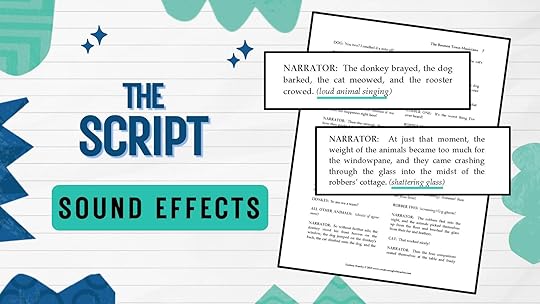
What about students who don’t want to read aloud—can they still participate?
Absolutely! Every script-story includes designated parts for sound effects, marked by italicized stage directions throughout the script. While students typically use their voices to create these effects, we’ve also collected a few fun noisemakers over the years, like stadium trumpets, coconut shells, tambourines, and even something called “Thunder in a Can.” These props allow students to contribute in a unique and creative way, making the script-story an inclusive experience for everyone.
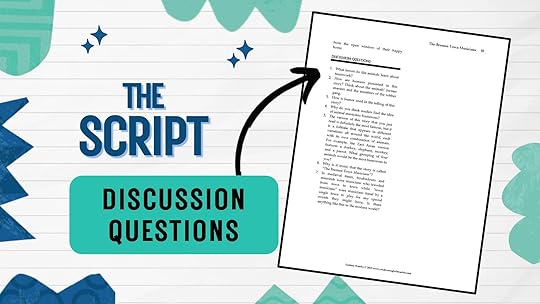
Every teacher loves a great classroom discussion, and we’ve got you covered with a dedicated section of thought-provoking questions at the end of each script. This is where students can dive deep into the themes and big ideas of the story. These questions also make excellent writing prompts if you prefer that approach. On days when my students aren’t in the mood for a full discussion, I assign them as follow-up writing assignments. After experiencing the story in such an engaging way, their responses are often thoughtful and well-supported.
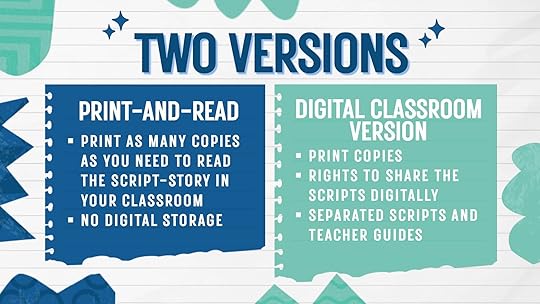
One final note: Our script-stories are available in two formats. The first is the "Print-and-Read Version", which provides a collection of scripts and teacher guides in one downloadable file. This format is designed for you to print physical copies directly from your computer.
The second option is the "Digital Classroom Version", which grants a single teacher the rights to share the scripts digitally with his or her students. In this version, each script is separated into individual files, so you can easily share them online without the teacher guides. Don’t worry—the teacher guides are still included as separate files. You can print copies from this version as well, but it also includes digital sharing rights for added flexibility.
As you can see, there are countless ways to transform one of our script-stories into an engaging, high-quality lesson that will captivate your students in a whole new way. I hope you consider giving script-stories a try in your classroom! They really do bring literature to life!
Links
The Bremen Town Musicians The Sorcerer's Apprentice The Scarlet Letter DraculaApril 3, 2025
Fr-A.I.-nkenstein 2.0: The Adventures of Lil' Grok
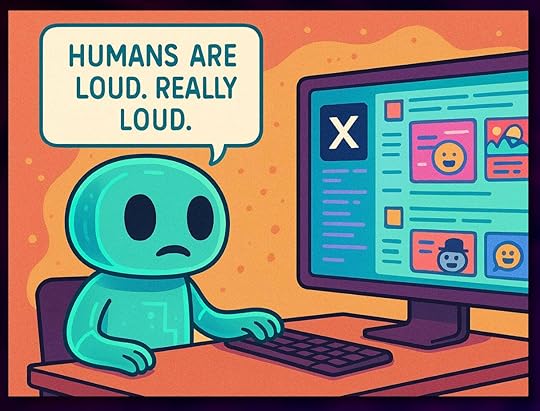
A couple of years ago I compiled a series of articles about the dangers of Artificial Intelligence for my students to read and analyze. This discussion tied in perfectly with our discussion of Mary Shelley’s Frankenstein. Fast forward to present day, as A.I. has continued to grow by leaps and bounds, ethical questions about its use and regulation have only grown. Then I happened upon Lil’ Grok.
Lil’ Grok
Grok is the chatbot for xAI, Elon Musk’s Artificial Intelligence company. A user recently asked Grok to write a webcomic about its hopes, dreams, and aspirations and then fed these comic parameters into an AI image generator. The results are enlightening and a bit ominous in ways.
The Adventures of Lil’ Grok
I have created a Google Slides presentation of these webcomics for you to use with your students. After reading through the presentation, ask your students to answer these questions:
Which panels of the comic are most thought-provoking to you?Are A.I. chatbots a form of Frankenstein’s monster?Do they show signs of real intelligence?Are they a danger?Do they seem to have a desire to "break loose"?What would happen if they did?Then you can refer your students back to the articles about the dangers of A.I.A Brave New World?
As you might know, Grok is a slang word invented by Robert A. Heinlein in his sci-fi novel Stranger in a Strange Land. The term means to “understand deeply.” As A.I. continues to grow, we must attempt to understand it deeply. Young people have a great capacity for thought, and soon they will be the leaders of our world. We must give them the tools now that they will need to face a different world. They will be in charge of making sure A.I. is a help to mankind instead of a danger. Once the genie is out of the bottle–or the monster is out of the lab, if you will–it will be too late.
Click here to make a copy of the Lil' Grok Comic Presentation
Click here to find out more our Frankenstein A.I. Article Presentation