
Debbi Mack's Blog
April 25, 2026
Interview with Gregory Poirier – S. 11, Ep. 21
My guest this week on the Crime Cafe podcast is Gregory Poirier.
Check out what Gregory has to say about screenwriting, as well as crime writing!
You can download a copy of the transcript here.
Debbi (00:54): Hi everyone. Our guest today is an acclaimed screenwriter, director, and producer whose work spans film and television. His credits include National Treasure: Book of Secrets, Knox Goes Away, and Rosewood. A graduate of the USC School of Theater and the UCLA Master’s program in screenwriting, his debut novel, A Thousand Cuts will be coming out very soon. In fact, you can probably pre-order it today. It’s my pleasure to have with me, and I forgot to ask how you pronounce your name, so please just say it.
Gregory (01:31): Gregory Poirier.
Debbi (01:33): Gregory Poirier. Thank you so much. The one thing I forgot to do at the beginning of this.
Gregory (01:40): I pronounce it a little more technically than that in France, but …
Debbi (01:43): True. Yes, yes. France is … Yeah, they would do it totally right, and we do it totally wrong, but whatever. Sorry about that, France. So anyway, thanks for being here today.
Gregory (01:58): Yeah, my pleasure.
Debbi (01:58): After a career in film and television, what prompted you to write your first novel?
Gregory (02:04): Well, it actually was sort of an organic thing that came up. I mean, there’s a lot of conversation now amongst me and my friends about how this business of ours is changing, and it’s becoming a lot more challenging because it’s shrinking, shrinking, shrinking.
Debbi (02:23): Oh, yes.
Gregory (02:24): And I’ve been very fortunate that it hasn’t shrunk me out yet, But you never know. And I actually had this idea for this story and I was trying to work it as a screenplay. And I just at some point just decided that the sort of specific voice that I was going for and the sort of tone that I was hoping for wasn’t really coming across that well in the screenplay version. And I finally decided that it’s an action thing. The way that I started this thing was I wanted to do a film that was the film that Humphrey Bogart or Robert Mitchum or one of those guys would make if they were alive now, something with a real sort of noir weigh into it, but with a modern sensibility, modern action, all that kind of stuff. And so that’s what I was trying to achieve. And for whatever reason, it wasn’t coming across. I know I can write a noir because Knox Goes Away was a noir, and that’s probably the favorite movie of mine that I’ve ever done.
(03:33): But this was something different and it just wasn’t working. And I was sitting with my gang of writer friends at the Farmer’s Market one week and one of them said, why don’t you write a novel? And I thought I might have the perfect thing to try that. And so I just basically started it as something to try and to see if this story worked better in that form, which it definitely did. And that’s how we got here.
Debbi (04:02): Why do you think it works better as a novel?
Gregory (04:05): I think that there’s a lot of reasons, but I think for one thing, I think it’s easier to exert your own voice in this form of writing as opposed to in a screenplay. I mean, I feel like Knox, to bring that movie up again, it’s probably the closest thing that I’ve ever done where it was sort of my voice that came across. But a lot of time you’re trying to not inject your own voice into it. For instance, Rosewood, which was a historical drama, needed to have a certain cadence, needed to have a certain feel and way of speaking and all of that kind of stuff. And it’s not me. You’re purely, at that point, a writer, which is great. I enjoy that very much. But this, I just wanted to inject some of my personality into it more. And that’s definitely easier in a book than it is in a screenplay.
(05:03): And in a screenplay, you write it and then it goes through actors, it goes through directors, it goes through editors. I mean, there’s a lot of people between you and the audience, whereas in this thing, you’re talking directly to your reader, which I really enjoyed a lot.
Debbi (05:19): And I take it that you worked with an editor who got what you were trying to say.
Gregory (05:25): Absolutely. I worked with Keith Wallman at Diversion Books, and he was very, very into what I was trying to do. He understood it right away and was very supportive.
Debbi (05:39): It’s fascinating how the fields differ in that respect, how little of yourself in a sense goes into screenwriting. At the same time, how much of it, because where do these characters come from except from you? So we start with that and then people start to chip away at it a little bit.
Gregory (05:58): It’s also a really different type of writing. I mean, screenwriting is 100% external.
(06:07): All you can put on the page is what the audience sees and what the audience hears. You don’t get a chance … You need to bring out whatever the emotion of the character is and whatever their journey is and all that through those two things, what you see and what you hear. And that’s all you have. You don’t have this ability to delve into the inner monologue and to go into the past of everybody and to sort of really dig into these characters. So it’s a very highly technical form of writing. There’s very rigid structures to it. It’s just very different than this. And it’s not easy. I mean, it’s difficult to do, but it’s just different. And so this was a lot of fun.
Debbi (06:51): That is a very good point. I’m so glad you said that because that’s one of the things that I emphasize when I talk to people about screenwriting, about how different it is.
Gregory (07:00): Yeah, it’s totally—
Debbi (07:01): Similar, but different.
Gregory (07:04): The analogy I sort of use is that I’ve been an electrician for 35 years and I’ve been gathering all these electrician tools, and now I’m trying to take all the tools that I’ve gathered and do some plumbing.
Debbi (07:16): Exactly.
Gregory (07:19): You’re still trying to do something practical, but it’s a completely different form and you need different tools.
Debbi (07:26): And you hope there isn’t a leak in your pipe somewhere.
Gregory (07:28): Yeah.
Debbi (07:31): Somebody’s going to point that out to you. Let’s see. What attracted you to the spy genre? I love the spy genre.
Gregory (07:42): It’s interesting because this is a little bit spy genre, but it’s also, what it’s really about, it’s about a bunch of ex-spies. So it’s about a lot of people that have a lot of skills that they developed when they were working for the CIA that are now out of that world and are trying to figure out ways to use the things that they know how to do in a different way, which is why when we meet our main character, Max Starkey, he’s working as what I call a recovery man for the mob, basically. If they lose something or something gets stolen from them or whatever, he goes and he gets it back. And it’s like the only thing he was able to find in civilian life were the things that he learned how to do in the CIA were of use to him. So I do like the spy genre and I do like those kind of books, but this is really like a post-spy drama more.
(08:41): And at the same time, the other couple, I guess you would call them the antagonists in the book are the same thing. They’re people he knows from his past, but they’re also out and they’re using their contacts and their skills and all that kind of stuff to make a very, very good living, doing highly questionable things.
Debbi (09:04): Did you—
Gregory (09:06): I’m sorry?
Debbi (09:07): Oh, I’m sorry. I was just going to say, did you have to do a lot of research on the subject?
Gregory (09:12): I did. And a lot of the research that I did, I did years earlier for other things because I’ve been writing for a long time. I’ve been a screenwriter for 35 years and like every screenwriter, I have a lot of projects that came and went and never got made and that kind of thing. But I’ve been to Langley. I’ve met all these people. I’ve done all this stuff in my career over the years in research for other projects and stuff. So I didn’t have to really dig into that stuff too much. I know how Langley works. I know what the building looks like inside. I know I have all that stuff, but I did do a lot of research in terms of locations and tech stuff, like the things that I wanted to use in the book. I don’t know what you would call it, guns and hotels or whatever.
(10:17): I did do a lot of heavy duty research into that kind of stuff. And I like to be as realistic as possible in terms of it’s going to take this long to get from here to here, and these are the things we’re going to encounter on the way, and that kind of stuff. I like to make it as grounded as possible because it’s a bit of a fantastical story, but it takes place in the real world.
Debbi (10:40): Exactly.
Gregory (10:41): Yeah.
Debbi (10:43): Yeah.
Gregory (10:46): But I enjoy research. I like it.
Debbi (10:48): Me too. Yeah. It’s amazing what you find when you look.
Gregory (10:53): Well, my biggest problem with researching stuff is stopping.
Debbi (10:57): I know. It’s like, oh my God, this actually happened somewhere? Ooh, this is interesting.
Gregory (11:03): And I also, I’ve traveled a lot and I’ve traveled a lot in Southeast Asia, which is where the book is set. And so I was able to take a lot of experiences that I had down there and sort of incorporate them into the book in more dramatic ways. And than they happened to me obviously.
Debbi (11:20): Right, right. How do you structure your writing time? Do you have a time for writing? Do you have a schedule that you write on? How do you balance it with your other projects?
Gregory (11:33): For the first four hours a day, I berate myself constantly that I’m not writing. That’s the first step.
Debbi (11:41): I should try that. Maybe I’d be more relaxed.
Gregory (11:47): I walk around the house saying, “I bet Stephen King is writing right now.” But yeah, I tend to write about five hours, four to five hours a day is about my limit really.
(11:59): And I don’t really do a page count. I don’t put myself on that kind of thing unless I’m racing a deadline and say, okay, I have to do a chapter. I have to do two chapters or two scenes or whatever today. But for the most part, because I’m the kind of guy where I’ll sit down three days in a row and barely eke out three pages, and then on day four, I’ll write 20 pages or 25 pages. It’s just the way my rhythm works and I don’t understand it and I don’t really need to, just is what it is. But I also go through a couple weeks here and there where nothing comes out and then in a week I write a whole draft of something. I’m a very streaky writer, but I do try to sit down every afternoon for four or five hours and try to avoid playing bouncing balls and all that other fun stuff.
Debbi (12:56): Exactly.
Gregory (12:57): So I need that though. I need a structure like that. I have this nice spot here where you see me sitting right now, but I also write really well out in the world and even in busy places. I’m that cliche guy that likes to write in Starbucks. I like to write at our local library branch. I write really well in hotel lobbies and on airplanes. And I’m just, I don’t know, it’s almost like how if you want a toddler to fall asleep, you take them to a really busy restaurant and they sort of get overwhelmed and fall asleep. I think that’s kind of the same thing with me. If I go somewhere that’s busy, I have to shut everything out and it zones me in on what I’m working on.
Debbi (13:46): That’s interesting.
Gregory (13:47): Yeah.
Debbi (13:50): I’ve never been one to write out in coffee shops and things like that. So I always find it interesting when people do enjoy that. It’s kind of like-
Gregory (13:59): I’ll say my wife and I, we raised four kids and we’re all adults now, so sometimes the coffee shop is quieter than the house.
Debbi (14:08): There’s that. Our house is pretty quiet, I have to say that. Unless, of course, my husband is listening to loud music, but that’s okay. Loud music I can deal with.
Gregory (14:19): Can you write with music on?
Debbi (14:21): As long as it’s not too loud. I mean, if it’s on the background or something. If somebody’s listening to TV, I don’t care.
Gregory (14:28): Yeah, I tend to make, you don’t call them mix tapes anymore. I don’t know what you call them now, but playlists, I guess.
Debbi (14:36): Playlists, yeah.
Gregory (14:37): For things that I’m working on. And then I’ll listen to them, but not while I’m writing. I’ll listen to them in the car or while I’m puttering around and they sort of get you in the mood.
Debbi (14:49): Exactly. Yeah. Because sometimes when you hear music when you’re writing, it’s just a little too much stimulation or something. Too many things going on.
Gregory (14:57): Yeah, I get caught up in the lyrics and then I look down and go, “Well, I just wrote Welcome to the Hotel California. What the heck?”
Debbi (15:03): Where did that come from? Yeah. So is there a writer who has most inspired you as a writer?
Gregory (15:12): Ooh, boy. Well, it depends on which kind of writing you’re talking abo ut. Screenwriting would be different than … I’m a huge fan of guys like Preston Sturges, people like that. But in terms of books, I read so many books and I read so many different kinds of books. I’ll read anything, honestly. Right now, this is sort of a guilty little secret thing to say. I never read any of the Ayn Rand books. So right now I’m reading The Fountainhead for the first time at my age. But just because I thought, oh, that’s something I probably should read at some point before I kick the bucket.
Debbi (16:02): She was an interesting person.
Gregory (16:04): Yeah. Boy, oh boy, interesting writer too.
Debbi (16:07): Yes.
Gregory (16:08): But the stuff that I most enjoy reading, if I’m going to be a hundred percent honest, I love the Michael Connolly stuff. I love Bosch and Lincoln Lawyer. I love anything by Karin Slaughter. I love the Elvis Cole books. I love all those kind of things that are fun to read.
Debbi (16:27): Exactly.
Gregory (16:28): I mean, I’m enjoying this Fountainhead, but it does feel a little bit like some work I never got done and I need to do it. It’s an interesting read, but it’s not as fun as reading.
Debbi (16:40): Well, she’s very opinionated, was very opinionated. I will say that.
Gregory (16:46): I’ll definitely cleanse my palate with a Reacher book or something after this.
Debbi (16:50): I suggest you do so. Yeah. Take yourself out of that mindset fast. Let’s see. What advice would you give to anyone who’s interested in a writing career?
Gregory (17:02): Well, it depends on which kind of writing career you’re talking about. The advice might be slightly different for somebody who wants to go into screenwriting now, but my advice always used to be that if you wanted to be a screenwriter, you had to do absolutely nothing else. My advice used to be, if you can see yourself doing something else, go do that because unless this is the only thing you can see yourself doing, it’s going to be a really hard life and you’re probably not going to become successful at it unless it’s all you can think of doing. It’s the one thing that drives you. And I guess that’s still true, but I think nowadays I would counsel people to be a little more of an omnivore in terms of what they write. I think part of the thing that was responsible for this book that I wrote was that nobody will make anything now that doesn’t have IP.
(18:08): So I sort of thought, well, I’ll make some IP and then somebody will make a movie or a TV show out of it. But I think that just writing this as a script and sending it out and trying to sell it would be really hard in today’s market. So I would suggest just try writing all kinds of things, be a writer, be a writer of every form you can work on. And that’s going to be the easiest way for you. I mean, not easy, but it’s going to be the best way forward,
Debbi (18:42): It’ll be an easier way probably.
Gregory (18:43): Yeah. I mean, screenwriting right now is, the market has shrunk so much that even guys like me that have been doing it forever, I’m working still, but I’m having to find ways outside the traditional way to sort, oh, here’s somebody that has some money and wants to make a movie. Well, let’s do a script and let’s see what happens. And it’s a lot more spec writing now than it used to be, there a fewer jobs, but also at the same time, specs are harder to sell. So it’s a really challenging time, I think, to be trying to break in as a screenwriter. The other thing I would suggest if screenwriting is the goal is to just make some films, some small short films and sort of showcase yourself. You can also, if you can get short stories published, people are buying those to make films out of and TV shows out of. So that’s a way also.
Debbi (19:49): Absolutely.
Gregory (19:51): I would just say try to get a foothold in every way you can. That’s the only thing now. It used to be just keep writing screenplays, keep writing screenplays and eventually you’ll sell something. But I don’t think that model really holds anymore because-
Debbi (20:06): I think you’re right.
Gregory (20:07): Yeah. I would hate to be breaking in now. I’m sorry. I hope I don’t discourage anybody by saying that, but it’s tough right now.
Debbi (20:16): But that’s a very honest assessment that you gave, and I appreciate it very much because I think people need to know about this.
Gregory (20:25): At the same time, there’s nothing like it. A writing career is the greatest thing in the world. I’ve hated it every day and I’ve loved it every day, and it’s fabulous. If you can get it going, get it going, because it’s really a wonderful way to live a life.
Debbi (20:41): Well, that’s great. That’s a wonderful thought. Thank you. I wanted to ask you something else on the subject of … Oh, you mentioned IP. Talk for a second about the importance of IP. I’m always talking about this, and I never know if the message is really getting through. IP is kind of crucial now to-
Gregory (21:01): It is very crucial. And part of the reason for that is that the studios used to be run by people who love movies. Now it’s run purely by business people. They’re not movie fans. You go in there and try to reference some Clark Gable movie and they’ll look at you like you just came from Mars. They don’t know what that is. It’s a completely different set of people buying now. The studios used to be run by people who got into the movie business because they love movies. Now it’s people that have moved over from the restaurant branch of the corporation or whatever. It’s just people that are running it as a business and they’re all afraid to do the wrong thing.
(21:54): They used to develop scripts. They used to develop 25, 30 scripts for every movie they got made just because that’s how you mined good material, but they won’t do that anymore. They’re so afraid of everything. And so the IP thing is a crutch for them because they can go, well, look, this worked as a graphic novel or it worked as a book or it worked as whatever, a poem somebody scratched on the side of a building. And so if it fails, it’s not my fault because look, it already worked as this other thing. And so that’s why I think they really do look for IP now because it’s just a way for them to protect themselves.
Debbi (22:39): Hedging bets.
Gregory (22:42): The nice thing in the old days was they weren’t afraid to fail because you made a lot of movies and some of them didn’t make money, but a lot of them did. And you came out ultimately on the plus side of all of that. Nowadays, they’re going to make five movies a year and they’re so risk averse that they almost won’t buy a script unless you come in with a director and two actors attached. And it’s just this whole other thing now. It’s just a cover your ass business now. I’m sorry, I didn’t mean to swear on your podcast.
Debbi (23:21): No, please do. I encourage it.
Gregory (23:23): Well then, no, I’m kidding. So it’s different. And I think that if you can, if you have the path to write something or to publish a short story or like I said, a graphic novel, if you can write a graphic novel and hook up with an artist and sell that first, then that can be your entry into … I mean, I’m not going to talk too much about it because it’s not public yet, but I wrote this book and it was optioned like that because there’s the thing and they can all point at the thing and say-
Debbi (24:05): We have a thing.
Gregory (24:06): There was a book. There’s a thing. Yeah, that’s what I always call it. I always say the main difference between screenwriting and writing this that I like, the main thing that I like about it is that you write the thing and there’s the thing
Debbi (24:21): That’s right.
Gregory (24:22): As opposed to the movies where you write the thing and then you wait two years for Dwayne Johnson to read it, and then you got to get a director. And then if you’re lucky in five years, there’s the thing on the screen. Maybe. Yeah. I said if you’re lucky. Yeah. But with this, you write it and they say, okay, here’s my thing. You either like my thing or you don’t like my thing, but there’s the thing.
Debbi (24:47): Exactly. Yeah. It is nice just to be able to create your own thing. Is there anything you’d like to add before we finish up?
Gregory (24:57): No, I just really enjoyed writing this and I really hope that people enjoy reading it. I read a lot and I tried to make this something that I would enjoy reading. I tried to put in some humor and some surprises and just make it a fun experience. So I’m hoping that that’s what happens is I don’t know how many people will read it, but I hope that the ones that do really have a good experience of it. And I’ve already written a second one, by the way.
Debbi (25:27): I was going to say, are you going to write another? That’s excellent.
Gregory (25:31): Yeah. Because I wrote this book on spec. I didn’t pitch it. And when they bought it, they contracted me for two books about the same character. So the second one is in the hands of the editors now, so we’ll see what they say.
Debbi (25:48): Wow. Well, that’s fantastic. Congratulations. That’s great.
Gregory (25:52): Thank you.
Debbi (25:53): Well, thank you so much for being with us today. I really appreciate it.
Gregory (25:57): Absolutely my pleasure. This was great.
Debbi (26:00): It was my pleasure too. Great to meet you.
Gregory (26:03): You, too.
Debbi (26:04): I would also like to thank my patrons on Patreon and my followers and subscribers on Substack. To everyone listening, if you follow me on Patreon, and it’s free to do that, I hope you’ll take a moment to fill out the short survey that I’ve provided there to get a better sense of what you’re looking for from the Crime Cafe. I can provide more interviews. I can provide more interviews with screenwriters. I can coach people on writing. Anything you’re interested in, let me know. This is the final episode of season 11. During the hiatus, I’ll give some more thought as to what the podcast could include as a perk for Patreon supporters. In the meantime, take care and happy reading. I will be seeing you.
The post Interview with Gregory Poirier – S. 11, Ep. 21 appeared first on Debbi Mack.


April 21, 2026
The Crime Cafe with Gregory Poirier
For our final regular episode of this season, we have screenwriter, producer, and crime author Gregory Poirier with us. So check it out, because there’s a capsule course on screenwriting tucked in there. The real story of screenwriting! Not for the faint-hearted. 🙂
Check us out on Patreon!

The post The Crime Cafe with Gregory Poirier appeared first on Debbi Mack.
April 16, 2026
My Book Review of ‘Five’
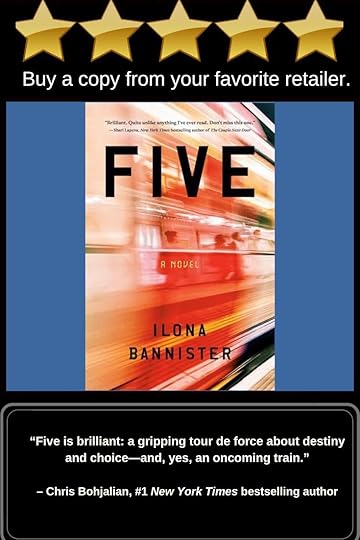
Hi. Today I’m reviewing Five by Ilona Bannister. Quite a cover, isn’t it? Kind of gives you a feel for the tone of the book, which is interesting, both slow and fast in a sense. You get to learn about five people. I’ll just read you the back cover text.
“Five lives, five stories. Five minutes until the London bound train pulls into the station and one is gone forever. Who would you choose to die?”
Judgey much? Who would you choose to die? Interesting how we talk of somebody who didn’t deserve to die, as if anyone gets what they deserve. Am I right? We all die in the end. Let’s face it. There’s another thing about this. Everybody in this book is proof. Well, not proof, but it is a wonderful demonstration of how eyewitness testimony is so unreliable. Why it is so unreliable.
Because everybody has a point of view and a lot of times what they perceive is not exactly the whole truth or even accurate. And the things they remember. You’re not going to notice every detail. You’re not going to be able to give a completely accurate first sketch, on being first asked, “What does this guy look like? Did you notice the color of his eyes? Did you notice what color tie he was wearing? Was he wearing a tie?” Things like that. Anyway, I’m just not going to bang on about that, but I will say that this is a very, very good read. Wonderful character studies of the different characters. And then just the most breathtaking finish at the end. I literally had to, when I was finished, I just had to catch my breath.
It is so gripping. And I have to say that I wasn’t surprised at the choice of who died on the whole. But it was a very satisfactory sort of ending.
And yeah, you make your choices, you perceive things a certain way, things come out, maybe the way they should. Sometimes they don’t. That’s life. “Life is what happens when you’re busy making other plans.” I think that’s what John Lennon said. Something to that effect. Yeah. Good book. Excellent. Excellent. With an ending that will just gut you a little bit. Did for me anyway. And I was breathless there at the end. And just like, “Oh my God, I have to find out if it’s who I think it is. “ And I won’t say that I absolutely predicted it, but no, not predicted so much as thought “Possibly? Definitely? Maybe?” That’s it. I enjoyed this book very much. So until next time, be seeing you. Take care.
You can get the ebook from these retailers.
You can also get it in print from Bookshop.org and support indie bookstores.
PS: Yep. I can hear the whistle … 🙂
The post My Book Review of ‘Five’ appeared first on Debbi Mack.
April 4, 2026
Interview with Liz Lazarus – S. 11, Ep. 20
My guest this week on the Crime Cafe podcast is Liz Lazarus.
Listen in on her remarkable story. I’m ready to sign-up for karate class now.
You can download a copy of the transcript here.
Debbi (00:54): Hi everyone. My guest today has an engineering degree and a very interesting background in general. Among other things, she lived in Paris for three years and speaks fluent French. She has a pilot’s license and has produced a music CD. She’s also the author of several legal thrillers, including her latest, Dawn Before Darkness, which is available on Kobo, as well as in print or will be, I guess, in May.
Liz (01:28): Will be. May 26th. May 26th. Yeah.
Debbi (01:31): May 26th. There, you heard it now. You heard it there. It’s my pleasure to introduce my guest, Liz Lazarus. I’m trying not to say Liz Lemon.
Liz (01:42): It’s a tongue twister. Liz Lazarus. Yeah.
Debbi (01:44): Liz Lazarus. It’s a lovely name. I love it. I love that name. That’s cool. What made you choose to write Thrillers?
Liz (01:54): Well, I would tell you, as you said, I’m an engineer. I’m probably the most reluctant author you’ll meet. I did not intend to be an author, and that may be the story for lots of people. But my first book, Free of Malice, was based on a real story, something that happened to me in college. And the novel actually was just me writing about what happened to start with. And then it turned into a novel. And I was going to be one and done after Free of Malice, and people that were reading it said, “Can’t wait for the next one.” And so I thought, okay. And it took me a while to agree to write the second one. And then once that was done, that was Plea for Justice, then came Shades of Silence and now Dawn Before Darkness. So now I feel like it’s a bad addiction.
Debbi (02:36): Wow. And each one of these is a standalone novel, not a series.
Liz (02:40): They are standalone. I like to give my characters closure and move on to new people.
Debbi (02:45): That’s cool. Yeah, I can appreciate that. Your first novel was inspired by a real event, correct?
Liz (02:53): Correct.
Debbi (02:53): What was it like to write in a fictional form about a thing that really happened?
Liz (03:00): It was therapy. So what happened in brief, I was in college at Georgia Tech. I was living off campus in this area called Home Park, which is a bunch of old houses, college students, a fair amount of riff raff. It wasn’t the safest area. And it was my senior year. I was going to sleep that night. I was living with two other girls in a house. And at four in the morning, I wake up to the sound of my bedroom door crashing open.
Debbi (03:26): Oh my God.
Liz (03:26): And I remember distinctly thinking, “Is this real?” And my next thought was, “This is real. You’ve got to deal with it. ” And you don’t know what you’re made of. Thank goodness I had fight in me, so I started fighting back. And eventually, at one point I write about this in the book, he says, “If you shut up, I’ll leave.” And I thought, “I’m not shutting up. I’m screaming louder.” And eventually he gave up and I left. So I didn’t have any self-protection at the time. I had a can of mace. I ran to the door, watched him run away into the darkness. And so for me, the writing about it, writing about the PTSD that I had. I didn’t even know what that word was, but I started writing about how I felt, what happened, how I would check every nook and cranny in the house.
(04:09): And I had said to my brother-in-law afterward, “If I’d had a gun, I would’ve shot him.” And he said, “Well, that may not have been self-defense. By the time you could have shot him, he was retreating off your property. You would’ve shot him in the back.” And that got me really curious about where’s that line between self-defense and vigilantism. And then my mother asked a question, which I won’t tell you because it gives away the ending, but she asked just the most out of the blue question. And I thought, wow, that would make a killer ending to a book. And that was it. And it took me years later. For anyone who’s thinking of writing a book, it took me years later. I did all those other things on my bucket list and the book just wouldn’t leave me alone, so I wrote it.
Debbi (04:51): Yeah. It’s kind of an itch that you got to scratch.
Liz (04:57): It wasn’t going away. And I had the plot in my mind, and it had been brewing in my mind for a while. And I’m super lucky. I had a lawyer who helped me with the legal part. I had a therapist who helped me with the EMDR therapy, which is in the book, therapy I never did. And so the whole thing was just a great project.
Debbi (05:16): Interesting. At this time, are you working at a regular job or do you have a business? I understand you were head of operations for a healthcare startup at some point.
Liz (05:31): I’ve done two startups. The last one, and now I’m currently on one, but we’re in engineering development, so they don’t need me a lot because I do more of the operations. So I’ve got a fair amount of free time at the moment. But my background was 20 years at GE Healthcare and 10 years consulting. And I do some consulting on my own, but when I’m writing a book or launching a book, I don’t do much consulting.
Debbi (05:53): Yeah. Yeah. You want to focus on that book. Yeah.
Liz (05:55): This is a job in of itself.
Debbi (05:57): It sure is. It sure is.
Liz (06:01): Yeah.
Debbi (06:02): I think a lot of people don’t really realize that when they get into this, how much of a job it is. Do you have a regular writing schedule?
Liz (06:12): I don’t. I do an outline. I am a plotter. I outline an Excel with color coding.
Debbi (06:18): Why am I not surprised?
Liz (06:19): Fair.
Debbi (06:21): You’re an engineer. You have a scientific mind, and I get it.
Liz (06:26): So because I do that, I don’t have to write in order. So I write when something gives me content. If I’ve met someone or a story shows up or I’ve interviewed someone, I write when I have content.
Debbi (06:36): Cool. I like that approach. How much research do you usually do before or while you’re writing the novel?
Liz (06:46): It depends. The first one and this fourth one are based on real events. And so I didn’t have to do as much as I thought because I knew a lot of it. Now, the legal part, I had to do research and I always rely on my lawyer friends to help me. The third one, I relied a lot on my friend who’s a detective, a retired detective. And this current one, it was a balance. So the current one, Dawn Before Darkness, is a stalker story and a guardianship abuse story. So the stalker part, I interviewed 10 women who had stalkers and combined their stories to this uber-villain. And then the guardianship story is actually my real story that I was fighting for guardianship for my mother. And so most of that, I didn’t need to do research. I lived it. And again, was therapy to write about it.
Debbi (07:33): Yes. How did you find the 10 women that you interviewed?
Liz (07:41): Great question. From my fan base. So I had just posted … Well, the first person, Dawn, Dawn Hillier was the inspiration behind me writing the stalker story. She had a stalker. We had become friends and she told me about her story. And so that was in my mind, I was always going to write the stalker story. And then I posted on Facebook just out to my readers and said, “If anybody’s had a stalker and is willing to be interviewed, I’d love to talk to you. “
Debbi (08:08): Wow.
Liz (08:09): And sadly, I had too many volunteers. That’s a sad state of affairs. So I picked 10 women, 10 stories. And then at that same time, my guardianship case was continuing to play out. And the real light bulb for me was, how do I combine those two things? How do I combine guardianship fighting for your mom and then a stalker? And when I was able to do that, I think this is my best one yet.
Debbi (08:34): Wow. That’s one of the most useful parts about Facebook, finding other people. And yet somehow I don’t really like Facebook. I wish I could like it more. You know what I’m saying? It’s so hard for me to get into it somehow.
Liz (08:55): It’s fun to keep up with people. I’m not 100% convinced it sells books, but to me, people tend to want the books when they’ve heard my talk or they’ve had a referral. So I do it some, but I don’t overpost. I feel like that might annoy people. So I try to do it with moderation.
Debbi (09:16): Moderation. Absolutely. That’s a great suggestion. What authors have most inspired you as a writer?
Liz (09:25): Different ones. Well, the very first one actually was my grandfather. He wrote a very different genre. He wrote a children’s book called Follow My Leader. His name’s James Garfield. And he wrote about a little boy who was blinded by a firecracker. That book came out in the 50s and it’s still in print today. So I guess I had the writing bug in me somewhere. And then as far as what I read, I read a lot of thrillers. And I tend to be, I’m on a kick right now with all the British thriller writers. So Clare MackIntosh, B.A. Paris, that crew. And a lot of it’s because I do audiobooks and I love listening to the British accent. But Michael Robotham, K.J. Howe, there’s so many.
Debbi (10:11): Yeah. Michael Robotham. I’m familiar with him.
Liz (10:14): He’s great.
Debbi (10:16): Nice guy, too.
Liz (10:17): Oh, you’ve met him. That’s great.
Debbi (10:19): We were on a panel once ages ago.
Liz (10:20): That’s a treat. Yeah.
Debbi (10:22): Yeah, It was. It was a real treat.
Liz (10:24): What I like about him is his twists, and I always have a twist. Every one of my books has a twist. His twists are earned. I love that about how he writes.
Debbi (10:35): Yeah, absolutely. Yeah. Let’s see. How did you start writing fiction? Did you take courses or read books before you started your own novel or did you just launch in?
Liz (10:51): I just did it.
Debbi (10:52): Wow.
Liz (10:53): I don’t know if that’s a mistake. I think some of the best singers are just naturally gifted and don’t even have to take a course. I’m going to believe that’s my path. I’m sure if I took more courses or any courses, I would be better, but I read. I have good, good editors and I write.
Debbi (11:16): And you know what you like?
Liz (11:19): True.
Debbi (11:19): And that’s what you want to see. You want to write the book that you want to see out there?
Liz (11:24): I do. I write what I know and I like strong female characters. I like women who are sympathetic for some reason. Always have a good twist. When I know the twist, that’s when I know I’ve got my story.
Debbi (11:36): Yeah. Yeah. Let’s see. What advice would you give to anyone who’s interested in having a writing career?
Liz (11:45): Don’t do it, right?
Debbi (11:47): Run screaming.
Liz (11:49): Be ready. You named the things I’ve done. Pilot’s license, got my MBA, speak French. This is the hardest thing I’ve ever done, ever. Wow. So just be ready. Go in with not crazy expectations. When people ask me, when they’re thinking of writing a book, the first thing I ask them is, what’s your goal? Are you thinking you’re going to make money? Are you going to be famous? Do you want a movie deal? Have realistic expectations. And if it’s like me and it was just a calling that would not let go, then do it. Because if it’s not a calling that’s not going to let go, then do it. But go in with low expectations, get a mentor early. I did not do that. I should have. And the publishing businesses I have found doesn’t follow the business norms that I’m used to. 20 years at General Electric. And so be prepared for some of that. And that’s where a good mentor would help.
Debbi (12:45): Yeah. Yeah. Understand something about publishing. That helps a lot.
Liz (12:50): It does.
Debbi (12:51): People really don’t know
Liz (12:52): Well, you were indie before it was popular, which is very brave. Brave or foolish, I don’t know. But having to carve your way in a business that’s not friendly towards anything other than traditional is not easy.
Debbi (13:09): Well, it’s interesting. It seemed like it was a lot easier … how long ago was it? 13 years, 14, 15 years ago than it is today. Now, today it seems super-hard to get any kind of notice.
Liz (13:28): There’s so many books. There’s so many books out there.
Debbi (13:30): There’s so many books, there’s so many authors, there’s so many voices, and people are trying so many different things. And I’m not sure that we’re all really doing the right thing just yet. And I keep thinking there’s something missing here that we should be doing. Maybe it’s … I don’t know. I don’t know. I don’t want to get all political here, but maybe we need a union. Maybe we need a collaboration, a huge get together of some sort where we all say, “What’s going on and what are we doing and what’s working and what isn’t?” These are serious questions, especially given what’s going on with AI and people hear the letters AI and they just start freaking out. Don’t freak out. Don’t freak out. Human voices will always be valuable. That’s the way I feel.
Liz (14:26): I think so. I mean, where I’ve used AI, it’s been a compliment, but it’s not been the centerpiece. And that’s where I have found it useful. And I’m just scratching the surface. I probably should take some courses to even understand it better.
Debbi (14:41): Well, I use it for making transcripts and that’s about it. And even then, I can’t trust the transcript necessarily because sometimes they’ll hear something wrong and they will get it completely wrong. And I’m like, oh, that is so wrong. I got to change that. So I have to review all the transcripts and takes time, takes effort, takes money, all that stuff. Anyway, not to bang on about that.
Liz (15:10): I will tell you, it’s great for vacation planning. I’ve used AI for that. You say, “Hey, ChatGPT, we’re going to be in this place or the city for this many days. Give me the best routing.” And it does a pretty decent job.
Debbi (15:23): That’s pretty cool. Well, I’ve never used it for that.
Liz (15:25): Try it. It actually is pretty good.
Debbi (15:29): Interesting. Beats Expedia, I suppose. I don’t know. Is there anything else that you would like to talk about that we haven’t covered? I think we’ve covered quite a bit.
Liz (15:41): Yeah. I mean, obviously where to get the books, go to my website, that type of thing. Absolutely. We could talk more about the plot of this recent one if you’d like.
Debbi (15:52): Okay. Go right ahead. Tell us a little more about the recent one, which is really a good book.
Liz (15:57): Thank you. Yeah, so it’ll be out in May. The ebook is up for pre-order, but the paperback and the audio will be out in May. But it’s about a woman named Dawn after my friend, Dawn, who meets a young man and she thinks he’s her prince charming and they begin to date. And as they’ve dated a couple weeks, she catches him in lies. And when she catches him in a lie that can’t be denied, she breaks off the relationship. And instead of accepting the breakup, he begins to stalk and harass her so much so that she has to get a restraining order. And beyond that, he goes after her mother. So he goes after guardianship and conservatorship of her mother. And people have said to me, “Well, you can’t do that. You’re not a relative.” And the crazy thing is anybody can sue for guardianship and conservatorship.
(16:44): All he has to do is prove she’s unfit. It doesn’t necessarily mean he’ll win, but it means he makes her lose. And he puts her through a horrible court battle. And I’ll kind of leave it at that because I don’t want to give away spoilers, but it is based inspired by my experience of battling for years to get my mother away from a third party guardian. And finally was able to do it, but it took me years. It took me thousands of dollars. And so when people say it might be implausible, the legal story in this latest book, I will tell you, Dawn had it easier than I did.
Debbi (17:19): Oh my gosh. Wow. That’s amazing.
Liz (17:24): That’s heavy. It’s heavy. This book is dark. When you talk about Dawn before Darkness, it is dark. It is heavy.
Debbi (17:29): Oh my goodness.
Liz (17:31): There was one part where my husband said, “Don’t you want to give her a break?” Like he said, “This is your best one yet, but you don’t give her a break.” And I’m like, “I didn’t get one.” So there are some vet stories. She’s a vet. I had a lovely friend, Becky Smith. That’s the Smith of Dawn Smith, the character, who’s a vet tech, and she shared so many great vet stories with me.
Debbi (17:53): Oh my God.
Liz (17:54): And so there is some levity because she’s a vet and you get to go into that world, which that was researched. And so there is a fun part. And every vet story in the book actually has a reason for being in there. It plays full circle.
Debbi (18:07): Oh, wow. That’s great. I can’t wait to continue reading this. I’m telling you, you’re just selling it to me all the way. Believe me.
Liz (18:17): Oh, lovely. Thank you. And you’ll have to call me when you’re done. I want to see what parts you caught, what parts surprised you.
Debbi (18:25): All right. Well, I will do that. I will definitely be in touch. Wow, this is fantastic. I just want to thank you so much, Liz, for spending time with us today and all of this.
Liz (18:38): Oh, my pleasure. And you’re great to do this. I have not taken on the brave job of doing podcasts and interviewing other people. So thank you for giving the rest of us a voice. We really appreciate it.
Debbi (18:50): I want to give you people, all of you a voice. I mean, seriously, there is wonderful, wonderful stuff to be read out there and you should hear about it. And you can hear about it here because I’ll have the people on to tell you about it. So to all of you who are listening or watching, thank you very much. I’m so grateful to you. If you enjoyed the episode, please leave a review. As many stars as you can manage with a straight face. And for ad-free episodes, book reviews, excerpts of my work and more, check me out on Patreon. We’re also on Substack for some reason or other. On that note, our next guest will be Marschall Runge. Until then, take care and happy reading. Be seeing you.
Check us out on Patreon!
The post Interview with Liz Lazarus – S. 11, Ep. 20 appeared first on Debbi Mack.
April 2, 2026
My Book Review of ‘The Verdant Cage’
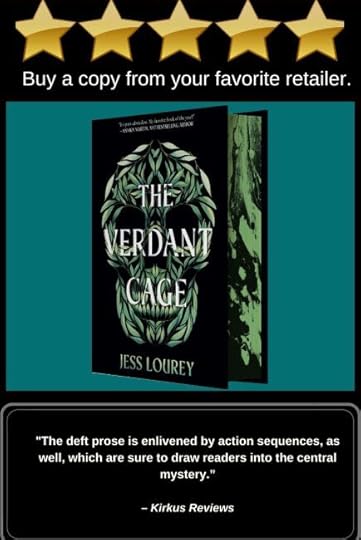
Hi. Today I’m reviewing The Verdant Cage by Jess Lourey. Yeah, I really enjoyed this book. It is described as a YA dystopian, which I think is a fair description. You could also add thriller into there because there is a thriller pacing to this book and thriller twists and plot developments. In any event, it’s about this community, a kind of a walled community. We don’t know how long it’s been around, but we get the sense it’s been around for a while and it seems like a certain type of community kind of created sort of like Atlas Shrugged, where somebody was trying to create a perfect community. Okay. But it’s dystopian, so obviously it’s not perfect.
So there are all sorts of themes like on a par of Animal Farm in there as well, at work. And some people will compare it to Hunger Games, I guess, because of … Well, never mind. I don’t want to talk about it. I will just say that it takes place in this walled community. The main character is a young girl named Rose who was supposed to marry a guy named Gryphon and they have a complicated relationship.
But what ends up happening is they’ve never had a murder in this community. And Rose’s mother ends up being the first murder victim, and her brother ends up being accused of her murder. And they send him up in a basket over the wall. This is their way of “putting people to death,” so to speak. Apparently there are terrible things on the other side of the wall that they keep getting warned about. And don’t ever go outside the wall and the basket is the end of it. But then there are these rumors flying around about people who managed to survive being raised up in a basket. Okay. I’ll just stop there in terms of describing the story. There are parts of it that reminded me more of romance novel than thriller, but those parts are necessary to establish the relationship between Rose and Gryphon, which is part of the heart of the story.
And to me, it was just compelling reading. I was just … short chapters are my thing and short chapters are for the most part in here, and they really work. And they really do keep you wanting to turn the pages and see what happens next. Rose is the kind of character you want to root for. She’s surrounded by a great ensemble of supporting characters who are essential to the plot, and they’re all distinctive too. So I highly recommend this book really. It’s well worth reading and thinking about how relevant it is to today in various ways. Okay, that’s it then. And I will talk to you later. Be seeing you.
You can get the ebook from these retailers.
You can also get it in print from Bookshop.org and support indie bookstores.
The post My Book Review of ‘The Verdant Cage’ appeared first on Debbi Mack.
March 31, 2026
The Crime Cafe with Liz Lazarus
My guest on this episode of the Crime Cafe podcast is Liz Lazarus.
Her story is very interesting.
PS: The YouTube video even has a quiz. A very short quiz. I think I got it to work.
If not, you can find it here!

The post The Crime Cafe with Liz Lazarus appeared first on Debbi Mack.
March 14, 2026
Interview with Graciela Kenig – S. 11, Ep. 19
My guest this week on the Crime Cafe podcast is Graciela Kenig, a crime writer who can tell you a tale in two languages. But she’s giving away her debut novel, The Plans They Made, in English. I forgot to ask about translations!
Check out the transcript of our interview here.

Debbi (00:54): Hi everyone. My guest today has been a feature journalist, online forum contributor, and careers columnist. Her work has appeared in the Chicago Tribune, the Sun-Times, and other national publications. Her debut novel, The Plans They Made, won the 2022 Page Turner Award for best genre writing. So it is my pleasure to introduce you to my guest, Graciela Kenig. Am I saying that correctly, Kenig?
Graciela (01:31): Yes, you are. Yes. And thank you for having me. It’s amazing. You’re saying both things correctly and that’s cool.
Debbi (01:40): Ah, well, you see, I’m married to an Italiano man. His last name, if you pronounced it correctly, would sound very different from the way people actually pronounce it, when they can pronounce it. It’s funny. I have no problem with vowels, folks. I did take Spanish, so that helped in junior high and high school and all that stuff. So how are you doing anyway?
Graciela (02:07): I’m doing fine. Thank you. I’m just looking forward to spring in Chicago.
Debbi (02:12): We’ve had a rough one.
Graciela (02:12): Yeah.
Debbi (02:14): All right. You’ve had a very interesting career from writing features to having your own column. How did you go about developing this particular career path?
Graciela (02:26): Some of it was very organic. I wanted to be a writer from the get- go when I was little, and of course the language, because I was born in Argentina and I wrote in Spanish. And so I moved to the United States with my family and I had studied English, but you don’t use it every day until you have to. And so yeah, it kind of started like that, that I wanted to be a writer. And for the longest time, even though I had been encouraged about how I could write well, I kept thinking that Spanish was the language I should write in because that’s what I was very comfortable with. So I entered the newspaper writing career because the Chicago Sun-Times had started a section in Spanish. So I started writing articles for them, no journalist training. It’s just like, okay, let’s see what happens here.
(03:23): And so I learned quickly and soon enough they asked me if I would come in part-time to help the editor because he was not a native-born Spanish speaker, if I could just do a final sweep of his columns. He’d already done his editing, so I had to go back and make sure that everything was okay. And so that column, I think it lasted for sometimes a couple years. And then you’re inside this newspaper. And so somebody says, “Do you write in English too?” I do. And I was always drawn to being somebody who could give you advice. So some of the things that I liked for a while, eventually I freelanced for the Chicago Tribune and there I got in because I was writing for a know-how section. So I could write about how do you put together a ceiling fan? And so those kinds of things like that.
(04:20): And I wrote for a bunch of local papers and eventually I kind of started doing other things, getting interested in helping people with their career. And then The Tribune started a Spanish language newspaper, and that one lasted 10 years. And I wrote the careers column. So it was this interesting thing that kind of opened doors for me as to how I can help people in a very more specific way. And I felt that I wanted to help the Latino community because oftentimes we tended to be real roaded into one kind of job or another kind of job. And at least I said, “If you’re bilingual, you can do that and the other thing.” And the more I did that, the more I realized it wasn’t just being able to speak another language, it was also about the cultural issues. So it was very organic and went like that, but I always, always wanted to write fiction.
Debbi (05:18): Oh, that is so cool. I love what you’re saying. That is just fantastic. What inspired you to write your novel? What inspired the idea for it?
Graciela (05:32): I knew somebody who had put off, reconnect them with their best friend back in the time when you didn’t have easily, you couldn’t send faxes. I mean, that kind of stuff, you just sent—snail mail was the only way to communicate or calling, and that was expensive. And so it was put off. And when they were about to get together, this other friend had died. And so that was the seed of this. But, in big part, I used that for, I was taking a writing class and that was a prompt. And it was something like I wrote one scene and then the next assignment was write it from the other person’s point of view, which is so me because I think I like writing and I think a lot of us in the arts tend to … You have an artist sensitivity when you can see things from different perspectives, when you can be an outsider.
(06:33): And within your thing, it’s very hard to know your own culture, your own … Everybody does the same thing in your little life.
Debbi (06:42): Correct. Yeah.
Graciela (06:44): You know what I mean, in your circle of friends and acquaintances. And so I’ve always felt somehow, especially after we moved to the United States as an outsider. So you observe things in very different ways. You notice things other people don’t. And that’s really … And that’s what I liked about the idea too, is I developed the protagonist, Kate, being a journalist. I had all that experience myself, but she was an outsider. She’s visiting London in a country she doesn’t really know, which also was helpful to me because that way I could look at London, not as the expert that I’m not. It was just like, okay, how did she see it as having been a journalist and a writer when she’s there trying to find who killed her friend? I mean, the inspiration, the person that I knew did not … was not killed. She was in an accident.
Debbi (07:44): Right.
Graciela (07:45): You take your, what do they call your literary?
Debbi (07:49): Exactly.
Graciela (07:50): Yeah.
Debbi (07:51): It’s interesting how things like a prompt and then twisting it around, changing the perspective can really make you think about it and the possibilities.
Graciela (08:03): Yeah.
Debbi (08:04): Good, good, good approach there. Great stuff. What was it that made you choose the thriller genre?
Graciela (08:12): In a sense, it was organic as well. I was taking … A few years ago during the pandemic, I became involved with this group, StoryGrid, which most people think of StoryGrid as an editing tool, but they did start something where we had these groups and Sean Coyne, who’s the founder who wrote the book, basically would have these workshops. And so I started to realize that what I was thinking about really was very much in line with a thriller. It wasn’t what I intended to do. And although I had never been a real avid reader of thrillers, I had watched a lot of thrillers and movies and that kind of thing in both worlds in Argentina and Spanish and here, because my dad loved that stuff. He loved detectives. He loved police procedurals and all those kinds of things. And I just watched them because he liked them and I liked them too.
Debbi (09:12): Yeah. Yeah. Yeah. We watched a lot of those in our house too. And I remember distinctly when I was growing up, there was a show called Honey West about a female private eye, and it lasted for one season. I was so angry when they took it off. I said, I don’t believe they took that show off. The one show where I get to see a woman do something really cool.
Graciela (09:40): It’s pretty rare back.
Debbi (09:42): Exactly. Early ’60s, that was almost like a bizarre event, but it was really just a great show. And then The Avengers came along and filled that hole for me a little bit. Emma Peel was my heroine.
Graciela (10:02): Yeah. I liked the visual part about the movies showing action. It’s always a lot harder to describe action in words, but—
Debbi (10:11): It is, yeah.
Graciela (10:12): Punching. And I mean, I do thrillers, but I don’t like horror. It can be part of a thriller thing. And I also, I guess because of my upbringing, thrillers usually have to be political in nature, have some political thing.
Debbi (10:28): I get it.
Graciela (10:29): Yeah.
Debbi (10:30): I totally get it.
Graciela (10:31): There were like 15 political parties in Argentina, and even [inaudible] knew about them. It’s crazy. So yeah. Yeah.
Debbi (10:39): If we could only come up with a third one here.
Graciela (10:43): Yes, it would be helpful, wouldn’t it? Yes. Yes.
Debbi (10:46): A little balance somewhere along the line. Let’s see. You described yourself in another interview as a slow writer, primarily I think due to a lot of research that you do? How much research do you do before you start writing or while you start writing or while you are writing?
Graciela (11:06): I like doing research. It can be a rabbit hole. If I don’t stop myself. But I tend to just … With this one, and I’m writing a second novel now, with The Plans because I was still working full-time, it took me a long time to write it. And there I went to London to see that. And when I was in there, I came up with other ideas. I thought, oh, what happened that year in London? And there’s a chapter when it all has to do with President George W. Bush who was visiting there. So I thought he was here. So I like the idea of having … It’s not a historical novel, but I like having historical places, placeholders, so to speak. And that is how the story devolved in a sense. And I like that a lot because I do research a little before, but I also do a lot when I discover that I’m missing something and I don’t know.
Debbi (12:14): Precisely. Yeah.
Graciela (12:15): And, nowadays with the event of AI, I mean, it would’ve taken you months to get some of the things it can get for you and you’re just needing something for one sentence and okay.
Debbi (12:30): As long as you double check and make sure it’s not hallucinating. As a journalist, you know that.
Graciela (12:37): Yeah. Well, they usually give you sources.
Debbi (12:41): Usually, yeah. Yeah.
Graciela (12:42): I mean, but if they don’t, I check them. But I mean, it’s a good opportunity because I don’t know everything that I’m inventing.
Debbi (12:50): Absolutely.
Graciela (12:52): If you’re sending somebody to federal prison, for example, I learned, no, there’s no parole in federal prison since this act of 1984, and I didn’t know that until I just saw it in this research I did. So I enjoy doing that. Even if a lot of it doesn’t end up directly on the novel, at least it’s something that informs it.
Debbi (13:17): Yes. And what are you working on now?
Graciela (13:22): I am working on, I don’t know what you call it, a second or third draft of this one.
Debbi (13:28): Is it a sequel or a standalone?
Graciela (13:30): No, it’s not a sequel. Because I spent so much time with The Plans, I just wanted a break from that story. And this was inspired by something that was going to be a short story, but it’s not. It’s a novel.
Debbi (13:43): It’s funny how these things happen.
Graciela (13:47): So the working title of this is called Stuck in Paradise. And my protagonist is also a woman who’s out of her element, and Paradise is a Caribbean Island, and she goes here to help someone that basically plugs her from someone she knew in the past. So right now I’m deep into this thing of finalizing this draft, whatever number it is, I stop copying.
Debbi (14:17): After a while, you lose count.
Graciela (14:19): Yes, yes. But at this point, there are times when you go and you slog through it like, “What am I doing here?” I’m not sure. But at this point I ended up really pinpointing what I needed to do. So I’m in this really exciting period of like, oh, okay, I keep going. Yeah. So I hope you—
Debbi (14:40): I love that feeling. Yeah.
Graciela (14:42): Yeah.
Debbi (14:43): You got to keep that feeling going.
Graciela (14:45): It’s hard. It’s really hard because it doesn’t always come out.
Debbi (14:48): It is. Yeah, it is sometimes. What kind of writing schedule do you keep?
Graciela (14:57): I’m sorry?
Debbi (14:58): Do you keep a writing schedule? Do you have a—
Graciela (15:01): Yes, I do pretty much. And that’s part that started with the StoryGrid groups and I am on Central Time, so we write online. It’s kind of an accountability group, and so we all write at the same time and only share resources and questions at the end of the session. So we definitely do 10 to 12 every morning for me, Central Time. And I’m on a roll, I’ve been writing a lot longer these days, but I need breaks too. So often if I am going to do a minimum, it’s 10 to 12. I’m thinking about this story all the time, but that’s my writing schedule. Yes.
Debbi (15:45): I’ve noticed that you’ve traveled quite a bit. In addition to coming to the United States, do you prefer to go to a place before you write about it or do you just take it as it comes kind of like if you have to write a place that you’ve never been to, you just research it?
Graciela (16:07): I prefer to be there somewhat. I had been to London before I actually went and they had really good memories of it, but it wasn’t a research trip. So when I decided to set it there, I decided I had to go. And so it wasn’t a touristy thing. I just went there, which happened to be the first time ever I traveled by myself outside of the country. And I stayed at an apartment hotel where I could cook my own meals and it was wintery, so I had to be back by 4:30 or 5:00 so I could write, flesh out my notes. So I do like to go to the places, but I also like to travel. I see, again, talking about gaining outside perspective, oh yeah, this is things here and this is what they consider when they do this and that. And so yeah, right now I almost can’t go anywhere without at least thinking about those potential angles.
Debbi (17:08): Yeah, definitely for sure. Yeah, I love travel. I tend to think of thrillers as stories that test the limits of possibility because you’re always putting these people in situations that could happen that are unlikely, but could happen and have devastating potential results. What are your thoughts on that?
Graciela (17:33): Well, clearly when you’re writing a thriller, you have to make sure that you’re raising antes. There’s got to be a value change even in a scene.
Debbi (17:43): Exactly.
Graciela (17:44): Start out feeling this and a thriller, it goes from safety to danger or the other way around. But I also, I think that I see that as a very important thing to do because when we read about someone who’s in danger or how they came up with something, we learned something as readers. And so sometimes you’ll be like in a movie, you’d be covering your eyes if you’re scared. But in books, sometimes you have to take a moment and rest because—whew!—that was strong. But I also think that the more extreme situation the character is in, the more you understand that character and what is she or he made of.
Debbi (18:29): Exactly. The ability to relate with that character and to feel what they’re feeling in that moment. Yeah. It’s very important for screenwriting, I’ll tell you that.
Graciela (18:41): I know. I’m not a screenwriter, but I know that the character arc is important. They wouldn’t do certain things if they were someone different.
Debbi (18:50): Exactly. Yeah. What authors have most influenced you and inspired you to write?
Graciela (19:00): My tastes in writing are very eclectic in part because I also grew up in Argentina where I read back in the time of magical realism. So I don’t anymore because I got tired of it, but I loved it at the time and I loved all those authors. Gabriel Garcia Márquez who won the Peace Nobel, Borges, Cortázar. All of these people were really inspirational to me. But here in the United States in my early years, I really loved Anne Tyler and it was just, she’s not a thriller writer, but she’s so knowledgeable about people, the dynamic in families, which is always, was attracted to that for some reason. Her characters did quirky things.
Debbi (19:51): Yes, they did. I know. I’m a big Anne Tyler fan actually. Yeah.
Graciela (19:56): I’ve always loved her. And so for the longest time, if you ask me what’s my favorite book, it was Dinner at the Homesick Restaurant. I thought-
Debbi (20:03): Oh my God, yes. Oh my God, yes. Yes. Yeah, that one really got me.
Graciela (20:08): Yeah. But I do read a lot of thrillers. Now a lot of authors was one of my … I mean, Dennis Lehane, Stacey Abrams. I became a real fan of her. Somebody pointed her out to me and she writes a lot about political things like I like to write.
Debbi (20:27): Cool.
Graciela (20:29): Michael Connolly. Oh my gosh, he’s so good. Harlan Cobin. I have to write them down because I know I like a lot of them, but these are people who are very inspirational to me now. But foundationally, I think a lot of these people who wrote about their characters, Anne Tyler is certainly one of them.
Debbi (20:48): Yeah, for sure. Yeah, me too. What advice would you give to anyone who’s interested in a writing career?
Graciela (20:57): I think that, and it took me a long time to figure this out because people would always say in English and Spanish, how I could string works together really well. So my writing was poetic, blah, blah, blah, whatever it was, but you still have to understand story structure. And until I started taking some serious courses, I really didn’t. And I mean, there’s a lot out there nowadays, a lot of different people who are fantastic at teaching, and you could be spending money every day on something like that. You can have coaches. I think first of all, it’s a very lonely profession and you do need feedback. You don’t understand. And I mean, and again, I mentioned AI and AI will point out some very important things, but you still need humans to look at. It’ll say one thing, and then I have an editing group besides my accountability group, and we meet every week and we share a short part of what we’re writing. And the good thing is that they get to know your characters too. And they would say, “She wouldn’t do that. “
(22:04): So I think that you need to be working with somebody preferably who understands story well, whether that’s an editor or take a real … My first real courses that I took, I mean, I had taken many, but the ones that were really helpful to me were, UCLA has an extension writing program, so you can do that online. And I had really wonderful … I took three or four classes with them. And when I was talking about a writing class prompt, it was from one of those classes that I got this past book started. I really like how they do that. They teach you to give feedback, constructive feedback and to be good at that and to take it. We all have to take feedback and sometimes we don’t like what we’re hearing, but you have to, you learn from your feedback. So if you are not—
Debbi (23:01): That’s right.
Graciela (23:02): Then …
Debbi (23:05): It’s not going to work if you’re not willing to listen to what other people have to say about it, especially people who know how to write, who’ve been there and done it.
Graciela (23:16): I know. I know.
Debbi (23:17): You’re not doing yourself any favors by ignoring comments.
Graciela (23:21): Oh, I know. Well, when I would teach things at the university when I was running an internship program, which is really connected to careers, I designed courses, career management. And one of the projects was to come up with, you had to have a portfolio about what you did, an online portfolio about what you did in your internship. And then I would say, okay, you’re going to be in a team of three people or four or whatever, depending on the number of students I had. And so you don’t have to use their feedback, but if two or three of them said the same thing, it’s pointing something out to you
Debbi (23:56): Exactly. Yeah.
Graciela (23:58): And that’s probably one of the best advice pieces that I gave to them because they started to figure out, yeah, some’s not working here. And it was a very visual thing because they had to do it online. But it’s like a job that I had right before I retired from regular work was that. I worked at DePaul University, and it was a place where everything I did, my writing, my creating courses and advising people all came together there. So yeah.
Debbi (24:28): Yeah. So is there anything you’d like to add before we finish up?
Graciela (24:34): Wow. I’m so appreciative that you did this for me. Thank you so much. I really, really liked that. I just thought I like the idea of also suggesting that people, because when I finished this last novel we’ve been talking about, I did have to get beta readers, and that’s very different than don’t just give it to your cousin, your husband, your brother. I think one of the things that I learned is that when you … Beta readers that hopefully also read the kind of genre that you write because they will pick out … They know what readers expect of, for example, a thriller or a crime novel, and they should tell you. And when I did, besides getting those beta readers for The Plans They Made, I also consulted with somebody who lived in London because I thought, “Hey, I put a lot of stuff in there that I thought I heard correctly.”
Debbi (25:32): Good idea.
Graciela (25:34): And she was wonderful. She says, “Well, I’m your person in London.” And through a good friend of mine who was from England, but not from London, I connected with her and she was wonderful in helping.
Debbi (25:46): That’s awesome.
Graciela (25:48): Just look for help. I mean, I think sometimes people worry, “Oh, you’re going to copy my story.” No.
Debbi (25:55): Nobody’s going to do that. Don’t worry.
Graciela (25:57): Yeah. I mean, someone else can be developing the same idea and do something totally different.
Debbi (26:04): Different. Yeah. The idea is out there for anyone to use. The prompt was out there for anyone to use. They could have done anything with it. Yeah. So yeah.
Graciela (26:18): Yeah. So I mean—
Debbi (26:19): We all write individually and differently.
Graciela (26:22): Yes, yes. And even when somebody gives you an idea, you get to choose if that’s something that’s going to work for you. And if it does, it does. If it doesn’t, you don’t have to do what people say, but at least listen and consider that. If more than one person says that again, there’s a point.
Debbi (26:40): Keeping an open mind. Good idea. Well, thank you so much, Graciela. I really appreciate your being here and spending time with us.
Graciela (26:50): Thank you, Debbi. I appreciate the opportunity and hope to see you again in the future somewhere.
Debbi (26:57): Yeah, me too. That would be nice. It would be very nice. I would just like to also thank my listeners for listening. And while I’m at it, I will remind you to check out Graciela’s giveaway. She’s giving away a copy of The Plans They Made. I will include a link in the notes to this podcast. And if you enjoyed this episode, please give us a like on your podcast app of choice. I’m trying to speak the language here. I think I’m doing okay. The right language, the language I normally speak in. Our next guest will be Liz Lazarus. I love that name. Until then, take care and happy reading. Be seeing you.
The post Interview with Graciela Kenig – S. 11, Ep. 19 appeared first on Debbi Mack.
March 10, 2026
The Crime Cafe with Graciela Kenig
My guest on this episode of the Crime Cafe podcast is Graciela Kenig.
Listen in on our discussion of Graciela’s work as a feature writer and careers columnist, as well as a crime novelist.
Here’s the link to her book giveaway.

The post The Crime Cafe with Graciela Kenig appeared first on Debbi Mack.
March 5, 2026
My Book Review of ‘Murder Most Haunted’
Hi everyone. Well, another book review. This one is Murder Most Haunted by Emma Mason. I love this book. It is just a delight to read. It’s actually a cozy, which is unusual for me to read, yes, but it’s not unheard of. And I got to tell you, the sense of humor throughout this book is just so much fun. Just makes the reading so much fun.
The character, the main character is such a literal person, but there are things going on that get revealed as time goes on. And there is also an ensemble cast of characters stranded, isolated, so to speak, in this remote location, having put up with each other and people dying, that sort of thing. It’s just hysterically funny sometimes, really. I just found myself laughing out loud at parts. But it’s a wonderful, wonderful book. Funny, keeps you guessing. Definitely plot twists, in-jokes almost in this.
It’s just a great deal of fun. It’s one of the funniest and most suspenseful at the same time mysteries I’ve read in a while. And I really, really loved it. And it would make a great television show. It really, really would. Although it’d be a shame, a lot of the main character’s dialogue, which is her thoughts sometimes are so funny. Midge is the main character. And anyway, her thoughts can be so funny. It’s a shame that they would probably have to be eliminated unless you can work in a few voiceovers here and there. They should be allowed here and there. I know people tell me I overuse voiceover, but I like it. It’s one of those hardboiled mystery things, right?
So, well, anyway, this is not a hardboiled mystery, but it is great fun to read and an excellent book, so I highly recommend it. It would also make a great TV show. That’s my opinion. All right. I’ll be seeing you. Talk to you later.
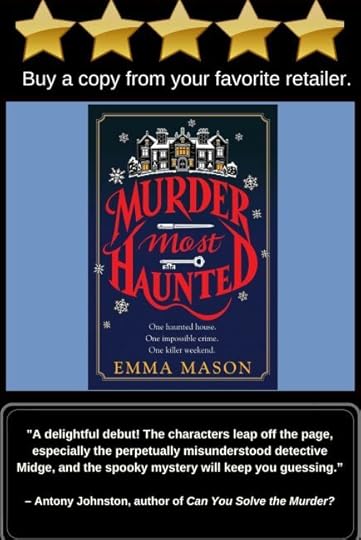
You can get the book from any of these retailers.
You can also get it from Bookshop.org and support indie bookstores.
The post My Book Review of ‘Murder Most Haunted’ appeared first on Debbi Mack.
March 3, 2026
Guest Post and Book Giveaway from Graciela Kenig
This week on the Crime Cafe podcast, Graciela Kenig will be my guest. She’s also giving away an ebook copy of The Plans They Made to the first 15 people who email her at this address: graciela@gracielakenig.com. Sign up for her occasional newsletter and download a free copy of the prequel, Ruby’s Diary.
Meanwhile, enjoy the following excerpt from the book!
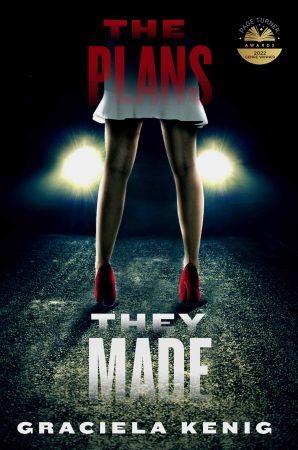
London, England
Re: Post July 19, 2003 Incident
July 25
No significant activity reported in or surrounding the apartment building on Russell Square since the above-referenced incident. Landlord picks up mail, draws curtains daily. Lights come on and off at different times each day, as programmed.
August 1
Nothing new to report all week
August 8
Nothing new to report all week
August 11
Landlord reported that an American woman inquired about the subject today. No name or description provided. Will investigate.
August 13
The American woman returned at 1300 hours today. Asked landlord about the subject again. Sat on a bench at Russell Square, the park facing the building. Unable to say for how long. Targeted surveillance will begin tomorrow.
August 14
Woman returned today at 1600 hours but did not enter the building. Sat on a park bench and took notes while frequently looking up toward the window of the subject’s apartment. Stayed for thirty minutes. Then walked across the square to an apartment building on Coram St. When asked about the American woman, doorman at said building wouldn’t talk. It may be her location while in London. Description: Shoulder-length brown hair, 5 foot 5, 110 lbs. (Snapshots attached. Will attempt a better angle to improve quality.) Carried a large handbag.
August 15
Woman returned today at 1400 hours. Sat on the same bench for 10 minutes. Took notes and used her cellphone. Looked up toward the subject’s second-floor window several times. Walked to the Holborn tube station. Lost track of her in the crowd. Still unable to determine the woman’s identity. Pictures too grainy and distant. Will retake when possible.
August 19
Woman’s name is Kate Brennan, Chicago-based investigative journalist turned novelist. She hasn’t returned to the area since August 15. Nothing new to report.
CHAPTER ONELondon, August 20, 2003Kate heard the news indirectly. That morning, she’d been doing research at the London Metropolitan Archives and had lost track of time. At first, she tried to ignore the noise that seeped into the reading room from the reception area, even though it was unusual in a library. She merely lifted her eyes from the black and white photographs she’d spread on the table and returned to her only task: Pick one castle. Just one. She had put it off long enough because of Ruby.
But the glass wall made it impossible. The din grew louder and more annoying. And the people on the other side looked like zombies: mouths agape, eyes bulging, heads shaking. It was as though they had fallen under a spell.
Without a second thought, Kate joined the crowd in the reception area.
“What happened?” she asked.
The tall clerk who’d been so helpful that morning placed a hand on the base of his neck. “A suicide bombing,” he said. “It happened a few hours ago in Baghdad.”
“I see.” Only months after the US president had declared the war over, Iraq remained a chaotic and violent place. “What was the target?”
“The UN headquarters.”
Kate’s heart sank. “The UN? Did you say the UN?”
The man’s forehead wrinkled. “Do you know someone who works there?”
She nodded. “But I don’t know if she was in Baghdad.”
“Who?”
“My best friend.” Kate hyperventilated. God, Ruby. Is that what you didn’t want to tell me?
Even before she transferred to London three years earlier, Ruby had never said much about her job. The projects she’d handled in Washington, DC fascinated her but ultimately bored everyone else. Or so she often said when they talked on the phone. If Kate ever wanted to know more, Ruby veered their conversations into the mundane. Like one of her boys had been sick, or the other had won a science award, or their father had done yet another despicable thing. When they discussed the details of Kate’s visit—after she’d booked the flight from Chicago—Ruby wouldn’t commit to a specific reunion date. There were some details to nail down for the upcoming school year . . . and a possible business trip that couldn’t be avoided. But she’d sounded happy that Kate would be in London for six months. “You’re gonna love the apartment I found for you,” she’d said. “Just across the park from mine. I wish you could stay with us, but Julian and Jason are messy, typical teenagers, you know? And you’ll need a quiet space to work on your novel.”
That had stung. I would’ve stayed with you and the boys even if I couldn’t write one chapter. It’s not my first novel, for God’s sake.
“When did you last speak to your friend?” The clerk’s deep voice gave Kate a slight jolt.
“I’ve been trying to reach her for a couple of weeks . . . more, maybe. I think it has been three weeks . . . We were supposed to meet here in London, but—”
“Please have a seat Ms.—”
“Brennan, Kate Brennan.” She lowered her body without checking if there’s was an actual chair to catch her.
“Oliver McNeal.” He held her arm, perhaps expecting her to miss the chair otherwise. “I’ll fetch you some water.”
As if by magic, once Kate felt the seat’s cushion underneath her, the crowd dispersed, allowing her to see the small television set that had brought about all the commotion.
A BBC reporter spoke to the camera against a background of dense, black smoke and lingering flames that obscured the cavernous hole in Baghdad’s United Nations building. As usual in such circumstances, the footage was repetitive. Mangled metal, naked tree branches, and debris. Each time the images reemerged on the screen, Kate noticed different details. The broken left headlight of an early nineties Chrysler covered in layers of black dust. The crushed hood and trunk of a yellow VW Bug, its driver’s door abandoned ajar. Flat tires, missing hubcaps, windows devoid of glass. They had the look and feel of empty eye sockets.
A female voice recited the names of some victims. Though she didn’t hear Ruby’s, it was too soon to tell.
All the people who were just there doing their jobs.
“Here you are, Ms. Brennan.” McNeal said.
Kate yelped as though somebody had attacked her.
“So sorry.” He attempted to hand her a glass but stopped in mid-air. “Oh, you can remove the gloves now. You only need to wear them to handle our photographs.”
Kate looked at her hands. She recalled being annoyed at having to sift through actual photos that should’ve been turned into slides. But instead of removing the vinyl gloves, she took a sip of water. It made her shiver.
“Is there someone you could ring?”
She gazed into his eyes, the color of molasses, and smiled. “Oh no, I’m feeling much better now. But thank you.”
“I meant . . . about your friend . . . perhaps a coworker who might know if she was there?”
Kate tried to stand up. But the effort made her dizzy all over again and she had to lean against the man who towered over her, and whose body was sturdier than it looked.
This is so embarrassing.
McNeal just swallowed, his Adam’s apple bobbing as though he needed extra air.
“I tried a few things already.” She’d called the UN offices in London, but no one there recognized Ruby’s name. Even Kate’s boyfriend Scott, a television anchor in Chicago, had turned nothing up through his extensive network of contacts.
“I left messages in her answering machine . . . thought she might check them remotely, but nothing.”
“Any relatives?”
Kate winced. Ruby only communicated with her ex-husband through lawyers or friends who took on the role of mediators. “I could call her sister, but she lives in Ohio and, and . . . I just don’t want to alarm her.”
“If your friend wasn’t in Baghdad—”
“But if she was . . .”
It was a natural next step, yet Kate had been avoiding it for days. What am I afraid of finding out?
McNeal shrugged. “Let me know if you change your mind. We can give you some privacy in one of our back offices.”
“You’re so kind, Mr. McNeal.”
His cheeks turned pink, erasing the paleness that had blanketed his face. As he walked away, Kate noticed a slight hunch, a common feature of people who are tall. Ruby had it too, but it only showed when she wanted to make a point through direct eye contact with Kate. Otherwise, her posture was perfect, like that of a model.
Kate had chosen London to do background research for her fourth novel, mainly because Ruby lived there. They had never been physically apart that long since they met in high school, and it seemed like a good way to reconnect. But nothing had worked out the way they planned. Even if Ruby wasn’t in Iraq, something had happened to her. There was a huge knot in Kate’s gut.
I need to know.
She stood up, removed the vinyl gloves, and tossed them into a wastebasket.
“Thanks for the offer, Mr. McNeal. Yes, please, I would like to make some calls if it’s still okay.”
She sat behind a cluttered desk in a room made up of file cabinets and blank walls. But Scott’s cellphone number went straight to voicemail. So did his desk phone at the television station and all the others she’d usually called when she had to reach him in a hurry. At last, a receptionist picked up and took a message.
Kate swallowed hard and dialed Helen in Ohio but had to leave a voicemail there as well.
***
The phone was already ringing when Kate opened the door to the apartment on Coram Street. She ran all the way to the kitchen and snatched the white receiver on the tiled wall like her life depended on it.
“Kate?” A familiar woman’s voice allowed her breathing to slow down.
“Yes?”
“I was about to try your cellphone next—”
“Oh, Helen.” Kate recognized Ruby’s sister’s Midwestern twang. “I’m so glad you called back . . . thank you!” She reached for the cardigan sweater she had draped over a kitchen chair. Though it was stifling hot outside, she felt a sudden need to cover her bare shoulders.
“I know it’s been a while since you and I—”
“Ruby wasn’t in Baghdad.”
The abruptness of Helen’s words made her sit down. And when she understood their meaning, Kate let the tears stream down her cheeks as though she’d never been so relieved.
Thank God.
“Phew . . . Like I said in my voicemail, I haven’t been able to get a hold of Ruby since I came to London. Do you know where—?”
“Oh, Kate—” Helen’s voice cracked, and Kate could’ve sworn she heard a sniffle or two coming through the line. Then again, transatlantic connections were not always clear.
“Ruby wasn’t in Baghdad because . . . because she was already dead.”
Kate’s heart stopped beating. Or at least it felt that way for a second. Whatever Helen said was absurd. Not true. No way. She stood up and paced the small kitchen, wrapping the telephone cord around her fingers.
“What do you mean?” Kate held her breath.
“My sister died in a motorcycle accident.”
She closed her eyes to avoid picturing something that gruesome, but it was too late.
“Did you say she was in a motorcycle accident?”
“Yes.”
“Ruby doesn’t ride motorcycles.”
“Apparently, she did. At least since she transferred to London.”
Kate’s mouth went dry. “When?”
“A month ago.”
“And you didn’t tell me?”
“Your phone number was disconnected. And the email I sent you bounced back. I also wrote a letter. I didn’t know what else to—”
Kate shook all over. She had moved in with Scott a year earlier and could no longer use her work email after she quit her job at the Chicago Tribune. But something about what she heard still made no sense.
“I can’t believe this, Helen . . . I just can’t . . . Ruby’s quite the daredevil . . . but a motorcycle?”
“I thought the same thing.”
Kate’s old self resurfaced as though she’d simply changed hats. “Did you get a police report?”
“They faxed it to me. Well, they faxed it to my parents—”
“Oh, God . . . your parents. How did . . . how are they dealing with this?”
“Dad will never get over it. He hasn’t gone back to work yet. And Mom . . . well, you know my mom. Dora Cunningham was never a fan of Ruby’s. Her own daughter.” Helen cleared her throat. “At first, she kept saying that Ruby brought it all on herself. That she always made bad choices, and this was her final one. But now . . . now she seems inconsolable.”
Kate shook her head. She always knew, or hoped, that Dora would eventually regret being such a bitch to her oldest daughter. But not like that.
“Anyhow, the police report says it was an accident. Case closed.”
“Were there any witnesses?”
“Another rider, a woman. But she said Ruby was already . . . gone . . . by the time she arrived at the scene.”
“Her name?”
“It wasn’t in the report . . . well . . . it was, but someone blackened it.”
Something snapped inside Kate’s chest. “This is so . . . strange . . . so . . . out of character . . . don’t you think?”
“Yes, it was surprising to hear that. But what could I do? My children are young, and I live in Ohio . . . I can’t just pick up and go to London.”
Helen stopped talking, and Kate realized she was sobbing.
“Forgive me, Helen. It’s the old reporting instinct in me.”
Helen blew her nose. “You became quite the star, Kate. The whole town was so proud of you when you won those awards.”
Kate’s cheeks warmed up. “Oh . . . that was a while ago . . . but thank you. And how are you doing, Helen?”
“I manage.” she said, breaking down again.
“I’m so, very, very sorry, Helen.” Kate could no longer hold back the tears.
“How long had it been since you two saw each other?”
Kate wiped her face with a towel and swallowed hard. “Four? Five years? Even before she moved to London, we never seemed to find a time to visit each other. Our jobs, the boys, the ex-husbands, the boyfriends . . . it all seems so stupid right now.”
“Her job was very demanding.”
Kate thought about Ruby, her long, blonde curls falling every which way, and couldn’t imagine a world in which the two of them wouldn’t share something important the next time they talked. She couldn’t accept that there wouldn’t be a next time. How could her best friend be gone? Forever?
“Was there a funeral?”
“A memorial service here in Toledo. But we buried her in Virginia. That’s where Ralph lives, you know?”
“That creep.”
“He is he children’s father. And they’ll stay with him from now on. With him and his third wife, of course . . . the kids were in Virginia when Ruby died. Spending the last few weeks of summer with Ralph. In a way, that was a blessing.”
Kate’s grief morphed into disgust. Once, she had been Ralph’s biggest fan and had loved him like a brother. It seemed so unfair that the boys would end up living with him.
“How many more divorces will he put the boys through?”
“No idea. But it bothers me to think about that. Ralph has always been too busy sleeping around to care for the kids. And I’m sure he thinks having them full time is more of a burden than a plus.”
“Sick.” Helen was probably right. At least both boys were already in high school. Living with their father was at worst a short-term arrangement.
Kate could hear Helen’s labored breathing again. Or perhaps it was a long hesitation that seemed odd.
“Helen?”
“You know?” she sighed. “I think there is something suspicious about the way Ruby died. I’ve felt that all along.”
“Yes?”
“Is there a way you could . . .?”
“Could what?”
“Do a little digging around?”
“Oh goodness, Helen. I know how to investigate, but I don’t have—”
“I can forward the police report. It’s a place to start, isn’t it?”
“But I haven’t been a journalist for quite some time. I write novels now.”
“Isn’t it like riding a bicycle?”
“Maybe. But this is too personal.” Kate caught her breath. “Besides, I have no credentials here in London, and no contacts of the type I need.”
“Ruby was working with a guy . . . Nigel. Nigel Williams. I can give you his phone number.”
“Sure, but—”
“But what? Don’t you want to know what really happened to Ruby?”
“I do; of course I do.”
“Great.” She sounded relieved. “But Kate, there’s something else you should know about Ruby.”
“What’s that?”
“She changed her name.”
“Huh?”
“In London, she was Annie Henderson.”
“Why on earth?”
“Her job was . . . complicated.”
“She worked for the UN, for heaven’s sake. What was so complicated? Ah . . . Scratch that. Even the UN is a target now.”
“Yes, I know. That was awful. But listen, Kate. I gotta go now. Need to pick up my kids at summer camp. Nigel Williams should be able to fill you in. Have a pen handy?”
Kate jotted down the man’s phone number.
“I’ll email you the report later tonight.”
“You got my new email address?”
“It was in your voicemail. But Kate, whatever you do . . . just be careful, okay?”
“Why?”
“You just have to.”
Kate heard a click, immediately followed by the repetitive sound of a busy signal. Through her tears, she stared at the receiver as though it was a foreign object that had landed on her hand.
What am I to do now?
The busy signal turned into a recorded message urging her to hang up. Kate obeyed and thought about her last conversation with Ruby. She had never sounded more comfortable with her life.
“I have so much to tell you,” she’d said, immediately having to cut their chat short so she could tend to something else.
What were you going to tell me, Ruby? What was going so well for you at last?
Kate shook her head. She and Ruby had come a long way from awkward teenagers, through even more awkward first boyfriends, terrifying abortions, controlling ex-husbands, career highs and lows and heart-wrenching goodbyes. While Kate had accepted that they might never live in the same town again, in her mind, their friendship was forever. Without Ruby, Kate’s life would not have been the one she’d lived.
She looked at her notepad and dialed Nigel Williams.
CHAPTER TWONigel Williams spotted Kate at the crowded pub in Bloomsbury the moment he walked in. Over the phone, she’d told him to look for her at the corner barstool by the back wall—and that she’d be wearing a light gray top over black trousers. Check. Shoulder-length, dark hair and petite frame. Check again.
So that was Kate, Annie’s friend.
He’d taken a step forward when he caught sight of Gary Cirilo, the man’s iconic bald head shifting from side to side. Only one empty stool separated Gary from Kate. What was that CIA operative doing there?
Nigel’s gut tensed. He surveyed the entire room, but everyone looked yellow and cartoonish under the dim ceiling lights. He just couldn’t tell if there were other threats nearby. Gary was worrisome enough.
Heading toward Kate with renewed purpose, Nigel elbowed his way through the pack, ignoring the boisterous grumbles and even the brief but acute agony of an indignant punch to his back.
“Sorry, mate,” he said several times as though it were a blanket apology.
He had nearly reached his target when a dark-skinned, blonde waitress intercepted him with a tray full of drinks. The impact on his chest took his breath away. Shards of glass splattered and filled the air with an overwhelming scent of booze. All sound ceased after the commotion, and the entire pub seemed to turn in his direction.
His pulse quickened. Still panting, Nigel wiped his shirt and sidestepped the mess on the floor, all the while looking for Gary. But the man had already walked out.
Nigel got to Kate when her head slumped toward the counter, just in time to catch her body as it was sliding off the stool. There was a vacant look in her eyes, and she tried to speak but couldn’t. Had Gary put something in her drink? If so, why? What was the CIA hiding about Annie’s death that Kate was not supposed to find out?
***
Kate woke up with the sun in her eyes and the taste of cotton in her mouth. Blinking, she sat up in a bed that was not her own, in a strange room with recessed overhead lighting and white angular furniture, where gauzy curtains swirled and blended into the walls. She was naked, except for the lotus pendant she always wore—and a man with silver-speckled, dark curls snored softly next to her.
Kate had slept with men she didn’t know well in the past. She just couldn’t recall a time when the previous night was such a complete blank. She tried to get up, but her legs went limp, and everything turned like a merry-go-round.
Where am I?
“Here you go.” The sound of a man’s voice—mellow and very British—was new to Kate. She turned to face him, but he’d already left the bed and stood to her right holding a glass. The woodsy smell of him, mixed in with a hint of sweat, was familiar and not entirely uncomfortable. She didn’t know when he got up but the thought of meeting his eyes paralyzed her.
“It’s only water,” he said, placing the glass on the night table. His bare torso glistened over a pair of black skinny jeans.
Kate drank the water with greed.
“And here’s a robe—it was Annie’s.” He held something silky and green.
“Annie’s?”
The man let the robe fall gently on Kate’s lap. “I don’t know what name she used when you knew her. But is that the woman you wanted to talk about?” He pointed toward a framed photo of Ruby on the wall. Ruby with long, honey-blonde hair and bluish green eyes. Ruby, her best friend, who was dead at forty-five.
“Who are you?”
“Nigel, Nigel Williams, and you called . . .”
The memory of him emerged as if in a fog. He’d walked toward Kate at the pub, all the while combing those curly dark locks away from his face.
Was that the night before?
“Her name was Ruby.” The grief returned slowly, like flashcards meant to highlight the worst moments of an irreversible event: Gasping for air when Helen said Ruby died, wanting to scream at the realization that Kate would never see her again, agreeing to help figure it all out even though it seemed impossible.
“Ruby Cunningham.”
Kate slipped into the robe and tried to get up, but the room reeled again. Reluctantly, she let the stranger clutch her arm and walk her to the bathroom.
The nausea subsided when she stepped into the shower, and the hot water was soothing, especially in contrast with the icy marble floors. But she still didn’t know how, or if, Nigel could help her figure out what happened to Ruby. Could she even trust him?
“Do you fancy a cup of coffee?” he yelled out. “I’m about to feed you the best meal in London.”
I must leave. Now.
She found the gray top and cropped black pants folded on a bench as if someone had just laundered them. Had he?
“Nigel Williams, by the by,” he said, greeting her at the bathroom door with a cup of freshly brewed coffee. “Thought we could try again . . . a proper introduction this time.”
“Kate Brennan.” She looked directly at the man. He’d put on a perfectly ironed, clean shirt. Sky blue, like his eyes. And there was a small tattoo on his neck, in line with his Adam’s apple and directly below his left ear. A Celtic triangle.
At the pub the night before, he’d looked like a biker with his skinny jeans and short windbreaker. The last thing Kate remembered was watching him head toward her like he was meeting an old friend. Then the Black waitress with blonde hair caused a commotion when her tray landed on the floor.
Kate hugged the cup. Its warmth gave her a measure of courage. What really happened here?
“My clothes,” she said. “Did you—”
“Ah, yes.” Nigel looked at his feet when he spoke. “I’m afraid everything was a bit . . . soiled . . . I wanted to get you one of Annie’s nightgowns but couldn’t find any. And by the time I brought the robe, you were sound asleep.”
Kate’s cheeks burned. Did I throw up? Pee in my pants? The more she tried to figure out how she stained her clothes, the more she felt in need of fresh air.
As if on cue, Nigel opened the glass sliding doors that led to the balcony, and Kate let her lungs expand. But making eye contact with the man became nearly unbearable. He has seen me naked. Messed up.
“Have you ever seen the city from above?” he asked.
Kate shook her head and took in the view. “Where are we?”
“Annie and I shared this flat for a while.”
Kate swallowed. Once again, Nigel had referred to Ruby as Annie. Why had she changed her name? And were they an item, or just roommates? She didn’t dare ask. It was impossible to understand why her friend had lived as two different people. Or why she’d died just when they were about to see each other after such a long while.
“What time is it, Nigel? Kate tried to dissolve the lump forming in her throat.
“Two.”
“Two p.m.?”
“Or fourteen hundred hours, if you wish.”
In a sudden panic, she asked, “Where’s my purse?”
“Right there.” His eyes focused on a marble console table in the foyer.
As she walked toward the front door, Kate realized that her strength had returned. But the relief turned into agitation when she couldn’t find her cell phone.
“It rang a few times last night.” Nigel said, handing over the small flip phone. “I plugged it in so you could listen to your messages when you woke up.”
Scott had left three voicemails and several texts. The last text read, Ruby never worked for the UN.
“What?” She asked the phone.
“Bad news?”
“Confusing, maddening, frustrating . . . I have to—”
“Please.” Nigel showed her to a white pedestal table that looked like a throwback to the psychedelic sixties. It was set for a tea party, complete with a basket of pastries and mini sandwiches.
Her stomach growled, but she ignored it.
“I need to go home. Now.”
“But you need some food, too,” he said, handing Kate a napkin. “Can’t get your strength back until you eat something, now, can you?”
Nigel’s caring style, almost paternal, gave her pause. Is this guy for real? Ultimately, though, the smell of food won her over. The minute he left for the kitchen, she bit into a scone with desperation. It was so dry she wished she would’ve seen the strawberry jam and cream before stuffing it into her mouth.
Somewhat at ease after finding her cell phone, she listened to Scott’s voicemails. In the last one he’d promised to get his intern to find out what Ruby had been doing in London. He sounded exhausted—and worried. Kate was about to call him back when Nigel approached the table with an omelet that smelled of cilantro and teemed with red and green peppers. He was whistling a tune she couldn’t identify.
“You’ve no idea how you ended up here last night, do you?”
Her shoulders slumped as the earlier anxiety returned. “Not a clue.”
But now I really need to ask. “Nigel, did you and I—?”
“Oh, no, Kate. So sorry.” He raised a pair of thick and unruly eyebrows and grinned, the shadow of a two-day-old beard unwittingly defining his angular face. “I can see why you might’ve thought we did.” His smile was comforting. “But I’m afraid this was something different, entirely—”
“Then why were you sleeping next to me?”
“I fell asleep waiting to make sure you were fine.”
“Fine?”
“The bloke sitting next to you at the pub may have slipped something into your drink.”
Kate gripped her spoon. “There was no one next to me at the pub. I’d put my jacket over that stool so you could take it.”
“Jacket?”
She nodded.
“I’m afraid that’s gone. Sorry. But there was a man sitting next to that empty stool. Bald, broad shoulders—”
“I don’t remember . . . I kept looking at the door because—”
Nigel grabbed her hand, but Kate withdrew it. “Let me ask you this: had you had a lot to drink before I got there?”
“No, of course not. I’d barely taken a couple sips of wine.”
“Then I’m right.” He bit into his omelet and chewed it slowly, as though he was having a meal with a dear friend and nothing important was about to be said.
She wanted to shake him.
“I followed you into the pub and waited a bit to make sure it was you. But only a few minutes later, when I got close to you at the bar, you already sounded drunk—and disoriented.”
“You don’t even know me.”
“You’d passed out . . . and when you came to, you slurred your words. Now, there may be other reasons for that, but I think my assumption was rather spot on.”
“Then why was I naked this morning?” Her-self-assurance waned. I should’ve left the minute I got dressed.
“The paramedic gave you something that made you throw up. That’s why. And I had to—”
“A paramedic?”
Nigel nodded.
Kate’s unexpected tears trickled down her cheeks. How had this happened to her? And why am I crying again? Ruby would’ve said this was just Kate’s drama queen routine. Oh, how she missed Ruby at that very moment. Her sense of humor (or unexpected lack of compassion) often had helped Kate refocus and stop feeling sorry for herself.
“Do you know the bald man?” Her tears mingled with a sudden burst of hiccups.
“I do. We’ve worked together, occasionally.”
“Who is he?” Kate reached for a glass of water. “And why would he want to drug me?”
“Ah . . . I’m so bloody daft. Was the omelet too fiery for you? I fixed it because it was Annie’s favorite and . . . uh-oh . . . here I go again. You knew her as Ruby.”
“I knew her as Ruby? Ruby WAS HER NAME, the name her parents gave her when she was born. I don’t know why she—” The exhaustion, exacerbated by incessant hiccups, became unmanageable.
“Please, let me try to fill you in,” Nigel said. “I’m not exactly sure how or where to begin.”
Kate let him gather his thoughts and stared at the river. A sudden urge to leave overwhelmed her and she steeled herself to stay in place. The man seated across the table, a stranger who could be hiding the truth for all she knew, was her only conduit to Ruby’s last few months in London.
“Oh, Kate, I’m so dreadfully sorry this happened. I was gutted when she died.” A wrinkle crossed his serene forehead for the first time since he’d become a conscious part of her present.
He stood up and walked out to the balcony. “Fresh air feels good.”
Kate followed him, comforted by the midafternoon coolness, but surprised to discover that the building was one of several towers, all made of raw concrete.
“This is a rather strange complex,” Nigel said. “Controversial even before they built it.”
“It’s lovely inside, though.”
He smiled. “If you like that sort of thing. Apparently, the original owner was a rich Scandinavian who—”
Kate stopped listening and focused on the river. Yet even the sight of water, which usually calmed her, couldn’t keep the fear from creeping up. “Nigel, do you think this was random?”
He turned to look at her as if startled by the interruption. “Annie’s death or your being drugged?”
“Both, I guess.” Her heart pounding, she clung to the balcony’s rail.
Nigel waited a long moment, perhaps measuring his words. When he spoke at last, there was kindness in his blue eyes. “Neither . . . I’m afraid.”
***
One of Kate’s most treasured memories of Ruby was that of an October morning in high school. It was 1972, the year Kate’s family moved to Ohio. Ruby was rummaging through her locker like she’d misplaced a thing or two.
“What’d she say?” Kate asked, hoping that Ruby’s mother had agreed to let them have a sleepover at their house.
“There it is.” Ruby grabbed a book. As usual in those few and hurried moments between class periods, it was hard to navigate the congestion in the hallway. Teen voices competed for attention with slamming metal doors. Ruby banged hers and gave the combination lock one last turn.
“It’ll be fine. Just don’t be late because my mother hates it when food gets cold.” There was a hint of sadness in Ruby’s voice, the kind that only surfaced when she talked about her mother.
Kate squeezed her friend’s hand. “Are you sure?”
Ruby nodded and her turquoise eyes brightened, as if Kate’s gesture had given her the cue to step back into a more familiar role. “Of course. Just don’t dream of asking for cawfee. We’re too young for that in the Midwest.”
“Hey, don’t make fun of my accent.”
“I’m not. I find it adorable.”
Compared to Kate, who was petite and defined by her bony limbs and long, straight hair, Ruby was tall and broad-shouldered, with voluminous honey-colored locks. Perhaps it was the height that gave her an air of maturity most other girls in that school lacked. But there was something about the way Ruby took Kate under her wing that instantly made her the equivalent of an older sister, even though they were the same age. Fourteen.
They had met in homeroom the first day of school, when both took the last empty seats against the back wall because they were running late. It had taken a moment, once each could catch her breath, to make eye contact and smile.
“Let’s see,” the teacher said. “You must be Katherine Brennan and Ruby Cunningham.” The entire room turned to look at them. “Care to identify yourselves?”
“I’m Kate.”
“I’m Ruby.”
“And you’re both late. Don’t let that happen again.”
Truth be told, Kate had never needed protecting. But the move from New York City that summer had been quite the shock. Having lived on the tenth floor of a Manhattan high-rise until then, the two-story home that James and Lucy Brennan bought in Toledo’s neighborhood of Westgate felt more like a dollhouse. It was expansive and pretty, yet made of thin walls and floors that creaked under the plush carpeting.
Kate’s sister Emily, six years her senior, had stayed in New York. Though they’d never been close, Kate felt like an only child for the first time in her life. An only child whose mother felt lost in the Midwest and was struggling to adjust to the turn of events. James had accepted a corporate job and gave up his professorship at university when he realized he’d never be the chair of his department. Lucy would work as a substitute teacher until she could apply for a permanent position.
The end of an enormously long and unsettling summer could not have come soon enough for mother or daughter. Kate coped as she always had, retreating into a fantasyland where she made up intricate tales she later told to the kids at school. Lacking the eager audience she had back in New York City, that summer she wrote her stories down. By the time school started in Toledo, the chubby redhead who sat behind her in English class became a bully who freaked out children with his painted face and satanic red outfit. The blue-eyed pretty boy in math class turned into a clumsy savior, á la-Batman, except he couldn’t always rescue everyone he meant to help. And the girl in homeroom with a piercing look and incredibly dense, blonde curls was the all-powerful queen of the land. Her name was Ruby.
In the school hallway, Ruby repeated, “Five p.m., okay? And watch out for that idiot,” she whispered when the blue-eyed Batman character walked by, and Kate couldn’t stop staring at him.
“Huh?”
“He uses that dreamy look to fool girls . . . all innocent and sort of needy. But last week he cornered Martha in the hallway and force-kissed her.”
Kate’s lungs deflated. Not because she was attracted to him, which she was, but because she had made him the good guy in her latest stories.
“Don’t be late!”
*****

Graciela Kenig can’t remember a time when she wasn’t reading or writing stories—or partly covering her eyes during the most gruesome parts of famous thriller movies and plays. An explorer at heart, she has traveled to many corners of the U.S., Canada, Europe, the Middle East, and Latin America. Her favorite experiences include walking among friendly penguins in Patagonia and having lunch overlooking the Mediterranean Sea in Santorini.
Graciela has extensive experience as a features journalist, online forum contributor and careers columnist. Her work has appeared in the Chicago Tribune and Sun-Times, along with several national publications. The Plans They Made, Winner of the 2022 Page Turner Award for best genre writing, is her debut novel.
Born in Argentina, she’s completely bilingual in English and Spanish and has lived in Chicago with her husband most of her adult life. Her son, wife and two adorable grandkids are always nearby. You can sign up for her newsletter at https://gracielakenig.com
The post Guest Post and Book Giveaway from Graciela Kenig appeared first on Debbi Mack.


