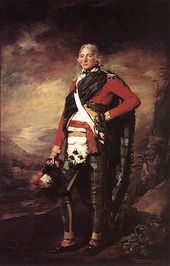
Sir John Sinclair, 1st Baronet, was a Scottish politician, writer on finance and agriculture and the first person to use the word statistics in the English language, in his vast, pioneering work, The Statistical Account of Scotland, in 21 volumes.
Sinclair was the eldest son of George Sinclair of Ulbster, a member of the family of the Earls of Caithness, and was born at Thurso Castle, Thurso, Caithness. After studying at the University of Edinburgh, University of Glasgow and Trinity College, Oxford, he was admitted to the Faculty of Advocates in Scotland, and called to the English bar, but never practised.
Sir John Sinclair, 1st Baronet, was a Scottish politician, writer on finance and agriculture and the first person to use the word statistics in the English language, in his vast, pioneering work, The Statistical Account of Scotland, in 21 volumes.
Sinclair was the eldest son of George Sinclair of Ulbster, a member of the family of the Earls of Caithness, and was born at Thurso Castle, Thurso, Caithness. After studying at the University of Edinburgh, University of Glasgow and Trinity College, Oxford, he was admitted to the Faculty of Advocates in Scotland, and called to the English bar, but never practised.
In 1780, he was returned to the British House of Commons for Caithness constituency, and subsequently represented several English constituencies, his parliamentary career extending, with few interruptions, until 1811. Sinclair established at Edinburgh a society for the improvement of British wool, and was mainly instrumental in the creation of the Board of Agriculture, of which he was the first president.
His reputation as a financier and economist had been established by the publication, in 1784, of his History of the Public Revenue of the British Empire; in 1793 widespread ruin was prevented by the adoption of his plan for the issue of Exchequer Bills; and it was on his advice that, in 1797, Pitt issued the "loyalty loan" of eighteen millions for the prosecution of the war....more

 Sign in with Facebook