Foster Dickson's Blog
August 18, 2026
Four of my poems in “Alabama Literary Review”
 I’m pleased to share that four of my poems have been published in the new issue of Alabama Literary Review, which is housed at Troy University. The poems are “Cycle,” “The Greatest Unknown,” “Manhood,” and “A Long Loud Strike.” I’ve never liked it when a poet tells about a poem before sharing it – we call that a spoiler – so I won’t do that here. Please pick up a print copy of Volume 34, or you can read the new issue soon on ALR’s website.


August 6, 2026
Published in “Nobody’s Home”— Two New Works!
For Immediate Release
August 6, 2026
Nobody’s Home published two new works!
On August 6, 2026, the online anthology Nobody’s Home: Modern Southern Folklore added two new works of creative nonfiction by writers in the South. With a focus on the beliefs, myths, and narratives in Southern culture during the five-plus decades since 1970, these new works constitute the anthology’s seventh expansion.
The two contributors are Sherri Alms and Dr. Danna Walker. Set in Houston, Texas, Alms’s essay discusses the sentiments of a Southerner who has been distant from her family. Walker’s essay, also set in Texas, looks back at her experiences with bringing her father’s ashes home in the 1990s.
Editor Foster Dickson is proud to offer these additional essays that center on beliefs, myths, and narratives in the modern South. To learn more about the project, its focus, and its goals, you can read Foster’s introduction to the project “Myths are the truths we live by,” or other posts in his editor’s blog Groundwork. Writers who are still interested in adding their own voices to the anthology should read the submission guidelines to find out how to submit. The next Open Submissions Period for creative nonfiction will begin in April 2027, though reviews and interviews will be considered year-round.
The newly published works are being rolled out today and can also be accessed on the Index page.
July 27, 2026
My review of “Fourteenth Colony” by Mike Bunn
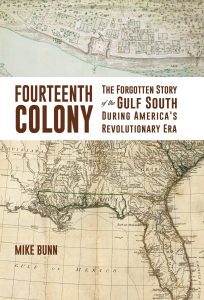 I was proud to review historian Mike Bunn’s book Fourteenth Colony: The Forgotten Story of the Gulf South During America’s Revolutionary Era for the Alabama Writers Forum and just got word that the review is posted. The book was published by NewSouth Books and is available from the University of Georgia Press.
To read the review, click here.
July 23, 2026
Dirty Boots: Do I Feel Fine?
Back when I was a teenager, we listened to a new song by REM called “It’s the End of the World as We Know It.” That was in the late ’80s, and the sentiments were basically euphemistic. Today, in the mid-2020s, they aren’t. The sentiments are real. Born in the 1960s and ’70s, GenXers knew thirty or forty years ago that we were living at the fin de siecle. The 1900s were drawing to a close, and a range of myths about the new millennium abounded. There were people who said the computers would all crash on New Year’s Day, and there were some who thought that Jesus would come back. Now, we know that it was far less cataclysmic; it was just that an era in the history of mankind was coming to a close.
Just as people in the early 1900s must have realized that cars were changing everything, my generation has come to understand what was unleashed when the personal home computer connected to the internet became a thing. When we were growing up, having computers and networks all around was the stuff of space travel, tech and telecoms companies, or science fiction. We knew that NASA and IBM and AT&T had big, powerful computers. In school, we read 1984 about a society that had surveillance cameras everywhere and Fahrenheit 451, which had people watching 24-hour reality TV on huge in-home screens. On re-runs of Star Trek, which originally ran on TV from 1966 to 1969, they carried around cordless devices so they could talk to anyone from anywhere. At the movies, Terminator showed us automated, unmanned machines that flew around looking for people to kill. About the only things we’re lacking these days are the light sabers.
 It turned out that we really were seeing the end of the world as we knew it. There was the world before the internet and smart phones, and there’s the world since. We had no idea that our children, born between the 1990s and the 2010s, were going to prefer an endless scroll of entertainment tidbits over talking to each other. We didn’t foresee that knowing the people around us would be replaced by an über-filtered worldview provided by email, Facebook, neighborhood apps, and Ring cameras. We wouldn’t have believed that shopping in physical stores would give way to online retailers, curbside pickup, and home delivery. And now it seems as though artificial intelligence is patting down the last shovel-full of dirt on the twentieth century’s grave. For last decade or two, computers and networks have made it less and less necessary to answer the door ourselves, shop for ourselves, clean up behind ourselves— or even commune with other people as ourselves! Now, with AI, we won’t even have to think for ourselves, if we don’t want to.
But we still can. If we want to. And we should want to.
I hear people say that AI is everywhere. Not if you put down your phone and get off your computer. When I talk to my next-door neighbor across the fence, AI is not involved. The birds and squirrels that swoop and skitter around my yard in the morning, hunting for worms and seeds and crumbs, don’t even know that AI exists. And though AI recalibrates my phone’s clock twice a year, the sun has yet to yield to our ideas about what time it is. When I hug my wife or my kids, I don’t need AI to make any suggestions. So no, it actually isn’t everywhere. Here’s the simple, yet uncomfortable truth: AI is everywhere that we hand our minds and our lives over to a machine.
Thinking back to that REM song, those who know it will remember the second part of the title: “(And I Feel Fine).” The irony is on full display— “It’s the end of the world as we know it . . . and I feel fine.” Do I feel fine, now that it’s really happening? I don’t think I do. Because it’s clear that we’re not moving toward something better. I’ve considered the idea that I’m being curmudgeonly in late middle age . . . but I don’t think so. I think that Generation X’s mistrust of authority, and especially of corporations, was well founded and that history has proven our skeptical perspectives to be right on. In the ’90s, we thought that corporate leaders wanted to control our lives to maximize their profits, to feed us mediocre bullshit until we didn’t know the difference, and to convince us that we can’t live without their products— and we were right!
As an old liberal-arts major, I know that I should provide my supporting evidence. Here’s one piece. When I did a simple internet search of “Gen Z doesn’t read” earlier this year, here were the first four results:
“Gen Z is Reading Less. What that Means in the Age of Ready Answers” (Forbes, August 2025)
“Are Books Dead? Why Gen Z Doesn’t Read” (Generation Tech, March 2024)
“How Gen Z Came to See Books as a Waste of Time” (The Atlantic, November 2024)
“Gen Z are arriving to college unable to read even a sentence— professor warn it could lead to a generation of anxious and lonely graduates” (Fortune, January 2026)
Reading has been proven, scientifically, to be the best mental exercise there is. The multiple cognitive processes that go into reading keep brain activity thriving. People who read are, measurably, smarter just as someone who jogs or swims is fitter. But these devices have given our youngest generation the sense that reading is not relevant or useful. Yes, it actually is. A plethora of news stories share the dismal facts – declines in intellectual skills and the rise in depression – and point us to obvious conclusions. Declines in whether people value reading prove that we have the passed the point where we are using computers— they are now being used to use us.
I know, I know . . . the guy writing this has you reading it on a computer screen. And I just cited an internet search in my rationale. I’m not a neophobe or a luddite, and I’m not suggesting that screen media or computers be abolished. I am suggesting that we – each of us individually and all of us collectively – should re-evaluate our use of digital devices, screens, etc. and be honest about the gains and the costs. Especially about AI. I guess what I’m saying is: it has already been the end of the world as we knew it, and now it is up to us make sure that we do actually feel fine.
July 14, 2026
Southern Movie 82: “Uncle Frank” (2020)
The 2020 family drama Uncle Frank zooms in on late 1960s–early 1970s rural South Carolina, where a teenage girl named Betty wants to outgrow her small life. Yet, the focus soon shifts from Betty (who grows to be Beth) to her father’s brother Frank, a college professor in New York City who encourages her dreams. The factor that grows in importance during the story is: Frank is gay. And to their traditional Southern family, especially to his traditional Southern father, that isn’t alright. Written and directed by Atlanta-born Alan Ball, who is best known for the movie American Beauty and the TV series True Blood and Six Feet Under, the film stars Paul Bettany and Sophia Lillis as uncle and niece who navigate the difficult situation together.
The story here begins in 1969, when Frank is visiting the family for his father’s birthday. The opening scenes have Betty trying to manage two smaller children, who are running wild through the yard and the house, while the women cook and the men watch TV. After being kicked out of the kitchen because the stove is hot, the children run into the den and disturb the men. Exasperated by the ineffectual attempts to remove them, Daddy Mac (Stephen Root) raises his voice cruelly and harshly to put an end to the disturbance. Daddy Mac is the family patriarch; he is the father of Frank and Betty father’s Mike – making him Betty’s grandfather – as well as their sister Neva. Frank is the oldest. During these scenes, we seeing him sitting aloof on the screened porch, consorting with neither the women nor the men. Via Betty’s background narration, we learn who he is and that she is fascinated by him. She explains that he is a college professor who lives in New York City, that he is more cosmopolitan in his habits than other men she knows, and that he actually sees her. Later, when Daddy Mac is opening his presents, we see the tension that exudes from the father for his son and that Frank takes the abuse silently.
At the end of the visit, Betty is asking about New York City, and Frank encourages her to get out of the stifling Southern circumstance that is their Deep Southern home. They talk in the kitchen, and Frank is dismayed by his niece’s description of her life, which is limited severely by her father’s and grandfather’s ideas. Frank asks about her grades, which she says are all As, and he plants the seed that she could earn a scholarship almost anywhere with a good SAT score. At first, Betty writes him off, saying that she’ll attend SC State. (This line in the dialogue is a major error in the writing of the film. South Carolina State is a historically black college, and no conservative white father in South Carolina in 1969 would have even considered allowing his daughter to go there, especially after the Orangeburg Massacre in 1968, the year before this conversation was taking place.) To close out the scene, Frank adds his willingness to pretend to be Betty’s father to help her get birth control pills. The girl is at once intrigued and excited.
Next we see our heroine – who now goes by Beth – she is walking among other young people, and we hear a voice on the loud speaker welcome the new arrivals to NYU. Her introduction to the city begins with dinner at Frank’s apartment in Greenwich Village, where she and her awkwardly Southern parents get to know Frank’s girlfriend. The woman tells them she and Frank have been together for five years, a fact they’re surprised to hear since no one in the family has ever heard of her. It becomes apparent quickly (to the viewer, but not to Mike and Kitty) through some sly comments that the woman is only posing as Frank’s partner and that she is enjoying the ruse. She tells them after being scolded by Frank that she’s just a bitch, and Kitty flippantly responds that her husband calls her that, too. Grimacing, Mike tries to shift the negative attention from himself by declaring that he’s just glad she’s not black. (This is what I mean, about the girl’s SC State comment.)
The tenor of the show soon shifts to the real issue of the film: the fact that Frank is gay. The scenario begins to unfold for us when Beth is approached by a young man in the dining hall. He asks boldly to sit with her, and she is excited by the attention. Talking over lunch, Beth lets out that Frank is her uncle, and the young man giddily expresses his admiration for the esteemed professor. Soon, Beth and the boy are back in her room, making out, but they stop short of having sex at the boy’s insistence. They then go to a party at Frank’s apartment, where Beth and her new beau Bruce are greeted by a Middle Eastern man named Walid, who goes by Wally . . . and who is Frank’s real romantic partner. In an effort to find Frank among the partygoers in the apartment, Beth and Bruce are separated— she begins drinking, while he is looking for Frank. Then we find out the real reason that Bruce has approached Beth. He, too, is gay and wants to try to seduce Frank, who sees straight through the amateurish attempt. He wryly tells the boy to get out, then he finds Beth, who had gotten plastered. After she gets through puking up her guts, Frank confesses that he is gay, that Wally is gay and has been his partner for ten years, and that her little boyfriend Bruce was also gay and might not be a good guy for her. We also get a hint from Wally of another issue that will become part of the plot: Frank has had a drinking problem in the past, a problem that Wally is particularly sensitive to.
In the morning, Beth has a lot to process, and so does Frank. Though Beth is wide-eyed and obviously nervous, Frank tries to play it cool by fixing them breakfast and offering her water and aspirin for her hangover. He soon asks point-blank whether she feels differently about him, and she hesitantly says no. Then Wally appears, smiling, and the two men banter back and forth about their families not knowing about their relationship. (Wally’s Saudi Arabian family doesn’t know about Frank either). Somewhat playfully, Frank wants to know from Wally why he should come out to his Southern family, since Wally won’t come out to his. “Americans don’t care about honor,” Wally says, which strikes Frank – and anyone who knows anything about Southern culture – as darkly comic and deeply naive. Beth tries to take this all in, over breakfast, but mostly remains quiet while she eats her eggs.
A moment later, the phone rings. It is Mammaw – Frank’s mother and Beth’s grandmother – with bad news from home. Daddy Mac has died suddenly. She wants Frank and Beth to come home right away.
While Frank tries to arrange flights, Beth comes with the news that her mother does not want her to fly in an airplane. She has promised her mother that she would take the train. Wally then interjects and says they should take the car. It’ll be faster, he says, and the two can get to know each on their road trip back to South Carolina from New York City. Frank is hesitant, but he yields to his sister’s directions to her daughter. Uncle Frank is about to become a road movie.
Although they are traveling to a funeral back home, the trip starts off jovial enough. On two-lane back roads, Frank and Beth get to know each other, asking questions and sharing the details of their lives. They stop at a roadside diner, and while they are talking, Beth asks too loud about Frank being gay, so he has to gesture to her to tone it down. Frank asks Beth, in turn, about her early sexual experiences, which leads her to ask about his. This darkens the mood, and Frank asks for the check. What follows is a flashback to Frank’s teenage boyfriend, as we watch them run through tall pines to small lake where they go swimming.
The mood of the story shifts again when Frank notices a car that has been following them. We have seen this car briefly already, and Frank has twisted around in his seat to catch glimpses of it. Now he stops by the roadside to see who is driving. We think for a moment that it will be someone threatening or dangerous. But it’s Wally. Frank is dismayed that he has followed them, but in his own faux-sheepish but partly bossy way, Wally rebuffs Frank’s efforts to shoo him and continues with them (in his own rented car).
At the end of the first day, the trio must spend the night in a motel. The woman behind the counter at check-in is vocally wary of the three of them, asking, “What is the relationship?” Frank tells her that Beth is his niece, and Wally says ridiculously that he is Frank’s nephew. (The underlying context here is that it was, and may still be, common for men to claim their mistress was their niece, an explanation that might satisfy the question of why an older man and younger woman would be traveling together.) The clerk insists, despite them, that Beth will need to stay in her own room. We assume that she would never think that two men would be so brazen as to be openly gay right out in public. That night, as they get ready for bed, Wally and Frank talk a bit about the loss of his father, and we get a sense of how things will go: Frank will not handle this well, and Wally knows it.
Back in the car, Wally asks Beth to ride with him. Now alone, Frank recalls that early romance as we see a flashback of the two teenagers running to a lake. They play around in the dark-brown water for a bit then begin to kiss. We understand one of the two to be younger Frank. In the other car, Wally is probing for answers about Frank from Beth. He wants to know more, and he also criticizes the Southern tendency to be nice all the time. He sees it as hiding something. He also tells Beth that Frank’s sister Neva knows about their relationship. Beth is shocked.
Soon, though, they have new problems. The car that Frank is driving – which he and Wally own – breaks down. They have to take it to a small-town mechanic, where a teenage grease monkey tells them with a smile that it won’t be fixed until next week. Wally tells Frank to leave the car and they can get it on the way back to New York. The grease monkey says that normally they don’t allow that, but if it means that he’ll get to see Beth again then it’s OK. The insinuation is one that none of the travelers appreciate. Sensing that he has stepped over a line, he asks the men if what he just said was OK. Beth uses it as an opportunity to chastise the inept young man, apprising him that he should not be asking their permission to address her. Wally bursts into laughter while the stupid kid wonders what just happened.
Riding together now, they only have a short distance left before they’re home. During the conversation, Beth learns that gay men are executed in Wally’s country, which is why he came to the US. They then stop at an ice cream stand, but Frank stays in the car. Wally reminds him that his father can’t hurt him anymore, and Frank goes into another the flashback. In this one, he and his teenage boyfriend are undressing each other in his bedroom, when Daddy Mac wanders up and looks in the door. He sees them and walks away without saying a word, leaving the two boys paralyzed in an embrace. His memory is interrupted by Beth saying, “We’re here,” and a sign for Creekville appears.
At this point, the movie is just past halfway, moving toward the fifty-minute mark with about forty-five left. We now know why Daddy Mac has soured on Frank. But we don’t yet know the whole story. We are also reaching the point in the plot where Frank has arrived home, something that has been coming but is now upon him.
After a chilly reception from the local motel owner when he is checking in, Frank gives Wally a stern warning about the culture of intolerance in the town then heads for the funeral parlor. On the way, he stops with Beth and buys a sack full of minis, downing one in the car right away. He tells Beth not to tell Wally that he is drinking.
At the funeral parlor, Daddy Mac is laid out in an open casket, and the family is gathered. The room is mostly quiet, and the scene is full of awkward behavior that is darkly comical. Kitty appears first with her neurotic chatter, then Mammaw babbles to Frank about how his father loved him. After that, Frank is looking at his father in the casket when Mike comes over to talk, attempting to share an emotional moment with his brother. Then, while Frank is downing a few more Jack minis in the bathroom, Beth has to defend her decision to stay in a motel rather than at home. It is during that conversation with her mother that Wally’s name slips out. Who is Wally? Oh, just some man they met at the motel . . . a guy driving across the country with his blind dog.
But the real Wally is waiting back at the motel, and he smells the whiskey on Frank. They argue briefly, and Frank asks him not to make an issue of the drinking until after this tribulation is over. Wally makes a veiled reference that Frank clearly gets: “I won’t go through this again.” The men part ways in the dark breezeway, and watching this, we know that Frank’s pain is deep and that Wally’s support has brought him through it.
At the graveside service, Frank tunes out from the sermon and has another flashback. We see what happened next between him and Daddy Mac. The elder man never looks at his son, but tells him that he is never to see the other boy again. If he does, his father told him, I’ll kill you both. Frank never speaks, but listens with his back turned as Daddy Mac warns him about perversion and the fires of Hell. After a moment, Frank runs out the door. Next we see him, teenage Frank is running through the same woods to the little swimming spot, and there, his boyfriend is floating face-down dead. We don’t know what has happened, but Frank pulls him out of the water. And the scene shifts back to the service.
Back at the family home, the gathering continues as do the awkward and darkly comical conversations. However, that will come to an end quickly. Mike comes out of the house to ask the adults to come inside. The lawyer has come to read the will. In the living room, the lawyer is clearly uncomfortable about the timing, since the funeral just happened earlier that day, but since all of the children were present, it was the only time. He shared that Mammaw would get the estate, Mike and sister Neva would each get $25,000, and an elderly aunt would get a few hundred dollars. Saving Frank for last, the squirming attorney reads in halting tones that the eldest son would get nothing— because he is gay. Moreover, Daddy Mac wanted it known that he was ashamed that Frank shares his name. Frank begins to twitch before storming out and driving off in the car. The only one who seems confused is Mike.
In real time, Frank drives out to the wooded lake where he swam with his boyfriend as a teenager. What follows is another flashback, in which the rest of the story is explained. After his father’s words, Frank broke up with the boy, whose name was Sam, and echoed his own father’s fiery rhetoric, asking Sam if he wanted to be a pervert and to burn in Hell. He told Sam never to talk to him again. Sadly, he receives a note from Sam, declaring that he couldn’t change what he is. Frank then runs out to the woods, and that is when he finds his friend dead in the water. (Doing some math and counting backwards from Frank’s remark to his aunt that he is 46 years old in 1973, this early relationship would have occurred in the mid-1940s, a time when homosexuality was not tolerated at all in the rural South.) We are seeing this as a drunk and despondent Frank stumbles to the same pier to relive the moment. Meanwhile, Beth and Wally start looking for him, after Beth discovers that he has not gone back to the motel after leaving his mother’s house.
Wally knows where to find him, though, and in the car on the way to the lake, he tells Beth that he knows what happened there. Once they arrive, Frank is nowhere to be found, but his clothes are piled on the pier. There is also a piece of gold jewelry that Wally says they never take off. Beth and Wally assume that Frank has killed himself . . . until he walks into the motel room. Drunk and belligerent. Wally tries to manage him peacefully and with love, but Frank won’t have it. The two get into a physical fight – Beth is horrified – and Franks screams at Wally, calling him an array of slurs. Finally, Frank punches Wally in the face and leaves. Beth asks if Wally will go after him.
They find Frank at the grave of Samuel J. Lassiter, the boy who Frank rejected so long ago. Wally embraces him. We have seen that Frank is full of self-loathing and grief and guilt. The two embrace, then kiss. In a moment, Beth shows up and tells Frank that she promised the family that she would bring him back. She then gives him an ear-full about his hypocritical insistence that she should be whoever she wants to be, while he can’t be who he is around anyone who disapproves. The scene ends with Frank asking Wally, “You wanna go meet my fuckin’ family?” Yes, Wally replies, but after Frank takes a shower.
The last few minutes are taken up by Frank returning home, where almost everyone accepts him for who he is. His goofy brother Mike tells him that it is “no problem.” In turn then, each person in the family hugs Frank and meets Wally, all of them OK with it except for sister Neva’s husband Beau, who just sort of excuses himself. The kicker, of course, is Frank’s mother who tells him that his father was just afraid of the idea of a man being gay, that Daddy Mac’s own brother Jasper had been gay, and that she knew Frank was all along. The story ends with a brief monologue from Beth, telling us that she has found her place among her people.
All in all, Uncle Frank is a warmhearted film that also has a darker, more sensitive side. Mixing elements of family drama, dark humor, the odd-couple motif, and the road-trip thing, it ultimately ends on a high note. And that is where I take issue with it. The film success in its complexity, dives into deep emotional territory, and has quite a few tense moments . . . then it wraps up a little too cleanly, considering the twists and turns that land us there. Considering the harsher elements of the story, Frank is despised and basically excommunicated by his conservative father, and the young man Sam with whom he had a relationship committed suicide after Frank rejected him. Frank has a severe drinking problem to boot. All three of these are serious— very serious. The movie also touches on other difficult aspects of being gay in the 1970s, like the initial conversation between Wally and Frank over whether Wally can come south to the funeral to support the man he loves. Yet, the outcome is, basically: Aw shucks, we loved you and would have accepted you this whole time! Even Mike, the junior blowhard in the family, chooses love in the end. It makes me wonder about two things. First, if they were this understanding, why did Frank have to go through all that? And second, the theme of the movie seems to be: once the family’s hater is dead, everything is fine.
As a document of the South, though, Uncle Frank conveys something very complex relatively well. Mainly, there really are people from typical Southern families who are unconventional or nonconformists – not just gay men – and who find themselves torn between their own identity and the value system they are raised with. This dichotomy tells some Southerners: you can’t be who you are and be one of us, and being one of us matters most. This has affected, and still does affect, people in the LGBTQ community heavily. Moreover, the religious component of traditional Southern culture lays an even heavier burden on ostracized people. There is the pervading sense that one is not only an outsider in this life . . . then Hell is waiting in the afterlife. For a gay man like Frank, the idea has been instilled in him that his “choices” yield an emotional torture that will never end. And the difficulties that we see in the character of Frank are true of real lives, real people, and real situations. What we also see is how Betty/Beth first regards Frank as cosmopolitan and intriguing, then she gets to see what lies beneath. She had been around him before, but she was seeing him through the child’s lens of ignorance and distance. Her only recognition is that her grandfather and father are harsh and rude to her uncle. Once she knows him more fully, she sees Frank not as mysteriously interesting but as more fully human. The problem with Daddy Mac is that, after witnessing his son with another boy, he reduced Frank to one thing – being gay – and because he opposed that, he refused to allow Frank to be anything else: a son, a brother, even a human being. While I dislike the way that the film implies that life gets better when a bigot is dead, I will acknowledge that, in this story, Daddy Mac’s influence ended with his life, and that is quite real. The death of a patriarch like Daddy Mac would affect change in any Southern family. In this case, Frank the eldest son will not ascend to be the family’s leader, but he can begin to heal by revealing himself fully, sharing his love for Wally with his family, and coming to his home and his family without his father’s essentialist attacks.
July 7, 2026
NCTE’s “The Next Draft” Student Writing Contest
In honor of the nation’s 250th anniversary, The National Council of Teachers of English has announced “The Next Draft.” This writing competition is for high school students in the United States, and according to the guidelines, students who enter “must be nominated by a guardian or an educator.” The period for nominations and submissions opened on June 29 and closes on September 30. To enter, student writers must respond to one of two provided prompts, and the use of AI tools is not allowed.
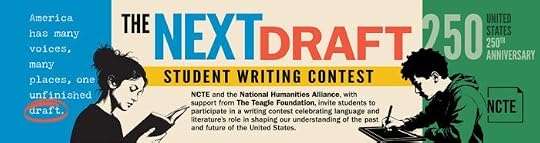
Student writing contests are important to our culture, because they help to identify talented young writers early on. Having worked with high school students for nearly twenty years, I have seen how recognition of a creative student’s abilities helps to sustain their efforts to keep at it. In the cultures of US high schools, high-performing athletes and recipients of monetary scholarships are most often held up as examples of an educational institution’s best and brightest. Far too often, our young writers (and artists) hone their craft quietly and without being noticed, because their works offer no spectacle for a crowd nor do they fulfill promises of great financial rewards. But we need to foster these students’ talents and abilities as they grow into maturity and become the next generation’s novelists, songwriters, journalists, and screenwriters.
June 25, 2026
Dirty Boots: Dungeon Days
Though common narratives about my hometown of Montgomery, Alabama don’t include facts like this, the city once had a busy, if not thriving set of live theater offerings. Even before the Alabama Shakespeare Festival relocated to Montgomery from Anniston in 1985, the Montgomery Little Theater had been around for a long time. (Unfortunately, the Little Theater closed in 1994.) The city has also had two dinner theaters: The Lamplighter, which operated from the 1960s into the early 1980s, and another at Faulkner University that opened in 1987 and closed in 2018. Alabama State University and Auburn University Montgomery (AUM) have longstanding theater programs, as well. And there was also Huntingdon College’s Dungeon Theatre.
“The Dungeon,” as it was called, was a black box theatre in the basement of Massey Hall. Founded in Tuskegee as Women’s College of Alabama in 1854, Huntingdon College was moved to Montgomery in 1909, and Massey Hall was one of the current campus’s early buildings. Massey’s basement originally housed a gymnasium, and the space was used for physical education and sports until the adjacent Delchamps Center – now called Roland Arena – was built in 1958. After that shift in use, an English and drama professor at the now-coed college named began using the basement for a theater class. The Dungeon Theatre came into being in 1973, when performances started being held there after a significant renovation.
My experiences in The Dungeon came in the middle of its time frame, in 1992 and 1993— nineteen years after the 1973 renovation and fifteen years before building was torn down in 2008. Barmettler had retired by the time I came along, and Fiona then-Stewart now-McLeod was the theater director. I knew Fiona from my days in community theatre, as well as from the Carver Creative and Performing Arts Center (CCPAC) where she had done the one-woman show Shirley Valentine as a guest artist. That year, we started with a new play called Providence Convent, and followed it with Come Back to the Five and Dime, Jimmy Dean, Jimmy Dean, then The Apple Tree.
My time in The Dungeon followed four or five years of community theatre experience that began, for me, in the eighth grade. Following my older brother into a new passion that came to him just as he was graduating from high school, I piggybacked my way into small roles on stage and backstage. While working on the crew for a production of Mame at the Montgomery Little Theater in the summer of 1989, I was spotted by someone at the Alabama Shakespeare Festival and asked to fill a vacant non-speaking role in the MFA company’s production of Shakespeare’s Titus Andronicus. That same summer, we went downtown and participated as extras in the film Long Walk Home. As high school progressed, we put on one-acts by writers like Charlie Schulman at school while I volunteered to help out backstage in the evenings at Theatre AUM and Faulkner University’s Dinner Theater. That experience led me to apply for CCPAC’s Technical Theatre program, which helped me to land freelance gigs supporting road shows at the Davis Theatre downtown or setting up large outdoor events that required lighting and sound. From the dim areas on the sides of stage, I watched and listened to plays, musicals, ballets, concerts, and variety shows. We built tombstones for Edgar Lee Masters’ Spoon River Anthology, tree-like trellises for Anne of Green Gables, an old living room for The Man Who Came to Dinner, and a rolling bed/easel for a ballet based on the life of Henri Toulouse-Lautrec. We put on a stage adaptation of Dracula and the No Frills Revue. One memorable road show that I worked at the Davis was an African-American comedy called A Hard Man is Good to Find. In my spare time, I was going to see shows like Shaw’s Heartbreak House and Weiss’s Marat/Sade, both of which were staged at AUM. In addition to what was happening on stage, community theater in the late 1980s and early ’90s was a hodgepodge of local personalities, and there always seemed to be something to going on.
While other teenage boys my age were playing football in the fall and baseball in the spring, this is what I was doing. I quit playing football after my ninth-grade season to get more involved with theater. Of course, my conservative Southern classmates had a nagging question: was I turning gay? No, I just knew that football would never carry over to college for me but theater probably could. Besides, I found theater people far more appealing than our coaches, who mostly stood around in polyester shorts and scowled as we lost to other teams.
That year 1992 – 1993 in The Dungeon was busy. In a small drama department at a small liberal-arts college, substantial to-do lists filled our practicum hours. Classes were for coursework, and evenings were for rehearsals. To my chagrin, I got cast with a small speaking role in the first show we did, playing an elderly custodian at a girls’ convent-school. But I did the best I could, patterning the portrayal after the foreman at my landscaping job the summer before. That show had a mostly female cast, which suited our mostly female department, and the same was true for the winter show: Jimmy Dean. I got to hang back for that one and mostly did set construction and other prep work. Then the spring brought a children’s show, The Apple Tree, and having the job of stage manager put me back in my element.
But my time in theater was coming to a close in the spring of 1993. Several factors played a role in my decision to go in a different direction, among them a newfound desire to become a writer. That meant a major life change, since theater people really concentrate their time on doing shows. Leaving that life, it was hard to maintain those friendships, since everyone else kept joining the casts for the next shows and spending their evenings on lines and blocking. Though I put theatre behind me, I took something important away from those years – ages 13 to 19 – and that was a sense of how big and complex life really is. While other boys were hanging out in parking lots or trying to figure out how to beat their crosstown rivals on the ball field, I was experiencing nightly run-throughs of plays that carried my mind far beyond my hometown. I learned about loneliness and eccentricity from Carson McCullers’s Ballad of the Sad Cafe and about the passage of time from Thornton Wilder’s Our Town— things that classmates and coaches could never have taught me.
Though I was swimming upstream by getting involved in theatre in the 1980s–’90s culture of the Deep South, which created unique difficulties in daily life, I was damn lucky to have gone feral at an early age. Theatre was not anything my parents encouraged . . . or even supported. (In fact, they got divorced when I was fifteen, so I became even more unsupervised.) I was spending relatively little time with people my own age while getting to know some unexpectedly wonderful, creative people. The adults in the theatre crowd didn’t seem to care how late I was out or whether I consumed the alcohol that always seemed to be available. No one shielded me from dirty jokes or unseemly situations. A few times, old gay men tried to pick me up. In no way was I protected or exempted. And when you add all of that to experiencing the plays themselves, this ol’ boy was just going to come out different.
And I hate that such a life isn’t available to our most creative and unique Southern teenagers today. Not only is that subculture largely dissolved – too many are staring at phones or streaming a show, not patronizing local theater – the unsupervised quality of that way of life is impossible. Nobody had device to record anything back then, and there were very few surveillance cameras around. My parents couldn’t check Life360 for my location or text me that I needed to get home. I was there in the last years of something chaotic and free and exhilarating, when a teenager in a mid-sized city in the Deep South with ambitions beyond conformity and normalcy could encounter people who would show him other options than playing sports, going to prom, then majoring in business. With modern supervision rules and the omnipresent threats of potential lawsuits and being recorded, I don’t see where a teenager could even begin to explore life the way I did. One other thing I’m sure of is: it can’t be done vicariously by watching other people on YouTube and TikTok. Nope, you gotta get out there and live it firsthand.
June 15, 2026
The Open Submissions Period for “Nobody’s Home” ends today.
 This year’s Open Submissions Period for Nobody’s Home: Modern Southern Folklore closes today. All submissions made between April 15 and June 15 will receive a response in July. Accepted submissions will be published in August 2026.
This was the fourth annual Open Submissions Period for Nobody’s Home. The project was founded in 2020, and four reading periods were held within a year’s time, from the latter half of 2020 through the first half of 2021. Subsequently, unsolicited submissions have been read during an Open Submissions Period in the spring, with accepted works published each summer.
Today, Nobody’s Home features more than fifty essays that discuss a variety of beliefs, myths, and narratives that have affected or have arisen from Southern culture since 1970. In addition, the project offers secondary-education lesson plans for English and Social Studies classrooms, suggestions for documentaries about Southern culture, and Groundwork, the editor’s blog.
June 4, 2026
“Ode to Billy Joe,” 50 Years Later
Today, June 4, 2026, marks the fiftieth anniversary of the release of the 1976 film Ode to Billy Joe. The original concept came from the Bobbie Gentry song of the same title.
The lyrics and style of the original song are haunting. The fingerpicked guitar and the sultry sound of Bobbie Gentry’s voice might remind a modern listener of Dolly Parton’s “Jolene,” but this time there’s a jazzy swagger to set the tone instead of a desperation in a lovelorn request. (“Jolene” came out six years after this song, in 1973.) In “Ode to Billy Joe,” released in the summer of 1967, Bobbie Gentry is singing about a conversation at the family table. It is summer in the Mississippi Delta, and they are discussing mundane matters, and also the suicide of a local boy named Billy Joe McAllister, who jumped off a bridge. The speaker in the song is a teenage girl, and her involvement in whatever caused him to jump is implied. The girl loses her appetite after her brother mentions that he saw her talking to Billy Joe after church on the Sunday prior. Near the end of the song, her mother says that the preacher stopped by their house and had told her that he had a seen Billy Joe and a “girl that looked a lot like you” throwing something off the same bridge that Billy Joe jumped from. We don’t know what has happened between Billy Joe and the girl, but it sounds ugly.
 The 1976 adaptation, released fifty years ago today, was directed by Max Baer, Jr., who was probably best known to fans of classic television as Jethro Bodine on The Beverly Hillbillies. This was Baer’s third (and final) foray into making feature films, after 1974’s Macon County Line and 1975’s The Wild McCullochs. The first of those, Macon County Line, was one he wrote and starred in, but did not direct. The film was surrounded by a minor controversy that was rooted in the opening credits stating it was based on real events . . . when it wasn’t. Beyond that, the film lacked a coherent plot line then devolved into a strange kind of random violence. Looking at reviews and ratings, that second film, The Wild McCullochs, was just bad. Baer directed that one, then he directed Billy Joe.
The problem with adapting this popular song into a feature film is that the song’s appeal lies in its mystery. We never know what Billy Joe and the girl were seen throwing off the bridge, so we assume that it was something they wanted to remain hidden. It is implied that the female voice telling us the story was that girl and she implies that she knows what happened but doesn’t tell. So we never do know why Billy Joe jumped or why she mourns him. However, in a film, it becomes necessary to show us what happened, since film is a visual medium, and generally audiences want some kind of resolution to a conflict. To make this song into a film, Max Baer, Jr. needed to alter the original narrative, eliminating the mystery and giving audiences some relief in the form of an answer.
For reasons I will never understand, Baer chose to replace that mysterious quality with the element of guilt after an illicit homosexual experience. Where did that come from? The song never says one word about a Billy Joe having a homosexual experience, never even implies it. My best interpretation of the song is that our speaker had gotten pregnant by Billy Joe, then hid the pregnancy and delivered the baby in secret, which was what they threw off the bridge. That interpretation has flaws, but I can’t think of a better one in the poor farming culture of 1950s rural Mississippi. They certainly weren’t tossing bags of cash from a bank robbery or sacks of bloody clothes from a killing spree (which are some things that a modern director might try). The film ignores the thing thrown off the bridge and shifts the plot and conflict to Billy Joe’s guilt over a sexual encounter with another man, which occurs in shadows of the seedy adult section of the local fair reserved for a batch of prostitutes that had been brought in.
What was, in some ways, even harder to deal with, for me, was who this homosexual experience was with. The other person involved in the tryst was the local sawmill owner Dewey Barksdale, played by James Best. As a GenXer who was a boy during the heyday of The Dukes of Hazzard, James Best was well-known as Roscoe P. Coltrane. the buffoonish sheriff who tried and failed to do Boss Hogg’s bidding again and again. I know that Dukes of Hazzard ran from 1979 to 1983, and that Ode to Billy Joe was released in 1976, but I couldn’t watch it – well after its release and well after the TV show had ended – without connecting Best to that silly and clownish TV character. I also couldn’t help asking myself about the movie, If they really did bring in a bunch of prostitutes to the local party, what young man would snuggle up to James Best instead of one of those girls? If Billy Joe did that, then he did have some personal issues that would have been hard to reconcile with the culture he lived in.
By this time, fifty years after the film’s release, Ode to Billy Joe is not that big of a deal. But it is interesting to me as an example of an early Southern movie that dealt with the issue of intolerance toward LGBTQ people in the culture. Billy Joe is so distraught about what he has done that he cannot go on with life. Toward the end of the film, after Billy Joe is dead, Dewey approaches the young girl who is left behind, Bobbie Lee Hartley, and offers to out himself as the cause of Billy Joe’s death. She tells him that it won’t matter and leaves him to deal with his guilt on his own. Considering Ode to Billy Joe, which is set in the 1950s, in light of films with LGBTQ themes that preceded it, like 1959’s Suddenly, Last Summer and 1961’s The Children’s Hour, it’s a pretty dour assessment of the reality on the ground at the time.
May 26, 2026
Reading: “The Liberation of Lord Byron Jones” by Jesse Hill Ford
The Liberation of Lord Byron Jones
by Jesse Hill Ford
My rating: 4 out of 5 stars
Thinking about the term speculative fiction, some literary works tell us a story about people who didn’t exist but who could have. In that way, this fiction subgenre allows us to explore and probe at life’s problems with our imaginations rather than applying critical reasoning skills to sets of real occurrences. And what better laboratory for the imagination than the segregated Jim Crow South at the end of its days, when the ideals and laws and habits and practices of that culture were coming undone. Certainly, we have the history, the interviews, the documents, the photographs and video footage taken by numerous journalists and other onlookers between the mid-1950s and late 1960s. But sometimes facts and documentation aren’t enough to satisfy our desire to think more about these difficult situations and how real people may have navigated them.
 Set in the fictional town of Somerton, Tennessee, Jesse Hill Ford’s 1965 novel The Liberation of Lord Byron Jones follows a twisted story centered on divorce proceeding between a black undertaker LB Jones and his sultry wife Emma, who has been cheating on him with a white police officer named Willie Joe Worth. Caught in the mix are two white attorneys, the small town’s elder statesman Oman Hedgepeth and his nephew Steve Mundine. Rounding out the main cast is Mosby, a very large black man who ran away from the town when he was a boy after a white policeman named Stanley Bumpas beat him up badly. Mosby’s return to the town to get revenge on Bumpas is coincidental to the situation with the divorce and the lawyers, but he sets the town on edge when he accidentally kills a local grocer. The people of Somerton are mostly unaware of the potentially explosive details of an interracial affair that could soon go public, but they are very aware of the grocer’s unsolved murder and of the growing movement for Civil Rights.
The main character in the novel is Oman Hedgepeth, an aging scion of the old guard. He is a man that people – white and black – look to for answers, as both a man of resolve and a man of segregation. Oman has a problem, though: no heir. Hidden behind the outward persona of steady leadership in the small town are his deep bitterness and terrible loneliness. The woman who he loved as a young man left him before they could marry, and he never recovered emotionally. Without a wife or children, he looks to his moderately liberal nephew Steve Mundine to take over his law practice. Oman is a tortured soul who believes in the paternalistic and dehumanizing ideals of Jim Crow, but his long-kept secret involves a brief sexual affair with a married black housekeeper when he was in law school, a situation that was discovered by his landlady. This experience, when he was faced with a black person’s humanity, is something he cannot reconcile within his life’s experience. Now, in the story that the novel tells us, he is representing a black man who allegations of infidelity involve a married black woman sleeping with a white man. What makes the matter more complex for Oman are the peripheral facts: he got Willie Joe his job, Willie Joe has a wife and children, and it is a crime for a white man to have sex with a black woman. Oman knows that, if Willie Joe’s name comes out in court, he will lose everything – his job, his family – and probably go to prison (for something Oman himself has done).
That brings us to Steve Mundine. Steve has gone away from the South, met and married a beautiful woman named Nella, then came back to live in Somerton and work with Oman. The younger man has more progressive ideals, though he is still a realist who has been raised in the South. However, his wife is not. She does not understand Jim Crow, nor is she wiling to tolerate its manifestations the way her husband does. The couple is swimming in the turmoil of the Civil Rights-era South, and their differing responses to what they agree is wrong stresses their marriage. At this wife’s urging, Steve tries to intervene with LB Jones and convince him that he is in real danger, and he also uses his friendly connection to the local DA to facilitate some sort of truce that preserves the peace. Where Oman is a strong presence in the community, even while dealing with his own inner demons, Steve is clumsy and hapless as he tries to navigate the many tendrils of white supremacist culture. He must deal with an uncle and mentor with whom he doesn’t agree, with a wife who is unwilling to conform to the culture he has brought her into, and with a legal system whose ways he opposes but which he isn’t willing to fight.
The title character Lord Byron Jones provides the catalyst for the conflict. He is a patient, thoughtful man with conservative values that could almost be called prudish, and he has married a woman who is younger and who does not share his sense of stoic propriety. Of course, being the local black funeral director, he is wealthier than the black people around him, and his living is not dependent on white people. Yet, he has a problem: his wild-at-heart wife is too much for him to handle, and since he is not satisfying her lust for life, she has begun an illicit sexual affair with a white man, a police officer no less. As the novel’s story begins, LB Jones has reached his breaking point and wants a divorce. His wife Emma is willing to let the situation go on as it is, but he says no. LB Jones comes to Oman Hedgepeth to serve as his attorney, since Emma has enlisted a white attorney of her own. Acting out of his progressive ideals, Steve urges Oman to take the case, even though Oman would rather not. Yet, LB Jones has put himself in a tight spot. In order to substantiate his allegations, it will be necessary for him to name the man who his wife is having an affair with. In a small Southern town in the mid-1960s, a black man will have to call out a married white police officer in open court, alleging that the white police officer has committed the crime of interracial sex. Everyone involved knows that this will be explosive and that LB Jones is putting himself in danger of being killed, if the secret will be protected.
Willie Joe Worth is a problem in own right. Along with Stanley Bumpas and the police department’s old desk clerk, they run a nightly racket that centers on false and unfair arrests of unwitting black people. Willie Joe and Stanley cruise the streets at night, finding black people to arrest; then when they are booked into the jail, the old clerk as a dual set of ledgers, one for real arrests and one for their sham arrests. This scheme yields some fines (which are taken as bribes) and also serves the purpose of maintaining the climate of fear necessary to exert control. Though Bumpas is not interested in it, Willie Joe also uses the false arrests to kidnap and sexually assault black women in the back seat of the patrol car. Willie Joe’s corruption is near-total, which leaves us no reasons to feel sorry for him as he faces the possibly of being outed.
This then brings us to Mosby, who adds a-whole-nother dimension to the story. When we meet him, he is arriving on a train, carrying a cigar box. He gets off the train and goes into the black part of town, stopping by a small grocery for what seems like an unusually large amount of food. He scarfs it all down outside, then realizes that he left the cigar box in the store. When he goes back inside, the old white grocer has his box – and its secret: that it contains a pistol – and half-taunts, half-threanens the big black man that he will call the law. Knowing he can’t have that, Mosby charges the old man, fights him, takes the cigar box back, and leaves. We find out that Mosby has come back to the small town after being away for many years. He was an orphan taken in by Mama Lavorn, who runs a nightclub and hotel. Years earlier, Mosby left town at the age of thirteen after the burly, racist police officer Stanley Bumpas beat him severely. (During the time of this story, Bumpas is an older man and the nighttime patrol partner of Willie Joe.) Mosby has returned with his gun to kill Bumpas, but since his altercation with the grocer, he has to stay unknown and out of sight, especially after the man dies from his injuries. As Mosby languishes with nothing to do, allowing the hubbub surrounding the grocer’s death to subside, he takes on the job – at Lavorn’s suggestion – of providing security for LB Jones. This is something that Jones doesn’t want. By the novel’s midpoint, Mosby goes to kill Bumpas, knowing that the old cop will be out working on his farm on that particular day. Ultimately, though, Mosby decides from his hidden perch in the woods that putting his past behind him will be better than revenge.
I won’t put any other spoilers about the plot or the ending here, since I would encourage people to read the novel for themselves. But I hope that anyone could see how someone, or everyone, involved in this story will be hurt by this confluence of factors, all of which are happening amid the backdrop of growing Civil Rights protests. Oman is the man who people in town rely on for evenhanded leadership, and he has allowed himself to become part of a big ol’ mess. People are telling him to fix it, to talk sense in LB or his wife or Willie Joe, but he can’t just fix it. As for Steve, the liberal ideals that he has presented to his wife have proven to be things he can’t live up to. Mosby has nothing to lose— unless he is recognized as Bumpas’s boy-victim from years ago, as the killer of the older grocer, or both. And LB, he is an otherwise reasonable, peaceful man walking straight into almost-certain death by threatening to expose a corrupt white police officer. This scenario – one that fits the paradigm of speculative fiction – has all trains heading toward each other on the same track, and by doing so, the story dives into some of the nuances, challenges, and hypocrisies of the Jim Crow South.
And that Jim Crow versus Civil Rights aspect of it is personified in the minor character Johnnie Price Burkhalter. Where Willie Joe Worth represents “white trash” – immoral, no-count, power-abusing – Johnnie Price is the affluent Southern racist. He is from generational wealth, owns the hardware store in town, and is part of the power structure. His is the voice of opposition to Civil Rights, evidenced by the story that he tells to Steve and Nella about thwarting a would-be protestor outside his store by brandishing a shotgun and threatening to use it. Steve does his best to tolerate the braggadocio, knowing that’s just who the man is, but Nella finds him utterly reprehensible. And he is, that and more: entitled, vulgar, haughty, self-righteous. White privilege has gone to his head. Without the Johnnie Price’s presence in the novel, Somerton’s overt symbols of bald racism would be Willie Joe and Stanley Bumpas, two working-class brutalizers. Johnnie Price Burkhalter, being from the wealthier, propertied class, adds that extra bit of oomph to our sense that the bad guys really are bad.
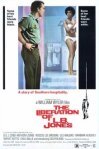 I stumbled across this novel while browsing the shelves in our college library, and having seen the 1970 movie adaptation already, I decided to pick it up and read it. The movie, which is pretty good, hovers between Southern history and blaxploitation, but the novel made me realize the film’s limitations. There is an emotional depth on the page that gets diminished on screen, and that visual medium with its limited time frame is forced to reduce the story to being a thriller. I should mention one word of warning for a modern reader: the text of the novel, especially the dialogue, is littered with racial slurs. The racial tensions are there in the film, as are the complexities of the plot, but both the emotional depth and the number of times that the N-word is used are reduced sharply in the adaptation.