Joseph Falank's Blog
July 12, 2017
MYSTERY GARDEN Retitled
It's not unusual for a book title to change (even numerous times) before it's published, and certainly each of mine have gone through their share of changes along the way. Initial titles tend to be placeholders, something to circle back to later when a good shot of inspiration strikes, unless the author has a really good feeling about their title and keeps the first one that popped to mind. For me, I always think I know what the story will be called, then, through the revision stages on the manuscript, come to find a name I like better that also better suits the tale.
In the first draft, Seeing had been titled Run to Me. I believe the second, and final title came shortly before the first draft was finished. As I've stated before, the idea that served as the springboard about that book was of a boy running a race. That initial title put too much focus on the climactic race itself, whereas the title Seeing played more into Jake Sheppard's faith overall.
Before I went with The Painted Lady, my second novel had the title of Pictures. The reason for that change had been twofold; first, I liked the Lady title better, and, second, I didn't want to do another book with a one-word title. Yes, these are things I think about.
On the cover page of the manuscript for my novella, An Unexpected Visit, I had that title plus another beneath it: The Long Weekend. My choice of the final title was mostly due to that one emphasizing further the thriller aspect of the story, letting the reader know from the get-go that something unforeseen was going to take place. The words "the long weekend" do appear in the text of the story, so I still got to use it.
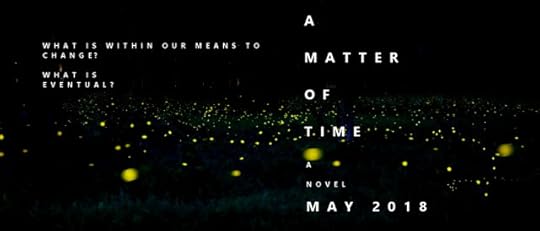
What this is all leading to is the reveal I hinted at the other day on my Facebook Author page, that of the new title for my upcoming third novel (fourth book) to be released in May 2018. Originally called Mystery Garden, I found through editing the second draft that the titular garden doesn't carry the same amount of focus nor mystique, but rather the theme of eventuality does present itself on numerous occasions. Therefore, I announce to you, my dear and faithful readers, that my next book will be called...
A Matter of Time
Here is an updated summary:
After mildly successful, self-proclaimed spook writer, Malcolm Aton, puts the finishing touches on his newest novel - a poignant work that he hopes will change the trajectory of his stymied career and reignite his writing passions - a message alerts him to a family emergency.
Convinced to return to the home, and hometown, he stopped looking back on with any sort of fondness, to care for his ailing father, a septuagenarian stricken with Alzheimer's, Malcolm must come to terms with the choices of his past, as well as prepare himself for the portions of his future that will never be within his control to determine.
A Matter of Time will be available in paperback and e-book from Winter Goose Publishing in May of 2018.
For more about this title, stay tuned here.
In the first draft, Seeing had been titled Run to Me. I believe the second, and final title came shortly before the first draft was finished. As I've stated before, the idea that served as the springboard about that book was of a boy running a race. That initial title put too much focus on the climactic race itself, whereas the title Seeing played more into Jake Sheppard's faith overall.
Before I went with The Painted Lady, my second novel had the title of Pictures. The reason for that change had been twofold; first, I liked the Lady title better, and, second, I didn't want to do another book with a one-word title. Yes, these are things I think about.
On the cover page of the manuscript for my novella, An Unexpected Visit, I had that title plus another beneath it: The Long Weekend. My choice of the final title was mostly due to that one emphasizing further the thriller aspect of the story, letting the reader know from the get-go that something unforeseen was going to take place. The words "the long weekend" do appear in the text of the story, so I still got to use it.
What this is all leading to is the reveal I hinted at the other day on my Facebook Author page, that of the new title for my upcoming third novel (fourth book) to be released in May 2018. Originally called Mystery Garden, I found through editing the second draft that the titular garden doesn't carry the same amount of focus nor mystique, but rather the theme of eventuality does present itself on numerous occasions. Therefore, I announce to you, my dear and faithful readers, that my next book will be called...
A Matter of Time
Here is an updated summary:
After mildly successful, self-proclaimed spook writer, Malcolm Aton, puts the finishing touches on his newest novel - a poignant work that he hopes will change the trajectory of his stymied career and reignite his writing passions - a message alerts him to a family emergency.
Convinced to return to the home, and hometown, he stopped looking back on with any sort of fondness, to care for his ailing father, a septuagenarian stricken with Alzheimer's, Malcolm must come to terms with the choices of his past, as well as prepare himself for the portions of his future that will never be within his control to determine.
A Matter of Time will be available in paperback and e-book from Winter Goose Publishing in May of 2018.
For more about this title, stay tuned here.


June 30, 2017
A Happy Book Birthday
Seven years ago (at age 27) I wrote a story based upon a thought of a boy running a race at a school event. The spectators in the bleachers watched, cheering, as the only other person in the race was falling behind, tiring, as the boy in the lead further distanced himself through great strides and impeccable control. But it wasn't the finish line ahead this boy I imagined had his eyes set on. There, beyond the end of the track, was something, perhaps even someone, that no one else could see.
At the time of the thought I didn't know who or what the boy was seeing. But I wanted to find out.
I worked backwards from that climactic race, figuring out the characters, the plot, and hand wrote much of the first draft of that story in a green notebook given to me by my girlfriend, who is now my wife. She had given me the notebook not just as a gift, but as a way to get started. Because she knew I had always wanted to be an author. And there was no other way to do it than to get writing.
There had been four previous (failed) attempts over the course of three years - four completed manuscripts that ranged from a massive 109,000 word sci-fi/horror Invasion of the Body Snatchers/Zombie Apocalypse/Stephen King mashup, to a modest, quiet novel about a girl suffering from terrible anxiety, to two young adult stories (one about a girl seeing ghosts and the other about an adopted child who begins to believe his life is tied to the story of a book). None of these manuscripts got beyond the initial query stage. I still have them though - copies of the manuscripts. They sit in boxes. I keep them for their nostalgic value, and as reminders that every writer starts somewhere. They are how I learned.
The fifth story - this story of the boy running the race - was The One. I knew it. I felt it. This book was strong enough, was funny, touching, heartbreaking, inspirational - it was everything I wanted my first published book to be. It would set the tone for everything else I would write. I promised myself I would never give up on the story, wouldn't go on to write something else, I would just keep editing it and editing it and making it perfect because I knew - just knew - this book, originally titled Run to Me when I started hand writing it in the pages of the green notebook, was going to be my first published novel.
And it was.
It took four years of writing, and editing, and editing some more, and querying both agents and publishers, and more editing, and adding and subtracting, and more querying, but eventually I got a Yes! from a publisher - you only need one Yes!
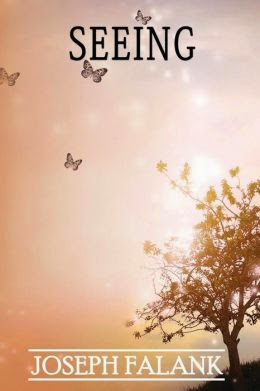
Winter Goose Publishing released my debut novel, Seeing , on June 30, 2014.
I have received many beautiful comments and reviews regarding the book, but perhaps my favorite came from Erik Weibel of thiskidreviewsbooks.com, who said, "Even though this isn’t the typical action/adventure book I usually go crazy over, the book really left an impression on me. The story kept me reading. I finished it in one day. The story, even though is one of loss, is also one of hope. It is motivating, in a way. The book is appropriate for all ages, but I think kids 12+ and adults will truly enjoy the message of the story. For anyone who says small press publishers don’t produce good books – check out Seeing. It will change your mind in many ways."
What's more, at the end of the year, Erik named Seeing one of his Top Books of 2014.
I couldn't have asked for a better start.
Seeing is available at Amazon, B&N, and anywhere else books are sold. It is available in both paperback and e-book formats. If you haven't read it yet, please consider checking it out - download the free sample for your Nooks or Kindles, then go from there. If you have read Seeing and haven't left a review on either Amazon or Goodreads, please consider dropping a few honest words. Every little bit helps.
At the time of the thought I didn't know who or what the boy was seeing. But I wanted to find out.
I worked backwards from that climactic race, figuring out the characters, the plot, and hand wrote much of the first draft of that story in a green notebook given to me by my girlfriend, who is now my wife. She had given me the notebook not just as a gift, but as a way to get started. Because she knew I had always wanted to be an author. And there was no other way to do it than to get writing.
There had been four previous (failed) attempts over the course of three years - four completed manuscripts that ranged from a massive 109,000 word sci-fi/horror Invasion of the Body Snatchers/Zombie Apocalypse/Stephen King mashup, to a modest, quiet novel about a girl suffering from terrible anxiety, to two young adult stories (one about a girl seeing ghosts and the other about an adopted child who begins to believe his life is tied to the story of a book). None of these manuscripts got beyond the initial query stage. I still have them though - copies of the manuscripts. They sit in boxes. I keep them for their nostalgic value, and as reminders that every writer starts somewhere. They are how I learned.
The fifth story - this story of the boy running the race - was The One. I knew it. I felt it. This book was strong enough, was funny, touching, heartbreaking, inspirational - it was everything I wanted my first published book to be. It would set the tone for everything else I would write. I promised myself I would never give up on the story, wouldn't go on to write something else, I would just keep editing it and editing it and making it perfect because I knew - just knew - this book, originally titled Run to Me when I started hand writing it in the pages of the green notebook, was going to be my first published novel.
And it was.
It took four years of writing, and editing, and editing some more, and querying both agents and publishers, and more editing, and adding and subtracting, and more querying, but eventually I got a Yes! from a publisher - you only need one Yes!
Winter Goose Publishing released my debut novel, Seeing , on June 30, 2014.
I have received many beautiful comments and reviews regarding the book, but perhaps my favorite came from Erik Weibel of thiskidreviewsbooks.com, who said, "Even though this isn’t the typical action/adventure book I usually go crazy over, the book really left an impression on me. The story kept me reading. I finished it in one day. The story, even though is one of loss, is also one of hope. It is motivating, in a way. The book is appropriate for all ages, but I think kids 12+ and adults will truly enjoy the message of the story. For anyone who says small press publishers don’t produce good books – check out Seeing. It will change your mind in many ways."
What's more, at the end of the year, Erik named Seeing one of his Top Books of 2014.
I couldn't have asked for a better start.
Seeing is available at Amazon, B&N, and anywhere else books are sold. It is available in both paperback and e-book formats. If you haven't read it yet, please consider checking it out - download the free sample for your Nooks or Kindles, then go from there. If you have read Seeing and haven't left a review on either Amazon or Goodreads, please consider dropping a few honest words. Every little bit helps.
June 3, 2017
Coming Around to the Idea of a Series (aka The Long Journey)

I've dabbled in this subject before.
Months before Maddie was born, I devoured the first Harry Potter novel - yes, it took me about sixteen years to get around to beginning what will be considered J.K. Rowling's magnum opus. Don't judge me. Truth be told, I was spoiled on the movies, and read in a lot of other genres and authors while the Potter books were being published. And while the books are always better (far better), the endings and main themes were explored and displayed in great depth in the films. So I knew the ultimate fate of Harry Potter and the enormity of his battles with He Who Must Not Be Named long before I read the first page of The Sorcerer's Stone. But I enjoyed the book immensely.
Unfortunately, I have yet to read the second book, Chamber of Secrets, even years later. I do plan to read them, but again, life and other reading, and writing, and many other things has gotten in the way.
While in high school, I read Lord of the Rings, a fascinating, if not bloated book (mine was the single volume of the three main books). There's not much I can tell you from memory that you haven't seen in those films, save for a few nonessential side characters and treks that didn't make it to the big screen.
A few years ago I read the Hunger Games' three books (Catching Fire the best of the three, in my opinion).
Currently, I have just finished the third novel in the Dark Tower series, and am reading through Still Alice in my attempt to get a wider understanding of Alzheimer's Disease before picking up the fourth DT novel, Wizard and Glass.
I'm afraid to admit there are many other truly wonderful sets of books that constitute a series that I have not yet read. The Chronicles of Narnia, Chaos Walking, His Dark Materials, Discworld, The Dark is Rising to name a few.
In my own writing, all of my stories have been developed in such a way that they're wrapped up in a single volume. It's just how I operate.
Until last spring.
During a "break" (because when do writers ever truly stop working?) after finishing a first draft of a YA novel, I got an idea for a story that could possibly be the first steps of a much longer journey. I had been reading one of the Walking Dead novels by Jay Bonansinga, which center around the town of Woodbury and how it became a fix-up town in the wake of the apocalypse, along with its own justice system, and the thought occurred to me to use a similar setup. Minus the zombies.
I wrote a first draft, titled The Long Road Home, and left it to simmer for a while. I did a second draft over the summer and expanded on some of the themes. There were times I was really into it, and other times where I thought it made for a very interesting "trunk novel" if nothing else, and provided me the place to further exercise my craft.
Over the course of about eleven months away from the project, my mind has started to wander back...wander with a fevered curiosity to those typed pages, to my hero, Jace Maddox, his mantle as the peacekeeper of a waystation thoroughfare called Lin-Maycomb in the generations following a catastrophic event that has wiped the world clean, forcing people to start over, and wrapping his mind around the truth of his existence as provided by the arrival of a stranger who has given no name, who has come to the town confessing of murder with a book in his hand that holds the most simple explanation of all as to the truth of his origin and Jace's destiny.
Thing is...while that all may sound intriguing...this book is unlike anything I've previously scribed. It's very much centered on the protagonist, with few side characters (that's my norm), but the dystopian setting, the fantasy elements, the fact that it is only the first steps of a long journey, are new to me.
I can't say I'm totally comfortable yet making this manuscript a promised future novel - and mostly because beyond Volume One, I don't know where the story goes - but if I do, you'll see it here first.
I mention all of this because, well, where I was once against ever doing a series before, I've started to give it serious consideration. To see if I can do it.
To date, my longest piece of writing is the first novel I ever wrote - a massive mashup of sci-fi/horror/zombie apocalypse/Invasion of the Body Snatchers POS called Signal, which I wrongfully self-pubbed ten years ago (don't bother looking for it if you don't have one, it's out of print). I would love nothing more than to have my longest piece of writing be something that means more to me, something to be proud of, that embodies all of the themes of life I tend to explore, and that is just all around better.
The Long Road Home may turn out to be just that.
May 21, 2017
On The (Temporary) End of My Office
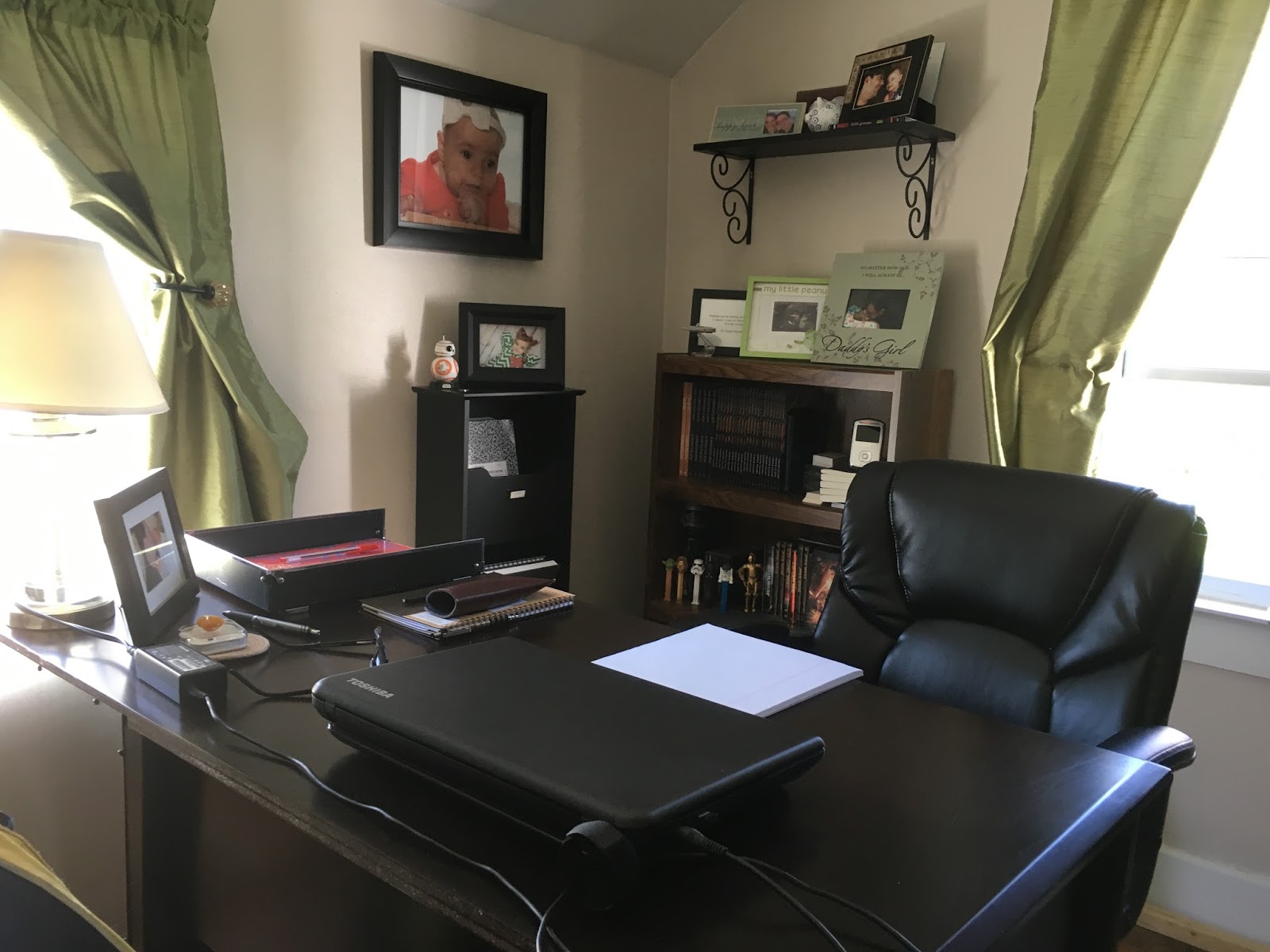
Now that it's out my wife and I are expecting Baby #2 in November, I can talk freely about how the expansion of our family means the impending closure of what is currently my office, as it will cease current operations as a shrine to all things Star Wars, my work, and an impressive collection of movies and books, and will become - once repainted and redecorated - our daughter Maddie's big girl bedroom. Most of what is cluttering up the inside of my office now (previously mentioned books, Blu-rays, and lightsabers) will be boxed temporarily (until we either move, or the nursery becomes the office/guest room in another two years).
And, really, I'm totally cool with it.
Many writers talk about having "their space" whether it's an office out of a spare room in their house, a desk shoved into the corner of a basement or attic or laundry room, or even just taking their laptop into the bathroom with them (gross). It's generally agreed upon by many writers that one so dedicated should manage to find an escape into that quiet, coveted corner in which to close the door and create.
To that I say: it really doesn't do much for me. I don't like to escape (and never think of it that way), and even when I do use the office for work, I never close the door anyway.
Quite honestly, as long as I can find the time in a day to write, I'm happy. I can create almost anywhere. As it is, I wrote much of the first draft of Mystery Garden (my novel out next year) during my lunch break at work - and I eat at my desk, so there are people and students in the room when I work. Once I get into the groove of the story, I can shut almost anything out. At home, I write during my daughter's naps over the weekend, and usually I'm on my laptop downstairs at the dining room table, not in some private closed off space away from my family. What I do works for me, and certainly I don't believe it makes me any less dedicated to the craft.
When we were moving into our house in June of 2014, my wife let me have choice over whichever room to become my office, so I can't say it doesn't effect me at all to lose what's been a place dedicated to all things me for the last three years - and I do have visions of what my "perfect office" would look like - but, more or less, the biggest inconvenience I feel is finding a place for some of the stuff to go. But find a place, or places, we will.
So, in about a month, all of the current furniture will come out of that room and I'll start painting. My wife and I will then decorate Maddie's bedroom, and then the munchkin will move in. All the while my writing will go on. And life, as well, will go on, very happily.
May 17, 2017
MYSTERY GARDEN in May 2018
It's been hinted at the last few weeks on my social media accounts, so I figure why not make it official:
A year from now my fourth book (and third novel), Mystery Garden, will be out in both paperback and e-book editions. Published by Winter Goose Publishing, this bizarre and emotional novel tells the experience of Malcolm Aton, a mid-list author in the course of trying to change the trajectory of his stalled career, who gets an urgent message out of the blue to return home. The resulting week spent in the company of his father, whom he hasn't spoken to in three years, amounts to an odd configuration of the absolute strangest and most heart-wrenching string of days Malcolm has ever had to endure.
For more regarding Mystery Garden, stay tuned here to this blog, my website, and my social media accounts.
A year from now my fourth book (and third novel), Mystery Garden, will be out in both paperback and e-book editions. Published by Winter Goose Publishing, this bizarre and emotional novel tells the experience of Malcolm Aton, a mid-list author in the course of trying to change the trajectory of his stalled career, who gets an urgent message out of the blue to return home. The resulting week spent in the company of his father, whom he hasn't spoken to in three years, amounts to an odd configuration of the absolute strangest and most heart-wrenching string of days Malcolm has ever had to endure.
For more regarding Mystery Garden, stay tuned here to this blog, my website, and my social media accounts.

April 20, 2017
On Word Counts
Yesterday, I finished the day's work on the latest first draft, coming to a stopping point at exactly 32,000 words. Knowing what's left of the story to tell, and accounting for the unforeseen, yet natural, bursts of inspiration that take the story in different directions before returning to the mainline, I estimate the first draft of Mystery Garden will end somewhere between 58,000 and 62,000 words.
For me, that's about right.
Of course, my first drafts are all about laying the groundwork; my first drafts are barebones. The subsequent drafts are when I focus on building the world around the frame I've constructed, honing the balance between what's necessary for you to know, and what gets the point across. My goal, by the time I finish my fourth draft, is to give you, dear reader, a seamless film in your head to imagine while you're reading that moves along at a steady pace, paints a beautiful picture that's framed with precise composition, and, equally as important, doesn't overwhelm you in minutiae. If I dedicate more than ten words about a rocking chair then that chair is significant (or just a red herring), otherwise I won't bother. A reader doesn't need to know, or be told, everything.
And yet, for those who have never looked into the word count of their favorite books, 62,000 words is relatively short for a novel. Novels are defined (and this is depending on where you look; I'm gathering from a few general sources here) as being, typically, between 40,000 and 120,000 words. But there's a lot of wiggle room, especially toward the far side of that spectrum. There are also a lot of factors that are included in those longer word counts, like genre, subplots, the inclusion of side characters, or shifting POV to other main characters, etc. It depends a lot on the author and their style. My favorite author is Stephen King, and maybe only one or two of his books are anywhere near that 40,000 word count bookend (Carrie, one of his shortest novels, is somewhere around 63k); many of his works reside in the 200,000 range (like Bag of Bones). His novel, The Girl Who Loved Tom Gordon, one of my favorites, is shorter than his typical fare (around 60k), but also focuses primarily with a single character, whereas Mr. Mercedes (around 130k) alternates between telling the story from the view of the protagonist, Bill Hodges, and antagonist, Brady Hartsfield.
What does the amount of words in a story mean in the grand scheme of things? Not a whole lot, really. I admit, I'm one of those writers who's obsessed with word count. It bothers me though. I hate that it creeps into my mind when I'm telling a story, because the amount of words I use is the last thing that should concern me, rather than how I'm using the words I'm using, and why. But it does. I suppose it's because I want to give the reader as much as I can, and not have them feel slighted - give them their money's worth. Give them a place they can lose themselves for a while and concern them with a fictional character's plight rather than anything going on in their own lives. And I know that's easier with a denser book.
As it is, I know my pacing, my style, and I know my inclination (and comfort) to focus my stories from the point of view of a single protagonist and put them through the ringer with a sprinkling of side characters who join the fray. I also know a longer book doesn't necessarily make a better one. Ray Bradbury's Fahrenheit 451 is considered one of the best novels ever written and it's only about 45k words. My own personal favorite book, A Monster Calls (by Patrick Ness) is only 35k long.
Perhaps someday I'll write that sprawling novel that shifts points of view, balancing numerous main characters and subplots. I know I want to. I have the ideas for it.
As an interesting comparison in closing (and because I thought it made a cool visual), below are two pictures of completed manuscripts. The first is the tree that was destroyed in stacking up Stephen King and Owen King's upcoming collaboration, Sleeping Beauties, and the second is a third draft manuscript to my second novel, The Painted Lady (which, at third draft, was around 71,000 words).
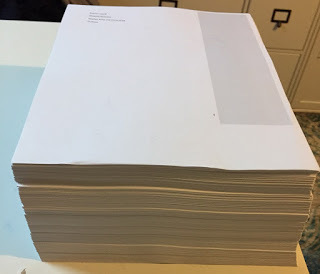 Stephen and Owen King's Sleeping Beauties (2017)
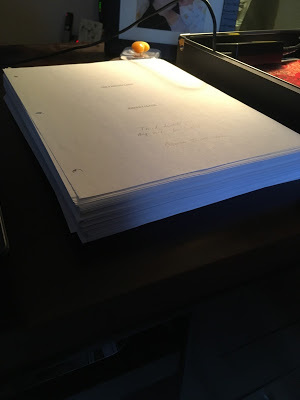 My very own The Painted Lady (2015)
For me, that's about right.
Of course, my first drafts are all about laying the groundwork; my first drafts are barebones. The subsequent drafts are when I focus on building the world around the frame I've constructed, honing the balance between what's necessary for you to know, and what gets the point across. My goal, by the time I finish my fourth draft, is to give you, dear reader, a seamless film in your head to imagine while you're reading that moves along at a steady pace, paints a beautiful picture that's framed with precise composition, and, equally as important, doesn't overwhelm you in minutiae. If I dedicate more than ten words about a rocking chair then that chair is significant (or just a red herring), otherwise I won't bother. A reader doesn't need to know, or be told, everything.
And yet, for those who have never looked into the word count of their favorite books, 62,000 words is relatively short for a novel. Novels are defined (and this is depending on where you look; I'm gathering from a few general sources here) as being, typically, between 40,000 and 120,000 words. But there's a lot of wiggle room, especially toward the far side of that spectrum. There are also a lot of factors that are included in those longer word counts, like genre, subplots, the inclusion of side characters, or shifting POV to other main characters, etc. It depends a lot on the author and their style. My favorite author is Stephen King, and maybe only one or two of his books are anywhere near that 40,000 word count bookend (Carrie, one of his shortest novels, is somewhere around 63k); many of his works reside in the 200,000 range (like Bag of Bones). His novel, The Girl Who Loved Tom Gordon, one of my favorites, is shorter than his typical fare (around 60k), but also focuses primarily with a single character, whereas Mr. Mercedes (around 130k) alternates between telling the story from the view of the protagonist, Bill Hodges, and antagonist, Brady Hartsfield.
What does the amount of words in a story mean in the grand scheme of things? Not a whole lot, really. I admit, I'm one of those writers who's obsessed with word count. It bothers me though. I hate that it creeps into my mind when I'm telling a story, because the amount of words I use is the last thing that should concern me, rather than how I'm using the words I'm using, and why. But it does. I suppose it's because I want to give the reader as much as I can, and not have them feel slighted - give them their money's worth. Give them a place they can lose themselves for a while and concern them with a fictional character's plight rather than anything going on in their own lives. And I know that's easier with a denser book.
As it is, I know my pacing, my style, and I know my inclination (and comfort) to focus my stories from the point of view of a single protagonist and put them through the ringer with a sprinkling of side characters who join the fray. I also know a longer book doesn't necessarily make a better one. Ray Bradbury's Fahrenheit 451 is considered one of the best novels ever written and it's only about 45k words. My own personal favorite book, A Monster Calls (by Patrick Ness) is only 35k long.
Perhaps someday I'll write that sprawling novel that shifts points of view, balancing numerous main characters and subplots. I know I want to. I have the ideas for it.
As an interesting comparison in closing (and because I thought it made a cool visual), below are two pictures of completed manuscripts. The first is the tree that was destroyed in stacking up Stephen King and Owen King's upcoming collaboration, Sleeping Beauties, and the second is a third draft manuscript to my second novel, The Painted Lady (which, at third draft, was around 71,000 words).
 Stephen and Owen King's Sleeping Beauties (2017)
 My very own The Painted Lady (2015)
April 1, 2017
Before Being Published and After
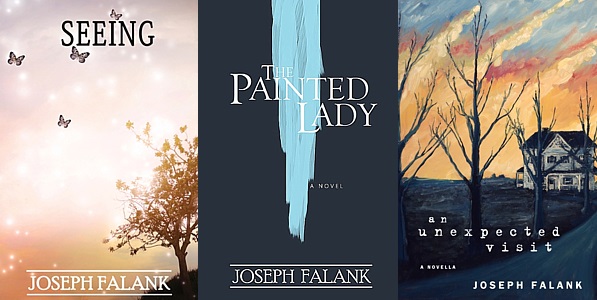
My writing life (dare I call it a career?) is divided into two parts: Before being published, and After.
The time Before spanned a great deal of years, from around age 10 through my teens when I was writing stories strictly for fun, and then from my mid-twenties to age 31 when I decided to really hunker down and focus on the craft, which involved the output of dozens of short stories, a bunch of flash fiction, a few novellas, and four (trunk) novels. I was 27 when I met the girl who became my wife, who also took on the mantle of my muse and inspired me to finally chase down the dream of publication with the utmost seriousness and putting forth my best effort.
Perhaps needless to say, I did it. Besides a few small tales and non-fiction pieces published on the Net, two of my short stories were chosen for issues of RiverLit magazine in early and late 2014. Seeing, my first novel (a coming of age story), was published June 27, 2014. The Painted Lady, my second novel (a paranormal thriller/romance), came out August 5, 2015. And my novella An Unexpected Visit dropped recently on November 16, 2016.
And so, from age 31 on, I've been living in the After.
And, to be honest to those still seeking their first book contract, there is no Happily Ever After when you sign your name the first time. I'm not trying to dissuade anyone from seeking a publisher and, instead, going it alone, but rather commenting on a reality. I'm not set for life. I'm not making enough to do a multi-state bookstore tour. I'm still working a day job. I've also discovered what once was a singular goal to just be published has exploded into many more objectives in the literary world I want to achieve.
A few weeks ago I put the finishing touches on a novella I absolutely love called Something Above the Stars that I've sent out to numerous publishers who focus on novella-length works. One of my newer goals is to branch out and work with different publishers, different editors, to learn more about the industry via how others do the work from handling the manuscript to putting out the finished book. I want to get more experience, more comfortable with promotion, and I want to feel I've earned it again. I also have a deep admiration for the novella, so another of my new goals is to get my work in the hands of a publisher who specializes in that particular form. If Stars isn't destined for acceptance, waiting in the wings I have six other novellas in different draft stages ready to continue working on once I finish with my most recent undertaking.
I'm currently in the first quarter of the first draft of a new novel called Mystery Garden. I don't want to put out a lot about this project right now because it is so new, but if you follow my Twitter for the month of April, you'll get bits and pieces by way of the hashtag #WIPjoy (WIPjoy is a wonderful event held every few months that encourages writers who are at work to share about their projects and to support others).
When Mystery Garden is done... I'm not exactly sure what I'm going to do with it. One of my larger goals has always been to get in with one of the top tier publishers. To do that, I unquestionably have to get an agent, which isn't just difficult and stressful, but very time consuming, and requires me to raise my game. With time never standing still, and never a guarantee, the question I ask myself all the time is when am I finally going to pull the trigger and go all in on the agent search, especially considering it takes me about a year to do my four drafts of a novel (and that's with no side projects). Saying I could begin the search with the novel following Garden means I wouldn't even begin putting out queries for another two years.
Right now, that feels like too much time.
I know it may be hard for my readers to accept that they may not see another publication from me anytime soon. Yes, I always have Winter Goose as a home for my work, but I never want to use them as a back-up. They were my first publisher - my first YES! - and if I do publish work through them, it'll be work I intended to give them.
So, this is where I'm at. Both exciting and uncertain times, for sure.
Stay tuned.
November 21, 2016
Book Review: OLIVIA'S GHOST By Kathryn Mattingly
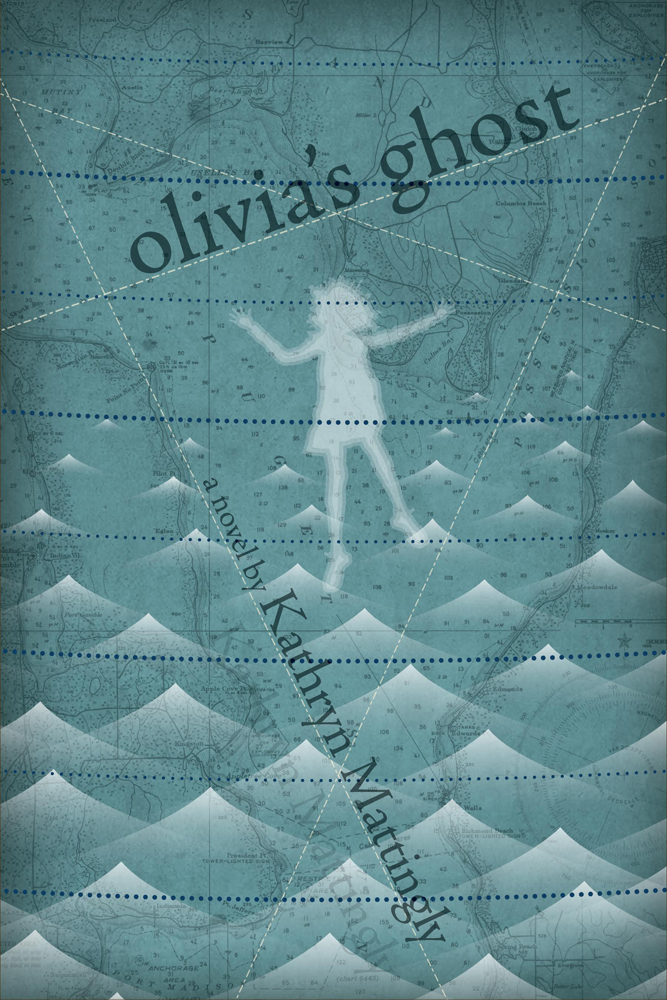
While reading Kathryn Mattingly’s newest novel, Olivia’s Ghost (due out November 25 from Winter Goose Publishing), I found myself having a gut-wrenching experience, but in the best of ways. I'll explain.
In Mattingly’s newest novel, on Memorial Day, Jackson and Olivia Porter lose their daughter, Ava, who goes overboard during a sudden, and violent, squall that overtakes Puget Sound. In the ensuing weeks, both, understandably, reside in constant states of shock and grief, but only Jackson believes their daughter to have drowned. With no body recovered from the water, Livy maintains that, in a flash of lightning during the storm, she saw someone on a boat pull Ava out of the water. Only their daughter was then never returned, providing Livy with ghastly wonderings as to what became of her daughter following this hope of rescue. Thus brings about the first cracks in the otherwise sturdy wall of their marriage, separating Jackson and Olivia, the latter believing so much their daughter is still alive, she leaves Ava’s memorial service in a panic to chase down a girl that resembles their daughter.
Olivia, whose mental capacities are now in question, decides she cannot remain with Jackson as long as he doesn't hold a flicker of belief to her maternal feeling that Ava is still out there, likely being held against her will, and so she goes off to an old lighthouse manned by her father on the Oregon coast for respite. And it's there that Olivia, who writes for a magazine and is preparing a fall feature story, begins delving into the mystery of a ghost that supposedly haunts the stairwell of the old lighthouse.
A ghost with a message for Olivia.
In the open I mentioned having a gut-wrenching experience reading Olivia’s Ghost, and here's why:
For one, ever since the wintry afternoon, two years ago, when I learned I would become a father, I've had difficulty with stories (of all mediums) that deal with children in peril. My wife and I went to the movies the night we learned our little Peanut would be adding to our family, and one of the previews was for Heaven Is For Real - inspired by the supposed true story where a boy dies on the operating table and claims to have traveled to heaven before coming back. I cried watching it. Yes, a movie trailer.
Mattingly’s opening chapter of what happens on Puget Sound draws you right into the Porter family. You like them immediately, and you clench and wince with dread knowing the looming clouds mean the worst for this family. You know what's going to happen, and that almost makes it worse. You’re at the mercy of Mattingly’s striking prose, which puts you right there with this family, at the worst moments of their lives, and you can do nothing to help. You can only observe.
Being a parent, I couldn't imagine how I'd respond to such a tragic event. And that's how I approached Olivia’s Ghost - by wondering what I would do, wondering what my wife would do in the face of something so unspeakable.
The other gut-wrenching portion of my experience is that while I can see why Jackson would be stubborn in his belief of what happened, just as much as Olivia is with her own, it saddened me to read how the two could not initially find common ground. Or, even, how common ground wasn't enough, and that separation became the answer.
I wanted each side to fight harder for the other, but obviously the events had taken a substantial toll. Neither side, also, wanted to give or bend. Escape was the only solace.
Then there are the added...distractions to their marriage, but I’ll leave you, dear reader, to discover the rest for yourself. There is a wonderfully rewarding story to be found here, full of twists and turns, cryptic messages from the beyond, love enduring through impossible sadness and trauma, and, in the end…
Oh, no. I can't go there. Except only to say that you will be hooked right to the very end. To the last line on the absolute last page.
What Kathryn Mattingly has done here, at least for me, is create a truly psychological experience. Her expertly written dialogue, characters with the best of intentions residing in shades of gray, and scenes painted with only the finest of strokes, turn the real questions back onto you.
What would you do if you were Jackson or Olivia?
How strong is your faith?
How far are you willing to go to get the truth? Is the truth enough?
One only needs to open Olivia’s Ghost to begin discovering the answers for yourself.
Just be warned, putting the book down may be more difficult than answering the questions it raises.
Now a little about the author.

Kathryn Mattingly has taught writing at four different private colleges. Aside from her literary suspense novels and short story collection, Kathryn’s work can be found in numerous small press anthologies and several print magazines. She coordinates the Top of the Mountain writing contest for the Northern Colorado Writer’s Conference and is a judge for the Writer’s Guild Harvest Festival in Bend, Oregon. Kathryn has won five awards for her fiction, and teaches novel writing at a local college. I interviewed Kathryn regarding her latest novel, Olivia’s Ghost.
Kathryn ~ First, loved the book. I found it powerful, heartbreaking, and ultimately it created a struggle within my own self as to how I would handle the situation Jackson and Livy find themselves in. Ever since the day I learned I would become a father, the idea of a child in harm's way hits me hard. The night I learned Becca was pregnant we went to the movies, and a trailer for, "Heaven Is For Real" (where the little boy dies and claims to have seen what comes after) played. Almost immediately I was in tears. So to say I found your story effective is quite the understatement.
What was the idea for OLIVIA'S GHOST that sparked and made you want to write this story as the next novel? How long did it take to put together DRAFT ONE? What was your schedule in writing it?
As a parent of four, nothing I imagined could be more horrific than losing a child before your very eyes and not being able to do anything about it, except watch. I’m sure I pulled from novels and movies that touch upon this theme, because I read a lot of books and am quite the movie buff. Sophie’s Choice nearly destroyed me in that moment of first realizing the implications and far reaching effects of such a dilemma.
I wrote the first draft of Olivia’s Ghost over a decade ago, and only recently completely reworked the book. When I originally wrote it, Terry Brooks, of Sword of Shannara book series fame, which was recently turned into a MTV hit series, was my mentor. He loved the premise, but feared certain aspects of the paranormal theme might not suspend my reader’s disbelief unless I reworked it a bit.
I also had a New York agent at the time, Tony Outhwaite, with JCA Literary Agency. He sent the original book out to numerous editors at publishing houses and the feedback was wonderful. They all loved the main concept, characters, and setting, but that paranormal thread still needed work. I finally nailed it by doing a major re-haul of the ghost in the lighthouse, at least if my early readers are any indication. I must say it felt immensely satisfying to finally give this book a proper paranormal plotline that draws my readers in and endears them to the ghost.
My writing schedule for this book was literally 8-10 hours a day, 6-7 days a week (I kid you not) for 8 months straight. That’s because once I had decided to completely rewrite it I began to panic that the book wouldn’t be ready for its release date this fall. So, I put my head to the grindstone and never came up for air. (Well, maybe for a glass of wine here and there.)
As I've noticed in your other books, your characters aren't black and white. Here, both the characters of Jackson and Livy are in states of grief, but Jackson plays the head to Livy's heart in regards to believing what ultimate fate became of their daughter, Ava. Obviously I won't spoil that here, but I want to talk about these characters. Jackson's approach is one of, "It happened, it was awful, but for the sake of what we have left - we need to move on," whereas Livy refuses to give in to that thinking, trusting that their daughter was indeed pulled from the Sound during the squall by a person on another boat. She needs to find Ava and bring her home.
There is a line Livy says to her photographer friend, Andrew, that goes, "I don't know why I'm suddenly aware of her (the ghost in the lighthouse) but I am. If my intuition is wrong about the ghost, then it might be wrong about Ava... and I can't accept that." Is this a matter of Livy trying to gain some measure of control over the uncontrollable situation they had with Ava on the water? Or is this just guilt for not saving Ava?
You’re right about my characters not being black and white. One aspect of writing that I enjoy most is showing how a character behaves under pressure, when experiencing a difficult situation. Jackson and Olivia’s self perception as responsible and good parents becomes badly shaken, and they deal with it in different ways. Whereas Jackson chooses escapism (into his work or his bottle) Olivia wants to find her child and resume their once happy life as if nothing ever happened.
Neither of them can justify to themselves the unthinkable- letting their daughter drown in a storm on a sailboat, where they believed she’d be safe, because all parents believe they can keep their child safe, no matter what – right? Well, the truth is that neither of them could save their daughter, so while one is trying to escape from that reality, the other is trying to change it. If Olivia perceives herself to be unstable (and she fears she might be) then she cannot continue to believe Ava is alive and well, and waiting to be found. She feels she has no choice but to believe that the ghost is also real, even though a part of her questions it (at least, in the beginning).
Because I'm so caught up with how Jackson and Livy reacted differently in the aftermath of the squall, and I always like to wonder "What if..." let's say Ava drowned and they - Jackson and Olivia - pulled her from the Sound. How do you envision their lives would have gone on from that point? Would the issue of their daughter's death still have put them at odds?
I don’t think so. I think they would have grieved like most parents do when losing a child. It’s a myth that most marriages break up over the loss of a child. Most of them do not. But those with extenuating circumstances often do, and that’s what we have regarding Ava - no body, and a possible rescue seen in a flash of lightning through the pouring rain by Olivia. Now we have her parents at odds as to what they think happened, and we have set the course for conflict between them.
Did you learn anything about yourself in writing OLIVIA'S GHOST?
I realized how much I loved living on the Oregon Coast while having my babies. At the time I felt isolated and a bit resentful that there were not more opportunities for me to connect with other young mothers through organized activities, but now I cherish those years of isolation with my four young children, and the unique environment in which we lived. The beach was literally their playground, and all it took to entertain them was a bucket and shovel. When they were no longer toddlers I ran a school for the ‘Creative Expression of Young Children’ where we did everything kinesthetically through art or theater (I have an art degree). The school was a huge success, and above all else, impressed me with how much kids mean to their parents. This book, ultimately, is about how nothing can compare to, or replace the love we have for our children.
Having no knowledge of boats, the water, or sailing, I found it absolutely frightening the speed at which the squall produced. Do storms over the water like that really come together that quickly and without warning?
Yes. Squalls are storms on steroids and appear to come straight from hell, stirred by the devil himself. You never know when or where they might form in the ocean. Do most people who sail a lot encounter them? No. But they happen often enough that most people have heard of them, or read about them, and certainly, they have happened at one time or another on Puget Sound. Events such as squalls drive home the concept that we are all victims of fate, regardless of how much we think we have planned for safety or security in our lives, it can be stripped away by one momentous act of something unforeseen. In the end, it is our courage, or lack there of, in such situations that truly define us.
***
You can follow Kathryn on Facebook & Twitter. Visit Amazon’s Kathryn Mattingly Page and her website: edgy words unleashed
Olivia's Ghost releases the day after Thanksgiving.
November 13, 2016
Interview With An Artist
In three days, my new book - An Unexpected Visit - will become available to the masses. In short, the story - a novella - is told from the perspective of Noah Adams, a moderately successful newspaper columnist in his mid-thirties, who looks back on the long weekend spent with his estranged father when he, Noah, was twelve, as this visit in particular is the one he considers the turning point in his life. Right now you can reserve the book, which also features nine additional micro-stories, on both Amazon and Barnes & Noble.
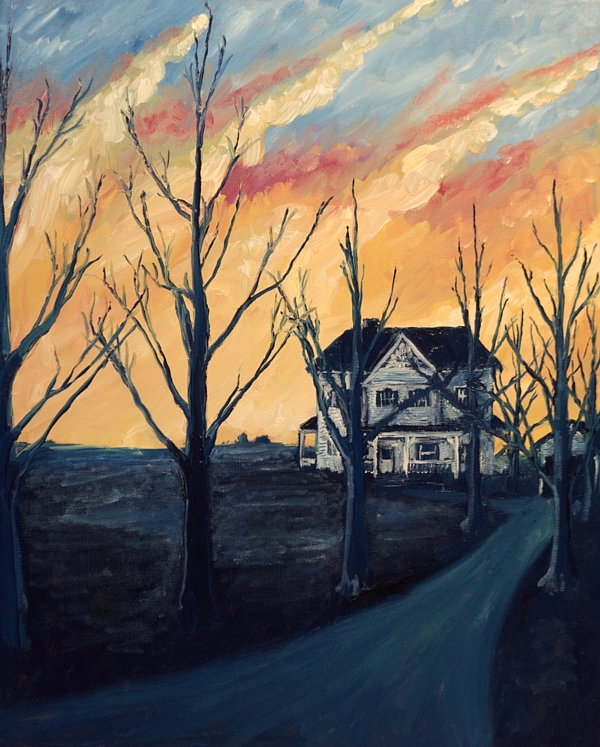
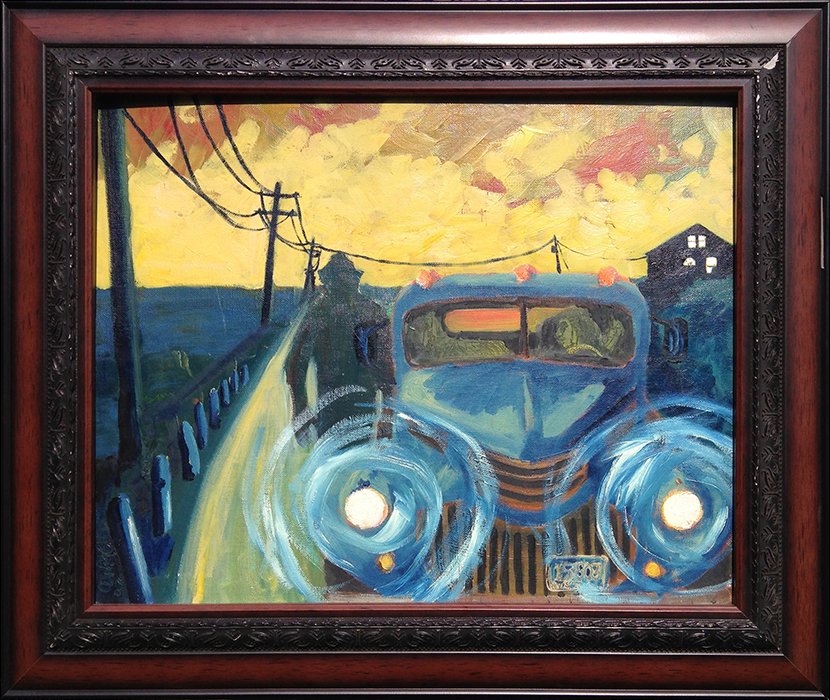
In my last blog, I wrote about how the cover art came to be. Today, I'm sharing an interview I conducted with friend, and artist, Christopher Wright, the designer of the key art for An Unexpected Visit. Chris and I came to know one another through our spouses, who are old college friends; we're both husbands, fathers, and have day jobs, along with passions for our respective talents in the branch of arts we specialize in. Chris and I share a lot in common, for one our worldly views, so I was very interested to know how he approaches his art, his processes, and when he finds the time to indulge in his creative side, among other things.
Included with this interview are other works by Christopher. More can be viewed on his website.
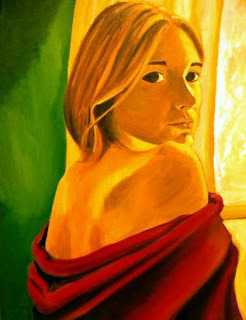
Give me some background on your art career; when did you realize your talent and decide to pursue your craft? Where did you go to school for art? What was the first piece you sold?
I realized my talent for drawing around 2nd grade when the other kids in my class began asking me to draw things for them. I didn't really consider myself a serious artist until I went to Pratt Institute in Utica, NY, even then I wasn't confident in any medium. For example, I was a Jewelry major at Pratt, which I approached jewelry as "less expensive sculpture." I completed 2 years in Utica, then studied at the Pratt Brooklyn Campus but only survived a little over a semester.
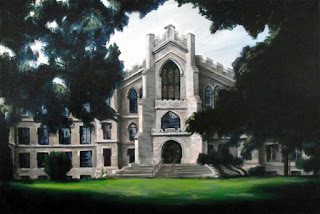
How do you prefer to work when you have a blank canvas? For myself, a first draft manuscript demands my absolute attention, so I work in my office and it's absolutely silent. Do you also require solitude and silence, or do you play music? If so, is it specific music tied to the emotion of the piece?
I cannot paint on a white canvas... I must mess up the surface first by painting and or scraping on acrylic paints. It doesn't really matter the colors but I always mix at least two acrylic paints together... Then once the acrylic dries, I begin with the first layer of oil paints. I will often rough out the focus of the painting with my brush with thinned oil paint. I paint with music in my studio... the music I prefer ranges a bit from Tom Waits to Morrissey to Radiohead/Thom Yorke to Portishead etc. I believe the music must be in the paintings somewhere because I take much energy from it... I have even been so influenced that I have titled works after certain songs.
For the cover of AN UNEXPECTED VISIT, I gave you a very minimal description of what I wanted because I didn't want to box you in. Does it help to have less instruction or more when it comes to someone hiring you for work?
When approaching a commission piece, such as your book cover, I would say more ideas the better.... when compositions are left up to me I also like as much info as possible so that I can get a similar vision of what the final product should look or feel like.
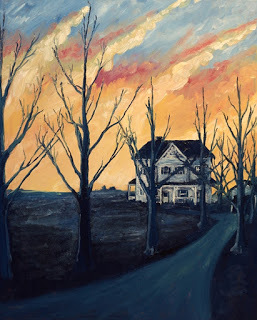
Tell me about your process when it came to designing the VISIT cover. Also, I stopped you from creating other pieces because I loved the first so much - did you have clear ideas on what else you wanted for the other pieces? What did you envision?
To be honest, after I get the vision of the composition, I work rather fast... it normally takes as much time to think about a commissioned composition as it does to paint one, for me no more than 3 to 4 hours. I had 1 more strong idea for the approach to the house, it was as if the viewer was closer and off to the garage (possibly one version from within the garage) side of the the house so that half the picture would be house and the other side trees and sky.
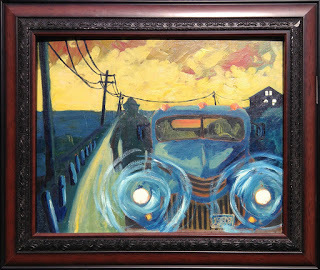
Do you have any future events coming up where your work will be featured? How can people interested in seeing your work find you online?
I have a small event in Afton, NY on November 20th. Other than that my website (www.clwright.com) has just been updated.
What projects do you have lined up - personal and/or professional? Do you ever create just for yourself? Have you ever sold anything you had a hard time letting go of?
I have a handful of small, more craft-like projects going on at any one time and I have been averaging about 3 to 4 portraits a year, so not bad but could be a lot better. Whenever I get a strong idea I will paint for myself. I have never had a problem letting go of my work, yet I do love to see them again when the opportunity arises... I am often surprised by them when it has been a while, to be honest, until I happen upon them again I nearly have forgotten about them.
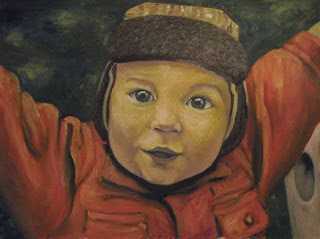
Lastly, what would be your ultimate goal with your work?
My ultimate goal is to create paintings that let others get a view of the world as it is or was in our present time... other than that I just enjoy the act of painting and wish I could devote more time to doing such.
***
An Unexpected Visit, featuring the art of Christopher Wright, will be released this Wednesday, November 16. The book is available for pre-order.
In my last blog, I wrote about how the cover art came to be. Today, I'm sharing an interview I conducted with friend, and artist, Christopher Wright, the designer of the key art for An Unexpected Visit. Chris and I came to know one another through our spouses, who are old college friends; we're both husbands, fathers, and have day jobs, along with passions for our respective talents in the branch of arts we specialize in. Chris and I share a lot in common, for one our worldly views, so I was very interested to know how he approaches his art, his processes, and when he finds the time to indulge in his creative side, among other things.
Included with this interview are other works by Christopher. More can be viewed on his website.
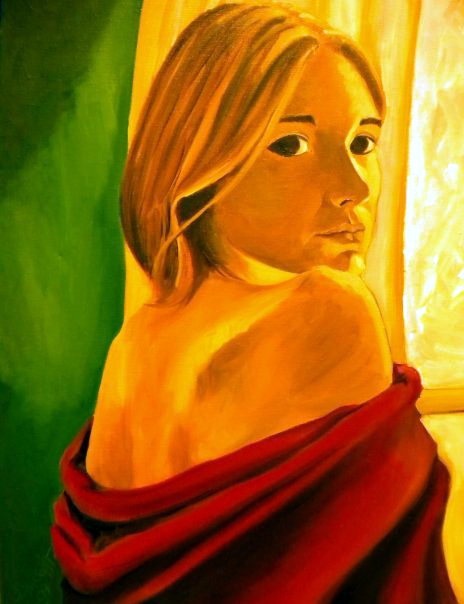
Give me some background on your art career; when did you realize your talent and decide to pursue your craft? Where did you go to school for art? What was the first piece you sold?
I realized my talent for drawing around 2nd grade when the other kids in my class began asking me to draw things for them. I didn't really consider myself a serious artist until I went to Pratt Institute in Utica, NY, even then I wasn't confident in any medium. For example, I was a Jewelry major at Pratt, which I approached jewelry as "less expensive sculpture." I completed 2 years in Utica, then studied at the Pratt Brooklyn Campus but only survived a little over a semester.

How do you prefer to work when you have a blank canvas? For myself, a first draft manuscript demands my absolute attention, so I work in my office and it's absolutely silent. Do you also require solitude and silence, or do you play music? If so, is it specific music tied to the emotion of the piece?
I cannot paint on a white canvas... I must mess up the surface first by painting and or scraping on acrylic paints. It doesn't really matter the colors but I always mix at least two acrylic paints together... Then once the acrylic dries, I begin with the first layer of oil paints. I will often rough out the focus of the painting with my brush with thinned oil paint. I paint with music in my studio... the music I prefer ranges a bit from Tom Waits to Morrissey to Radiohead/Thom Yorke to Portishead etc. I believe the music must be in the paintings somewhere because I take much energy from it... I have even been so influenced that I have titled works after certain songs.
For the cover of AN UNEXPECTED VISIT, I gave you a very minimal description of what I wanted because I didn't want to box you in. Does it help to have less instruction or more when it comes to someone hiring you for work?
When approaching a commission piece, such as your book cover, I would say more ideas the better.... when compositions are left up to me I also like as much info as possible so that I can get a similar vision of what the final product should look or feel like.
Tell me about your process when it came to designing the VISIT cover. Also, I stopped you from creating other pieces because I loved the first so much - did you have clear ideas on what else you wanted for the other pieces? What did you envision?
To be honest, after I get the vision of the composition, I work rather fast... it normally takes as much time to think about a commissioned composition as it does to paint one, for me no more than 3 to 4 hours. I had 1 more strong idea for the approach to the house, it was as if the viewer was closer and off to the garage (possibly one version from within the garage) side of the the house so that half the picture would be house and the other side trees and sky.
Do you have any future events coming up where your work will be featured? How can people interested in seeing your work find you online?
I have a small event in Afton, NY on November 20th. Other than that my website (www.clwright.com) has just been updated.
What projects do you have lined up - personal and/or professional? Do you ever create just for yourself? Have you ever sold anything you had a hard time letting go of?
I have a handful of small, more craft-like projects going on at any one time and I have been averaging about 3 to 4 portraits a year, so not bad but could be a lot better. Whenever I get a strong idea I will paint for myself. I have never had a problem letting go of my work, yet I do love to see them again when the opportunity arises... I am often surprised by them when it has been a while, to be honest, until I happen upon them again I nearly have forgotten about them.

Lastly, what would be your ultimate goal with your work?
My ultimate goal is to create paintings that let others get a view of the world as it is or was in our present time... other than that I just enjoy the act of painting and wish I could devote more time to doing such.
***
An Unexpected Visit, featuring the art of Christopher Wright, will be released this Wednesday, November 16. The book is available for pre-order.
November 6, 2016
The Making Of A Cover
In ten days - November 16 - my third book, An Unexpected Visit, will be available to own in both paperback and e-book formats. Within the next few days, I should have information to share regarding pre-ordering for those who wish to do so.
Today, I want to talk about book cover art; I'm one who believes a book should be judged by it's cover - not entirely, but the cover is as important as a good title. While the contents of a book are what it's all about, the substance of the cover design cannot be overlooked. The image that makes up the cover is a book's first line of defense; it's the silent sales pitch - it's what attracts the eye and curiosity of the person scanning shelves or online listings.
I was very fortunate with my second novel, The Painted Lady, as I was given the option to be the designer of that cover. When I'm writing a book, I consider a lot of angles and aspects - especially the image that'll represent that particular story. With Lady, my publisher felt they couldn't top the batch of concepts I had sent them - giving them my ideas for the cover to inspire their designer - so they assisted me in creating and finalizing that book's design.
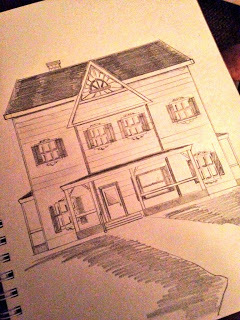
With An Unexpected Visit, I had an idea for the cover, but not the talent to follow through. I'm good with sketching, but to have a fully fleshed out design is beyond my capability. Therefore, I reached out to a friend and very talented artist, Christopher Wright (www.clwright.com), who was excited at the prospect of taking on a book cover (I believe this was his first). All I had given him was a description of what I wanted (a farmhouse with a separate garage sitting back in a field at gloaming), and this sketch I did of the house:
This is the design, in full, Christopher created:
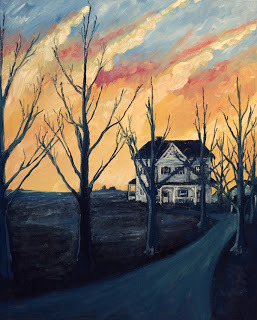
Gorgeous. I have the original canvas on display in my office. Christopher, originally, was going to paint a second design, to provide me more options, but I loved this one so much I told him to stop there.
Now comes the unfortunate bit of news. Even though my first two books are measured 6x9 (and I figured Visit would follow suit), you always want to have some wiggle room in a design. Therefore, some of the original image was cropped out to fit the final cover, which appears below.
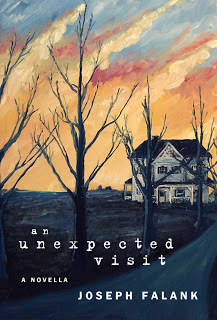
So, yeah, as you can see we lost the garage at the top of the drive, and a bit of the trees along both fringes, but it's still an incredibly beautiful, and powerful image. It does the story right, and that's what's vital.
Come back later this week as I continue counting down the days to release; my hope is to put up an interview with the talented Christopher Wright about his design for An Unexpected Visit, as well as his motivations, style, and a casual discussion of his past, present, and future work.
Today, I want to talk about book cover art; I'm one who believes a book should be judged by it's cover - not entirely, but the cover is as important as a good title. While the contents of a book are what it's all about, the substance of the cover design cannot be overlooked. The image that makes up the cover is a book's first line of defense; it's the silent sales pitch - it's what attracts the eye and curiosity of the person scanning shelves or online listings.
I was very fortunate with my second novel, The Painted Lady, as I was given the option to be the designer of that cover. When I'm writing a book, I consider a lot of angles and aspects - especially the image that'll represent that particular story. With Lady, my publisher felt they couldn't top the batch of concepts I had sent them - giving them my ideas for the cover to inspire their designer - so they assisted me in creating and finalizing that book's design.
With An Unexpected Visit, I had an idea for the cover, but not the talent to follow through. I'm good with sketching, but to have a fully fleshed out design is beyond my capability. Therefore, I reached out to a friend and very talented artist, Christopher Wright (www.clwright.com), who was excited at the prospect of taking on a book cover (I believe this was his first). All I had given him was a description of what I wanted (a farmhouse with a separate garage sitting back in a field at gloaming), and this sketch I did of the house:

This is the design, in full, Christopher created:
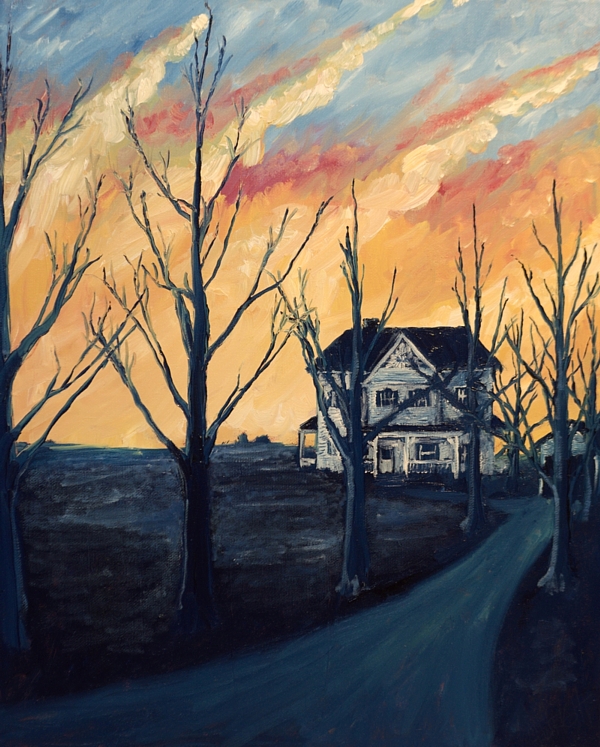
Gorgeous. I have the original canvas on display in my office. Christopher, originally, was going to paint a second design, to provide me more options, but I loved this one so much I told him to stop there.
Now comes the unfortunate bit of news. Even though my first two books are measured 6x9 (and I figured Visit would follow suit), you always want to have some wiggle room in a design. Therefore, some of the original image was cropped out to fit the final cover, which appears below.

So, yeah, as you can see we lost the garage at the top of the drive, and a bit of the trees along both fringes, but it's still an incredibly beautiful, and powerful image. It does the story right, and that's what's vital.
Come back later this week as I continue counting down the days to release; my hope is to put up an interview with the talented Christopher Wright about his design for An Unexpected Visit, as well as his motivations, style, and a casual discussion of his past, present, and future work.