
Discover new books on Goodreads
See if your friends have read any of Mahmood Mamdani's books
Mahmood Mamdani’s Followers (288)


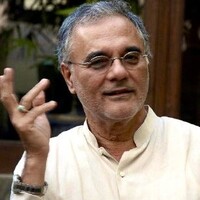
Mahmood Mamdani
Born
in Mumbai, India
April 23, 1946
Website
Genre


|
Good Muslim, Bad Muslim: America, the Cold War, and the Roots of Terror
—
published
2004
—
24 editions
|
|

|
When Victims Become Killers: Colonialism, Nativism, and the Genocide in Rwanda
—
published
2001
—
8 editions
|
|

|
Neither Settler nor Native: The Making and Unmaking of Permanent Minorities
—
published
2020
—
10 editions
|
|

|
Citizen and Subject: Contemporary Africa and the Legacy of Late Colonialism
—
published
1996
—
17 editions
|
|

|
Saviors and Survivors: Darfur, Politics, and the War on Terror
—
published
2009
—
15 editions
|
|

|
Slow Poison: Idi Amin, Yoweri Museveni, and the Making of the Ugandan State
|
|

|
Define and Rule: Native as Political Identity
—
published
2012
—
8 editions
|
|

|
From Citizen to Refugee: Uganda Asians Come to Britain
—
published
1973
—
8 editions
|
|

|
Myth of Population Control
—
published
1972
—
2 editions
|
|

|
Imperialism and Fascism in Uganda
—
published
1983
—
4 editions
|
|
“Before 9/11, I thought that tragedy had the potential to connect us with humanity in ways that prosperity does not. I thought that if prosperity tends to isolate, tragedy must connect. Now I realize that this is not always the case. One unfortunate response to tragedy is a self-righteousness about one’s own condition, a seeking proof of one’s special place in the world, even in victimhood. One afternoon, I shared these thoughts with a new colleague, the Israeli vice chancellor of the Budapest-based Central European University. When he told me that he was a survivor of Auschwitz, I asked him what lesson he had drawn from this great crime. He explained that, like all victims of Auschwitz, he, too, had said, “Never again.” In time, though, he had come to realize that this phrase lent itself to two markedly different conclusions: one was that never again should this happen to my people; the other that it should never again happen to any people. Between these two interpretations, I suggest nothing less than our common survival is at stake.”
― Good Muslim, Bad Muslim: America, the Cold War, and the Roots of Terror
― Good Muslim, Bad Muslim: America, the Cold War, and the Roots of Terror
“Modern Western empires are different from empires of old as well as the Soviet empire of yesterday in one important respect: they combine a democratic political system at home with despotism abroad. Even in the German case, as Sheldon Wolin reminds us, Nazi terror was not applied to the population generally. So long as democracy is a living reality at home, democratic empires are potentially self-correcting.”
― Good Muslim, Bad Muslim: America, the Cold War, and the Roots of Terror
― Good Muslim, Bad Muslim: America, the Cold War, and the Roots of Terror
“Few would fail to notice the growing common ground between the perpetrators of 9/11 and the official response to it called “the war on terror.” Both sides deny the possibility of a middle ground, calling for a war to the finish. Both rally forces in the name of justice but understand justice as revenge. If the perpetrators of 9/11 refuse to distinguish between official America and the American people, target and victim, “the war on terror” has proceeded by dishing out collective punishment, with callous disregard for either “collateral damage” or legitimate grievances.”
― Good Muslim, Bad Muslim: America, the Cold War, and the Roots of Terror
― Good Muslim, Bad Muslim: America, the Cold War, and the Roots of Terror
Topics Mentioning This Author
| topics | posts | views | last activity | |
|---|---|---|---|---|
| Around the World ...: Rwanda | 17 | 649 | Jan 11, 2025 09:32PM | |
| Around the World ...: Uganda | 22 | 592 | Aug 16, 2026 09:27AM |
Is this you? Let us know. If not, help out and invite Mahmood to Goodreads.