
Veronica Roth's Blog
February 17, 2026
Ask Me Anything: Writing Edition
I recently posted an AMA on Instagram and I got a lot of great questions…and as you might expect, a lot of them were about writing! So I’m going to tackle some of those today and hopefully demystify the process for you a little bit. But just as a reminder, this is where I’m at with writing advice:
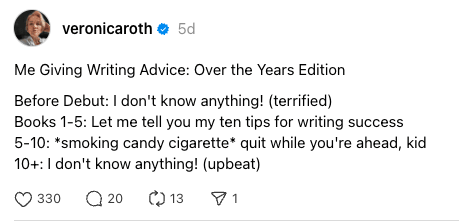
The best writing advice I can possibly give you is to do what works for you, and “what works” will probably change with each story you write. There’s no correct path to writing a book, there’s just whatever path gets you to the end.
With that said, here we go!
What’s the most enjoyable thing about the writing process for you? What’s the least enjoyable?I like every part of it to a certain extent. But my favorite part of writing is the first round of revisions. That’s when I have a draft, so I know my story’s shape and I’ve gotten to know its characters…but now I get to discover the hidden potential of that story and bring it to the surface. I find that process—finding the strongest version of the story I’ve written and revealing it—to be the most rewarding part of writing.
The least enjoyable part for me is line edits. Line edits come after I’ve made the big revisions I wanted to make but before copyediting (which is when you correct errors in continuity, grammar, punctuation, etc.). Line edits are more granular than revisions/developmental edits but they are still highly subjective; they’re when you get asked things like “would she really say it that way?” or “how does this character know about X thing?”. I don’t know why, because I’m not particularly sensitive to criticism at any other stage, but I find line edits infuriating. (Necessary, though.)
How has the act of publishing changed your outlook on writing, if it has?I think if you’re paying attention, the longer you work in the publishing industry the less you believe it’s a meritocracy. Good books don’t always succeed; successful books aren’t always good. For a lot of people, this revelation comes with no small amount of grief. It feels profoundly unfair that you can have a great idea, work really hard on it, do everything you can to give it a good start in the world, and still watch it fail while other books—boring books, books you hate, books by authors who were profoundly unkind to you, etc.—do extremely well. And if you’re not careful, you can get really worn down by that, and it can turn you bitter and cynical or even put you off writing entirely. (Or on the flip side, if you’re successful, you might start to drink your own Kool-Aid. Realizing it’s not a meritocracy is what will help you keep a good head on your shoulders in the midst of success, my friends. Ask me how I know.)
The industry has largely been good to me, though there have been challenges. I can’t say the same for everyone I care about, and that is particularly disheartening. But if you love writing, that will buoy you along through all the storms. I try to make my work better, not because I think it’ll necessarily make the book sell better (though it might, I guess?), but because I care about growing as a person and as a writer. Our culture wants you to think that if it doesn’t make money, it’s not worth doing; writing reminds us, daily, that that’s a lie.*
*There’s a big, huge caveat here: I think it’s important for writers to be fairly compensated for their labor and for them to fight for that fair compensation. Often when you are practical or market-minded in this business, people accuse you of being a sellout or “just doing it for the money,” and that is some bullshit. No one argues that people in less creative industries should not get paid for their time and effort, but people devalue creative work all the time. So my comments above are an attempt to answer the question “if this isn’t making money or serving a practical purpose, is it still okay for me to do it?”, and nothing else.
Honestly the biggest challenge after moving last year is that my elderly dog is more restless in this new place, and she bothers me constantly, which means it’s hard to get into a flow state. It got so bad that when I was on a really tight deadline this past fall, I actually asked a family member to watch her for an entire month. (Thank you to them for doing it.) It helped a lot, and I met my deadline. I love my sweet little pup and I also—stage whisper—despise her sometimes.
How much time per day do you write?It mostly depends on what stage of the writing process I’m in. When I’m deep into a draft, I will sometimes write for eight to ten hours a day. When I’m starting out, I have days where I struggle to write for ten minutes. That’s the thing about writing a book—your good days, your bad days, they all even out in the end.
Do you write your first draft by hand or write on a computer?I don’t even write grocery lists by hand! My handwriting is atrocious and I think way too fast for my hand to keep up. Sometimes I outline in a notebook because I like to draw flow charts for outlines, but that’s about it.
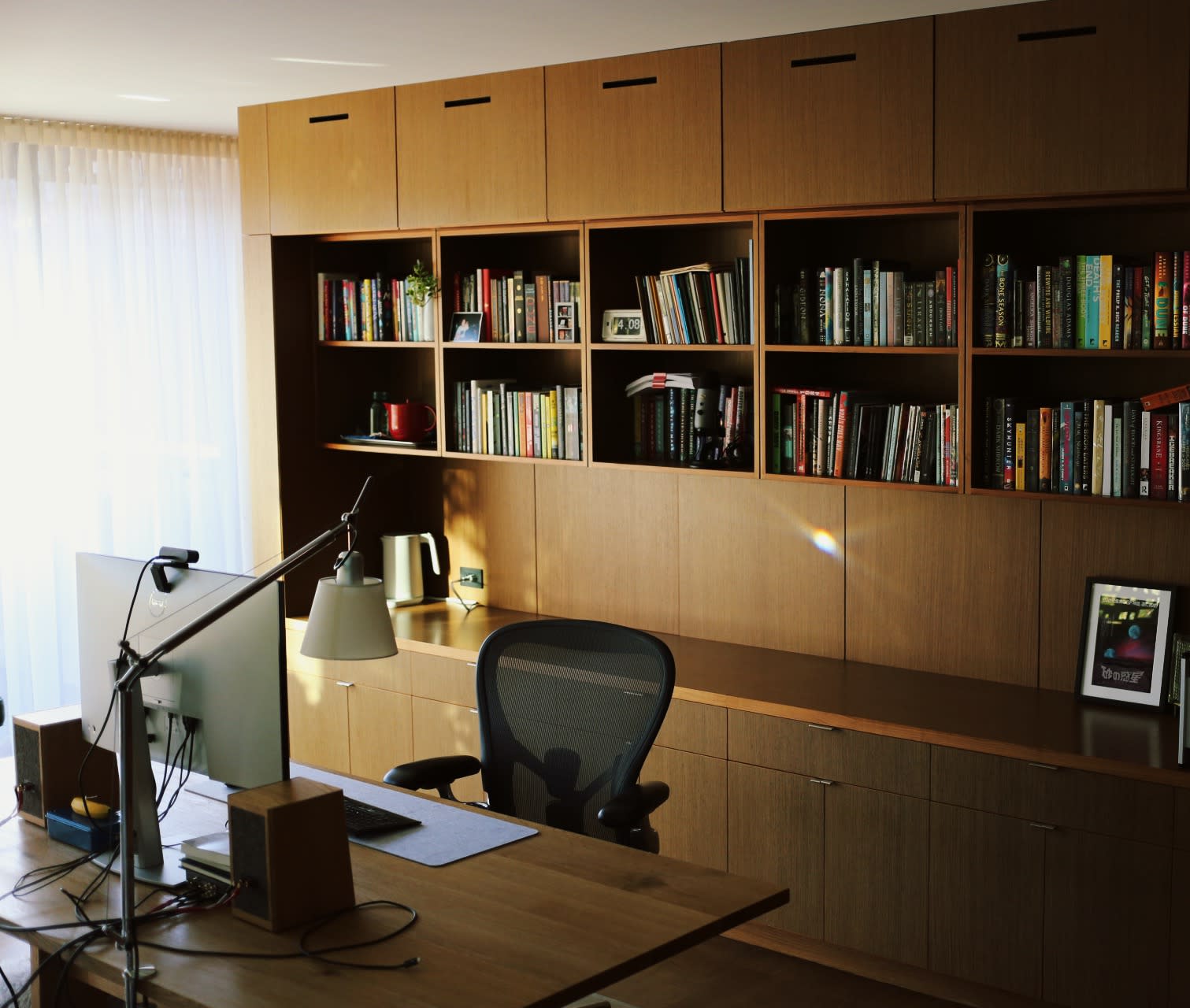 ~where the magic happens~How do you deal with writer’s block?
I don’t stress about it. I take a break, take a walk, try to figure out why I’m stuck. Talk it out with a friend, whatever feels good. Then I go back to the last place I felt like the draft was “working” and try something different—change the plot, write from a different POV, skip a scene, whatever. If that doesn’t work I try something else. And something else. And something else. The trick is to think of this experimentation as playful instead of despairing over it. (It helps if you’re not working on a tight deadline, but honestly, I still do it—because if I’m stuck, I’m wasting just as much time as I’d waste by playing around, so why not try out new things?)
What advice would you give to someone who struggles to create an outline for a story?Two things. One, are you sure you need to outline? Not every writer does, and if it’s stalling your progress you should absolutely give up on outlining and just start writing instead. The important thing is to start creating, whatever that means for you.
But two, if you need to outline but still find it difficult, you should check out my video on Big Scenes.
When did you know you wanted to be an author? What would your job be if not an author?I don’t remember ever thinking “I want to be an author”...it was more that “I want to write books” and “I need money to pay for food and rent” collided. And the thing about writing books is that you can do it even if no one pays you for it. So there’s no world in which I’m not writing books. If I wasn’t getting paid enough to do it full time, though, I’m not sure what I would be doing. I recently read an author’s argument for, if you like to write, working at a job that doesn’t deeply engage you (I think it was George Saunders? Unclear). That way you can leave it fully behind you when you’re done for the day, and write in your free time. There’s probably something to that, though I don’t think it’s a requirement or anything.
Any advice for debut writers?Make friends. Writing is lonely and it helps to have colleagues—not just critique partners, but other people working in the same segment of the industry. It especially helps to share information about the industry and your experience with your publisher. There’s no point in being competitive with other authors—we’re all in this boat together, and when one of us does well, the rest of us benefit. Just as an example: if a celebrity’s book or a really huge BookTok book gets people into the bookstore, they might pick up something else that catches their eye, and that’s a win for all of us.
Also, try not to read reviews. You won’t be able to resist this temptation perfectly, but it will probably make you miserable, and it’s not actually important. Start writing something else, instead. You’ll grow more in your writing by doing that than by listening to every single voice on the Internet.
I’ll be back with non-writing Q&As in the near future! Thanks for your questions! (Also, as always, feel free to ask more in the comments if you’ve got ‘em!)
—V


January 28, 2026
Seek the Traitor's Son Tour!
Guess what? I’m hitting the road (again!). If you live in the US and UK, I’d love to see your beautiful faces and talk about my dystopian fantasy novel Seek the Traitor’s Son this May and July. (Is it 2026 already? and also: how has it been 2026 for a thousand years already?)
I’ll share some more info on conversation partners and ticket links in the coming months, but I wanted to get the word out ASAP so you can mark your calendars!
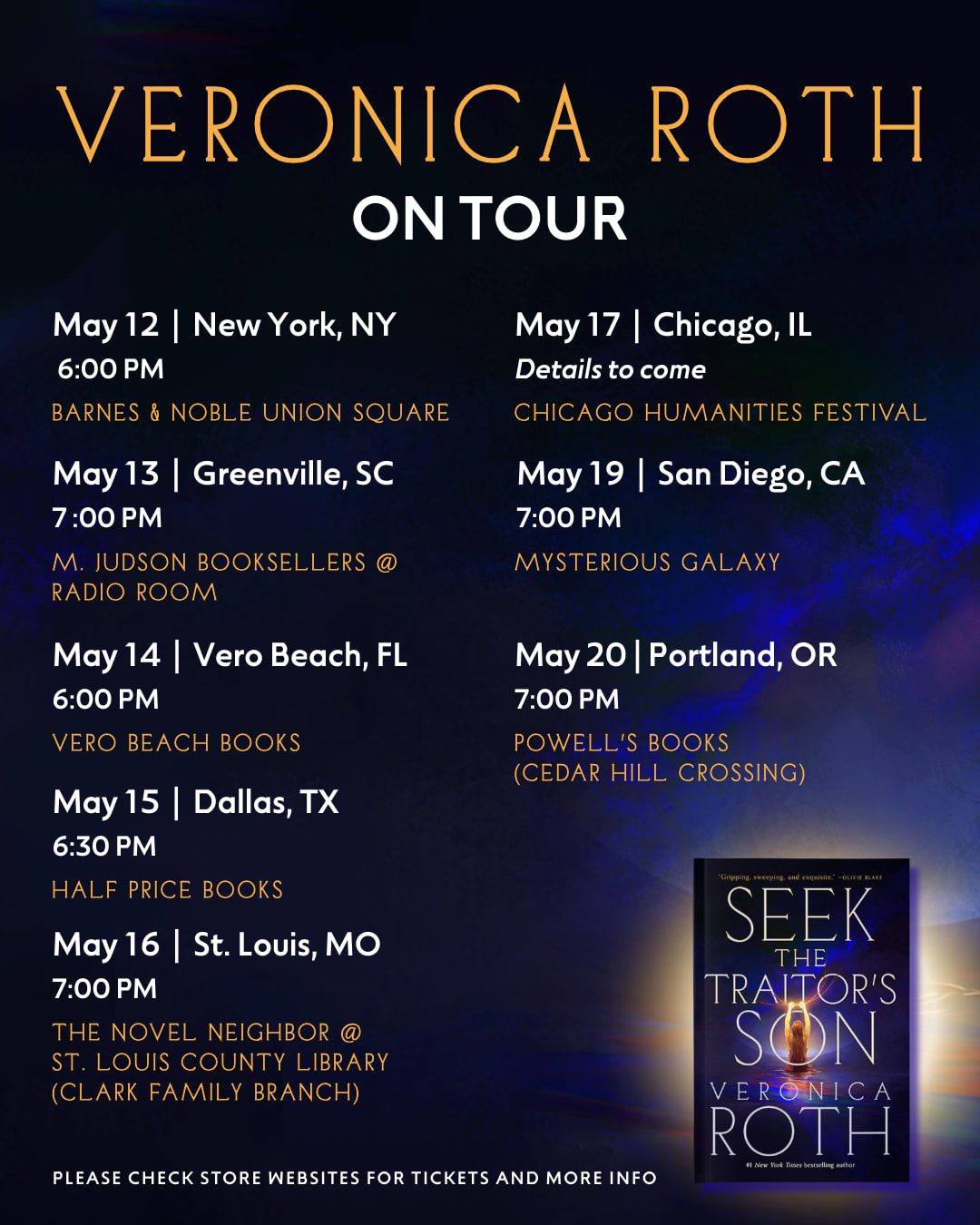
May 12, 2026: New York, NY
Barnes & Noble Union Square
May 13, 2026: Greenville, SC
M. Judson Booksellers @ Radio Room
May 14, 2026: Vero Beach, FL
Vero Beach Books
May 15, 2026: Dallas, TX
Half Price Books
May 16, 2026: St. Louis, MO
The Novel Neighbor @ St. Louis County Library (Clark Family Branch)
May 17, 2026: Chicago, IL
Chicago Humanities Festival
May 19, 2026: San Diego, CA
Mysterious Galaxy
May 20, 2026: Portland, OR
Powell’s Books (Cedar Hill Crossing)
July 13, 2026: Edinburgh, Scotland
Argonaut Books
July 14, 2026: Manchester, England
Waterstones
July 15, 2026: London, England
Waterstones Piccadilly
Stay warm out there— and stay salty.
<3,
V
January 13, 2026
Do I Like It? Reflecting on Divergent After 15 Years
Hello, and welcome to 2026. Divergent turns fifteen years old this year (!) and I have been thinking a lot about it— what it was like back then, what it’s like now, and what I’ve learned from all of it. So let’s dive in.
Everyone Else Must Be RightThere are reasons that the brain stores negative feedback better than positive feedback. Mostly: survival. Don’t eat the berry that made you sick, don’t touch the hot stove that burned you, don’t grab a knife by the blade—your brain is good at keeping you safe by storing negative experiences.
Relatedly, negative reviews often have a bigger impact on writers than positive ones, I think that’s typical. And I have been absorbing negative reactions to the Divergent series for fifteen years. The books were far-reaching and they continue to be widely read, which means not only do a lot of people have memories of them, but a lot of people are reacting to them right now, for the first time. This is a good thing— it is a very special, rare thing for books to have that kind of place in culture. This is probably a good opportunity to acknowledge that I am extremely grateful for Divergent and the success that changed my life and established my career. I’m going to acknowledge some of the hard parts in this newsletter, but that doesn’t negate the wonderful, transformative, amazing parts.
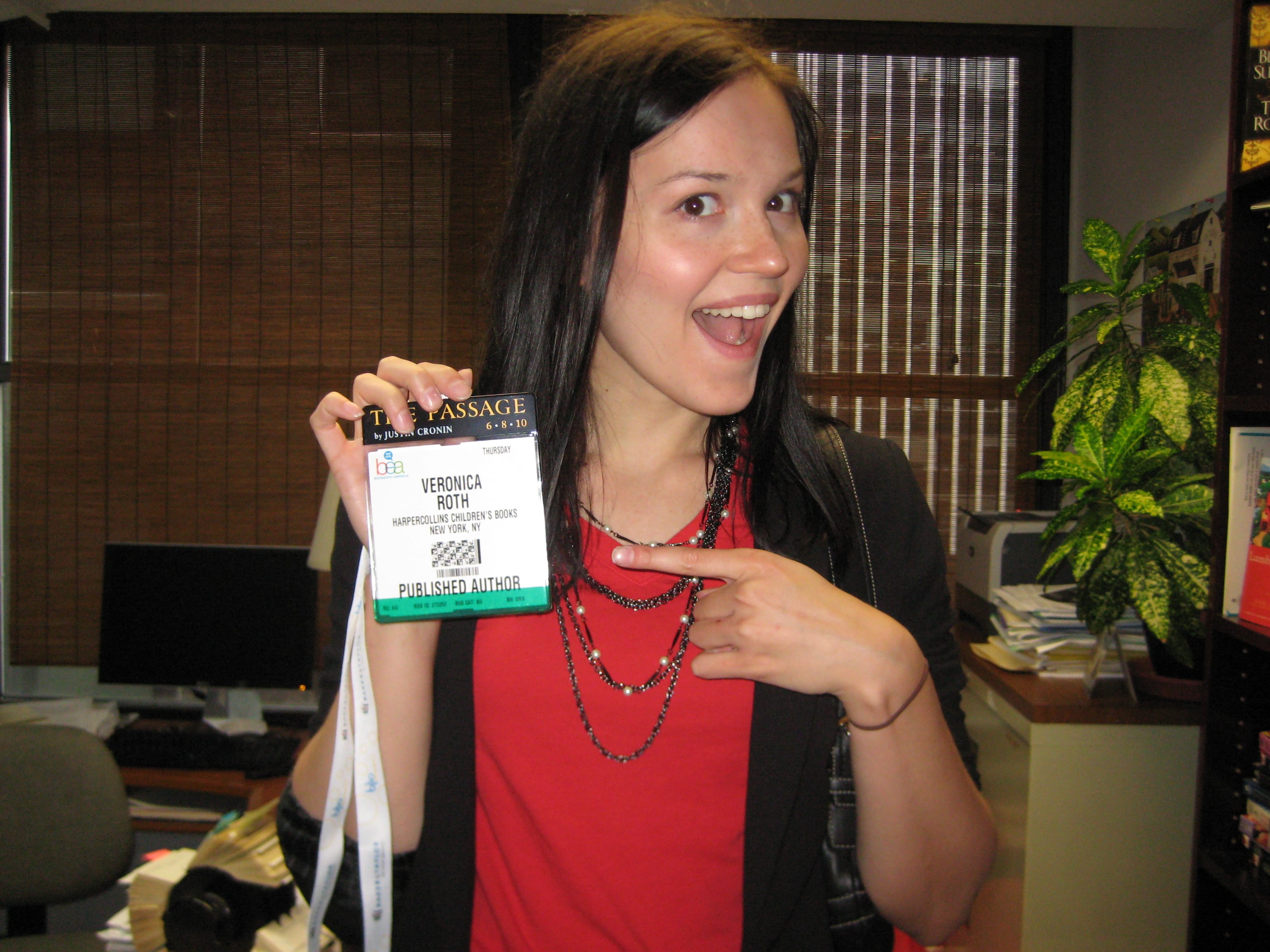 My badge for my first event after the book sold (BEA)
The side effect of a series being far-reaching like Divergent was is that the people who don’t like your work will keep saying so. And the people who hated Divergent? They really hated it, and often go out of their way to tell me why…whenever I try to talk about any new work. Or old work. Or any work.
This is a fact of my life and I thought I was receiving all of it maturely and with equanimity. But what I have actually been doing is storing all of that negativity inside me as truth. As fact. Because at a certain point, the easiest way to survive this negativity was to start agreeing with it. If I agree with it, it can’t hurt me, right? So imagine me at a dinner party with people I don’t know well, talking about my work, and when someone asks if Divergent is the book of mine they should start with, I make a face and say, Oh, no. Read one of the later ones. That’s me, protecting myself in advance.
Because really, think of the alternative. Imagine your books being so widely read that 40 million+ people have opinions about them, and then imagine storing the negative opinions better than you store the positive ones, and then imagine trying to insist to even a fraction of all those people that they’re wrong, your books aren’t bad, they’re not giving you credit for what you did well, that you were young and did your best and the books were for teen readers who had maybe never encountered science fiction before and The Hunger Games comparisons weren’t something you wanted or invited and and and—
Imagine insisting on all of that for fifteen years.
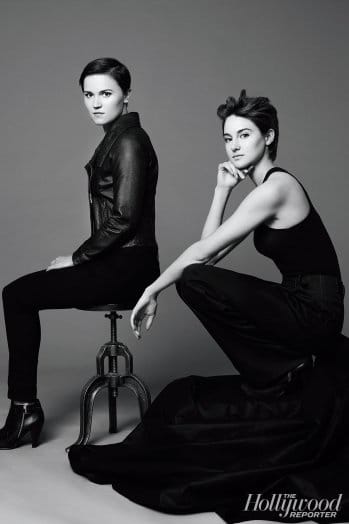 From The Hollywood Reporter, with Shailene Woodley
And then imagine you just can’t do it anymore, so you give up.
Everyone Else Must Be Right became my official strategy. People who think I suck? You can’t hurt me, because I’m one of you. Let’s point and laugh at my early work together, so you’re not pointing at me. Anything to stop you from pointing at me.
But What If…A couple years ago I went to the Eras Tour and it was a blast. I put on black sequin shorts and sang along with the songs I knew at the top of my lungs with a bunch of my friends. And in the days that followed, I thought about those early hits she played and I ached a little, thinking of how nice it would be to embrace the creative work that made you famous instead of feeling like you had to be so dismissive of it.
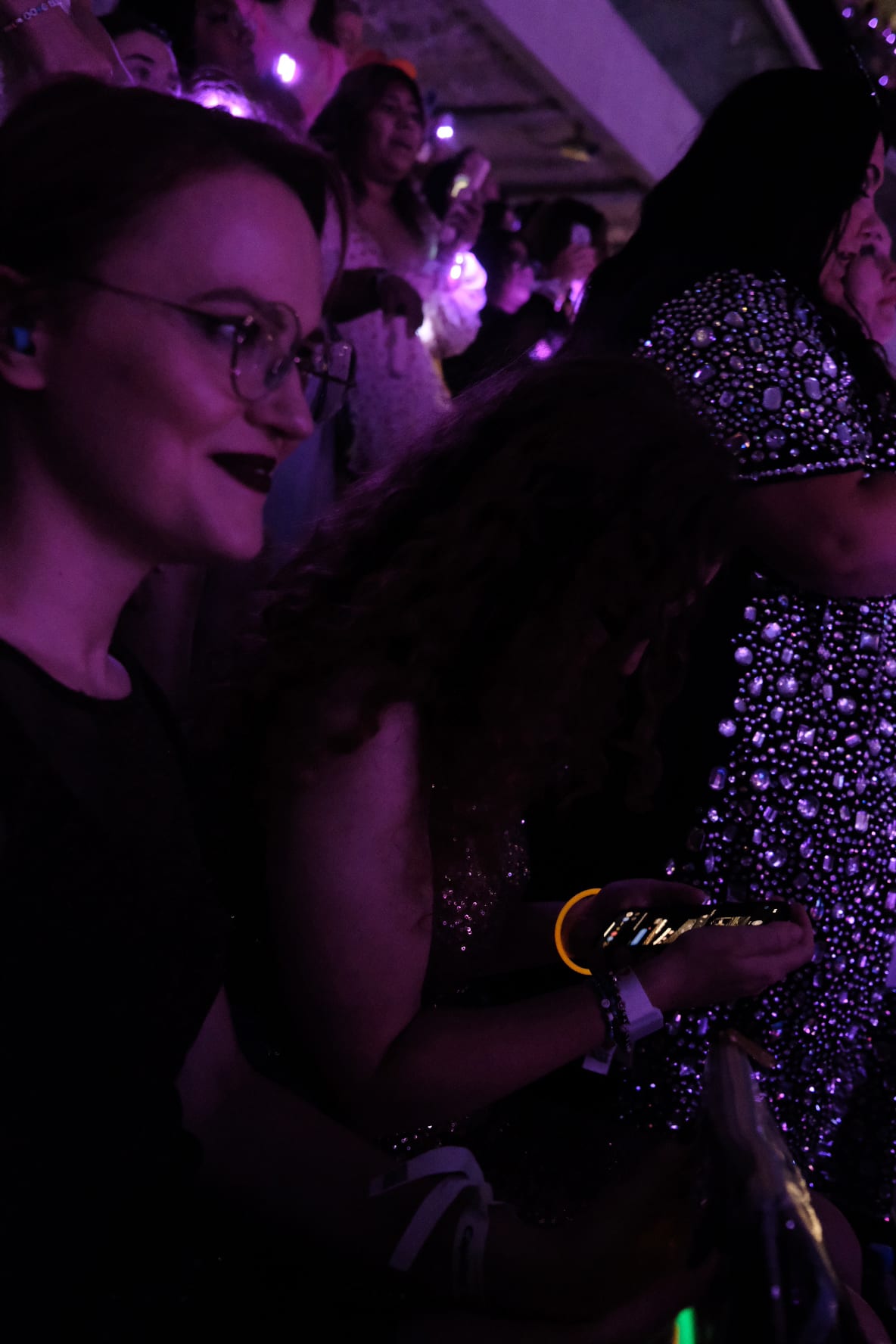 I dressed as “reputation,” naturally
So on a long drive from Albany to Manchester, Vermont, for a family vacation, I put on the Four audiobook. It’s really weird to think about it now, how my heart was racing right before the story started because I was so convinced this experience was going to make me feel shame.
What I discovered was this: yes, there are things in that book that make me cringe. Of course there are. It’s been over a decade since I wrote it and I’ve grown a lot since then. But there were other things, so many other things, that made me feel pleased. Little descriptions and moments of character development. Emotional resonance and amusing jokes. And even the cheesy parts contributed to this easy, fun reading experience that I wasn’t expecting. And “ease” is not a quality that all books have; it requires skill from the writer, no matter what people say.
 Me and my mom in Vermont
I reread the rest of the series after that, and while I saw very clearly the flaws in each work, I also realized what I had done well. Even in Allegiant, which is the messiest of the three books even if you do like the ending, I thought Tobias and Evelyn’s relationship was really wonderful and interesting. I didn’t cry over Tris’s death, I cried over Tobias’s mother finally choosing him instead of revenge. There was something really good there.
In a way, it was devastating to have this experience—to realize that I had spent over a decade being so hard on myself and actually, I should have stood up for myself instead. Not in public, necessarily, because I’m not a masochist, but in the safety of my own mind, I should have told myself, you did your best. And if it didn’t work for some people, you don’t have to agree with them.
Do I Like It?What I’m working on now, in the aftermath of this revelation, is rebuilding trust. Trust in myself. I realize that for the books that followed Divergent, I was working really hard to make them better, stronger, more respectable—and that’s not a bad thing. I’ve become a much better writer because of that drive to prove myself. But you know, it has its limits. Because when you judge your work by other people’s standards instead of your own, you’ll always fall short. You’ll never allow yourself to feel proud.
And not trusting yourself? It’s not good for your mental health. It’s not good for your well being. And what I want, far more than any external markers of success, is to live a good life. Trusting myself is an important part of that.
I used to know who I was when it came to books and writing. I knew I had good reading comprehension. That I had thoughtful observations about my reading. I knew I was capable of approaching even the most challenging works with confidence, that I could trust my brain to make sense of them. Somehow I lost touch with all of that—a lot of people told me my books were bad and I started to believe them. But actually, I am still the person I was before Divergent came out, capable and thoughtful and observant. My books are that way, too, if you care to look.
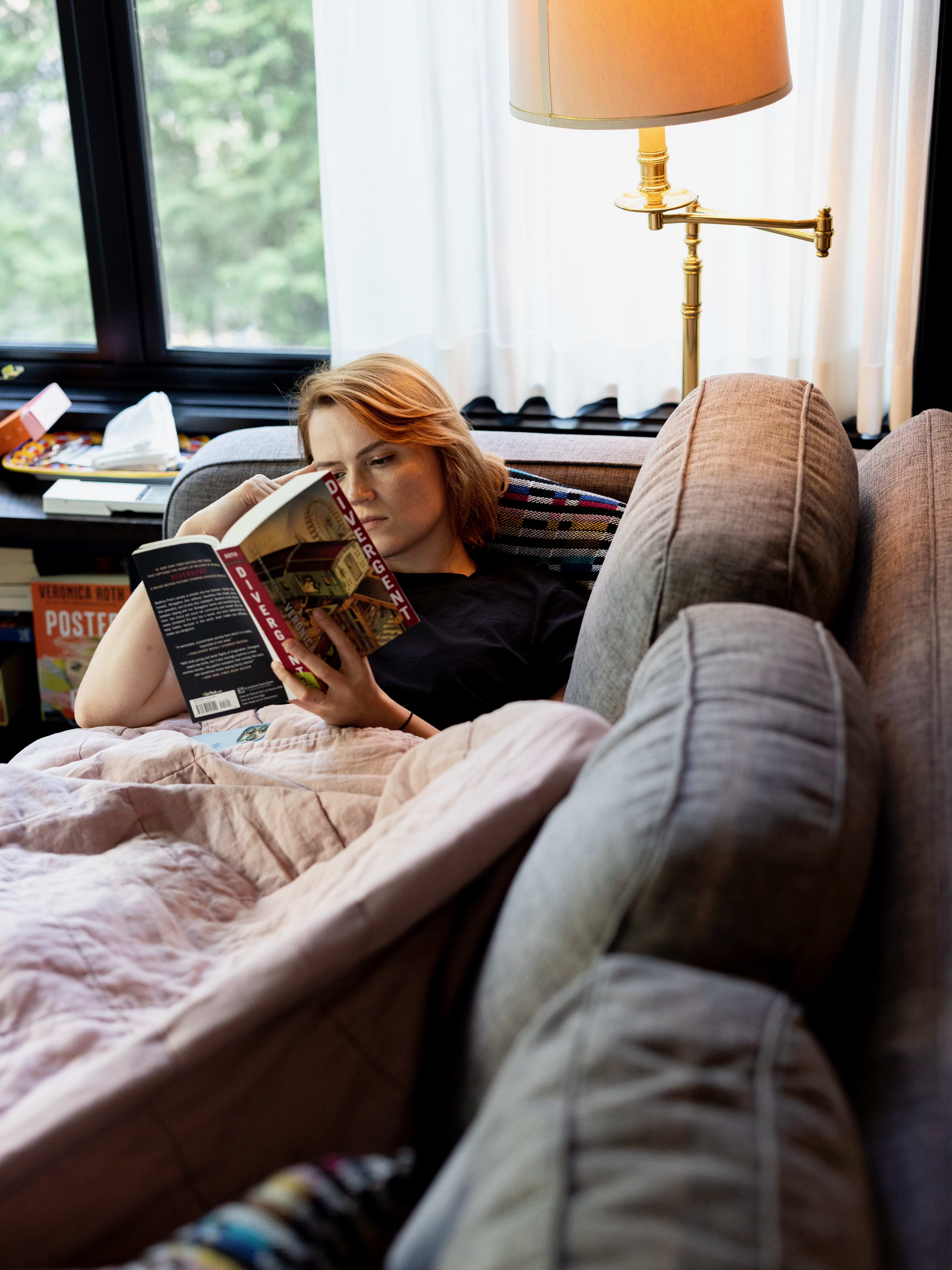 Photo by my husband
I am discovering that one way to rebuild trust in yourself is to stop looking at your work and asking “is this good?” Because “good” invites all kinds of other people’s opinions into the space of your writing, as well as your own.
Instead, what if you ask yourself, “Do I like it?”
It’s really hard to let that question be important. If you’re reading this, maybe you’re a writer trying to get published, and you’re getting rejected left, right, and center, and “Do I like it?” feels like a completely irrelevant and useless question. Or maybe you’re an author who, like me, has swallowed too much negativity and you no longer trust what you like. Or maybe you’re just a reader who feels a little bit lonely in your preferences.
But I encourage you— I encourage us— to try to let this question matter. As someone who’s lived a very unique publishing journey, I sometimes don’t feel like my experiences can be relevant. But here’s one:
Poster Girl came out in 2022, and it didn’t do well. I’m not going to get specific about it, but like, when you say a book didn’t do well and no one who has seen the numbers argues with you? It didn’t do well.
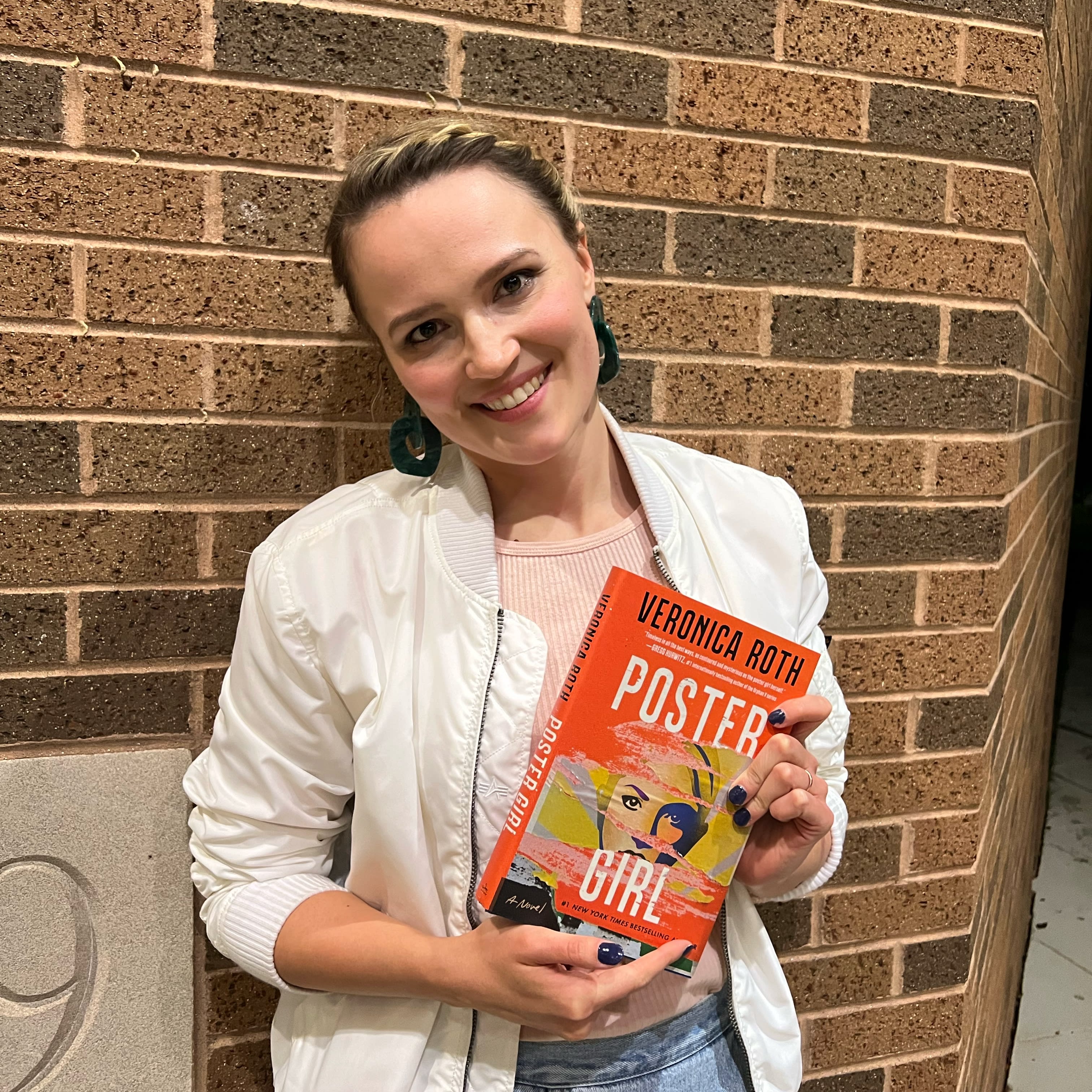 This smile is hiding the fact that I know this book isn’t doing well
But I love Poster Girl. I worked very hard on it, and when I reread bits of it, I think it’s excellent. That book makes me happy even though I know it wasn’t a career high point in the traditional sense. Its release bummed me out, but…not as much as you’d think.
Because there’s a little fire in my chest when I think about that book, a little fire that won’t go out, and that fire is liking it.
Liking your book doesn’t mean being delusional about its perfection. You can still like something and acknowledge its missteps. But liking it means acknowledging its successes, too. What do you like about this thing you made? What are the moments, big and small, that make you happy when you reread it? Think about it.
And let it be important. Because it is.
Liking it is about trusting your own perceptions of what’s good, entertaining, compelling, and interesting, and allowing them to guide you through your work. Yes, sometimes what you like will be out of step with what other people like, and that may result in setbacks. And you certainly need to evolve—to read widely and thoughtfully, to develop as a person and a writer—which will inevitably change what you like.
Liking it is not about shutting down, digging in your heels, and becoming closed off to growth.
It’s about opening up, letting yourself take up space, trusting yourself, and kindling a little fire that won’t go out.
Let it burn, baby.
V
December 29, 2025
Book Recs for Very Specific Moods, 2025 Edition
Guys, this was a weird reading year for me. I was drafting and editing nonstop— once I finished with one book, I moved straight to the next book, do not pass go, do not collect two hundred dollars—and I find it really difficult to read science fiction and fantasy when I am writing science fiction and/or fantasy.
So this year I stepped outside of my usual genres and read a lot of mystery, romance, and even one nonfiction about history. (Because this is somewhat new to me and I don’t know if my subscribers here are fluent in genre terms…if I note that a book is a romance, please assume that it has ~adult content.)
Thanks for reading! Subscribe for free to receive new posts and support my work.
Here are my book recs for very specific moods, 2025 edition. You can find the 2024 and 2023 editions here and here.
Let’s get into it!
Toxic Family Drama Makes Me Feel Seen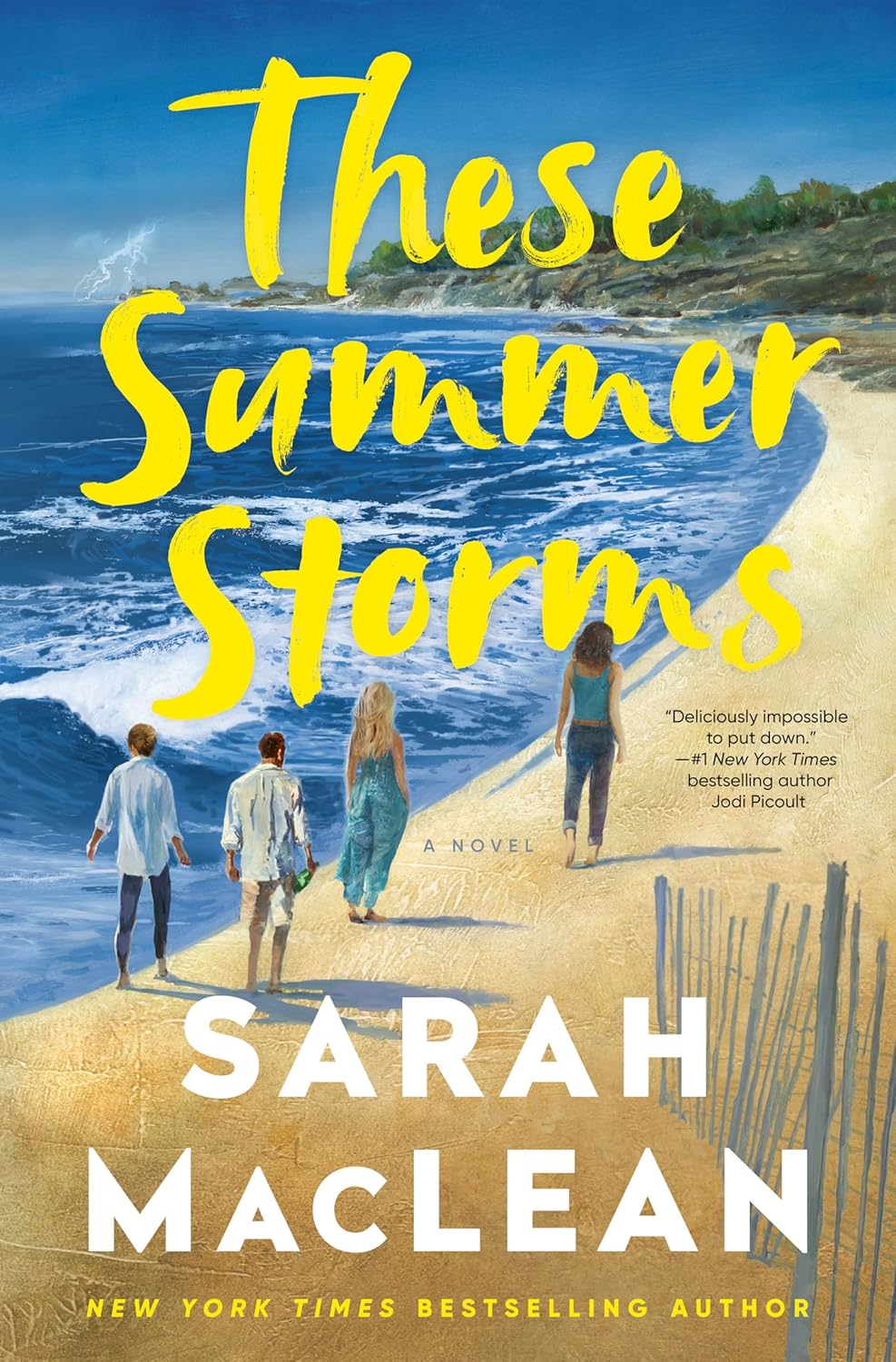
These Summer Storms by Sarah MacLean
These Summer Storms is something new and different from Sarah MacLean, who usually writes (excellent) historical romances. It’s about siblings who probably love each other but don’t really like each other, getting together for their father’s funeral weekend…and then his will leaves them with a warped inheritance game that brings up all kinds of tension and did I mention there’s a guy? And a romance with said guy? Anyway, this book singlehandedly got me back into reading after a dry spell, so just read it.
The Horrors Persist…And So Do I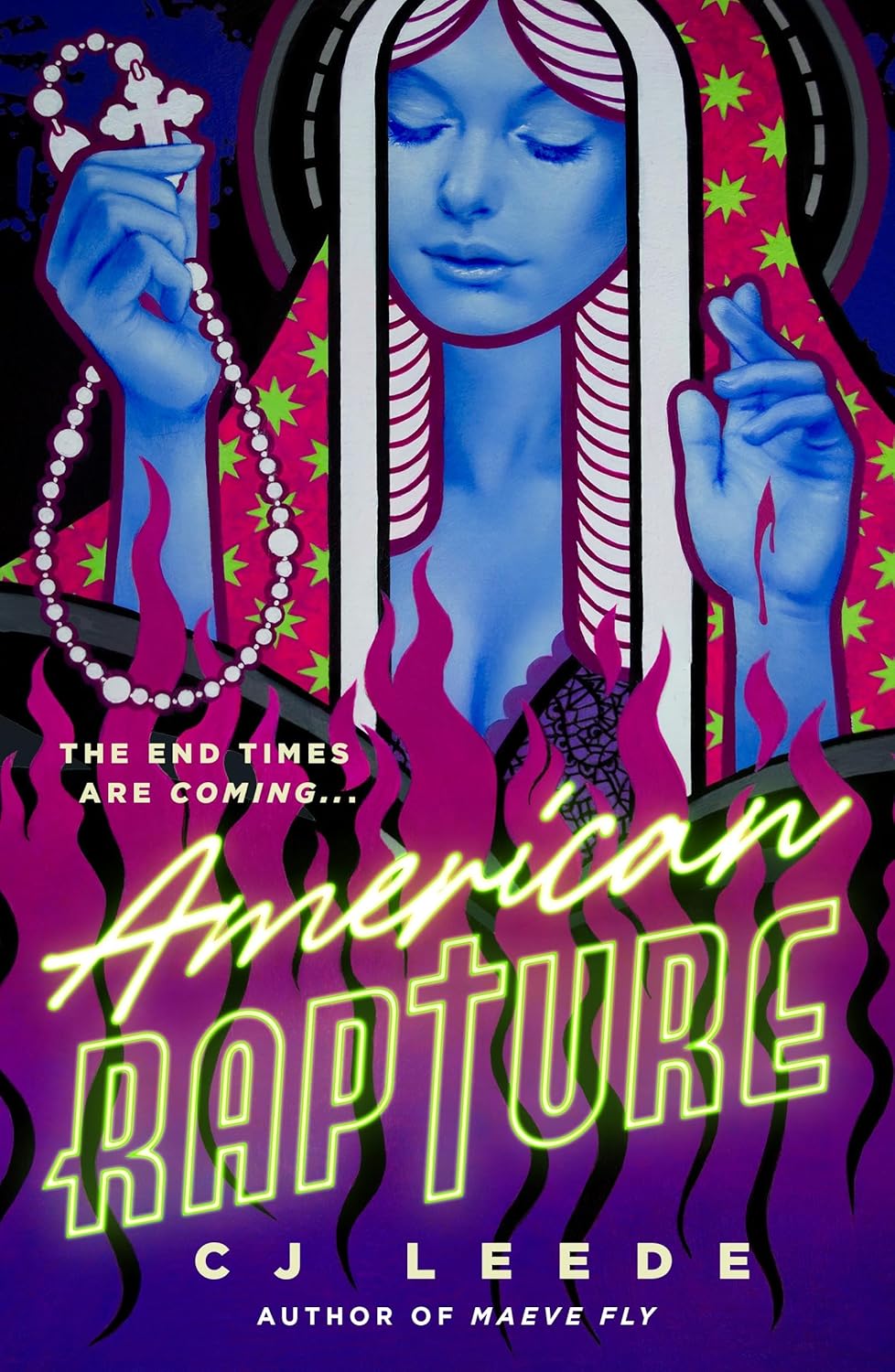
American Rapture by CJ Leede
This book is not for the faint of heart (or for clutchers of pearls) but I have wanted to read CJ Leede’s work since she was kind enough to blurb When Among Crows, so I, a certified weenie, sat down to read it earlier this year…and just read it all day without stopping. It’s very dark, with the kind of character whose POV you can’t entirely trust, not because she’s lying to you but because she doesn’t see things clearly herself, and it was very propulsive.
Remember the Good Old Days? You Know, When We Carried Swords?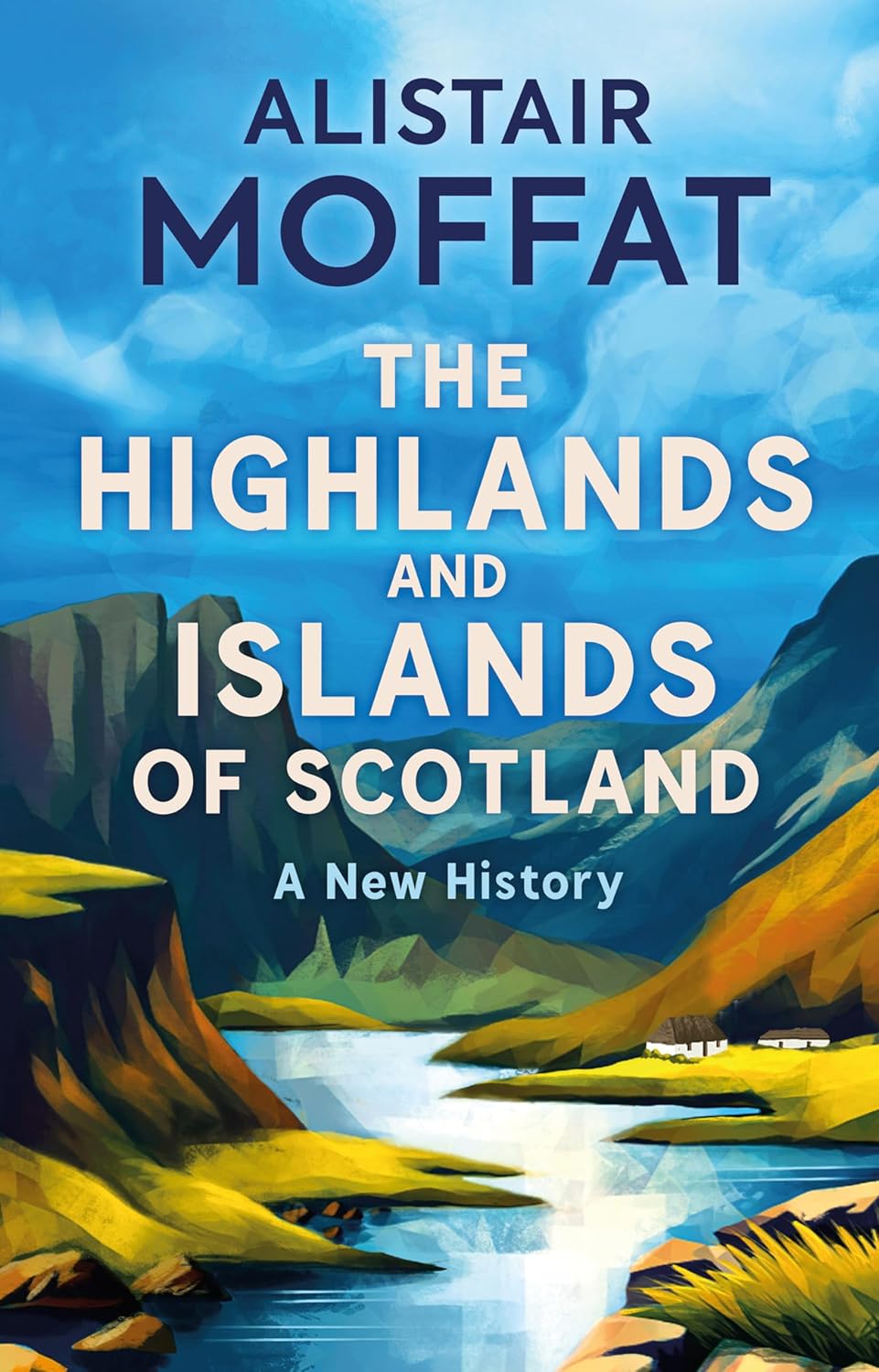
The Highlands and Islands of Scotland by Alistair Moffat
I went to Scotland last year and fell in love with it, specifically with the land and its ruins. So when I saw the Scottish History section at Toppings Edinburgh, this book jumped out at me. It’s dense, as a lot of historical nonfiction is, but Alistair Moffat’s writing is engaging and if you’ve ever been curious about the history of this part of the world, as I am, this book is for you.
All I Want for Christmas is Golden LA Sunlight and Two Hotties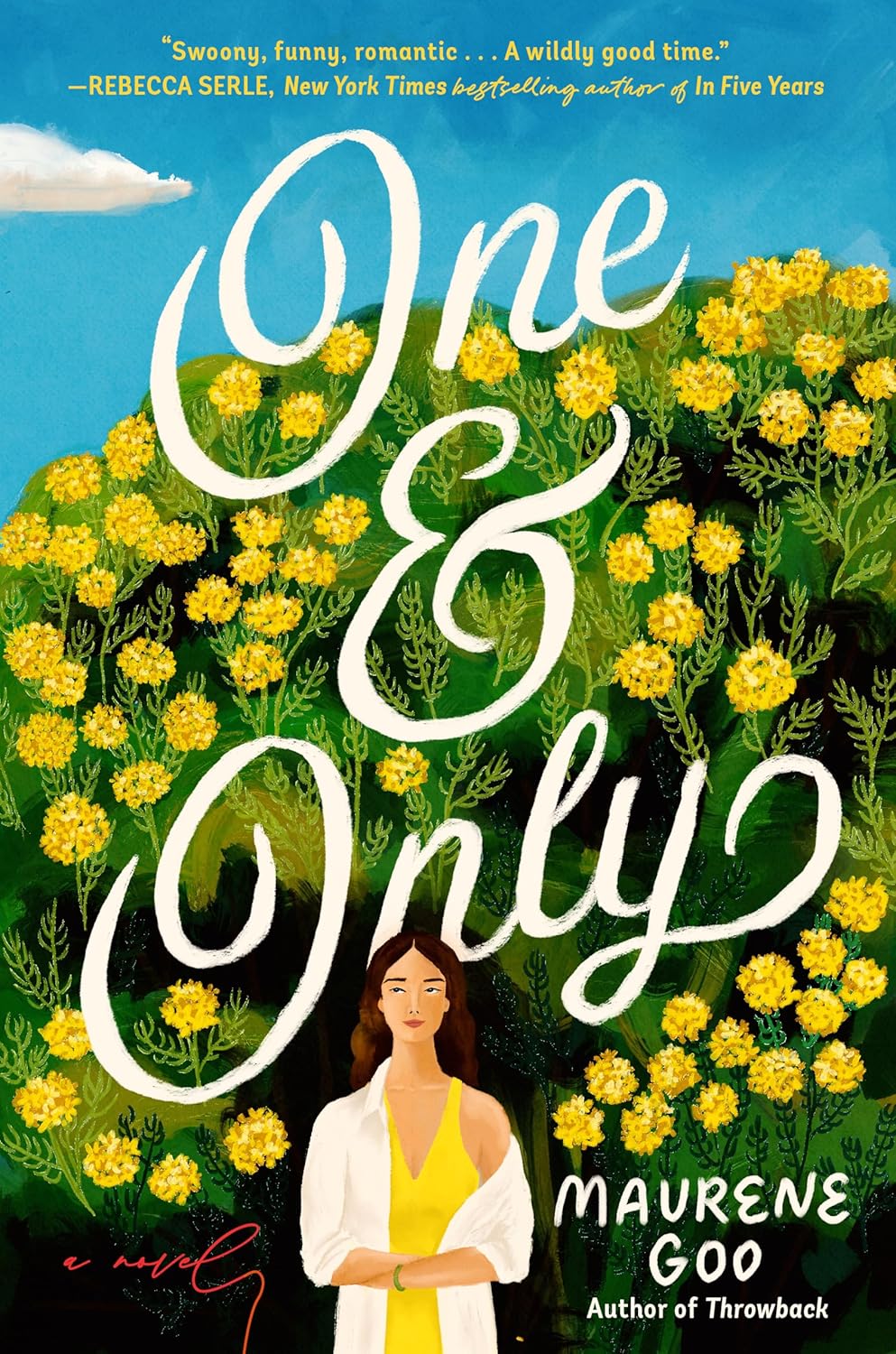
One & Only by
Are you still sleeping on Maurene Goo? Because if so: stop it. Maurene is one of the only people on Earth who can make me laugh out loud while I’m reading, and all of her books are great. This is her first adult book, and it doesn’t come out until February 3rd, but it should absolutely be on your radar. It’s about a woman who is about to turn 40 and works for the family business finding people’s soul mates (using a light touch of magic). Only…she hasn’t found hers. So she meets this other guy, instead. Then things get complicated. This book is funny and romantic and lush and beautiful and it will transport you to places you want to go.
Desperate to Hear A Good Friend’s TMI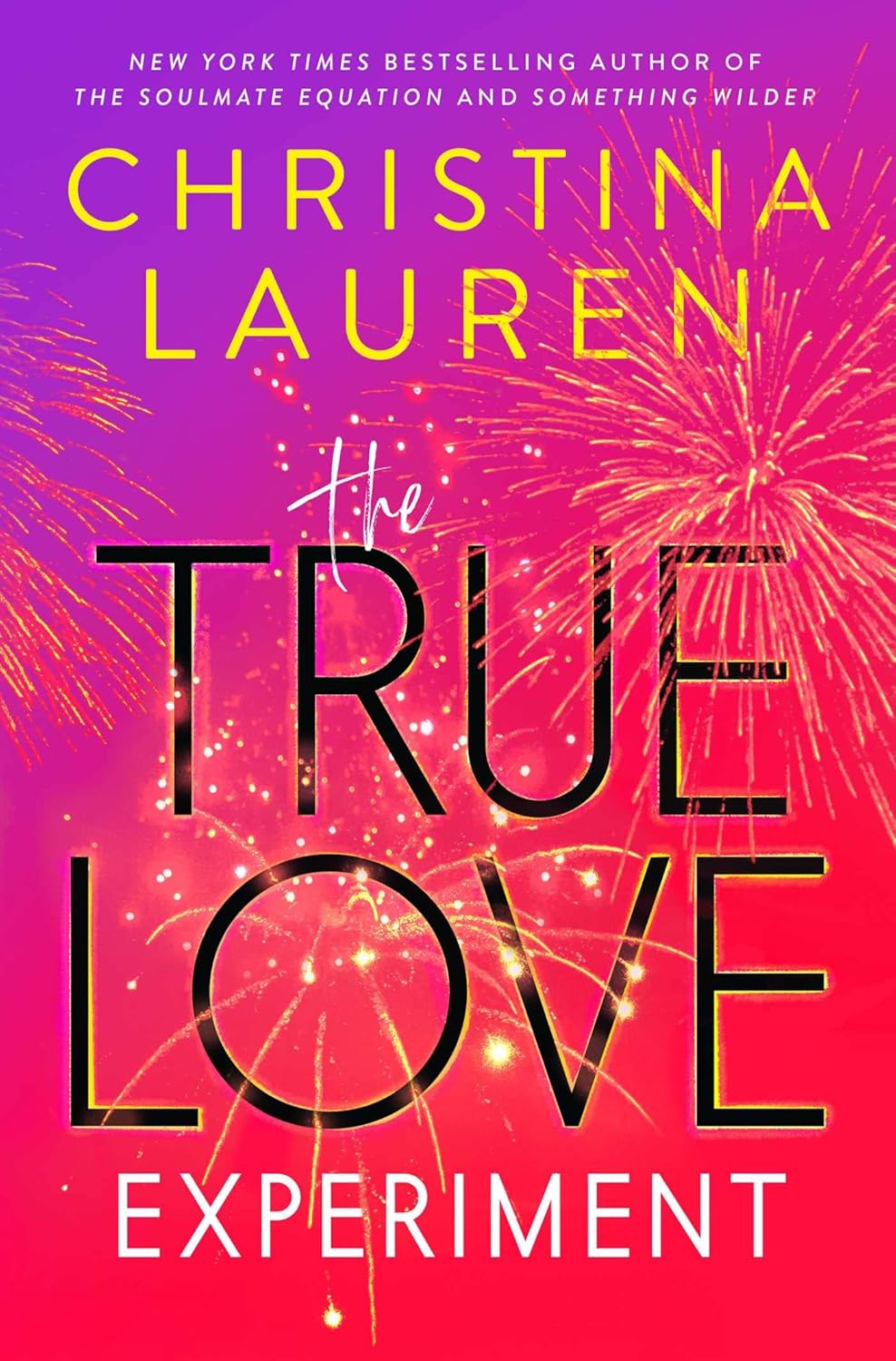
The True Love Experiment by Christina Lauren
I think I read four Christina Lauren books this year, so here I am recommending all the Christina Lauren books…but this one was my favorite. The thing about their books is that I fall in love with the main character before I am intrigued by the love interest. They are all lovable, funny, interesting women who deserve the very best, and that’s what I love to see in a romance. This one’s about a romance author who agrees to do a bachelor-style reality show. But she has a lot of demands. (AS SHE SHOULD!)
Swiftly Running Out of Damns to Give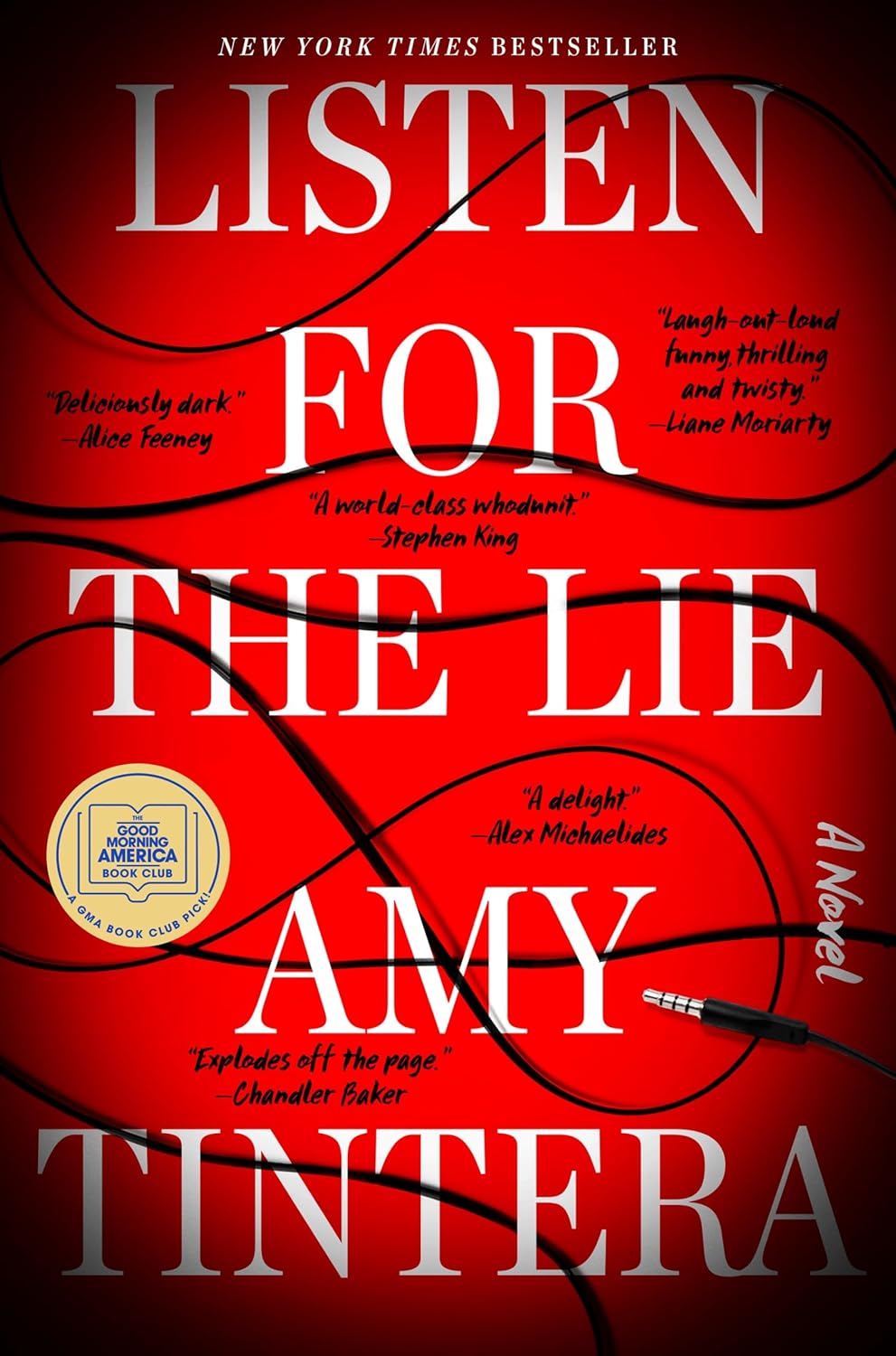
Listen for the Lie by Tintera
I listened to Listen for the Lie by Amy Tintera (great audiobook, by the way) on a road trip home from book tour, and I was about ready to keep driving just to finish it even though it was one in the morning when I got home. It’s about a woman who everyone thinks killed her best friend years ago, a podcast that reignites interest in the case, and her pursuit of the truth. What I liked best about it is the main character, who does not give a single shit what people think about her (mostly) and actually intentionally provokes them a lot of the time. Lucy is out of damns to give and I wish I could say the same. God bless.
What If It Was Cozy…But Also Murder?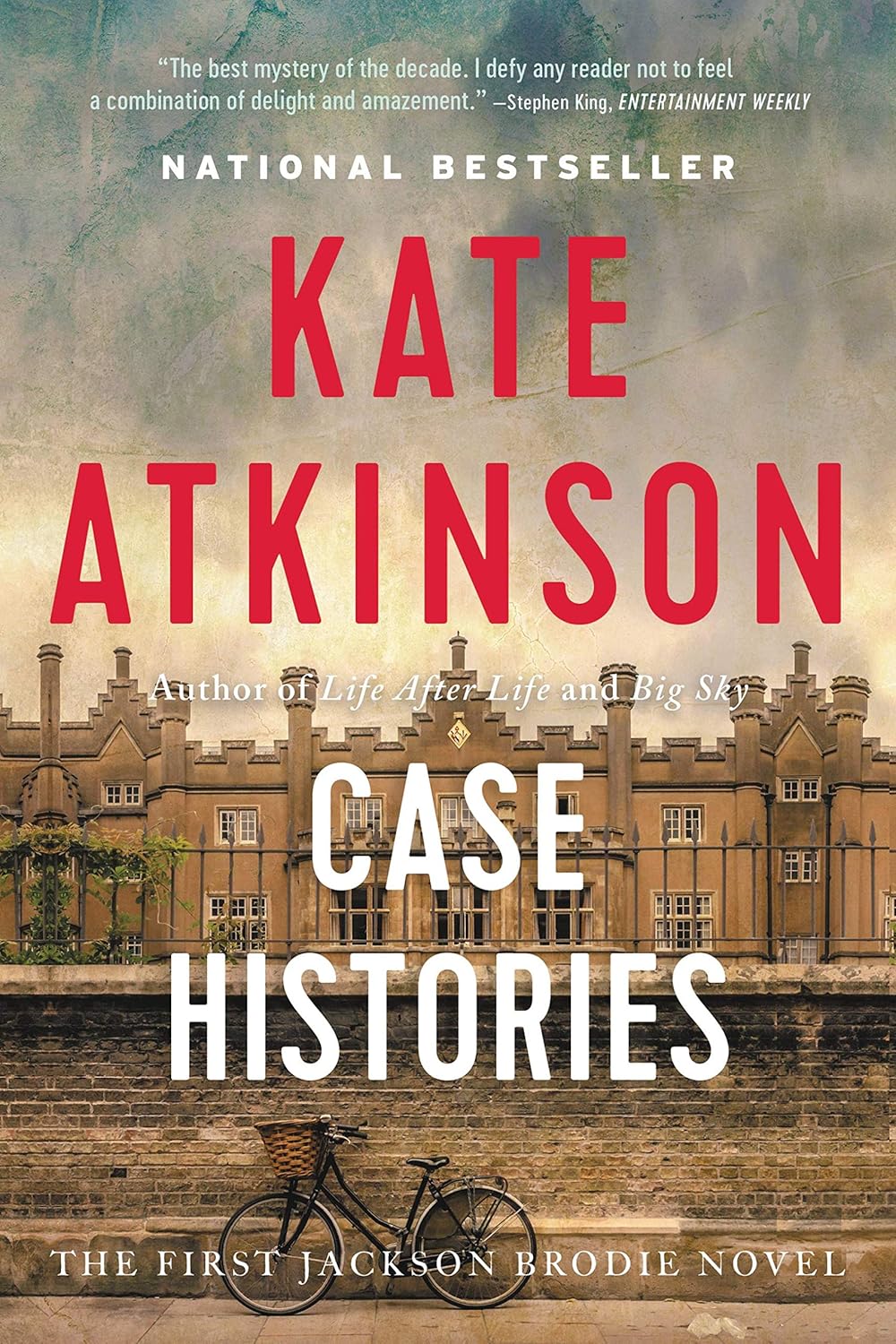
Case Histories by Kate Atkinson
Case Histories explores three separate murder cases as investigated by Jackson Brody, PI. For me it had a bit of a slow start, in that it went through the three cases one by one before bringing us the main character—but I stuck with it, and I’m glad I did. This book lit up all the puzzle-solving pleasure centers of my brain. And yet somehow it had a cozy feeling to it? You know, apart from the murder. Maybe I just really want to go back across the pond.
If r/BrandNewSentence Was A Book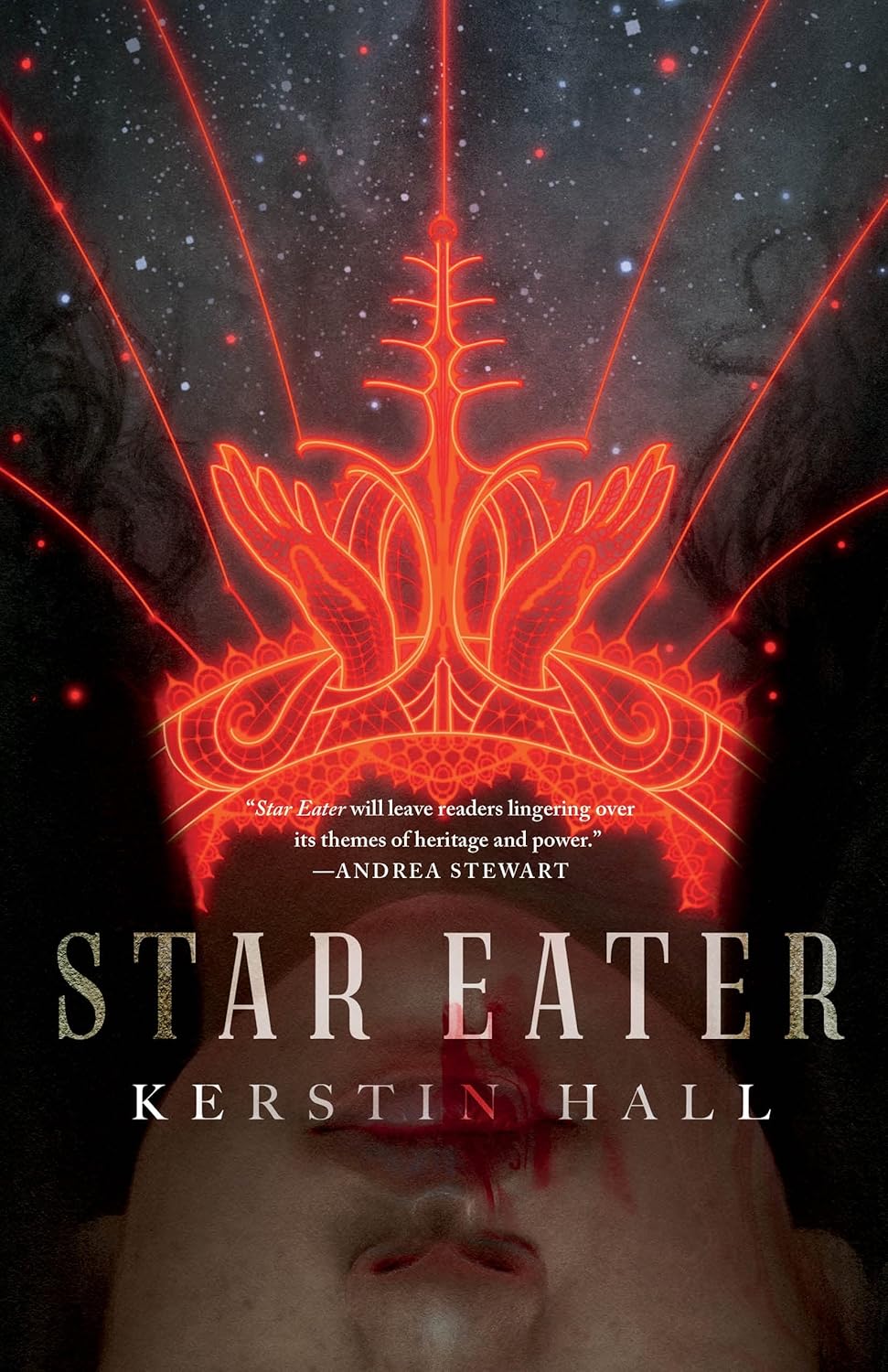
Star Eater by Kerstin Hall
Another year, another enthusiastic recommendation of Kerstin Hall’s work, this time with Star Eater, which is about a sisterhood of cannibalistic nuns in a floating fantasy city, and that is not a descriptor I have ever given for a book before, nor will I ever again. Kerstin Hall’s work is inventive and emotional and dark and deserves to be widely read by anyone who enjoys fantasy and doesn’t mind a little horror mixed in.
Happy reading and happy New Year, everyone. May 2026 bring us triumphs small and large.
V
Thanks for reading! Subscribe for free to receive new posts and support my work.
December 9, 2025
How Many Drafts Does It Take?
A little while ago I posted a note about all the drafts I went through before settling on the final version of Seek the Traitor’s Son (which comes out May 2026). I wrote Seek the Traitor’s Son over the course of six years, beginning in September 2019. I worked on it on and off while editing Chosen Ones, writing and editing Poster Girl, Arch-Conspirator, When Among Crows, To Clutch A Razor, and Seek the Traitor’s Son’s sequel1. (This is why I was only writing novellas for three years.)
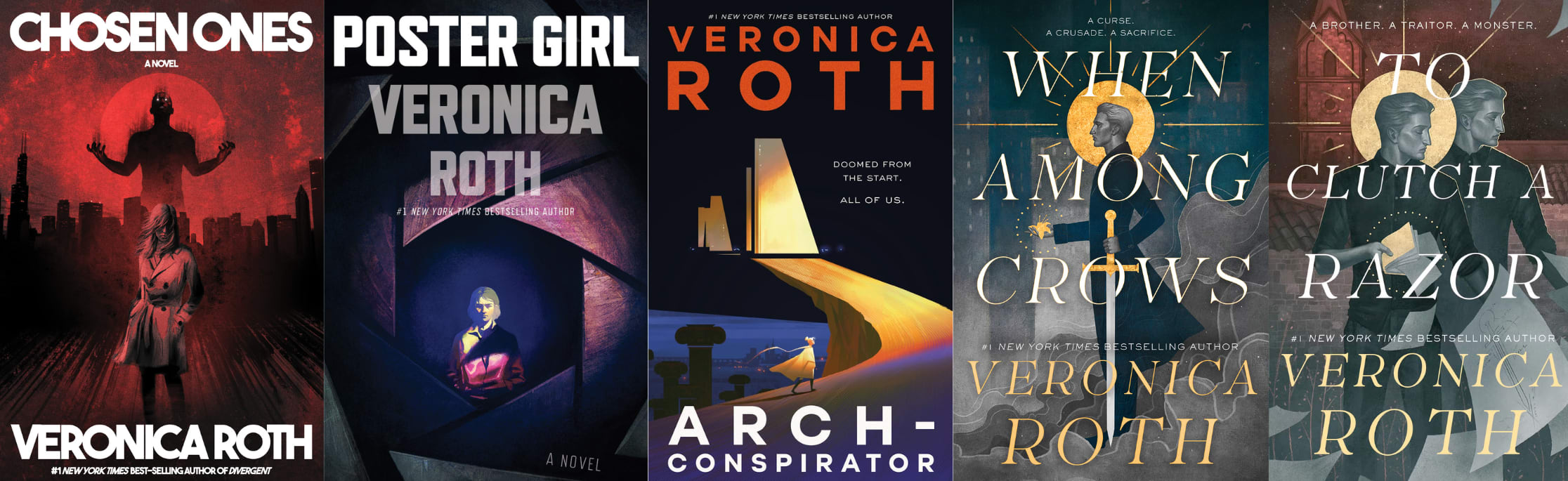 yes, I was cheating on allllll of these books
When writers talk about writing a book for that long and in that many drafts, the assumption is that we really agonized over it. That’s not what this was. Writing this book for that long was fun, and it involved constant experimentation. This book is an interesting case study in what can change between drafts and how to feel your way into the “right” version of the story you’re working on. If nothing else, you may find my messy, iterative process fascinating and alarming in equal measure. So here we go:
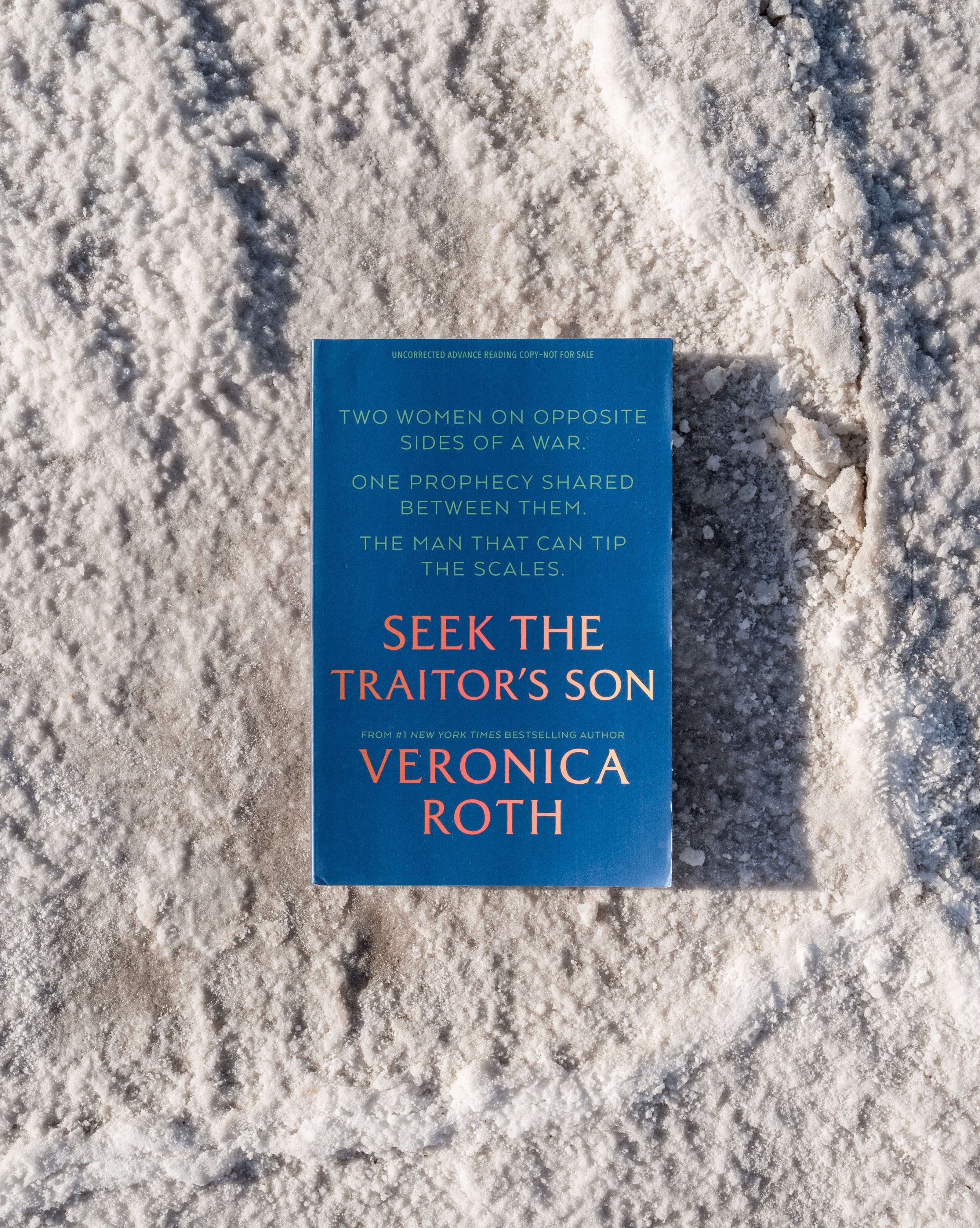 this book opens on a salt flat in Utah
In the first draft, Elegy was a king, going to a strange, dangerous man for help. He knew their enemies better than anyone else did. His name was Theren. (5 pages.)(Fantasy)
First of all, yep—in about half of these drafts, Elegy was a man. And this first “draft” (using the term loosely) just came from an instinct about two characters—or specifically, the dynamic between them.
In the second draft, Elegy wasn’t there. It was Theren’s backstory— how did he come by such deep knowledge of his nation’s enemies? Through struggle, turns out. (92 pages.)(Fantasy)
In the second draft, having realized I liked the dynamic I was exploring, I decide to focus on the character who most interests me and figure out what their deal is.
At this point the worldbuilding was very “blahblahblah fantasy country blahblah magic blahblah mountains idk.”
The third draft began with an interrogation. Theren had come home, but was he a traitor? Everyone but Elegy seemed to think so, and his fatalistic attitude wasn’t helping his case. (63 pages.)(Fantasy)
I know Theren now, so for the rest of the drafts he’s basically the same. Here I was interested in someone surviving an ordeal and their survival is what makes them suspicious to people. I also discovered something that turns up in every version of this story, which is that Elegy sees Theren—for better or worse, and sometimes better than he sees himself.
In the fourth, fifth, and sixth drafts, Elegy was meaner. Then so was Theren. Every scene was increasingly more like a collision. I knew they needed more tension between them, but this kind of tension was artificial. (collectively, 401 pages)(Fantasy)
Writer knows there’s not enough tension; writer tries to force that tension. I think of this draft as the “who is Elegy, though?” draft.
In the seventh and eighth drafts, something interesting emerged: Elegy’s restraint. Everyone wanted something from Theren, information they knew he possessed, and she was the only one who wouldn’t pry it out of his head by force. Maybe it would be easier, she said, but it wouldn’t be right, and it’s not what I am. And that’s when I really knew Elegy…and Elegy & Theren. The tension between them isn’t a surface-level enmity. It’s rooted in the past. You’ll see what I mean. (445 pages)(Science Fiction— now they were mostly on a space station.)
…and now I’ve found Elegy, which means I’ve found both of them. But this is also the draft where I realized I was using only shallow worldbuilding; I had no idea, really, where this story took place and how the setting impacted the characters and plot…which it should.
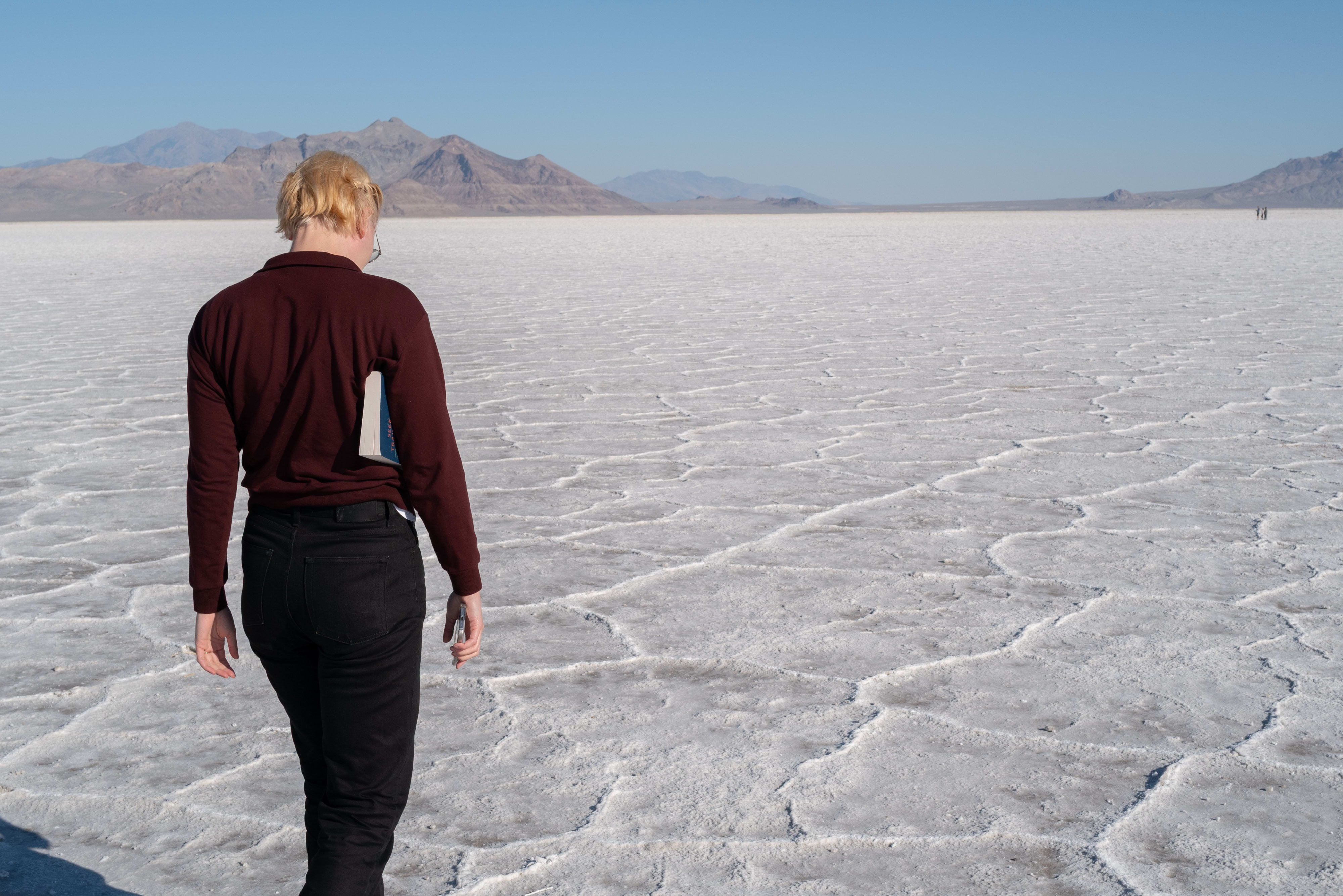 here I am walking across said salt flat, the Bonneville Salt Flats, this year
In the ninth draft, I thought, well, let’s try it as YA. Just as an experiment. Theren got younger; timelines were shorter; Elegy had more parents. Everything got a little lighter in tone, because the compressed timeline made the wounds shallower. It was fun, but it wasn’t the book. It was, however, set on Earth, a civilization built on ruins. (109 pages)(Science Fiction)
Career considerations started to enter the draft at this stage. It’s been a long time since I had a YA idea, and I wondered if a path back to that category would be to age down an adult idea. I wasn’t set on this and no one was pressuring me to do it, I was just curious.
Setting this draft on a ruined Earth was a similar move: I’d heard from my YA publisher many years before that they would prefer "grounded” books (code in this case for “set on Earth”), so I thought, okay, while I’m trying out YA, I’ll try that, too. Even though the reason behind trying it was strategic (and mildly depressing), it actually led to creative discovery and excitement—setting this book on Earth electrified me. It brought up all kinds of new worldbuilding questions, made me imagine our cities as ruins, awakened my interest in the wonders of this planet.
One of those new worldbuilding questions was answered by the Fever, which is a highly contagious virus that kills everyone who contracts it…only to resurrect half of them a few days later, with abilities they didn’t have before. It was my way of explaining the “magic” that was in earlier drafts (integral to the plot) while still keeping the story on Earth. It is now my favorite aspect of the worldbuilding, and I can’t believe I wrote EIGHT DRAFTS without it.
But…the book wasn’t YA. So…
The tenth draft, I knew. Elegy had been a man, a woman, a teenager, a king, a queen, a soldier, a bounty hunter. She’d had the power to look into a person’s memory and she’d been ordinary. She’d been cruel and kind and everything in between. She had lived in a fantasy land with no name, on a space station, on a mountainous planet, and then on Earth. I discovered she was wary and weary, but with a kind of certainty at the core of her. And that’s when I really started writing the book. (All drafts, research, revisions, added together: 3,000 pages.)(Dystopian Fantasy)
This is the tenth draft, but it’s also…the rough draft. This is when the pieces were all in place: Elegy, Theren, and their world. What stayed from the very start, though, was the dynamic between them. When she meets him, she’s putting together a puzzle. When he meets her, he’s just trying to survive the encounter.
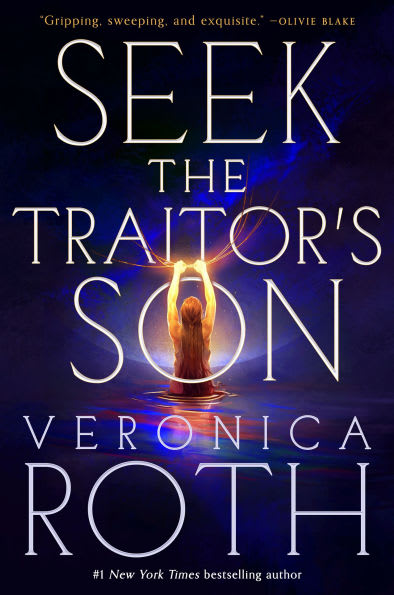 hey gorgeous, what’s your name?
When writers say that no work is ever wasted, all of this is what we mean. I could have written this book more efficiently, but it was fun to play around with it and I had other projects in the works, so why prioritize efficiency? And I learned more about what I wanted and what was right for the story with each draft.
This is also—sneakily—a study in writer’s block. Each of these drafts had a stalling point, some earlier than others. Stalling out in a draft is often the result of making the “wrong” decision, but it can be difficult to figure out what that decision was. Despite all these different drafts, I actually made the same “wrong” decision each time:
I kept trying to force things to grow that didn’t have roots. The character of Elegy, just a collection of qualities whose origins I didn’t understand; the source of the tension between Elegy and Theren, an interesting dynamic that had no foundation; a story adrift in a world that stayed fuzzy and had no impact on anything. All I did, over the course of these drafts, was anchor the story, give it stability and depth.
So if you’re stalled in your draft, ask yourself: have I given all of these elements roots? Have you figured out the result that you want without building in the elements that will get you there? This doesn’t mean putting a bunch of backstory on the page. Think of it like this: you’re a watchmaker. Someone comes to you to fix their watch. You know what the inside of the watch looks like, you can see all the gears moving, you know how it all works—but when you return it to the customer, all they see is the watch. That’s what you need for your story: for you, the creator of it, to understand its gears.
The book comes out in May. I miss working on it already.
<3,
V
1Yes, the sequel to this book is already written, I just have to finish editing it.
November 11, 2025
Cover Reveal for Seek the Traitor’s Son (out 5/12/26!)
The cover for the first book in my new romantic dystopian fantasy series, Seek the Traitor’s Son, is HERE and she is GORGEOUS. The art is by the fantastic Pablo Hurtado de Mendoza (who also did the art for Arch-Conspirator!) and the design is by the talented Katie Klimowicz. Check it out!
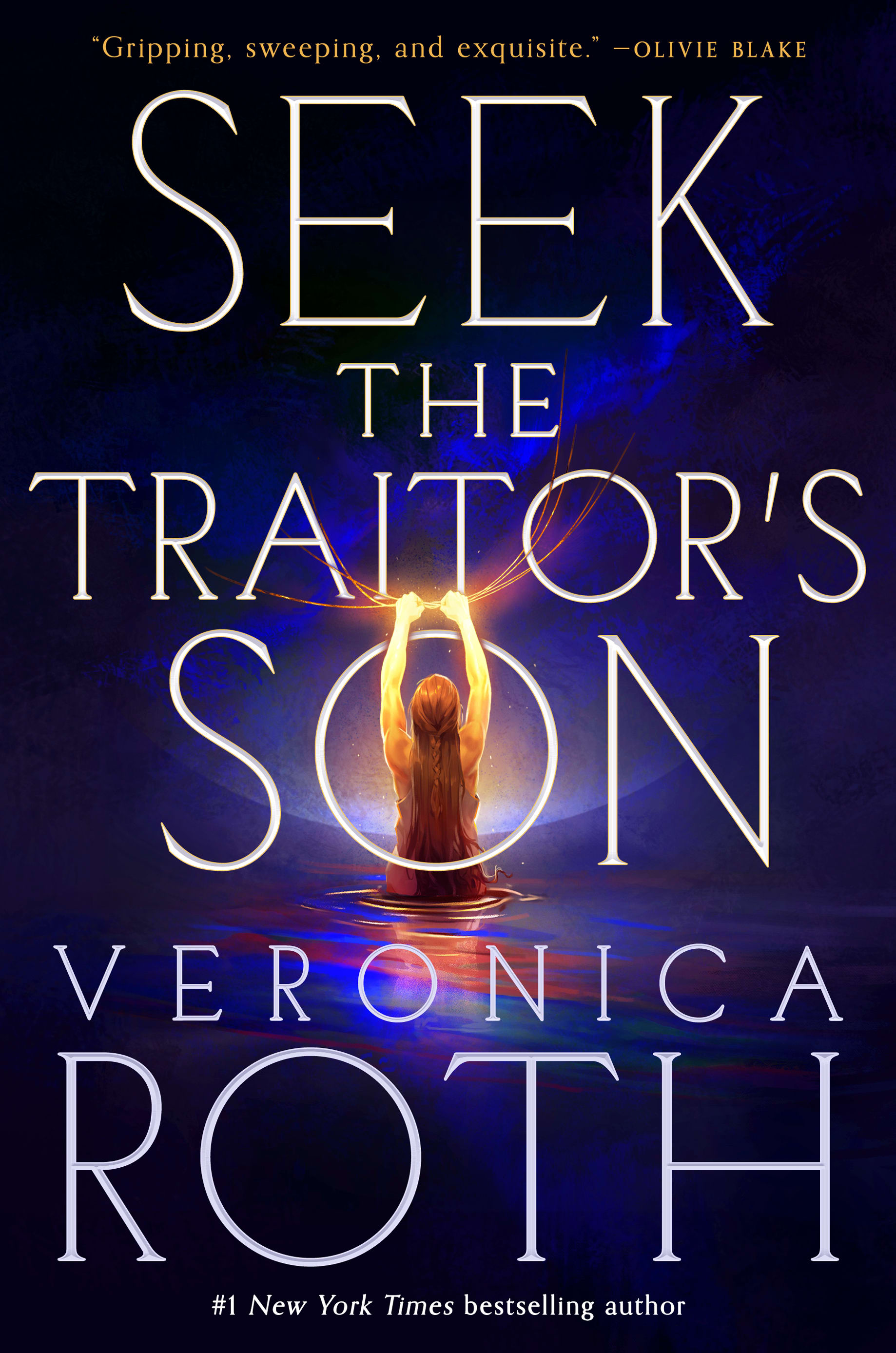
You can pre-order it from your favorite retailer here:
About the book:
Elegy Ahn—daughter of a bounty hunter, now committed soldier—is the unwilling subject of a prophecy. She’s fated to bring victory to her people against their powerful enemies: the Talusar, who worship a Fever that brings death to everyone it touches…except those it resurrects, forever changed.
But she’s not the only one with a destiny. Rava Vidar, fearsome Talusar general with a reputation for cruelty, is also fated to lead her people to triumph. And critical to both of their fates is the same man.
A man who—Elegy is told— will bring her death.
A man she’ll fall in love with.
Less Formally:
You might like this book if you…
…Liked my other books
…But especially Carve the Mark
…Have found yourself craving dystopian fiction again
…Have ever looked for hurt/comfort fics on Ao3 (or perhaps…Angst)
…Wished Zelda and Link would make out
…Liked Star Wars, but more “Rogue One” and “Andor” than “Return of the Jedi”
…Are intrigued by the idea of technology that runs through your veins
…Were into the “now we live in the ruins of a previous civilization” part of Divergent
…Enjoy the vibes of this song or this song or this song
V
October 28, 2025
How to Read Dystopian Fiction in Dystopian Times
Senior year of high school, I read 1984 by George Orwell for the second time. It was for an AP Literature class called “Logic and Rhetoric,” to this day one of the best classes I’ve taken. What I remember is analyzing the language in the novel, considering words like “doublethink” and “thoughtcrime” and whether simplifying vocabulary can restrict our capacity for complex thought. It was a revelation, and because of that class, even two decades later, I see Newspeak all around me in political rhetoric, in casual conversation.
It wasn’t my first time encountering dystopian fiction, though. The first time was in fifth grade, when we read The Giver by Lois Lowry. I remember less about that. We had to consider what our own utopian worlds would look like, if we got the chance to build them. We talked about why someone might build a “utopia” like the one in The Giver, and what exactly its system took from people. It was maybe one of the first times I understood what science fiction was— though I wouldn’t have articulated it that way—and we studied the novel with curiosity and a sincere desire for understanding.

When I stepped out into the world with a dystopian novel, I was told something a little different about what dystopian fiction was for. Dystopian fiction is a warning—that was the prevailing opinion. And people asked me what my warning was. What were they supposed to learn from my dystopian world? What was I trying to critique?
For someone fresh out of college, who had only ever studied dystopian fiction in two ways—as a thought exercise that taught me about human nature (The Giver) and as a way of seeing the world around me more clearly (1984)—this was a bit of an odd question. It’s not that I didn’t think dystopian fiction was concerned with the future—I obviously did. It’s more that I had never thought “warning” me about the future was dystopian fiction’s highest priority.
This is a bit of a fine distinction. But George Orwell once said, “1984 was based chiefly on communism, because that is the dominant form of totalitarianism, but I was trying to imagine what communism would be like if it were firmly rooted in the English speaking countries.” The book’s primary concern is Orwell’s present, not his future—his observations of Stalinist government (right down to Big Brother with his big mustache a la Trotsky), and of his own. That doesn’t mean the book can’t also be a warning about the future, but it’s not a step by step guidebook on resisting totalitarianism. It makes us open our eyes to now. It said (and still says, which is why it’s so brilliant), this is already happening. This is what the world is like now.
Lately I’ve been seeing sentiments like “Dystopian fiction failed us” and “what’s the point of dystopian fiction now?” here and there. They’re primarily an expression of grief, and I’m not here to critique them or the people who say them—I understand the sentiment and have felt it myself. For example, last year, Elon Musk shared a graphic on Twitter basically aligning himself with dystopian heroines like Katniss and yes, Tris. That’s right, the world’s wealthiest man thinks of himself as a scrappy teenager fighting against oppression. (Oppression by whom, I wonder, when he’s one of the most powerful people alive and has aligned himself with the people who have total control over our government?) It seems impossible to me that he would believe he’s like the hero of those stories. I saw that graphic and yeah, I for sure felt like I’d failed. But I reminded myself that I can’t control what people take away from their reading. And if he didn’t catch the “you are not the hero of this resistance narrative” vibe from The Hunger Games, well, that’s not because Suzanne Collins wasn’t clear.
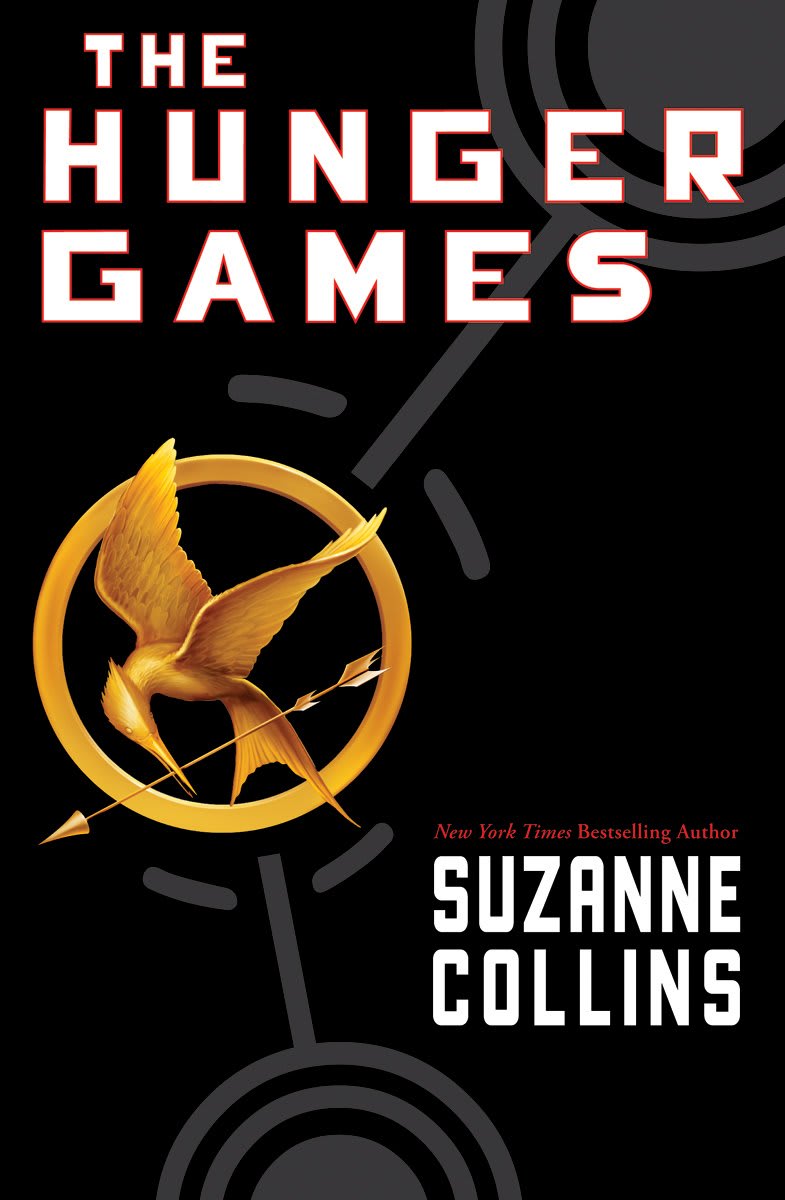
If you believe the primary purpose of dystopia is to warn us and steer us, then I guess you’re right—we’ve fallen into all its traps all over again, and it’s not doing its job. I’m not sure I agree, though. I think dystopian fiction’s highest priority is the same as most literature: to express something true about now. It simply does so in an exaggerated way. The “warning” is a side effect of that. But if you believe that now is the genre’s highest priority, rather than the future, it does change whether you think it’s still worth something, whether you think dystopian fiction is “doing its job.”
I recently made a list of dystopian recommendations. Those books exist on a spectrum of “blistering” to “less blistering” in terms of social critique. Some of them were dreamlike, more fable than realistic. Some put the “dystopia” in the background, with a different plot— cat and mouse pursuit, locked room thriller, or even romance—in the foreground. Each of them, without exception, expresses something true about now.
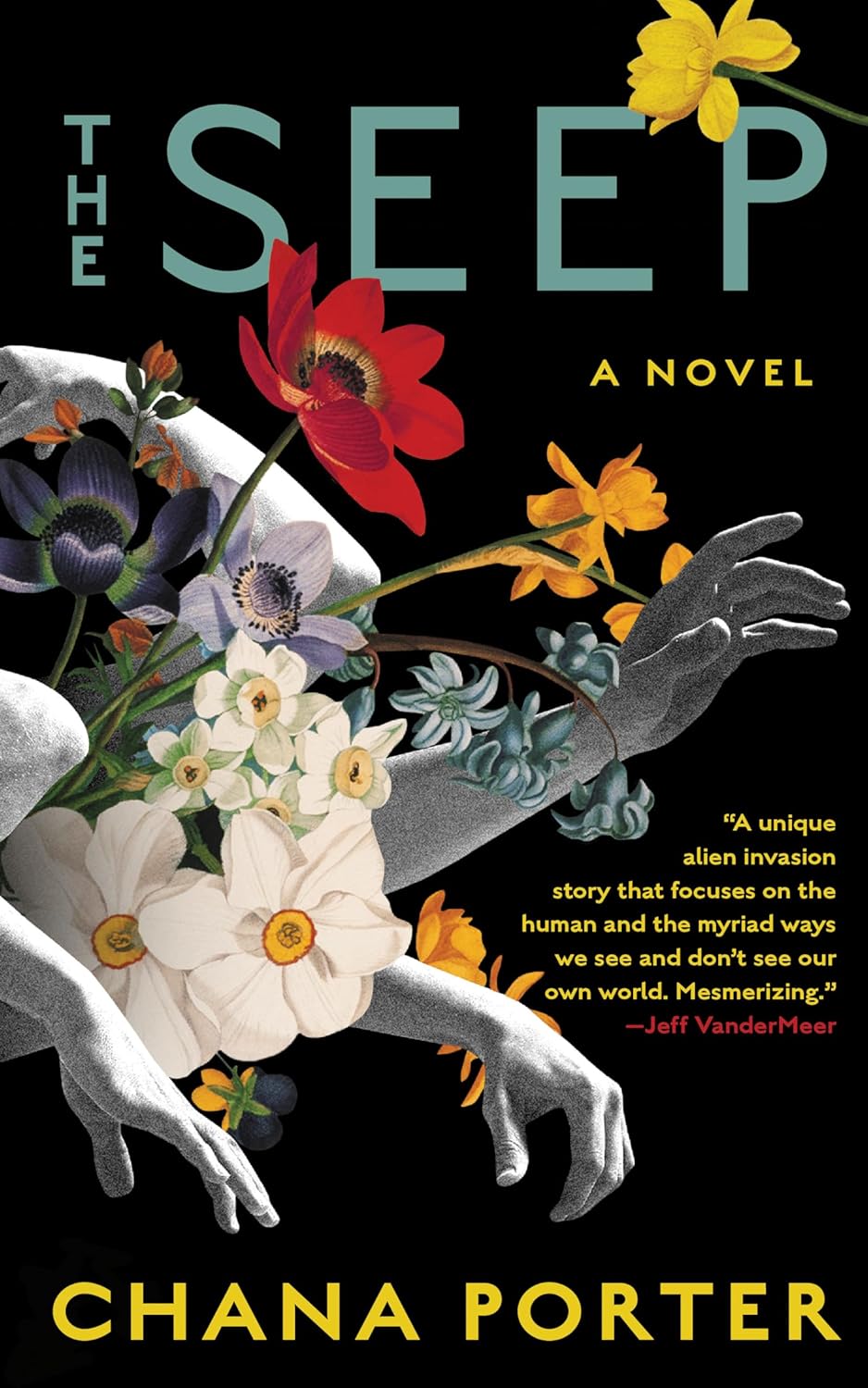
“I wouldn’t call The Seep ‘dystopian’,” someone in Chana Porter’s comments section said (in a nice way). They had a point—The Seep is about the world’s best alien invasion, where the aliens just want us to be happy and at peace, and give us endless possibilities. But the lovely, true thing about The Seep is its gentle exploration of how getting what we want, whenever we want, sucks some of the marrow out of life…and doesn’t spare us from grief. I look around myself now and I see certain parts of our world exhorting me to pursue constant pleasure and to avoid any and all discomfort, and I think about that novella, about the emptiness on the other side of the constant, immediate satisfaction of my needs.
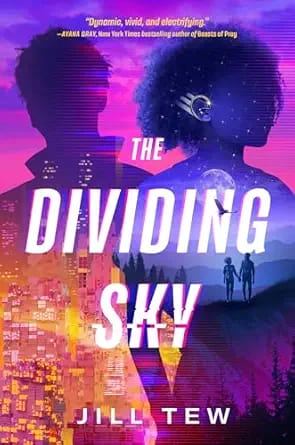
The Dividing Sky by Jill Tew is a dystopian romance. I’ve seen some scornful comments online, not about this book, but about the very idea of “dystopian romance.” I want to encourage people to see that this isn’t an either/or situation— you can’t either have meaningful social critique or romance. It’s a both/and. The Dividing Sky describes a corporate nightmare world where people outsource their meaningful social and emotional connections so that they can increase their productivity, which…listen, that’s a little too familiar, right? And in the midst of this too-real system, two people find each other and fall in love.
“Dystopia” is now. The value of dystopian fiction is in showing you what’s already around you. And you know what else is now? You and your spouse, going on dates. You and your kids, laughing at the dinner table. You and your friends, going to see Superman and discussing David Corenswet’s dimples. You singing along to KPop Demon Hunters’ soundtrack in the car. These stories—these precious stories—also have a place in dystopian fiction. Reading about people falling in love in a dystopia is not me trying to escape my reality. It’s me trying to believe that goodness still exists and is worth fighting for in my right now.
I want to see the world expressed back to me truly— yes. I want to see the capitalist hellscape, the totalitarian hellscape, the technological hellscape, revealed to me in fiction, yes. Because that fiction says, what you see is real. It’s a relief for a book to acknowledge your reality and to communicate to you that it sees what you see.
But let’s not underestimate the power of other stories emerging from that expression of truth. A love story. An adventure. A quiet tale of grief. It’s okay for a book to acknowledge that these smaller, or lighter, or softer stories exist in the midst of hardship. Because those are our stories. Those, too, are our now. And if the job of dystopian fiction is to reveal us to ourselves—a more expansive, inclusive definition of “dystopian fiction”—then there has to be space for that kind of “now,” too.
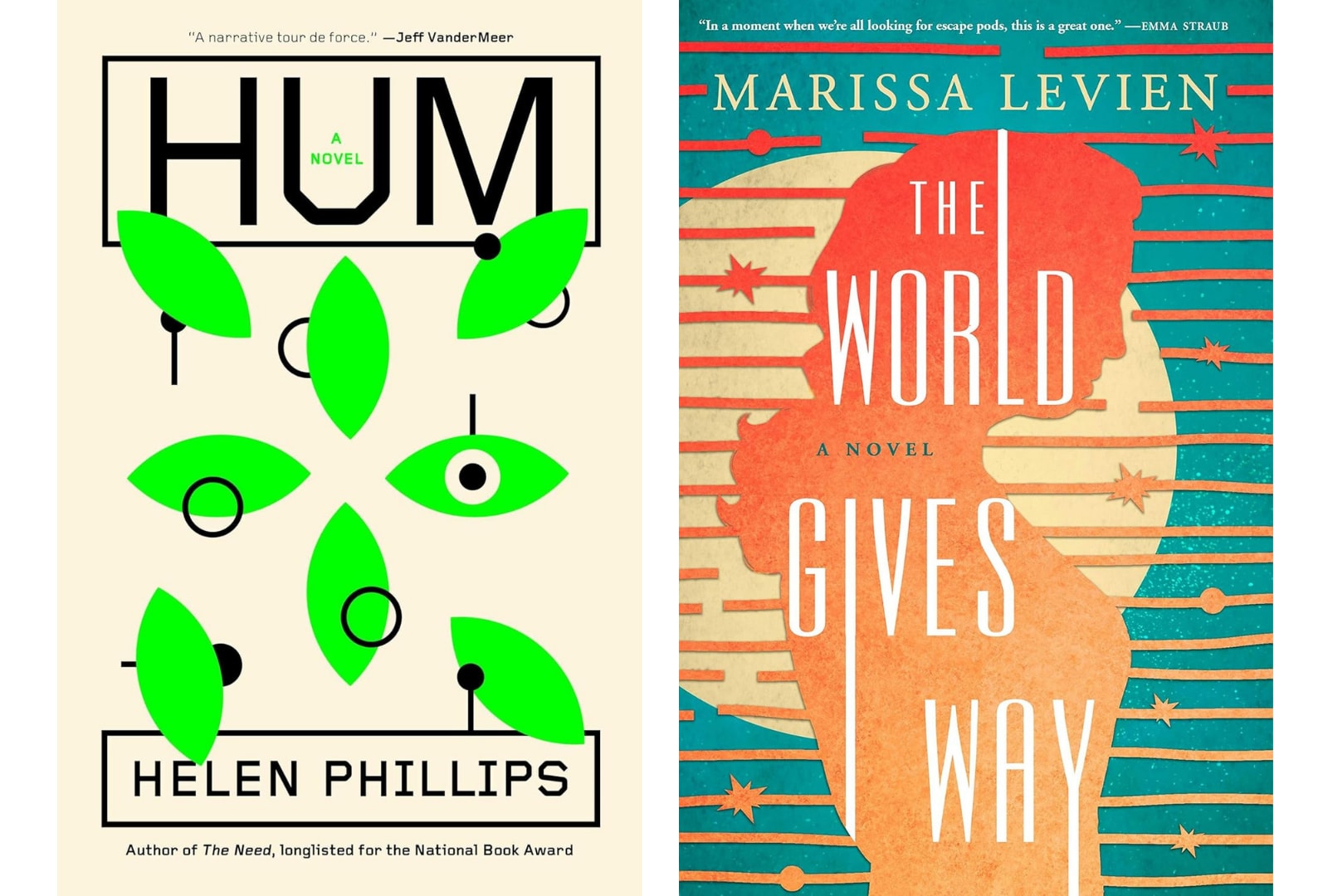
Every book doesn’t have to do everything. That’s why we have so many of them. There’s a place for Hum by Helen Phillips, showcasing the horrors of constant noise and distraction, among other things. There’s a place for The World Gives Way by Marissa Levien, creating a parallel to our collapsing world as it takes you on an adventure. There’s a place for the gentlest shades of dystopia, there only if you squint. There’s a place for mysteries, adventures, and romance. There’s a place for our harrowing Hunger Games and our “what if love was outlawed? what would we lose?” thought exercises. And yeah, there’s a place for Divergent, too. It doesn’t have to do every job that a dystopian book can do, and it doesn’t have to be as solemn and incisive as the most solemn and incisive dystopian books on Earth; I release myself and all other authors from that charge. And I release you, too, from only thinking of this subgenre as a collection of guidebooks that tell you what not to do. That is not the job of fiction.
I’ll finish with a quote from Ursula LeGuin:
I’m not saying fiction is meaningless or useless. Far from it. I believe storytelling is one of the most useful tools we have for achieving meaning: it serves to keep our communities together by asking and saying who we are, and it’s one of the best tools an individual has to find out who I am, what life may ask of me and how I can respond.
But that’s not the same as having a message. The complex meanings of a serious story or novel can be understood only by participation in the language of the story itself. To translate them into a message or reduce them to a sermon distorts, betrays, and destroys them.
This is because a work of art is understood not by the mind only, but by the emotions and by the body itself.
Who are we? We are the highs and the lows, and we are sometimes both at once.
V
October 8, 2025
The Divergent: Deluxe Edition is Le Gorgeous
Hello everyone from still-summery Chicago!
I am delusionally wearing warm clothes in an attempt to summon fall weather and finishing copyedits on a project I can’t tell you anything about yet. (Yay?) But today I have news about a new, fancy edition of Divergent, some quick recs, a giveaway of Seek the Traitor’s Son, and some events I’ll be doing in NYC.
First things first:
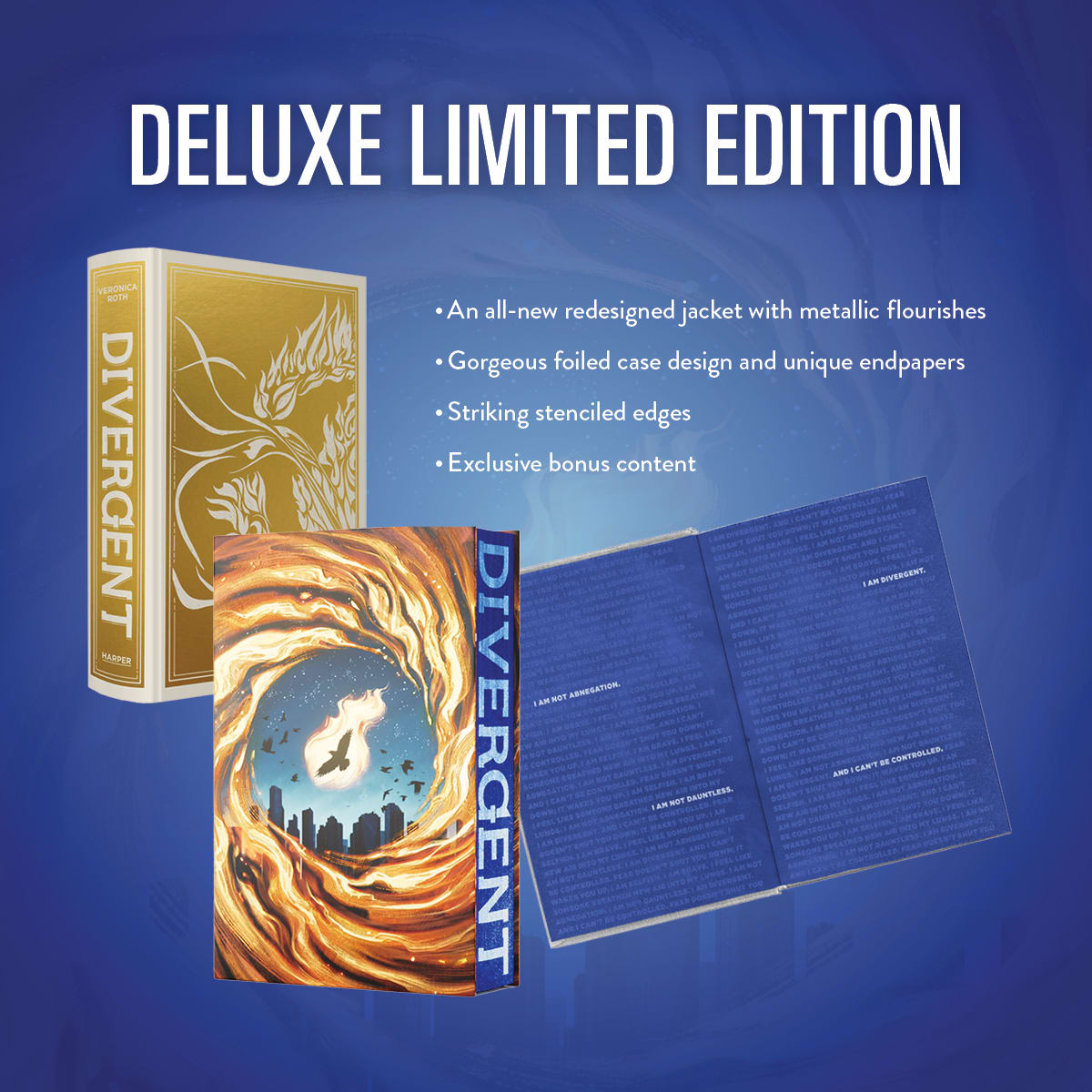
A Deluxe Limited Edition of Divergent will be available early at BookCon 2026!If you’re coming to BookCon 2026 and you like your books extra pretty, I’ve got some great news for you— you can be the first to grab a deluxe limited edition of Divergent, on sale early. There’s a redesigned jacket! A gorgeous foiled case! Unique endpapers! Stenciled edges! Bonus content! AND I’ll be making an exciting announcement at the con. 🤐
*Edit: I want to note, because I think this has been unclear (my fault!)— this edition is available to everyone, not just people attending BookCon. You can find the various retailer links on the right side of this page if you’d like to preorder. Sorry for any confusion!
 Some Quick Recs
I had a very stubborn stomach bug that really took me out of commission, and I didn’t feel up to doing much work. Here’s what I did instead:
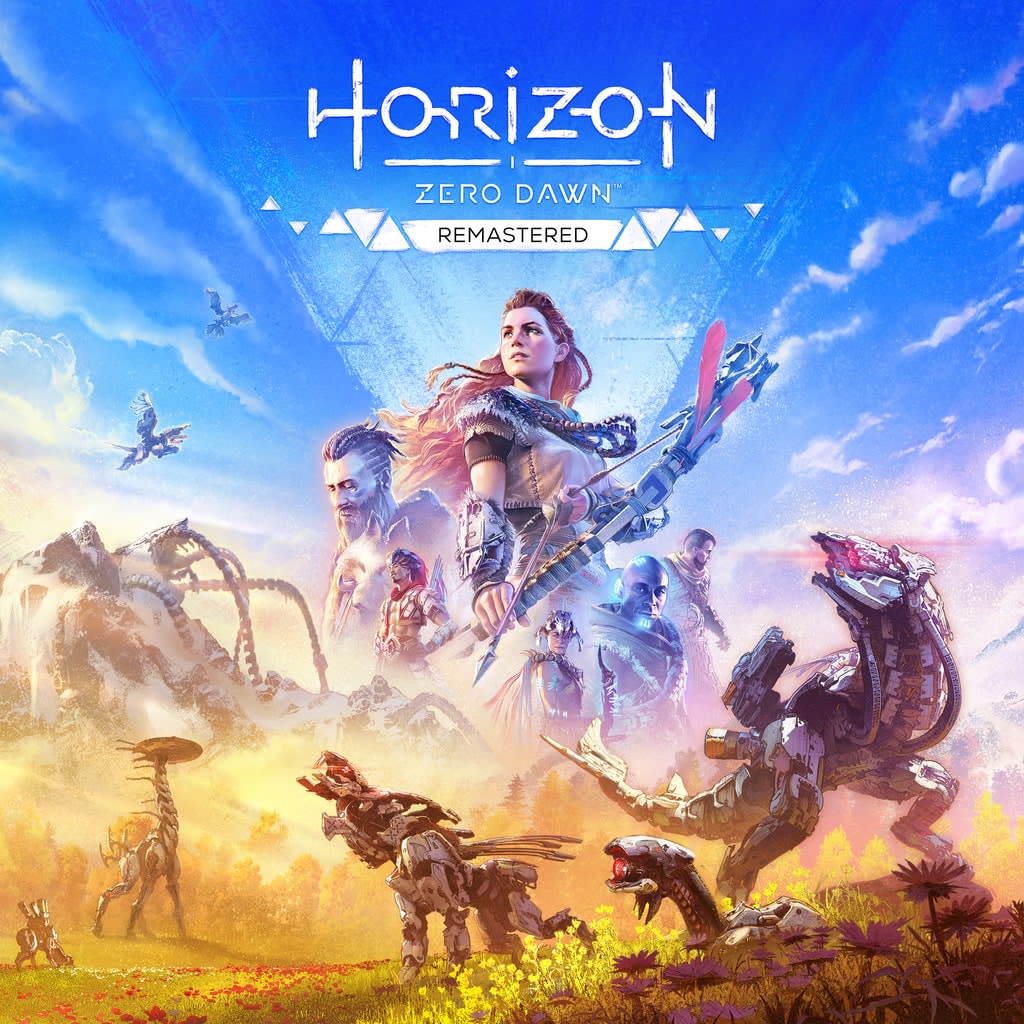
I killed robot animals with arrows in Horizon Zero Dawn. If you haven’t played this game yet…it is worth pushing through the occasionally-tedious beginning. The first time you go through a Cauldron, you will be hooked, hooked I say!
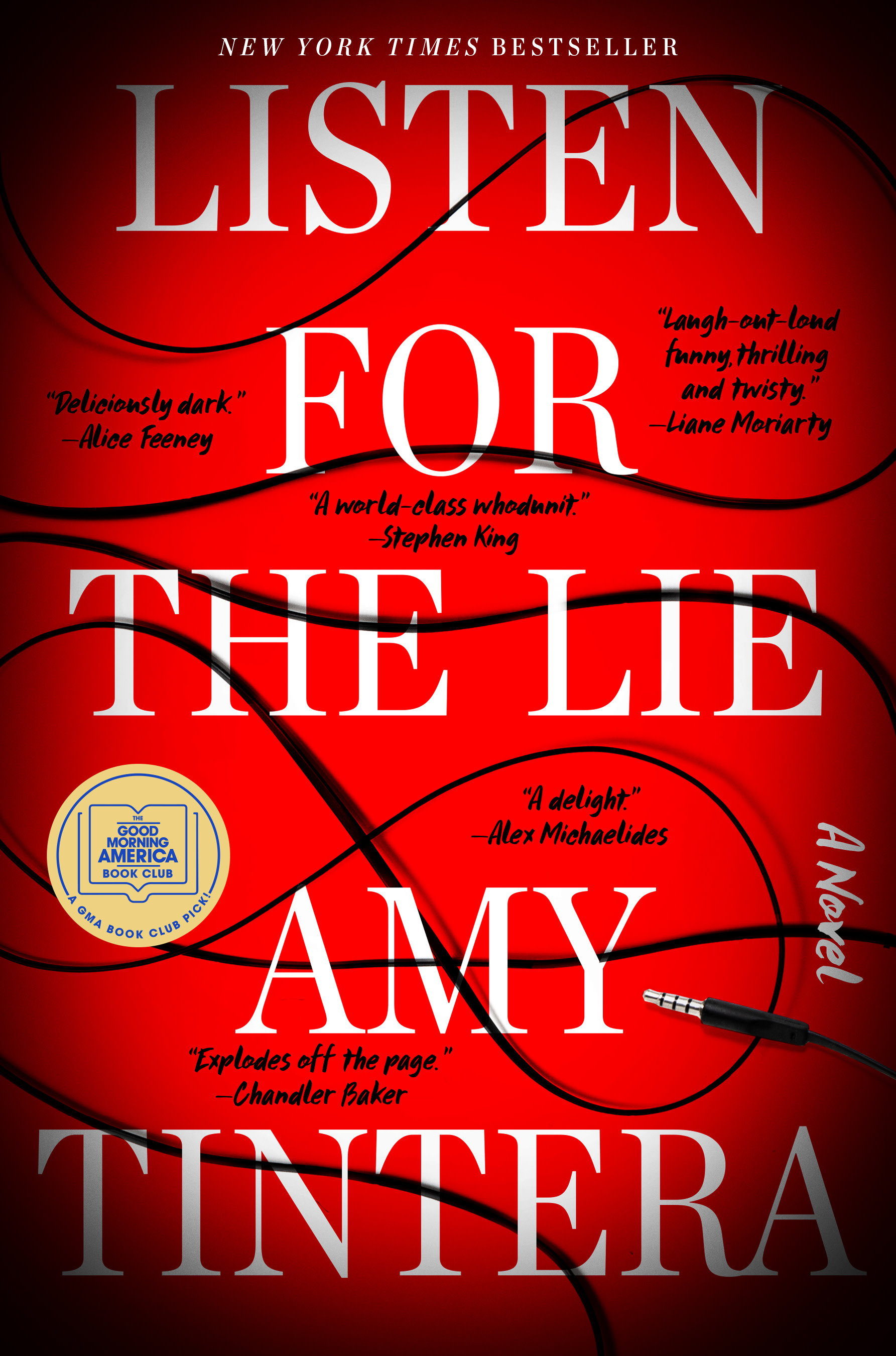
This book would be good in any format, but I particularly recommend the audiobook, since the narrative chapters are interspersed with excerpts from a podcast. It was funny, twisty, and engaging— definitely worth a listen, if you like mysteries and are looking for something new.
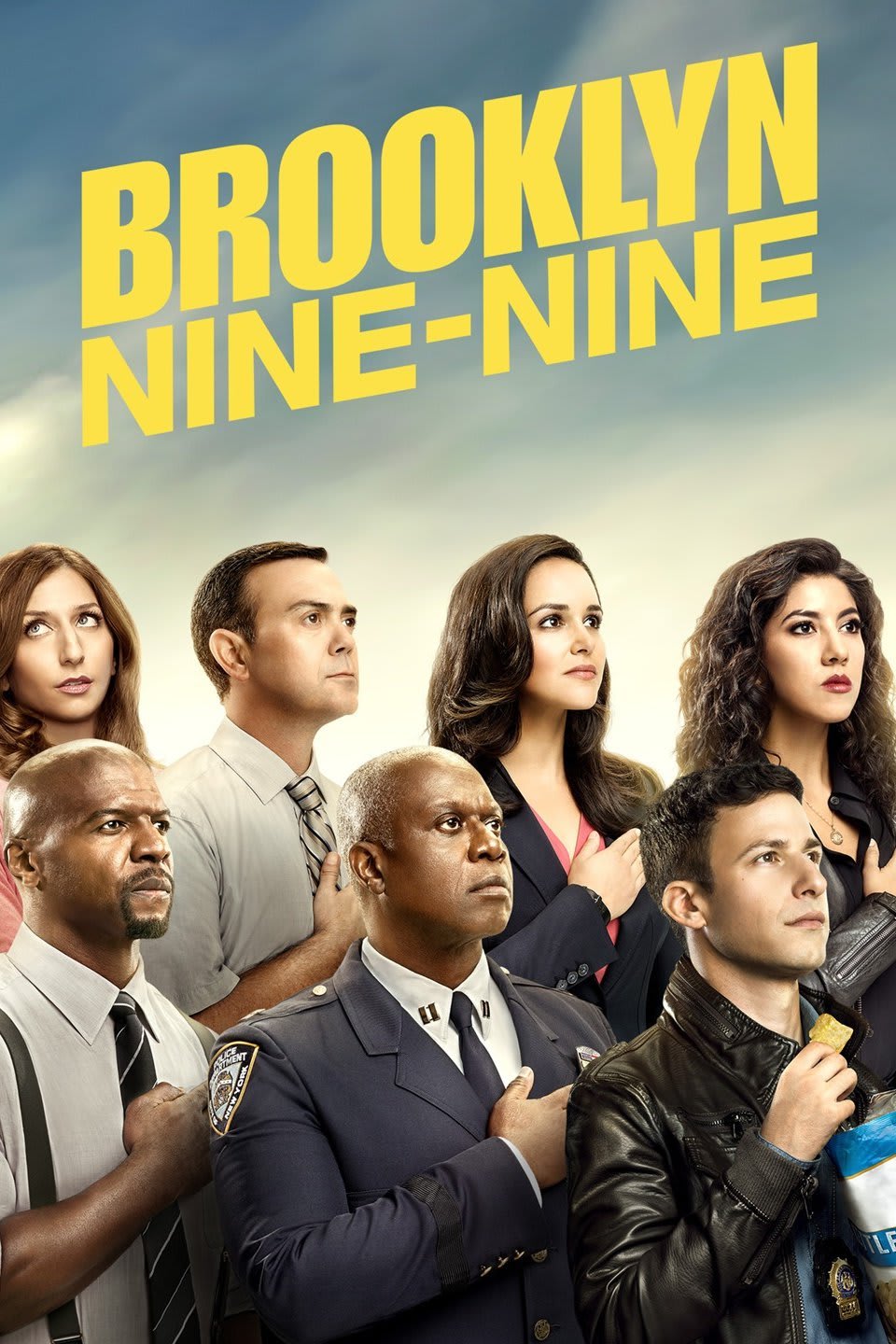
I’ve watched this show before but never finished it (particularly because Andre Braugher died, and what a loss that was). But come for Captain Holt’s general everything, stay for Jake looking lovingly at Amy as she unleashes the full force of her Type A nature— that’s what I call romance. (Also, the one who makes me laugh the most is Boyle. Not what I expected!)
Apart from that, I ate saltine crackers and created a cocoon out of linen blankets.
Seek the Traitor’s Son : Galley GiveawaySooo…if you want to be one of the earliest readers of my next book, Seek the Traitor’s Son, there’s a Goodreads giveaway you can enter! Seek the Traitor’s Son is a big romantic dystopian fantasy about the daughter of a bounty hunter, the Knight sworn to protect her…and the prophecy that ruins both their lives. Out in May!
Upcoming EventsThe tour has been a whirlwind so far–I’ve eaten quite a few Baked Lays (Dymitr’s (and my) favorite airport snack), stood beneath two arches (St. Louis and Vandalia, IL, naturally), and generally loved talking writing, reading, and all things books with all the lovely people who attended. THANK YOU so much for coming out. If you’d like to catch me in NYC, I have two more events coming up:
New York Comic-Con: October 10 - 11I’ll be at NYCC signing books on both days, talking about bending genres and To Clutch a Razor.
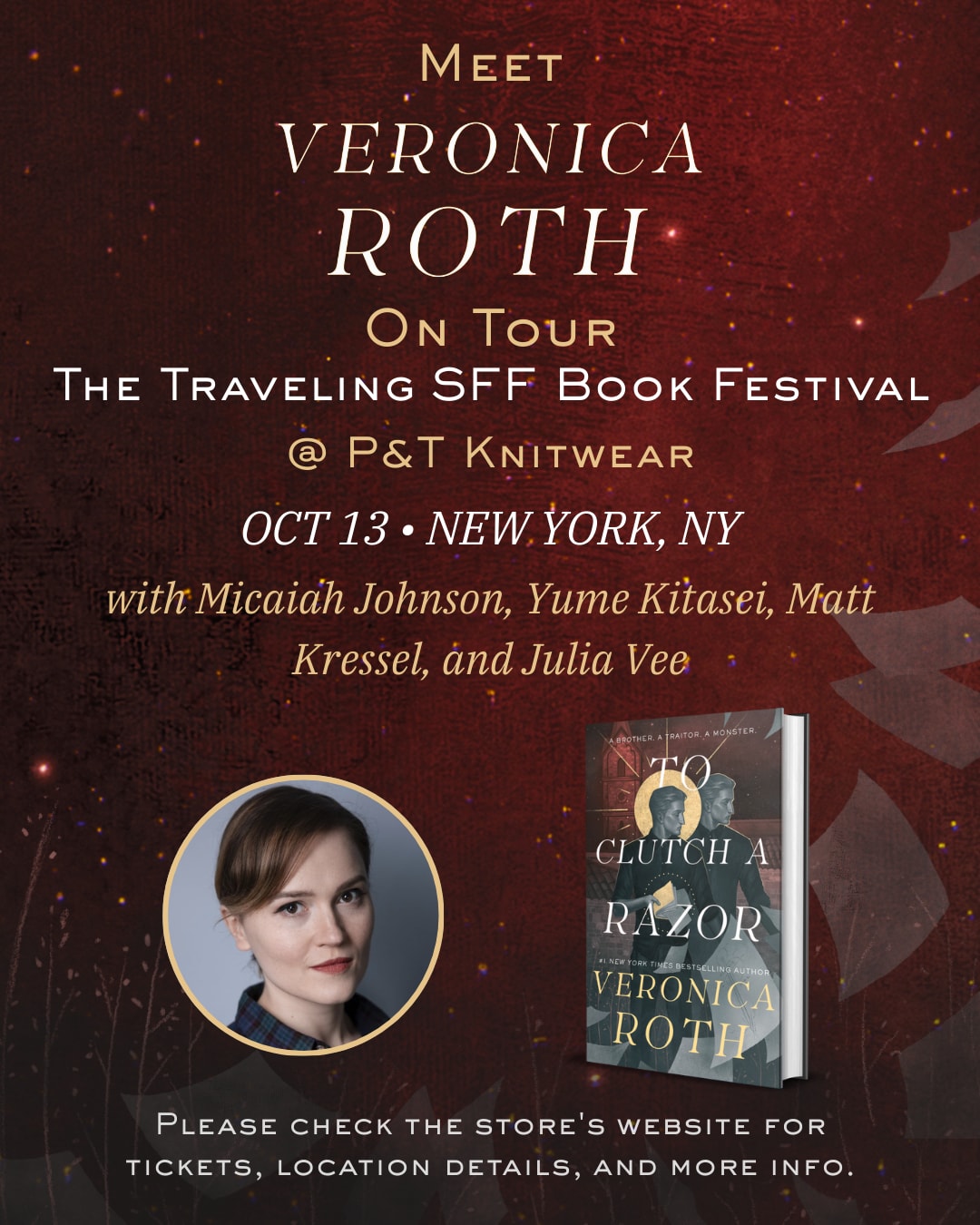
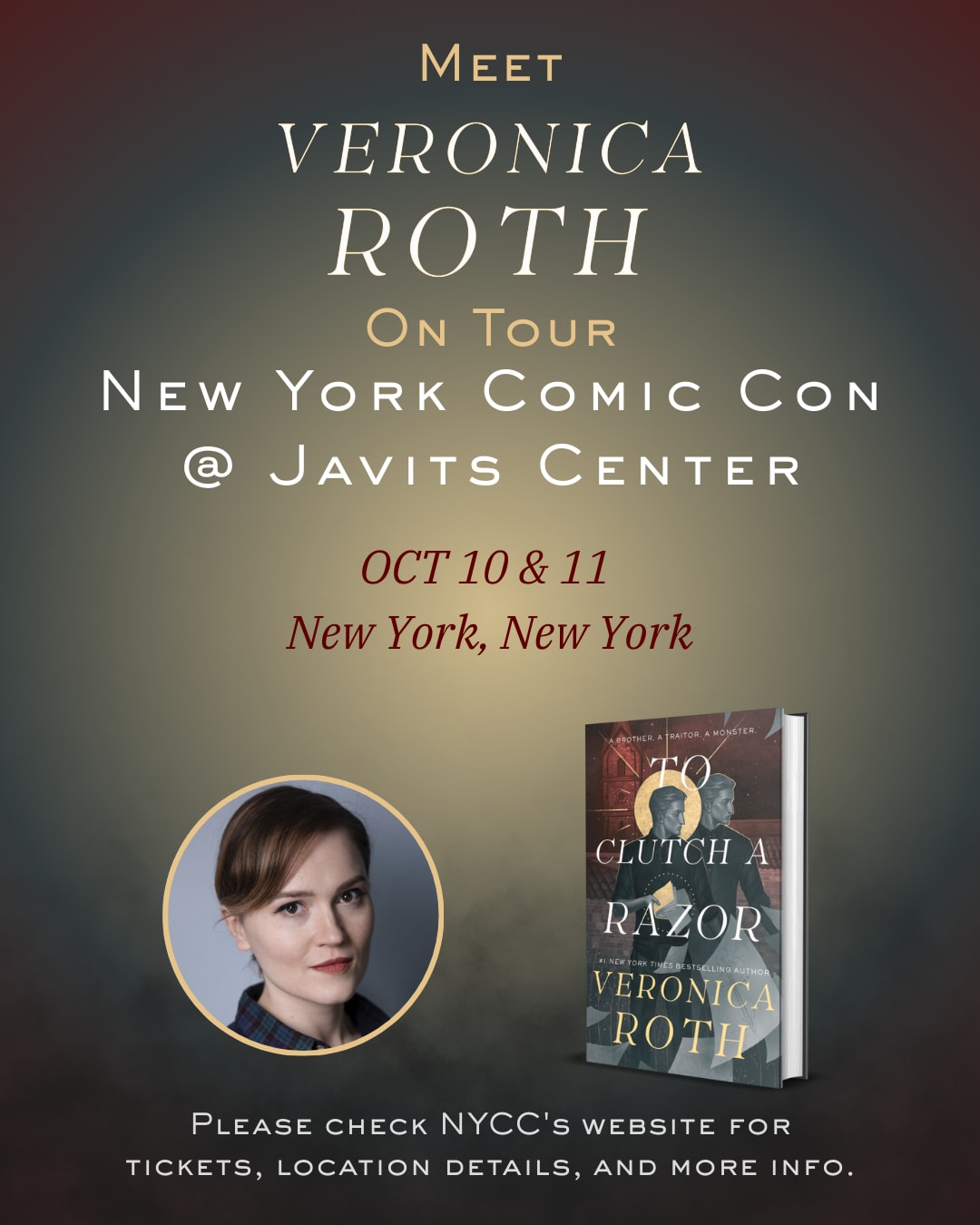 The Traveling SFF Book Festival 2025: Oct 13
I’ll be at P&T Knitwear with Micaiah Johnson, Matthew Kressel, Yume Kitasei, and Julia Vee! The event starts at 6:30pm. Tickets here!
All right, that’s all I’ve got for you this week! If you haven’t yet, go, order a copy of To Clutch a Razor! I’d really appreciate it if you left a review on Goodreads or Amazon.
V
September 16, 2025
To Clutch A Razor is Out Now!
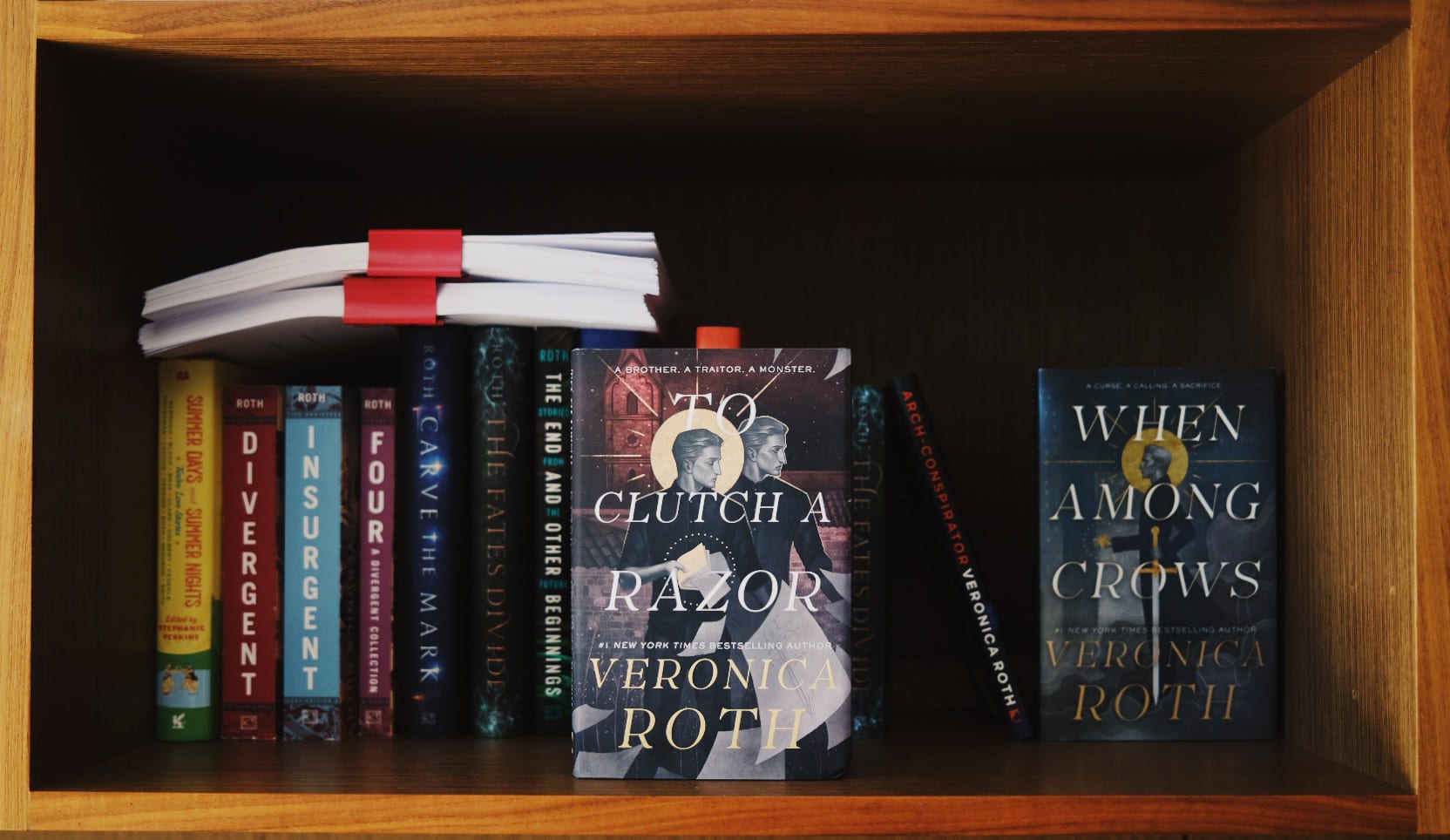
He says, “Come on, I want to see if the shop has Baked Lay’s,” and she decides to save the brainstorming for another time.
Instead, she makes a face. “The entire array of American snack foods is in front of you, and you’re on a quest for Baked Lay’s? They taste like almost nothing.”
“No, they taste both salty and bland,” he says. “All the comfort of a saltine cracker but with the satisfying snap of a chip.”
“Are the Lay’s people paying you to say this? Blink twice if you’re being blackmailed.”
Dymitr just grins, and leads the way to the store. Ala ignores the gnawing in her stomach. It feels a lot like dread.
In this scene, Dymitr is me.
Thanks for reading! Subscribe for free to receive new posts and support my work.
To Clutch A Razor, sequel to When Among Crows, is out today! It’s been awhile since I had a sequel to anything come out, and I’m pretty excited for this one. Since I’d already built the sandbox, I just got to play in it, and in To Clutch A Razor, everything is deeper— the relationships, the worldbuilding, the characters’ histories and personalities. TCAR is like the dark chocolate to When Among Crows’ milk chocolate— still a treat, but a little more complicated flavor-wise.
Last night at the event in Los Angeles we talked about this book being about family—it’s like the worst family gathering…ever was my joke. And that’s true. I think most people understand the feeling of hiding parts of yourself away around family, or certain family members. For some people, that’s just run-of-the-mill stuff like not swearing around Grandma; for other people, it’s all the best, most genuine, most interesting parts of them that have to be tucked away. And that can be painful—the pain of not being known, and not being seen.
But sometimes you find friends who do know you, and who will walk with you through the hardest moments. And that’s what To Clutch A Razor is about— the (exaggerated through fantasy) hardships of reuniting with a family that doesn’t really see you, and the wonder of friendship in the midst of it.
I hope you love it.
Sometimes people ask me what’s actually helpful for an author when it comes to supporting their book. The biggest answer is just to buy it or request it from your library, of course! But if you’re feeling particularly enthused about this or any other book, here’s some things you can do that authors really appreciate (and they really do make a difference):
Order a copy for yourself or a friend. Grab it from your local independent bookstore, of course (I suggest The Book Stall or The Book Cellar!) but if that’s not something that’s available to you there’s also Amazon | Barnes & Noble | Books-A-Million | Bookshop | Walmart
Share the cover reveal on Instagram, Facebook, or Threads with your network.
Mark the book “Want to read” on Goodreads. Yes, believe it or not, this does help a book get some visibility!
If you’ve read it already, leave a review wherever you bought it, or on Amazon or Goodreads.
And hey, if you’re in a book club, consider suggesting the book (To Clutch A Razor, in this case!) for your next read. Spread the wonderful agony to your unsuspecting friends and neighbors! They’ll love it!
No matter what, dziękuję (that means “thank you”) to everyone who has offered up their enthusiasm for this book! I so appreciate you.
Just Some GoodiesA TCAR Playlist:Some songs I listened to while writing. Spotify link to a playlist for both books in the series here.
ANIMAL - PVRIS
ANXIETY - Lilyisthatyou
Lonely Dancers - Conan Gray
Eat Them Apples - Suzie Wu
Shine - Collective Soul
Forest - System of a Down
Zegar Bije - Albert Pyśk
A Tear In Space - Glass Animals
Hellhounds of the Deep - Karliene
Simmer - Hayley Williams
Smoke & Retribution - Flume, Vince Staples, Kučka
Ghost - Saint Mesa
A Starred Review:(From Publisher’s Weekly. Some spoilers ahead!)
In bestseller Roth’s equally emotional and action-packed second Curse Bearer fantasy (after When Among Crows), series hero Dymitr contends with the consequences of his actions. Once a monster-hunting Knight of the Holy Order, Dymitr doomed himself to life as a zmora, a creature that feeds on human fear, when he gave up his prized bone sword to Baba Jaga. Baba Jaga agrees to give back Dymitr’s sword, but only if he completes a horrifying task: killing 33 Holy Order knights, his own kin. Dymitr balks and seeks a workaround, hoping that stealing a spell book from his family home will be enough to appease the witch. The death of his uncle gives Dymitr the perfect excuse to return to Poland, despite his apprehension about facing his family. His friend Ala tags along apparently to help Dymitr with his quest, but really for secret reasons of her own. Meanwhile, Niko—Dymitr’s love interest and a strzygón, a creature that feeds on anger—travels to Poland in hopes of killing a Knight known as “The Razor.” As the trio’s tasks become intertwined, Roth ratchets up the stakes—with bloody consequences. Roth’s darker sequel maintains the seamless worldbuilding of the previous book while giving each member of the main trio a distinct and well-developed character arc; probing themes of intergenerational trauma, familial duty, and morality; and setting the stage for the finale. It’s impressive work.I’m headed to Des Moines today and St. Louis tomorrow and Indiana the day after that! Come see me if you can!
<3,
V
Thanks for reading! Subscribe for free to receive new posts and support my work.
September 2, 2025
To Clutch A Razor Tour!
I’m going to start with a big TL;DR because this newsletter will have a lot of INFO. The places I will be this year are: Los Angeles, Des Moines, St. Louis, Franklin (IN), Naperville (IL), Salt Lake City (for FanX), and New York City (for NYCC, but also another event!).
If you are in none of those places, you can tune into a Q&A with Maude’s Book Club on October 1st— info here!
But if you can make it out to an event, please do! It’ll be a great time to chat with me and other readers and (for the most part) support your local independent bookstore, which is very important for the overall book ecosystem.
Thanks for reading! Subscribe for free to receive new posts and support my work.
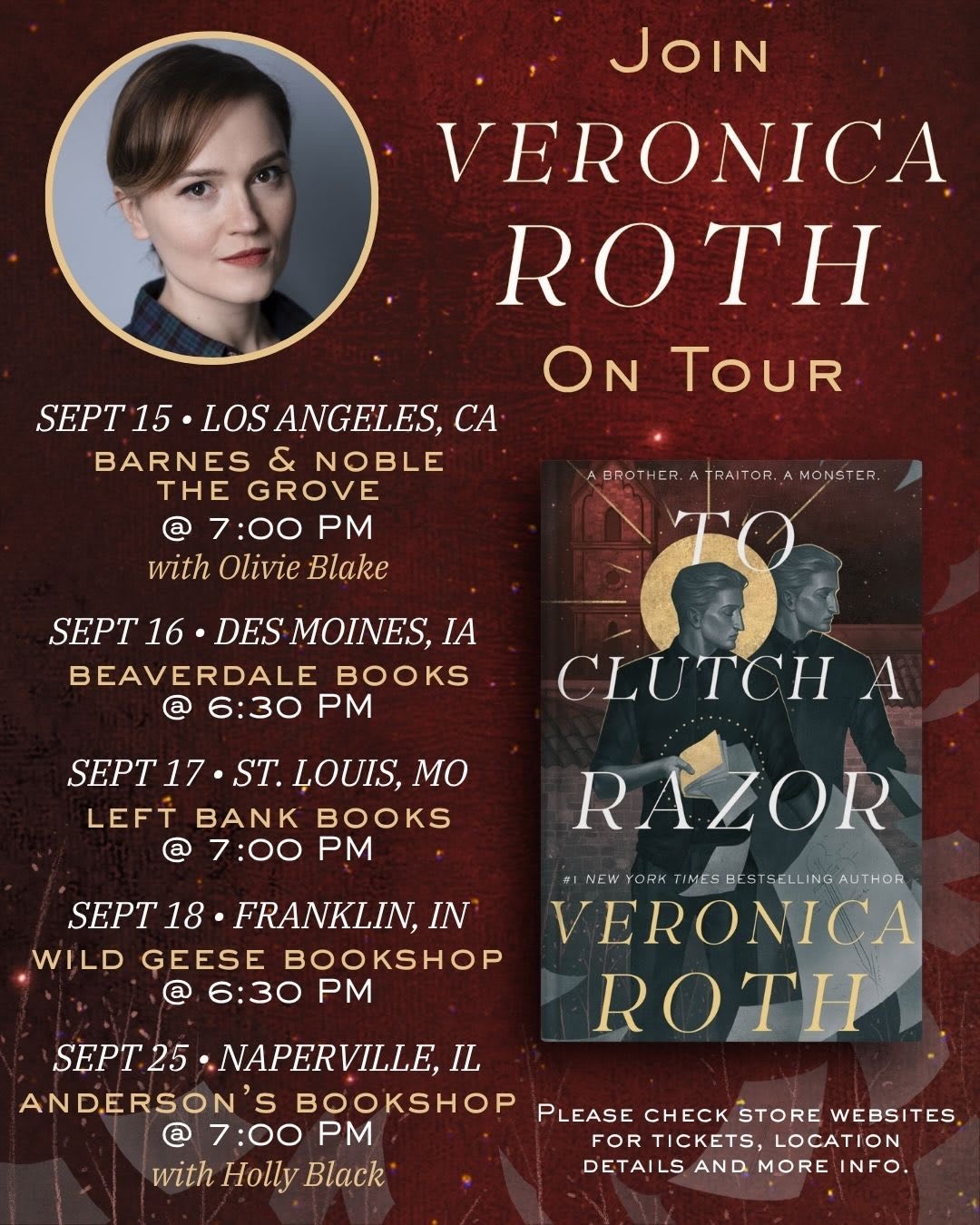
MIDWESTERNLY-BIASED TOUR TIME! Ope, sorry to the coasts, I’m (mostly) staying in casserole country for this tour. But I’ll be traveling for my upcoming book next year, too, so if you miss me this time around, I might be closer to you in May.
Monday, September 15th: Los Angeles, CA
at 7pm, with Olivie Blake!
Tuesday, September 16th: Des Moines, IA
at 6:30pm, with Kali White VanBaale!
Wednesday, September 17th: St. Louis
at 7pm, with J.R. Dawson!
Thursday, September 18th: Franklin, IN
at 6:30pm, flying solo!
Thursday, September 25th: Naperville, IL
at 7pm, with Holly Black!
Friday, September 26th and Saturday, September 27th: FanX in Salt Lake City, Utah
My schedule isn’t confirmed yet, but if you’re attending the convention, you can check for updates here.
Friday, October 10th and Saturday, October 11th: New York Comic-Con
I’m on two panels, with a signing after each one.
Monday, October 13th: New York City
I’m doing an event with Cassandra Khaw, Micaiah Johnson, Yume Kitasei, and Julia Vee! Details TK but check this site for updates.
I hope to see you here, there, or somewhere!
<3,
V
Thanks for reading! Subscribe for free to receive new posts and support my work.


