Chrystie Cole's Blog
December 1, 2025
It Would Have Been Enough
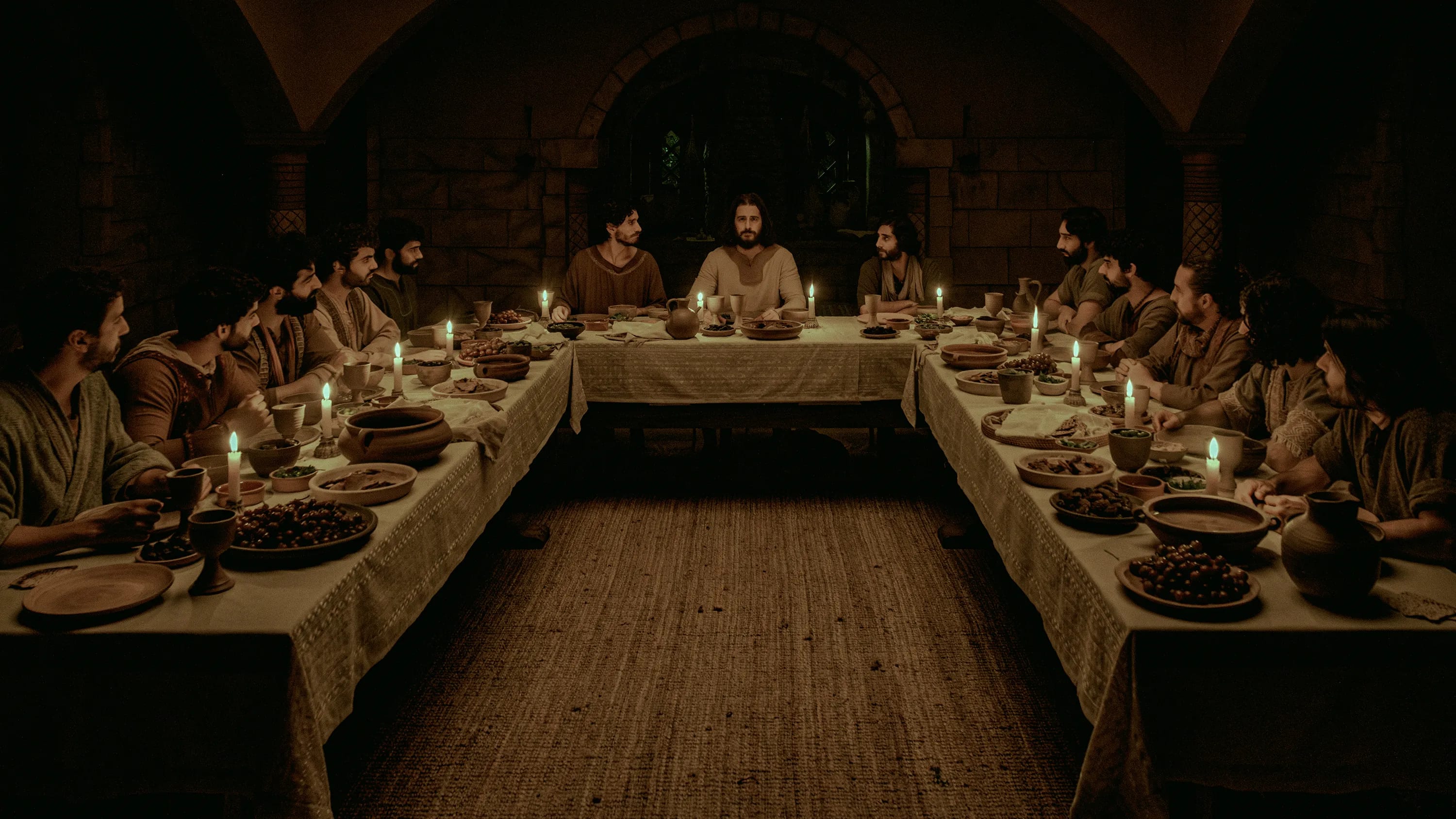 Scene from The Chosen
The ancient Jewish people were a storytelling people. When they “gathered in annual rituals to confess their faith in God, they did not formulate abstract creeds and doctrines. They told stories—stories about what God has done.”¹ It was a way of helping them remember.
This kind of communal remembering was recently featured on an episode of The Chosen, a multi-season show based on the life of Jesus as seen through the eyes of those who knew and encountered him. Season five focuses entirely on the Last Supper and Jesus’ final discourse with his disciples before his crucifixion.
The disciples had spent three years following Jesus—seeing his miracles, hearing his teaching—yet he still confounded them. They believed he was the Messiah, but he regularly disrupted their expectations of what the Messiah would do when he came. His words had grown increasingly ominous, full of statements about betrayal and his impending suffering and death. And here, as they gathered around the table for the Passover, they still could not understand.
In episode four, one scene in particular captivated me and reminded me why storytelling is an integral part of our faith. As Jesus and his disciples gathered around the table to partake in the Passover meal, they recited the Dayenu (“dye-YAY-noo”), a 15-stanza song traditionally sung at the Passover seder. The Dayenu recounts the Exodus, when God brought the Israelites out of their slavery in Egypt. Each stanza lists an action God performed for the Jewish people during and after the Exodus and concludes with the word dayenu — “it would have been enough.”² For the Jewish people, the Dayenu was, and still is, a way to remember and recount the story of God’s faithfulness to them.
The Dayenu scene in this episode is gripping. Everything about it communicated the gravity of the moment. The room was lit only by oil lamps. The flickering light cast shadows across the disciples’ faces. The camera moved slowly from one disciple to another as each took his turn reciting a stanza, panning in close enough to see the furrow in their brows and the mix of ambiguous grief and uncertainty in their eyes. The pacing is deliberate, allowing the weight of each statement to land:
If He had taken us out of Egypt and not made judgments on them [the Egyptians]…
It would have been enough.
If He had made judgments on them and had not made [them] on their gods…
It would have been enough.
If He had destroyed their idols and had not given us their wealth…
It would have been enough.
If He had given us their wealth and had not split the sea for us…
It would have been enough.
If He had split the sea for us and had not taken us through it on dry land…
It would have been enough.
On it went for fifteen stanzas, each one building upon the one before it, recounting God’s specific acts of faithfulness and rooting them in the magnitude of God’s kindness to them. The perspective inherent within the Dayenu disrupts a sense of entitlement and calls the Jewish people to a posture of gratitude before God. If God had only committed one of these acts, and nothing else, he had already done more than enough.
This kind of progressive storytelling also served another purpose: it reminded them that at each stage of the Exodus, God was at work. The story wasn’t over. And it grounded them in their current story, reminding them that, no matter their circumstances as a people, God was still at work. That story wasn’t over yet, either, even if they couldn’t yet see the path forward.
The traditional Dayenu tells an ancient story about a collective people. But the creators of The Chosen carried it a step further. They made it personal, showing Jesus gathered at a different table with his female disciples—each woman recounting not what God did for Israel, but what Jesus did for her:
Mother Mary: If I had only been given the joy of holding you in my arms and you had not performed signs and wonders…
It would have been enough.
Mary Magdalene: If you had only performed signs and wonders and not called me by name…
It would have been enough.
Eden (Peter’s Wife): If you had only healed Mary of demons and not called my husband…
It would have been enough.
And so it continued around the table as each woman recounted her personal, life-transforming encounter with Jesus. The personalized Dayenu that the women shared with Jesus reminds us that Jesus did not only come to rescue a specific people group. He came to rescue individual men and women, each with their own stories of suffering and need.
Watching these two scenes captured my imagination and compelled me to create two of my own Dayenu pieces: one that recounts our collective Gospel story and one that recounts my personal encounter with Christ.
I started with our collective story, the grand narrative God has invited us all into.
Telling Our Gospel Story
1. If you created the earth, sun, moon, stars, and all the heavenly hosts, it would have been enough.
2. If you created all of heaven and earth, but did not create us in your image, it would have been enough.
3. If you created us in your image, but did not walk in fellowship with us, it would have been enough.
4. If you walked in fellowship with us, but did not come for us when we hid in our sin, it would have been enough.
5. If you sought us in our sin, but did not cover our nakedness and promise to send one who would crush the serpent, it would have been enough.
6. If you promised to send one who would crush the serpent, but did not send us prophets and priests to guide us, it would have been enough.
7. If you sent us prophets and priests, but did not become flesh and dwell among us, it would have been enough.
8. If you became flesh and dwelt among us, but did not invite us to follow you, it would have been enough.
9. If you invited us to follow you, but did not suffer and die in our place, it would have been enough.
10. If you suffered and died for us, but did not rise from the dead and take your place at God’s right hand, it would have been enough.
11. If you took your place at God’s right hand as Christ the King, but did not forgive our sin and take away shame, it would have been enough.
12. If you forgave us and removed our shame, but did not clothe us in Christ’s righteousness, it would have been enough.
13. If you clothed us in Christ’s righteousness, but did not adopt us as your children and make us co-heirs with Christ, it would have been enough.
14. If you adopted us and made us co-heirs with Christ, but did not give us the Holy Spirit to dwell within us, it would have been enough.
15. If you gave the Holy Spirit to dwell within us, but did not promise to heal all wounds and make all things new, it would have been enough.
16. If you promised to make all things new, but did not promise your eternal presence with us in the new creation, it would have been enough.
At every point, you could have stopped. And at every point, it would have been enough. But at every point, you gave lavishly more.
But the Gospel isn’t just a story about all of us—it’s a story for each of us. For me. For you. The infinite God became intimate when he met me on my dad’s couch after a three-day drug binge. He spoke to me in a way that was undeniable, telling me it was time to get sober. Six years into sobriety, he met me again. This time on my back deck, calling me to surrender and follow Jesus after years of knowing about him but resisting knowing him.
That’s where my personal Dayenu begins. Not in a life well-lived, but in the wreckage of my own choices. Not in slavery to a foreign nation, but in slavery to my own sin and suffering. And that is precisely where God chose to meet me.
Telling My Personal Story
1. If you had rescued me from drug addiction, but did not spare me from serving prison time, it would have been enough.
2. If you had spared me from time in prison, but did not spare me from life-altering diseases, it would have been enough.
3. If you spared me from life-altering diseases, but did not provide a recovery community to support and guide me, it would have been enough.
4. If you gave me a recovery community, but did not restore relationships with my family, it would have been enough.
5. If you restored relationships with my family, but did not restore and repair my reputation in the community, it would have been enough.
6. If you made me a respectable member of society, but did not allow me to build a personal relationship with you apart from religious contexts, it would have been enough.
7. If you allowed me to encounter you apart from religious contexts, but did not send people to invite me to church, it would have been enough.
8. If you sent people to invite me to church, but did not pursue me through worship music, it would have been enough.
9. If you pursued me through worship music, but did not reveal the Scriptures to me in recovery language, it would have been enough.
10. If you helped me understand the Scriptures through the lens of recovery, but did not soften my heart to believe and receive the gospel, it would have been enough.
11. If you planted the seeds of the gospel in my heart and produced the fruit of faith, but you did not forgive my sins and cover over my shame, it would have been enough.
12. If you forgave my sins and covered my shame, but did not use them as a platform for sharing the hope, healing, and freedom found in you, it would have been enough.
13. If you used my story of sin and shame to help others, but did not continue to transform me into your image, it would have been enough.
14. If you continued to transform me into your image, but did not grant me rich fellowship with other believers, it would have been enough.
15. If you granted me fellowship with other believers, but did not draw near to me personally, it would have been enough.
16. If you drew near to me personally, but did not promise to hold fast to me unto the end, it would have been enough.
17. If you promised to hold fast to me to the end, but did not promise a day when I would get to see you face to face, it would have been enough.
At every point, you have been more than faithful.
Dayenu, Lord. It is enough.
Remembering is not passive nostalgia. It is an active story-shaped trust in a God whose work is never finished. Storytelling is our act of resistance in a dark world that tempts us toward despair and discontentment.
Engaging in this kind of storytelling roots our remembrance and grounds our gratitude. It recognizes that at every stage, our story isn’t over. God is still at work. He has been faithful thus far. And he will be faithful to the end.
Love,
CC
P.S. I created a printable PDF of Telling Our Gospel Story. You can download it here.
¹ https://www.americanbible.org/engage/bible-resources/articles/storytelling-in-antiquity/² https://www.myjewishlearning.com/article/dayenu-it-would-have-been-enough/Questions for ReflectionEngage the ScriptureIn Deuteronomy 8:2-18, Moses retells the Israelites their story. What does he call them to remember? What warning does he give them?
Read Psalm 105. List out all the ways God moved on behalf of the Israelites in this psalm.
Read over your list from Psalm 105. How does seeing all of the ways God acted encourage you in your own personal story?
Explore Your StoryThe article ends by describing storytelling as “our act of resistance in a dark world that tempts us toward despair and discontentment.” What specific despair or discontentment are you facing right now? How might remembering and recounting God’s faithfulness serve as resistance against these temptations?
God met me “not in a life well-lived, but in the wreckage of my own choices.” How does this challenge narratives that require you to “clean yourself up” before coming to God? Where in your own story has God met you in brokenness rather than strength?
The Dayenu “rebuts a sense of entitlement and calls the Jewish people to a posture of gratitude before God.” In what areas of your life do you struggle with entitlement or discontentment? How might regularly recounting God’s faithfulness cultivate deeper gratitude?
Encounter the SaviorWatch this scene from The Chosen, where the women share how Jesus personally transformed their lives. Imagine sitting at that table with Jesus. What would you say to him about how he has changed your story? Take time in prayer to speak these things directly to him.
Write your own personal Dayenu. Begin with the first significant encounter with God’s grace in your life, then progressively move through the ways he has continued to work. Let each stanza end with “it would have been enough.” Don’t rush this exercise—allow yourself time to remember and to marvel at what God has given.
Reread your personal Dayenu. What patterns of God’s faithfulness emerge? How could regularly retelling your story help ground you in gratitude and resist discontentment and despair?
AdventEven though Advent began on November 30th, it’s not too late to get the WholeHearted Advent study, Encountering Jesus in John. It’s available in paperback here or PDF download here.
Here is a clip from Week 2 of the study:
Like or comment below. I love hearing from you!
Become a financial supporter through a one-time gift at Buy Me A Coffee or a recurring supporter at Liberapay.
Share this newsletter with others:
Subscribe to receive regular updates:
Want to Connect?You can find me on Facebook and Instagram.
You can find more resources on the Wholehearted Project website.
Or send me a direct message:


November 4, 2025
Echoes of Eden

During her time at Wheaton College, Elisabeth Elliot once heard a chapel speaker say, “If my life is broken when given to Jesus, it may be because pieces will feed a multitude when a loaf would satisfy only a little boy.” Those words resonated with Elisabeth; they do for me as well.
I have witnessed this firsthand, both in my life and in the lives of countless others. Jesus does remarkable work with our broken pieces. He draws near with grace, mercy, and compassion. He forgives. He mends and restores. And he is utterly unabashed in his association with us—ready and willing to put our mended pieces on display as marks of his power to bring new life and new hope.
And yet, even knowing this truth, we often struggle to release our grip. Rather than holding our sin, suffering, and shame with open hands, we clutch them in closed fists, hiding them away. It feels too tender, too shameful, too much. We are afraid of rejection and being misunderstood. We fear being silenced, our pain minimized—or being shamed, our sins magnified. So we lock it away in hidden chambers of our hearts, rarely allowing it into the light. But God is fully committed to healing every part of us and setting us free from the shame we carry—whether that shame is the result of our own sin, the sins committed against us, or the result of living in a world tainted by sin.
Recently, I had the honor of leading a retreat for a group of women at Redeemer Anglican church in Annapolis, Maryland. We spent the weekend engaging with the metanarrative of Scripture (creation, fall, redemption, restoration) and exploring how that grand story intersects with our own stories of sin, suffering, and shame.
During our time together, we engaged in the Japanese practice of kintsugi—breaking and mending clay hearts with gold lacquer. The art of kintsugi is a beautiful expression of God’s mending work in our lives. It is a hard, but healing and hope-filled experience. I have led several groups of women through this process over the years, and every single time it feels like holy ground.
I am convinced that when women experience the healing Jesus offers and feel freedom from the sin, shame, and suffering that have weighed them down, there is no limit to the multitudes God can feed through them.
Advent Is Upon UsIt’s been a busy month! I was preparing for and leading the aforementioned women’s retreat. My Bible study group resumed meeting for the fall semester, and I am teaching through the book of Colossians. And I came down with a persistent upper respiratory infection, which has knocked me flat for over two weeks now. Needless to say, I haven’t had energy for much else lately.
However, the Advent season is upon us, and I want to remind you about a study I created to help us celebrate God’s provision in Christ while we also long for and anticipate his return.
Aching for Eden: Excerpt from the WholeHearted Advent StudyIn his song, “The Year of the Locusts,” songwriter Andrew Osenga wrote that we are “aching for Eden.” These words struck me and inspired me to write this poem shortly after:
Deep calls to deep—
Beckoning me.
Echoes of Eden,
Imprints of eternity
Planted within me.
A holy longing, an aching for Eden—
To remind me of all that was lost
And is still to be returned.
The truest story I know to tell is that of the holy ache—the one that reminds me that things in this life are not how they are supposed to be. But how can we long so deeply for something we’ve never known? How can we miss something we’ve never had? How can we crave something we’ve never tasted? The answer is that somewhere deep within, we hear the echoes of Eden.
I am much more of a word nerd than a science buff, but it is exciting when the two collide to provide beautiful imagery. I am sure this analogy breaks down somewhere, but bear with me. An echo occurs when sound travels and bounces off a hard surface, reflecting the original sound. The echo is not the source, but the reflection. In order for there to be an echo, there must be a lot of space—a cavern—between the source of the sound and the surface it bounces off of.
We live in the vast expanse between two gardens—the Garden of Eden in Genesis 1 and 2 (God’s original creation) and the garden in the heavenly city in Revelation 22 (God’s creation of the new heavens and new earth).¹ Caught between the two, the sounds of Eden bounce off the gates of the heavenly city and reverberate deep within our souls. This holy echo exposes the gulf between the world we currently inhabit and the one to come when Christ returns and makes all things new (the second Advent). It echoes the original goodness and glory of Creation before sin fractured us and the world God created. And it stirs in us a longing, a hunger for the new creation.
Religious philosopher Blaise Pascal once wrote,
“What else does this craving, and this helplessness, proclaim but that there was once in man a true happiness, of which all that now remains is the empty print and trace? This he tries in vain to fill with everything around him, seeking in things that are not there the help he cannot find in those that are, though none can help, since this infinite abyss can be filled only with an infinite and immutable object; in other words by God himself.”²
What Pascal describes is the echo of Eden—a time when we were whole and wholly satisfied. Ever since Genesis 3, we’ve been haunted by a spiritual hunger that we’ve tried to satisfy with other things—food, sex, approval of others, shopping, hobbies, relationships, social media. Whatever promises us life, but in the end, cannot deliver. Everything here is just a shadow, not the substance; the echo, not the source.
But Christ bridged the gap between creation and new creation with his outstretched body—allowing us safe passage out of this no man’s land, haunted by the echoes of life and delivering us to the source and substance of life—Christ himself.
Just as the Israelites trusted God to daily provide for their nourishment through manna until he delivered them into the Promised Land, we trust Christ to be our daily provision until he delivers us into the new heavens and new earth. In Christ, God provides what is necessary to fill and satisfy the needs of his people.
Encountering Jesus in JohnIf you’d like to explore these themes more deeply this Advent season, my study examines four ways Christ is God’s provision for us: as the Lamb of God, the Bread of Life, the Good Shepherd, and the Great High Priest.
My hope is that this study will ground you in the life-giving person of Christ and help you rediscover the hope, power, and provision of the gospel.
This self-paced study is good for individuals and groups. It includes 12 videos and a 60-page workbook, available as a PDF download or in paperback on Amazon. You can find it here.
There are many great Advent resources available (and I am glad to recommend some if you’d like)! Whether you choose to use the “Encountering Jesus in John” study or any other resources, I hope you encounter and experience the rich hope of Christ this Advent!
Until next time,
CC
P.S. If you went through the Advent study last year, I’d be grateful if you’d consider leaving a review on Amazon!
The Wholehearted Project is reader-supported.If you enjoy or have benefited from the content, would you consider supporting future content in a few ways:Like or comment below. I love hearing from you!
Become a financial supporter through a one-time gift at Buy Me A Coffee or a recurring supporter at Liberapay.
Share this newsletter with others:
Subscribe to receive regular updates:
Thanks for reading The Wholehearted Project! Subscribe for free to receive new posts and support my work.
Want to Connect?You can find Chrystie Cole on Facebook and Instagram.
You can find more resources on the Wholehearted Project website.
Or send me a direct message:
October 7, 2025
Psalm 36 | Spiritual Refugees

Where do you run when the world feels hostile and unsafe?
In a world where wickedness still exists, we desperately need God’s steadfast love to guard us. Psalm 36 presents one of Scripture’s starkest contrasts: the character of the wicked versus the character of God. This is a psalm for the weary and worried, for those who wonder if goodness will prevail, and for those who need to remember that our hope rests secure not only in the defeat of evil, but in the overwhelming goodness of who God is.
Verses 1-4
“Transgression speaks to the wicked deep in his heart; there is no fear of God before his eyes. For he flatters himself in his own eyes that his iniquity can’t be found out and hated. The words of his mouth are trouble and deceit; he has ceased to act wisely and do good. He plots trouble while on his bed; he sets himself in a way that is not good; he does not reject evil.
If you have ever planted seeds in a garden, you understand that a seed won’t always produce a healthy plant. Certain elements must be present for a plant to thrive: the right climate, light, air, nutrient-rich soil, water, and sufficient space to grow. The same is true for sin.
The seeds of sin are within every human heart. But for these seeds to produce fruit, they must be nourished and tended. The apostle James 1:14-15 further describes this gestation process: “Temptation comes from our own desires, which entice us and drag us away. These desires give birth to sinful actions. And when sin is allowed to grow, it gives birth to death.” This can be true of all of us. Sin whispers to us in the depths of our hearts, wooing us, luring us, and appealing to our desires.
We all sin—whether out of weakness, woundedness, or willfulness. However, the Bible sometimes distinguishes between sins of ignorance and sins of insolence. In Psalm 36, the psalmist establishes a contrast between the wicked, whose hearts are bent toward willful rebellion, and God, whose heart is bent toward righteousness and steadfast love.
In verses 1-4, the psalmist describes the elements that enable sin to grow and mature. The psalmist personifies sin, saying that it “speaks to the wicked deep in his heart.” The heart of the wicked is an incubator for sin; it provides the ideal conditions for that sin to take root, grow, and produce bad fruit. And it starts with how they view God: they have no fear of God. Where in many verses fear of God means a reverent fear in the face of God’s majesty and awe, in this verse, it implies dread or great terror. The wicked have no fear of God’s holiness, judgment, or righteousness. They are self-governed, their own authority.
When the fear of God is absent, sin spreads like an invasive weed in the hearts of the wicked. They are: hostile to God and the things of God; self-deceived and arrogant; full of lies, duplicity, and betrayal. They willfully and intentionally stir up chaos and trouble, plotting and scheming even as they lie in bed at night, all the while believing they will not be held accountable for their actions. And as if to put an exclamation point on it, David says that they have not only stopped doing good, but they also “make no attempt to turn from evil” (NLT).
In Psalm 1, the psalmist contrasts the wicked and the righteous; however, here the psalm shifts its focus to the character of God.
Verses 5-6
“Your steadfast love, O LORD, extends to the heavens, your faithfulness to the clouds. Your righteousness is like the mountains of God; your judgments are like the great deep; man and beast you save, O LORD.”
Three attributes of God’s character are on display here: steadfast love, righteousness, and justice. God’s hesed—a robust word that means steadfast love, loving kindness, faithfulness, goodness—is limitless, extending beyond what our eyes can see or our minds can imagine. His tsdaqah—a word that encompasses his goodness, righteousness, and fairness—is as immovable, firm, and strong as the mountains. And his mishpat—his governance and judgments toward us—which flow from his steadfast love and righteousness, are like the oceans, deep, mysterious, and overwhelming. Whereas the heart of the wicked is full of malice, ill intentions, and all manner of hatred, God is full of justice, righteousness, and steadfast love.
We who live in this ever-connected technological age can all too easily miss encountering God as he reveals himself to us through his created world. Our screens blind us to the brilliance of the night sky; our notifications pile higher than the mountains. This inhumane pace of life disconnects us from our bodies and deadens the very senses God gave us to experience his goodness in tangible ways.
We rarely slow down long enough when reading Scripture or contemplating God to allow our sanctified imaginations to broaden our understanding and experience of the Lord. When was the last time you lingered beneath an expansive night sky? When did you last sit by the ocean long enough to hear its deep roar as its waves crashed against the shore? David isn’t merely using poetic language; he’s anchoring spiritual truths in physical reality. The psalmist invites us to experience God’s awesomeness not only through his revealed word, but also his revealed world. God’s love is as real and vast as the heavens. His righteousness is as solid and immovable as the mountains.
What a beautiful, powerful picture of God’s posture toward us, all of which rightly leads David to worship in reverent awe.
Verses 7-9
“How precious is your steadfast love, O God! The children of mankind take refuge in the shadow of your wings. They feast on the abundance of your house, and you give them drink from the river of your delights. For with you is the fountain of life; in your light do we see light.”
When David pauses to consider God’s character, expressed clearly through his steadfast love, he is overwhelmed. It is not just what God does, but who God is, that David regards as precious and of great value. Because God is steadfast love, his children can run to him to find refuge. In his house, they not only find what they need, but they are also abundantly satisfied with more than they could have ever asked for or imagined. They feast on his goodness and generosity and drink from him, a river flowing with joy and delight.
If you’ve never lived in a war zone or experienced homelessness, the idea of refuge may not be relatable. However, if you grew up feeling vulnerable, experienced scarcity, or lacked security, having refuge is significant. Refugees—those who flee to escape danger—often lack what so many of us take for granted: shelter, food, water, safety, protection, and rest. While we may not be refugees who are fleeing corrupt governments, war-torn countries, or religious persecution, we are spiritual refugees. We are foreigners living in a world still affected by sin, full of those who have rejected God and are bent on evil. But he has not left us without refuge. We can flee to him, entrusting ourselves to his loving, tender care. We can drink deeply of the life that flows from him, and we can trust that his illuminating presence will shine as our guiding light in a dark world.
Verses 10-12
“Oh, continue your steadfast love to those who know you, and your righteousness to the upright of heart! Let not the foot of arrogance come upon me, nor the hand of the wicked drive me away. There the evildoers lie fallen; they are thrust down, unable to rise.”
Reflecting on the character of God leads David into a posture of dependent prayer. He understands that he lives between a physical reality where wickedness exists and poses a real threat and a spiritual reality where the character of God outshines even the darkest of evils. So he flees to God as his refuge through prayer—praying that God would continue to pour out his steadfast love and righteousness on those who know and follow him. And he prays that God would protect him specifically from the wicked schemes of those who are hostile to God and the things of God.
The world David inhabited is no different from ours today. We, too, live as refugees in a world where those who have rejected God and ceased to do good threaten our safety, security, peace, and rest. But! We also live as citizens of heaven, where the God of steadfast love provides us with an unshakeable refuge. The question is: will we cower in fear or will we follow David, turning our gaze from the schemes of the wicked to the steadfast love of God?
David’s experience of God did not always spare him from suffering, but it did ground him in something transcendent—the truth that, no matter what the wicked plot and scheme, those who seek refuge in God will be preserved and wickedness will come to an end. We who live now have even more reason to flee to the Lord than David, because the God who did not spare his own son has already proven the extent of his steadfast love, righteousness, and justice. His love for us cannot be shaken, moved, or uprooted; nor can it be thwarted by any wicked scheme. This is a God we can run to and find refuge, just as a chick finds refuge under the shadow of its mother’s wings.
Love you all,
CC
Questions for ReflectionEngage the ScriptureRead Psalm 36 slowly, twice. What words or phrases stand out to you? Why do you think these particular words caught your attention?
Verses 1-4 and James 1:14-15 describe how sin “speaks” to the wicked and takes root in their hearts. How does this personification of sin help you understand its power and progression?
David shifts from describing wickedness (vv. 1-4) to describing and worshiping God (vv. 5-9). What does this teach us about how to respond when confronted with evil?
Explore Your StoryThe reflection mentions that “sin whispers to us in the depths of our hearts, wooing us, luring us.” When are you most vulnerable to sin’s whisper? What desires does it appeal to in your life?
When was the last time you truly experienced refuge—whether physical, emotional, or spiritual? What did that safety feel like? What did it provide that you were lacking?
The piece describes us as “spiritual refugees” living in a world affected by sin. In what specific ways do you feel like a refugee? Where do you long for safety, rest, or protection?
Encounter the SaviorJesus is our ultimate refuge. In what areas of your life do you need to “flee to him” right now? What keeps you from running to this refuge?
Verse 9 says, “In your light do we see light.” How has Christ illuminated your understanding of God, yourself, or your circumstances? Where do you need his light to shine today?
The psalmist uses vivid imagery from creation, such as heavens, mountains, oceans, to describe God’s character. Choose one image and sit with it for a while. What does this reveal about God that you might have overlooked before? What comfort does it bring?
Experience ShalomThe reflection ends with the image of a chick finding refuge under its mother’s wings. Imagine yourself in that position—small, vulnerable, but completely safe. What would change in your life if you truly believed you were that secure in God’s care?
This week, what is one practical way you can practice turning your gaze toward God’s character rather than toward what threatens you?
The Wholehearted Project is reader-supported. If you enjoy or have benefited from the content, would you consider supporting future content in a few ways?Like or comment below.
Become a financial supporter through recurring support at Liberapay or through a one-time gift at Buy Me A Coffee.
Share this newsletter with others:
Become a free subscriber or become a paid subscriber (and receive extras):
Want to Connect?You can find me on Facebook and Instagram or email me at ccole@wholeheartedproject.org.
September 9, 2025
Borrowed Hope
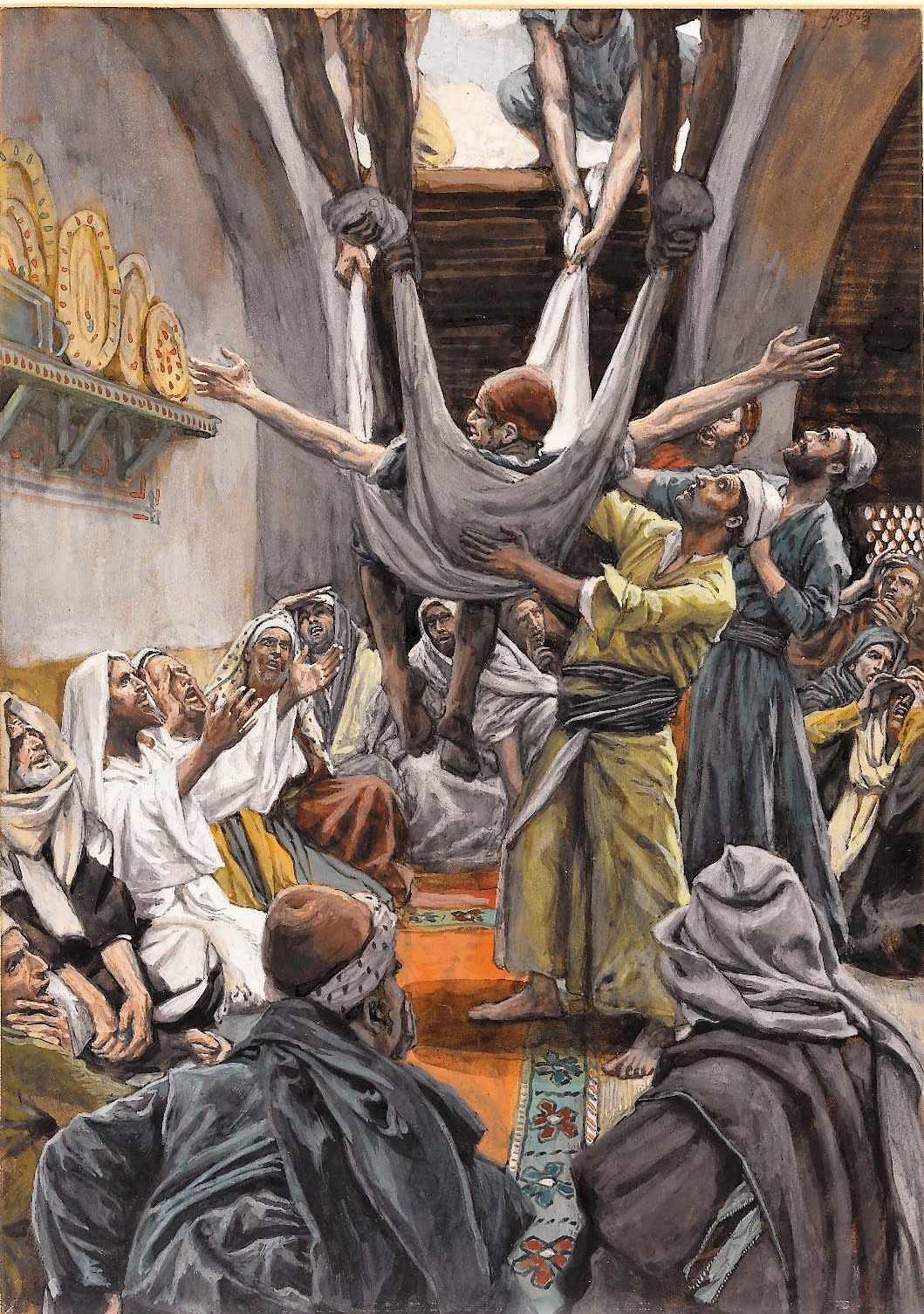 James Tissot, Healing of the Paralytic
Warning: This article discusses suicide and substance abuse.
On September 7, 1996, I embarked on one of the most difficult challenges of my life—getting sober from drugs and alcohol. I had been on methadone for more than two years—a legal drug that was supposed to help me detox from heroin. Instead, I had traded one form of slavery for another, becoming just as hopelessly addicted to it as I was to heroin.
The methadone detox process was physically excruciating. And the process of getting sober was mentally and emotionally the hardest thing I have ever experienced. Facing the carnage I’d left in my wake was overwhelming. I knew what I was going through was difficult. What I didn’t know was whether it was possible.
In Narcotics Anonymous, I met people who had walked this road before me. They didn't just tell me that recovery was hard—I already knew that. Instead, they offered me something far more powerful: hope.
I met people who had been where I was and had not only amassed years, even decades, of sobriety, but they were “happy, joyous, and free.” They led me along the rocky road of recovery by sharing their experience, strength, and hope. When it felt like I couldn’t face one more day, they told me to “Take one day at a time.” When I thought things would never get better, they said things like, “This too shall pass,” and “Don’t give up five minutes before the miracle happens.” And when I struggled to believe it was possible, they told me to “Believe that they believed.”
Through God’s grace and borrowed hope, I got sober.
Their shared wisdom carried me through many trials that extended beyond sobriety from alcohol and drugs to things like potentially life-altering medical diagnoses, toxic relationships, panic attacks, and anxiety and depression. It is impossible to name the gifts given to me by men and women in recovery. I’ve drawn on all I gained from them for twenty-nine years now. But perhaps the single greatest gift they gave me was hope.
And that is what I want to offer you today.
Honestly, I had a different article planned for this month. But midway through the writing process, I received a text about someone I knew who had recently died by suicide. It was the second one in two weeks.
Sometimes life knocks the wind out of you. Other times, it lays you flat and pins you to the ground. When you are laid low, covered in dust and ashes, you don’t need a reminder that life is difficult. You are well aware. When the challenges of life keep you awake through the night, or when you are walking through prolonged seasons of hardship, you need more than acceptance of your circumstances. You need more than well-meaning voices offering superficial comfort—declaring that everything will be fine when clearly it's not, applying spiritual band-aids to wounds that require supernatural healing. You need more than powerless platitudes and superficial succor applied to your very real pain.
You need to know that what you are going through is temporary and that it does not have the final say in your life. You need to know there is life on the other side of your pain.
You need to know there is hope.
But I know how difficult it can be to hold onto hope. I’ve been there. When suffering lingers and relief tarries, hope feels fragile, like a threadbare garment. When the darkness will not lift, we face a crisis of hope.
This is a tenuous time in a believer’s life, a time when we are vulnerable to the enemy’s lies:
“You are all alone.”
“No one understands.”
“No one cares.”
“This is never going to get better.”
“I will never get better.”
“It’s always going to be this way.”
“I can’t do this anymore.”
“God doesn’t care.”
“It’s hopeless.”
These lies isolate us and chip away at our hope, convincing us that we're alone in our struggle and that God is distant or disinterested. Jesus warned us that the enemy aims to steal, kill, and destroy, but he came that we may have life (John 10:10). This hope we have through Christ is a steadfast anchor for our souls. If the enemy wants to immobilize us, what better way than to steal, kill, and destroy our hope?
Throughout Jesus’ ministry, he encountered many men and women who were afflicted and desperate for relief. Some cried out, even when those around them tried to silence them (Mark 10:46-52). Others pressed through the crowds, just to touch the hem of his garment (Mark 5:25-34). And some crossed national, political, and social barriers in order to get to Jesus (Matthew 8:5-13).
But how do you get to Jesus when your strength has failed and hope feels futile? What do you do when, no matter how hard you try, you can’t get to Jesus?
In Mark 2, Jesus was in Capernaum. News about him had spread, and he was beginning to draw large crowds. One particular day, Jesus was at a home teaching, and a large crowd was gathered around him—so much so that there was no more room, not even in the doorway. While he was speaking, a group of people arrived carrying a paralytic man. They attempted to push their way through the crowds to get to Jesus. But no matter how hard they tried, they couldn’t reach him.
Can you imagine how it felt to be the man on the mat in that moment? You’re unable to do anything for yourself. Others have literally and metaphorically carried you to Jesus, in hopes that he would see you and heal you. Only to have your last shred of hope disintegrate when the large crowd makes it impossible for you to get to Jesus. I can imagine myself saying, “It’s no use, but thanks for trying.”
But this man’s friends were not willing to give up hope. They believed Jesus had the power and willingness to heal their friend. So they carried him up to the roof and started digging. They chipped away at the roof bit by bit, until they had made a hole large enough to lower him down, laying him right at the feet of Jesus. And when Jesus saw their faith, he forgave the man’s sins and healed his body.
While there’s much theological meat to chew on in this passage, the thing I want to emphasize is this: Hope is communal.
We weren’t meant to do life alone. There are times when life feels so bleak, and hope so unattainable, that we need the hope of others to sustain us. The man may have been carried to Jesus by the faith of his friends, but he walked out on his own two feet.
This doesn't happen overnight. At first, you might feel like me in early recovery, barely able to stand on your own two feet and clinging to the hope of others. But there came a time in my recovery when the hope I had borrowed from others became my own—when “believing that they believed” grew into “I believe because I've seen for myself.”
Borrowed hope is not meant to keep you dependent on others forever, but to sustain you until your own hope is restored and strengthened. And eventually, you will be able to carry others to Jesus, allowing them to borrow your hope until they, too, can walk on their own.
Throughout our lives, we will experience both positions of strength and weakness, both times of offering hope and times of drawing on the hope of others. This is the gift of communal hope.
When you are facing a crisis of hope, it is important to find those who can carry you to Jesus. It might look like calling a trusted friend, or asking your small group to pray for you, or asking a mentor to walk with you through a difficult season. Sometimes it's reading or listening to those who've walked through darkness before you and letting their stories of God’s sustaining grace breathe fresh hope into you.
But reaching out can feel impossible when shame whispers that you're a burden, or when pride insists you should be able to handle this alone. Remember, the enemy wants to isolate you and convince you that no one will understand or care, that there is no hope. But even Jesus asked others to be with him and to pray when he was greatly troubled in the garden of Gethsemane (Matthew 26:36-56).
Maybe you don't even know who to turn to. Start small. Send one text. Make one phone call. Ask one person to meet you for coffee. Make one appointment with a counselor. Like those who carried the paralytic to Jesus, the faith of others can carry you until you can walk on your own again.
So if you are struggling to find hope right now, let me lend you mine.
It will pass. You will get through it. It will not always be this way. You will laugh again. You will see beauty and experience joy. That does not mean it won’t be hard, maybe even feel impossible. And when that feels too hard to believe, believe that I believe it.
I don’t know how long your struggle will last. I don’t know how it will turn out. I don’t know when Jesus will return and bring a full end to all suffering. But what I do know is this: you are one day closer to the other side.
And in that we have hope.
Love you all,
CC
The Wholehearted Project is reader-supported. If you enjoy or have benefited from the content, would you consider supporting future content in a few ways?Like or comment below.
Become a financial supporter through recurring support at Liberapay or through a one-time gift at Buy Me A Coffee.
Share this newsletter with others:
Become a free subscriber or become a paid subscriber (and receive extras):
Want to Connect?You can find me on Facebook and Instagram or email me at ccole@wholeheartedproject.org.
August 5, 2025
Ego-Maniacs With Inferiority Complexes

When I first got sober, I remember hearing old-timers (those with long-term sobriety) say that addicts suffer from a peculiar affliction: we are ego-maniacs with an inferiority complex. Something about that phrase resonated with me.
As an addict, I was the center of my world, unable to see beyond the end of my own nose. In my daily life, this meant I couldn't see how my choices impacted others. I was driven by my needs, my desires, my pain.
And yet, the undercurrents of shame and inferiority ran deep within me. I was uncomfortable in my own skin, full of self-loathing and feelings of inadequacy. Fear of rejection gripped me. And I attempted to secure love and belonging through a wide array of poor choices.
Now that I’ve been sober for twenty-nine years and following Jesus for twenty years, I see that this malady is not unique to addicts and alcoholics. Pride and insecurity are human conditions that affect all of us in varying degrees. While we may find that one of these is more characteristic of us, both pride and insecurity are the straws that stir the drink in our lives.
Personally, I am more likely to be paralyzed by insecurity than puffed up with pride. Although I write publicly, I struggle with promoting my work. I am afraid to put myself out there, afraid that others will think I am self-promoting, and afraid that I am delusional and only think that I have something worth sharing. So I stay in the shadows. I may share a new article on social media the day it's released. But after that, I retreat into the shadows–afraid of how others might perceive me or what I am doing.
However, I am far from immune to pride’s siren song. It’s not unusual for arrogant thoughts to go through my mind. “Why do they get all the opportunities and not me?” Or, “Why is she so popular as a Bible teacher or writer, when her stuff is so fluffy?” Deep at the root of these thoughts is pride, the belief that I am better than someone else. Deeper still is the belief that God has not been kind to me and that I should have something I don’t, whether it is recognition, opportunities, or honor.
We all want to be seen, known, and loved. But we often fear that if anyone truly knew us, they would reject us. So we perform an array of existential gymnastics to avoid being rejected. Some of us strive to be more of what we think others find acceptable. Others of us cover over our perceived flaws, never allowing anyone to truly know us. Some of us reject others before they can reject us, convincing ourselves that we are better than them and that we don’t need anyone. While things like trauma or abuse can be contributors to our deep-seated fears, much of it is also rooted in pride and insecurity.
Any attempt to separate pride and insecurity is futile, like splitting hairs. They are intricately interconnected. Insecurity is the fear that we are not enough, not worthy, or will be exposed. And pride is a strategy to protect the self. To hide weakness. To feel significant. To avoid shame. It becomes a shield against the fear of being rejected or humiliated. Both keep us on a spiritual seesaw, our self-perception falling and rising according to the fickle feelings of self and others.
Sometimes, pride appears as arrogance, characterized by boasting, self-righteousness, or a refusal to acknowledge one's faults. We stack our time, talents, and treasures on the other end of the seesaw. These attributes, often rooted in a fear of being unworthy or unlovable, give rise to all manner of attempts to prove one’s worth.
We grasp at anything and everything that weighs the seesaw in our favor—accolades and achievement, power and position, the success of our kids, our beauty, our wits—whatever will lift us higher and higher off the ground until we rise above the dust of the earth. With our heads in the sky and our feet dangling beneath us, we can sit comfortably secure in our standing. But we forget the warning that pride comes before destruction, and an arrogant spirit before a fall (Proverbs 16:18, CSB).
However, the security we built our worth on is an illusion. It’s chasing after the wind (Eccl. 1:12-18, 2:1-11). There is nothing but air between us and the ground. There is nothing solid beneath us, nothing holding us up. We age, and our beauty fades. We get fired from our lucrative role. Our kids' lives don’t turn out the way we’d hoped or imagined. And as each self-determined measurement of worth is removed, we sink closer to the ground.
Other times, pride appears as insecurity. We are laid low in the dirt of insecurity, self-loathing, and shame, and we can’t even get our seesaw off the ground. We avoid vulnerability, over-apologize, and are driven by perfectionism and self-protection. Sometimes, this is masked as humility.
We are unable to accept compliments. We believe we have nothing to contribute to God or others. We speak of ourselves in demeaning and derogatory ways. We are hyper-focused on our weaknesses and failings. We are too much: too loud, too opinionated, too sensitive. Or we are not enough: not smart enough, pretty enough, strong enough. Each perceived weakness and failure keeps us grounded in the dust.
I definitely can fall into this category. However, this, too, remains centered on the self. The core question is, “What will people think of me?” We see nothing of value in ourselves, forgetting that a God of immeasurable beauty and goodness created us in his image, called us good, and placed us in this world as his co-creators of beauty and goodness.
Both are rooted in shame. One puffs up. One shrinks back. Both are self-focused.
While social media has significantly contributed to our obsession with ourselves, this shame-based cycle is not just a modern problem. It’s a tale as old as time, going all the way back to the Garden of Eden. The serpent tempted Adam and Eve with something they weren’t—being like God. And something they didn’t have—knowledge of good and evil. He simply held a mirror up to them to reveal their lack, how they fell short of some standard.
However, his temptations were like the game of two truths and a lie. A game where each person shares three statements about themselves—two that are true and one that is false. The other players try to guess which statement is the lie. Adam and Eve were already like God. And they already had the knowledge of good. The only thing they lacked was the knowledge of evil. Somehow, the serpent convinced them that who they were and what God had entrusted to them was not enough. So they sought to become more of who they thought they should be, rather than being who God made them.
Ever since then, we have been trying to balance our spiritual seesaw through our own efforts—compensating for our failures, concealing our weaknesses, and protecting against our vulnerabilities. We know our nakedness, and we utilize everything available to us—whether self-promotion or self-protection—to cover over our shame.
This pattern of pride and insecurity runs throughout Scripture.
Scripture reveals how insecurity paralyzes those whom God has chosen. Moses felt inadequate in his speech and questioned God's plan to use him (Exodus 3-4). Gideon, coming from the weakest tribe, felt weak and insignificant and questioned God's decision to use him (Judges 6). Jeremiah worried he was too young and didn't know how to speak (Jeremiah 1). And Timothy needed Paul's frequent encouragement not to be fearful or timid because of his age (1 Timothy 4:12, 2 Timothy 1:7).
Pride is equally an issue for God’s people. It blinds us to our frailties and utter dependency on God, convincing us that we are self-made and self-sufficient. Hezekiah became proud and flaunted his wealth to Babylon (2 Kings 20:12-21, 2 Chronicles 32:25). King Uzziah grew proud after he became powerful and overstepped God's boundaries, performing duties reserved for priests alone (2 Chronicles 26). The self-righteous Pharisee thanked God he was not like the repentant tax-collector praying alongside him (Luke 18:9-14). And Peter confidently declared he would never deny Jesus, yet denied him three times (Matthew 26:33-75).
The same spiritual maladies that plagued God’s people in the past continue to affect us today.
Whether our cries are those of insecurity, “Who am I?” or arrogance, “Who are you?” Whether our lives are marked by self-sufficiency or self-loathing, insecurity or inflated ego, “low self-esteem and pride are horrible nuisances to our own future and to everyone around us.”¹
Taking The Right Medicine Out of the Medicine CabinetFor God's people then and now, the antidote is the same. The question, then, is: how do we find freedom from this exhausting cycle?
We may find a starting point in John Calvin’s book, Institutes of the Christian Religion. Calvin wrote, “Nearly all the wisdom we possess, that is to say, true and sound wisdom, consists of two parts: the knowledge of God and of ourselves.” This dual knowledge, Calvin argued, forms the foundation of true wisdom.
I can know that God is merciful and forgiving, but if I do not know that I am sinful, that will be of little value to me. I can understand that God created me in his image, but if I do not understand that gives me inherent worth, it, too, is of little value. Conversely, I can be aware of my unique gifts and talents, but if I do not know I am also deeply flawed, I can become incorrigible.
Knowledge of God and knowledge of oneself not only lead to true and sound wisdom, but they can also help us get off the spiritual seesaw of insecurity and pride.
This balance between humility and dignity is captured beautifully in the Hasidic saying:
“A person should have two pockets. In one pocket, the note ‘For me the world was created’ and in the other pocket, ‘I am but dust and ashes.’”²
Jewish rabbi Abraham Heschel echoes the duality of mankind as “mysterious grandeur and pompous dust.”³
Living in this tension requires spiritual discernment, knowing which truth we need to embrace in any given moment. Like a doctor who must accurately diagnose the condition before prescribing the cure, we must learn to identify whether our spiritual seesaw is tipped toward pride or insecurity. I don't take an antacid when I have a headache. I take an aspirin. I don’t treat a broken arm with a band-aid. I get a cast. The same is true of my spiritual condition.
I have to take the right medicine out of the medicine cabinet.
When we are puffed up in pride, we do not need to drink in the elixir of our immeasurable worth. We need to swallow the bitter pill that we are nothing and have nothing apart from God’s lavish grace (Ephesians 2:8-9). We need to remember that our righteousness is but filthy rags (Isaiah 64:6) and even our best deeds often have mixed motives. We need to remember the frailty and finitude of all created things, including ourselves. And we need to remember that our state was so hopeless that Christ had to die in order to cleanse us and make us right with God.
We are but dust and ashes.
When we are laid low in self-loathing, we do not need to swallow the pill of our lowliness. Instead, we need to drink deeply of God’s love for and delight in us as his beloved children (1 John 3:1-2). We need to hold firmly to the truth that we are his marvelous workmanship, created for a purpose (Psalm 139). We need to be reminded that nothing—not shame, sin, suffering—can separate us from God’s love for us in Christ (Romans 8:31-39). And we need to remember that God loved us so much that Christ was willing to die to heal us, make us whole, and bring us home.
It was for us the world was created.
One humbles us; the other bolsters us. One brings us low; the other lifts us up. One produces humility, the other dignity. And we need both of these truths to flourish, just like we need air and water.
Humble ConfidenceThe apostle Paul gives us this example in 1 Corinthians 15:9-10:
“For I am the least of all the apostles. In fact, I’m not even worthy to be called an apostle after the way I persecuted God’s church.
But whatever I am now, it is all because God poured out his special favor on me—and not without results. For I have worked harder than any of the other apostles; yet it was not I but God who was working through me by his grace.”
In the same passage, Paul acknowledges both his insufficiency and the fruit of his labor. At other times, he calls himself chief of sinners (1 Timothy 1:12-17) and calls people to follow him as he follows Christ (1 Corinthians 11:1).
The result of being rooted in these seemingly opposed truths is that you become a person of humble confidence—not puffed up with pride nor laid low in self-loathing. You know both your inherent worth and inherent sinfulness. And from that wisdom, you are better able to live and love God and neighbor. You can use the gifts God has entrusted to you, understanding that they aren’t even about you. He gave them to you, and he will produce the fruit. Criticism won’t crush you, and compliments won’t corrupt you.
This humble confidence is rooted in what Calvin called the knowledge of God and knowledge of self. This frees you to take risks, knowing that failure doesn't define you. It allows you to receive correction without defensiveness and offer correction without superiority. You can celebrate others' successes without feeling diminished and acknowledge your own gifts without feeling guilty.
Most importantly, because you are no longer stuck on the spiritual seesaw–looking down on others from a place of pride, nor looking up to them from a place of insecurity—you are better able to love others well, remembering they too are dust of the earth for whom the world was made.
Love you guys,
CC
Questions for ReflectionEngage the ScriptureRead 1 Corinthians 15:9-10. How does Paul demonstrate both humility and confidence in this passage? What specific phrases show each quality?
Read Jeremiah 9:23-24. What reasons does Jeremiah list out for human boasting? What reasons does he list for boasting in the Lord? How would boasting about these things impact your tendencies toward pride or insecurity?
In Luke 18:9-14, what does the Pharisee's prayer reveal about the connection between pride and insecurity? What does the tax collector's prayer teach us?
Explore Your StoryThink about the "old-timers" phrase: "ego-maniacs with an inferiority complex." Which of these do you lean toward more naturally—pride or insecurity? Give specific examples.
What are the "time, talents, and treasures" you tend to stack on your side of the seesaw to prove your worth? What happens when these things are threatened or removed?
Reflect on a time when insecurity paralyzed you from taking action. Then recall a time when pride blinded you to your need for help or correction. What patterns do you notice?
In what ways might shame be at the root of pride or insecurity in your life?
Encounter the SaviorWhat does the gospel say about both your worth and your need?
How does knowing that Christ died for you address both your deepest insecurities and your greatest pride?
Experience ShalomPractice "taking the right medicine." This week, when you notice pride rising, meditate on your need for grace (Ephesians 2:8-9). When insecurity strikes, dwell on your identity as God's beloved (1 John 3:1-2).
Pride and insecurity are both rooted in shame. Shame always requires another set of eyes. This week, when you feel pride or insecurity rise, practice looking for Jesus’ face in the crowd. How does seeing him see you change your perspective in those moments?
The Wholehearted Project is reader-supported. If you enjoy or have benefited from the content, would you consider supporting future content in a few ways?Like or comment below.
Become a financial supporter through recurring support at Liberapay or through a one-time gift at Buy Me A Coffee.
Share this newsletter with others:
Become a free subscriber or become a paid subscriber (and receive extras):
Want to Connect?You can find me on Facebook and Instagram or email me at ccole@wholeheartedproject.org.
July 1, 2025
Hosting The Presence of Christ

I sat in the hard wooden pew, taking in my surroundings. The sights, smells, and sounds were unfamiliar, even somewhat uncomfortable. A faint scent of incense lingered in the air. Men and women adorned in formal priestly vestments. Unfamiliar rhythms, liturgies, and music. Frequent movement—sitting, standing, kneeling. Prayers spoken, not just from a pastor at the podium, but offered up randomly from the men and women in the pews surrounding me.
I was relatively new to this group of believers. My body, still in a hypervigilant state, was cautious and somewhat tense. And yet, something in this place, something in the Anglican tradition, invited me to rest and receive.
I don’t remember anything specific from that particular morning. Not the Scripture readings or the overarching message. But one phrase pierced through the noise in my head and landed on my heart as gently as a feather: “The Church’s purpose is to host the presence of Christ.”
I have heard the Church’s mission described in many ways, usually couched in a strategic vision statement: make disciples, spread the gospel, equip the saints, love and serve our neighbors—all of which appeal to my performance-driven instincts. These are all worthy, biblically sound pursuits and important parts of what it means to follow Jesus. But I have never heard the Church’s mission described as hosting the presence of Christ.
Discussions about hosting the presence of Christ are deep theological waters—things like his promised presence among us when we come together. Jesus assured us that when even as few as two or three are gathered in his name, he will be there among us (Matthew 18:20). Or the mystery of his presence with us through our shared communion meal—as we eat the broken bread of his broken body and drink from the common cup of his blood shed for us.
These waters are deep and mysterious, and could quickly go over my head. However, there is another aspect to hosting the presence of Christ, one that originates in and flows from the self-giving God.
Jesus gave himself to us so that we can give ourselves to the world.
While that was not a new idea for me, describing it as hosting the presence of Christ was. It captured my imagination and reoriented my heart and mind. And, in that hard wooden pew, something about those words began to settle my hypervigilant soul and invited me to rest in the presence of Christ.
Though that was a few years ago, the words spoken that day were sticky. I often find myself pondering them, wondering what it might look like for a church to live as an extension of Christ to those in the pews. Not just in his words and works, but in his personhood. If in our pews, small groups, and Sunday school rooms, people encountered the character of Christ and were able to find not only forgiveness from sin, but true rest and restoration?
While there is something unique that happens when we gather, hosting the presence of Christ—welcoming him in, making space for him, and extending his presence through us—extends beyond the walls of our churches. This calling applies both corporately and individually. What would it look like if we actually resembled him? If his presence, through the Spirit, so filled us that the overflow spilled out onto those around us?
Something about the imagery of hosting Christ’s presence reorients me, guiding me like the north star. First, I receive. Then, I give. A dried-up well offers no thirst-satisfying water to passersby. The same is true with a parched soul. If I have not drunk deeply from the fountain of life, what can I offer to those who are thirsty?
I fear that many, like myself, may have gotten that backwards. Some days, I am more busy for Christ than I am available to and present with Christ. On other days, I drink deeply from the constant noise and distractions of our world, which are amplified through our constant connection to social media and 24/7 news feeds. Both can leave my soul dry and withered.
In John 15, Jesus taught that branches must remain connected to the vine to produce fruit. Likewise, if we are to produce fruit, we need to remain connected to him, the lifegiving vine. This is part of Jesus’ farewell discourse to his disciples, his parting words. And weighing heavily on his heart and mind was the disciples’ need to abide in him.
This message was so important to Jesus that he repeated it ten times. He longed for intimate union and communion with his disciples—for them (and us) to stay connected to him, allowing his love and presence to take up residence in them so that they would produce much fruit (John 15:1-10).
This is what makes hosting the presence of Christ possible. It is a holy calling to spiritual hospitality, offering back to others what we have received. Extending his love and presence through sharing wisdom, forgiveness, mercy, and spiritual gifts, in every conversation we have with a friend or family member.
In the depths of my heart, this is my desire: to host the presence of Christ in every interaction I have with a stranger. Every gesture. Every word I write. I want anyone who comes to the WholeHearted Project to find Christ, not me. Not spiritualized self-help. Not good ideas or eloquent words. Not even good teaching. Jesus.
The other stuff is good, as long as Jesus is present. Because at the end of the day, he is the best we have to offer. He is the one who invites the weary to rest and the thirsty to drink. The one who mends broken hearts, pursues the lost, and cares for the vulnerable. And he is the one who took on our sin, shame, and suffering and gave us the hope of new life, offering compassion, love, mercy, hope, healing, and forgiveness to all who are willing to receive and follow him. He is the living God, the suffering servant, and the risen and reigning king.
There is nothing better than extending the presence of Christ to someone.
The Apostle Paul captured the essence of this idea in a letter to the Corinthian church, describing the ministry God had entrusted to him as spreading the fragrance of the knowledge of him everywhere, being the aroma of Christ to those who are being saved and those who are perishing (2 Corinthians 2:14-15). Or as the NLT translates it as being a “sweet perfume” and “a Christ-like fragrance” (NLT).
While that sounds sweet, Paul goes on to say that not everyone will appreciate our Christ-like fragrance. In fact, to some, the scent of Christ is putrid. Jesus offended many. He spoke clearly about sin. He called people to reject lives of self-indulgence and self-righteousness. He didn’t come to placate or pacify. He came to save and restore.
Jesus was not focused on helping us live our best lives now, but rather on seeking the kind of satisfaction that could only be found through him, one that would outlast the confines of this life. For those who knew their hunger, thirst, and spiritual poverty, Jesus was appealing. But for those who refused to acknowledge their insufficiency and lack, Jesus was offensive.
Hosting the presence of Christ does not mean everyone will find us appealing. But the question we must ask ourselves is this: Is that because it is really Christ they are experiencing through us? Or do they instead smell us? Is it Christ in us that they find offensive, or is it our self-righteousness, sanctimony, arrogance, or hypocrisy?
Do they encounter the life-giving fruit of Christ’s spirit within us: love, joy, peace, patience, kindness, goodness, gentleness, faithfulness, and self-control? Or do they encounter the stench of jealousy, gossip, power plays, racism, sexism, and hatred of the other (Galatians 5:16-24)?
Do they see us freely extending our hand to those who have nothing to offer us in return? Or does selfishness and self-gratification characterize our lives?
Do they experience the care and compassion of Christ in our presence? Or do they instead feel the sting of shame, judgment, and condemnation? Do people leave our presence better or worse off than before we encountered them?
As I allow these questions to penetrate my conscience, I am clear that I fail frequently. Even in the last week. Rather than encountering the patience, peace, and grace of Christ through me, others experienced my frustration, self-righteousness, and anger.
Even if I was right about some things and meant well, I elevated the emotional temperature in the situation and stirred further division. Instead of experiencing the sweet aroma of Christ, they experienced rashness, harshness, and being treated as an inconvenience.
Hosting Christ’s presence sounds mystical because it is. As believers, his Spirit dwells in us. Looking more like Christ is not something I, or you, can muster up, at least not with any longevity or consistency. It is something that happens through us as we avail ourselves to him as his disciples.
Luke captures the essence of this in Acts 4:
“Now when they saw the boldness of Peter and John, and perceived that they were uneducated, common men, they were astonished. And they recognized that they had been with Jesus” (vs. 13).
Peter and John, like all of the rest of Jesus’ disciples, were not extraordinary people. They were just ordinary men; what made them different was Jesus. They had spent time in his presence, listening to what he said and watching what he did. And the Spirit of Christ had taken up residence in them. The scent of Christ was irrefutable. People recognized they had been with Jesus because they had become hosts of his presence.
I long to extend the gracious presence of Christ to those I encounter throughout my day. I want others to know him better through my interactions with them. I long for him to be desired more deeply because of others' experience with me. For him to be honored, even if unbelieved, because others saw something of him in me that they cannot refute.
It is Christ we want to extend to others. But that does not mean we cease to be who we are. Instead, we become more of who we were always meant to be—all our gifts, strengths, talents, personality—transformed through his Spirit and available for his purposes of drawing others to himself.
Hosting Christ’s presence means confessing to others quickly when we've represented him poorly. It means loving our enemies and forgiving those who hurt us. It means choosing patience toward another over our own desires for efficiency, or choosing kindness toward another over the pursuit of our own comfort. It means asking good questions and speaking truth, but with a heavy dose of humility, grace, and love.
And all of that begins by spending time in his presence. Listening to him. Learning from him. Observing him through his word. Allowing him to shape us even when that shaping feels unfamiliar, uncomfortable, or even unfair. Most of all, it happens as we abide in him, allowing his love, mercy, grace, and forgiveness toward us to transform us more into his likeness. As we experience him more fully, we can extend that same love to others. We can become hosts of the presence of Christ.
The invitation that settled my hypervigilant soul years ago in that hard wooden pew remains open today: to become a place where others encounter not just our best intentions, but Christ himself. This is both the highest calling and the daily work of every believer—to so live in his presence that his presence lives through us.
Love you guys,
CC
P.S. First, welcome to all the new readers who’ve joined over the last few months. I am so glad you’re here. Your time is valuable, and I do not take it for granted that you’ve chosen to receive these articles in your inbox.
Also, for long-time readers (and new readers), I’d love to hear from you guys! What would you like to read more of? Please send me an email at ccole@wholeheartedproject.org or leave a comment.
Engage the Scripture
Read and meditate on these passages:
Matthew 18:20, ESV - “For where two or three are gathered in my name, there am I among them.”
2 Corinthians 2:14-16, NLT - “But thank God! He has made us his captives and continues to lead us along in Christ’s triumphal procession. Now he uses us to spread the knowledge of Christ everywhere, like a sweet perfume. Our lives are a Christ-like fragrance rising to God. But this fragrance is perceived differently by those who are being saved and by those who are perishing. To those who are perishing, we are a dreadful smell of death and doom. But to those who are being saved, we are a life-giving perfume.”
Acts 4:13, ESV - “Now when they saw the boldness of Peter and John, and perceived that they were uneducated, common men, they were astonished. And they recognized that they had been with Jesus.”
Galatians 5:22-23, ESV - “But the fruit of the Spirit is love, joy, peace, patience, kindness, goodness, faithfulness, gentleness and self-control.”
John 15:4-5, ESV - “Abide in me, and I in you. As the branch cannot bear fruit by itself, unless it abides in the vine, neither can you, unless you abide in me. I am the vine; you are the branches. Whoever abides in me and I in him, he it is that bears much fruit, for apart from me you can do nothing.”
Colossians 3:12-17, ESV - “Put on then, as God's chosen ones, holy and beloved, compassionate hearts, kindness, humility, meekness, and patience, bearing with one another and, if one has a complaint against another, forgiving each other; as the Lord has forgiven you, so you also must forgive. And above all these put on love, which binds everything together in perfect harmony. And let the peace of Christ rule in your hearts, to which indeed you were called in one body. And be thankful. Let the word of Christ dwell in you richly, teaching and admonishing one another in all wisdom, singing psalms and hymns and spiritual songs, with thankfulness in your hearts to God. And whatever you do, in word or deed, do everything in the name of the Lord Jesus, giving thanks to God the Father through him.”
Reflect: As you read these passages, what stands out to you about God’s desire to be present with, through, and to his people?
Explore Your StoryThink about what you think about. A.W. Tozer once said that what comes into our minds when we think about God is the most important thing about us. What do you think about when you think about Jesus? How does that positively or negatively impact how you extend Christ to others?
Consider your daily interactions. Think of a time when someone has been the aroma of Christ to you. How did that experience affect you? Take a moment to reflect on this interaction in your journal.
Consider the people in your regular sphere of influence, such as family, coworkers, neighbors, and friends. How might they describe what it's like to be around you? Would they recognize you as someone who has “been with Jesus” after spending time with you?
Encounter the SaviorContemplative Exercise: Set aside 10 minutes to sit quietly and imagine Jesus entering the room where you are right now. What does his presence feel like? What does his face express as he looks at you? What is he offering you: love, forgiveness, mercy, patience, comfort, compassion? Allow yourself to receive what he is extending to you, then ask: “How can I carry this same presence to others today?”
The Wholehearted Project is reader-supported. If you enjoy or have benefited from the content, would you consider supporting future content in a few ways?Like or comment below.
Become a financial supporter through recurring support at Liberapay or through a one-time gift at Buy Me A Coffee.
Share this newsletter with others:
Subscribe to receive regular updates:
Want to Connect?You can find me on Facebook and Instagram or email me at ccole@wholeheartedproject.org.
June 10, 2025
The Broken and Beautiful Church (Part 3)
 “He Binds Up The Brokenhearted” by Paige Payne
This article is part 3 of a series titled "The Broken and Beautiful Church.” You read parts 1 and 2 here: Part 1: Something Isn’t Right and Part 2: A Call To Leaders
It was a beautiful day in South Carolina. Clear blue skies stretched overhead. The sun shining through the windows cast rays of light across the floor of my designated exercise spot. I put in my favorite yoga DVD–Rodney Yee's Power Yoga for Strength and Flexibility. I transitioned through each movement, as I had done many times before, slowly and methodically moving from downward dog to upward dog to plank to side arm plank. As I moved into the side arm plank, I lost my balance and fell over. I remember thinking, "That's weird. That's never happened before." Nevertheless, I shook it off and returned to position, finishing the rest of the DVD without incident.
Later that day, I felt a little swimmy-headed. It passed almost as quickly as it came on. Once again, I dismissed it and carried on with my day. But then it happened again. And again. The recurring sensation was disorienting. Although I felt fine otherwise, these random moments of dizziness were concerning. Each time, I would let the moment pass, collect myself, and then continue with whatever I had been doing. Eventually, these episodes became so frequent that I could no longer ignore them. After a few days, I decided to go to the doctor, who diagnosed me with vertigo.
I had never even heard of vertigo before. All indications were that I was perfectly healthy. But my body was telling me something different. It was a messenger alerting me that something was off and needed attention.
Looking back, I realize my body was speaking a truth my mind wasn't yet aware of. My mind perceived that all was well, but my body told a different story. This experience holds a valuable lesson about trusting our intuition and listening to our bodies—one that, decades later, I am finally beginning to understand: Our bodies are truth-tellers. They tell us when we need food or rest. They alert us to danger. And they tell us when something isn’t right.
Toxic church culture can feel a little like my first experience with vertigo. You notice something feels off. But you shake it off. Then it happens again. “That felt weird,” you think. Once again, you dismiss it, concluding, “Maybe it’s just me. Maybe I am overreacting.”
When we experience something unsettling in church settings, we may do exactly what I did with my vertigo: rationalize it and move on. Our respect for spiritual authority can lead us to ignore the signs our bodies are giving us. Our reticence is understandable. The Bible does call us to bear with one another, forgive offenses, and, if at all possible, to live at peace with everyone (Colossians 3:13, Romans 12:18). Therefore, when we see brokenness in our shepherds, we are quick to extend grace. However, the Bible does not call us to make excuses for actions and attitudes that are unbecoming of a shepherd.
As believers, we rightly expect shepherds to live according to God's word, building the body by loving and nurturing God’s people. We expect those who lead us, first and foremost, to be followers of Christ and to reflect his likeness. Therefore, when we observe a spiritual leader acting in ways that contradict the role of a shepherd, we experience cognitive dissonance. This dissonance makes it difficult to reconcile our seemingly opposing experiences and perceptions. Our beliefs (e.g., “Church leaders are supposed to model Jesus’ love”) and our experience (e.g., “I am being mocked and demeaned by my pastor”) are in conflict, so our brain scrambles to make sense of it.
For example, imagine sitting in a church meeting where the pastor publicly humiliates a volunteer, using harsh words or sarcasm. Your mind struggles to reconcile their actions with Scripture's description of a shepherd. You might think, “Surely he was just teasing.” Or you hear them speak negatively or cast a narrative that is uncharacteristic of another believer you know well. But you give them the benefit of the doubt, assuming they know something you don’t.
These mental gymnastics represent your brain's attempt to resolve the confusing gap between your understanding of pastoral care and the behavior you witnessed. Our desire to resolve the dissonance and alleviate our discomfort can lead us to dismiss or downplay concerning behaviors in our spiritual leaders. We attribute it to their unique personality: “That’s just how he is.” We choose to believe the best about those in charge: “She’s been under a lot of stress lately.” All the while, our bodies are attempting to get our attention.
When you experience toxic spiritual leadership, your body and mind sound alarm bells. Exposure to toxic spiritual leadership can even mimic physical symptoms associated with abuse and post-traumatic stress disorder (PTSD) and be indicative of severe emotional distress.
Physical Responses:
Tight chest
Hypertension
Insomnia
Headaches
Fatigue
Sleep disturbances
Digestive/stomach issues
Changes in eating habits
Inability to focus
These physical symptoms are designed to capture our attention, alerting us that something is not right. Likewise, uncharacteristic mental and emotional symptoms may also serve as indicators that something is wrong long before we become cognitively aware of a problem.
Emotional Responses
Dread before church gatherings or staff meetings
Avoidance of church leadership
Persistent anxiety
Feelings of isolation
Overwhelming shame
Unrelenting insecurity
Hypervigilance in church settings
Confusion about your experience
Apathy/Lack of motivation in spiritual matters
Ambiguous grief (a profound sense of loss and sadness without a death or closure)
While the presence of these physical and emotional symptoms does not always mean that you are in a toxic spiritual environment or an abusive situation, they do deserve curiosity and care. What is your body responding to, and what does it need in this situation?
As believers, we’ve been taught that the heart is desperately wicked (Jeremiah 17:9-10). Sin has corrupted every aspect of our beings. Therefore, we cannot trust what we think or feel. However, God not only created us; he has also redeemed and is renewing us—mind, body, and soul. He has given his Spirit to discern (Romans 12:2; James 1:5). Rather than dismissing physical and emotional responses as coincidences or our own personal weaknesses, we can be curious about what they, in accordance with the Spirit, may be attempting to communicate to us.
Many of us have been in toxic environments—whether jobs, families, or friend groups—without the same effect. So why do these symptoms affect us so profoundly in church contexts? The reason is that, as followers of Christ, we are part of a new family. Christ has knit us together in a bond often deeper than that of our own families of origin. Vulnerability and trust, within the context of this new family, are essential parts of our spiritual formation. We are united not by our strengths, but by our weaknesses and needs. My church family has access to the most intimate places in my heart—its fears and temptations, longings and pains—in ways the rest of the world doesn’t.
Wounds from our families of origin hurt and shape us in profound ways. But because of the intimacy and vulnerability experienced within the church, wounds from our spiritual families are especially devastating. The church is meant to be our refuge, a place where we can find safety in a world that is anything but safe. When it becomes a source of harm, it is deeply disorienting. However, it is especially harmful when shepherds—those we view as our spiritual fathers and mothers—inflict the harm.
Shepherds are God’s representatives in the church. They help shape our understanding of God’s posture toward us and our identity in Christ. Because of this unique role, their actions can distort our understanding and experience of God. When toxic leaders mock, control, or isolate members, these physical and emotional responses we experience signal a threat to our well-being, sense of belonging, and place in God’s family. There is a mismatch between their role as a shepherd and how they are living. And our brains do not know how to resolve this incongruence.
Navigating the confusion and complexity of spiritual harm requires both courage and wisdom. Many who have spoken about their experience have been met with well-intentioned, but sometimes misguided direction. Statements like “All churches are broken” or “No pastor is perfect” are true, but can inadvertently silence those who have experienced harm. Others who have spoken about their experiences have been shamed or accused of slander, gossip, taking up offenses, or creating division within the body of Christ. Whether they’ve been silenced or shamed, those who have experienced spiritual abuse are often isolated and left to navigate their experience alone.
Because Jesus warned us against judging others, we are called to examine the log in our own eyes before pointing out the speck in another person’s (Matthew 7:1-5). This is right and good. However, toxic spiritual leaders can use this to turn the tables on those they lead. When this is the case, the person experiencing harm may attribute it to their own personal sin. Perhaps, they are too sensitive, insecure, or overreacting. So they work ever more diligently to overcome some unknown sin or weakness in their own spiritual lives, all the while dismissing the clear sin in their leader’s life.
All of this makes identifying and healing from spiritual harm incredibly difficult. If you suspect you are in a toxic spiritual environment or if you have experienced spiritual abuse, what steps can you take toward healing?
1. Seek counsel from other believers outside of your context.
American novelist and essayist, David Foster Wallace, began his famous Kenyon Commencement address with an oft-quoted parable:
“There are these two young fish swimming along, and they happen to meet an older fish swimming the other way, who nods at them and says, ‘Morning, boys. How’s the water?’ And the two young fish swim on for a bit, and then eventually one of them looks over at the other and goes, ‘What the hell is water?’”
Wallace goes on to say, “The point of the fish story is merely that the most obvious, important realities are often the ones that are hardest to see and talk about.”¹
This is especially true in the case of spiritual abuse. Just as the fish aren’t aware they are in water, those immersed in potentially abusive church environments may not recognize harmful patterns that might be clear to someone outside their context. If you suspect that something doesn’t feel right, believers from outside your context—whether trusted friends, counselors, or spiritual leaders from different church communities—can often help you understand if something is normal or not.
Spiritual abuse is a loaded term. It’s hard for me to even write the words without wanting to provide caveats and nuance. It makes sense that the idea doesn’t sit well with us. Dr. Diane Langberg, a counselor who specializes in trauma and spiritual abuse, says the term “spiritual abuse” should be an oxymoron.
“The word spiritual refers to something affecting a human spirit or soul. Abuse means to mistreat another, to deceive or do harm. When we use the word spiritual to describe abuse, we are talking about using that which is sacred—including God’s Word—to control, misuse, deceive, or damage a person created in his image. I think we can safely say the pairing of those two words is diabolical.”²
In his book, Bully Pulpit, Dr. Michael Kruger defines spiritual abuse as when “a spiritual leader—such as a pastor, elder, or head of a Christian organization—wields his position of spiritual authority in such a way that he manipulates, domineers, bullies, and intimidates those under him as a means of maintaining his own power and control, even if he is convinced he is seeking biblical and kingdom-related goals.”³
Here, a distinction must be made. Spiritual abuse is not the same thing as hurt. Hurt is inevitable. It happens in the healthiest of churches. We are broken people interacting with broken people. We will hurt one another. We will have conflict. We will disappoint one another. There is no spiritual utopia on this side of eternity.
We may feel hurt when a friend or pastor challenges us or tells us something we might not want to hear—even if they do it in a loving and humble way. Scripture reminds us that the wounds of a friend who corrects out of love and concern are faithful, but the kisses of an enemy are deceitful (Proverbs 27:6). We need people who love us enough to ask questions and speak into our lives, offering guidance and support.
At other times, we might feel hurt if we are not included or invited to participate in something, or if someone fails to show up for us during a difficult time. We might feel hurt because our pastor disagreed with us or seemed disinterested in something we felt passionate about. These things will happen. This is all part of life together.
There is a difference between hurt and harm. Harm is not one incident; it is a pattern. Harm is repeated patterns of control, humiliation, mocking, gaslighting, silencing, or shaming. It can be overt. Or it can be gradual and subtle, which makes it harder to detect.
Many of the voices shaping the conversation around spiritual abuse note that people don’t knowingly join spiritually abusive churches. In fact, in many cases, a person’s initial experience with the church and its leadership might be overwhelmingly positive. It is the slow, gradual shift over time that makes abuse very hard to see and name.
Many factors make it challenging to identify abusive dynamics. First, similar to those who have experienced sexual abuse, people who have experienced spiritual abuse often blame themselves. They question their experience and discernment, as if they have misunderstood or made a big deal out of nothing. They may even be tempted to think that it was their fault, and that if they had acted differently, it would not have occurred—a message that may even be reinforced by those in authority over them.
We’ve been taught to respect and obey our spiritual leaders. We trust that they are following God. We may even see them as more knowledgeable and more spiritual. Therefore, when someone is in a spiritually abusive environment, they may attribute their experience to their own sin or weakness.
Similarly, because those in pastoral roles are seen as God’s representatives, their words carry significant weight. This is especially true in churches that place a high value on spiritual authority. When pastors are elevated to god-like status, this creates an environment where individual members question their own discernment, become overly deferential, or automatically believe that whatever the pastor says about them must be fundamentally true.
For instance, if a pastor suggests you are insecure or overly sensitive while discussing a conflict, you may later dismiss your own perspectives, attributing future issues to your own perceived character flaws. Similarly, if a concerning issue arises, you might silence yourself, fearing accusations of being divisive or disrespectful. When a person has been taught to submit to spiritual authority without question, the body of Christ has been muzzled, and abuse festers in isolation.
How do you determine if someone has experienced spiritual abuse? Is it simply a matter of taking the person’s word for it? Things like sexual abuse or physical abuse are more tangible, more easily defined. In comparison, things like emotional or spiritual abuse are more difficult to discern and define.
While some may wrongly accuse leaders of spiritual trauma, occurrences of that appear to be limited. People who speak out about spiritual abuse have little to gain. In fact, according to Dr. Kruger, they often pay an enormous price,
“Typically, they are not believed, they have their character attacked and tarnished, and often are driven out of the churches they love. What would motivate them to lie about the charges? What would they have to gain? Often, they have everything to lose.”⁴
Dr. Kruger goes on to say that most people who have either witnessed or experienced spiritual abuse choose to stay quiet, an observation also affirmed by Dr. Langberg.
This is why perspective from outside your immediate church context is crucial. A reputable, Christian trauma-trained counselor can name what you might not have words for, validate experiences you've been taught to dismiss, and help you discern if what you are experiencing is spiritual abuse.
If you are trying to discern if what you have experienced is spiritual abuse, here are two helpful questionnaires: the Spiritual Abuse Assessment or the Spiritual Abuse Questionnaire.
2. Be gentle with yourself.
Healing of any kind is messy. It is rarely a linear process. Healing from spiritual abuse is especially complicated. Spiritual abuse is destructive. It strikes at the core foundations of your faith, skewing your perspective of yourself, the church, and God.
Spiritual abuse leaves carnage in its wake. It knots the soul. It can be challenging to separate who God is from what those who represent him do. Some who have experienced harm at the hands of church leaders walk away from the church. Others walk away from the faith altogether.
Healing is a process of untangling your soul, knot by knot. It takes time to unravel the threads and understand the full context of what you’ve experienced. Grief comes in waves and at unexpected times. During this time of untangling, it is essential to be gentle with yourself.
You may not be able to stop crying.
You may not be able to go to church for a while.
You may not be able to read your Bible.
You may not be able to attend the same kind of church.
You may not be able to listen to the same style of preacher.
You may not be able to function like you used to.
You may not be able to listen to the same kind of worship music.
You may feel guarded around friends who are still at your old church.
You may wonder what is true.
You may feel crazy.
You may avoid familiar places or faces.
You may swing between feelings of anger at them and feelings of self-doubt.
You may want to sleep a lot.
You may have recurrent dreams or nightmares.
You may feel suspicious of the church and spiritual leaders.
You may feel the need to limit who you share your story with.
You may feel isolated and alone.
If you have experienced spiritual abuse, it is ok to connect with God in another way while you heal. Maybe a church service doesn’t feel safe, but you connect with God in your garden. Perhaps you find it difficult to read the Bible as you used to, but you feel God drawing near through the Psalms or music. Or maybe you've found a new church, but you’re not sure yet if you're ready to join or serve. This does not mean your faith is weak or flagging. It is part of the fallout of spiritual abuse.
When thoughts and feelings arise or when you notice your body tensing up, practice being curious rather than condemning or dismissing your reaction. What is my heart, mind, or body sensing right now? What does it want to communicate to me? How might God be leading me to another aspect of my story that he wants to bring healing to? What could it look like to allow God to care for me in this moment?
3. Name the loss, the pain, and the ways you were sinned against.
Many of those I have counseled desire to honor Jesus and his church. Their language is typically generous, measured, and vague. They do not want to disparage or create division.
This makes healing from spiritual abuse particularly challenging.
You cannot grieve what you cannot name. To begin the grieving process, you have to be honest and specific about what you lost and the ways you were sinned against. And herein lies the challenge. In many situations, the pastor or shepherd has been an important and influential figure in the person’s life. To speak honestly feels like betrayal. They would rather dismiss, rationalize, or justify ungodly behavior than dishonor someone who has been an important part of their faith.
This is again an issue of incongruence. Our brains struggle to comprehend how two seemingly opposing experiences can be equally true at the same time. Your small group leader can have helped you grow spiritually, and also made you feel small, silenced, or shamed.
It is possible to honor your spiritual leaders while, at the same time, being honest about the impact of their sin on your life. It isn’t easy. You will not do it perfectly. But being honest with yourself, God, and a few trusted others about your experience is a vital step in the healing process.
However, not everyone is entitled to your story. Some will want to know out of sheer curiosity. Others may reach out because they genuinely care about you. And some may be feeling you out, seeing if you are a safe person to begin discussing their own experiences. It requires wisdom and discernment to know who to share your story with and how much to say.
Initially, you may find it difficult to fully grasp what you’ve experienced. It is unlikely you will be able to name all of the losses or ways you were sinned against immediately. It takes time for your heart, mind, and body to unwind.
Some losses you may be able to name immediately, others take time to surface, and can even catch you off guard.
Loss of self-trust—doubting your own discernment, feelings, decision-making, or sanity
Loss of a felt sense of safety
Loss of peace – internal angst, anxiety, nightmares, intrusive memories, or unrepaired relationships
Loss of spiritual mentors or spiritual children
Loss of community
Loss of a place of belonging and purpose
Loss of shared history—knowing and being known by others
Loss of ministry opportunities
Loss of reputation—due to false narratives being shared about you
Loss of trust in God or his church
Loss of the ability to relax and find refuge in spiritual environments
Loss of connection to spiritual practices
Loss of friendships
Loss of job/career/ministry if you were on staff
The losses are numerous, which is why it hurts so much.
But naming what you experienced is only the first step; you don’t stop here. It is possible to name all the ways you have been sinned against and yet still be imprisoned by it. Lament is a crucial next step in the healing process.
4. Lament.
Those who have experienced spiritual abuse have frequently been silenced, which is why it is so important to express what you have experienced to God.
In its simplest form, lament is grief. It is an expression of deep emotional pain, often followed by a cry for God's intervention or comfort. Crying out to God puts you in a position to receive his comfort.
An important element of a biblical lament is remembering God’s faithfulness and what he has done. That can be hard to do when you are in crisis. But you can and will get there, because you have a Good Shepherd who will comfort and care for you amid your distress.
The losses associated with spiritual abuse often feel like a death, but without the sense of closure that death brings. Some experts refer to this as ambiguous loss or ambiguous grief. Ambiguous grief occurs when:
You have experienced a significant relationship loss, and your loved one is still living.
You have hope that your lost loved one will return to you as they once were or that the relationship will be restored to what it once was.
You find that memories of the relationship or the loss of it occupy your thoughts.
You feel disconnected from yourself or others because of the loss.
You feel that this loss has made it difficult for you to move forward in your life.⁶
The effects of spiritual harm aren’t only personal; they are communal. As you begin to name the losses, you will likely recognize that many, if not most, are relational. Many of those relationships remain fractured and without repair, which makes healing even more complicated.
The psalms of lament can be a helpful resource. They model trust amid trauma, faith amid fear, and devotion amid doubt. Through the Psalms, we learn what Eugene Peterson calls the language of the soul.
Through the Psalms, God invites us into an intimate relationship—one where we can share the breadth and depth of our emotional lives. He can handle the weight of your experience. His shoulders are big enough to bear your raw and unfiltered anger, fears, pain, and doubts. And as we bring our sorrows and sufferings to him, we place ourselves in the hands of the Good Shepherd, where we can receive care, compassion, and comfort.
So what does it look like to receive comfort from God when those who represented him were the ones who hurt you? Or to seek solace in the Scriptures when someone used them to silence or shame you? What does God think about what you experienced?
Passages like Ezekiel 34 provide insight into what God thinks about the mistreatment and neglect of his people. During the time of the priest Ezekiel, Israel was in exile in Babylon as part of God’s judgment for their idolatry and injustice. In the twelfth year of their exile, the city of Jerusalem falls to Babylon, and the temple is destroyed.
It looks as if all hope is lost. But amidst the rubble, a new hope emerges. At the beginning of chapter 34, the Lord delivered a stern message for Israel’s shepherds.
“Ah, shepherds of Israel who have been feeding yourselves! Should not shepherds feed the sheep? You eat the fat, you clothe yourselves with the wool, you slaughter the fat ones, but you do not feed the sheep” (vs. 2b-3).
Then in verse 4, the Lord laid out his case with precision:
The weak you have not strengthened.
The sick you have not healed.
The injured you have not bound up.
The strayed you have not brought back.
The lost you have not sought.
You have ruled them with force and harshness.
The Lord was incensed, “My sheep were scattered over all the face of the earth, with none to search or seek for them” (vs. 6b). God’s children were scattered because there was no shepherd to care for them. They wandered over all the mountains and on every high hill. As a result, they became prey, food for all the wild beasts.
Ezekiel 34 builds in heart-pounding intensity, rising like a thunderous musical score of an epic film as the Lord continues to lay out his case:
“Therefore, you shepherds, hear the word of the Lord: Thus says the Lord God, Behold, I am against the shepherds, and I will require my sheep at their hand and put a stop to their feeding the sheep” (vs. 9-10a).
God is frustrated with the mistreatment and neglect of his sheep, and he has determined to do something about it. Here, God’s focus turns to his sheep: “No longer shall the shepherds feed themselves. I will rescue my sheep from their mouths, that they may not be food for them” (vs. 10b).
I myself will search for my sheep and will seek them out (v 11).
I will seek out my sheep (v 12a).
I will rescue them from all places where they have been scattered on a day of clouds and thick darkness (v 12b).
I will bring them out from the peoples and gather them from the countries (v 13a).
I will bring them into their own land (v 13b).
I will feed them on the mountains of Israel, by the ravines, and in all the inhabited places of the country (v 13c).
I will feed them with good pasture, and on the mountain heights of Israel shall be their grazing land (v 14).
I myself will be the shepherd of my sheep (v 15a).
I myself will make them lie down (v 15b).
I will seek the lost (v 16).
I will bring back the strayed (v 16).
I will bind up the injured (v 16).
I will strengthen the weak (v 16).
The fat and the strong I will destroy (v 16).
I will feed them in justice (v 16).
Amidst the suffering of exile, these words held out comfort and hope to God’s people. Israel would no longer languish at the hands of ungodly shepherds. God himself would be their shepherd.
But what about now? Can those who have experienced mistreatment and neglect also find comfort in these words? In verses 23-24, “God promised to raise up a new David, a future messianic king, who is going to be the kind of leader that Israel needed but never got.”⁵ This ancient promise has been fulfilled. In John 10, Jesus proclaimed that he is the Good Shepherd. Rather than mistreating and neglecting the sheep, Jesus laid his life down for them. He is the one who has and will ultimately fulfill all of God’s promises to bring back the strayed, bind up the injured, seek out the lost, and strengthen the weak. And because we have been entrusted with his Spirit, we can grow in discerning what is and is not his voice in human shepherds.
The hope for those who have experienced spiritual abuse is this: God sees what has been done to you and has promised to be your Good Shepherd. He will tend to you with great compassion and care. And he will not abandon you or fail you, even if those who represent him have.
Love you guys,
CC
P.S. If you experienced hurt under my shepherding, I want to hear from you. If you feel comfortable, please reach out to me at ccole@wholeheartedproject.org. We can schedule a time to talk, or if you'd like, you can email me instead.
¹ Farnam Street. “David Foster Wallace on Life and Work — This Is Water.” Farnam Street, Farnam Street Media Inc., https://fs.blog/david-foster-wallace-this-is-water/. Accessed 17 Mar. 2025.² Langberg, Diane. “When the Sheep Are Preyed Upon: Acknowledging the Tragic Reality of the Church’s Spiritual Abuse Problem.” ERLC, Ethics & Religious Liberty Commission, Winter 2020, https://erlc.com/resource/when-the-sheep-are-preyed-upon/. Accessed 12 May 2025.³ Kruger, Michael J. “Not Domineering Over Those in Your Charge: Exploring the Complexities of Spiritual Abuse.” ByFaith, 2024, https://portfolio.metaleapcreative.com/4626019/5/. Accessed 7 May 2025.⁴ Kruger, Michael J. 5 Misconceptions About Spiritual Abuse: #5 – Talking About Spiritual Abuse Will Just Lead to False Accusations Against Pastors. 16 Apr. 2024, https://michaeljkruger.com/5-misconceptions-about-spiritual-abuse-5-talking-about-spiritual-abuse-will-just-lead-to-false-accusations-against-pastors/. Accessed 7 May 2025.⁵ BibleProject. “Ezekiel 34–48.” BibleProject, 7 Dec. 2016, bibleproject.com/videos/ezekiel-34-48. Accessed 8 June 2025.⁶ Sarazin, Stephanie, M.P.P. “What Is Ambiguous Grief and How to Begin Healing.” Psychology Today, 26 May 2023, Psychology Today, US, www.psychologytoday.com/us/blog/soulbroken/202305/what-is-ambiguous-grief-and-how-to-begin-healing. Accessed 8 June 2025.If you would like to read more about the topic of spiritual abuse, two reputable Christian voices in this area are Dr. Diane Langberg and Dr. Michael Kruger. Both have written and spoken extensively about spiritual abuse in the church. You can find Dr. Kruger’s website here and Dr. Langberg’s website here.
Additional Resources :
Spiritual Abuse Questionnaire by Dr. Kathryn Keller
Podcast (w/ transcript): Think Biblically podcast Confronting Spiritual Abuse with Dr. Michael Kruger
Article: What Is Spiritual Abuse
Article: When The Sheep Are Preyed Upon, by Dr. Diane Langberg
Video: Healing Spiritual Abuse with Dr. Diane Langberg
Article: Spiritual Abuse—An Unsafe Safe Place, by Tim and Lisa Oakley
Video: Spiritual Abuse, by GRACE (Godly Response To Abuse In A Christian Environment)
Video: Colin Hansen podcast Confronting Spiritual Abuse with Dr. Michael Kruger
Books
Understanding Spiritual Abuse, by Karen Roudovski
Spiritual Abuse Recovery Workbook, by Karen Roudkovski
The Lord Is My Courage, by K.J. Ramsey
The Book of Common Courage, by K.J. Ramsey
A Shepherd Looks at Psalm 23, by W. Phillip Keller
Healing What’s Within, by Chuck DeGroat
Click here to see more beautiful artwork by Paige Payne.
* The above book links are Amazon Associate links, which provide a small commission with purchases toward The WholeHearted Project. They do not affect your price in any way.The Wholehearted Project is reader-supported. If you enjoy or have benefited from the content, would you consider supporting future content in a few ways?Like or comment below.
Become a financial supporter through a one-time gift at Buy Me A Coffee or a recurring supporter at Liberapay.
Share this newsletter with others:
Subscribe to receive regular updates:
Want to Connect?You can find me on Facebook and Instagram or email me at ccole@wholeheartedproject.org.
Comfort for The Wounded
 “He Binds Up The Brokenhearted” by Paige Payne
This article is part 3 of a series titled "The Broken and Beautiful Church.” You read parts 1 and 2 here: Part 1: Something Isn’t Right and Part 2: A Call To Leaders
It was a beautiful day in South Carolina. Clear blue skies stretched overhead. The sun shining through the windows cast rays of light across the floor of my designated exercise spot. I put in my favorite yoga DVD–Rodney Yee's Power Yoga for Strength and Flexibility. I transitioned through each movement, as I had done many times before, slowly and methodically moving from downward dog to upward dog to plank to side arm plank. As I moved into the side arm plank, I lost my balance and fell over. I remember thinking, "That's weird. That's never happened before." Nevertheless, I shook it off and returned to position, finishing the rest of the DVD without incident.
Later that day, I felt a little swimmy-headed. It passed almost as quickly as it came on. Once again, I dismissed it and carried on with my day. But then it happened again. And again. The recurring sensation was disorienting. Although I felt fine otherwise, these random moments of dizziness were concerning. Each time, I would let the moment pass, collect myself, and then continue with whatever I had been doing. Eventually, these episodes became so frequent that I could no longer ignore them. After a few days, I decided to go to the doctor, who diagnosed me with vertigo.
I had never even heard of vertigo before. All indications were that I was perfectly healthy. But my body was telling me something different. It was a messenger alerting me that something was off and needed attention.
Looking back, I realize my body was speaking a truth my mind wasn't yet aware of. My mind perceived that all was well, but my body told a different story. This experience holds a valuable lesson about trusting our intuition and listening to our bodies—one that, decades later, I am finally beginning to understand: Our bodies are truth-tellers. They tell us when we need food or rest. They alert us to danger. And they tell us when something isn’t right.
Toxic church culture can feel a little like my first experience with vertigo. You notice something feels off. But you shake it off. Then it happens again. “That felt weird,” you think. Once again, you dismiss it, concluding, “Maybe it’s just me. Maybe I am overreacting.”
When we experience something unsettling in church settings, we may do exactly what I did with my vertigo: rationalize it and move on. Our respect for spiritual authority can lead us to ignore the signs our bodies are giving us. Our reticence is understandable. The Bible does call us to bear with one another, forgive offenses, and, if at all possible, to live at peace with everyone (Colossians 3:13, Romans 12:18). Therefore, when we see brokenness in our shepherds, we are quick to extend grace. However, the Bible does not call us to make excuses for actions and attitudes that are unbecoming of a shepherd.
As believers, we rightly expect shepherds to live according to God's word, building the body by loving and nurturing God’s people. We expect those who lead us, first and foremost, to be followers of Christ and to reflect his likeness. Therefore, when we observe a spiritual leader acting in ways that contradict the role of a shepherd, we experience cognitive dissonance. This dissonance makes it difficult to reconcile our seemingly opposing experiences and perceptions. Our beliefs (e.g., “Church leaders are supposed to model Jesus’ love”) and our experience (e.g., “I am being mocked and demeaned by my pastor”) are in conflict, so our brain scrambles to make sense of it.
For example, imagine sitting in a church meeting where the pastor publicly humiliates a volunteer, using harsh words or sarcasm. Your mind struggles to reconcile their actions with Scripture's description of a shepherd. You might think, “Surely he was just teasing.” Or you hear them speak negatively or cast a narrative that is uncharacteristic of another believer you know well. But you give them the benefit of the doubt, assuming they know something you don’t.
These mental gymnastics represent your brain's attempt to resolve the confusing gap between your understanding of pastoral care and the behavior you witnessed. Our desire to resolve the dissonance and alleviate our discomfort can lead us to dismiss or downplay concerning behaviors in our spiritual leaders. We attribute it to their unique personality: “That’s just how he is.” We choose to believe the best about those in charge: “She’s been under a lot of stress lately.” All the while, our bodies are attempting to get our attention.
When you experience toxic spiritual leadership, your body and mind sound alarm bells. Exposure to toxic spiritual leadership can even mimic physical symptoms associated with abuse and post-traumatic stress disorder (PTSD) and be indicative of severe emotional distress.
Physical Responses:
Tight chest
Hypertension
Insomnia
Headaches
Fatigue
Sleep disturbances
Digestive/stomach issues
Changes in eating habits
Inability to focus
These physical symptoms are designed to capture our attention, alerting us that something is not right. Likewise, uncharacteristic mental and emotional symptoms may also serve as indicators that something is wrong long before we become cognitively aware of a problem.
Emotional Responses
Dread before church gatherings or staff meetings
Avoidance of church leadership
Persistent anxiety
Feelings of isolation
Overwhelming shame
Unrelenting insecurity
Hypervigilance in church settings
Confusion about your experience
Apathy/Lack of motivation in spiritual matters
Ambiguous grief (a profound sense of loss and sadness without a death or closure)
While the presence of these physical and emotional symptoms does not always mean that you are in a toxic spiritual environment or an abusive situation, they do deserve curiosity and care. What is your body responding to, and what does it need in this situation?
As believers, we’ve been taught that the heart is desperately wicked (Jeremiah 17:9-10). Sin has corrupted every aspect of our beings. Therefore, we cannot trust what we think or feel. However, God not only created us; he has also redeemed and is renewing us—mind, body, and soul. He has given his Spirit to discern (Romans 12:2; James 1:5). Rather than dismissing physical and emotional responses as coincidences or our own personal weaknesses, we can be curious about what they, in accordance with the Spirit, may be attempting to communicate to us.
Many of us have been in toxic environments—whether jobs, families, or friend groups—without the same effect. So why do these symptoms affect us so profoundly in church contexts? The reason is that, as followers of Christ, we are part of a new family. Christ has knit us together in a bond often deeper than that of our own families of origin. Vulnerability and trust, within the context of this new family, are essential parts of our spiritual formation. We are united not by our strengths, but by our weaknesses and needs. My church family has access to the most intimate places in my heart—its fears and temptations, longings and pains—in ways the rest of the world doesn’t.
Wounds from our families of origin hurt and shape us in profound ways. But because of the intimacy and vulnerability experienced within the church, wounds from our spiritual families are especially devastating. The church is meant to be our refuge, a place where we can find safety in a world that is anything but safe. When it becomes a source of harm, it is deeply disorienting. However, it is especially harmful when shepherds—those we view as our spiritual fathers and mothers—inflict the harm.
Shepherds are God’s representatives in the church. They help shape our understanding of God’s posture toward us and our identity in Christ. Because of this unique role, their actions can distort our understanding and experience of God. When toxic leaders mock, control, or isolate members, these physical and emotional responses we experience signal a threat to our well-being, sense of belonging, and place in God’s family. There is a mismatch between their role as a shepherd and how they are living. And our brains do not know how to resolve this incongruence.
Navigating the confusion and complexity of spiritual harm requires both courage and wisdom. Many who have spoken about their experience have been met with well-intentioned, but sometimes misguided direction. Statements like “All churches are broken” or “No pastor is perfect” are true, but can inadvertently silence those who have experienced harm. Others who have spoken about their experiences have been shamed or accused of slander, gossip, taking up offenses, or creating division within the body of Christ. Whether they’ve been silenced or shamed, those who have experienced spiritual abuse are often isolated and left to navigate their experience alone.
Because Jesus warned us against judging others, we are called to examine the log in our own eyes before pointing out the speck in another person’s (Matthew 7:1-5). This is right and good. However, toxic spiritual leaders can use this to turn the tables on those they lead. When this is the case, the person experiencing harm may attribute it to their own personal sin. Perhaps, they are too sensitive, insecure, or overreacting. So they work ever more diligently to overcome some unknown sin or weakness in their own spiritual lives, all the while dismissing the clear sin in their leader’s life.
All of this makes identifying and healing from spiritual harm incredibly difficult. If you suspect you are in a toxic spiritual environment or if you have experienced spiritual abuse, what steps can you take toward healing?
1. Seek counsel from other believers outside of your context.
American novelist and essayist, David Foster Wallace, began his famous Kenyon Commencement address with an oft-quoted parable:
“There are these two young fish swimming along, and they happen to meet an older fish swimming the other way, who nods at them and says, ‘Morning, boys. How’s the water?’ And the two young fish swim on for a bit, and then eventually one of them looks over at the other and goes, ‘What the hell is water?’”
Wallace goes on to say, “The point of the fish story is merely that the most obvious, important realities are often the ones that are hardest to see and talk about.”¹
This is especially true in the case of spiritual abuse. Just as the fish aren’t aware they are in water, those immersed in potentially abusive church environments may not recognize harmful patterns that might be clear to someone outside their context. If you suspect that something doesn’t feel right, believers from outside your context—whether trusted friends, counselors, or spiritual leaders from different church communities—can often help you understand if something is normal or not.
Spiritual abuse is a loaded term. It’s hard for me to even write the words without wanting to provide caveats and nuance. It makes sense that the idea doesn’t sit well with us. Dr. Diane Langberg, a counselor who specializes in trauma and spiritual abuse, says the term “spiritual abuse” should be an oxymoron.
“The word spiritual refers to something affecting a human spirit or soul. Abuse means to mistreat another, to deceive or do harm. When we use the word spiritual to describe abuse, we are talking about using that which is sacred—including God’s Word—to control, misuse, deceive, or damage a person created in his image. I think we can safely say the pairing of those two words is diabolical.”²
In his book, Bully Pulpit, Dr. Michael Kruger defines spiritual abuse as when “a spiritual leader—such as a pastor, elder, or head of a Christian organization—wields his position of spiritual authority in such a way that he manipulates, domineers, bullies, and intimidates those under him as a means of maintaining his own power and control, even if he is convinced he is seeking biblical and kingdom-related goals.”³
Here, a distinction must be made. Spiritual abuse is not the same thing as hurt. Hurt is inevitable. It happens in the healthiest of churches. We are broken people interacting with broken people. We will hurt one another. We will have conflict. We will disappoint one another. There is no spiritual utopia on this side of eternity.
We may feel hurt when a friend or pastor challenges us or tells us something we might not want to hear—even if they do it in a loving and humble way. Scripture reminds us that the wounds of a friend who corrects out of love and concern are faithful, but the kisses of an enemy are deceitful (Proverbs 27:6). We need people who love us enough to ask questions and speak into our lives, offering guidance and support.
At other times, we might feel hurt if we are not included or invited to participate in something, or if someone fails to show up for us during a difficult time. We might feel hurt because our pastor disagreed with us or seemed disinterested in something we felt passionate about. These things will happen. This is all part of life together.
There is a difference between hurt and harm. Harm is not one incident; it is a pattern. Harm is repeated patterns of control, humiliation, mocking, gaslighting, silencing, or shaming. It can be overt. Or it can be gradual and subtle, which makes it harder to detect.
Many of the voices shaping the conversation around spiritual abuse note that people don’t knowingly join spiritually abusive churches. In fact, in many cases, a person’s initial experience with the church and its leadership might be overwhelmingly positive. It is the slow, gradual shift over time that makes abuse very hard to see and name.
Many factors make it challenging to identify abusive dynamics. First, similar to those who have experienced sexual abuse, people who have experienced spiritual abuse often blame themselves. They question their experience and discernment, as if they have misunderstood or made a big deal out of nothing. They may even be tempted to think that it was their fault, and that if they had acted differently, it would not have occurred—a message that may even be reinforced by those in authority over them.
We’ve been taught to respect and obey our spiritual leaders. We trust that they are following God. We may even see them as more knowledgeable and more spiritual. Therefore, when someone is in a spiritually abusive environment, they may attribute their experience to their own sin or weakness.
Similarly, because those in pastoral roles are seen as God’s representatives, their words carry significant weight. This is especially true in churches that place a high value on spiritual authority. When pastors are elevated to god-like status, this creates an environment where individual members question their own discernment, become overly deferential, or automatically believe that whatever the pastor says about them must be fundamentally true.
For instance, if a pastor suggests you are insecure or overly sensitive while discussing a conflict, you may later dismiss your own perspectives, attributing future issues to your own perceived character flaws. Similarly, if a concerning issue arises, you might silence yourself, fearing accusations of being divisive or disrespectful. When a person has been taught to submit to spiritual authority without question, the body of Christ has been muzzled, and abuse festers in isolation.
How do you determine if someone has experienced spiritual abuse? Is it simply a matter of taking the person’s word for it? Things like sexual abuse or physical abuse are more tangible, more easily defined. In comparison, things like emotional or spiritual abuse are more difficult to discern and define.
While some may wrongly accuse leaders of spiritual trauma, occurrences of that appear to be limited. People who speak out about spiritual abuse have little to gain. In fact, according to Dr. Kruger, they often pay an enormous price,
“Typically, they are not believed, they have their character attacked and tarnished, and often are driven out of the churches they love. What would motivate them to lie about the charges? What would they have to gain? Often, they have everything to lose.”⁴
Dr. Kruger goes on to say that most people who have either witnessed or experienced spiritual abuse choose to stay quiet, an observation also affirmed by Dr. Langberg.
This is why perspective from outside your immediate church context is crucial. A reputable, Christian trauma-trained counselor can name what you might not have words for, validate experiences you've been taught to dismiss, and help you discern if what you are experiencing is spiritual abuse.
If you are trying to discern if what you have experienced is spiritual abuse, here are two helpful questionnaires: the Spiritual Abuse Assessment or the Spiritual Abuse Questionnaire.
2. Be gentle with yourself.
Healing of any kind is messy. It is rarely a linear process. Healing from spiritual abuse is especially complicated. Spiritual abuse is destructive. It strikes at the core foundations of your faith, skewing your perspective of yourself, the church, and God.
Spiritual abuse leaves carnage in its wake. It knots the soul. It can be challenging to separate who God is from what those who represent him do. Some who have experienced harm at the hands of church leaders walk away from the church. Others walk away from the faith altogether.
Healing is a process of untangling your soul, knot by knot. It takes time to unravel the threads and understand the full context of what you’ve experienced. Grief comes in waves and at unexpected times. During this time of untangling, it is essential to be gentle with yourself.
You may not be able to stop crying.
You may not be able to go to church for a while.
You may not be able to read your Bible.
You may not be able to attend the same kind of church.
You may not be able to listen to the same style of preacher.
You may not be able to function like you used to.
You may not be able to listen to the same kind of worship music.
You may feel guarded around friends who are still at your old church.
You may wonder what is true.
You may feel crazy.
You may avoid familiar places or faces.
You may swing between feelings of anger at them and feelings of self-doubt.
You may want to sleep a lot.
You may have recurrent dreams or nightmares.
You may feel suspicious of the church and spiritual leaders.
You may feel the need to limit who you share your story with.
You may feel isolated and alone.
If you have experienced spiritual abuse, it is ok to connect with God in another way while you heal. Maybe a church service doesn’t feel safe, but you connect with God in your garden. Perhaps you find it difficult to read the Bible as you used to, but you feel God drawing near through the Psalms or music. Or maybe you've found a new church, but you’re not sure yet if you're ready to join or serve. This does not mean your faith is weak or flagging. It is part of the fallout of spiritual abuse.
When thoughts and feelings arise or when you notice your body tensing up, practice being curious rather than condemning or dismissing your reaction. What is my heart, mind, or body sensing right now? What does it want to communicate to me? How might God be leading me to another aspect of my story that he wants to bring healing to? What could it look like to allow God to care for me in this moment?
3. Name the loss, the pain, and the ways you were sinned against.
Many of those I have counseled desire to honor Jesus and his church. Their language is typically generous, measured, and vague. They do not want to disparage or create division.
This makes healing from spiritual abuse particularly challenging.
You cannot grieve what you cannot name. To begin the grieving process, you have to be honest and specific about what you lost and the ways you were sinned against. And herein lies the challenge. In many situations, the pastor or shepherd has been an important and influential figure in the person’s life. To speak honestly feels like betrayal. They would rather dismiss, rationalize, or justify ungodly behavior than dishonor someone who has been an important part of their faith.
This is again an issue of incongruence. Our brains struggle to comprehend how two seemingly opposing experiences can be equally true at the same time. Your small group leader can have helped you grow spiritually, and also made you feel small, silenced, or shamed.
It is possible to honor your spiritual leaders while, at the same time, being honest about the impact of their sin on your life. It isn’t easy. You will not do it perfectly. But being honest with yourself, God, and a few trusted others about your experience is a vital step in the healing process.
However, not everyone is entitled to your story. Some will want to know out of sheer curiosity. Others may reach out because they genuinely care about you. And some may be feeling you out, seeing if you are a safe person to begin discussing their own experiences. It requires wisdom and discernment to know who to share your story with and how much to say.
Initially, you may find it difficult to fully grasp what you’ve experienced. It is unlikely you will be able to name all of the losses or ways you were sinned against immediately. It takes time for your heart, mind, and body to unwind.
Some losses you may be able to name immediately, others take time to surface, and can even catch you off guard.
Loss of self-trust—doubting your own discernment, feelings, decision-making, or sanity
Loss of a felt sense of safety
Loss of peace – internal angst, anxiety, nightmares, intrusive memories, or unrepaired relationships
Loss of spiritual mentors or spiritual children
Loss of community
Loss of a place of belonging and purpose
Loss of shared history—knowing and being known by others
Loss of ministry opportunities
Loss of reputation—due to false narratives being shared about you
Loss of trust in God or his church
Loss of the ability to relax and find refuge in spiritual environments
Loss of connection to spiritual practices
Loss of friendships
Loss of job/career/ministry if you were on staff
The losses are numerous, which is why it hurts so much.
But naming what you experienced is only the first step; you don’t stop here. It is possible to name all the ways you have been sinned against and yet still be imprisoned by it. Lament is a crucial next step in the healing process.
4. Lament.
Those who have experienced spiritual abuse have frequently been silenced, which is why it is so important to express what you have experienced to God.
In its simplest form, lament is grief. It is an expression of deep emotional pain, often followed by a cry for God's intervention or comfort. Crying out to God puts you in a position to receive his comfort.
An important element of a biblical lament is remembering God’s faithfulness and what he has done. That can be hard to do when you are in crisis. But you can and will get there, because you have a Good Shepherd who will comfort and care for you amid your distress.
The losses associated with spiritual abuse often feel like a death, but without the sense of closure that death brings. Some experts refer to this as ambiguous loss or ambiguous grief. Ambiguous grief occurs when:
You have experienced a significant relationship loss, and your loved one is still living.
You have hope that your lost loved one will return to you as they once were or that the relationship will be restored to what it once was.
You find that memories of the relationship or the loss of it occupy your thoughts.
You feel disconnected from yourself or others because of the loss.
You feel that this loss has made it difficult for you to move forward in your life.⁶
The effects of spiritual harm aren’t only personal; they are communal. As you begin to name the losses, you will likely recognize that many, if not most, are relational. Many of those relationships remain fractured and without repair, which makes healing even more complicated.
The psalms of lament can be a helpful resource. They model trust amid trauma, faith amid fear, and devotion amid doubt. Through the Psalms, we learn what Eugene Peterson calls the language of the soul.
Through the Psalms, God invites us into an intimate relationship—one where we can share the breadth and depth of our emotional lives. He can handle the weight of your experience. His shoulders are big enough to bear your raw and unfiltered anger, fears, pain, and doubts. And as we bring our sorrows and sufferings to him, we place ourselves in the hands of the Good Shepherd, where we can receive care, compassion, and comfort.
So what does it look like to receive comfort from God when those who represented him were the ones who hurt you? Or to seek solace in the Scriptures when someone used them to silence or shame you? What does God think about what you experienced?
Passages like Ezekiel 34 provide insight into what God thinks about the mistreatment and neglect of his people. During the time of the priest Ezekiel, Israel was in exile in Babylon as part of God’s judgment for their idolatry and injustice. In the twelfth year of their exile, the city of Jerusalem falls to Babylon, and the temple is destroyed.
It looks as if all hope is lost. But amidst the rubble, a new hope emerges. At the beginning of chapter 34, the Lord delivered a stern message for Israel’s shepherds.
“Ah, shepherds of Israel who have been feeding yourselves! Should not shepherds feed the sheep? You eat the fat, you clothe yourselves with the wool, you slaughter the fat ones, but you do not feed the sheep” (vs. 2b-3).
Then in verse 4, the Lord laid out his case with precision:
The weak you have not strengthened.
The sick you have not healed.
The injured you have not bound up.
The strayed you have not brought back.
The lost you have not sought.
You have ruled them with force and harshness.
The Lord was incensed, “My sheep were scattered over all the face of the earth, with none to search or seek for them” (vs. 6b). God’s children were scattered because there was no shepherd to care for them. They wandered over all the mountains and on every high hill. As a result, they became prey, food for all the wild beasts.
Ezekiel 34 builds in heart-pounding intensity, rising like a thunderous musical score of an epic film as the Lord continues to lay out his case:
“Therefore, you shepherds, hear the word of the Lord: Thus says the Lord God, Behold, I am against the shepherds, and I will require my sheep at their hand and put a stop to their feeding the sheep” (vs. 9-10a).
God is frustrated with the mistreatment and neglect of his sheep, and he has determined to do something about it. Here, God’s focus turns to his sheep: “No longer shall the shepherds feed themselves. I will rescue my sheep from their mouths, that they may not be food for them” (vs. 10b).
I myself will search for my sheep and will seek them out (v 11).
I will seek out my sheep (v 12a).
I will rescue them from all places where they have been scattered on a day of clouds and thick darkness (v 12b).
I will bring them out from the peoples and gather them from the countries (v 13a).
I will bring them into their own land (v 13b).
I will feed them on the mountains of Israel, by the ravines, and in all the inhabited places of the country (v 13c).
I will feed them with good pasture, and on the mountain heights of Israel shall be their grazing land (v 14).
I myself will be the shepherd of my sheep (v 15a).
I myself will make them lie down (v 15b).
I will seek the lost (v 16).
I will bring back the strayed (v 16).
I will bind up the injured (v 16).
I will strengthen the weak (v 16).
The fat and the strong I will destroy (v 16).
I will feed them in justice (v 16).
Amidst the suffering of exile, these words held out comfort and hope to God’s people. Israel would no longer languish at the hands of ungodly shepherds. God himself would be their shepherd.
But what about now? Can those who have experienced mistreatment and neglect also find comfort in these words? In verses 23-24, “God promised to raise up a new David, a future messianic king, who is going to be the kind of leader that Israel needed but never got.”⁵ This ancient promise has been fulfilled. In John 10, Jesus proclaimed that he is the Good Shepherd. Rather than mistreating and neglecting the sheep, Jesus laid his life down for them. He is the one who has and will ultimately fulfill all of God’s promises to bring back the strayed, bind up the injured, seek out the lost, and strengthen the weak. And because we have been entrusted with his Spirit, we can grow in discerning what is and is not his voice in human shepherds.
The hope for those who have experienced spiritual abuse is this: God sees what has been done to you and has promised to be your Good Shepherd. He will tend to you with great compassion and care. And he will not abandon you or fail you, even if those who represent him have.
Love you guys,
CC
P.S. If you experienced hurt under my shepherding, I want to hear from you. If you feel comfortable, please reach out to me at ccole@wholeheartedproject.org. We can schedule a time to talk, or if you'd like, you can email me instead.
¹ Farnam Street. “David Foster Wallace on Life and Work — This Is Water.” Farnam Street, Farnam Street Media Inc., https://fs.blog/david-foster-wallace-this-is-water/. Accessed 17 Mar. 2025.² Langberg, Diane. “When the Sheep Are Preyed Upon: Acknowledging the Tragic Reality of the Church’s Spiritual Abuse Problem.” ERLC, Ethics & Religious Liberty Commission, Winter 2020, https://erlc.com/resource/when-the-sheep-are-preyed-upon/. Accessed 12 May 2025.³ Kruger, Michael J. “Not Domineering Over Those in Your Charge: Exploring the Complexities of Spiritual Abuse.” ByFaith, 2024, https://portfolio.metaleapcreative.com/4626019/5/. Accessed 7 May 2025.⁴ Kruger, Michael J. 5 Misconceptions About Spiritual Abuse: #5 – Talking About Spiritual Abuse Will Just Lead to False Accusations Against Pastors. 16 Apr. 2024, https://michaeljkruger.com/5-misconceptions-about-spiritual-abuse-5-talking-about-spiritual-abuse-will-just-lead-to-false-accusations-against-pastors/. Accessed 7 May 2025.⁵ BibleProject. “Ezekiel 34–48.” BibleProject, 7 Dec. 2016, bibleproject.com/videos/ezekiel-34-48. Accessed 8 June 2025.⁶ Sarazin, Stephanie, M.P.P. “What Is Ambiguous Grief and How to Begin Healing.” Psychology Today, 26 May 2023, Psychology Today, US, www.psychologytoday.com/us/blog/soulbroken/202305/what-is-ambiguous-grief-and-how-to-begin-healing. Accessed 8 June 2025.If you would like to read more about the topic of spiritual abuse, two reputable Christian voices in this area are Dr. Diane Langberg and Dr. Michael Kruger. Both have written and spoken extensively about spiritual abuse in the church. You can find Dr. Kruger’s website here and Dr. Langberg’s website here.
Additional Resources :
Spiritual Abuse Questionnaire by Dr. Kathryn Keller
Podcast (w/ transcript): Think Biblically podcast Confronting Spiritual Abuse with Dr. Michael Kruger
Article: What Is Spiritual Abuse
Article: When The Sheep Are Preyed Upon, by Dr. Diane Langberg
Video: Healing Spiritual Abuse with Dr. Diane Langberg
Article: Spiritual Abuse—An Unsafe Safe Place, by Tim and Lisa Oakley
Video: Spiritual Abuse, by GRACE (Godly Response To Abuse In A Christian Environment)
Video: Colin Hansen podcast Confronting Spiritual Abuse with Dr. Michael Kruger
Books
Understanding Spiritual Abuse, by Karen Roudovski
Spiritual Abuse Recovery Workbook, by Karen Roudkovski
The Lord Is My Courage, by K.J. Ramsey
The Book of Common Courage, by K.J. Ramsey
A Shepherd Looks at Psalm 23, by W. Phillip Keller
Healing What’s Within, by Chuck DeGroat
Click here to see more beautiful artwork by Paige Payne.
* The above book links are Amazon Associate links, which provide a small commission with purchases toward The WholeHearted Project. They do not affect your price in any way.The Wholehearted Project is reader-supported. If you enjoy or have benefited from the content, would you consider supporting future content in a few ways?Like or comment below.
Become a financial supporter through a one-time gift at Buy Me A Coffee or a recurring supporter at Liberapay.
Share this newsletter with others:
Subscribe to receive regular updates:
Want to Connect?You can find me on Facebook and Instagram or email me at ccole@wholeheartedproject.org.
May 27, 2025
Good Grief: Learning Lament From David and Jesus

I recently joined Dawn Byington on her podcast, Grieving With God, to discuss lament as worship. If you haven’t listened to part 1 of our conversation, you can find it here.
In part 2, we discuss:
How does lament honor God even in the midst of our pain and sorrow?
How can lament help us process deep grief and trauma in a way that helps us grow closer to God?
How can we begin to incorporate lament into our worship, prayer life, and daily life?
Where do we start with lament?
Here are a few sneak peeks into the episode:
“If you think about any relationship you have with a person, if there is no depth or honesty to the relationship, then it's going to lack intimacy. And true intimacy with another person requires honesty and connection. And so when we lament with God, we are being honest in a personal conversation with him.”
“I need to voice my pain before God. Think about your heart—your arteries and blood vessels. If those things get clogged, then your heart can't function the way it's supposed to. And sometimes our emotions get clogged. We get emotionally clogged. We need to be able to give voice, to express those emotions so that we can keep functioning and move toward healing, so that we don't become stunted or stuck in our pain.”
“If Jesus is the perfect image, the perfect representation of God, if he is fully God and fully man, then we have in him a very clear picture of what life lived honestly before God looks like, right? If Jesus wept at Lazarus' grave, knowing that he was going to raise him from the dead, if he wept in the garden of Gethsemane, when he was in the midst of His suffering—pleading three times for God to allow the cup to pass from Him or allow salvation to happen in a different way. And if he cried out from the cross, My God, My God, why have You forsaken me? Then we too can carry our pain to God. We can wrestle with him in our fears and doubts, and we can plead with him for help.”
You can watch Part 2 of our conversation here, or you can listen here.
May you come to know the comfort of the suffering Savior, the nearness of the God who is with us, and the intimacy with God that is available to us through lament.
Love you guys,
CC
P.S. The next WholeHearted Project article will be Part 3 of our series on The Broken and Beautiful Church. If you have not read the previous posts, you can find them here:
The Wholehearted Project is reader-supported.If you enjoy or have benefited from the content, would you consider supporting future content in a few ways?Like or comment below.
Become a financial supporter through a one-time gift at Buy Me A Coffee or a recurring supporter at Liberapay.
Share this newsletter with others:
Subscribe to receive regular updates:
Want to Connect?You can find me on Facebook and Instagram or email me at ccole@wholeheartedproject.org.
May 20, 2025
What Do I Do With My Suffering?

I recently joined Dawn Byington on her podcast, Grieving With God. Dawn is a writer and podcast host whose words not only paint vivid pictures of personal experiences of grief through the loss of her son Ezekiel, but also resonate deeply with those who have experienced the depths of grief. She is also a bereavement doula who offers comfort and guidance to individuals and families navigating loss. She desires to create a safe space for grief to be expressed and processed.
In part 1 of our conversation, we discuss:
Is grieving biblical? What does that look like?
What is lament, and how is it different from despair or complaining?
How do we form a robust theology of God and emotions?
What does it look like to lament our sin?
Here are a few sneak peeks into the episode:
“We don’t have a robust theological framework for the emotional life and the realities of suffering. We tend to dismiss and hyperspiritualize and deny, escape, distract, and self-medicate to help us avoid feelings of weakness and powerlessness.”
“Lament really, at a core level, even if it’s not at a conscious level, somehow understands that great loss and great grace can co-exist.”
You can watch Part 1 of our conversation here or listen on Apple Podcasts here.
Stay tuned for Part 2 of our conversation, which will be released next week.
Until then, may you know and experience God's nearness, compassion, and comfort in your current situation.
Love you guys,
CC
The Wholehearted Project is reader-supported.If you enjoy or have benefited from the content, would you consider supporting future content in a few ways?Like or comment below.
Become a financial supporter through a one-time gift at Buy Me A Coffee or a recurring supporter at Liberapay.
Share this newsletter with others:
Subscribe to receive regular updates:
Want to Connect?You can find me on Facebook and Instagram or email me at ccole@wholeheartedproject.org.