
Discover new books on Goodreads
See if your friends have read any of Ezra Klein's books

Ezra Klein’s Followers (1,328)


Ezra Klein
Born
in Irvine, CA, The United States
May 09, 1984
Twitter
Genre
Ezra Klein isn't a Goodreads Author
(yet),
but they
do have a blog,
so here are some recent posts imported from
their feed.
Maryland’s ACA enrollment extension could be a sign of things to come
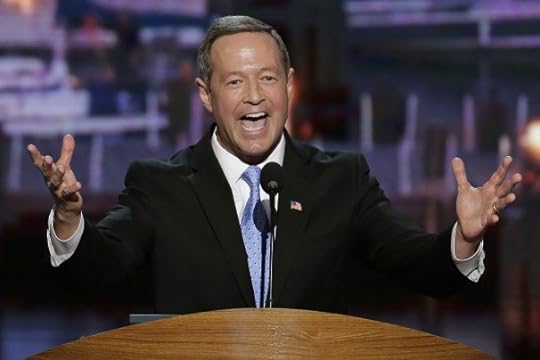
Maryland Gov. Martin O'Malley (AP Photo/J. Scott Applewhite)
Maryland residents who have battled faulty technology on the state’s Obamacare enrollment website will get some more time to sign up for coverage after this month, the state's health insurance exchange announced today.
To be clear, the state says it’s not an extension of the open enrollment period scheduled to close March 31. Only Maryla
Read more of this blog post »


|
Abundance
by
—
published
2025
—
30 editions
|
|

|
Why We're Polarized
—
published
2020
—
19 editions
|
|

|
Ezra Klein 2 Books Collection Set
by
—
published
2025
|
|

|
In Search of Progressive America
by
—
published
2008
—
4 editions
|
|

|
Abundance: Hoe we een betere toekomst bouwen
by |
|
Related News
Believe it or not, it's time once again for our annual midyear assessment of the year’s most popular books, so far, according to Goodreads...
1353 likes · 0 comments

“Unfortunately, the term “identity politics” has been weaponized. It is most often used by speakers to describe politics as practiced by members of historically marginalized groups. If you’re black and you're worried about police brutality, that’s identity politics. If you’re a woman and you’re worried about the male-female pay gap, that’s identity politics. But if you’re a rural gun owner decrying universal background checks as tyranny, or a billionaire CEO complaining that high tax rates demonize success, or a Christian insisting on Nativity scenes in public squares — well, that just good, old fashioned politics. With a quick sleight of hand, identity becomes something that only marginalized groups have.
The term “identity politics,” in this usage, obscures rather than illuminates; it’s used to diminish and discredit the concerns of the weaker groups by making them look self-interested, special pleading in order to clear the agenda for the concerns of stronger groups, which are framed as more rational, proper topics for political debate. But in wielding identity as a blade, we have lost it as a lens, blinding ourselves in a bid for political advantage. WE are left searching in vaid for what we refuse to allow ourselves to see.”
― Why We're Polarized
The term “identity politics,” in this usage, obscures rather than illuminates; it’s used to diminish and discredit the concerns of the weaker groups by making them look self-interested, special pleading in order to clear the agenda for the concerns of stronger groups, which are framed as more rational, proper topics for political debate. But in wielding identity as a blade, we have lost it as a lens, blinding ourselves in a bid for political advantage. WE are left searching in vaid for what we refuse to allow ourselves to see.”
― Why We're Polarized
“The news is supposed to be a mirror held up to the world, but the world is far too vast to fit in our mirror. The fundamental thing the media does all day, every day, is decide what to cover — decide, that is, what is newsworthy.
Here’s the dilemma: to decide what to cover is to become the shaper of the news rather than a mirror held up to the news. It makes journalists actors rather than observers. It annihilates our fundamental conception of ourselves. And yet it’s the most important decision we make. If we decide to give more coverage to Hillary Clinton’s emails than to her policy proposals — which is what we did — then we make her emails more important to the public’s understanding of her character and potential presidency than her policy proposals. In doing so, we shape not just the news but the election, and thus the country.
While I’m critical of the specific decision my industry made in that case, this problem is inescapable. The news media isn’t just an actor in politics. It’s arguably the most powerful actor in politics. It’s the primary intermediary between what politicians do and what the public knows. The way we try to get around this is by conceptually outsourcing the decisions about what we cover to the idea of newsworthiness. If we simply cover what’s newsworthy, then we’re not the ones making those decisions — it’s the neutral, external judgment of news worthiness that bears responsibility. The problem is that no one, anywhere, has a rigorous definition of newsworthiness, much less a definition that they actually follow.”
― Why We're Polarized
Here’s the dilemma: to decide what to cover is to become the shaper of the news rather than a mirror held up to the news. It makes journalists actors rather than observers. It annihilates our fundamental conception of ourselves. And yet it’s the most important decision we make. If we decide to give more coverage to Hillary Clinton’s emails than to her policy proposals — which is what we did — then we make her emails more important to the public’s understanding of her character and potential presidency than her policy proposals. In doing so, we shape not just the news but the election, and thus the country.
While I’m critical of the specific decision my industry made in that case, this problem is inescapable. The news media isn’t just an actor in politics. It’s arguably the most powerful actor in politics. It’s the primary intermediary between what politicians do and what the public knows. The way we try to get around this is by conceptually outsourcing the decisions about what we cover to the idea of newsworthiness. If we simply cover what’s newsworthy, then we’re not the ones making those decisions — it’s the neutral, external judgment of news worthiness that bears responsibility. The problem is that no one, anywhere, has a rigorous definition of newsworthiness, much less a definition that they actually follow.”
― Why We're Polarized
“The simplest way to activate someone's identity is to threaten it, to tell them they don't deserve what they have, to make them consider that it might be taken away. The experience of losing status -- and being told your loss of status is part of society's march to justice -- is itself radicalizing.
There's a quote I occasionally see ricochet around social media. "When you're accustomed to privilege, equality feels like oppression." There's truth to this line, but it cuts both ways. To the extent that it's true that a loss of privilege feels like oppression, that feeling needs to be taken seriously, both because it's real, and because, left to fester, it can be weaponised by demagogues and reactionaries.”
― Why We're Polarized
There's a quote I occasionally see ricochet around social media. "When you're accustomed to privilege, equality feels like oppression." There's truth to this line, but it cuts both ways. To the extent that it's true that a loss of privilege feels like oppression, that feeling needs to be taken seriously, both because it's real, and because, left to fester, it can be weaponised by demagogues and reactionaries.”
― Why We're Polarized
Topics Mentioning This Author
| topics | posts | views | last activity | |
|---|---|---|---|---|
The Seasonal Read...:
 *
Completed Tasks: PLEASE DO NOT DELETE ANY POST IN THIS THREAD!
*
Completed Tasks: PLEASE DO NOT DELETE ANY POST IN THIS THREAD!
|
3482 | 345 | Nov 30, 2020 09:00PM | |
| Book Nook Cafe: President Obama's summer book recs- 2022 | 11 | 16 | Jul 31, 2022 11:06AM | |
| Challenge: 50 Books: Susan T for 2022 | 15 | 52 | Dec 31, 2022 12:14PM | |
| Book Nook Cafe: What did you read in ~~ May 2023 | 35 | 28 | Jul 18, 2023 06:34PM | |
|
Fun & Games:
Author Alphabet
|
4950 | 585 | Dec 29, 2023 08:49AM | |
| Book Nook Cafe: John's 100 Book Challenge - 2023 | 282 | 44 | Jan 01, 2024 04:57PM | |
| Crazy Challenge C...: Natasha's Flower Spell Out | 26 | 15 | Mar 30, 2024 01:22PM | |
| Goodreads Choice ...: Theresa S 2025 Yearly Challenges | 3 | 54 | Jan 01, 2025 09:43PM |
Is this you? Let us know. If not, help out and invite Ezra to Goodreads.