
Dustin Lee's Blog: Writing from the Afterparty
October 21, 2025
The Quiet Work of Becoming
 By: Dustin Lee, Co-Founder of Death Do We Party Press
West of Nowhere
Get it on Death Do We Party
Get it on Amazon
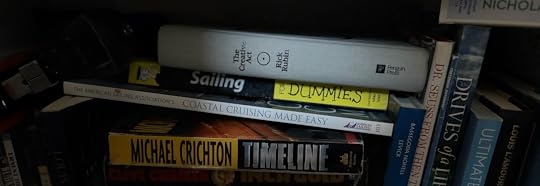
When Erica gave me The Creative Act: A Way of Being by Rick Rubin for my birthday last year, it felt fated. I restarted West of Nowhere as a result of reading it, and the book met me exactly where I was — somewhere between exhaustion and renewal, between the noise of the world and the quiet that art requires.
In it Rubin writes, “Putting commercial concerns before personal taste is a losing battle.” That line stopped me cold. Not because I needed the reminder — Erica and I have never been interested in checking the boxes — but because it affirmed something we’ve always believed.
All of our favorite artists drum to their own beat. They don’t make what’s expected; they make what’s true for themselves. That’s the rhythm we’ve always followed, even when it leads us off the map.
Another passage struck me even deeper: that our inner world — our thoughts, emotions, sensations — is just as rich and vital as the outer world of accolades, approval, and applause. In a time when everyone seems more attuned to what others think is “worthy” or “viral,” that feels like a quiet revolution.
We weren’t made to create for algorithms. We were made to create from the soul.
We believe that art, at its best, is an act of faith — a reflection of the divine spark in all of us. We are children of God, and that means our creativity cannot be contained or controlled by a program. The world may measure success in likes and numbers, but the universe measures it in truth.
We talk a lot about doing — finishing the book, launching the business, winning the award — but the quieter truth is that becoming who we are meant to be often happens in the invisible places. Growth that no one applauds. Healing that no one sees. The kind of inner work that doesn’t post well on social media but changes everything about how we move through the world.
External accomplishments are mile markers, but they’re not the road. The road is built from patience, surrender, and the long hours of listening to what our soul is trying to say. That’s the part no one else can measure.
When I was rewriting West of Nowhere, I realized that success wasn’t going to come from how many people read it or how it performed — it was going to come from how honest I could be while writing it. The work wasn’t just to build a story; it was to become the kind of person capable of telling it truthfully.
That’s what inner work is: the unseen scaffolding beneath everything visible. The more aligned it becomes, the more effortlessly the outer world follows.
And that’s what West of Nowhere became for me: an act of truth. A story that doesn’t chase trends or bend to the market, but listens to the still, small voice inside me — the one that whispers what matters when the noise dies down.
It’s a story about love, loss, and the courage to keep moving forward when the world has fallen to the wolves. But more than that, it’s a reminder: your inner work is holy work. What you make from the quiet is just as sacred as what’s celebrated in the light.
West of Nowhere is available now!
Dustin Lee
Co-Founder, Death Do We Party Press
FREE SAMPLES & MORE SPECIAL OFFERS HERE>
Death Do We Party Press
#thewesterners #dustinlee #ddwp #deathdoweparty #storiesthatstick #indiepress #booktok #westofnowhere


October 13, 2025
West of Nowhere: How Failure Became the Fuel
 By: Dustin Lee, Co-Founder of Death Do We Party Press
West of Nowhere
Get it on Death Do We Party
Get it on Amazon
My twenties were a dark time, man. I always felt like a failure.
Not because I wasn’t trying—but because every path I tried felt like a detour from who I wanted to be. My parents cared about getting me through college, and ideally it would be quick and inexpensive with a degree where I would emerge employable. My longtime girlfriend made it clear that “we” wouldn’t move forward until I graduated and could contribute equally—or maybe even take care of her. On paper, that all makes sense. In my bones, it made me feel like deadweight.
So I did what failures do: I flailed. I bounced from major to major, chasing something that would scratch the itch to create. Writer? Couldn’t make a living. Musician? Didn’t have the instrument. Film? Too far from California.
What I did have was a co-op job at a civil engineering firm and a dad who thought maybe engineering could be “creative enough.” The money was good. The path was clear. So I gave it a shot. But it never fit—not really.
I went to Texas A&M, family Aggie bloodline and all, and thought: if engineering can’t cut it, maybe architecture can. Architecture sounded like salvation. It was supposed to be art with a paycheck. Instead, it was endless nights of colored pencils on poster boards and the cruel joke that you had to keep a near-perfect GPA just to stay in the program. Spoiler: I didn’t.
So I meandered. And every step of the way, well-meaning people told me what I should do, what was “practical,” what was safe. But looking back, those voices were more distraction than guidance.
During those years, I carried notebooks. I wrote poetry I imagined turning into songs—some dark, some desperate, some flat-out about sex. I wrote prose too. A few pieces stuck, like shadows that never left me:
• The primeval forest—mice and small creatures scurrying under twisted roots, a stream cutting through the dark, wild natives camped along its banks, and beyond it all, a red desert stretching forever. That story still breathes somewhere inside me. You’ll probably see it in a book someday.
• The birds that fell from the sky—born from a Discovery Channel special, spun into a story about a depressed kid in the shower who wonders if he’ll even make it past 30. (Spoiler: I did.) Birds streak the sky, an old woman ranger shows up, and a young woman ranger he crushes on too. That idea grew, evolved, gutted itself, and eventually became something else entirely. You’ll hear more about it soon.
• And then there was the Quonset hut—a young man caught outside when nuclear war erupts, pulled back to Texas, and drafted into a brutal army. The hut itself was ripped straight from The Junction Boys, a book I picked up at A&M. Add in my Corps of Cadets flashbacks and the antagonism I lived firsthand–though less fervent and with less F bombs, and it was more than a story—it was a purge.
That last one became West of Nowhere.
It didn’t have a name when I first scribbled it down, but the bones were there: war, loss, survival, the Aether Gun, all stitched together from comics, video games, German opera, Lost, and my own lived scars. For years it was a mess of half-done ideas. In March of this year, I sat down, gutted it, curated it, and rebuilt it. And under my brilliant wife’s watchful eye, it transformed.
West of Nowhere isn’t the work of a kid chasing failure. It’s the work of a man who learned to alchemize failure into story, fear into fuel, shame into voice.
It is the first book in an epic modern western–a dystopian and post-apocalyptic saga and begins where civilization ends. While the science-fiction undertones pulse just beneath the surface, they ignite as the series unfolds.
For readers of Stephen King (The Gunslinger, Wizard and Glass), Cormac McCarthy ( No Country for Old Men, The Road) and Emily St. John Mandel (Station Eleven), and fans of The Last of Us this story fuses post-collapse realism with slow-burning, otherworldly mystery—where love and vengeance walk the same road.
I’m proud of it. I hope you’ll read it. And I hope in some way you’ll see the same thing I finally see: that all the wandering wasn’t wasted. It was the long road west of nowhere, and it led me right here.
Pre-order West of Nowhere now for release on October 21st.
Dustin Lee
Co-Founder, Death Do We Party Press
FREE SAMPLES & MORE SPECIAL OFFERS HERE>
Death Do We Party Press
#thewesterners #dustinlee #ddwp #deathdoweparty #storiesthatstick #indiepress #booktok #westofnowhere
October 5, 2025
Bleeding Stories & Building Worlds: Why I Had to Write West of Nowhere
 By: Dustin Lee, Co-Founder of Death Do We Party Press
West of Nowhere
Get it on Death Do We Party
Get it on Amazon
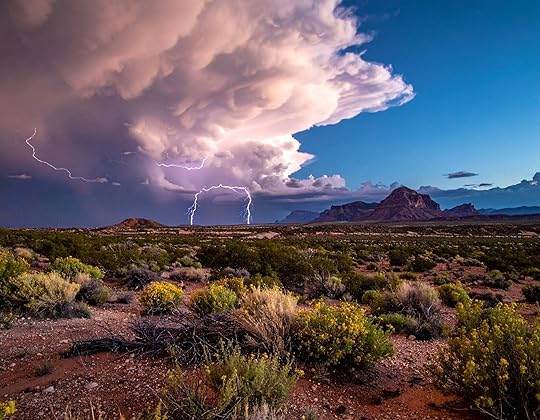
When I don’t write, I grow moody, restless, half-starved. Stories gnaw at me until I let them out. It’s like carrying a storm in your chest. You can hold it, but eventually it cracks the sky. Writing is lightning leaving the body.
Erica and I often say we are merely conduits—that the stories aren’t ours, but gifts whispered through us.
God places them in our hands like seeds if we are open enough at the time to receive them. Then all we can do is try to grow them with the soil we’ve been given. Whether we do these gifts justice—mmmm, sometimes? I hope. All I know for sure is that they arrive, unbidden, and writing feels less like invention than discovery.
I was eight when a story first took hold of me. My Grandma Ruth always had a Louis L'Amour novel in hand—coffee nearby, maybe a slice of pie balanced on a plate. One day I picked up Down the Long Hills.
The book tells the story of two children, ages seven and nine, left alone after an ambush on their wagon train. With no adults left alive, they cross the wilderness, hunted by outlaws, clinging to courage as their only weapon. For a boy just about their age, the story was electric. Survival, loss, bravery—it all felt possible.
From then on, I haunted the North Dale library in Tampa, checking out stacks of books so high I could barely carry them. I discovered fantasy and devoured J.R.R. Tolkien, Terry Brooks, Ursula K. Le Guin, Tracy Hickman and Margaret Weis Dragon Lance. Ray Bradbury slipped into my imagination too, though I didn’t yet consider myself a fan of science fiction.
At school, English classes fed me Victorian voices that shaped my bones. Charles Dickens and his peers, with ghosts of regret and longing. Great Expectations. Wuthering Heights. The Count of Monte Cristo. Later, F. Scott Fitzgerald's glittering ruin in The Great Gatsby, Ernest Hemingway's stripped prose, and Chaim Potok's My Name Is Asher Lev—a story so foreign to my Texas upbringing yet somehow deeply familiar in its ache for belonging.
I chased other obsessions too: spy thrillers, Ian Fleming's Bond, Clive Cussler's Dirk Pitt. Later Stephen King's The Gunslinger showed me how fantasy could bleed into western, horror, and myth. Jean M. Auel The Clan of the Cave Bear stunned me with its rawness.
In short: I read everything. And I’ve loved every genre. The books I write are mosaics of these impressions—pieces of all those voices stitched together with my own experiences.
When I put a character through fire, it’s often fire I’ve walked through myself. That truth hums beneath the fiction, and I think readers can feel it. Sometimes, I turn to family history. My grandfather’s service in World War II becomes the seed for an epic, dramatized and shaped into myth. The facts hold steady, but the telling grows into something larger.
And then, there’s Erica. My wife, my fiercest editor, my creative partner. For years teachers told me I could write, but I didn’t believe it until she told me so. She takes my raw clay and helps sculpt it into form. Her world-class eye gives my characters their breath, their faces, their style. Without her, the work would still be mine—but it wouldn’t be alive.
The truth is simple: I write because I need to. The way I play guitar. The way I obsessively listen to albums. The way some people run to clear their heads. My professional life requires creativity, yes, but within tight rails. Writing is different—it’s unguarded. It’s where I can pour myself out with no fences.
I don’t write for vast riches. I don’t even need readers, though I hope to call some of them friends. I write because I must. To keep my soul light. To stay whole. To let the storm out.
And, truthfully, because a happy wife makes for a happy life. If Erica smiles when she reads what I’ve written, that’s more than enough.
Because, as Hemingway once said:
“There is nothing to writing. All you do is sit down at a typewriter and bleed.”
And bleed I do. Every story. Every page. Until the words that God gave me are no longer trapped in me—but alive in the world.
Dustin Lee
Co-Founder, Death Do We Party Press
FREE SAMPLES & MORE SPECIAL OFFERS HERE>
Death Do We Party Press
#thewesterners #dustinlee #ddwp #deathdoweparty #storiesthatstick #indiepress #booktok #westofnowhere
Writing from the Afterparty

Stories don’t come to me in the spotlight—they arrive in the aftermath, when the music’s faded and the smoke still hangs in the air. Writing from the afterparty means taking failure, loss, and silence
...more
- Dustin Lee's profile
- 18 followers

