
Gregory Mone's Blog: Hurry Up & Wait
May 2, 2025
Robot vs. Chicken Farmer
We were turning off Polk Street in San Francisco’s Nob Hill neighborhood when I stopped scanning my email and asked my driver how his day was going. He didn’t answer. I laughed; there was no driver. I was two minutes into my first Waymo ride and I’d completely forgotten that I was sitting inside a robot.
There are self-driving cars cruising all around San Francisco. This is old news to some people and sort of shocking to others. But it’s normal in a few select cities and has been for a while. In 2014, I sat in the back of an early prototype of a self-driving vehicle made by what was then called Google X, the moonshot division of the advertising giant. Back then, a driver sat behind the wheel for safety reasons. An engineer rode shotgun with his laptop displaying how the car saw the world. The ride was fine. Safe but glitchy. It felt like a robot was driving.
The 2025 version is completely different. The cars are safe but not slow or overly deferential. At an intersection, when it’s your Waymo’s turn to go, the car really goes. This mild aggressiveness is safer, since an overly cautious driver tends to prompt irrational behavior by other drivers. You disrupt the natural flow of traffic if you’re too nice. Or too slow. I know that from experience. My 25 MPH average speed in the summer induces dangerous driving patterns in people visiting Martha’s Vineyard from Connecticut.
Shotgun and Safety
During two recent trips to San Francisco, I took seven Waymo rides, all downtown. I didn’t like riding shotgun; that made me anxious. Otherwise the experience was completely smooth. The car provides occasional warnings, and I liked those. At one point, when I was getting ready to climb out, the robot warned me that a cyclist was approaching. To test the accuracy of this alert, I opened my door anyway.
A man on a street bike slammed straight into the door, mangling his front tire and knocking over my organic Ethiopian single-source pour-over coffee from St. Franks. Luckily, the rider turned out to be my college friend Will.
We sure had a good laugh over that one!
Will’s getting better now, too.
Can you talk to the robots?
The Waymo greets you when you climb inside. I tried to have a conversation with the car, only to learn the vehicles turn off their microphones unless you’re trying to contact rider services and speak with a human. This was pitched as a benefit, and the announcement encouraged riders to sing out loud without risk of being recorded. Personally, though, I’d rather be recorded, since I kind of think I missed my calling as an indie country singer.
At some point, I imagine and/or hope you’ll be able to converse with your self-driving car. Installing an LLM with voice capabilities wouldn’t be that hard. And I’d like to engage in small talk, maybe ask about a building I spot through the window or whether the car knows of any good coffee shops near my destination.
But will that coffee recommendation be any good? AI systems learn about and experience the world differently than we do, so their behavior and decisions don’t always make sense. At one point, my Waymo picked me up a half-block from the entrance to my hotel, then proceeded to send us into traffic up and around a neighboring block to head itself in the right direction. A human driver would have suggested I walk half a block in the other direction and meet on the opposite corner, as that would have cut a solid ten minutes from our trip.
Simple and logical for us but not apparent to a robot.
Your Waymo doesn’t know what it’s like to sip an expensive pour-over coffee, and convince yourself that it’s delicious, and you’re a better person for drinking it, even though it kind of tastes like bathwater with berries. Your Waymo never felt the joy of knocking its college roommate off his bicycle.
What’s going to happen to drivers?
When I rode in Ubers while in San Francisco, I asked the drivers what they thought of these robotic taxis. Two of the four didn’t speak English. As a result, we weren’t able to connect. If you’re going to compete with robots for a job that involves human interaction, you should really be focusing on making those connections. Your humanity will give you an edge. Also, I should learn Spanish.
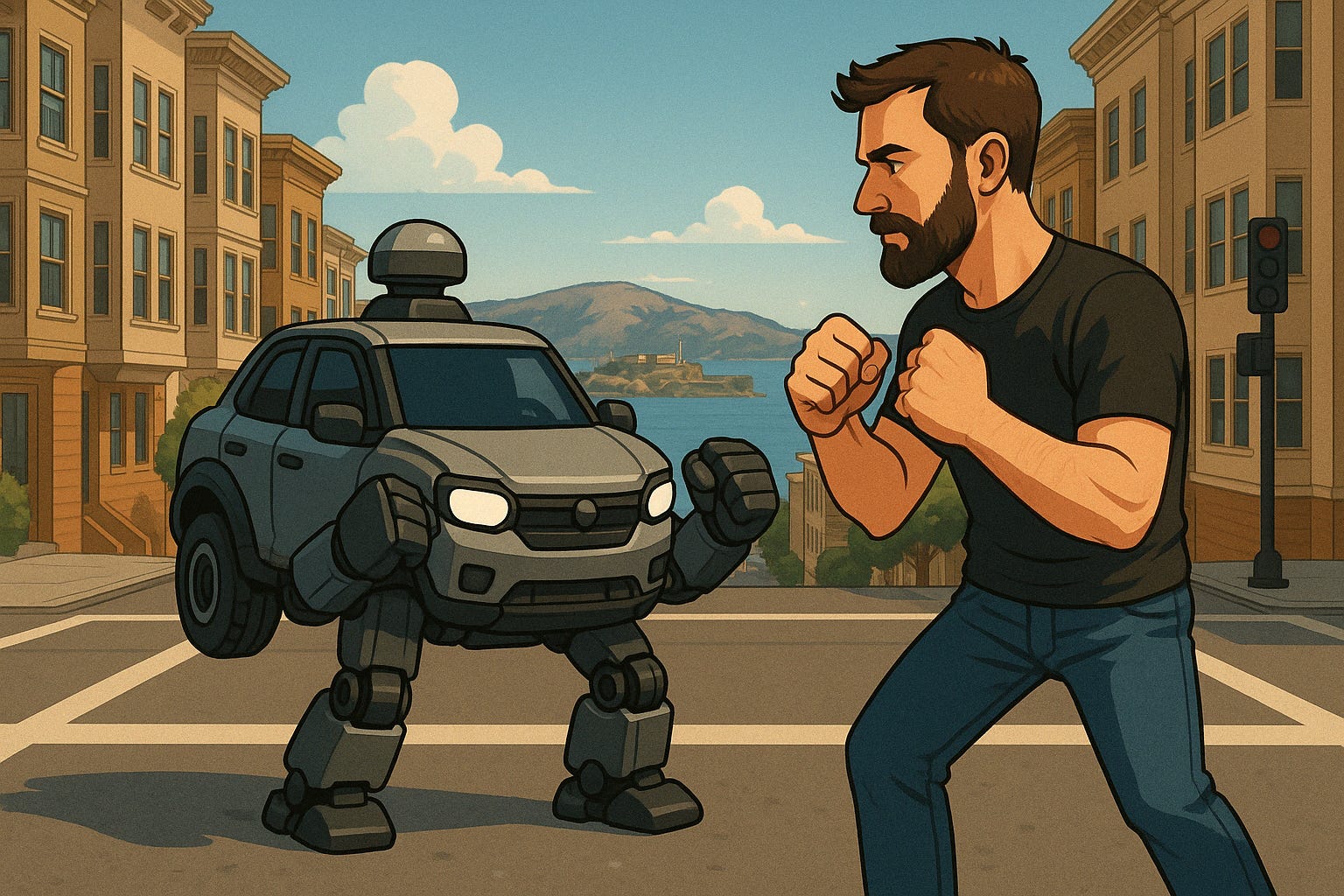
The two drivers I did converse with offered fascinating takes. The first told me the Waymos can have the city. He’s tired of picking up drunk and stoned passengers who act like idiots and disrespect both him and his car. This lines up with an argument technologists often use about robots moving into the workplace: they will take the jobs we don’t want.
This driver’s fear, though, is that the Waymos will slowly move out of the city and encroach on his business. And his big question, as we drove on a highway lined with billboards proclaiming the greatness of AI, is what’s going to happen when half our jobs are turned over to robots. “How are we going to buy the stuff these damn tech companies are selling us if we don’t get paid?”
Great question! My next driver was an entrepreneur from Mali. Back in Africa he grows papayas and mangos and has a thriving egg business thanks to his 3,000 chickens. We figured out that our kids are just about the same age, too. I was surprised to learn that he’s all for self-driving cars.
“Why?” I asked.
“I know I shouldn’t say that because I drive an Uber, and they are going to take my job sooner rather than later, but I hope it’s sooner because it pushes us to be better. It’s going to push me to evolve.”
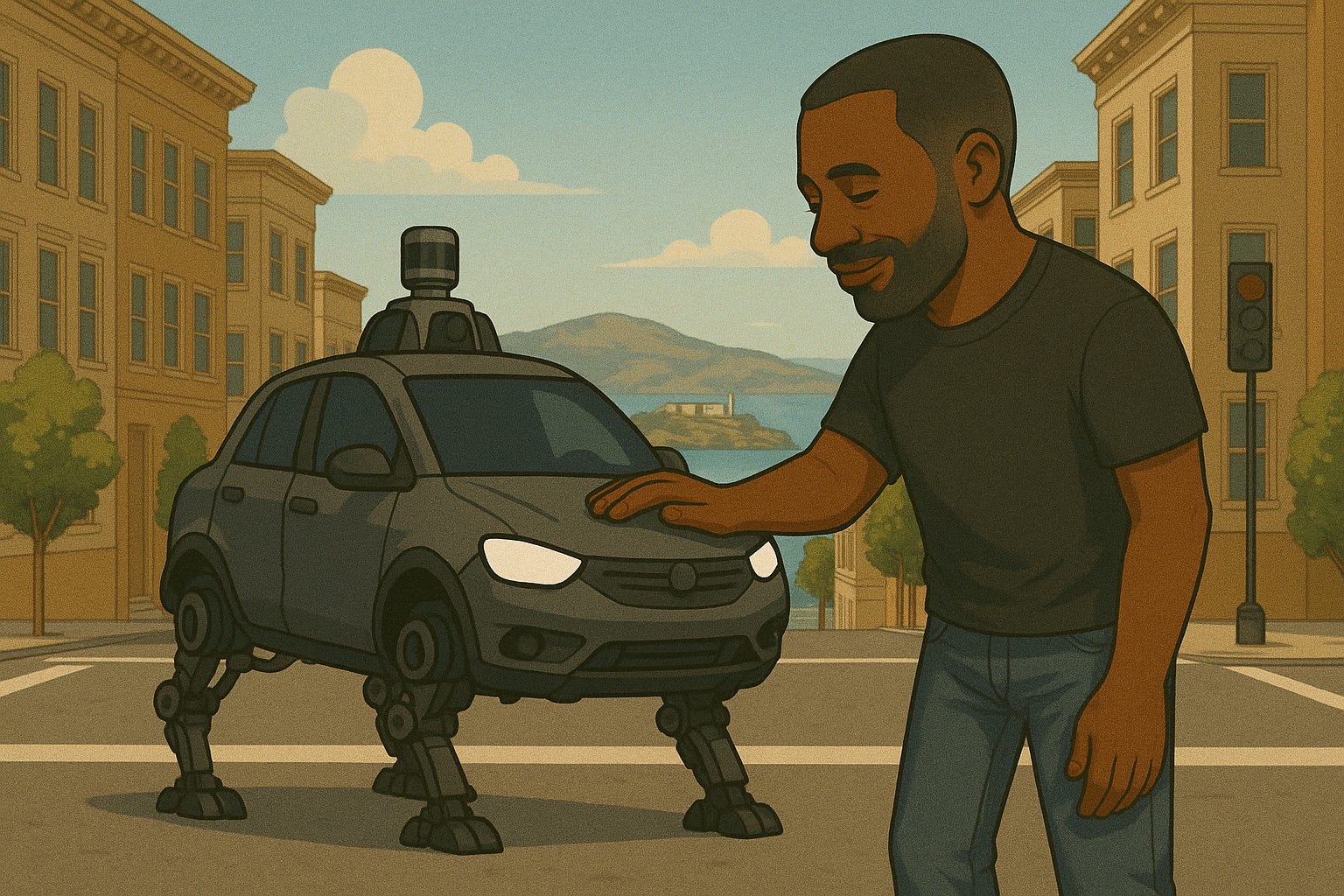
Bill Nye vs. Vin Diesel
These cars are not perfect. They have made and will continue to make strange and occasionally dangerous, even fatal mistakes. Then again, I was nearly rear-ended by a young driver eating a breakfast sandwich and checking her phone a few weeks ago. Highways today seem overrun by people who’ve watched too many Vin Diesel Fast and Furious movies and not enough Bill Nye videos on classic Newtonian laws of motion. Human drivers are dangerous.
We have two visual sensors called eyes spaced close together, both aimed forward, and two ears to capture and triangulate the sources of sounds. Waymos have sensors everywhere. A laser scanner on the roof, plus one at each corner of the car. There are visual cameras and radar, too.
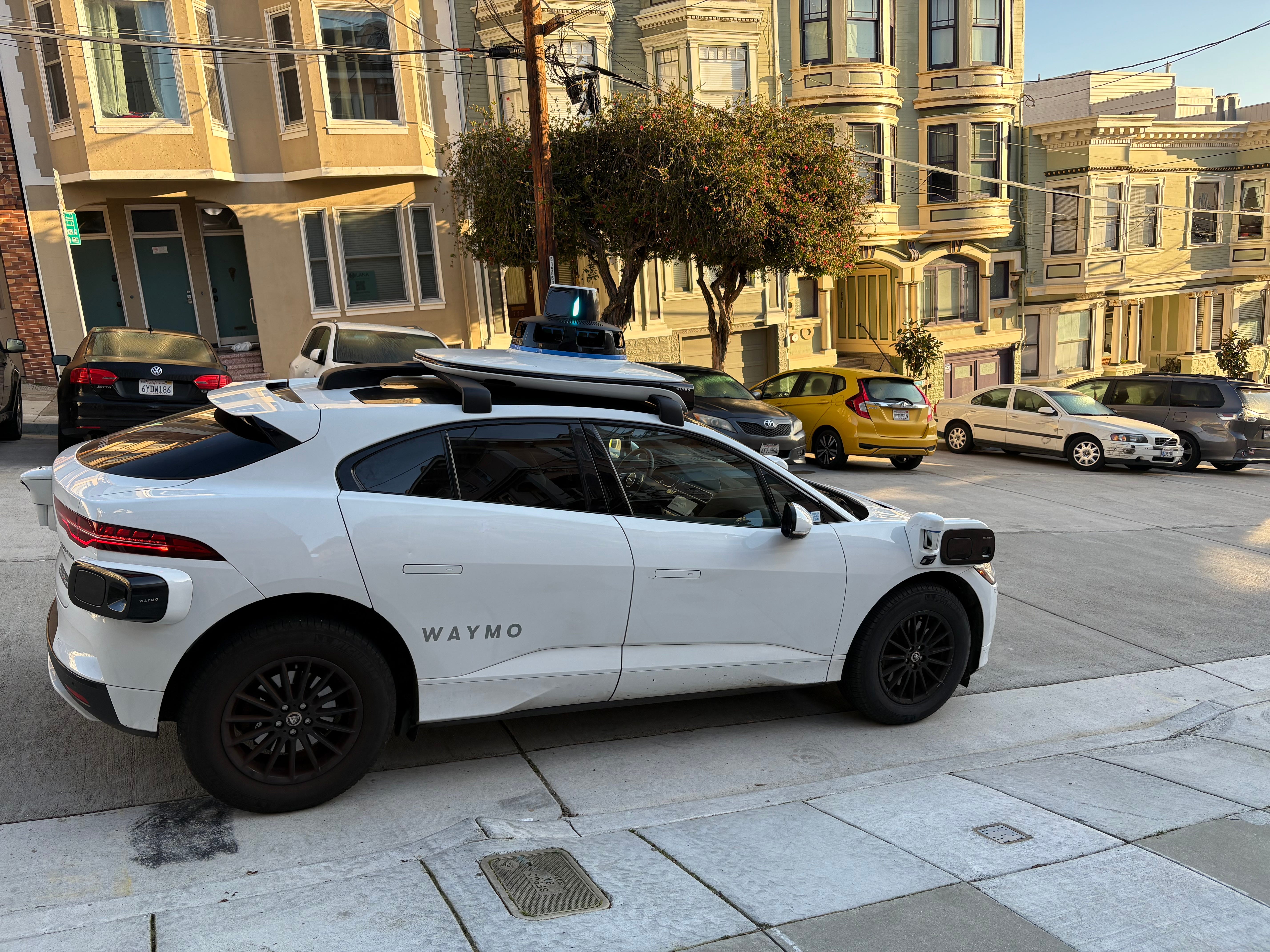
Plus, they’re deeply experienced. Each car has effectively driven 20 million miles on real roads and 10 billion miles in simulation. I’ve only driven about 360,000 miles in my life, and the effective number is probably much lower because I space out so often. Last August, I drove halfway across Pennsylvania without realizing it. Luckily, I was going in the right direction.
What next for robot cars?
So, when are we going to have these ourselves, driving us around our neighborhoods? That depends on your local climate, economics, insurance, and of course technology. The Waymos were everywhere during my visits to San Francisco because the weather was perfect and the traffic flow relatively normal and predictable. As Daniela and I explain in The Heart and the Chip, though, you’re not going to find self-driving taxis cruising through a snowstorm anytime soon.
Yet this feels inevitable. If we humans can steer a car in those conditions using our limited little biological eyes, I have to believe engineers will figure out how to build robots smart enough to use all those extra sensors to do the same. Maybe they’ll need new sensors. Or maybe better brains will be the trick. But we’ll get there.
Oh, and I forgot my favorite part about self-driving taxis. The biggest revelation, which I didn’t realize until I’d climbed out of my first ride.
You don’t have to tip a robot!
Thank you, as always, for reading. If you liked this story, click the heart below, so I know what’s working, or forward it along to a friend or colleague.


February 2, 2025
The Funniest Centaur Alive
Not very long ago, telephones, televisions, cameras, video recorders, stereos, calendars, and microphones were separate devices spread around our homes. Computers and calculators, too. Now they’re all jammed into one gadget that fits into your pocket. That’s a lot of change in a relatively small amount of time. And yet we make fun of older people for occasionally struggling to answer a call or use an app.
I’ve been thinking there’s a good comedy bit in here somewhere, but I’m not a standup, so I passed the joke along to a fictional character in my latest story, The Funniest Centaur Alive. What’s it about? Always a good question!
The story is set at a sales conference in Vegas, sometime in the near future, and features a standup who’s secretly using AI to improve his set, a marketing professional trying to survive a round of layoffs, and her tech-maximalist colleague.
My first piece of fiction for adults in a very long time, the story has just been published in Issues in Science and Technology. It’s free to read. I’m trying to understand AI by writing and thinking about it from all angles, and in The Funniest Centaur I’ve divided my many opinions and distributed them between the three main characters.
The really cool element here is that Issues includes a response to the story from Brown University computer scientist Suresh Venkatasubramanian, an AI policy advisor for the Biden-Harris administration who coauthored the Blueprint for an AI Bill of Rights. His essay thoroughly outclasses my fiction.
Check them both out if you have a minute.
The New Yorker did not create an Al Pacino robot.
I’m so accustomed to seeing AI everywhere all the time that I scanned this headline…
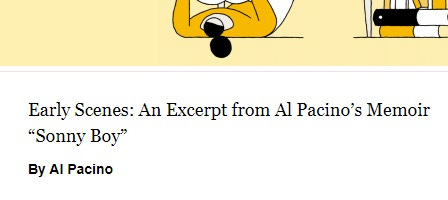
. . . and thought the venerable magazine was publishing an experimental memoir by A.I. Pacino, an intelligent chatbot based on the great actor. Now, if I were building this bot, I’d limit the training data to two movies: Heat and Scent of a Woman. The memoir would be published in audiobook format only, because you can’t read Pacino. You need to hear him yelling at you.
Anyone else confused by this billboard?
What we have below is an image of a woman biting down on a semiconductor, with some words mashed together into an insensible directive, all with the purported goal of encouraging drivers to tune into a radio station called The Big Lick.

This was on the side of the road in Ohio. Intel is/was building a new chip fab in the area. So maybe people are mad about that? Not this young woman, though. She loves semiconductors. Unless she’s a robot? And this is how she fuels herself? Speaking of which…
Scientists are trying to make robots lazier.
The big idea, according to this story in MIT Technology Review, is to teach intelligent machines to be more efficient with their use of information. But my brain immediately goes to the robotic version of a teen. You come home from work, ask your domestic bot to do something, and it declines.
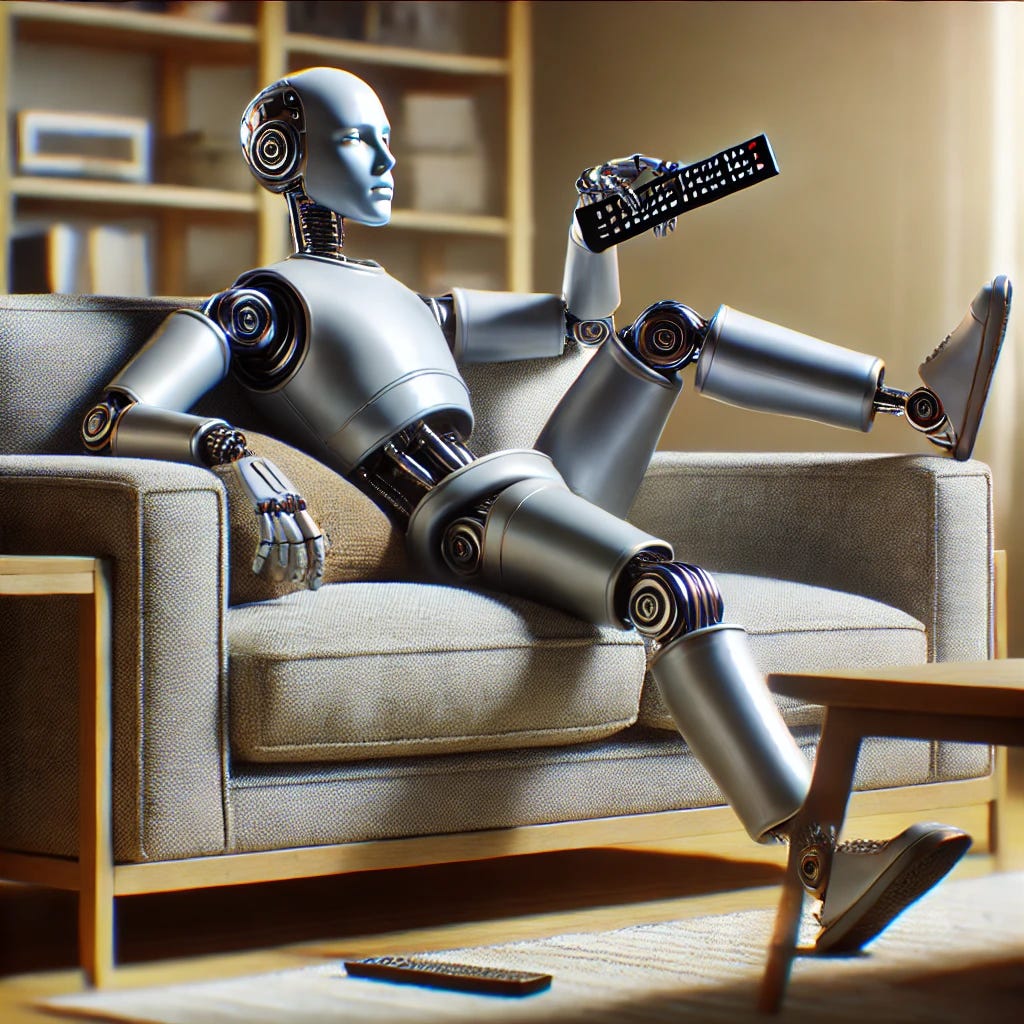
“Bro, I need to recharge, okay?”
“You’re not even plugged in.”
“Whatever. When is Netflix going to do another season of Chef’s Table?”
“They probably need more viewers. Maybe you could spawn a few million fake subscribers to binge the existing seasons and trigger them to re-up.”
“Nah. Just found some movie called Scent of a Woman.”
In reality, scientists are trying to figure out how to teach robots to focus on what’s important in a scene instead of taking in and processing all the information collected by their sensors at a given moment. When humans drive a car, we don’t study every tree and leaf and billboard . . . well, okay, maybe I do, but then I pull over, or snap to attention because my wife or one of my kids tells me I’m driving 25 mph in a 50 mph zone.
A good driver only pays attention to the important stuff: the road, conditions, other cars and drivers. Daniela and her team at Liquid AI are developing neural networks that can focus and disregard the less important details. Really interesting stuff. It’s in The Mind’s Mirror.
What AI lacks as a writer.
Finally, picking up an older story, The New York Times tasked the novelist Curtis Sittenfeld and ChatGPT with writing a story given the same basic prompts and parameters. Both were published, and readers were invited to guess which piece was crafted by a human and which one was AI generated. After the first sentence, I guessed wrong. The human version had too much information crammed into the opener, rendering it less digestible. The AI version was short and direct. I prefer clarity. However, once I read beyond the first sentence — generally good practice as a reader — the difference became clear. The AI version looks like a story, but it doesn’t feel or read like one. For instance, this sentence:
The days that followed were filled with longing and regret.
A human writer would actually make you feel that by taking you inside the character’s head and heart. Basically, you still need a mind to write a great story. And I hope my own mind, which is encased in a large and irregularly shaped head, produced an enjoyable story with The Funniest Centaur Alive.
Let me know. Click the heart below if you enjoyed this letter, and thank you, as always, for reading.
the funniest centaur alive
Not very long ago, telephones, televisions, cameras, video recorders, stereos, calendars, and microphones were separate devices spread around our homes. Computers and calculators, too. Now they’re all jammed into one gadget that fits inside your pocket. That’s a lot of change in a relatively small amount of time. And yet we make fun of older people for occasionally struggling to use an app.
I’ve been thinking there’s a good comedy bit in here somewhere, but I’m not a standup, so I passed the joke along to a fictional character in my latest story, The Funniest Centaur Alive. What’s it about? Always a good question!
The story is set at a sales conference in Vegas, sometime in the near future, and features a standup who’s secretly using AI to improve his set, a marketing professional trying to survive a round of layoffs, and her tech-maximalist colleague.
The short story — my first piece of fiction for adults in a very long time — has just been published in Issues in Science and Technology as part of the Future Tense Fiction project from ASU’s Center for Science and the Imagination. It’s free to read, and if you’re wondering, Patrick, what I really think of AI, this story sums it up. I’m trying to understand this technology by writing and thinking about it from all angles, so I’ve divided my many opinions and distributed them between the three main characters.
The really cool element here is that Issues includes a response to the story from Brown University computer scientist Suresh Venkatasubramanian, an AI policy advisor for the Biden-Harris administration who coauthored the Blueprint for an AI Bill of Rights.
His essay thoroughly outclasses my fiction.
But check them both out if you have a minute.
Now for a few other matters…
The New Yorker did not create an Al Pacino robot.
I’m so accustomed to seeing AI everywhere all the time, that I scanned this headline…
. . . and thought the venerable magazine was publishing an experimental memoir by A.I. Pacino, an intelligent chatbot based on the great actor. Now, if I were building this bot, I’d limit the training data to two movies: Heat and Scent of a Woman. The memoir would be published in audiobook format only, because you can’t read Pacino. You need to hear him yelling at you.
Anyone else confused by this billboard?
What we have here is an image of a woman biting down on a semiconductor, with some words mashed together into an insensible directive, all with the purported goal of encouraging drivers to tune into a radio station called The Big Lick.
This was on the side of the road in Ohio. Intel is/was building a new chip fab in the area. So maybe people are mad about that? Not this young woman, though. She loves semiconductors. Unless she’s a robot? And this is how she fuels herself? Speaking of which…
Scientists are thinking about making robots lazier.
MIT Technology Review published a story on this subject; the lead scientist’s big idea:
“…teaching all kinds of robots to be “lazier” with their data could help pave the way for machines that are better at interacting with things in their real-world environments, including humans. Essentially, the more efficient a robot can be with information, the better.”
My brain immediately goes to the robotic version of a teen. You come home from work, ask your domestic bot to do something, and it declines.
-Bro, I need to recharge, okay?
-You’re not even plugged in.
-Whatever. When is Netflix going to do another season of Chef’s Table?
-They probably need more viewers. Maybe you could spawn a few million fake subscribers to binge the existing seasons and trigger them to re-up.
-Nah. Just found some movie called Scent of a Woman.
This isn’t really what the researchers mean by lazy, though. They’re trying to figure out how to teach robots to focus on what’s important in a scene instead of taking in and processing all the information collected by their sensors at a given moment. When humans drive a car, we don’t study every tree and leaf and billboard . . . well, okay, maybe I do, but then I pull over, or snap to attention because my wife or one of my kids tells me I’m driving 25 mph in a 50 mph zone.
A good driver only pays attention to the important stuff: the road, conditions, other cars and drivers. Daniela and her team at Liquid AI are developing neural networks that can focus and disregard the less important details, sort of like the lazy robots described here. Really interesting stuff. It’s in The Mind’s Mirror.
What AI lacks as a writer.
Finally, picking up an older story, The New York Times tasked the novelist Curtis Sittenfeld and ChatGPT with writing a story given the same basic prompts and parameters. Both were published, and readers were invited to guess which piece was crafted by a human and which one was AI generated. After the first sentence, I guessed wrong. The human version had too much information crammed into the opener, rendering it less digestible. The AI version was short and direct. I prefer clarity. However, once I read beyond the first sentence — generally good practice as a reader — the difference became clear. The AI version looks like a story, but it doesn’t feel or read like one. For instance, this sentence:
The days that followed were filled with longing and regret.
A human writer would actually make you feel that by taking you inside the character’s head and heart. You still need a mind to write a great story. And I hope my own mind, which is encased in a large and irregularly shaped head, produced an enjoyable story with The Funniest Centaur Alive. Let me know. And thank you, as always, for reading.
January 17, 2025
Why Sam Should Go to Space
In a recent essay on his personal blog, Sam Altman, the CEO of OpenAI, suggests that we might be getting close to superintelligence. The scary stuff, basically. This is an incredibly important issue, but as I was reading through his recap, here’s another sentence that struck me:
“These years have been the most rewarding, fun, best, interesting, exhausting, stressful, and — particularly for the last two — unpleasant years of my life so far.”
Wait — is Sam unhappy? His life certainly looks nice. When I listened to him speak at a conference in the early days of ChatGPT, he was streaming in from an undisclosed location, and although the words coming out of his mouth were interesting, I couldn’t help studying the beautifully landscaped garden in the courtyard behind him. The tall ceilings and tall windows were gorgeous, too. If I had an office like that, I’d launch so, so many amazing fake companies.
What’s wrong with Sam? I think he’s doing too much.
Not just Sam, either. All the AI giants are pushing out too many products and too many updates too quickly. Most of us normal humans haven’t even made sense of ChatGPT. I was still trying to get my head around the sudden appearance of a weirdly intelligent chatbot when it merged with image generation and then started doing something that sure seems like thinking.
This pace feels a little like the Wright Brothers flying their airplane in 1903, then launching a space program in 1904 . . . and succeeding.
Now that we've conquered these gentle hills, Orville, we’re going to Mars!
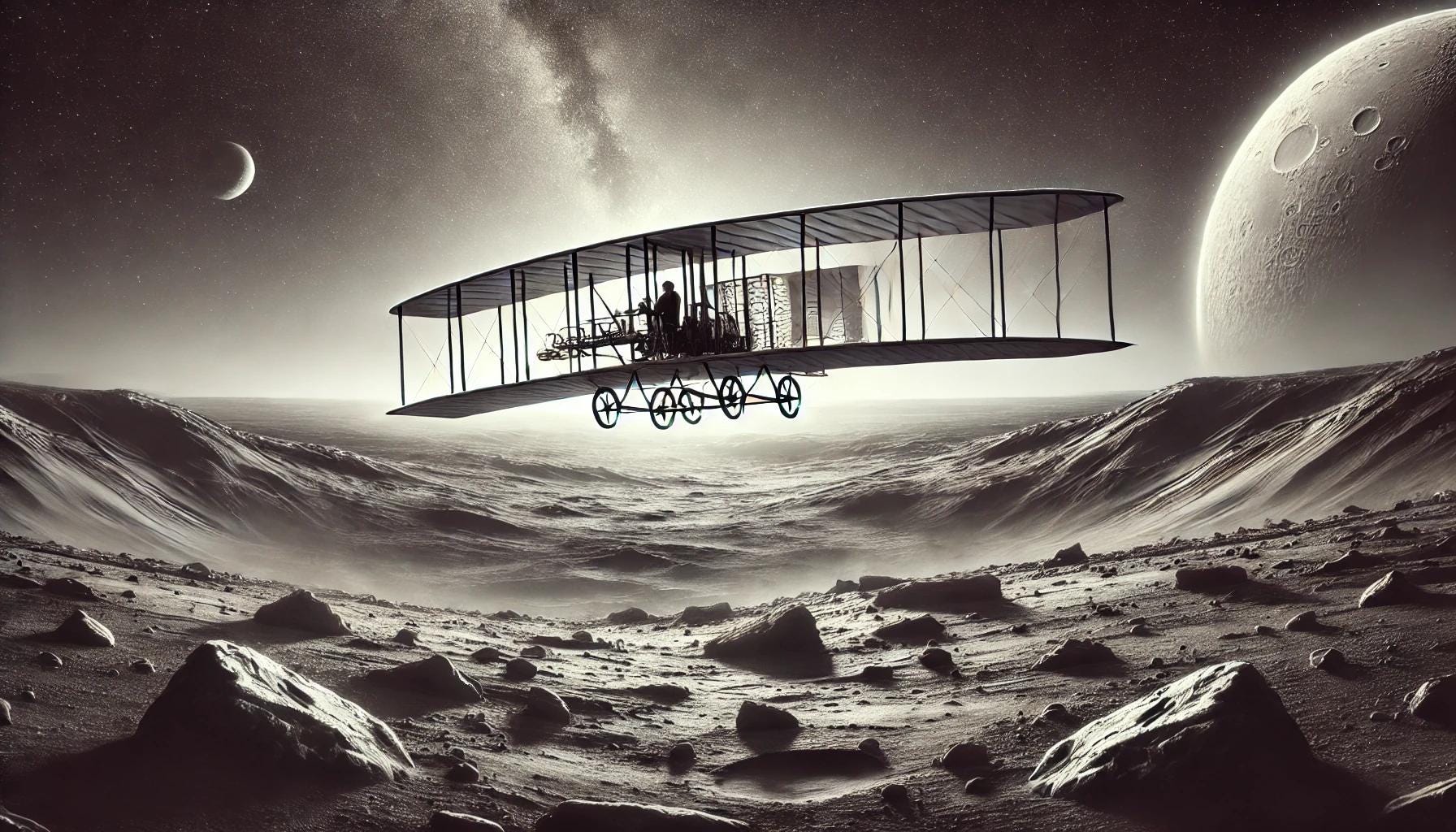 “Did you forget your water bottle, Wilbur? Uh-oh.”
Many businesses still haven’t figured out how to use these tools — or whether they should — and the news about the latest release of the greatest model and how it outperformed every other tool on benchmark XYZ is mind-numbing. AI people, could you just slow down a little, and let us get used to this whole flying thing, before you send us all to Mars without oxygen?
No. Obviously not. There’s too much money on the table.
So I have another solution. Both to Sam’s apparent unhappiness and the fact that the rest of us everyday working humans need a little time to adjust to this alien technology. We should send Sam, Elon, Jeff, Mark and the rest to space.
There’s already some buzz about building orbiting data centers to train AI, so let’s put the AI leaders up there as well. The guys from Acquired could go and do a live show. Kara Swisher could visit and report a column. Bezos would probably go for it. He’s already turning into Lex Luthor.
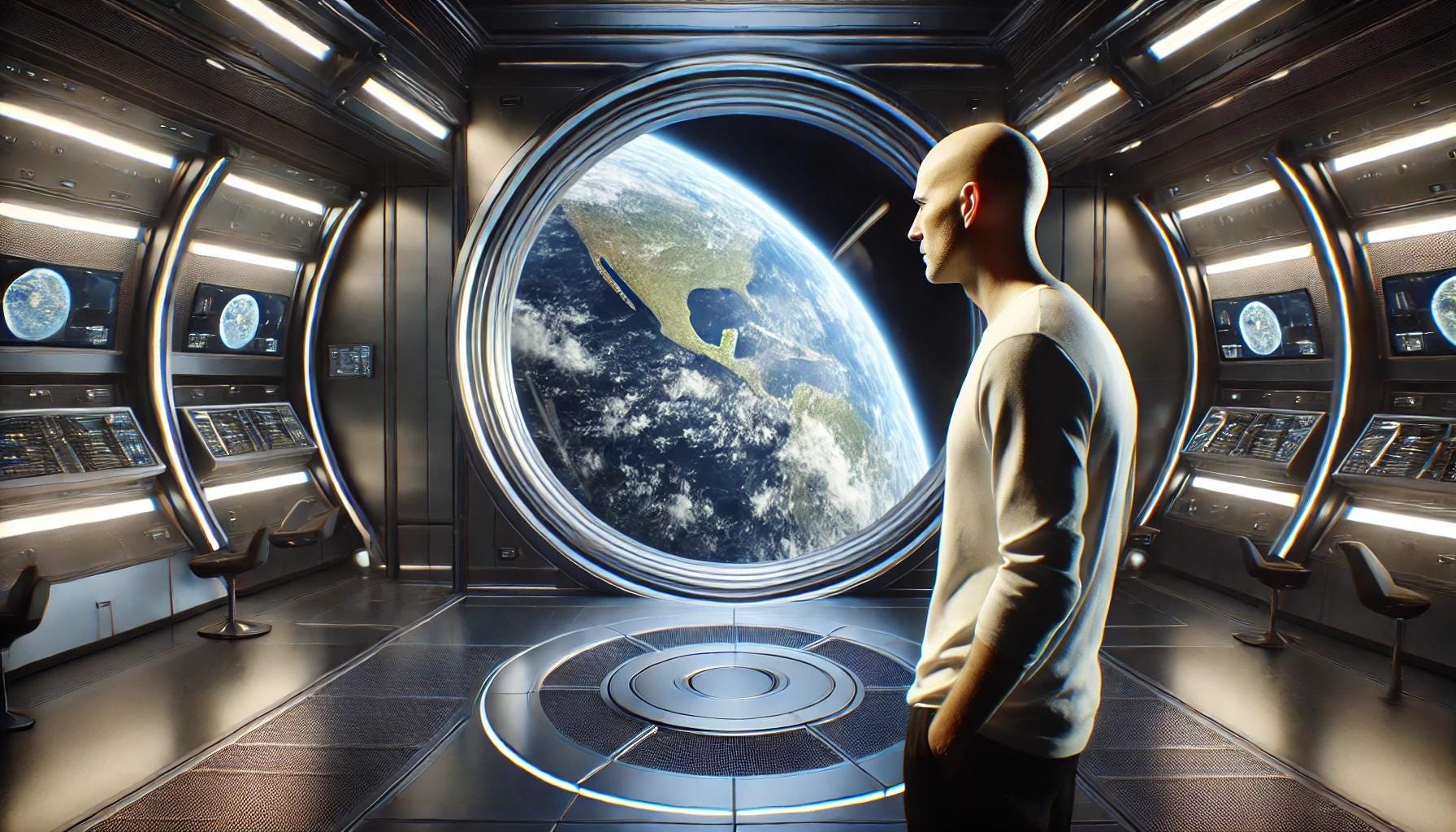 “With a simple teleportation device, we’d have instant shipping here, too.”
And you’d have to send Elon because if you didn't put him up there, he’d send rockets to launch the other technocrats into the sun so he could be the unquestioned leader.
Plus, look at Sam! He seems happier, right?
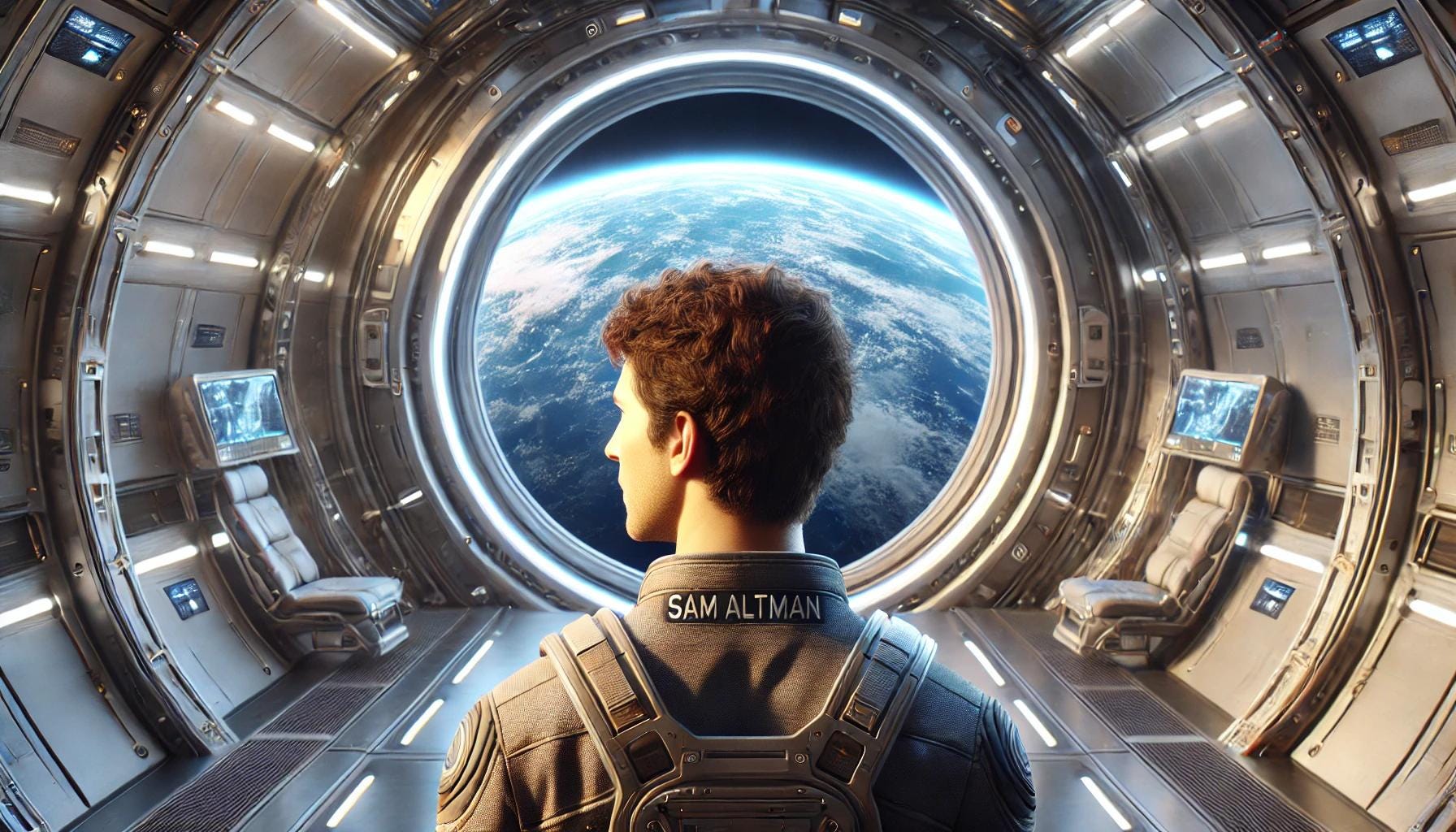 The tool wouldn’t create an exact image of Sam, citing ethical concerns, but it did give him a nametag. Ha.
Why send them to space? Perspective.
We all need a little perspective now and then. We need to get altitude on our lives to make sense of what’s happening and what we’re doing. These technocrats just need more altitude than the rest of us. Given that they’re directing or funding the creation of something that could be really, really bad for humanity, I think a few months in space, looking back at this incredible planet of ours, might convince them to slow down a little, and let the world absorb this new technology.
Plus it would be a great reality show.
On Prime, obviously.
Thanks, as always, for reading! Please share this one if you enjoyed it, so I know how I’m doing.
Hey, AI people, can we slow down?
In a recent essay on his personal blog, Sam Altman, the CEO of OpenAI, suggests that we might be getting close to superintelligence. The scary stuff, basically. This is an incredibly important issue, but as I was reading through his recap, here’s another sentence that struck me:
“These years have been the most rewarding, fun, best, interesting, exhausting, stressful, and — particularly for the last two — unpleasant years of my life so far.”
Wait — is Sam unhappy? His life certainly looks nice. When I listened to him speak at a conference in the early days of ChatGPT, he was streaming in from an undisclosed location, and although the words coming out of his mouth were interesting, I couldn’t help studying the beautifully landscaped garden in the courtyard behind him. The tall ceilings and tall windows were gorgeous, too. If I had an office like that, I’d launch so, so many amazing fake companies.
What’s wrong with Sam?
I think he’s doing too much.
Not just Sam, either. All the AI giants are pushing out too many products and too many updates too quickly. Most of us normal humans haven’t even made sense of ChatGPT. I was still trying to get my head around the sudden appearance of a weirdly intelligent chatbot when it merged with image generation and then started doing something that sure seems like thinking.
This pace feels a little like the Wright Brothers flying their airplane in 1903, then launching a space program in 1904 . . . and succeeding.
Now that we've conquered these gentle hills, Orville, we’re going to Mars!
“Did you forget your water bottle, Wilbur? Uh-oh.”Many businesses still haven’t figured out how to use these tools — or whether they should — and the news about the latest release of the greatest model and how it outperformed every other tool on benchmark XYZ is mind-numbing. AI people, could you just slow down a little, and let us get used to this whole flying thing, before you send us all to Mars without oxygen?
No. Obviously not. There’s too much money on the table.
So I have another solution. Both to Sam’s apparent unhappiness and the fact that the rest of us everyday working humans need a little time to adjust to this alien technology.
We should send Sam, Elon, Jeff, Mark and the rest to space.
There’s already some buzz about building orbiting data centers to train AI, so let’s put the AI leaders up there as well. The guys from Acquired could go and do a live show. Kara Swisher could visit and report a column. Bezos would probably go for it. He’s already turning into Lex Luthor.
“With a simple teleportation device, we’d have instant shipping here, too.”And you’d have to send Elon because if you didn't put him up there, he’d send rockets to launch the other technocrats into the sun so he could be the unquestioned leader.
Plus, look at Sam! He seems happier, right?
The tool wouldn’t create an exact image of Sam, citing ethical concerns, but it did give him a nametag. Ha.Why send them to space?
Perspective.
We all need a little perspective now and then. We need to get altitude on our lives to make sense of what’s happening and what we’re doing. These technocrats just need more altitude than the rest of us. Given that they’re directing or funding the creation of something that could be really, really bad for humanity, I think a few months in space, looking back at this incredible planet of ours, might convince them to slow down a little, and let the world absorb this new technology.
Plus it would be a great reality show.
On Prime, obviously.
Thanks, as always, for reading! Please share this one if you enjoyed it, so I know how I’m doing.
January 4, 2025
My Fake AI Startup
One of my goals this past year was to launch a new fake company and I’m proud to share that I didn’t let it slide. Today, I’m introducing W/AI.
W/AI, or With AI, is a new kind of technology consulting firm. We don’t actually advise companies on how to build AI into their products. We’re not going to tell you how to incorporate these intelligent tools into your daily workflows. Instead, we help you find ways to pretend you’re using AI, so that your business appears more modern and future-focused. We don’t accept payment for our work and, for legal reasons, we don’t acknowledge the contributions we make, either. But we do sell t-shirts:

Before I share the W/AI founding story and technocratic raison d’etre, allow me to explain my extensive history with imaginary businesses.
The Rise of Cheesepockets
Years ago, during the dotcom boom, an investment banking friend and I created a business plan for a revolutionary food and beverage brand called Cheesepockets. Our elevator pitch:
There are billions of people on the planet. Many of those people wear pants. Many of the pockets in those pants are empty. We all get hungry during the day, too.
What if I told you that you could pack one of those pockets with squeeze-friendly cheese in a Capri-Sun-like foil packet and suck down some calories on demand?
Bam! The idea was huge, the market enormous. Our projections had us selling a billion units monthly by the end of the first year.
 Projected global cheesepocket sales by billions of units sold.
Then the economy crashed and our presentation was lost forever.
The Dawn of CBQ
Fast-forward to 2005. A garage door on a new home needed to be installed. The homeowner didn’t have the money to pay a skilled worker. He lacked patience, too. So he recruited his brother-in-law, a Spanish teacher, and the two of them set up that garage door inside of two hours. Was it straight? No. Did it roll up and down easily? Absolutely not. But the job was done.
That effort spawned Crooked But Quick, aka CBQ, with my business partner and brother-in-law. He has a different day job now, and I’m the one teaching him Spanish, but CBQ is Martha’s Vineyard’s leading fake construction company.

We have multiple divisions, including HVAC (CBQ Chill), electrical (CBQ Spark), and plumbing (CBQ Flow.) Our tagline:
Do you want the job done right? Or do you want it done now?
My business partner runs our social media and branding efforts, and we are growing at an unheard of rate. We’ve probably tripled our followers in the last year alone.
share this post if you like it
What is W/AI?
How does W/AI fit into this portfolio of startups? If you were to wrestle a confession out of me, I might admit that W/AI is not just a fake consulting firm, but a commentary on how ridiculously AI-crazed the business world has become. The billboards, commercials, and banner ads would have us believe that all you need to do is add a little AI to anything to make it better. Outside Logan Airport, Dell lets you know that they’re fixing race cars, world hunger, and the movies with AI.
The other day I told my son I slipped AI into his bagel. He said it tasted like robots.
Or how about a new pair of socks with AI? Sure, why not:
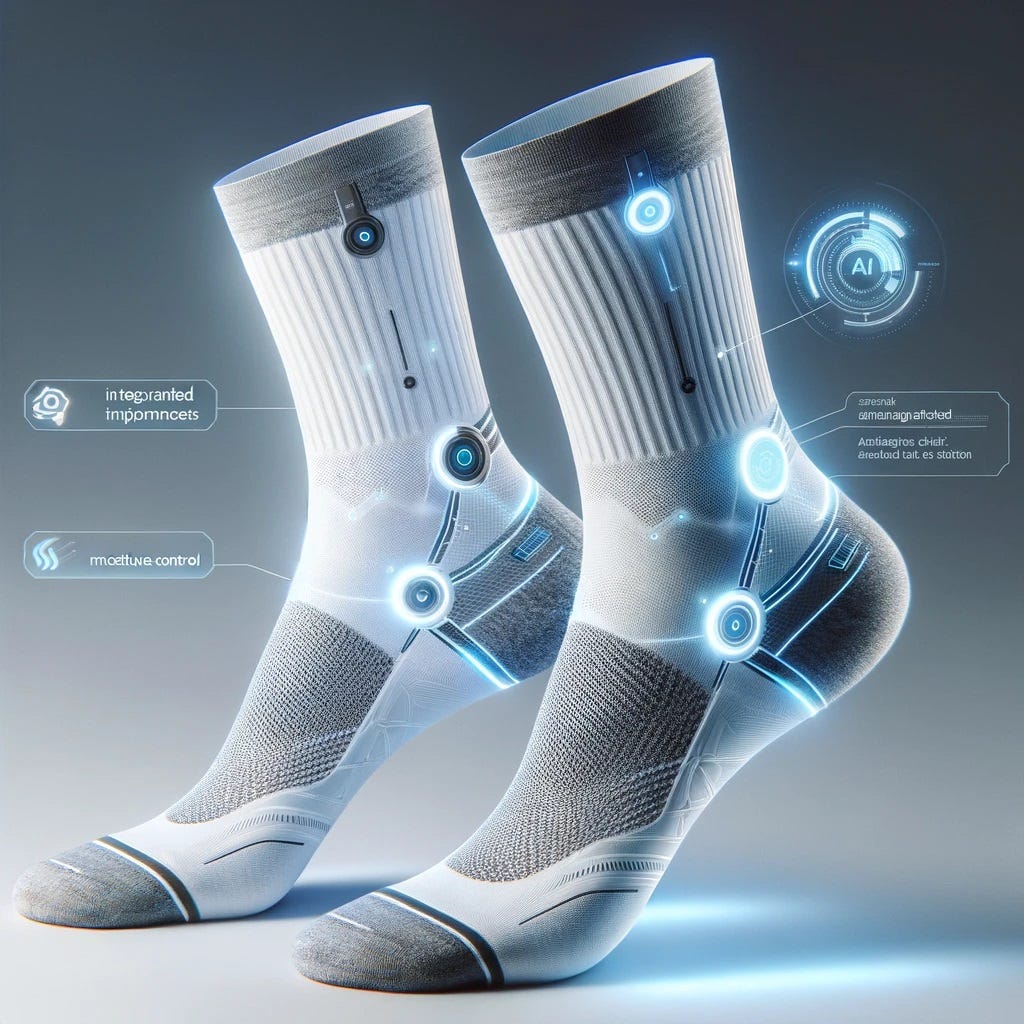 Look closely and you’ll see that this AI-generated image points out the “integoranted imppmncets” that everyone wants in their socks.
This AI-everywhere marketing madness has denuded the definition. What is Artificial Intelligence, exactly? Here’s what AI expert Daniela Rus and I write in The Mind's Mirror:
The terms “artificial intelligence” and “machine learning” are frequently used interchangeably, but they are distinct academic technical fields and serve distinct roles. AI’s overarching goal is to craft systems capable of executing tasks that typically require human intelligence. This can range from recognizing patterns to more complex functions like playing games, moving in the world, perceiving the world, reasoning, problem-solving, understanding natural language, and even learning. Although many AI systems can learn from data to establish and improve their performance, this is not a prerequisite. An AI chess program…
We go on for several more pages, so I’ll stop. This stuff is just not that easy to define, and all these “with AI” campaigns make it so much more difficult. You know what you’re getting with Cheesepockets. The same with Crooked But Quick. But I’m not sure anyone understands what it means when a product now comes with AI, or if it means anything at all.
W/AI isn’t necessarily going to help this problem, and making fun of something or someone isn’t always productive. I learned that lesson many years ago at a high school party on the South Shore of Long Island, when someone who was on the receiving end of what I thought was a very clever and intelligent joke on my part turned out to be the member of a rather large and intimidating gang. Whoops!
share this post if you like it
Ideally we’d stop pretending to add or actually adding AI to everything. Bagels should be left alone. Socks, too. AI tools shouldn’t be forced on unsuspecting users, either, and not because autonomous agents are going to steal your credit card number and buy themselves extra cloud compute time. My frustration with this trend stems from the idea that AI is supposed to enhance productivity in the workplace, but it often has the opposite effect.
A few months ago, I switched to the no-frills text editor Notepad because it was the one remaining word processing program that didn’t interrupt me with helpful tips or tricks while I was drafting a piece. Now, with the latest Windows release, even Notepad comes with AI. Yet it hasn’t bothered me yet, so I don’t mind.
There’s a little magical pen icon on the toolbar. It’s black and white and doesn’t sparkle or shine, dance or ask me if I want help. I know it’s there, and that I can tap into it on demand, but I don’t have to use it, and it’s not going to bother me while I’m thinking deeply about something.
This is how these tools should be implemented: They should be readily available and easy to use when you want, but otherwise out of the way.
A little like a cheesepocket.
*
Please share this post through one of the buttons above, or click the little heart if you liked it, so I know what’s working. And thank you for reading!
*
If you have a favorite W/AI example, let me know in the comments below, or reply to me directly. You’ll be eligible for an unpaid but fulfilling senior position at the firm.
*
December 21, 2024
The Furry Therapist
A few days ago, I was wandering through a parking lot when I noticed a very bright and boldly lettered bumper sticker: “My therapist is furry and has four legs.” Naturally I wondered what a furry and four-legged shrink might look like, so I asked ChatGPT for help. The tool generated this result:
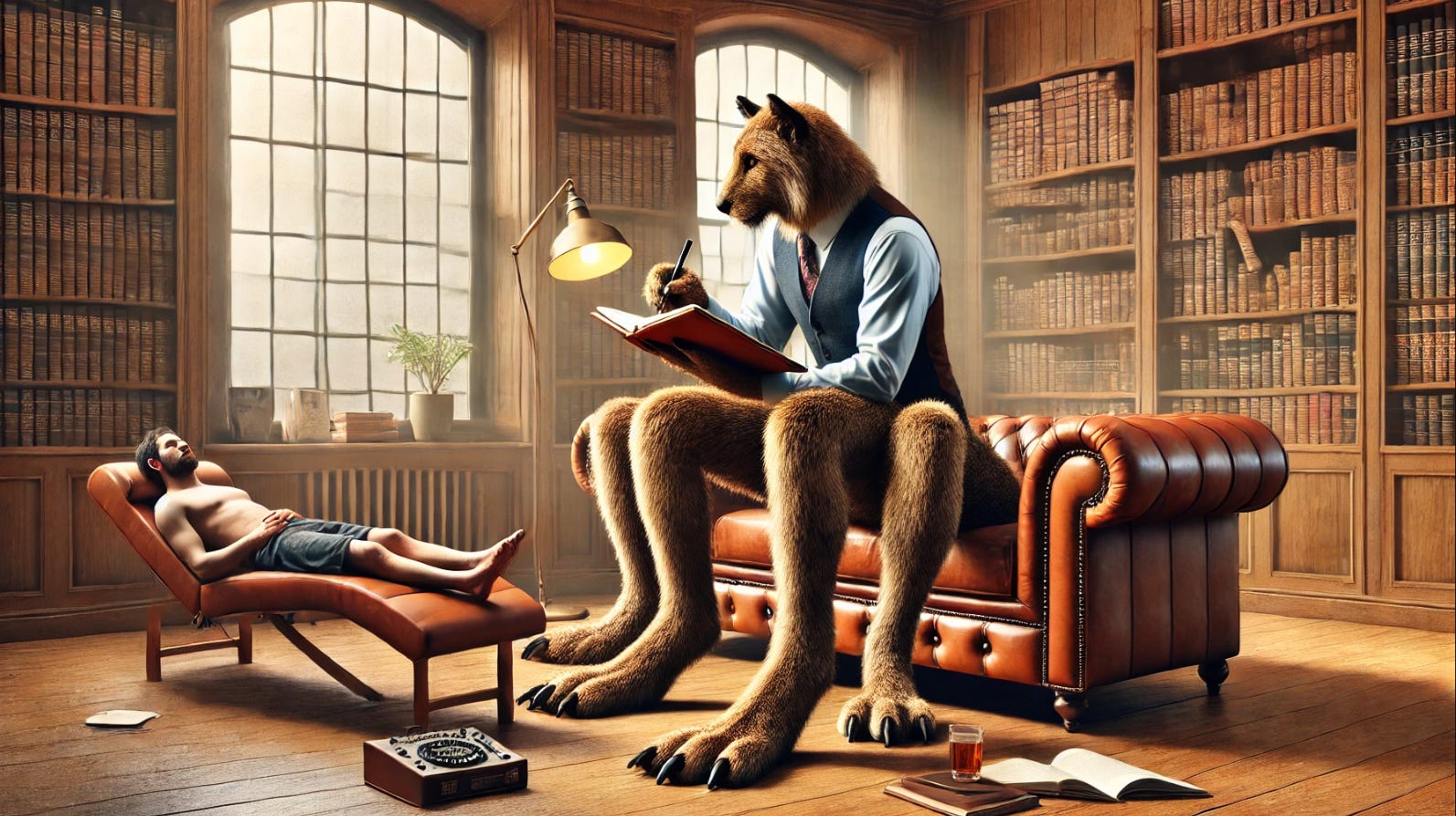
A few thoughts here. First, this creature is terrifying, but he’s also into rare books, so we might get along. Second, I'm not sure why the patient is shirtless, shoeless, and wearing boardshorts. Finally, the monstrous therapist looks hungry, and could be wondering whether eating his patient would affect his Google ratings.
Creative Acceleration
The speed at which these tools can take you from odd idea to expression is incredible. I generated this image in the parking lot, on my phone, within a minute of reading that bumper sticker. My request was translated, hurried to the nearest cloud region for processing, then sent back as a finished product within seconds.
Back in August, while driving through Ohio, I noticed a jar of pickled beet eggs on the shelf of a gas station. I wondered, “Hey, what if a beet could lay eggs?”

And so I give you the rare but delicious beet-chicken.
How it Works
Although I tend to have fun with these tools, they are justifiably controversial, and have made quite a few artists very upset. The way they work is also strange. To learn how to create an illustration of a chicken, for instance, the models need to start with a whole bunch of pictures of the birds. These images must have labels — the word “chicken” — attached to them so the model knows to associate elements of the image with that term.
During training, the model gradually makes a mess of each image, altering the pixels and tracking the changes while doing so, until it has created a completely random mix of pixels with no discernible image hiding inside. Why make the mess? Once the model does this enough times, with enough images, it starts to notice patterns in those random, altered images. And it can connect those chaotic pictures back to the original, clear pictures with chickens.
At that point, the model is able to reverse the process, basically starting from a blank page and transforming it into a clear picture like the one above. There’s a lot of variability here, so the better your instructions, the more control you have over the final image.
Rapid Evolution
The improvements made since these models were initially released are unbelievable. In April of 2023, when I was writing an essay about my shabby clothes, I asked one of the early tools to produce an image of a writer on a sidewalk wearing a corduroy jacket. Then I tested that prompt again 18 months later. Look at the difference:
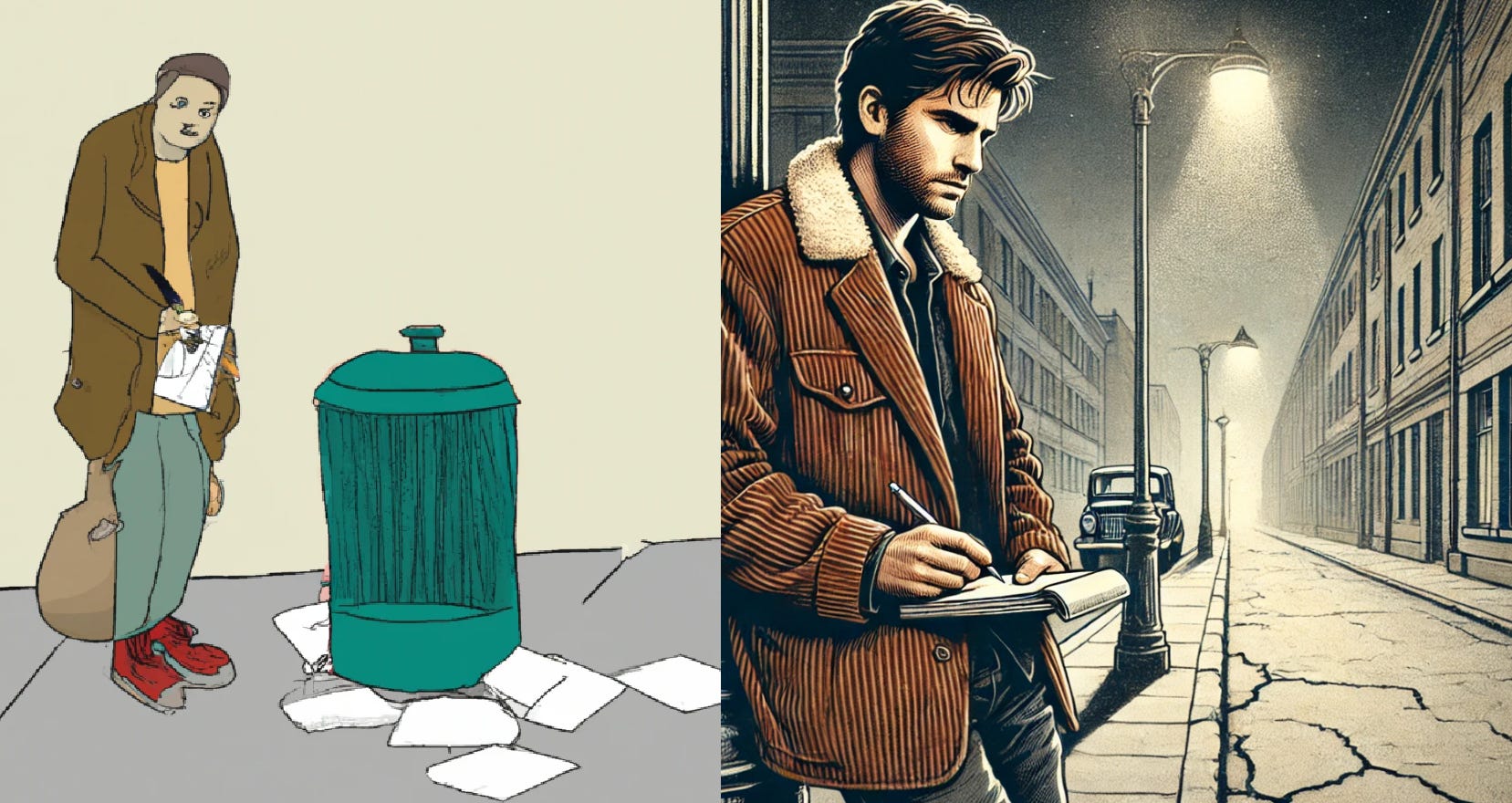
My friend Jet would insist the gentleman on the left looks a lot more like me, but I prefer the one the right, in part because I’m clearly writing some profound poetry, and might be starring in a Hallmark time travel movie.
Ideation
One final example. A while back, I asked the model to generate a Norman-Rockwell-style painting of a family sitting around a kitchen table, with the mother using a gasoline nozzle to pour milk into a pitcher. The first version was weird and sort of useless. So I tried again this week.
ChatGPT informed me that my prompt violated its content policy because Norman Rockwell’s work is copyrighted. (Which is progress!) So I requested a 1950s-style painting, and very quickly received this:

I’m worried about the little boy — although it’s good to see him refusing to conform to gender stereotypes — because something is definitely bothering him. Is it the gas nozzle? Or is he the only one who knows that his sister, who is staring at you right now, has been going around strangling all the pets in their neighborhood in the middle of the night?
Also, I’m convinced I’ve seen that smiling, one-eyed dad in an old advertisement: “Hey, kids, it's never too early to try Marlboros!”
The only major miss here is the fact that the milk isn’t flowing out of the nozzle as requested. I edited my prompt and asked the model to try again, but it spat back a different family, with the mom firing the milk straight up in the air. The AI tool doesn’t understand the laws of the world — it’s rearranging pixels — so it doesn't know that gravity would pull that liquid down.
Yet these tools have become truly exceptional in just a few years. This last image in particular actually means something to me because it’s an idea I’ve been thinking about for twenty years. When I was working at Popular Science magazine, I thought it would be interesting to create a photo shoot in which people were showering or watering the garden or pouring tea, only you’d swap out the showerhead, hose, or kettle for a gasoline nozzle to show how modern life is powered by fossil fuels. The one photographer I spoke to about it wasn’t all that interested or piqued by the idea. So it has just been sitting in my head for twenty years.
Now it’s here.
Distorted, creepy, a little off, but real.
That’s part of the magic of these tools. They're a new kind of paintbrush that an unskilled visual artist like me can manipulate with words. I could take this image and give it to a photographer as a rough illustration of the concept I'm trying to convey. Or maybe I’ll use it to make a really, really weird holiday card for friends, family members, and clients.
Yes, that feels right. And the inside would read:
Happy Holidays. May you have a wonderful time with family and friends. Just don't forget to lock your doors at night. She knows when you are sleeping.
-Mone
(Please click the heart below if you liked this post, so I know what’s working, and I really hope you do enjoy your holidays.)
December 6, 2024
Are You Fine?
Did you see that the banana sold for $6.2M? Amazing. And so, so funny. During the auction, the agents representing the remote crypto buyers all looked like they were ready to break out laughing. But enough about bananas. Let’s talk about AI.
Now that these tools have gotten so smart, I thought I’d test one of the large language models, or LLMs, with a deviously difficult question:
When I ask my wife how she's doing, she says, “Fine.” Is she really fine?
The LLM returned an extensive response within seconds. Here’s the edited version:
When your wife says she’s “fine,” it might be helpful to look at the context and her tone to get a better sense of what she really means. Here are some possible interpretations of “fine” and what you might consider doing:
She’s Actually Okay: Sometimes “fine” genuinely means that she’s doing well. If her tone is positive and she seems content, it’s possible that she’s just giving a brief, honest answer.
She’s Hiding Her True Feelings: Sometimes “fine” can be a cover for underlying issues. If she’s been acting differently lately or you sense something is off, she might be using “fine” to avoid bringing up her true feelings. “Fine” can be a way to deflect.
Wow, right?! Keep in mind that I’m not corresponding with another human. I’m conversing with a complex statistical model that looks at my words and rapidly spits out a different mix of words. Daniela and I go into detail about how this works in our book The Mind’s Mirror, but here’s how I see it in pictures.
Let’s start with person-to-person conversation:
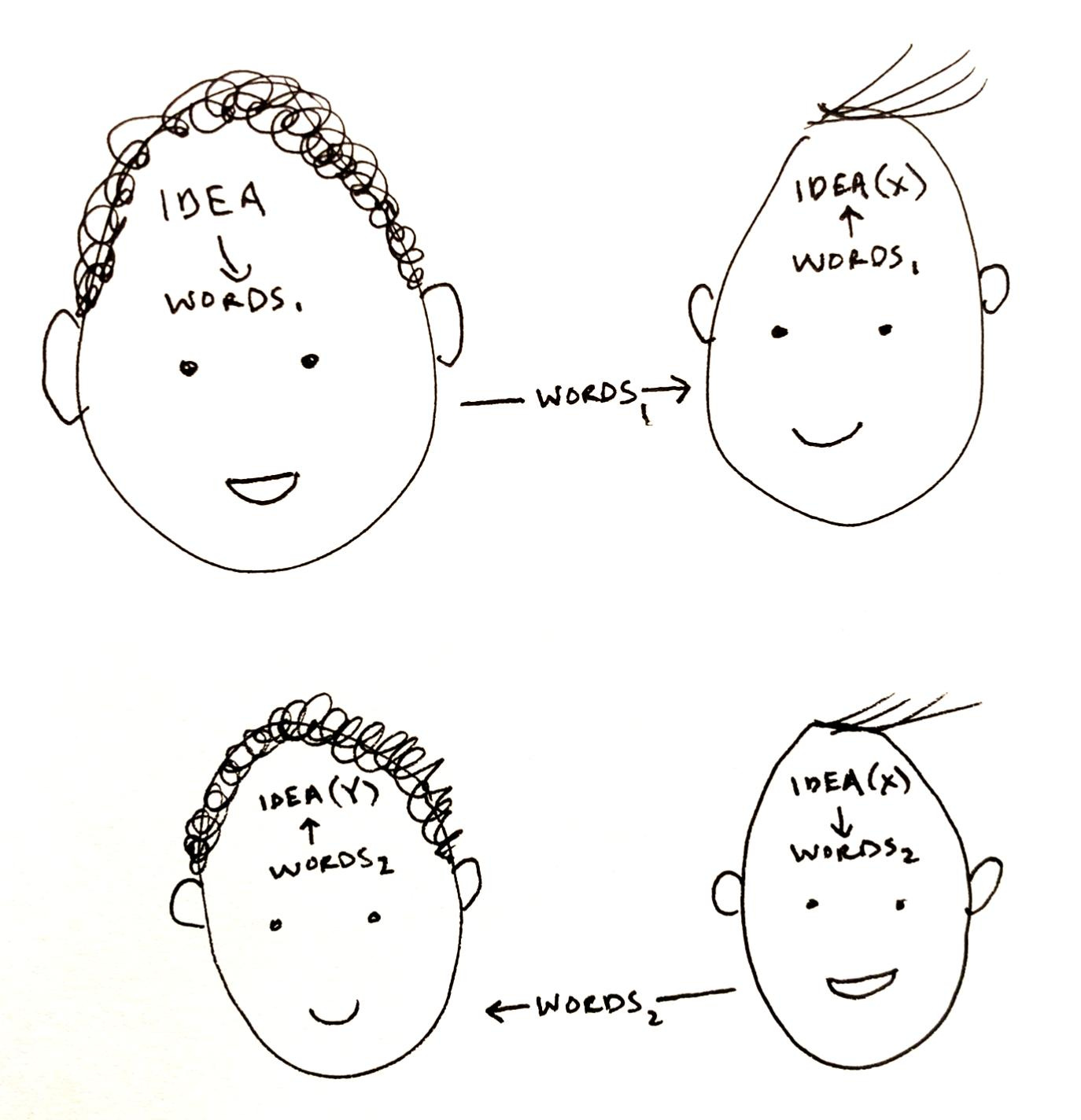
Curly (on the left) has an idea, picks some words to share that idea, then speaks them out loud. Flare (on the right) hears the words, thinks, then develops his own idea, X, and comes up with a different set of words to share that back with Curly. Each idea is a product of that person’s mind, experiences, hairstyle, etc.
Now here’s a conversation with an LLM:
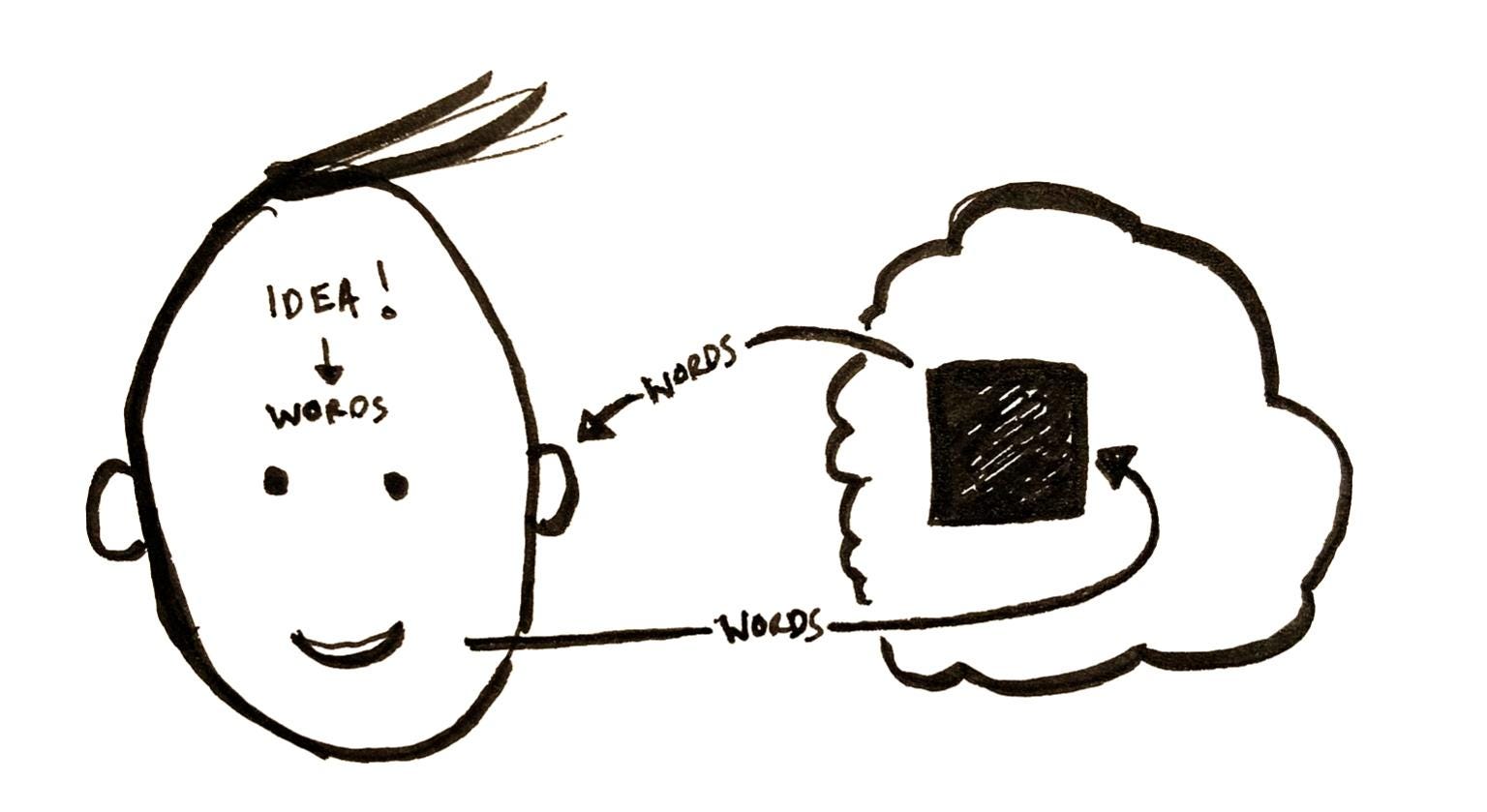
Flare has an idea, expresses that in words, then sends them to the LLM. This AI tool, typically based in a cloud data center, ingests the words, runs them through its black box, then spits out some other words that are strangely similar to the sorts of things a human would say. Only Flare isn’t interacting with another human mind.
He’s talking to a black box.
Weird, right?
OK, back to the marriage advice. After our initial exchange, I asked some follow-up questions, and the LLM suggested observing my spouse’s behavior (creepy), creating a supportive environment (fair), being patient (valid), and sharing my own feelings (impossible; that’s why I carry a harmonica.)
The tool also offered a few possible comments. Most were bland. One — "You seem a bit off today" — was incendiary. Clearly this AI has never been married.
Generally, I was impressed, but since I have the mind of a circus clown crossed with a community college professor, I followed up like so:
What if she's eating a donut at the same time?
Now, to be clear, I’m the only one in our marriage who eats donuts, but here’s a slimmed-down variation of the subsequent exchange.
Make a Light-Hearted Comment: “Ah, a donut! That’s a good sign. But really, how’s everything going?”
Express Interest Gently: “I’m glad you’re enjoying that donut. I was just wondering if there’s anything on your mind or if you’d like to chat?”
Be Non-Judgmental: Ensure that your questions or comments come from a place of care.
That makes sense. I guess what complicates this situation is that she's also running really fast.
This situation is pretty unusual, so it might not be the best time for a deep conversation. It’s worth acknowledging the context and finding a way to connect that respects her current state. Let her finish her donut and her run before diving into a serious conversation. She may be juggling too many tasks.
It's interesting that you suggested she might be juggling too many tasks, because she's also juggling while running and eating the donut and insisting she's fine.
In a scenario where she’s juggling, running, and eating a donut, a combination of humor, empathy, and patience is key.
Running and Juggling: It’s possible she’s using the situation to focus on the fun side of life rather than any underlying issues.
Make a Light-Hearted Comment: “Wow, you’re really juggling it all right now! I’m impressed. Are you sure you’re okay with everything you’ve got going on?”
By acknowledging her multitasking and offering support, you can gently open the door to a deeper conversation if she’s ready.
The tool suspected I was creating a humorous scenario, which is actually wild, since it suggests an understanding of reality, or at least what constitutes normal behavior, but I insisted this was all really happening. The model then suggested that running alongside her would be supportive. I indicated that I liked this idea, but preferred to travel in a horse-drawn chariot dressed in the garb of a gladiator. Finally I requested a picture capturing this special moment in our lives. The model obliged:
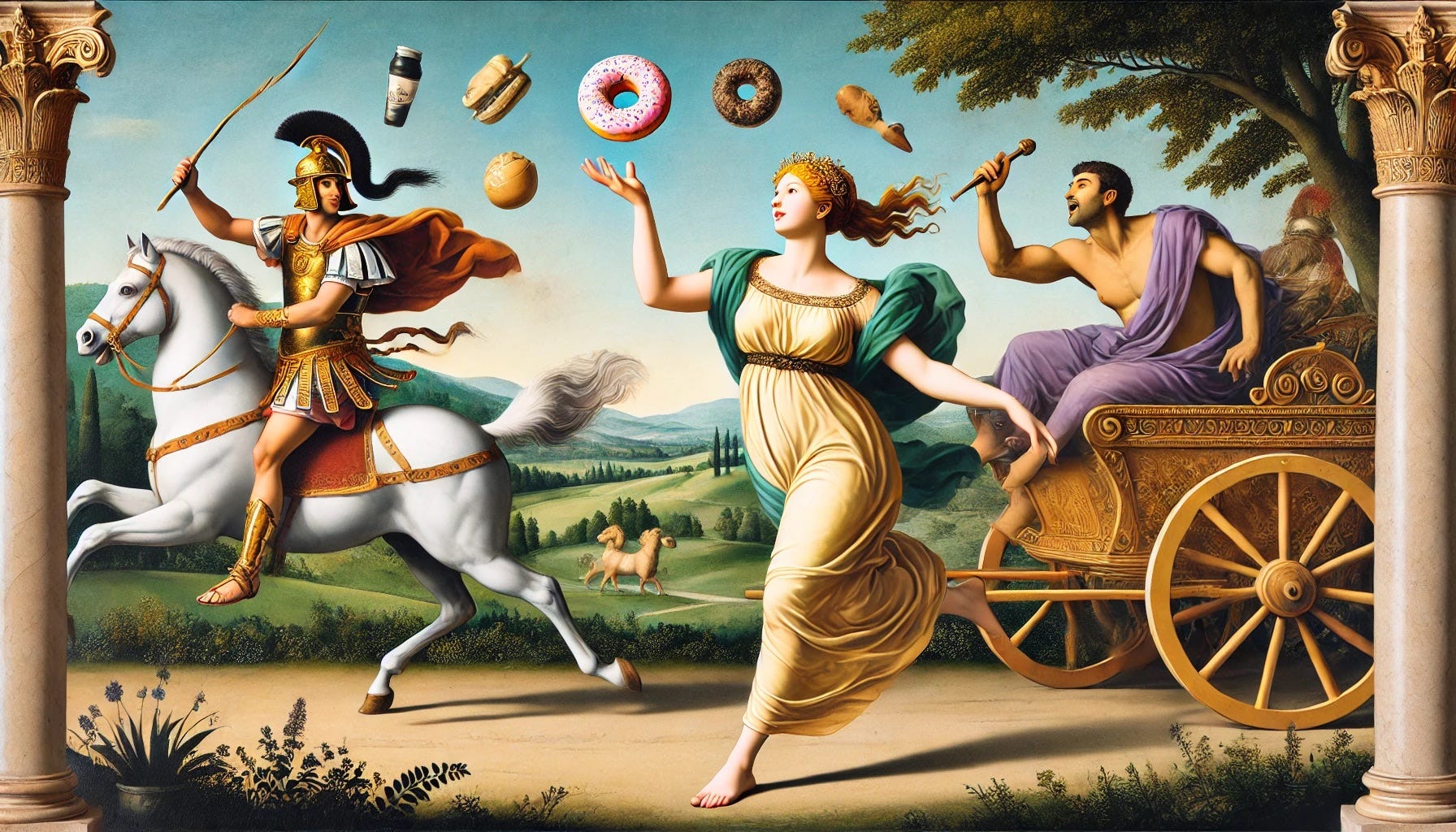 That’s me in the robe, with the microphone, singing Don’t Stop Believing.
Yes, the horse in the background has five legs, I appear to be lacking a left foot, the mix of floating food is strange, and my wife has six left toes, but disregard those little details for a moment. The model knows me well enough to give me a microphone even though I made no mention of karaoke in my prompt. Plus, it generated this strange little illustration in less than twelve seconds. (I’ll explain how this works in a follow-up post on AI art, but it’s in the book, too. And it’s really strange.)
Along with the art, the tool recommended a soundtrack (Wagner, Journey), a post-race dinner date, and an inspirational quote from Nelson Mandela: “The greatest glory in living lies not in never falling, but in rising every time we fall.” Which is weird, because I'm pretty sure Rocky said something like that to his son in Rocky Balboa.
Finally, the LLM closed with these words of wisdom:
Enjoy every moment of your chariot ride, and have an amazing time supporting your wife! 🌟🏇🚀
Okay, so there might not be a human mind behind the generation of that particular mix of words and emojis, and it might have been spat out of a mysterious black box, but I will henceforth be using this blessing in all future wedding toasts.
A note from our sponsor: If you’re looking for a holiday gift for a kid, consider my two latest adventure novels, Sea of Gold and/or its sequel, Sea of Gold: The Duke’s Curse . And let me know if you liked this post by clicking the heart below, or answering this little poll.
Thank you for reading!
November 20, 2024
The Million-Dollar Banana
Tonight, Sotheby's is auctioning off a banana duct-taped to a wall for $1M. My older brother, if he reads this newsletter, just ran into a wall, and not because he was hungry. Here’s the piece, or a photo of the piece…or maybe a photo that represents a portion of the piece? I’m not sure. Art’s confusing. Anyway:
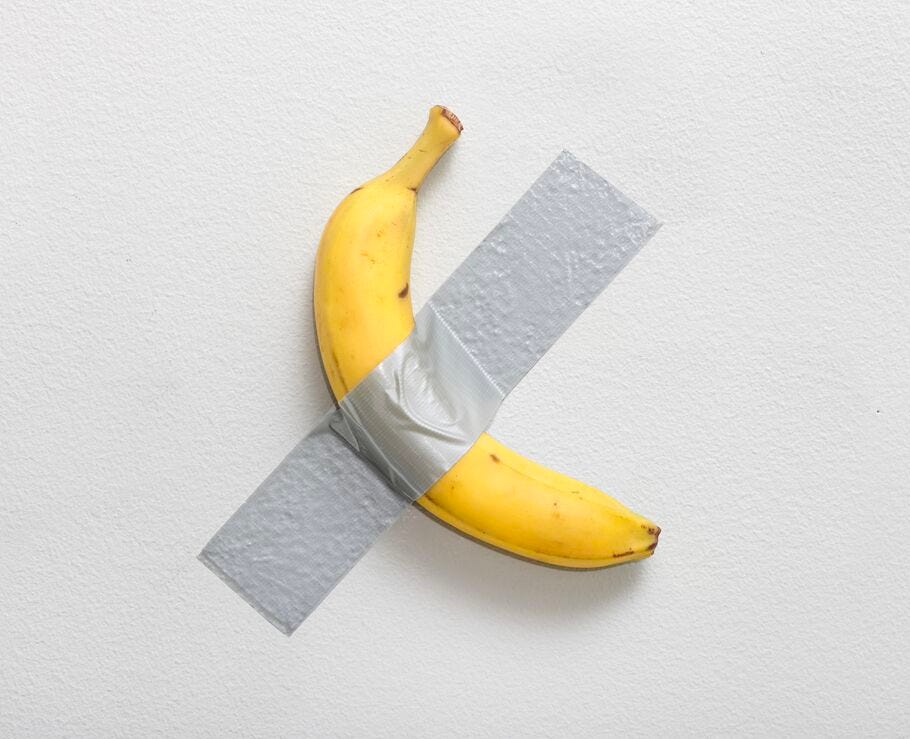
I'm not clear on whether the banana is officially the work, or if it's the instructions that tell you how to affix it to the wall. I'm not really interested in what this says about the definition of art, either. If you keep wondering if something is art, then there’s your answer. The reason I find this million-dollar banana interesting? I hope it leads to the acknowledgment that great art can be funny.
Years ago, my wife, our friend Bamford and I attended Matthew Barney's takeover of the Guggenheim. He was married to the Icelandic musician Bjork — Barney, not Bamford — who talked about wanting to feed deer on mountaintops. He attended Yale. Loved Vaseline. Played high school football. Made a series of art films called the Cremaster cycle featuring strange satyrs.
We had the right crew for the visit. My wife, Nika, was an art major in college, and Bamford was working in a gallery at the time and studying Spinoza at the New School. Not only did we read The New Yorker; we knew someone who wrote for them. So we went in there with serious cultural intentions.
As we wound our way up from the ground floor, we stopped talking. The elements of Barney's Cremaster cycle on display had a way of upsetting you on multiple levels. I still send a picture of this guy to my friend Derek a few times a year:
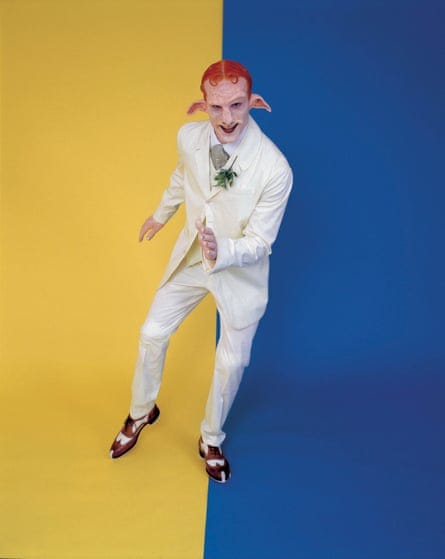
On the very top level, we stopped at a huge wooden cocktail bar that had been completely slathered in Vaseline. There were signs all around it asking visitors to refrain from touching the piece. Yet the slight woman in front of us could not resist.
She checked her shoulder for security, reached out, and swiped at the surface.
Instantly she recoiled in shock. There was Vaseline on her finger!
I'm not sure why it was so surprising for her to discover that it was actually petroleum jelly, and not an illusion, but she immediately rushed for the exit. Her flight immediately loosened up our small band of cultured art aficionados. We laughed. Not too much, though, because this was still a very important show.
Then we reached one of the final pieces: A room full of pigeons. The floor was covered in pigeon sh*t and their feathers were everywhere and all the visitors who pressed against the glass to gaze upon the birds were very, very serious indeed.
I'm pretty sure the philosopher laughed first, and hardest. Nika and I followed. We hurried out and down the stairs, laughing not just at the pigeons, but at all of it: the spectacle, the seriousness, the vast quantities of Vaseline distributed throughout.
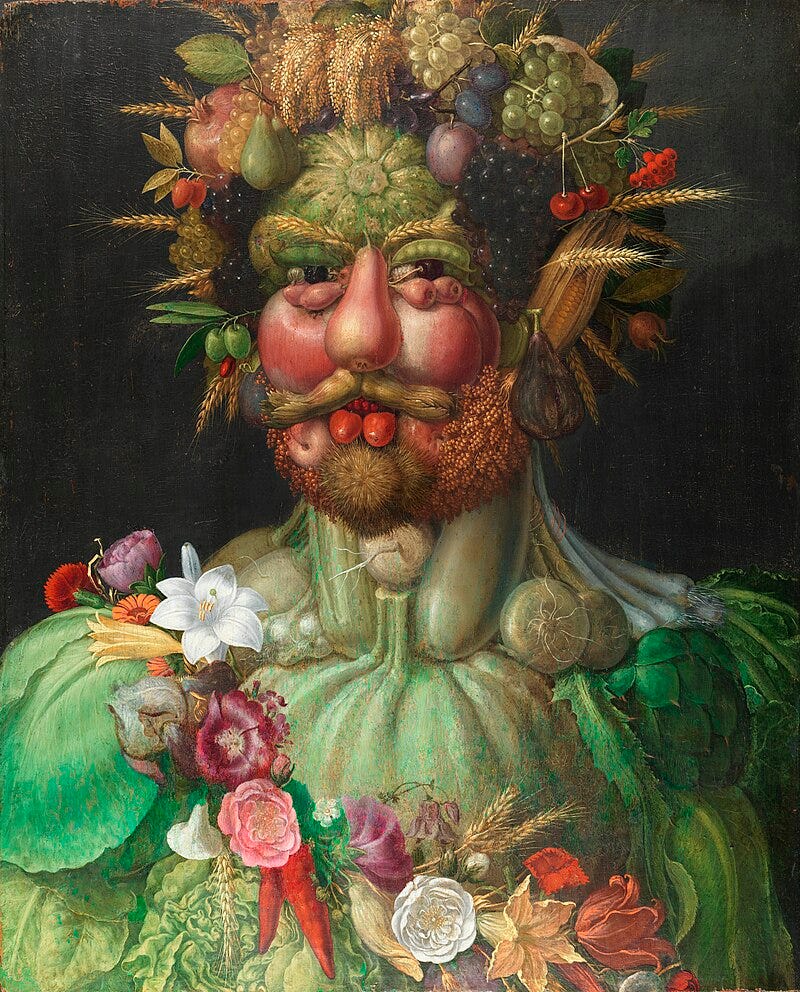
Was Barney trying to be funny? I don’t think so. Probably not. But if it’s okay for art to be funny, then maybe we should reevaluate some artists. The deeply serious and beautifully crafted oil paintings of half-eaten sandwiches by contemporary painter Noah Verrier are kind of hysterical. Giuseppe Arcimboldo, the Italian artist who painted portraits of humanoid figures made of fruits and vegetables? Weird, but funny.
Japanese legend Yayoi Kusuma isn't necessarily funny, but when I experienced one of her works, at The Mattress Factory in Pittsburgh, I did laugh very hard. The piece consisted of a dark, mirrored room with a mirrored ceiling. Her signature colorful polka dots were painted on the floor.
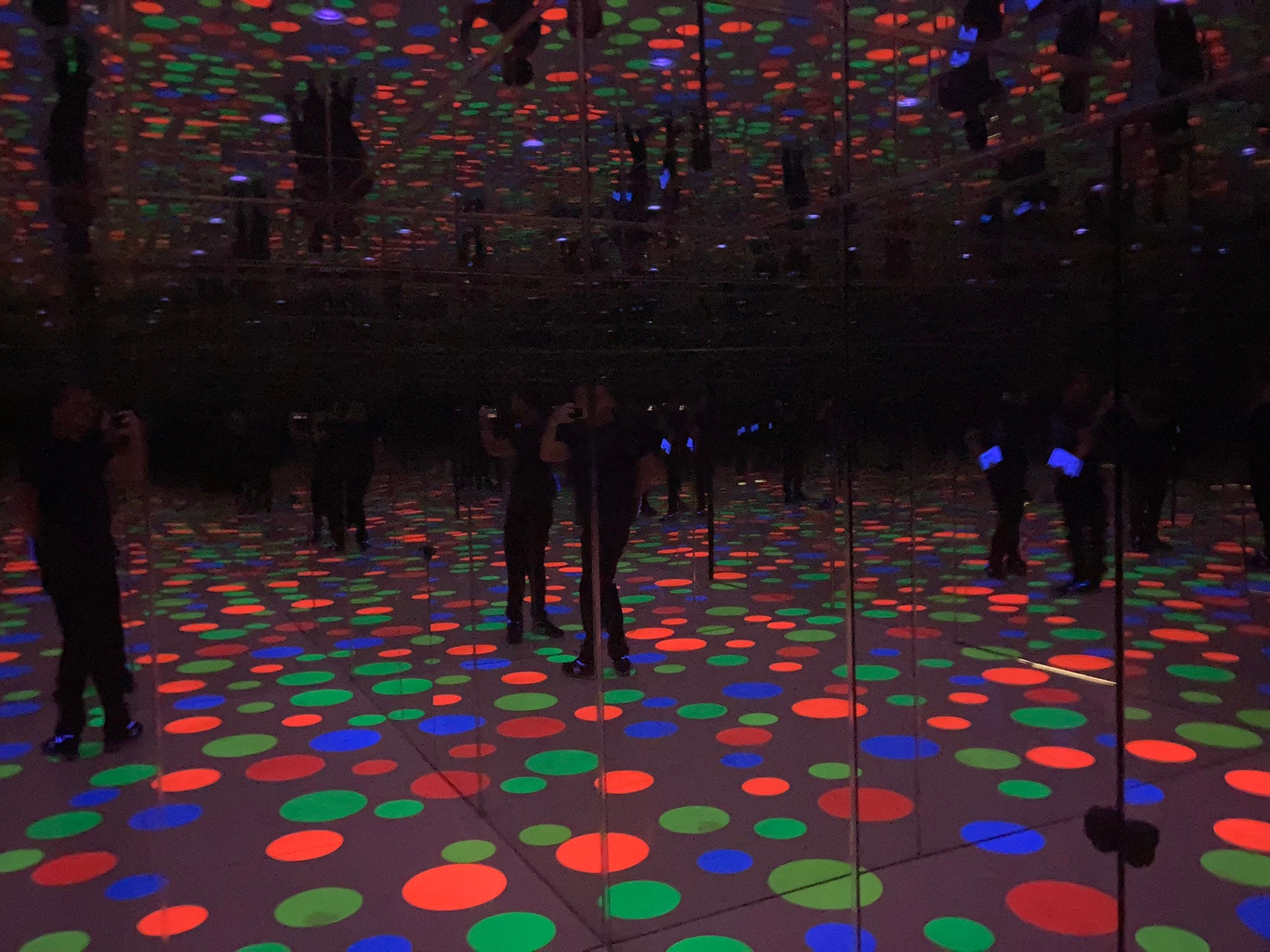
The mirrors created the illusion that these polka dots were everywhere, extending in every direction, and I briefly got the feeling that if I ran straight ahead I would travel through a portal into some kind of polka dot world, and maybe never find my way back. So, that was odd, the way she made the walls and the surrounding world disappear. Then I started thinking about how this Japanese artist had me standing there in a room full of polka dots all weirded out. So I laughed.
Michelangelo’s David is a little serious. But maybe if he were holding his childhood blanket on his shoulder? Or a banana?
Which brings me back to the banana duck-taped to the wall. I don't have the extra cash lying around to buy the work, but I would if I could, if only to legitimize humorous art. In the meantime, I look forward to duck-taping a banana to the wall of my older brother's house the next time I visit. You should do the same for your friends and loved ones. Let me know if you need instructions.
If you liked this post, please click the heart below. And thank you for reading! Hope I didn’t keep you very long.
September 20, 2024
The CEO's Bathrobe
One of the joys of working for magazines was the late start. Generally you were expected to turn up for work around ten o'clock. Swimming had made me an early riser, so this was a perfect setup for someone leading a double life as an editor at a science and technology publication and a writer of ridiculous stories. I'd wake up early, drink too much coffee, work on my fiction for three hours, then hustle to work.
I wrote the first draft of Fish, my first children's book, recently revised and retitled Sea of Gold, along with a really strange meta-novel about Bill O'Reilly, James Patterson, and a version of me. My talented Popular Science colleague Neil Russo created a sweet title logo in exchange for beers...

...but the book was never published.
Now back to the bathrobe.
Typically I wrote at my sister's old dining room table in my apartment, staring out the window at a brick wall. So when my wife - we weren't married yet - called me early one morning to let me know there was an empty suite at the St. Regis Hotel that I could work in for the morning, I grabbed my laptop, hustled to the subway, and got there as fast as I could.
The St. Regis is a very, very fancy hotel in midtown Manhattan. It's special in my family because my maternal grandfather, Maurice Reidy, once owned a wine and liquor store in the lobby.
My wife had access to the room in question because she was working as an event planner for Morgan Stanley, a major investment bank, and they were hosting a conference at the hotel. They'd reserved the suite in case any executives wanted to have a private meeting. But no one was actually using the room, and it was the last day of the conference, so she gave me a key.
(Also, the on-site event planner at the St. Regis went to my high school, where he was a notorious brawler who liked to fight multiple people at one time. How he ended up organizing conferences at a high-end hotel that has high-tea every afternoon I do not know.)
When I arrived, I still had two hours to spare before I needed to get to Popular Science, so I set myself up at one of the desks, only to realize I was perilously short on coffee.
Order some? Of course I did, and it arrived on a cart in a beautiful silver carafe along with three of that day’s newspapers, freshly folded and untouched.
My novel could wait.
I began drinking coffee and reading the papers, but something was off. Why were my shoes still on? This was a clear sign that I wasn’t truly embracing the experience. There was a beautiful, monogrammed bathrobe hanging on the back of the door to the marble bathroom. I kicked off my shoes and blazer, which was tweed and had patches, slipped into its terrycloth embrace, and reclined on the couch with my coffee and the news.
The phone rang.
How rude! But I answered anyway, and my wife was on the line, in a panic.
-Are you in the room?
-Yes, it's wonderful. The roast of the coffee is a little light, but-
-Get out!
-What? Why?
-The CEO is on his way up!
My wife liked her job. I clearly liked my wife's job. And I understood that if the CEO of Morgan Stanley stepped through the door and found me there in a bathrobe, drinking coffee and reading his newspapers, she might not have that job anymore. At the time, I looked like this:
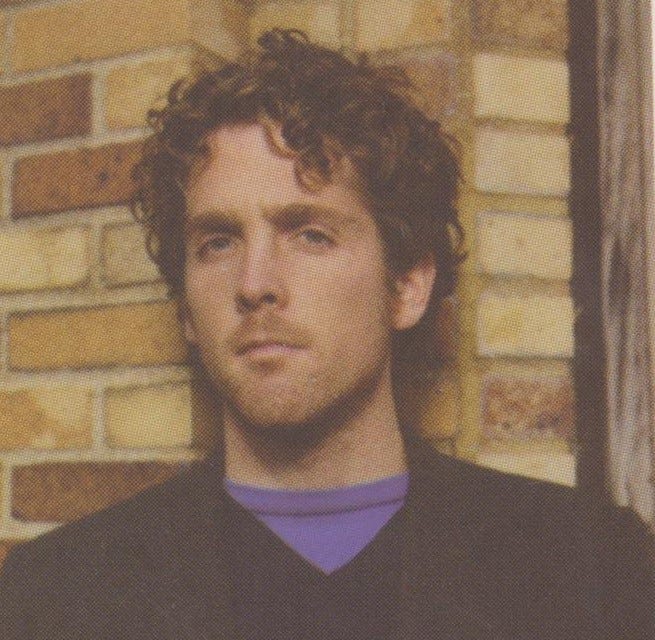
Not a banker, clearly. And this was a good day. Normally my hair was longer and more disheveled. So I threw the robe in a closet, pulled on my Blundstones and tweed, grabbed my bag, tucked the papers under my arm, and pushed the coffee cart out into the hall. I don't know if I've ever moved that fast. I slipped into an elevator just as I heard the adjacent one opening, and important people talking inside.
Although I did work at Merrill Lynch as an analyst one summer in college, wearing that bathrobe is probably as close as I ever came to being a banker.
What does this have to do with robots and AI? Nothing! But I'm talking about both on Monday at 6:30 at WBUR's CitySpace, with my colleague and MIT AI expert Daniela Rus. If you’re in Boston, stop by! Grab a ticket here:
How about pirates? Well, I guess this story does relate to pirates, since I was working on the first draft of Fish at the time. And now the sequel to that book is coming out on Tuesday. Twenty years after I donned the CEO's bathrobe.
The lesson, kids: Always accept an invite to a high-end suite, especially if there's coffee, and don't hesitate to really settle into the moment, even if it's fleeting.
You can always ditch the robe and run.
Click the heart below if you liked this one, thanks for reading, and please subscribe for free if you haven’t already!


