
Tim Unwin's Blog
October 12, 2026
The Ken Banks Mobile Digital Archive
The working title of my latest book (Digital Inclusion in an Unequal World: An Emancipatory Manifesto) was “We’ve seen it all before: why digital tech for development initiatives fail to serve the interests of the world’s poorest and most marginalised people“, and it contains numerous vignettes that show how many of today’s champions of digital tech for development have failed to learn important lessons from the past. I was delighted that Ken Banks, a friend for more than 20 years, was one of the contributors.

Ken is founder of kiwanja.net, creator of FrontlineSMS and author of several important books including The Rise of the Reluctant Innovator and Musings of a Mobile Anthropologist. He cares passionately about how everyone should be able to benefit from using digital tech, and was one of the first people to design ways through which they could use texting on basic mobile phones to improve their lives, as in the above photo from his work with medical practitioners in Malawi.
He has now shared two important archival resources based on this work:
The first is a newly relaunched Mobile Database, an archive of 741 early mobile-for-good projects, articles and case studies, with links to the original sources. It documents how mobile technology was first used for social and economic development, much of which is hard to find elsewhere now.The second is a Mobile Gallery – a collection of 145 photographs taken between 2003 and 2008, showing the early spread of mobile phones across Africa, Asia and beyond. It contains images of phone shops (modern and crude), street signs, payphones, repair businesses, early charging solutions and more. They are free to use for non-commercial purposes, and many are hard to come by today.These are well worth looking at, not least because the lessons they share are as relevant today as they were then. If only more people would begin their work in digital tech and development by better understanding the past, then perhaps they would be more likely to use digital tech in the interests of the poor and marginalised and not just the rich and powerful!


October 11, 2026
Return to Jerez
I had not been to Jerez for some 20 years, and the recollections of my last visit wandering around the bodegas one afternoon had not inspired me to return! However, an invitation to contribute to an International Workshop on Perspectivas comparadas sobre patrimonio vitivinícola being convened by colleagues from the Universidad de Cádiz as part of their project on Territorios del vino, paisajes de la viña. Recuperación del patrimonio inmaterial vitivinícola en el Marco de Jerez in September provided a good opportunity to return and explore other parts of western Andalucía that I had never had the chance to visit previously. In short, I was very impressed by the vibrancy of the cities of Sevilla, Jerez and Cádiz, although saddened by the state of the wine sector across much – although not all – of the region. I couldn’t help but feel that wind turbines were replacing vines as the dominant feature of the landscapes of Jerez!
Urban vitalityThe sense of vibrancy was palpable in the cityscapes of Sevilla, Jerez and Cadíz: numerous young people enjoying life, a wide range of thriving shops serving their needs, and well-priced tabernas, tapas bars and restaurants to fuel their thirst at the end o the day. To be sure Spain has its economic and social problems as well, but this was in marked contrasts to the squalor, closed down shops, rough-sleeping and graffiti to be found in so many high-streets across the UK today. There was a real sense that these towns and cities were somehow working, whereas their counterparts in the UK were failing. The fabric of Andalucia’s cities has also been lovingly restored, and in the bright sunshine they shone at their best, despite temperatures being in the high 30os (degrees C). Shade providers were even hung above the pedestrianised streets to protect the people bustling to and fro underneath. Yes, parts were packed full of tourists and the main sites had long queues outside them, but this left the beautiful and lesser known historic locations remarkably empty to be enjoyed at one’s own pace. And the food everywhere was delicious, especially when washed down with the local wines.
Sevilla
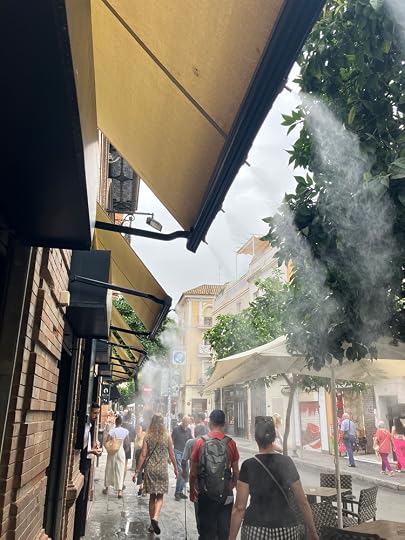
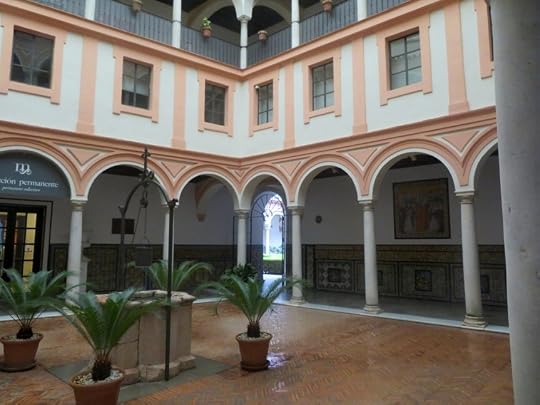


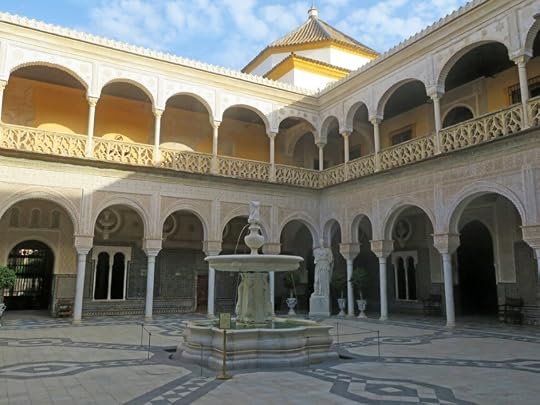



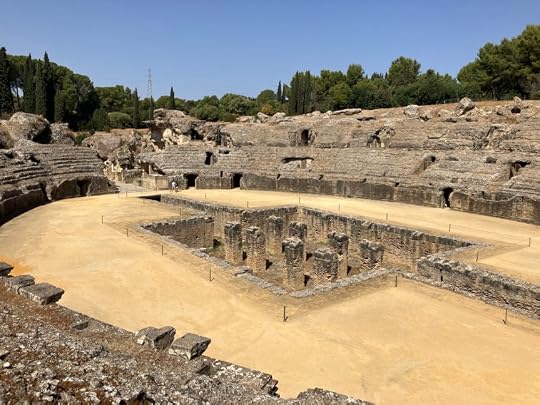

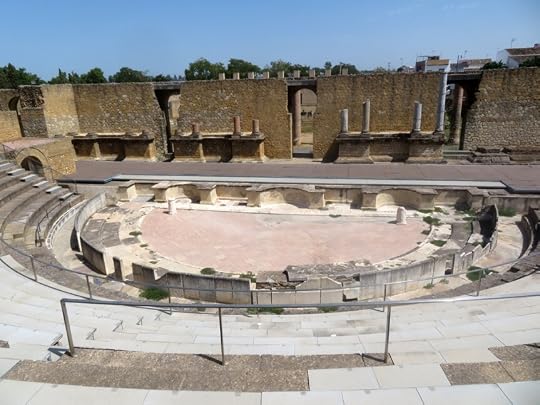
Places to visit (especially if the queues for the cathedral and Real Alcázar are too long) include the magnificent Museo de Bellas Arts de Sevilla, the Casa de Pilatos, the Plaza de España, and the very extensive Roman town of Italica, where the Emperors Trajan and Hadrian were born. An evening of professional flamenco is also a must!
Jerez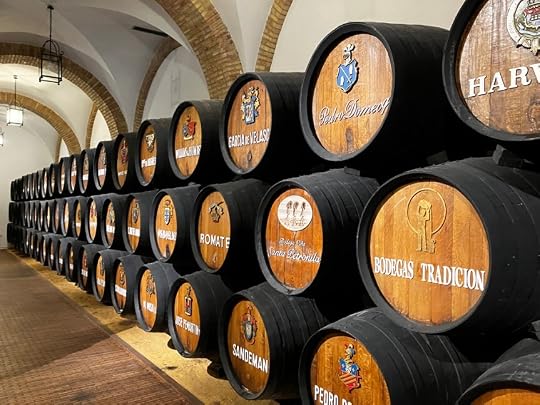

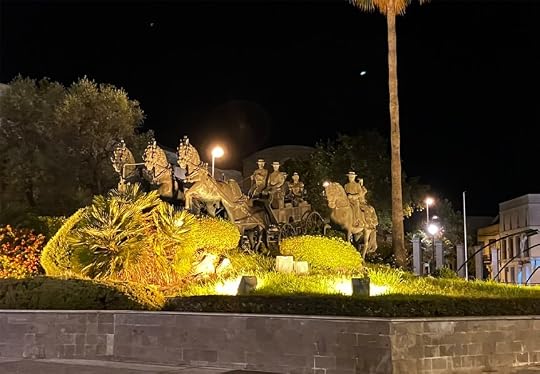

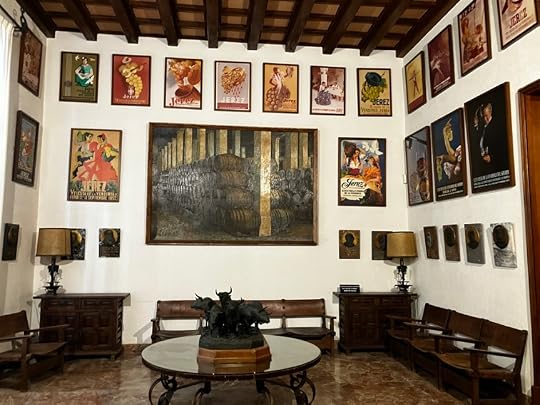
Jerez has been transformed since I last visited, and provides an excellent base from which to get to know the bodegas and famous vineyards of the region. If you are looking for somewhere to enjoy good food, local wines, and excellent service there, you must try the Tabanco Las Banderillas. The Vuelta adds a bit of disruption!
Cádiz




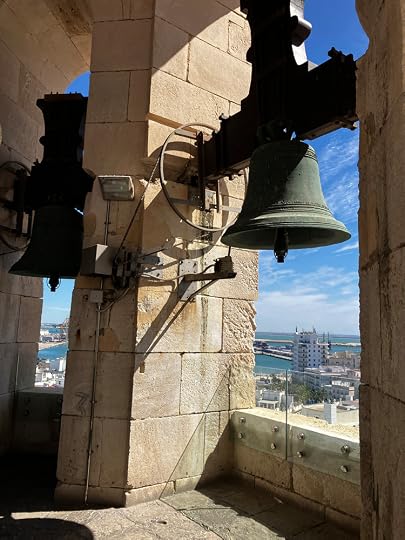
Parts of old Cádiz are very crowded, but it is still possible to escape the crowds, and explore the narrow medieval streets of this famous port city, founded by the Phoenicians and one of Europe’s oldest continuously inhabited cities. As the main harbour of the Spanish Empire, its merchants accrued massive wealth which is reflected in its impressive architecture. A monument commemorates the Cádiz Constitution of 1812, which was Spain’s first written constitution; another introduces the Roman writer Columella, author of De Re Rustica..
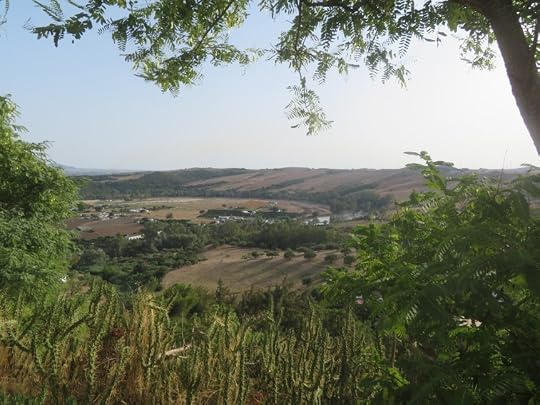
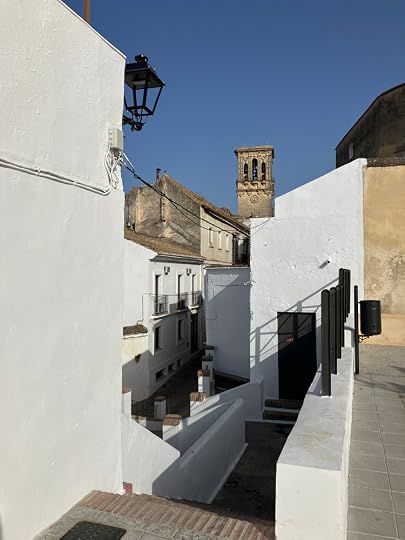
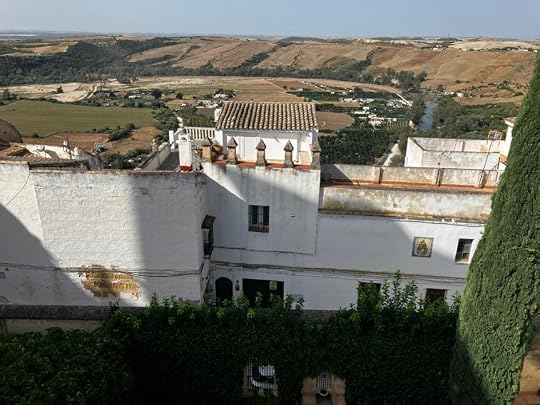
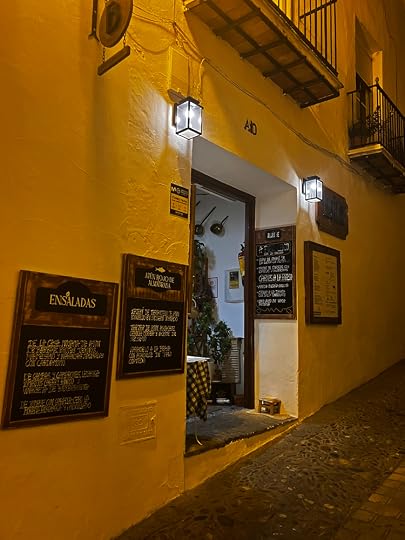
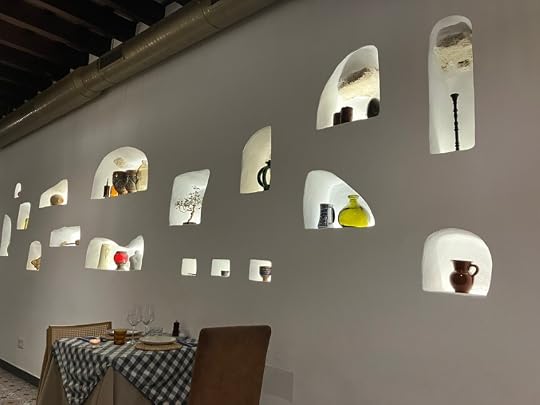
Arcos de La Frontera and its surroundingsArcosI had never visited Arcos before, and it was great to spend a couple of days relaxing there amidst the white painted walls of the old town. We particularly enjoyed discovering an excellent little restaurant – Aljibe – not far from where we were staying – delicious food, professional and friendly service, and a good choice of wines, many of which were local! It was so good that we went there two nights in a row, and it is definitely to be recommended!




 Tesalia
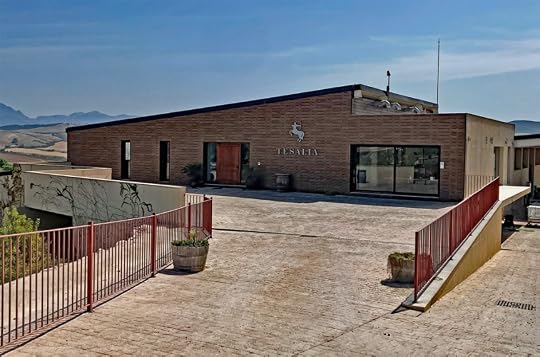
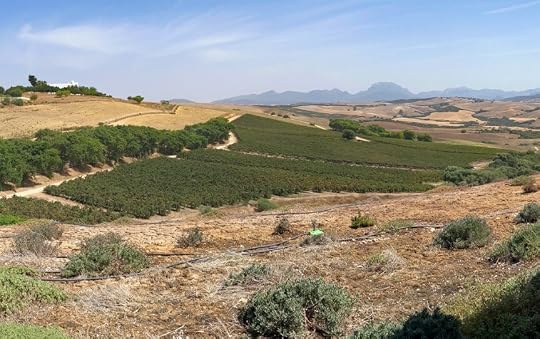
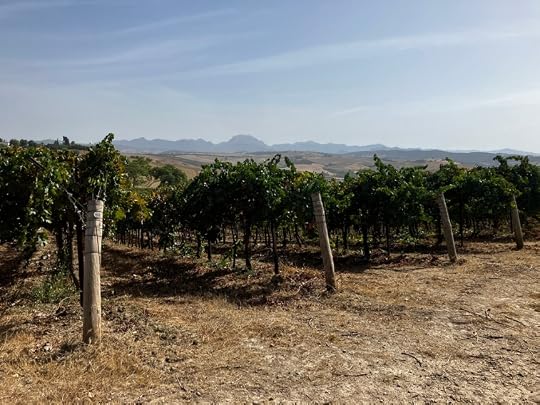
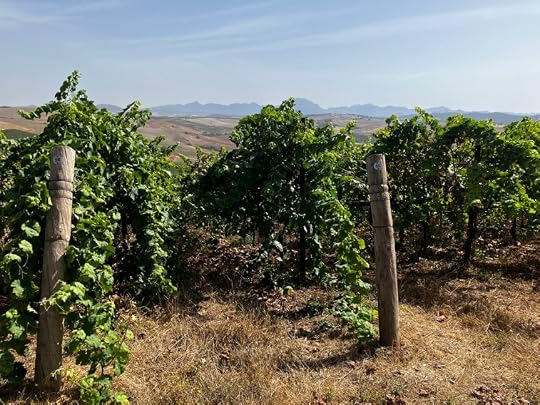
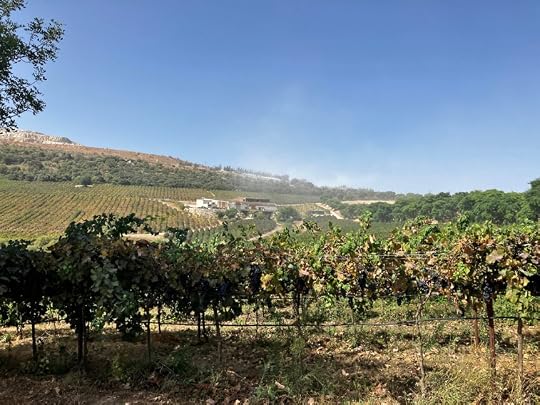
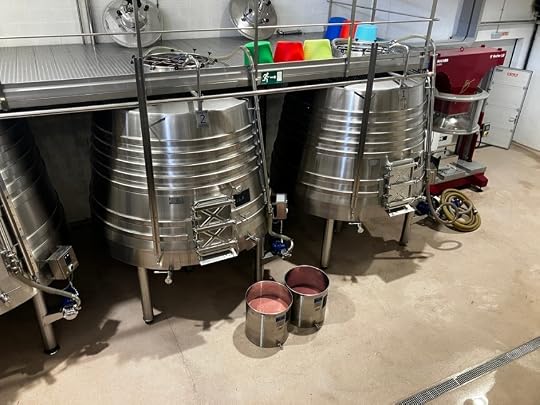
One of the reasons for staying in Arcos was to explore some of the surrounding area, and visit Bodega Tesalia established by the Golding family in the Sierra de Grazalema in 2010. I’m so grateful to Richard Golding and their wine-maker Valle Lozano for spending so long with us, exploring the terroir, the vines and their spotlessly clean winery! In recent years I have come to appreciate some of the still white wines made mainly from Palomino and a range of other local grapes in the Vino de la Tierra appellation of Cádiz (see further below). One renowned wine writer describes these as being “slightly flabby full-bodied dry white table wine”, but if one looks hard it is possible to find some very good, elegant light dry white wines in the appellation, with distinctive almond characteristics and sufficient acidity to give them delightful freshness that goes well with many of the local tapas – and they are amazingly good value! Tesalia eschews the traditional white grape varieties, though, and has planted its 12.5 ha with Cabernet Sauvignon, Petit Verdot, Syrah and Tintilla de Rota (Graciano) on generally north facing slopes. The specific plots and methods of vine training have been chosen with particular attention being paid to the terroir, and the resultant wines are elegant, fruit driven (albeit often with slight wild Mediterranean herb characteristics), and have well balanced acidity giving structure to the generally rounded tannins. Although oak ageing is used, the oak does not dominate the wines. They currently produce four main red wines reflecting different balances between the grapes: Iceni (2025:60% Syrah, 40% Tintilla de Rota; 6 months in barriques and foudres), ARX (2023: 55% Tintilla de Rota, 30% Syrah, 10% Petit Verdot, 5% Cabernet Sauvignon; 12 months in oak Barriques), Tesalia (2021: 60% Petit Verdot, 20% Syrah, 10% Tintilla de Rota, 10% Cabernet Sauvignon; 12 months in barriques), and Neso (2022: 100% Syrah; aged in barriques, five of which were then selected for this wine). In recent years I have become particularly fond of Petit Verdot, and so I particularly enjoyed the Tesalia, with its bright red colour, and plum, red fruit, herbal and slight spicy notes. It is elegant now, but I look forward to seeing how it ages, and suspect that it will gain yet more complexity and nuance over the next five years.

 DO Jerez-Xérès-Sherry, DO Manzanilla – Sanlúcar de Barrameda, and Vinos de la Tierra de Cádiz
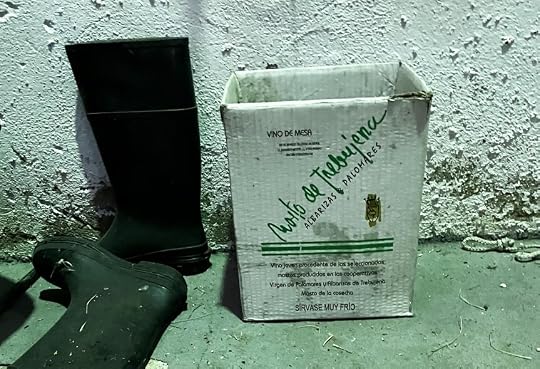
This is not the place to go into the complexities of the various Denominaciones de Origen and Vinos de la Tierra in the province of Cádiz in this westerly part of Andalucia. Suffice it to say that both the DOs share the same vineyards and traditional methods of wine making, based mainly on Palomino Fino, Moscatel, and Pedro Ximénez (PX) grapes, the Palomino grown especially on the white calcareous albariza soils, and the Moscatel and PX mainly on barros and arenas soils. Most Sherry is matured in the bodegas in Jerez (see above), although some, such as Bodega Osborne are located in El Puerto de Santa Maria, and Manzanillas, as with Bodega Barbadillo, are matured in Sanlucar de Barrameda, with its magnificent old castle (see pictures below). I have always enjoyed sherry of many different styles, but with the global decline in sales many producers have turned increasingly to table wines that are of good value and well worth discovering (sherry sales in the UK halved between 2005 and 2015). One of the more unusual of these is the new year’s Mosto produced by the Cooperativa Agrícola Virgen de Palomares. At less than €4 a bottle, it goes well with the local seafood and tapas!
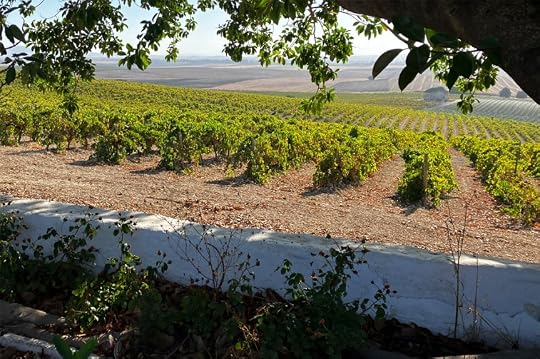
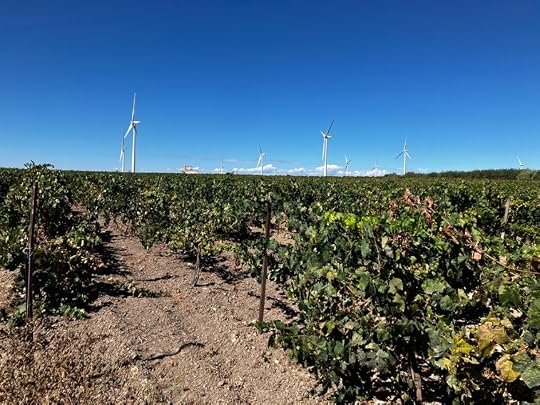
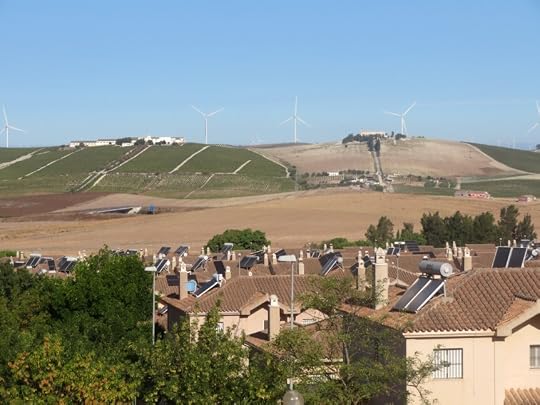
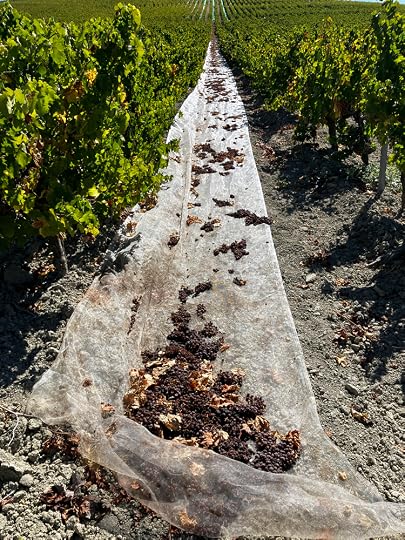

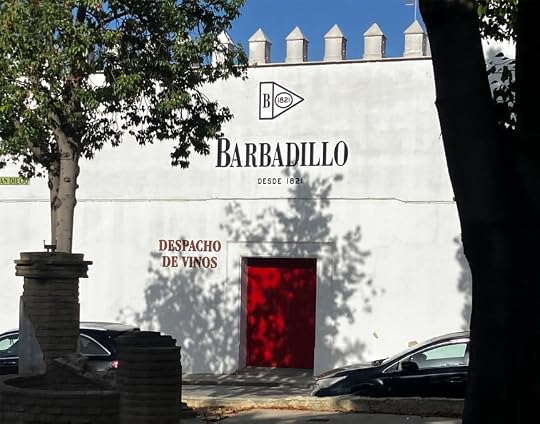

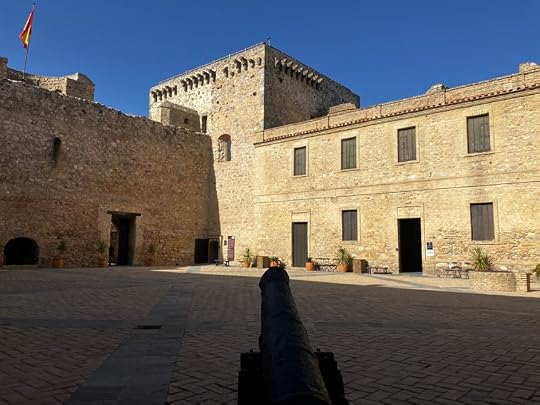
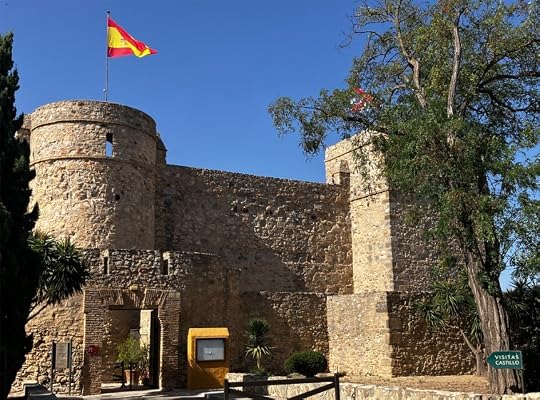
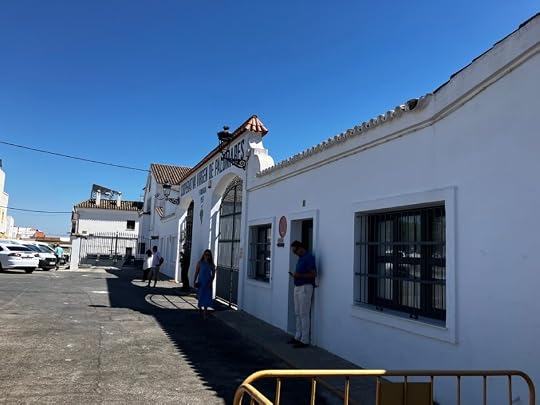
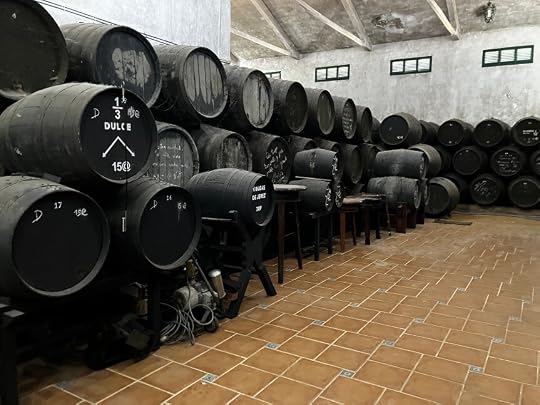
Sadly, as indicated in the above photos, many of the vineyards in the Sherry Triangle between Jerez, Sanlúcar de Barrameida and El Puerto de Santa Maria have in recent years been planted with wind turbines which detract significantly from their visual appeal but do generate much needed income to offset the decline in the popularity of Sherry!
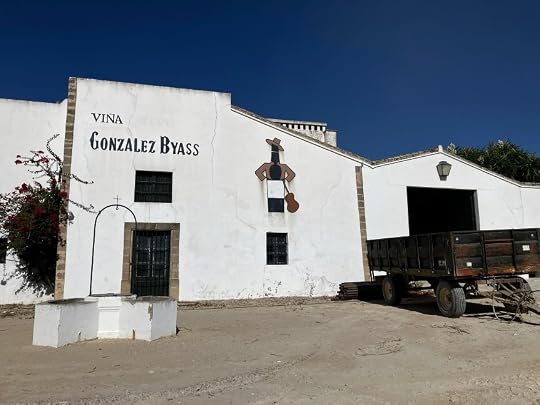
Thanks so much to the hospitality of colleagues at the University of Cádiz, Bodega Tesalia, and Gonzalez Byass who made this such a memorable visit.
October 4, 2026
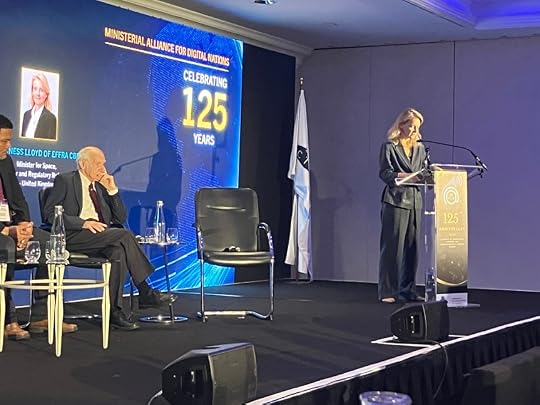
At the Commonwealth Telecommunications Organisation’s 125th Anniversary celebrations
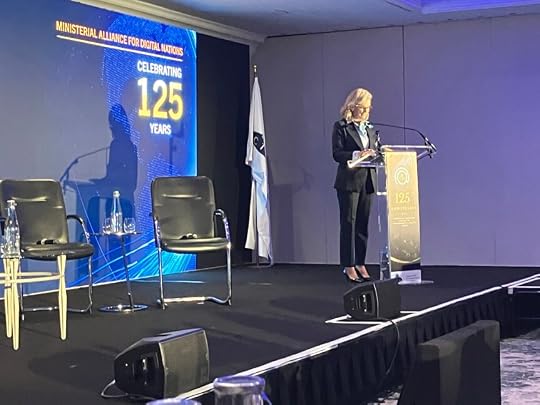
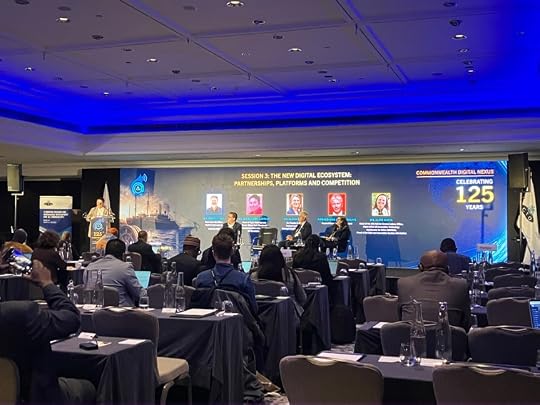
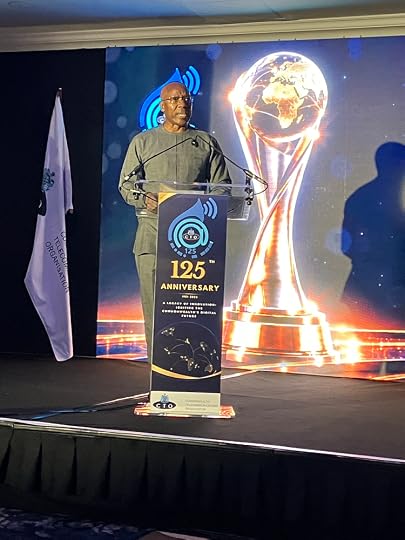
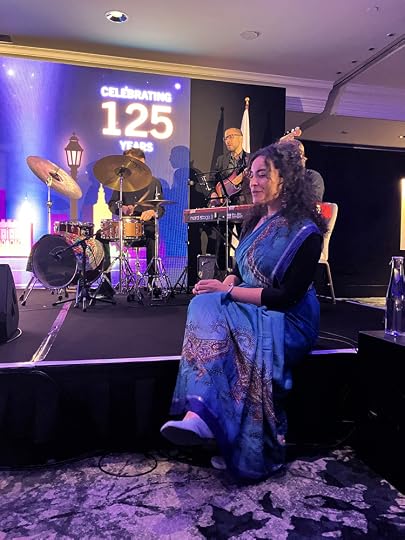
It was a great honour as a former Secretary General of the Commonwealth Telecommunications Organisation to have been invited back to its 125th Anniversary celebrations and to serve as the Master of Ceremonies for its two day Ministerial Alliance. This was a great opportunity for governments, the private sector and civil society organisations involved in the use of digital tech across the Commonwealth to come together to reflect on the past and commit themselves to working together constructively for a better future. I was particularly pleased to have been described as “The Champion of Inclusion” in the celebratory book Signal to Sentience that was published to coincide with the event
 Serving as Master of Ceremonies (thanks to the Official Photographer)
 With three other former SGs (Graham Cunnold, David Souter, and Ekwow Spio-Garbrah)
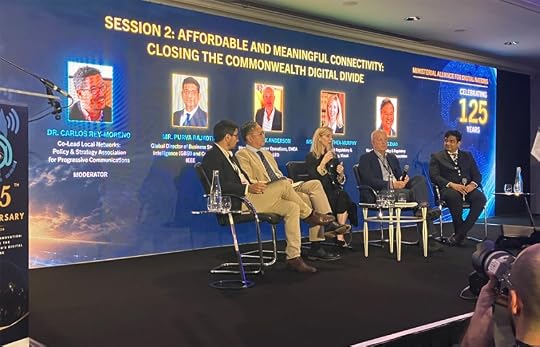
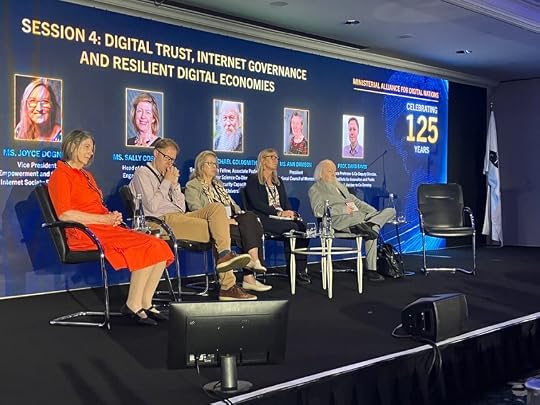
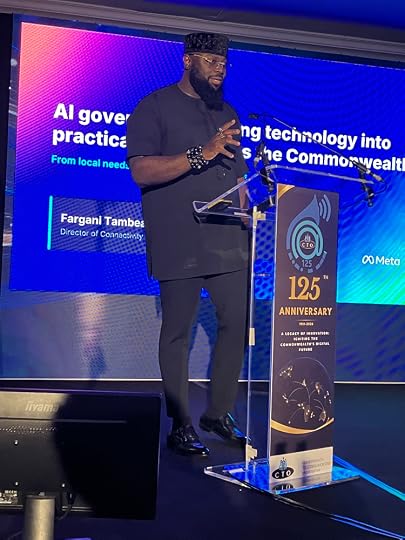
The Ministerial Alliance gathering on 29th and 30th October focused on four main themes:
AI GovernanceAffordable and Meaningful Connectivity: Closing the Commonwealth Digital DividePartnershipsDigital Trust, Internet Governance and ResilienceThe event was graced by the presence of Baroness Lloyd of Effra CBE (UK Minister for Space, Cyber and Regulatory Reform) and by Doreen Bogdan Martin (Secretary General of the International Telecommunication Union) who both congratulated the CTO on its anniversary, and also inspired those in the audience with up-beat aspirations for the future.
 Some of the Commonwealth Telecommunication and ICT Ministers present (thanks again to the Official Photographer.
I’m so grateful to Ministers and Keynote Speakers for sticking closely to their allotted timings, and was glad that none of them had to be red-carded!
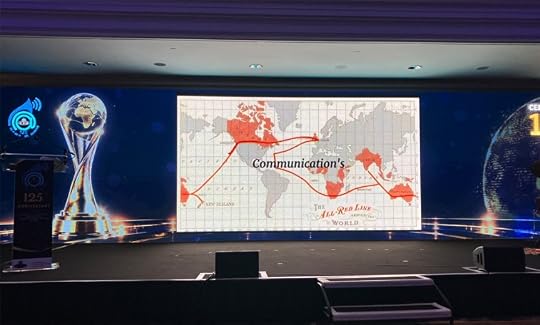
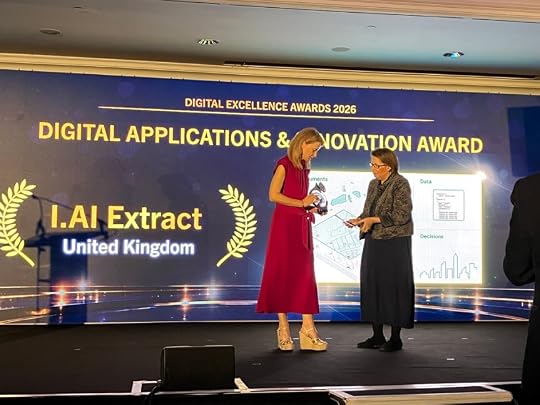
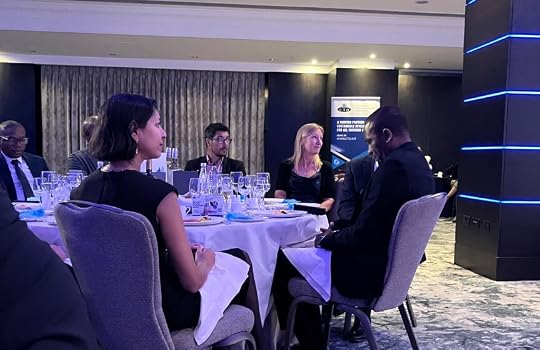
I came away from the event very tired, but also upbeat in the hope that by working closely together members of the Commonwealth can indeed share good practices, collaborate more effectively, and indeed ensure that digital tech is used wisely and inclusively across the Commonwealth in the years to come. My photos below catch just a glimpse of the event, including the final Awards Dinner and celebration.
July 13, 2026
Personal Reflections on WSIS 2026 (and AIfor…?)
It was great to return to Geneva between 6th and 9th July, to participate in the WSIS Annual Forum for yet another year (in the ITU Headquarters and Palexpo), but also to explore a little bit of the AIforGood exhibition in Palexpo where I participated in a couple of sessions in the Leaders’ Lounge (as a guest without having to pay the CHF 4900, c.£4,500 pass fee!). It’s amazing to think that we gathered here 23 years ago for the first WSIS Summit! I wonder how many of us who were originally at Geneva and Tunis were here again this year?
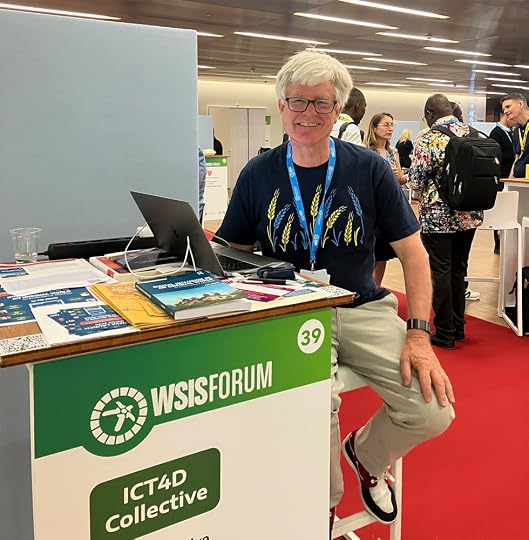
Overall, this year’s event was much better than many previous ones, and I thoroughly enjoyed being back in Geneva again – primarily because it is always an opportunity to meet with good friends of many years, and also to meet exciting new people working in the field! Importantly, WSIS this year seemed less like a Cindarella to the glitz and glamour of AIfor…? (but see the images below). Congratulations are due especially to Gitanjali Sah and her team (particularly Ruth Sidabutar and Sarah El Omari) for all their hard work in making it such a success. Having a booth at WSIS (Booth 39) this year, for only the second time, made a huge difference, not least because it provided a focus for talking about our work in the ICT4D Collective, and also for promoting my new book, Digital Inclusion in an Unequal World: An Emancipatory Manifesto (Routledge, 2026). It also meant that I had a seat to rest in! The queues in the hot sun for the badging process reminded me of even longer queues at the Tunis part of the original WSIS Summit in 2005!
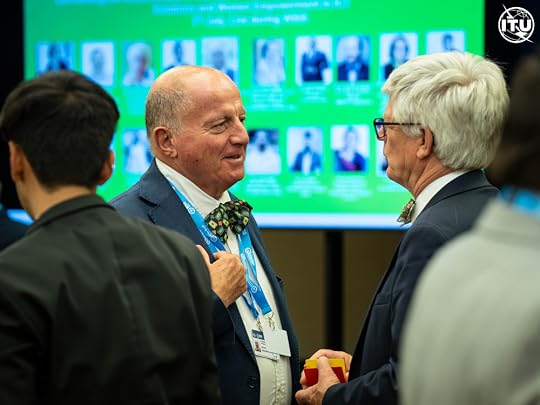
I hope the selection of pictures below conveys a sense of the fun and energy we enjoyed last week (thanks to the Official ITU photographer and other friends for some of these) – it was so good meeting up with these friends – old and new!


 [image error]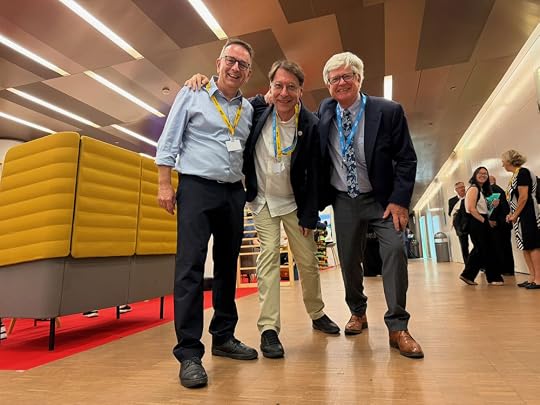
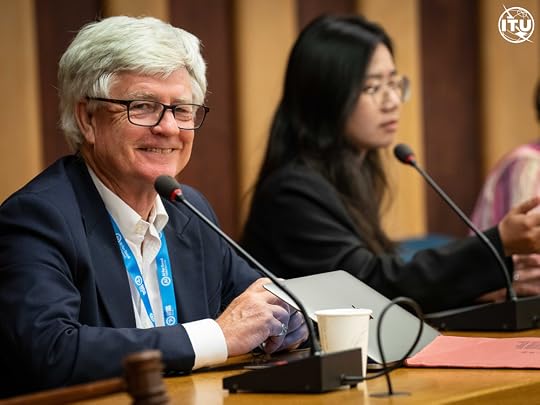
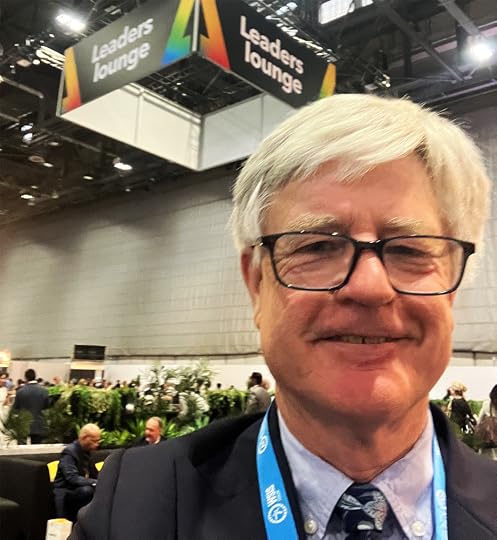
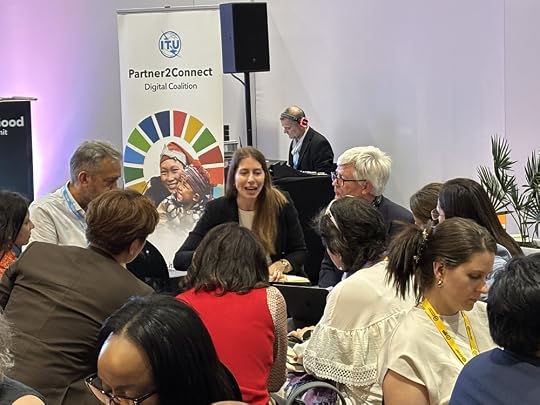
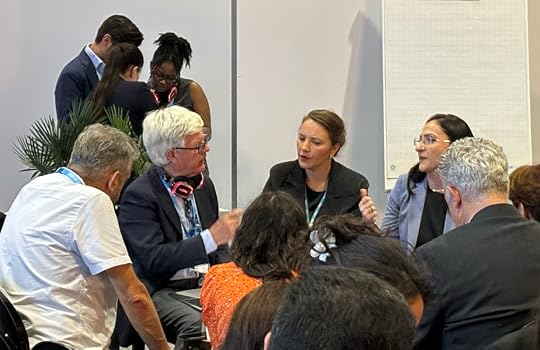
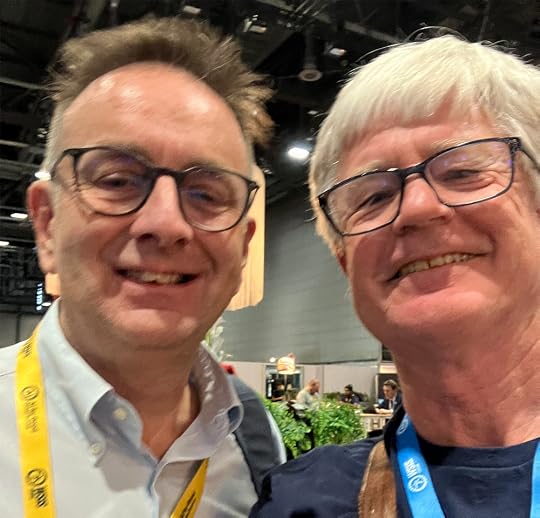 [image error]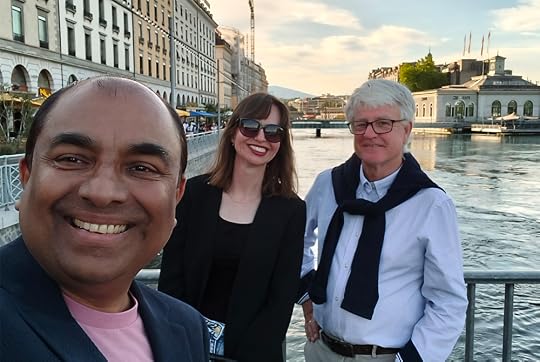
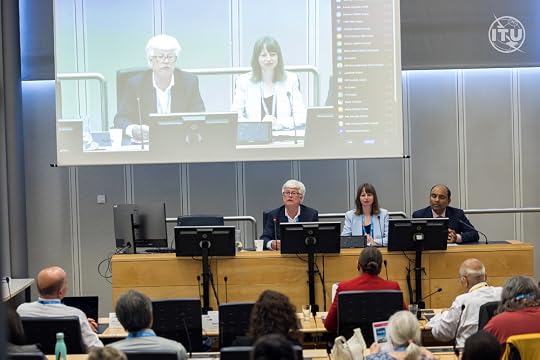
The above pictures are all about friendship and being human. For a very different perspective, the images below convey something of the technical interests in AIforGood (largely driven by scientism, digital determinism and technological instrumentalism)

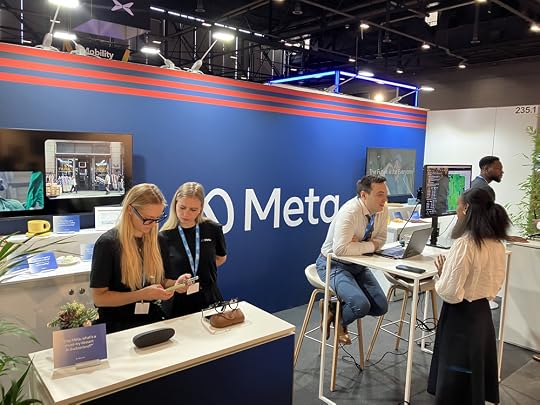



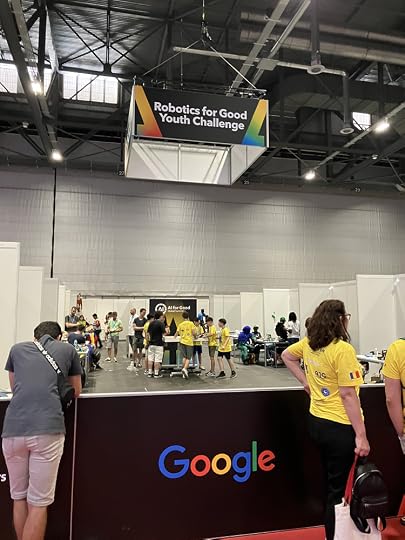
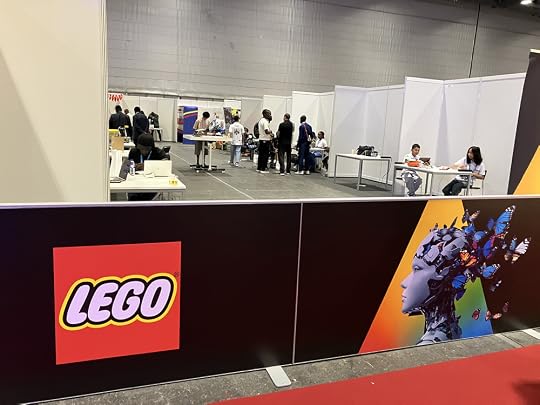
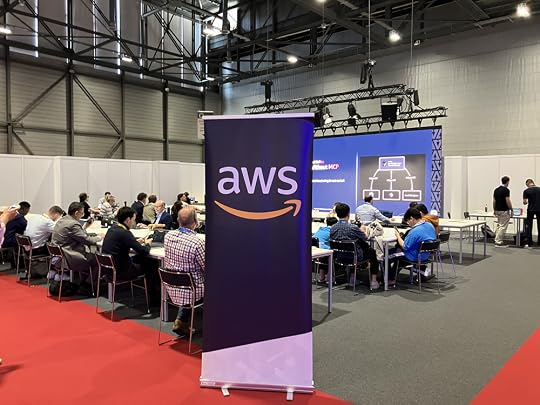

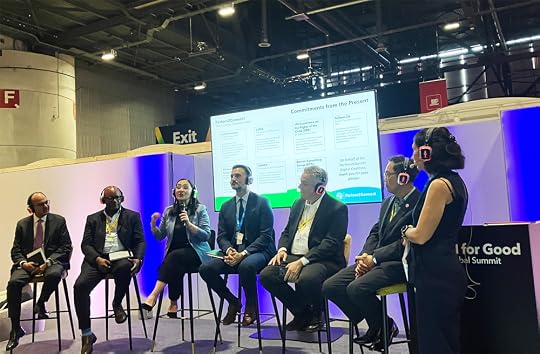
During this year’s WSIS programme, I contributed to the following sessions (where recordings and further documentation are available these can be accessed through the highlighted links below):
Session 347: Digital Inclusion in an Unequal World (Moderator)Session 541: The future of education and research in the AI era: equipping young people for tomorrow (Speaker)Session 188: AI Empowerment for Older People from a Gender Mainstreaming Perspective (Speaker)Session 372: Connecting the Unconnected in the field of Education Excellence, Cyber Security & Rural Solutions and Women Empowerment in ICT (Speaker)Session 399: Foresight for FAIR Cities – Exploring AI Risks and Mitigation Strategies (Speaker) – it was really sad that this session run by UNU-EGOV was cut very short because the previous Regulators Roundtable overran by 30 minutes, and the organisers of the session after us (High-Level Dialogues on LLDCs) came in to disturb us and set up their own “stall” after we had been going for less than 15 minutes. Partner2Connect session at AI for Good (Moderator of Unit 1)Thanks again to all those who worked so hard in the ITU to make this such an enjoyable few days.
And after a long hot day’s work, it is always good to return to Les Brasseurs for beers and flammenkueches!

July 3, 2026
My involvement in the WSIS Annual Forum (and AI for …?), 6-10 July 2026
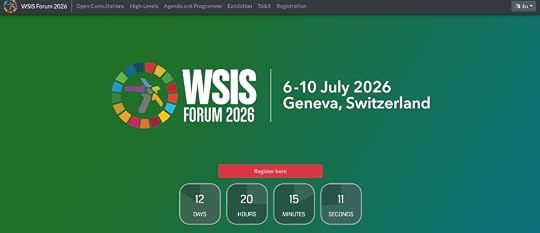
I have long believed in the value of the WSIS Annual Forum, and have been actively involved in most of the events since the original summit in June 2023. It is always a great opportunity to meet up with old friends and make new ones. It’s also a good chance to catch a glimpse of new things and ideas, and watch the theatre of how people present themselves at such gatherings. I have even been known to be a little bit provocative (see picture at foot of this post), as in 2019 when I changed the polystyrene letters of WSIS around to make MISS on the main stage in front of the then SG! I will one again be taking an active role in various sessions along with colleagues from the ICT4D Collective, and would love to see you at some of the sessions listed below (even if only online!). I am particularly seeking to promote my new book Digital Inclusion in a Unequal World: An Emancipatory Manifesto at every opportunity I can in the event! If you are in Geneva then, do please join the sessions in which we will be involved, visit our stand in the Exhibition, or meet us for a drink in one of our favourite hostelries!
WSIS 2026 Exhibition, 8th-9th JulyThe ICT4D Collective has a stand in the small exhibition area on 8th and 9th July (although sadly our specially prepared banners have been banned!). This is only the second time that we have participated in the exhibition, and along with Prof G. ‘Hari’ Harindrath I will be present at the stand for much of the time when we are not involved in sessions. Find out more about our research and practice at the stand, take away some of our resources (especially those prepared on safe wise and secure use of digital tech jointly developed with our colleagues in the LBT community in Rio de Janeiro), read some of our working papers (and take them away on the evening of 9th), buy a copy of Digital Inclusion in an Unequal World: An Emancipatory Manifesto at a 30% discount (first come first served) or get a 20% discount voucher.
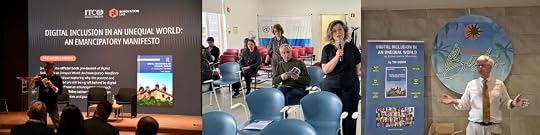
Celebrating the publication of Digital Inclusion in an Unequal World: An Emancipatory ManifestoFollowing successful pre-launch and launch events for mt’s latest book at the ITCILO in Turin (Italy), at UNU-GOV’s headquarters in Guimarães (Portugal), and during eLearning Africa in Accra (Ghana) several of the authors are going to be present during WSIS including Benita Rowe, G. ‘Hari’ Harindranath, Mei Lin Fung, and Revi Sterling, and will be talking about during and after our session on 6th July. A small number of signed copies of the book will also be available at the >30% discounted price (of £25, CHF 28, €30, US$35) during the session and at our Exhibition stand. We may well also celebrate together at a local hostelry (probably Les Brasseurs) on the evening of 6th July.
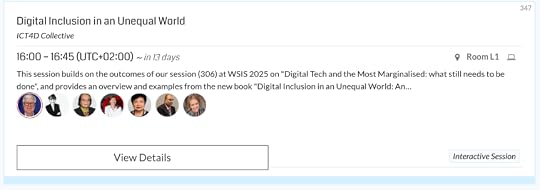
 Session: Digital Inclusion in an Unequal World, 6th July
Please join our session on Monday 6th July from 16.00-16.45 in Room L1 Montbrillant for a lively discussion about what we all need to do if the poorest and most marginalised are indeed to benefit from, rather than being enslaved through, the use of digital tech. See the great speakers lined up below!
 Session: The future of education and research in the AI era: equipping young people for tomorrow, 7th July
I’m going to be a panellist in Session 541 being convened by the ITU from 10.00-10.45 on Tuesday 7th July in Room G3, ITU Varembé, and have been asked to address the question “Given your background in digital inclusion, how should universities in the developing world prepare students for the age of AI? How can AI be used to expand educational opportunities and drive economic and social development?” – in only three minutes. Guess I will be saying something along the lines of most universities across the world should be closed down, and we should focus much more on technical and vocational training instead. The key thing will be to retain our humanity and avoid digital dementia!
 Session: AI Empowerment for Older People from a Gender Mainstreaming Perspective, 7th July
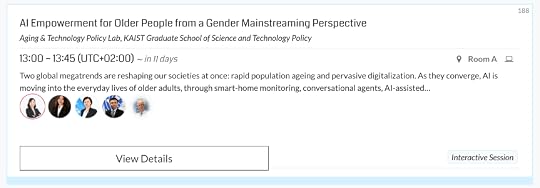
I’m also a panellist in Session 188 being convened by the Aging & Technology Policy Lab, KAIST Graduate School of Science and Technology Policy (South Korea), from 13.00-13.45 on Tuesday 7th July in Room A, ITU Tower Building. We will be speaking about how elderly women can benefit from the use of AI (if at all!). Clearly personalised care plans will be important, but again retaining our dignity and humanity are for me even more important.
 Session: Connecting the Unconnected in the field of Education Excellence, Cyber Security & Rural Solutions and Women Empowerment in ICT, 7th July
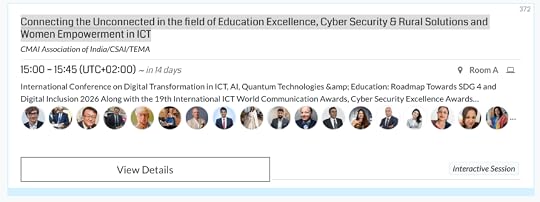
Prof. N.K. Goyal from the CMAI Association of India, along with CSAI and TEMA has once again invited me to moderate this showcase of Indian ingenuty in Room A on Tuesday 7th July from 15.00-15.45. As in previous years, I will have the enjoyable but challenging task of moderating a very full session of Indian speakers! My red and yellow cards will definitely be necessary!
 Session: Foresight for FAIR Cities – Exploring AI Risks and Mitigation Strategies, 9th July
This important session in Room B Palexpo from 16.00-16.45 on Thursday 9th July is being convened by UNU-EGOV to address some of the risks of AI and strategies that can be put in place to mitigate them in the context of their project on “FAIR Cities: Foster AI for Inclusive and Responsible Cities“. I’m excited to have been invited as a speaker, and guess I may focus on the implications for rural areas and oceans! All too often urban societies exploit the non-urban and I fear that these processes will be accelerated by the design and use of AI!
 Partner2Connect session at AI for Good, 9th July
The ITU’s Partner2Connect initiative is convening a session on Building the future we want: scaling inclusive AI solutions through collaboration on 9th July from 14.00-15.00 during the AI for Good Summit and I have been asked to moderate the session on “Children, Youth, and Online Protection”. This should be an exciting and highly interactive “engagement”. I’m honoured to have been given this role, not least because what I have to say can at times be thought of by some as being somewhat unpalatable. It is great to know that my friends in the ITU understand that I am indeed a good friend, and a sign of this is indeed to be challenging and at times critical.
 ©ITU/I.Wood
June 22, 2026
Demographic decline: good or bad?
Recent commentaries have largely focused on the negative aspects of the falling birth rate in many of the richer countries of the world, especially in Europe. A report by Robert Cuffe and Harriet Agerholm for the BBC thus emphasises the standard concerns over the implications for pensions, health and social care with the following words,
The growing ageing population “will add to pressure on the NHS, the state pension and the wider public finances”, said Stuart McDonald, head of longevity and demographic insights at pension consultants LCP.
“For the NHS, the challenge is not simply a larger population, but a larger population at ages associated with greater healthcare need.”
He added: “But for pensions, the projections will intensify an already difficult debate about whether people can realistically and fairly be expected to work longer.”
Sarah Scobie, Deputy Director of Research at the Nuffield Trust, warned end-of-life care services are “ill-prepared for an increase in deaths as the population ages overall”.
“Hospital care accounts for over 80% of public expenditure on health care for people in the last year of life, and most of that is spent on emergency care,” she said.


However, as I have argued elsewhere in 2023 in a slightly different context, there are many very positive aspects to declining population levels. Four factors stand out as being particularly important, especially in the UK:
First, and most obviously, falling populations place less pressure on our natural environment. All else being equal, falling populations place less demand for energy, for housing, for mining, and for transport, all of which are increasingly harming our precious environmental and landscape heritage.Second, contrary to popular economic belief, it is not necessarily detrimental for the welfare of a state’s citizens if its economic growth rate falls. For too long, the success of countries has tended to be measured in terms of economic growth (often measured in GDP per capita), rather than human well-being. Bhutan’s Gross National Happiness Index is nevertheless an important reminder that there are indeed alternative measures. The reasons for the linkages between economic and demographic growth are clear, in that an increasing population provides both more labour (and thus production) and greater consumption (thus demand) (see Unwin, 2023) which benefits private sector companies that are the engines of growth. Focusing on equity rather than growth would lead to a completely different, and much fairer society.Third, the development of new digital technologies, especially robotics and AI, and in the longer term CyborgAIns (see my Digital Inclusion in an Unequal World, 2026) is often decried as being detrimental to employment, but with falling populations that is exactly what we need. If these technologies are used significantly to increase productivity levels, then wise choices in their deployment (especially if they are used to deliver the roles that people are currently disinclined to perform) can readily counteract falling population levels.Fourth, the apparent fetish for longevity amongst some of the Digital Barons, who are sinking fortunes into finding ways to extend their lives (see Varanasi, 2025), seems utterly misplaced. Death is the only certainty in Human life, and we need to focus instead on ensuring that the fewer lives being lived are indeed lived well.We should be welcoming a decline in population with open arms rather than decrying it. A focus instead on Life, on Equity, on Nature, and on Technology (LENT) can transform the lived experiences of all our citizens for the better. The UK had the eighth highest population density in the world in 2025 among countries with populations over 50 million, at 285 people/sq km. In Europe, by contrast, Germany had 43 people/sq km fewer than the UK, Italy had 84 people/sq km fewer, France had 163 people/sq km fewer, and Spain had 188 people/sq km fewer, only about one-third the population density of the UK.
It is high time we had a completely different approach to demographic transition. We need to welcome declining populations as a golden opportunity to build fairer and better societies that are more in harmony with Nature.
June 19, 2026
Reflections on Imfundo, 2001-2004
I had the enormous privilege of leading Imfundo: Partnership for IT in Education based in what was then the UK’s Department for International Development between 2001 and 2004. This initiative created by the UK’s Prime Minister, Tony Blair, was one of the first multi-sector projects in the then new field of ICT4D specifically designed to use digital tech in support of some of the most marginalised people and communities in Africa. Our partnership network of some 40 organisations worked in eight countries and the images below show members of the Imfundo team between 2001 and 2004, and our partners (taken from my 2004 farewell presentation)
 People who worked on the Imfundo team within DFID (2001-2004)
 Imfundo’s partners (2001-2004)
I remain immensely pleased that the African entities with which we worked closely during those years appreciated the work of all the members of our team, as reflected in these comments noted in our output to purpose review in 2004.
“Imfundo’s emphasis on working with the poorest of the poor communities, and collaborating with black SMMEs is exemplary. It is making a difference already, and could have much greater impact as the networks grow.”“Best networkers in the donor community. We like the networking and partnership approach – and they are less geopolitical.”“Imfundo has proved more accessible … and highly knowledgeable regarding the technology and education issues. It has been a learning experience to work with them”.“Strategic partnership approach and transparent, participative, networking processes are excellent, as is direct involvement of Imfundo with relevant expertise. Most other donors don’t work like this.”
I’ve never written in detail about Imfundo, not least because my contract had said I could only do so with the Department’s permission, and despite seeking that permission during the remainder of DFID’s life and then following its merger with the FCO in 2020, I never received a confirmatory reply! However, I have included some reflections about my time at Imfundo in my latest book Digital Inclusion in an Unequal World: An Emancipatory Manifesto (Routledge, 2026), and along with the other vignettes in the book I have also recorded this as an audio file accessible below and on our podcast:
June 7, 2026
African launch of Digital Inclusion in an Unequal World
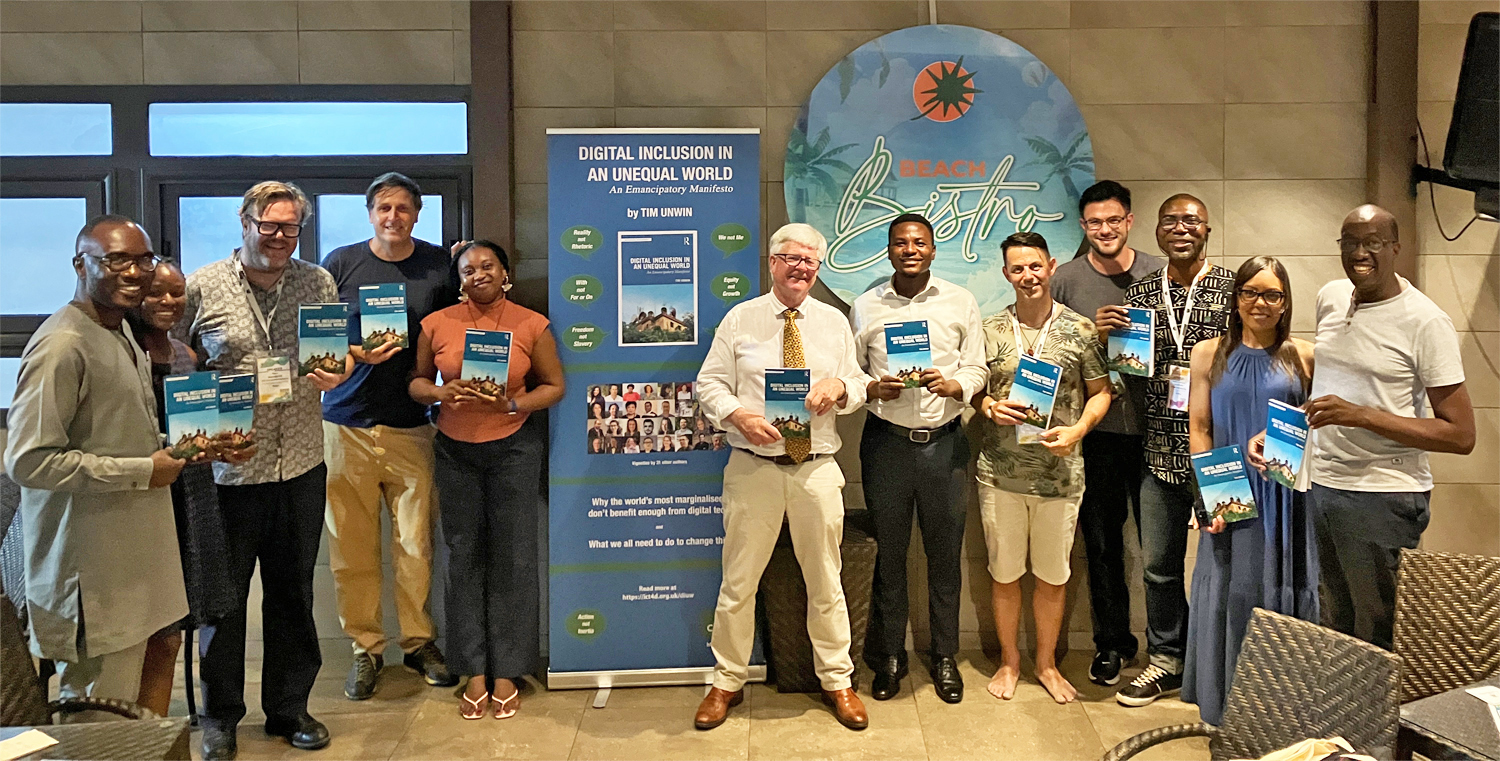
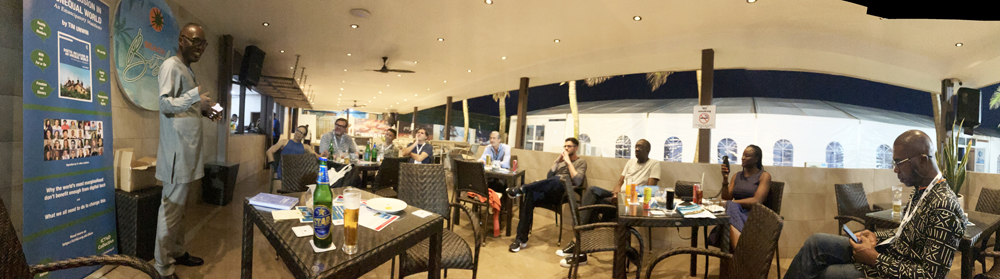
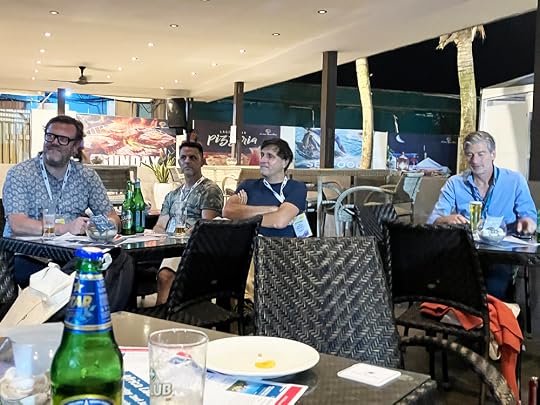
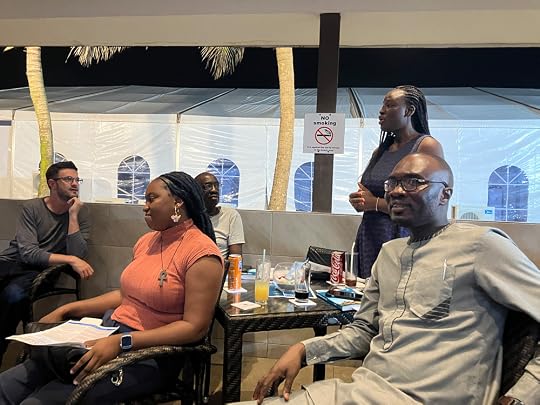
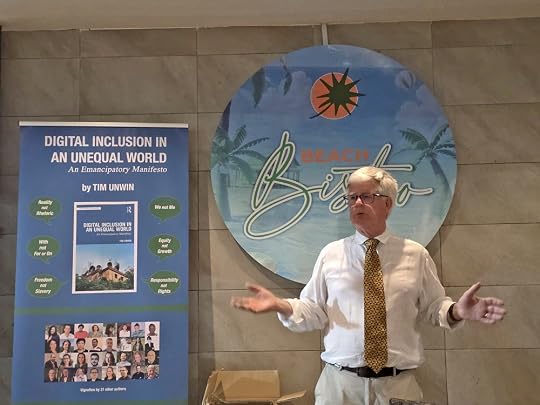
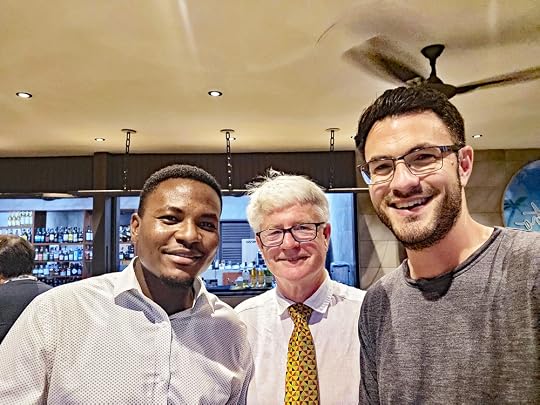
It was great to be able to hold a launch event for my latest book Digital Inclusion in an Unequal World: An Emancipatory Manifesto on 2nd June in Accra on the evening before this year’s eLearning Africa conference and exhibition. Godfred Bonnah Nkansah from the Kofi Annan International Peacekeeping Training Centre opened the discussions, and David Hollow and Tom Wambeke also reflected on their contributions to the book. We enjoyed discussing a wide range of issues relating to the use of digital tech by the world’s poorest and most marginalised people and communities, and I am most grateful to the staff at the Beach Bar of the Labadi Beach Hotel in Accra for ensuring that the Star (beer) as well as other beverages flowed throughout!
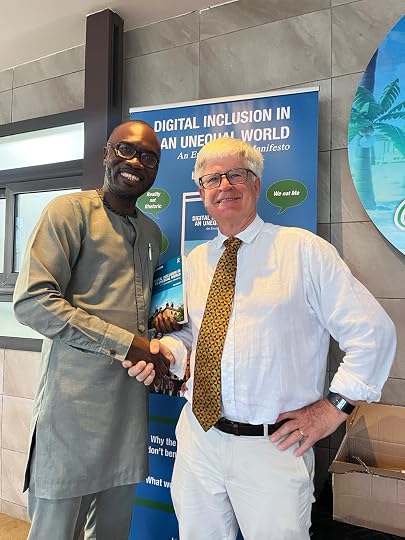
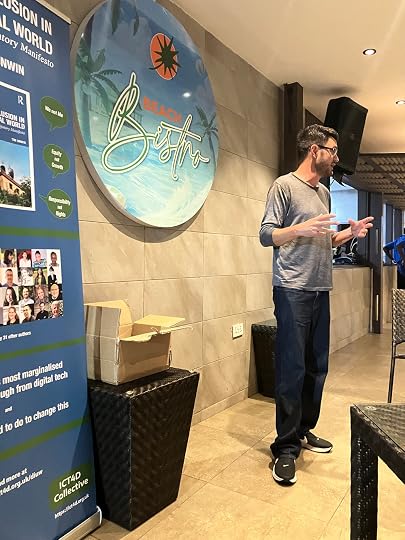
Copies of the book are available from Routledge and Amazon, as well as good bookshops!
eLearning Africa, Accra, 2026
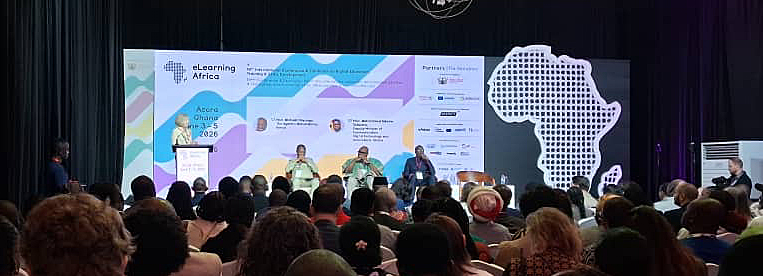
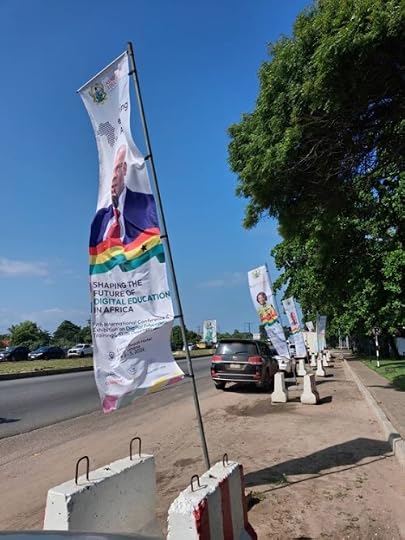
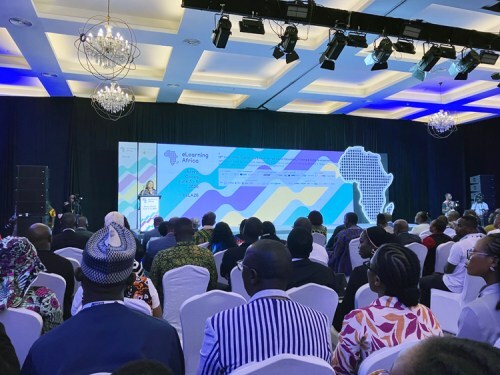
It was a great pleasure to participate in this year’s 19th eLearning Africa gathering held in Accra from 3rd to 5th June. Enormous thanks are due to Rebecca Stromeyer and her team for bringing us together at the Labadi Beach Hotel in Accra, as well as to Ghana’s Ministry of Education who co-hosted this year’s event. This was the eighth time I have been fortunate enough to participate in these conferences, and it has been fascinating witnessing how eLearning Africa has evolved since its inaugural event in Addis Ababa in 2006. Over the last 20 years, the use of digital tech for learning and education has deepened and widened very considerably across the continent, but many of the challenges and opportunities that we discussed together in the mid-2000s still remain evident today.
This year’s plenary addressed the theme of “Africa’s Time, Africa’s Terms: Learning for Sovereignty, Strength and Solidarity”, and this focus underlay many of the subsequent sessions. There was certainly a vibrancy in the presentations and considerable confidence in the rhetoric that Africans can indeed use and innovate technologies, and especially AI, to serve their interests. The reality of US and China’s dominance of the global digital tech sector, particularly now in the design and control of AI systems (see, for example, Netcorp’s recent AI-Generated Code Statistics 2026) nevertheless suggests that such optimism may be challenged in practice on the ground. More importantly, it is no long possible for isolationism to flourish in an increasingly interconnected world, and it is crucial for African countries to look beyond the continent’s boundaries to forge strategic and mutually beneficial partnerships with other states and companies. This, however, also requires those outside the continent to recognise Africa’s richness and potential, something I wrote about at length in the late 2000s, and to treat this with respect.
I hope that the images in the slideshow below capture something of the vibrancy and energy of eLearning Africa 2026
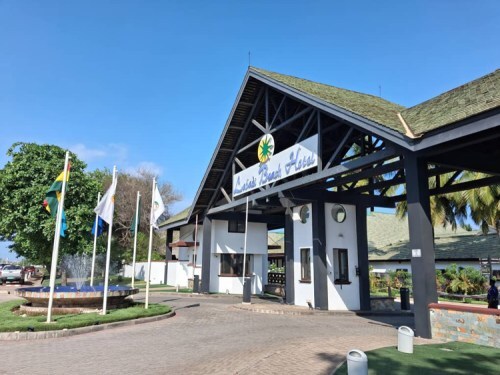
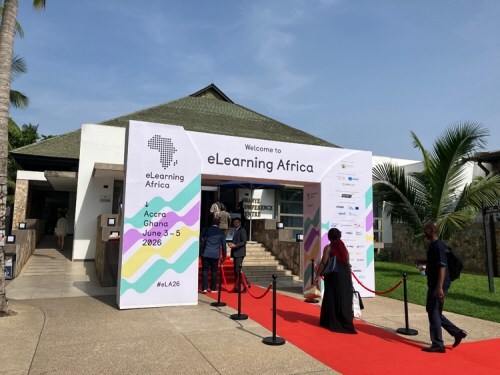
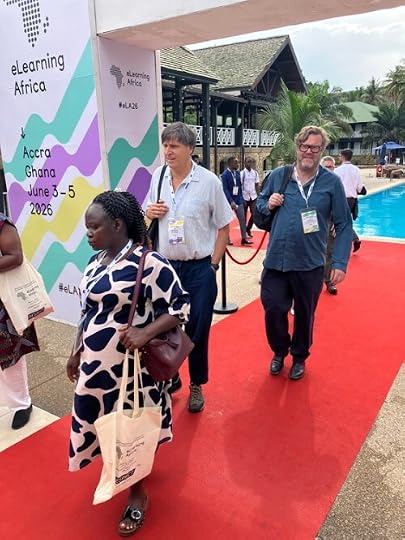
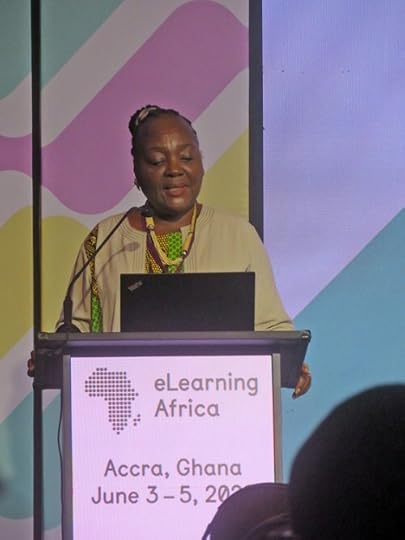
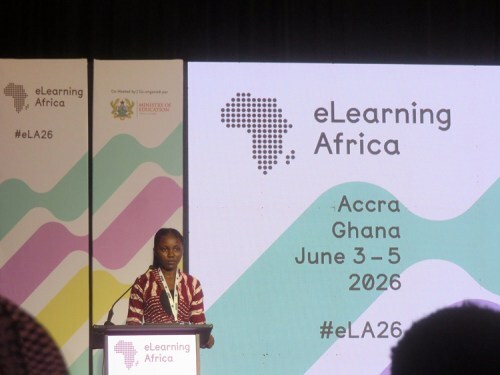

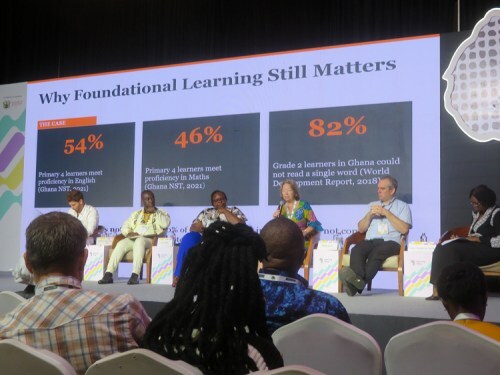
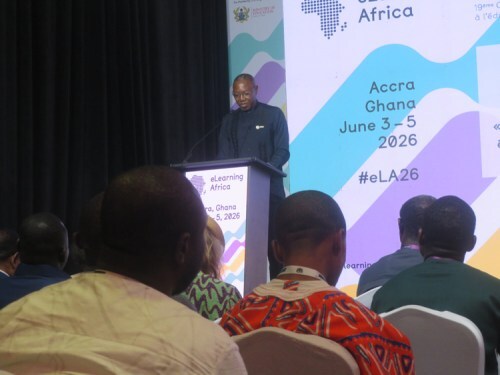
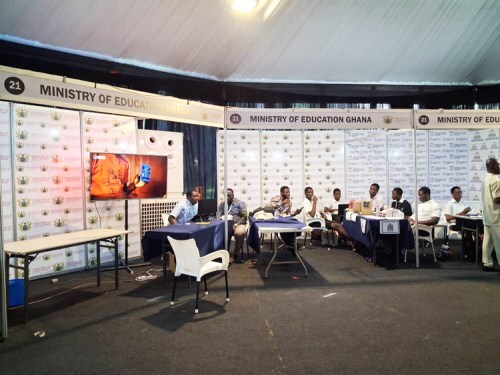
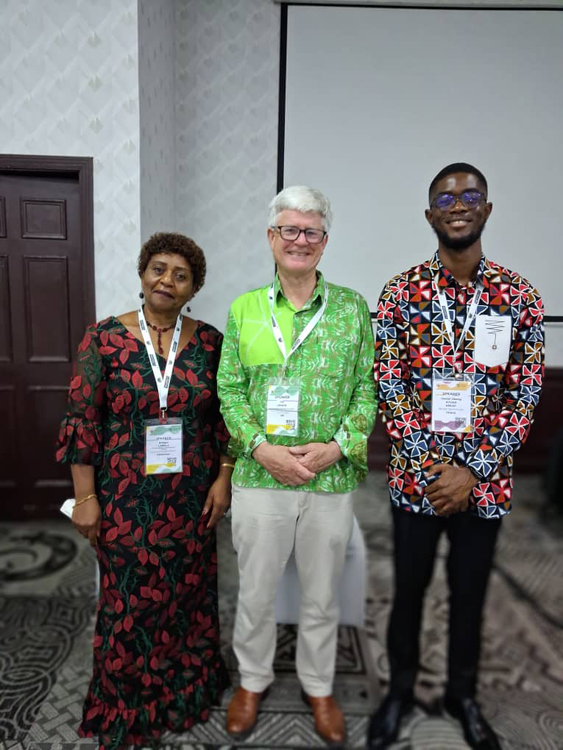
I was especially pleased to moderate a session on the final day on “Inclusive Digital Education: African Led Innovations for Learners with Disabilities”, which began with presentations from two main speakers:
Daniel Atuah , KNUST E-Learning Centre, GhanaInclusive Digital Education Toolkit: Accessibility in KNUST Virtual Classrooms and Online Exams Bridget Longla , Cameroon Baptist Convention Health Services, Cameroon
Inclusive Digital Learning in Low-Resource Settings: Lessons from Cameroon’s First Accessible Digital Library
Following these, there was a wide-ranging discussion that emphasised in particular the importance of invisible disabilities such as dyslexia in its many different guises. Sessions on and with people with disabilities at large international conferences are often poorly attended, but it was excellent that a large and engaged group of participants chose to contribute to our session.
June 2, 2026
Changes to the UK’s approach to tax returns: yet another example of the abuse of digital tech by states at the expense of citizens
 Image from
The Times
, well captures the lunacy and danger of the UK government’s Making Tax Digital scheme
Image from
The Times
, well captures the lunacy and danger of the UK government’s Making Tax Digital schemeThe UK Government’s shift to digital tax returns is yet another example of how ridiculous, expensive and time-consuming for the end user the drive to digitalisation is by governments. The Times has recently summarised the changes clearly and succinctly in an excellent article by Alice Wright entitled “Why your tax-return headache is about to become a nightmare”. As of April this year the Making Tax Digital scheme means that:
“landlords and the self-employed with a gross income above £50,000 a year will have to pay for commercial software so that they can file their tax returns” (“HMRC said it will cost an average of £320 to switch to government-approved software, then £110 a year after that, but experts said it could be four times that much”);this has to be done every three months, not anually as at present. People “will also have to file quarterly, rather than annual, updates to HMRC on their income and expenses. Anyone missing the deadlines will be fined under a new points-based system, although the penalties will be waived for the first year”the financial cost of this is very significant: “HMRC has estimated that the introduction of Making Tax Digital will cost about £4.3 billion — with £1.4 billion being government spending and £2.9 billion the cost to taxpayers and small businesses of buying software and employing accountants”.How have we let this happen? It seems totally stupid with the only ones really to benefit being the companies selling the software – which is guaranteed to have glitches and take taxpayers far longer to complete (four times a year) than the previous paper based systems.
Just because it is possible to use digital tech to do something does not mean it is wise to do so!
(See also https://www.thetimes.com/article/5b5f252e-69a8-422e-9f99-c116d16308a4 )
Tim Unwin's Blog

- Tim Unwin's profile
- 1 follower
