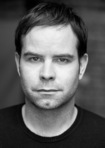
Jacques Strauss's Blog
May 18, 2011
Favourite Books and Influeces
This is a blog I wrote for the Vintage Books website - which is will well worth checking out. But I will be posting the Vintage blogs here as well.
I love it when a famous person, be they an actor, politician, writer or celebrity is asked what their favourite book is. It’s a real bitch of a question for a number of reasons:
(1) The interviewer is asking them to distil everything that they love about the vast tidal wave of text that is literature into a single book. Simply by answering the question they do an insult to the canon.
(2) The interviewer is asking them to assign a metonymic function to a book; choose a book that represents you, in your varied complexity and ambiguity. Reduce yourself to only one book.
(3) If you are deliberately cultivating a fan base or voters there is a complex interplay between taking yourself too seriously, being flippant and (worst of all) being obvious and boring. You can feel the strain: I’m one of the people, just like you! But I am also smart. I appreciate literature with a capital ‘L’ even though people think I’m vacant and facile.
No matter what book people choose, it’s invariably disappointing. My reaction is generally, ‘Yeah – that’s a good book. It’s a very good book. But that? That’s your totemic piece of literature? Of everything you could choose that stood out? Jeez, I guess you’re just not as cool as I thought you were.’ Of course it’s even more disappointing when they opt for the standard bail out: ‘Oh, there are too many books,’ they say, ‘I couldn’t possibly choose just one.’ That’s when you want to say, ‘Oh go on! Nail your colours to the mast! You will disappoint – but gives us your best shot you coward!’
Of course I am glad I don’t have to this answer this question because I couldn’t choose one book. But I suppose for a writer the question of influences is different. Famous writers are always telling aspiring writers to ‘read, read and read some more’ but they seem to differ on why this is good advice. Some imply that through a process of osmosis you unconsciously absorb good writing technique. Others suggest that to benefit from good writing you need to make a deliberate study of the techniques they use. You liked that passage? Well read it again and this time analyse what it is the writer did. How did they evoke that response? In the work of Murial Spark for example, it’s interesting to see how she uses heightened language for comedic passages and a more paired back, direct style for serious ones. Of course this technique is employed by lots of writers, but Spark does it so well. Her use of repetition is also pitch perfect and highly evocative.
Some of the most important influences are the one’s the give you permission to do things you wouldn’t otherwise consider. When you read Phillip Roth’s Portnoy’s Complaint you realise ‘Oh – you can go there. You can go that far.’ And when you read Douglas Coupland you realise it’s perfectly ok, if done with sufficient skill, for the authorial voice to intrude, to riff, on this or that matter, to litter the text with ‘babies’ while everyone else is calling for immediate and ruthless infanticide. The best writers are way ahead, slashing through the thicket of rules and advice, clearing the path for the rest of us to follow.
But there is more than that. The great authors are like deep reservoirs of writing fuel; their writing is so deeply and richly associative that it sparks off dozens of your own memories and ideas and experiences. For me JM Coetzee does this every time. Whenever he eviscerates one of his characters I usually feel a bit roughed up too.
Finally there’s that group of people who aren’t necessarily fiction writers, but are equally inspiring. Whatever you may think about Freud he articulated the conflict that sits at the heart of every good character: the vast difference between your childish fantasies of what the world and you should be, versus what you and the world actually are. And though he may not have been of the psychoanalytic school, these Freudian conflicts are wonderfully and theatrically realised in the experiments of Stanley Milgram. Has there ever been a more compelling piece of psychological research than the obedience experiment? As for Nina Simone … well what does one need to say about Nina Simone? She’s just awesome.
I love it when a famous person, be they an actor, politician, writer or celebrity is asked what their favourite book is. It’s a real bitch of a question for a number of reasons:
(1) The interviewer is asking them to distil everything that they love about the vast tidal wave of text that is literature into a single book. Simply by answering the question they do an insult to the canon.
(2) The interviewer is asking them to assign a metonymic function to a book; choose a book that represents you, in your varied complexity and ambiguity. Reduce yourself to only one book.
(3) If you are deliberately cultivating a fan base or voters there is a complex interplay between taking yourself too seriously, being flippant and (worst of all) being obvious and boring. You can feel the strain: I’m one of the people, just like you! But I am also smart. I appreciate literature with a capital ‘L’ even though people think I’m vacant and facile.
No matter what book people choose, it’s invariably disappointing. My reaction is generally, ‘Yeah – that’s a good book. It’s a very good book. But that? That’s your totemic piece of literature? Of everything you could choose that stood out? Jeez, I guess you’re just not as cool as I thought you were.’ Of course it’s even more disappointing when they opt for the standard bail out: ‘Oh, there are too many books,’ they say, ‘I couldn’t possibly choose just one.’ That’s when you want to say, ‘Oh go on! Nail your colours to the mast! You will disappoint – but gives us your best shot you coward!’
Of course I am glad I don’t have to this answer this question because I couldn’t choose one book. But I suppose for a writer the question of influences is different. Famous writers are always telling aspiring writers to ‘read, read and read some more’ but they seem to differ on why this is good advice. Some imply that through a process of osmosis you unconsciously absorb good writing technique. Others suggest that to benefit from good writing you need to make a deliberate study of the techniques they use. You liked that passage? Well read it again and this time analyse what it is the writer did. How did they evoke that response? In the work of Murial Spark for example, it’s interesting to see how she uses heightened language for comedic passages and a more paired back, direct style for serious ones. Of course this technique is employed by lots of writers, but Spark does it so well. Her use of repetition is also pitch perfect and highly evocative.
Some of the most important influences are the one’s the give you permission to do things you wouldn’t otherwise consider. When you read Phillip Roth’s Portnoy’s Complaint you realise ‘Oh – you can go there. You can go that far.’ And when you read Douglas Coupland you realise it’s perfectly ok, if done with sufficient skill, for the authorial voice to intrude, to riff, on this or that matter, to litter the text with ‘babies’ while everyone else is calling for immediate and ruthless infanticide. The best writers are way ahead, slashing through the thicket of rules and advice, clearing the path for the rest of us to follow.
But there is more than that. The great authors are like deep reservoirs of writing fuel; their writing is so deeply and richly associative that it sparks off dozens of your own memories and ideas and experiences. For me JM Coetzee does this every time. Whenever he eviscerates one of his characters I usually feel a bit roughed up too.
Finally there’s that group of people who aren’t necessarily fiction writers, but are equally inspiring. Whatever you may think about Freud he articulated the conflict that sits at the heart of every good character: the vast difference between your childish fantasies of what the world and you should be, versus what you and the world actually are. And though he may not have been of the psychoanalytic school, these Freudian conflicts are wonderfully and theatrically realised in the experiments of Stanley Milgram. Has there ever been a more compelling piece of psychological research than the obedience experiment? As for Nina Simone … well what does one need to say about Nina Simone? She’s just awesome.


May 16, 2011
First Novels & Autobiography
This is a blog I wrote for the Vintage Books website - which is will well worth checking out. But I will be posting the Vintage blogs here as well. Tomorrow's blog is about favourite books and influences.
There are certain mildly pejorative phrases that are strongly associated with first novels, including, ‘thinly veiled autobiography’ and ‘coming-of-age’. I don’t really believe in a ‘coming-of-age’. I haven’t become any smarter; at best, I’ve become street-smarter. Being street-smart is important in the practical business of getting on, earning a living and not pissing people off, but has nothing to do with the transformative epiphanic experiences that we associate with ‘coming-of-age’. My life is like an anti-coming-of-age-novel. I’m in my thirties and as ignorant as ever. To some extent ‘The dubious salvation of Jack V’ is also an anti-coming-of-age novel. Jack is selfish, he screws up and shit happens, but I don’t believe that it will have a profound effect on what he does in the future. In this sense Jack is a lot like me.
However it would make me uncomfortable if anyone did think the book was strictly autobiographical, mainly because Jack does such a shitty thing. I hope it’s something the reader can’t quite forgive him for. Of course I have borrowed a great deal from my own childhood. I don’t think there is a better source of material than one’s own experiences - recycled, fictionalised, heightened and finally held together by the sort of strong narrative arc that one never finds in everyday life. If ever I had something that was close to an epiphanic experience it was when I realised that I could use something that had happened to me and then exaggerate and embroider and lie, like you do at a dinner party after a few glasses of wine, but without your girlfriend or boyfriend or spouse ruining a great story with the truth. The truth isn’t snappy and the truth is rarely as much fun.
But the question of autobiography is far more complicated than dinner party anecdotes, which over the years bear little resemblance to the original events that were their genesis. To speak with confidence about autobiography, as if the genre were easily defined, is to speak as if the epistemological debates in the university had long been settled. What is truth? What is knowledge? That thing we trust above all else today, the guarantor of truth, is the video camera, which records, we believe, what actually happened. But even the video camera performs a necessary interpretive violence through framing. There is never a context wholly sufficient to make truth, that difficult world, fully present.
What then of our own memories? Some years ago my sister told me about a chance encounter with an Israeli soldier at a Starbucks café in Auckland. Three years later I said to her, ‘Remember that time we met that Israeli soldier?’
‘We?’ she said. ‘It was just me. You weren’t there.’
‘I was,’ I protested. ‘I remember!’ But I wasn’t. I had fabricated a memory. My sister, I should add, has a vivid way of telling stories and so this clear picture had become lodged in my brain and misfiled as a memory in which I was present. This is why I would be extremely cautious about ever writing anything called an ‘autobiography’ and why we would do well to give Roth a break when we insist on knowing who the hell this Zuckerman chap really is. That demand is based on the assumption that the author could even tell us who this Roth chap really is. The question ‘What is autobiography’ is as complicated and unanswerable as the question, ‘What is literature?’ It is sufficiently difficult that one should proceed with caution when reading something the author calls ‘autobiography’, let alone something the author calls ‘a novel’.
Having said all that, it’s no bad thing if a book reads like autobiography; in fact I can think of no higher compliment for a book written in the first person. It means you have made the world and the characters so real, so credible that the reader can only conclude that it must be based on true events. In that sense, everything one writes should feel like ‘thinly veiled autobiography’ even if every last detail, is completely fictional.
There are certain mildly pejorative phrases that are strongly associated with first novels, including, ‘thinly veiled autobiography’ and ‘coming-of-age’. I don’t really believe in a ‘coming-of-age’. I haven’t become any smarter; at best, I’ve become street-smarter. Being street-smart is important in the practical business of getting on, earning a living and not pissing people off, but has nothing to do with the transformative epiphanic experiences that we associate with ‘coming-of-age’. My life is like an anti-coming-of-age-novel. I’m in my thirties and as ignorant as ever. To some extent ‘The dubious salvation of Jack V’ is also an anti-coming-of-age novel. Jack is selfish, he screws up and shit happens, but I don’t believe that it will have a profound effect on what he does in the future. In this sense Jack is a lot like me.
However it would make me uncomfortable if anyone did think the book was strictly autobiographical, mainly because Jack does such a shitty thing. I hope it’s something the reader can’t quite forgive him for. Of course I have borrowed a great deal from my own childhood. I don’t think there is a better source of material than one’s own experiences - recycled, fictionalised, heightened and finally held together by the sort of strong narrative arc that one never finds in everyday life. If ever I had something that was close to an epiphanic experience it was when I realised that I could use something that had happened to me and then exaggerate and embroider and lie, like you do at a dinner party after a few glasses of wine, but without your girlfriend or boyfriend or spouse ruining a great story with the truth. The truth isn’t snappy and the truth is rarely as much fun.
But the question of autobiography is far more complicated than dinner party anecdotes, which over the years bear little resemblance to the original events that were their genesis. To speak with confidence about autobiography, as if the genre were easily defined, is to speak as if the epistemological debates in the university had long been settled. What is truth? What is knowledge? That thing we trust above all else today, the guarantor of truth, is the video camera, which records, we believe, what actually happened. But even the video camera performs a necessary interpretive violence through framing. There is never a context wholly sufficient to make truth, that difficult world, fully present.
What then of our own memories? Some years ago my sister told me about a chance encounter with an Israeli soldier at a Starbucks café in Auckland. Three years later I said to her, ‘Remember that time we met that Israeli soldier?’
‘We?’ she said. ‘It was just me. You weren’t there.’
‘I was,’ I protested. ‘I remember!’ But I wasn’t. I had fabricated a memory. My sister, I should add, has a vivid way of telling stories and so this clear picture had become lodged in my brain and misfiled as a memory in which I was present. This is why I would be extremely cautious about ever writing anything called an ‘autobiography’ and why we would do well to give Roth a break when we insist on knowing who the hell this Zuckerman chap really is. That demand is based on the assumption that the author could even tell us who this Roth chap really is. The question ‘What is autobiography’ is as complicated and unanswerable as the question, ‘What is literature?’ It is sufficiently difficult that one should proceed with caution when reading something the author calls ‘autobiography’, let alone something the author calls ‘a novel’.
Having said all that, it’s no bad thing if a book reads like autobiography; in fact I can think of no higher compliment for a book written in the first person. It means you have made the world and the characters so real, so credible that the reader can only conclude that it must be based on true events. In that sense, everything one writes should feel like ‘thinly veiled autobiography’ even if every last detail, is completely fictional.
April 18, 2011
Choosing a holiday book
Richard and I are having our annual holiday fight. We are both reacting against the holidays inflicted upon on us in childhood. His parents would always rent a nice holiday home on the North Coast or stay in a nice hotel in Durban. It was always very civilised. For this reason, Richard thinks camping is marvellous. Richard thinks there could be nothing, absolutely nothing quite so nice as spending a week camping in some God forsaken shit-hole. My parents love God forsaken-shit holes. The more forsaken and the shittier, the better.
‘Can we go to the seaside this holiday, mom?’
‘Yes honey, we are going to the seaside.’
‘We’re going to Durban!’
‘Even better – we’re going camping near Mozambique. It will take us about 25 hours to drive there. The roads are very, very bad. But you father says we don’t need a four-wheel drive. We’ll be taking tents, and mosquito nets and malaria pills and flares and first aid kits and water purifiers. It will be lovely!’
It was on one of our family holidays at Sodwana that I read ‘Lord of the Flies.’ It was the singularly most gratifying reading experience I’ve ever had and not only because I was twelve at the time I read it but because I read it in a jungle. That experience developed into a two-year obsession with the book which culminated in a stage adaptation that I wrote, directed and starred in with my friends. Most exciting of all, we had to get permission from Faber & Faber (in London – a very big deal you must understand, to colonial yokels) to stage the play at the annual repertory festival. Faber was very gracious indeed. (To this day I can’t look at a Faber book without smiling and thinking, ‘Damn they were so nice.’)
Anyway, the point is, choosing holiday books is a big deal. It can affect the very course of your life. You have this one-off opportunity to experience a book in a way you otherwise never would. I am always trying to recreate my ‘Lord of the flies’ experience: the perfect book, at the perfect time, in the perfect place. So with this in mind I have decided to (1) stop fighting with Richard about his more exotic holiday suggestions (2) buy all holiday books at Daunt because of their unique and rather brilliant way of arranging fiction by country and continent.
‘Can we go to the seaside this holiday, mom?’
‘Yes honey, we are going to the seaside.’
‘We’re going to Durban!’
‘Even better – we’re going camping near Mozambique. It will take us about 25 hours to drive there. The roads are very, very bad. But you father says we don’t need a four-wheel drive. We’ll be taking tents, and mosquito nets and malaria pills and flares and first aid kits and water purifiers. It will be lovely!’
It was on one of our family holidays at Sodwana that I read ‘Lord of the Flies.’ It was the singularly most gratifying reading experience I’ve ever had and not only because I was twelve at the time I read it but because I read it in a jungle. That experience developed into a two-year obsession with the book which culminated in a stage adaptation that I wrote, directed and starred in with my friends. Most exciting of all, we had to get permission from Faber & Faber (in London – a very big deal you must understand, to colonial yokels) to stage the play at the annual repertory festival. Faber was very gracious indeed. (To this day I can’t look at a Faber book without smiling and thinking, ‘Damn they were so nice.’)
Anyway, the point is, choosing holiday books is a big deal. It can affect the very course of your life. You have this one-off opportunity to experience a book in a way you otherwise never would. I am always trying to recreate my ‘Lord of the flies’ experience: the perfect book, at the perfect time, in the perfect place. So with this in mind I have decided to (1) stop fighting with Richard about his more exotic holiday suggestions (2) buy all holiday books at Daunt because of their unique and rather brilliant way of arranging fiction by country and continent.
April 16, 2011
So this is your first book?
The first draft of the ‘Dubious Salvation of Jack V’ was told from the perspective of a number of characters. Their lives intersected, quite improbably, at a lecture given by Jacques Derrida at the University of South Africa in 1998. The centrepiece of the novel was three chapters dedicated to the lecture entitled ‘Forgiving the unforgiveable’. (Yes, three chapters, THREE about a Derrida lecture – with some Kafka thrown in for good measure).
I was very proud of my work. I remember thinking it quite the most original and beautiful thing that had ever been written. With great excitement I printed out dozens of copies one weekend and sent it to friends and family all over the world. There was only one person who actually said (to my face) that the novel was ‘unreadable’ but I would have to have been afflicted with an optimism that bordered on psychopathological to think that anyone enjoyed the book, at all. And I noticed that some people were actively avoiding me, horrified by the prospect that I might inflict my masterpiece on them again. ‘Fuck ‘em,’ I thought. ‘Fuck all those fucking philistines. They know nothing.’ Turns out though, they probably did. You see the euphemistic equivocation so often employed by our loved ones is not nearly so pointed a message as a rapidly growing pile of rejection slips. Indeed this experience is sufficiently pointed to eventually penetrate the writer’s skull, no matter how thickened by deposits of egotism.
One night I was throwing out piles of manuscripts when I noticed one passage that had been circled and the words ‘I like this!’ written in the margin. It was a flashback to Jack Viljee’s childhood. These were the passages that came most easily to me and also those I had most enjoyed writing. And so began the slow process in which I whittled away the other characters, the philosophy and the lecture. Fragments of the first novel remained for a long time. Eventually someone (not me) put a red line through the last references to Derrida, something which I had managed to maintain through the most contorted narrative any writer has had the temerity to thrust upon an unfortunate reader.
The book in no way resembles what I had originally written. But scrapping my first book was too painful a blow, so I have persisted in the fantasy that the Dubious Salvation of Jack V, is the first book I have written. It just happens to be the thirty-seventh draft.
I was very proud of my work. I remember thinking it quite the most original and beautiful thing that had ever been written. With great excitement I printed out dozens of copies one weekend and sent it to friends and family all over the world. There was only one person who actually said (to my face) that the novel was ‘unreadable’ but I would have to have been afflicted with an optimism that bordered on psychopathological to think that anyone enjoyed the book, at all. And I noticed that some people were actively avoiding me, horrified by the prospect that I might inflict my masterpiece on them again. ‘Fuck ‘em,’ I thought. ‘Fuck all those fucking philistines. They know nothing.’ Turns out though, they probably did. You see the euphemistic equivocation so often employed by our loved ones is not nearly so pointed a message as a rapidly growing pile of rejection slips. Indeed this experience is sufficiently pointed to eventually penetrate the writer’s skull, no matter how thickened by deposits of egotism.
One night I was throwing out piles of manuscripts when I noticed one passage that had been circled and the words ‘I like this!’ written in the margin. It was a flashback to Jack Viljee’s childhood. These were the passages that came most easily to me and also those I had most enjoyed writing. And so began the slow process in which I whittled away the other characters, the philosophy and the lecture. Fragments of the first novel remained for a long time. Eventually someone (not me) put a red line through the last references to Derrida, something which I had managed to maintain through the most contorted narrative any writer has had the temerity to thrust upon an unfortunate reader.
The book in no way resembles what I had originally written. But scrapping my first book was too painful a blow, so I have persisted in the fantasy that the Dubious Salvation of Jack V, is the first book I have written. It just happens to be the thirty-seventh draft.
April 14, 2011
Writing from the perspective of a child
A friend and I were having a discussion about writing from the perspective of a child. ‘Personally,’ he said, ‘I hate it.’ Turns out what he actually hates are books written in the voice of a child. This is a different thing entirely. Loads of books are narrated by an adult from the perspective of a child (including er … mine). But since then I’ve been working on a short story that’s written in the voice of a child, and I’m trying to figure out what it is that I don’t like about it. I’ve made a list:
Implausibility: anyone who has spoken to a child, particularly a very young child knows that they’re incapable of maintaining a narrative. I might believe a sentence, even a paragraph, but after a page I simply cannot suspend disbelief and accept that I am ‘listening’ to a child. It’s almost an ontological problem in that I don’t believe in the existence of the narrator. Furthermore even if the writer does a very, very fine job of imitating a child, there will almost inevitably come a point where something rings false; a word or a phrase or a thought will be wrong or very difficult to attribute to a child. Every child narrator becomes exceptional, a prodigy.
Freedom of voice: If you decided to write from the perspective of a child (as an adult) you have a lot of options. You can, for portions of the text, slip into the voice of a child. . Alternatively you can use a heightened form of mimicry (when adopting the child’s voice) to mock the perspective of a child – which is fun – I mean who doesn’t like mocking children? All of these ‘voices’ are still available to you. If you want to say something astute or witty or adult, you can do it; you don’t have to find a way to crowbar it into the text to make is plausible. That’s why in Joyce’s ‘Portrait of an Artist as a young man’ you can have this sentence, “When you wet the bed, first it is warm then it gets cold,” followed not long after by this one, “The evening air was pale and chilly and after every charge and thud of footballers the greasy leather orb flew like a heavy bird through the grey light.”
It’s why we have babysitters: Look, there is a reason we have babysitters in the world. And that reason is that we do not want to listen to children all the time. So I really don’t want to spend a whole book with a child when it’s the child telling the story.
It’s cloying: Lots of books in the voice of a child eventually become cloying. That’s probably because we can’t get over the fact that it’s actually an adult narrating. There is an implied adult narrator – so you can’t get over the fact that it’s basically someone doing baby-talk, which is creepy and sick-making.
Anyway, I will persist with my short story but if you have any advice or thoughts on this that you’d care to share, I’d love to hear from you.
Implausibility: anyone who has spoken to a child, particularly a very young child knows that they’re incapable of maintaining a narrative. I might believe a sentence, even a paragraph, but after a page I simply cannot suspend disbelief and accept that I am ‘listening’ to a child. It’s almost an ontological problem in that I don’t believe in the existence of the narrator. Furthermore even if the writer does a very, very fine job of imitating a child, there will almost inevitably come a point where something rings false; a word or a phrase or a thought will be wrong or very difficult to attribute to a child. Every child narrator becomes exceptional, a prodigy.
Freedom of voice: If you decided to write from the perspective of a child (as an adult) you have a lot of options. You can, for portions of the text, slip into the voice of a child. . Alternatively you can use a heightened form of mimicry (when adopting the child’s voice) to mock the perspective of a child – which is fun – I mean who doesn’t like mocking children? All of these ‘voices’ are still available to you. If you want to say something astute or witty or adult, you can do it; you don’t have to find a way to crowbar it into the text to make is plausible. That’s why in Joyce’s ‘Portrait of an Artist as a young man’ you can have this sentence, “When you wet the bed, first it is warm then it gets cold,” followed not long after by this one, “The evening air was pale and chilly and after every charge and thud of footballers the greasy leather orb flew like a heavy bird through the grey light.”
It’s why we have babysitters: Look, there is a reason we have babysitters in the world. And that reason is that we do not want to listen to children all the time. So I really don’t want to spend a whole book with a child when it’s the child telling the story.
It’s cloying: Lots of books in the voice of a child eventually become cloying. That’s probably because we can’t get over the fact that it’s actually an adult narrating. There is an implied adult narrator – so you can’t get over the fact that it’s basically someone doing baby-talk, which is creepy and sick-making.
Anyway, I will persist with my short story but if you have any advice or thoughts on this that you’d care to share, I’d love to hear from you.
April 13, 2011
On becoming an author
I always thought that writing a book would be good for my character; that the whole experience would be somehow edifying. Much to my dismay I have discovered the opposite. I have become increasingly needy.
TIME 9:32
Send email to editor. Stated purpose is a trivial administrative matter that does not need to be attended to for some months. Actual purpose: affirmation.
9:34 – check email
9:36 – check email
9:38 – check email
9:40 – check email
I always thought that writing a book would be good for my confidence, that I would strut around the world proclaiming, ‘Behold, I am author.’ Much to my dismay I have discovered the opposite. I have become increasingly paranoid:
TIME 9:32
Send email to editor. Stated purpose is a trivial administrative matter that does not need to be attended to for some months. Actual purpose: acknowledgment of my existence.
9:34 – Did I type the address correctly?
9:36 – Is this Internet thingy working??
9:38 – Christ. I offended her. I should never have sent the email.
9:40 – Oh Lord in Heaven. They don’t want to publish my book anymore. They think it’s a pile of crap. She’s in a meeting with legal right now. On the table her Blackberry is buzzing. She can make out that it’s an email from me. She’s thinking, ‘How ironic.’
I always thought that writing a book would be good for my soul; that from my small success would sprout magnanimity, generosity and a general feeling of goodwill towards others who write. Much to my dismay, I have discovered the opposite. I have become increasingly jealous.
TIME 9:32
Send email to editor. Stated purpose is a trivial administrative matter that does not need to be attended to for some months. Actual purpose: testing loyalty.
9:34 – I wonder if she’s reading another manuscript instead of reading my email?
9:36 – I suppose she thinks it’s very funny and clever.
9:38 – Well if you love him so much why don’t you marry him?
9:40 – Die. Die. Die unknown author! My you go to the grave undiscovered, unloved, unknown you time-stealing, editor-stealing, glory-stealing brilliant son of a bitch.
TIME 9:32
Send email to editor. Stated purpose is a trivial administrative matter that does not need to be attended to for some months. Actual purpose: affirmation.
9:34 – check email
9:36 – check email
9:38 – check email
9:40 – check email
I always thought that writing a book would be good for my confidence, that I would strut around the world proclaiming, ‘Behold, I am author.’ Much to my dismay I have discovered the opposite. I have become increasingly paranoid:
TIME 9:32
Send email to editor. Stated purpose is a trivial administrative matter that does not need to be attended to for some months. Actual purpose: acknowledgment of my existence.
9:34 – Did I type the address correctly?
9:36 – Is this Internet thingy working??
9:38 – Christ. I offended her. I should never have sent the email.
9:40 – Oh Lord in Heaven. They don’t want to publish my book anymore. They think it’s a pile of crap. She’s in a meeting with legal right now. On the table her Blackberry is buzzing. She can make out that it’s an email from me. She’s thinking, ‘How ironic.’
I always thought that writing a book would be good for my soul; that from my small success would sprout magnanimity, generosity and a general feeling of goodwill towards others who write. Much to my dismay, I have discovered the opposite. I have become increasingly jealous.
TIME 9:32
Send email to editor. Stated purpose is a trivial administrative matter that does not need to be attended to for some months. Actual purpose: testing loyalty.
9:34 – I wonder if she’s reading another manuscript instead of reading my email?
9:36 – I suppose she thinks it’s very funny and clever.
9:38 – Well if you love him so much why don’t you marry him?
9:40 – Die. Die. Die unknown author! My you go to the grave undiscovered, unloved, unknown you time-stealing, editor-stealing, glory-stealing brilliant son of a bitch.