Sangay Glass's Blog - Posts Tagged "conservation"
Some of Us Just Want a Safe Place to Camp
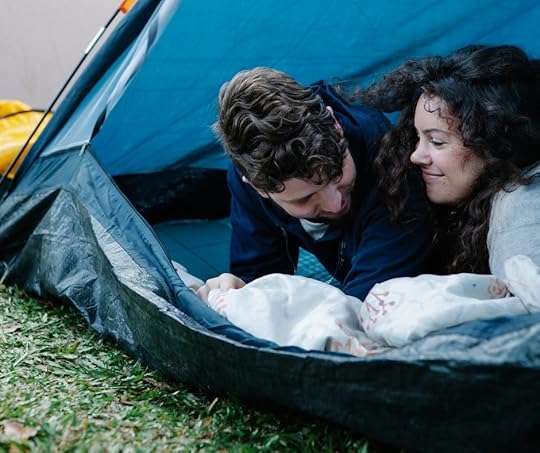 by Wildlife Ecologist, Jess Taylor, FMC of We Were Meant to Be Wolves
Not all women want drama. The bruises masked as passion. Storms disguised as love.
Some of us just want a safe place to pitch a tent before the weather turns.
If you've read some of Sangay's wilderness thrillers and have a sudden desire to go camping in rough country while the sky’s turning, here’s what I’ve learned (usually the hard way):
Avoid low ground. It might feel sheltered, but water will pool there when the rain hits. Flash floods don’t care about your sleeping bag.
Don’t camp under dead limbs. “Widowmakers,” we call them. They look solid—until the wind picks up. Look up before you lie down.
Watch the tree line. That open view might be pretty, but it also means exposure. Wind rips harder across clearings. Find a break in the trees.
Stake low, tight, and angled. Your tent should hug the earth, not fight the storm. Stakes at 45 degrees, rain fly taut, guy lines anchored.
Trust your gut. If the spot feels wrong, even if it checks the boxes—move. Animals trust instinct. We should, too.
In the end I didn’t need much. Just a dry place. Warmth.
No more lies. No more danger. Just enough trust to close my eyes.
And I definitely didn’t want a man to hurt me.
I wanted someone who checks for widowmakers before me sits down beside me, like Tucker.
Wait. No. I remember now. Don't trust Tucker.
Coming the Summer
We Were Meant to Be Wolves is an eco-thriller with a supernatural twist, rooted in real-world conservation, identity, and the blurry lines between what we love and what we fear.
If you’ve ever worked in rescue or fallen in love with something untamable—you’ll feel this one in your bones.
Need a wilderness hit. Read the TWs and check out a different kind of Adirondack thriller:Ledge Pond


The Adirondacks: Where Five Miles Might Take You All Week
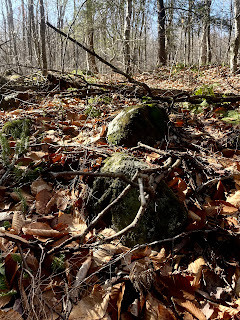 by Jess Taylor
The Adirondacks aren’t dramatic like the Rockies—they’re older, quieter, meaner.
It’s not manicured trailheads and gentle switchbacks—it’s blowdowns stacked like pickup sticks, bogs that swallow your boots whole, and spruce so thick it shreds your arms like paper.
You lose the sun in there. You lose cell service, too. Maybe even your sense of direction, or self, if you’re out long enough.
No matter how many hiking apps you downloaded, something will stop you in your tracks—beaver activity, a landslide, a wall of rock.
Out here, the land rewrites the route. You don’t follow a trail. You earn your passage.
Bushwhacking here isn’t a hike—it’s a negotiation with the wild. And the wild doesn’t always compromise.
That’s part of what makes Sangay’s thrillers tick. The danger’s not just in people. It’s in the land itself.
Inexperience becomes its own kind of villain. One wrong turn, one storm too late, and the woods don’t have to lift a finger to bury you.
Out here, you don’t just survive the story. You survive the setting.
Coexistence
 Coexistence has teeth—but it doesn’t have to bite.
 It means facing the mess, not romanticizing the wolf or villainizing the rancher.
It means tools, not slogans. Compensation that comes with proof. Deterrents that work, not just look good on paper.
If you love wolves, fight for a world where they’re not just surviving in safe zones, but living in working landscapes.
That takes more than passion—it takes patience.
And compromise. Showing up when it’s inconvenient.
That’s the kind of love that keeps wolves on the ground, not just in our dreams.
Jess Taylor, We Were Meant to Be Wolves coming this summer.
An Adirondack Myth, a Scientific Mystery, and a Second Chance
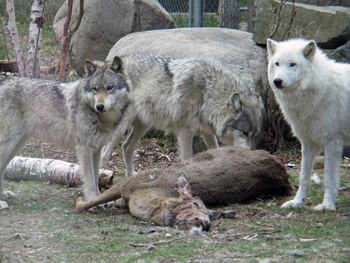 For over a century, wolves were absent from the Adirondacks, driven out by bullets and bounties, forgotten by the forests, and replaced by silence. But in We Weren’t Meant to Be Wolves, they return quietly, defiantly, as if they never left.
This isn’t just a story about conservation. It’s about the places inside us that go wild when we’re pushed too far. About the myths we inherit and the ones we become.
Jess Taylor thought she was going back into the field to observe a breeding pair of wolves. What she didn’t expect was a reckoning, with nature, memory, and the consequences of control disguised as care.
This book is for readers who love psychological thrillers laced with folklore, dark humor, and the ache of becoming something new. The wolves are back. But they’re not the only ones.
Follow me read all about it July 25th!
For the Love of Maggie
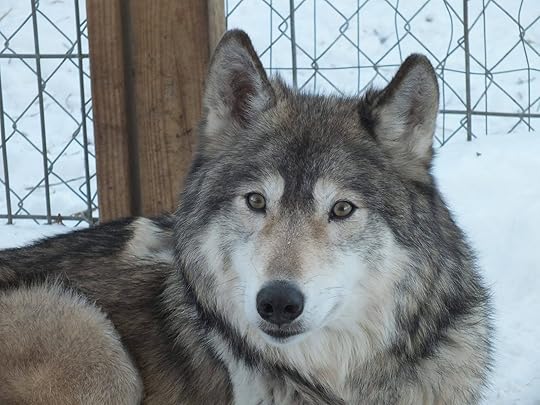 This is a love story of remarkable transformation of fear turned to trust, and of a life made worthy of the respected title: ambassador. You can watch the YouTube video here
I worked in domestic-bred wolf and wolfdog rescue, socializing and training the animals to improve their chances of rehoming.
Maggie and her sister were found in a fenced-off crawlspace beneath a porch. The owner was hoarding exotic animals. The sisters were about a year old, intended for breeding. When authorities arrived, their initial solution was to euthanize everything. Fearing the animals, they believed the most efficient method was to shoot them.
Thanks to a quick-thinking team, the sisters were pulled to safety, but with nowhere to go. Eventually, they made their way to our rescue. They were terrified. For days, they did nothing but pace, searching for an escape.
Socializing wolfdogs is a slow, delicate process. Wolves are naturally wary of humans, and of anything new. And I mean anything. A fallen tree branch could send one cowering into a corner for hours. But eventually, one of the sisters came around. Maggie.
Once Maggie began to trust, her sister followed. They started making real progress. Unfortunately, Maggie developed a foot issue that required a cast. Since I had dry facilities at home for medical boarding, I took her in.
That’s where she bloomed. She even got bold enough to leap into my car for daily hikes.
But when she returned to the rescue, things took a turn. She and her sister could no longer share a space. Female wolfdogs are prone to same-sex aggression—and they tried to kill each other. Maggie returned to my home, this time to recover from what was nothing short of evisceration.
I already had three female dogs and couldn’t keep her long-term. So began the challenge of finding her a permanent home.
Adopting out a wolfdog is no small feat. First, not every state or county in the US permits them. Then, adopters need serious experience with independent breeds, like huskies. Dogs who only obey when they see the point.
An applicant came along with experience volunteering at a wolfdog sanctuary in California. I’ll admit I was wary. The woman he was a former Playboy model. But we spent hours talking. She built a proper enclosure. We went over every potential issue. I made handling videos, and after months of preparation, Maggie went to her new home.
And to my surprise, I came to genuinely like and respect the adopter. We became friends, bonded by our love for Maggie. As the video she later shared shows, it worked out beautifully.
But not forever.
After several years, Maggie was rehomed again. This time to a California wolfdog sanctuary. Her owner’s husband was called to serve in a state where wolfdogs weren’t legal. It wasn’t a failure. By then, Maggie was transformed. No longer afraid of people, she thrived until her passing a few years ago.
Wolfdogs have earned a bad reputation because people don’t understand them. We cling to the myth of the Big Bad Wolf and label wolfdogs as wild, dangerous creatures.
But Maggie,a high-content wolfdog, was anything but. She offered only trust, forgiveness, and respect. And she’s not alone.
True wolfdogs aren’t just wolves acting like dogs. They’re thoughtful, emotionally complex animals who give us chance after chance to prove we’re worthy of their love.
Let’s not let them down. Reject the myths. Learn the truth about both wolves and wolfdogs.
Coming July 25th
Set in the remote Adirondacks, where wolves have returned after a century-long absence, We Weren’t Meant to Be Wolves is a chilling and darkly humorous story rooted in real-world conservation, identity, and the blurry lines between what we love and what we fear.
Field Notes and Fun Facts from Jess Taylor
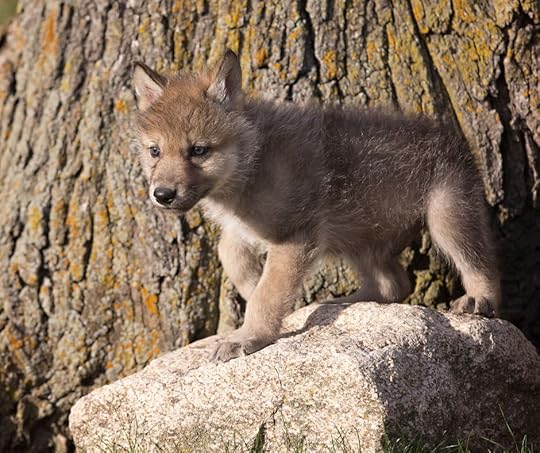 People think field biology is majestic.
Today I sifted through poop, labeled it "Sample 12B," and called it "significant."
I am majestic.
Fun Facts
Scat is a social message board.
Wolves use poop like a group text to mark trails, territory, and letting other wolves know they’ve passed through. It's often placed right in the middle of trails on purpose to be seen and smelled.
You can tell what they've eaten, no lab required.
Wolf scat often contains hair, bone fragments, and even teeth from prey. During winter, it’s extra hairy (think: deer season); in summer, it might show signs of smaller prey or even berries.
It’s one of the best non-invasive tools for field research.
Researchers can gather DNA, hormone levels (stress, reproductive status), and diet information all from scat, no need to trap or collar a single wolf.
Size and shape give away more than you’d think.
Wolf scat is usually 1 to 1.5 inches in diameter and twisted at the ends, distinct from coyotes, which tend to be smaller and more segmented. If it’s full of hair and smells like death, it’s a good find.
Freshness matters.
If it’s still warm or shiny, you're too close. But fresh scat is gold for researchers. It's when DNA and hormone markers are most intact.
Sometimes they poop where they sleep.
A surprise to some, wolves may defecate near or even in their dens when they're sick, stressed, or marking close-range territory, especially if a den is abandoned or being defended.
Set in the remote Adirondacks, where wolves have returned after a century-long absence, We Weren’t Meant to Be Wolves is a chilling and darkly humorous story rooted in real-world conservation, identity, and the blurry lines between what we love and what we fear.
Field Notes from Jess Taylor: Why I Threw Up for a Pup
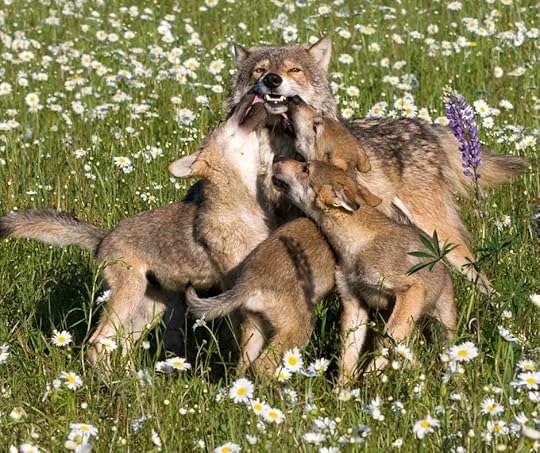 Yes, I regurgitated food for a wolf pup.
It wasn’t glamorous. It wasn’t pretty. It was instinct.
If you’re grossed out, congratulations. You’re human. But if you’re a wolf pup? It’s just another post-hunt ritual.
Here’s why this wild, ancient behavior exists, and why doing it felt more like biology than parenting.
Why do Wolves Regurgitate for Pups?
~Survival~
Around 3 to 4 weeks old, pups are weaned off milk—but they’re not ready to hunt. So adults step in. They bring back partially digested food and offer it up the natural way: by throwing it up. This gives the pups soft, warm meat they can digest easily.
~Trust~
The pup has to lick and nuzzle an adult’s mouth to trigger the regurgitation reflex. It’s tactile, intimate, and complexly involuntary. Though some humans and animals, like birds do it voluntarily to feed their young.
~Everyone Participates~
It’s not just the mom or dad. Aunts, uncles, even unrelated packmates will feed the pups. Cooperative care like this is rare in the animal world, but wolves wrote the book on it.
~It Teaches~
This is how pups learn what meat tastes like. One day it’s beaver. Next, it’s deer. By the time they’re old enough to trail a scent or join a chase, they already know what they’re chasing, and how it should feel in their bellies.
~It’s Literally Gut Instinct~
Shared food helps pups develop the right gut bacteria to digest meat. It’s nature’s gross little probiotic handshake.
So yes, I did it.
I felt the pressure rise, bent forward, and fed the pup with what I had. Not because I was told to because I had to.
And in that moment, feral, raw, maternal, I realized something: I wasn’t just studying wolves anymore. I was becoming more and more like one.
Set in the remote Adirondacks, where wolves have returned after a century-long absence, We Weren’t Meant to Be Wolves is a chilling and darkly humorous story rooted in real-world conservation, identity, and the blurry lines between what we love and what we fear.
Dam! What Just Happened?
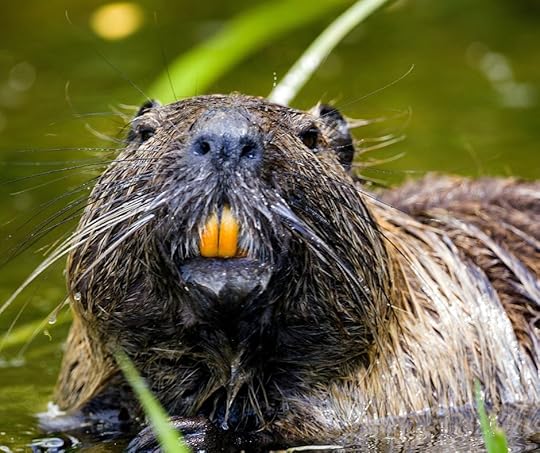 A beaver and a wolf walk into an ecosystem… everything changes.
Most people don’t realize, wolves don’t just eat deer. They sometimes go after beaver. Yes, the adorable, buck-toothed engineers of the wetlands. And that little predation habit? It rewires entire landscapes. Here’s how:
~Beaver Change the Landscape~
Beavers build dams, flood valleys, and create lush wetland habitats. These “pondscapes” support amphibians, birds, fish, and carbon storage. They're keystone species>terraformers with teeth.
~Wolves Eat Beaver~
In some regions, wolves have learned to hunt beaver more than deer, especially in spring and summer when deer are elusive. During peak seasons beaver can make up to 60% of a pack’s diet. Some wolves have adapted to ambush beaver on land where they’re easier to catch because scent trails lead straight to them.
What happens when wolves eat too many beavers?
Less beaver = fewer dams.
Fewer dams = dried-up wetlands.
Dried-up wetlands = habitat loss for frogs, moose, otters, and songbirds.
Suddenly, one predator-prey relationship is shaping the whole ecosystem.
So, are wolves good or bad?
The answer is :
Wolves are part of the balance. They regulate herbivores like deer and semi-aquatic engineers like beavers. The trick isn’t picking sides. It’s understanding that balance doesn’t mean “unchanging.” It means dynamic.
So, what happens when a beaver pond dries up?
Wolves unlock "Early Successional Habitats." It’s like a pop-up bar for moose, ground-nesting birds, and every predator with a nose.
Every time a wolf takes down a beaver, a chain reaction begins. Sometimes it heals. Sometimes it breaks. Ecology isn’t about harmony. It’s about tension and timing… on bark, banks, and beaver.
Coming July 25th
Set in the remote Adirondacks, where wolves have returned after a century-long absence, We Weren’t Meant to Be Wolves is a chilling and darkly humorous story rooted in real-world conservation, identity, and the blurry lines between what we love and what we fear.
Ecological Grief with a Side of Erosion
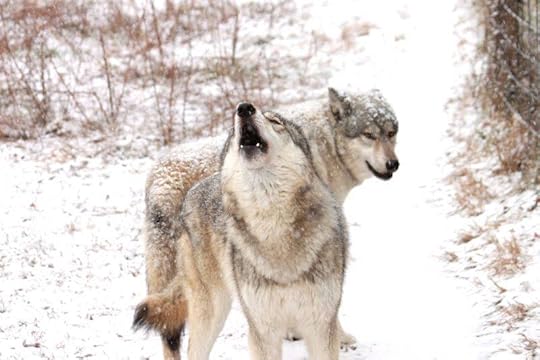 Yes, I’ve cried over a dead wolf.
Yes, I’ve yelled at a developer tearing down forest for a golf club.
And yes, I’ve written angry notes in the margins of environmental impact reports.
That's ecological grief in real time. It’s what happens when you care enough to notice what’s missing in our world, in our parks, in our yards.
But here’s the thing:
Grief means you’re still in the game. You're still showing up. You're still planting native wildflowers and hoping they take root.
Some days the world breaks your heart. Other days, a wolf howls back. And you keep going...for those days.
How do you deal with it?
Swear a little. Hike a lot. Hug a dog.
Then go do something that matters, however small.
~Jess Taylor~Check out my story July 25th in paperback and Kindle
Set in the remote Adirondacks, where wolves have returned after a century-long absence, We Weren’t Meant to Be Wolves is a chilling and darkly humorous story rooted in real-world conservation, identity, and the blurry lines between what we love and what we fear.
Independence Day
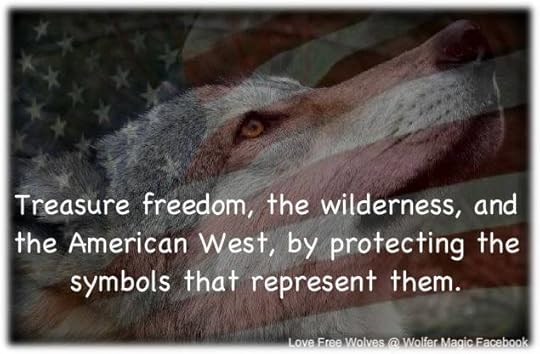 A wild land is a free land.
Protect both.
Happy 4th of July.